Home Blog Page 255

“Want to try some cocaine?” Amsterdam launches new anti-tourist campaign with a bizarre questionnaire

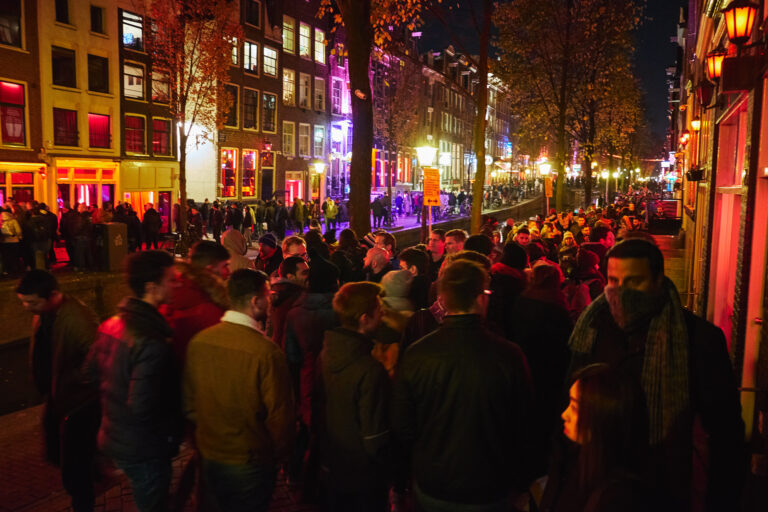
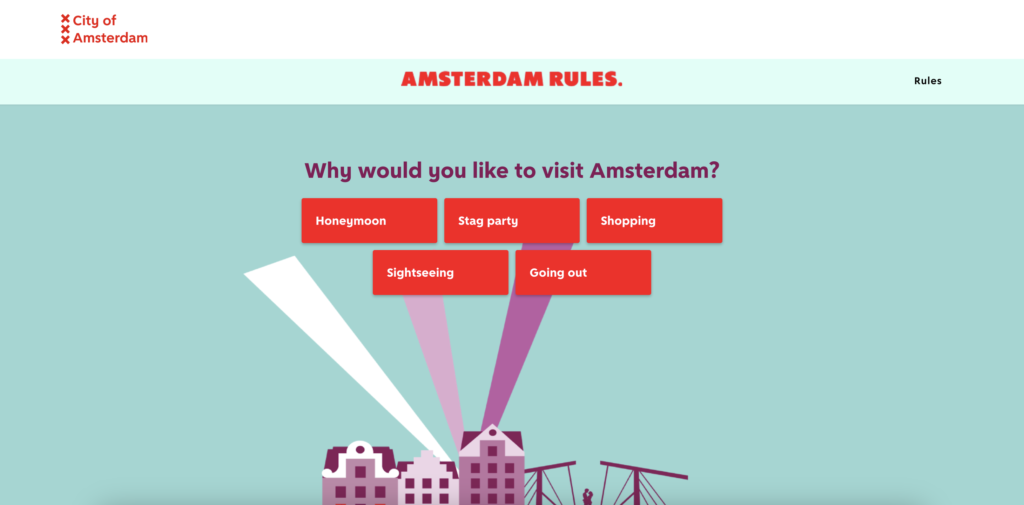
Amsterdam has doubled down on 2023’s Stay Away campaign intended to deter rowdy crowds. The latest measure is a web quiz targeting tourists’ intentions: will you be indulging in poffertjes or molly during your stay?

The municipality’s interactive questions aim to prompt tourists with the wrong idea to reconsider the purpose of their visit. 

READ MORE | DutchReview investigates the tourism crisis in Amsterdam (video inside!)

Wandering around the city smoking a joint? Not allowed. An organized pub crawl? No, not possible. And going out until after 2 AM? You should know — that’s not an option in the Red Light District!

The website promotes education about the consequences of antisocial behaviours when it comes to drugs and partying in the capital.
screenshot-of-amsterdam-rules-website-for-the-amsterdam-stay-away-anti-tourism-campaign
Amsterdam rules! or Amsterdam rules? 🤓 Image: Gemeente Amsterdam

The new site is already live for Brits and will soon be followed for the Italian, Spanish and French. The municipality is taking no chances: there will also be a Dutch website for local troublemakers. 👀

One hundred measures and counting

The questionnaire continues the work of the original Stay Away campaign, which included a bold video compilation of drunk men being arrested, fined and even taken away in an ambulance.

But how successful were these dramatised deterrents? Well, not entirely. 😬 

Some reported a decline, while others are more sceptical — either way, the campaign failed to fully curb the nuisance of British tourists.

With the launch of this new initiative, the municipality encourages looking at the broader picture.

Certain measures can have a greater impact together, such as tighter Red Light District policing and a ban on new hotel construction. 🤝

READ MORE | Sex work is work: etiquette and a guide to Amsterdam’s Red Light District

The campaign will run until the end of 2024. Will we finally see the end of troublesome tourists in the capital? 🤔

Do you think this anti-tourism campaign will be successful? Let us know in the comments below!
Rotterdam is launching a reusable cup initiative (and giving away a year of free coffee)

In an effort to become more sustainable, the municipality of Rotterdam, the NS, and Rotterdam-based entrepreneurs have launched a trial to test reusable cup deposits as an alternative to disposable coffee cups.

Starting Monday, March 18, Rotterdam Central Station will hold a three-month trial to test the new reusable cup system, along with 14 local entrepreneurs and nine retailers.

How does it work?

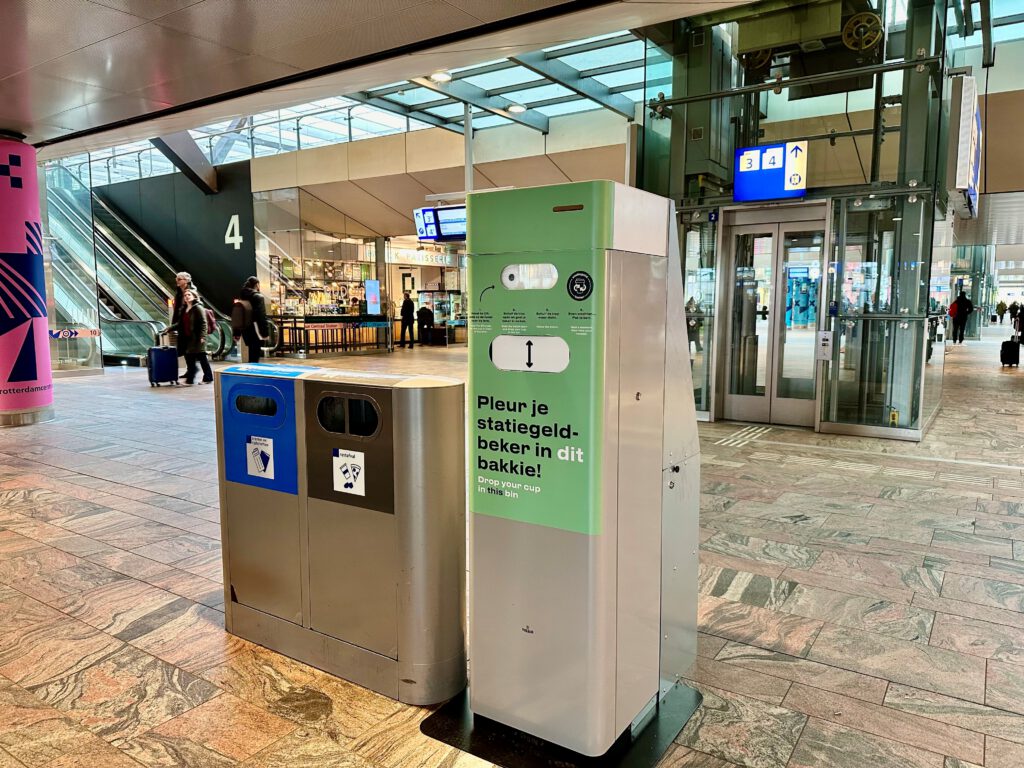
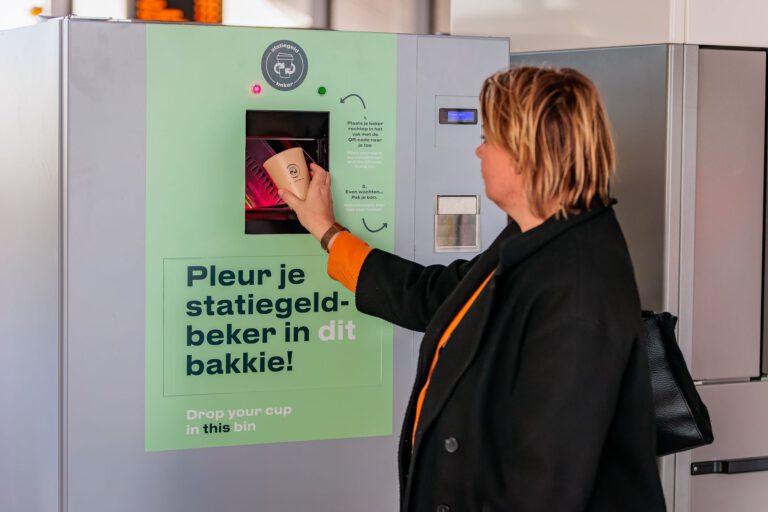
As the NS explains in a press release, travellers can buy a reusable cup for €1 when ordering their coffee from various kiosks at Rotterdam Central.

When returning the cup — be it in the station or at one of the participating businesses in the city — they get their deposit back via Tikkie by simply scanning a QR code.

photo-of-reusable-cup-deposit-machine-at-rotterdam-central-in-initiative-by-NS
Deposit machines are conveniently placed next to the bins! Image: NS

A chance at free coffee

With the reusable deposit cup, the initiators hope to reduce waste and stimulate more sustainable practices such as using reusable cups. 🥤

Travellers can still opt for a disposable cup during this trial period, but they’ll miss out on a great opportunity.

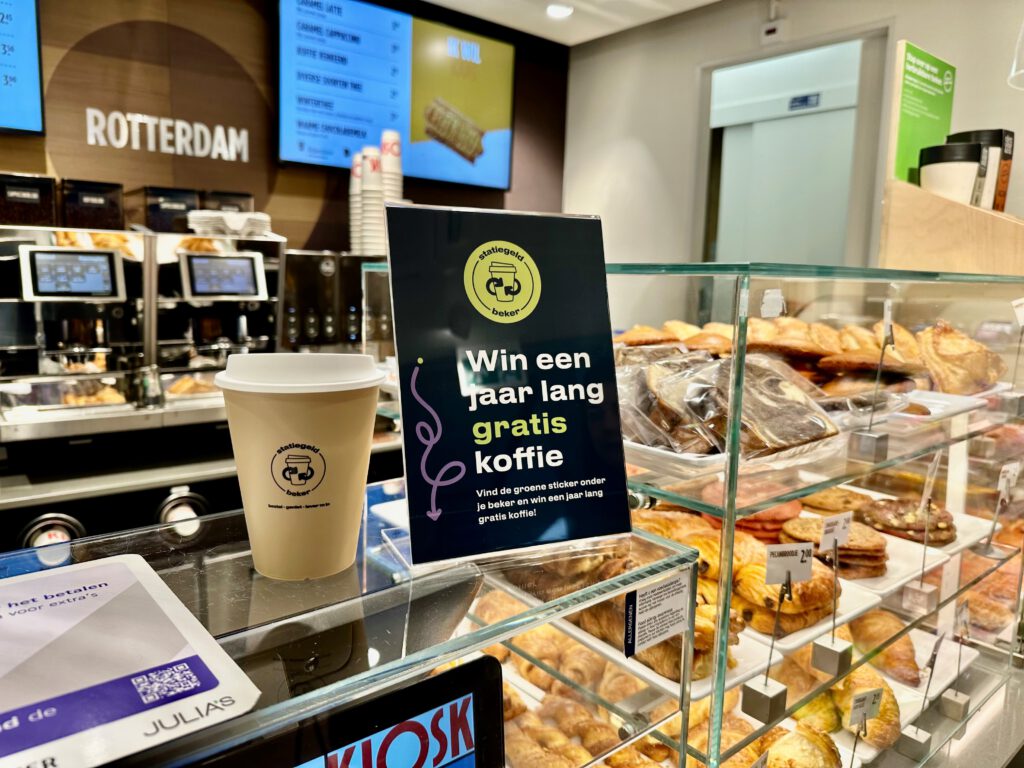
To encourage more participation, anyone who chooses a deposit cup at the Kiosk, Julia’s, AH To Go, or the StationsHuiskamer during these three months has a chance to win free coffee for a year.

Sign-indicating-chance-to-win-free-coffee-using-reusable-coffee-cups-in-rotterdam-central-station
Dutchies would never miss out on the chance to get something “gratis”. 😉 Image: NS

The NS, ProRail, and the Ministry of Infrastructure and Water Management aim to have waste-free stations by 2040.

There’s still a long way to go, but the Netherlands is making steps in the right direction — and we love to see it. 🌱

What do you think of this sustainable initiative? Tell us in the comments below!

The cherry on top: this Dutch park was crowned Europe’s best place to see cherry blossoms

As spring arrives in the Netherlands, so does the sweet sight and smell of cherry blossoms. And you don’t have to travel to Japan for a chance to catch the best of the pink blooms!

While the Netherlands may be renowned for its stunning tulip season, tourists are increasingly attracted to many other floral delights the Dutch have to offer.

READ MORE | The Dutch and tulips: how did tulips in the Netherlands become a thing?

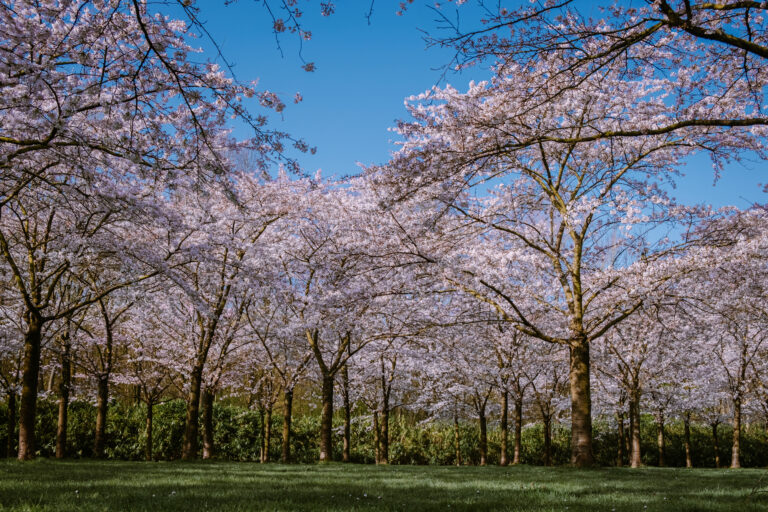
Amstelveen’s Kersenbloesempark (suitably, Cherry Blossom Park) was just crowned the best place in Europe to catch the cherry blossoms, according to Euronews — and we couldn’t agree more! 

A very floral glory

Between mid-March and early April, the suburban city of Amstelveen, south of Amsterdam, blooms bright and beautiful, and now it’s not just tourists who notice.

READ MORE | It’s cherry blossom season in the Netherlands (but not for long!)

It’s not hard to see why the Dutch park claimed the top spot, with 400 trees blossoming and overcrowding kept in check.

There’s also horticultural history here: Originally donated to Amstelveen by the Japenese Women’s Club in 2000, each tree in the park now has a Japanese or Dutch female name. 🌸

Fancy visiting some more springtime spectacles? Here are Euronews’ top 5 blossoming picks close to home.

RankEurope’s best cherry blossom destination
1Kersenbloesempark, Amstelveen, Amsterdam
2Jardin des Plantes, Paris, France
3Langelinie Park, Copenhagen, Denmark
4Kungsträdgürden, Stockholm, Sweden
5Mauerpark, Berlin, Germany

Have you visited the cherry blossoms in the Netherlands before? Do you plan to visit them? Tell us in the comments below! 

Dutch Quirk #133: Pause halfway through a film in the cinema

Long movies are making a comeback. Call it value for money… sometimes you still need to call time-out. No need to worry in the Netherlands — you’ll have a chance halfway through.

Many Dutch cinemas still run old Hollywood-style, with a 10 to 15-minute intermission in the middle of the screening.

What is it?

In the Netherlands, the experience of watching a movie and a sports game have one thing in common: a short halftime break. 

It gives you the chance to stretch your legs, refresh, and spend more money at the concession stands. It’s certainly welcome with films the length of Oppenheimer and Babylon. 

You’ll experience this in most independent cinemas and several chains here. There are some exceptions, but children’s films and films longer than 2.5 hours are almost always put on pause.

Why do they do it?

Intermissions weren’t always driven by snack sales and dwindling attention spans — its origins are extremely practical.

In the early days of cinema, projector operators needed to change the projector reels and, thus, needed a break during the film. đŸ“˝

READ MORE | Tom Holland in Holland?! 7 times the Netherlands appeared in Hollywood movies

Nowadays, the technology is more efficient, but with movies longer than three hours on the rise, the intermission fulfils other needs.

Especially following the pandemic, cinemas lost income when they could reopen but not sell food or drinks. The intermission has become a neat way to earn extra proceeds in the popcorn department. 🍿

Why is it quirky? 

For one, the intermission has been phased out in most countries, so the Dutch cinema experience is one of few that maintains this tradition.

It’s also extremely divisive! Some viewers are against the interruption, thinking it makes the experience awkward, while others welcome the break.

The Netherlands even got into some hot water for implementing a break in Martin Scorsese’s almost 3.5-hour-long film, Killers of the Flower Moon — the act was called “a violation” by the film’s Oscar-winning editor. 😬

Should you join in? 

You might not have a choice! In cinemas that opt to include the intermission, you can’t stop those bright lights from flooding back on. 

READ MORE | Amsterdam voted one of Europe’s best cities for cinema lovers

It is largely embraced by the Dutch moviegoing crowd as an opportunity to grab more snacks and a half-time debrief about the film.

However, if you really like to stay in the zone while watching, there are still plenty of cinemas that skip intermissions.

Perhaps the most unfortunately timed interval comes in screening Titanic, where the break hits at just the same time as the iceberg (SPOILER!).

What do you think of this Dutch quirk? Have you experienced it? Tell us in the comments below!

This Dutch supermarket is ditching meat discounts: Here’s why

With the skyrocketing price of groceries in the Netherlands, kortingen (discounts) are the saving grace of many supermarket shoppers. Now, however, it looks as though our days of discounted meat products may be numbered. 👀🥩

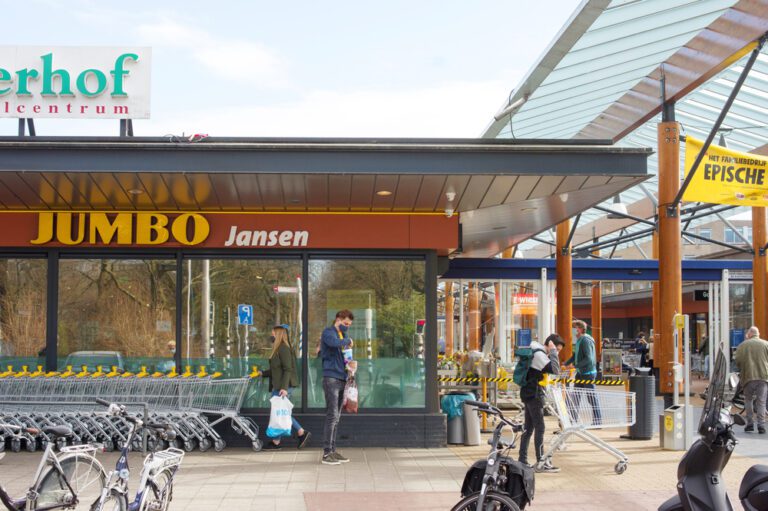
With twice as many reported promotions for meat products than other Dutch supermarkets, Jumbo recently found itself on the receiving end of harsh criticism by animal welfare group Wakker Dier.

Wakker Dier is no stranger to waging war against the promotion of meat products — they’re known for punchy campaigns advising supermarkets to ‘move with the times’, such as the one below. 👇

In a bid to stem the flow of criticism (and, presumably, do better by the environment, too), Jumbo has now agreed to stop promotions on all meat products, according to the AD.

This move makes it the first Dutch supermarket to do so.

Pushing more plant-based protein

So what are steak-loving shoppers to do in the face of expensive meat products — and no way to buy them at discounted prices?

As Jumbo sets new goals for 2025, it plans to ensure that 50% of all protein sold is plant-based. By 2030, the supermarket chain intends to increase that share to at least 60%.

What do you think of Jumbo’s decision to stop promotions on meat products? Tell us all your thoughts in the comments below!

If Wilders won’t be the next Dutch prime minister, who will?

Although controversial right-wing politician Geert Wilders won 37 out of 150 seats during the 2023 Dutch elections, he announced on Wednesday that he will not be the next prime minister.

Some were happy about this news, others were frustrated — but no matter which side you’re on, one thing is certain: you’re wondering who will become the next Dutch leader.

And while this question can’t be answered with certainty quite yet, there’s definitely some speculation going around about just who will claim his place. 👇

Wilders was elected, how come he won’t be PM?

It’s important to know that during the Dutch elections, the people don’t elect the prime minister; they elect the House of Representatives (De Tweede Kamer).

From there, a prime minister is chosen, but Wilders didn’t get the support of all the other parties in the coalition.

The search for a new candidate

All party leaders in the coalition have agreed to stay in parliament rather than take ministerial posts, putting The Hague in the rather extraordinary situation of having to look for another candidate.

It’s currently up to the four parties — Wilders’ PVV, the liberal VVD, the farmers’ party BBB, and the centre-right NSC — to agree on a person to take on the role of prime minister.

To get there, political reporter Frits Wester tells RTL Nieuws, they will each have to “come up with suggestions for a person to whom they entrust this process and the leadership.”

It is likely that they will seek a candidate with a centre-right profile, whose views and policies are acceptable to all parties in the coalition.

Who could it be?

While some names are already floating around in The Hague, it’s important to note that it may take a while before a new prime minister candidate is chosen.

Normally it would be quite possible that the prime minister will be someone from Wilder’s party, PVV. However, this seems very unlikely due to the lack of experienced and qualified politicians in the PVV — besides Wilders himself.

The only party with significant experience in government is the VVD.

READ MORE | Dutch Quirk #123: Have an extreme number of political parties

According to various news sources, some names that keep popping up include Johan Remkes (former deputy prime minister, VVD) and Ronald Plasterk (former minister of education, PvdA).

Some people also hope government scout Kim Putters will take the role, but he has repeatedly stressed that he won’t.

How do you feel about the news that Wilders won’t be prime minister? Share your thoughts in the comments.

These derelict Rotterdam train tracks are being made over into a luscious green airpark!

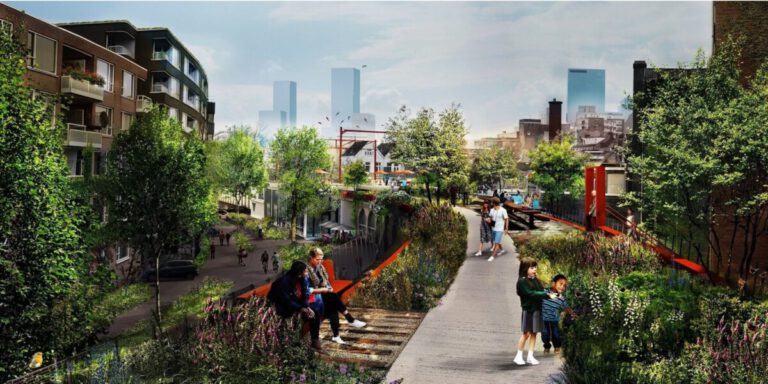
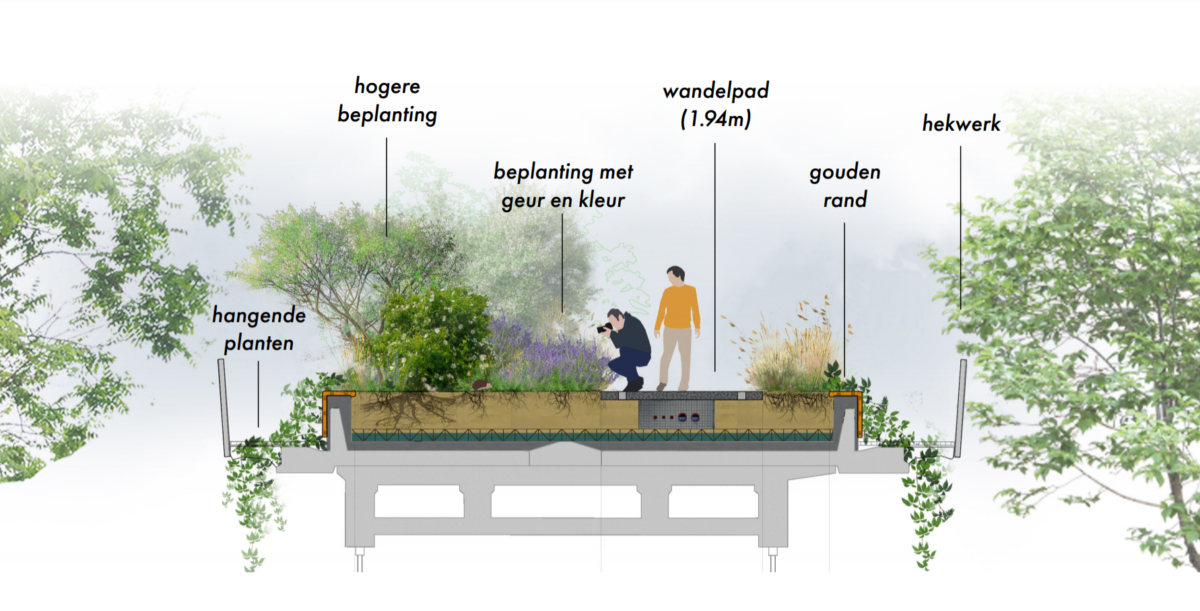
The narrowest and longest roof park in the Netherlands, sitting six metres above street level, is being designed in Rotterdam.

According to urban research and design company De Urbanisten, the new expansion of Hofbogenpark “will soon invite you to walk at height in a colourful and fragrant landscape.”

De Urbanisten presented concept renderings of the park, made in collaboration with DS Landschaparchitecten and De Dakdokters. The concept has been given the green light with construction planned to begin in 2025.

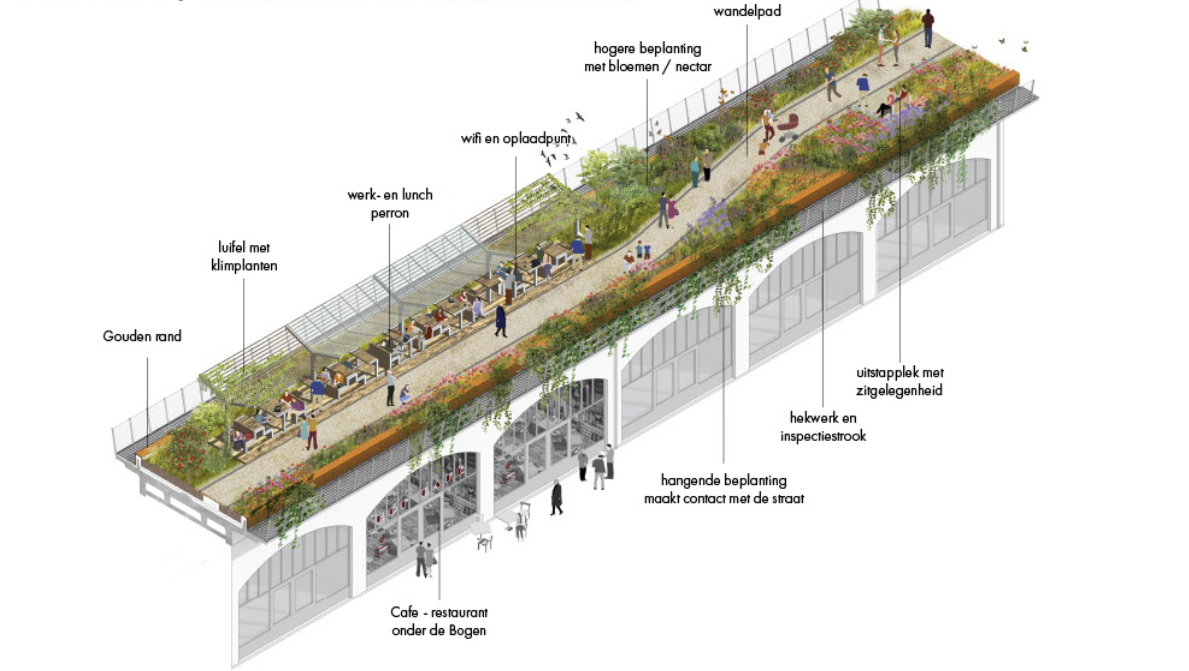
One of several renderings from the design presentation, showing the future perspective of the park. Image: De Urbanisten, Lanschapsarchitecten, De Dakdokters/supplied

The division will unite

Constructed on the old Hofplein rail line, which forms a physical boundary from Rotterdam Noord, this long-standing division will bring people together.

The old train tracks will route visitors through the diverse landscapes of the park, connecting various neighbourhoods in the area.

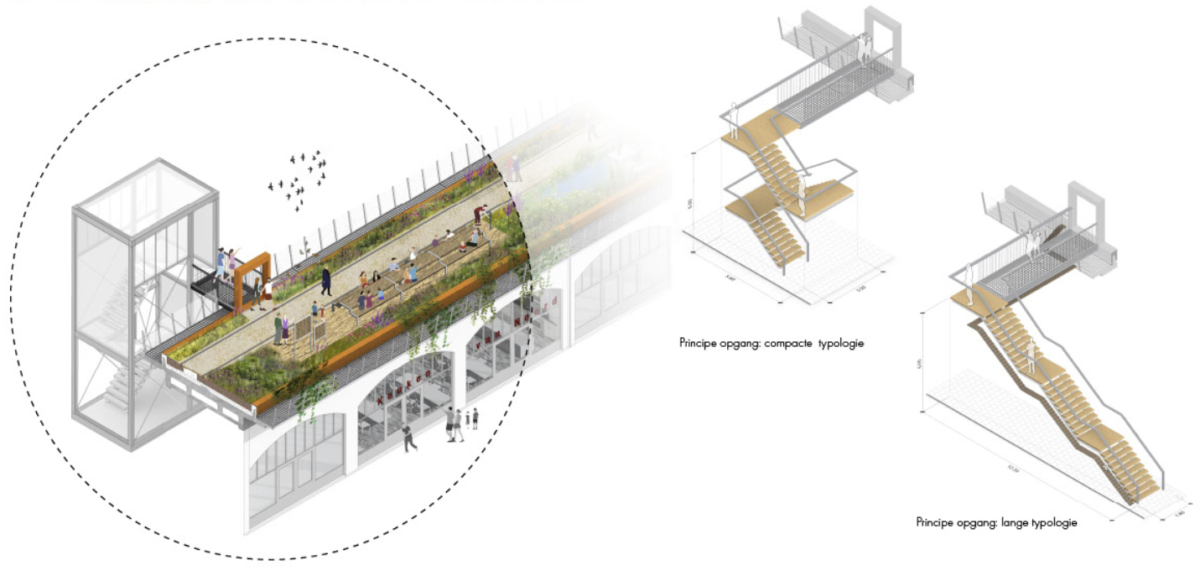
A report from architechtenweb explains that the airpark will offer space for walking, relaxing, grabbing a cup of coffee or a bite to eat, and even community gardening. Hofbogenpark will have several entrances and be accessible via the old train stations. 

Convenient access via train platforms. Image: De Urbanisten, Lanschapsarchitecten, De Dakdokters/supplied

Sustainable design

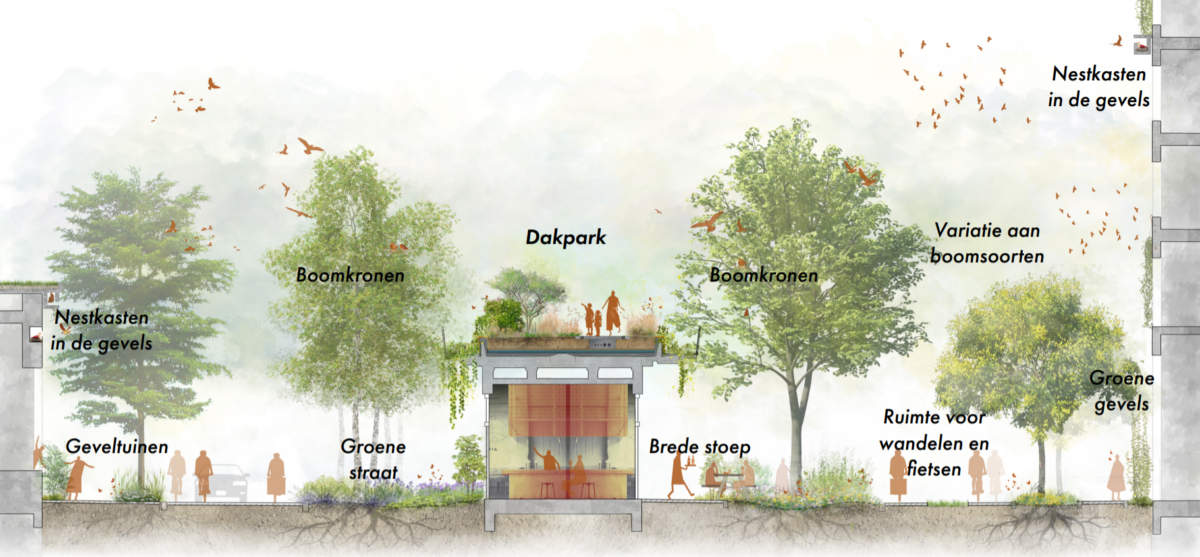
The plans include a circular water system, which provides a climate-adaptive approach to storing and using water.

Water is purified and dispersed among the roof plants, water play areas, and existing urban agriculture with the help of vegetation and ground passages.

The park’s plant life helps absorb CO₂ and provides important cooling, in addition to animal shelter. The innovative design takes into consideration the native wildlife, providing habitat and safe routes for local birds, toads, and hedgehogs. 

Planning for cohesion with nature. Image: De Urbanisten, Lanschapsarchitecten, De Dakdokters/supplied

The skinny

The park can be compared to similar statuesque models such as the New York’s High Line Park and the Promenade PlantĂŠe in Paris, but with just one very narrow difference.

While these parks both measure around 15 metres wide, Hofbogenpark is set to be built on a railway viaduct just eight metres wide, only six of which can be used as park.

What Hofbogenpark lacks in width it makes up for in length. Image: De Urbanisten, Lanschapsarchitecten, De Dakdokters/supplied

Read more | The narrowest house in Amsterdam: everything you need to know

Design details and objectives will be made in consultation with area residents and business owners.

What do you think of the plans for Rotterdam’s Hofbogenpark? Tell us in the comments below!

Feature Image: De Urbanisten, Lanschapsarchitecten, De Dakdokters/supplied

Schiphol wants to ban night flights; here’s how it will affect you

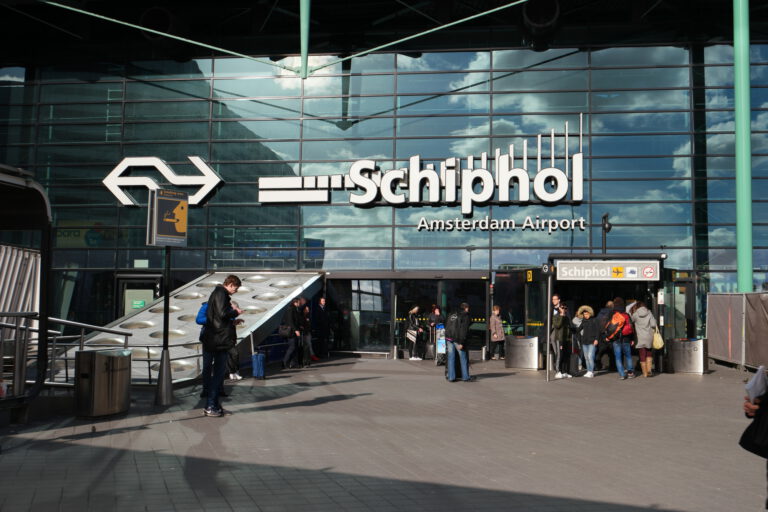
It looks like Amsterdam’s Schiphol Airport could restrict night flights as soon as April 2025. While noise levels and carbon emissions will be reduced around the area, ticket prices are set to rise.

Schiphol is implementing its plan to ban night flights six months earlier than expected, De Telegraaf shared. But why?

10,000 fewer night flights each year

Last Friday, the airport informed cargo companies that it would be closed completely to flights arriving between 12 AM and 5 AM and departing between 12 AM and 6 AM. 

The cuts come as Schiphol continues efforts to meet its climate targets, so the neighbours will certainly be in for more peaceful nights.

READ MORE | How do the Dutch feel about climate change?

But what does it mean for those who look to travel on a budget?

Holidaymakers hit hard

The less popular night flight time slots are crucial for budget airlines like Transavia to keep their ticket prices low. 

The cutbacks are a harsh blow for the late-night travel providers, who told De Telegraaf that “travellers will have to leave at night from Dusseldorf or Brussels because other Dutch airports are also closed.”

READ MORE | How to get to and from Amsterdam’s airport: the easy guide

And it’s not just Transavia passengers who will suffer. Travellers flying with TUI will also see a significant impact on the flight schedule they can provide in these circumstances, reports Luchtvaart Nieuws.

It seems like Schiphol’s planned cuts won’t be without turbulence for many customers. 😫

How do you feel about Schiphol’s plan to cut night flights? Tell us your thoughts in the comments below.

Geert Wilders has given up the NL prime minister position — but why?

In an interesting turn of events, the party leaders of the new Dutch government coalition have agreed to remain in parliament, rather than join the cabinet of ministers.

That means Geert Wilders, leader of the PVV and winner of the Dutch 2023 elections, will not become the prime minister of the new cabinet, reports the NOS.

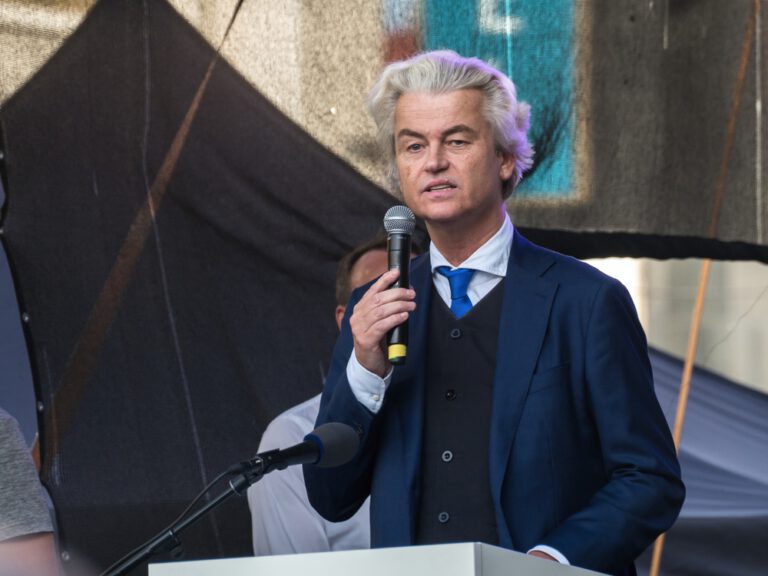
The news might come as a shock to many, considering his explicit ambitions to lead the Netherlands. But there was a lack of support for him as PM, prompting Wilders to confirm the news himself:

Translation: “I can only become prime minister if all parties in the coalition support it. That was not the case. I want a right-wing cabinet. Less asylum and immigration. Dutch people number 1. The love for my country and my voters is great and more important than my own position. I love the Netherlands. ❤️”

Dilan YesilgĂśz, leader of the VVD and outgoing Minister of Justice, is also prepared to remain in the House of Representatives, along with Pieter Omtzigt (leader of the NSC) and Caroline Van Der Plas (leader of the BBB).

READ MORE | The Dutch language guide to understanding Dutch politics

What happens next?

Since the coalition party leaders have agreed to stay in the Dutch parliament, the question of who will become ministers and state secretaries now arises.

The NOS reports that this coalition will likely have an “extra-parliamentary cabinet,” which is more loosely connected to the parliament than a regular cabinet and has no firm coalition agreement.

Ministers and state secretaries can be members of a political party or come from outside politics.

It remains to be seen just how long it will take for this coalition to form. And that’s if it comes together at all, especially considering the last extra-parliamentary cabinet dates back to the 1970s.

The parties will continue their negotiations with the government scout Kim Putters. Until then, it’s anyone’s game.

Want the latest Dutch news to come zooming through the internet to your inbox? Dat kan! Subscribe to DutchReview’s weekly roundup 📮

A 14-year-old just took his ex-employer to court… and won

A fourteen-year-old Dutch boy was fired after failing to show up for his part-time job in a Tilburg butcher’s shop. He took his employer to court, where the outcome was… meaty. 🍖

Though the boy only earned €5.50 an hour for his weekly shifts in the butcher’s, the employer must now pay €428 worth of ontslagvergoeding (dismissal compensation) and almost €900 in legal costs. 

Ontslagvergoeding refers to compensation paid to employees who have lost their jobs, aiming to facilitate the transition to a new job. In most cases, this is paid when the employer suddenly (or unfairly) terminates the employment.

Lazy worker or harsh employer?

As RTLNieuws writes, the problem began when the boy’s father sent a text message excusing his son from his usual Saturday shift just four days earlier. 

The message is familiar — an apology for the late notice, a vague reference to other commitments, and a promise to do better in the future.

But the butcher was not impressed; it was due to be a busy shift and he needed all the help he could get.

He expressed this to the boy’s father, but when Saturday rolled around, the 14-year-old’s apron was left hanging unworn. 

Following the no-show, the employer terminated his contract with immediate effect.

READ MORE | Losing your job in the Netherlands: what you should know

Taking his cut

Young workers in the Netherlands might not be paid the big bucks, but the compensation claims in this case would certainly be some bonus for the teenager. 💸

@dutchreview And we respect it 👏 #albertheijn #dutch #dutchculure #nederland #netherlands #workinginthenetherlands #expats #expatlife #expatsamsterdam #learningdutch #dutchreview #foryou ♬ original sound – DutchReview

In court, the boy’s father demanded almost €1,400 in compensation for his son’s dismissal — none of which the ex-employer believed he should have to pay.

But the ruling by the Zeeland-West-Brabant District Court last Friday favoured the boy. 

READ MORE | What are your rights as an international working in the Netherlands? We asked the experts

While the full severance claim was deemed excessive, the butcher had to cover salary and holiday pay for what should have been the boy’s eight-week notice period.

In the end, the former boss did not lose sleep over the issue and maintained that his ex-employee was “a very nice boy”, despite the elaborate courtroom drama.

Do you think a very young workforce can cause more harm than good? Let us know your thoughts in the comments below.