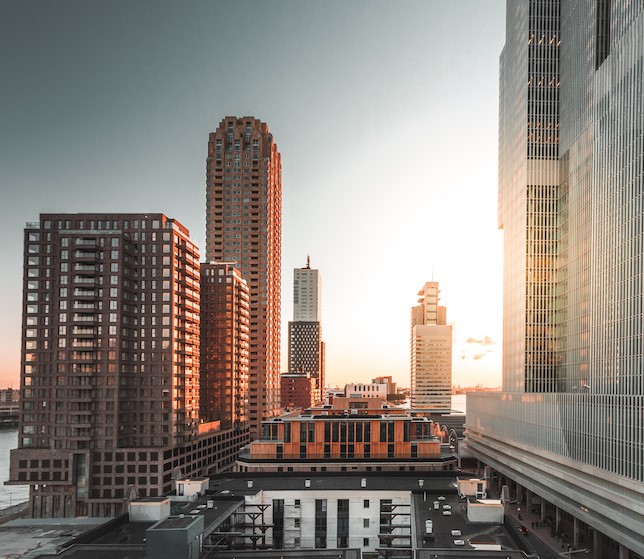
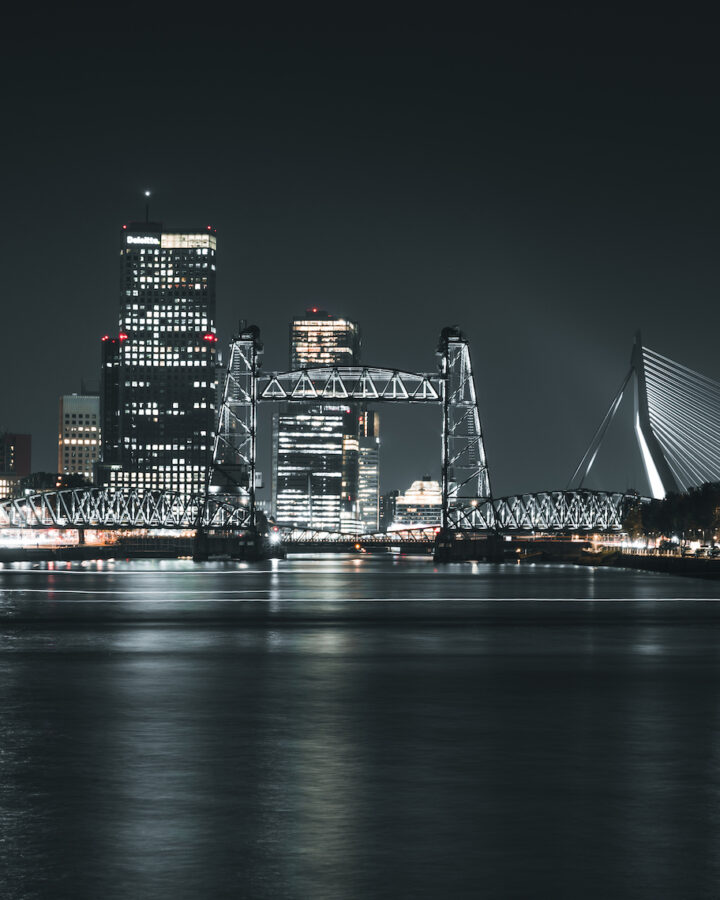
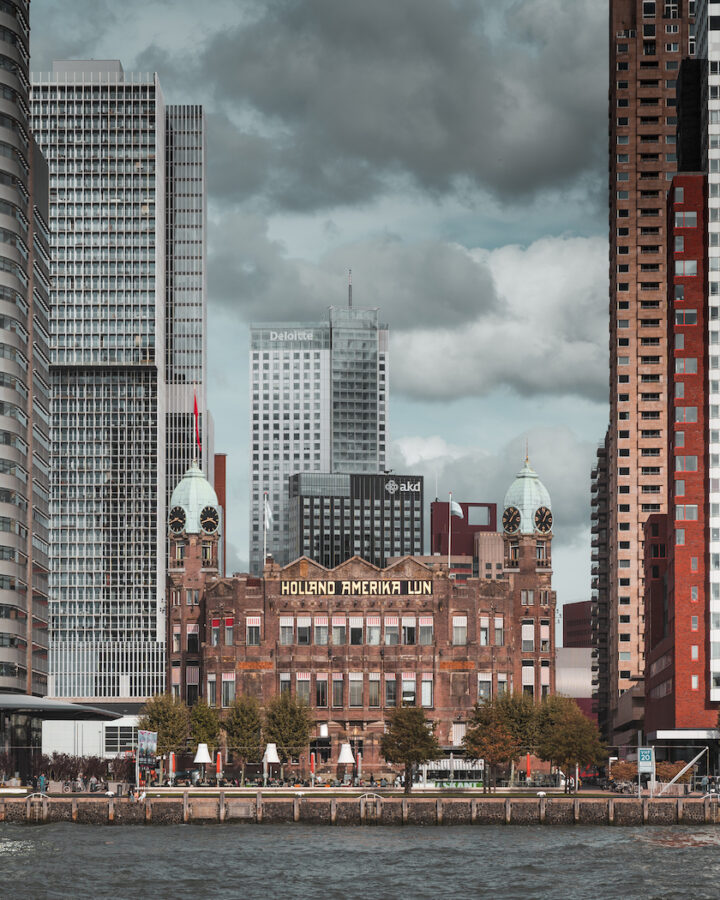
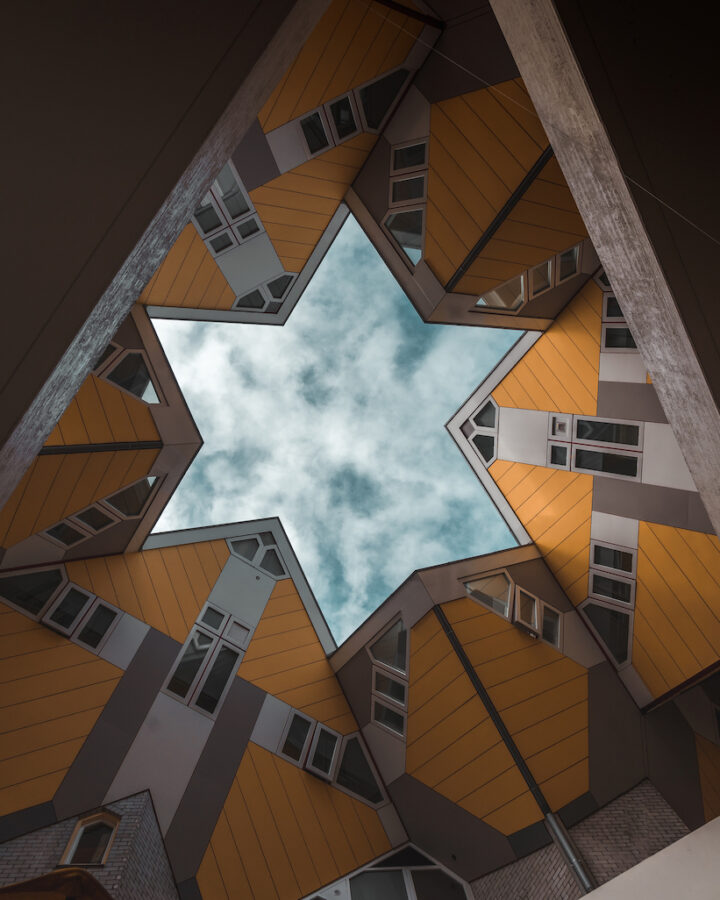
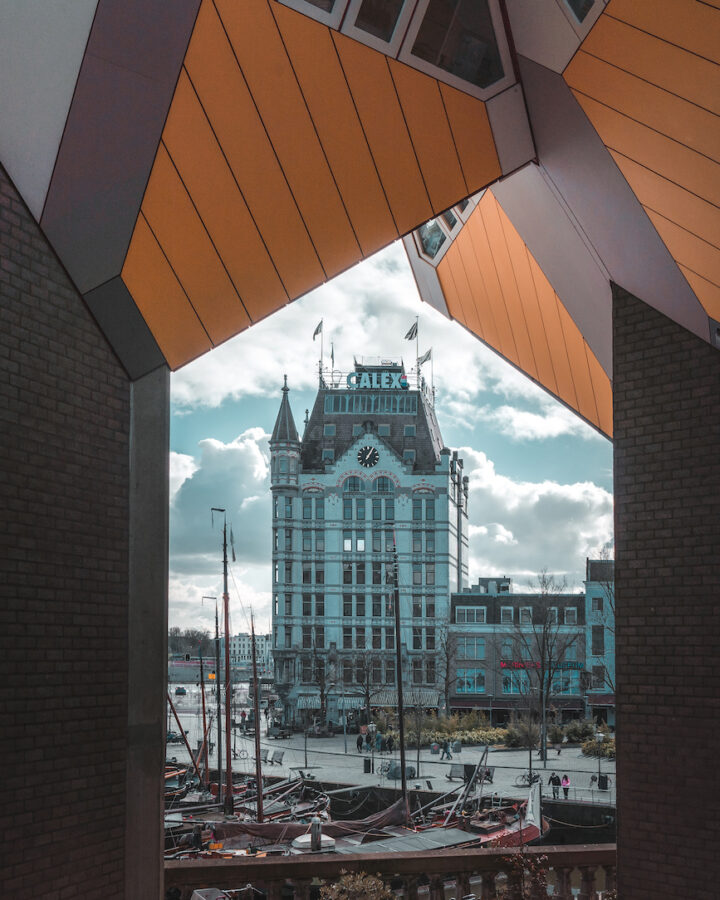
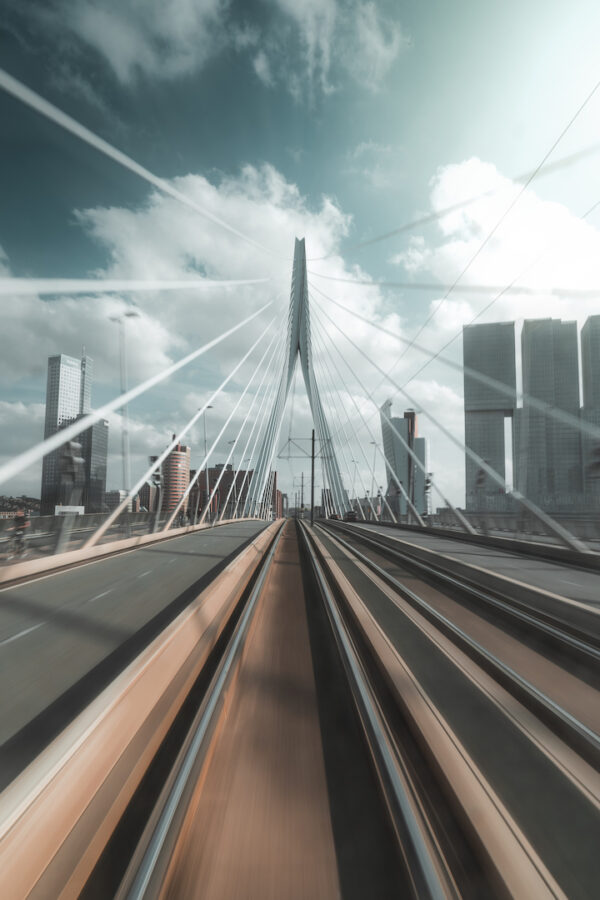
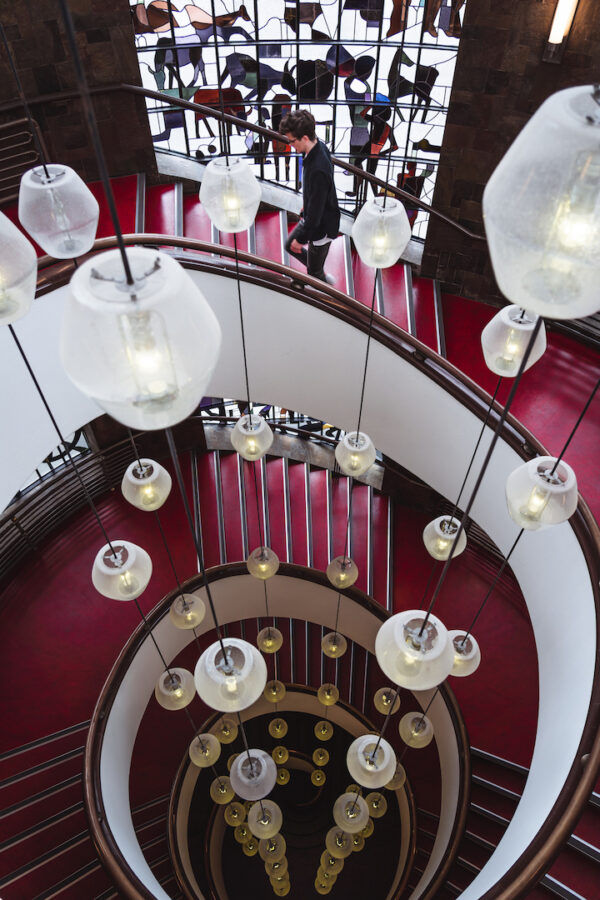
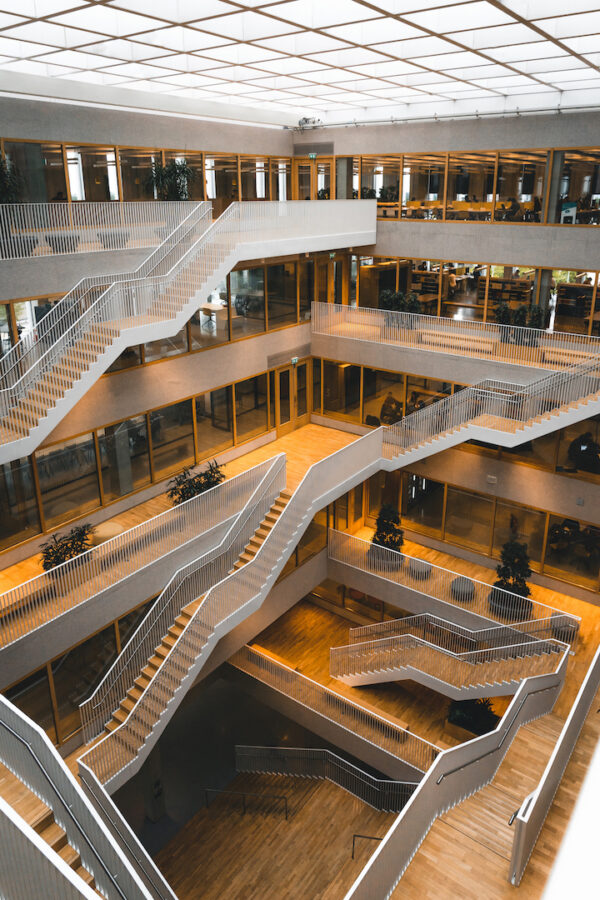
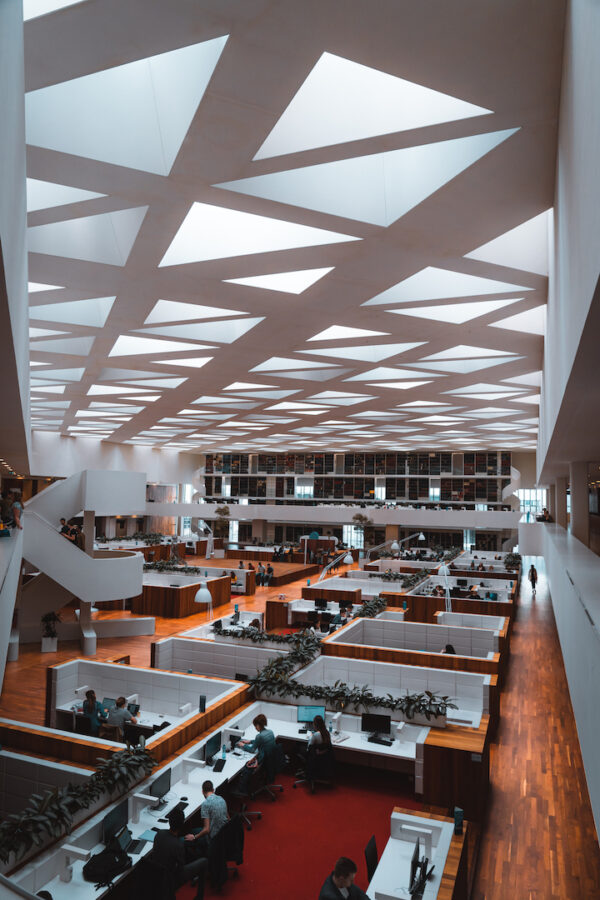
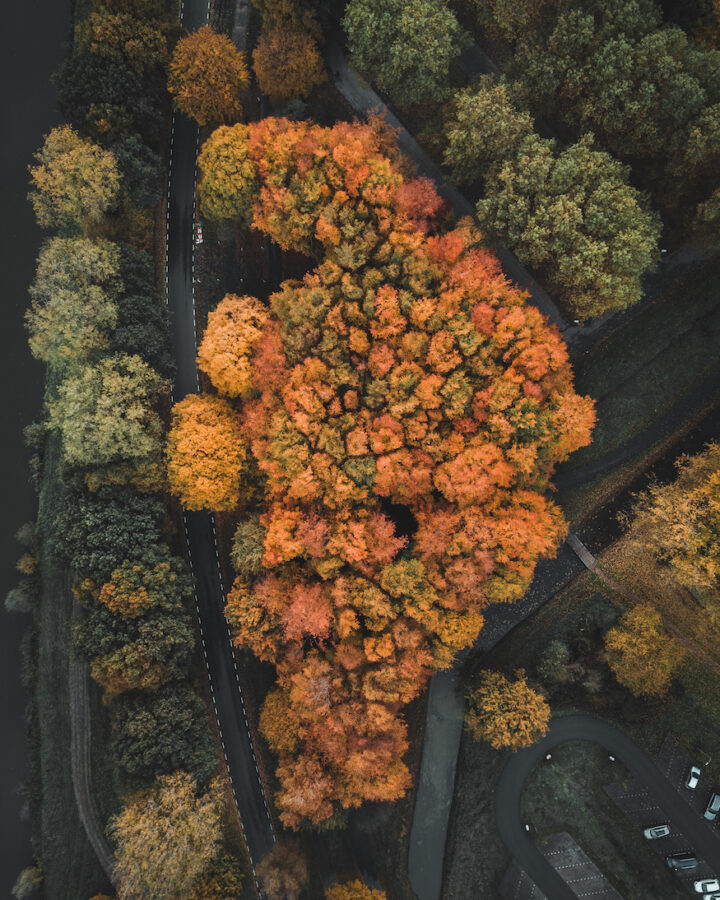
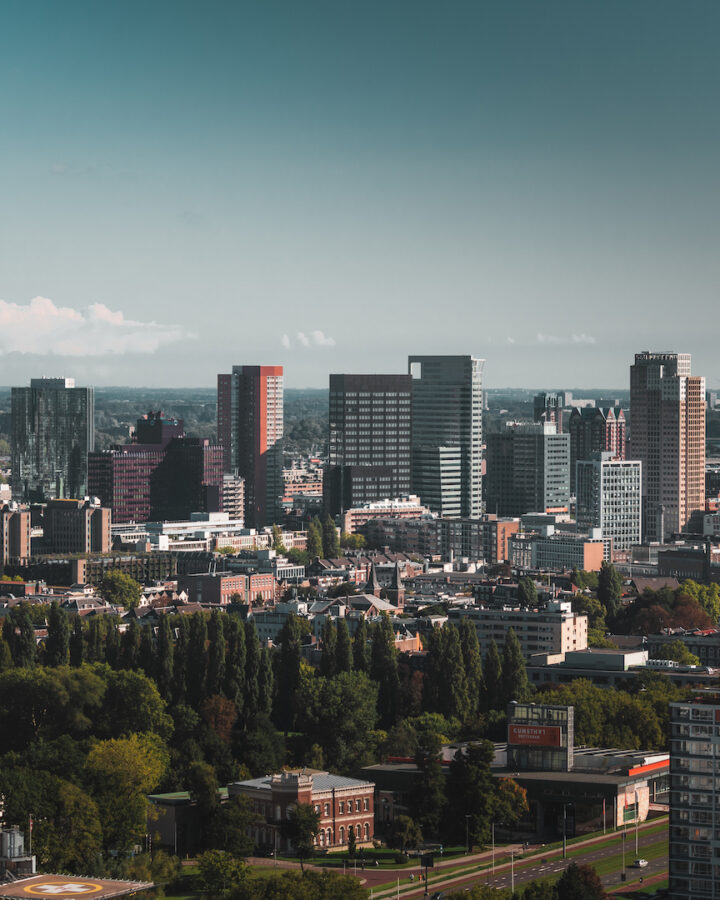
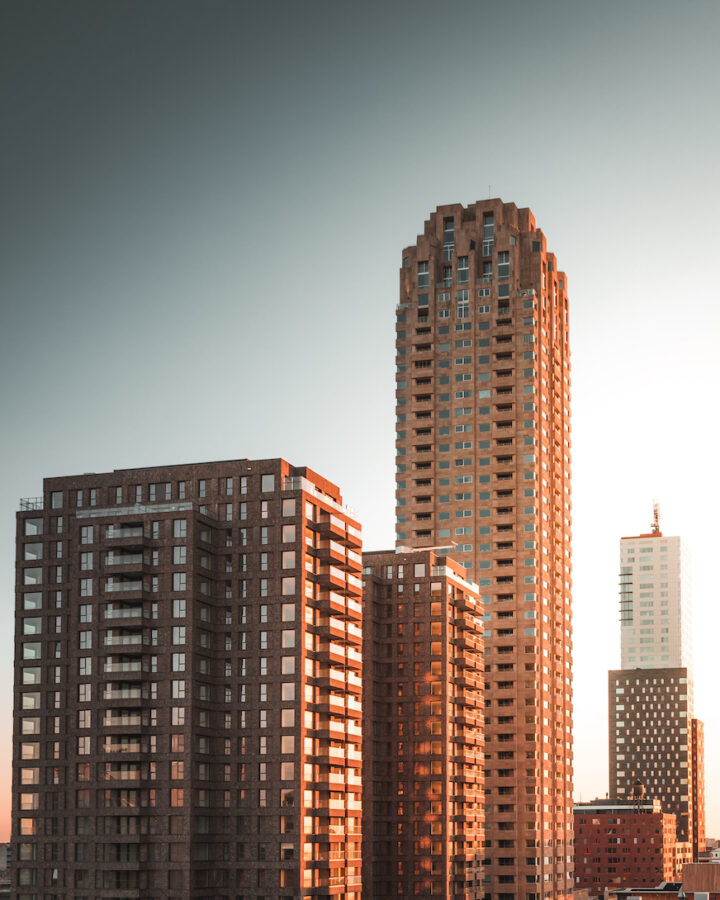
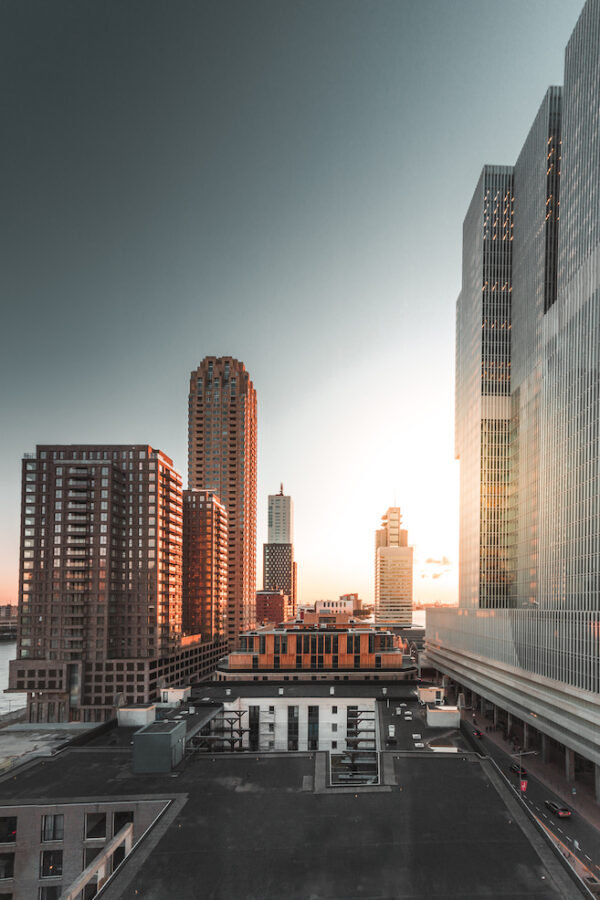
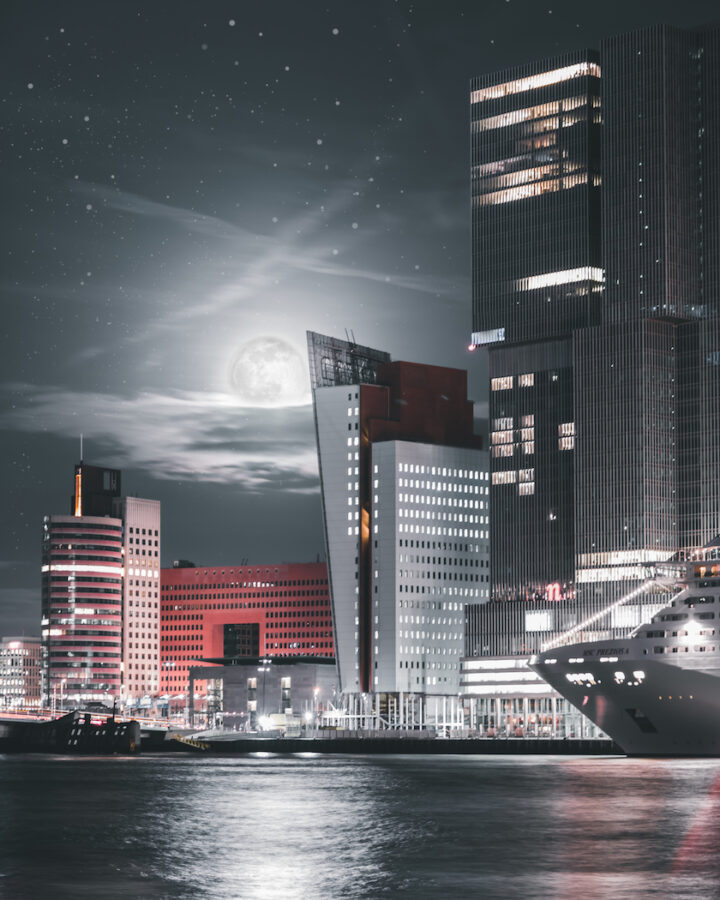
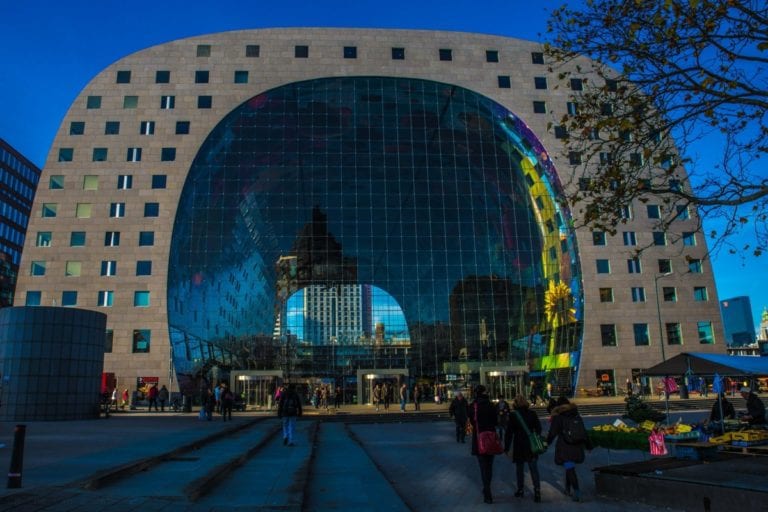
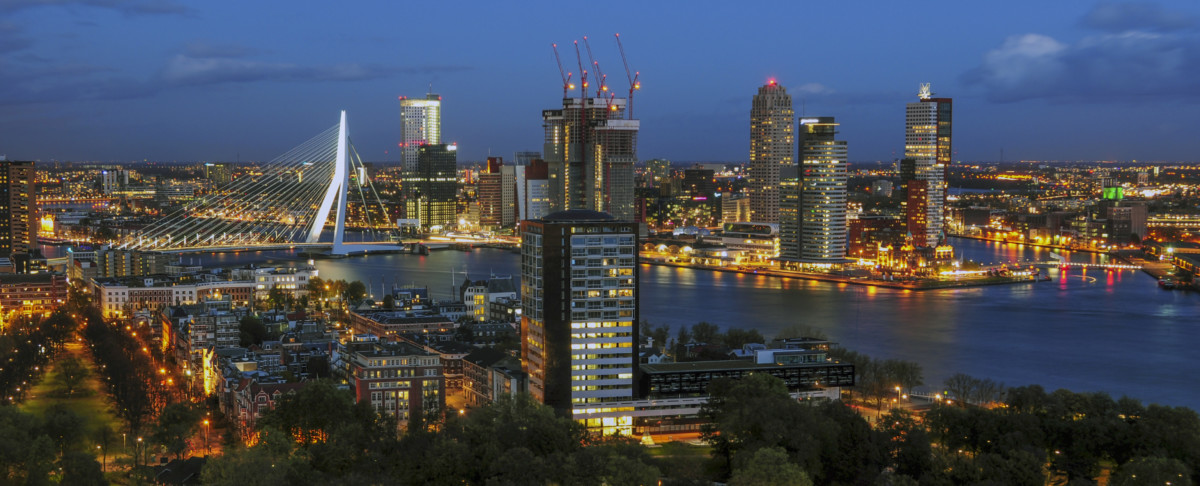
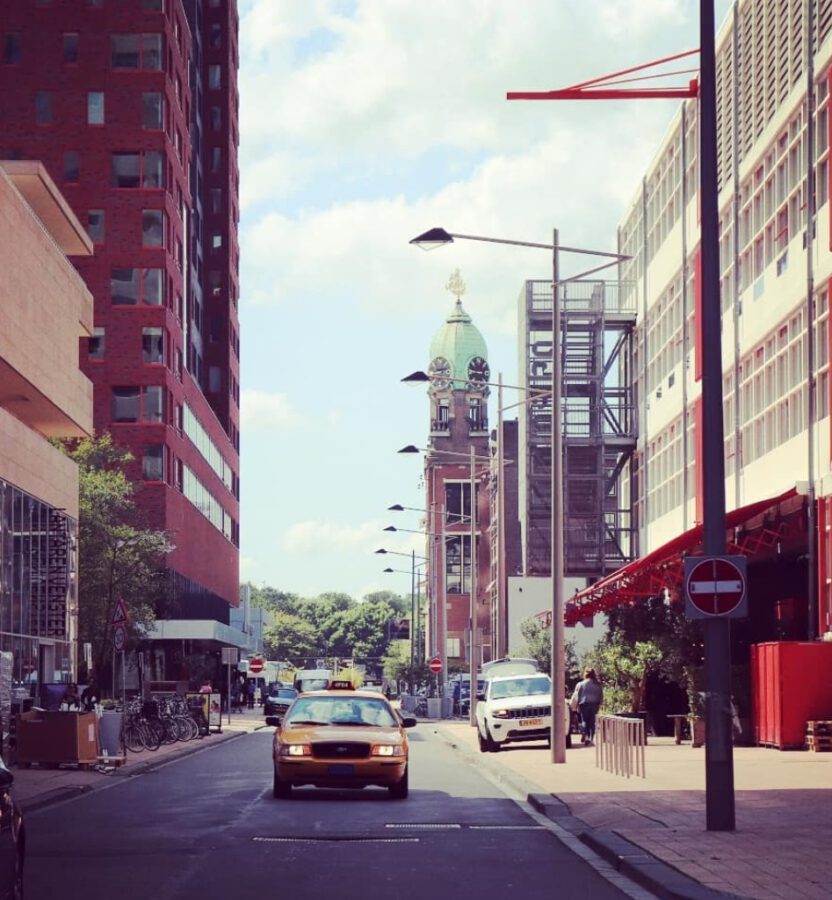
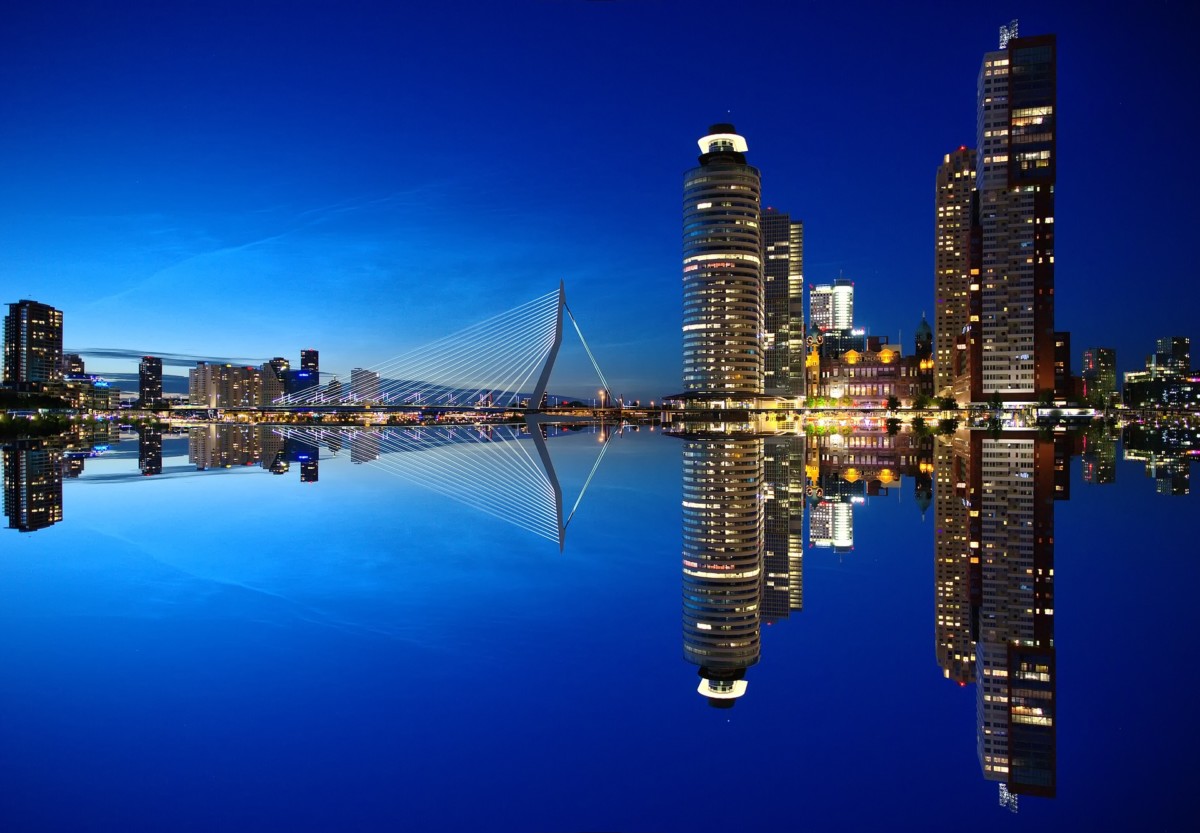
Who’s here because you love our DutchReview photo reports? Good choice because this time, we have someone quite young showing you a somewhat familiar side of Rotterdam, with a splash of mystery and intrigue.
If you’re a first-time visitor to the Netherlands, and you’re going to Rotterdam after having seen other Dutch cities, you might have to reconcile with the fact that it is very different and eccentric in its own way. Typical Dutch cities are a delight to visit if you love canals, narrow streets of cobblestone and Dutch row townhouses. But if you want to see something a lot more modern, Rotterdam is the place for you. This photo report shows you a side of the city you might have seen before, but a side I’m sure you’re not tired of seeing.
Image: @lifeof_jochem/Instagram
This photo report is brought to you by @lifeof_jochem, a 22-year-old student of urban design and spatial planning!
His page on Instagram features places like London and New York, and he thought it apt to have Rotterdam in the same league. Are you wondering why? Well, for one thing, Rotterdam has the tallest highrises in the Netherlands (they are actual buildings and not the Dutch people), modern architecture (like we said before), and a vibe which cannot be felt anywhere else.
Without further ado, here are the photos we’re sure you will love!
Image: @lifeof_jochem/Instagram
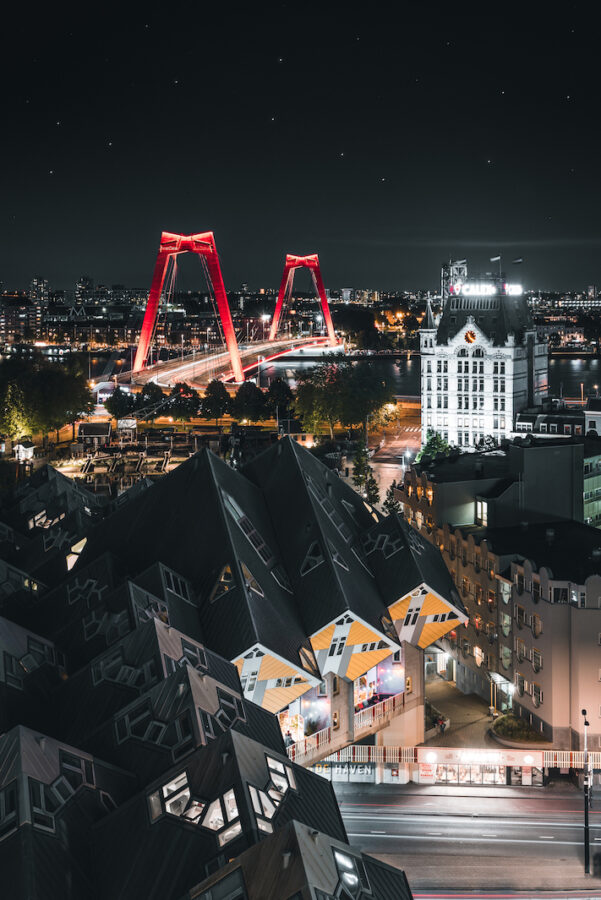
The infamous Willems Bridge (Willemsbrug) and the cube houses. Don’t forget to add them to your list. This aerial shot gives you a nice view of both, doesn’t it?
Well, there you have it! If you’re not already following @lifeof_jochem, you should be! He takes amazing photos of different places in the city, and we obviously love them. If you’re looking for the places he’s photographed, then check out the best and free things to do in Rotterdam. You might find a few of these in there. If you’ve already been and are looking for something a little bit off-the-beaten-track, check out our picks for the hidden gems in Rotterdam.
If this report made you want to venture out with a camera yourself, don’t forget to tag @dutchreview on Instagram. We would love to see the Netherlands through your lens!
Editor’s Note: This photo report was originally published in August 2019 and was fully updated in December 2020 for your reading pleasure.
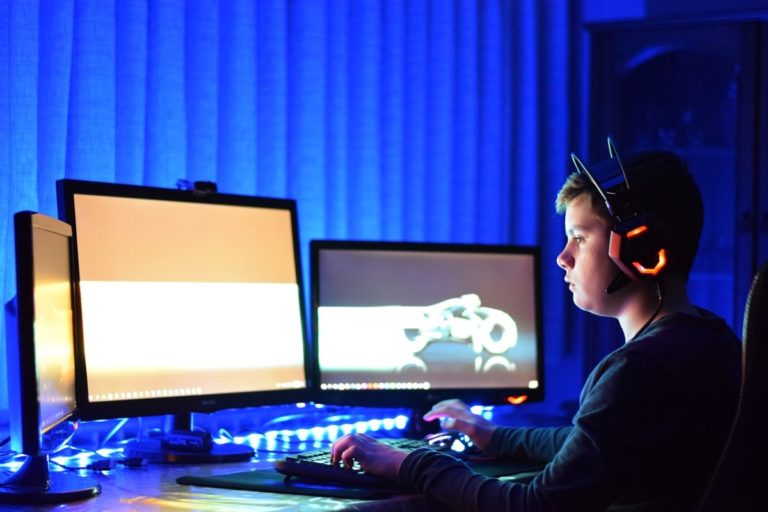
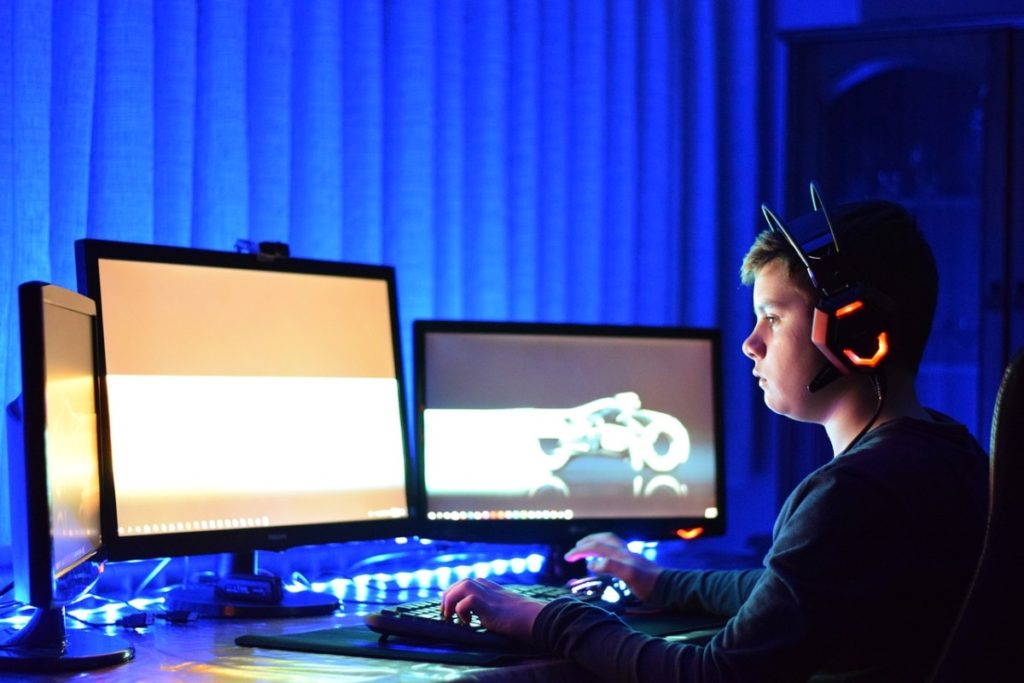
When Tom was just 17, he’d spend his nights glued to his screen with his hands locked to a remote control. He lost interest in school, forgot to study for exams and stopped sleeping. Eventually, after reaching a bleak point where gaming controlled his life, he decided to get help and reached out to Yes We Can, a specialised treatment clinic in the Netherlands.
Yes We Can Clinic
The Yes We Can Clinic is the only addiction treatment centre for young people in Europe. They start accepting people as young as 13 until mid-twenties for treatments. It was started in 2010 by a man named Jan Willem Poot who battled behavioural and addiction problems since he was 12 years old. After many failed attempts, his recovery process finally kickstarted one day when he attended an addiction meeting and the therapist “just started telling ‘his’ story instead of (me) having to tell my story for the umpteenth time,” explained Poot. “I listened breathlessly for one hour. So much recognition. So many of the same thoughts. So many the same wrong choices … so much the same! Finally a click!”
The treatment at Yes We Can begins with a ten-week programme at a clinic in Hilvarenbeek (a little town 90 minutes’ drive south from Amsterdam). Afterwards, patients can attend an aftercare program in Abcoude or Heeze that lasts between ten and twelve weeks.
The programme involves a myriad of techniques including individual and group therapy, family bonding, outdoor sports and trauma processing. The programme doesn’t permit patients to have mobile phones or other electronic devices and no energy drinks or caffeine. Patients are not allowed to have contact with parents for the first five weeks.
Tom’s recovery
Since attending the programme, Tom’s life has transformed. He tells the Guardian “I changed through the course of the programme, slowly but surely. At first, I was super anxious and I could not talk to anyone, but slowly I started to open up and became comfortable. I started to face my avoidant behaviour and understand why I do it. I started to open up about my past and figure things out.”
Image: ExplorerBob/Pixabay
Gaming addiction
If you type in “gaming” to Google, some of the first search results will be “is gaming bad for you” and “is gaming addiction real”. Some people think it is not a real addiction but earlier this year, in May, “gaming disorder” was added to the World Health Organisation’s official list of diseases.
Poot believes other online addictions such as YouTube, pornography and Netflix are also becoming more common. “They have found a way to feel better just by being in the online world because it is escapism,” reports the Guardian.
The clinic originally only treated Dutch citizens but decided to open its doors in 2017 to international patients. The initial 10-week treatment programme costs €64,000 and the aftercare programme will incur additional costs. Dutch nationals are paid for by the government or by insurance companies (given it is obligatory to have health insurance in the Netherlands). International guests, like Tom from the United Kingdom, are self-funded.
What do you think of Yes We Can’s approach to treating gaming addiction? Tell us your thoughts in the comments below.
Feature Image: ExplorerBob/Pixabay
Editor’s Note: This article was originally published in August 2019 and was fully updated in December 2020 for your reading pleasure.
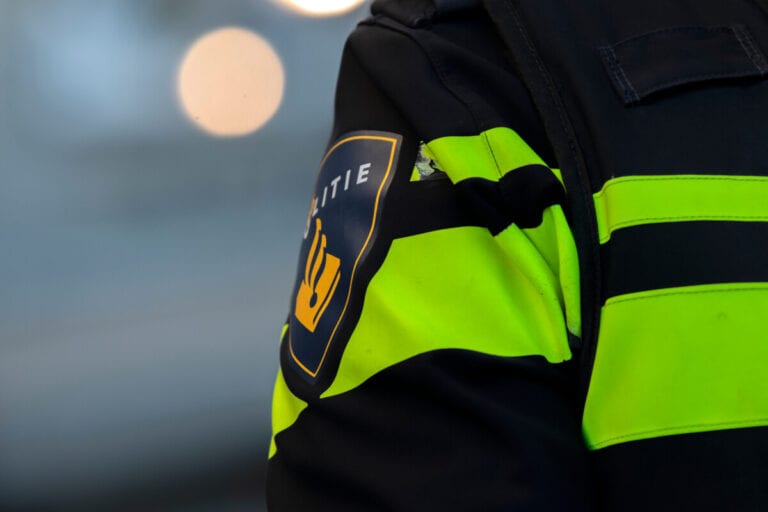
A young man in Den Bosch was fined for cycling without a proper light, but after helping police chase down an escaping criminal, the officer took back the fine.
The man had just been fined by one officer when he came across police officer Marc De Wit, who was struggling to make an arrest.
The person that De Wit was trying to arrest began to run in the direction of the young man. De Wit told RTL Nieuws of the ordeal: “I took off and ran after him full throttle. On the way, I met a young man on a bicycle. ‘Stop, stop him!’ I called to him.”
The young man threw his bike in front of the criminal, who skirted around the bike and continued to run. The young man then decided to help De Wit in his chase and the two of them ran about 500 meters after the criminal.
“Give a little, take a little”
The officer and the young man managed to catch the criminal and De Wit was able to make an arrest. He thanked the young man who then explained that he had just been fined by one of De Wit’s colleagues.
De Wit decided to repay the man for his help by asking that his fine be removed. “I immediately checked who that was and asked whether the ticket could be removed. Someone who helps so well deserves a reward.”
De Wit praised the young man for his help. “He loved it. A nice reward. And rightly so, I have nothing but praise for him.”
Give a little, get a little right? Tell us your thoughts about this story in the comments below!
Being a freelancer anywhere is stressful and complicated. From chasing payments to looking for new clients, it feels like nothing is easy. And while we can’t give you a step-by-step guide to making it big (if you have a guide like that, feel free to pass it on to us 😉), we can let you in on a couple of tricks we’ve learned over the years which have made our freelance life in the Netherlands so much easier.
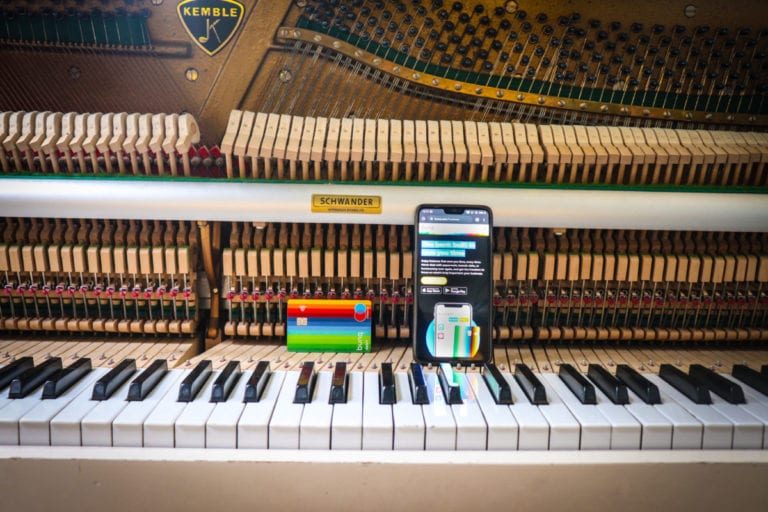
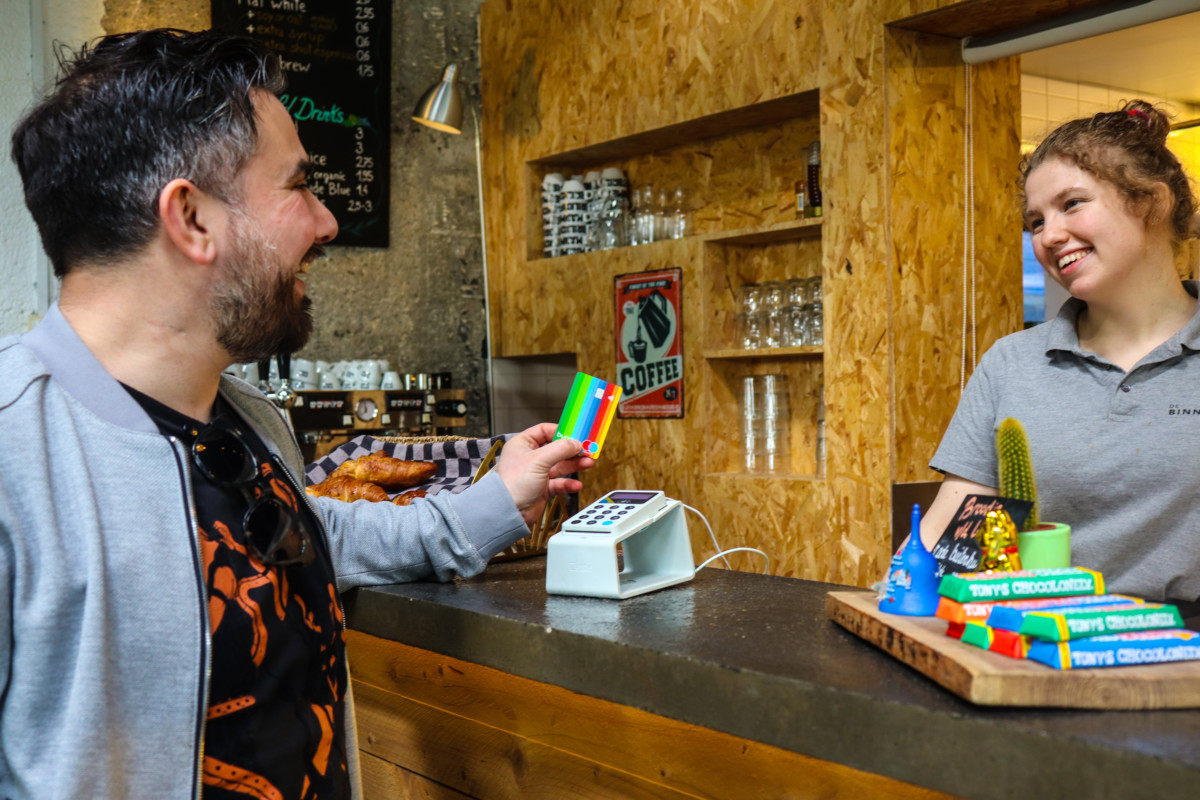
Something that has made freelancing in the Netherlands so much easier for us is doing our business banking with bunq, a revolutionary bank from the Netherlands. They’re a completely digital bank with awesome customer service in lots of languages and a super-easy setup system. We’ve raved about them previously because of how great they are for expats, and we also think they’re the perfect bank for freelancers. So we sat down with them to talk about all the ways you can improve your freelancing experience in the Netherlands, and came up with these twelve points. Some of them showcase bunq Business Account features, and some are more general, but they all will contribute to helping you find freelancing freedom in the Netherlands.
Try to keep your freelancing in the Netherlands structured
A lot of us get into freelancing for the flexibility, but there’s a point at which that can be a disadvantage as well, especially if you’re someone who *cough* sometimes procrastinates *cough*. One advantage of working in an office is being accountable to someone: when you’re a freelancer, you’re only accountable to yourself, which is difficult at the best of times. There is always the danger of being so flexible with yourself that you get nothing done (this is obviously not a danger that we have ever experienced personally, of course).
Coffee breaks are important, though. Image: DutchReview
One way to combat this is by being really structured and strict with your time. Maybe you don’t want to work a 9-to-5, but keeping to an eight-hour-day rhythm can be really helpful. It allows you to have a work-life balance, and to have a sense of accomplishment when you finish the day — because there is always more work to be done when you’re freelance. In the long run, having a good work-life balance will make you a better and more effective freelancer — and indeed, a happier person as a whole.
Freelancer in the Netherlands: keep on top of your email, but don’t let it drown you
Email is a tricky thing: it’s easy to feel very productive when you answer a bunch of emails, but often you’ll slowly realise that nothing concrete has actually been accomplished by your answering of them. At the same time, at least for most freelancers, a lot of your work will come in via email, so it is important to keep on top of it. But how do you balance these two desires? On the one hand, you want to save your energy for productive tasks, on the other hand you need to bring in new customers.
People have lots of different strategies for this, but they all centre around the idea of structures and systems. Some people will put a time limit on being in their email account: an hour in the morning, an hour in the evening, or something like that. Or they will only open their email when they are able to handle what is in those emails immediately — so not, for example, when they are working on something else. You’ll find for yourself what works for you, but as with almost all of these tips, the key is being structured with your time and your processes for dealing with all the different aspects of freelance life in the Netherlands.
Make freelancing in the Netherlands easier: scan all your receipts
One of the major differences I’ve noticed between freelancing and that salaried life is the receipts. It’s a real nightmare to gather paper receipts all year in preparation for tax season. They take up space, you lose at least half (maybe that’s just me), and they get easily crumpled, hard to read, and just plain annoying to look at, reminding you of all that hard-earned cash that is now languishing in someone else’s pocket.
Leaving aside all that emotional trauma, gathering your receipts digitally really helps with the physical issue of storing them and keeping them organised. The bunq app allows you to scan all your receipts and connect them all in one go to a particular payment. In future, you can also use this app to search for a particular receipt by keyword. And you can use this app to download PDFs of receipts so you can send them to the relevant parties — for example, to your bookkeeper.
Choose systems that make freelancing in the Netherlands easier
There are always multiple ways to do things, especially when it comes to administrative tasks. Often, we choose to do these tasks in the traditional way: for example, doing things manually or on paper. In our experience, this is one area of life where the digital world is your friend. Inventors and entrepreneurs are constantly innovating when it comes to digital management systems, and bunq is no exception.
There are so many apps developed by bunq that can automate or simplify your business. But because a lot of these are particular to the type of business you’re running, we’re going to focus on just one. By choosing a business account with bunq, you can automatically export your statements and receipts each month to your bookkeeper’s email account. Your business might not yet be big enough to require a bookkeeper, but if it is, this will simplify your life so much.
Know what’s in your bank account at all times, and know why it’s there
It’s very easy to look at a delicious pile of money in your account and start feeling all spendy. If you want to avoid financial ruin (or, less dramatically, an unexpectedly tight month), then we recommend using an app that allows you to keep a clear overview of your finances — like bunq’s business account.
Feeling that bunq happiness. Image: DutchReview
You can sort your money into different accounts, labelled with what you’ll be using it for, just to remind yourself that you can’t actually afford those organic vegetables. You can instantly move funds around if you need to, so no worries there, but being able to visualise what money you have and where it’s destined to go is really helpful. Plus, uh, you can use emojis in the account names. So there is really no reason that you would not want to do this.
Build yourself a community of freelancers
When you’re freelancing, things can get lonely, fast. That’s no fun, especially as most people tend to get more productive around other people. Otherwise, you might find yourself lounging on your sofa, cosy but kind of disgusting in pyjamas, listlessly scrolling Facebook on your laptop when you should be writing emails to potential clients. We’ve all been there.
Maybe you already have freelancer friends, but if you don’t, a great place to meet them is through freelancer meet-ups. Most cities will have them at least monthly, and the easiest way to find them is by searching “freelance [your city]” on Facebook. But another option could also be finding a regular work cafe, maybe even one dedicated to being purely for freelancers or people who work from home. After all, frequently meeting the same people is the best way to make friends with them.
Speaking of freelancer communities, we work at one ourselves here in Leiden! PLNT is a centre for entrepreneurs and startups with a super active community, lots of plants, and beautiful workspaces. Also, we have pet chickens on the roof.
Freelancing in the Netherlands: automatically pay your invoices
It’s not that you don’t want to pay people. It’s just that, well, life gets in the way (and also you don’t want to pay people). So, instead of getting the invoice, reading it, crying, opening your banking app, crying, deciding you’ll wait ’til tomorrow to pay, forgetting to pay, and getting sued, we recommend automatically paying your invoices. That of course doesn’t mean that as soon as an invoice appears in your email account it gets sucked out of your bank account without your oversight — that would admittedly be creepy and terrifying.
So, uh, not that — but bunq has a system which simplifies the whole process of paying someone, to the extent that it doesn’t feel like doing the worst thing in the world. bunq’s business account app allows you to scan an invoice and immediately pay, with the payment details automatically loaded into the app. It’s a super handy feature, allowing you to save heaps of time as well as cutting down on that emotional trauma, and ensure you aren’t that annoying client.
Bonus Pro Tip: bunq allows you to set aside VAT automatically, so when it’s tax time, you don’t have to worry about scraping the money together to pay the tax man. It’s already in your VAT account, ready to go.
Level up your freelance experience in the Netherlands: delegate tasks if you have employees
While you will likely start small when you begin freelancing, you might eventually end up with employees. This should be a time when your workload decreases, as you can delegate tasks to your new colleagues easily. It’s always nice to have someone to discuss things with, and once your employees are settled in, it’s time for you to take a step back and let things happen.
If you wantto do this with peace of mind, especially when it comes to money, you’ll need a system that allows you to quickly grant permission to employees to use the company account, and just as quickly take away that permission if need be. bunq’s business account has an added advantagein this regard: your employees can be allowed to access only certain sub-accounts, so they don’t have access to all of the company’s assets.
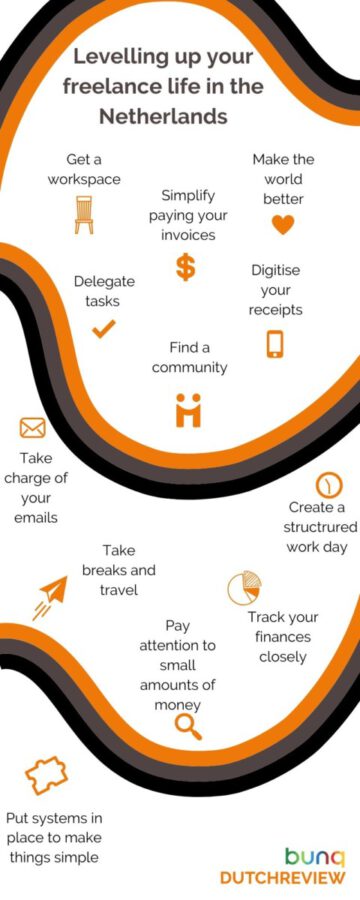
All the tips you need for levelling up your freelance life in the Netherlands.
Take advantage of freelancing in the Netherlands and travel
Part of the reason you decided to become a freelancer was likely because of the increased flexibility working for yourself brings. But it’s very easy to forget you ever had dreams of shorter days or regular travel when you began, now that you’re in the midst of projects, deadlines, or money stress.
Do try to take advantage of travelling when you can though! Especially if you work in a creative industry, then the change of scene is likely to imbue you with fabulous new ideas. And breaks from work are crucial if you want to avoid burnout, which can be a real problem amongst freelancers.
Freelance life in the Netherlands: pay attention to small amounts of money
It’s easy to focus on big amounts of money when you’re freelancing — I always find that when you have a number you can convert into “rent” or “groceries for the month”, it’s a lot easier to instinctively value it. But actually, it’s also important to pay attention to small amounts of money, because as much as it’s a cliché to say it, everything adds up. As the saying goes, save a match, buy a farm. Now, you might not want to buy a farm, but you almost certainly want to improve your general financial situation. So basically, don’t dismiss opportunities to increase your revenue, even if it’s only a small amount.
Keep an eye on your money with bunq. Image: DutchReview
One way that you can earn that extra coin with no effort on your part whatsoever is paying attention to the interest rates your bank offers. bunq offers the highest interest rates around — 0.27 percent currently, which is a whopping nine times higher than any other bank.
Not only that, but the interest rate is applied to all of your sub-accounts, not just your savings account, so you’re getting as much interest as possible. And, best of all, you get paid that interest monthly, so no waiting until the end of the year to figure out what you’re getting. Basically, this is the perfect, zero-effort way to make a little bit of money — and little bits of money always come in handy in the end.
Stability while freelancing in the Netherlands: get yourself a regular workspace
When you become a freelancer, you’ll likely work from home, and it can be really tempting to just work from the kitchen table — especially if you’re tight on cash and don’t feel ready to invest in a fancy desk and chair. It’s totally fine to work anywhere, but it’s best if it is the same place most of the time, and it should be a quiet place where people won’t disturb you.
Something that worked for me when I was a student was sitting on a cushion on the ground in my bedroom and using a coffee table (which I somehow owned before a desk) as a table. It worked! Though admittedly, an actual desk is a lot more fun, so I’d still recommend that above my cushion contraption. But basically, be creative and form your own space. If you’re the kind of person who is easily distracted, check out coworking spaces near you — many big cities even offer free spaces for freelancers to work!
Freelancing in the Netherlands: try to make the world a better place
A lot of us come into business hoping to make the world a better place, but it’s easy to lose sight of that amidst money stress, employee drama or just daily life. You can get sucked into the grind and forget what made you want to be a freelancer in the first place. To be fair, solving the world’s problems is a pretty big ask, so it makes sense that most of the time, it feels easier to put out head down and ignore it all. But just because you can’t solve the world’s problems all by yourself doesn’t mean that you can’t make the world better in some tiny ways.
In addition to controlling where your money is invested, bunq also has just started offering a Green Card! This is a beautiful, stainless steel card that lasts longer than a plastic one. Every time you spend 100 euros with the card, you plant a tree — so if you’re using a Green Card with your business account, you’ll soon have a forest planted.
One way you can do this is by taking control of where your money is invested. If you’re running a business, you might have quite a significant amount of money in your bank account, but even if you don’t, where it is invested matters. After all, it can either go towards, for example, backing renewable energy companies rather than fossil fuel ones. And, best of all, it’s the sort of change you can make with very little effort, especially with bunq, where all the investments they make are ethical, and where you have total control over the enterprises your business supports.
Freelancing is an amazing way to work if you get it right, and setting yourself up for success is the surest way to have a great start. Doing your business banking with bunq will definitely help with that — it has for us, that’s why we’re so happy to bring you an article with them.
Got any other freelancing tips for us? Let us know in the comments below.
Feature Image: DutchReview Editor’s Note: This article was originally published in February 2020, and was fully updated in December 2020 for your reading pleasure.
Moving to Rotterdam is a great choice for many expats. It’s the second-largest city in the Netherlands and my home in this country. When I first moved here, there were a lot of things that had to get sorted out, and it always felt like every new day brought with it a new problem I had not thought of.
But one thing I can tell you for certain is that I fell in love with the city as soon as I got off the train. It is not like other Dutch cities in a lot of ways. I was happy with my choice to move here for a few years, especially after I experienced the big-city-vibe in this small city.
Disclaimer: I come from India guys. Any Dutch city is small for me.
I was moving here as a naive 22-year-old master’s student and had no idea what I was getting myself into. I barely did any research about actually living here in Rotterdam and all the things I had to take care of. I had not yet discovered DutchReview where we have everything you need to know about moving to Rotterdam and more, so it was a little difficult. That’s why I have a few tips for you to keep in mind when you get here!
The infamous Erasmusbrug. Photo credits: Mlefter/Wikimedia Commons/CC3.0
Help! How do I pick which neighbourhood in Rotterdam I’m going to move to?
When you’re looking for the ideal place to live in Rotterdam, you will not be hard-pressed to find something you like. Each one has a personality of its own. It all depends on your priorities on why you moved to Rotterdam (whether to study or to work), and what kind of lifestyle you’re looking for. Whether you’re looking to live close to Woudestein because you’re a student at Erasmus University, or if you want to live in the city centre, here’s a list of all the neighbourhoods you could choose from:
Rotterdam City Centre: Live right in the city centre with the best attractions like the Erasmus Bridge, the Buttplug Gnome, and more.
Rotterdam West: This is one of the most diverse neighbourhoods in the city, where housing prices between blocks can differ significantly. This would be ideal for anyone starting their studies or work at the Erasmus Medical Centre. This is also where the beautiful Historical Delfshaven is located, with its old Dutch architecture that survived the bombing.
Rotterdam Noord: This neighbourbood is just north of the central station. This is the place for you if you want to live amongst neighbours who don’t have parties every other weekend. Populated mostly by working professionals and families, consider moving to Blijdorp, Oude Noorden, Bergpolder, Liskwatier or Hillegersberg.
Kralingen: rumoured to be a “posh” neighbourhood, but is a popular choice for students of Erasmus University. It has the Kralingse Plas park and lake for you to take your evening strolls when the weather is not too bad.
The other neighbourhoods are Noorderiland, Rotterdam Zuid, Katendrecht, but that’s not all! For a complete guide to neighbourhoods in Rotterdam, check out our article on the website.
It’s not as pricey as New York (yet). But buying a house in Rotterdam is pretty expensive nowadays too. Image: DutchReview Crew/Supplied
The rental prices are so high! How do I find an affordable apartment in Rotterdam?
That’s going to be a tricky one. Rotterdam is notoriously known for having very high rental prices that seem to be increasing every year. People spend months looking for homes they would like to live in and are affordable as well.
Whatever your reason for looking for an affordable home in Rotterdam, one tip I can give you is to look for a place that is outside of the city centre. The house prices here are generally lower. If you’re looking for a studio apartment for rent in Rotterdam then be sure to check out HousingAnywhere as they have some quality listings.
How do I register at the municipality in Rotterdam?
One of the most important things you have to do when you’re moving to Rotterdam (either from abroad or from somewhere else in the Netherlands), is to let the municipality of Rotterdam know where you’re going to be living and where you’re coming from.
You need to make an appointment online or give them a call, and submit the application form, as well as provide a valid ID, and your valid birth certificate. But remember that if it’s not in Dutch or English, you’ll have to get it translated and have it legalized and apostilled. There are also different documents that you need to bring for your appointment depending on your living situation. Check their website for more information!
After you register with the municipality, you will be given your burgerservicenummer (BSN). This is your social security number, and you will need it for your rental contract, when you get a job, and when you want to open a Dutch bank account.
How do I open a bank account in Rotterdam?
So, you have found a place to live in and have registered at the municipality. Now you have to figure out how to open a Dutch bank account. To be clear, it isn’t a legal requirement for you to have a Dutch bank account. But it’s generally cheaper to have one if you’re looking to rent or buy a home in the Netherlands.
For everything you need to know about opening a Dutch bank account, we have covered all the bases for you. Whether it’s about debit cards, credit cards or online banking, you have many options at your disposal. You could even open an exclusively online bank account through banks like N26, so you have a lot of ways to go.
I need water, electricity, gas, and internet. How should I sort out my utilities?
Finding the right providers for all of your utilities will depend on how many people will be staying at your home, how much energy you expect to consume, and so on. It is a long list of things to check off on your to-do list, so we broke it down for you to make things easier.
Now comes the fun part, or at least I think so: decorating your home to make it your safe sanctuary. When I moved to my first apartment, I had all of these dreams of how I would decorate it until I realised just how expensive a single pillow cover costs. Of course, it didn’t help that I was a student on a shoestring budget nor did I know how to furnish my home cheaply. Do you relate to that? Then don’t worry, DutchReview did the research for you. We even have tips to keep your home clean after you’ve decorated it with services you could use like Helpling!
If you’re after cheap electronics awesomeness to pimp your casa, then you might want to wait until Black Friday and digital Monday (both also a thing in the Netherlands). Or until the BTW week of Mediamarkt which is at the end of January and is the electronics equivalent of labor day mattress deals here.
Get your Rotterdampas and start exploring
You have everything sorted, you’ve had your fun setting up your home, and now you want to go exploring! Perfect, because there are a lot of things to do in the wonderful city of Rotterdam. It is predicted to be the most liveable city for expats after Brexit, and for good reason. Sign up for a Rotterdampas which lets you do almost 750 free or discounted things around Rotterdam. After more fun and free things to do in Rotterdam? Or looking for some hidden gems in the city? Or which restaurants and cafés to eat at? DutchReview loves Rotterdam, and so will you. So go exploring!
What are your top tips for moving to Rotterdam? Let us know in the comments below!
Feature Image: vzoest0/Pixabay Editor’s Note: This article was originally published in August 2019, and was fully updated in December 2020 for your reading pleasure.
Is there anything better than some stunning cinematography? Yes — when it’s of the Netherlands! We’ve hunted and gathered five of the best-looking films with footage of Holland that will make you say mooi!
So it’s only right that these gorgeous shots of the Netherlands get a topic of their own. Here we go!
Scheveningen/The Hague
Scheveningen is almost impossible to pronounce as a non-Dutch speaker and trying to might result in serious tongue-injuries. The beach town right next to The Hague does make for an awesome movie (by SVID).
Rotterdam
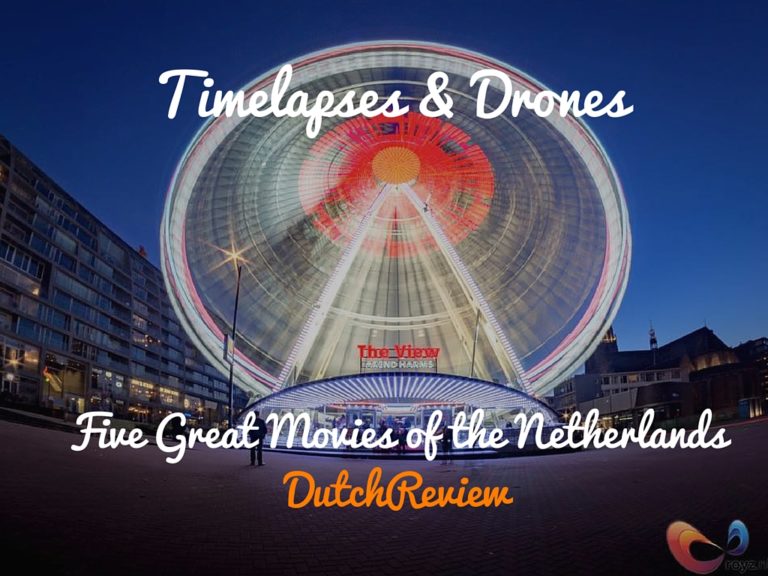
The skyline, sunsets and the Kuip. It’s all there, Rotterdam is such a great city for such a movie (made by Tim van Vuuren) that we had to include another one. A testimony to Rotterdam’s ever-evolving landscape, here’s a timelapse (by Timo Bongers) of the Ferris wheel right next to the Markthal:
Leiden
You knew the town of Leiden was gonna make the cut in this article if you are a frequent visitor of DutchReview. The most picturesque town of the Netherlands shines once again in this production by Arne Wossink.
The Dom in Utrecht
If I recall correctly the maker of this movie got fined by the municipality of Utrecht for making this beautiful drone movie of the Dom Tower in Utrecht. Bizarre of course! Should have received a medal for the free city marketing he was doing.
Amsterdam
Couldn’t really leave our capital out of the article right? Great movie by Jonas Hofmann.
What did you think of these incredible movies? Make you want to visit? Which cities and towns should we feature next time? Let us know in the comments below!
Feature Image: DutchReview/Supplied Editor’s Note: This article was originally published in March 2016, and was fully updated in December 2020 for your reading pleasure.
As of midnight on Sunday, Eurostar trains are no longer running to and from London, as Belgium has closed its borders to the UK, reports NU. Ferry services between the UK and the Netherlands have also been halted.
The Dutch government does not yet know when train services to the UK will resume, as the Belgian government has not yet clarified how long the borders will be closed.
According to Dutch Railways, affected travellers with previously booked trips will be able to request a refund.
Ferry docking ban
Ferries carrying passengers are also no longer permitted to dock in Dutch ports. The Dutch government imposed this measure on December 20 with immediate effect. The ban will remain in place until at least January 1.
The docking ban means that ferries with passengers will no longer be able to depart the UK for the Netherlands. Dutch nationals who are now unable to return to the Netherlands are advised by the government to “arrange accommodation in the UK and await further developments.”
Freight transport not affected
Freight transport is not affected by this ban and may still be shipped between countries. Lorries and lorry drivers may also continue to cross borders by ferry using the Green Lines.
Will your travel plans be affected by the rail and ferry docking bans? Tell us in the comments below.
A survey carried out by the FNV trade union has found that more than one fifth of staff working in nursing and care homes do not want to be vaccinated against coronavirus.
More than 9,000 employees of the care and welfare sector were involved in the survey, AD writes. Of those surveyed, over one fifth responded that they definitely do not want a vaccination, 13% said they “think not” and 18% said they were in doubt about getting vaccinated.
Guinea pigs
For many of those surveyed, the reasoning behind their doubts was based on the speed at which the vaccine had been produced. Those who said they were apprehensive about the vaccine cited the scientific basis as a worry, given that the vaccine was produced so quickly.
Those who do not want to be vaccinated, or who are unsure of the vaccine, also said that they do not want to act as guinea pigs, the survey found. They worry about any potentially harmful side effects that may come to light once the first group of people are vaccinated.
Kitty Jong, vice-chairman of the FNV tells AD that “care employees who are not positive about it feel like guinea pigs… These people understand that they work with vulnerable elderly people, but they are also concerned about their own health. ”
Healthcare staff will be amongst the first group of people in the Netherlands to receive the vaccine on January 8.
More information
Jong believes however, that those in doubt may be convinced to take the vaccine if they receive more information and have their questions answered. She hopes that Rutte will understand healthcare workers’ concerns.
The Ministry of Health, Welfare and Sport hopes to offer more information about the vaccine through public campaigns involving advertisements and social media.
Consequences
Dr Hans Zaaijer, a professor of microbiology, tells AD that if healthcare workers refuse to get vaccinated, there must be consequences. “If you work in an institution with vulnerable people, you can demand that they participate in certain vaccinations. There is no right to be allowed to do that work unvaccinated.”
Those staff who refuse to get vaccinated may, as a result, no longer be allowed to work with vulnerable groups of people.
Do these numbers surprise you? Let us know your thoughts in the comments below.
“I’m moving to Youtrekt!” I shared with excitement, “Youtrekt, Netherlands!”. And so it was, that my Australian drawl butchered the name of my future home of Utrecht, my lazy tongue running the syllables into one, the harsh intonations simplifying it to some kind of Russian Star Trek planet.
I even led my Australian family astray in my pronunciation; if ever lost or kidnapped I would not be found, as officials would be quite uncertain as to where the imaginary land of “Youtrekt” lay. Utrecht City, however, would likely be easier for them to find.
When I arrived here, I was quickly put straight. Or, attempted to be put straight. Politely corrected. Told to say it right. At times, laughed at. It’s not as if I hadn’t tried to learn Dutch prior to arriving – I had over 80 basic phrases down. They weren’t perfect, but I had spent more than a few hours hoarsening the back of my throat in an effort to learn the guttural rolls of the Dutch language.
Because Utrecht is not pronounced Youtrekt, as an Australian would be intended to pronounce it, to write my best phonetic impression would result in some tangled creation of vowels and consonants that looks something like: ‘ooghc-treyh-chkt’. Ew.
The problem is, well, everything. The title of the fourth-largest city in the Netherlands is just a tangle of letters that should never follow each other. And here’s a clue: if you, as a visitor or expat THINK you are saying it correctly – you’re probably not.
Utrecht City itself
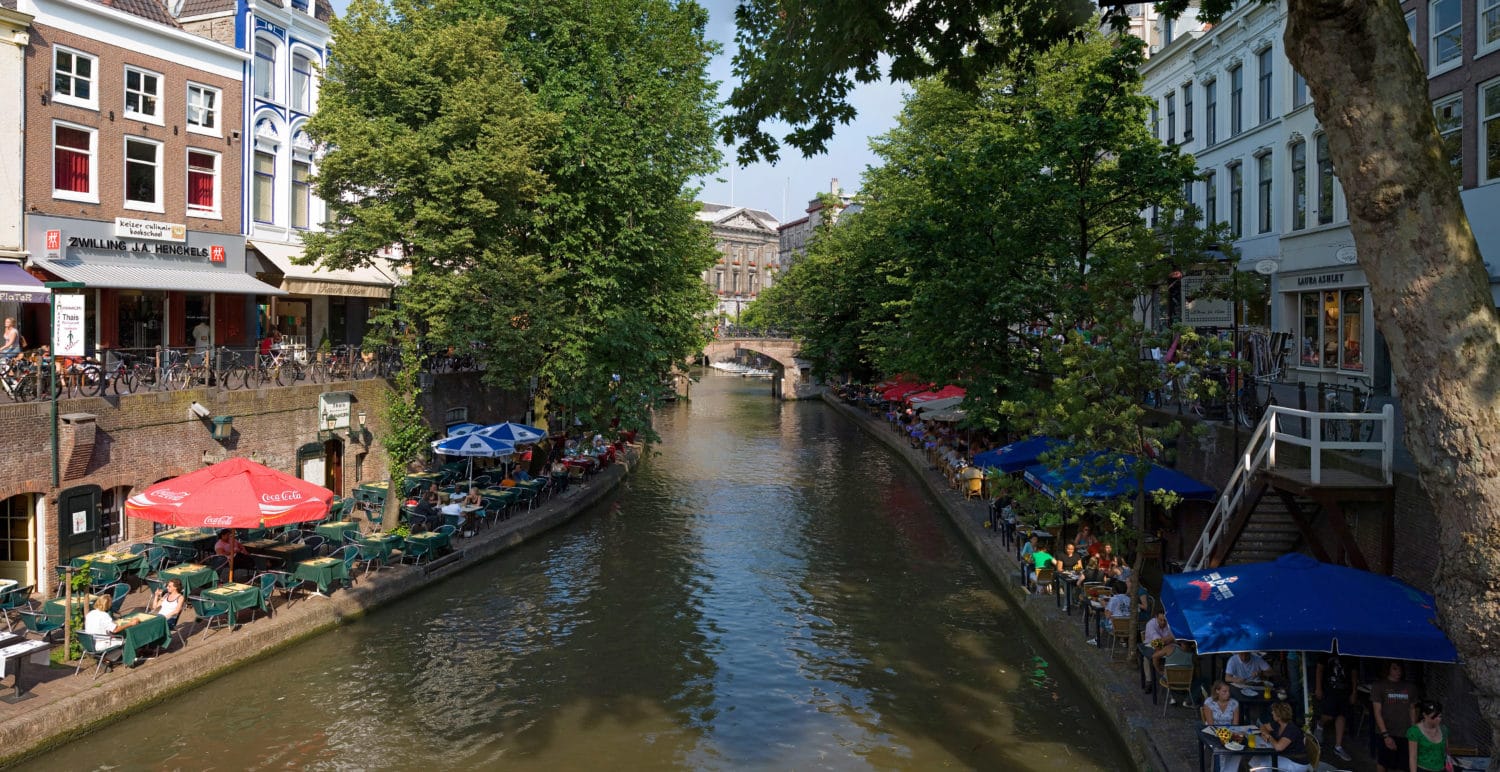
It’s not Utrecht’s fault. Contrary to the name pronunciation, Utrecht is, well, delightful. It’s a fairy-tale village with beautiful canals bordered by quaint terraces along with the convenience of all of the giant capitalist corporations that make the world go round. The name Utrecht does little to convey the namesake’s beauty.
How can such a beautiful city be so hard to pronounce? Image: Diliff/Wikimedia Commons
Arriving here with the flurry of international students one September, I quickly fell in love with the hustle and bustle of Utrecht Central Station. I learnt quickly of the value of OV chipcards, and the inherent danger of stepping onto a bike path that is cleverly disguised to a non-local as a red footpath. I repeated the phrase ‘Sorry, English?’ so many times now that I’ve perfected it into a beautiful, exquisitely executed sing-song. And after many disappointing taco nights, I’ve finally distinguished between slagroom (whipped cream) and zure room (sour cream).
In short, I’ve become much more educated, cultured, as much of a Dutchie as I could ever hope to be. The perfect professor of pronunciation.
Utrecht City: calling it like it is
If I taught a fellow foreigner how to say Utrecht now, I would ask them to picture hacking up a loogie in the back of their throat, like when you have a cold and get rid of phlegm in the shower. I would request they put on their worst Transylvanian accent, preferably learned from The Rocky Horror Picture Show. But first, I would, of course, make them do multiple vocal warm-ups, some facial stretches, and sign a waiver to compensate for the exercise their throats were about the endure. Safety first, after all.
I would teach them how to pout their lips like they’re back in high school preparing for their first sloppy kiss, lips in the shape of a platypus’ beak simply in order to make the ‘OOH’ sound, then ripping their lips back wide for ‘treyh’, like a bad French accent with a guttural roll, the hardest Dutch sound to master, and then spit. Wait, no, just pretend that part, before rounding it off with a ‘t’ as delicate as a ballerina.
And then, I would advise they go ask a native Dutch speaker because after eight months of this being my home, I still have no idea. So, please don’t ask me to pronounce Groningen.
What’s the hardest Dutch city you find to pronounce? Share it in the comments below!
The Dutch government has announced a flight ban against travellers coming from the UK, in effect as of 6 AM this morning. The restrictions are intended to limit the spread of the new more infectious mutation of the COVID-19 virus that is circulating in the UK, which has also been discovered in the Netherlands.
The UK imposed stricter measures for London and the southern and eastern parts of the country on Saturday afternoon. In these affected regions, retail, gyms, and other facilities have closed, and the British government has issued urgent advice against travel and inviting guests to the home.
It’s in response to this report from the UK that the Netherlands has revised the travel advice, according to the cabinet’s press statement. The RIVM recommends that “pending further information and an explanation of the epidemiological situation in the United Kingdom, any introduction of this virus strain from the United Kingdom be limited as much as possible.”
The ban is in place until January 1, though it may be extended. The restriction does not apply to medical personnel.
GGD detects mutated strain
A coronavirus case in the Netherlands at the beginning of December revealed the same variant of the virus characterised in the UK. The GGD is further investigating this case to determine where it came from and whether any related cases can be identified.
The Dutch government is closely monitoring the development of the situation abroad and investigating the possibility for additional measures against other forms of transportation. For now, travelling by train, car, and boat is still permitted, although the cabinet reiterates the advice: “do not travel, unless strictly necessary.”
According to the NOS, Schiphol Airport and KLM are investigating what the impact of the ban on travellers will be. For the time being, most flights to the UK will take off as scheduled with passengers and the aircraft will then fly back empty. “You can no longer book a ticket on these flights,” said a spokesman.
KLM advises affected travellers to keep an eye on the status of their flight via the KLM website.
Will your plans be affected by the new travel ban? Tell us in the comments below.