Home Blog Page 593

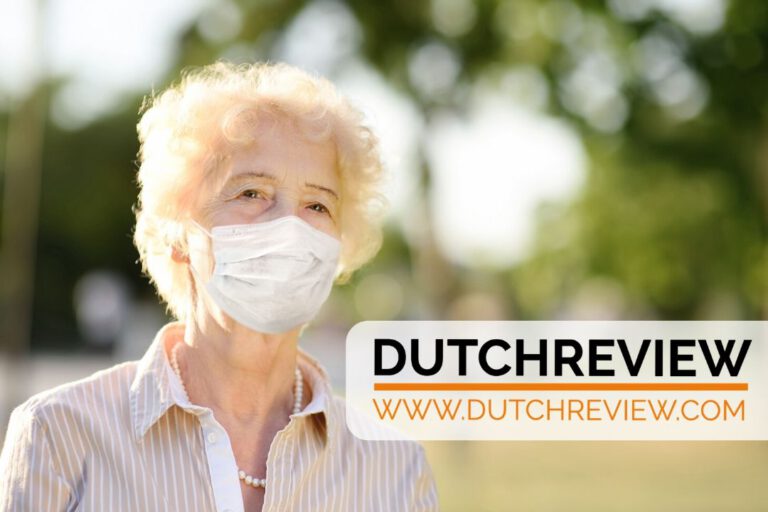
Mandatory quarantine for people who had close contact with coronavirus patient

0

There will be a mandatory quarantine for people who seem to be possibly infected with coronavirus based on a source and contact investigation, the Minister for Health, Hugo de Jonge, has announced to parliament. 

This rule will apply to people who may not have (yet) tested positive for coronavirus, but who have had close contact with someone who is confirmed to have the virus. This new rule has arisen because people are not cooperating with source and contact investigations by the GGD.

At the moment, people who have had close contact with a coronavirus patient are only urgently requested (but not required) to quarantine. Currently, the quarantine period is 14 days, but based on feedback from RIVM Director Jaap van Dissel, that could potentially be shortened soon to 10 days.

The tightening of quarantine rules will hopefully help the Netherlands avoid a second wave, Minister de Jonge says to NOS. “In recent weeks we have heard from the GGDs that people are not cooperating properly with the source and contact investigation. This is our shoring-up strategy to prevent us from having a second wave.”

This rule will come into effect halfway through next week. The regional security councils are pleased with the move. “We asked for it ourselves. We support this,” says Chairman Hubert Bruls of the Security Council. Enforcing the quarantine will fall to the regional security councils, and is already permitted under the Public Health Act.

Quarantine for travellers from code-orange zones and mandatory cooperation with GGD still in the works

Minister de Jonge also hopes to make quarantine mandatory for travellers returning from a code-orange travel zone. However, this particular mandatory quarantine would require a legislative amendment, so we probably won’t see this happening next week.

De Jonge also wants to make it punishable to not cooperate with the GGD’s source and contact investigations. “Cooperation could be enforced by imposing an order subject to penalty. This would not be an alternative to the quarantine measure, but an additional tool to improve cooperation in both source and contact investigation and quarantine.” The punishment for not complying still needs to be worked out by the Public Prosecution Service.

There will be a debate in the House of Representatives today on the government’s response to coronavirus. One potential critique will be the question of whether the security councils and police officers really have enough resources to actually enforce a mandatory quarantine.

You can follow DutchReview on Facebook for more updates on coronavirus in the Netherlands.

Feature Image: DutchReview/Canva

BREAKING: Facebook, Instagram ban stereotypical images of Zwarte Piet

Facebook and Instagram users can now report images of the stereotypical Zwarte Piet for removal. “New wave” Zwarte Piets, such as soot streaks instead of blackface, will still be allowed on the platforms. 

Removable content will include images that “clearly uses black face paint or makeup to darken the colour of the face, along with other stereotyping features such as a wig with curls or large lips.”

Zwarte Piet has been a hot button topic in the Netherlands in recent years. The golliwog-like figure, typically presented in blackface, with gold hoops, and a black curly wig has been accused of being reminiscent of slavery and Dutch colonial rule. Recently, Dutch Prime Minister Mark Rutte came out in opposition to the figure, acknowledging the presence of institutionalized racism in the Netherlands.

What images are still allowed?

The below image would be considered inappropriate under the new rules due to the blackface, curly hair, and painted lips.

zwarte-piet-black-piet
Image: Danny den Otter, Haus of Make-up/Wikimedia Commons/CC4.0

However, the following image depicts a Pete with soot streaks, so would likely be allowed under the new rules. Facebook has not yet specified if the presence of a black wig without blackface would be removable.

soot-pete-zwarte-piet
Image: Ziko van Dijk/Wikimedia Commons/CC4.0

Zwarte Piet and the use of blackface are part of an “ongoing history of dehumanization and denial of civil rights” worldwide, the American company states.

However, some uses of the images are excepted from the rule. News reports, or messages from opponents of Zwarte Piet, will still be allowed.

The company says that the decision is not directly caused by recent Zwarte Piet debates, the Black Lives Matter movement, or the recent advertising boycott. Rather, it is a larger, ongoing process by Facebook against discrimination.

The company acknowledged that the move could mean Dutch users will depart the platforms. “This could be a setback, but it is the right choice for us,” the company said in a press briefing, reports NOS.

Jewish depictions also banned

Images of Zwarte Piet aren’t the only items targeted by Facebook and Instagram. Photos or cartoons that show stereotypical depictions of Jews will also be able to be reported and removed. Facebook says that such images are used to fuel anti-Semitism.

What do you think about the changes by the social networks? Tell us in the comments below!

Feature Image: Danny den Otter, Haus of Make-up/Wikimedia Commons/CC4.0

Coronavirus update: 4036 new cases, percentage of positive tests increases

0

This week the RIVM has reported 4036 new coronavirus cases, another huge increase on last week’s 2588 infections.

There have been nine deaths from coronavirus this week, in comparison to six last week. However, the number of hospitalisations of coronavirus patients has decreased since last week, dropping to 38 this week from last week’s 44.

Another change since last week is that the percentage of coronavirus tests coming back positive has increased to 3.5%. Last week, this number was only last week’s 2.3%

RIVM director Jaap van Dissel briefed the Dutch Cabinet this morning on how the coronavirus situation in the Netherlands. He notes that most people who are getting coronavirus at the moment only have mild complaints, which makes the virus more difficult to track and trace.

Dutch town has a positive coronavirus test rate six times the national average

The city of Bergen op Zoom in North Brabant had over 14% of coronavirus tests from the past week return positive, which far exceeds the national average of 2.3%. The relatively high numbers may be due to the city’s location near the Belgian border, making it a popular tourist destination. Approximately half of the 139 infections in Bergen op Zoom are people from the Moroccan-Dutch community, so the outbreak has also been linked to Eid-ul-Adha Muslim holiday celebrations.

Amsterdam and Rotterdam make face masks in busy areas compulsory

Two municipalities, Amsterdam and Rotterdam, have made face masks compulsory in specific busy areas. The measure applies only to people aged 13 and above. During the weekends, there’ll be a team of enforcers reminding people to wear a mask and giving them one if need be. Those who do not respect the rules risk a fine of €95.

Press conference: Rutte puts Netherlands on notice, gives municipalities more power

Prime Minister Mark Rutte and Minister of Health Hugo de Jonge held a press conference after Dutch coronavirus infections soared in recent weeks. Rutte explained that avoiding a second lockdown means people need to take the precautions seriously, and has given more power to municipalities to handle the issue locally.

Follow DutchReview on Facebook for more information on coronavirus in the Netherlands.

Feature Image: DutchReview/Canva

Sweltering summer could break Dutch heatwave record

0

As temperatures fly into the 30 degree range once again today, the Netherlands could be facing a record heatwave in the coming days. 

Dutch tropical days are unusual in themselves, but we could be having eight of them in a row! Maximum temperatures today will range from 29 degrees in Wadden to 35 degrees in the south. Another two days like this, which weather forecasters predict, and we’ll break the national record.

Thunderstorms this afternoon could provide a little relief and momentarily lower temperatures. The showers could be accompanied by gusts of wind and hail in parts of the country.

By Thursday, maximum temperatures could drop to 25 degrees, but the heatwave is certainly not over yet.

Hazards to be aware of during this heatwave

Heatwaves put strain on Dutch water supplies, with empty reservoirs threatening to dry up taps in some parts of the country. Using water sparingly is vital, so avoid washing cars and filling swimming pools at this time.

But staying cool is also important, so take the opportunity to head to the beach, take a dip in a lake, or surf some Dutch waves.

Be aware though that bodies of water in the Netherlands also have hazards to be aware of, be they lakes, rivers or the sea.

How will you be spending this heatwave? What are your tips for staying cool this summer? Let us know in the comments below.

Featured Image: Haley Phelps/Unsplash

Netherlands’ largest cocaine lab, busted

0

The largest cocaine washing facility ever found in the Netherlands was raided on Tuesday, in Nijeveen, Drenthe. It’s estimated that the lab had the capacity to produce around 150 to 200 kilos of cocaine per day. 

Found in a converted horse riding stable, police say the lab had “sleeping quarters and recreation areas also built on the site.” The site was not being used to produce the drug, but rather process it for further distribution. Tens of thousands of litres of chemicals, in addition to about 100 kilos of cocaine base (a smokeable form of the drug from boiled cocaine) was found. It took the LFO (the National Dismantling Facility) three days to dispose of the material.

The 17 suspects

The property owner and 16 other suspects have been arrested, including 13 from Columbia, three Dutch and a person of Turkish nationality. Suspected of producing the drugs, they will face the examining magistrate on August 12 and 13. Police do not exclude the possibility of multiple arrests.

The property owner is a 64-year-old horse breeder and dealer, described by neighbours as an ordinary man, according to AD.

READ MORE | Everything you’ve ever wanted to know about cocaine in the Netherlands

Additional warehouse raids

Warehouses in Elshout and Apeldoorn were also raided on Tuesday, where police found 120,000 kilos of carrier material. Cocaine is extracted from carrier material (like clothing) and converted into cocaine base during the cocaine washing process. 

LFO Chief Inspector André van Rijn said in a press report, “This is the largest cocaine laboratory ever found in the Netherlands. Given the number of people who worked there, the installations, the size, the furnishings and the equipment, we estimate the production capacity at 150 to 200 kilos of cocaine per day. This number equals a street value of between 4.5 and 6 million euros.” Police say the investigation will continue.

Follow DutchReview on Facebook for more news in the Netherlands.

Feature Image: Politie Landelijke Eenheid

Man dies after stabbing in Scheveningen; locals say beach town is “a madhouse”

1

A 19-year-old man from Rotterdam has been stabbed to death in Scheveningen. So far, two people have been arrested in connection with the incident, and remain in custody.

Eye-witnesses report that the stabbing took place during a brawl between two groups of young people. Videos have surfaced of the chaos surrounding the incident, showing some of the group running away.

Images have also circulated of a man holding a gun. Initial reports (such as the one above) maintained that the 19-year-old was shot dead, but the police have now confirmed that it was a stabbing. Generally, the whole incident appears to have caused chaos. Nothing is yet known about the motivations behind the stabbing.

The police are reviewing CCTV footage, and have asked members of the public who witnessed the incident to come forward.

Heatwave brings out the worst in Scheveningen

The past few days of heat have drawn enormous crowds to Scheveningen, and most people have not been on their best behaviour, it would seem. Residents of the neighbourhoods nearby have complained about the noise of sports cars which begins from 5am on sunny days.

Illegal campers crowd the beach day and night, and some have even decided that the street is a suitable campsite for their holiday. “It’s a madhouse,” according to a local. Even worse, some highly sophisticated individuals have decided to use the beach as their toilet, RTL Nieuws reports.

Have you been to Scheveningen over the past few days? Let us know how it was in the comments below.

Feature Image: OlgaKropman/Pixabay.

Dutch town has a positive coronavirus test rate six times the national average

0

The North Brabant city of Bergen op Zoom has had more than 14% of coronavirus tests from the past week return positive. The national average is 2.3%, according to RIVM. 

The tests in the city were conducted between August 1-9. “The figures are substantial given the national average,” Bergen op Zoom Mayor, Frank Petter, told NOS. The national average is expected to increase to around 3.5% this week.

Why is the infection rate so high?

Bergen op Zoom sits close to the Belgian border, resulting in an influx of day-trippers looking to shop. “I would like to say to the Belgians: you are more than welcome to shop or have a bite to eat, but not now,” says Petter.

The mayor will discuss a potential face mask requirement on Thursday. The town is also implementing extra checks on catering, supermarkets, and garden centres in the near future.

Outbreak at a mosque

Additionally, one test street next to El-Feth mosque recorded 53 positive infections out of 452 total tests — an infection rate of almost 12%. Approximately half of the 139 infections in Bergen op Zoom are people from the Moroccan-Dutch community.

Petter then makes a link between the Eid-ul-Adha Muslim holiday celebrations and the mosque. Najib el Allouchi, of the El-Feth mosque, told Omroep Brabant the test results were “a wake-up call.”

“Not just for us, but for the whole city. We shouldn’t think that Corona is on vacation,” he says.

Follow DutchReview on Facebook for more information about coronavirus in the Netherlands.

Feature Image: DutchReview/Canva

Dutch coronavirus cases climb, 14 youths test positive after outside party

0

The number of coronavirus cases once again increased over the weekend, with the highest number of ICU cases since June 29. New evidence of airborne infection at a North Frisian party offers a bleak reminder to maintain social distancing practices outdoors. But while cases increase elsewhere, Rotterdam is finally seeing a decline.

A further 632 people have tested positive in the past 24-hours, as the Dutch total nears 60,000. In the past week, RIVM has said that there were 3,466 new COVID-19 infections until August 9. Of those, 577 cases were added to that yesterday. Early data shows that the numbers are 48% higher than the previous week.

ICUs see highest numbers since late June

On Sunday, there were 31 people being treated for coronavirus in ICUs, the highest number since June 29. Preliminary data released on Sunday shows an increasing number of new hospital admissions between Thursday and Saturday, with 13 people newly hospitalised.

READ MORE | Coronavirus in the Netherlands: all you need to know [UPDATED]

There were 118 people being treated for the for coronavirus at hospitals through the Netherlands on Sunday, up by 11, and including 87 people being treated outside of intensive care.

New evidence of open-air contagion 

In the North Frisian town of Dokkum, at least 14 young people were infected at a house party. What is most remarkable about this new spread is that the group was infected in the open air. While many assume they are protected from the virus when outdoors, this new evidence proves otherwise. Social distancing, even while outside, is a must to keep the virus from spreading.

According to local health officials, the party-attendees have all been quarantined.

Less surprising about this new spread is the age of those infected. Infections among young people have been increasing recently, with 17% of coronavirus patients in their twenties, as of July 17. This is compared to 7% in March.

We see here the relevance of Mark Rutte’s message to young people in last Thursday’s press conference. “It’s not done yet, it’s not a joke, and it’s very stupid to act like it is. You’re not only responsible for yourself, but also for others.”

Rotterdam increases testing capacity

There is once again capacity to test residents of the Rotterdam-Rijnmond region for Coronavirus. Previously requiring waiting lists, tests administered by GGDs (the public health services) should now be available for anyone who needs it.

With a testing capacity of 1500 people per day, the goal now is for anyone to get a test result within 24 hours. 

But while test capacity has improved, contact tracing and investigation shortages still persist due to shortages of personnel. It is the responsibility of patients to isolate and inform others with whom they’ve come into contact — the same policy goes for Amsterdam.

Follow DutchReview on Facebook for more information about coronavirus in the Netherlands.

Feature Image: Andrea Piacquadio/Pexels

Dutch taps could run dry after water levels dwindle

0

Emptying water supplies could lead to dry taps in parts of the Netherlands after the heat has put a strain on local water reservoirs.

As temperatures spiked and tourists flooded Dutch cities this past weekend, up to 50% more drinking water was consumed in the Netherlands than usual. Vitens, one of the largest Dutch suppliers of water, told RTL Nieuws that northern reservoirs are emptying too quickly and if precautions are not taken, many taps could run dry.

“If the water continues to empty too quickly, there will be no other option but to reduce the pressure in the pipes. In some places this may mean that no more water comes out of the tap,” says a Vitens spokesperson.

Which areas will be affected?

Vitens supplies water to 5.8 million households in the Flevoland, Utrecht, Overijssel, Gelderland and Friesland areas, all of which may be affected. The provinces of Gelderland and Overijssel are most at risk, as these areas are susceptible to drought and low ground water levels.

1Limburg similarly reported water shortages in the Limburg area this weekend. Waterleidingmaatschappij Limburg (WML) recorded increased water consumption and called for people in the area to use less water. Consumption has since decreased, but with tropical days still ahead, they’re urging customers to continue with caution.

Save water

Vitens is telling customers to use water sparingly. They have asked for people to stop watering their gardens, filling swimming pools and washing their cars during this time. Additional precautions include taking shorter showers and only using the washing machine at night.

Follow DutchReview on Facebook for more news.

Feature Image: Kaboompics/Pexels

4 dead, and 120 people rescued: Dutch beaches raise red flag

0


On Sunday, a devastating and unprecedented day, four people drowned off the Dutch coast. Emergency responders were able to resuscitate the swimmers but they did not survive. 

Sunday was a very busy day for the rescue brigade. In total, 120 people were rescued from the sea, including four who ultimately did not survive. “It is a really black day, really bad. A sad day, I have never experienced it that extreme,” a spokesperson for Kennemerland Safety Region told Hart van Nederland.

Four lives lost

The first of the victims, a 28-year-old man, was taken out of the water in the early afternoon on Sunday at Zuiderstrand. He was rescued and resuscitated but died on the way to the hospital.

Several hours later, another man, 24, was pulled from the water. He too was resuscitated but did not make it to the hospital.

Later in the evening, another person was reported to have died, taken out of the water at Zandvoort. He was reported by bystanders to have been between 14 and 16 years old, reports Hart van Nederland.

Around 8:30 pm, yet another person was rescued from the water at Wijk aan Zee. As with the others, emergency services worked to resuscitate the victim, but their efforts were of no avail. 

The red flag has been raised

Across the entire Dutch coast, the red flag has been raised — swimming is strongly discouraged due to dangerous currents. An NL alert message was sent, reading,  “Enter the water up to knee height, follow directions from the rescue brigade and emergency services.” 


A rescue brigade spokesperson said that the combination of offshore wind and currents in the sea creates a “very treacherous” situation. A busy day on the beach only complicated matters. “Emergency workers can barely drive vehicles on the beach,” a spokesperson told NOS

The red flag is not often raised, but the past week was exceptional. A few days ago it was raised on the Zuiderstrand as well. This also follows last week’s drowning of a 37-year-old Polish man who rescued three children from the water at Juliandorp.

Follow DutchReview on Facebook for the latest news in the Netherlands.

Feature Image: paulbr75/Pixabay