Though, we suppose it’d take a special ear to recognise what each of them actually means! 😆
What is it?
The Dutch have many peculiar ways to express themselves without saying a single word that exists in the dictionary!
But what do all these weird words actually mean? We’ve got you covered! 💯
Here are some of the most popular two-syllable Dutch words and their English meanings:
Dutch
English
Zo zo
Well well…
Nou nou
Slightly impressed
Poe poe
(Un)Impressed – depending on inflexion
Ja ja (quickly)
Don’t rush me!
Ja ja (slowly)
I don’t believe you…
Hé hé (pronunciation: hey hey)
Wait a minute…
Hè hè (pronunciation: heh heh)
Finally!
Nou (slowly)
I doubt that…
Ja, doei!
No way!
Ho ho
Wait a minute!
Why do they do it?
The Dutch have a very expressive way of communicating their thoughts!
Most of these small words are formally defined as modal particles. Modal particles are commonly used in the Dutch language to add a particular mood to what someone is saying.
When it comes to being naked in the Netherlands, there’s a liberal attitude where nude is far from crude. And their relaxed, show-it-all approach couldn’t be less about showing off.
Naturism (being completely naked) is a popular Dutch lifestyle — but it’s more than just tops off for the tulips and bare bums on bikes. 🍑
This can be a real eye-opener for internationals (myself included), especially those from less progressive countries.
So, from their attitude to our anecdotes, here are some things to expect when it comes to nudity in the Netherlands.
Much taboo about nothing
The Dutch are known for their chilled-out policies around drugs and sex work, so the fact that you might catch a glimpse of some naked granny’s in your local park really shouldn’t surprise you.
(Yes, I’m speaking from personal experience. 👵)
Freedom! On this day in 1973 the first nudist beach in the Netherlands is legalized at Callantsoog.🇳🇱 pic.twitter.com/0GEprAKTKt
While baring your bits for strangers may be the subject of your worst nightmares, for the Dutch, it could just be a normal Tuesday evening in the sauna or Saturday afternoon at the beach. 😎
But this approach is more complex than the stereotype of all Dutchies just lighting one up and letting it hang loose.
Not feeling bashful about bodies could come from the early openness to sex education in Dutch schools, or perhaps they just make less fuss because of their infamous directness.
Clearly, the love-yourself-lessons stay with you till old age (seriously, watch out for those naked nans).
Let’s strip it down
Are they all talk? Barely. 😉
Let’s get to the naked truth behind nudity in the Netherlands. Image: Depositphotos
Many activities in the beautiful Dutch landscape are widely enjoyed and enthusiastically accepted while wearing nothing at all. 🤷♂️
In fact, here’s a list of five things the Dutch do nude (aside from the obvious.) 👀
Shared showers
The whistle blows on a hot summer’s day, calling time on your hard-fought hockey match. You and your teammates will wash it all down with an ice-cold beer — but not before you’ve washed down with each other.
Huh?! Well, the Dutch are extremely efficient, and when it comes to post-match debriefs, they’ll save time by doing it as they de-brief in the locker room. 🩲
Many Dutchies grew up showering in communal washrooms for the whole team, sometimes regardless of gender.
Over the years, locker rooms offering a divide between men and women in the showers have become the norm. But in many cases, you still won’t have cubicles.
So grab your soap, pass it along, and call it team bonding. 🤝
Social saunas
Sitting in a sauna could send you into a stress-free, steamy slumber. But just make sure everyone who’s in there with you doesn’t mind the snoring. And the sight.
Because in Dutch saunas, people don’t just leave their problems at the door — they leave their clothes, too. 🤩
This ferry flasher isn’t alone — he’s joined by many daring Dutchies who sunbathe naked on their balconies or on one of the many naturist beaches.
Oh, and fun fact: if you catch someone’s eye while you’re catching rays, there are public spaces that allow more than just nudity. 👇
Public sex is permitted in Amsterdam's "Vondelpark" provided participants do not leave litter, avoid the children's play area and limit their activities to evenings.
Maybe you’ve been camping for a summer holiday and can’t bear the thought of pitching a tent in the beating sun. All those poles and pegs, while the sweat multiplies.
Well, thanks to naturistencamping (nudist camping), maybe you can bare it after all. 😁
Tents can be claustrophobic at the best of times, but getting your kit off while camping looks rather cosy. Image: Depositphotos
There are many popular nudist campsites across the Netherlands, and many of them are even family-friendly.
Flevo-Natuur in Zeewolde or de Groote Keijns in Schagerbrug are supposedly some of the breast — sorry, BEST — for camping au naturel. 🧘🏻♀️
Titillating TV
This is where it gets… really freaky.
Baring it all in public spaces like pools or parks with policies in place is one thing, but stripping down in front of a camera? That’s a whole different, ahem, ball game.
The Dutch have a history of controversial reality TV shows that leave little to the imagination.
From the highly explicit Seks voor de Buch (Sex for the Buch), where contestants made their wildest sexual fantasies come true on screen, to the kids’ (yes, kids’) educational show Gewoon Bloot (Simply Naked), where nude adults answered children’s questions.
Is the future more covered up?
So, Dutch children learn about the birds and the bees at the same time as their A-B-Cs, but are they still as open as their parents (and grandparents) before them?
Some would say body-positivity is gaining more momentum than ever and that Dutch youths embrace the nudity their country promotes. Take this Reddit user’s recent sauna experience:
Perhaps the rise of conservatism and technology, along with instances like the time nude footage from a Dutch sauna was found on a porn site, will eventually lead to a shift in attitude.
For now, at least, the Dutch still seem to love the simple and stripped-down approach to nudity — and we dig it! 😇
What do you think of the attitude to nudity in the Netherlands? Let us know your thoughts in the comments below.
Due to ProRail renovation plans, train services will be reduced or completely halted in multiple locations across the Netherlands for the next two weeks.
So, if you were planning a smooth journey anytime soon — think again. 😬
Will you be affected?
Let’s break down the key upcoming disruptions for unlucky commuters:
Schiphol
ProRail will renew the track in the Schiphol rail tunnel for the next two weeks.
That means trains to, via, and from Schiphol will be reduced between Wednesday, March 12 and Sunday, March 23.
Naturally, you’d want to be prepared if your country faced a cyber attack, war, or a paralysing national disaster. The Minister of Justice and Securityreveals just HOW prepared the Dutch should be.
Every resident must now be capable of self-reliance for 72 hours as the EU advises increased resilience in case of emergencies.
An extra day of preparations
Previous advice informed Dutchies to stock up on enough food and water to survive two days.
Now, the Minister of Justice and Security, David van Weel, tells De Telegraaf they should aim for three.
The minister is happy to see the EU invest more in defence but thinks “the commitment to civil resilience must now increase at the same speed throughout Europe.”
Perhaps the Dutch are just extra prepared to stay indoors indefinitely after all that rain. 🌧
The government is getting ready
While the cabinet is more vocal about defence issues, it also focuses on five sectors to increase resilience: logistics, food and water, electricity, healthcare, and government.
And what are we regular folks focusing on? Buying an extra box of Stroopwafels for a very serious special occasion. 😬
All the necessities to make it through 72 hours in this country. Image: DutchReview
New challenges ahead
The EU continues to support Ukraine in its defence against the Russian invasion. Now, van Weel warns that peace in Ukraine can also bring new challenges, especially cyber-attack risks.
He compares our current situation to the Cold War: “Back then, we knew what to do when the air raid siren went off… After the fall of the Wall, we dismantled defence and, at the same time, the entire civil defence.”
That’s why he and Minister of Defence Ruben Brekelmans announced plans to educate the country on how to act in case of an emergency.
What does this look like? Perhaps emergency guides and booklets handed out door-to-door, an idea that the House of Representatives has already supported.
Do you think you know how to deal with emergency situations? Let us know your thoughts in the comments!
What lies at the very bottom of the Netherlands is an ancient and thriving cultural hub. Known famously as the birthplace of the iconic euro and a city packed with activities — it’s Maastricht!
Just a door knock away from Germany and Belgium, if you’re looking to escape the typical Dutch scenery and plunge yourself into centuries’ worth of history, you’ll find loads of gezellige things to do in Maastricht.
Prepare to enter an almost fairytale-like world filled with Dutch folklore, cultured cuisine, charming landscapes, and mysterious underground caves.
Need to make haste? Skip to an activity that interests you the most!
This post might have affiliate links that help us write the articles you love, at no extra cost to you. Read our statement.
1. Journey into the magical caves of Maastricht
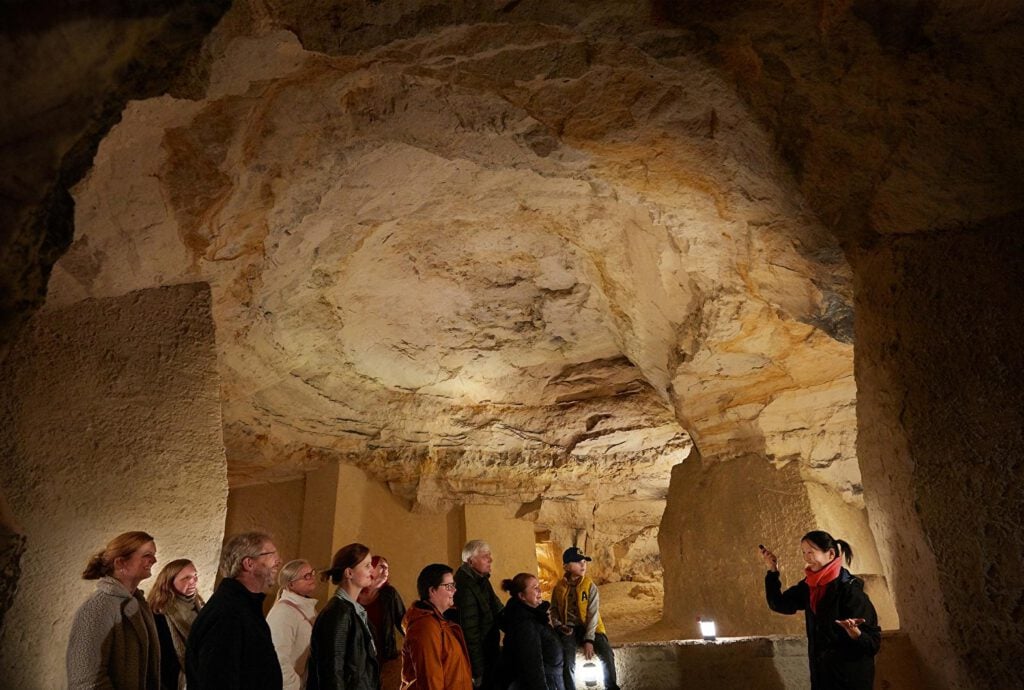
Ever wondered what it’s like to experience a city from below the surface? Then visiting Maastricht’s underground caves is a must.
People of all ages can enjoy learning about the history of these caves! Image: Maastricht Underground/ Supplied
Here, mysterious charcoal drawings, inscriptions, and unique paintings on the wall await you!
With the help of a professional guide, you’re taken on a trip that brings you all the way back. The history to be found in these caves stretches from the Middle Ages to when the people of Maastricht used them as an underground shelter in the Second World War.
Beware, though, you’ll need to stay alert — these caves don’t come with any light, sound, or phone reception.
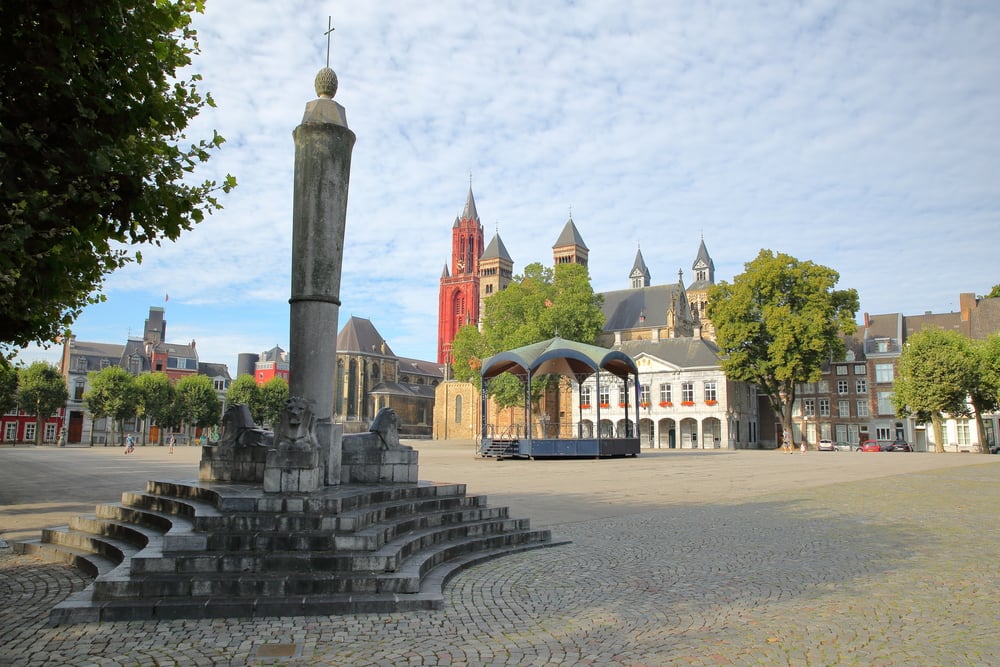
2. Promenade through Maastricht’s lovely Vrijthof Square
At the heart of the city, you’ll find an idyllic ancient square made up of beautiful cobblestones dating back to the 19th century.
On rare days, you can catch Vrijthof Square free of its usual crowd, like this! Image: Depositphotos
Vrijthof Square is home to many historical buildings, fantastic terrasjes(special for the Dutch to indulge in), and restaurants — but the main origin behind its fame lies in its annual Christmas event, Magical Maastricht, where the entire plaza is transformed into a winter wonderland.
Hot tip: If you’re strolling along the Vrijthof square, make sure to check out the beautiful Roman church around the corner, Basiliek van Sint Servaas (Basilica of Saint Servatius).
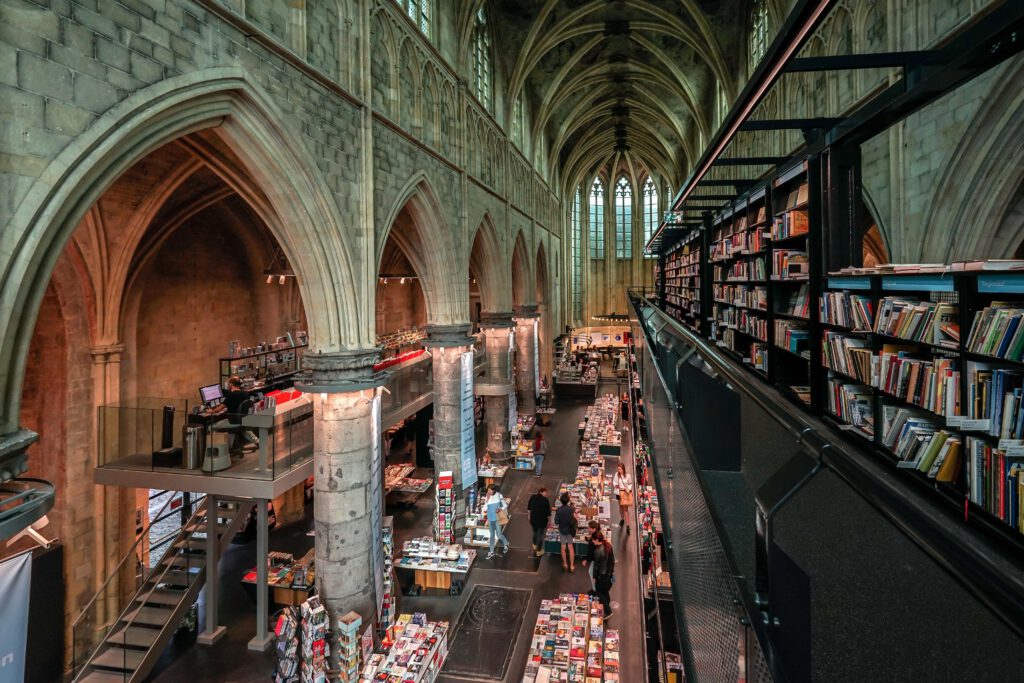
3. (Book) worm your way through Boekhandel Dominicanen
If you eat, sleep, and breathe books, then you simply must visit Boekhandel Dominicanen, located in an ancient Dominican Church in Maastricht.
“Sorry, I can’t hang out. My weekend is fully booked at this library.” Image: Bettina Miera/Wikimedia Commons/CC4.0
Famed for being one of the most beautiful bookstores in the world, Dominicanen’s range of books runs really deep and is suitable for all ages. Even if you’re not a voracious reader, the architecture alone is enough to wow you.
Tip: You can enjoy a gezellige cup of coffee in the bookstore’s café while you sit and imagine yourself in a scene from “Beauty and the Beast”.
💰 Price: Free entry ⏰ Opening hours: Monday, 10:00 AM to 6:00 PM, Tuesday to Wednesday, 9:00 AM to 6:00 PM, Thursday, 9:00 AM to 9:00 PM, Friday to Saturday, 9:00 AM to 6:00 PM, Sunday, 12:00 PM to 6:00 PM 📍 Location: Dominicanerkerkstraat 3, 6211 CZ Maastricht
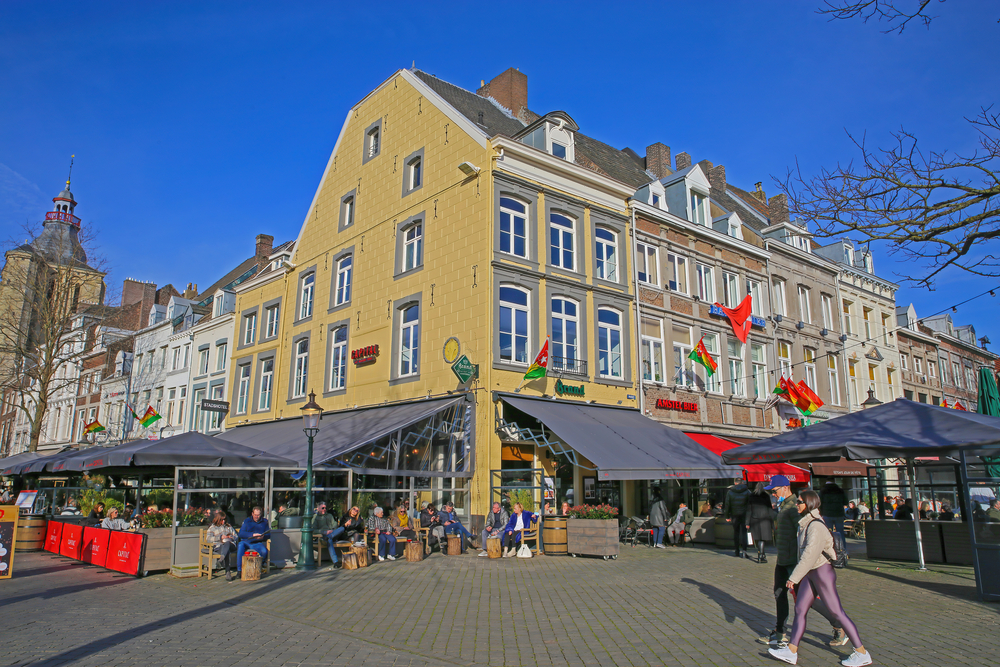
4. Strike a good bargain at The Market Square
Yet another leuk treat that comes with visiting the Netherlands is the many markets this tiny country boasts — and Maastricht comes with its very own.
Amsterdam’s not the only city for bargain lovers… Image: Depositphotos
The Market Square is the go-to place if you’re looking for some unexpected sensory delights, organic goodies, and unique vintage finds.
On Wednesdays, the market offers food and goods, on Thursdays, the organic market takes place, and on Fridays, you’ll find anything from fish to foods and fabrics. On Saturdays and Sundays, you can explore the many antiques and curiosities for sale.
Don’t feel like checking out stalls? The Market Square is also home to the stunning ancient city hall and a number of delectable cafés and restaurants.
You can stay and strike up a good conversation with the market locals — or you can cross the nearby border and join the Belgians on their shopping escapade.
💰 Price: Free entry ⏰ Opening hours: Wednesday and Friday from 09:00 AM to 3:00 PM, Saturday from 10:00 AM to 5:00 PM, Sunday from 12 PM to 5:00 PM 📍 Location: Maastricht, Markt 6211 CM Maastricht
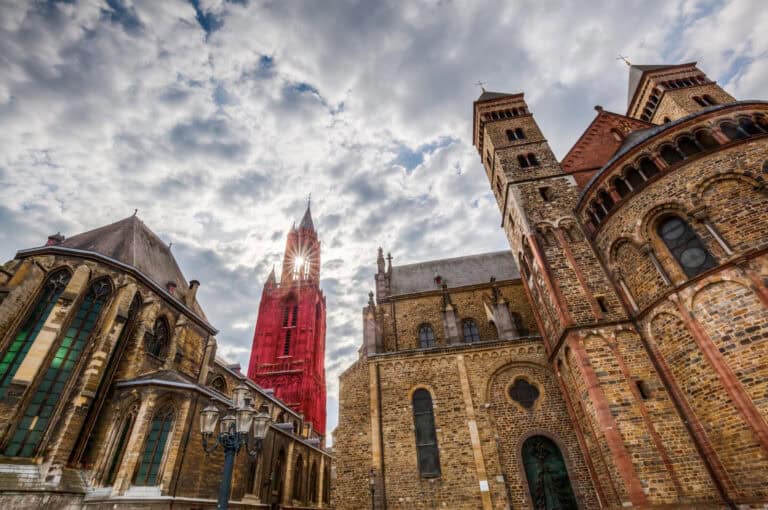
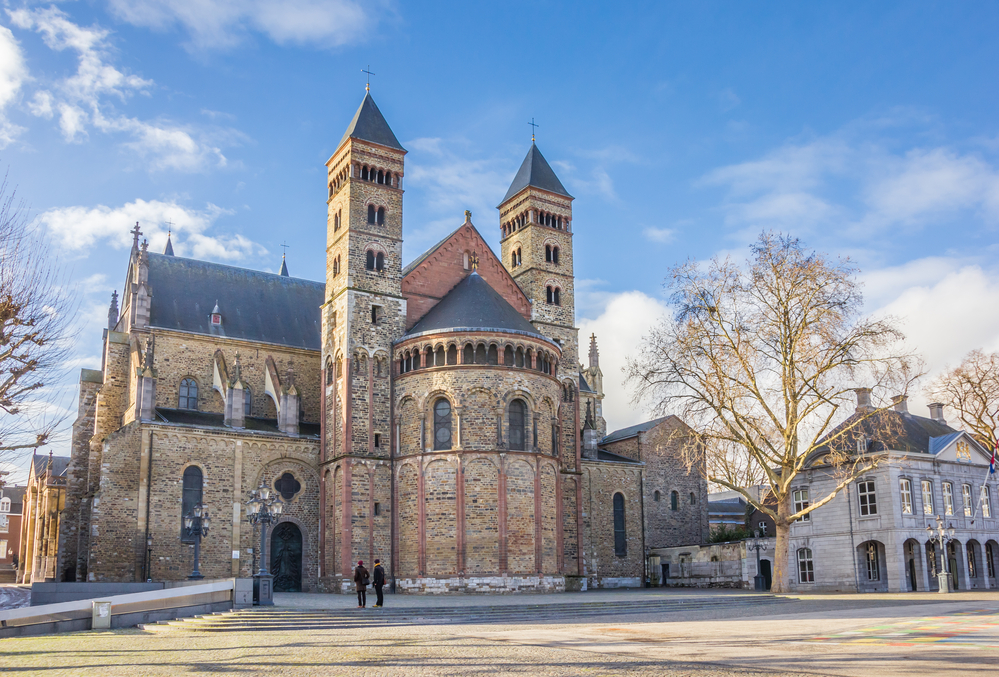
5. Marvel at the Basilica of Saint Servatius’s hybrid architecture
The Basilica of Saint Servatius isn’t your ordinary Roman Catholic church. No. This beauty is a work of art, built with a unique blend of Romanesque, Baroque, and Gothic architectural styles!
A gift from the architecture gods. Image: Depositphotos
The Basilica is situated next to Vrijthof Square, and its name actually stems from an Armenian missionary, Saint Servatius. He lived and died during pre-Julian times (we’re talking 384 BC) and now lays peacefully at rest in this very church.
Are you a fan of treasure? Then make sure to visit the church’s archives! This is where all the ancient fancy-schmancy golden relics are kept, including the Noodkist (a shrine where Saint Servatius’s remains are encased).
💰 Price: €7 for adults, €4 for students and seniors ⏰ Opening hours: Monday to Saturday from 10:00 AM until 5:00 PM, Sunday from 11:30 PM until 5:00 PM. From June 15 to September 15, opening hours are extended to 6:00 PM. 📍 Location: Keizer Karelplein 3, 6211 TC, Maastricht
6. Take a selfie on the Sint Servatius bridge
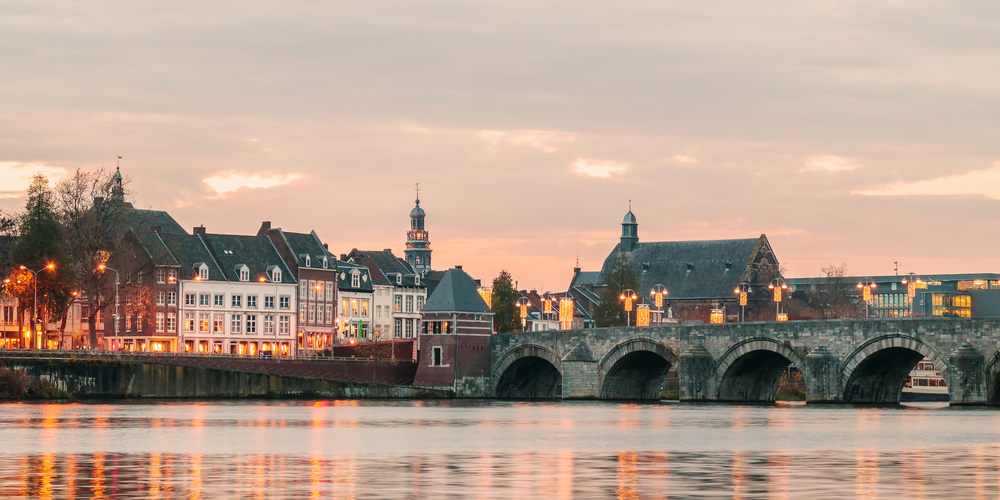
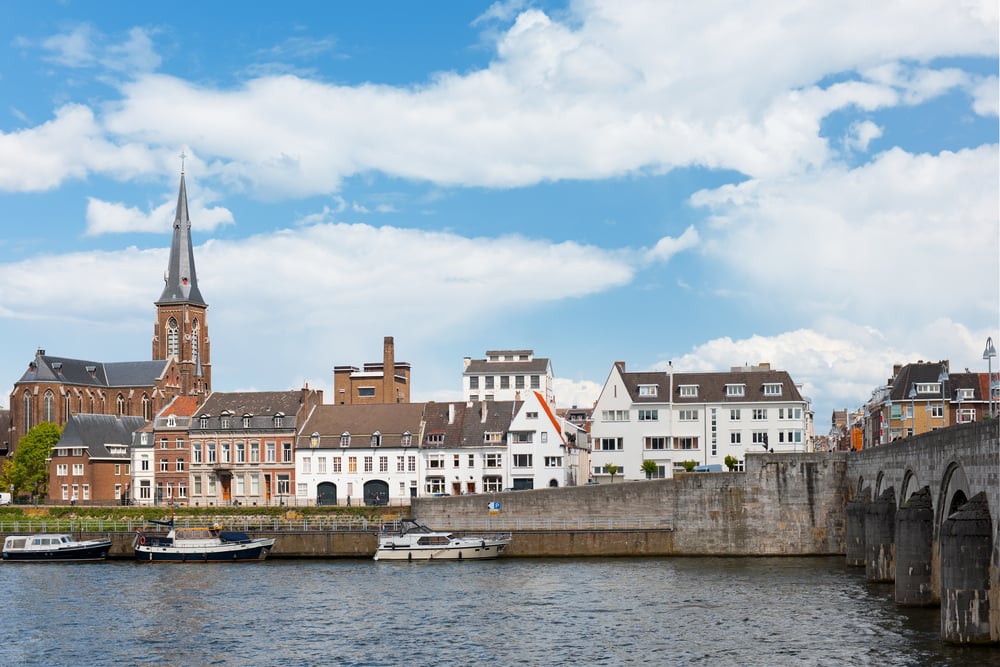
Every city has its own special attraction that makes it worth visiting. For Paris, it’s the Eiffel tower; for Rome, it’s the Colosseum — and for Maastricht? The Sint-Servaasbrug!
The ultimate attraction for the city of Maastricht. Image: Depositphotos
Built in the 13th century, this beautiful stone-made arch bridge is not only one of the most iconic attractions in the city, but it’s also the oldest bridge to ever exist in the Netherlands. Well, at least according to Maastricht locals. 😉
If it’s your lucky day and the weather gods have brought some sun, then the Sint-Servaasbrug makes for an epic place to snap a picture for the ‘gram. It’s also a great spot to watch all the canal boats float down the Meuse River.
A rare find that’s totally bucket-list worthy, the museum offers a visual, sensory, and educational experience that’ll leave you questioning your entire existence. So trippy!
With illusions that make the room around you feel like it’s shrinking, to rooms where you’ll find yourself standing upside down, the museum is open for anyone who’s brave and curious enough to enter.
💰 Price: €16.50 for adults, €13.50 for children and students ⏰ Opening hours: 10:00 AM until 6:00 PM, Monday to Sunday 📍 Location: Mosae Forum 12-18, 6211 DS Maastricht
8. Travel back in time at the Natural History Museum of Maastricht
History buffs, young and old, will enjoy navigating their way through Maastricht’s Natural History Museum. It holds the richest source of information on the prehistoric landscape and wildlife of the Limburg province!
Since the museum is located in the heart of Maastricht, it’s just a stone’s throw from many cafés, restaurants, and shopping centres. So, you can take in all that the city centre has to offer while you’re there!
💰 Price: €7 for children (aged 5-17), €10 for students, €11 for adults ⏰ Opening hours: Tuesday to Friday, 11:00 AM until 5:00 PM, Saturday to Sunday, 1:00 PM to 5:00 PM 📍 Location: De Bosquetplein 7, 6211 KJ Maastricht
9. Indulge in some vlaai at De Bisschopsmolen (Bishop’s Mill)
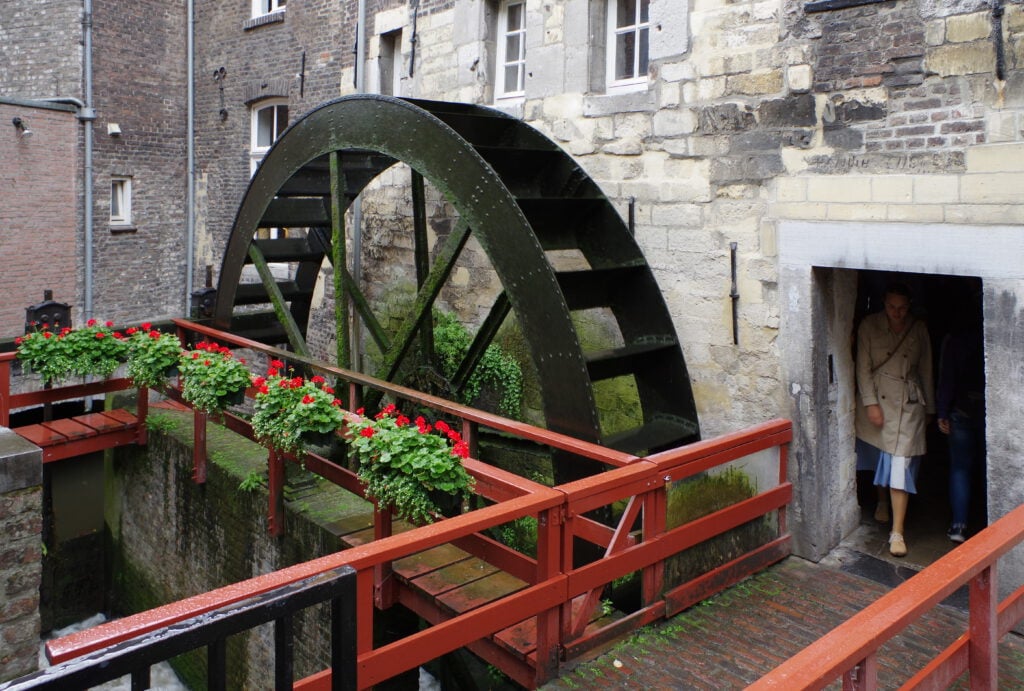
Are you an out-of-the-box thinker when it comes to searching for beautiful places? Then you’ll have no trouble finding De Bisschopsmolen! Otherwise, Google Maps is your friend.
Behold, the super-secret Bishop’s mill. Image: Berthold Werner/Wikimedia Commons/CC4.0
What lies in one of Maastricht’s little alleyways is a best-kept secret — a charming working water mill that’s connected to a traditional Dutch bakery.
You can take a tour around the mill and discover how this centuries-old attraction became what it is today — and the best part? Vlaai!
Treat your taste buds to a local Limburg pie at the bakery because… well, when dessert calls, you must answer.
💰 Price: Free of charge (unless you buy vlaai) ⏰ Opening hours: Tuesday to Saturday, 8:30 AM until 5:00 PM, Sunday from 9:00 AM to 5:00 PM 📍 Location: Stenenbrug 3, 6211 HP Maastricht
10. Eat fancy food with a pretty view at Château Neercanne
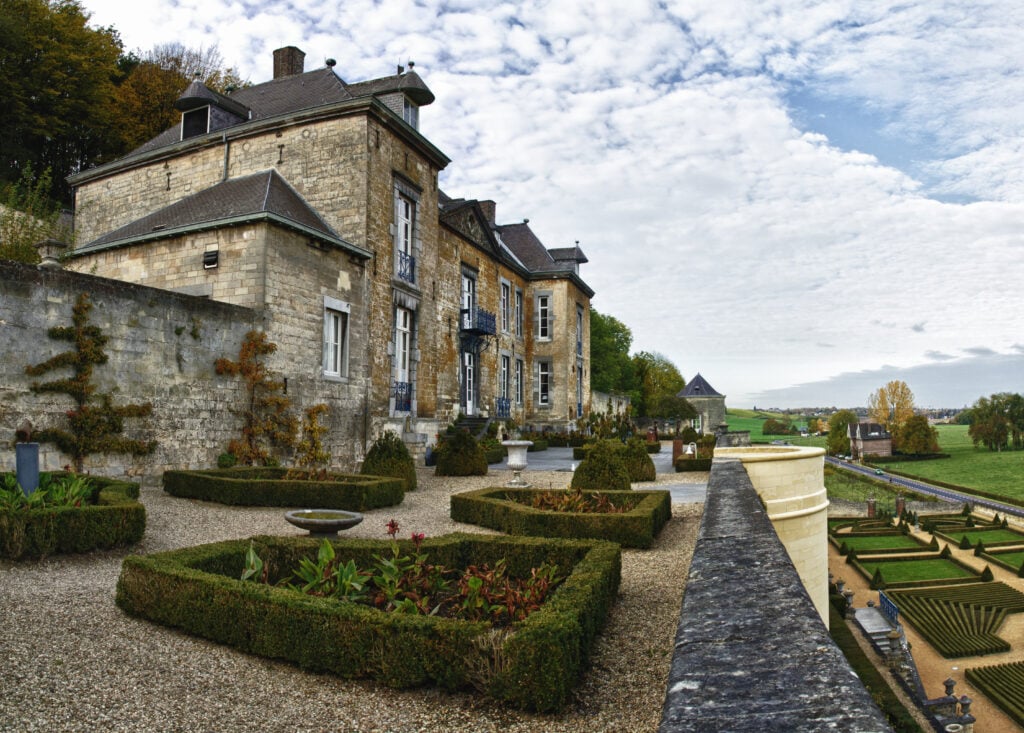
The Netherlands holds some of the most beautiful castles and palaces in the world, but one in particular truly sets Maastricht apart from the rest — Château Neercanne!
Chateau Neercanne’s a real beauty. Image: Bert Kaufmann/Wikimedia Commons/CC2.0
When we talk about the fairytale-like part of Maastricht, this is what we mean.
Built in the 17th century, Château Neercanne straddles the Belgian and Dutch borders and is the only castle in the Netherlands with a massive terrace.
Of course, every terrace has to be accompanied by some sort of eatery. This castle has a top restaurant where you can indulge in French-inspired gourmet cuisine with a view that overlooks the bucolic Jeker Valley.
11. Hit up Fun Valley Park in Maastricht on a sunny day
Are you visiting Maastricht with a few lil’ beans by your side? Then you might want to consider going to Fun Valley! This recreational park makes for the perfect day getaway for families to enjoy their leisure time in the outdoors.
Fun Valley is open all year round and offers all sorts of activities for your younguns to take part in, like paintballing, laser tag, escape rooms, and more.
There’s also a large indoor and outdoor playground and a kid-friendly beach to show off your paddle-boarding skills.
It’s not just a kid’s paradise, though. If you’re an adult, you can hit up the Cuba Beachbar and spoil yourself with some lekker cocktails while you lounge in a hammock.
In other words, it’s a real dream come true for parents and maybe one of the best things to do in Maastricht. 😉
Note: Fun Valley is closed from October to April.
💰 Price: Entrance costs €10.95, prices for activities and group entry options vary ⏰ Opening hours: 10:00 AM until 6:00 PM, Monday to Sunday 📍 Location: Oosterweg 5, 6245 LC Eijsden
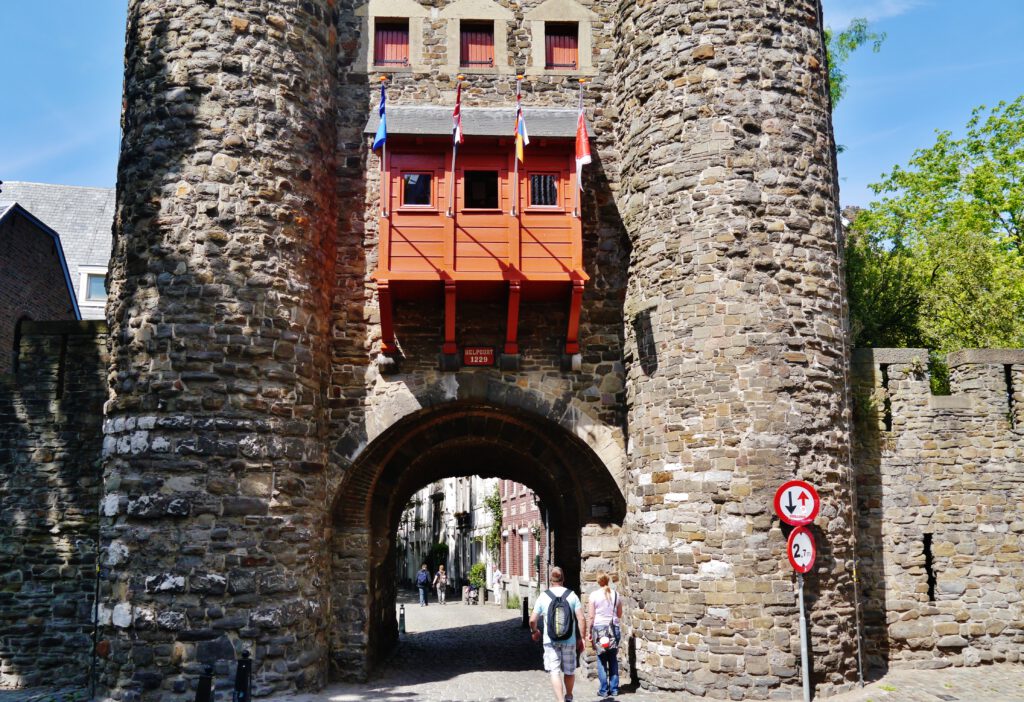
12. Enter Hell’s Gate in Maastricht if you dare…
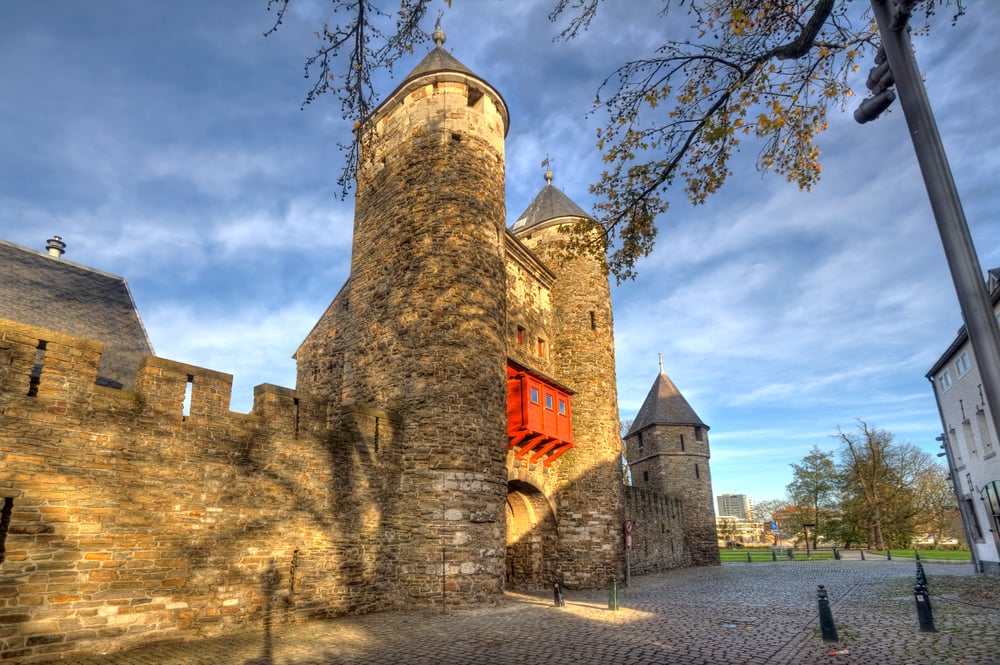
Ok, ok… so this isn’t actually a gate that leads you to the Underworld, where Hades is probably busy walking his hellhounds. De Helpoort, also known as Hell’s Gate, was Maastricht’s first ever stone fortification — and is now the only one left standing.
The last of Maastricht’s mighty fortresses. Image: Depositphotos
It used to serve as one of the city’s main entrances but later evolved into a residence, workshop, and even storage space. It’s also the oldest city gate in the Netherlands, built in the 1200s.
De Helpoort is connected to a small isolated fortress, which has two separate gates and ten towers. So, don’t forget to climb up one of its many spiral staircases and get a good look at the city from above!
Want to get to know Maastricht the Dutch way? You’ll need a bike. Luckily, the city has no shortage of bike tour opportunities for you to seize.
Don’t forget to bike across the Sint Servatius bridge and get a glance at all the houseboats! Image: Depositphotos
Get a good introduction to all the best spots in the city and cruise by the Dutch canals, busy streets, and iconic windmills either with your own bike, a rented one, or a bike provided by your hotel.
Each bike tour has its own guide to explain the important historical events of the city in English, Dutch, and German. The tours are available for those travelling in pairs or a large group of up to 15 people.
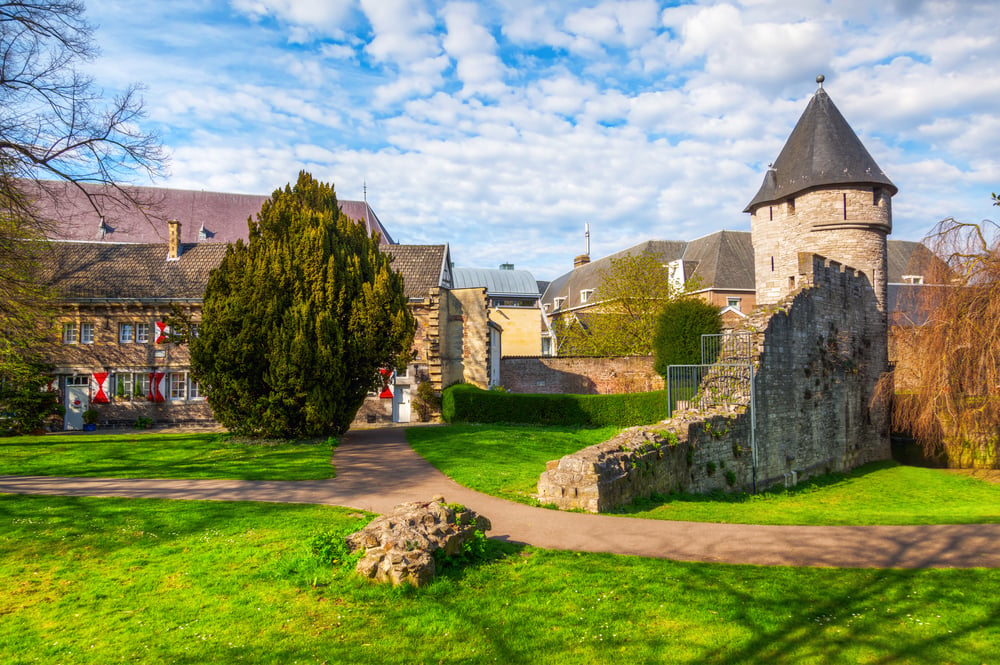
15. Have a picnic on the grass at Maastricht’s City Park
After you’ve planned a whole day of things to do in Maastricht, perhaps a good break in nature is just what you need to recover from a long day’s worth of sightseeing.
Grab a blanket and some snacks from your nearest Albert Heijn — and head to the City Park (Stadspark)!
The grass is always greener on the other side… or in this case, the City Park. Image: Depositphotos
As you take a casual stroll through the park, you’ll find yourself surrounded not only by scenic views of the city but centuries’ worth of history too.
The park’s path carries many statues, each with a little story to tell, including the statue of D’Artagnan.
Believe it or not, the statue of D’Artagnan has nothing to do with Dustin’s short-lived pet from Stranger Things. 😢 In fact, it’s actually a special monument commemorating a piece of the park’s history.
Maastricht is booming with places to see, activities to do, and lekker coffee to drink. We’d bet our last dollar that you’ll never run out of things to do in Maastricht and never get bored of all that the city has to offer.
So, put your walking shoes on and grab your backpack, it’s sightseeing time.
Have you visited any of these attractions? If so, what was your favourite? Tell us in the comments below! 👇
Only the Dutch don’t usually totter around in the chunky wooden shoes that have come to represent Dutch culture worldwide. Or do they? 🤔
What is it?
Visit any tourist shop in the Netherlands, and there are three things you’ll see right away — weed-plant patterned socks, (fake) Delft blue porcelain mugs, and intensely yellow wooden clogs.
Clogs, klompen in Dutch, have a long history in the Netherlands. Since the 13th century, this footwear has protected the feet of workers, fishermen, farmers, and artisans from the safety hazards of their everyday lives.
Even the European Union has officially declared the clog a safety shoe. Now, that’s radical. 😉
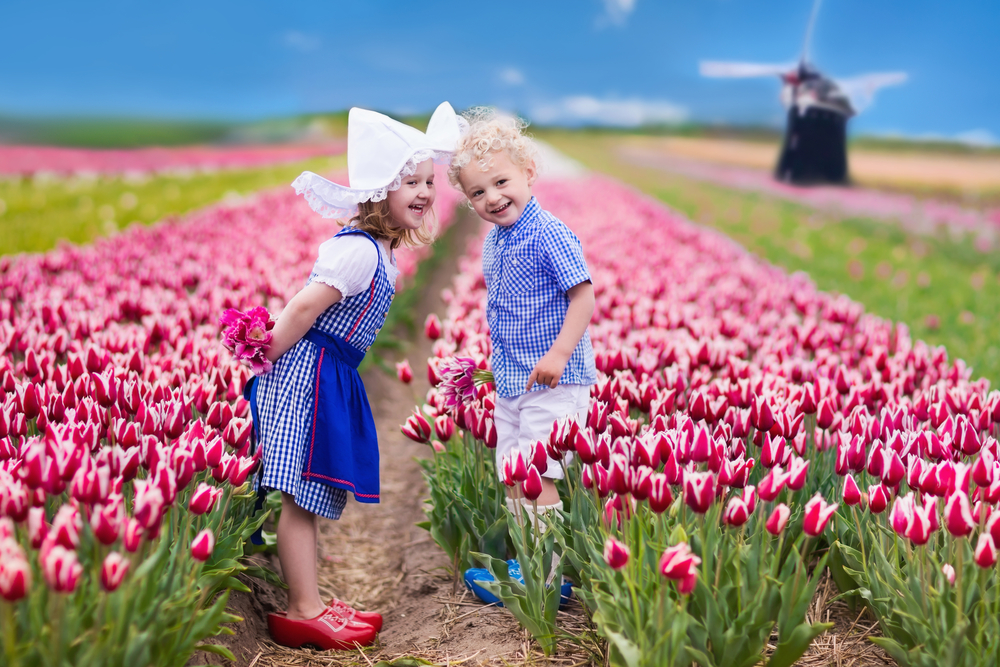
Two Dutch kids sporting their clogs and traditional dress amidst a tulip field. Image: Depositphotos
Especially considering that it’s not really widely worn, like, at all.
Nowadays, construction worker nor farmer would ever get the idea that clogs are the right type of footwear to plough a field or put up scaffolding.
But the stereotype remains: the women wear white bonnets, blue dresses, and clogs. The men wear black wide trousers, suspenders, caps, and clogs.
Why do they do it?
Well, the Dutch don’t wear their clogs because there are warmer, more practical, and fashionable alternatives now — such as dirty white Airmax or platform Doc Martens boots.
On a day-to-day basis, a Dutchie may wear a plush houseshoe version of the clog or some type of garden shoe resembling the clog in shape and size.
Yet the chunky, wooden shoe has sneakily made its way into the curious world of high-fashion. 🤨 In 2020, Hermès let their models stride across the runway in vamped-up leather klompen.
Clogs are back! Hermès debuted their clogs ($990) last fall and they officially sold out everywhere in February. Chanel recently released their clogs for the Spring/Summer collection for $900. pic.twitter.com/51sPkPjh53
Since then, multiple fashion brands have released their versions of the clog. Though not entirely made from wood, we think it pays tribute to Dutch traditional dress.
Why is it quirky?
It’s a century-old footwear tradition that just refuses to die out, however uncomfortable clunky wooden shoes may be.
It’s also another Dutch thing everyone else, but the Dutch seem to really, really love.
Should you join in?
To be honest, buying the cheap yellow clogs you can find in tourist shops everywhere is not necessary to immerse yourself in Dutch culture.
But if you really want to take some version of the Dutch clog home — try to find the houseshoes! They’re comfortable, soft, and, well, worn inside the house, away from everyone to see.
What do you think of this Dutch quirk? Have you experienced it? Tell us in the comments below!
When Trump and Zelensky’s diplomatic drama hit the headlines, Dutch comedian Stefan Pop saw an opportunity — take a serious geopolitical crisis and turn it into comedy gold.
The sketch, which aired on a Dutch show called Klikbeet, reimagined Ukraine as a bleeding patient begging for help while some, uh… selective healthcare workers decide who’s worthy of treatment.
Now, the video clip is blowing up — especially in Ukraine, where people are loving the brutal accuracy.
Thanks for the free content, world leaders
According to Pop, writing the sketch was almost too easy — because, well, world leaders had already done most of the work.
He told RTL Nieuws: “The fight between the three gentlemen made the story easy to write.’”
Zelensky appeared at the White House hoping for a solid military deal and a handshake. Instead? He got a lecture on gratitude and a passive-aggressive cameo from US Vice President JD Vance.
The Klikbeet take? A bleeding Ukraine begs for help while Europe snaps a quick Insta pic and then struts off, leaving the patient calling after them.
And his “doctors” (the US)? They’re just double-checking if the injured patient is grateful enough to deserve their help: “Wait, did he say thank you?”
Watch the full clip for yourself right here (don’t forget to turn on English subtitles!). 👇
Viral, and not the bad kind
Turns out, satire still hits hard. The hilarious (and painfully accurate) parody is currently racking up millions of views across X and Reddit.🔥
Ukrainians are saying ‘thank you,’ while Americans are looking at their shoes, and Europe is just now realising how bad things really are.
Even Ukrainian comedian Anton Tymoshenko gave Klikbeet a standing ovation, saying that the clip resonated deeply: “It makes you understand that you are not forgotten.”
Pop, surprised by the video’s global reach, summed it up perfectly: “Nobody should feel superior. The joke hurts, but so does reality.”
What do you think of the sketch? Drop your thoughts in the comments! 👇
Allegedly, when the first shot aimed at Hannie Schaft’s head only grazed her temple, she taunted the firing line: “Ouch! I shoot better!”
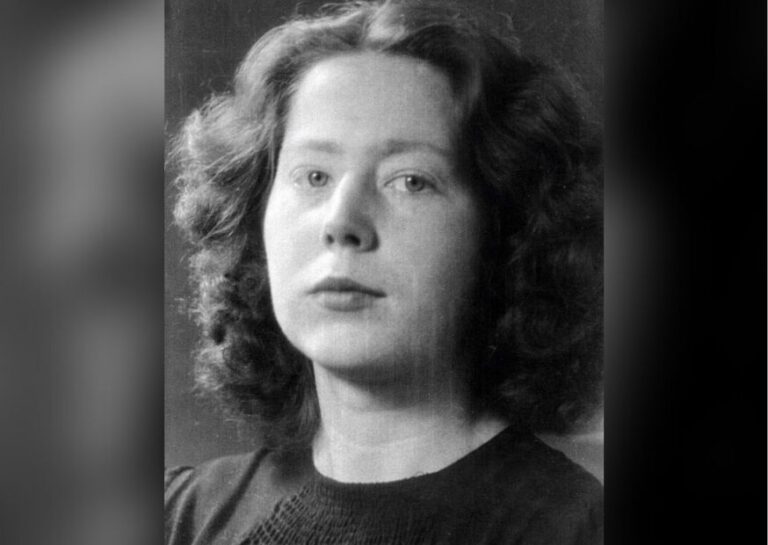
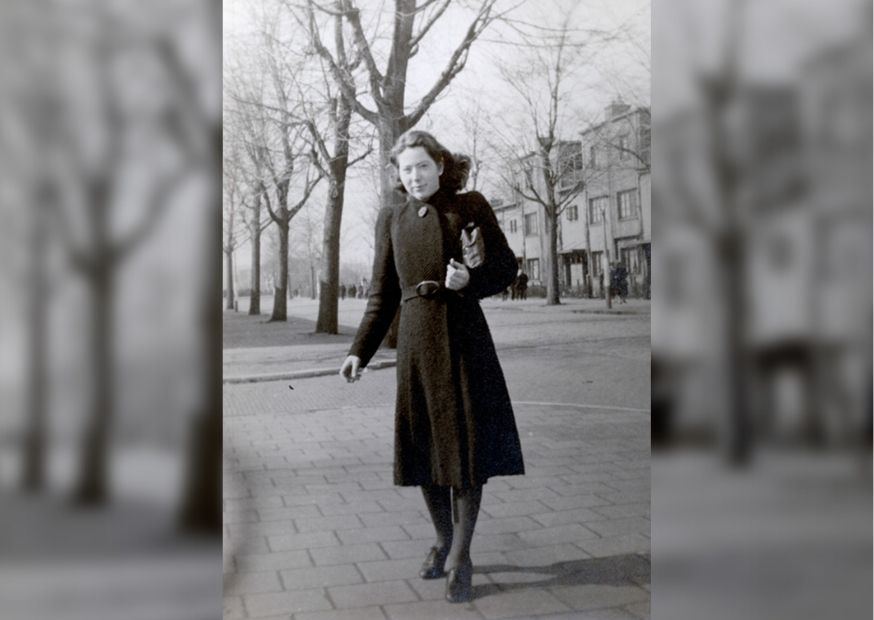
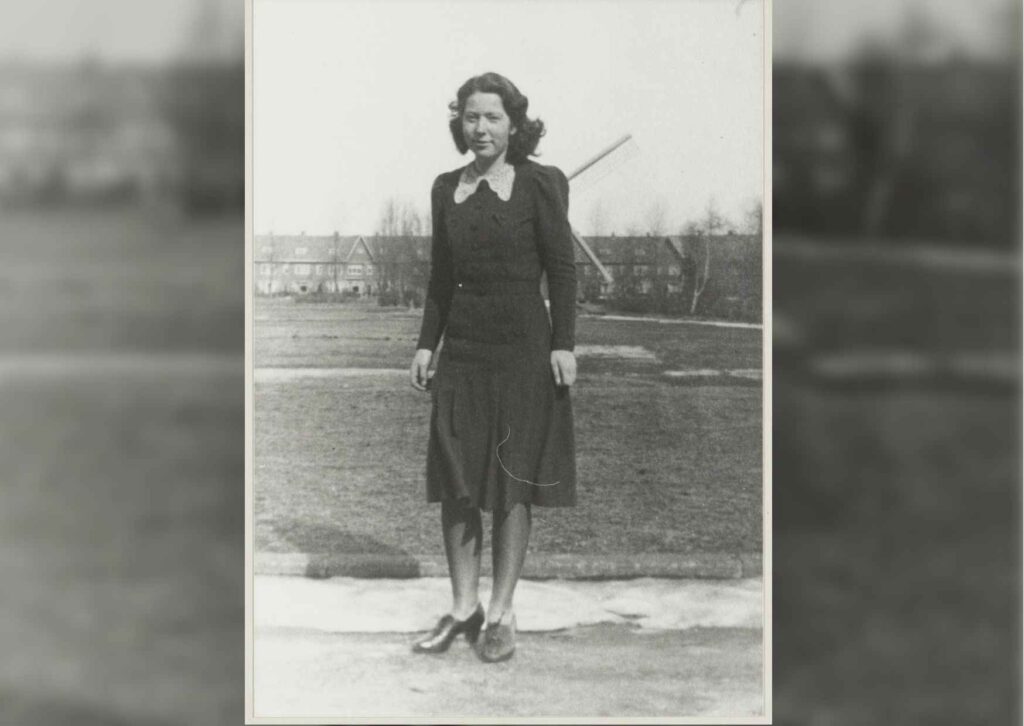
Hannie Schaft is arguably the most famous resistance fighter in modern Dutch history. During World War 2, the young woman fought against the German occupiers and was later wanted for treason, espionage, and murder.
‘The girl with the red hair’
The Nazis, who had no idea who Hannie was, described her as ‘the girl with the red hair’ on their most-wanted list.
So who was this revolutionary Dutch resistance fighter? How did she get catapulted into a life of espionage? And what do we know about this 100% verified badass? 🦹♀️
Schaft’s younger years
Hannie Schaft was born as Jannetje Johanna Schaft in Haarlem, on 16 December 1920. Her parents were Peter Schaft and Aafje Talea Vrijer.
Hannie had an older sister who tragically died from diphtheria at the age of seven. In part because of that, her parents raised Hannie with great caution and kept a close eye on her.
It is said that Hannie developed a political consciousness from a young age. Both parents were avid followers of world affairs and discussed these openly at the dinner table, also with Hannie.
Peter Schaft, in particular, was an active supporter of the socialist-democratic party SDAP and conveyed his leftist tendencies to his daughter.
The young Johanna was also an excellent student at school. But while she was open and talkative at home, in class, she remained rather quiet and withdrawn. Her bright red hair also made her the target of teasing and mockery.
This experience of social exclusion could have contributed to the strong sense of justice that would later draw Hannie into the resistance movement. It also found expression in her wish to study law at university.
Later, Hannie dreamed she could specialise in human rights and work for the League of Nations (the predecessor of the United Nations).
University: first steps into the resistance
Hannie started attending the University of Amsterdam in 1938 to pursue a law degree. Only a year later, in 1939, German troops invaded Poland under Adolf Hitler’s command, and World War II took hold of Europe.
Already in these early stages of the war, Hannie’s spirit of resistance began to show. Through the Red Cross, she started sending packages with food supplies and other necessities to imprisoned Polish soldiers.
The young Hannie Schaft before her work in the Council of Resistance. Unknown photographer/Wikimedia Commons/Public Domain
While Hannie had trouble making friends at school, she had an easier time at university. Two connections, in particular, would last Hannie until the end of her life: the sisters Truus and Freddie Oversteegen.
Hanni also founded the all-girls debate group ‘Gemma’. Critiques against the German Nazi occupation and anti-semitism were frequent topics of discussion.
By the end of their time at university, the girls were protesting on the streets more than they were studying. 💪🏻
Germany occupies the Netherlands
Despite attempts by the Netherlands to stay neutral during the war, German occupiers took control of the country on May 10, 1940.
During this time, Hannie started writing articles in the university paper criticising the segregation of Jewish students and teachers, who were later banned from campus.
An unlikely resistance fighter. Image: Noord-Hollands Archief/Fotoburo de Boer/Wikimedia Commons/CC1.0 (Modified)
She also joined the 80% of non-Jewish students who refused to sign a declaration of loyalty to the German Reich. As a consequence, Hannie had to stop her studies early.
Responding to the concerns of her parents, she left Amsterdam and moved back home to Haarlem.
Joining the Council of Resistance
The Raad van Verzet (Council of Resistance) (RvV) was founded in Haarlem in 1943.
Under the occupation, there were different, disconnected resistance groups popping up all over the Netherlands, and the RvV wanted to create a unified movement across the country.
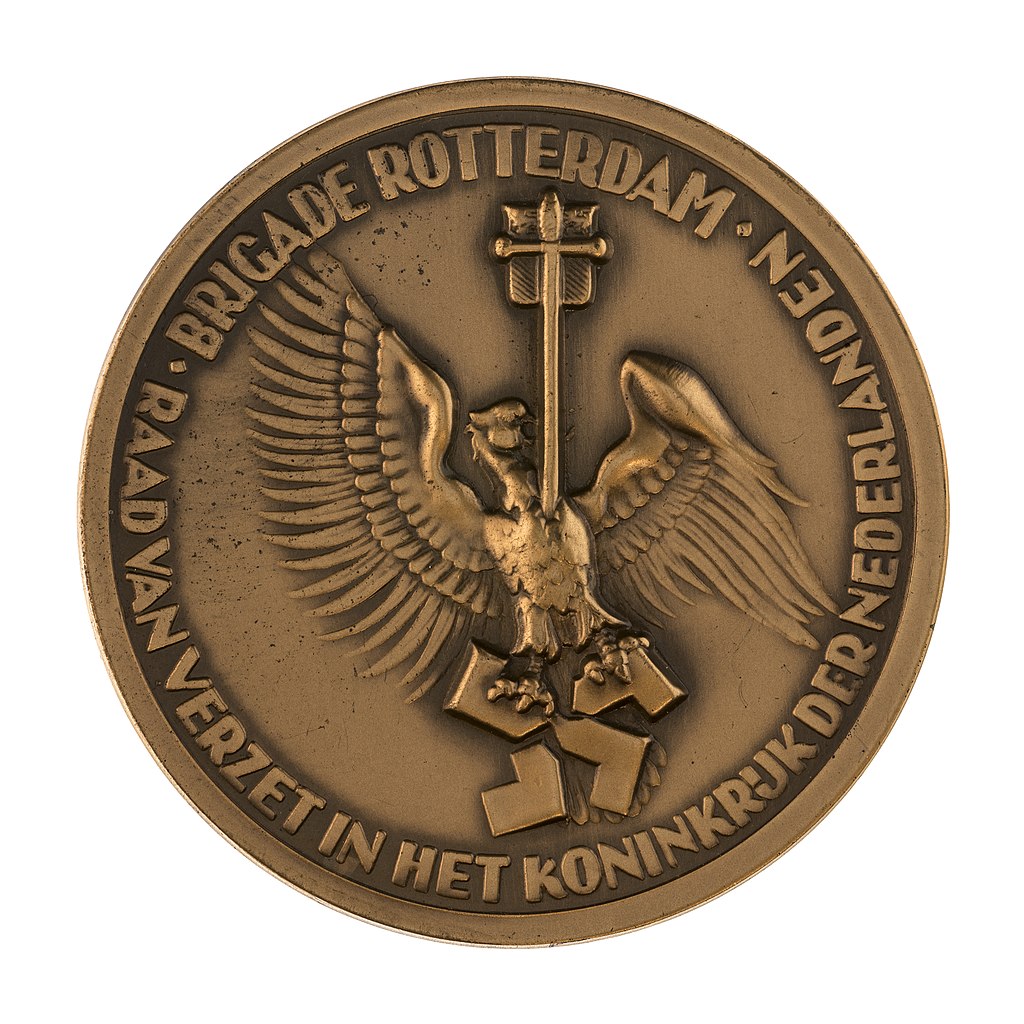
Resistance members had these “Raad van Verzet” (Council of Resistance) tokens to indicate they were party of the Dutch Resistance. Image: Museum Rotterdam/Wikimedia Commons/CC3.0
Both the Oversteegen sisters and Hannie were determined to keep up their fight against the German occupiers, so they joined the RvV.
Hannie made a point of emphasizing that she wanted to do more than distribute flyers or steal passports. Instead, she wanted to step fully into the role of an active resistance fighter.
So, Hannie was ordered to assassinate a member of the German Security Service (Sicherheitsdienst or SD).
The girl with the red hair fronted up to the challenge and pulled the trigger while aiming at her target — unknowingly shooting a rubber bullet at a fellow RvV member instead. She passed the test and became entrusted with a larger role in the resistance movement from then on.
This was also when Jannetje Johanna Schaft took on Hannie Schaft as her permanent code name — and Hannie Schaft, the legendary Dutch resistance fighter, was born.
Beginning her career as an assassin
Under the guidance of experienced RvV members, Hannie was instructed in the use of weapons and espionage. Because she spoke excellent German, Hannie was considered to be an especially valuable asset to the movement.
Some people even confused her for a moffenmeid —a derogatory Dutch slang term used for German women. Whilst it made some Dutch people distrust her, Hannie could easily listen in on German officers and develop friendly relations with them if she had to.
Together with her friends Truus and Freddie Oversteegen, Hannie carried out attacks against high-ranking German officers, stole important documents, and was also ordered to kill.
Freddie Oversteegen was only 14 when she joined the Dutch resistance during World War II, and only a couple of years older when she became one of its armed assassins. Together with her sister—and later, a young woman named Hannie Schaft—the trio lured, ambushed and killed German… pic.twitter.com/vDDx4DZaY7
However, Hannie did not blindly follow orders and was aware of her moral boundaries. At one point, she declined an assignment that required the abduction of children whose parents were Nazi officials. It’s a thin line to walk, but she did it gracefully!
Schaft and Bonekamp
Hannie also worked closely with one of the founders of the RvV, Jan Bonekamp, whom she admired greatly. Bonekamp was described as charismatic, fearless, and good-looking. He was also older than Hannie and seemingly made quite an impression on her.
However, even within the resistance movement, he was known as an extremist who took especially great risks. While it is uncertain whether or not the two were romantically involved, Hannie was notably influenced by his unwavering commitment to the cause.
During that time, her parents even asked her to move out because they were scared and apprehensive of her “dark work.”
A killing that went horribly wrong
In 1944, Hannie and Bonekamp received an order from the RvV which would change everything. They were instructed to kill a Dutch police chief and collaborator in Zaandam called Willem Ragut. The plan was for Hannie to shoot first, and then for Bonekamp to follow up in case their target would not die immediately.
It was a good call because this is exactly what happened. Hannie’s first shot hit the collaborator in the back but did not kill him. Bonekamp, wanting to finalise the kill, followed up — but was shot in the stomach in return.
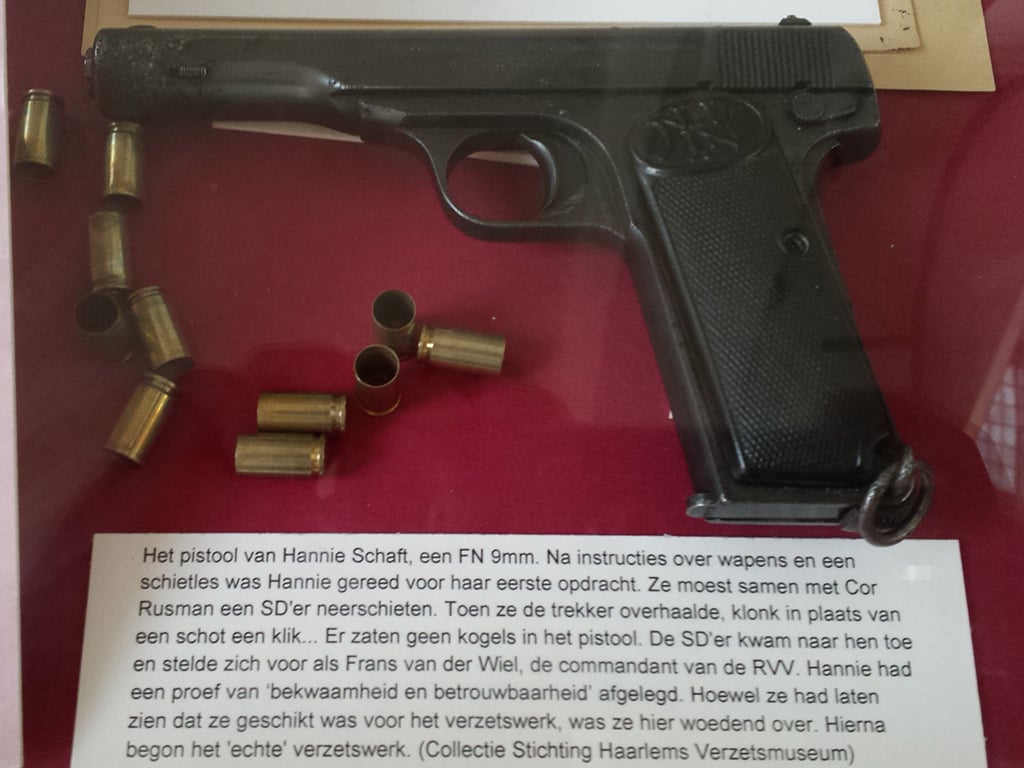
The pistol Hannie used to kill Nazis. Image: Thayts/Wikimedia Commons/CC4.0
Willem Ragut died nevertheless, and the two resistance fighters fled in different directions. But while Hannie managed to get away, the fatally hurt Bonekamp was arrested and taken to the hospital.
Once there, he confessed to the murder, and under the influence of heavy medication and psychological manipulation, he also gave away Schaft’s address.
Soon after, Jan Bonekamp died from his injuries. A week later, officials raided Hannie’s parent’s house in Haarlem.
Underground and arrest
Efforts to make Hannie confess were fruitless but severe. To put pressure on her, the Nazis forced her parents into a Dutch concentration camp, which pushed Hannie to stop working for the resistance temporarily.
After two months, Hannie’s parents were released, and the young woman decided that she had to go underground. The girl with the red hair dyed her ginger mane black and started wearing thick-rimmed glasses.
But it was not only her looks that had changed. The death of Jan Bonekamp had shaken Hanni deeply.
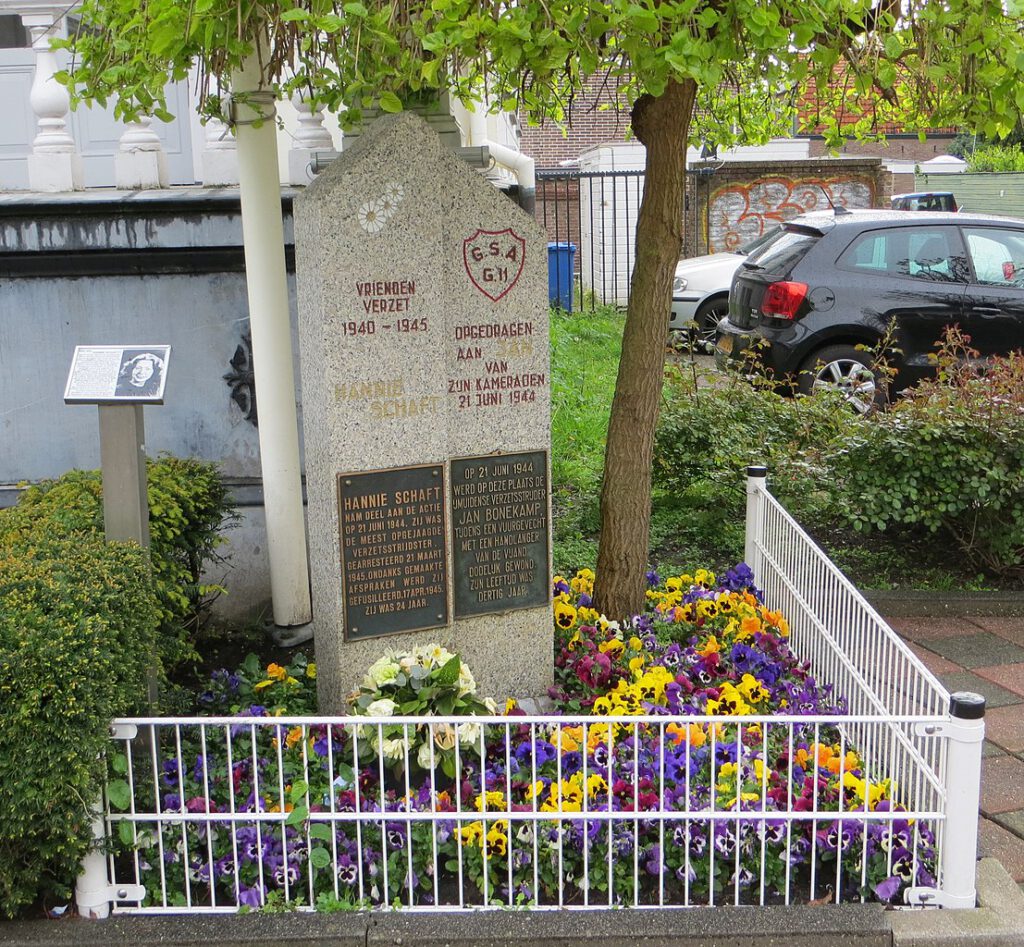
Hannie Schaft and Jan Bonekamp have a memorial together in Zaandam, The Netherlands. Image: Pim Sturm/Wikimedia Commons/CC3.0
In letters that she wrote to friends and family at the time, the young woman expressed feelings of all-consuming desperation and sadness.
Her emotional turmoil might have contributed to the even greater risks Hannie took for the resistance in the months that followed.
But her dedication was short-lived. In 1945, Hannie Schaft was caught during a police control carrying two resistance-friendly newspapers and a pistol.
She was arrested, and when forced to wash her hair, the Nazis knew they had finally found the red-haired assassin they’d been searching for for over two years.
Execution
On 17 April 1945, Jannetje Johanna Schaft — alias Hannie Schaft — was brought to the beach of Overveen and executed with a shot to the head. She was buried right then and there between the dunes.
The Netherlands was liberated from Nazi occupation only 18 days later.
Legacy
After the war, Hannie’s remains were uncovered amongst the bodies of 421 members of the resistance — all of them men.
She was officially laid to rest in the Honorary Cemetery in Bloemendaal the same year.
Following her death, Hannie became known as one of the bravest resistance fighters of World War II, both in the Netherlands and abroad. US President Eisenhower decorated her with the Medal of Freedom.
Meanwhile, in the German Democratic Republic, a post stamp adorned with her image celebrated her as an anti-fascist heroine.
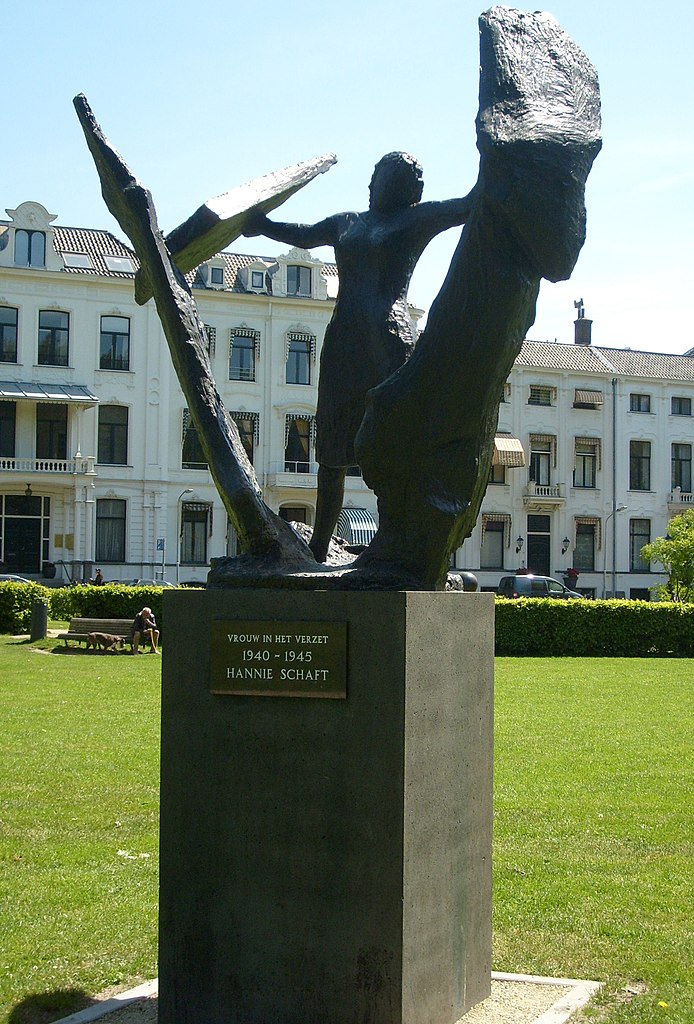
Today, two books, one movie, and a short film have attempted to tell her story. A bronze statue titled ‘Woman in Resistance’, designed by her friend Truus Oversteegen pays tribute to her legacy in Kenaupark, Haarlem.
The statue dedicated to Hannie Schaft’s memory is located in Haarlem. Image: Familieman/Wikimedia Commons/CC3.0
Hannie’s bravery and her unflinching sense of justice in the face of fascism, atrocity, and death make her one of the most important heroines of modern Dutch history.
She takes her rightful place next to incredible women in the resistance movement, such as Truus Wijsmuller and the sisters Oversteegen.
Nowadays, even Hannie is getting the AI treatment, as you can soon learn all about her story in a new feature film made using AI technology called “The Woman with Red Hair”. 🤯
We are proud to present the first 5 minutes of our debut feature at Staircase Studios AI: The Woman with Red Hair, a gripping portrayal of Johanna 'Hannie' Schaft, the courageous WWII Dutch Resistance heroine, brought to life with our cutting-edge AI technology.
Roel Okhuijsen, NS’s director of New Material, sums up the freedom passengers want: “Some people want to work quietly, others prefer to talk to family or friends,’’ he tells NS Nieuws.
Basically, whether you’re a serial chatterbox or a headphone ninja, this train has a spot for you. 😉
So, what’s new?
This isn’t just a train — it’s a glow-up on wheels.
Here’s what’s on board:
Easy access: Level entrances for wheelchair users and strollers. 🚆
First-class refresh: Two seats per aisle = no more armrest wrestling. 💺
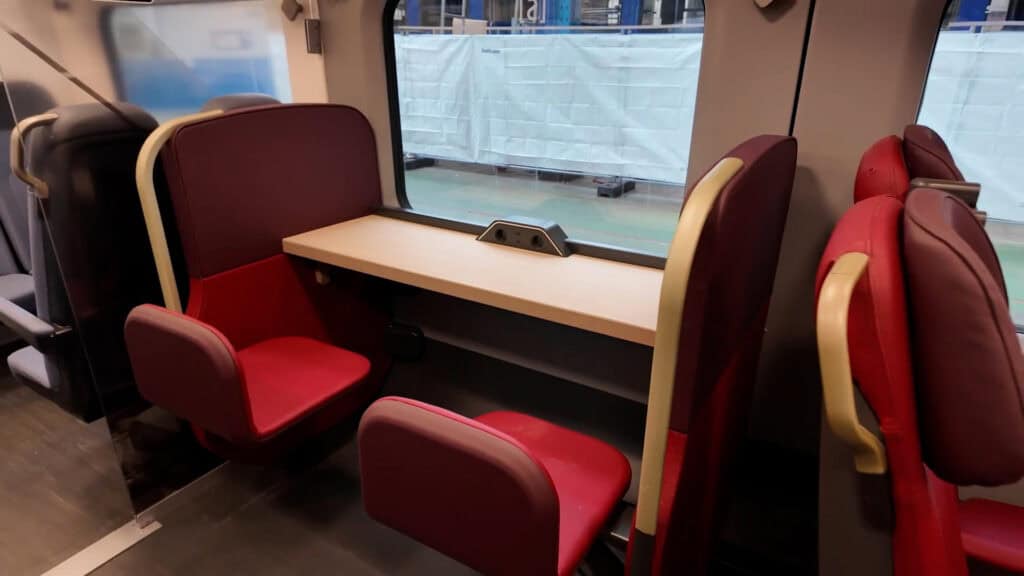
New seating zones: Work at a high table or chill in a raised four-seater. 📖
Sustainability first: First trains with a material passport (tracking where materials come from and how they’ll be used). 🌱
Serious seating capacity: 60 new trains, enough room for 30,000 passengers. Say goodbye to the morning game of musical chairs. 🚉
Speed boost: Zooms at 160 km/h — so you can run late, just faster. ⚡
Improved toilets: Wheelchair-accessible, with icons showing stroller-friendly seats nearby. 🚽
Power up(grade): USB-C & power sockets at (almost) every seat. 🔌
Smart screens: Real-time travel info to avoid accidental Belgium trips. 📺
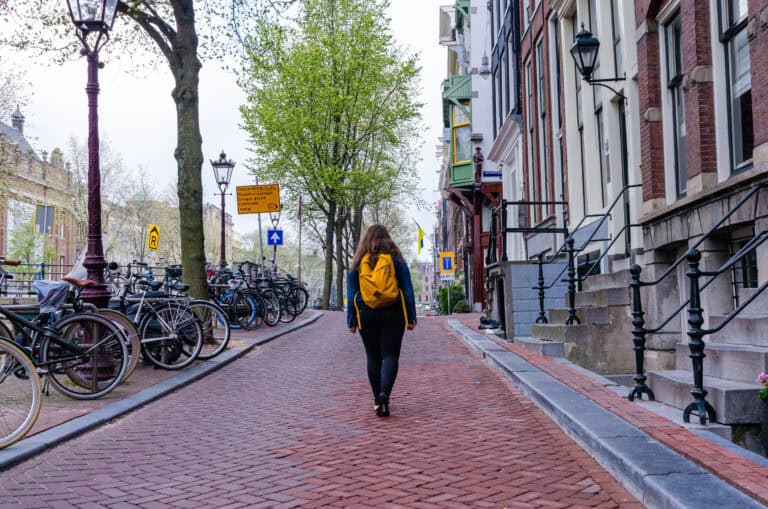
This week, the Amsterdam city council decided it’s time to stop designing public spaces with only middle-aged white men in mind — an initiative that’s 750 years overdue.
Instead, the city will be reimagined through the eyes of a young woman building a safe urban environment, as D66’s Elise Moeskops presented in a public space proposal yesterday.
Awakening the female gaze
A majority of the city council, including alderman Melanie van der Horst, supported Moeskop’s fresh perspective, according to Het Parool.
Moeskops compares young women to otters of public spaces — otters signal a thriving ecosystem, and women who feel safe make for a city that, well, actually functions properly. 🦦
What will change?
According to D66, young women mostly walk, cycle and get public transport around the city — all pretty slow ways to travel.
So, like European buddies such as Vienna or Stockholm, instead of designing everything for standard male motorists, urban planning will finally take female experiences into account.
Some key changes include:
Wider, well-lit bike paths with no remote dark corners 💡
Parks and squares with inviting seating areas 🤗
A street plan that prioritizes walking and cycling 🚲
A tool to measure safety
The goal is to create a city that actually welcomes people instead of subtly suggesting they leave.
To achieve this, planners will factor in all conditions — such as rain and darkness. They will also use the incredibly named Thermometer of Amsterdam Public Space.
This special tool measures people’s experience to provide hard data on the places where safety, accessibility, and social interaction are lacking in the city.
But…is it enough?
Shifting public spaces away from feeling like the concrete embodiment of the male gaze is certainly progress.
However, not all women experience public spaces the same way.
If the goal is truly safety for everyone, then Amsterdam’s vision should also consider how race, disability and marginalised identities coincide with gender.
What do you think about this new direction? Is Amsterdam on the right track, or does the city still have a long way to go?