Have you ever noticed how Dutchies have weird modes of transport and really questionable snack choices? Us too!
In fact, there are even more bizarre habits and mannerisms associated with Dutch people and the Netherlands — and we’re here to document and explain every single one.
Without further ado, here’s the ultimate list of Dutch Quirks.
Are you swearing with sex, parents, or even animals? Fine, normal, somewhat accepted. But swearing with diseases, though? Find out why the Dutch call things “cancer” all the time.
Here’s to combining two of the most Dutch things in the world: the rain and cycling anywhere and everywhere despite it.
Despite being a super walkable country, one mode of transport still rules the streets — and that’s the fiets.
It’s 5 PM, and you know what that means: first beer of the day, you might say, or a nice glass of wine? WRONG! Well, at least in the Netherlands, it’s dinnertime. ✨
Salads? Pasta? Absolutely not! During Dutch lunchtime, there will be cheese on everything. Forever and always. 🧀
Every little event goes into a Dutchie’s agenda, from a chill coffee date to their graduation date. Call it old-fashioned or technophobic, but paper agendas do the job better than their digital counterparts.
The infamous payment system, Tikkie, and the Dutch’s tendency to be stingy are so engraved into their culture that even a bite from a bitterbal can (literally) cost you.
Does it seem like every Dutch adult wears the same outfit, even though they don’t have uniforms? With a tendency to be frugal and blend in, Dutchies love to doe normaal.
Ok, picture this. You’re at the office (during better times), the clock reads 12:42, and you’re fired up like one of Jeff Bezos’ rockets. Is this due to an undying passion for your work, an enthusiasm that can’t be tamed? No, love. It’s coffee.
Do you know the tradition that stores will start selling Christmas decor right after Halloween? It’s no different in the Netherlands — come November 1, you’ll see these delightful treats in every supermarket.
While the rest of the world has Nutella, the only acceptable breakfast is dark chocolate hagelslag sprinkled on brown bread slathered in butter.
While most people will pre-make their lunch at home, Dutchies are ready to give you a free cooking show as they make their peanut butter sandwiches on the go.
As the saying goes, “God made the earth, but the Dutch made the Netherlands” — and they’re not technically wrong! Dutchies have a knack for inventing and creating all kinds of tricks and tools to make their lives easier.
Everyone knows how tall Dutchies get, but the secret to height and strong bones might not be as secret as we thought.
Oliebollen, a Dutch tradition that shines in the winter months, especially around New Year, is as delicious as it is Dutch!
Just like New Yorkers have their favourite bodega and Brits have their pubs, Dutch people have their favourite pannenkoeken spots, no matter where they are.
The Netherlands is a small country — and with limited space (both inside and outside), Dutchies have learned to make the most of their space. Even if that means setting up a person reading nook or sunbathing corner right on the sidewalk.
Everyone knows that Dutchies are famous for being good with money. With that being said, debt is something they just don’t do. 🤷🏼♀️ They do this by having a completely overwhelming fear of credit cards, borrowing money/taking out loans, etc.
We’ve all experienced it. You’re innocently cycling along when suddenly, up ahead, a monstrous spectacle emerges. An obstacle. A display of public affection: two cyclists holding hands.
The Netherlands is famously rich and well-developed — so why are they so overwhelmingly stingy? Some say it’s inconvenient and rude, but what can we say — the Dutch just really like to keep things in order 🤷🏽♀️
Dutchies aren’t shy about mayonnaise — in fact, they love it so much, they’ll slather anything and everything with it. Friet? Mayo on top. Frikandel? Mayo on the side. Ordering some other fried Dutch snack? There’s no doubt it’s coming with mayonnaise.
So, here’s a quirk that gets awkward if you get it wrong: The Dutch custom to greet you with three kisses on the cheek. Here is your road map to avoid the cultural pitfalls that will haunt you forever (such as accidentally planting a wet smooch on some poor Dutchie person’s mouth).
Are they having a spontaneous muscle spasm? Is there a rogue wasp attacking their hair? Having a hot flash? No, this quirky hand signal is just a Dutchie’s way of saying, “Mmmm, delicious!”
It’s a word you’ll either love or hate. Either way, it will be useful when speaking to Dutchies. You’ll be using this word on a daily basis because it is so ‘leuk.’ 😉
Wait did you say ja ja or ja ja? In the Dutch spoken language, those words mean two completely different things. 🤔
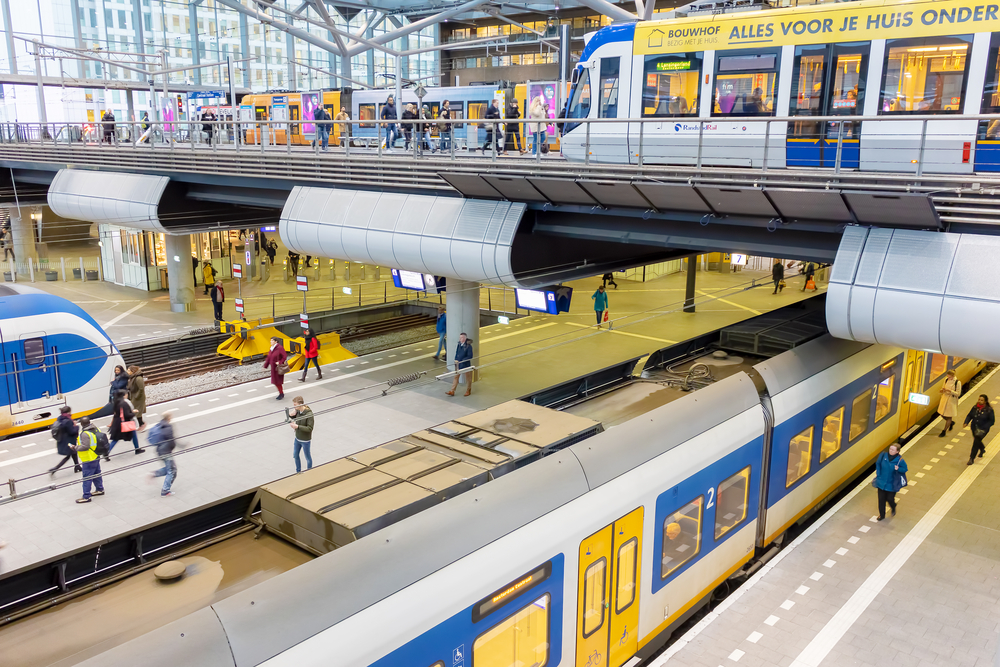
You can’t possibly be in the Netherlands and not hear or personally sprinkle some complaints about the NS. Complaining about the NS is a Dutch standard.
Maybe it’s their love for egalitarianism or the (in)famous Dutch directness, but this is certain: the Dutch really suck at customer service.
Unlike many countries, Dutchies tend not to leave tips for their servers. Before you ask, it’s not because they’re stingy; it’s just better-paying jobs in the service industry.
Picture this; the wonderful dinner party you’ve been lucky enough to attend at a Dutch person’s house has just ended, and you’re on your way home. You climb into the taxi and say goodbye — but your host is still standing at the doorway, waving, waving, waving.
Most people know the stereotype about Dutch stinginess — even when sharing their meals. Come 6 PM, Dutchies will politely escort you from their house before they eat, but why is that?
Dental floss or wooden toothpicks? The Dutch will most certainly go for the latter. 😏
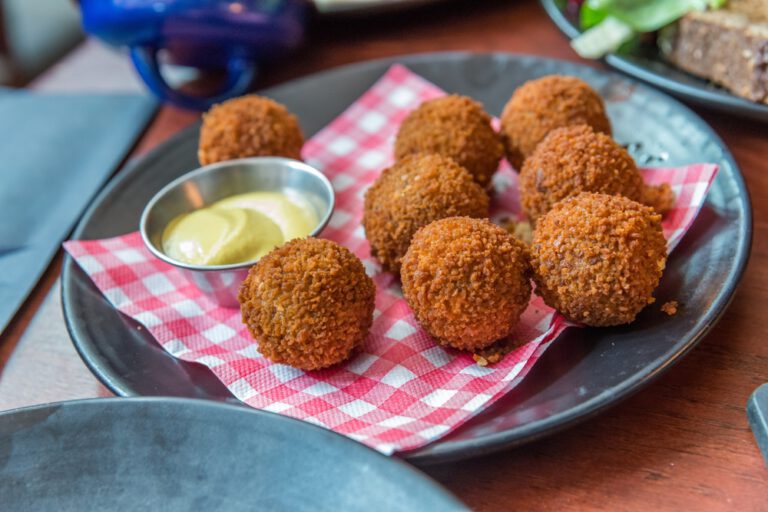
The Dutch may not have a world-renowned cuisine, but they sure have a — should we say unique? — snack assortment. Don’t get us wrong, we love a mustard-dipped bitterbal as much as the next person, but do we want to know what’s in it? No thanks. ✋
Dedicated to former Dutch queen Wilhelmina, these ancient peppermints are a controversial treat in the list of Nederlandse candies.
Sororities and fraternities in the Netherlands are just as expected: brutal hazing, Latin jargon, and weird rituals included. One is wearing a jacket that hasn’t been washed for decades. Gross!
You’re walking down a picturesque Dutch street when — BAM! There’s a guy peeing. And not even illegally, in a urinal smack bang in the middle of the street. This Dutch quirk has got to go.
Charging people for public toilets is a pretty common concept in Europe — but with the few public toilets the Dutch have, they’ve put a price tag on every one of them.
Did you know Dutch parents often use kibbeling (fried cod covered in batter) to get their kids used to eating fish? Even when they’re kids, they’re enjoying fried finger foods.
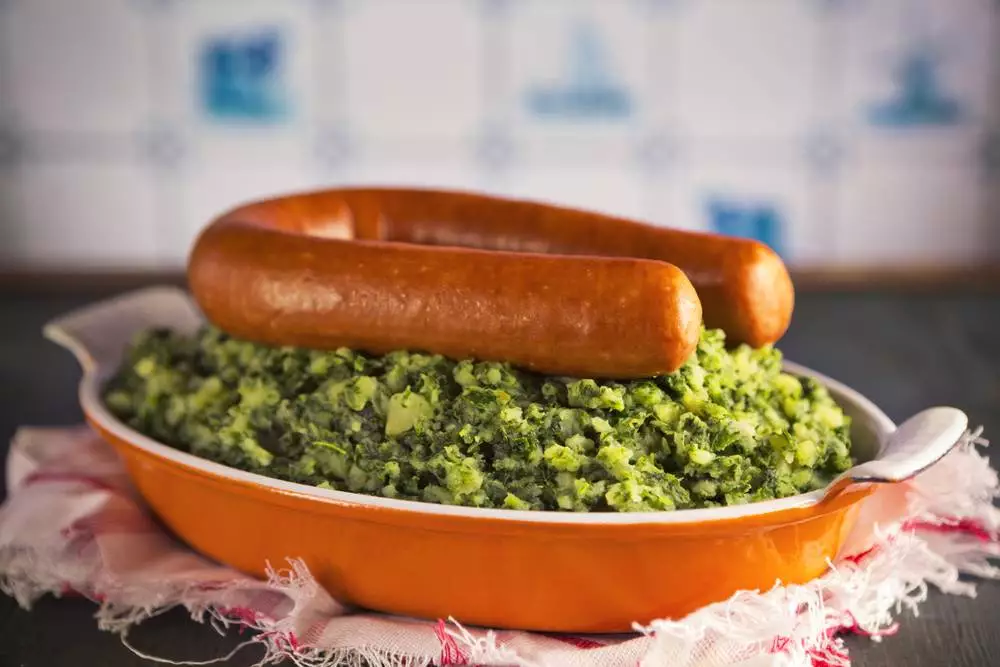
There’s nothing quite like sitting down to a lovely dinner only to discover that everyone around you is furiously mushing their food with a fork. Don’t worry, though. All that’s gotten into them is the quirky practice of prakken — and you may as well get used to it when eating traditional dishes like stamppot, hutspot, and boerenkool.
At a Dutch birthday party, expect to wish everyone close to the birthday kid a happy birthday! Why do the Dutch cling to this tradition?
Tompouce is a delicious but fragile pastry with a long (and somewhat questionable) history. While Dutchies love this King’s Day treat, no one can decide on the “correct” way to eat it, and the lowlands are divided into four camps of tompouce eaters — each with their hilarious/practical/messy technique.
Dutch people love using “gezellig” to describe EVERYTHING. A room can be gezellig, the weather can be gezellig, having dinner can be gezellig. However, the word has no translation!
While many aspects of Dutch culture may inflict culture shock on the unknowing international, nothing gives us whiplash quite like that good ol’ Dutch directness.
Most people will write birthdays in their agendas or calendars or even just memorise them. But the Dutch? They have a calendar designated to remember people’s birthdays, but the weirdest part is that they HAVE to be kept in their toilets.
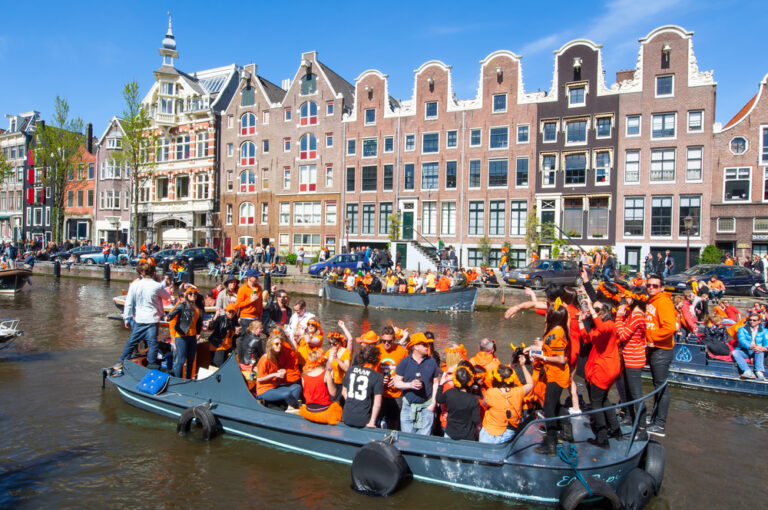
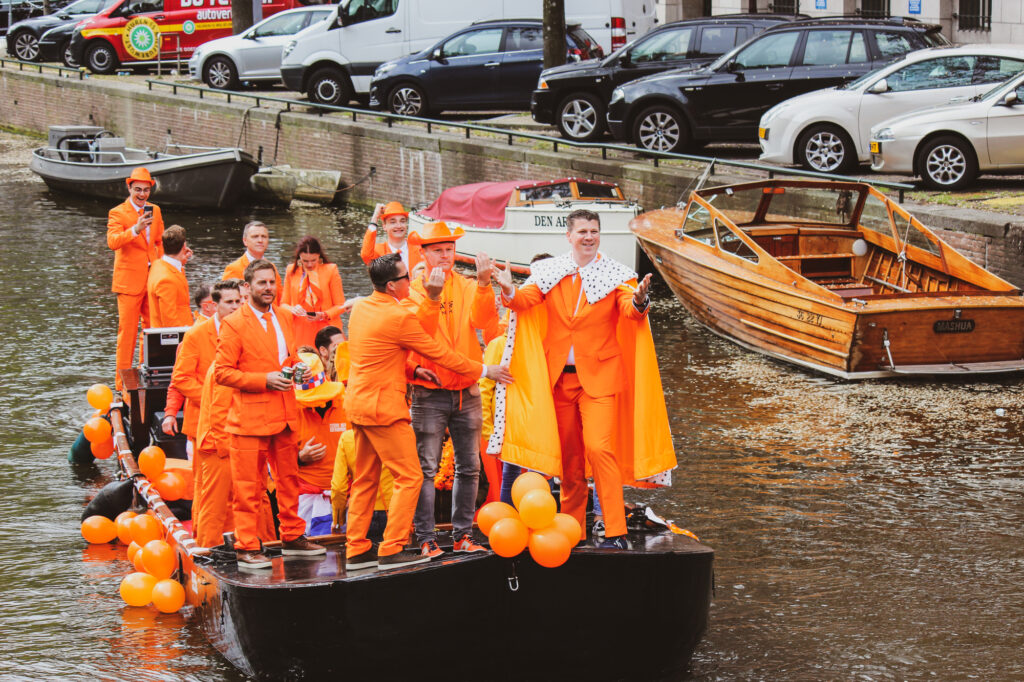
In the Netherlands, wearing too much orange doesn’t exist! Whether it be King’s Day or a birthday party, the Dutch will light the place up with their tangerine attire. 🍊
Be careful where you go swimming! Peeing in canals poses many health and safety hazards — but you’ll never stop drunk Dutchmen from doing it.
It’s happened to the best of us. You’re walking along, innocently minding your own business, your eyes absent-mindedly turn towards a window, and suddenly, you’ve just seen someone’s bare ass cheek.
Dutchies are complaining about the weather constantly! And honestly, who could blame them? It sure does rain a lot here in the lowlands. But they also have a unique and quirky way of complaining about the weather.
Picture this: it’s your first time in the Netherlands. You’re doing groceries at your local Albert Heijn, and it’s time to pay. The result? “Credit card declined”. You leave the store learning the hard way that you can’t pay diddly squat without a debit card here.
Dutchies prefer to deliver babies at home instead of going to a hospital. They believe that giving birth at home is a more natural and personal experience.
December is a time when many countries bring out their holiday traditions. But for the Dutch? The treasured tradition of Zwarte Piet has brought a little bit of festive cheer and a whole lot of controversial debating.
Dutchies love to throw a good party, and Dutch parties aren’t complete without at least one polonaise — better known as a conga line! Usually cool and collected, all of that goes out the window when they get on the dance floor.
Before pakjesavond (presents evening) on December 5, each person is assigned a family member or friend to write a poem for — which they’ll have to perform during the evening’s festivities. Cute, right? Well, surprise, surprise, there’s a twist.
It feels like a scene out of a movie. You’re walking down a traditional Dutch street, and suddenly, old-timey musical notes start to fill the space around — setting the perfect tune for wonder and wandering.
It’s not a Dutch carnival, party, or celebration without the classic party song. Watch Dutchies go absolutely hysterical, hopping from side to side, shoulder to shoulder, without a care in the world.
Even off the ice, Dutchies have a knack for skating. Rollerskating and rollerblading are popular in the Netherlands, for recreation and as a viable mode of transport.
Grinding jaws, endless energy, and widened pupils — if you know what to look for, you’ll find the signs of drug use at any ordinary Dutch party or festival. MDMA, cocaine and speed are everywhere in the Netherlands, and the Dutch seem chill about it.
Congratulations, it’s your birthday! You can expect presents, hugs, — oh, and a fat bill for whatever it is you want to do on your special day.
Ice skating perfectly blends Dutch balancing capabilities, weather conditions, and some of the Netherlands’ exciting historical times.
Getting dolled up for a night out? Or frantically putting on mascara on your way to work? You do you! But don’t feel like you have to wear it — others likely won’t.
Don’t remember where you parked your bike? No worries, you’ll find it after circling the hundreds of bikes stacked on each other! 🚲
Which nation gives the Dutchies even more opportunity to do some roasting than the Belgians? Natuurlijk! The Germans.
Zebra, leopard, and tiger print skirts and jackets are a staple of the Dutch wardrobe.
Most of us have heard of the American bible belt, but did you know that the Dutch have their very own?
If you’re reading this, chances are you live in the Randstad — but have you ever wondered why the Randstad is always a touchy subject amongst the Dutch? Perhaps it’s because everyone in the Randstad thinks they’re better than everyone else, or maybe non-Randstaders are just sick of being called boring all the time.
How can you continue biking when your body shows undeniable signs of ageing? Just get an e-bike and bike like a pro for the rest of your life!
Come time for summer, the Dutch hit the road n massee and eagerly voyage to go camping in the land of croissants — France! 🇫🇷
The Dutch seem to have perfected the “we have food at home” mentality by making it applicable even outside the home! Their extreme frugality, in combination with always being prepared, pushes them to bring their own food wherever they go, even the amusement park!
As a non-Dutchie, you may be shocked at seeing your significant other producing a bag of bread rolls (out of nowhere) when you ask them about lunch. 🥐
Why is it that the (in)famous Dutch directness seems to go straight out the window when it comes to marking someone’s work as correct? Instead of using a plain old check mark, Dutchies prefer to express their approval in style, with a symbol called a krulletje.
Have you ever eaten so much that you think you’ll pass out? So have the Dutch. In fact, they even have a term for letting a delicious (and huge) meal digest, unbuttoned jeans and all.
To make up for the lack of any elevation in the Netherlands, Dutchies decided to create yet another feat of engineering — stairs so narrow and steep that fully grown adults have to relearn how to climb and descend stairs properly.
Ever taken a walk through an idyllic Dutch city, and suddenly, there is a washing machine dangling above your head? In the Netherlands, we call this near-death experience: trying to move large objects into impossibly narrow Dutchw windows using a hosting hook.
As the Dutch saying goes: “God may have created the earth, but the Dutch created the Netherlands.” Unfortunately, they forgot to add mountains or even hills.
The Dutch are famously great bikers. That is until there is even the slightest incline — then, the poor Nederlanders start struggling immediately.
Sure enough, the Dutch are known to be direct, but have you ever borne the brunt of Dutch indirectness? Honestly speaking, it may just be a little bit worse.
In Dutch (and many other languages), the verb for ‘learn’ and ‘teach’ are the same — because what better way is there to learn than to teach?!
Dutchies want internationals to learn Dutch but will immediately switch languages if they get even the slightest sense you’re not a native speaker — what do they want from us?!
The Netherlands is known for its vast stretches of tulip fields — but that’s not the only thing you should look out for in the springtime!
As if the Netherlands wasn’t already cold enough, the Dutch have (for whatever reason) decided to only put freezing cold water in their toilet sinks.
Okay, we get it — Dutch houses are small and tall, with impossibly narrow stairs and weird toilets. But why do they have to put sinks right where you sleep?
The toilet inspection shelf is yet another quirky invention used by the Dutch. The purpose? Inspect your caca for bowel health issues before sending it to the sewers, and avoid toilet splashback when dropping a deuce.
Dutch people are freaking tall! The average height for a Dutch man is 184 centimetres, and 170 centimetres for women. Is it milk? Is it the boterhammen? Natural selection to survive the dikes if they break? There are a few theories.
The Netherlands is known for being a tolerant and open society — as long as you’re “being normal”, that is. Dutchies live by not drawing too much attention to themselves and living modest lives.
Everyone appreciates a good trip to IKEA to buy random home goods and furniture. But why do Dutchies immediately donate perfectly good items to thrift shops before they even trip around the sun?
HEMA is the hidden gem of Dutch stores — from affordable pricing and quirky products to a delicious rookworst, this variety store chain is one of the few places Dutchies will defend till their deaths.
Birthdays are always a fun celebration, especially on someone’s golden birthday. But Dutchies have an interesting tradition, renaming celebrants with seemingly random names and decking out their homes with questionable decor.
A cute personalised card for your loved ones? A few decorative balloons? That’s how most parents announce a new baby. But that will just not do for the Dutch. No. They go to TOWN on their windows and yards with a heap of decorations to welcome their little ones.
When Dutch students graduate, they throw their school bags out the window. Not onto the street but on their flagpole! That’s the traditional Dutch way of saying, “I’m finally done with school!”
Everybody loves a warm treat while browsing the markets in the winter — and the Dutch are no exception! Having a fresh stroopwafel can cure a bad mood in no time.
So, you’ve been seeing a Dutchie for about a year, but it still isn’t official? You hang out several times a week, buy each other Valentine’s gifts but haven’t met the parents yet? What does it all mean?! Dutch dating can be confusing, and there are three stages you should know about.
Living in the Netherlands, you get your kicks where you can — and a borrel is a huge kick. Sipping beer and eating lekker snacks with your work colleagues — ahh, that’s the life.
The Netherlands is a peaceful, mellow place until you give them gunpowder wrapped in pretty colours — New Year’s Eve is just as festive as in other countries, but you might be shocked at how dangerous this love for fireworks can be.
Not every day you see the Dutch get lit, but New Year’s Eve is certainly one of those times everyone in the Netherlands goes absolutely bonkers. There’s nothing quite like setting a bunch of things on fire and seeing it rain embers on the city.
Don’t get caught off guard by the ear-piercing sirens on the first Monday of every month — we promise it’s 100% normal.
Woof woof! Those are the sounds of the happy dogs of the Netherlands. The Dutch society loves caring for their animals and rescuing them off the street — it’s no surprise that we don’t see any stray dogs anymore!
Is it the expensive bill Dutchies get at the end of the appointment? Or embarrassment from not flossing enough? We may have the answers.
This is not a cake you’ll want to eat. This is the Dutchies applying an enormously unnecessary amount of hair gel to their hair.
Dutch people respect their authorities like they wear bike helmets — they don’t! Perhaps a result of such an egalitarian society and the Dutchies’ habit of speaking their mind, no matter what, talking back to authorities is more common than not! 😨
Chug, chug, chug! Drinking beer is no joke in the Netherlands. Ordering a biertje on the terrasje? Make that two, please! 🍻
Dutchies aren’t afraid to use societal norms and expectations to tell you if you’re doing something out of the ordinary. Should we be grateful? We’re not sure.
No one can deny the Dutch are heavily skilled when it comes to biking. They’ve created such a casual biking culture that biking while using their phones has become a daily sight in the Netherlands. 🫢
Swerve to the left, swerve to the right! We all know that Dutchies love their bikes. They also love their beers. Putting two and two together, we’re not surprised that drunk cycling is common in the Netherlands.
When translated, a roepnaam is someone’s “calling name.” It’s like a nickname, just more official.
“Stomach ache, broken heart or missing limb? No worries, take paracetamol! That’ll do,” said every Dutch GP.
If you are one of those people who is ALWAYS late, we have awful news! It is time (haha) to learn how to organise a schedule.
Sometimes the best remedy for a heavy head and nausea is greasy food, or is it? You got that right! Dutch snack food might be the perfect way to curb a hangover, but snackbars are not liable for your weird food choices or excessive mayonnaise habits.
Just like their houses, Dutch people love to stack their snacks on top of each other — in the form of vending machines!
People have a funny way of saying things in the Netherlands! Using idioms is one of the best ways to express yourself in Dutch! Het zit wel snor! (It sits like a moustache)
If you’re ever invited to a Dutch party, forget shiny leather shoes and a little black dress, just come with your favourite tee and some comfortable pants, and you’ll blend right in. ✨
Dutch people have been crowned the best non-native English speakers in the world for years, so it’s no surprise that many have other languages to flaunt.
The Dutchies don’t have a concept of having a hierarchy at work. For the first time, it might feel like you are in Busy, Busy Town for the first time, but that’s why we love it!
With Dutch weather being rainy at best and unpredictable at its worst, it’s no surprise they have a backup for grilling food. Although, we can’t say we expected it to be an indoor affair.
In the Netherlands, you can expect to celebrate Christmas (or similar holidays) not once, not twice, but up to three times during the festive season.
The Dutch are all about their bikes and bike accessories. They’ve completely (and successfully) ditched and replaced the function of cars when it comes to means of transport for the entire family. 🙌
Rain or shine, Dutchies are always up and ready for terrasje pakken (grabbing a terrace). Any terrace in the Netherlands is a prime year-round location for a drink.
Finding it hard to keep up with your social and working life? The Dutchies can’t relate!
Instead of wishing for rain to go away and come another day, Dutchies are whipping out their phones to dodge the rain on their usual cycle home. Buienradar is the holy grail of weather apps in the Netherlands — and it’s no surprise when it predicts cloud and rain patterns for the whole country.
Yes, the Dutch don’t wear the wooden shoe that has risen to world fame. How come? Well, it’s kind of unpractical — or is it?
If you thought black liquorice was weird and gross, Dutch drop is in its own league. This controversial treat (or terror) is known to cause divides between people, but it will remain a beloved Dutch delicacy till the end of time.
Sure, there’s the “glory” of the Dutch Golden Age: Dutch masters, grandiose architecture, and a booming trade network bringing exotic spices and precious fabrics to the lowlands. But then there’s also the dark bits. From slavery to violence in the colonies — here’s what the Dutch don’t like to discuss.
When the King messes up, the Dutch quickly participate in one of their favourite national sports: hating on the royals.
Some countries celebrate with some classic rice pudding or mini cupcakes. Here in the Netherlands, birth is celebrated more brightly — blue or pink sprinkles on dry biscuits. 🥳
In the name of tolerance and respect, the Dutch have quite the tolerance for how many parties it’s allowed to have in national (and local) parliament.
The Dutch don’t care that they live below sea level — the reason has much to do with their genius engineering and water management skills.
An estimated 15,000-20,000 bikes end up in Amsterdam’s canals yearly. And that’s just one city!
Binge-drinking, wearing orange, and playing street games — the essential King’s Day activities. Next time you see kids setting up games in the street, you won’t be taken by surprise. You might even want to try a round or two!
Dutch people are serious about biking and punctuality. If you think you’re just going for a chill bike ride to look at the scenery, think again — someone trying to make it 15 minutes early for their appointment is ringing their bell relentlessly behind you.
Doing things themselves comes very naturally to the Dutch from a young age. Figuring out how to make, build, and fix their own things is something the Dutchies are really good at, and we’re here for it.
If you’ve ever noticed a Dutchie zigzag through traffic during rush hour, hands-free, and wondered how they could pull off that stunt without getting so much as a hair out of place — while you struggle to get on and off your bike and not scrape a knee — you’re not alone.
With a housing crisis in full swing and plenty of people to rip off, Dutch landlords have no problem charging an arm and a leg to live in a glorified broom closet.
No matter the weather or the social function, you bet the Dutch are arriving in their best formal wear with their trusty steed (a.k.a. their bike).
Right-hand turn signal this, bell chime that, what does it all mean?! This seemingly confusing language while biking is actually a lot more intuitive than you think — just hop on your bike to find out.
Perfect for those who love a half-time debrief, but a nightmare for those who want complete immersion when it comes to cinema — the Dutch interval during film screenings is divisive yet traditional, and it might even make a global comeback!
Moving out anytime soon? Make sure to pack all your personal belongings, including your flooring. Moving in anytime soon? Try-before-you-buy and check out the interior through curtain-less windows.
Everyone has that Dutch friend who just refuses to get a new bike, even if the frame is falling apart and there aren’t any working lights. Till Death Do Us Part applies to bikes in the Netherlands, apparently.