Interest rates in the Netherlands (and the rest of the world) keep dropping while living costs keep rising. How are we meant to deal with this? One solution is to invest your money and give it a chance to continue growing.
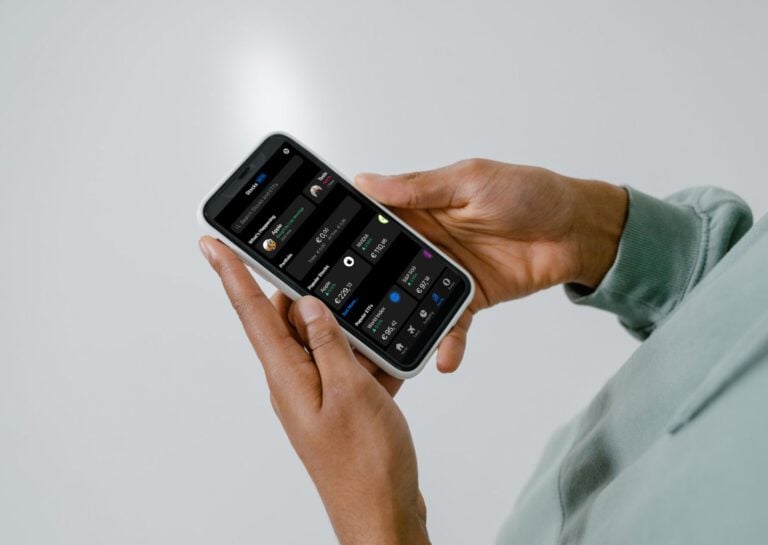
That’s why bunq, the all-Dutch neobank, has launched Stocks, its investment platform to help you get started.
Disclaimer: Investing involves risks.
What sets bunq apart from other investing platforms?
There are countless trading platforms out there, so why should you go for bunq? Great question. 👇
Enjoy simple language and an easy-to-use app
Unless you’re a finance bro or a seasoned investor, getting started with stocks can seem intimidating — but not with bunq.
Not only can you open your bunq account from your phone in just five minutes, but you don’t even need a BSN.
Opening a bank account has never been easier! Image: Depositphotos
Available in eight languages, the bunq app also lets you skip the unnecessary finance jargon and focus on what really matters: investing your money and helping it grow.
Do you still have questions? No problem! bunq’s customer service experts are at your disposal and contactable with just a few taps on your phone.
Get started with just €10 and fractional shares
If you think you need to commit to stocks worth hundreds of Euros, I have good news: you’re wrong!
bunq lets users get started with as little as €10, and thanks to the option to buy fractional shares, you’re never locked into full shares and full share prices.
Want to just buy €20 worth of Google and €10 worth of Tesla? Dat kan! With bunq, you’re in complete control of how much you want to invest.
💡 Good to know: bunq Stocks is only available in the Netherlands and France for now.
Only the best stocks, ETFs and cryptocurrencies
Choosing from the vast ocean of stocks, ETFs (Exchange Traded Funds) and cryptocurrencies to invest in can be overwhelming.
bunq Stocks makes life easier by having a curated selection of some of the best stocks, ETFs and crypto ETFs.
No need for endless scrolling through your options! Image: bunq/DutchReview
This makes it easy to navigate the most popular stocks and ETFs on the market without having to scroll and research endlessly.
Low, transparent fees (and three months for free!)
When investing in the stock market, you generally pay a fee per transaction to your trading platform or bank. With some traditional banks, this can be an expensive fixed fee.
bunq handles this a little differently:
They charge a 0.99% fee per transaction (of the amount invested) for bunq Free and bunq Core users, while
bunq Pro users get a 20% discount on this fee, and
bunq Elite users get 50% off.
Even better, new users of bunq’s investment platform get three months of free trading on transactions up to €100,000. 🎉
Easy integration with all your other banking tools
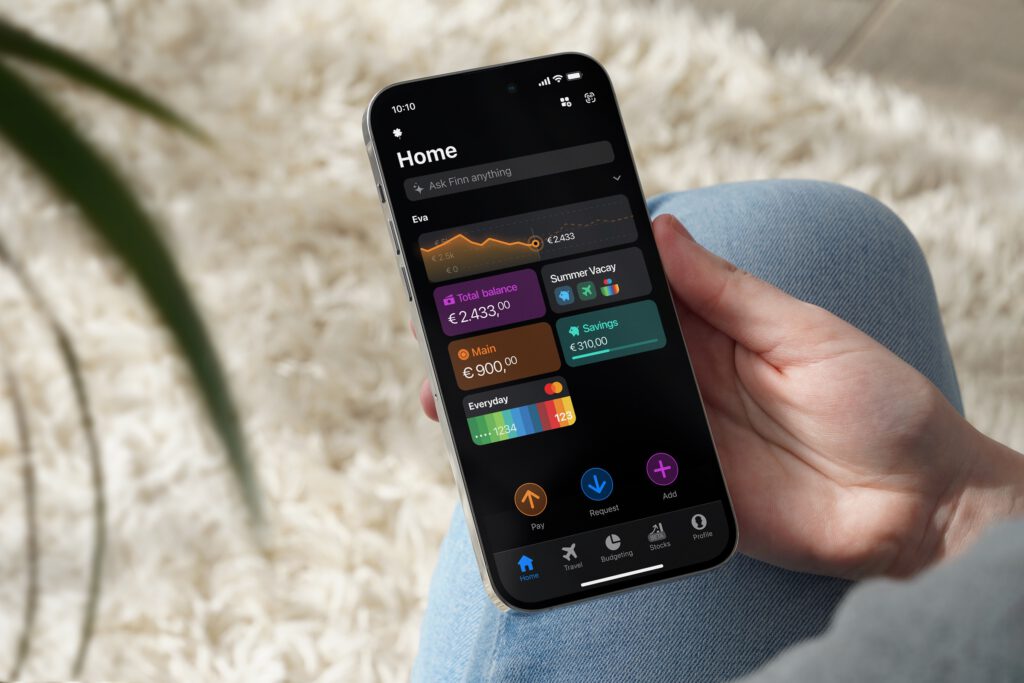
One of the best parts about investing with bunq is that it can be done straight from your regular bunq app.
This means you’ll have all your money in one place, from your current account to your savings and investments.
It also means that if you decide to open a bunq account for trading, you automatically get access to bunq’s other top features.
There’s a lot to explore with bunq! Image: bunq
As such, everyone who uses bunq for trading also gets a free savings account with an interest rate of up to 3.01%, complete with a free virtual credit card.
Want more? Depending on which bunq plan you go for, you can make use of things such as multiple sub-accounts, nifty budgeting and savings features, and fee-free currency exchange.
How does it work?
Ready to start investing with bunq? Great! Here’s how:
First off, open your bunq account in five minutes (if you don’t have one already)
1. Download the bunq app via the Appstore, Playstore, or bunq Web. 2. Register yourself with your name, birth date, address, e-mail, and phone number. 3. Verify your identity with your valid ID easily using your phone. 4. bunq will aim to verify your account within five minutes.
Next up, get yourself a Stocks account
5. Go to the Stocks tab in the bunq app. 6. Hit “Get started”. 7. Follow the instructions to provide additional info: nationality and additional ID (if asked). Wait for auto-approval (can be as fast as three minutes!). 8. Once approved, you’ll be notified and can start trading right away!
With extremely limited space and high construction costs, Dutchies tend to make the most of existing buildings that have fallen into disuse.
As we already know, they are brilliant at repurposing old churches, turning them into gyms, bookstores, and even swimming pools. But are the Dutch as inventive when it comes to empty prison cells?
The short answer is yes — and it’s not just about repurposing.
Vacant cells te huur
Can you turn a prison into a cash cow without putting in extra effort and money? It’s definitely not impossible.
In the 2000s, when the Dutch prison population began to shrink, the Netherlands simply started… renting out vacant jail cells to other countries.
In 2009, such a deal was signed with Belgium, and the first year of leasing brought the Netherlands a casual €30 million — niet slecht, toch? Five years later, it was Norway’s turn to send a few hundred inmates to the Netherlands.
However, the Dutch also started to put their prisons to other uses…
Not-so-sweet homes
Given the Netherlands’ housing crisis, it’s no wonder that disused prisons and jails were considered as one of the possible solutions to this problem.
What could go wrong when you turn cells into kamers (rooms) without trying too hard?
Based on the experience of one of the DutchReview authors, the idea of affordable housing of this sort wasn’t that bad. Some international students were pretty happy to find accommodation that didn’t cost a fortune.
A bit more of a questionable decision by the Dutch, however, was to turn former prisons into temporary housing for asylum seekers.
The bitter irony here is that some people fled their homes to avoid going to prison for political reasons — and ended up in prison anyway, luckily not surrounded by barbed wire (though often with barred windows and heavy steel doors).
Some prisons ended up in the hands of developers, who transformed them into attractive residential complexes.
For example, Tuin van Noord in Rotterdam now boasts spacious apartments of up to 280 square metres each. Could its former prisoners have imagined their gloomy home would eventually become something like this?
Keeping up with developers, some hotel chains have renovated former prisons and filled them with modern, top-notch amenities. However, they still try to preserve some of the historical prison atmosphere to attract curious tourists.
The very name of the 5-star boutique hotel Het Arresthuis in Roermond gives a hint of its previous function, and barred windows provide travellers with another clue.
Even the luxury suites have evocative names like De Rechter (The Judge) and De Cipier (The Jailer).
The hotel Oostereiland in Hoorn, also known as Het Gevangenis Hotel (the Prison Hotel), offers different types of rooms, including tiny ones set in former jail cells.
It also has a bruidskamer (a bridal room), ideal for those wanting to thoroughly prepare for a lifelong sentence with their chosen person.
Another unique example is the historic Lloyd Hotel in Amsterdam. Initially founded as a hotel for transatlantic voyagers, it was later turned into a prison and functioned as a youth detention centre for decades until it finally came a full circle and turned into a hotel again.
Business and cultural hubs
Remember ubiquitous TikTok videos and serious business news about a new Amazon office in a former prison?
While some publications exaggerated the situation, assuming that Amazon turned the entire Koepelgevangenis — a historic domed prison in Haarlem — into its workspace, there was some truth in those articles.
There’s indeed a business and digital tech hub right under the former prison’s iconic domed roof.
It’s called Cupola XS and offers a spacious circular co-working space, along with private offices and meeting facilities. The rest of the now-multifunctional building is occupied by even more interesting facilities, including a six-screen cinema.
Another similar example can be found in Leeuwarden, where the old Blokhuispoort Prison (which seems more suitable for a Disney princess than dangerous criminals) is now occupied by around 130 creative entrepreneurs.
The building complex also houses eateries, pop-up stores, and even the city’s main library.
Educational facilities
What parent would voluntarily send their child to prison and even pay thousands of euros every year for it?
If we are talking about a former prison that has been transformed into an elite British school in Amsterdam, many people are interested in such a possibility.
Formerly known as “Het Huis van Bewaring” (the House of Detention), the cross-shaped building near Amstelveenseweg had served as a prison for over a century.
However, since 2021, it has been occupied by well-behaved children of wealthy expats from all over the globe.
Interestingly, former prisons have already proved their suitability not only for schools but also for higher education institutions.
Thus, the above-mentioned De Koepel in Haarlem also serves as a campus of SRH Haarlem University of Applied Sciences.
An immersive prison experience
Although many former prisons have undergone miraculous transformations, others strive to stay as close to the original as possible. One of the best examples is The National Prison Museum.
Opened in 2005 in the “prison village” of Veenhuizen, the museum takes visitors through the Dutch history of crime and punishment from 1600 to the present.
Highlights include an authentic prison bus that was used to transport prisoners between residential and working institutions — and now operates two days a week to entertain the museum visitors.
However, this industry seems to be thriving, turning not only separate cells but also entire buildings into immersive playgrounds.
Is the pendulum swinging back?
It would be great to see a moment when all the prisons in the Netherlands are transformed into something else. Unfortunately, some of them are still needed for their original purpose — moreover, there are no longer enough cells for convicted criminals.
But don’t panic! No one is going to turn hotels and coworking spaces back into prisons. Creative minds at the Dutch authorities have already come up with various other solutions.
A dental hygienist is facing trial for sexually assaulting a patient by ejaculating on her face. He is also accused of secretly photographing his colleagues and patients, as well as inappropriately touching multiple women, including a minor.
Colleagues in the clinic immediately contacted the police after hearing the patient’s scream.
The routine visit turned nightmare
In November 2022, a Chinese student went for what was supposed to be a standard dental hygiene visit at her dentist’s office in Amstelveen.
According to Het Parool, the hygienist, Gior C. (25), placed a cloth over her eyes and instructed her to open her mouth and stick out her tongue.
Moments later, he had ejaculated on her face and mouth.
Realising what had just happened, the student screamed, prompting colleagues in the clinic to call the police, leading to C.’s arrest.
Disturbing photos uncovered
Further investigation into C.’s phone revealed a series of inappropriate videos and photos of patients’ buttocks, legs and breasts. In total, authorities discovered at least eleven images.
Multiple victims came forward, stating that C. had touched their breasts inappropriately, and some even described the encounter as painful.
Among the victims was a 12-year-old girl.
Investigators also found pictures of female colleagues while they were changing on C.’s phone.
What he admitted and what he denied
C. admitted to secretly photographing women and acknowledged his voyeuristic behaviour.
However, he denied touching patients inappropriately. He insisted that physical contact was inevitable due to his position during treatments.
His former colleagues visibly shook their heads “no” in disagreement during his testimony.
As for ejaculating on the student, C. initially claimed that she had initiated oral sex, but DNA evidence did not support this.
He later changed his story, suggesting that they had been flirting and that she rubbed his thigh during the treatment, which he took as a signal to expose himself.
The victim strongly denied this, maintaining that her visit was strictly medical.
“He is now trying to shift the blame onto me,” she said.
The court hearing
The prosecutor described the case as a “horror scenario,” expressing concerns over C.’s desire to continue pursuing dentistry.
Prosecutors request a six-month conditional sentence with a three-year probation period, along with 240 hours of community service.
Additionally, they are hoping for a ruling that would permanently stop him from working in healthcare.
Gior C.’s defence claims that there is not enough evidence.
The impact on victims
The student expressed feelings of shame and distress, saying how she feels uncomfortable around male care providers.
Other women have reported lasting emotional and psychological harm due to non-consensual touching and secret recordings.
Wondering where to live in Utrecht? We set out to find you the best neighbourhoods (and yes, also some ‘meh’ but inexpensive neighbourhoods too).
Congratulations, you’re moving to Utrecht! With its gorgeous townhouses, a flower market along the canal on Saturday and more bicycles than you can handle, Utrecht can feel like you’re living the Dutch dream.
Although the city is much more petite than Amsterdam or Rotterdam, there are still a lot of different neighbourhoods in Utrecht to choose from. 🤔
So where to live in Utrecht? DutchReview has all the pros and cons of Utrecht’s neighbourhoods for you. 😎
The city centre
This area offers everything people imagine the Netherlands is made of: narrow streets, townhouses, markets, canals, little bars and a lot of history! Emphasis on “a lot”.
The city centre of Utrecht was founded by the Romans, and most people don’t realize that it’s a lot older than Amsterdam, Leiden or Delft.
On a few square kilometres, you can time travel from the Roman era to the defining Middle Ages and onwards to early Jugendstill or questionable 1970s architecture. 😮
No matter how historical the Utrecht centre may be, it is by no means a dead part of town. Utrecht University and Hogeschool Utrecht both ensure that a big influx of young and fresh batch of students come every year.
So you know what that means, right? A huge number of (coffee) bars, hip restaurants, and quirky shops.
The place is buzzing all year round. It also has TivoliVredenburg – a venue which has made Utrecht a regular stopover for upcoming (Indie) artists.
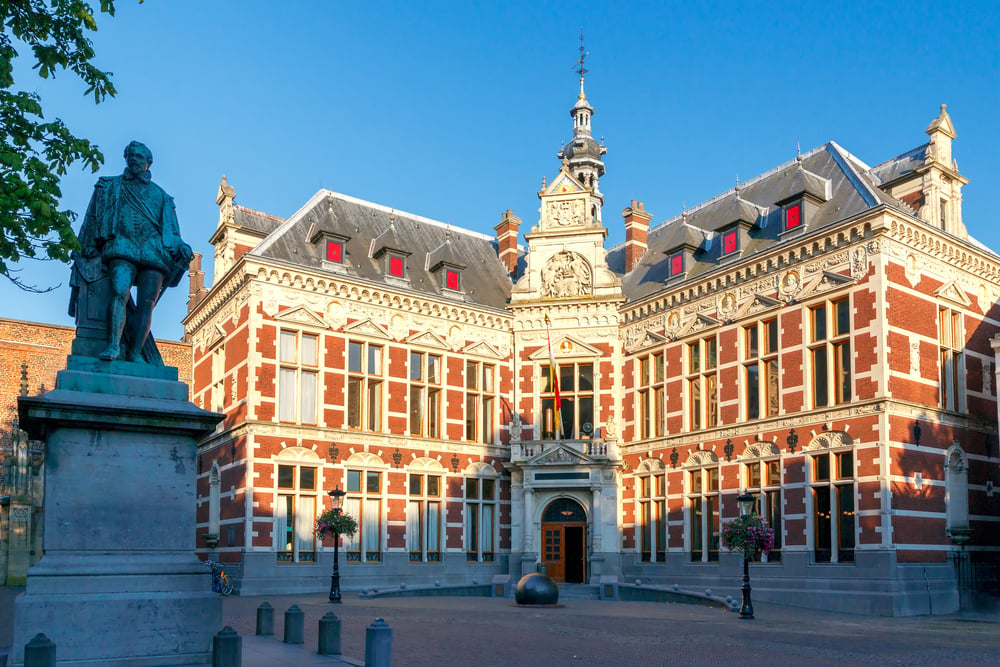
Utrecht University in all its glory! Image: Depositphotos
Another big advantage of living here is being close to one of the major transportation hubs in the Netherlands: Utrecht Central Station.
Regular trains will take you to Rotterdam, The Hague, Amsterdam, Zwolle, Arnhem, Amersfoort or Den Bosch within an hour.
So for business travellers and corporate expats, Utrecht city centre is also perfect to live in!
Are there any downsides?
Well — you can guess that living here is not cheap (which might also be less of an issue for corporate expats).
You have to be careful where to pick your home, as some streets and squares can be very noisy at night. 💥
Notable locations: Oudegracht, TivoliVredenburg, Domtower and church, Centraal Museum, Neude, Ledig Erf and Utrecht central station.
But what if the city centre is too busy for you, but you still fancy being within walking or cycling distance of the centre? Simple.
Move to the posh areas surrounding the city centre on the north-east side: Wittevrouwen, Oudwijk, Vogelenwijk and Tuinwijk or Tuindorp.
Wittevrouwen, Vogelenwijk and Oudwijk were built before 1900. Oudwijk mostly consists of cute and small arbeidershuisjes (working-man-lodges), while big townhouses make up the most of Wittevrouwen and Vogelenwijk. 🏡
Tuinwijk and Tuindorp was built later, around the 1930s. It boasts some beautiful spacious houses from those days and the streets are greener.
The neighbourhood’s became popular in the 1990s with families and yuppies, which is still the main crowd there, mixed with students. 👩🎓
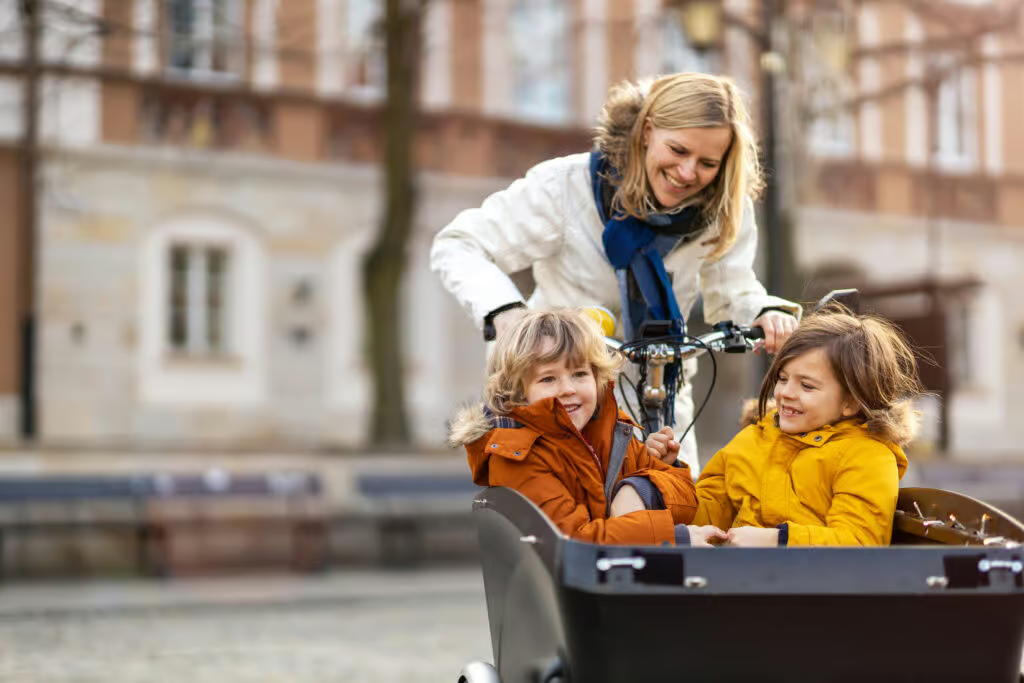
Bakfietsmoeders (cargo bike moms) at cafes are a pretty common sight in these neighbourhood’s. You’ll also find some good delis, bakeries and butchers.
The famous bakfiets, ladies and gentlemen! Image: Depositphotos
You’ll also be in proximity to the popular Wilhelminapark and the more modern and spacious Griftpark. 🌳
Notable locations: shops and cafes at the Nachtegaalstraat, Burgermeester Reigerstraat and Biltstraat, Wilhelminapark, Griftpark, Rietveldhuis, Badhu and Theater De Paardenkathedraal.
Lombok & Oog in Al
On the other side of the central station, you’ll find the multicultural area of Lombok. This neighbourhood of Utrecht, mostly made up of small houses and apartments, wasn’t always as popular as it is now.
In the ’70s, workers from Turkey and Morocco moved here and were housed cheaply in poor conditions. The neighbourhood was in decline.
However, renovations in the ’90s and the proximity to the train station caused gentrification, which sparked life back into the area. ✨
You’ll find an interesting mix of people with a Moroccan or Turkish background, yuppies, students and native Utrecht families who have been living here for generations.
The Kanaalstraat is the perfect place to shop for fresh and cheap fruit and vegetables. It also has some good Mediterranean bakeries and fish shops. 🐟
You’ll also find one of the best (Asian) restaurants of Utrecht in the Kanaalstraat: Jasmijn & Ik. Be sure to book ahead if you feel like dining here on the weekend.
A bit further, the Leidse Rijn, Molen de Ster and the Sluizen are simply stunning.
Take a stroll along the water or light up your BBQ here, as this place turns into a busy hotspot during summertime. ☀️
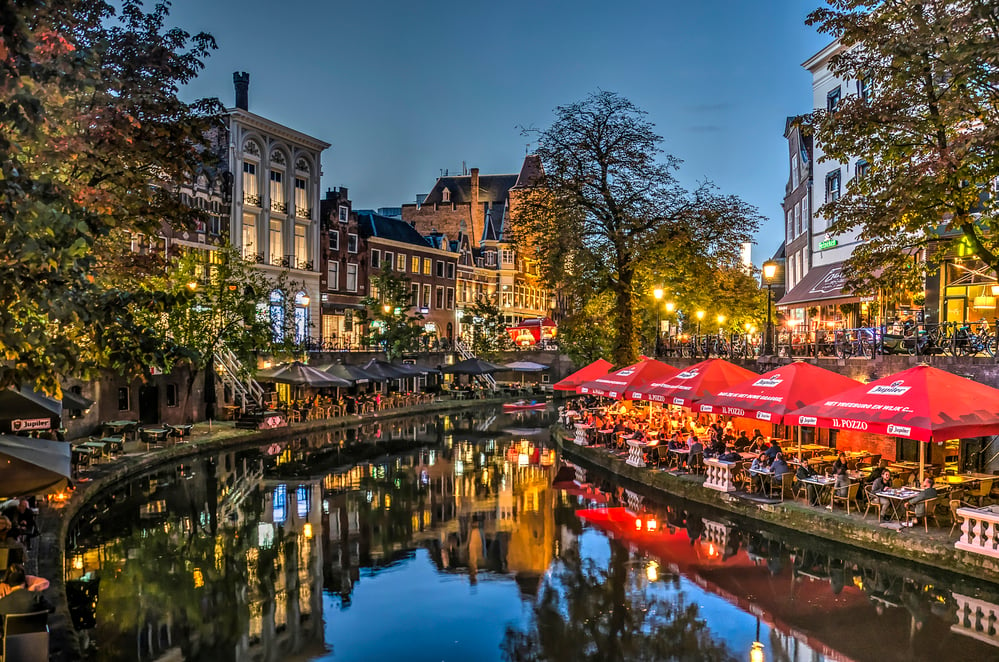
The city centre is buzzing at night. Image: Depositphotos
Across the Sluizen is a beautiful area with the quirky name ‘Oog in Al’.
This posh place consists of lovely green streets with houses built in the 1930s.
It has always been a popular place for families as there are lots of areas for children to play in. 🛝
However, there aren’t a lot of shops and restaurants and it is quite expensive to find a place to sit here. But with its proximity to the Central Station, it might be the best neighbourhood to live in as an international businessman/woman. 👔
Notable locations: Molen de Ster, Jasmijn & Ik, park Oog in Al, cheap shops at the Kanaalstraat, café Lombok, Sluizen.
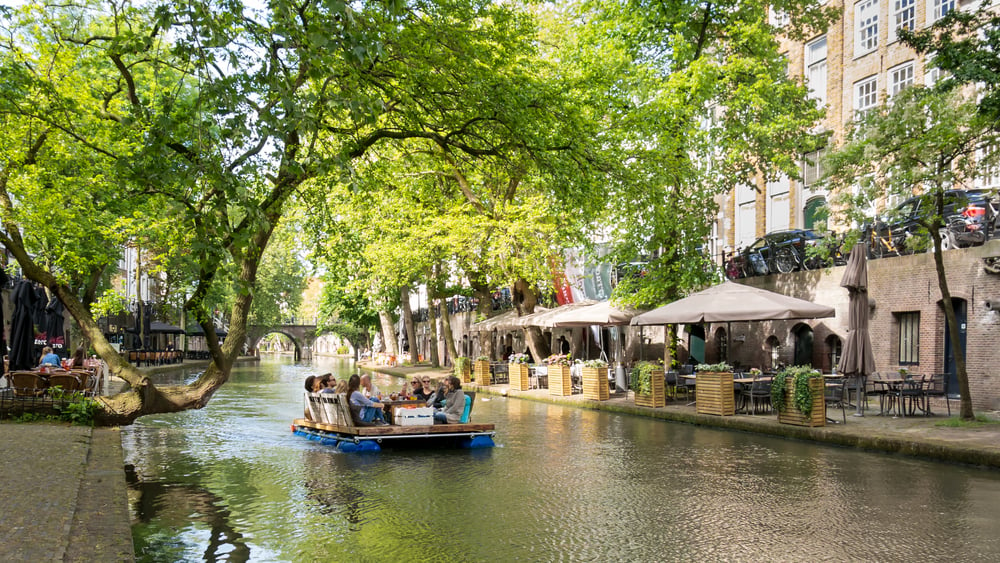
Utrecht can be enjoyed from all levels. Image: Depositphotos
Utrecht Zuid
The area south of the city centre is made up of the neighbourhoods Hoograven, Tolsteeg and Rivierenwijk.
The city centre sprawls out to the northern part of these neighbourhoods with exciting hotspots opening up all around. 🔥
Presenting Julianaweg Hoograven in Utrecht! Image: Maurits90/via Wikimedia Commons/CC1.0
People who make up the fabric of Utrecht live here: migrants, yuppies, students, families and the native ‘Utrechters’.
Housing is diverse and available in different price ranges. You can rent a cheap studio here, but also buy a big and expensive family home with a garden. 🪴
The main areas, Hoograven and Rivierenwijk, are divided by a canal. Jutfaseweg is also a pretty location to check out!
Notable locations: WT Urban Kitchen, restaurants along Oosterkade and Westerkade, Klein Berlijn, Rotsoord.
Leidsche Rijn
If your dream is the sleepy suburban life, then move to Leidsche Rijn! This new area was built a little over ten years ago, across the Amsterdam-Rijnkanaal and the A2.
It has new, affordable and big houses, loads of schools, playgrounds and big supermarkets.
Right in the middle of Leidsche Rijn is Maxima Park – the ideal place to go jogging, skating, cycling, walking your dog or playing with your kids. 🚴♀️
We wouldn’t mind waking up to this view every day! Image: Jan Dijkstra/Wikimedia Commons/CC3.0
Most families live here because houses are cheaper and more spacious than in the old city.
Another big advantage is that you are close to the A2 highway and you can drive to places like Amsterdam or Gouda within half an hour!
It also has two train stations on the line to Utrecht, Gouda and Woerden. 🚆
Notable locations: Maxima Park, Cinemec, Castellum Hoge Woerd
Kanaleneiland
So, what if you don’t have much money? Kanaleneiland might be just the right fit for you. 🧩
It’s mostly full of apartment blocks from the ’60s and ’70s here. They aren’t the prettiest, but they’re affordable!
The upside is that there are a lot of cheaper fruit and veggie shops here. There are large green areas such as the Amsterdam-Rijnkanaal and Park Transwijk.
There’s also the Prince Claus Bridge, designed by the same person who designed the Erasmus Bridge in Rotterdam!
Prins Claus bridge, see any resemblance with the Erasmus bridge? Image: Depositphotos
But the biggest pro? Kanaleneiland is still within 15 minutes of cycling to the city centre and train station. So you are still close to all the hotspots in town, without spending a fortune on your house. 🎉
Notable locations: Park Transwijk, de Kantien, Ikea.
We hope you find that dream home of yours in the gorgeous little city of Utrecht. Good luck on your search! 🤞
Know any other places when it comes to nice neighbourhoods in Utrecht? Tell us in the comments below!
Amsterdam’s mayor, Femke Halsema, has drawn up a new hospitality policy that will leave some partygoers very disappointed.
You might have to start keeping your post-bar snacks at home. If the mayor’s new policy passes, the capital’s catering establishments will have to close an hour earlier — at 2 AM on weekends and 1 AM on weekdays.
A uniform policy to prevent nuisance
Whether this will happen depends on if the municipal council approves Halsema’s plans.
If they do, the whole city will have a uniform approach to closing times, whereas rules currently differ per district.
According to Het Parool, Halsema intends to regulate crowds in the city with her new plan. In the city centre especially, snackbars attract a lot of visitors late at night, which can be a nuisance.
However, her new policy may seriously affect fast-food restaurants and snackbars that profit from the late-night crowd.
To still give us the heavenly experience of getting fries after a night out, though, fast food restaurants can apply for an exemption under certain circumstances.
There would also be an adjustment period for restaurants if the policy is approved, so new closing times would only come into effect in 2028. We suggest you party hard for the next three years.
More changes
Besides catering establishments, the new policy would also target the beloved Dutch terrasjes (terraces) — their impact will be more strictly assessed before they get a permit.
Furthermore, businesses that are not catering establishments but still offer food, such as shops, museums, and gyms, will have to be careful about ‘independent visitor flows’.
This means that they can still offer food, but their primary function can’t become being a cafe instead of a gym, for example. You actually have to go to the gym to work out, which takes all the fun out of it.
What do you think of the new hospitality plans? Let us know in the comments!
South Holland joint enjoyers, don’t underestimate the coffeeshops in Den Haag! Behind the city’s formal facade lies a fun, relaxed side — here’s how to uncover it.
At first glance, Den Haag, with its reputation as a city of politicians and diplomats, can appear a bit too pompous to indulge in the down-to-earth pastime of THC tasting.
But don’t let appearances fool you! Even the most serious cities need some relaxation: here are the best coffeeshops in the Hague.
TIP: Are you a newbie to the Dutch weed world? Geen probleem, we have a guide to answer all of those first-timer questions — and to help you smoke safely and responsibly. 😉
1. Cremers: A true classic
With almost 35 years under its belt (or inside its grinder?), Cremers is a linchpin of Haagse history. But it keeps us with the times, too, with over 120 cannabis products, including around 40 strains of weed.
You don’t have to go far to sample them all: just next door, the Cremers Social Club has plenty of space to smoke, eat a burger, and sip on a drink while vibing with music or watching the game on their numerous TV screens.
(Psst, they have the CBD beer and cannabis wine, too! 🍺)
📍 Location: Prinsestraat 84, 2513 BM Den Haag 🚬 Smoking inside: Allowed via reservation or through “Gold Card” membership 💰 Accepts card payments: Yes ⏰ Opening times: Every day from 9 AM to 1 AM
2. Dizzy Duck: Right off the train
Dizzy Duck, already a staple name in the Hague for over 30 years, is always at the top of their game.
Their downtown shop, conveniently located close to the Centraal station, has won several prizes, including the 2024 Highlife Cup “Weed Winner Overall” for its “Kosher Kush.”
And, bonus point, all of their strains are lab-tested! So you’ll never have to worry about not knowing what you’re smoking. 😌
Located in the hipster Zeeheldkwartier around many trendy shops, Greenhouse Secret Farmers have made a name for themselves due to their attention to detail and quality.
Everything they sell is ethically and organically grown — including their exceptionally wide hash selection, which is one of their two specialities.
The other speciality is edibles: red velvet cake, muffins, brownies, syrup waffles… you name it, they sell it! And it’s all prepared by a professional pastry chef. 🤤
📍 Location: Elandstraat 18, 2513 GR Den Haag 🚬 Smoking inside: Yes 💰 Accepts card payments: Yes ⏰ Opening times: Every day from 9 AM to 12 AM
4. Fly II: Taste and transparency
Located in the elegant Noordeinde neighbourhood, close to Paleistuin Park and lots of cute canal-side benches, Fly II may not have a smoking area, but it is one of the Hague’s favourites.
Renowned for its transparency, Fly only sells lab-tested cannabis, weighed right before your eyes and accompanied by a QR code containing all the specifics on your product of choice.
At Highlife Cup 2024, Fly’s “Holy Cream” was crowned best “Hash Special”. 👀
📍 Location: Veenkade 46, 2513 EH Den Haag 🚬 Smoking inside: No 💰 Accepts card payments: Yes ⏰ Opening times: Every day from 9 AM to 11 PM
5. The Canna Club: Nightlife favourite
Just a stone’s throw away from Grote Markt, the centre of Haagse nightlife, The Canna Club is almost a required stop when going out in Den Haag.
However, its cosy indoor smoking area, with its speciality café vibe, makes this coffeeshop a great daytime destination, too!
Also, The Canna Club is one of the few coffeeshops selling pre-rolled puur (pure) sativa or indica joints. Convenient, right?
📍 Location: Nieuwstraat 4, 2511 AV Den Haag 🚬 Smoking inside: Yes 💰 Accepts card payments: Yes ⏰ Opening times: Every day from 10 AM to 12 AM
6. Doctor Green: Instant mood fixer
A few steps away from Het Plein, the other pulsating heart of the Hague’s nightlife, Doctor Green is guaranteed to put a smile on your face.
Don’t let its neat little entrance fool you: upstairs, the simple white decor gives way to a spacious, comfortable, and extra colourful smoking lounge.
Using cannabis to fight chronic pain or insomnia? You’ll be glad to hear that Doctor Green is also a CBD specialist, with knowledgeable staff happy to inform you about the medical properties of marijuana.
📍 Location: Herenstraat 7, 2511 CZ Den Haag 🚬 Smoking inside: Yes 💰 Accepts card payments: Yes ⏰ Opening times: Every day from 9 AM to 12 AM
7. Magic: For night owls
Positioned right at the heart of the Hague’s shopping area, Magic is an easy addition to your itinerary when exploring the city centre.
Its club-like interior oozes coolness, but the staff is very approachable, and will expertly guide you through their wide selection of strains — including their famous homemade “Magic Dynamite.”
While Magic doesn’t have a smoking area anymore, it remains a takeaway favourite, also as one of the few coffeeshops in Den Haag open late at night.
📍 Location: Gortstraat 6, 2511 AP Den Haag 🚬 Smoking inside: No 💰 Accepts card payments: Yes ⏰ Opening times: Every day from 9 AM to 1 AM
8. The Crow: Next to nature
The Crow might be the most fancy-looking coffeeshop in the Hague, but it’s actually one of the most affordable ones, too.
The Crow’s product selection might be a little smaller than average, but its nearly unbeatable price-quality ratio abundantly makes up for this flaw.
Plus, this coffeeshop has an amazing location, just across from the Hague’s green lung, Haagse Bos, and its biggest outdoor event venue, the Malieveld.
📍 Location: Hooikade 7, 2514 BH Den Haag 🚬 Smoking inside: No 💰 Accepts card payments: Cash preferred ⏰ Opening times: Every day from 10 AM to 12 AM
9. The Box: For post-beach treats
Rumour has it that all beach walks in the Hague have to end at The Box, Scheveningen’s beloved seaside coffeeshop.
Offering something for all pockets, The Box is locally appreciated for its top price-quality ratio and its dedication to selling organic, lab-tested products.
Its lack of a smoking lounge is easily compensated by its proximity to the beach. 😉
📍 Location: Havenkade 16, 2586 TS Den Haag 🚬 Smoking inside: No 💰 Accepts card payments: Yes ⏰ Opening times: Every day from 10 AM to 11 PM
10. Blue & White: Scheveningen’s cosiest coffeeshop
Too cold to go to the beach, but still in the mood for a little seaside sativa? Then Blue & White in Scheveningen is the place for you.
Located close to the Pier, this coffeeshop has the cosiest beach cafe atmosphere, featuring a comfy indoor lounge, good music, great edibles, and a weed and hash selection wide enough to get the job done.
Plus, they may or may not have a cute little fluffy budtender. 😽
📍 Location: Bosschestraat 63, 2587 HC Den Haag 🚬 Smoking inside: Yes 💰 Accepts card payments: Yes ⏰ Opening times: Every day from 10 AM to 11 PM
11. Galaxy: For all-day space (cake) travels
Located on the Weimarstraat shopping street, near many second-hand stores and restaurants, Galaxy is a great place to take a relaxing mid-thrifting break.
Boasting low prices, a huge selection, and a large and comfy space-themed smoking lounge, Galaxy ticks off many stoner boxes.
Plus, its lounge opens at 8 AM and closes at midnight, allowing your interstellar voyage to start early, or last well into the night. 🌌
📍 Location: Weimarstraat 245, 2562 HH Den Haag 🚬 Smoking inside: Yes 💰 Accepts card payments: Yes ⏰ Opening times: Every day from 8 AM to 12 AM
12. Strain Fellows: A hipster haze hotspot
After taking over from the historical Haagse coffeeshop The Point, Strain Fellows gave the store a makeover, quickly making a name for itself as the new hotspot in the trendy Zeenheldenkwartier.
Smokers, however, don’t flock to Strain Fellows for its polished interiors but for its amazing prices, wide high-quality selection (they have 8 haze strains!), and great customer service.
Their colourful, informative menu has something for every taste, and their lounge has plenty of comfy seats to rest while on a trip. 😉
📍 Location: Marnixstraat 59, 2518 PW Den Haag 🚬 Smoking inside: Yes 💰 Accepts card payments: Yes ⏰ Opening times: Sunday to Wednesday 9 AM to 11 PM; Thursday to Saturday 9 AM to 12 AM
13. Nebula: a post-picnic pick
Nebula is conveniently positioned between Zuiderpark, the Hague’s ultimate picnic spot, and the Haagse Markt, the city’s biggest outdoor market.
A short walk from both landmarks, Nebula will woo you with its underwater-themed cool interiors and call you back for the attentiveness of its staff and the quality of its products.
Instead, cannabis in the Netherlands is decriminalised, meaning that while possessing, smoking, and producing weed is illegal, the government has a tolerance policy (gedoogbeleid) for small-scale, personal use.
Smoking in your private space is tolerated in the Netherlands. Image: Depositphotos
While some Dutch cities restrict cannabis to residents, that’s not the case in The Hague, and tourists are allowed to smoke as well.
But where can you smoke, you ask? There are some restrictions to keep in mind:
You can smoke in:
✅ Coffeeshops: Most licensed coffeeshops allow you to smoke inside, but some may have restrictions (e.g., no tobacco inside due to smoking laws). ✅ Private property: You can smoke at home or in a private space if the owner allows it. ✅ Some outdoor areas: Some cities tolerate discreet smoking in parks or quiet public spaces.
You cannot smoke in:
❌ Outdoor places with bans: Many cities, like Amsterdam, have banned smoking weed in certain public areas, such as near schools, playgrounds, and city centres. ❌ Closed public places: Smoking is not allowed in places like bars, restaurants, or public transport. ❌ Hotels & Airbnb: Many accommodations have strict no-smoking policies, and these also apply to cannabis.
How to smoke weed safely in the Netherlands
No, this is not a step-by-step guide to lighting your joint and taking a puff (we trust you have that part figured out) — this is about making your experience fun and safe.
To have an enjoyable experience when smoking weed from a Den Haag coffeeshop, keep these points in mind:
Stay hydrated: Always have some water on you to prevent dehydration.
Have something sugary on hand: If you feel dizzy or lightheaded, something sweet can help regulate your blood sugar.
Smoke in a safe environment: Smoke in a comfortable environment where you feel at ease, with people you trust.
Know your limits: Start with a small amount and go slow.
Don’t mix weed with alcohol: Combining the two substances can increase the risk of a bad trip.
If it’s your first time buying weed in the Hague, don’t be nervous: with the right information, ordering in a Den Haag coffeeshop will be a breeze — or a cloud of white sweet-smelling smoke. 😉
Make sure you have everything you need
Got a reasonably full stomach, water, sugary foods, a trusted friend, and enough internet and battery to navigate this beautiful Dutch city? Then you’re all set.
Don’t forget your ID
If you want to buy cannabis products at any coffeeshop in the Netherlands, you’ll need to show one thing: a form of identification.
Whether it’s your passport, ID, driver’s licence, or residence permit, you’ll need it to secure the goods.
Take your time reading the menu
Stepping into a coffeeshop can feel overwhelming, especially if it’s your first time. But remember: this is meant to be a relaxing experience.
So, take your sweet time to browse the menu and, if needed, ask all the questions you may have.
Don’t be shy, ask your budtender for advice
Not sure what you’re looking for (or even looking at)? Geen probleem, the professionals are here to help!
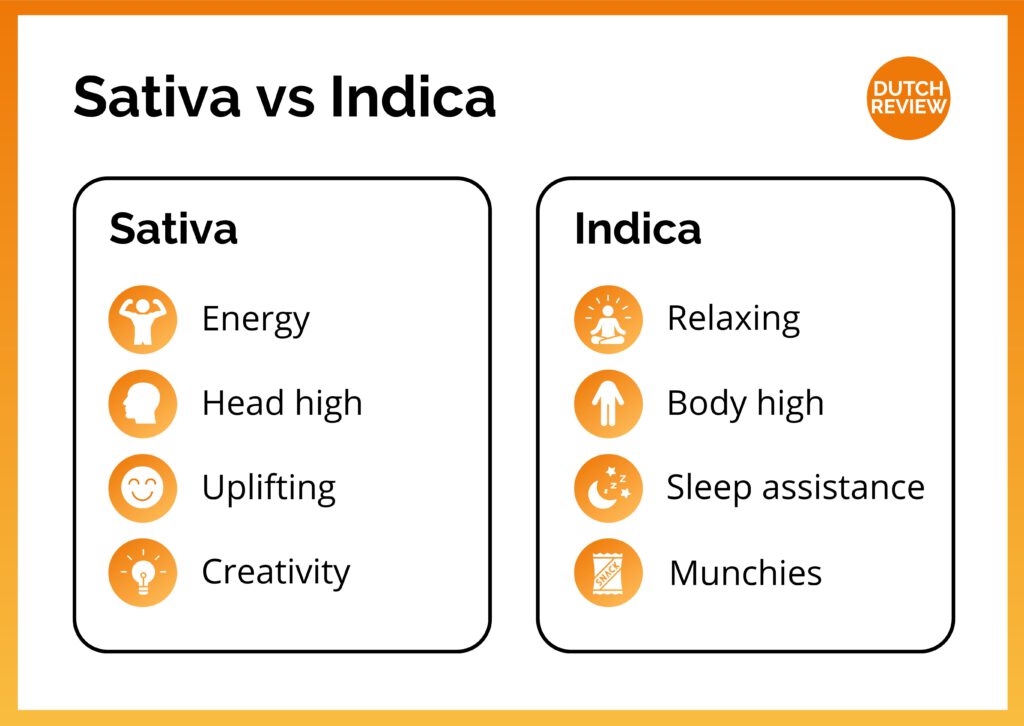
It’s important to know what you’re smoking and that it aligns with your expectations for your trip. Depending on your desired effect — energising or relaxing — Sativa or Indica may be best suited for you.
Our tip? Don’t try to wing it when it comes to strain choice and dosage; just ask your budtender for recommendations!
Know what you’re smoking! Image: DutchReview
Smoking cannabis in The Hague’s old city centre? Or maybe to the sound of crashing waves at Scheveningen? Whatever coffeeshop you go for, one thing’s certain: we hope you have a glorious high. ✨
What’s your favourite coffeeshop in The Hague? Leave a recommendation in the comments!
Coffeeshops in Den Haag: Frequently asked questions
Where can I smoke weed in Den Haag?
In Den Haag, like anywhere else in the Netherlands, smoking weed is officially only allowed in private spaces and inside licensed coffeeshops, such as the ones we listed in this article. But you did read the word “officially”, right? 😉
What is the best coffeeshop in Den Haag centre?
Den Haag’s centre has several excellent coffeeshops: some of the best ones are Cremers, Dizzy Duck Downtown, and The Canna Club, but you can find many more in this article.
Can tourists go into coffeeshops in Den Haag?
Yes, in the Hague, unlike in some other Dutch cities, tourists of all nationalities are welcome inside coffeeshops, so everyone in Den Haag can buy weed legally — provided that they can prove that they fit the age requirements, of course.
What do I need to bring to a Den Haag coffeeshop?
When visiting a coffeeshop in Den Haag, you should also bring a legal form of identification with you, such as your national ID or passport. This is to verify that you fit the minimum age requirement for buying weed in the Netherlands, which is 18 years old.
Is weed legal in Den Haag?
Like elsewhere in the Netherlands, in Den Haag, the purchase of weed for personal use is decriminalised. So, provided that you are over 18 and buying from licensed coffeeshops like the ones in this article, you’re allowed to buy and carry up to five grams of weed at a time.
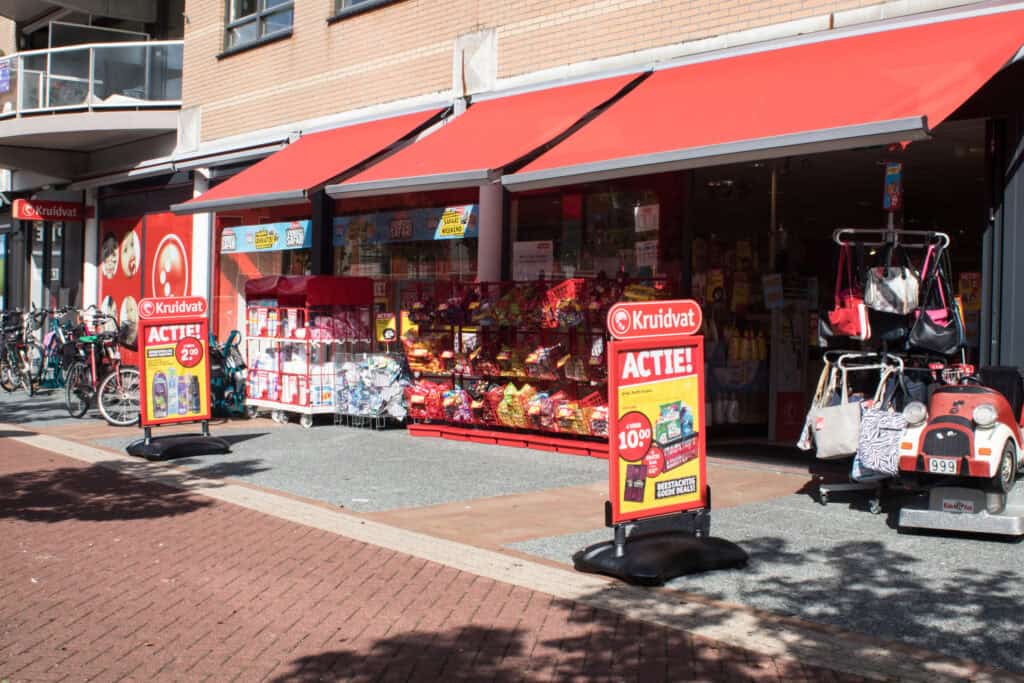
It turns out that many everyday drugstore products are, on average, twice as expensive in the Netherlands compared to Germany.
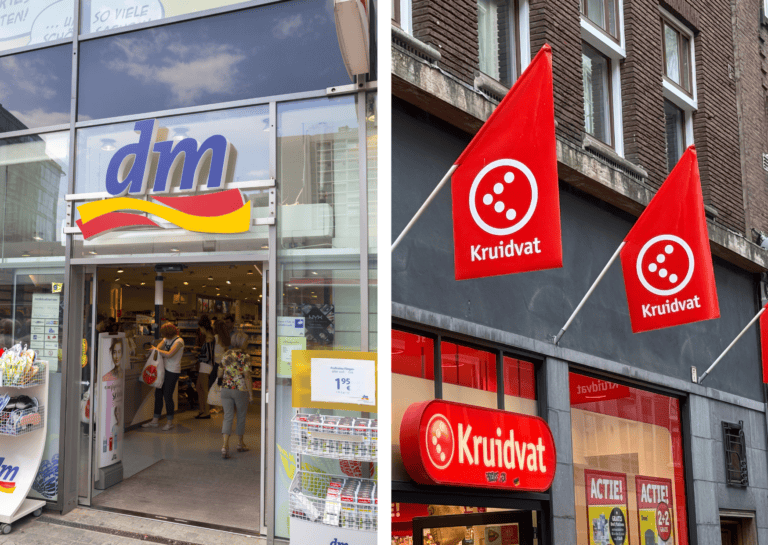
A recent investigation by Kassa into two major drugstore chains — Kruidvat in the Netherlands and DM in Germany — has revealed that we should all be shopping for toiletries in Germany.
A price comparison revealed that a haul consisting of 13 A-brand products would cost someone in the Netherlands €161.69. Meanwhile, this same haul would cost only €73.75 in Germany. 🫠
The 1+1 trap
Dutch drugstores are filled with 1+1 promotions, giving the impression of a charming bargain.
In reality, these deceivingly welcoming deals are just a clever way to manipulate consumers. BNVARA reports that drugstores use these promotions to create the illusion of generosity.
Consumer psychologist Liza Luesink explains, “Dutch drugstores are addicted to 1+1 offers, and so are we consumers.” Even when we know the trick, our brains will give us the green light to buy two of everything we don’t need once the word “free” is involved.
We all love a good “actie”, but is it actually a good deal? Image: Dreamstime
A cross-border shopping trip
For those living near the German border, shopping across the border is already a well-known money-saving hack.
Is 2026 the year that you will finally learn Dutch? The year that you will finally move from “Ik spreek een beetje Nederlands” to fully fluent?
Believe me: I know all the challenges of learning Dutch.
✅ I’ve tried the apps, listened to the podcasts, watched the videos, and attended the schools.
✅ I’ve read books, poured over textbooks, and drilled flashcards until my eyes couldn’t stay open.
✅ I’ve spoken with Dutchies, made mistakes, and been forced to revert to English even when I didn’t want to.
At the end of all that, I can confidently say: learning Dutch isn’t easy
Regardless, learning Dutch is possible. Thousands of internationals in the Netherlands have successfully mastered the tongue-twisting language — and so can you!
But you don’t even have to master it: Dutchies will appreciate any amount of Dutch you learn because it shows great respect for their country.
Plus, if you’re choosing to learn Dutch, you’re already doing better than everyone on the couch. 💪
Whether you’re living in the Netherlands, planning an extended stay, or just coming as a tourist, it’s well worth learning some Dutch. But the most common question both Dutchies and foreigners ask is: why learn Dutch when everyone in the Netherlands speaks perfect English?
We’ll be frank: it’s true that there is almost no need to learn Dutch. People from the Netherlands are truly excellent at speaking English and are consistently ranked as some of the best non-native English speakers in the world.
But, understandably, the Dutch still feel a strong attachment to their own language. While a Dutchie will happily switch to English to speak with you, they’re typically more comfortable in their native tongue.
So can you speak English in the Netherlands? Absolutely. But should you rely on it entirely? Definitely not.
Learning some level of Dutch (even if it’s just a few phrases to make someone smile) is a nod of respect that you’re a visitor in the Netherlands or a jump forward to becoming a Dutchie yourself!
Learning Dutch will make your time in the Netherlands a lot more fun and open up new possibilities. Image: Depositphotos
Ready to leer Nederlands (learn Dutch)? I’ve chatted with the best non-native Dutch speakers, spoken to the masses, and trawled the internet for the best ways to learn Dutch. Laten we gaan! (Let’s go!)
🧩 Making sense of the Dutch language
Before leaping into the journey of learning Dutch, let’s take a quick look at what you’re getting yourself into.
⚖️ Differences between Dutch and English
You may know that there are some English words which have their roots in ye olde Dutch. Words like “boss”, “bluff”, “cookie”, “Santa Claus”, and even “Yankee” all trace their origin to Dutch — and that might be the reason why some people say learning Dutch is easy if you already speak English.
Although both Dutch and English belong to the West-Germanic language family, there are a lot of differences between the two. Let’s take a look at a few:
Definite articles
Often, one of the first things people notice when starting to learn is that there are two definite articles in Dutch. Dutchies use either de or het, contrary to English which only has one definite article: “the.”
For learning Dutch, this means you’ll have to memorise not just the nouns but also the articles they pair with — fun!
Pronouns
Once again, why use one when you can have two? In Dutch, there are two forms of the personal pronoun “you.” For informal use, Dutchies say je, and in a formal situation, they go with u.
See if you can notice the difference between alsjeblieft and alstublieft next time you’re out!👂
Word length — and this is no joke
You may have noticed that some Dutch words are super long. 😅 In fact, almost any Dutch word can be made as long as you want.
The Dutch language allows for virtually endless compound words, meaning that you can jumble words together in one endless stream.
That’s what happened when the word kindercarnavalsoptochtvoorbereidingswerkzaamhedencomitéleden (children’s carnival parade preparation work committee members) snatched a place in the Guinness Book of World Records in 2011. Phew!
This was our facial expression after learning about the longest word in the Dutch language. Image: Depositphotos
However, for a word to be recorded in a Dutch dictionary, it must be in common use (thank goodness!). In the Dictionary of the Dutch Language — which is believed to be the longest dictionary in the world (we sense a pattern here) — the longest word is levensverzekeringsaangelegenheden (life insurance matters).
Is it difficult to learn Dutch?
Searching the depths of the internet while procrastinating studying the actual language (don’t worry, we’ve all been there), you’ll read that Dutch is pretty easy to learn.
Yup, based on linguistic similarities, Dutch is supposedly one of the easiest languages to learn if you have a Germanic language background (like English). 👀
However, DutchReviewers on our Instagram beg to differ. When asked about their adventures with the Dutch language, only 18% said they found it makkelijk (easy). The remaining 82% voted that Dutch was difficult to learn.
How you’ll fare with the Dutch language is hard to predict, though. So, our advice is to just get cracking and try to have fun!
Dutch dialects
If you’re one of the many people who find Dutch difficult to learn or worry about your pronunciation, rest assured that you don’t have to sound exactly like your Dutch neighbour: Dutch is a rich language with many dialects — and even some Dutchies’ pronunciation differs from the “standard.”
In the Netherlands, there are three regional languages that are recognised by the European Charter for Regional and Minority Languages:
Frisian (spoken in Friesland),
Low Saxon (spoken in the east of the country), and
Limburgish (spoken in Limburg, Belgium, and some places across the German border).
Did you know? Frisian is genetically closer to English than Dutch is!
Within these regions, there are even more dialects — some claim up to 267 — spread across the Netherlands.
And while the four main dialect groups are West Flemish, Hollandic, Brabantian, and Limburgish, you’ll even hear a difference between an Amsterdammer and an Utrechter — even though the cities are only half an hour apart!
Why is Dutch called Dutch?
In Dutch, the language is called Nederlands — so why don’t we call it “Netherlandish” in English?!
Well, in the Middle Ages, Dutch was called Dietsc or Duutsc. Historically, it’s very similar to “Deutsch” (AKA German) and even shares the same etymology — meaning “language of the people.” ✊
The language was spoken colloquially, but not officially. Instead, the language of the church, education, and administration was Latin.
Similarly to why the Dutch people are called Dutch, the language of the Netherlands came to be known as Dutch once it slipped into English use. The English heard “Duutsc” and decided to call it Dutch. 🤷♂️
Dutch for the deaf? Interestingly, the Dutch Sign Language (Nederlandse Gebarentaal) has only been officially recognised as a language in the Netherlands since July 2021. It has tens of thousands of signers, so if you want another language challenge… this is your sign!
🏁 How to start learning Dutch
Now that you have an overview of the Dutch language, let’s begin taking steps towards learning it! These are the tips, tricks, and just general information that I wish I’d known when starting to learn Dutch:
Understand the Dutch language proficiency levels
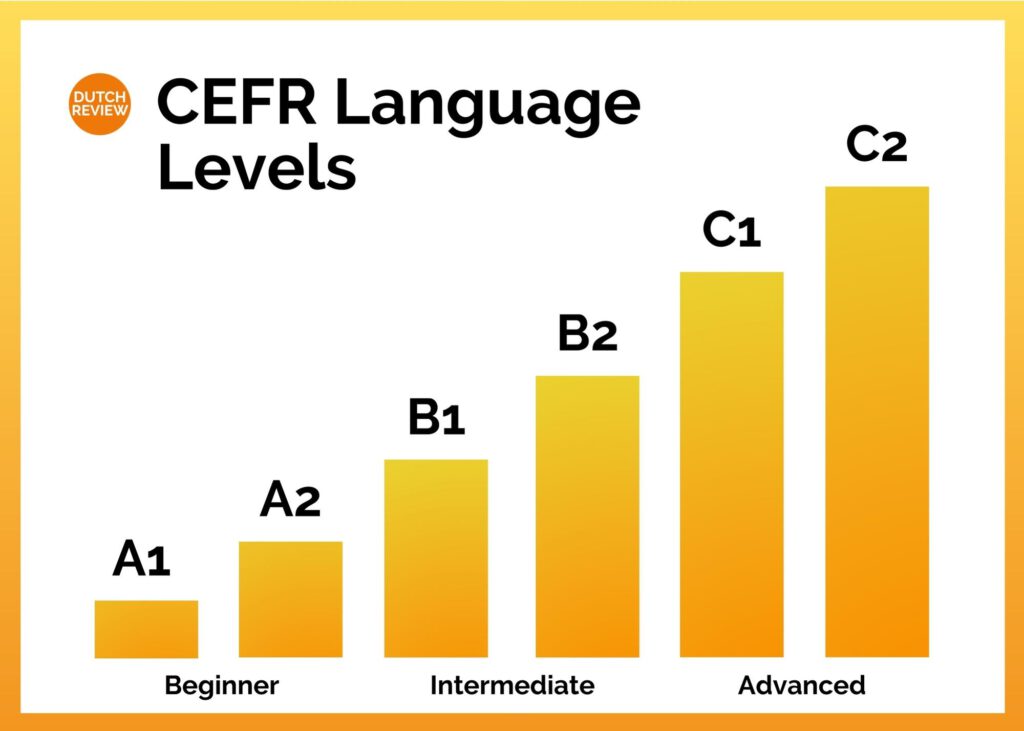
When looking into Dutch courses, you’ll usually see them organised in terms of CEFR levels. CEFR stands for the Common European Framework of Reference and divides language proficiency (including Dutch) into six levels, based on spoken interaction, spoken production, listening, writing, and reading:
It’s best to take it one step at a time when you start learning Dutch. Image: DutchReview
Generally, it takes between 100-200 hours to advance between the levels, but if you’re unsure about your level, you’ll find a bunch of free Dutch tests online that follow the CEFR framework.
Many Dutch language schools will also offer an intake class to determine your level.
Whatever ambitions you have, we suggest writing them down to keep yourself accountable and referring back to them to see the progress you’ve made whenever you feel stuck.
We tend to be too hard on ourselves, so remember to give yourself some credit too!
Choose your Dutch learning strategy
Defining your study strategy is crucial to making real progress. Consider whether you are a visual, aural, verbal, or kinesthetic learner and focus on ways of learning Dutch that complement your learning style.
If you’re unsure about the best ways to learn Dutch, we’ll get to that in a jiffy. 👇
However, the most important thing when it comes to strategy is to give yourself time. Although we all want to learn Dutch fast and easy, it won’t happen overnight — so be gracious with yourself and remember to have fun.
Consider journaling while learning Dutch to stay motivated and track your progress. Image: Depositphotos
Common mistakes when learning Dutch
Learning a new language can be exciting and challenging — but also intimidating. To learn, you have to leave your comfort zone and, yes, make mistakes.
Since we’ve certainly made our fair share of them, these are some common mistakes to look out for when learning Dutch:
False friends in Dutch
As you’ve probably noticed, Dutch borrows words from many different languages (think English, German, and various Scandinavian languages).
This is really awesome when you suddenly recognise a word like water and quite rightly translate it to, well, water.
However, it’s less fun when you realise that slim doesn’t mean slim but smart. That raar means weird and not rare, and that a wild rooster isn’t a wild rooster at all…but a cattle grid — excuse us?
We could go on, but you get the point — there are a lot of false friends between Dutch and English.
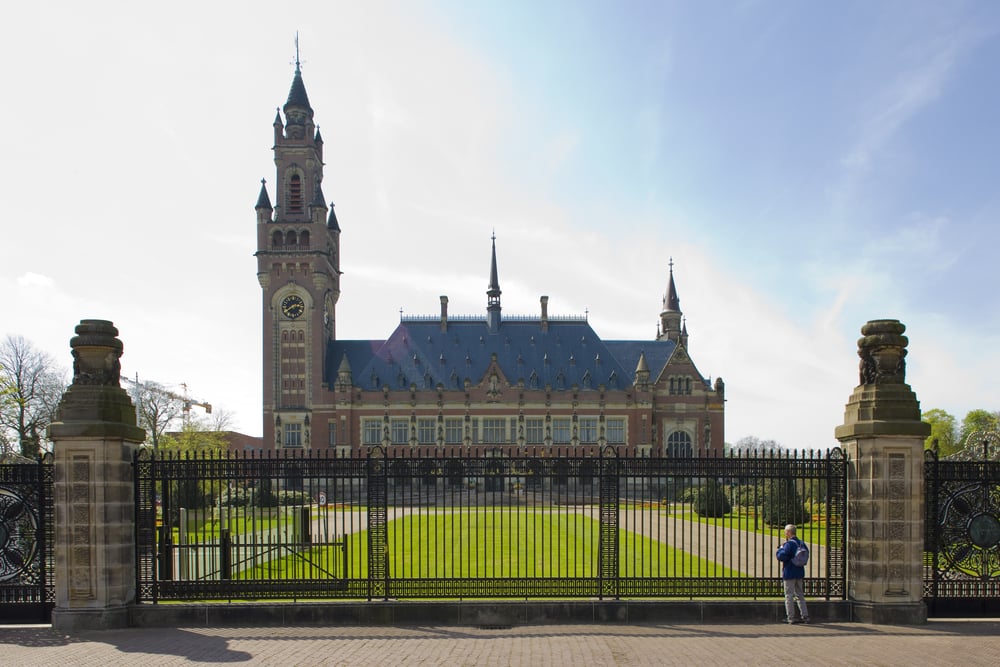
Even if English isn’t your native tongue, you want to stay alert when it comes to false friends: Imagine the surprise of a Dane (me!) when seeing vrede written on countless Dutch churches — thinking that it means “anger” (vrede in Danish) while in reality, it means peace.
It could have been awkward thinking that the ‘Vredespaleis’ was nicknamed The Anger Palace. So be wary of false friends! Image: Depositphotos
Burning out
Another less technical mistake when beginning to learn Dutch is to try to do everything at once. However excited you are to master the guttural Dutch ‘g’ and flaunt your ability to say “Scheveningen” like a local, you can’t do everything at once.
A lot of people go all in the first few weeks of learning Dutch but then give up because they get overwhelmed. You simply can’t use all the apps, read all the books, speak every day, and also keep up with, you know — life in a whole new country.
So, look through the ways of learning Dutch below, pick one or two, and start from there. It’s more important to make slow, continuous progress over time than to burn yourself out and sacrifice your motivation to learn.
Not using your Dutch
The best thing that could’ve happened to my Dutch skills was when I started a job that involved customers. Although I had previously learned some Dutch grammar and vocabulary, I always struggled to bridge the gap between theory and practice.
Well, from one day to another, thanks to my side hustle at H&M during my studies, I had to talk to Dutch people on a regular basis. And let me tell you: it was terrifying. But it made me progress like I had never before.
The bottom line here is: as soon as you feel confident enough, please use your Dutch. Don’t make the mistake of learning all that grammar without putting it into practice. 🙅
🔝 The best ways to learn Dutch
Ready, set, go! These are our tried and tested ways of learning Dutch — gathered from my own experience, passed on by teachers and previous learners, and recommended by other DutchReviewers.
📱 Use an app to learn Dutch
Want to learn Dutch? There’s an app for that! Well, actually, there are quite a few. But, a word of caution first: it’s widely accepted in language-learning communities that using an app is a great way to start learning a language — but not the way to master one.
Therefore, use the apps below as a way to learn some great new vocabulary and inspire a love of learning this beautiful (??) language. You’ll learn some words and basic phrases but won’t delve into grammar too much.
So, what are the best apps to learn Dutch? We’ve collected our top recommendations for you below.
Duolingo will teach you the most random but still somehow useful words to get you started on your Dutch journey.
Memrise is similar to Duolingo but often has more relevant content, and their free version is really handy!
Babbel has a free trial period that lets you get started with Dutch.
Drops is perhaps the most fun and addictive (!) way to memorise Dutch vocabulary through illustrative games and personalised learning.
6000 Words allows you to learn with fun language games and a visual approach.
Learn Dutch from the couch or study on the go! Image: Depositphotos
🏫 Attend Dutch language schools
Get your books out and your glasses on because we’re going back to school! 📚
If you’re truly committed to learning Dutch, an app will only get you so far — and attending a school is the next step towards proficiency!
So, how do you decide which course to sign up for? In the Netherlands, you can choose between private language schools, municipality courses, university courses, and public library courses.
Private language schools
Are you ready to take your Dutch learning to the next level? Private language schools offer small class sizes and will teach you to read, speak, and understand Dutch — the whole shebang.
With private language schools, you can also choose from different course schedules, such as day, evening, or intense courses.
However, the breadth also comes with a price tag, so make sure you do your research and find the best private Dutch school for your needs!
💶 Average price: €400-800 (solo lessons will be €1000+) ⏱Typical length of courses: 8-12 lessons, generally once or twice per week. 🎯 Target group: All levels and age groups. There’s a course for everyone!
Municipality and public library courses
At the other end of the scale, municipality and public courses are cheap or even free but can be less well-organised than private schools.
Many library courses are centred around speaking Dutch (which is perfect if you don’t get to practice much in your everyday life!).
They offer a comfortable group setting, sometimes provide koffie and thee, and they let you speak with other internationals who are learning the language.
💶 Average price: Free, or a small contribution. ⏱ Typical length of courses: Weekly classes are on offer, but there is no fixed course schedule. 🎯 Target group: People with some (limited) level of Dutch who want to practice their speaking skills.
University courses
Finally, don’t overlook university courses! They aren’t only for students (though students are given a reduced fee) but are open to anyone who wants to learn Dutch.
As they’re part of the university, these courses follow the academic calendar or sometimes even the general Dutch holiday calendar (giving you, for example, an autumn break from the course).
The price level depends on what type of course (for example, an evening, intense, or integration exam preparation) you want to enrol in and whether you are a student or not.
💶 Average price: €200-700 per module ⏱Typical length of courses: 3-4 months 🎯 Target group: All, but there’ll likely be a majority of university students in class.
💻 Sign up for online Dutch courses
On the hunt for a structured approach to language learning but don’t have time to attend a language school? Geen probleem!
Taking a MOOC can really help kickstart your study and is also one of our top recommendations if you’re on the hunt for free ways to learn Dutch!
MOOC stands for ‘Massive Open Online Course’ and is a great way to take well-organised classes in your own time. All it requires is a stable internet connection and a dose of self-discipline.
By taking a MOOC you can learn Dutch anywhere! Image: Depositphotos
For beginners, we recommend the three-week introductory course offered by the University of Groningen. This course is completely free (unless you want a certificate of completion), teaches you the basics of Dutch and Dutch grammar, and is a great way to kickstart your language learning.
Alternatively, check out Learn Dutch with Bart de Pau or the ‘Dutchies to be’ online course: Learn Dutch with Kim. Both provide well-structured and entertaining online courses, some free and some paid, in addition to free (and super helpful) YouTube videos.
📙 Use textbooks to learn Dutch
Are you a motivated self-studier who wants to go beyond vocabulary? Then using textbooks to learn Dutch could be the next step towards proficiency!
So, if you’re ready to dabble in a bit of grammar, get yourself to any major bookstore in the Netherlands and peruse their selection of Dutch textbooks. Some of the most popular ones include ‘Nederlands in gang,’ ‘De opmaat,’ and ‘Contact!’.
Although you’ll miss out on speaking practice, you can readily go through the textbook chapters and exercises in your own time. Most Dutch textbooks also include online exercises that are super helpful.
Head to your local library or take advantage of Bol.com’s fast delivery. Image: Depositphotos
Reference books to support your Dutch learning
Essential Dutch Grammar: An oldie but a goldie. Focusing on the grammar needed for everyday Dutch communication, this book is written for the adult language learner with limited time.
Another free and often seriously fun way to learn Dutch is by joining online language learning communities.
In fact, they don’t even have to be focused on language learning! Sometimes, flexing your Nederlands is just easier in the less confronting space of the internet.
Your new language buddy could be online right now! Image: Depositphotos
So, power up your laptop and join a Discord, Reddit, or Duolingo community because there are plenty of servers and subreddits for you to explore.
Some are created explicitly for internationals to practice their Dutch, some are multilingual communities that are happy to communicate with you in Dutch — and others are just waiting for you to share the best Dutch memes with them.
If you follow an English-taught study or work in an international company, you may not get many chances to finetune your ears to the guttural sound of the Dutch language. One way to do this is by listening to Dutch podcasts and songs!
Listening to podcasts in Dutch is a great way to learn conversational Dutch and, depending on what podcast you select, familiarise yourself with Dutch history and culture at the same time.
To make your search easier, we’ve gathered nine podcasts that’ll have you speaking Dutch in no time.
Now, if you’re trying to find a way to make the (dare we say harsh?) Dutch language a little more melodic, then grab your headphones and get ready to sing along with Dutch songs to learn the language (and culture!). Have fun! 💃
📹 Watching videos to learn Dutch
Watching videos is another awesome way to practice your Dutch listening skills. On YouTube, you’ll find specific Dutch language learning channels, but there are also other Dutch Youtubers that’ll make you learn the language fast.
So, whatever YouTube loop you tend to be sucked into — be it lifestyle and health channels, gaming, comedy and experiments, or news and educational content — you’ll find a Dutch version out there! Might as well turn that procrastination into learning. 🧠
You can listen, read, and do grammar exercises all you want, but in the end, if you want to really learn Dutch, you need to practice speaking it. (And get Dutchies to speak Dutch with you).
Find a chair, a beer, and a Dutchie. Image: Depositphotos
Trust us, we know it’s scary. You’ll stumble, make mistakes, and sometimes conversations will even break down, and you’ll have to recover in English.
However, if you practice your Dutch regularly, then you’ll see improvements with every conversation — and before you know it, you’ll be flying through the five stages of learning Dutch!
📼 Watch Dutch TV shows and movies
Sometimes, you’re just not in the mood to pour over a book, listen attentively to a podcast, or even socialise — and that’s okay.
TV shows are an underrated way to learn a language! Image: Freepik
But guess what? You don’t need to do any of those things to learn Dutch.
Indeed, you can improve your Dutch while sitting on your couch! All you need to do is turn on the TV (or computer).
Depending on your mood and level of Dutch, you can watch a Dutch TV show or movie with English subtitles or perform your usual binge with Dutch subtitles!
Netflix and Dutch language learning
Okay, so you’ve set your subtitles to Dutch, watched all the Dutch movies on Netflix, and perhaps even discovered the many free shows and movies available on the Dutch broadcasting site NPO Start.
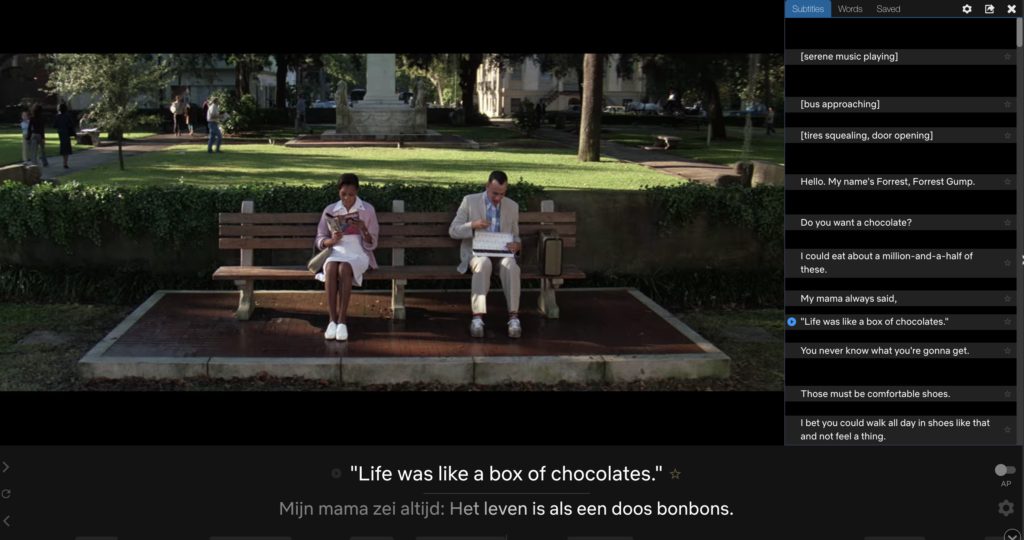
Now, it’s time to add the extension Language Reactor(previously called Language Learning with Netflix) to your Google Chrome browser and level up your couch potato-ing. The extension allows you to watch Netflix with two sets of subtitles running at once. 👯♀️
Using Language Reactor, you can compare the Dutch audio and text to a translation in your language. The extension also highlights the most important words in the subtitles and offers you a pop-up dictionary — pretty neat if you ask us!
Netflix and chill Dutch language learning. Image: DutchReview
👬 Join a (mostly) Dutch-speaking club or association
Do you already have some of the basics in place and are ready for a deep dive into the Dutch language and culture? Then ask your local football team, yoga studio, rowing club, sewing circle, or student association if they’re happy to have an international join.
Some will require fluent Dutch, but others are happy to do a little extra explaining if you don’t understand everything they’re talking about.
It takes courage, but immersing yourself in the Dutch language is a guaranteed way to learn fast while also enjoying a hobby and getting to know some Dutchies.
💪 Flexing your new language skills: using Dutch in your everyday life
Goed gedaan! (well done!). You’ve studied, stumbled, and learned — and are now ready to share your language proficiency with the world. 🎉
Alright, perhaps you just start with your Dutch friends, but using your Dutch regularly is the key to maintaining it (and becoming more comfortable speaking it!).
Sometimes though, that’s easier said than done.
How to get Dutchies to speak Dutch with you
Getting Dutchies to speak Dutch with you can be more tricky than it sounds (and should be). It’s not that they want to be rude or dismiss your efforts — they just likely won’t think twice about switching to English.
After all, they’re some of the best non-native speakers in the world.
So, embrace the Dutch directness and simply insist on Nederlands praten (speaking Dutch). A great way to do this is to say:
“Ik leer Nederlands en ik moet oefenen.” (I’m learning Dutch and I need to practice).
🎩 Top Dutch learning tips
With all of those different ways of learning Dutch in mind, you may need some tips and techniques to stay on top of everything. These are the ones we’ve benefitted from:
Focus on a few things at a time: While enthusiasm is great, learning Dutch takes time, so pick one way of learning and stick with that for a while rather than trying to do everything at once. It’ll be more enjoyable, and you can more easily see what learning techniques work for you.
Go crazy with the sticky notes: Use sticky notes to learn the Dutch names of the objects you see every day. Stick them on your kitchen cupboards, wardrobe, and bookshelf — basically around your entire home — and you’ll be familiar with the translation of household objects in no time!
Hang a grammar table on the back of your toilet door: Grammar might be one of the most universally dreaded parts of learning a language. So, know yourself and put a table of Dutch conjugations on the back of your toilet door so you practice when you have nothing else to do — and literally can’t run from it.
Find a friend to message in Dutch: Sometimes, busy schedules get in the way of meeting with friends to practice Dutch. It happens! However, it doesn’t have to come in the way of learning the language. Simply text your Dutchie friends in Dutch! They’ll be happy to help, and you’ll pick up some Dutch slang and abbreviations.
Read the newspaper: Pick up the Metro newspaper next time you’re sitting in the tram to practice reading Dutch or check out the NOS Jeugdjournaal for news written in simple Dutch.
Talk with non-natives who are also learning Dutch: Speaking to other Dutch learners, they will likely understand your stumbles and grammar better than Dutchies — and they’ll be more forgiving of mistakes.
🙋♂️ Frequently asked questions about learning Dutch
🏃♀️ Can you learn Dutch fast?
Depending on your level of commitment, study hours, and language background, you can learn Dutch relatively fast.
Looking at how long it takes to learn Dutch, it’s estimated that a native English speaker will need 5.5 hours of class lessons every week for two years to become fluent.
However, you don’t have to be fluent. If you’re aiming for a basic level of Dutch, you’ll get there much faster!
💻 Can you learn Dutch online?
Dutch language schools are becoming more skilled in online teaching, and many offer a variety of online courses. So yes, it’s definitely possible to nail learning Dutch online!
There are also a lot of free Dutch language resources online — Dutch proficiency doesn’t have to break the bank.
💰 Can you learn Dutch for free?
Yes! Learning Dutch for free is definitely possible, but it requires commitment and diligence. In fact, there are at least 16 free ways to learn Dutch for the passionate (or desperate) language learner on a budget.
😌 What’s the easiest way to learn Dutch?
Learning Dutch is a personal endeavour, and your way of learning will likely look different from someone else’s. In general, however, attending a Dutch language school is a great way to get a well-rounded learning experience — practising reading, writing, speaking, and listening on a regular basis.
📝 What level of Dutch do you need for the Dutch integration exam?
Currently, you need to have an A2 level of Dutch proficiency on the Common European Framework of Reference (CEFR) to pass the Dutch integration exam. That includes reading, listening, speaking, and writing. However, for people who receive notice that they must integrate in or after 2022, their requirement will be B1.
How’s your Dutch learning going? Have you used any of these ways to learn Dutch? Tell us in the comments below!
Many of us are probably very familiar with the fact that Amsterdam is an exceptional place to live in. But what exactly makes it so exceptional?
According to AT5, many things. The publication has compiled a list of categories in which Amsterdam ranks first among Dutch cities. 👇
Classic capital antics
Some of Amsterdam’s achievements are pretty expected, considering it’s the capital as well as the biggest city in the Netherlands.
It makes sense then that this is where most concerts per capita take place. From Harry Styles to Taylor Swift, Amsterdammers get to enjoy big pop concerts in particular.
What’s less enjoyable is the price of beer you pay at Amsterdam’s stadiums.
Good thing Ajax is topping the Eredivisie again because if their fans wanted to drown their sorrows in beer, they’d have to pay a whopping €7.25 per half a litre at the Johan Cruijff Arena. 😬
Good thing we have a lot of healthy food options to choose from to make up for our decaying lungs. Almost every restaurant in the city offers vegetarian options and about 60 offer no meat at all.
What else does the city offer? Instagram spots! There are about 37 million photos tagged #Amsterdam on the platform, which is more than any other Dutch city.
Whether these achievements sound good or bad to you, there’s no question about it — Amsterdam is the place to be!
According to AT5, when looking at criteria such as employment, universities, cultural facilities and housing prices, the capital is ranked as the most attractive Dutch city to live in. Are we sure about those house prices? 🤨
What do you think are some other things Amsterdam is best at? Let us know in the comments!
Whether you’re looking for super-fast 5G coverage, ironclad data protection, or an affordable prepaid/SIM-only plan, there’s a lot of info to wade through when it comes to Dutch mobile data.
So here’s a handy breakdown of the most important things to note when it comes to surfing the web in the Netherlands! 👇
1. Wi-Fi is widely available, but not always
If you’re visiting the bigger Dutch cities and dying to post a picturesque canal-side snapshot to the ‘gram, connecting to public Wi-Fi should be a pretty seamless experience.
However, the same certainly isn’t true when you venture further afield.
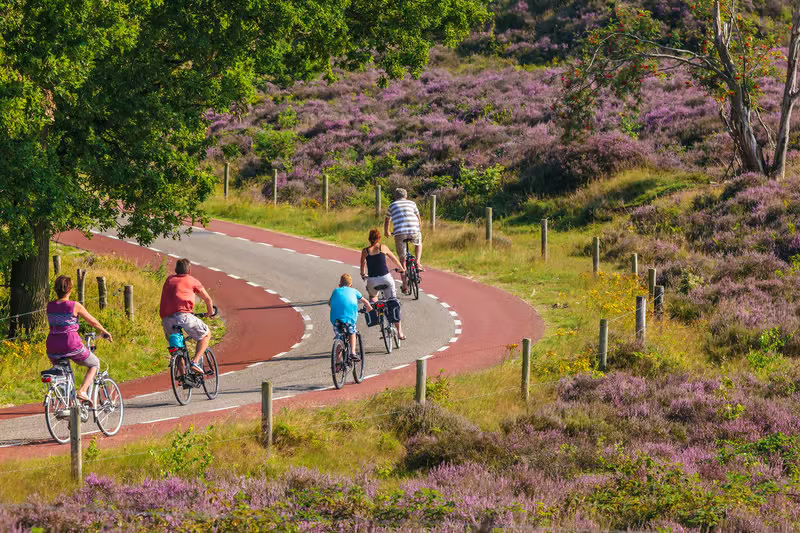
The rolling hills of heather in the Hoge Veluwe may look glorious, but you’d stand a greater chance of winning the lottery than navigating them using Wi-Fi.
Mobile data is an absolute must-have when it comes to navigating through the Dutch countryside. Image: Dreamstime
For wandering outside of the Randstad, it’s ideal to have the safety net of your own mobile data.
Prepaid or SIM-only SIM card packages generally offer unlimited data options for you to Google Map your way around the countryside — and their expansive mobile networks will ensure that you’re never left high and dry with no internet connection. 🤳
2. Strict data protection laws ensure your privacy
Whilst the Dutch may embrace passersby peering through their curtainless windows, the thought of someone spying on their browser data understandably raises more hackles than a cornered dog.
The good news? Thanks to the GDPR (or General Data Protection Regulation), your data is protected under EU law.
This means that the websites you visit while browsing the net are not allowed to collect your data without your explicit consent.
3. Cellular data offers more security than public Wi-Fi
When it comes to using public Wi-Fi, it’s like that bowl of potato salad at an office party that’s been sitting out for several hours — it’s a bit of a risk.
Similarly, using an unsecured Wi-Fi network might expose you to hackers, snoopy government entities, and marketers who can’t wait to sell your data.
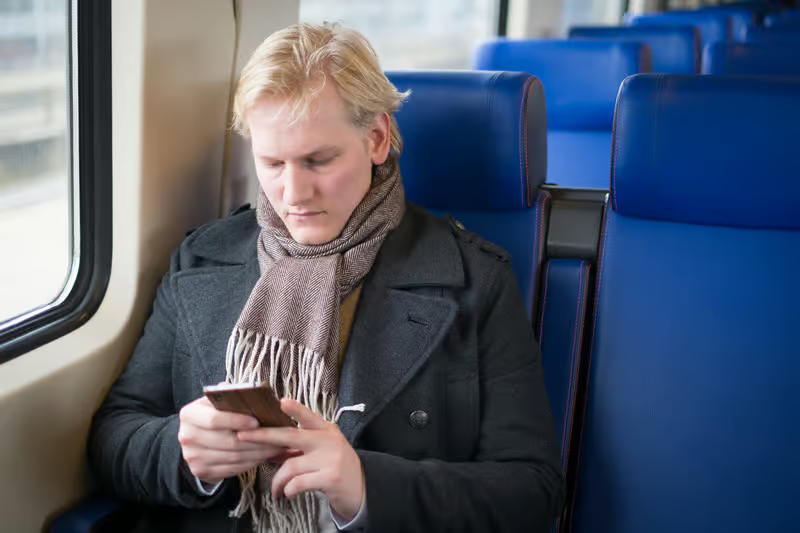
Public transport will offer you an unsecured WiFi network — to use at your own risk! Image: Dreamstime
Using your own mobile data, on the other hand, is generally a far safer bet.
Data that’s transmitted over these networks is usually encrypted, meaning that your personal information is less likely to find its way into malicious hands.
4. Your home country’s phone plan will have limits
Let’s face it — with the advent of eSIMs, data roaming is slowly going the way of the dodo bird: extinct.
For those travelling to the Netherlands on holiday, an eSIM from a Dutch provider will often offer far more features than a data roaming package from your home country. (Plus, you can order one before you’ve even set foot in the country! 😉)
And what if you’re travelling from the Netherlands, instead? Well, thanks to the EU’s “roam like at home” policy, if you have a Dutch SIM card, you can travel to any EU country and pay the same rate for your calls, texts, and mobile data as you would in the Netherlands. Handig!
A local (Dutch) SIM will also provide faster data speeds, as many mobile networks prioritise their users over those connected to one of their roaming partners.
5. You can save money with a local SIM card
Planning on staying in the Netherlands for a longer period? In addition to offering a wider range of features than roaming packages, getting a Dutch SIM card will save you major euros in the long run.
Many mobile data providers offer budget-friendly prepaid SIM cards and SIM-only plans at rates far lower than those supplied by the average roaming package. 💸
Spending less on your mobile subscription frees up more cash for sightseeing and making memories! 🙌 Image: Freepik
Plus, if you’re here for the long haul, the rates for one- or two-year contracts are often cheaper than the monthly terminable ones — ensuring that you get the most bang for your buck.
Good to know: If you’re looking to get connected ASAP, you can buy affordable prepaid SIM cards at Schiphol Airport — without the hassle of needing a Dutch bank account. Many supermarkets and corner shops also offer this option at the checkout aisles.
6. Expect excellent mobile coverage and speed
Though it may be a hassle to find housing in the Netherlands and the trains here frequently experience delays, Dutch mobile data is nothing if not speedy and reliable.
According to Ookla, a global index of mobile and broadband speeds, the Netherlands currently ranks 5th in the world for the fastest mobile data download speeds.
And just how fast are we talking? Well, with mobile download speeds averaging a blistering 142.22 Mbps, that’s more than capable of handling 4K video streaming and intensive multiplayer games.
If you’re from the US, Australia, or India — countries with average mobile download speeds of 107.87 Mbps, 100.51 Mbps, and 91.72 Mbps, respectively — you’re likely to feel a jump in speed immediately.
Plus, with the Dutch government continuing to work towards its 5G goals, we can only expect that figure to increase over the coming years.
7. You should use a VPN to access content from home
If you were getting excited at the prospect of devouring a few more episodes of your favourite show, you may be disappointed to know that streaming services often region-lock content. 🎥
This means that the new season of Emily in Paris that you’re dying to hate-watch may not be available on the Dutch version of your streaming platform.
With a VPN, you can easily bypass regional blocks on your favourite streaming services. Image: Freepik
However, there’s a super-handy workaround: downloading a VPN.
A VPN (or virtual private network) is a service that encrypts your data and hides your IP address, allowing you to access content that’s not available in your area and preventing your internet provider from throttling your data.
Good to know: VPNs also allow you to browse the web securely, by shielding your online traffic from would-be hackers.
As a result, it’s always advisable to use one if you frequently connect to public Wi-Fi or conduct bank transactions while on the move.
Combining affordability with excellent connectivity, there’s a lot to love about surfing the web with a Dutch mobile data provider. ✨
What are your favourite features when it comes to staying connected in the Netherlands? Tell us all about them in the comments below!