Auroras are caused by solar flares from the sun. Charged particles enter spaces and are drawn to the north and south poles of Earth, where the magnetic field is strongest.
The particles pass through Earth’s atmosphere at high speed and collide. Energy is released and creates the colourful patterns in the sky that seem to dance.
Typically, the Aurora Borealis is seen much further north in Scandinavia, but they’re visible in the Netherlands for a few days in the year. 🤩
Your best chance at spotting the lights is to find a light-pollution-free area in the Netherlands on a dark night with a clear sky.
Did you see the Northern Lights last night? Have you seen them before? Tell us about it in a comment below!
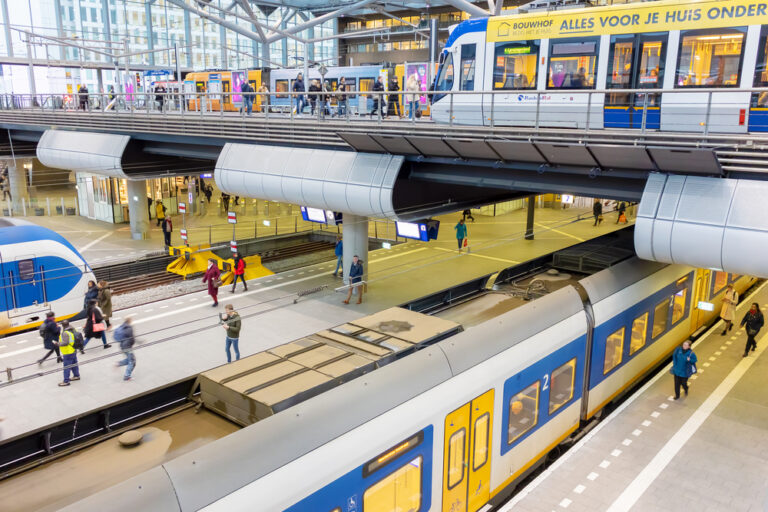
If you’re intending to take the train to or from The Hague this weekend (March 2 and 3), let’s just say that you may want to take a rain-check on those plans! 😬
According to a recent press release by the NS, some much-needed work has to be conducted on the tracks, platforms, overhead lines, and other components around Den Haag Centraal.
As a result, no trains will run between Den Haag Laan van NOI and Den Haag Centraal from Saturday, March 2, to Sunday, March 3.
Hoera — no trains the following weekend, either
Trains to and from Den Haag Centraal will also be at a standstill from Saturday, March 9, to Wednesday, March 13.
In a bid to curb the ensuing chaos (and, presumably, some furious complaints!), the NS will be deploying extra buses to ferry commuters to nearby stations instead.
Pssst! The NS advises commuters to catch a train to and from Den Haag HS (Hollands Spoor) instead — or make use of the Den Haag metro system.
Do you enjoy travelling from the Netherlands to other countries across Europe? Or are you a home bird who frequently visits family? Well, your wallet is about to suffer.
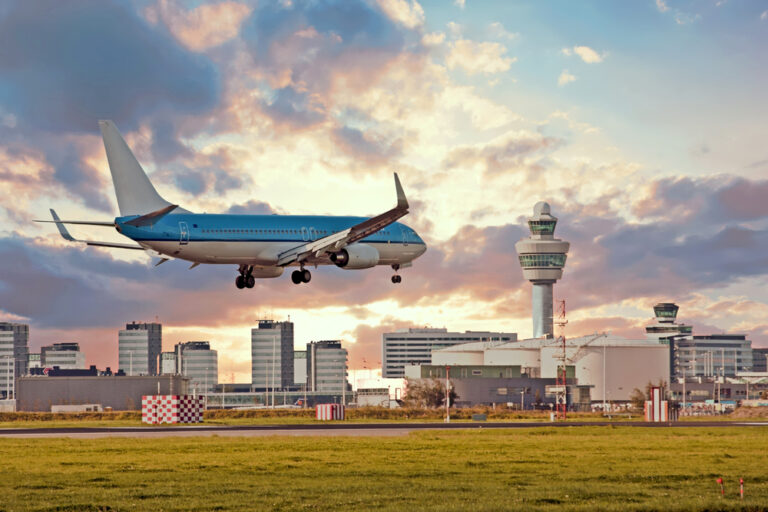
Specifically, if your journey involves a plane and your destination is within the EU.
According to research by RTL Nieuws, plane tickets to European destinations will increase by tens of euros in the next two years.
One expert says an increase is “inevitable.”
But why?
This inevitable price increase all boils down to something called the ETS, which stands for the Emissions Trading System.
As part of this system, the rights to emit green gasses are traded among the big polluters. The idea is that big polluters must buy their right to… well, pollute.
In the aviation industry, many of these rights are free — however, that’s all set to change in 2026, and airlines are going to have to start coughing up the cash themselves.
And where will this money come from? The price of your plane ticket, of course! 💸
As Paul Peeters, lecturer in sustainable transport for tourism at the Breda University of Applied Sciences, tells RTL Nieuws:
“It is obvious that this will be passed on directly, with the small margins in aviation, they cannot absorb this.”
Flying outside of the EU? You’re in the clear
While the ETS system is in place to try and discourage companies and consumers from polluting, Peeters fears it may have the opposite effect.
Why? Primarily because the ETS system does not apply to inter-continental flights.
This means that higher ticket prices for flights within the EU may just encourage people to fly to Morocco instead of Malaga — which is a longer and more polluting flight. 🫠
What do you think of the ETS system? Tell us your thoughts in the comments below!
There are many things about life in the Netherlands that you’re going to have to embrace if you truly want to integrate. We’d recommend skipping on the herring, but you should really get into Dutch humour.
Unlike a slimy fish, the Dutch sense of humour is super dry. This can make it a bit difficult to understand at first — so grab a notebook and a very open understanding of what constitutes as “funny”.
Let’s walk you through some jokes that will get the Dutchies chortling.
1. Out for drinks? We’ve got one for you
Ready to show off your amazing Dutch skills and wit? Image: Freepik
Let’s set the scene. You’re in a beautiful brown café, the pilsner is flowing, and you’ve gathered the courage to try out your Dutch skills.
Specifically, you want to see if you can get that handsome Dutchie to laugh (with you, not at you.) Here’s one grapje (joke) for you to try out.
🇳🇱 “Waarom drinken muizen geen alcohol?”
🇬🇧 (Why do mice not drink any alcohol?)
🇳🇱“Ze zijn bang voor de kater.”
🇬🇧 (They are scared of the male cat.)
You may be saying, “huh?” but what makes this joke funny is the double meaning of the Dutch word “kater.” In Dutch, “kater” is the word for both a male cat and a hangover.
Get it? While this joke will not only prove that you are absolutely hilarious, it will also show your audience that you have a good understanding of Dutch vocabulary — you’re funny and intelligent. What’s sexier than that?
2. Really want to make the Dutch laugh? Play around with the language!
Another great joke to show off your vast knowledge of Nederlands is this one:
🇳🇱“De postbode gooit brieven in de bus, waarop de buschauffeur zegt: ‘Hé, hou daar eens mee op!’”
🇬🇧 (The postman throws letters in the bus, and the bus driver says: ‘Hey! Stop that!’)
Before you throw your arms up in the air and declare this joke not funny, let us remind you of the Dutch word for letterbox: brievenbus!
This translates directly to “letter bus.” Get the joke now? He’s throwing the letter in the bu — ok, forget it. 🙃
3. Looking to impress a Dutch dad? Try this out
Some classic Dutch jokes have a time and a place. Image: Freepik
While you may think the above joke was Dad-level funny, you can actually take it a step further when it comes to Dutch dad humour. Looking to impress your father-in-law? Try this on for size.
🇳🇱“Hoe moet de steak gebakken zijn?”
🇬🇧 (How should the steak be cooked?)
🇳🇱“Weet de kok dat nou nog niet?”
🇬🇧 (Does the cook not know that yet?)
Womp, womp, wooooomp. There’s no specific play on words here, just a Dutch twist on the classic dad jokes that you likely grew up with.
While this hilarious retort may have the in-laws chortling, let’s just say a waiter would be less impressed.
4. Impress a date by dropping a hot joke — or not
Let’s say you get that handsome Dutchie to take you out on a date, you want to continue to amaze them with your intelligence, toch?
Nothing says intelligence like a good ol’ riddle. Try this brainteaser out:
🇳🇱“Het is zwart en als het uit de boom valt, is je kachel stuk. Wat is het?”
🇬🇧 (It’s black, and if it falls out of the tree, your stove is broken. What is it?)
🇳🇱“Je kachel.”
🇬🇧 (Your stove.)
Is it a riddle? Technically! Is it silly? Very! Is it a good icebreaker? Inderdaad (indeed).
This is also a good way to get a feel for your date. If they don’t find you absolutely hilarious, then why are you even sitting with them? Time to take your brains, beauty, and humour elsewhere. 😉
5. How about a good ol’ Dutch pun? Say no more
Nothing says humour like a classic pun every now and then. Let’s start with a simple yet effective example.
You know what sort of Dutch jokes will really make you sound like a local? Dutch puns. Image: Freepik
🇳🇱 “Ik was laatst op een naaktstrand. Niks aan.”
🇬🇧 (I was recently at a nudist beach, nothing to it.)
Now, don’t let the English translation fool you. This actually has the power to induce a snort or two.
In order to get the pun, you should know that in Dutch, “niks aan” means “nothing to it.” However, it can be more directly translated to “nothing on.”
Yes, you see, it’s funny. Nothing on. At a nudist beach. Hahahahaha.
6. Another pun? *feigns shock*
Okay, now, refresh yourself and activate that Dutch mindset. Chug some milk, eat a broodje kaas. We’re about to take our Dutch pun game to the next level with this:
🇳🇱 “Wat is een lasbril?”
🇬🇧 (What are welding goggles?)
🇳🇱 “De verleden tijd van leesbril.”
🇬🇧 (The past tense of reading glasses.)
This pun requires some knowledge of Dutch grammar and vocab, which, again, will show off that you have both beauty and brains.
The Dutch word, “las” is the past tense imperfect form of “lezen” (reading) — see the play on words here? Look at you, so smart. 🤓
7. How about another classic dad joke?
Sometimes you need a joke that’s so bad, it’s good. Image: Freepik
You know what makes a Dutch riddle even better? When you add a dad-joke vibe to it.
If you happen to find yourself sitting across from a Dutch man in his 50s on the train, try this beauty out on him:
🇳🇱“Wat is blauw en ruikt naar rode verf?
🇬🇧 (What is blue and smells like red paint?)
🇳🇱 Blauwe verf.”
🇬🇧 (Blue paint)
Oh, the dryness, the sheer dryness.
8. Need more? Here’s one to tickle your punny bone
Listen, there’s no escaping puns when you’re talking about Dutch humour.
🇳🇱 “Hoe maakt een skelet een deur open?”
🇬🇧 (How does a skeleton open a door?)
🇳🇱 “Met zijn sleutelbeen.”
🇬🇧 (With his collarbone).
In order to get this joke, it’s important to know that in Dutch ‘sleutel’ means key. See how it works? Sleutelbeen? To open the door?…
We find this one particularly “humerus.” (The author chugs some coffee and throws herself off her chair.)
9. Someone, please stop us
Dutch humour is something you have to get used to, but once you do, it’s hilarious. Image: Freepik
As we progress through this article, we’re really going from ridiculous to downright silly — which is why we need to tell you this joke.
🇳🇱 “Gaat een cowboy naar de kapper. Komt ie buiten… pony weg.”
🇬🇧 (A cowboy goes to the hairdresser. He comes outside… pony gone.)
To understand just how silly-billy this joke is, you need to know that in Dutch, the word “pony” has, you guessed it, two meanings.
“Pony” can mean both a cute little horse that gallops around. Orrrrr, in the context of the hairdresser’s chair, it can mean “bangs”, y’know, a cute little fringe.
So when the cowboy comes out of the hairdresser, his “pony” is gone, get it? GET IT?
10. We can’t leave the windmills out of it
In need of a Dutch joke that will leave you with a hand-shaped red mark on your forehead? Look no further.
🇳🇱 “Waarom kijkt een molenaar altijd uit zijn raampje? Omdat hij niet door de muur kan kijken”
🇬🇧 (Why does the windmiller always look out of his window? Because he can’t look through the walls.)
A breakdown of the mechanisms behind this joke isn’t really needed — it’s silly. Plain and simple.
11. Finally, a joke about Dutchies
Another classic way to make a joke in Dutch is to make fun of the Dutch! Image: Freepik
Listen, we can’t talk about Dutch humour without dishing out a joke at the expense of Dutchies. Our go-to dig at the Dutch has to be this one.
🇳🇱 “Welke ingrediënten heeft een Nederlander nodig om tomatensoep te prepareren?”
🇬🇧 (What ingredients does a Dutch person need to make tomato soup?)
🇳🇱 “Gekookte water en een rode kom.”
🇬🇧 (Boiled water and a red bowl.)
This one hits the Dutch in their stomachs, poking fun at Dutch cuisine and its lack of, shall we say, flavour.
Make sure to bring this one out under the right circumstances — not at the dinner table, for example.
Ready to induce some chuckles? Or, at the very least, prove yourself to be quite the wordsmith in Dutch. Go forth and conquer!
Do you have any jokes that you would add to this list? Let us know in the comments below!
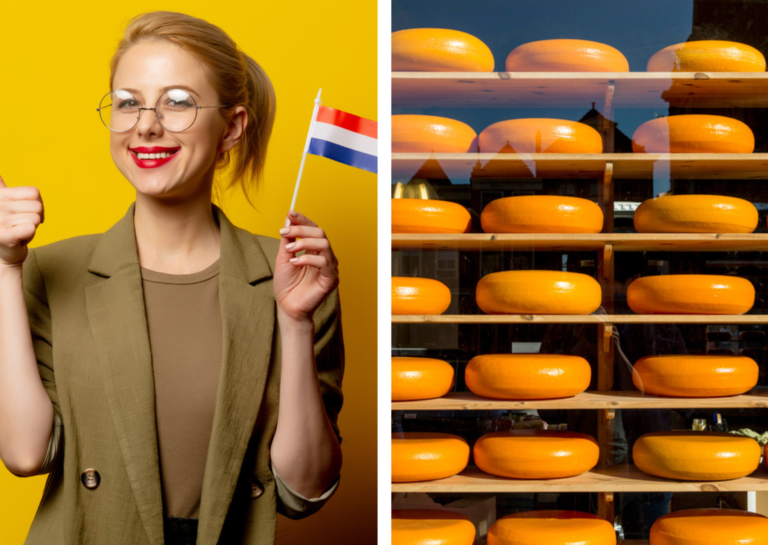
Eating a lot of cheese is a well-known Dutch daily habit, but did you know you could win global titles for it?
Well, the Netherlands just did! New research by Mintel lists the top 10 cheese-loving nations across the world — and the Dutch have won the crown. 👑
Crunching the nom-bers
So how exactly do you quantify a nation’s love of cheese? The research considered factors such as cheese imports, production and general interest.
The stats were gathered using the UN Comtrade, Cheese.com (yes, it’s a real site), and Google search data.
Each country then received a score out of 100 — and the Netherlands really sliced up the competition, beating the likes of France and even the US! 🧀
So, who else did the Netherlands beat? Check out the rankings below:
Country
Score (out of 100)
Netherlands
76.8
France
39.3
Belgium
39.1
USA
31.7
Austria
30.7
Credit: Mintel.com
The Dutch go above and brie-yond
As you can see, the Dutch won by a long shot, and the whopping score of 76.8 is even more impressive when you consider the relatively small Dutch population of 17 million.
This doesn’t stop the Netherlands from scoring big elsewhere in the cheese leagues — they also made the most Google searches for ‘cheese’ per capita in the whole world.
And once they’re done staring at cheese on their computer screens, it’s time for the Dutch to import some. The research found that per Dutchie, an average of more than 3.1kg and $14 worth of cheese is imported annually.
However, the biggest importer globally is actually France, spending $374 million on cheese every year. A good investment, we believe!
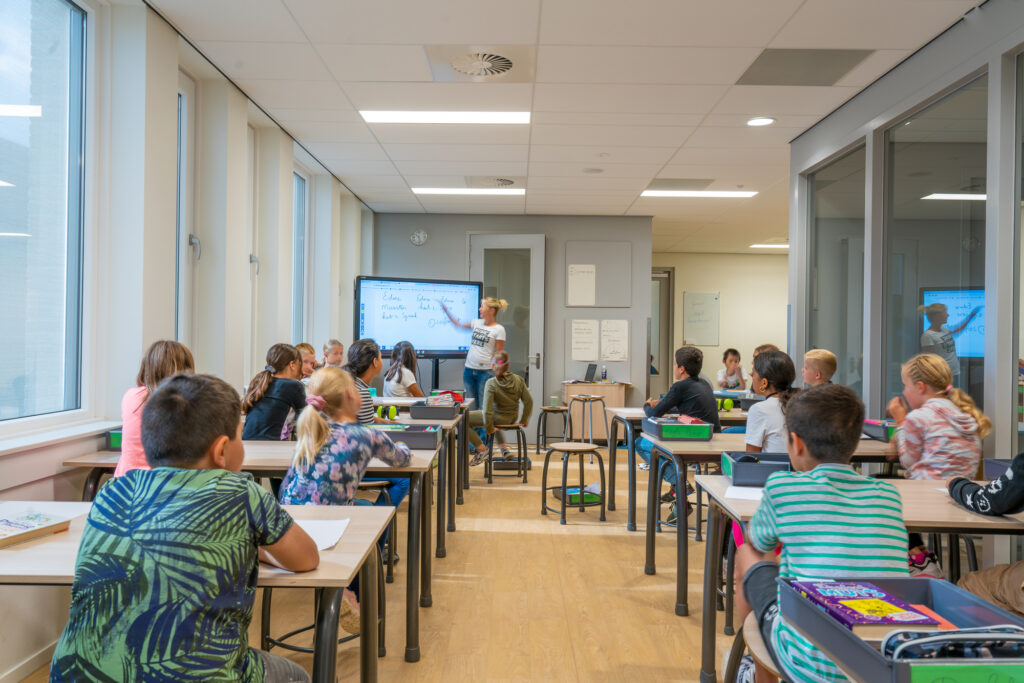
The Dutch education system looks incredibly confusing from the outside — yet it’s considered to be among the best in the world.
But where it gets tricky is the multiple different paths with twists and turns towards graduation and higher education.
After living in the Netherlands for almost 14 years and navigating the high school and university rules, I’m here to take you back to school to understand the Dutch education system.
Let’s start from the very beginning. In the Netherlands, school is mandatory for children from the ages of five to 16.
However, many parents choose to enrol their children in preschool even earlier.
Young Dutch kids can get an early start to their education. Image: Depositphotos
There are two main types of Dutch preschool, daycare (kinderdagverblijf) and kindergarten (peuterspeelzaal).
Dutch daycare (kinderdagverblijf)
Dutch daycares take care of infants and children up to four years old during the typical hours of a working day.
There are plenty of ways Dutch kids and learn and socialise in their kindergarten. Image: Depositphotos
This is an ideal option for most working families, and some centres even offer out-of-hours and half-day care for children.
Dutch part-time preschool (peuterspeelzaal)
There is also the option to enrol your child at a part-time preschool from the age of two until four years.
Here, children attend school for three to five half-days per week, depending on the preschool.
Tip: Parents can usually claim childcare allowance (kinderopvangtoeslag) on daycare and kindergarten costs for their child.
All parents also receive the kinderbijslag (child benefit), which covers the general costs of having a child.
Some international parents can apply to receive the kinderbonden (child budget) to pay for other necessities.
Primary education in the Netherlands
Once a child reaches the age of four, they are allowed to start going to Dutch primary school (basisschool).
Dutch primary school has eight levels, called groepen (grades). They range from age four (Groep1) to 12 (Groep 8), including two years of kindergarten at the beginning of primary school.
Age
The Netherlands
USA
UK
Australia
2-3
Kindergarten
–
–
–
3-4
Kindergarten
Pre-kindergarten
Foundation 1
–
4-5
Groep 1
Pre-kindergarten
Foundation 2
Kindergarten
5-6
Groep 2
Kindergarten
Year 1
Pre-primary/Prep
6-7
Groep 3
Grade 1
Year 2
Year 1
7-8
Groep 4
Grade 2
Year 3
Year 2
8-9
Groep 5
Grade 3
Year 4
Year 3
9-10
Groep 6
Grade 4
Year 5
Year 4
10-11
Groep 7
Grade 5
Year 6
Year 5
11-12
Groep 8
Grade 6
Year 7
Year 6
Compulsory education begins on the first day of the new month after the child turns five (Groep 2 in Dutch primary).
For example, if your child turns five on October 12, they’re required to start Groep 2 on the first school day in November of the same year.
Dutch children follow the same primary school curriculum across the country. Image: Depositphotos
Most Dutchies send their children to public schools and are taught entirely in Dutch.
This is a great option if you plan to stay in the Netherlands, but your child generally needs to have a basic level of Dutch first, especially if they’re older.
Luckily, there are international transition schools (internationale schakelklassen) tailored to help children who have just arrived in the Netherlands transition to a Dutch school.
International transition schools help young international students prepare for Dutch school. Image: Depositphotos
You can also send your kids to a bilingual school, which teaches children in English for part of the day.
Finally, there are also international schools that teach in other languages (including English, German, and French). These tend to follow international curricula.
At the end of Group 8, or when a child is approximately 12 years old, they begin secondary school (middelbare school).
If your child is in a Dutch school, they will receive advice from their teacher on which of three education streams they should enter: VMBO, HAVO, or VWO.
Students will discuss where they want to go with their future education and career. Image: Depositphotos
This choice informs which unique secondary school programmes students will follow, which will later affect whether they can eventually pursue vocational training, professional education, or research education in the Netherlands.
VMBO (Pre-vocational secondary education)
VMBO (voorbereidend middelbaar beroepsonderwijs) is a four-year vocational stream that focuses on practical skills and knowledge.
It has two levels of qualification depending on whether the student wants to focus on vocational training or theoretical education.
Students complete the VMBO track at the age of 16, which eventually leads to further vocational training (middelbaar beroepsonderwijs, or MBO).
HAVO (Senior general secondary education)
HAVO (hoger algemeen voortgezet onderwijs) is a five-year high school stream that prepares students from the ages of 12 to 17 for higher professional education.
HAVO education has a balance of academic work and learning practical skills. Image: Depositphotos
Completing a HAVO diploma allows students to study at a university of applied sciences (hogeschool) and follow a higher professional education programme (hoger beroepsonderwijs or HBO).
VWO (University preparatory education)
VWO (voorbereidend wetenschappelijk onderwijs) is a six-year high school programme for students who intend to pursue a bachelor’s degree at a research university (wetenschappelijk onderwijs, orWO).
VWO is the most academic secondary stream students can follow in the Netherlands. Image: Depositphotos
This stream is the most theoretically-oriented programme for students aged 12 to 18 and is divided into two main programmes: atheneum and gymnasium.
The programmes are nearly identical, except that Latin and/or Greek language studies are compulsory in the gymnasium programme.
Universities and vocational education in the Netherlands
After secondary education, the Dutch education system also has three main routes for education: MBO, HBO, or WO.
Students who attended HAVO or WVO schools can choose one of the Dutch university options (HBO or WO), while students who attended a VMBO in high school are limited to MBOs.
Dutch university education is divided into two different kinds of university institutions and study programmes: HBO and WO.
The two types of universities offer different kinds of programmes.
HBO (higher professional education)
HBO universities (hoger beroepsonderwijs) focus on providing specialised professional training for a specific profession.
Students often work on practical cases or do skill-oriented training. Image: Depositphotos
Students spend most of their time learning practical skills for their chosen field and typically have an internship during the course of their study for up to a whole year.
HBO degrees are typically four years long and are most often followed by people who completed a HAVO or VWO programme in high school.
WO (scientific education)
WO universities (wetenschappelijk onderwijs) are more focused on academia compared to HBO universities.
Students spend a lot of time studying and researching at a WO university. Image: Depositphotos
Students are likely to conduct more research and work on theory-based projects instead of developing professional skills. Many WO universities carve out time for students to do internships, but they often have to choose between this and a minor or an exchange abroad.
Admission to higher education
Most HBO and WO universities admit students to courses if they graduate with a high school diploma.
For courses taught in English instead of Dutch, they’ll often ask students to provide proof that they speak English at a high enough level to take the programmes.
Entry requirements aren’t particularly high in the Netherlands, but their standards are. Image: Depositphotos
Some study programmes also require a certain grade in specialist subjects like maths.
If in doubt, students should refer to the study programme admissions page to find out the exact requirements for admission.
Credit system and degrees
HBO and WO study programmes use the European Credit Transfer System (ECTS), with one credit representing 28 hours of work. Students usually attain 60 credits within the standard academic year.
You can always have a chat with your study advisor or counselor if you’re feeling unsure about your study programmes and courses. Image: Depositphotos
HBO bachelor programmes last up to four years (for a total of 240 ECs), while WO bachelor programmes are usually only three years (180 ECs). A master’s degree programme lasts between a year (60 ECs) and two years (120 ECs).
MBO (Middle-level applied education)
VMBO students continue with their vocational education in a vocational school called an MBO.
MBO education (middelbare beroepsonderwijs) prepares students for skilled trades and trained occupations such as mechanics and plumbers to nursing assistants and franchise managers.
Students at MBO level learn trade or vocational professions like plumbing and woodworking. Image: Depositphotos
There are four levels of MBO education, which lead to four job qualifications depending on the different levels of training.
Level 1: assistant training (entreeopleiding)
Level 2: basic vocational training (basisberoepsopleiding)
Level 3: professional training (vakopleiding)
Level 4: middle-management training (middenkaderopleiding)
Each level lasts a different amount of time and requires different amounts of training and experience hours during the programme.
Terms and school holidays in the Netherlands
You may know Dutchies for their overly organised agendas and bureaucracy — and you can definitely see it with their school terms and holidays.
Holidays in the Netherlands are generally divided by region (North, Central, and South) so that the entire country doesn’t go on holiday at the same time.
Spend some time coordinating your holidays with your family. Image: Depositphotos
The dates always include primary, secondary, and special schools, but universities and individual schools might have slight deviations from the yearly calendar.
We suggest double-checking dates with the school just to make sure your holiday plans don’t clash.
It’s also important to note that the Netherlands has compulsory school attendance rules (leerplicht). This means that children must attend school full-time and can only miss school if they’re exempted (for example, if the child gets sick or if there’s a death in the family). If you break these attendance rules, you could get fined.
The Dutch education system’s key terms
Lost in translation or struggling with the acronyms? Here are the key terms to remember.
Dutch
English
Meaning
Peuterschool
Pre-school
School for children under the mandatory schooling age in the Netherlands.
Kinderdagverblijf
Daycare
Daytime care for children between the ages of zero and four years during typical working hours in the day.
Kleuterschool
Kindergarten
A type of pre-school where children ages two to four can learn through socialisation with other children.
Basisschool
Primary school
Mandatory school for children between the ages of five and 12.
International schakelklas (ISK)
International transition school
A class in primary and early secondary school tailored to help international students prepare for going to a Dutch school.
Groepen
Grades/Years
Year group divisions in a Dutch school. There are eight mandatory groups in primary school, and between four and six groups depending on the secondary school programme you do.
Middelbare school
Secondary school
Mandatory school for children from the age of 12 until 16 to 18.
Voorbereidend middelbare beroepsonderwijs (VMBO)
Pre-vocational secondary education
A four-year secondary school programme focusing on practical skills and knowledge.
Hoger algemeen voortgezet onderwijs (HAVO)
Senior general secondary education
A five-year secondary school programme focusing on a mix of practical skills and theoretical knowledge.
Voorbereidend weteschappelijk onderwijs (VWO)
University preparatory education
A six-year secondary school programme focused on preparing students for a scientific university education.
Middelbare beroepsonderwijs (MBO)
Middle-level applied education
Vocational education focused on giving students the practical skills and theoretical knowledge for a wide range of trade occupations.
Hoger beroepsonderwijs (HBO)
Higher professional education
University education focused on providing a mix of theoretical and practical training for professions.
Wetenschappelijk onderwijs (WO)
Scientific education
University education focused on academic research and training.
Kinderopvangtoeslag
Childcare allowance
A grant given to parents to cover the cost of childcare in the Netherlands.
Kinderbijslag
Child benefit
A grant given to parents to cover the general cost of having a child in the Netherlands.
Kinderbonden
Child budget
A grant given to parents to pay for other necessities of the child, like education materials, diapers, etc.
While the Dutch education system has plenty of levels and branches, once you get the hang of all those acronyms, it really starts to make sense!
Did you go to school in the Netherlands? Tell us about it in the comments below.
The Dutch education system: Frequently asked questions
What is the age range for students in secondary school in the Netherlands?
Mandatory secondary education in the Netherlands starts at 12 years old and last until 16 years old.
You can continue your secondary education until you’re 18 years old before you go to university, depending on the education programme you choose.
What kinds of secondary education are there in the Netherlands?
There are three main types of secondary education in the Netherlands: VMBO (pre-vocational education), HAVO (pre-hogeschool education), and VWO (pre-university education).
What kinds of education are there after high school in the Netherlands?
There are three main types of education in the Netherlands after high school: MBO (focused on vocational training), HBO (focused on higher professional education), and WO (focused on research and academia).
What is the equivalent of VWO in the United States and the United Kingdom?
VWO education in the Netherlands is equivalent to the Advanced Placement program (AP) in the United States, A-Levels in the United Kingdom, and the International Baccalaureate (IB) in international schools.
These programmes generally have similar levels and content but last different periods of time.
If you’re planning a trip to the Dutch capital this year, you should prepare for some unforeseen costs. No, we’re not talking about the €13 stroopwafels; we mean the skyrocketing tourist tax.
Yup, tourists who spend the night in one of Amsterdam’s many hotels or hostels can expect to pay a whopping 12.5% in tourist tax this year.
In practice, this means that the average tourist will be paying an extra €16.76 per night per person, according to Bungalowoverzicht.nl. 😳
Why are they doing this?
To curb overtourism.
It’s no secret that Amsterdam struggles with the enormous amounts of tourists it has to welcome each year.
The increased tourist tax is just another measure meant to scare off international visitors. Whether it will have the desired effect remains to be seen. 👀
The highest in all of Europe
Even before this increase, Amsterdam’s tourist tax was not just the highest in the Netherlands, but inall of Europe. Ouch.
Wondering why the city needs all this money? According to the municipality of Amsterdam, it will be invested in the neighbourhoods and boroughs that need it the most to maintain the city’s fabulous quality of life.
What do you think about Amsterdam’s newest measure to curb over-tourism? Tell us your thoughts in the comments.
Police officers in the Hague arrested a suspiciously successful street newspaper seller on Saturday.
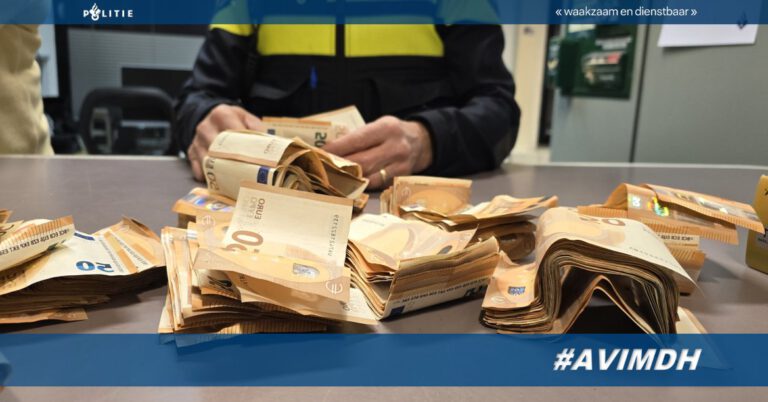
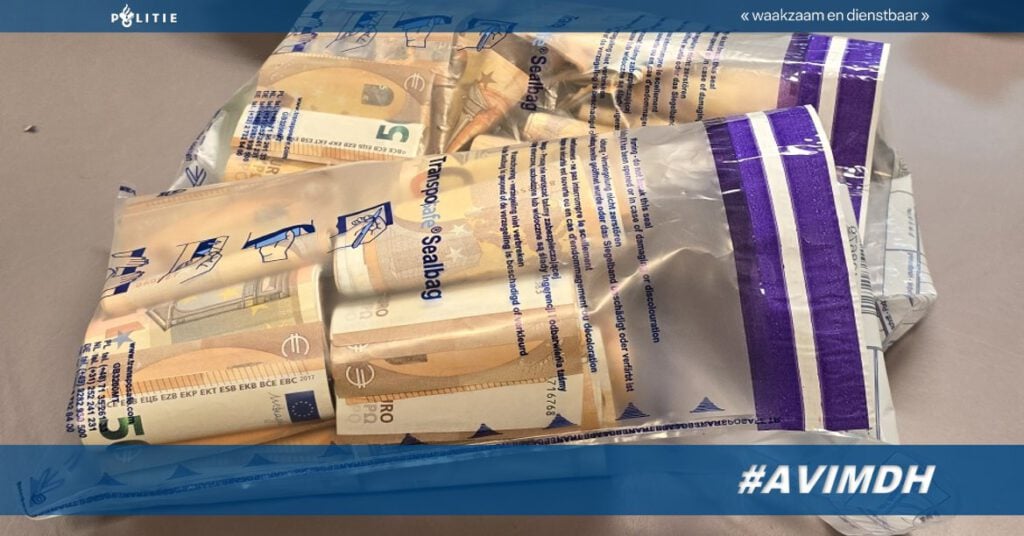
To the officers’ surprise, the paper in the seller’s possession went far beyond the expected product. Newspapers, yes, but also stacks of €50 notes — 636 of them.
Providing his papers?
Initially approached in connection with an ongoing check for ondermijning (“subversion”), the vendor was unable to show any ID.
“That is why he was arrested”, explains a spokesperson for The Hague police to the AD.
Ondermijning (subversion): A term referring to the use of legal companies and services for illegal activities. This could include money laundering practices covered up in legal companies, for example.
The police explain potential signs as stores without frequent customers, cash-only entrepreneurs or even simply the smell of weed in certain commercial buildings.
Show me the money!
Once at the station, he was asked to empty his pockets onto the table.
It must have taken a while — after all, counting out €31,800 in €50 notes can’t be quick.
Police released images of the wads of cash. Image: Politie Den Haag/Press Release
With the total counted, the man was interrogated and found to be staying in the Netherlands illegally.
So where did the cash come from? No idea. The man has now been released and the mystery money is in the hands of the Identification and Human Trafficking Department (AVIM).
Looks like this newspaper seller has plenty of issues — legal ones, at least.
Were you as surprised as us to hear about this suspicious seller? Tell us in the comments below!
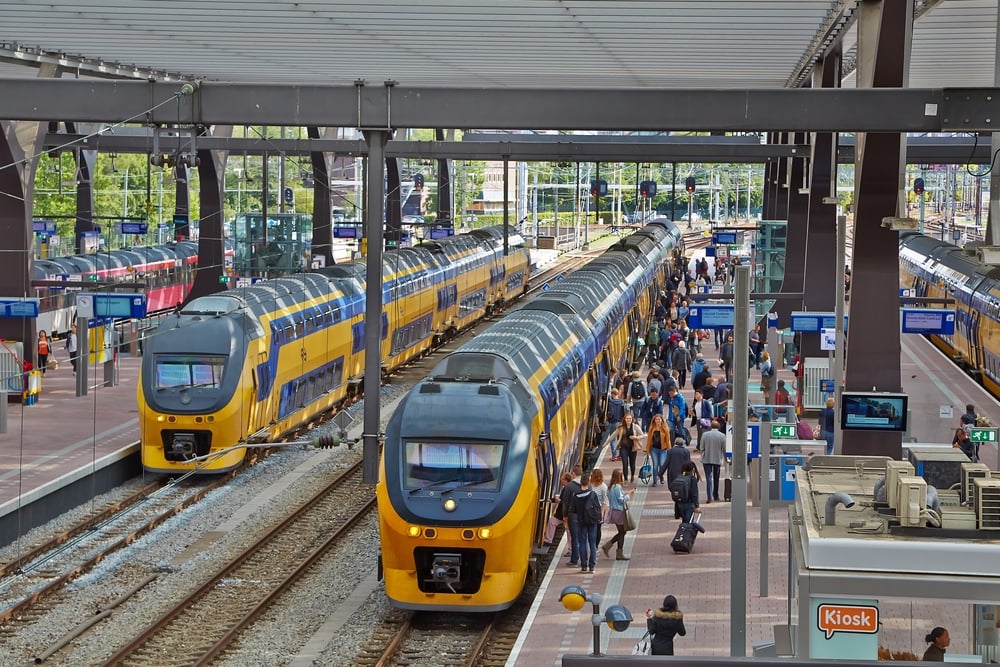
As anyone who’s used the Dutch rail system in the past year knows, the steep ticket prices feel like the NS adding insult to injury — especially after countless delays and stranded trains. 🚆👀
However, with the NS reporting a €191 million loss for 2023 (as reported by the NOS), the rail carrier is left scrambling to find a solution to its current nosedive into the red. 📉
And that solution? Hike up ticket prices even further.
But why!?
Though a comparatively smaller loss than a year earlier, the rail company has already been forced to increase the prices of most train tickets.
Unfortunately, this price hike hasn’t been sufficient to battle inflation and the growing costs plaguing the company.
The number of rail travellers has also not increased to pre-2019 numbers — despite what the packed carriages may tell you! Image: Depositphotos
As reported by the NOS, this means that a much larger rate increase will be on the cards for 2025 — amounting to more than 10%.
However, that 10% could well be a conservative estimate. According to NS CEO Wouter Koolmees, there could actually be “a double price increase for tickets”, AD reports
Ageing infrastructure and delayed deliveries
Another thorn in the NS’ side appears to have been the Netherlands’ own ageing rail infrastructure.
For example, NS CEO Koolmees pointed to defective viaducts along the HSL (high-speed railway line), growing subsidence along the Zeeland line, and the work that needed to be carried out near Rotterdam and Schiphol.
In addition to this, the delayed delivery of new ICNGs (Intercity Nieuwe Generatie trains) due to issues along the HSL also impacted the NS’ rail plans.
Staff shortages are also currently being dealt with
The NS is certainly no stranger to the resulting chaos from staff shortages, having previously been forced to cancel trains due to staffing issues in 2022.
Although recruiting staff is still an ongoing issue, AD reports that around 3,715 new employees were hired — of which 1,006 are to become new train conductors and drivers.
It’s hoped that this surge in new recruits will allow the NS to run a smoother timetable over the coming period with far fewer delays.
What do you think of a possible price hike in NS train tickets? Tell us all your thoughts in the comments below!
Do you remember the murder of Peter R. de Vries? How about when Princess Amalia was kept from leaving the house due to threats to her well-being? Well, the criminal allegedly tied to these crimes just got sentenced to life in prison.
The man in question? Ridouan Taghi, one the Netherland’s most notorious criminals.
Along with seventeen other suspects, he was on trial for nearly six whole years.
Did you know? The Netherlands is the only European country where life imprisonment is actually life-long. It is the toughest sentence that judges in the Netherlands can impose, and is only given very rarely.
What crimes did he commit?
Ridouan Taghi was at the head of ‘a well-oiled murder organisation’, according to the Public Prosecution Service (OM).
This group is allegedly responsible for six murders between the years 2015 and 2017, four attempted murders and preparations for even more assassinations.
What’s most interesting, however, is that the crimes were committed as the trial was ongoing. As the NOS writes, these include:
The murder of Nabil B.’s lawyer, Derk Wiersum, in 2019,
The murder of Peter R. de Vries in 2021, who was Nabil B.’s close confidant.
The so-called ‘Marengo trial’ also imposed sentences upon 17 other suspects.
These sentences range from life sentences (for two of Taghi’s closest co-criminals), to just one year and 9 months.
(Fun fact: Although this is one of the most important criminal trials to have ever taken place in the Netherlands, its name was randomly generated by a computer.)