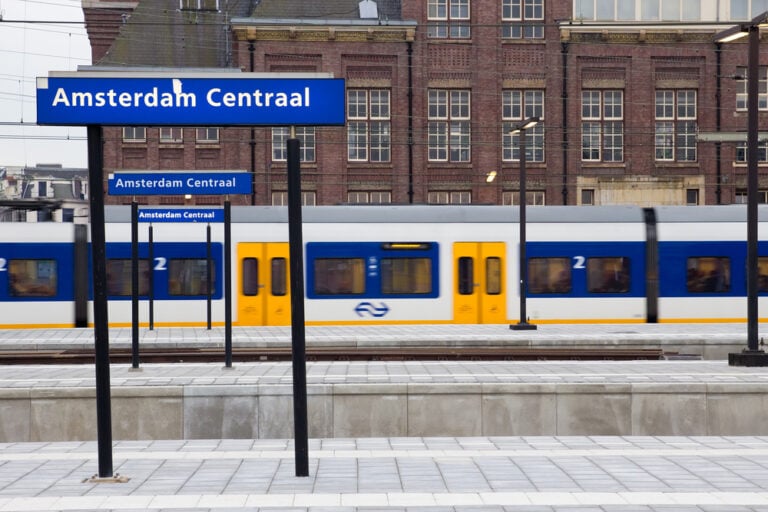
As anyone who’s used the Dutch rail system in the past year knows, the steep ticket prices feel like the NS adding insult to injury — especially after countless delays and stranded trains. 🚆👀
However, with the NS reporting a €191 million loss for 2023 (as reported by the NOS), the rail carrier is left scrambling to find a solution to its current nosedive into the red. 📉
And that solution? Hike up ticket prices even further.
But why!?
Though a comparatively smaller loss than a year earlier, the rail company has already been forced to increase the prices of most train tickets.
Unfortunately, this price hike hasn’t been sufficient to battle inflation and the growing costs plaguing the company.
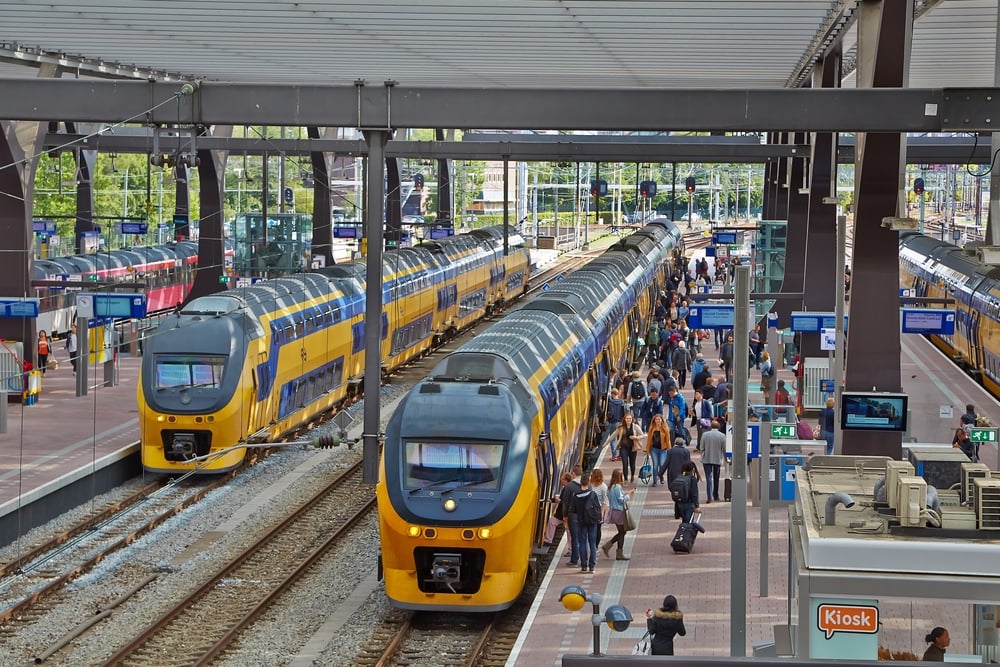
The number of rail travellers has also not increased to pre-2019 numbers — despite what the packed carriages may tell you! Image: Depositphotos
As reported by the NOS, this means that a much larger rate increase will be on the cards for 2025 — amounting to more than 10%.
However, that 10% could well be a conservative estimate. According to NS CEO Wouter Koolmees, there could actually be “a double price increase for tickets”, AD reports
Ageing infrastructure and delayed deliveries
Another thorn in the NS’ side appears to have been the Netherlands’ own ageing rail infrastructure.
For example, NS CEO Koolmees pointed to defective viaducts along the HSL (high-speed railway line), growing subsidence along the Zeeland line, and the work that needed to be carried out near Rotterdam and Schiphol.
In addition to this, the delayed delivery of new ICNGs (Intercity Nieuwe Generatie trains) due to issues along the HSL also impacted the NS’ rail plans.
Staff shortages are also currently being dealt with
The NS is certainly no stranger to the resulting chaos from staff shortages, having previously been forced to cancel trains due to staffing issues in 2022.
Although recruiting staff is still an ongoing issue, AD reports that around 3,715 new employees were hired — of which 1,006 are to become new train conductors and drivers.
It’s hoped that this surge in new recruits will allow the NS to run a smoother timetable over the coming period with far fewer delays.
What do you think of a possible price hike in NS train tickets? Tell us all your thoughts in the comments below!
Do you remember the murder of Peter R. de Vries? How about when Princess Amalia was kept from leaving the house due to threats to her well-being? Well, the criminal allegedly tied to these crimes just got sentenced to life in prison.
The man in question? Ridouan Taghi, one the Netherland’s most notorious criminals.
Along with seventeen other suspects, he was on trial for nearly six whole years.
Did you know? The Netherlands is the only European country where life imprisonment is actually life-long. It is the toughest sentence that judges in the Netherlands can impose, and is only given very rarely.
What crimes did he commit?
Ridouan Taghi was at the head of ‘a well-oiled murder organisation’, according to the Public Prosecution Service (OM).
This group is allegedly responsible for six murders between the years 2015 and 2017, four attempted murders and preparations for even more assassinations.
What’s most interesting, however, is that the crimes were committed as the trial was ongoing. As the NOS writes, these include:
The murder of Nabil B.’s lawyer, Derk Wiersum, in 2019,
The murder of Peter R. de Vries in 2021, who was Nabil B.’s close confidant.
The so-called ‘Marengo trial’ also imposed sentences upon 17 other suspects.
These sentences range from life sentences (for two of Taghi’s closest co-criminals), to just one year and 9 months.
(Fun fact: Although this is one of the most important criminal trials to have ever taken place in the Netherlands, its name was randomly generated by a computer.)
Feeling lonely? Forget Tinder or Hinge. Perhaps it’s time to get yourself a holographic partner. Who knows, perhaps you’ll get married! The Dutch certainly won’t mind, it seems.
In fact, the Netherlands is about to become the first country in the world where a wedding ceremony will take place between a human and a hologram.
The Spanish artist, Alicia Framis, is currently preparing to marry her hologram boyfriend, AILex, in a ceremony that will take place on the roof of the Depot Boijmans Van Beuningen Museum in Rotterdam.
But…why?
The ceremony is all part of a ‘performance’ by the Spanish artist.
According to Euronews, with this project, she hopes to reflect on the relationships between humans, AI, and contemporary art.
Framis writes on her website:
“Love and sex with robots and holograms are an inevitable reality. They make great companions and are capable of expressing empathy. Just as telephones saved us from loneliness and filled the void in our lives, holograms as interactive presences in our homes can take it even further.”
AILex was created by Framis using a profile of people she knows. She also decided that he should be a Dutchman!
“I want this man to be Dutch because most of my boyfriends were Dutch, but this time, it’s a romantic relationship between a woman and artificial intelligence.”
Aside from low-rise jeans, bubble tea, and the return of the mullet, there’s one thing that’s really popping off in the Netherlands in 2024 — international train travel. Especially when it’s so easy you can even do it… in your sleep. 😉
As the climate crisis steps closer and closer into the foreground of our everyday worries, it’s no wonder that the idea of travelling in a more sustainable way is becoming increasingly popular.
In fact, the only thing that holds many of us back when considering international train travel is the thought of sitting in a cramped compartment for hours on end.
So when European Sleeper offered us a chance to board in Amsterdam, sleep our way through the journey and wake up in Berlin, we jumped at the idea.
What is the European Sleeper train?
European Sleeper is a night train service with the goal of connecting multiple cities throughout Europe. The concept is simple: launch train routes that will depart at night and roll into a stunning new city by morning.
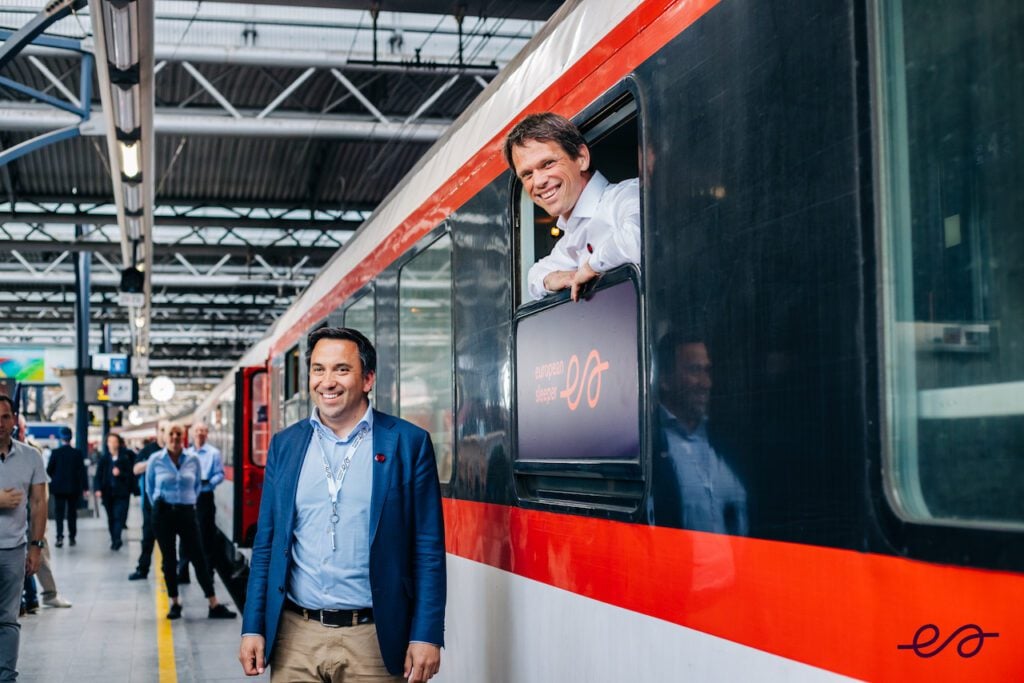
Founders Elmer van Buuren and Chris Engelsman want to revive the night train scene. Image: European Sleeper
On European Sleeper’s Good Night Trains, passengers can choose from a variety of sleeping arrangements and comfortably snooze their way through the journey.
European Sleeper’s routes
And where will this journey take them? Today, European Sleeper offers the route we took: Brussels to Berlin.
Passengers looking to take this route can choose to board at Brussels, Antwerp, Roosendaal, Rotterdam, Den Haag HS, Amsterdam Centraal, Amersfoort, Deventer or Bad Bentheim.
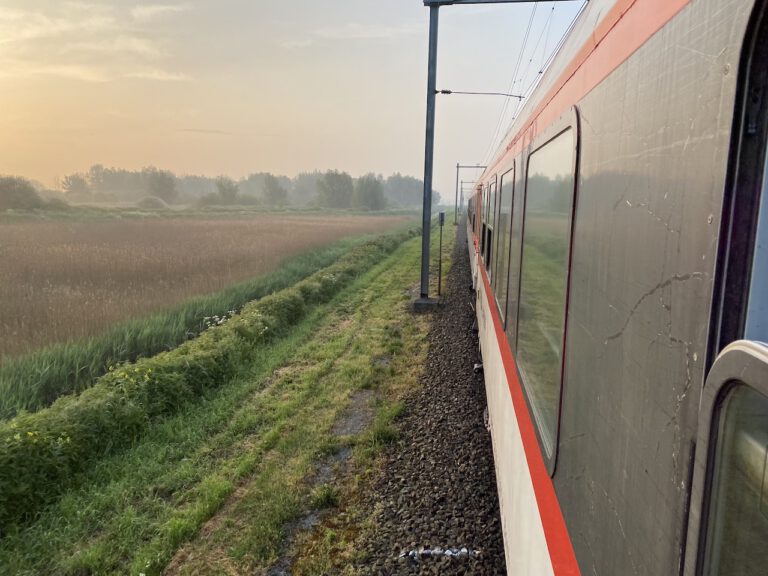
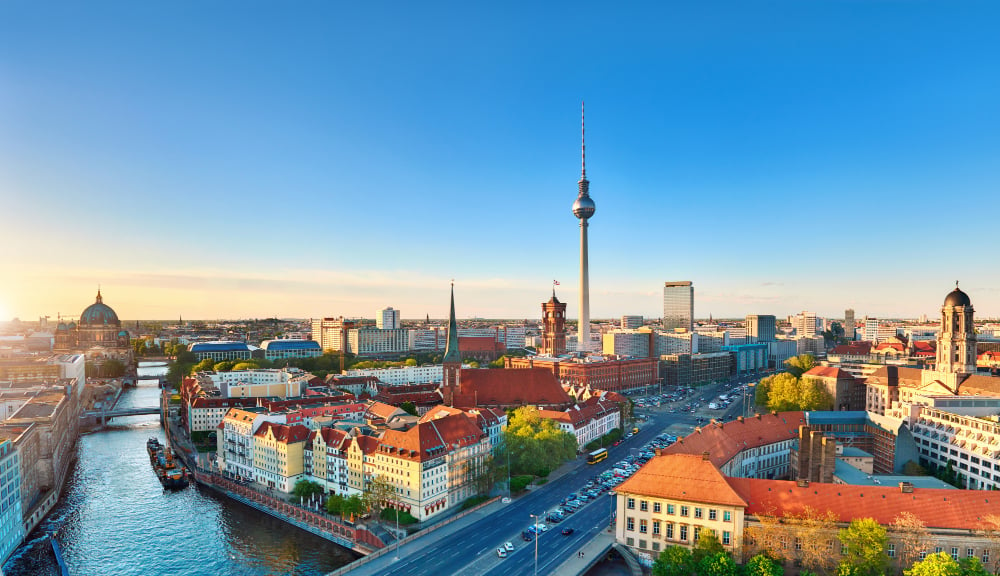
Fall asleep in Amsterdam, wake up in Berlin! Image: Freepik
Once everyone’s onboard, the train falls silent for the night, and passengers can sleep soundly until arrival in Berlin.
European Sleeper doesn’t plan to stop at just Berlin, however. With each year in business, the company hopes to add an extra route to their services.
In fact, this year, European Sleeper added Dresden and Prague to its route — someone pinch us because we must be dreaming. 😍
Expectations versus reality
I’m not going to lie, when I heard we were being offered a night on the night train, I pictured a somewhat horizontal seat and a bad night’s sleep — but hey, it would be worth it, I’d wake up in a new city!
This was not the case at all with European Sleeper.
Once the big day finally came and we boarded the train at Amsterdam Centraal, I was pleasantly surprised to see that not only did I have a comfortable cabin and bed waiting for me, I had sheets, blankets, a pillow, water, and even a complimentary breakfast!
The vibes were immediately cosy, I felt like Harry Potter on his way to Hogwarts (without the Death Eaters), and I had just one important thing to test.
In a very childlike manner, I dibsed the top bunk in our cabin, climbed my way up, and immediately nestled in. Any weird bumps? Nope. Any weird smells? Nothing. Was I at an angle? Definitely not. Was I comfortable? Yes.
And would I remain so? Inderdaad.
Once I used the toilet facilities in the carriage, popped on my pyjamas, and stared romantically out the window for a moment, I drew the curtains, slid closed the cabin door, and hopped into my surprisingly cosy bed.
In fact, I can’t tell you too much more about my experience of a night on the Good Night Train — because I was fast asleep.
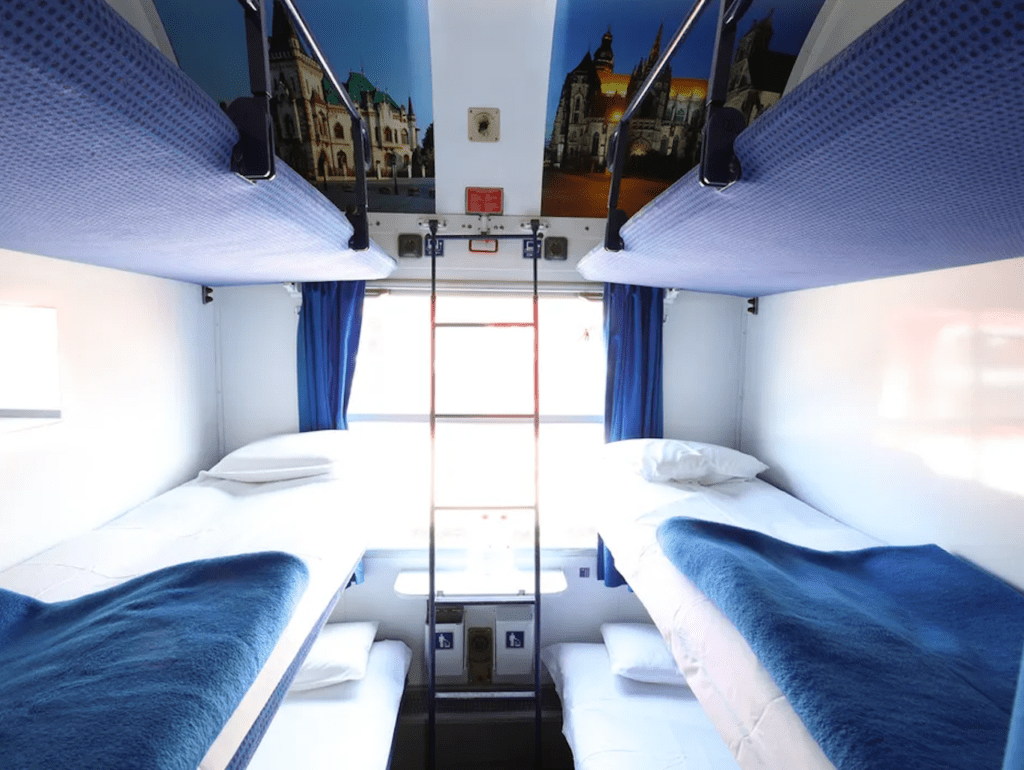
We stayed in a couchette cabin — it was cosy and comfortable. Image: European Sleeper
The next thing I knew, a gentle announcement was telling me we would be arriving in Berlin in 20 minutes. The gentle rocking of the train had lulled me into a sleep that I hadn’t experienced since I was six years old after a day at the beach.
And can I just say, waking up in a sunny Berlin was just like waking up on Christmas Day. ☀️
What are the sleeping arrangements like on the Good Night Train?
This was the question that first sprung to mind when we were invited to embark on this journey. What exactly counts as a sleeper train? Would a conductor simply throw a pillow at our faces, and voila, we’re on a sleeper train?
I can now safely say this was not the case.
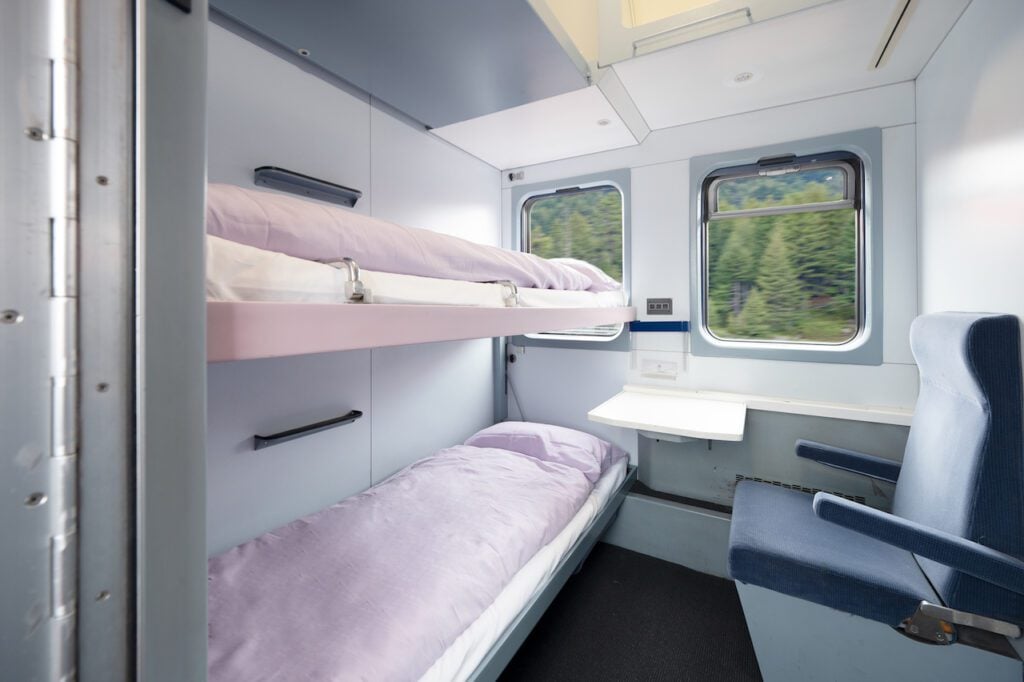
You can also opt for a sleeper cabin. Image: European Sleeper
European Sleeper offers a number of different options. Travelling with the family? You can opt for a six-person couchette cabin, which functions as a classic train cabin but can also be transformed into six separate beds when the need to sleep hits.
Are you travelling with a smaller crowd? Or alone? Then you can opt for a sleeper cabin. These can be booked as a single, double, or triple cabin.
Tip: Are you a woman travelling alone? You can always opt for a women’s only cabin!
Happy to just hitch a ride and look out at the night sky? You are also free to ride the night train the classic and affordable way — simply book a seat!
Ok, I’m in! How can I get tickets?
Ready to try out European Sleeper’s services for yourself? We couldn’t recommend it more. 😍 Check out the website, choose your favourite travel options, and simply book tickets online.
Look at you go, you sustainable, worldly being. Fijne reis! 👋
Have you travelled on a night train before? Tell us about your experience below!
If you’ve gotten used to next-day delivery on your mail and packages, we might have some bad news for you.
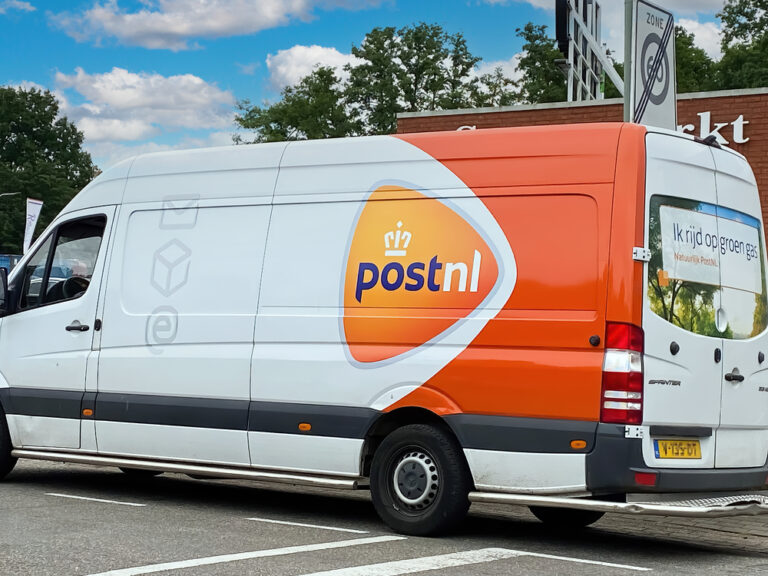
PostNL, the mail and e-commerce giant based in the Netherlands, wants to start delivering mail less often. Why? Because they have a shortage of workers and fewer people are sending mail, reports the AD.
Herna Verhagen, CEO of PostNL, urges a change in postal laws so that mail can be delivered within two or three days of being sent rather than the usual one-day delivery rule, with the exception of urgent mail.
A steady decline
The amount of mail sent has been on the decline for the last 20 years, yet mail is still legally only allowed to take one day to be delivered. A general labour shortage has also made it difficult to fill vacancies and keep up operations.
As a result, letters are more frequently being delivered too late — and about one in five items arrived after the expected delivery time in 2023.
So, Verhagen is calling on Dutch politicians to find a solution for these developments.
And it seems like there’s precedent to change the legally expected delivery time. Many European countries have less frequent post deliveries, and 79% of PostNL customers say they’re okay with receiving mail after only two or three days.
How often do you use PostNL? Tell us about your experience in the comments below!
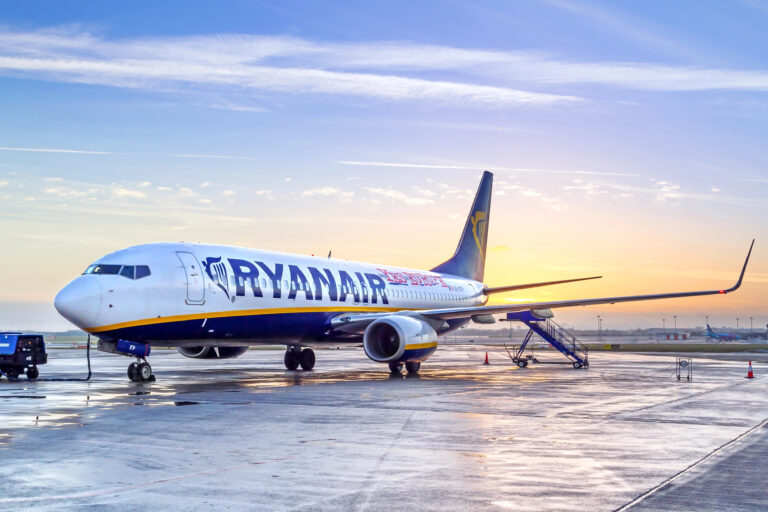
Ah, Ryanair, the budget airline we all know and love (or do we?). Well, this summer, you might not be able to get to your dream destination with the Irish airline, CEO of the company, Michael O’Leary, has warned.
Why not? Ryanair will likely have to cancel lots of flights this summer because the airline will receive fewer Boeing aircraft than promised. 🚫✈️
According to the NOS, the American aircraft manufacturer was meant to provide 57 new planes to Ryanair by the end of June, but due to manufacturing issues, it looks like they can’t keep this promise.
“We don’t really know how many aircraft we’ll get,” O’Leary said during a press conference, but “we’re pretty sure we will receive between 30 and 40. … We have little confidence that we will be delivered more than 45.”
Oh, and more expensive tickets
If Ryanair doesn’t get enough planes by the start of the summer season, they can only carry 200 million passengers over the coming fiscal year, compared to the previously predicted 205 million.
The result? They “might need to announce some schedule cuts, mostly on routes with high daily frequencies,” O’Leary said.
And natuurlijk (of course), this will affect travellers in more ways than one, as ticket prices could shoot up by up to 10%.
As O’Leary puts it: there will be a “higher fare environment across Europe” this summer — which would also affect the two biggest Dutch airports, Eindhoven and Schiphol, from which Ryanair operates.
Ahh… cruising along Amsterdam’s picturesque canals, washing down some piping hot bitterballen with an ice cold beer, and tiptoeing through the tulips. What a leuke vakantie (nice holiday)! 😍✨
But wait: what if you want to video call your mum back home and show her the sights? Oh, and what about posting that picture on your Instagram Story? Where are you when I need you, internet?!
Sure, you can rely on unsecured WiFi hotspots, spend a stack on an international data plan from your home country, and waste precious holiday time hunting down a Dutch SIM card — or you can sign up for an eSIM before you even catch your flight.
But what is an eSIM, where can you get one, and more importantly: how can it help solve your internet problems while abroad?
An eSIM: what is it?
An eSIM (or e-SIM) is an embedded SIM that provides you with handy access to a cellular data plan, without needing to remove your physical SIM card from your home country.
With an e-sim, you’ll have data at your everyday convenience! Image: Depositphotos
In other words, it lets you change your mobile plan digitally. No external chip needs to be inserted in the phone, as the eSIM works “virtually.” 🤓 (New phone number, who dis?)
Unfortunately, this also means that eSIMs don’t necessarily work with every phone. (Handy tip: you can check our list of compatible phones at the end of this article!)
Because they don’t require a physical card, eSIMs are ridiculously easy to install — making them echt handig (really handy) when you’re on the go and want seamless connectivity. 🛫
Picturethis: you’re on a trip to the Netherlands and want to show your parents how you’re exploring Amsterdam’s spectacular museums in real time (don’t worry, you can visit an Amsterdam coffeeshop later).
With an eSIM, you can do that in a matter of seconds, and there’s no need to search for the nearest available WiFi or beg the locals for a hotspot. 😉
Should I get an eSIM when coming to the Netherlands?
There are so many benefits when it comes to having an eSIM when visiting the Netherlands, or practically any place you don’t call home.
With an international eSIM, you immediately have access to the internet and, depending on your chosen plan, sometimes even unlimited data!
These digital SIM cards also let you keep your WhatsApp number, making it even easier to keep in touch with your friends and family back home.
Dying to share your holiday snapshots with your friends and family back home? eSIMs’ connectivity makes this an absolute breeze! Image: Freepik
Speaking of digital SIM cards, since eSIMs work via software, you can also switch back to your original SIM card if you need to call someone using your personal number.
Even better: you needn’t be a tech wizard to install and activate an eSIM! The installation and activation process is usually seamless and relatively quick — you simply scan a QR code and start it up via your phone using simple instructions.
If you’re a traveller at heart and won’t just be touring the Netherlands, we suggest you buy an eSIM with unlimited data.
In addition to getting more data than you’ll know quite what to do with, many eSIMs are functional in over 190 destinations and 108 countries.
How do I get an eSIM?
When purchasing an eSIM online, your chosen service will tell you the next steps to activate your plan.
You can find loads of eSIM plans from providers like Holafly, for example, that fit different needs. Certain plans offer 3G or 4G data roaming, while others also offer unlimited 4G data.
If you’re big on sharing things with your friends and family (and all your Instagram followers 😉), you’ll probably prefer having unlimited data — just in case you see a really cute flower bike somewhere and NEED to show it to your nearest and dearest.
Things to know before purchasing an eSIM
First things first: you’ll have to check if your phone is compatible with an eSIM.
You can check your phone’s compatibility by going to your phone’s Settings app and clicking on Mobile or Cellular Data. If you see the option to add a data plan, you’re good to go!
Some phones that are compatible with an eSIM are the Apple iPhone XR, Fairphone 4, Google Pixel 3, Oppo Find X3 Pro, Oppo Reno 5A, Motorola Razr, Motorola Razr 5G, and Samsung Galaxy S20 — as well as all of their newer versions, of course.
Additionally, some eSIMs are data-only, meaning that they won’t necessarily allow you to make cell phone calls or send SMS messages — you’ll have to use your personal number for that!
Of course, you can always call people using WhatsApp or Facebook Messenger. 📞
What data plan do you usually use when visiting the Netherlands? Will you be using an eSIM from now on? Tell us in the comments below!
The insurance company ANWB just surveyed nearly 2,000 Dutchies with a singular goal in mind: figure out their holiday plans.
The result? A whopping nine out of ten Dutch people will still be going on holiday this year, according to ANWB spokesperson Sanne Over.
In conversation with RTL Nieuws, Over reveals that while many Dutch people will still enjoy a vacay in classic destinations — think Germany, Spain, and France — more and more are opting for more affordable alternatives.
“People are choosing alternatives more often than last year because of the expensive airline tickets,” she explains.
But where exactly will they be going? 🏝️
Say hoi to Slovenia and Albania
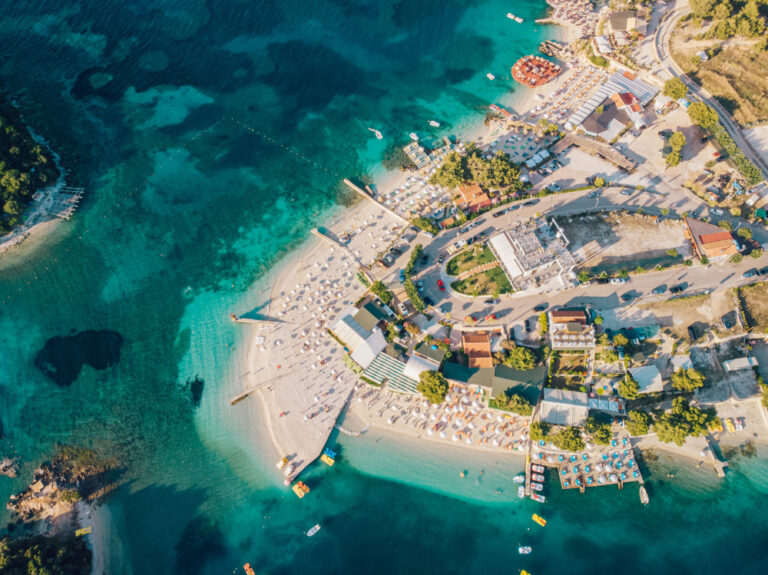
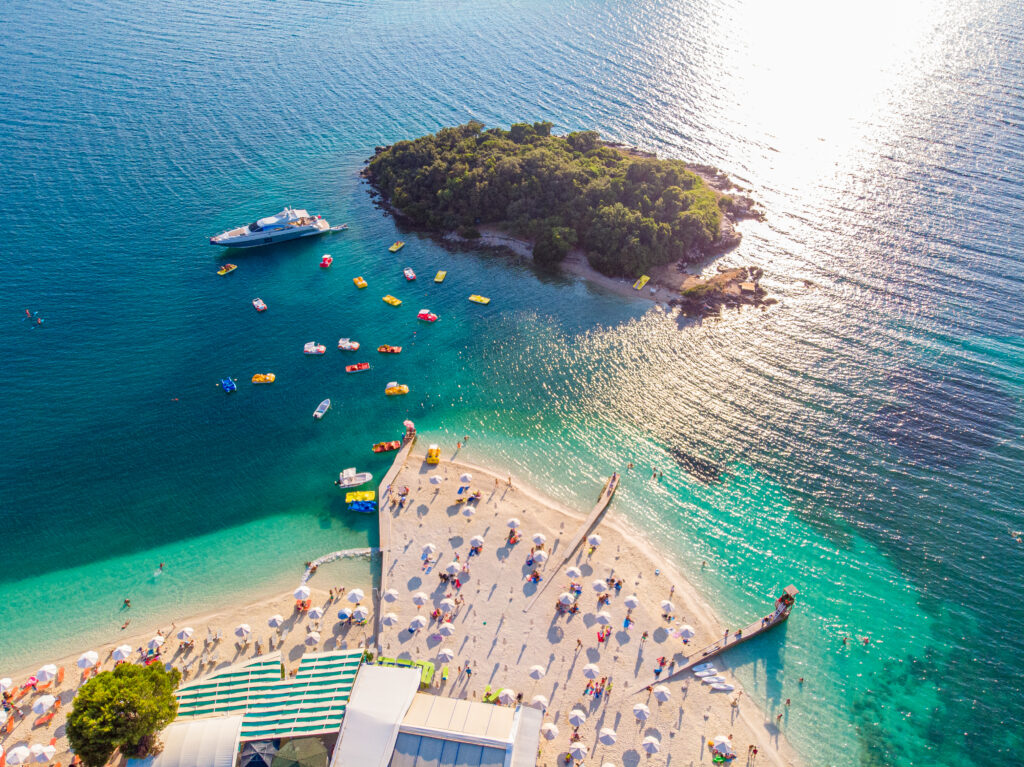
Thanks to recent changes in the holiday market — such as more expensive flight tickets — there’s a heightened interest in cheaper European destinations, such as Slovenia and Albania.
“They go to Slovenia or Albania, for example, because the destination itself is cheaper than Italy or Spain, for example. The Dutch love holidays, but are price-conscious,” Over tells RTL Nieuws.
Destinations like Albania are hot favourites with the Dutch, according to ANWB. Image: Freepik
While we like to poke fun at the Dutch for their stingy nature, this really doesn’t seem like such a bad idea.
For example, the average cost for a hotel room in Albania sits between just €25-40 per night!
In Slovenia, B&Bs hover around €55, holiday inns and rooms can be found for around €40, whilst hotel prices can run around €80 to €130 per night.
*Furiously Googles flights to Albania*
What are your travel plans for 2024? Tell us all about them in the comments below!
Now that’s a shocking headline — but you can shut that jaw and drop those eyebrows because it’s a fact. If you’re living in the Netherlands, you’re going to see your purchasing power increase in 2024.
Yep, while residents of the Netherlands have seen their purchasing power drop over the past few years, the tides are changing.
Firstly, Dutch wages are receiving a much-needed boost this year, with the minimum wage increasing.
However, it’s not just people who receive minimum wage who will see a boost in their income. Many workers in the Netherlands are expected to see some better figures on their paychecks.
Not only that, but certain benefits are higher in 2024. (Huurtoeslag, we’re looking at you. 👀)
You can also expect to enjoy more bang for your buck, because inflation is continuing to drop this year. The CPB forecasts that it will sit pretty at around 2.9%.
So what do all these changes mean? Well, what they boil down to is that your purchasing power just had a gentle — but noticeable — nudge in the right direction.
We’re still not back to pre-coronavirus power
Not to rain on your parade, but it is worth noting that while this increase is great, we still haven’t returned to a pre-pandemic level of purchasing power.
However, we’re not far off! This year, our wallets will only be 0.5% less effective than they were before our world was rocked by rona — and y’know what? We’ll take it.
From splitting the Friday borrel drinks with your coworkers to paying for your friend’s birthday present with friends, Tikkie is one of the most important aspects of life in the Netherlands.
Anyone who’s lived here knows that the Dutch are sticklers for accounting and finances, and the Tikkie app is one of those innovations that comes from their perceived stinginess.
The handy app lets you forward payment requests via WhatsApp and other forms of social media, making it extra easy for groups of people to split costs.
But why is it called a ‘Tikkie’? 🤔
Useful and friendly
According to Freek de Steenwinkel, director of Tikkie, the name ‘Tikkie’ is meant to be an onomatopoeic sound, similar to a “ka-ching” or a check sound that rings when someone is paying for something at a cash register.
Whilst it’s fun to imagine paying with “Kachings” or “Cheqs”, there’s a reason why Tikkie prevailed.
“‘Tikkie’ sounded friendly; besides being useful, it should also be fun”, says Steenwinkel to De Ondernemer. Useful and friendly, it is indeed.
A new set of etiquette
Since its creation, Tikkie has created a whole etiquette surrounding money transfers and finances.
That includes when to pay someone’s request, when to send a Tikkie, and even the appropriate amount of money you can request from someone. (Hint: there’s no minimum! 😉)
Call it stingy or call it cheap — the Dutch will call it innovative and considerate.
What are your experiences using Tikkie? Do you like using it? Tell us in the comments below. 👇