Shai Eistein, an information security expert on LinkedIn, got more (or perhaps less) than he bargained for when he notified the CERT (Dutch Cyber Security) of a potential loose end in national security.
As Eistein’s LinkedIn post explains, he noticed that one of the Netherlands’ ships was using a satellite router with a default password. After notifying CERT of this, they responded that the “vulnerability was mitigated” and then — they asked for his address.
Why? Because they wanted to send him a T-shirt.
This isn’t a joke, they literally sent him a T-shirt. 😳
And what did it say? 👇
Good one, Dutch government. Image: Shai Eistein/LinkedIn
Some people in the comments were sceptical of Shai’s image to which he responded with an image of the back of the shirt which very clearly showed the logo for the Dutch government.
An ultimate Dad-level joke. It seems the Rijksoverheid has a sense of humour after all. 😉
Are you surprised by this response? Tell us your thoughts in the comments below!
Doctors from UMC Utrecht just transplanted an artificial heart into a 54-year-old man. This is the first time that this procedure has been done in the Netherlands.
According to De Volkskrant, the artificial heart was transplanted into a Dutch man suffering from severe heart failure as well as another condition, which meant that he had to wait a very long time before he was eligible for another heart — time which the patient didn’t have.
Artificial heart
But thankfully, technology has come to the rescue! French technology to be exact. Heart and lung surgeon, Faiz Ramjankhan, gave the man an artificial heart which has been successful in extending patients’ lives for up to ten years while they wait for a real heart. 🥺❤️
The artificial heart pumps blood through the heart via two motors and the power comes from batteries connected by a cable exiting the abdominal wall.
The patient was out of the IC after only two days and was excited to go back to cycling and exercising, according to his cardiologist Linda van Laake. He is also learning how to replace the batteries on his heart. ☺️
What do you think about the first heart transplant in the Netherlands? Tell us your thoughts in the comments below!
You know that sigh of relief you experience when that one controversial family member finally excuses themselves from the Christmas dinner table? Well, the Netherlands can finally say dag to one controversial relative.
The Dutch oil and gas company, Shell, will be excusing itself from the Netherlands indefinitely. In fact, it’s found itself some new family in the UK.
Shell becomes British
As part of a process to simplify its structure, Shell will be packing up shop at its head office in The Hague and move across the water to the UK.
It seems the company will forego its Dutch heritage altogether, as the move will make Shell a fully British company — on paper at least.
According to the company’s press release, Shell will continue to be present in the Netherlands (bit ominous, but okay) however, board and management meetings will now be held across the pond.
Will you be sad to see Shell go? Or helping them pack their boxes? Tell us your thoughts in the comments below!
By now, you’ve likely heard that the Netherlands will be going into lockdown tomorrow. But you’re also likely a bit confused. Is it really a lockdown? What measures will be brought in?
We have the same questions — and now, they’ve been answered by prime minister Rutte and outgoing health minister De Jonge.
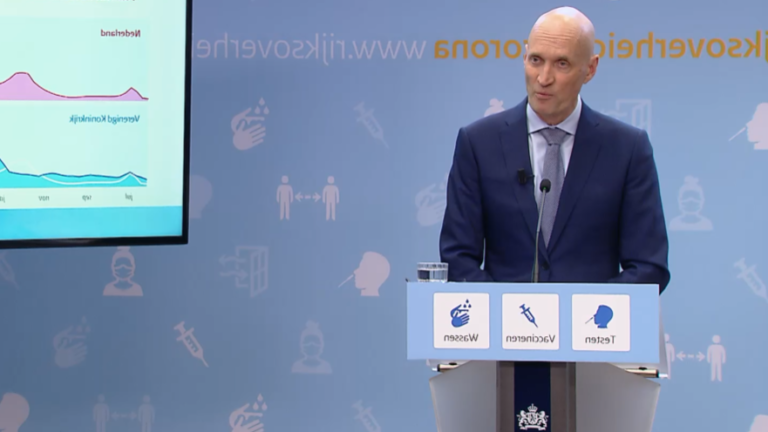
Prime minister Rutte began his address to the public with a number — 16,364. The number of infections counted by the RIVM yesterday.
He points to these numbers for justification of these new measures, saying “16,000 infections on a daily basis is too much and hospitals have to postpone other essential care again, hence why we sadly have to bring bad news.”
With numbers the way they are, he explains, the Netherlands will not have a good winter unless measures are taken. “Here’s what we’re gonna do: reduce contact and go back to old measures we know for 3 weeks. After that period we’ll go into a different phase.”
The following lockdown measures will come into effect as of Saturday, November 13 at 6PM.
Horeca to close at 8PM, non-essential shops at 6PM
Catering establishments and non-essential shops will once again experience restricted opening hours. Catering establishments will close at 8PM and non-essential shops will close at 6PM. They will remain closed until 6AM.
Cinemas and theatres are an exception
While the cabinet has taken the OMT’s advice and will implement a lockdown of three weeks (instead of the two, which was recommended), they will not be implementing full-lockdown measures.
For example, cinemas and theatres may remain open throughout the lockdown — contrary to the OMT’s advice. But with reduced attendance, QR checks and fixed seating.
QR-codes will be needed at more venues
This measure has been anticipated since last Tuesday’s press conference. The use of QR-codes to gain entry will be expanded to include zoos and amusement parks as well as non-essential shops and contact professions.
Your employer may also choose to ask for a QR-code before returning to the workplace, especially if the place itself also needs to check for QR-codes (that’s you, hospitality staff). Higher education may request a QR-code — but only when it is deemed ‘necessary’.
Cabinet to prepare for implementing 2G measures
On top of these new measures, the cabinet has decided to begin preparations for 2G measures in the next three weeks. This was advised by the Outbreak Management Team (OMT).
Under this approach, people who are unvaccinated will no longer be able to receive a QR-code using a negative PCR test result. Instead, they either have to be vaccinated or have recovered from coronavirus.
A QR-code will remain necessary in order to enter bars and large scale events. De Jonge explains that these measures will be taken in order to “protect the unvaccinated.” He says that there is no “vaccination obligation” but the decision to get vaccinated or not “is not without responsibility.”
Maximum of 75 people in higher education
Within higher education, the number of people who may attend in person will be capped at 75. But not during exams.
No audience allowed at sport competitions
No more standing shoulder to shoulder with your fellow supporters. During this three week lockdown, spectators may not be present at sports events. However, sports may continue.
Urgent advice
The cabinet has also given the following urgent advice. This means that the following are not legal requirements:
1.5 metre rule
The cabinet will also reiterated the importance of keeping 1.5 metres distance in certain situations. People must remain socially distanced from one another, in places where no QR code is required — even in parks.
However, there are exceptions such as if a person is your roommate or if you have a QR code when attending sports, taking public transport, attending school or watching Sinterklaas arrive.
Maximum of four visitors at home
The cabinet also gives the urgent advice that people should cut out any large dinner/drinking parties for the time being. As of Saturday, the advice will be that we keep the maximum number of visitors to four — even if they’re vaccinated.
If you haven’t kitted out your work from home set up with a proper chair, now’s the time to bite the bullet and just invest in one. Rutte and De Jonge ask that we bid adieu to the office for now and work from home as much as possible.
Financial support for companies affected by measures
There will be financial support for companies such as those in horeca and retail who will be affected by these lockdown measures. The cabinet will announce the details of this aid next week.
Booster shots to begin
De Jonge and Rutte could offer some hopeful news, however. The Netherlands will begin its rollout of a third booster shot next week. This will begin with vaccinating over 80’s as well as those who work in health care and care homes. From there, the rest of the population will be invited to receive a third dose.
Follow DutchReview on Facebook to get the latest coronavirus updates in the Netherlands.
It seems like half the Netherlands is holding its breath, waiting for Rutte and De Jonge to explain the partial lockdown at the press conference tonight. Meanwhile, Koninklijke Horeca Nederland (KHN) has released a statement saying catering will not close at 7 PM— no matter the law.
Looking at the expected coronavirus measures, it appears that Dutch catering establishments will have to close at 7 PM, starting from tomorrow. Nevertheless, the KHN has announced that they back any establishment that decides not to do so.
KHN emphasises that the RIVM’s source and contact research shows that only 2,9% of infections are contracted via the catering industry. They, therefore, understand the new measures to be purely symbolic — and once again placing a strain on the industry.
2,9% van de besmettingen komen volgens RIVM rapport van bron & contactonderzoek uit de horeca. Focus je als kabinet daar waar je écht effect sorteert. pic.twitter.com/WLDpVrezdn
“According to the RIVM report from source & contact research, 2.9% of the infections come from the catering industry. As a cabinet, focus on where you really have an effect.”
In fact, the KHN says “the burden of failed government policy is once again placed with catering entrepreneurs.” Take that, Rutte. 😬
The union FNV is also against the potential measures, reports AD. Director Edwin Vlek explains that catering employees have done their best to comply with the regulations over the past few months, scanning QR codes in addition to their usual tasks. “Nevertheless, the catering industry is now getting a stench for thanks,” he says.
Financially impossible
According to the KHN, there’s no financial leeway for the catering industry anymore. If establishments decide to stay open it “is about survival.”
Financial support for HORECA ended in October so, at the moment, only nightclubs can claim any form of government compensation. The chairman of the KHN tells AD that the government “should come with 100% compensation,” if the restricted opening hours are enforced.
Additionally, the KHN fears that the new measures will be the last drop that pushes employees to find permanent work in other sectors.
What do you think of the KHN’s response to the potential measures? Tell us in the comments below!
The Outbreak Management Team (OMT) has urged the Dutch government to impose 2G measures after a partial lockdown, reports the NOS.
While a three-week partial lockdown is expected to be announced at the press conference tonight, much controversy surrounds the introduction of 2G.
2G measures mean you could only obtain a valid QR code with a vaccination certificate or proof of recovery. Unvaccinated people would no longer have access to events or other aspects of public life — even if they have a negative PCR test.
“Very plausible” that 2G would lower infections
According to epidemiologist Frits Rosendaal from the Leiden University Medical Centre (LUMC), it’s likely that 2G measures would bring infections down from the past weeks spiralling numbers. He also says that this would lessen the burden on hospitals.
Similarly, modellers from TU Delft calculated that the introduction of 2G measures would bring down the number of infections at events by 25%. Their model predicts that hospitalisations would fall by as much as 94%.
About the study: The TU Delft calculations are based on a fictitious event taking place when there’s a high rate of infections in society. “Participants” had an average age distribution and 75% of them were vaccinated.
To what extent the 2G measures would lower the number of hospitalisations depends partially on peoples’ age. At events with many elderly people present, the effects would be much greater — since they have a higher chance of ending up in hospital.
However, Rosendaal says drawing an age limit for when 2G measures would apply isn’t viable. “You run the risk of getting into an endless discussion, just like a half-hearted lockdown.”
Exclusion of unvaccinated people
The 2G measures would exclude unvaccinated people from public life. Professor of medical ethics Mariëtte van den Hoven from Amsterdam University Medical Centre stresses that unvaccinated people are unfairly lumped together as one group. According to her, it’s important “to pay attention to diversity in society.”
Van den Hoven reminds us that “Among the unvaccinated are also people who cannot be vaccinated for medical reasons. It’s taking it too far to exclude them all.”
An alternative model: 1G
The modellers from TU Delft have also studied the potential effects of introducing 1G measures. This would mean everyone (whether vaccinated, recovered, or unvaccinated) would have to get tested to obtain a QR code.
In this scenario, infections would decrease by as much as 74% — much more than with the discussed 2G measures. However, there wouldn’t be a significant lowering of hospital admissions compared to 2G: 74% compared to 94%.
Since 1G would prevent more infections than 2G, the number of hospitals admissions would, however, decrease further in the long run.
Currently, there are no known discussions of introducing 1G measures at a governmental level. 2G might soon be a reality, though.
What do you think of the prospect of 2G measures in the Netherlands? Tell us in the comments below!
We thought our days of announcing a new lockdown were over — but here we are. Sources have confirmed to the NOS that the Netherlands will enter into another lockdown from tomorrow, November 13 at 7 PM.
What does this mean exactly? Aside from the fact that you’re going to have to find yourself yet another new hobby to quickly lose interest in — it means a number of things.
This is one of the most notable measures that has been leaked. Catering establishments and non-essential shops will once again experience restricted opening hours and will be expected to close at 7 PM.
Maximum of four visitors at home
It’s also expected that the cabinet will advise people to cut out any large dinner/drinking parties for the time being. As of Saturday, the advice will be that we keep the maximum number of visitors to four.
Work from home as much as possible
If you haven’t kitted out your work from home set up with a proper chair, now’s the time to bite the bullet and just invest in one. The cabinet is also expected to advise that we bid adieu to the office for now and work from home as much as possible.
No audience at sport competitions
No more standing shoulder to shoulder with your fellow supporters. Another notable leaked measure is that audiences may not be present at sports events.
QR-codes will be needed at more venues
This measure has been expected since last Tuesday’s press conference. The use of QR-codes to gain entry will be expanded to zoos and amusement parks.
On top of this, the cabinet has also been advised by the Outbreak Management Team (OMT) to introduce the 2G approach. Under this approach, people who are unvaccinated will no longer be able to receive a QR-code using a negative PCR test result. The cabinet has yet to make a decision on this.
Cinemas and theatres are an exception
While the cabinet has taken the OMT’s advice and will implement a lockdown of three weeks (instead of the two, which was recommended), they will not implement full-lockdown measures…
This means that the cabinet is not expected to announce the closure of cinemas and theatres — contrary to the OMT’s advice.
When will we know more?
Tonight. At 7PM, Rutte and De Jonge will return once more to the podium to clarify the upcoming lockdown and measures.
And don’t worry, we’ll be following to bring you the rundown. 💁♀️
Follow DutchReview on Facebook to get the latest coronavirus updates in the Netherlands.
As of 10 AM 16,364 new positive tests were recorded in the past 24 hours — marking the highest daily number of positive tests recorded in the Netherlands since the beginning of the pandemic.
The Netherlands hit another coronavirus pandemic benchmark today, as the National Institute for Public Health and Environment (RIVM) reported an increase of 3,688 positive coronavirus cases compared to yesterday’s numbers.
The NOS reports a general increase in the number of positive corona tests compared to last week, the current average now stands at 12,339. To sum up: it’s getting much worse.
Lockdown or no lockdown
With these astronomical figures, the country is currently awaiting updates and guidance regarding a possible lockdown or the implementation of new measures by the outgoing Dutch government as of tomorrow’s press conference.
With the Dutch Outbreak Management Team (OMT) latest advice suggesting a much needed two-week lockdown, the situation seems to be quickly escalating within the government chambers, not just at GGD testing centres.
As the Dutch coronavirus cases are mounting, the government is expected to gather for a consulting session with the mayors tonight. So keep your notebooks around between tonight and tomorrow, because as the habit goes, leaks will likely be proceeding tomorrow’s public conference. ✍️
Follow DutchReview on Facebook for the latest coronavirus news from the Netherlands.
The period roughly spanning 1588 to 1672 was one of the most prosperous in Dutch history. Often called The Golden Age, it was a period that largely coincided with the Dutch economic prosperity of the 17th century. Many famous (and nowadays very expensive) works of art come from this period, produced by masters who lived during this time.
The northern Netherlands, which together formed the Republic of the Seven United Netherlands, flourished in (slave) trade, science, and arts.
Think of Rembrandt van Rijn and Jan Steen. These are just two of some exceptional painters who existed after the 17th century. Their unique works of art can be found in the Netherlands and all over the world, attracting millions of visitors to famous Dutch museums.
But the Netherlands is so much more than Van Gogh and Rembrandt. There are so many more Dutch masters — so here are ten of the most famous Dutch painters. 👨🎨
1. Jheronimus Bosch — late 15th century
Jheronimus Bosch, also known as Jeroen or Hieronymus Bosch, was born as Jheronimus van Aken, in Den Bosch around 1450. He died in Den Bosch on August 9, 1516.
The Van Akens were a well-known painting family, so it was no surprise that Jheronimus would go on to become a successful painter. He went down in history as den duvelmakere (the demon maker), because his paintings often depicted demon-like creatures and other satirical images.
Jheronimus was a very meticulous painter and his paintings often contained countless details. One of the early Dutch Renaissance painters, he was also part of a group of painters known as the Vlaamse Primitieven (Flemish Primitives). This is due to the fact that they were most active in Flemish cities such as Bruges, Ghent, and Brussels.
While he was a brilliant painter, one of his most famous works, “De Tuin der Lusten” which is a “triptych” (three paintings that belong together) some critics have called racist. 😬
The left panel of the painting depicts paradise or the Garden of Eden (you can tell by Adam and Eve). The middle panel shows the Fall of Man, where people do all kinds of “depraved” things, such as spending time with black people. Finally, on the right panel, you see the Biblical hell.
2. Pieter “Boer” Brueghel de Oude (the Elder) — early 16th century
Pieter Brueghel was born in Breda or Breugel between 1525 and 1530, and he died in Brussels on September 9, 1569. He was a Brabant Renaissance painter who would go on to father many other famous “Bruegel” painters.
He often wrote his name without the “h”, but his sons after him always signed their works with Brueghel. So today he is often just referred to as Pieter the Elder (because that’s easier).
Brueghel owes his nickname, “the farmer”, to the fact that he often disguised himself as a farmer (no, really 😂 ). As “the farmer” he participated in countryside festivities as a source of inspiration for his work.
He painted many pastoral landscapes, in which village scenes, harvests, and other rural themes took centre stage. Shortly after his death, he became famous for his paintings, especially his prints.
Pieter, like many artists of his time, liked to paint scenes with religious tones, making great use of imagery, expressions and verbs. One of his paintings called “The Dutch Proverbs” from 1559 remains very famous to this day and contains about 125 Dutch expressions (some of which are no longer in use, nowadays). You can also view the painting can in Berlin’s Gemäldegalerie.
Jan Steen was born in Leiden (hometown shout out 😉 ) sometime between 1625 and 1626, 20 years after Rembrandt. Steen died in Leiden on February 23, 1679.
He painted entirely in the Baroque style, using humour and ordinary people to make his work as lively as possible. His paintings are famous for often showing scenes in an untidy state.
His father was a merchant and brewer and he was the eldest of eight children. He studied at the University of Leiden while also receiving painting lessons from Nicolaus Knupfer, a German painter. He was later be accepted into the Leiden Painters Guild. Throughout his life, he moved around, temporarily living in The Hague, Delft, Haarlem, and Warmond, and eventually return to Leiden.
His work clearly showed that daily life was important to him. One of his most famous pieces, “Het Vrolijke Huisgezin” (The happy family), depicts a chaotic family having fun. You can easily marvel at this painting as well as Rembrandt’s “The Night Watch”, as they both can be viewed in the Rijksmuseum in Amsterdam.
Gerard was born in Utrecht on November 4, 1592, and died in the same city on April 27, 1656. He followed the painter Caravaggio and, as a result, was often called a “Utrecht Caravaggist.”
He also drew a lot of inspiration from the work of Antoon van Dyck. As a young man, he travelled to Italy to hone his craft in the great art cities of Venice, Florence, and Rome. On his return, he joined the Utrecht Painters Guild (an important step if he wanted to legally sell his paintings).
He received major commissions to produce some impressive works of art, some of which were from the English King Charles I and the Danish king, Christian IV. He also became court painter to Stadtholder, William II.
His popularity somewhat declined in 1640 and he began to paint less often. He was only 48 at the time but he had already seen much of Europe during his career. He passed away sixteen years later.
One of his famous paintings called “De Koppelaarster” (The Matchmaker) was painted in 1625 and can still be admired in the Central Museum in Utrecht.
Van Honthorst’s The Matchmaker. Image: Unknown source/Wikimedia Commons/Public Domain
5. Albert Cuyp — the 17th century
Albert Cuyp (after which the Albert Cuyp market in Amsterdam is named) was born on October 20, 1620, in Dordrecht, and died on November 15, 1691. He was also one of the great painters of the 17th century, but a little different from the previous ones.
Albert was mainly a landscape painter. He came from a famous painting family and became particularly known for his landscapes of the Dutch countryside in the early morning light or in the afternoon. He inherited a large sum of money which allowed him to completely pursue his dream job.
Very little is known about his life, other than that he was most active between 1639 and 1660. He was also a devoted Calvinist, and this is perfectly reflected in the fact that he seemed not to own paintings by other artists — at least none were found in his house after he died. Spending money on purely aesthetic matters is not a Calvinistic trait!
One of his famous vistas is the Rivierlandschap met Ruiters (River Landscape with Riders). It’s a panorama of a meandering river with two riders resting their horses. This painting is currenlty in the Amsterdam Rijksmuseum.
Cuyp’s River Landscape with Riders. Image: www.rijksmuseum.nl/Wikimedia Commons/Public Domain
6. Johannes Vermeer — the 17th century
Johannes Vermeer was born in Delft on October 31, 1632, and buried in Delft on December 15, 1675. Vermeer, together with Jan Steen and Rembrandt van Rijn, is probably one of the most famous Dutch painters, certainly from the period of the prosperous 17th century.
He was probably from a Reformed family but became a Roman Catholic in order to be able to marry his sweetheart, Catharina Bolnes. They had eleven children, ten of which he would never see fully grow up. He died in the year 1675 when the city collapsed in The Hollandse Oorlog (Dutch War).
In his lifetime, he produced about 45 paintings (which was not as many as Rembrandt) mostly because he probably worked alone and didn’t have students and helpers like other painters of his time. 👀
Unfortunately, like many painters of his time, he was underappreciated while he was alive. However, his paintings saw a rise in popularity over the 19th century. The sale of “De Melkmeisje” (the Milkmaid), one of his famous works, was so significant that it was discussed in the Dutch House of Representatives.
Girl with a Pearl Earring. Image: Het Geheugen/Wikimedia Commons/Public Domain
However, the “Meisje met de Parel” (Girl with a Pearl Earring) is probably his most famous painting. This is perhaps due to the book Tracy Chevalier wrote about it (and was later made into a film, starring Colin Firth and Scarlett Johannson 🎬 ).
This work of art was painted sometime between 1665-7 and is currently in The Mauritshuis in The Hague. It’s a “tronie”, which is a painting of a face that contains a distinctive facial expression or character. Back then, models were often anonymous, and so is the girl with the pearl earring.
7. Rembrandt van Rijn — the 17th century
There’s no way you’d have a top ten famous painters in the Netherlands without having Rembrandt on the list! Rembrandt Harmenszoon van Rijn was born in Leiden on July 15, 1606 (or 1607) and died in Amsterdam on October 4, 1669.
He is one of the most important painters of the 17th century, and also a prolific one; producing over 300 paintings, 300 etchings, and about two thousand drawings.😱 “The Night Watch” (painted in 1642) remains perhaps one of his most famous works.
Like Gerard Honthorst, he was influenced by the Caravaggists, which gave his work baroque touches. Rembrandt’s manipulation of light and his perfect use of sharp contrasts is truly something to behold. His paintings are often “dramatic” to the viewer.
Rembrandt mainly painted portraits and historical stories and scenes. He even made a number of self-portraits, something few painters openly admitted. He also gave important people in his life a role in some of his paintings, such as his wife Saskia van Uylenburgh, his son Titus van Rijn, and even his housekeepers and friends.
“De Nachtwacht “(The Night Watch) is a painting on an enormous canvas and can be viewed in the Rijksmuseum in Amsterdam. Interestingly, all the people who contributed to the price of this masterpiece are depicted in the painting, their size mostly depending on the amount they paid him.
The most prominent figures are Captain Frans Banninck Cocq, Lord of Purmerlandt and Ilpendam, Lieutenant Willem van Ruytenburch, and Lord of Vlaerdingen. Another interesting fact is that, at the time, Rembrandt’s clients on the painting were not at all satisfied with the result. Yet, today, the painting is one of the most popular in the world!
8. Vincent van Gogh — the 19th century
There is so much love for Vincent van Gogh outside of these shores, and the same can be said of Rembrandt van Rijn. So it wouldn’t make much sense to have a top ten without him.
Vincent was born in Zundert on March 30, 1853, and died in Auyers sur Oise, France on July 29, 1890. He worked as a Post-Impressionist, an art movement that (unsurprisingly) succeeded Impressionism.
He was a major influence on later abstraction painting. The Van Gogh Museum in Amsterdam was built in his honour. However, like many of his predecessors, Vincent was not recognised for his genius during his lifetime. He only sold one painting, De Rode Wijngaard (The Red Vineyard), for 400 francs, just before his death!
He produced all of his (later famous) works in just ten years. Plagued by psychiatric illness throughout his life, he committed suicide in 1890. Evidence suggests that he had what we now refer to as bipolar disorder, a chronic mental illness thought to affect many creative people.
Here we see the “Aardappeleters”(Potato Eaters), one of his early paintings (1885). It’s a melancholy, dark painting that oozes poverty and laziness. You can find this excellent example of a painted depression in the Van Gogh Museum.
Van Gogh’s style, and that of the Post-Expressionists in general, is characterised by the thick brushstrokes. It also lacks the ornate detail and precision of brushwork of painters from previous centuries. He was a truly gifted soul and, whatever your opinion of his work is, no one can deny that it has left a deep impression on the art world.
9. Jan Toorop — the turn of the century
Jan Theodorus Toorop was born in the Javanese town of Poerworedjo on December 20, 1858, and died in The Hague on March 3, 1928. He was one of the most famous painters of the period around the turn of the 20th century.
He had an impressionist style in his younger years, although he also often used Pointillism (painting by just adding dots). Besides painting, he also worked on ceramics, made advertising posters and book bindings. Today we often associate him with the Art Nouveau movement, although he probably never used those terms himself.
One of his famous works, “Broek in Waterland,” looks much better from a distance. Up close it is nothing but just dots, and from afar, a beautiful water landscape at dusk. This work is on display at the Indianapolis Museum of the Arts, Indianapolis, United States.
So much detail, so many dots. Image: Sailko/Wikimedia Commons/CC3.0
10. Piet Mondrian — the 20th century
Pieter (Cornelis) Mondriaan was born in Amersfoort on March 7, 1872, and died on February 1, 1944, in New York. He was a painter as well as an art theorist, and one of the pioneers in abstract art painting (like Pablo Picasso).
His geometric and abstract work was infamouse and, therefore, was a huge source of inspiration for architecture as well as other designers.
One of his most famous works is very unoriginally called Tableau 1 and was painted in 1921. There are a dozen other tableaux and compositions (all numbered) made by Mondrian that all, more or less, look alike. He was one of the first to dare to create and sell abstract representations of colour, and will always be remembered in history as a pioneer and “the father” of abstract art.
The Netherlands definitely has so many famous painters whose works sit in countless museums scattered all over the country. Some of these museums draw millions of visitors each year.
While these painters are no more, their works lay bare their lasting legacies. Each piece tells a story of love, war, religion, confusion, poverty, and every other human emotion or experience that they witnessed. To gaze upon their work is to enjoy stimulating beauty and the unique product of human genius.
Which Dutch painter and museum is your favourite? Let us know how their paintings made you feel in the comment.
A real ‘who done it’: hundreds of bikes were found upside down on Monday night in Leiden, in an innocent but very strange prank.
Leiden is known in the Netherlands as a popular student city, with several higher education institutions like Leiden University and Hogeschool Leiden.
That means there are a lot of young adults who just became legal running around doing weird stuff — some of which include hitting up a Turkish snackbar at all hours of the night and wearing animal costumes all year round for some reason. 🐯
So, when a bunch of bikes got turned upside down on Janvonssensteeg and its surrounding streets, it’s really not that shocking. 💁🏼♀️
According to Omroep West, local residents believe it was a student joke that got out of hand. Guests from a café called it, “A typical student action.”
“It’s been quite a job turning all these bikes around. So I don’t think it was one person,” said a reporter from Omroep West.
Students living in a nearby Minerva house were questioned about the “crime scene” but said that they didn’t have anything to do with it. 👀
“I think it’s a nice joke, but it wasn’t me,” said one of the Minerva students. The suspects still haven’t been caught, so the case remains unsolved. 😱
Was it the work of a student? Tell us in the comments below!