Home Blog Page 488

Well, this stings โ€” Asian hornet spotted in the Netherlands

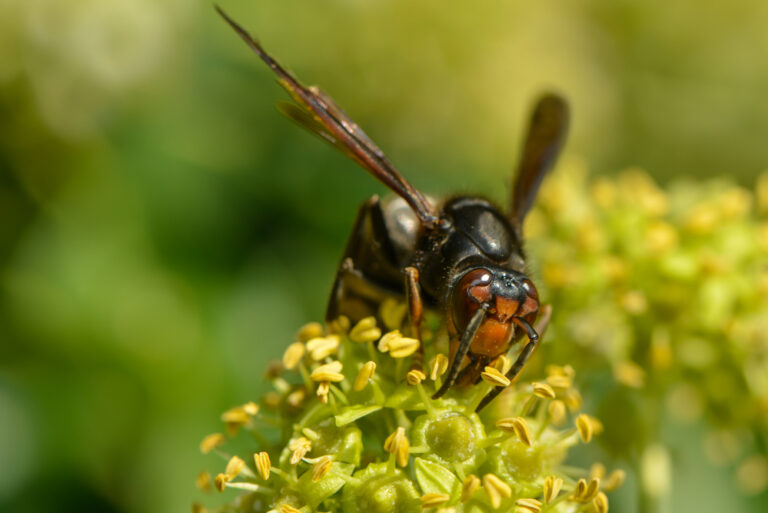
Listed as an unwanted species on the EU’s list, Asian hornets were spotted in 16 locations in the Netherlands, posing a serious threat to the Dutch ecosystem.

After being first discovered in the Netherlands in 2017, the Asian hornet (vespa velutina) which are invasive exotics, appear to be extending throughout Dutch territory. Reports indicated sightings in Drenthe, South Holland, Limburg, North Brabant, and Zeeland.

Sounding the alarm, the chairman of the Stop Invasive Exotics platform Wilfred Reinhold, warns that time is running out on taking action โ€” “If we don’t do anything about the Asian hornet now, thousands of queens will fly out over tens of kilometres in the autumn.”

In hopes of getting the public’s assistance, calls for the Dutch Minister of Agriculture, Nature, and Food Quality, Carola Schouten, are rising to release an official guide on how to identify and report Asian hornets.

What we know so far

In describing the invasive creature, “The Asian hornet resembles a large, all-black wasp. It is almost twice the size of a normal wasp, and that dark appearance is especially striking,” Reinhold says. “The European hornet has a red underside, the Asian hornet does not.”

A complete guide with pictures and a reporting platform was made available through the EIS Knowledge Center of the Netherlands.

The good news is that the Asian hornets are less aggressive to humans than the normal lemonade wasp, yet their sting is more painful โ€” so fear not but beware of what to do. โš 

At almost twice the size of a normal wasp, the bad news is that Asian hornets feed on honeybees and other wild bee species. ๐Ÿ In 2016, these hornets were placed on the EU’s list of 66 exotic animal species that are not allowed to spread in Europe.

When spotted

Currently, if you believe you spotted an Asian hornet in the Netherlands, try to take a photo and post it through the observation website where it can be verified and, once confirmed, the nest will be traced and destroyed.

Follow DutchReview on Facebook and Instagram for the latest news from the Netherlands!

Feature Image: PantherMediaSeller/Depositphotos
Feeling lonely? Jumbo is opening 200 new chat checkouts

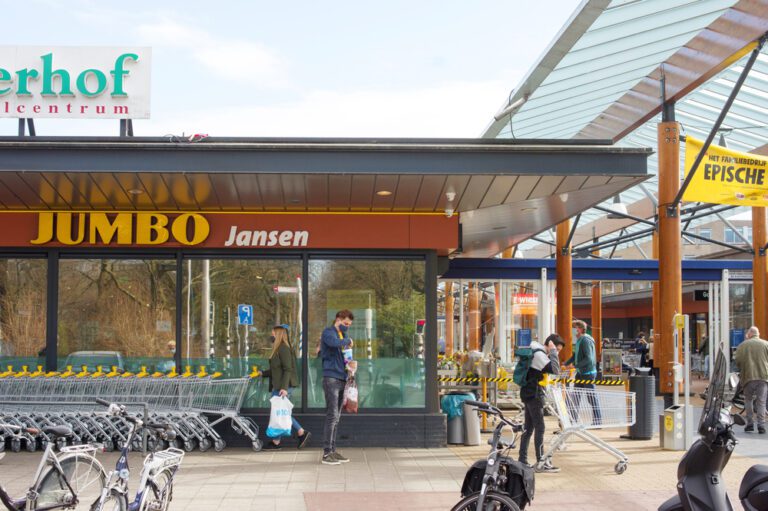
The supermarket chain Jumbo is due to open 200 new โ€œchat countersโ€ in 2022 โ€” cash registers for people who arenโ€™t in a hurry and would like to have a little chat on their way out.

When we think of Jumbo, we think of a super convenient yellow supermarket. But it turns out the groceries chain is doing more than just providing for our dinner-time needs.

In Summer 2019, Jumbo opened its first โ€œchat countersโ€. This initiative has been so successful that the supermarket chain is now set to open 200 more of these counters next year. These will be opened in areas where loneliness is common, Nu.nl reports. The next chat cash register will open in Udenhout, Brabant.

A lonely year

Raise your hand if youโ€™ve felt a little (or a lot) lonely at times over this past year. We sure have. ๐Ÿ™‹โ€โ™€๏ธ ๐Ÿ˜”  Itโ€™s no secret that problems surrounding loneliness have worsened during the coronavirus crisis. The lockdowns resulted in the telephone help service receiving a record number of calls from people who felt depressed and worried.

READ MORE | Letโ€™s take a deep breath: mental health in the Netherlands is in decline

In addition, the increase in self-scanning checkouts in the past few years has removed a necessary point of social contact and interaction for many people.

Loneliness costs โ‚ฌ2 billion

Researchers from Maastricht University have previously calculated that severe loneliness costs society โ‚ฌ2 billion in extra care. According to the university, one in ten Dutch people feels seriously lonely, while as many as four in ten Dutchies experience some degree of loneliness.

As a member of the National Coalition Against Loneliness, an initiative of the Ministry of Health, Welfare and Sport (VWS), Jumbo is trying to combat this. ๐Ÿ‘Š

The Week Against Loneliness starts on Thursday, September 30 โ€” so give a stranger a smile this week, because they might really need it.

What are your thoughts on Jumboโ€™s new initiative to combat loneliness? Tell us in the comments below!

Feature Image: photosis/Depositphotos

Wristbands used instead of QR codes for Breda pub crawl

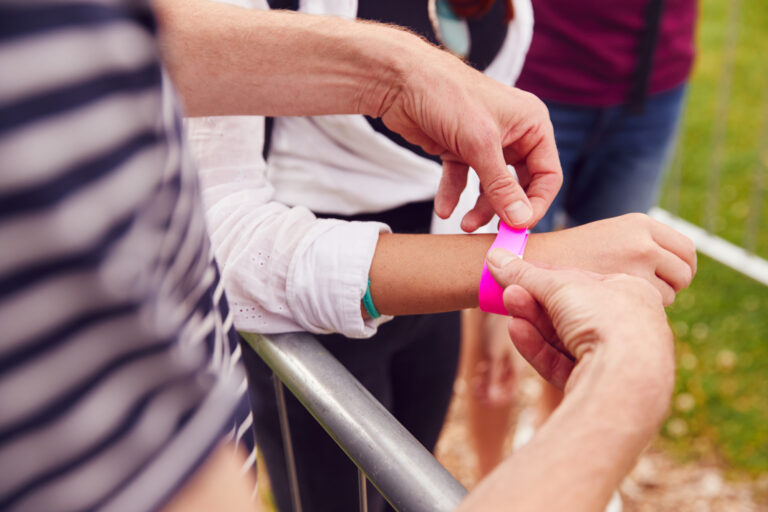
On Saturday, September 25, pub-goers in Breda did not have to get their QR code scanned at every pub. Instead, they all got really cool wristbands that allowed them into any pub! ๐Ÿฅณ

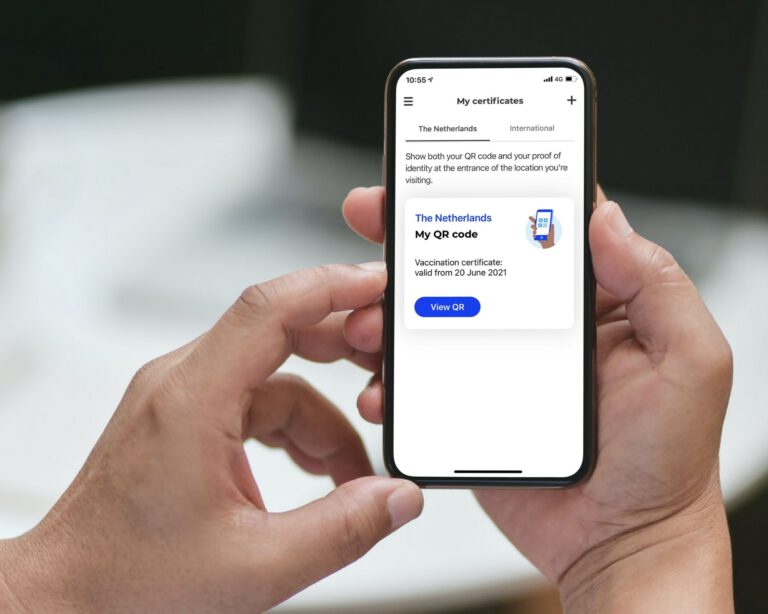
From September 25, measures have been put in place for many establishments to check people’s corona certificates or negative tests before letting them into a venue.

KHN Breda and the municipality have figured out a way to make this process easier! Upon first entering a pub, a QR code has to be scanned into the CoronaCheck app. Then, people received a wristband that allowed them to enter any pub or catering establishment. ๐Ÿป

Marijn van Dijke of Koninklijke HORECA Nederland (KHN), Breda region said, “It’s a huge success. We’re getting calls from other cities that want this too.”

Checkpoints

The wristbands were given at checkpoints throughout the centre of Breda. It’s not clear how many wristbands were given out that day, but van Dijke estimated it was in the thousands. “It worked like a train,” said van Dijke to RTL Nieuws.

Other cities are also lovin’ it

Other cities, such as Den Bosch and Eindhoven, also plan to start using this wristband system from next weekend onwards. ๐Ÿ™Œ

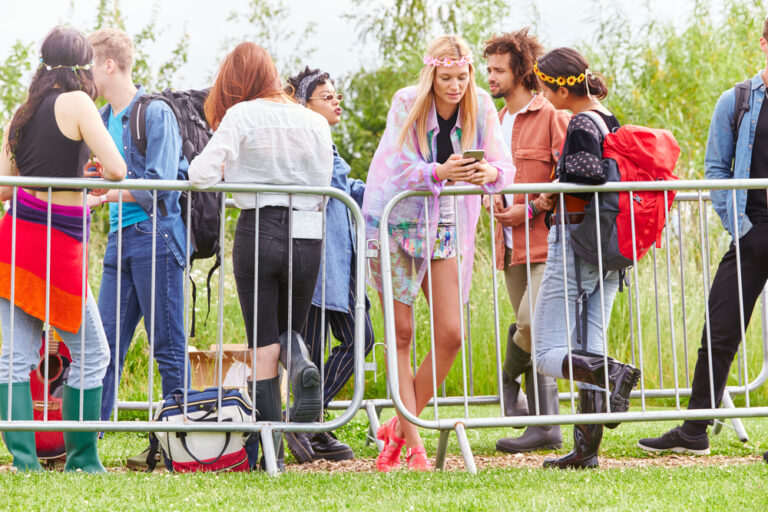
“This works particularly well for the pub hoppers. It’s almost like entering some kind of festival site. You have the QR code scanned once, you get a wristband and from that moment on you can just do your thing.”

What do you think about using wristbands for entry into HORECA venues? Tell us in the comments below!

Feature Image: monkeybusiness/Depositphotos

First jab in another EU country? Further waiting required for a green checkmark

People who received their first dose of the coronavirus vaccine in an EU country other than the Netherlands, and their second shot at a GGD location in the Netherlands, cannot receive a QR code through the Dutch CoronaCheck app as of yet.

While the technical side of the problem has already been resolved, it is because of legal reasons that this still isn’t possible, reports NU.nl. The number of people affected by this issue in the Netherlands is currently unknown.

In a letter to the parliament, Dutch Health Minister, Hugo de Jonge, stated that the solution should be ready by the first half of October. Individuals affected by the issue will then have to complete an online form available at the CoronaCheck website. Once their details are verified, they will receive the QR code via a secure e-mail. ๐Ÿ“ง

Further limitations

The issues with coronavirus certificates don’t end there. People who tested positive for the coronavirus at a non-GGD location who are seeking a recovery certificate also cannot get the green tick through the app right now. Likewise, these individuals must fill in an online form to receive a QR code.

The CoronaCheck process also shows limitations for people who were vaccinated outside the EU โ€” they currently have to schedule an appointment in Utrecht for verification. For those who cannot physically come to Utrecht, there is no other solution.

As of September 25, the corona pass is required to enter cafรฉs, restaurants, and other establishments.

Follow DutchReview on Facebook and Instagram for the latest news from the Netherlands!

Feature Image: DutchReview/Canva

Saturday saw a large-scale debut of the CoronaCheck app โ€” here’s how it went

Saturday marked the first day to enforce the latest coronavirus measures in the Netherlands: dropping the 1.5-metre rule and allowing festivals, concerts, and clubs to reopen with larger capacities as long as attendees show proof of vaccination or negative coronavirus test result.

While the large-scale debut of the CoronaCheck app went generally smoothly according to the NOS, some reports of the app crashing did surface on that day. ๐Ÿคณ 

People who attempted to generate a QR code for events received a โ€œCould you try again later?โ€ error screen. So what went wrong?

DDoS and overloaded app

According to the Dutch Ministry of Health, as reported by the NOS, the CoronaCheck app failure was attributed to DDoS (distributed denial-of-service) attacks โ€” a cyber-attack in which normal traffic of a targeted server is disrupted. In addition, a large number of users overloaded the app at times. 

Overall satisfied

While the app malfunction caused long queue lines outside venues, satisfaction seems to have prevailed as โ€œmost people are not bothered by it,โ€ told a ministry spokesperson RTL Nieuws.

Some disruptions

The only exceptions to the overall calm Saturday were a restaurant closure in Nijmegen and an official report against a cafรฉ in Utrecht, where both establishments announced they will not be checking coronavirus passes.

How do you think this weekend went in the Netherlands in light of the new relaxations? Tell us more in the comments below!

Feature Image: monkeybusiness/Depositphotos

Dutch prime minister becomes target of organised crime

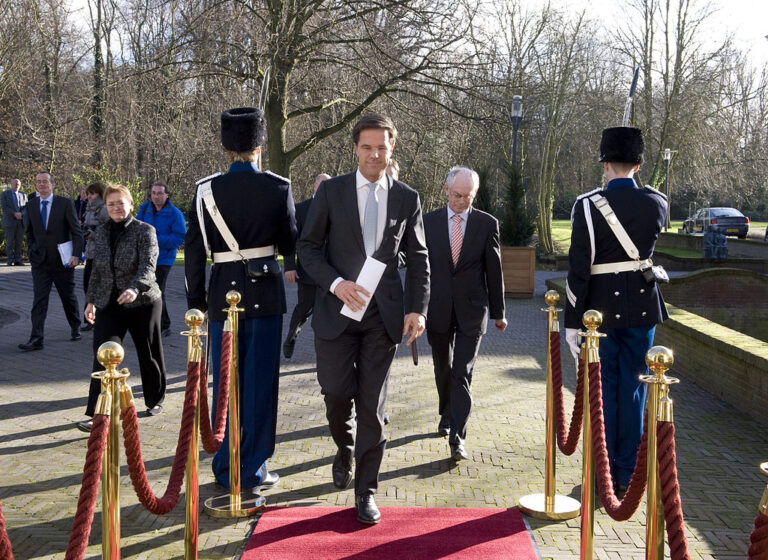
The outgoing Dutch prime minister, Mark Rutte, is being targeted by members of organised crime. As a result, heavy security measures are being enforced to protect him.

According to sources close to De Telegraaf, “spotters”โ€”or hitmenโ€”were seen lurking in close vicinity of Rutte, possibly to attack or kidnap him.

These “spotters” are suspected to be involved with the Mocro Mafia โ€” a collective of Moroccan, Antillean, and Dutch criminal organisations known mainly for cocaine trafficking.

No more casual cycling for Rutte?

Rutte is known for not liking heavy personal security around him, preferring to cycle through The Hague on his bike. Now he is being protected with extra visible and invisible security measures.

Heightened security for many

Many lawyers, judges, journalists, law enforcement officers, and family members in the Netherlands are already under protection from cocaine-dealing organisations due to previous threats.

In the light of the latest events as well as the murders of Peter R. de Vries and Derk Wiersum, more personal security measures are expected to become increasingly common in the Netherlands.

Police crime analysts believe that these murders, as well as the potential kidnapping or attack on Rutte, are used by criminals to scare people.

No comment

The Dutch Government Information Service (RVD) is the body that deals with possible threats against the prime minister. However, they have declined to comment on the threats stating, “We never make statements about security situations and security measures.”

The National Coordinator for Security and Counterterrorism also declined to make a statement about the situation.

Follow DutchReview on Facebook for more news and updates.

Feature Image: De minister-president/Wikimedia Commons/CC2.0

Dutch ombudswoman wishes to criminalise bullying in the Netherlands

Everyone knows the harmful effects that bullying can have on a person โ€” especially on children. That’s why Children’s Ombudswoman, Margrite Kalverboer, wishes to make bullying a criminal offence in the Netherlands.

According to RTL Nieuws, Kalverboer wishes to criminalise bullying amongst children in the Netherlands. She believes that not enough is being done to help children who are bullied currently, and that stricter measures should be made to combat the issue.

“Maybe bullying protocols are not enough, and you have to criminalise bullying,” said Kalverboer in an interview with AD. ๐Ÿ™…๐Ÿปโ€โ™€๏ธ

She continued, “The consequences of bullying are life-long.”

Bullying not taken seriously

Kalverboer notes that bullying is often downplayed and not taken seriously. She believes that although some people believe that being bullied “makes you tough” it actually makes your life much more difficult.

In order to better understand the causes, effects, and approaches to bullying, an online questionnaire was made on the Children’s Ombudsman (kinderombudsman) website.

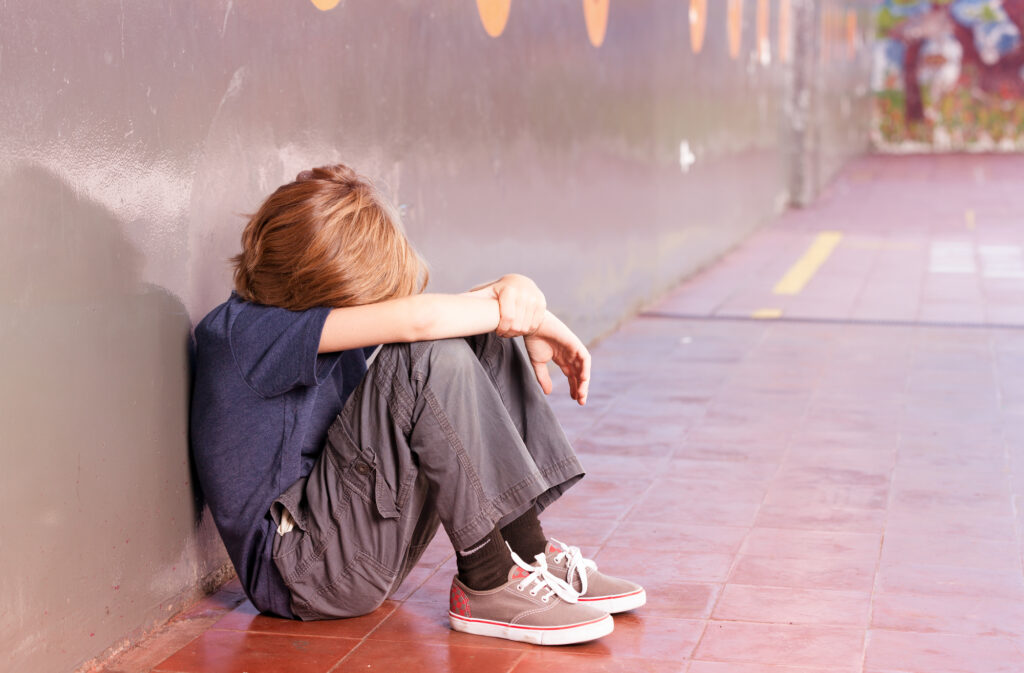
child-sitting-alone-on-floor
The impacts of bullying can be severe and long-lasting. Image: jovannig/Depositphotos

Children are the experts

“Unfortunately, children are the experts by experience when it comes to bullying,” says Kalverboer. She believes that their opinions are extremely vital to understanding the phenomenon.

She also adds that adults are not the best source, as they may underestimate the issue because it’s been a long time since they were bullied themselves and they don’t remember how bad it was.

Conversations about bullying rise by 50%

According to De Kindertelefoon, a Dutch children’s hotline, conversations about bullying rose by 50% since schools reopened after the second lockdown in April 2020.

It was also reported that 66% of children didn’t feel helped after talking to someone about the issue.

Many children suffer from anxiety, loneliness, and low self-esteem as a result of bullying. Kalverboer wishes to find solutions to the bullying problem โ€” one potential solution is by making it a crime.

What do you think about criminalising bullying in the Netherlands? Tell us in the comments below!

Feature Image: belchonock/Depositphotos

Send nudes? 750,000 people sexually harassed online in the Netherlands in 2020

While the streets of the Netherlands may feel considerably safer for some internationals when it comes to sexual harassment, it seems that no one’s DM’s are safe.

In 2020, a whopping 750,000 people in the Netherlands were the victims of online sexual harassment, a study by CBS (Statistics Netherlands) has found.

This amounts to 5% of the Dutch population and can you guess who were the most badly affected โ€” women! (Shocking!) In particular, young women between the ages of 16 and 18 suffered the most, accounting for 30% of the claims.

Coming in second place were women between the ages of 18-24, who made up to 24% of the claims.

Indeed, the study found that women were 1.5 times more likely to suffer online sexual harassment than men, with 6.7% of women surveyed saying they had been harassed online. This percentage was lower for men, standing at 4.1%.

Bisexual women and gay men badly harassed

The study also revealed that, of those within the LGBTQIA+ community, bisexual women and gay men suffered the most when it came to unsolicited DM suitors.

And what was it exactly that people were suffering? A lot of thirsty, desperate, and dirty-minded people it appears.

Unwanted nudes, videos and comments

Of those who took part in the survey, 2.1% had to deal with sexually offensive jokes or comments online, 2% were faced with unwanted nudes and sexually explicit videos, 1.8% had to deal with people insisting that they date them, and 1.6% were asked to send nude photos or videos. ๐Ÿ™„

Yikes. Are you shocked by these figures? Tell us your thoughts in the comments below!

Feature Image: Daria Nepriakhina/Unsplash

Extra measures needed for Netherlands to meet new European climate requirements

New calculations by the Netherlands Environmental Assessment Agency (PBL) conclude that Dutch sustainability plans for the future need to be reevaluated and reformed to meet new European requirements, reports RTL Nieuws.

The calculations were made at the request of the Ministry of Economic Affairs and Climate Policy and the House of Representatives.

READ MORE | Did the Netherlands break the Climate Accords? Environmentalists angered by budget decisions

CO2 emissions to be reduced by 55%

It is especially the proposal for the Fit for 55 package that has “significant consequences for Dutch climate and energy policy” according to the PBL.

The ‘Fit for 55’ plan was proposed by the Vice-President of the European Commission, Frans Timmermans, in July this year and aims to reduce all CO2 emissions by 55% by 2030.

Ultimately, in 2050, the European economy should be climate neutral. ๐Ÿšฒ

For the Netherlands to meet the Fit for 55 goals, new measures must be implemented in, for example, the Dutch sustainability plans for industry. Time om de mouwen op te stropen! (to roll up the sleeves!).

Climate Accords vs European policies

The PBL assessment also explains that the Netherlands is committed to “a temporary important role for the capture and storage of CO2 and the use of blue hydrogen” via the Paris Climate Accords. Blue hydrogen is relatively cheap and uses coal and natural gas as raw materials.

However, the European climate requirements focus on green hydrogen as well as strict targets for renewable heat and energy savings. In contrast to blue hydrogen, green hydrogen is centred around renewable energy like turbines and (could it be more Dutch?) windmills!

As a result, PBL suggests that the Netherlands should place more windmills near the sea. ๐ŸŒฌ๏ธ

More expensive energy transition ahead

The new European climate requirements could make the Dutch energy transition more expensive, warns the PBL. Green hydrogen is more costly than blue and the Netherlands will need to generate even more renewable energy.

Currently, Europe overall is aiming at 40% more renewable energy, while the Netherlands hopes for 25%.

What do you think of the Fit for 55 plan? Will the Netherlands make the targets? Tell us in the comments below!

Feature Image: Animaflora-PicsStock/Depositphotos

ID, please โ€” age limit being demanded for Dutch energy drinks

People in the Netherlands can waltz into any store, except for Aldi and Lidl, and buy the energy drink of their choice โ€” but many supermarket chains are calling for an age limit on energy drinks.

European consumer rights advocacy group Foodwatch, along with several Dutch supermarkets such as Albert Heijn, Jumbo, and Plus, are calling for strict age limits rules around energy drinks sales in the Netherlands. ๐Ÿ“ฃ

Currently, the age limit for energy drinks in Aldi and Lidl is 14 years old. The list of supermarkets mentioned above โ€” without the age limit โ€” make up for 90% of total energy drink sales in the Netherlands.

The stores are in agreement that rules should be built around these products, as long as all chains participate.

In 2018, a motion was raised by the Dutch Association for Pediatrics (NVK) to set limitations around Dutch energy drinks sales based on reports that the drinks contain high doses of caffeine, sugar, and taurine.

High dosages of these chemicals can lead to restlessness, fatigue, and cardiac arrhythmias, which can send underage kids to emergency rooms.

Some drinks promise wings or a monster-like behaviour but never mention hospitalization I suppose. ๐Ÿ™„

Regulations who?

Which Dutch official(s) or governmental organization can take a closer look at this argument? Well, for starters, the Dutch Central Food Trade Bureau (CBL) already called it quits on the matter, as they announced that they donโ€™t want to be involved in this discussion. Doei. ๐Ÿƒโ€โ™‚๏ธ 

Next on the legislatorsโ€™ list is the Dutch Ministry of Health, which is being called out by Foodwatch for an examination of the situation in the Netherlands.

However, back in 2018, the ministry indicated they donโ€™t feel thereโ€™s a need for an age limit. Time to re-examine, maybe? ๐Ÿ”Ž

RIVM study

The Dutch National Institute for Public Health and the Environment (RIVM) had already released study findings in 2018 regarding the health hazards of energy drinks for minors.

The results confirmed the Netherlands Nutrition Centerโ€™s advice for 13 to 18-year-olds that it is better not to consume energy drinks at all โ€” or a drink maximum of one can per day.

What do you think of having an age limit on energy drinks sales in the Netherlands? Tell us in the comments below!

Feature Image: mary_smn/Depositphotos