Home Blog Page 574

11 top tips to nail learning Dutch online

This year has brought about a lot of change. However, some things stay the same: like the Netherlands, which is still a Dutch-speaking country, and therefore many expats are still looking for ways to learn the language. 

But not only are we interacting with our family members and colleagues through our computer screens, but also with our teachers. Many Dutch language courses have migrated from the classroom to a Zoom call. 

Don’t be shy, participate (in Dutch!)

Perhaps one of the biggest hurdles when it comes to learning a language is confidence. The process of learning Dutch inevitably involves speaking it very poorly — and many of us are not up for that constant hit to our egos. 

Practicing your skills in the real world is often forgotten. Using a language doesn’t usually take place online. This means that putting your skills to the test in the real world is still a very important element.

Put all that theory into practice and try and complete your interactions with your barista or cashier in Dutch. What’s great about these kinds of conversations is that they are “dead ended,” meaning that they’re not only predictable but also limited given the circumstances. 

This way, you don’t need to fear running out of things to say and you can also get over your fear of messing up in front of natives. 

Take advantage of the flexibility of online lessons

What’s great about online lessons is that you can suit them to your schedule. Are you a night owl who feels most productive after dinner? Schedule an evening lesson. Are you an early bird? Get yourself that morning time slot! 

This is an element of online learning that students could really stand to benefit from. Make the most of the flexibility that online lessons offer. Don’t stick to the model of lessons at a fixed time that isn’t convenient. Instead, plan lessons when you’ll be most focused and ready to give it your all.

Find yourself a nice quiet corner

Photo-of-study-desk-learning-Dutch-online-Dutch-Ready
Get yourself set up in a nice quiet space. Image: Nick Morrison/Unsplash.

This one may be obvious, but just remember that while it’s great to find yourself at home, you don’t need to be in the middle of your house’s latest drama segment. 

Did someone find a mouse in the kitchen? That’s unfortunate, best to study in your room. Did one housemate slap the other? Golly, you’d better remove yourself before the furniture goes flying — and you lose your concentration on de vs het.

After all, you have limited cognitive resources and who wants to waste them on household drama?

Learn actively 

However, just because you may find yourself precariously close to your bed, this doesn’t mean you should burrow yourself into the sheets and watch your lesson.

There are two types of screen time: passive and active. Passive screen time is when you can embrace your inner couch potato, whereas active screen time is — you guessed it — when you’re more alert and take in more information. 

It’s important to make sure your screen time when learning Dutch online is active, and the best way to ensure this is through both your mind and body.

Try to treat online lessons like offline lessons and make sure you’re body posture and attitude reflect a learning intention. Both posture and attitude greatly influence the brain’s ability to take up new information. 

Add offline learning to your online learning

photo-of-checklist
Add offline learning to your online learning. Image: Glenn Carstens/Unsplash.

It is also important to remember that learning actively often includes taking things off the screen during a lesson. Many studies have shown the benefit of handwriting over typing in terms of memory consolidation. Our brains are far more likely to remember something if we write it down as opposed to typing it out. 

It’s also great to remind yourself that your learning doesn’t stop once you close your laptop. Make sure to post handy post-it notes on your household items. This directly wires the object to the Dutch word in your brain.

You can also throw some stickers up next to your bathroom mirror. Dutch is Dutch — even if it’s spoken with a mouthful of toothpaste.

Turn off Google Translate

Online learning doesn’t just happen during a lesson, it’s also every time you open a webpage or look something up. Challenge yourself to understand Dutch by disabling your trusty friend Google Translate.

This one is going to be hard, but grab yourself a strong coffee, click that button and try to spend some time immersed in the Dutch web. You’ll be surprised at how much you can understand with a bit of blinking and squinting. 

Make the most of your tools 

photo-of-person-watching-Netflix-in-Dutch
Watch Netflix in Dutch! Image: Mollie Sivaram/Unsplash

Unlike Google Translate, your computer can also offer some helpful tools when it comes to learning Dutch. Take streaming services such as Netflix for example. Search for films/series in Dutch and challenge yourself. Watching Dutch Netflix with Dutch subtitles is extra learning time without the extra effort.

If you’re seriously doubting your abilities you can always opt for English subtitles! You could also go vice versa and watch shows in your native tongue with Dutch subtitles. 

Record and review (with permission)

In keeping with this theme, you can also ask your teachers if it is okay to record their online lesson. This way, you can look back over the lesson when revising your notes. Certain services allow you to screen record — just always make sure to ask for permission! 

Make a schedule — and stick to it! 

photo-of-person-writing-in-planner
Organise your lessons and plan what you want to learn. Image: Karolina Grabowska/Pexels.

Draw yourself up a daily schedule. Decide what you are going to learn and let it be something that adds to some semblance of structure in your life.

Set goals and celebrate milestones 

In drawing up a schedule, you can also set goals for yourself. Even better? You can set the goals together with your teacher so that you can focus on learning anything that you may need specifically.

Make sure your goals are SMART: Specific, Measurable, Attainable, Relevant and Time-bound.

Learning Dutch can be challenging but it’s also rewarding — and it’s important not to forget that. Did you achieve everything you wanted this week? Celebrate with a doughnut! Be kind to yourself and acknowledge your mad skills.

Find a tutor that is right for you

Learning Dutch is a service that you pay for, so you should also make sure you’re getting your money’s worth. Does their teaching style suit your learning style? Do the two of you see eye to eye when it comes to what it is you want to learn? Do you get along? 

All of these elements play a key role when it comes to how much you enjoy the lessons and how quickly you can make progress. 

Making sure that your teacher fits you in terms of your learning style, their personality and the like is important not only to make sure that the lessons best suit you and will lead to fast progress. It’s also key in terms of making learning fun. Your Dutch tutor is ultimately there to help you, make sure you found yourself the right one!


There are good reasons why you should embrace online Dutch courses. For example, you don’t have to worry about missing your bus, or getting stuck in the rain.

Online classes also don’t require you to be in the same country as your tutor. Thanks to their flexibility, you never have to miss a lesson and you can always stay up to date with your Dutch learning, wherever in the world you are.

What are your best tips for learning Dutch online? Tell us your thoughts in the comments below!

Feature Image: Julia M Cameron/Pexels 

Restaurant industry threatens to open on January 17 and stay open

1

Restaurants and cafes in 50 municipalities are threatening to open their doors on January 17, regardless of coronavirus measures. 

The restaurant industry is fed up, according to Koninklijke Horeca Nederland (KHN). The NOS reports that restaurants plan to open and stay open in the new year, whether or not it’s allowed.

The statement from KHN follows the announcement made last week by Minister of Heath Hugo de Jonge that we have to assume we’ll remain in partial lockdown until mid-January.

This timeframe won’t work for the business owners, who have already reached a breaking point, as their cries for government support throughout the coronavirus crisis have gone unanswered.

“For the time being, the uncertainty and pain do not seem to reach the cabinet,” the national organization wrote in a statement earlier this week. Now, many business owners say they’re left with no option but to disobey the rules.

“The water is no longer up to the lips”

“The now absolute financial necessity, the lack of future prospects from the cabinet and, in particular, the inconsistent government policy, leave us no choice: we will open on 17 January 2021 under strict conditions of the KHN protocol and remain open,” the press release states.

“For the catering industry, the water is no longer up to the lips, now it flows into the mouth,” said Johan de Vos, spokesperson for the business owners, in a statement last week. “We are about to drown out.”

Who is participating?

While KHN’s national organisation does not support the campaign, members of 50 local branches (out of 230) are participating. It’s unclear how many companies are involved but the initiator of the movement speaks of “thousands.”

Businesses from KHN branches in Breda, Maastricht, Leiden, Leeuwarden, Eindhoven, Arnhem, Nijmegen, and Alkmaar are all joining in the campaign.

Local branches in the country’s largest cities — Amsterdam, Rotterdam, The Hague, and Utrecht — on the other hand, are not.

The cabinet’s response

A government spokesperson has responded to KHN’s announcement, saying that they are following the course of coronavirus in determining next steps.

The cabinet plans to make a decision regarding the coming period next week, but this is susceptible to change based on developments in the virus.

What do you think of the restaurant industry opening in spite of government measures? Tell us your thoughts in the comments below!

Feature Image: Kaboompics.com/Pexels

One-third of Dutch municipalities have never had a female mayor

Of the 355 municipalities in the Netherlands, one-third have never appointed a female mayor, new research has found. 

This includes Rotterdam, Eindhoven, Groningen, Tilburg and Breda, who make up five of the ten largest cities in the Netherlands.

To make matter worse, there are still 103 municipalities that currently don’t have any female aldermen elected.

Meanwhile, Druten in Gelderland, Staphorst in Overijssel and the Brabant municipalities of Woensdrecht and Mill and Sint Hubert have never had a female councillor.

The figures, compiled by knowledge platform De Collegetafel for the trade magazine Binnenlands Bestuur paint a disappointing picture of the Netherlands and equality in positions of power.

How are mayors appointed in the Netherlands?

Mayors in the Netherlands are not elected via popular vote. Instead, the city council presents a shortlist of mayors to the King and the Minister of the Interior and Kingdom Relations who then make the final appointment. Each term is six years, and a mayor can be reappointed after that period.

Female mayors slowly increasing

Of the mayors in Dutch municipalities, females now make up almost one-quarter of the total. There are currently 85 serving mayors who are female — but it’s taken a long time to get to that number.

Miranda de Vries, mayor of Etten-Leur and member of the Council for Public Administration says that diversity on boards is important. Not just for gender, but also for different ages and ethnic backgrounds.

“In order to achieve that, it is sometimes necessary to make extra efforts,” she told NOS. “For example, not only to wait and see which people will apply for a position but also to actively approach some and make them believe they are suitable.”

She says that female mayors in major cities act as vital role models. “It is really important that Amsterdam, in the person of Femke Halsema, now has a female mayor for the first time in history. And that Sharon Dijksma has been appointed in Utrecht as the third woman in history. I also say it during school visits. to girls: “If I can become mayor, why not you?”

Are you surprised by the lack of female mayors in the Netherlands? Tell us your thoughts in the comments below!

Feature Image: Gemeente Amsterdam/Supplied

PostNL reaches maximum capacity, packages left behind at webshops

3

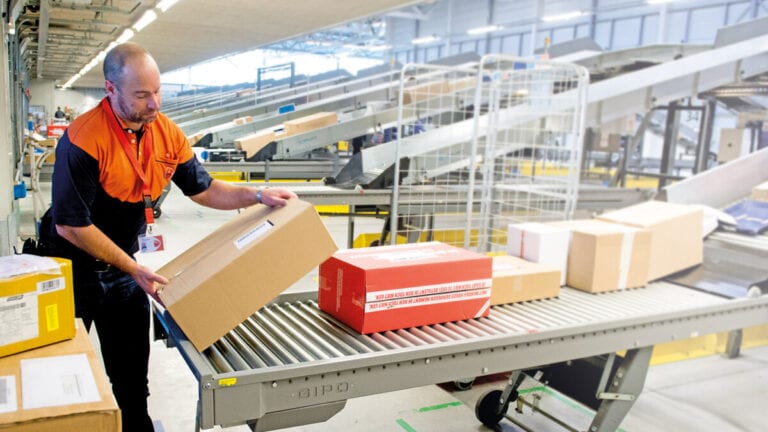
This week has made history for PostNL as the postal service has delivered 10 million packages and can no longer process all orders. 

The service has had to leave packages behind at webshops because it has nowhere to place and process all the orders.

The company tells the NOS that this is the first time this has happened. “Unfortunately, we now have to say to webshops: sorry, this is what we can collect, the rest we will do a day later.”

Some webshops are now indicating to customers that they may have to wait longer to receive an order, however, this depends on the shop. “Some indicate: allow for a longer delivery time. Or they give priority to certain products.”

Black Friday crowds and closures

The postal service tells the NOS that it believes the boom in online orders may have been caused by the recent closures of shopping streets following heavy crowding in city centres.

Mayors called on people to avoid the crowded city streets and instead order packages online. This, in combination with the coronavirus and beginning of Sinterklaas celebrations, has caused a record-breaking strain on PostNL.

The service has asked that if anyone wants to return a package, they do so after the celebration of Sinterklaas.

Other services still running

However, not everyone’s Sinterklaas packages will be delayed. Services such as DHL are still able to serve their current webshop customers. Although, they have said they will not be taking on any new businesses for the time being due to the high pressure that the service is under.

Webshops, such as Thuiswinkel.org have told the NOS that “of course it sucks, but there are also circumstances that were not entirely foreseen.” The company also has other courier services to rely on, such as DHL, DPD and GLS.

Other webshops also believe PostNL’s delays won’t affect their delivery times. Bol.com has also claimed that “the vast majority of the packages will be delivered on time.”

Phew, that’s a lot of packages! Will these delays affect you? Let us know your thoughts in the comments below!

Feature Image: PostNL/Supplied.

Two people stabbed in The Hague supermarket, suspect remains at large

0

Two people were injured in a stabbing incident on Wednesday that took place in the Albert Heijn on Grote Marktstraat, The Hague. Police warn that the suspect is still on the loose.

Emergency services rushed to the scene around noon. The two victims were immediately rushed to hospital, one of whom was an employee of the supermarket, reports NU. The current condition of the victims has not been disclosed.

The fire

Emergency services received reports of a fire at the same place and time, which was extinguished by emergency personnel. Police are not sure if there was a connection between the fire and the stabbing, but this is currently being investigated. The circumstances around the cause of the stabbings are also still unclear.

Suspect detained

The culprit fled the scene after the stabbing, and police hunted down the suspect with helicopters. He is described by police as a tall, thin, tanned man around 30 years old.

Witnesses say he was wearing a black jacket, tracksuit and grey shoes. The latest reports claim the suspect has now been detained by police.

Follow DutchReview on Facebook for more news.

Feature Image: DutchReview/Canva

Support for Zwarte Piet drops significantly, new survey finds

0

Support for Zwarte Piet has continued to decline throughout the Netherlands, the latest survey by I&O Research finds. 

The research firm carries out surveys on the matter of Zwarte Piet every two years in the Netherlands. In this year’s survey of almost 2,300 Dutch people, the polls have shown a significant drop for support of Zwarte Piet’s traditional appearance.

The percentage of people in favour of Zwarte Piet maintaining the black face makeup in 2020 is now 39%. Four years ago, this percentage was much higher at 65%.

A divisive topic

The Zwarte Piet debate in the Netherlands has been topical for quite a few years now. There are many who believe that Zwarte Piet embodies a racist colonial hangover, whilst others will argue that the figure is part of a harmless children’s tradition.

In spite of those who see Zwarte Piet as harmless, images of the figure have been banned from social media platforms such as Facebook and books depicting the character have been removed from Dutch public libraries.

Change the Piet’s appearance

One solution to the issue of Zwarte Piet has been to introduce alternative Pieten such as Sootie Piet or Grey Piet. Some alternatives have been met with more success than others.

I&O Researches survey found that the number of people who would be in favour of alternative Pieten — such as Sootie Piet — has increased, with the percentages rising from 44% to 50%, half of all Dutchies.

Age groups that saw the most drastic change in regards to alternative Zwarte Pieten, were those in the 50-64 and over 65’s category.

In 2018, 62% of over 65-year-olds were in favour of Zwarte Pieten with black face paint. In 2020, this has dropped to 44%. Similarly, among those between 50-64, support for black face Zwarte Piet dropped from 53% to 38%.

What do you think of the findings of this survey? Tell us your thoughts in the comments below.

Feature Image:Image: Ziko van Dijk/Wikimedia Commons/CC4.0


Dutch cabinet’s vaccination plan criticised as chaotic and unrealistic

0

Health Minister Hugo de Jonge announced that vaccinations will begin in the Netherlands on January 4 “if all goes well”. But experts are calling this unrealistic, saying that the Dutch vaccination plan is chaotic.

“There is nothing to indicate that we are ready,” says Jan Fransoo, professor of logistics at Tilburg University and Eindhoven University of Technology. “Nothing has yet been announced about which strategy RIVM has chosen.”

The RIVM is still investigating options for distributing the vaccine on mass, which Fransoo has criticized as too slow, reports NOS. “I don’t understand the fact that RIVM is so vague about logistics. We’ve known for almost a year that these vaccines are being developed.”

Falling behind

Piet Fortuin, chairman of the CNV union, fears that the Netherlands is going to “fall behind dramatically” as was the case with testing. “The vaccination of millions of people is an immense, unprecedented operation unlike anything seen before in the Netherlands.”

Fortuin wants a military implementation plan like Germany’s, where hundreds of vaccination streets have already been set up in sports halls and stadiums.

“Everything will be ready there in two weeks. The Netherlands waits quietly for the vaccine to be delivered ready-made. Only then to see how the implementation is going. This is a pure waste of time. If we continue like this, it will take another year before everyone has been vaccinated,” the chairman says.

Herman van der Weide, former Chief Inspector of Health Care, predicts similar chaos around vaccinations in the Netherlands and doubts systems will be ready by January 4. “Unless they find another Pandora’s box, I don’t know how they’re going to do it.”

Van Der Weide believes the Netherlands should have started preparing months ago, as Germany did in July. There, volunteers have already been trained to vaccinate the public.

Impact on the economy

Although cabinet has made it clear that the elderly and vulnerable will be the first to be vaccinated, no clear implementation plan has been announced. “Just saying ‘it will be fine’ is not enough,” says Fortuin, because the delays that such incoordination could cause will only damage the economy further.

CNV argues that “the cabinet must therefore speed up the conversion of test streets to vaccination streets,” so that people can go back to work as soon as possible.

What do you think of the Dutch cabinet’s vaccination plan? Share your thoughts in the comments below.

Feature Image: Polina Tankilevitch/Pexels

Increase in Polish women seeking abortion in Netherlands following strict ruling in Poland

0

On October 22 2020 it was ruled that women in Poland could only receive an abortion in cases of rape, incest or when a woman’s life is at risk. As a result, the Netherlands has experienced a surge in the number of Polish women traveling to the country for an abortion. 

Once the ruling comes into effect, abortions in cases where the fetus suffers unsurvivable birth defects will no longer be legal. It is estimated that this is the reasoning behind 97% of abortions in Poland.

As a consequence, Dutch abortion organisations such as the Abortion Network Amsterdam (ANA) have received a tripling of requests for help from Polish women in the past month.

Polish doctors already refusing

While the ruling has not yet come into law in Poland, many Polish doctors are already refusing to provide abortions on such grounds out of fear that they will face prosecution at a later date.

It is believed some Polish doctors use other methods to restrict access to abortion as well. “It is sometimes claimed that a woman has been pregnant longer than she really is, so that she is too late for an abortion” Mirjam van Heugten of the Abortion Network Amsterdam explains to the NOS.

This also makes access to abortion in the Netherlands difficult for Polish women as a Polish doctor’s permission is often required. “What makes it complicated is the permission of a Polish doctor. That is necessary for us to bridge the mandatory reflection period of five days.”

Abortions in the Netherlands

Dutch abortion services have seen a significant increase in the number of Polish women reaching out for help over the past two months.

The ANA, for example, noted that the organisations inbox began to fill immediately after the ruling. According to ANA’s figures, 187 Polish women were helped to receive an abortion in the Netherlands this year, 45 of which have occured since the October 22 ruling.

The Netherlands offers the broadest abortion legislation in the entire European Union and is therefore an important alternative for Polish women seeking abortion. In the Netherlands, an abortion may be performed — in theory— at up to 24 weeks (in practice this is 22).

Currently, Dutch organisations such as the ANA rely on donations in order to help cover the costs of abortions for Polish women.

Follow DutchReview on Facebook for the latest news and updates. 

Feature Image: Zuza Galczynska/Unsplash.

Dutch BOA’s not prepared for handing out face mask fines this week

0

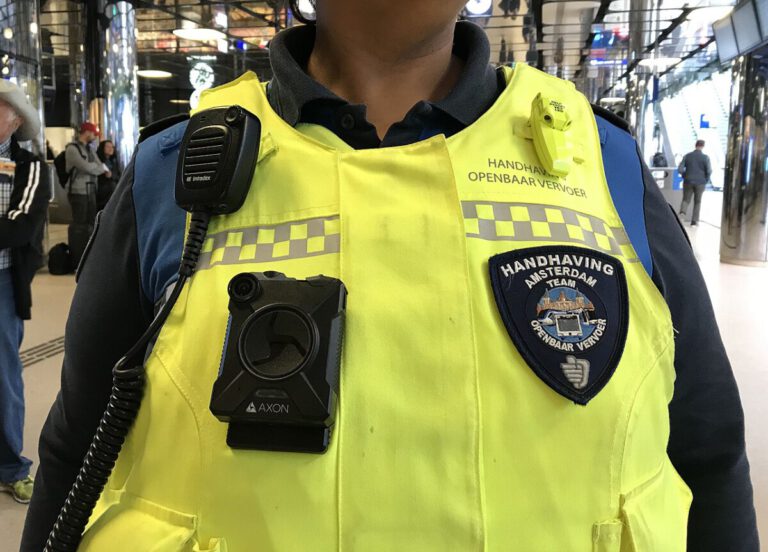
From yesterday, a mandate has been in place to wear face masks in public spaces around the Netherlands. While police are ready to fine those caught without one, BOA’s will not be ready for another week or more.

Despite months of warnings that the mandate would be implemented yesterday, somehow administrative procedures are not in order yet for municipal enforcement officers (BOA’s) to distribute mask fines, reports NU.

Ruud Kuin, chairman of the Dutch BOA Bond, explained on Tuesday that “every fine has a so-called fact code and that is not yet finished administratively for this fine.”

According to Kuin, it could take anywhere between one and two weeks for the BOA’s to be ready, but this will differ per region and city. Wonderful.

“A bit awkward”

BOA’s had not planned to be able to distribute fines by Tuesday, since the police will be initiating the fine system first. But Kuin does admit that the delay for BOA’s “comes across as a bit awkward”, especially since this will put more pressure on retailers to manage customers without masks.

Pressure on shopkeepers

Kuin says that already about 90% of people are wearing face masks, and that it is a good thing for people to keep each other accountable. “That seems like a very desirable situation to me.”

Hubert Bruls, chairman of the Security Council, didn’t seem concerned about the BOA’s delay either, arguing that in principle it is up to the shopkeepers to enforce the mask mandate. Sure, because what can go wrong there?

The mayor of Nijmegen similarly says that police should only be called in if retail employees are unable to convince someone without a mask to leave the store.

However, retailers have already indicated that they will not be fighting with customers over the mask mandate, as they do not want to put their employees in potentially violent situations.

What do you think of the boas delay? Tell us your thoughts in the comments below.

Feature Image: Sanderflight/Wikimedia Commons/CC4.0

Dutch vaccinations to begin on January 4 “if all goes well”

0

Health Minister Hugo de Jonge has announced that “if all goes well” vaccinations in the Netherlands will begin on January 4. 

The minister called it “a phase of hope and new perspective,” but whether the vaccines will indeed be ready for distribution on January 4 depends on the European Medicines Agency (EMA) and how quickly they are able to asses the safety of the vaccines.

De Jonge made it clear in a statement that the Dutch government will be prioritizing safety over speed, saying, “a word of caution: this really is the most favourable scenario. EMA and the European Commission are the first to act. And safety comes before speed.”

Final Procedures

Both the  BioNTech/Pfizer and Moderna vaccines have completed all testing procedures successfully and have officially applied for marketing authorization. The EMA expects to reach a conclusion on the BioNTech/Pfizer vaccine by December 29.

Should the EMA give it the green light, the European Commission will then decide, potentially before the new year, whether to allow distribution of the BioNTech/Pfizer vaccine in the European market.

A similar procedure will follow with the Moderna vaccine, but the EMA only expects to have a decision on it around mid-January.

Expected vaccination capacity

Almost one million doses of the BioNTech/Pfizer vaccine will arrive in the Netherlands this month, meaning that 450,000 people could potentially be vaccinated as soon as the go-ahead is given. A further 1.6 million doses will be delivered to the Netherlands in the first quarter of 2021.

Additionally, around 400,000 doses of the Moderna vaccine will arrive in the first quarter of the new year. Most likely, there will be more vaccines from other companies for EMA to assess in the second and third quarter, but no concrete numbers on these can be known yet.

Well prepared

The Netherlands has contracts with six different vaccine developers: BioNTech / Pfizer, Moderna, Janssen, AstraZeneca, Curevac and Sanofi. If all of these pass necessary tests and are admitted into the European market, over 50 million doses will be available for the Dutch, which is enough to vaccinate over 29 million people. A whopping €7 million has been reserved for these purchases.

Follow DutchReview on Facebook for more coronavirus news.

Feature Image: Dimitri Houtteman/Unsplash