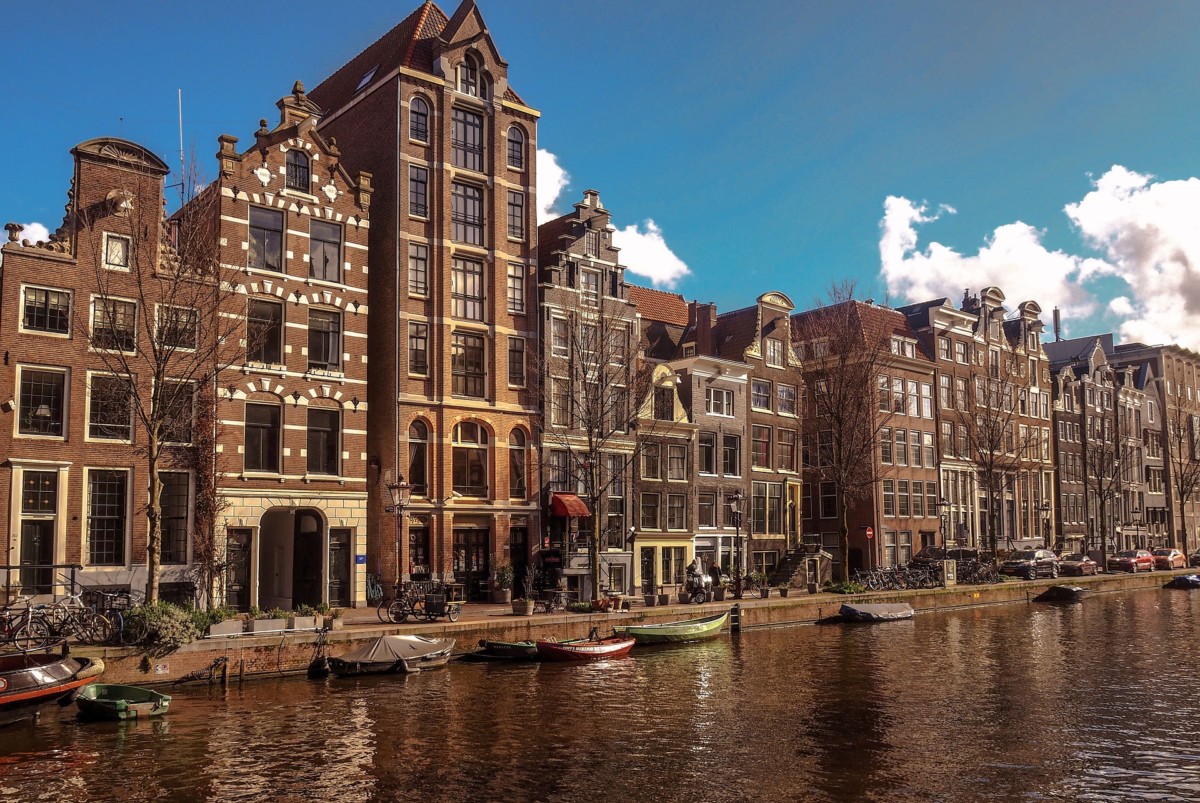
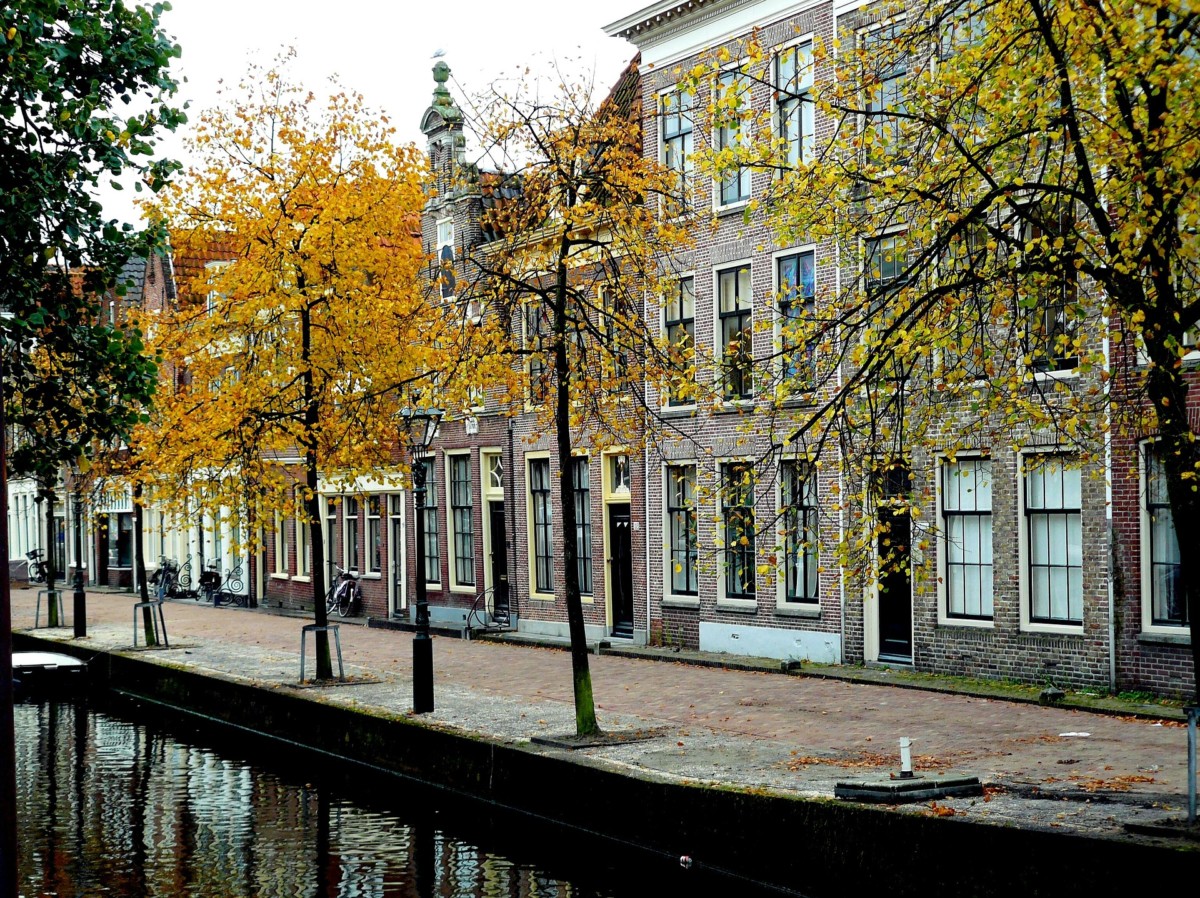
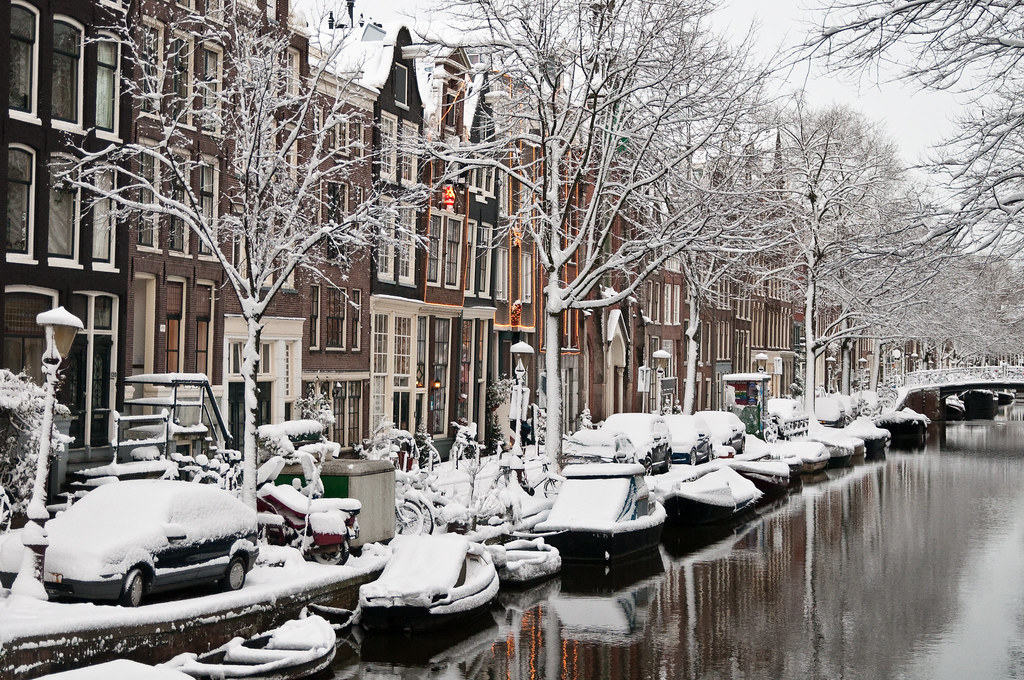
Summer is here. Finally. The days are longer and we spend as much time as possible outside soaking up those much longed-for sunrays.
Summer equals freedom and nothing compares to that feeling of sun in your face, wind in your hair, the smell of salty water and your feet buried in hot sand… how nice would it be to chill on a beach somewhere in Croatia, Spain, Turkey or Italy right now taking a cool dip in the water?
But what if you just started a new job and can’t get any time off work this summer or coronavirus has ruined your abroad travel plans? Not a problem at all. Believe it or not but you can still get that special holiday feeling in the city without spending big bucks to go somewhere far. Just take a summer staycation and sample all the fine urban beaches Amsterdam has to offer. Are you ready? Just lean back, dig a hole in the sand with your feet and take a sip of your ice-cold drink.
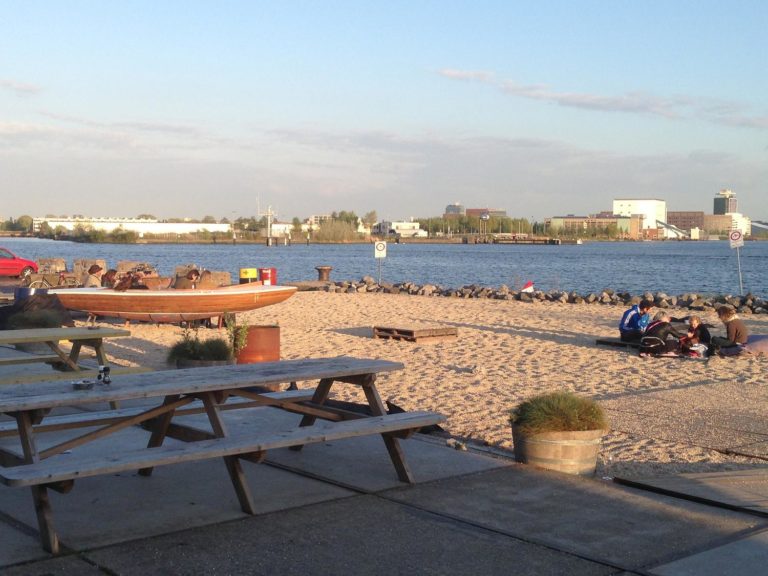
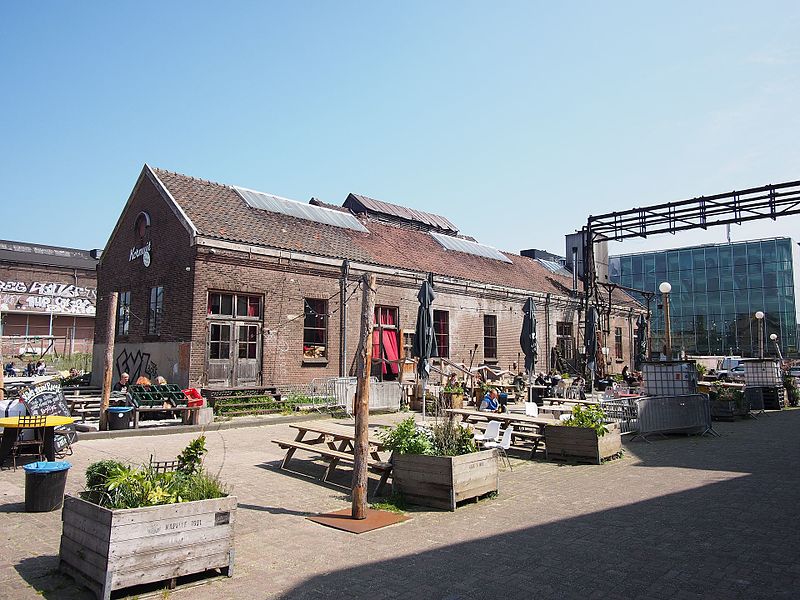
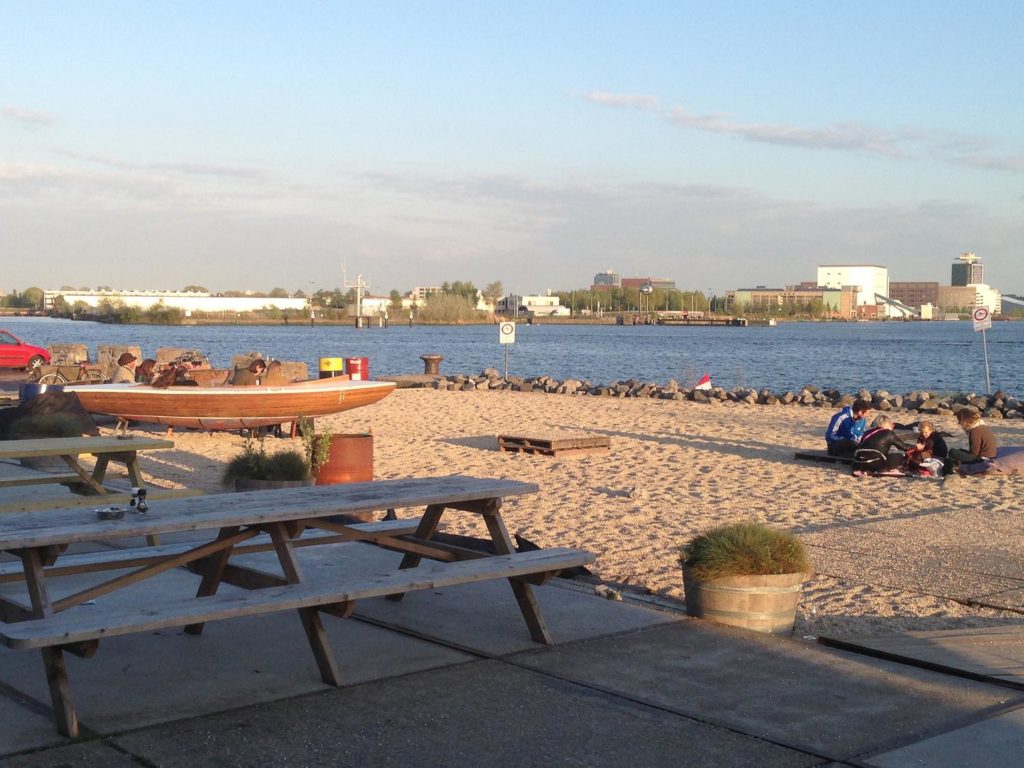
You’ll find this hip and quirky urban beach in the Eastern part of Amsterdam. When you turn around the corner towards the entrance you immediately feel like you just entered a little hippy village by the beach. An old warehouse and some junkyard art are a reminder of the industrial past of this area. You’ll find a selection of outdoor and indoor bars and a large sandy beach next to the canal with a rope swing to cool off on a hot day. When it gets a bit fresh at night you can also sit inside and enjoy some music, cocktails and food. Definitely a summer hotspot.
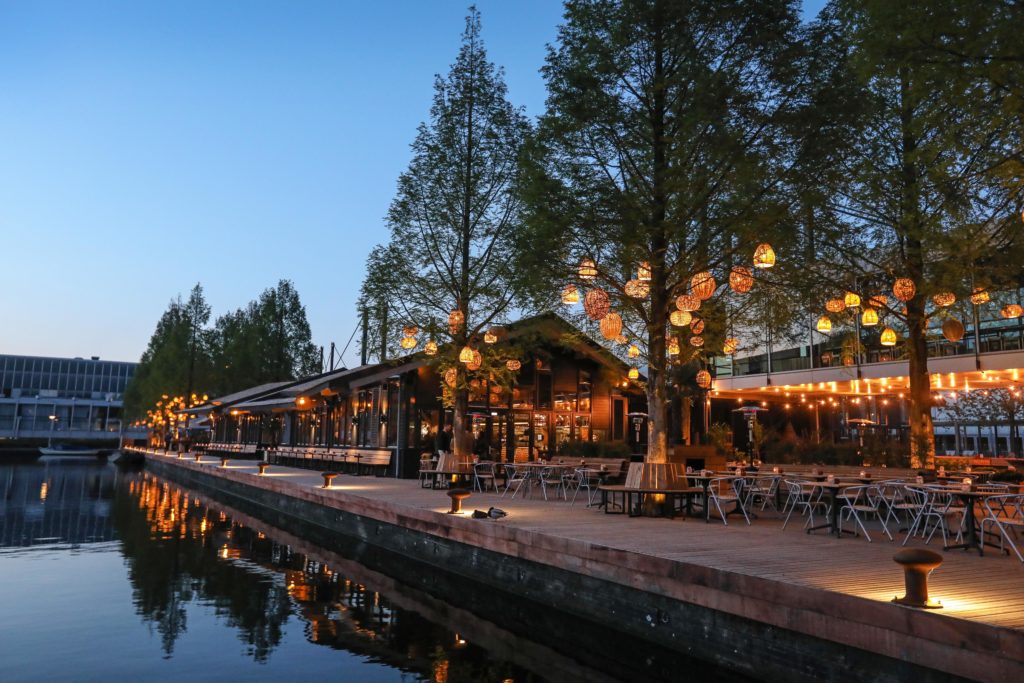
A trip to Amsterdam Noord always feels like a mini holiday. From Central Station, you can cross the IJ to NDSM and after a little walk you’ll find Pllek, a relaxed waterfront bar to kick back day and night. You can chill with a cold drink on one of the beanbags by the water enjoying the sun or you can watch the bonfire at night whilst listening to DJ’s spinning their tracks. Take in the views of the city from this fun hotspot across the water.
Pllek, your urban beach in Amsterdam Noord. Image: TijsB/Flickr
Strandzuid is another one of those urban beaches in the Southern part of the city located between Amsterdam RAI and the Beatrixpark. This inland beach complex is nestled next to a lake and boasts a chic restaurant with a spacious beer deck. Find your comfy sunbathing spot at the sandy beach or go for a little ping-pong match with your friends.
How about a cold drink at Strandzuid? Image: Supplied
A little bit further from the centre than the other urban beaches, Blijburg aan Zee offers plenty of holiday summer vibes. It is located on IJburg, a man-made island you can easily reach by tram or bike. Pack your towel, sunscreen and your sunglasses, then head over there for some serious frolicking in the sun. You can cool off in the water, sunbathe and order drinks and food at the cosy beach bar with a bohemian flair that offers live music by the campfire in the evening. Who needs Spain when you have Blijburg at your doorstep?
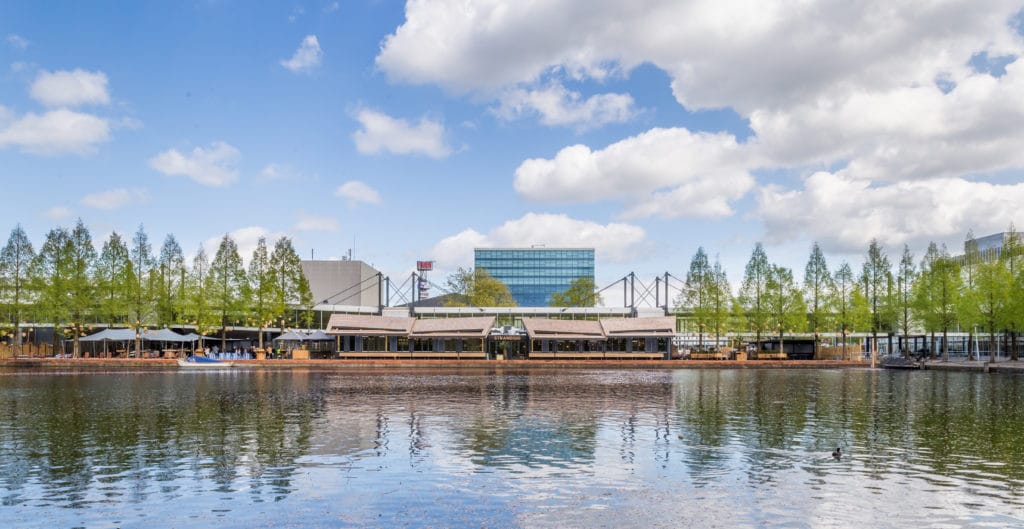
I know what you’re thinking now. NEMO is not a beach, it’s Amsterdam’s science centre. You are right BUT have you seen their giant roof terrace overlooking the water and the city’s rooftops? You’ll feel like you’re on a cruise ship with a fancy drink in your hand. The deck chairs, water features and sandpits add to your holiday feeling and you can just sit back, relax and enjoy your cool ice cream on a warm day in the city. Lots of photo ops of the stunning views.
Well, there it is – no need to take a plane when you can jump on a bike and explore the many unique little staycation spots found throughout Amsterdam. Remember though, this is the Netherlands, so while a big sun hat is optional, an umbrella is not.
Did we miss any urban beaches or summer hotspots? Let us know in the comments!
Feature Image: TijsB/Flickr
Editor’s Note: This article was initially published in May 2017, and was fully updated in June 2020 for your reading pleasure.
People are getting concerned about the impact of a corona fine on their future. This is because, for many people, it will appear on their criminal record.
BOAs and police officers have handed out over 10,000 fines to people who have not complied with the coronavirus rules in the Netherlands. For people under 18 years of age, the fine is €95. Because it is under €100, it will not appear on their record. However, the situation is different for adults who have been hit with a corona fine.
For anyone over 18 years of age, the fine is €390— well over the €100 limit. That means that the fine will remain on your record for five years. Any future employers can see it, for example, which could be particularly damaging if you wanted to go into governance, healthcare, or anything where you would be in the public eye.
Jeroen Soeteman, lawyer and chairman of the Dutch Association of Criminal Lawyers, says that the consequences of a coronavirus fine are disproportionate and that people should object to them in court in an interview with NU.nl. According to him, the government did not inform its citizens well enough for non-compliance with the coronavirus rules to be punished so severely.
What do you think about corona fines appearing on your criminal record? Is the punishment too harsh? Let us know in the comments below.
The weather in the Netherlands is unpredictable. You might be standing in the rain in your shorts one day, after doublechecking the temperature that same morning. Even if you think you found the perfect time to visit, the climate might still play some tricks on you.
According to weatheronline, the weather in the Netherlands consists of cool summers and moderate winters, influenced by the North Sea and the Atlantic Ocean. In the winter, daytime temperatures vary from 2°C – 6 °C and 17 °C – 20 °C in the summer.
The truth is the weather in the Netherlands is so all over the place that we couldn’t just give you a temperature average. We have also given you the weather by month throughout different regions in the country, as well as everything else you need to know about the weather in the Netherlands year-round. We’re giving you everything you need – the ultimate guide to the weather in the Netherlands.
What to pack if you’re visiting the Netherlands by season
Source: giphy
What is the weather in the Netherlands like in Spring?
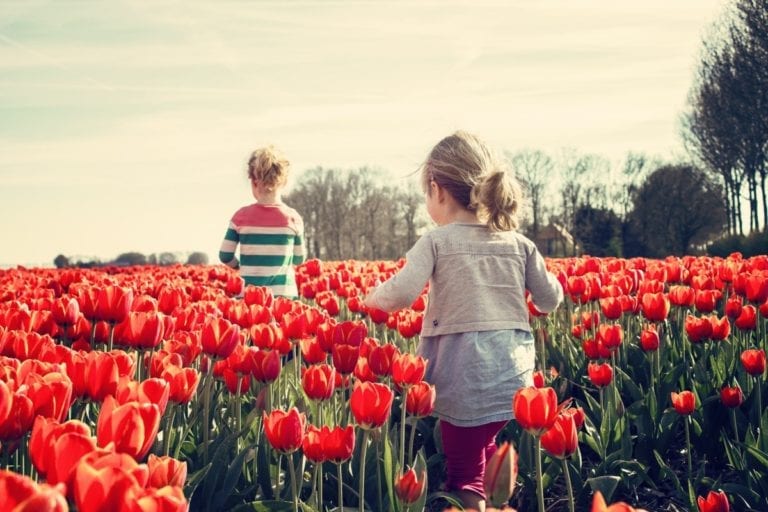
Spring is the best in the Netherlands! The weather is mild and the sun is usually out with temperatures averaging at 9 °C. It’s a perfect time to visit the tulip fields and to enjoy the cherry blossoms in Amstelveen! Pack jeans, t-shirts, sweaters and a good jacket for when it gets cooler at night. Bring a pair of shorts in May because you might get lucky with the weather. Here are some things to do in the Netherlands in Spring.
Source: Pixabay
What is the weather in the Netherlands like in Summer?
The Netherlands is most busy with tourism during the summer, from June to August. This season is extremely sunny, with temperatures averaging at 17 °C. It’s the best time to explore some nature in Tilburg or enjoy free festival season. Pack light clothing like shorts and dresses, but make sure to bring some jeans and a sweater for the cooler nights. Don’t forget your sunscreen!
What is the weather in the Netherlands like in Autumn?
Autumn is a great time to visit the Netherlands, with sceneries like national parks looking amazing. From September to October in the Netherlands, the average temperatures are mild at 10 °C. Enjoy biking through Dutch forests and eat some traditional Dutch soup – very cozy! Take a look at our guide to autumn in the Netherlands for more. Similarly to Spring, pack jeans, t-shirts, sweaters and a good jacket for the colder days.
Source: Pixabay
What is the weather in the Netherlands like in Winter?
Winter is the coldest and windiest season of the year with the least hours of sunshine. The original 50 shades of grey, the winter weather in the Netherlands is a time to avoid unless you enjoy freezing. There’s a chance of snow and freezing temperatures at an average of 3 °C. On a very cold day, enjoy some apple pie and hot chocolate in Amsterdam at Winkel 43. Pack socks, a heavy coat, warm shoes and many sweaters as wearing layers is crucial. I would also bring a small umbrella and bring it with me everywhere the weather in the Netherlands rapidly changes.
It doesn’t snow in the Netherlands very often, but if you’re very lucky you might see some snow in the Winter. It snows an average of around 20 days per year in the Netherlands, which is pretty low. The Netherlands is particularly charming covered in snow and although this is hard to predict, makes for dreamlike sceneries.
Source: Flickr/Anne Helmond
Can you ice skate in the frozen canals in winter?
Natural ice skating in canals all over the Netherlands is a unique experience you won’t want to miss. Usually, temperatures need to be lower than –4°C for various nights in a row before anyone can ice skate in the canals. However, climate change might get in the way of this as the increase in temperatures is causing fewer canals to freeze.
Still, if you’re lucky (or unlucky) enough to see such low temperatures, you might get a chance to ice skate in a frozen canal. For weather and information on natural ice skating in the Netherlands, take a look at www.natuurijswijzer.n for some help.
Climate change adds to the unpredictability of Dutch weather. According to experts, temperatures have risen by 0.8 °C worldwide since 1900. In the Netherlands, it has increased by 1.7 °C and heat waves are reoccurring.
This has caused the Netherlands to possibly never have an “Elfstedentocht” (Eleven cities tour) again, as canals and rivers are no longer frozen for ice skaters to enjoy due to an increase in temperature. Climate change has also caused increased rainfall as most of the Dutch have noticed. In addition, climate change has had an impact in growing seasons of plants as these are now blooming earlier than usual, due to the warmer temperatures in spring.
The Dutch government’s climate policy aims to reduce greenhouse gas emissions as these negatively impact the climate, food crops, and water levels. In June 2018, a Climate Act law was passed, calling for a 49% reduction in greenhouse gas emissions by 2030 and a 95% reduction by 2050.
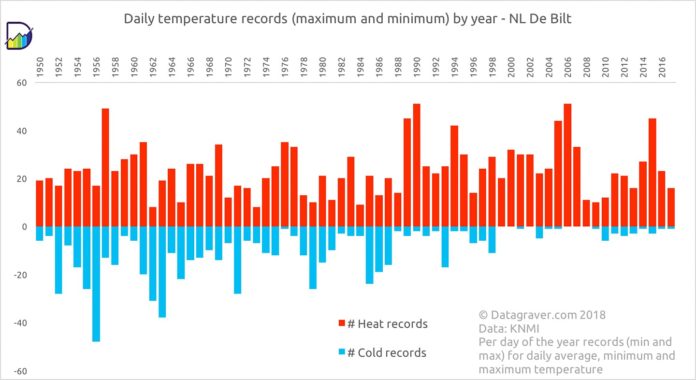
The weather in the Netherlands is all over the place and its meteorological history has seen some crazy stuff. However, recently, all of the records have been related to the Netherlands getting warmer and not colder, due to the effects of climate change, as seen in the graph below.
Netherlands Weather Records / Source: Datagraver and the KNMI
The past summer was the hottest in 300 years and the hottest day ever was July 26, 2018, where temperatures reached 38°C. 2018 also had 2,022 hours of sunshine, 400 over the average, making it the year with the most sunshine hours ever recorded. Whereas last summer’s heatwave lasted 6 days, the longest heatwave in the Netherlands was in July of 1975 with 18 days. The coldest period was in January of 1942 with an average of – 11.3°C. Also, the heaviest storm was on September 7th, 1942 with winds measuring at 122 km/h. This is classified as a category one hurricane.
Weather in the Netherlands by month
The Netherlands by region/ source: Wikipedia
Northern Netherlands: Groningen, Friesland, Drenthe Eastern Netherlands: Overijssel, Gelderland, Flevoland Western Netherlands: Utrecht, North Holland, South Holland, Zeeland Southern Netherlands: North Brabant, Limburg
What is the weather in the Netherlands like in January?
January is the coldest and windiest month in the Netherlands. Although most areas average per day reaches 30 – 50 mm, Utrecht in the Western Netherlands has the highest rainfall with 70 mm per day.
Region
Average Temperature (°C)
Average Rainfall per day (mm)
Average wind speed (km/h)
Northern Netherlands
3 °C
30 – 45 mm
20 km/h
Eastern Netherlands
4 °C
45 mm
15 – 20 km/h
Western Netherlands
4 °C
40 – 70 mm
15 – 20 km/h
Southern Netherlands
3 °C
35 – 50 mm
15 km/h
What is the weather in the Netherlands like in February?
February isn’t much better, with rainfall and little sunshine. Temperatures remain extremely low but winds are mild.
Region
Average Temperature (°C)
Average Rainfall per day (mm)
Average wind speed (km/h)
Northern Netherlands
3 °C
20 – 35 mm
15 – 20 km/h
Eastern Netherlands
4 °C
35 – 40 mm
15 – 20 km/h
Western Netherlands
4 °C
35 – 55 mm
15 – 20 km/h
Southern Netherlands
4 °C
30 – 40 mm
15 km/h
What is the weather in the Netherlands like in March?
A slight temperature increase in March, but not much change.
Region
Average Temperature (°C)
Average Rainfall per day (mm)
Average wind speed (km/h)
Northern Netherlands
6 °C
20 – 35 mm
10 – 20 km/h
Eastern Netherlands
6 °C
30 – 40 mm
15 – 20 km/h
Western Netherlands
6 °C
35 – 55 mm
10 – 20 km/h
Southern Netherlands
6 °C
30 – 40 mm
15 km/h
What is the weather in the Netherlands like in April?
There’s some hope for April as average temperatures increase by 3 °C. April also has less rainy days and mild wind. But let’s not get too excited because, in the Netherlands, April does what it wants. Sometimes it won’t feel like Spring.
Region
Average Temperature (°C)
Average Rainfall per day (mm)
Average wind speed (km/h)
Northern Netherlands
9 °C
15 – 30 mm
10 – 15 km/h
Eastern Netherlands
9 °C
25 – 30 mm
15 – 20 km/h
Western Netherlands
9 °C
25 – 30 mm
10 – 15 km/h
Southern Netherlands
10 °C
25 – 30 mm
10 – 15 km/h
What is the weather in the Netherlands like in May?
In May, tulips and cherry blossoms bloom all over the Netherlands and the sun shines causing average temperatures to increase by 3 °C. Rain is back though, around 25 – 40 mm per day, but once again Utrecht faces an average of 70 mm.
Region
Average Temperature (°C)
Average Rainfall per day (mm)
Average wind speed (km/h)
Northern Netherlands
12 °C
25 – 35 mm
10 – 15 km/h
Eastern Netherlands
13 °C
35 – 40 mm
15 – 20 km/h
Western Netherlands
13 °C
30 – 70 mm
10 – 15 km/h
Southern Netherlands
13 °C
30 – 40 mm
10 – 15 km/h
What is the weather in the Netherlands like in June?
The first month of summer is warmer in the Nothern Netherlands, with temperatures averaging at 19 °C. The rest of the country is also relatively warm and sunshine is out all month.
Region
Average Temperature (°C)
Average Rainfall per day (mm)
Average wind speed (km/h)
Northern Netherlands
19 °C
30 – 40 mm
10 – 15 km/h
Eastern Netherlands
15 °C
40 – 45 mm
10 – 15 km/h
Western Netherlands
15 °C
40 – 55 mm
10 – 15 km/h
Southern Netherlands
16 °C
35 – 45 mm
10 – 15 km/h
What is the weather in the Netherlands like in July?
Weirdly enough for most Europeans – July is the month in the Netherlands where it rains the most. Average rainfall per day is at 40 – 60 mm with once again 95 mm in Utrecht. It’s also one of the hottest months averaging at around 18 °C.
Region
Average Temperature (°C)
Average Rainfall per day (mm)
Average wind speed (km/h)
Northern Netherlands
17 °C
45 – 50 mm
10 – 15 km/h
Eastern Netherlands
18 °C
55 – 60 mm
10 – 15 km/h
Western Netherlands
18 °C
50 – 95 mm
10 – 15 km/h
Southern Netherlands
18 °C
45 – 60 mm
10 – 15 km/h
What is the weather in the Netherlands like in August?
You might get a few sunnier days in August, but it’s pretty much the same as July.
Region
Average Temperature (°C)
Average Rainfall per day (mm)
Average wind speed (km/h)
Northern Netherlands
17 °C
50 – 60 mm
10 – 15 km/h
Eastern Netherlands
18 °C
55 – 60 mm
10 – 15 km/h
Western Netherlands
18 °C
50 – 90 mm
10 – 15 km/h
Southern Netherlands
18 °C
45 – 55 mm
10 km/h
What is the weather in the Netherlands like in September?
In September, temperatures begin to decrease as Autumn approaches. Wind and rainfall decrease slightly.
Region
Average Temperature (°C)
Average Rainfall per day (mm)
Average wind speed (km/h)
Northern Netherlands
14 °C
30 – 50 mm
10 – 15 km/h
Eastern Netherlands
15 °C
45 – 50 mm
10 – 15 km/h
Western Netherlands
15 °C
50 – 65 mm
10 – 15 km/h
Southern Netherlands
15 °C
35 – 45 mm
10 km/h
What is the weather in the Netherlands like in October?
The rain picks back up in October, particularly in the Eastern and Western Netherlands. The cold also returns with an average temperature decrease of around 4 °C.
Region
Average Temperature (°C)
Average Rainfall per day (mm)
Average wind speed (km/h)
Northern Netherlands
11 °C
35 – 50 mm
10 – 15 km/h
Eastern Netherlands
11 °C
50 – 60 mm
15 – 20 km/h
Western Netherlands
11 °C
55 – 85 mm
10 – 20 km/h
Southern Netherlands
11 °C
35 – 50 mm
10 – 15 km/h
What is the weather in the Netherlands like in November?
Another 4 °C decrease happens in from October to November as the winter sets in. Despite the cold temperatures, rain and wind do not increase just yet.
Region
Average Temperature (°C)
Average Rainfall per day (mm)
Average wind speed (km/h)
Northern Netherlands
7 °C
25 – 50 mm
10 – 15 km/h
Eastern Netherlands
7 °C
50 – 55 mm
15 – 20 km/h
Western Netherlands
7 °C
50 – 75 mm
15 – 20 km/h
Southern Netherlands
7 °C
35 – 55 mm
10 – 15 km/h
What is the weather in the Netherlands like in December?
In December, the average temperature is of 4 °C, almost at freezing cold levels. Rain increases slightly in all regions.
Region
Average Temperature (°C)
Average Rainfall per day (mm)
Average wind speed (km/h)
Northern Netherlands
4 °C
30 – 50 mm
15 – 20 km/h
Eastern Netherlands
4 °C
50 – 55 mm
15 – 20 km/h
Western Netherlands
4 °C
50 – 80 mm
10 – 15 km/h
Southern Netherlands
4 °C
35 – 55 mm
15 km/h
7 Dutch sayings about the weather
The Dutch love to bitch about the weather, it’s a cultural phenomenon. So much that they have several sayings on the weather. Some that need deciphering.
#1 Na regen komt weer zonneschijn
This translates to “after rain comes sunshine again”. I feel like Dutch winters don’t work like this, but would be nice. Let’s start saying it for good luck.
#2 April doet wat hij wil
This translates to “April does what it wants”. Very suitable for this year. And every year for that matter.
#3 Maart roert zn staart
This translates to “March stirs its tail!”. After translating it into English, I still didn’t understand it. Turns out, it’s making fun of how the weather is always changing in March. Pretty sure that’s every month in the Netherlands, though.
#4 Het weer is maar naatje
This translates to “the weather is buttcrack”. Weird, right? I asked someone at the office and they said this word might sound inappropriate, but it’s actually a word a grandma would use.
#5 Nederland heeft geen climaat, alleen maar weer
This translates to “the Netherlands has no climate, only weather”. This is literally the most accurate saying on the weather in the Netherlands. It is so unpredictable, it barely has a climate.
#6 Het regent pijpestelen
This translates to “its raining cats and dogs”. I think this saying exists in every language so I don’t need to explain it. But it really doesn’t make any sense.
#7 Het is hondeweer
This translates to “its dog weather”. Do weather sayings hate animals?
Best time to visit the Netherlands
The best time to visit is fully dependant on the weather in the Netherlands. The Netherlands is filled with tourists in July and August when the weather is warmer. However, in the summer months, it tends to rain the most. This is also an extremely busy time in the main cities, causing long queues and large groups of people in tourist attractions.
If you don’t mind cold weather, the Netherlands is also lovely in Autumn and Winter. In Autumn, as tree leaves turn brown and yellow, the nature in the Netherlands is a beautiful sight. In Winter, particularly in the rare occasions where it snows, Amsterdam and the canals are also lovely to explore.
However, to avoid peak tourism, but to still enjoy warm weather, Spring is the best time to visit the Netherlands. Although temperatures are not as warm as in the Summer, there is a lot less rain. This is also a time where there is so much going on in the Netherlands. From exploring tulip season to celebrating Kings Day, the Netherlands has lots to offer.
Dutch weather got us crazy/source: giphy
You might get lucky in Spring or Summer, but the weather is beyond unpredictable. If you’re considering moving here or just visiting, get ready for a weather rollercoaster. I think April’s weather is proof of this. At the beginning of the month, there was a chance of snow as temperatures dropped. However, just a few days later, temperatures will increase to 20°C and this was expected to last. But who can really trust that, right? It didn’t last at all.
I still don’t really understand Dutch weather and I’m sure even the scientists at the Meteorological Institute secretly find it a mystery. But hopefully, this guide has helped you decipher the enigma of Dutch weather.
Any good Dutch sayings about the weather? Let us know in the comments, below!
The daily numbers are in, and it seems that the Netherlands is continuing its downward trend when it comes to the number of people who die or are hospitalised as a result of the coronavirus each day.
Today, 53 people died, bringing the Dutch total to 5,643. Hospitalisations were even lower, with 35 people being hospitalised today. For the last week, these numbers have hovered more or less around the same figure, between 20 and 60 of each every day.
As for the number of people who have tested positive for the virus, the number is 200 today, bringing us just a little closer to the grim milestone of 45,000 infected people in the Netherlands.
Now, on to the coronavirus news stories of the day.
“Find a sex buddy”: RIVM gives single people advice on dealing with the coronavirus crisis
Previously, dating and having casual sex were understandably discouraged by the RIVM: people had to stay 1.5m from each other, which does make physical contact somewhat difficult.
Dutch coronavirus medicine could be used on some patients within six months
International interest in a Dutch medicine for coronavirus is growing, based on antibodies. The medicine is being developed by Utrecht University and ErasmusMC.
The antibody in question was left over from research on the SARS and MERS viruses, which are also coronaviruses
Sex workers believe that it’s possible to continue working while adhering to coronavirus restrictions
Although sex workers can’t return to their normal work routines till September 1, they argue that there are ways in which they could work around the regulations, which would allow them to start working now, through the following: 1.5 meters distance, a mask, gloves and a glory hole through plexiglass.
But better safe than sorry. Many other professions are still closed for a reason, and safety is really the priority for the time being.
Follow DutchReview on Facebook for the latest news on the coronavirus in the Netherlands.
Ongoing movement restrictions induced by COVID-19 have created a breeding ground for domestic violence, with women and children the most affected groups. This exposes a sometimes underestimated pandemic that has been haunting the world since the beginning of time – gender inequality.
Contrary to popular beliefs, women in the Netherlands are still battling with outdated gender norms and the legacy of legally ingrained inequalities between the sexes.
A quickie with the law
Up until 1956, Dutch women lost their jobs by default once they got married and it was only in 1974 that the government actively started to implement measures that sought to assure equal opportunities and rights for women and men. Still, it took until 1984 for wives to have the same rights as their male spouses.
Prior to that, the word of the husband legally prevailed over his wife’s in domestic decisions like child education. And now, imagine this: until 1991 there was a clause in Dutch law that excluded marital rape from rape legislation, meaning that the generation of our mothers could not prosecute the man that raped her if he was her husband. Pretty hard to believe, isn’t it?
Money makes the world go around
In the Netherlands, girls outperform boys in secondary school and more girls go on to university and if that wasn’t enough already, do better once there. But then, the picture slowly but surely starts to shift: the higher we climb up the career ladders; the thinner the field gets for women. Keeping our focus on Academia, many women pursue PhDs, but the number of female professors in the Netherlands is at only 23.1%.
In the work world in general, less than 30% of senior-level positions are held by women, and women look after the household and children twice as often as men. Consequently, more than 3.3 million Dutch women are not financially independent. Staying at home and taking care of the family might be a choice because it is no longer written in the law, but it is a choice rooted in expectations surrounding gender. Otherwise, the same number of men and women would choose to stay at home. Prevailing norms have real-life consequences because being financially dependent on a partner only works as long as a relationship remains intact.
The impact of being a mum
Many mums I spoke with in the past told me about bright career prospects after completing their PhDs but instead opted to stay at home and care for their children instead of joining the rat race of money-making. Now some years down the line, they feel trapped if they don’t want to be with their husbands anymore. Having dedicated most of their life to unpaid work, getting back on your feet, and starting a career after all these years is difficult, some might even call it impossible.
Getting government help is an option, but the fear of downgrading from that nice house with garden and losing some of that comfort and status keeps many to stick in situations they don’t want to be in. This is indeed a privileged predicament, but it is nevertheless one that women in the Netherlands are more likely to face than men. Alimonies sometimes, but not always do the deed.
I used to be annoyed by this type of argument — my mum is a single mum and was mumming and working at the same time, so it is possible to do both. My line of reasoning was that women should simply always make sure that they work too so they’d never get themselves in a situation of dependency in the first place.
My mother has managed to raise my sister and me into decent adults with no more issues than the average human. But now that we are grown and she has a partner who pays half of the rent and kills spiders (previously my task) I can see how she’s blossoming with responsibilities lifted from her shoulders; happiness is resurfacing as she can finally be her own person again.
I realized that organizing life in a way that generates the most happiness might mean that one partner stays at home to take care of the kids while the other one works. However, this shouldn’t be a gendered undertaking and the choice to do the unpaid part of the puzzle shouldn’t bite you in the ass later in life when the love wasn’t meant to last.
In the case that both partners work, it is still likely that the woman’s share of household duties is disproportionately higher in comparison to her man. A married friend who is a mom told me about a running joke between her and her career go-getter female friends. One shouts “he asked for the list again” and sympathetic moans and wine pouring will follow.
“The list”, is a demand from their supportive, caring and sometimes stay at home husbands and fathers demand: “schatje, what do you need me to do”. The proudly progressive husband takes care of the kids, but while the woman is out there making that coin she still needs to be the brains behind the organization of the household.
She needs to think, so the husband can do the chores because, apparently, his eyes don’t see the same way hers do. The responsibility that unexpected walk-in guests aren’t shocked by the sight of dirty dishes and that the kids have an adequate present for the neighbours birthday party still rests with the woman, because if she doesn’t do the thinking, no one will. At this point, it isn’t a choice anymore, because if she chooses not to do the list her children will eat pindakaas sandwiches for lunch every day of the year (I stand corrected, this one actually is an accepted way of lunching here in NL). So it echoes through the Netherlands households: “honey, I want you to do the list!”
Women are hailed for doing it all, pursuing their career all the while being a caring mother and wife, and let’s not forget the yoga to stay in shape. The standards set for women are incredibly high. Yes, patriarchy doesn’t look like the 60s anymore when gender inequality was written in the law but has taken on a disguised form hidden behind the image of the superwoman. And this has real-life consequences: in the Netherlands, women much more frequently than men suffer from a variety of psychological problems such as depression, anxiety, and eating disorders.
Physical security
Moving on to a particularly troublesome dimension of the discussion: physical security. Let’s start with some numbers because is an argument even valid if not backed up by of authority dripping statistics?
Would you have guessed that in a safe country like the Netherlands, 45% of all Dutch women experience domestic violence at some point in their lives? Me neither.
Yearly, 200,000 people, mainly women, experience serious forms of violence at home. Catcalling and other forms of harassment are part of a woman’s every day. Before I found more meaningful work, I worked at a bar in Leidseplein for a few weeks trying to make ends meet while studying for my Masters at the University of Amsterdam. After the shift ended, it was impossible to walk to my bike in peace as I was disturbed by men every single time.
And this is normalized: “well, what else do you expect at this place and time…” Well, I did expect it, but accept it? Hell no. No one should have to choose between a job and their safety, no matter time or place. I had to learn not to talk back because that can escalate quickly, hence I move the streets with tunnel vision and headphones like a zombie, in a sea of other women who had enough.
“Imagine the things I’d do to you if we were alone“
A friend from Uni told me that at the age of 15, the Dutch, beer-bellied boss at her farmer’s market job had the habit of making her and the other females sit on his lap during work hours, despite their shy protest, for everyone to see. She was uncomfortable but also not fully aware that this falls into the category of sexual harassment: “Is he just being nice?”
At University, my female friends who are sexually active and not in monogamous relationships exchange stories on Monday mornings of men that still don’t understand the concept of consent and that “no” does not mean “convince me”. Saying no is not easy, especially for women who are socially conditioned to be polite even in their critique. Sometimes men become perpetrators, unknowingly because no one taught them any better, and women are unaware that their feelings of discomfort are rooted in the fact that they have been sexually harassed or assaulted.
I can’t recall a single event at University addressing such issues that highly affect the student body (literally). We want to have sex, but safely, and it shouldn’t be a one-sided responsibility to assure this when getting jiggy with it. To quote Taylor Tomlinson, one of my favourite female comedians: “I don’t know if you have tried to get a 20 something dude from a dating app to wear a condom recently – but it’s sort of like trying to convince a five-year-old to put a jacket on…over his Halloween costume”.
It is society’s collective duty to educate. So can we please start teaching boys that “maybe another time” means no, just as much as certain body language does. And before you start typing away in the comment section “not all men…” we already knew that, please tell me something new.
P.S. In this piece I didn’t manage to address that gender norms can also be very harmful to men, that will have to wait until next time.
What’s your perception of gender inequality in the Netherlands? Tell us in the comments below.
Gyms are closed, marathons are cancelled, and while there’s never been a better time to dust off that leotard, YouTube only has so many jazzercise videos. So how do you balance your newfound passion for Instagram-worthy bread baking, and continue to support local restaurants by ordering takeout, while still maintaining some shred of hope for fitting into your pre-quarantine pants (or, ‘trousers,’ for the Brits)?
The simplest answer: run. While stay-at-home measures should be taken seriously, this doesn’t need to be at the expense of our wardrobe, no less our mental and physical health.
With the Netherlands taking a relatively relaxed approach to its coronavirus lockdown, we’re fortunate to be able to go outside, and running/jogging does the body and mind a world of good. But back in March, an Italian mayor went viral shouting at citizens, “How come everyone has turned into a running enthusiast?” He asks rhetorically, why do we suddenly love it so much?
Ahem, respectfully, sir, here’s why: it’s far and away the single-most dynamically beneficial activity we have left. It:
provides fresh air and vitamin D,
releases endorphins,
boosts the immune system,
improves cardiovascular and respiratory health,
builds strength and endurance,
and burns off a few of those delicious carbs.
It’s a reprieve from cabin fever, a moment of solitude to reset and reflect. It’s a chance to smell the spring flowers and blossoming trees, to see freshly sunkissed, smiling faces, to hear laughter reverberating off brick and water, and to remember that life goes on and eventually, one day, we will return to some version of normalcy.
The risk of running
But the mayor makes an important point: running, or any activity outside the house, puts you and others at risk of exposure. While running, we’re breathing more heavily and potentially releasing more respiratory droplets into the air. It can be challenging and anxiety-inducing to figure out how to safely manoeuvre around the masses of people who are now spread wide along the city’s streets and parks, and when doing so we have to be cautious and responsible.
Mostly, what that means is going alone and maintaining an appropriate distance from others. Yes, it may seem like a daunting or even impossible feat, especially if you, like me, live in a compact city, but with the right timing (go early or when it’s raining!) and extra attention to your surroundings, this might actually be a great time to pick up a running habit.
Anyone can run
Remember, you don’t have to consider yourself a “runner,” to go for a run. I’m a terrible swimmer, but theoretically, as a living, breathing human, I should at least be able to float. I keep this in mind whenever I have the opportunity to swim and even though I’m the worst at it, it doesn’t mean I can’t have a good time bobbing around in the water, working on my doggie paddle. Do you see where I’m going here?
Your version of running might be more of a trot or shuffle, just like my version of swimming is more of a gasp and thrash. Not everyone takes to running naturally, but that doesn’t mean you can’t find some joy in it, or at the very least, after it. You can jog-walk, prance, or skip, whatever your mode, just get outside and move your body in a forward motion, being mindful of the people around you. Ease into it and repeat often, and before you know it, you’re a runner.
Will you stay on track?
Once you’ve established that, you’ll find your own reasons to keep with it. While some of us are seasoned runners, for others this may be an uncharted territory or even a last resort after realizing that back-ordered online dumbbell purchase may never actually arrive. The “how” you came to running is less important than the “why” you run, and the “why” is unique to each of us.
Before coronavirus turned the world upside down, I was training for the Prague Marathon in May, following a training plan for the first time and pushing myself to new extremes. I was disappointed when the race was cancelled but that didn’t mean I was going to give up running altogether. For me, a race might be the motivation to push myself harder, but it’s not what inspires me to run. I don’t do it for the participation medals or t-shirts, or even the glory of the finish line — and let’s be honest, I have no intention of returning to my “hard pants” (as my mother now refers to them) ever again. I do it because so many years ago I decided to give it try and then kept trying, time again until at some point it just stuck.
Running can be addictive
Now, I run because my body begs me to and because my mind demands it. I run to notice what’s around me, to notice what’s happening inside me. I run because I’m curious and because there’s so much to explore on my own two feet. It’s how I get lost so I can eventually find myself again. It’s how I orientate myself in a new city, and like everywhere I’ve lived in the past, it’s how I came to feel at home in Amsterdam. I run because it grounds me and because through every challenge life has thrown at me I’ve put one foot in front of the other and run my way through it.
Now is no different. We’re experiencing a global pandemic, collective grief, anxiety, stress, and uncertainty, unlike anything we’ve ever been through. It’s happening all around us whether we feel it sinking in or not. Life is weird right now and largely out of our control.
So next time you’re gazing out your window, counting the dutiful runners passing by and wondering why on earth they would do that to themselves, especially now, maybe just give it a try. And then try it again and again, until you find your own “why.” Now, more than ever, we have to take care of ourselves.
Have you taken up running or another form of exercise during the pandemic? How’s it going? Tell us in the comments below!
If you are employed in the Netherlands then you are required to contribute a portion of your wages towards your vakantiegeld (holiday allowance.) Sounds like a snoozefest, right? Well, not if it’s May.
Let’s break down that word: vakantiegeld or vacation money. Sounds like a dream, right? So, what is it exactly, why do we have to contribute to it — and what does it do for us?
What is the Dutch Holiday Allowance?
Dutch Holiday allowance is a mandatory payment by employers of an extra wage to their employees. As of January 2020, the standard rate is a minimum of 8% of your total wage or 8.33% for temporary workers.
A Collective Bargaining Agreement (CAO) is operated by most work sectors, which is applicable to employment contracts (check yours with your employer.) The CAO contains agreements between the employers and the trade union within your sector who represent the employees and can affect your holiday pay entitlements.
What’s the history behind the Dutch Holiday Allowance?
Holiday allowance was introduced originally in the 1920s as a way for employers to give their employees an incentive to go on holiday. However, it wasn’t really until the 1960s that workers were able to afford lavish holidays abroad and that is when the summer holiday really took off.
The idea was that employees would receive this salary in May, so holidays could be planned for their summer leave with the money that had already been put aside and saved. So holiday pay is typically still paid in May and should appear on your payslip.
It has been coined as the 13th-month salary, as it is an extra months payment on top of your yearly wage. Any changes to that are usually agreed prior between each individual employer/employee.
Side note: Although it is common to receive holiday allowance in May, some employers spread it out throughout the year. Always check your contract/employment agreement for any details regarding your holiday allowance and annual leave days and discuss them with your employer.
How many days off do I get off a year in the Netherlands?
Legally you receive a minimum of 20 vakantie days per year. However, some employers honour up to 25 days paid leave in the Netherlands. On top of that, you get around 10 public holidays each year — but this varies from region to region.
Since 2018, the employer also has to pay the minimum wage on average for overtime. This means that he also has to pay holiday pay for these extra hours. Holiday pay is calculated on the full value of the overtime (including the possible overtime bonus).
The employee contributes a monthly amount deducted from their salary and the employer may also make a contribution. As you accrue holiday throughout the year this is then given back to you in May as a holiday payment. It is paid on top of your yearly salary. Think of it as pocket money for adults.
How is it Dutch vakantiegeld calculated?
Everything is based on that magic number of 8%. So, in the simplest terms your holiday allowance will be 8% of your yearly salary.
EXAMPLE: Sarah gets paid a salary of €3000 per month. The calculation would be €3000 x 12 (months) = €36,000 x 8% = €2,880. Sarah will be paid €2,880 holiday allowance in addition to her normal pay.
Now if that’s not an incentive to start planning your all-inclusive holiday to the Bahamas I don’t know what is?
Does everybody receive it?
In a word – No. Depending on your type of employment, you may not qualify for holiday allowance. For example:
If you are a freelancer ZZP’er (zelfstandige zonder personnel): Naturally you do not get paid holiday allowance as you are your own boss and the employee (lucky you, or — perhaps not). You set your own terms, so I guess if you really wanted to you could take as many or as few holiday days as you feel works for you.
If you are on an internship: Internships are generally not paid in the Netherlands. Some employers will subsidise their intern with a payment of between 100 and 500 euros. So, it follows that when it comes to holiday as an intern, do not expect an allowance.
If you earn more than three times the Dutch minimum salary: Then holiday allowance may be reduced or even eliminated. As your holiday allowance is paid by your employer this should all be agreed upon and outlined in your contract with them.
What happens to my Holiday Allowance if I quit my job before May?
If you terminate your employment with a company before May, the accumulated vacation money will be paid within your last salary payment or the following month. So have no fear, you can quit and still have your allowance to go on that planned trip.
Is vakantiegeld taxed?
I’m sorry to say it is. Remember when I said it’s like pocket money? Well it’s true. But think of it as Uncle Pim wants a teeny tiny cut of your lemonade profits. Sorry, that’s just how it goes.
How long do I have to take a holiday?
Your holiday days should be taken within six months of receiving your holiday allowance. If not, these will lapse without any compensation. So use the time wisely. Just a note: your holiday days and your vakantiegeld is separate — but most people use their vakantiegeld for their holiday.
Side note: You cannot swap holiday days for more pay. You are always entitled to take those days off. You can, however, trade in holidays days for sick leave if you are sick (see below).
I’m sick and I have a holiday booked!
If you are sick and unable to take your pre-booked holiday, your holiday entitlement will not lapse. If you inform your employer immediately then you can have the sick days logged sick leave and then use your holiday at a later date (just don’t abuse this system guys —not cool!). The accrual of your holiday allowance also continues and you will be paid for holidays accrued during your sickness.
Do I have to spend it on a holiday?
No, you don’t. It is your money and you are free to do with it as you wish. The idea is that if you did want to take a holiday in the summer months then you would have your “13th month” salary to cover it rather than having to spend time saving up the money.
It’s already there for whatever you want. If you want to spend it renovating your house, doing up the garden, or as a payment on some new wheels that is entirely up to you.
With the pandemic likely putting a dampener on many holiday plans this year, what will you spend yours on?
Although sex workers can’t return to their normal work routines till September 1, they argue that there are ways in which they could work around the regulations, which would allow them to start working now.
Coronavirus has put sex workers out of their jobs. A lot of sex workers can’t rely on unemployment benefits even if they are unable to work and consequently feel neglected by the government, RTL Nieuws reports.
Although many other contact professions are now permissible, sex work still isn’t. The cabinet has stated that sex workers along with fitness clubs, saunas, health and wellness centres, clubs, coffee shops and casinos can only open up on September 1. And rightly so, all of those are pretty intimate gigs where the virus has a higher chance of being transmitted.
1.5 meters distance
But according to SekswerkExpertise, it is possible for these professionals to return to work “safely” through the following: 1.5 meters distance, a mask, gloves and a glory hole through plexiglass.
According to Moira Mona from Arnhem, “safe working is by nature already a priority for sex workers.” Sex workers like Mona only receive customers by appointment, use disinfectant thoroughly, as well as gloves and don’t see a problem wearing masks. There are also other creative 1.5 meter solutions that are possible, according to Mona.
Sex workers such as Mona believe that the government is not adequately educated on sex work as a whole. And perhaps it is the taboo on sex that may play a role.
But better safe than sorry. Many other professions are still closed for a reason, and safety is really the priority for the time being.
Do you think that prostitution should be permitted sooner than September 1? Let us know your thoughts in the comments.
We know… Spring has sprung and this makes you want to get on your bike and soak in the sun with a cup of joe in hand. Oh, the smell of freshly poured coffee! But, social distancing measures have made chilling in a cafe impossible.
But we’ll let you on a little secret; the following five cafes in The Hague continue to serve aromatic, juicy coffee amidst the Covid-19 times! So, instead of heading to your Nespresso machine, hop on your bike, put on your sunglasses, and enjoy the trip to one of these cafes for a takeaway coffee.
Lebkov & Sons
A stone’s throw away from The Hague Central Station, Lebkov & Sons is open from 08.00 in the morning until 16.00 in the afternoon, serving you tasty, freshly roasted speciality coffee. Whether you are in the mood for an iced cappuccino or a flat white, this cafe will not disappoint.
Pro tip: Lebkov & Sons makes mouthwatering sandwiches with local, fresh products and their own homemade bread. Don’t forget to grab a sliced avocado sandwich on your way out!
Bartine
I would happily live off these croissants, honestly. Image: Bartine/Supplied.
Open on Fridays and weekends from 10.00 to 15.00, Bartine is going to become your new cafe obsession. Yes, Bartine’s rich and full of flavour roast is amazing, but wait until their ricotta and blackberries brioche melts in your mouth or their cardamom buns drive you crazy with their perfume.
Pro tip: Don’t forget to take a picture of their almond croissants along with your cup of coffee… so Instagrammable!
Bookstor
Delicious coffee at the Bookstor cafe. Image: Bookstor/Supplied.
No, this writer has not mistaken this cafe list with a list about bookstores. The 99-year-old Bookstor, situated at Noordeinde 39 has it all! From books and art to fair trade chocolate and freshly-squeezed orange juice. Grab your delicious coffee and lose yourself (for a few minutes only – social distancing!) to the inside of this vintage bookstore.
Pro tip: Check out Bookstor’s postcard collection, pick your favourite, and send one to your loved ones staying in.
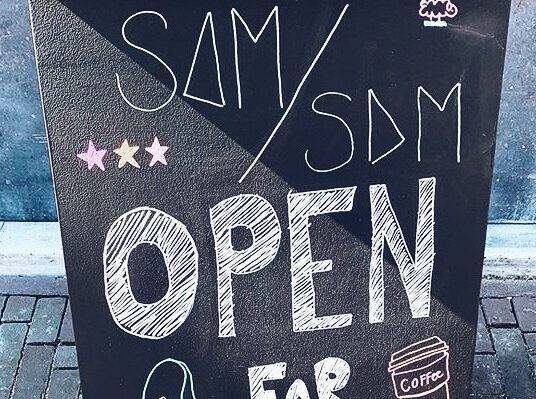
SAM SAM
How could you resist this cute chalkboard? Image: SAM SAM/Supplied
A second option down the Noordeinde street is SAM SAM. This cafe welcomes you from Tuesday through Sunday, 10:00-15:00, with the motto ‘this coffee is made for walking!’. Order your coffee, keep the 1.5-metre distance (always!), and get one of their mini cheesecakes — guilt-free!
Pro tip: For your lunch break, grab the Super Bowl with spinach, feta and pomegranate seeds, and sit on one of the benches across the Noordeinde Palace.
HUG THE TEA
Matcha is *the* most aesthetic drink. Image: Myrthe Slootjes/HUG THE TEA
If you aren’t a fan of coffee and you already miss your Iced Matcha Latte, fret not! The ‘Tea Sisters’ Claire & Lisa can still offer your favourite Matcha drinks! HUG THE TEA, the first Matcha Bar of The Netherlands, is open for take-out, just a few minutes away from the Binnenhof. If you are craving Matcha smoothies, visit this Matcha heaven!
Pro tip: Bring the Matcha experience at your home by purchasing Matcha accessories and kits from the HUG THE TEA online store.
International interest in a Dutch medicine for coronavirus is growing, based on antibodies. The medicine is being developed by Utrecht University and ErasmusMC.
The antibody in question was left over from research on the SARS and MERS viruses, which are also coronaviruses, NOS reports. It was still being stored in the freezer at the Faculty of Veterinary Medicine at Utrecht University when COVID-19 made its way into the limelight.
How does the antibody medicine work?
The antibody can stop a coronavirus infection by binding to the coronavirus, but also by blocking it from attacking a person’s cells. The same antibody is also being researched in Israel, but because they had to develop it anew, they are about three months behind the Dutch researchers.
If everything goes well, the medicine could be used on some coronavirus patients in about six months
Currently, the research is in the animal testing phase, but if everything goes well, it could be used to treat small groups of coronavirus patients within six months. In order for this to be possible, the researchers would need to partner up with a pharmaceutical company.
Lots of international interest
There is already plenty of interest from major pharmaceutical companies, and at least three international companies have expressed interest in financing the development of the medicine. The patent for the medicine would remain with the researchers.
Will the medicine still be useful if there is a vaccine?
Even if a vaccine is developed quickly, this antibody medicine could form a crucial part of our fight against COVID-19. Not everyone reacts to vaccines in the same way, and some people do not produce antibodies. It can also be used to treat people who are already sick with coronavirus. These two scenarios are where the antibody medicine could come in handy in the long term.