Home Blog Page 668

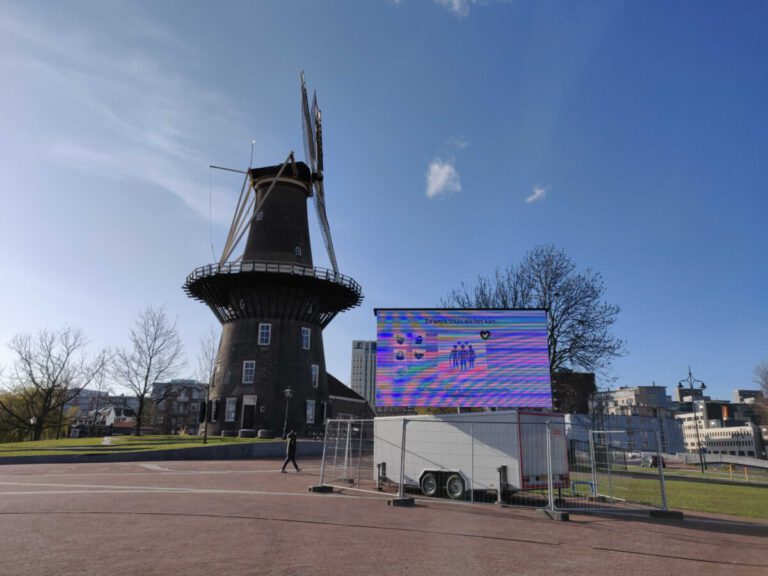
1400 people fined for breaking social distancing rules

0

Over the past week and a half, over 1400 fines have been given to people who flouted social distancing rules, RTL Nieuws reports. These fines could increase to €390.

Since 26 March, police have the authority to fine people who are in groups of more than two, and don’t keep to the 1.5 metre distance rule. There are exceptions, of course, for families and for groups of children under 12 with an adult supervisor. These extra powers were granted to the police as a result of the coronavirus emergency ordinance.

Government enforcers can also give out fines, but these are not included in the official numbers released by the police- so we’re probably talking about a far higher number than 1400.

According to Rutte in the press conference last night, the vast majority of Dutch people have kept to the social distancing rules, despite the lovely weather over the past few days. He urged people to continue to respect the rules- otherwise all of our social distancing work will have been for nothing.

Follow the DutchReview Facebook page for more updates about coronavirus in the Netherlands. 

Feature Image: Abuzer van Leeuwen/Supplied. 

What needs to happen before the coronavirus rules are relaxed?

0

A letter from the OMT (Outbreak Management Team) to the Ministry of Health, seen by NOS, has laid out the conditions necessary for relaxing the corona crisis rules: social isolation, schools being closed, contact businesses shut down, the 1.5m distance, and so on. 

The OMT is the main advisor to the government in this time of crisis. They recommend certain conditions be met before the country begins to resume normal life. One of these is that the infection rate needs to go below 1 for some time: basically, that means that each coronavirus patient needs to infect less than one person.

Healthcare system needs time to recover, more testing capacity needed

It is also important that we reach a point where the ICUs and the healthcare system in general is not “over requested”, and it must also be given some time to recover after the strain it has been under throughout the past weeks. Furthermore, there also needs to be an increase in testing capacity, as well as the possibility to trace contacts when someone is infected (along the lines of South Korea’s approach). Minister de Jonge gave us some details of how this approach will happen in practice yesterday evening, when he laid out the future deployment of two apps to test for and trace coronavirus.

This contact tracing approach is also what Germany has been doing. This seems to have paid off: they have far fewer deaths than the Netherlands. It was also the approach the Netherlands took at the beginning of the outbreak- testing people with complaints, tracing their contacts, etc- but very quickly the GGD became overwhelmed by the scale of the outbreak. It is hoped that the apps will help with this.

Rutte: keep obeying the rules

At the press conference yesterday evening, Rutte made it clear that indeed, normal life would be a while coming. He emphasised that the quickest way to get back to normality was for everyone to follow the rules closely for now: otherwise, we will quickly undo the good that has been done by social distancing.

Which rules will be eased first?

The government specifically asked the OMT for advice on when contact jobs could re-open for business: we’re talking about hairdressers and beauticians, for example. “The lifting of the ban on the practice of contact professions,” says the OMT, “is one of the measures expected to be eased first. It is too early to indicate when exactly that is possible.” The OMT also said specifically that the current regulations around air travel should not be changed at the moment.

Follow DutchReview on Facebook for all news about the coronavirus in the Netherlands.

Feature Image: DutchReview/Canva

Testing, tracing and reporting: The Netherlands to use two apps to curb coronavirus

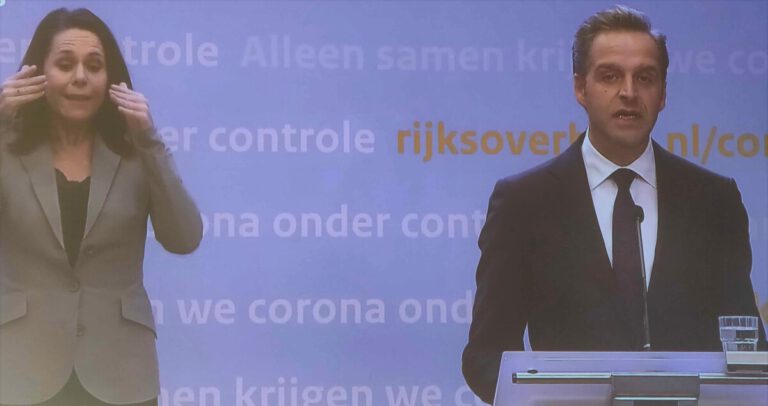
Following up on Prime Minister Mark Rutte in the 7 o’clock press conference was Minister De Jonge of Medical Care. Most of his speech was focused at the future deployment of apps to monitor and control the spread of coronavirus in the Netherlands.

The Dutch cabinet wants to focus on the mass use of apps to curb the spread of the coronavirus, minister Hugo de Jonge said at the press conference after Rutte addressed the nation.

“Two apps will soon be at the core of the new testing policy,” but he also emphasized that extensive research is still being conducted into these two apps. Furthermore, many times he repeated his message of “We will only do this if privacy is guaranteed.”. However, neither Rutte or De Jonge could tell if the use of apps would be mandatory or not and how this would work in the ‘liberal’ Netherlands.


Mass testing, tracing, reporting are the next steps in the fight against coronavirus

The apps are intended to support the work of the GGD, now in the lead when it comes to testing for coronavirus in the Netherlands. In the future, there should be mass testing followed up by the use of two apps.

De Jonge: “For example, an app tells you whether you have been around another user who has been found to be infected. You are then advised to stay indoors and you are asked to use a second app, with which you can easily keep in touch with a local doctor. ” De Jonge said that there were still a lot of questions to be answered and that, for example, the localization function could be done through bluetooth or GPS. Overstating that privacy was their main concern as well, although immediately on twitter Dutch privacy activists raised many concerns:

The research into the apps should be completed within a few weeks, Rutte also said that there would be more news about the 28th of April deadline in the week before that.

How do you feel about the use of apps to trace and report coronavirus in the Netherlands? Should this be optional or mandatory for all? Let us know in the comments?

Feat Image: still / NOS press conference

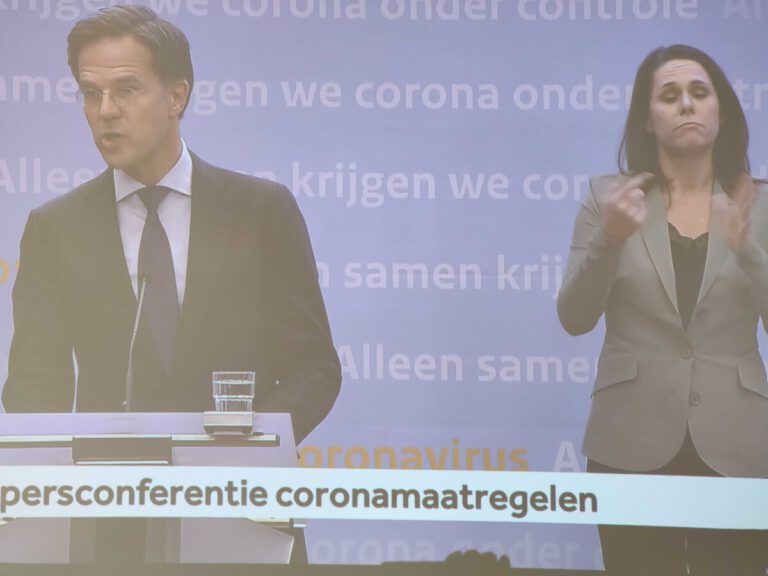
Press conference: Rutte urges nation to maintain caution

Prime Minister Mark Rutte has faced media again to give an update on the government’s approach to coronavirus. 

No major decisions have been announced regarding the lifting of the measures, but Rutte did speak of three major points.

Congratulations to the Dutch

Firstly, he was particularly proud last weekend that despite the sunshine, people still followed instructions. The majority stayed at home, and if they went out they kept 1.5 metres distance from each other.

He noted there were some minor exceptions but said those people got fined. “That’s also the only way”

Easter weekend

Secondly, he made a point to say that the measures have been successful, with numbers increasing far less dramatically. But, he cautioned that can also create a risk, and warned people not to relax. “It has to be clear that we can’t make a bigger mistake, we have to keep it up. Otherwise, everything we have built up so far will be gone.”

While the upcoming Easter weekend is normally busy for Dutch families, Rutte said this year needs to be different. “I ask everyone to celebrate Easter at home, maybe with a digital visit to Opa and Oma,” he said. He reiterated that it is not allowed to go out with bigger groups, including on bikes or motorbikes.

What will life look like on the other side?

Finally, Rutte acknowledged that life is looking very different, and likely will for a while. “There’s a lot of questions about how we can go back to the life that we were used to. But we have to be careful that we don’t make a choice between health or economy,” he said.

“If we let go now, the virus will start spreading more and the economy will take even more damage.” The government is now trying to think of intelligent ways to reform society.

“One thing is crystal clear: it will take a long time to go back to normal.” he said, adding that if they do start to remove restrictions on April 28 as planned, it will only happen very slowly.

Rutte encouraged companies to think about how they will implement social distancing measures if restrictions are slowly lifted, for example by ensuring people continue to stay 1.5 metres away.

In the week leading up to April 28 they will start to think about how it happens. But, things will only go back to normal if people follow the measures and the rules, Rutte warned.

Rutte finished his speech by asking the public to spare a thought for those who have lost their family and friends, and for the people who are lonely.

“Keep helping each other and support each other if possible. Ask for help if you are a little lost yourself.”

What do you think of Rutte’s speech? Do you think the restrictions are ready to start being lifted? Tell us your thoughts in the comments below!

Feature Image: NOS

Coronavirus update: highest mortality count reported so far with 234 new deaths

0

The RIVM has just released the newest coronavirus statistics. There are 777 new reported cases, bringing the total to 19,580. In addition, there are 234 new reported deaths. The total number of deaths in the Netherlands is now 2,101. 

In terms of new reported infections, the number is less than yesterday’s count (new infections yesterday were 952). However, the mortality rate is over twice that of yesterday, which was 101. This number is also the highest by far — the highest previous report was on April 2, with 154.

The number of hospital admissions reported today is 292, bringing the total to 7,427.

However, RIVM warns that the number can be misinterpreted because not all of these occurred in the past 24-hours. “On Tuesdays, the number of notifications has consistently been the highest of the week,” they explained. “This can be explained by the fact that many of the deaths and admissions are processed and reported on Friday, Saturday and Sunday on Monday.”

Previous downward trend in growth rate for ICU patients

Until today, the Netherlands was experiencing a downward trend in ICU patients over past few days. According to the RIVM’s figures, the increase of ICU patients from the day before on Thursday was 82, the next day it was 51 more than the day before, on Saturday it was 26, Sunday 25 and yesterday the number was 24.

Today the change between yesterday (260) and today (292) is 32. Nonetheless the number isn’t growing exponentially. Dutch hospitals have not as yet reached their full capacity for ICU patients. However, caution should still be taken.

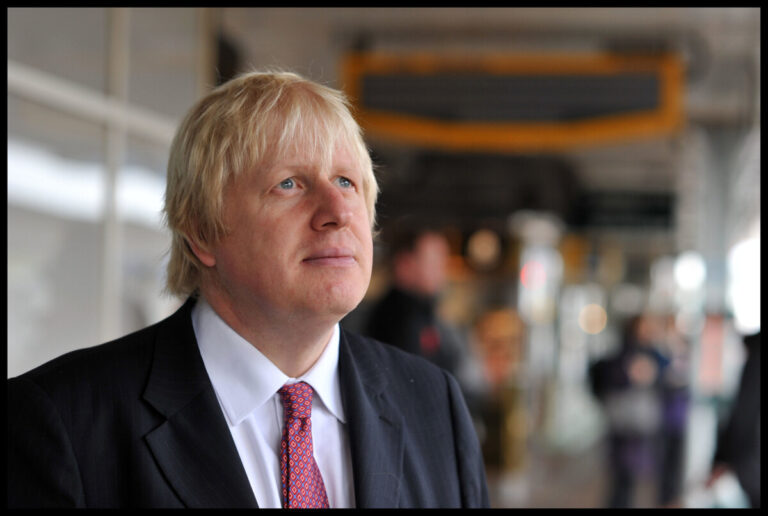
Boris Johnson hospitalised, Prime Minister Mark Rutte wishes him well on Twitter

Yesterday, the British Prime Minister Boris Johnson was admitted to intensive care after suffering from severe symptoms of coronavirus. Well-wishers, including the Dutch Prime Minister, Mark Rutte, took to Twitter to share some kind words.

He tweeted: “On behalf of the Dutch cabinet, I wish @Boris Johnson and the British people strength during this time. I hope to speak to him soon in good health.

We too, wish Johnson, the rest of the UK and other parts of the world all the best during this difficult time.

Coronavirus emojis invented by two Dutchies in quarantine

Spending so much time at home can be an opportunity to get creative — and that’s what two inventive Dutchies did while self-isolating at home.

Esther and Joran were stuck in quarantine when inspiration struck: “Why not make some coronavirus emojis?” And so they did. Their creations have already proven successful.

The emoticons gained traction not only in the Netherlands but abroad as well. They have been downloaded many times in the United States, but also in China.

And finally…

Be sure to check out our guide on coronavirus for any questions/comments/concerns you might have about the virus in the Netherlands.

Follow DutchReview on Facebook for all news about the coronavirus in the Netherlands.

Feature Image: DutchReview/Canva

Why is coronavirus spreading so quickly through the Netherlands?

0

The Netherlands ranks 69th in the world when it comes to land mass. But when it comes to the country with the highest coronavirus cases, it ranks 12th worldwide. So what exactly has made coronavirus spread so quickly in the Netherlands?

For such a small country, it’s not only interesting that the mortality rate for coronavirus cases is high, but also that the number of infected people is so high (over 20,000 as of today- the total is even higher as not all people infected report their symptoms or get tested).

But the spread of the virus has wider implications. Already, Germany has named the Netherlands as an “International Risk Area,” which means that the spread of coronavirus in the Netherlands could propel the spread of the virus globally.

Today we’re jumping in and investigating why the Netherlands has become a coronavirus hotspot.

Population density

Something to keep in mind is population density, which refers to how many people are in a given unit of an area. The Netherlands has a high population density. And you can tell. I mean, have you ever tried walking through the centre of Amsterdam in the pre-corona era?

In the Netherlands, the population density is 508 per km2. In comparison, the population density of the UK is 281 per km2. This means that the Netherlands has on average twice as many people living in its space than the UK does.

In fact, the population density of the Netherlands is even more than that of China as well as India (which have 153 per km2 and 464 per km2 respectively).

Why is population density important?

According to Peter Daszak, the president of Eco Health Alliance and a disease ecologist, who studied the link between the risk of pandemic and human population density, “there’s a strong correlation” between population density and the spread of illnesses. 

Of course, a densely populated region has its advantages in times of crisis. Hospital emergency response times are faster, there are many stores to pick up essentials, transport is easier, and so on. This is because there are more people around in a given space to make use of these utilities. But in terms of the spread of coronavirus, the closer in proximity people are to one another, the faster the virus will spread.

Andrew Cuomo, the governor of New York illustrated this view in a tweet:

That’s why social distancing measures have been implemented across the world.

In a densely populated place, there’s a higher chance of coming in contact with someone who has the virus. If people cough or sneeze, the droplets they release into the air have a chance of infecting you. Of course, the proximity between people must be close for this to happen. And if you touch surfaces that have traces of the virus and you touch your face, you also have a chance of contracting it.

It ultimately comes down to the fact that more people means easier (and more) transmission.

The Netherlands is a popular travel destination

Another thing to note is that the Netherlands is a travel hub. In 2017, 17.6 million tourists and business people visited the country. That’s equivalent to, well, the entire population of the Netherlands. And of course, given its enormous foreign student population, the Netherlands is fairly multicultural.

Given the spread of the virus, you have people travelling to the country from other parts of the world who could potentially be carrying it with them.

And once one person has it, it’s easy for others around them to be infected- which is how the virus has spread around the world with such rapidity.

Public transport within the country

Additionally, public transport in the Netherlands is, as much as we complain about it, generally pretty good. But this also means that you’re moving from place to place, in a confined space with lots of different people, where you’re touching different surfaces, thereby facilitating the transfer of the virus more easily, maybe even unknowingly. That’s why it’s so important to refrain from going here and there — there’s a reason measures are in place, and it took a while for people to take them seriously.

The problem with looking at numbers

On a side note, it should also be kept in mind that the numbers you see are not always easily comparable to each other (i.e. comparable to that of other countries) and may not always be entirely accurate.

For instance, the Netherlands has a seemingly high mortality rate but this is due to a number of factors including a delay in reporting deaths, emphasis on palliative care and may therefore differ in methodology from other countries. We’ve written about the mortality rate in the Netherlands in greater depth.

In terms of the spread of coronavirus, the RIVM reports the latest coronavirus figures in the Netherlands, but notes that the actual number of infections is higher than the reported number, as not all people displaying symptoms are tested for the virus (and even more may not have noticeable symptoms at all).

Thus, it may be difficult to compare how the virus is spreading through the Netherlands to other countries.

Government measures

Initially, it took a while for the government-imposed social distancing measures to enter into force. Then it took a while for people to adjust to them, as initially they weren’t taken as seriously. So potentially that’s why the first two weeks of coronavirus cases were increasing at such a rapid rate.

Overall, many factors could have propagated the spread of the virus across the country, including population density, travel both to and within the country and adjustment to social distancing measures.

What other factors may have contributed to the spread of coronavirus in the Netherlands? Let us know in the comments below.

Feature Image: DutchReview/Canva

The problem with the Dutch mortality rate

7

Many of our DutchReview readers have been wondering why the mortality rate in the Netherlands is so high, with one of the highest in Europe. Meanwhile, people have taken to Twitter wondering what exactly the Netherlands is doing wrong.

But the figures can be misleading. 

When looking at the coronavirus mortality rate, the number appears a bit worrisome. The Netherlands currently has one of the highest rates in Europe, up there with Spain, Italy and the UK, according to De Volkskrant. And for such a small country, that’s perhaps a little concerning — Germany, the Netherlands’s much larger neighbour, has far less deaths in comparison.

But, according to professor of theoretical epidemiology at Utrecht University, Hans Heesterbeek, comparing the mortality rate in the Netherlands to other countries is of little use at the moment. “This has to do with several factors. For example, it is not always determined whether someone dies from the coronavirus itself.”


*NB: the data in the graph above was current as of April 5

What Heesterbeek hints at is that the number you see is a lot more complicated than it lets on. For a start, mortality rates are highly dependent on how many people are tested. In this article, we’ll be comparing mortality rates based on population size.

Mortality is not easy to measure

Not all coronavirus cases or mortalities caused as a result of coronavirus are registered. If a person does not report their illness and then passes away later as a consequence, their information is not necessarily reported to RIVM.

The Netherlands, as well as many other countries, has this issue since GPs are pretty clear that people stay away from the doctor’s office unless their illness is life-threatening (i.e. difficulty breathing etc). So the only cases that are registered are those of people being hospitalised.

Healthcare is also important

The quality of healthcare is also important. Countries that are able to treat patients more quickly and effectively will have a lower mortality rate. For example, Germany has far more ICU beds compared to, for example, the Netherlands (25,000 compared to 1150 beds)

But beds aren’t the only criteria. The US, on the other hand, doesn’t have easily accessible healthcare for poorer groups of society. And, as De Volkskrant states, Dutch doctors are less inclined to bring elderly patients into intensive care. Three-quarters of patients that have died in the Netherlands were in nursing homes or at home. But this isn’t necessarily a criticism — it’s actually a part of Dutch approach to palliative care.

Dutch approach to palliative care

The topic of palliative care in the Netherlands would need an article entirely dedicated to the concept, but we’ll keep it brief for now.

Palliative care is focused on improving the quality of life for a person who is suffering from a life-threatening illness. The aim is to decrease suffering and painful symptoms and provide “social, psychological and spiritual support” so that patients do not spend the last few weeks of their life in a hospital hooked up to machines.

The patient has the right to choose this procedure, and the Netherlands is renowned for offering high standards of palliative care to patients.

It’s all relative

Countries have different ways of measuring stats

Reporting of statistics is variant per country. For instance, regarding China, there is speculation as to how reliable the data is. Already, the government was late in reporting the coronavirus outbreak to the world.

Additionally, some countries may be better at testing than others, meaning their count is more accurate.

Regions versus countries

On another note, what also needs to be taken into account is regions versus countries as a whole. On a regional level, the death toll may appear higher than on a national level.

To put this into perspective, in China the nationwide mortality rate is two people in every million. But, in the Hubei region, where the city Wuhan is located, mortality totalled 50 people per million inhabitants.

Size matters

The Netherlands is a relatively small country (a population of roughly 17 million) and if you compare it to say, the state of New York (a population of roughly 19.5 million), it fares considerably well. The death toll in New York City alone (keep in mind the state of New York is far larger than those five boroughs that make up NYC) has surpassed 1,000. 

Then again, the mortality in the region of North Brabant is higher than elsewhere in the country, making comparison increasingly difficult.

On the RIVM’s map above, you can see that the southernmost areas of the Netherlands (roughly where North Brabant is located) has the highest concentration of hospital admissions (per residence of admitted patients). It doesn’t necessarily show mortality but gives an indicator of where the largest amounts of coronavirus cases are, which would likely be the places that experience the highest mortality. This is because there is a higher probability of becoming infected with the virus.

Other factors affecting the accuracy of the number

Data regarding whether the patient had previous complications as well as age should also be taken into account. In this regard, some countries have a larger elderly population than others, which makes people more susceptible.

Additionally, it is after all flu season, and flu, rather than the coronavirus outbreak, could have resulted in an increase in the death rate, especially around this time.

The virus will also naturally hit each country differently depending on aspects like poverty, population, maybe even weather as well as other illnesses that are circulating. In some areas it will grow exponentially (such as in Italy and Spain). The Netherlands may still be early on in the crisis. For now, however, the country resembles Belgium and France more closely, where the rate at which the death toll grows is more constant.

So how bad is the Dutch mortality rate?

While it is easy to point to a number on paper and insist the Dutch are doing something wrong, when it comes to counting coronavirus deaths countries have far too many differences for a fair comparison.

The amount of testing conducted in a country, access to healthcare, cultural approaches to palliative care, and different ways of measuring statistics are all factors affecting statistics. By looking solely at the numbers it’s impossible to gain a clear overview of how the Netherlands is doing compared to other nations.

Should the mortality rate in the Netherlands even be compared to other countries in the first place? Let us know your thoughts in the comments.

Follow DutchReview on Facebook for more information about coronavirus in the Netherlands.

Feature Image: DutchReview/Canva

Boris Johnson hospitalised, Prime Minister Mark Rutte wishes him well on Twitter

0

Yesterday, the British Prime Minister Boris Johnson was admitted to intensive care after suffering from severe symptoms of coronavirus. Well-wishers, including the Dutch Prime Minister, Mark Rutte, took to Twitter to share some kind words.

55-year old Johnson, was admitted to St. Thomas’s Hospital in London after pervasive symptoms that did not decrease during his home isolation in London. As of now his situation has not significantly improved, NU.nl reports.

Yesterday evening, Mark Rutte tweeted, “on behalf of the Dutch cabinet, I wish @Boris Johnson and the British people strength during this time. I hope to speak to him soon in good health.”

We too, wish Johnson, the  rest of the UK and other parts of the world all the best during this difficult time.

Feature Image: Andrew Parsons, BackBoris2012 Campaign Team/Flickr 

Coronavirus emojis invented by two Dutchies in quarantine

0

Spending so much time at home can be an opportunity to get creative — and that’s what two inventive Dutchies did while self-isolating at home.

Esther and Joran were stuck in quarantine when inspiration struck: “Why not make some coronavirus emojis?” And so they did. Their creations have already proven successful, RTL Nieuws reports.

Instant viral content

After spending some time playing around with photoshop, the duo had 12 emojis ready. Once they put them up for download on the internet, the demand was so high that they decided to make a website for them. They also got flooded with suggestions for new emoticons.

The collection is now comprised of 26 emojis. Esther’s personal favourite is the man working in his underpants, something that we can all relate to on some level, especially those among us who are working from home.

Image: corona-emojis.com

For her, making the emojis is about raising awareness and to find a way to explain the measures needed to contain the virus in a light-hearted way.

Popular internationally

The emoticons gained traction not only in the Netherlands but abroad as well. The emojis have been downloaded a lot in the United States, but also in China.

Companies have also approached the duo, asking if they can have the emojis on posters.

If you want to have a go yourself at using these emojis, you can find them on this website. They’re free of charge, but you’re encouraged to make a donation to the Red Cross instead.

What’s your favourite emoji from the list? Let us know in the comments!

Feature Image: corona-emojis.com

Downward trend in growth rate for ICU patients

1

When it comes to the growth rate of ICU admissions, there has been somewhat of a downward trend in the past few days. 

According to the RIVM’s figures, the increase of ICU patients from the day before on Thursday was 82, the next day it was 51 more than the day before, on Saturday it was 26, Sunday 25 and yesterday the number was 24.

Downward trend

This shows a downward trend in the growth rate, according to NOS. “If this continues, I’ll be very optimistic,” says Diederik Gommers, the chairman of the Dutch Association for Intensive Care. Gommers notes, however, that the number could easily rise again— It takes two weeks for a peak in the admittance of patients.

According to Ernst Kuipers of the Landelijk Netwerk Acute Zorg, credit has to be given to the Dutch population since social distancing measures are being adhered to fairly well. And this should continue.

When to be optimistic

Recent days have shown something to be hopeful about. Furthermore, Dutch hospitals have not as yet reached their full capacity for ICU patients. Nonetheless, caution should still be taken. There are still a large number of coronavirus patients in hospitals.
According to Gommers, we can only really relax once the numbers begin to fall in terms of coronavirus cases and there is no increase in the number of admittances, only a decrease.
Follow DutchReview on Facebook for all news about the coronavirus in the Netherlands.

Feature Image: Calleamanecer/Wikimedia Commons