Home Blog Page 717

The pay gap in the Netherlands is increasing: women earn 6.4 percent less than men

0

Dutch women are earning less than their male counterparts. The annual difference in salary is 5000 euros on average, which means that women are working three weeks a year for free. But the most staggering finding of a recent study by the Intermediair National Salary Survey and Nyenrode Business University is that the pay gap between men and women is steadily increasing.

Women under 36 are earning less, compared to men, than two years ago

You might expect that in a country such as the Netherlands, which markets itself as the land of gender equality, this would not happen. However, the biannual study conducted by the Intermediair National Salary Survey and Nyenrode Business University has shown that women in the Netherlands are still earning substantially less than men. For women under 36 years of age, there is a difference of 6.4 percent. This is an increase from 4.9 percent, which was the figure of two years ago. For women above 36 years of age, the figure is pretty much the same as that of two years ago- 8.9 percent. The reason 36 is the cut-off point for this comparison is because once women have children, their salary decreases even more when compared to men’s.

Why are women earning less?

Experts disagree as to why the Dutch women are earning less than Dutch men. Labor economist Ton Wilthagen from Tilburg University says that negotiating tactics definitely have something to do with the difference in an interview with RTLZ. Men, he says, are much more aggressive when negotiating raises on their salaries, whereas women don’t bluff as much, and are less likely to threaten to leave. However, Jaap van Muijen from Nyenrode Business Universiteit, who carried out this research, disagrees strongly with putting the blame on women. “You can’t just put this problem on women. It’s the organisation’s problem.” He advocates for increased transparency within companies about what they pay their employees, so women can see if they’re being paid less than their male colleagues.

Highly educated women have the biggest pay gap

The research contains yet more depressing news: the higher a woman’s level of education, the higher the salary gap between her and a male colleague. If a woman has a university education under her belt, the difference can be up to 12,000 euros a year; a professional education 8,000 a year; an intermediate vocational education 4,000 a year; and a high school diploma 3,000 a year. The differences are markedly high in the legal and financial sectors in particular.

Women often do unpaid overtime

The research, which surveyed 44,000 participants, revealed that women work, on average, for free for three weeks a year, due to the salary difference. But we also need to take into account that women often work parttime (usually 32 hours a week) but are expected to do the same amount of work as 40 hour week would require. This means that they will often have to stay later at work, or bring work home. This is much less of an issue for men, who usually have 40 hour a week contracts.

What can we do to solve this problem? Let us know in the comments below. 

Feature image: StockSnap/Pixabay. 

Is the legal status of abortion in the Netherlands under threat?

0

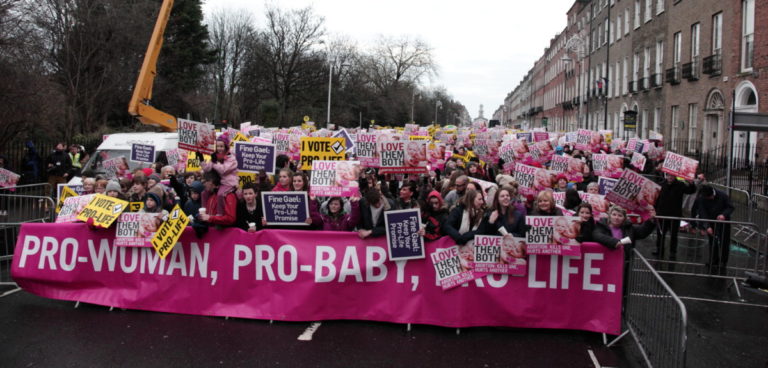
On Saturday, November 16, thousands of people participated in a protest against abortion (not as photographed in the feature image). The Christian anti-abortion organisation Schreeuw om Leven Foundation organised its annual march in Utrecht. According to the organisation, there were about 10,000 people in attendance, a number that the Utrecht municipality feels is greatly exaggerated.

This comes just after a study has shown that young people in the Netherlands have more conservative beliefs than their parents. This can be seen in the number of young people who took part in the Schreeuw om Leven march on Saturday and Exxpose, a young Christian group calling for the Netherlands to make prostitution illegal.

Translation: “Very encouraging that young people are more critical about abortion than many older people! Something is going to change. We want better protection for unborn lives and better care for women in need. This can’t stay that way! ”- Kees van der Staaij at the #MarsvoorhetLeven

During its marches, Schreeuw om Leven also disseminates information about abortion and according to health experts, there are a lot of inaccuracies in the information that they are spreading about the subject.

Prior to the demonstration, Schreeuw om Leven hosted a meeting in the Jaarbeurs in Utrecht. Amongst the invited speakers were SGP MP and leader Kees van der Staaij, Gert-Jan Segers of the ChristenUnie (Christian Union political party) and Kees van Helden, Director of Schreeuw om Leven. The MPs were there to encourage the protesters and let them know that they are fighting the “good fight.”

Schreeuw om Leven is also known to demonstrate at abortion clinics and despite criticism, Van Helden believes it is important to do so. “Every week, at abortion clinics, we find women who we convince to cancel their abortions at the last minute. As long as we stand there and can convince people to not get an abortion, that means that there is something structurally wrong with the whole process. So something really needs to change,” he said.

After the meeting in the Jaarbeurs, the participants walked to the Smakkelaarsveld, across the Lange Viestraat towards the Domstraat and then to the Domplein. Dozens of demonstrators stood at the foot of the Dom Tower to let their voice be heard.

Netherlands’ conservatives and their abortion stance

SGP party chairman Kees van der Staaij was present at the event in Utrecht and said that the number of attendees was encouraging. “The fact that young people are more critical does not mean that they are in all cases against abortion. But they are open to see if we can remove any reasons that make women choose such an intervention, such as financial distress or social problems,” he said.

This is the 27th time that the march has been organised by Schreeuw om Leven.

Counter protests – Handmaid’s Tale style

A few counter-protests also took place in Utrecht during the march by Schreeuw om Leven. Some women could be seen wearing the familiar red clothing described in Margaret Atwood’s book The Handmaid’s Tale.

Other counter-protesters could be seen displaying their bare stomachs with “Boss of my own Belly” written on them. Some banners could also be found with the text: “Keep your church out of my womb.”

From Domplein, the march continued through Zadelstraat and finally ended up at the Jaarbeurs via the Moreelsebrug. With the march, the organisation claims that they want to “send a powerful message to society and politicians and also stand up for the protection of unborn life.”

Abortion in the Netherlands

Abortion has been legal in the Netherlands since 1984, and much of that is owed to the actions of the “Dolle Mina” in the 1970s and 1980s. The legal status of abortion in the Netherlands comes with a few conditions. For example, pregnancy after week 24 can no longer be terminated and women have a compulsory “reflection time” of at least five days.

The current ruling parties in the Netherlands have agreed with each other that they will temporarily leave ‘medical — ethical issues’ just how they are. But that doesn’t mean that they won’t speak up and condemn certain medical practices if they are against their party standpoints. To this end, conservative and right-wing parties are usually speaking up against abortion and euthanasia in the Netherlands.

For example, Gert-Jan Segers, leader of the ChristenUnie, was a guest speaker at the March for Life in Utrecht. Earlier this week, D66 published a video in which they emphasised that women are the ‘bosses in their own bodies’, and that it should always remain so in the Netherlands.

My womb, my choice … Or is it not?

The right of self-determination over one’s own body is currently the subject of debate in various parts of the world – and it shouldn’t be. The abortion discussion shouldn’t be happening in the halls of government but between a woman and her doctor.

In Ireland, two-thirds of the population recently voted in a legal referendum. Under the hashtag #HomeToVote, Irish nationals living abroad returned home to vote for the legalisation of abortion. The move was hailed worldwide as a major win for women in Ireland.

The US as an example for the Netherlands?

The public debate on abortion has been revived since Trump became the US president. While he may not be the ideal example of a religious conservative politician, trump surrounds himself with conservative politicians and fanatical Christians who would love to see the legal status of abortion became a thing of the past in the US.

Since Trump is allowed to appoint Supreme Court judges, his Republican advisers have been pushing him to appoint judges that are anti-abortion and this has led to widespread protests from American liberals, especially women. Conservative judges, such as the recently appointed Brett Kavanaugh, are expected to approach claims about reproductive rights with scepticism and a biblical stubbornness that is meant to frustrate the Pro-choice camp.

Despite the global trend to reform laws to prevent deaths from unsafe abortion, some countries including Nicaragua and El Salvador enforce draconian and discriminatory laws that still prohibit abortion in almost all circumstances.

In the US and other countries, there is activism to curb the previously established right to abortion. For example, in 2019, the US State of Alabama passed a law in which abortion is only permitted if the mother’s life is in danger, without a rape or incest exception, and in which doctors and others who perform abortion can get a prison sentence of up to 99 years. The state of Georgia wants to make abortion possible only in the first six weeks of pregnancy, and restrictive abortion laws have also been adopted in the states of Utah, Ohio, Kentucky, Arkansas, and Mississippi.

Question is: how is such a law going to stop abortion? The answer is that it doesn’t! Such a law will only increase the number of women who will end up dead from unsafe abortion practises.

The role of religion in the discussion

Although different religious movements have always rejected abortion, the strict legal prosecution of the practise only began in the 19th century. The practise and legislation per country now differ greatly. There is no clear standard in international law that states that abortion may or may not be permitted. It is clear, however, that criminalising or making abortion impossible can violate women’s autonomy, the right to life and health, and women’s privacy.

Unsafe abortions: 25 million cases per year

An estimated 1 in 4 pregnancies worldwide ends each year in an abortion. According to a report from the Guttmacher Institute, an American non-profit organisation, as of 2010–2014, an estimated 36 abortions occur each year per 1,000 women aged 15–44 in developing regions, compared with 27 in developed regions.

Unsafe abortions are one of the leading causes of death for mothers worldwide, an estimated 25 million unsafe abortions occur every year.

According to a World Health Organisation (WHO) factsheet on abortion, 40 per cent of women of childbearing age live worldwide in countries with very restrictive abortion laws or where abortion is legal but neither available nor accessible.

When governments restrict access to abortion, people are forced to resort to illegal, unsafe abortion, especially those who cannot afford to travel or seek private care. Between 2010–2014, on average, 56 million induced (safe and unsafe) abortions occurred worldwide each year. Around 25 million unsafe abortions were estimated to have taken place worldwide each year, almost all in developing countries. Among these, 8 million were carried out in the least- safe or dangerous conditions.

The abortion discussion in the Netherlands

Every once in a while, the conservative (and religious) right tries to restrict women’s rights. Conservative right-wing politicians are constantly trying to outdo each other on who gets to restrict women’s self-determination the most.

Bringing back the abortion discussion isn’t a move forward. Let’s keep the discussion about abortion where it belongs: in the doctor’s office between the doctor and the woman.

The most painful thing is that conservative groups and religious types keep on taking the abortion talk to the halls of government when in reality, the discussion isn’t supposed to be happening there at all. These women have to face impossible choices and religious organisations like Schreeuw om Leven aren’t making it easy for them.

The stories that religious organisations tell about abortions and abortion clinics are usually false. Women do not take the important decision to undergo an abortion on a whim. There are 15-year-old girls and/or single mothers who really see no other way out. There are also parents who have to give up what they want the most because their baby will either be stillborn or severely disabled after birth. How is that a decision that one makes on a whim?

In the Netherlands, pregnant women receive an ultrasound when they are twenty weeks pregnant. This is intended to detect medical complications so that doctors can treat the mother or foetus if need be. If there will be complications, the parents are then given the choice to make an informed decision. Political parties like the ChristenUnie (Christian Union) and religious organisations like Schreeuw om Leven want to deprive these parents of that choice. They also intend to dictate to women what to do with their own bodies.

It is simple: if you’re a Christian and abortion is against the tenets of your faith, then don’t get one! But don’t dictate to others what they do with their bodies or how to go about their own lives! Keep your religiosity to yourself and also keep it out of other people’s bodies!

Amnesty International has called on countries all over the world to not just legalise abortion but also guarantee broad access to safe and legal abortion. Amnesty states that access to safe abortion services is a human right. “People have abortions all the time, regardless of what the law says, and it is in the best interest of women all over the world to make it legal so as to give them access to safer abortion services,” they said.

According to international human rights law, everyone has the right to a healthy life, and the right to be free from violence, torture or cruel treatment. The same law state that decisions about your body should only be up to you. Making abortion a crime is a violation of human rights. Forcing someone to bear an unwanted pregnancy is a violation of their right to privacy and physical autonomy. And no one should be forced to have an abortion either.

Abortion must stay legal in the Netherlands because criminalising it isn’t going to stop anyone from getting an abortion. It will only increase the number of deaths from unsafe abortion practises. Furthermore, what type of “liberal country” would the Netherlands be if it took away women’s right to decide what they do with their own bodies? True liberalism grants an individual the right to decide how they live, the direction of their lives, what they do with their own bodies, etc.

Getting an abortion can be a very tough decision to make. And demonstrations from religious groups in front of abortion clinics can make it even tougher. Ultimately, no one can know why a woman would choose to make such a choice. The only person who can decide whether it is a good decision or not is the woman.

No matter your opinion on the matter, in the end, it’s about someone else’s body. We can’t force anyone to donate an organ or get a tattoo, so why should we force a woman to give birth to a child she doesn’t want? That’s just wrong and unfair!

Women are not baby-making machines. They are human beings, and if they do not want to carry a foetus to term, then they should not be forced to. Pregnancy is not an easy period for any woman. It is scary and not every woman survives it. So if a woman does not want to go through it, she should not have to! She also shouldn’t have to explain her reason to anyone!

For now, the legal status of abortion in the Netherlands isn’t the end of the story. Abortion is a fragile human right that we must continue to fight for. A lot still has to be done to keep religious groups from getting their way in the Netherlands. We shouldn’t let them enact the same abortion laws they have in Alabama and other places where women are treated like objects and second-class citizens. That would be an injustice to women in the Netherlands.

What do you think about the legal status of abortion in the Netherlands? Let us know in the comment section.

Feature Image: Nigel Hanlon/Flickr 

Can the Netherlands be more toilet-friendly?

0

It is World Toilet Day and the Netherlands could be a little bit more toilet-friendly: there is a huge shortage of public toilets in the country, according to Maag Lever Bowel Foundation’s (MLDS) director. Alkmaar, Amersfoort, and Leeuwarden are said to be the best while Oss, Roosendaal, and Nissewaard are said to be down on the list.

This was concluded because of the study carried out by MLDS and the inventors of the HogeNood app, the largest database that provides information on toilets and sanitation in the Netherlands. Their aim was to find out which of the 50 largest municipalities is the most toilet-friendly.

Knowing where to go in case of a “toilet emergency” in the Netherlands

According to MLDS, four in ten people who live with digestive and bowel problems have been denied to use the toilets in hotels, supermarkets, government buildings, restaurants, and bars. For some people, it is more than needing to have a quick wee because they drank too much beer and broke the seal.

More than 1500 toilets were registered in the database, but we don’t know if these plans were actually followed through or if they were already there for some time. But this also means that people will be able to find a place to relieve themselves more easily. Is there anything more reassuring than knowing where your nearest toilet is when diarrhea unexpectedly hits you?

How to make a municipality more toilet-friendly

“What you see is that there are really active policies in cities such as Alkmaar and Amersfoort. Sometimes volunteers go to work to make the toilets easier to find. But it is also possible that a motion is passed through the city council and that municipalities also make a real policy and release a budget to realize more public toilets,” says the director.

According to him, a municipality can improve in two ways: add more toilets or get local business owners to be a little bit more flexible. He says that it should be up to them whether they charge for it but he also went to state that “research also shows that your turnover is going up. If you do not request a fee, you are a more attractive hospitality entrepreneur or a more attractive shopping area, so there will be more people off.”

Where were you the last time diarrhea unexpectedly hit you? Could you find a toilet easily? Let us know your toilet emergency stories in the comments below!

Feature Image: lumpi/Pixabay 

Tata Steel might scrap hundreds of jobs in the Netherlands

0

Rumors of layoffs at Tata Steel’s Netherlands branch started making the rounds after they released a press release about scrapping 3000 jobs in Europe. According to CEO Henrik Adam of Tata Steel Europe, IJmuiden has not been performing very well. Generally, the European car industry has been going through some tough changes. Along with high energy costs and competition, things are not looking good.

Right now, there are around 11,000 people working for Tata Steel in the Netherlands. 9,000 of them are in working in IJmuiden. Although Frits van Wieringen (Central Works Council) thinks it will be between 1500 to 1600 jobs, Tata has not confirmed how many jobs it will be, reports RTL Nieuws.

Employees being kept in the dark

As it is not yet known just how many people are going to losing their jobs in the Netherlands, there is a lot of uncertainty about what is going to happen. According to NOS, “Tata expects that office functions in particular will be scrapped: around two-thirds of the total.” However Peter Böeseken from the trade union CNV says, “Tata Steel Europe says the redundancies will fall at the offices. But at which offices, and where at the offices? We don’t know that yet.”

Trade union FNV is also very let down by how Tata is handling this as they have not made it clear how exactly these cuts will be made. They said that they heard Tata’s austerity plan will be released by April 1. However, until then, the employees might be kept in the dark.

Is this really surprising?

As the CEO of the European division mentioned, it seemed to be inevitable that jobs in the company might be scarce. Last month, a memo saying that Tata wants to cut down on costs worth 830 million euros in Europe leaked. It was already estimated back then that 1000 employees might be out of a job because of this.

What do you make of this? Let us know in the comments below!

Feature Image: Alf van Beem [CC0], via Wikimedia Commons

The Dutch are in the European Championship! Here’s how you can catch a match

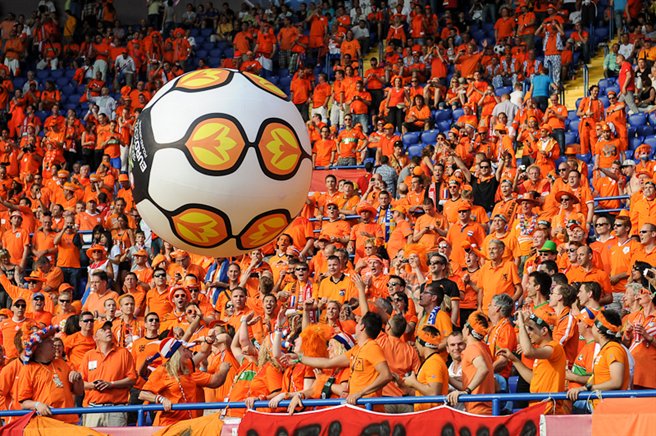
Ons oranje! Congratulations to the Dutch mens team for qualifying for the European Football Championship (EC) on Saturday. Despite not being able to find the back of the net during the match leading to an unfulfilling-draw, the Dutch have secured their place in the EC.

Even better? Some of the games will be played right here in the Netherlands! We’ve got everything we know so far about the European Championship and how you can get along to a match.

It’s the first EC or World Cup that the Dutch men will compete in since 2014, so the pressure will be on – particularly after the Dutch women’s team blasted all the way to grand final in the FIFA Women’s World Cup earlier this year.

(Did we mention that all-star goalkeeper Sari Van Veenendaal also won best goalie in the world after her Women’s World Cup performance? We’re more than a little proud).

Who will the Dutch face?

The good news: we know that they won’t be playing against football powerhouses like Italy, England, Spain and Germany in the group stage. That’s a relief!

However, we don’t know exactly who they’ll be coming up against until the draw on November 30th in Bucharest. We do know that they’ll be part of Group C.

When and where will the matches be?

The Euros will work a little differently this year because it’s the sixtieth anniversary of the tournament (the Euros are getting some grey hairs!) In honour of the anniversary, the organisers are making twelve countries hosts of matches, instead of just one or two. That’s what we call sharing the love.

Because of that, we know that the Dutch men will grace the Johan Cruijff Arena in Amsterdam three times in the group stage – that’s the perfect chance to experience a Dutch football match!

According to the group match schedule, the Netherlands will be playing in Amsterdam on June 14, 18 and 22. Mark those dates in your agenda.

Who else will be in the Euros?

NOS has kindly compiled a breakdown for the hosting countries during the group stage of the 2020 European Championship. Countries in bold have already qualified, the rest need to make it a tad further.

A Italy Azerbaijan
B Russia Denmark
C The Netherlands Romania
D England Scotland
E Spain Ireland
F Germany Hungary


There will be 24 countries competing in the competition, with four slots still to be decided after Saturday when the regular qualifying series is over. After that, the remaining countries will compete for four more remaining tickets in the play-offs.

The sixteen countries that can already start preparing after securing their tickets are the Netherlands, Belgium, Germany, England, Finland, France, Italy, Croatia, Ukraine, Austria, Poland, Russia, Spain, the Czech Republic, Turkey and Sweden.

Will you be watching the European Championships? Who will you be rooting for? Let us know in the comments below!

Kim Kardashian speaks out about Zwarte Piet

5

Last week, media personality and businesswoman, Kim Kardashian, spoke out against Zwarte Piet on Twitter. In the tweet, she links to an article by Al Jazeera entitled “Zwarte Piet: Black Pete is ‘Dutch racism in full display”. 

What did she tweet?

Some of the replies to the tweet included

1. “Zwarte Piet is a wonderful Dutch tradition we and our kids enjoyed while living there for 8 years. It is in no way a disrespectful act. He is the color he is as a nod to the Moors who were the helpers of St Nicholas and were often fire scorched from visiting chimneys.” – @svcltch

2. “I live in the Netherlands and I don’t have anything to do with this tradition. It’s full on racism.” – @xyseeeee

3.”How about a nice cup of shut the fuck up. Mind your own business” – @19dirky66

4. “Another ego talking about a culture she doesn’t know” – @NLSTWLK

5. “As someone who is dutch I can 100% say that you are right. It’s a very huge tradition in our country and when I was young I don’t know how bad it is but now I’m older i see how disturbing it is. Even though a lot of younger people are against it now,the tradition is still going.” – @debsimxo

More celebrities have spoken out as well

Kim Kardashian is not the only celebrity who has spoken out against the long-standing tradition. Last week, The Game and Trey Songz also called out the racism.

Waka Flaka has refused to visit the Netherlands as long as this tradition exists. On his Instagram he posted:

The tradition is very polarising in the Netherlands 

Zwarte Piet is very polarising in the Netherlands. Many people strongly disagree with the tradition whilst others think it is harmless and a creates lots of fun for the children. Some people are willing to go to great lengths to protect Zwarte Piet, such as the man who threatened to blow himself up to protect the tradition.

There’s an article if you want to know more about Sinterklaas’ arrival to your hometown.

Feature image: Naser Chawroka/Flickr 

The first snow of the year falls in Heerlen; will there be more?

0

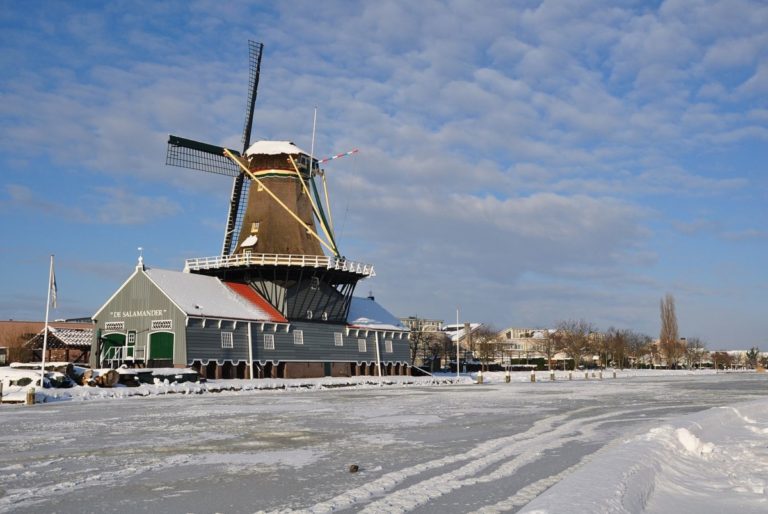
The first snow of the year fell in Heerlen on Sunday evening at around 8pm. It was just a little snow so did not blanket the streets and no more snow is expected anytime again soon.  But what can we expect for the rest of the week? 

Weather report for the next week

Monday

The week starts wet as a low-pressure in the north-east of our country produces extensive cloud cover. This means there will be rain in most of the country, according to Weerplaza online.

The warmest temperatures will be in the southwest of the Netherlands where around 8 degrees are expected.

Tuesday

Rain will continue in the north of the Netherlands but will ease in the south of the country. Temperatures rises to ​​between 6 and 9 degrees.

Wednesday onwards

On Wednesday we can hang our rain jackets up and pop those umbrellas away as it will be dry in most of the country. But it is unlikely to be those glorious and crisp winter days and clouds will prevail and block out any chance of sun.

Are you amped for the snowy season? And a potential snowy Christmas? What’s the best place you’ve experienced snow? Let us know in the comments below! 

Feature image: Vincent van Zeijst/Wikipedia 

Referee stops FC Den Bosch – Excelsior Dutch football match after racist chants

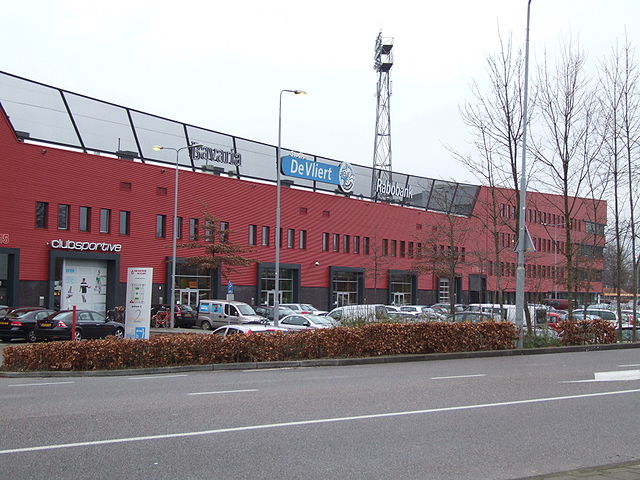
On Sunday, the game between Den Bosch and Excelsior in the First Division was stopped for thirty minutes after racist slurs were heard in the crowd.

We saw it in Italy and we saw it in Bulgaria, and now it’s here as well. Well, it actually never has been away since this wasn’t the first time in Den Bosch, it happened in 2013 as well. 

What happened at the FC Den Bosch – Excelsior match?

After Moreira indicated that he was being called all kinds of things, referee Gerrets then stopped the game and the entire selection of Excelsior walked off the pitch. The Den Bosch players followed suit shortly after.

According to Gerrets, Mendes Moreira became more and more emotional because of the disgusting chants, after which he decided to stop the match, as he said to Fox Sports. After some discussion with the clubs it was
decided the match could continue.

In case you’re wondering what he was being called, he said he heard racist slurs such as (apologies beforehand): k-negro, k-cottonpicker, k-blackie and yes – Zwarte Piet. And yes, the ‘k’ stands for cancer.

There was also ‘Zwarte Piet’ songs sang in the stadium, earlier in the day a group of supporters of FC Den Bosch also participated in pro-Zwarte Piet protests.

Mendes Moreira scores

Not long after the game resumed, Mendes Moreira scored for Excelsior. He made scored the last minute of the first half in what was a moment of sweet sweet poetic justice.

Shit reaction by FC Den Bosch and Den Bosch coach calls Moreira a ‘weak guy’

Just after the match a shook up Moreira was about to give an interview, but was called a ‘weak guy’ (zielig mannetje) by FC Den Bosch coach Van der Ven. Here’s the interview with Moreira, you can see him shaking, people who’ve just been racially abused might recognise this.

Besides this, the coach added that he was fully behind the statement of the club FC Den Bosch issued after the match. Which was some stuff about a crow song they sang since the 90’s and that they felt sorry for Moreira that he felt this way.

Of course, when everybody and their dog fell over this weak behaviour from FC Den Bosch and their coach they peddled back on it late Sunday night.

An investigation by the KNVB is forthcoming

The Dutch football association has announced an investigation into the events and has called the proceedings ‘clearly disgusting’.

It was a dark day for football in the Netherlands. Here at DutchReview we can’t overstate how much we need to say no to racism in football or anywhere else.

feat pic: Source: Wikipedia/CC 3.0/By LeeGer found at https://nl.m.wikipedia.org/wiki/Bestand:De_Vliert_stadium.jpg

The Best Things of the Winter Wonder Weeks in Leiden 2019

Nothing screams Christmas holidays like the Winter Wonder Weeks in Leiden. Get ready for weeks and weeks of joy and festivities!

The Winter Wonder Weeks in Leiden combine Holland’s best holiday events. Every year, Leiden transforms into a magical Christmas town with a ton of festive decorations to help get you into the holiday spirit. The entire town is beautifully illuminated with Christmas lights on trees, small lights alongside bridges and garlands in the streets. And of course, no fairy tale town is complete without a large Christmas tree in the city centre.

But what makes the Winter Wonder Weeks in Leiden even more special are the numerous events starting in November, and lasting until all the way in January. Here are 7 of the best events during Winter Wonder Weeks in Leiden 2019. For the full list, you can just simply check out their official page.

Floating Ice Rink (7th of December – 5th of January)

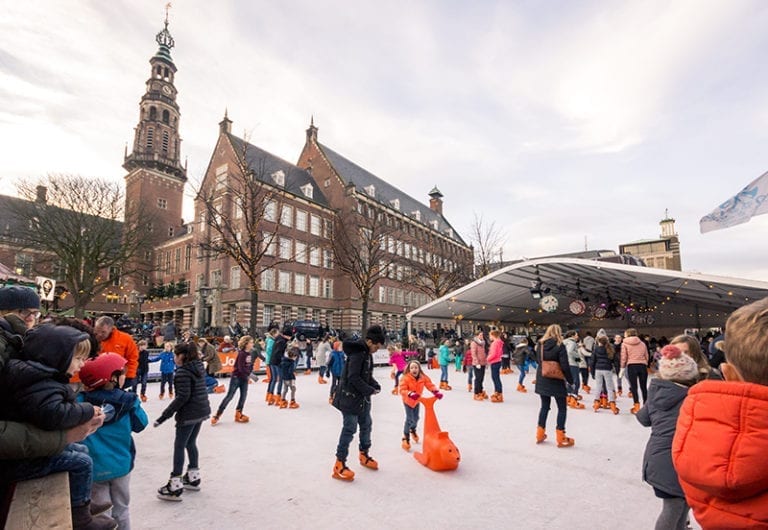
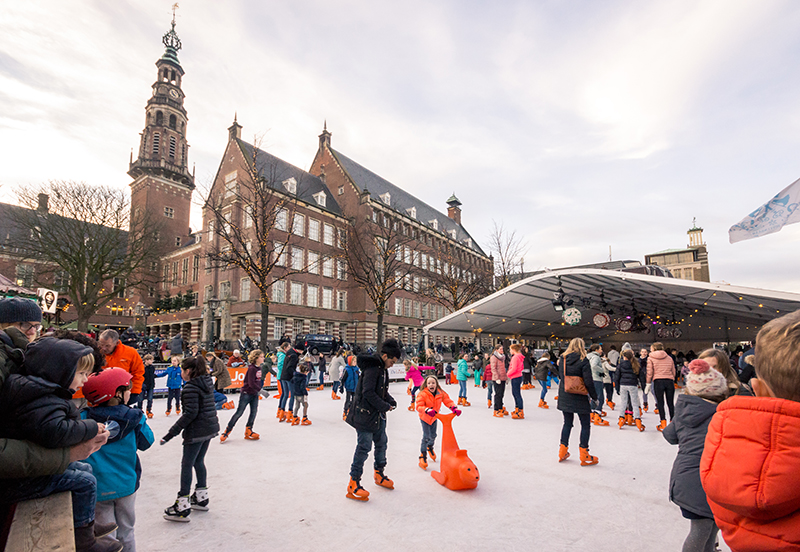
You thought an ice rink was fun? But how would you feel about a floating ice rink? That’s right, this year once again Leiden will have a floating ice rink right in the heart of its city center. It will be open to the public from the 7th of December until the 5th of January from 9:00 to 21:00. For € 8.50 everyone can skate in the ice rink during the whole day! The price also includes the skates! Not to mention that the ice rink is located near shops, restaurants and cafes, so you can always jump out for a cup of hot chocolate. So grab your friends and family, put some extra padding on your butt, and head on over to Leiden’s floating ice rink. Because no winter fairy tale is complete without a bit of ice skating.

There is no Christmassier activity than iceskating. Image: Leiden Marketing/Supplied.

Lighting the Christmas Tree (14th December)

Ah, the most atmospheric and Christmassy event of all time: lighting the fairy lights on the Leiden city Christmas tree. It’s exciting enough to be putting up your own Christmas tree in your own living room- we’re getting nostalgic imagining the smell of pine needles and the rattle of Christmas baubles as we write this. Leiden’s Christmas tree will be located outside the Hooglandse Kerk- it’s the perfect event to end your Saturday on the 14th.

Floating Christmas Market (13th of December – 24th of December)

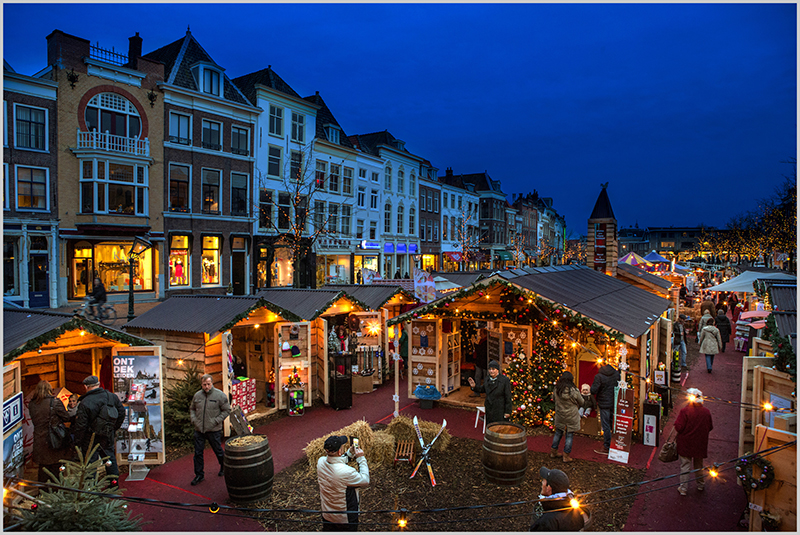
If a floating skating rink wasn’t impressive enough, how about a floating Christmas market? Every year, as part of the Winter Wonder Weeks in Leiden, there is a magical Christmas market. Featuring cozy chalets where you can buy gifts, as well as hot chocolate and Dutch green pea soup just to get you into the Christmas spirit of the Netherlands. It is not only located right in the city centre of Leiden, but it is also next to floating ice rink!

Oh, wow. We’re so excited for the Christmassy Leiden atmosphere here. Image: Leiden Marketing/Supplied.

Big Christmas Circus (21st of December – 29th of December)

This year, Leiden will play host to an incredible Christmas circus from the 21st to the 29th of December. It will be located at the Lammermarkt, right in the middle of this historic city. Two performances of about 2.5 hours each will be held over the course of the week-and-a-bit that the circus is here. It’s perfect for adults and children alike: the performers will provide spectacular, daring acts, so prepare to have your heart in your mouth.

Choir Weekends (14th of December – 22nd of December)

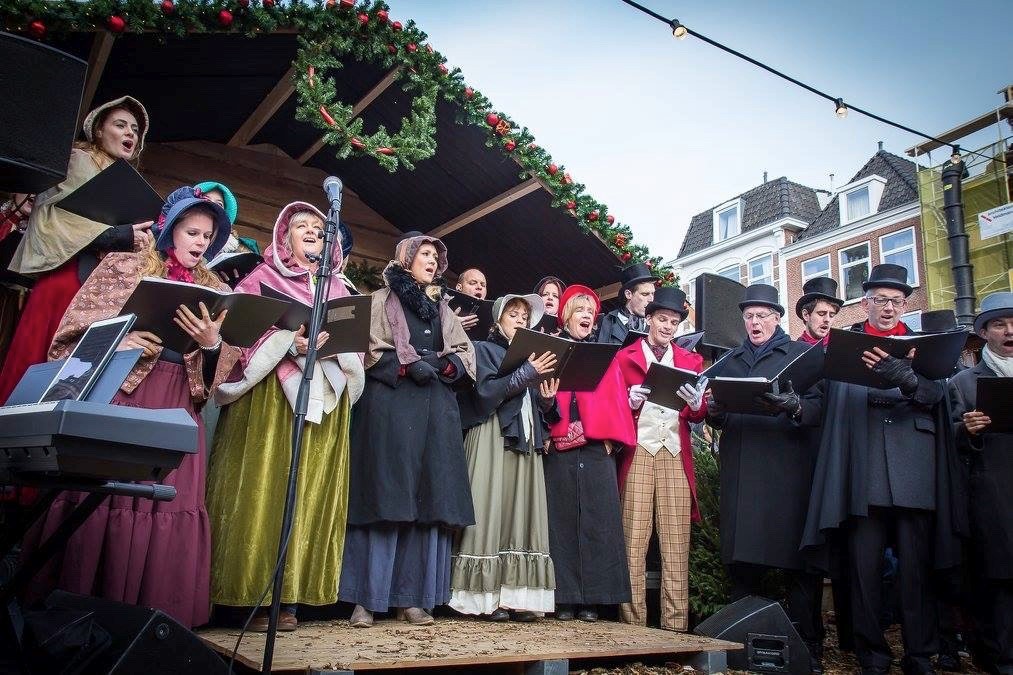
Want to really get into the Christmas spirit? After a successful year last year, the ‘Korenweekenden music festival’ returns for 2 weekends this time. Around 30 different choirs will be singing over the chorus (sorry, bad pun, course) of the 2 weekends. So if you want to enjoy the festivities in Leiden, then this is definitely one way to do it.

For the complete programme and locations of this, check out their Facebook page – they’ll keep you updated.

Christmas makes everyone want to burst into song, but these people are professionals. Image: Leiden Marketing/Supplied.

Santa Run (20th of December)

If you haven’t heard already, then you should definitely know that the Santa Run is one of Holland’s best charity events. It takes place every year in 60 different cities, and the participants raise money for the Kidney Foundation, as well as other local charities. There are two ways to enjoy the Santa run: you either participate in it, or your cheer from the sides! Either way, it’s a ton of fun.

If you wish to take part in Leiden’s Santa Run with 999 other participants in Santa outfits, you can sign up now! You will be able to pick up your number and Santa suit in mid December, and then on the 20th it’s time to run, run, run! The Santa run will officially begin at 17:00 after a start shot by Leiden’s mayor Lenferink. So make sure to join in on the fun, and have your kid’s mind blown by all the Santas running around the city.

Want to see more of Leiden?

If this article has inspired you to want to see more of Leiden, then we have the place for you to go! Leiden’s tourism office, Stad van Ontdekkingen, can help you find out about everything from museums to shopping in Leiden.

Will you be joining the Winter Wonder Weeks in Leiden? Let us know which events you’re most excited about in the comments below!


Feature image: Leiden Marketing/Supplied.

Once a Dutchie, always a Dutchie: study finds Dutch emigrants keep their roots

You can take a Dutchie out of the Netherlands, but you can’t take the Netherlands out of a Dutchie. A brand spankin’ new study has found that the Dutch identity continues to be strong in Dutch emigrants, despite years and decades away. 

Let’s be honest, the study confirms what we already know: the Dutch are thrifty buggers. Despite wandering to all corners of the earth, emigrants connection to Dutch culture is still alive and well – if not for a few spelling errors along the way. Olibol or speculates anyone?

The research, conducted by the Meertens Institute on behalf of the Taalunie, wanted to understand the preservation or loss of the Dutch language, culture and identity. An earlier study found that most Dutch and Flemish people who emigrated to Canada or Australia in the last century often gave up their language quickly.

However, the most recent research surprised everyone. A major finding was that of 7000 emigrants, 97 per cent still speak Dutch on a weekly basis – that’s huge! Of that, almost 65 per cent converse in their guttural g’s for more than eight hours a week. Gek!

What happened to change the tides?

So why the sudden shift back to Nederlander-life? Technology, of course (is there any other answer in this day and age?). By using Facebook groups, social media, reading Dutch news and books, or watching Dutch television and movies, these renewed Dutchies have been able to keep ahold of their language more than ever before.

And, according to the participants, that’s very important. Over 85 per cent rated the Dutch language as a core value of their own identity. Being Dutch has influence over all parts of their lives, leading to celebrating Dutch and Flemish holidays overseas (Sinterklaas has to travel pretty far from Spain!), eating typically Dutch food (like gingerbread, liquorice, or croquettes) and participating in cultural exchanges, like Dutch schools or associations. A Dutch Club definitely sounds like something we would want to be part of).

But it’s not all pindakaas and stroopwafels. Trying to keep Dutch traditions intact can be a lonely process. “It’s singing songs by the chimney on your own, with your children looking at you with wide eyes,” one study participant said.

What is the most missed about the Netherlands? The food (no, we’re not kidding)

While the Dutch aren’t known for their culinary habits, participants were most enthusiastic about questions regarding food. Almost 11,000 answers (out of 7000 participants!) were given over a question about which foods they normally buy or make.

The top answer? Stroopwafels (why are we not surprised?!). However, kale with sausage, rye bread, Limburg pie and Frisian gingerbread also made the list of top ten foods Dutchies were homesick for.

What food do Dutchies miss the most?

1. Stroopwafel
2. Liquorice
3. Sprinkles
4. Croquette
5. Cheese
6. Speculaas
7. French fries
8. Mayonnaise
9. Peanut butter
10. Apple pie

Where are all the Dutchies?

The 7000 participants in the study live in 130 countries, but over half of those live in Australia, the United States or France. Over one-million Dutch people are estimated to live abroad, and almost half a million Flemish people. That’s a good spread!

Are you a Dutchie living in another country? What do you think of the results? Let us know in the comments below!

Feature Image: National Archives of Australia/Wikimedia