Home Blog Page 716

Amsterdam’s population skyrockets despite more people leaving than ever before

0

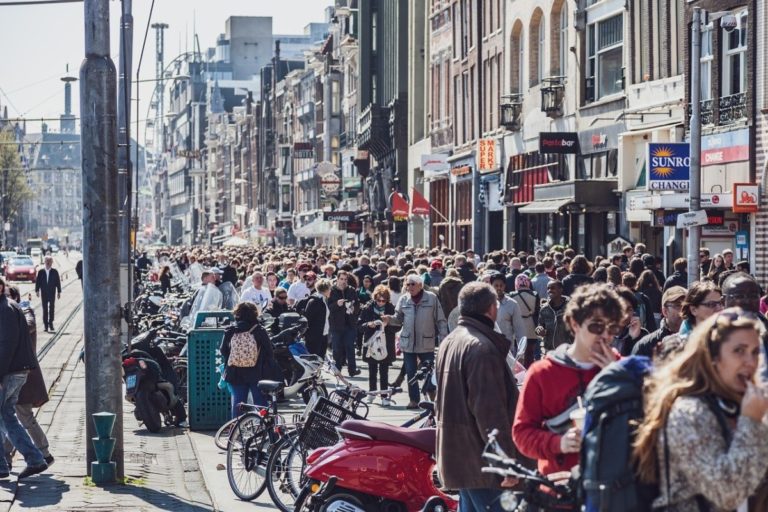
Nearly 47,000 Amsterdam residents packed their boxes, loaded their cars, and said ‘doei’ in 2018 to the city they had called their home. Despite residents ditching the city in droves, the capital’s population is still on track to hit one million people by 2031.

The data, released by Amsterdam’s Research, Information and Statistics Department, found it was the largest number of Amsterdammers to leave the city in a single year.

In particular, housing affordability was identified as having a huge impact on residents desires to remain in the city. The majority of the people abandoning Amsterdam are families with small children.

Yet, despite the departures, immigration has Amsterdam facing huge population growth. Almost 43,000 people moved to the capital city from abroad last year, in addition to Dutchies who were drawn to the city lights. Unsurprisingly, the British made up the largest number of immigrants. Thanks Brexit!

Overall, Amsterdam’s population increased by nearly 9000 people last year. That makes 862,987 living within the municipality limits. While it was expected that the city would breach one million residents by 2032, the huge growth has now moved that forecast forward to 2031.

Do you live in Amsterdam? Are you considering leaving, or will you stay? Let us know in the comments below!

Feature Image: Dimitri Houtteman/Pixabay

Dutch people hopeful that one day they will eat less meat (but that day is not today)

0

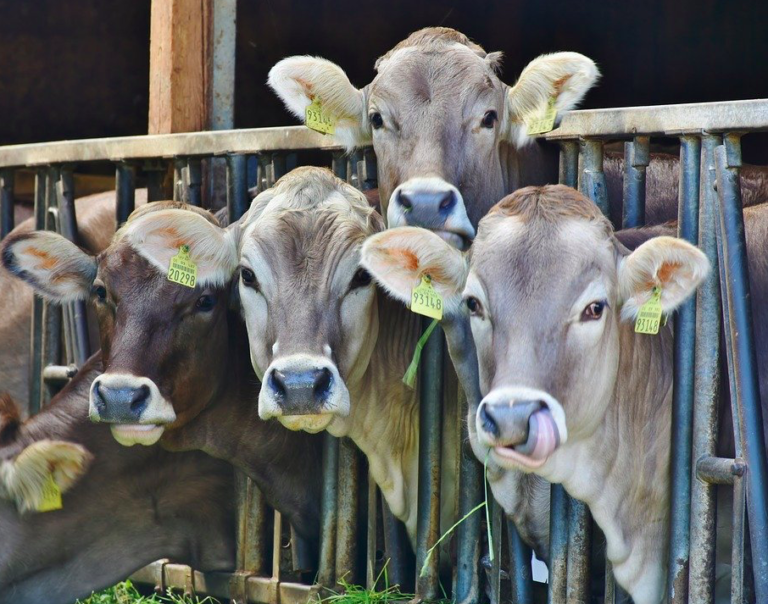
A survey by Natuur en Milieu has revealed that 6 in 10 Dutch people are aware of the negative impact meat consumption has on the environment, and believe that in the future, people will eat much less meat. However, for the moment, meat consumption is actually remaining stable.

The average Dutch person eats about 40 kilos of meat each year. This number has not changed since 2005, according to Wageningen University, so it appears that while 62 percent of Dutch people are knowledgeable about the impact of meat on the planet, not many of them are changing their consumption practices. However, since last year, 10 percent more people are aware of the negative impact of meat on the environment, so some progress has definitely been made.

Translation: The majority of Dutch people don’t think eating meat every day is ‘of our time’. And a third believe that the damage meat causes to the earth should be included in the price. 

Why meat is bad for the environment

The figures of Natuur en Milieu show the same, but they believe that the awareness itself is good news, and maybe be a sign that things are slowly on their way to changing. The organisation itself is in favour of reduced meat consumption because of its harmful impact on the environment. For example, it takes 5 kilos of vegetable feed to produce a kilo of meat. This means, in practice, that a lot of land is needed to produce not a lot of food. Furthermore, cows emit methane, a greenhouse gas that causes far more warming than carbon dioxide.

Translation: The norms around eating meat are changing. The majority of people are aware that not eating meat one day a week helps the climate and nature.

3 in 10 Dutch people want higher taxes on meat

Natuur en Milieu also found that a third of Dutch people believe that the damaging consequences of meat should be accounted for in its price, for example through a greenhouse gas tax. We have seen Dutch people become more vocal about their concern for the environment in recent months, so it’s not surprising that some are calling for stronger measures in this survey.

Do you think Dutch people will be eating less meatloaf in the future? Let us know in the comments below. 

Feature image: RitaE/Pixabay

The Dutch government is neglecting victims of child sex abuse on social media

0

The rapporteur for child sexual abuse, Hermann Bolhaar, has admonished the Dutch government for failing to sufficiently tackle the sexual abuse of children, particularly through social media, reports RTL Nieuws.

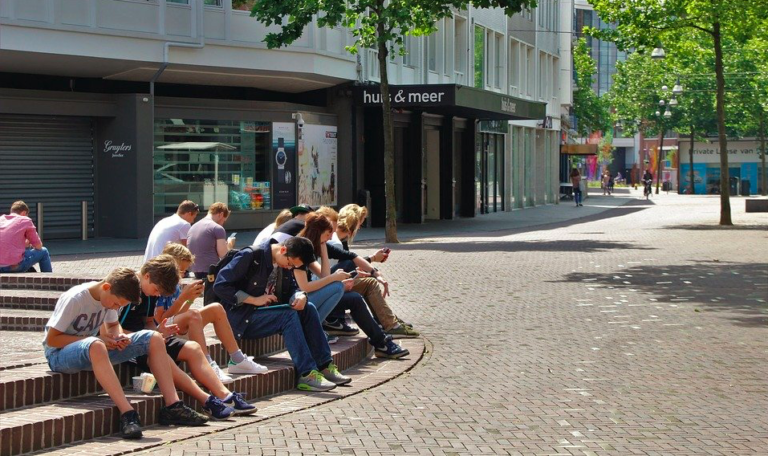
Sexual abuse of children is a massive issue: half of girls will experience some form of punishable sexual abuse before they turn eighteen. One in five boys will experience the same. There are not currently enough resources being provided by the government to tackle this problem. Several individual initiatives exist, but they’re failing to work together, according to Bolhaar: and additionally, they’re failing to take social media into account.

What constitutes sexual abuse in the Netherlands?

Currently, in the Netherlands, the government’s definition of child sexual abuse is as follows: “sexual abuse consists of all sexual touches or acts that an adult forces on a child”. However, Bolhaar wants to change that definition, or at least change how the government reacts to it. Basically, issues like child-on-child sexual abuse fall outside of this definition, as do some abuses that occur over social media. That means that the government is much less effective in tackling them.

Bolhaar’s statement is embarrassing for the government

Bolhaar’s statement is embarrassing for the government, which has publicly stated that working to counteract and stop domestic abuse and child abuse is a big priority. In 2017-2018, a report released by Victim Monitor revealed that the government’s approach was still too fragmented to be effective. It seems that things have not improved since this report.

Translation: The Sexual Violence Against Children 2017-2018 Victim Monitor will be published today, in which we map how many children fall victim to sexual violence, what help they receive and what the government does to prevent and combat this.

Social media is unrecognised as a problem

Bolhaar’s main problem with the government’s approach is their failure to recognise sexual abuse via social media as just that- sexual abuse. This abuse often takes place over WhatsApp or Instagram, and is often perpetrated by children against other children. This is another area where the government often fails to act: sometimes, it does not recognise sexual abuse of children by children as abuse. “If we want to do something about it, we have to make a list of what is already happening and what is still missing. We must not overlook children,” says Bolhaar.

Figures are difficult to estimate

It is nigh on impossible to provide accurate figures on the number of children being abused: it is often not reported, not recognised, and even talking about it is difficult. Bolhaar’s report therefore assumes that there are far greater numbers of children experiencing abuse than we are aware of. A lack of general communication about the issue makes the problem worse: “[Talking about sexual abuse] is incredibly difficult, also for professionals, and children do not easily talk about it themselves.” He also notes that children often face consequences when they do talk about it.

How can we make coming forward easier for victims of child abuse? Let us know in the comments below. 

Feature image: natureaddict/Pixabay. 

Social welfare beneficiaries will soon be obligated to work or study

6

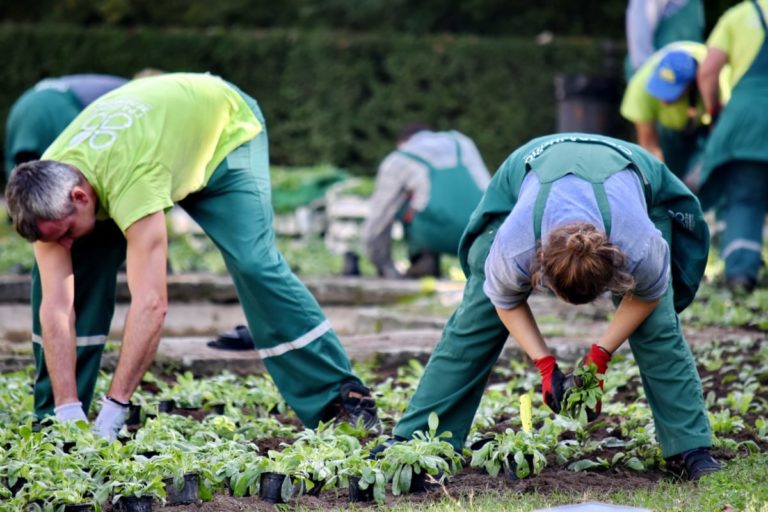
State Secretary Van Ark of Social Affairs wants people who receive social benefits from the state to be obligated to either go to school or start working. According to RTL Nieuws, this could be an internship, volunteering work or even starting a language course. 

Van Ark wants to lay down a national law and streamline how this should be uniformly implemented in all municipalities. Right now, there are a lot of differences in how this is running. For example, some municipalities do not require any counter-effort from beneficiaries of social assistance, while others regard a counter-effort as a commissioned activity. A few of them, and not all regard voluntary work as a counter-effort.

The government wants to change this and make it more organized. But how exactly do they want to do this?

How is the Netherlands going to determine what a “counter-effort” would be?

They want to lay down the law where they want to make sure that people receiving welfare are also giving something back. According to NU.nl, Van Ark believes that most of the people living in the Netherlands who receive social welfare would like to participate and contribute to society in some way or the other. But if they don’t want to do this, it should be made mandatory.

The municipalities can independently decide how exactly the person can fulfill this obligation. For example, this can be a work trajectory, informal care, or even Dutch language courses. However, it has to be determined according to what the person is capable of doing. Someone who is not very literate would take a longer time to learn Dutch or someone with a physical disability may not be able to some physically demanding work or volunteering.

What do you think of this? Let us know in the comments below!

Feature Image: Bicanski/free images/Pixnio

25 stowaways found in refrigerated container at Vlaardingen port

0

25 stowaways were found yesterday in a refrigerated truck aboard a ferry at Vlaardingen port. They are believed to come from Iraq and Kuwait, but do not have identity papers with them, NOS reports. 

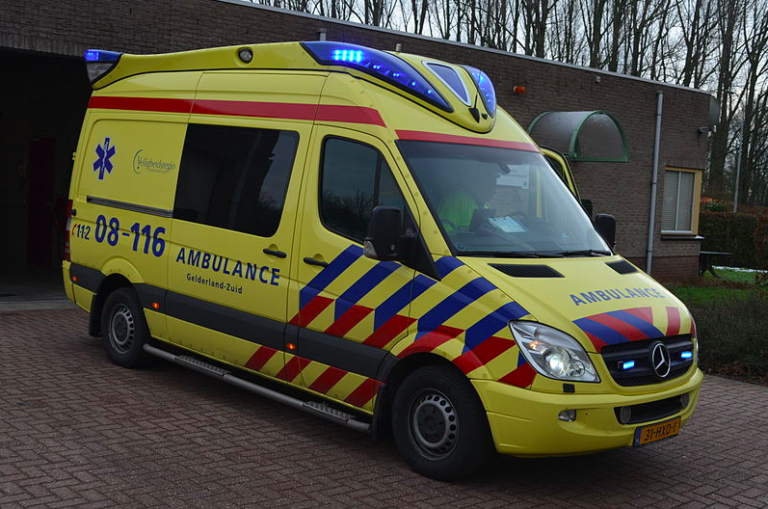
More than twenty ambulances were at the port

Yesterday, after the stowaways were found, emergency services from around the region worked together after a GRIP-1 emergency was reported. After the recent tragic deaths of 39 stowaways in England, it’s no wonder that Dutch emergency services feared the worst. According to Annemiek Jetten, mayor of Vlaardingen, “The incident in the UK was still fresh in our memory.” More than twenty ambulances were waiting at the quay when the ferry returned to port.

Truck driver arrested

Two stowaways received medical attention, but all the rest were luckily unharmed. They have all now been released from hospital and are currently at a police location, where they will be processed as illegal migrants to the Netherlands. The ferry was originally bound for Felixstowe harbour in England. The truck came from Romania, and the driver of the truck has been arrested, although it is not yet known if he was aware of the presence of the stowaways. The stowaways were discovered only once the ferry had left Vlaardingen port, and the ferry turned around once their presence was known.

Mayor of Vlaardingen questions how stowaways were not discovered

Questions have been raised by port authorities about why the stowaways were not discovered at the port. According to Jetten, “We are very curious to see how such a large group can slip through. I told the police and the judicial authorities to take a good look at it, because we are very careful with enforcement.” Stowaways are a growing concern for port authorities, as more and more people are desperate enough to escape their home countries through any means necessary.

What can we do to make migration a more humane process? Let us know in the comments below. 

Feature image: Ramon Versteeg/Wikimedia Commons. 

Don’t pay full price! Buy train tickets the Dutch way.

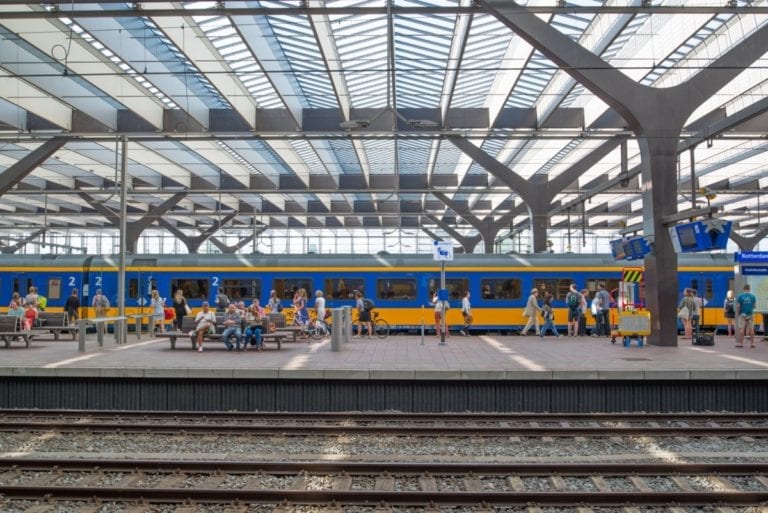
Not another rant about trains in the Netherlands? No, it’s about the Dutch train tickets. Let’s face it. The NS is the bane of every traveler’s existence.

It has been the butt of many jokes, the target of harsh criticism, and most likely a part of a grand scheme to regulate the Dutch population’s happiness. What irks me though is not the fact that train tickets go up by 10% every six months, but that the entire experience from buying a ticket to riding the train is not tourist friendly. At all. Why can’t tourists buy cheaper train tickets as well?

You may expect this from a country that is not known for its tourism, but not from the Netherlands. In 2014 alone, nearly 14 million people visited the land of tulips and clogs. 14 million! The unfriendly part is that tourists are unaware that their ticket out of the machine at Schiphol could be cheaper. They need an OV-chipkaart in order to benefit from the cheaper rates afforded to the locals. Tourists pay a premium for train journeys and are left with the impression that public transport is prohibitively expensive (it is). The best part is that there are different subscriptions that NS offers to their customers for even cheaper ways to travel. Again, not really aimed at tourists.

Fear not patrons, I cometh with good news. A little while ago I stumbled upon this website and was pleased to discover alternative ways to buy train tickets.

The good news

Every year, the NS sells discount cards through local retailers. These cards can sometimes save you a fortune, depending on where you are going. Of course, the website is 100% in Dutch. But that’s why I’m here! Below you will find short list of places to buy discounts tickets. This may not make your train journey more pleasurable, but it will certainly make it cheaper.

So the next time you are stuck in a train without a seat, at least you didn’t pay full price to stand.

Now without further ado:

The discounts

NOTE: These discounts and offers are seasonal and thus subject to change. I will do my best to keep this section updated with the latest offers.

1. Fancy seeing animals from all around the world? The NS’s own Spoordeelwinkel is selling tickets for Blijdorp Zoo for as little as 27 euros. The ticket usually includes a return ticket for the day to/from Rotterdam and the entrance fee.  Travel times are limited to from Monday til Friday after 09:00 and all day on the weekend. Be sure to regularly check spoordeelwinkel for seasonal discounts.

2. The NS itself offer the Amsterdam travel ticket for the extra touristy among you. 3 days. 28 euros. Unlimited travel to and across the 020. ‘Nuff said. Check the link (in Engels!) for more info.

3. The NS also has group return tickets for 4 to 10 people. The price is 8 euros per person, so it can be a really affordable option. Be sure to search Facebook for groups that help travellers link up and save money travelling to the same destination. This is a popular option among travellers who need to make frequent long commutes (like Den Haag to Maastricht for example). Click here to read the fine print.

4. In for something tasty during your next travel? First off, you can get your munchies on with Bakker Bart and travel while doing so for 19 euros. With this train ticket you can make a trip between two stations of your choice from Monday thru Friday after 09:00 and before 9:00 am at the weekends.

Do you want to travel on route where trains travel from Arrive, Connexxion, Syntus or Breng?

That’s okay too! This train ticket is also valid there! Just keep in mind that this is a train ticket thus not valid for buses, trams or metros.

(source: 9gag)
(source: 9gag)

Other ways to get your cheap on!

If you are staying in the Netherlands for a longer period of time, it may be handy to get yourself an anonymous OV-Chipcard. This allows you to check in and out of all public transport in the ov-chipkaart-anoniem-voorkantNetherlands. You just need to top up the card with sufficient funds (minimum 20 euro for NS, 4-10 euro for other providers) to be able to check in. This card also allows you to take advantage of “samenreiskorting” or joint journey discount. For this, you will need a friend (or stranger) to travel with who has a subscription that allows for others to travel on his card. Find the instructions here!

If you’re here for the long run (or a Dutch person who is scrutinously looking for cheaper ways of travelling, oh you Dutchies!) then there’s the naturally the personal OV-chipcard. This personal card allows you to buy said subscriptions and discounts, like 40% off when not travelling during peak hours.

Not satisfied with this comment on the Dutch train system? Not to worry! DutchReview is here for you with articles on how to find your way through the Dutch train stations, more ranting about slow and full trains or new innovations by the NS.

What are your thoughts on Dutch train tickets? Let us know in the comments!

Editor’s Note: This article was originally published on 20 April 2017 but was updated on 20 November 2019 for your reading pleasure. 

Feature image: Pexels/Skitterphoto

Turkey has returned two IS women to the Netherlands

0

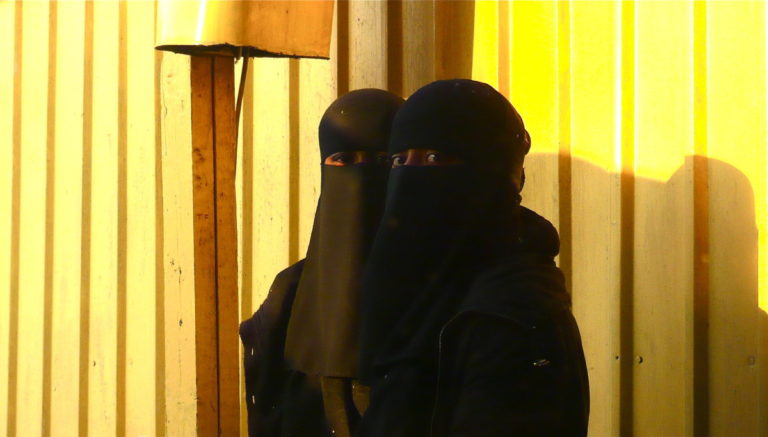
Two IS women have arrived at Schiphol Airport from Turkey and have been handed over to the police. One of the women has two children. 

The two women are suspected of participating in a terrorist organisation, NOS reports. One of the women has had her Dutch nationality taken away.

One, a 25-year-old woman, also has two children aged 3 and 4-years-old. She reported to the Dutch embassy in Ankara at the end of October, but the Dutch government informed Turkey that the woman was an unwanted foreigner and should not be deported to the Netherlands.

Turkey sent her back to the Netherlands anyway, where she was refused entry at Schiphol and subsequently arrested. If convicted during prosecution and trial the cabinet wants to deport the woman to Morocco, where she holds her second nationality. Her children have been transferred to the Child Protection Board.

The other woman is 23 and was arrested in January 2018 in Turkey.

Both women will face an examining magistrate in Rotterdam on Friday.

Feature Image: Herry Lawford/Flickr

How cryptocurrency friendly is the Netherlands?

0

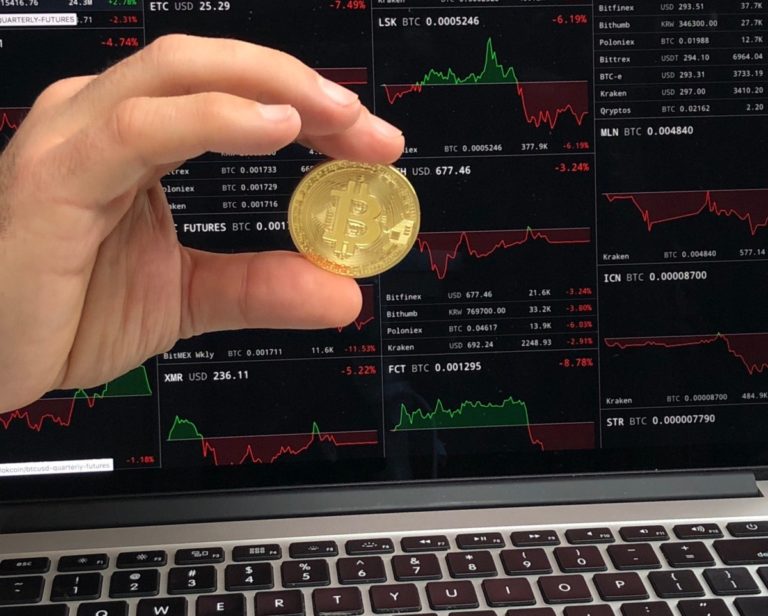
Cryptocurrencies exploded into the world’s consciousness almost a full decade ago when Bitcoin hit the scene. Since then over 1600 cryptocurrencies have entered the marketplace, from Ethereum, Ripple and Litecoin, to the lesser-known Vertcoin and IOTA. 

But ever since cryptocurrencies hit the mainstream, governments have had to scramble to accommodate for these services. How is the Netherlands, widely considered a liberal, progressive, and innovative nation dealing with the new technology? And just how crypto-friendly is Holland?

Let’s start from the basics.

READ MORE: Bitcoin and the Netherlands: How it could change life in Holland

What is cryptocurrency?

If you’re reading this article and think we’re writing in a made-up language, you’re not alone. While the lingo of cryptocurrency has made its way into the general population (terms like ‘bitcoin-mining’ and ‘blockchains’ may have hit your desk), actually understanding cryptocurrency can be a little difficult. We’ll do our best to break it down:

Traditional money is stored in a bank and you can withdraw it from a bank ATM, via a bank card, or from the bank directly. Either way, the bank is always involved at some level.

Cryptocurrencies, on the other hand, are virtual, electronic money. You can never hold a bitcoin, or place it in a physical wallet. Think of it as Money 2.0. They’re a peer-to-peer currency, so transactions are directly between users, with no intermediary. All you need is a bitcoin wallet. Think of the old saying ‘too many cooks spoil the broth.’ Cryptocurrencies were invented as a way to have less cooks, and less middlemen. That makes it entirely de-regulated: no one controls all of one currency.

How crpyto-friendly is the Netherlands?

The Netherlands decided on an innovative approach when blockchain currencies began to hit the market. Instead of shunning new systems, the government launched blockchain pilot projects, and made a push for new prototypes, project implementation, and international partnerships.

According to Emanuele Francioni, Tech Lead of Dusk Foundation, a Dutch non-profit dedicated to the creation of a secure, open-source and private blockchain, the Netherlands is one of the most passionate blockchain scenes.

“Events are organized in multiple cities in the country and the turnout is great,” Francioni told Forbes. “Amsterdam, Berlin, and London form a strong co-located blockchain scene. We are seeing more homegrown projects in the Dutch space, and events are becoming more and more professional.”

The Dutch government dove headfirst into finding ways to encourage cryptocurrencies, announcing in May 2018 that they would formulate a unique and dedicated blockchain unit that would research blockchain reliability, sustainability, and how to manage and govern blockchain endeavours.

According to John Jansen, founder of Dutch firm Deribit and former stockbroker, the Dutch government’s dedication to finding new opportunities for blockchain technology is amazing. “This shows a positive attitude toward this technological development which benefits the blockchain ecosystem in the Netherlands,” Jansen told Forbes.

In September this year, the Dutch government announced potential plans to regulate cryptocurrency providers in the Netherlands in an effort to comply with EU anti-money-laundering laws. “Cryptos are vulnerable to financial crime, which is why it is important to set up integrity supervision now,” said a De Nederlandsche Bank statement.

Providers were reportedly happy with the news, believing that the regulation will help weed out dodgy suppliers. “If we want the market to mature and the participants to evolve… you want anti-money laundering (AML) and proper know your customer (KYC),” Crypto2Cash founder PJ Datema told Coindesk.

How have Dutch people responded to cryptocurrencies?

A survey by Investopedia in mid-2019 ranked Amsterdam as #3 on their list of bitcoin city hotspots, beaten out only by San Francisco and Vancouver. According to the survey, 74 merchants in the capital accept bitcoin, and one ATM is available. Additionally, the city is noted as home to leading bitcoin startups like BitFury and BitPay.

The Netherland’s fame in the bitcoin world has also been reflected by the uptake of the Dutch in purchasing cryptocurrencies. In a survey in October 2017, 135,000 Dutch people had invested in blockchain currencies. Just four months later, that number rose to 580,000, almost a 4.5% increase.

Meanwhile, even Dutch royals have gotten on board, with Prince Constantijn van Oranje attending blockchain conferences and hackathons, while chairing the StartUpFest Europe conference.

Do you invest in cryptocurrency in the Netherlands? How crypto-friendly do you find it? Let us know in the comments below!

Feature Image: David McBee/Pexels

A gloriously green Plant Swap Party is coming to Amsterdam!

Have you caught the house plant bug? Symptoms may include an addiction to purchasing new plants, a feeling that the plants you have are not enough for your space, and spending your days clucking over your greenery like a mother hen. You may spend your days thinking about your home garden, planning when to water, prune, and sun, and dreaming of all the plants you could have. 

The good news is, you’re not alone. The even better news is a Plant Swap event is coming to Amsterdam where you can get rid of some of your excess greenery, and take home some new babies to spoil – plus, you can meet other plant-fans like yourself.

Youplant Amsterdam is hosting the gala at Hotel Jakarta (if you haven’t been, it’s greenhouse heaven!). During the party, you can bring along any plants or cutting that you have, and pick up any other plants or cuttings that you desire – what a brilliant idea!

Expand your plant collection while meeting other like-minded green loving friends – perfect! If you’re the kind of person that missed out on having green thumbs (maybe they’re brown and dead like your plants?) you can also swap tips and tricks with people with more green appendages.

When and where is Amsterdam’s Plant Swap Party?

The greenery bonanza will be held this Saturday, November 23rd at Hotel Jakarta, Amsterdam. There are two full hours of plant-swapping and fun to be had, between 15:30 and 17:30. To go, you will need to secure yourself a ticket.

How can I get a ticket?

Tickets are available via the Facebook event, or through Eventbrite for €8 plus service charges. It should run you around €9.20 in total. Considering how many plants you could add to your collection for that price (and the price of plants normally!) it’s a bargain.

What does a ticket include?

The ticket doesn’t just grant you entry to the event. You’ll also get a free soft drink on arrival, and will receive a sweet goodie bag when you leave full of gadgets, not to mention the opportunity to swap your heart out for plants, pots, and accessories.

What kind of plants can I bring to swap?

Whatever you want! However, the plants or cuttings should be healthy and should be labelled with the Botanic and common name, along with your name too. Don’t water the plants right before the event, and succulents have to be rooted – fresh cuttings of these are not allowed.

Prep your plants and grab your tickets, the Youplant Plant Swap Party has got us green with envy! Are you heading along? Let us know in the comments below!

Feature Image: Julia Bridge Design/Youplant Amsterdam

Witness a rare star shower on Friday morning

0

If you’re out and about early on Friday morning, you could witness a very rare star shower. The last time the ‘alpha monocerotides’ were sighted was nearly 25 years ago in 1995. 

When would you have to be out and about to see the star shower?

The most intense part of the star shower is predicted to happen at around 5.48 am on Friday morning, RTL Nieuws reports.

Buienradar weatherman William Huizinga says “If you want to go and have a look, you have the best chance to see something between 5:00 and 7:00.” Around that time there will be between 45 and 225 falling stars per hour.

Fingers crossed for a clear sky

Cloud cover is predicted for Friday morning which would block any potential sightings of the star shower. Huizinga states “as it looks now, holes could fall in the cloud cover in the north and Zeeland. You have to before you see that you are looking through a keyhole, so the chance that you see something is unfortunately smaller than with a crystal clear sky.”

Be wary of light pollution which can obscure clear views

It is best to stand in an area that has little light pollution. It is ideal to be outside of a major city but if not, then go to open areas such as parks or streets without lamps.

It is also important to look at in a south-westerly direction at a 36-degree angle. RTL Nieuws suggests “if you haven’t seen anything at 7.30, go back inside.”

If you can’t make this star sighting, then remember there are lots of other upcoming sights to see in the sky.

Are you going to wake up early for this potentially once-in-a-lifetime opportunity? Let us know in the comments below! 

Feature image: Outaki/Pixabay