According to recent research carried out at Tilburg University, young people are more conservation than their parents on divisive issues such as abortion and euthanasia. This news severs the trend that the Netherlands is becoming increasingly progressive.
The study
Research was taken from a 40-year long European study that involved over seven thousand Dutch people. Participants were asked about their beliefs on issues like abortion, euthanasia, suicide and homosexuality over the years.
The findings
On the whole, Dutch people are still considered progressive but for the first time this research shows that the younger generation is less progressive than older generations.
8.1 percent of people in their twenties and 11.5 percent of people in their thirties think that abortion is rarely, if ever, justified. But for those in their 50s and 60s that percentage is just above 7 percent.
“New conservatism”
Sociologist Quita Muis said “Younger generations seem to be looking for a new structure to hang their identity on. In that they end up with absorbing narratives from the past.”
Muis tells AD news that it is too early to fully understand this new wave of conservatism “But the trend that the Netherlands is becoming increasingly progressive has clearly stopped.”
Christa Compas, the director of the Humanist Association, is worried the younger generation is getting too complacent with hard fought rights. She explains “Young people are used to having everything arranged. They do not realise that it is an achievement that we must cherish.”
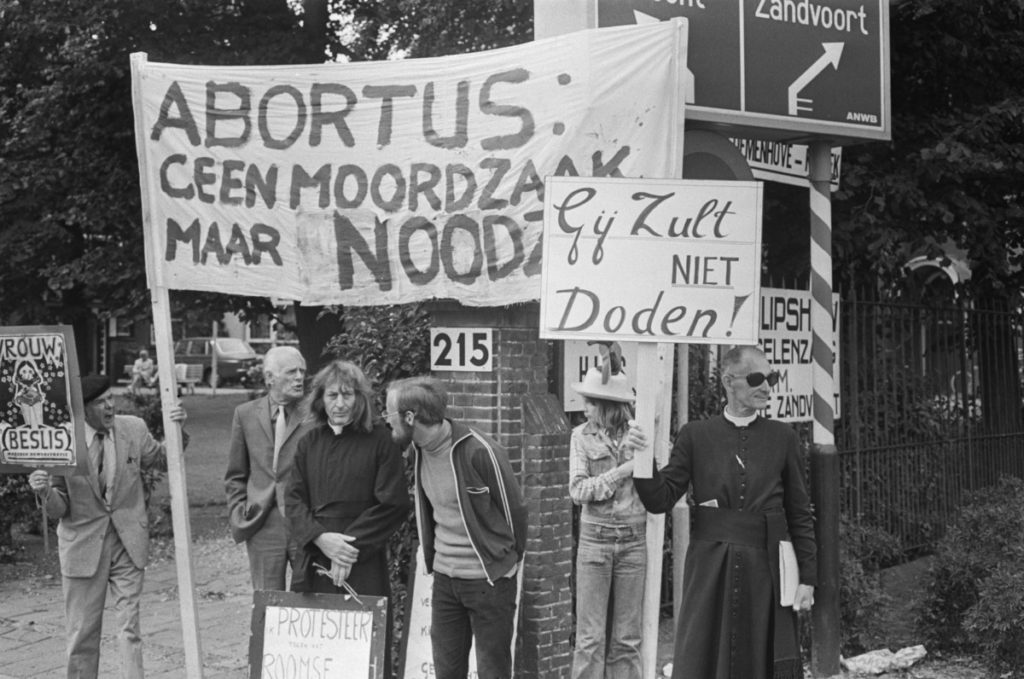
Source: Peters, Hans / Anefo
Conservative beliefs dominate the abortion debate
Compas says to AD that conservative opinions dominate abortion debates. “You hardly hear proponents of free choice”. Maybe (young people) have a firm faith in contraception and they think you are responsible for it. While their mother or aunt might have had an abortion sometime.”
This change is felt strongly by girls who have had an abortion. Ineke van der Vlugt from Rutgers, knowledge centre for sexuality, says “About 60 percent of the girls who have undergone an abortion say they don’t talk about it easily, 47 percent feel embarrassed. They may be afraid of the judgment of others” AD reports.
Have you noticed a rise in conservatism in the Netherlands? Let us know in the comments below
Maybe you are a Dutchie who lives abroad or someone who is an expat in the Netherlands. Whatever the reason might be, we all miss some of the local cuisine we’ve been enjoying while we’re here in the Netherlands. From jenever to pindakaas, why shouldn’t you be able to enjoy them wherever you are?
Plus, who wants to think of all the weight and the hassle of carrying them all by yourself at the airport? So, next time you find yourself craving some cheese and cursing at the low-quality rental bikes wherever you are, remember: You can ship them! Liked the idea? Good! Here are 5 typical Dutch things you can ship around the world.
We’ve teamed up with Eurosender to bring you a sweet discount on all those amazing things you need to ship to and fro. Enter DUTCHREVIEW at checkout for 10% off – what a korting!
Dutch things you can ship and send across the world: Cheese
Addicted to Dutch cheese? Us too. Image: Pixabay/Pexels
What’s the number one item to get your Dutch fix? Well, the answer is Dutch Cheese. It is one of those typical Dutch foods that everybody loves. Apart from being tasty and pretty addictive, it is also one of the suspected reasons why the Dutch are so tall. It turns out it’s not only good for your soul but your height too! Long story short, it’s a win-win situation.
That is exactly why cheese is one of the things you miss the most when you are outside the Netherlands (you can blame the limited Dutch cuisine with this one). If you find yourself craving a slice of Gouda cheese outside the Netherlands, remember that you can send it with a little help from Eurosender.
Apart from using this idea to send stuff for yourself; you can also use their service to send it to your loved ones who don’t live in the Netherlands and has to live without the goodness called Dutch cheese. Next Christmas, treat your nana with a block of Oude Kaas.
There are some things to take into consideration though: In order to make sure everything arrives safe and sound (we want that cheese to make it after all), buy the cheese vacuumed and labelled. If you happen to buy your cheese from the city markets, just tell them it is for travelling. That’s it, now you can enjoy a slice (or 10) any time, anywhere.
Dutch things you can ship: Shipping a bicycle
Can’t bear to leave your trusy steed behind? You don’t have to. Image: Free-photos/Pixabay
A Dutchie and their bike: a love story. If you are going abroad for a while, going on a holiday or moving abroad for good; you might want to take your bike with you. After all, it has been your best companion through the typical Dutch weather too many times. If you thought that shipping your bike would be too much of a hassle until now, think again: you can easily send your bike abroad as well. The secret? Good prep.
Here is how you can get your bike ready for shipment:
Just find a box that fits your bike and secure it like a Dutchie secures a discount on cheese! You can even opt for a special case that allows you to put all the accessories in a more secure and sturdy way. If you fail to find a fit, then you might have to dismantle it bit by bit before sending.
There’s nothing like fancy Dutch gin – except having fancy Dutch gin in another country. Image: Damrak Gin/Supplied
Oh yes, Jenever (aka Dutch gin) is another typical Dutch thing that you just want to have sometimes. Plus, everyone knows that gin doesn’t always cut it when you want to get your drink on with this local Dutch spirit.
So next time you want to treat your family or friends with a bottle, or simply take it for yourself; go ahead and do it!
As with any kind of transportation with alcohol, there are some things to keep in mind:
For shipping alcohol within the EU, you can send 10 litres of spirits, 90 litres for wines and 110 litres of beers. Not bad! This means you don’t even have to leave those crates of Heineken behind!
Alcohol is within the non-recommended items for shipping list, which means you ship it at your own responsibility. So it is wise to pay extra attention to packing and securing to avoid any kind of damages.
Sending Pindakaas and Hagelslag from the Netherlands
Dutch peanut butter (aka pindakaas) is one of those things that it’s just not the same anywhere else. If you’ve been eating Jiff all your life, then you have been doing it wrong, trust us.
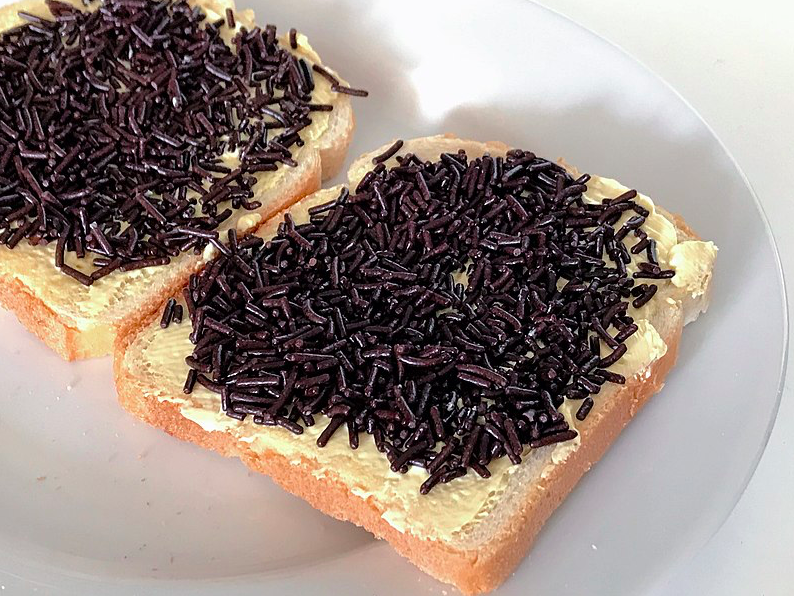
And of course there is hagelslag, a potential reason why the Dutch kids are the happiest in the world, these chocolate sprinkles are not just for kids but for everyone! Don’t be surprised if you see adults enjoying some on a buttered slice of bread as breakfast, lunch or a snack.
Plus, hagelslag is what the Dutchies eat when a baby is born. And we haven’t even talked about the ”Muisjes” served when you to come to visit a newborn in the Netherlands (either blue or pink depends on the gender of the baby). So is there a baby on the way? These are the nicest presents to send abroad from the Netherlands!
To bring that Dutch feeling to wherever you are, pindakaas and hagelslag are the two best things that come right after cheese. For a full effect, buy the biggest Calve jar they have and throw in some boxes of hagelslag in too.
Your home! a.k.a how to ship your stuff abroad from the Netherlands
We don’t recommend shipping your dogs, but all other parts of your home? For sure. Image: Erda Estremera/Unsplash
Now our number 5 might not be the most typical Dutch thing out there, but it is one of the most important if you are thinking about moving to the Netherlands (or leaving the Netherlands for that matter)
With Eurosender, you can book their Freight Transport service and schedule to send shipments from 2 kilos to 4000. To start with, you can calculate the estimated size of your shipment via their website, and see if your load can be qualified for freight transport. Next, you can calculate the costs. If everything looks good; their freight department will organize the shipping together with the logistics service provider. Easy peasy!
Now, let’s talk about the preparation:
Palettes
In order to ship your furniture, you need to get some pallets for transportation. If you wish to purchase one, first submit your request for freight shipping and then send them an email. Eurosender will help you with sorting it all out. Once that’s done make sure that your palettes are properly packaged and secured.
Labeling
For all cargo transport in Europe through Eurosender, the courier in charge of transportation will bring you the appropriate labels or they will collect your shipment and label it in the terminal. Make sure to remove old labels (if any) and make sure your label is readable.
Pick Up
For freight shipping, it is required that a forklift or some other vehicle similar be made available by you. If this can’t be done, you should contact Eurosender or the courier company directly before the courier arrives at the address. Their team is there to help you out!
Insurance
Your shipment with Eurosender is automatically insured according to the CMR Convention but you are free to get additional insurance. For shipment of high value such as your furniture, they strongly recommend the purchase of additional insurance, you know, just in case.
For more information about sending your furniture with Eurosender, you can visit their own page.
Since loads of you DutchReview-readers are huge cheese lovers (it’s meant as a compliment) we’ve got a nice discount code for you to use at Eurosender. Type in DUTCHREVIEW and voilá – you will receive a 10% discount!
* We worked together with Eurosender on bringing you this article (but also because we like to send our luggage cheap and easy as they do)!
Doing your taxes in the Netherlands as an expat is complicated: you’re getting used to a whole new country, the system is probably different from what you’re used to, and different rules apply to you than to the average Dutch citizen.
It’s really important to get your tax affairs in order: you might save money, or at the very least, avoid a series of unpleasant blue letters from the Belastingdienst. So how do you file your taxes in the Netherlands as an expat? What situations and life changes affect what? And what on earth is an m-form?
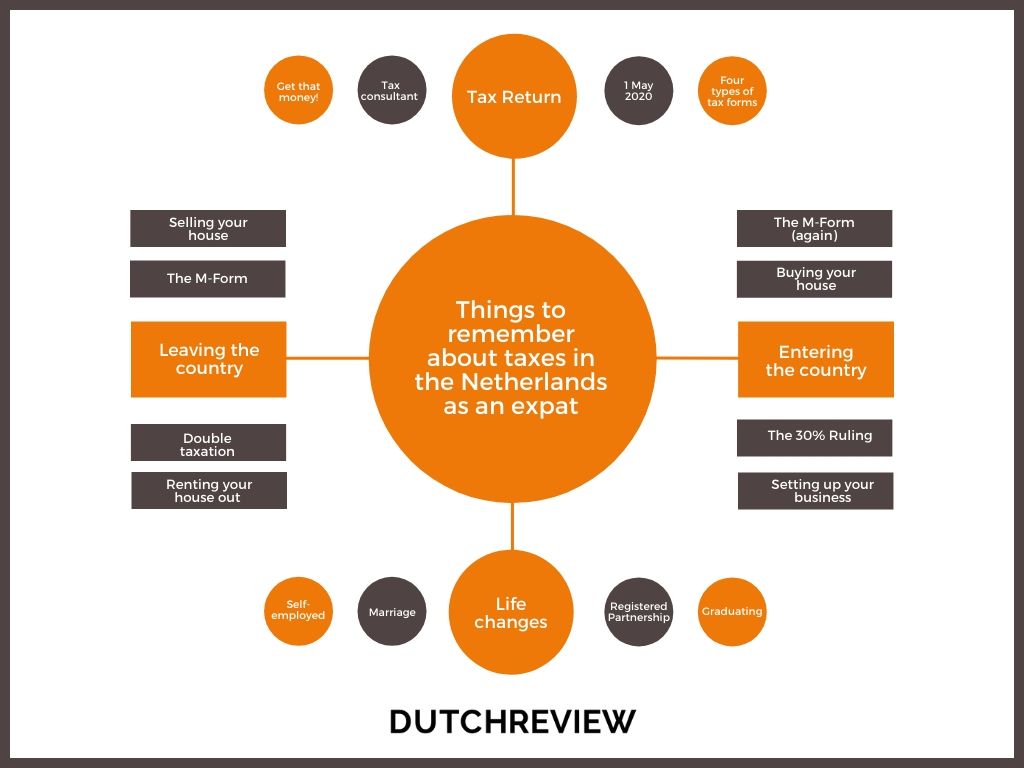
With the help of expert tax consultants J. C. Suurmond and Sons, we’ve put together a comprehensive guide to the ten main things you need to know about taxes as an expat in the Netherlands. So fasten your seatbelts, and take out that folder of crumpled receipts, because we’re about to sort your life out in one single article.
1. The Tax Return in the Netherlands for expats
No-one likes realising they could have got money back from their taxes, but didn’t, so first things first, let’s talk about tax returns. Basically, when it comes to tax returns, you’re always filing for the year before in the current year. So, the next time you file your tax return will be in May 2020, but that tax return will be for 2019. Fun. Wonderful. We love how everything is so clear.
Most of the time you will receive an invitation from the government to file your tax return, but even if you don’t get one of these, that doesn’t mean you’re ineligible. If you’re not sure if you should bother filing a tax return, talk to a tax consultant like J. C. Suurmond and Sons. They can advise you of the possibilities for getting money back. And if the company you work for is already filing your tax return for you, there’s no harm in getting a second opinion.
This is all basic stuff that applies to all people in the Netherlands, expat or not. But if you are an expat, then there is a bunch of extra stuff to take into consideration. People entering the Netherlands need to file an m-form, which is a longer, more complicated version of the regular p-form for tax returns. An m-form has to be submitted on paper, it’s only available in Dutch, and it’s complicated. It’s basically the number one reason to get a tax consultant involved: they can fill out and file your m-form for you, and make sure you’re not missing any opportunities to lower your tax burden.
2. What is a tax consultant and do I need one as an expat in the Netherlands?
We wanted to explain what a tax consultant is, and why hiring one would be totally worth it. Honestly, when you’re dealing with something as serious and financially impactful as taxes, there’s no reason to hesitate about getting an expert on board to advise you. If you’re wondering what exactly a tax consultant can do for you, we’re going to give you a quick run-down here: but also, throughout the article, we’ll be hinting at different situations where having one on your side would be very helpful.
Basically, a tax consultant is there to put your mind at ease when it comes to doing your taxes in the Netherlands. Image: stevebp/Pixabay.
A tax consultant‘s job is to advise you on your tax situation: to make you aware of your obligations, but also the possibilities to lessen your tax burden, if that’s applicable to you. They also deal with your administrative affairs if you want them to: they can fill in complicated tax documents like the m-form for you, for example. Finally, something the best tax consultants will do is be pro-active in how they advise you: they’ll let you know about ways you can minimise your tax liability before you ask; they’ll cultivate a personal relationship with you; and they’ll quickly be able to provide you with in-depth knowledge of your tax situation.
3. If I’m leaving the Netherlands, or arriving here, what do I have to do as an expat?
When you arrive in the Netherlands as an expat, or when you leave, you’ll need to fill in an m-form. This form comes in two sections, needs to be completed in hard copy, and best of all, is only available in Dutch. Why, you ask? We don’t know. We really don’t. Now, this form is very important, because it decides how much tax you’ll pay on your income of that year in the Netherlands.
The first part of the form is about your situation before you resided in the Netherlands and the next part is all about your situation while in the Netherlands. If you want to avoid double taxation (see below) then you need to be very careful when filling in this form. Just because you were only earning money in the Netherlands for half a year, doesn’t mean that you’ll be only taxed on what you earned in the Netherlands. It gets even more complicated by the fact that some countries or regions are exempt, and others are not. So, uh, take our advice: get a tax consultant like J. C. Suurmond and Sons involved early: it’ll save you a bunch of tears.
4. How do I avoid being taxed twice as an expat in the Netherlands?
As is the case with a lot of expats, you might have income coming from two or more countries, or you might have assets in two or more countries. This means you could get taxed twice, which isn’t fun. If you want to stop this from happening, get a tax consultant on board early in the process. Usually, relief from double taxation comes in the form of a tax credit- but this varies. So does your liability: some assets might not be taxable at all, and others might have to be taxed in both countries, in some situations.
It’s important to take your individual situation into account if there’s a possibility you’ll be taxed twice. Image: silviarita/Pixabay.
As though that wasn’t complicated enough, different countries have different arrangements for this. For example, if you’re from the US, you’ll remain taxable over there regardless, so a different process will apply. And if you’re here working for an international organisation, there might also be reasons for your tax situation to need further examination. Some international organisations will have special policies on taxation- for example, your pension might not be taxed.
5. I’m self employed/freelance in the Netherlands: what taxes do I have to pay as an expat?
Are you an entrepreneur or self employed in some way? Then your tax situation requires attention. Being self employed usually means you have to file your own taxes, but a tax consultant can take that burden away from you if you decide to enlist one. Even if you’re self employed on the side- you have a side hustle, or something like that- you’ll need to be aware of your tax obligations as a person earning money outside of your regular job.
You might also have decided to move to the Netherlands to give your own business the best possible chance of success: the Netherlands, after all, was voted the most competitive economy in the world recently. Moving to a new country and setting up a new business is a lot. It might be a good time to get an expert on board and get both your personal and professional tax lives sorted out in the bargain.
Figuring out your tax situation as an entrepreneur while moving to a new country is a lot of work. Image: Free-Photos/Pixabay.
6. If I’m a student in the Netherlands, do I need to think about taxes?
Now, you might be thinking, I’m a student, I have a negative bank balance, I have never seen a single euro in my life. Surprisingly, you might still need to pay attention to taxes- and not just those pesky little (huge) water taxes. You don’t need to be frightened by this, though: it might actually be possible for you to get money rather than lose it.
Technically, the tuition fees you pay while studying are tax deductible up until 2020. However, because most of us earn next to nothing while studying, the deduction has no effect. If you’re feeling disgruntled, don’t! It might be possible for your tuition fees to be deducted from your taxes once you start earning. However, you need to get the timing right on this one, so ask for help from a tax consultant even during your studies: it’ll put you in a much better position when you graduate and start earning.
And, if you’re a graduate student or pursuing a PhD, there’s even more to think about. After 2012, it’s become easier for you to access the 30% ruling after graduation. To be eligible for this you would need to have come from abroad for your study programme in the Netherlands. As with everything concerning taxes, the earlier you start working on this stuff, the higher the chances you’ll actually get that 30% ruling.
7. What is the 30% tax ruling, and when does it end in the Netherlands?
30 Percent Ruling means that 30% of your salary is paid out tax-free. It generally applies to someone who is recruited from abroad by a Dutch employer, and who has a skill that is scarce in the Netherlands. It’s supposed to compensate for the costs expats will incur if they move to the Netherlands- like travelling back to their home country to see family, relocation costs, and an international school for their children if they should want that.
There are a bunch of conditions for eligibility for this tax break, including making a minimum salary, having lived a minimum distance from the Netherlands before moving here, and remaining employed throughout the five years you’re eligible for this deduction. Also, if you’ve lived in the Netherlands before now, that time will be deducted from the five years you get the tax break. And if you’re noticing we’re emphasising five years, that’s because the Dutch government recently shortened the eligibility period for this tax break from eight years to five.
As you can tell, applying for the ruling can be quite complicated, and needs to be done on-time, so a tax consultant could be very useful (especially given all the other tax things you’ll need to sort out when you move to the Netherlands).
If you start your own BV or work through a payroll agency in the Netherlands, there is a possibility this ruling could apply to you, so it’s worth checking if you’re eligible with someone who knows their stuff.
8. What taxes do I have to pay if I’m buying or selling my home in the Netherlands?
You’ve just moved to the Netherlands, and you’re looking to buy a house. Good decision! If you’re staying a while and can afford it, buying a house will save you quite a bit of money- mainly because all the interest you pay on your mortgage is tax deductible, as well as any mortgage related expenses. The interest rate for mortgages is pretty low at the moment in the Netherlands, so basically, what we’re saying is to avoid renting if you can.
Because of the current low interest rate on mortgages, buying a house in the Netherlands might be a good idea tax wise. Image: skeeze/Pixabay.
But maybe you’re leaving the Netherlands and you want to know what your options are with regard to selling or renting your property. If you decide to keep the property and not rent it out, sometimes that means you can keep the mortgage interest tax deduction. If you want to sell it, that’s also not a bad idea, because in the Netherlands, there’s no capital gains tax.
All of this is complicated by itself, and only gets more so when you own properties in multiple countries, which is often the case if you’re an expat. So talk to someone who knows what the deal is, whether you’re entering the Netherlands or leaving it.
9. I’m moving in with my partner, what does that mean for tax in the Netherlands?
Maybe you’ve met a Dutchie and you’re planning to move in with them. Or maybe you’re getting married and you’re wondering how your tax situation will change. It’s an exciting time! But also one full of changes. We’re not going to tell you how to get your partner to downsize their book collection (because we think they shouldn’t) but there are a couple of tax issues you should be aware of.
First of all, in the Netherlands, there are a couple of different arrangements you might come to with your partner when you know they’re the one: you might marry them, sign a cohabitation agreement with them, or register your partnership. Each of these carry different tax arrangements, and there is even variety within each of these three agreements. Although it’s not exactly romantic, it’s so important to have your tax affairs in order when you’re combining your life with someone else’s: so before you celebrate with friends and family, get your tax situation checked out by a tax consultant.
10. Basically, a tax consultant will make your life easier
If you’re an expat and you’ve recently moved to the Netherlands, you have enough on your plate without stressing out about whether you’ve filed an m-form correctly. And unfortunately, your taxes aren’t something you can simply reassure yourself about blindly: they’re really important.You could be getting money back each year from your tax return, or getting 30% of your income tax free if you have your affairs in order and know your options. That’s why it’s a really great idea to get a tax consultant, if you think it might be helpful for you to no longer have the stress of taxes on your mind. J. C. Suurmond and Sons are a fantastic option if you’re in the market for a tax consultant: they’re able to offer you personalised, proactive tax advice whenever you need it. They’re also a family-run business, run by a father and three sons, so you can expect a personal touch from people who really know what they’re doing.
J. C. Suurmond and Sons is a family business. Image: Rogier Bos
And if anything, they need to be credited with explaining Dutch tax matters to us for this article, which is quite an achievement by itself!
How has your experience of doing your taxes in the Netherlands been? Let us know in the comments below.
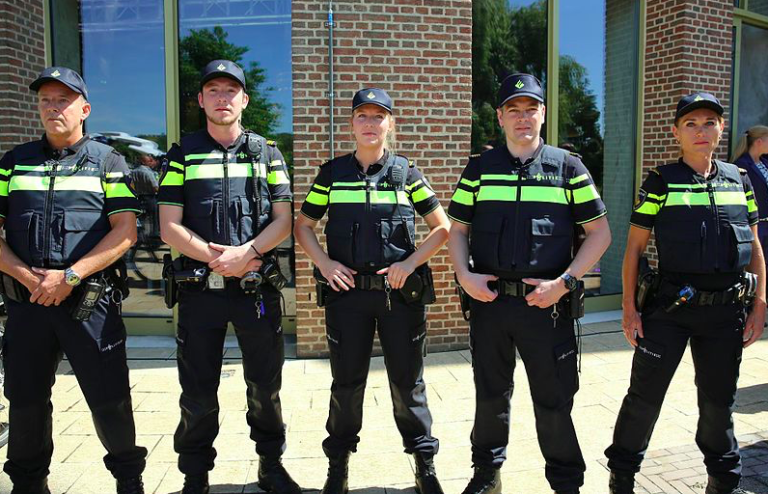
Dutch police will soon be armed with “surge weapons” similar to tasers. This decision was long-awaited by the the Chief of Police, Akerboom.
NOS reports that according to de Telegraaf, sources in The Hague have made it known that the cabinet has decided to arm 17,000 police officers with the tasers. This decision comes after years of experiments. In September, Minister Grappenhuis said that the introduction of the taser would be a good thing, but that the decision needed to be made with care. It seems that this has now been done.
Cabinet allocates 30 million euros to introduction of tasers
The cabinet will allocate funding of 30 million euros to the introduction of the tasers, which will include the training of police officers, the production of the tasers, and the tendering procedure to decide which company will be allowed to produce the weapons. It will take about five years for all 17,000 officers to be trained and armed with the tasers.
Police experiencing more violence from the public
Akerboom argued that the tasers would be very useful for police officers, who experience increasing levels of violence from the public. Being able to use these weapons to defend themselves would be very useful. Akerboom has complained that the decision process was taking far too long in general.
Health risks of tasers as yet unclear
However, there are good reasons to be concerned. Amnesty International, the human rights protection organisation, has questioned the use of the weapons as their health risks are as yet unclear. Furthermore, the use of these shock weapons on psychiatric patients has yet to be decided. According to Akerboom, the potential health risks of the weapons are “manageable”.
What do you think about the introduction of these weapons? Let us know in the comments below!
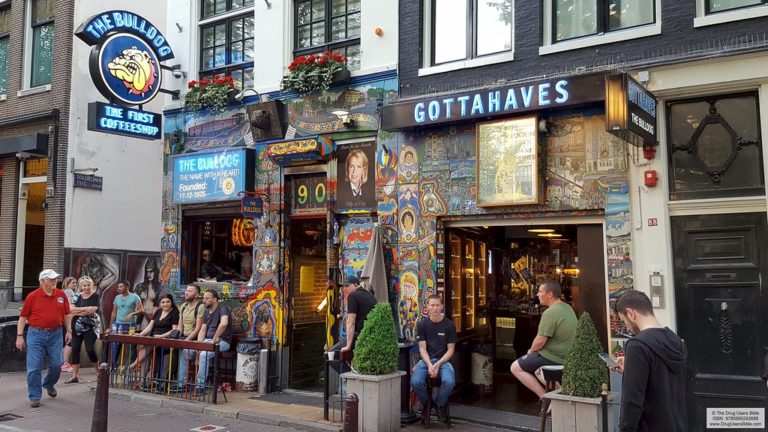
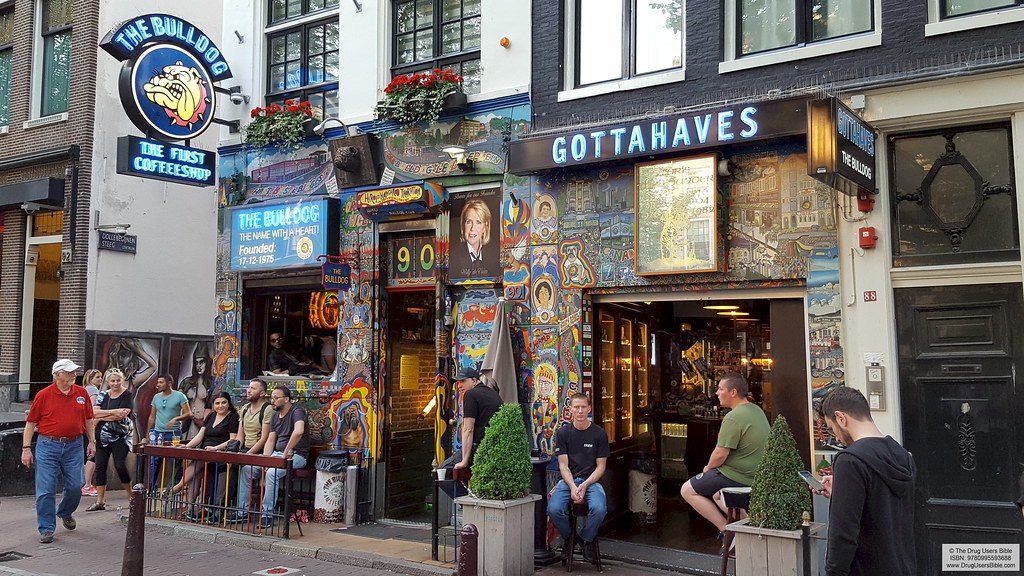
Do you have an annual come-to-Amsterdam-and-get-high tradition? Or do you love the city’s carefree attitude towards marijuana? Well, it may be a distant memory in the future as two researchers, Tops and Tromp, think Amsterdam should ban tourists from coffeeshops.
This resident-only system is already used by other cities and means only people who live in the Netherlands and possess a valid ID can access a coffeeshop.
Discussions with Halsema
On Tuesday, Tops and Tromp met with the Amsterdam City Council and Mayor Halsema to discuss the policy and highlight the positive effect it was having in other cities such as Maastricht.
“It would be very healthy if there could be an open discussion about this,” researcher Jan Tromp told the Telegraaf, “Initially, this led to an increase in street trade in Maastricht, but people were prepared for it and managed to suppress that fairly quickly and firmly.”
People gather outside a coffeeshop in Amsterdam. Source: Dominic Milton Trott/Flickr
Shaking Amsterdam’s reputation as a drug city
Many tourists flock to Amsterdam for its liberal drug policy. Tops and Tromp explain that if this system was to work, Amsterdam would need a ‘cooling down period’ where it makes efforts to change its reputation.
They explain that you cannot merely just introduce the policy “in one go. You must be well prepared.”, the Telegraaf reports.
Tops and Tromp think Amsterdam has “zichzelf in de vingers” (cut itself in the fingers) by not implementing this policy earlier.
How does the policy work in Maastricht?
The municipality of Maastricht introduced the ban as too many tourists started buying soft drugs and threatening public order.
Coffeeshop owners are fearful that the ban would harm their business but the ban does does not include visitors from Germany and Belgium.
Critics of the policy
Critics of the policy believe the ban violates European Union principles such as freedom of movement and equality.
Marc Josemans, chairman of the Association of Official Coffee Shops Maastricht, does not like the ban. “All these clients who are banned from the Dutch coffee shops… have to return to the illegal circuit in their own country, therefore it will become a bigger problem and cause more criminality in those countries,” the BBC reports.
European Court of Justice
Last December, the European Court of Justice ruled that Dutch authorities could implement the policy and ban foreigns from coffeeshops as it is in efforts to combat overtourism, which causes grave problems for the Netherlands.
What do you think about such a policy? Would you think it would be effective? Let us know in the comments below.
Two years ago, it was decided that the European medical organization, EMA, would relocate from London to Amsterdam. Today, the EU institute got the keys to their new building in the Dutch capital.
The decision to relocate the organization from London was made in 2017, once the implications of Brexit became clear (or at least, once it became clear that the implications would not be good). The new location of the organization was chosen from a selection of 19 cities. Amsterdam and Milan got the same number of votes, but happily for us, the Dutch capital won out.
New office construction went well
The new office, in Amsterdam Zuidas, was constructed on time and on budget. It cost 225 million euros to build, a figure that includes 20 years of maintenance costs. The maintenance costs are expected to be earned back by the EMA through rents from the building.
Is the EMA’s presence in Amsterdam a good thing?
There is a good reason that the Netherlands fought so hard to have Amsterdam be the EMA’s new headquarters: and that reason is jobs. In London, the EMA employed 900 people directly. Only 170 of these people elected to stay in London and resign- the rest have already followed the agency to their temporary office in Amsterdam Sloterdijk. However, the eventual economic impact of EMA’s relocation will be far more impressive than new jobs for 170 people in the Netherlands.
1550 new jobs will be created
It is expected that the relocation will eventually add 1550 jobs to the Dutch economy, because other companies and organisations will pop up around the EMA, as they did in London, according to the Ministry for Health, Welfare and Spot. These organisations could include research institutions, companies and social organisations in the health sector. Furthermore, there could be up to 36,000 business travellers attracted to Amsterdam each year as well.
New office fully operational by January
Even though the EMA will get the key to the new office today, their employees will continue to work at the temporary office at Amsterdam Sloterdijk until next year. The new building will be fully occupied by January 20th, NOS reports.
What other organizations and companies should relocate from London to Amsterdam? Let us know in the comments below.
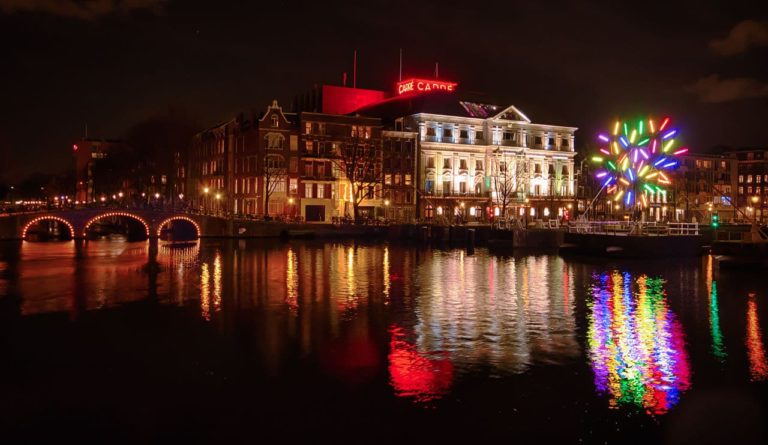
Yes, we’re as shocked as you are that it’s that time of year again. If you’re in Amsterdam during the next month or so and you want to see the capital city light up, then here’s your chance. (want to see if there are other light festivals in the Netherlands?)
From November 28, until January 19, Amsterdam will light up all over the city center. It’s their 8th edition and the theme this year is “Disrupt!”. What does this mean? They say on their website, “disruption is able to provide a positive, vital impetus for change too. It questions fixed assumptions, provokes new discussions, encourages people and organizations to take action, and makes previously unknown possibilities visible.”
What will be happening at the Amsterdam Light Festival?
There will 30 different pieces that will be shown to the public around Amsterdam city centre. Hundreds of worldwide artists submitted their ideas, so you can be ensured that they are going to be impressive. All of these can be viewed in a variety of different ways. You can walk, cycle or take a canal trip to see them all. It doesn’t matter which way you do it, you’ll be able to see them all in all their glory.
I’ve been for the past couple of years and it’s well worth a visit. Oh, and as I mentioned, as usual, it’s completely FREE! 😉 This makes the whole thing even better! So if you’re looking for something to do next month or somewhere to take your guests this Christmas period, then here it is.
Have you ever been to Amsterdam light festival? Did you enjoy it? Let us know in the comments!
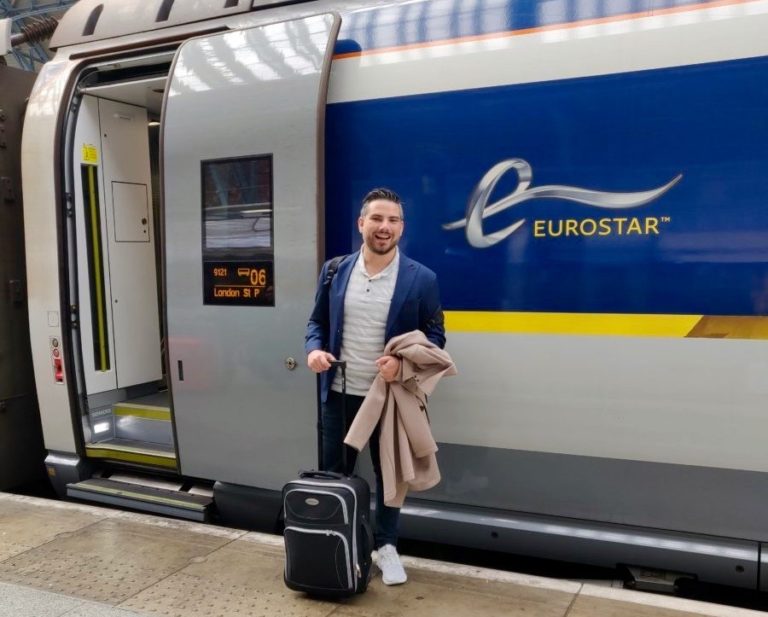
The direct Eurostar train from Amsterdam to London is launching next year. By getting rid of the transfer in Belgium, you’ll arrive in the English capital in a mere three hours and 45 minutes. If that’s not enough to tempt you, then perhaps you’ll be convinced by learning that the train carrier has announced it will plant one tree for every train journey it makes.
One tree for every journey?
On Eurostar’s 25th anniversary, it has decided to strengthen its environmental commitments by planting one tree for each journey it makes. The train which that serves London, Brussels, Paris and Amsterdam makes around 50 journeys per day.
It means there will be around 20,000 new trees planted annually from this initiative that will be planted in the UK, France, Belgium and the Netherlands.
Mike Cooper, Eurostar’s chief executive, said “With our environmental ambitions and our tree planting programme we are providing an attractive, eco-friendly alternative to the airlines”, the Independent reports.
Source: lefteye81/Pixabay
Plastic-free Eurostar journey
Eurostar has also decided to get rid of single use plastic and introduce a plastic-free train on the London to Paris route.
Instead of plastic, this train journey will boast wooden cutlery, glass bottles and paper-based coffee cups instead.
Environmentally-conscious
Per person, train travel emits just one-tenth of the carbon emissions in comparison to flights.
Mike Cooper said “We have always had a strong sense of responsibility for the environment but as the demand for sustainable travel becomes increasingly critical, we believe we can raise the bar. With our environmental ambitions and our tree planting programme we are providing an attractive, eco-friendly alternative to the airlines”, the Independent reports.
Source: Hans/Pixabay
The UK-Netherlands Eurostar journey
Cooper believes that with initiatives such as this, many more people will choose train travel over planes. He pointed out that the Eurostar market share for the London to Amsterdam route will likely increase far beyond the 10% it currently holds but progress has been slow in finalising all the procedures for an Amsterdam to London Eurostar route.
“We’re confident that it’s coming,” Cooper said “We just can’t promise a specific date in terms of when it will arrive.”
Since its launch in 1994, more than 200 million people have travelled by Eurostar to Paris, Brussels and Amsterdam.
Do you prefer travelling by trains or planes? Have you ever caught the Eurostar? Check out this guide to taking the Eurostar for more information.
It’s that time of year again! Sinterklaas arrives soon, meaning Christmas is well and truly on its way in the Netherlands. ‘Sinterklaas Season’ is when Sint and his Piets travel to different cities to greet the locals.
Sinterklaas is coming! What’s happening then?
There’s usually a parade with huge floats, brass bands, cycling clowns and the like, but we can’t avoid talking about the controversy that comes with it all too.
We all know about the Zwarte Piet debate. It’s no secret that some people will be eagerly waiting in line to catch a glimpse of the man himself when he arrives, whilst others will certainly not be shaking the hand of Sinterklaas. He will be ‘arriving’ this weekend, the 16th and 17th of November. Whether you’re for it or against it, read on to know when he’ll be coming to your city.
All dates shown are this month (November 2019!), starting with Sinterklaas’ official arrival in Zaanstad…
The official Sinterklaas arrival: Sinterklaas arrives in Apeldoorn: 16th of November
This year the ‘official’ arrival of Sinterklaas will be hosted this year by a city in the middle of the Netherlands, Apeldoorn, which is slightly concerning given that the city has no canals. For those of you who don’t know, Sinterklaas is supposed to arrive by sea and make his way to his town of arrival by canal. So it’ll be exciting to see how Apeldoorn deals with that! In general, the city is excited to show itself off to the rest of the Netherlands, as the arrival of Sint will be televised by NPR.
Sinterklaas will arrive in the Netherlands via Apeldoorn this year. Image: olliebrands0/Pixabay
Sint will arrive, somehow, in Apeldoorn around midday on Saturday. No “traditional” (fully blackface) Pieten will accompany him, but this was also the case last year: nonetheless, people turned up ready-to-racist with their faces painted black. So, it remains to be seen whether people will obey the order this year.
Sinterklaas arrives in Rotterdam: 16th of November
There’ll be a show at 12.30pm at Willemsplein, and then the parade will make its way through town.
Sinterklaas arrives in Nijmegen: 16th of November
The oldest city in the Netherlands will greet Sinterklaas with all kinds of children’s festivities. At 1pm he’ll arrive on the Waalkade (near the Labyrint).
Sinterklaas arrives in Eindhoven: 16th of November
Sinterklaas and his Pieten will arrive at 1pm, but from 11.30am families are welcome at Kanaaldijk-Noord to witness him sailing across the Eindhovens Kanaal.
Image: Mark Vletter/Flickr. Most cities will not have blackface Pieten this year.
Sinterklaas arrives in Amsterdam: 17th of November
The Amstel River is the perfect place for Sinterklaas to arrive at 10am. Since this the capital city, he’ll ride his horse Amerigo through the streets before the parade.
Sinterklaas arrives in Groningen: 16th of November
Sinterklaas will arrive in Groningen at 11:30, and parents and children will gather to see him at the Zuiderhaven.
Sinterklaas arrives in The Hague: 16th of November
From 10:30am parents and children will gather at Scheveningen harbour to see Sinterklaas sailing towards the Hague, until his arrival at 11:30am.
Sinterklaas arrives in Utrecht: 17th of November
11:30am start in Utrecht also! See him at arrive at Weerdsluis. As usual, there will be a procession thoughout the city, culminating in a children’s event at Domplein.
At 11am, he will arrive at the Beestenmarkt. Events – such as a Meet & Greet with Sint & Pieten, Games, DJ-Piet and Danspieten – will take place at the Hooglandse Kerkgracht.
Sinterklaas arrives in Delft: 21st of November
If you want to catch Sinterklaas’ arrival, head to the Oostsingel before midday! You can follow Sint to the market afterwards.
Here’s our vid of when Sinterklaas came to Leiden in 2016:
Like this video? Want to see more about Sinterklaas or finally start learning Dutch? Then head over to Bart de Pau’s YouTube-channel (Learn Dutch) and get started
It’s unclear at the moment if there will be any protests at the arrivals. How do you feel about Sinterklaas and Zwarte Piet? Will you be joining in the celebrations? Please let us know your perspective in the comments section.
Editor’s Note: This article was originally published on 15 November 2018 but was updated for your reading pleasure on 14 November 2019.
When I decided to pack my things and trade Paris for Amsterdam, little did I know of the uphill battle ahead. Harsh weather? Expensive health insurance? Geen probleem.
But the dating in the Netherlands and dealing with the habits of the Dutch is an endless struggle. But here I am, ready to jump in and brave the difficulties of dating in the Netherlands.
Disclaimer: this piece is based on personal observations. It in no way claims to be a universal truth about dating in the Netherlands
Dating in the Netherlands…
As much as I love exoticism and variety, I believe in eating local wherever I go, so Dutch men it is. Brace yourselves, girls, for two major obstacles shall inevitably pop up during dating in the Netherlands:
There are tons of foreigners, expats and tourists, so forget about your supposedly sexy accent, looks and manners, these weapons are now part of the furniture.
2. Dutch women. Say no more. They’re amongst the hottest creatures on Earth.
Still looking to hunt for a red-pants-gel-haired viking? Fair enough. Like their female counterparts, they’re quite exquisite. Dutch men are overall well-travelled, sporty and ambitious.
Yet it seems they’ve skipped the essentials when flirting is involved. A vast majority of them act like picky slow burners, to the point where interacting with a nice guy starts to look like rocket science. And this is where the hagelslag crumbles.
The Dutchies and Hagelslag are in a committed long term relationship. Image: Amin/Wikimedia Commons
One genuinely wishes they would sell some dating lucky charms in all those souvenirs shops, because trust me, they would make a fortune by the time you’ve finished reading this article.
But before you even consider dating in the Netherlands, you should first consider learning some Dutch pick-up lines. Here is a very useful video that will help you with that in no time.
En route for the Holy Grail
Anyway. Due to the Dutch’s strong background culture of gender equality and tolerance, think 21st century and ditch gallantry. Period. Get ready to sweat, swallow your pride and go the extra mile: just like in North America, it’s a no pain, no gain policy. If you want something, come out and play, and more importantly, ask for it.
Welcome to step three: a proper twister mental game to somehow manage going on dates. Communication appears to be über clumsy and blurry, and it’s got nothing to do with the language barrier: Dutch boys are far from being open books.
Picture trying walking on eggshells in a thick fog, attempting to read massive knots of mixed signals without a map. The thrill, passion and surprises are sadly not an option. Sure, it’s OK to split the bill, and of course, we understand it takes time to get to know someone — but there are a lot of deadly mistakes along the way.
But come on… we’re not teens anymore and I refuse to turn into a love soldier. Who hasn’t heard “Dutch boys like it when you’re mean to them,” or “it only took us seven months to be officially boyfriend and girlfriend?” I thought they were supposed to be very straightforward.
Dutch lads are actually a very busy specimen that will plan everything in advance, and it seems like they had everything served on a silver plate when it comes to relationships. Which, remember, is a scary word to them. Do us a favour, do not use it. Do not.
We don’t mind not getting flowers, even after months of “seeing each other” and we’re not necessarily big fans of PDA either. That being said, there are so many other simple ways to keep the boat floating in most countries.
In the Netherlands, you’re landing onto several sorts of undefined layers referring to what’s going on between you two. Like the so-called “probation period”, a traditional pattern screaming “try before you buy” and “I might switch to a better option as soon as I can”. A grey area you’re better off not mentioning under any circumstances.
Dating in the Netherlands: Chin up, ladies, and handle with care
Limbo definitely has to come from the Dutch language, implying a kind of stress many candidates have failed to comply with. The hardest part is not knowing when you’re going to see each other next (hmmm… how about January 2023?) or if you ever will again.
Some go through the infamous “talk” just like in most English-speaking countries. In France, although it’s on its way to change, you’re either in or out of a relationship, simple as that. Smooth transitions to a naturally functional couple? Wrong country. And wait, how in hell am I supposed to keep my cool on the back of a bike with the rain and wind ruining my eyeliner and hairdo, considerably reducing my sexiness potential.
The funniest thing is that whether you’re an expat or a native, you will come up with quite unusual anecdotes on your next girls’ night out. Be ready for some serious nodding, solidarity and advice flying all across the room. Who does in this day and age, have time for games and doubts anymore when for instance, Tinder became so popular and socially acceptable here? Dutch dating websites are booming as well.
I met Marije, a young entrepreneur whose successful dating business ViaMarije brings back the good old-fashioned and trustworthy side in meeting someone. These trends prove how being in a relationship actually matters. Is the love game like Dutch cuisine, slightly bland but with strong possibilities to spice it up a bit? One pattern stands out from the bumpy process: re-adjust your standards and adopt the laissez-faire attitude.
But there is an upside
Looking at the bright side, discovering new social ways is also intriguing. Turns out it can even be soothing — yes — to go with the flow. It leaves you some personal space and freedom Dutchies are so deeply attached to. Keep in mind that there are many boats on the canals and that lots of happy Dutch/foreigner couples assert that once you’ve won the key to their heart, you’ve successfully reached well-deserved romantic heavens. After all, Willem did marry Maxima.
I hope we helped you with dating in the Netherlands 😘
What kind of experiences have you had while dating the Dutch? Let us know in the comments below.
Editor’s Note: This article was originally published in February 2017 but was updated for your reading pleasure in February 2021. Feature image: StockSnap/Pixabay