Congratulations, it’s your birthday! You can expect presents, hugs, oh — and a fat bill for whatever it is you want to do on your special day.
You’re probably as confused as we are about this highly un-Dutch quirk.
Let’s break it down, and get to the bottom of paying for everyone at their own verjaardagsfeest (birthday party).
What is it?
You might assume that one of the perks of being the birthday kid is that people throw themselves in front of you to catch the bill before it reaches your hesitant hand.
You might assume this because you didn’t grow up in the Netherlands.
This puzzling habit might stem from a wish to thank your guests for showing up, a courtesy to the people who just spent hours of their lives in the dreaded “birthday circle“.
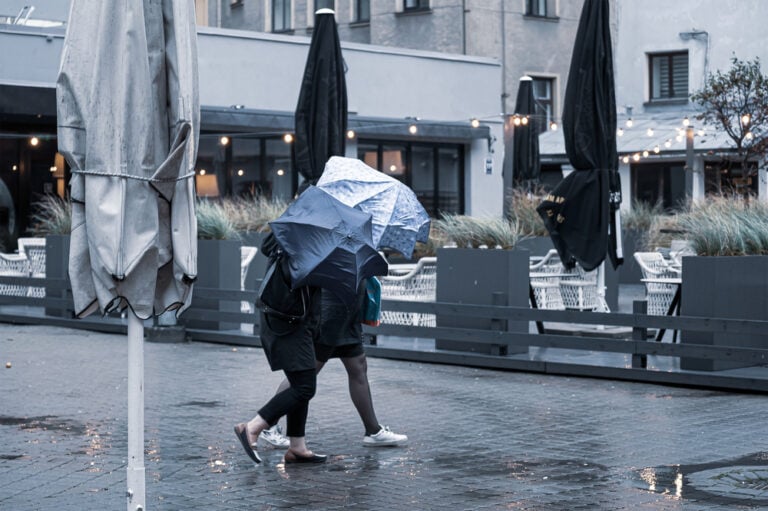
And let’s be honest, if your birthday is between the months of September and April, chances are, your guests had to fight through lashing rain and howling winds just to get to your celebration.
Also, some Dutch people might claim that their system is simply easier than the alternative: having 20 people split the bill between them and argue over who bought what.
Why is it quirky?
In many other cultures, it’s common for the guests to cover the costs of food and drinks when it’s someone’s birthday.
You know, to treat the birthday kid.
Dutch people say nee bedankt (no thanks); it’s way easier to have a designated wallet whenever you’re invited to celebrate someone.
And we have to admit, it’s pretty convenient to simply glance at your bathroom birthday calendar and immediately know who’s paying for dinner.
The most quirky part of this tradition, however, is that voluntarily paying for a whole bunch of people can seem a little un-Dutch.
We are, of course, talking about the infamous concept of Dutch stinginess.
Since when did Dutch people open their wallets wide to pay for more than they had to? Actually, the tradition of paying for everyone on your birthday might stem from this very behaviour.
If you ask Dutch people to pay for themselves on your birthday, the ever-so-slim chances are that some will skip your celebrations for financial reasons.
Some people might prefer not to spend money on someone else’s big day. Is paying for everyone, in fact, a result of the stingy culture the Dutch are so known for?
Should you join in?
As is often the case with quirky Dutch behaviour, you should join in if you want to blend in.
Also, if “making Dutch friends” is still on your to-do list, you might want to try out this quirk, as nothing attracts happy Dutchies like the prospect of a free meal.
What do you think of this Dutch quirk? Have you experienced it? Tell us in the comments below!
We all know someone who claims to be “super busy.” That friend who works a job, goes to the gym, runs a side hustle, has a doggy daycare business, and still somehow makes sourdough.
But one Dutch man took things to the next level: he decided to work three full-time jobs at once. Yes, three. At the same time.
Too greedy?
AD reports that the man was originally employed at housing association Wooncompas, working 36 hours per week and earning €4,560 a month.
A perfectly respectable gig. But apparently, one full-time job simply wasn’t enough.
So in 2019, he quietly picked up another one at Mooiland in North Brabant, also full-time at 32 hours per week, bringing in an additional €4,418 every month.
At this point, he was juggling two full-time jobs.
Impressive? Maybe.
Sustainable? Absolutely not.
Unsurprisingly, something had to give
In October 2019, he told Wooncompas he was too sick to work.
A tragic turn of events… except he then continued working full-time at Mooiland. And collecting both salaries.
In April 2020, he accepted yet another full-time role, this time at Wooninvest in Voorburg.
Eventually, while working 36 hours per week there, he called in sick from Mooiland to keep things rolling smoothly.
By this point, his work ethic was less “busy professional” and more “trying to clone myself.”
It was all going so well until Wooncompas discovered in July 2020 that their supposedly ill employee was very much fine, well, and employed elsewhere.
They promptly fired him and took him to court
Speaking at one of his hearings, the man argued that “My starting point was precisely to work hard. It’s true that I thought I could do the work in 20 hours, while my contract was for 36 hours”
He had even lied to a company doctor, claiming he’d suffered a relapse in June 2020, while he was actually starting his shiny new job at Wooninvest.
In the end, he was ordered to repay €43,766 in salary he received while on fraudulent sick leave, plus €6,739 in legal costs.
Do you work a normal number of hours, or are you also secretly working a bajillion jobs just to make it to the end of the month? 😅 Tell us in the comments, we promise we won’t call HR.
Less than a week before the Dutch elections, the country’s major parties are crawling closer together in the polls while voter uncertainty remains sky-high.
The polling landscape has shifted somewhat in recent days, according to the latest Peilingwijzer (poll indicator) from NOS.
How? The PVV (Party for Freedom) still leads, but Geert Wilders has watched his once-commanding advantage slip away.
Wilders’ PVV remains the largest party with 25 to 31 seats, but has dropped significantly over the past month. For a man who once seemed destined to sweep the elections, that’s quite the comedown.
Meanwhile, D66 surges as CDA stumbles
The real story here is D66’s (Democrats 66) continued rise. Rob Jetten’s party, which currently holds nine seats in parliament, now stands at 19 to 23 seats in the Peilingwijzer, making it roughly equal in size to the CDA (The Christian Democratic Appeal).
However, the trend is clear: D66 is gaining momentum. And if past elections indicate anything, it’s that this kind of momentum decides elections in the last few days.
Meanwhile, the CDA has had a rough week. They have suffered significant losses, dropping to 18 to 22 seats after party leader Henri Bontenbal defended religious schools’ right to reject homosexual relationships during a Nieuwsuur interview.
Even Bontenbal’s subsequent apology hasn’t stopped voters from abandoning ship.
Many potential CDA voters are troubled by his stance and have been reminded that the C in CDA stands for Christian. The result? They’re switching to D66 for a centrist alternative.
Why Wilders is losing steam
So what’s causing the PVV’s slide? Research from Ipsos I&O suggests voters are turning away partly because they believe Wilders won’t actually end up in government.
This is because the VVD (People’s Party for Freedom and Democracy) and CDA continue to rule out a future coalition with the PVV.
There’s also growing criticism of the man himself. Where Wilders was praised for supposed moderation in the previous election, potential PVV voters now criticise him for “walking away” from the Schoof cabinet and being too crude in his rhetoric.
The VVD claws its way back
Not all the news is dire for the right. The VVD appears to be cautiously climbing out of its slump, standing at 14 to 18 seats, about two to three seats above the low point reached two weeks ago.
Meanwhile, the GroenLinks-PvdA alliance holds steady at 22 to 26 seats, maintaining second place but with only a narrow lead over its rivals.
What isn’t helping their momentum is their current leader, Frans Timmermans, who is still intensely unpopular with other voters.
Still anyone’s game
Here’s the thing: a massive 45% of voters are still undecided, whilst only just over half have a clear preference.
That means next Wednesday’s results could swing in virtually any direction. There are some factors at play: a lower turnout traditionally means fewer votes for the PVV.
D66, meanwhile, has the biggest “voter potential” — meaning it has the biggest chance to turn voters to them.
The traditional game-changing debate hasn’t materialised this time either. In the 2023 elections, Wilders dominated the SBS6 debate, but this year’s viewers felt Yeşilgöz and Bontenbal performed a bit better.
With such tight margins and so many wavering voters, the October 29 election remains rather unpredictable. We’ll have to wait until 9 PM on Wednesday and see what the exit-poll brings us.
Can you vote?Have you decided who you’re voting for yet, or are you part of that undecided 45%? Share your thoughts in the comments below!
If you live in Zeeland, South Holland or North Holland, then your Monday is getting off to a particularly bad start this week.
No, it’s not because your bike was stolen (although, hey, maybe it was), but because a code yellow weather warning is in place until 12 PM.
And according to the KNMI, this means that your morning commute could be especially chaotic.
Winds of up to 90km/h
Winds of between 75km/h and 90km/h are expected. Not only will this cause chaos for car traffic, but also for cyclists.
And if you think you’re bulky enough that the wind won’t take you out (a very brave assumption), you are still in danger of getting hit by falling branches.
Moral of the story? If you can stay at home this morning. Do it.
Hell hath no fury like a Dutchie atop a bicycle. Ever seen one zigzag, helmetless, through speeding traffic, do a flip in the air and balance two shopping bags on their shoulders, all while crafting a typo-free email on their phone?
Like us, your mouth was probably agape in horror and awe. Yup, that’s Dutch biking for you!
What is it?
Whether it’s to get somewhere on time or overtake the slowpoke (read: international) biking in front of them, the Dutch seem to love performing BMX stunts — even during their commute to work. 🚴
How they manage to do these tricks and come out completely unscathed is a mystery to us. The only possible explanation? They possess superhuman abilities when it comes to biking. 💪
Why do they do it?
Is it to show off? Probably not. If anything, it’s as though they don’t even notice they’re doing it — biking recklessly is regular biking to them.
They might even raise their eyebrows at you in confusion, wondering why you’re wearing a helmet and carefully staying within the parameters of the bike lane.
We’re convinced many of them could bike long before they learned how to walk or even popped out of the womb with tiny training wheels attached. 👶
Why is it quirky?
Go to any other country, and the infrastructure probably won’t lend itself to over-venturesome biking. 😬
You would emerge from the risky bike escapades with at least a broken limb or two, as well as a sense of permanent social embarrassment.
But in the Netherlands, the rules of biking — and the laws of gravity — just work differently.
Should you join in?
If you immediately hop to it and join in on the overzealous biking, there’s no guarantee you’ll be able to keep up with (and remain as unhurt as) the undefeatable Dutch.
But, perhaps after a few tentative trials in an abandoned parking lot, you’ll be able to whizz around with as much finesse as any Dutch adult 😎— or, realistically, maybe a Dutch toddler.
What do you think of this Dutch quirk? Have you experienced it? Tell us in the comments below!
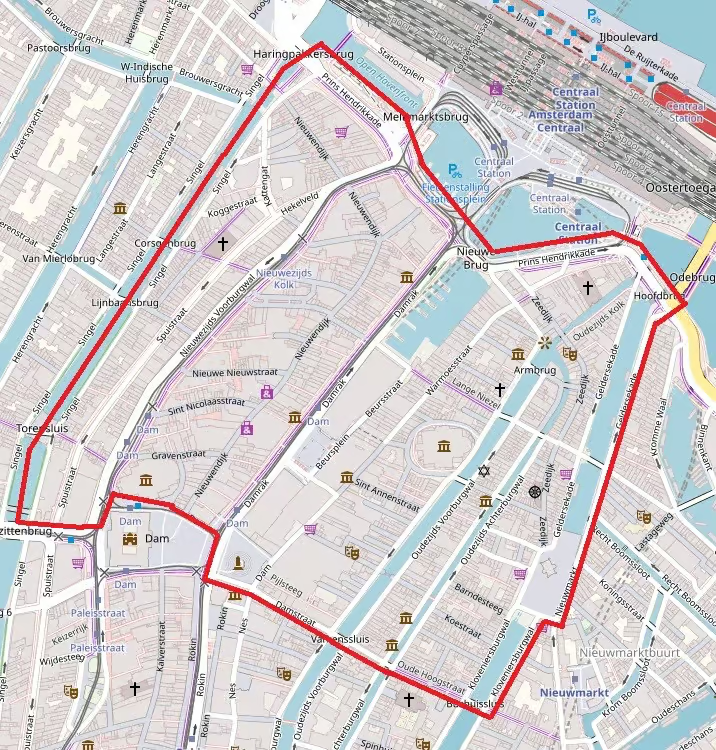
Amsterdam’s municipality has just extended its existing security measures until January 2, 2026, and expanded its “high-risk zone” to cover even more of the city centre.
Helaas, it looks like Amsterdam’s controversial high-risk zone isn’t going anywhere anytime soon.
The city’s veiligheidsrisicogebied or “safety risk area” was scheduled to expire this Sunday (October 26), but ongoing gun-related incidents have convinced city officials to keep the measure in place.
The original zone applied primarily to Amsterdam’s Burgwallen Oudezijde-Noord area, but it has now been expanded to include Koepelkwartier, Nieuwendijk, and surrounding areas.
This means that the high-risk zone currently applies to the following parts of Amsterdam:
Oudezijds Achterburgwal (the northern section),
Damrak,
Nieuwendijk,
Prins Hendrikkade,
Geldersekade,
Nieuwmarkt (including underground metro stations),
Kloveniersburgwal (the northern section),
Spuistraat (the northern section),
Nieuwezijds Voorburgwal, and
Koepelkwartier.
Amsterdam’s high risk zone is now bigger than before. Image: Gemeente Amsterdam
What can I expect?
The previous conditions still apply, so if you happen to live in any of the aforementioned areas, you can expect an increased police presence.
Officers in the safety zone will also conduct extensive security screenings, with the municipality noting that “all persons and vehicles within the cordoned-off area are checked.”
If you’re walking through these areas or taking the metro, you may need to factor some additional time into your commute.
How do you feel about Amsterdam’s high-risk zone? Tell us your thoughts in the comments below.
Travelling between London and Amsterdam? Eurostar’s double-decker international trains are on the way, and they’re bringing 20% more seat capacity with them.
In a new press release, Eurostar unveiled a €2 billion upgrade to their fleet, with up to 50 new double-decker trains.
The sleek new fleet (named ‘Eurostar Celestia’) is set to launch in May 2031, and will operate through the Channel Tunnel, connecting London to “a constellation of cities across Europe.” And yes, that includes Amsterdam!
More seats, more destinations
Each train in the Celestia fleet is expected to seat a little over 1,000 passengers, which will likely mean fewer sold-out seats if you’re catching the Eurostar to or from the Netherlands.
The fleet will service Eurostar’s existing routes to key cities in France, the UK, Belgium, Germany, and the Netherlands. Plus, they’ll also unlock lines to new locations, such as Geneva and Frankfurt.
That’s more European cities within easy reach of Amsterdam and Rotterdam, without the hassle (or carbon footprint) of flying.
Will you be booking a seat on the new double-deckers, or are you on Team ‘Book Me a Flight There’? Share your thoughts in the comments below.
Imagine this: you just finished having a delicious meal with your Dutch friend when they all of a sudden sit back, undo the top of their trousers, and say, “Zo, nu even goed uitbuiken.” (So, now it’s time to rest.)
You stare in confusion as their belly hangs out and think to yourself, “This is odd”, but your jeans are also exceptionally tight after eating.
It’s starting to hurt. You think, “Maybe they’re onto something here.”
And down goes the zip.
It seems that the Dutch understand not only the pleasure of eating good food but also the importance of giving their body rest and time to digest after eating, which is why they often take a break to ‘uitbuiken’.
What is it?
Uitbuiken is used as a verb. If we break the word into two parts, it literally translates to “belly out.”
[Channelling David Attenborough voice] Typically, people who are in the process of uitbuiken will stretch out their legs, lean backwards on the dining chair or couch, unzip their pants, and pat their bellies with their hands.
This word is used informally and is mostly exchanged with friends or family members (meaning you shouldn’t use it at the office).
Nothing cosier than chilling on the couch with friends after a good dinner 🥰 Image: Freepik
This is what you do after a lavish dinner in the comfort of your home: sit back, relax, and give those food babies some room to breathe.
Following up: a cup of coffee or tea to stimulate the digestive process to, well, get your uitbuiken uit. ☕
Why do they do it?
The Dutch are known as open-minded and honest people. For them, there’s no shame in letting people know that you’re full and need a little breather after a big meal.
If you invite some Dutchies over for a home-cooked meal at your home and they hit you with a “Ik ga even uitbuiken,” take this as a huge compliment.
Home is where you can take a nap with your belly out ❤️ / Image: Dreamstime
They loved your food, ate too much, and now they’re telling you their waistlines need a break before passing around the dessert. 🍰
They do it for simple physical comfort, but also because they are super comfortable with you.
Why is it quirky?
It’s not usually common to let people know that you’re stuffed with food and need a break. Nor is it common to let your belly hang out in the process. 😄
Think of it as the physical manifestation of Dutch directness. It’s surprising but also welcome.
Should you join in?
Only if you’re comfortable!
It’s only human to sport a food baby after eating. Why not let those around you know that you need a break before continuing the evening? After all, it’s a strict no-shame zone!
What do you think of this Dutch quirk? Have you experienced it? Tell us in the comments below!
Finding the best place to work or study in Maastricht can be tricky: where can you sit all day? Where’s the best coffee? And where, oh where, are the power outlets?
If you’re in Maastricht and can’t find the motivation at home, simply go and find it somewhere (preferably with caffeine) nearby.👇
Here are the best cafes and coworking spots to work or study in Maastricht!
This café belongs to the famous Coffeelovers franchise, and it’s the only branch with table service! So, you can sit down, open your laptop, and get served as you please.
At Plein 1992, you’ll also find power plugs next to the tables, which is great if you’re planning on taking an entire day to study at the café.
It’s also right on the corner of the Meuse River, so after your productive study sesh, feel free to take a stroll along Maastricht’s beautiful waterways.
🏢 Type: Café 💰 Price: Stay for a cup of coffee ⏰ Opening hours: 8 AM until 6 PM from Monday to Friday, 9 AM until 6 PM from Saturday to Sunday 📍 Location: Plein 1992 77, Maastricht
2. The Social Hub: the coolest coworking around
Ideal if you’re looking for a social coworking spot! Image: The Social Hub/Supplied
Want to be surrounded by people who know how to work hard and play hard? The Social Hub (formerly the Student Hotel) is a startup hub and coworking spot that is buzzing with entrepreneurial spirit.
Housed in a former factory, this spot is surrounded by cultural attractions. But you’re here to get work done, right? No stress! The spacious work areas, huge desks, natural light, and (best of all) free coffee and tea will give you a hand.
Choose from a day pass, a month pass, a dedicated desk, or even a private office. The opportunities are endless, and the people are ridiculously friendly.
🏢 Type: Coworking 💰 Price: €15 for a day pass, flexible memberships from €109 per month ⏰ Opening hours: 8:30 AM-6:30 PM Monday to Friday 📍 Location: Sphinxcour 9a, 6211 XZ
While this gezellige café is relatively small, it has several seating options; from four-seat tables to solo barstools, you can get comfortable whether you’re coming alone or with your friends.
Zondag is also reputable for bringing in an international crowd, so you’ll probably hear other languages other than Dutch and English there.
Hot tip: it gets packed in the evenings, so this place is best for a daytime study or work session.
🏢 Type: Café 💰 Price: From €3.40 for a coffee ⏰ Opening hours: 10 AM until 2 AM from Monday to Friday, 10 AM until 3 AM from Saturday to Sunday 📍 Location: Wijckerbrugstraat 42 Maastricht
4. Fixed Gear Coffee: work your brain and your bike
Fixed Gear Coffee combines your ol’ regular coffee shop (the usual type) and a bike workshop. Coffee and cycling, does it get more Dutch than this?
If your bicycle is in a rut, and you’re too busy to go fix it, you can kill two birds with one stone and get some work done while having it repaired. 🚲
If you want to work or study there while a fur baby stares at you over your laptop screen, geen probleem. You can freely bring in your fluffy companion as Fixed Gear Coffee is also pet-friendly!
🏢 Type: Bicycle store/café 💰 Price: €3.00 for a coffee ⏰ Opening hours: 8 AM until 5 PM from Monday to Friday, and 9 AM until 5 PM from Saturday to Sunday 📍 Location: Grote Gracht 42, Maastricht
5. ROOOMS: entrepreneurial atmosphere
Just sit down, relax, and let the wave of productivity crest over you. Image: Freepik
Want a workplace in the centre of Maastricht? ROOOMS is bustling with startups and freelancers, making it the ideal place to get work done.
Tucked among the desks is everything you need for productivity: outlets, printers, meeting rooms, free fruit, and coffee that just keeps flowing.
It’s also the perfect place to practice your Dutch and network; all from just €65 per month!
🏢 Type: Coworking 💰 Price: From €65 per month for a flexible community subscription ⏰ Openinghours: 8:30 AM until 5 PM from Monday to Friday 📍 Location: Boschstraat 21, 6211 AS
While Joost en Maartje is much larger than our other recommendations for places to work or study in Maastricht, it still has a chill and homely environment with a great working atmosphere.
With free WiFi and power plugs available at dining tables, this café is the perfect place to get some hard tasks done.
The café offers breakfast, lunch, and a whole bunch of coffee options. And, their menu has very reasonable prices, which is great for students on a budget!
🏢 Type: Café 💰 Price: Just the price of food and drink! ⏰ Openinghours: 8:30 AM until 5 PM from Tuesday to Sunday 📍 Location: Maastrichter Heidenstraat 8
7. Alley Cat Bikes & Coffee: for comfort and a good cup of joe
Like Fixed Gear Coffee, Alley Cat Bikes & Coffee also combines bike repairs and speciality coffee. What else would you expect in the Netherlands?
Located in the heart of Maastricht, this café is the perfect chill place to work and study while your bike gets a quick check-up.
Another plus? The café has an open layout, with loads of natural light to keep you feeling less like a dungeon rat and more like a refreshed youngster as you work.
🏢 Type: Bicycle store and café 💰 Price: Order a coffee and you can work away! ⏰ Openinghours: 10 AM until 5 PM from Tuesday to Sunday 📍 Location: Hoenderstraat 15-17, Maastricht
8. Coffeelovers Dominicanen: in Maastricht’s old cathedral
Has there ever been a more inspiring place to work? Image: Bettina Miera/Wikimedia Commons/CC4.0
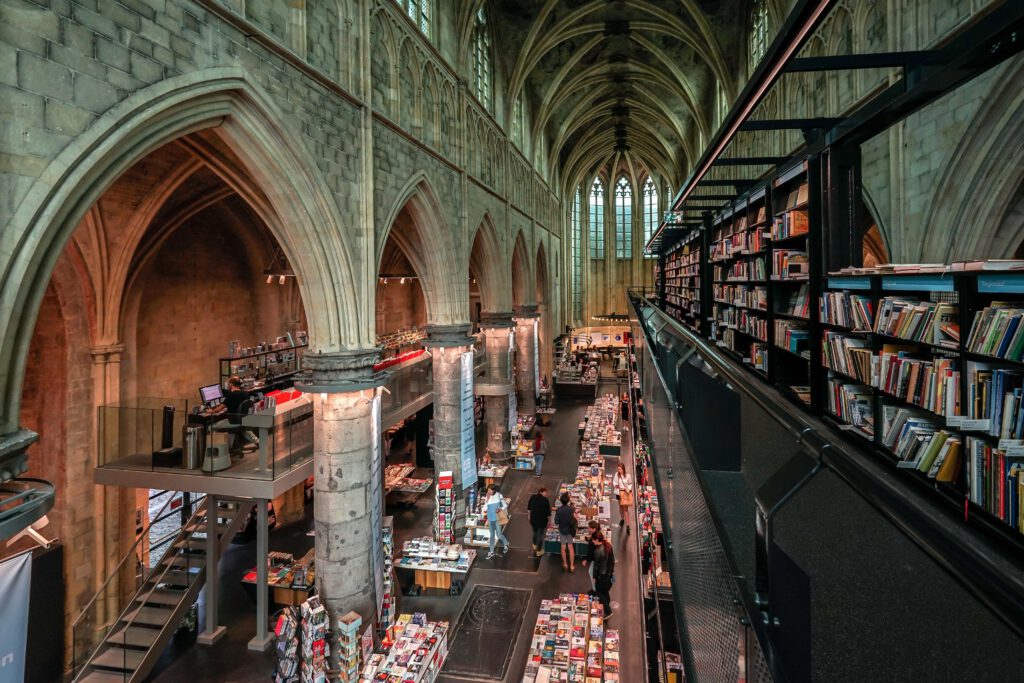
Coffeelovers Dominicanenis the ultimate work or study place for book lovers in Maastricht, because what better place is there to get those readings done than in an old cathedral-turned-bookstore?
Once you’re done studying in an 11th-century iconic structure in the centre of Maastricht, feel free to take a walk around the shop’s offerings.
While this café ranks on the pricier side, the background view of the historical cathedral as you work easily tops that boring white wall in front of your desk at home.
🏢 Type: Bookstore and café 💰 Price: Order a drink or some lunch, and you can get stuff done ⏰ Openinghours: 10 AM until 6 PM on Monday, 9 AM until 6 PM from Tuesday to Saturday, and 12 PM until 6 PM on Sunday 📍 Location: Dominikanerkerkstraat 1, Maastricht
9. Coffeelovers Centre Céramique: perfect for museum visits
Last but not least, we have another branch of Coffeelovers: Coffeelovers Centre Céramique! A quiet and chill café in the central hall of the Maastricht Museum.
This place is ideal if you’re visiting the museum and want to stop for a bite to eat or some coffee to warm up.
Just want a snack while you explore the city? With a range of takeaway options and a location slap-bang in the heart of the city, that’s totally doable!
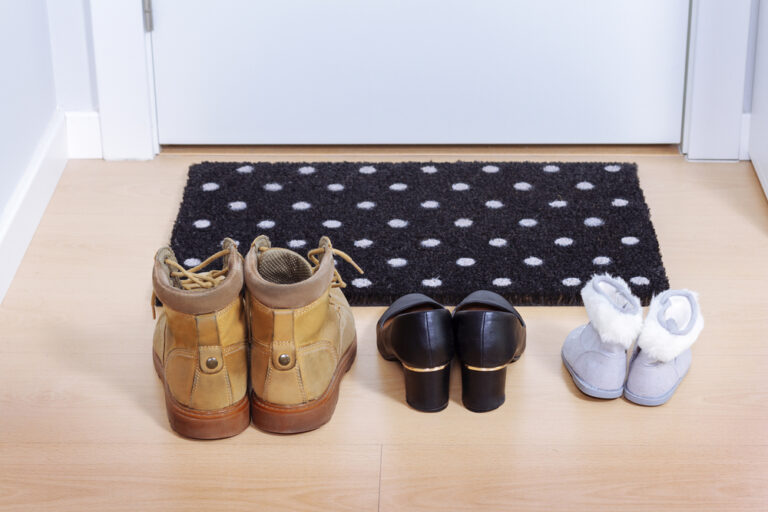
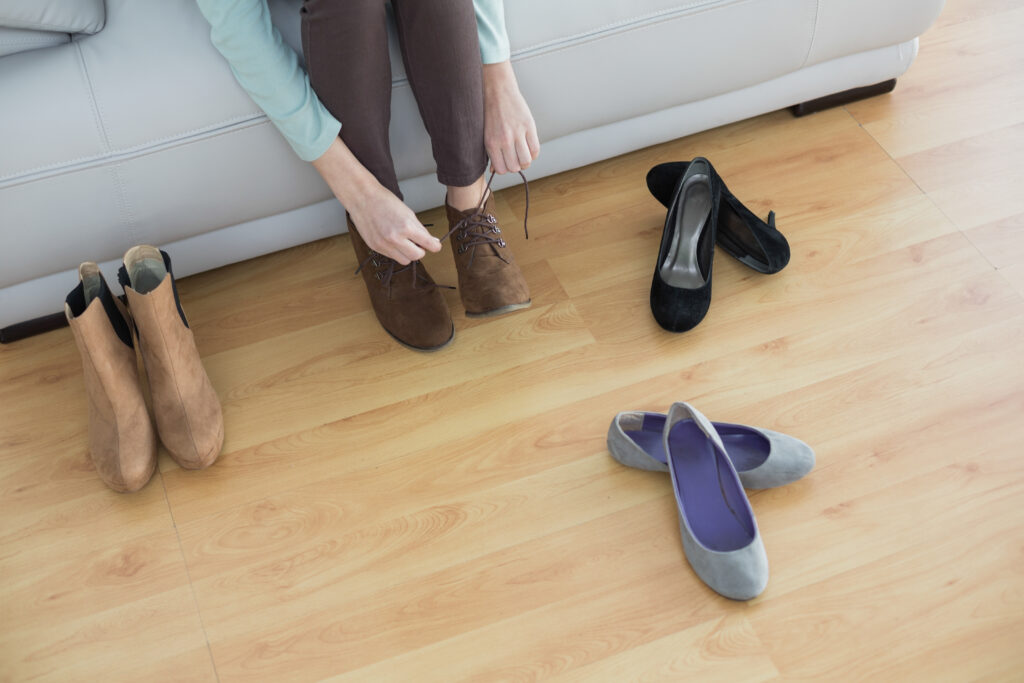
Wearing shoes in the house in the Netherlands: it’s a thing. For those of us who come from different cultures, it’s a strange phenomenon — but where does this custom come from?
I’ve already written about other interesting Dutch habits and have since bought a house in the Netherlands. That’s when a discussion came up when talking about visitors: will we have an Austrian household or a Dutch one?
Most importantly, how do we make Dutch guests understand my strange, urgent need that they have to take off their shoes in the hallway?
Cultural differences: Austria
Every time I enter a house, I take off my shoes immediately at the front door. I never considered that other people don’t do that or questioned why I do it. It’s in my system and has been a habit for as long as I remember.
My mom was especially nitpicky about it since we always had wooden floors, and she never liked dirty shoeprints on the floor.
That’s why my brother and I always took our shoes off so as not to drag any dirt or snow inside the house. We didn’t want to make our mom mad… or clean the floor afterwards. 🫢
So, when coming to the Netherlands and visiting Dutch households, I always automatically took off my shoes — that is until my boyfriend told me that it is not common here.
At first, I was a bit confused. But it was summer, the weather was warm, and I wore sandals — so I just listened.
Wearing heels in Dutch households is common! Image: Freepik
Looking around, I noticed that nobody else was walking in socks or barefoot either. People even wore high heels in the living room and walked on tiny stilettos, pinching holes in the wooden floor. 👠
So, why do Dutch people wear shoes in the house?
Afterwards, I couldn’t help but initiate a conversation about it with my boyfriend, who explained this Dutch phenomenon.
When I started to work here, I noticed that all the students ran around in their shoes too.
In Austria, that would never happen. From kindergarten on, every kid wears slippers. You come to school, take off your shoes, and walk in slippers all day long.
Our teachers and parents always told us that it would be healthier for our feet, and the cleaning personnel were especially happy because we dragged less dirt inside. Only the teachers were allowed to wear their normal shoes.
No rush taking off your shoes in a Dutch household. Image: Freepik
Once I became a teacher myself, I was a little bit proud to have that privilege. But seeing Dutch students coming to school completely soaked from cycling through the rain and then walking around on a carpeted floor at school left me quite surprised.
A quick search on Google
So, pretty obviously, we have a cultural difference here. I was so completely taken by the subject that I googled it.
“In Northern Europe and Austria, it is considered rude and unhygienic to wear shoes in the house.” I like how Austria even got its special position in this sentence.
Then I found out that “in the Netherlands, people don’t usually wear shoes in the house.” That means that it is not usual but still common, especially for visitors.
I grew older, I grew wiser, and, to be honest, I inherited many characteristics of my mom. I know that I don’t want to have people walk around in my house in shoes.
I love walking around in socks, and I simply have this “no-shoe attitude” deeply anchored in my Austrian heart.
So when it comes to having our own house in the Netherlands, I am probably a pretty annoying host. My boyfriend at least stands behind my rule, but I guess his main reason is “happy wife, happy life.” 😆
What is your opinion on wearing shoes in the house? Tell us in the comments below!