This week saw several major Dutch political parties neck-and-neck ahead of today’s vote. Now, the exit polls have been announced. 👇
The results? D66 has surged ahead as Rob Jetten surprises the Netherlands.
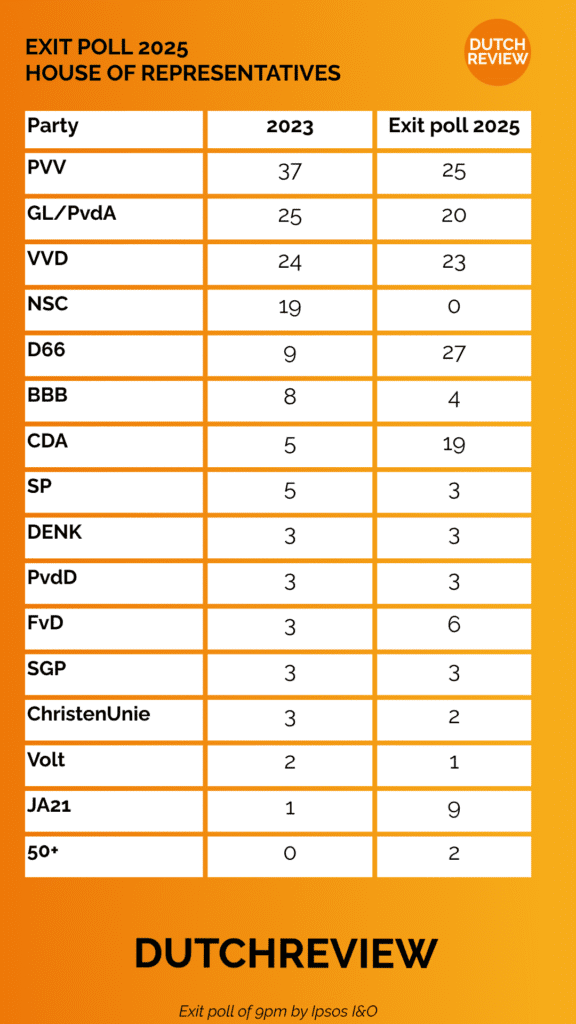
According to the 9:30 PM poll, D66, led by Rob Jetten, is projected to take the lead with 27 seats, putting them narrowly ahead of Geert Wilders’ PVV, which follows with 25 seats.
But the real surprise of the night? The VVD. After weeks of dire polling that had them stuck below 15 seats, they’ve made a dramatic comeback, securing 23 seats in the exit poll.
It’s a disappointing evening for GroenLinks–PvdA, who drop five seats to 20, while Henry Bontebal’s CDA appears to be holding steady with 19 seats. But this is also somewhat disappointing after being touted as the next prime minister many times in this election campaign.
One thing seems certain though: Rob Jetten’s D66 has pulled off an election night surprise, and the coming coalition talks are set to be as complicated as ever.
Image: DutchReview
What are these results based on?
The current results are based on research carried out by Ipsos I&O, commissioned by the NOS and RTL.
Researchers base their results on the voting behaviour and turnout at 65 polling stations across the Netherlands, with these stations chosen to provide the best representation of voting behaviour throughout the country.
Based on previous elections, this exit poll is usually accurate in determining the seat distributions in the House of Representatives. However, they do use a margin of error of one or two seats per party.
What does this mean? The exit poll may indicate that one party has earned 25 seats, while another has earned 27. However, once the final count is given, it could be that both parties earned 26 seats.
In other words, while this exit poll is usually pretty accurate, there’s still a chance that there may be a small difference between these results and the final results of the election. We’ll know more about the exact results by tomorrow, but they won’t shift that much.
The Netherlands is an amazing place to live, with so many places to see and discover. But getting to those places? That’s harder than it looks. Apparently, the knowledge of how to use a sidewalk in the Netherlands is a learned skill.
I am a people person. In general, I love to meet new people: I’ll endeavour to get your name right and remember it next time (no guarantees), and if you speak another language, I will insist that you teach me how to say “hello, how are you” in your mother tongue.
You’ll probably compliment me on my pronunciation 💁♀️, but sadly, I likely won’t remember this for our next interaction. I guess you can’t have everything — but at least the intention is there. Point being, I love people.
However, be that as it may, I cannot, in good faith, tell you that people don’t also annoy me to no end. In particular, people who don’t know how to use a sidewalk in the Netherlands.
Getting sidewalk savvy
The “sidewalk” is a space where humans (usually — I’ll ignore the audacity of some bikes) walk beside the road to avoid cars and the dangers of being a pedestrian on the road.
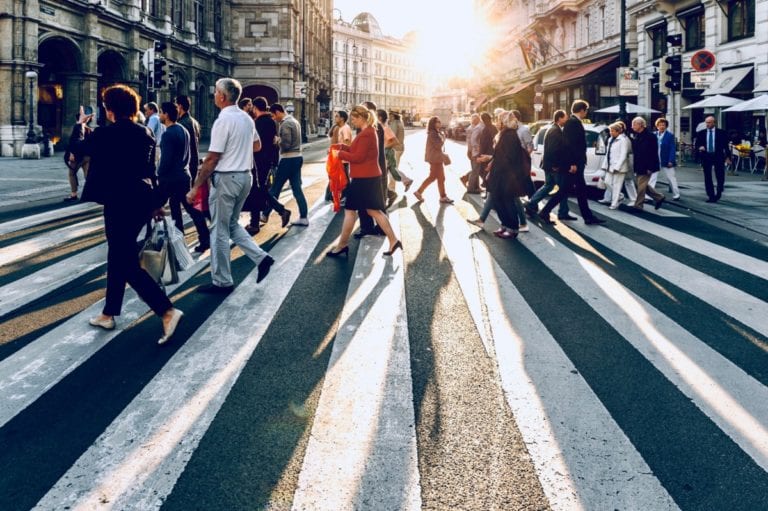
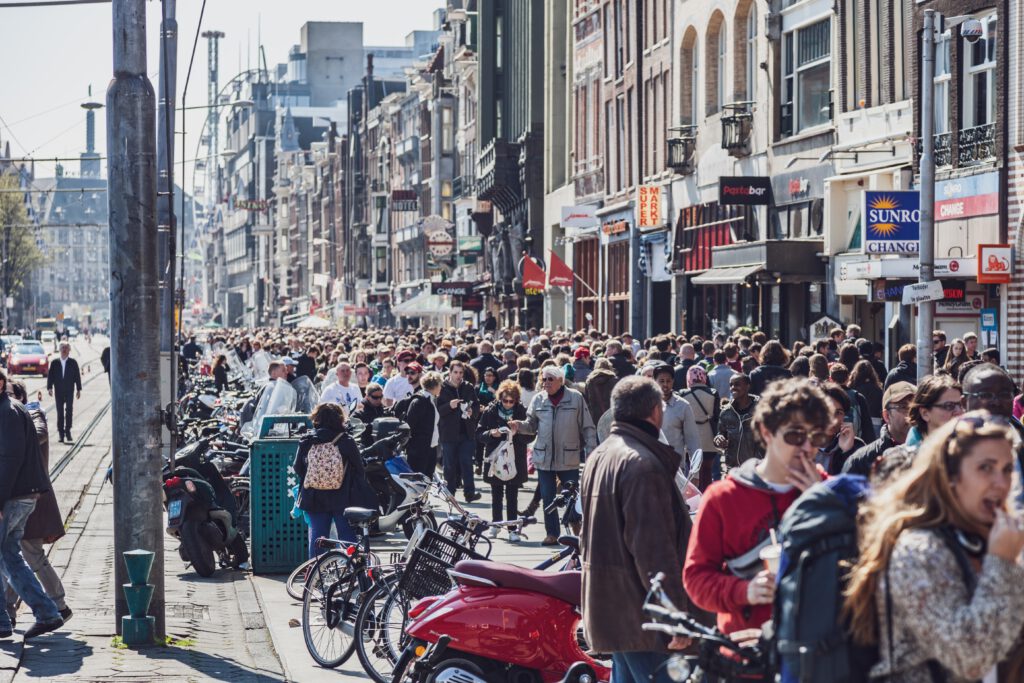
Amsterdam’s sidewalks are particularly haphazard, as you can see. Image: Unsplash
The traffic on a sidewalk runs in both directions, so in fact, the word also means that we as humans have to walk beside each other.
Given the popularity of the Netherlands with tourists, I’ll go ahead and assume that you understand the relevance of being able to walk on a sidewalk in an efficient and effective manner, which makes some people’s inability to do so all the more frustrating.
You’re cute, but…
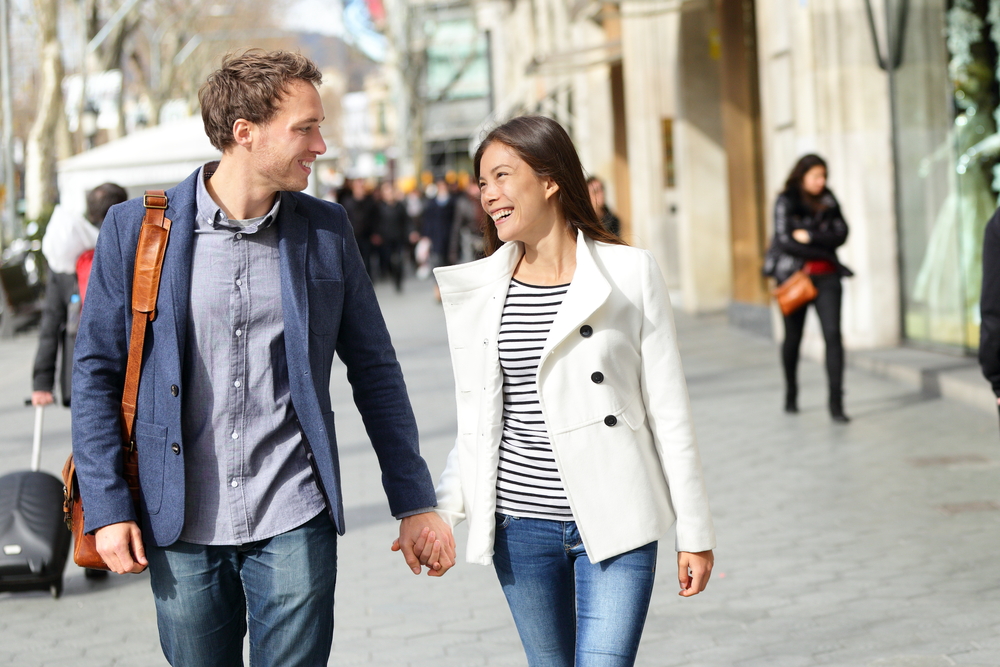
Aw, you’re a couple, walking along, hand in hand? That is so adorable, and I’m so happy for you — but can you let go of one another for like 0.5 seconds in a concise and orderly manner and walk in a single file?
Ideally, I’d like to pass by without any awkward instance of having to split you up, but so help me, I will. I’ve done it before — unintentionally, but I’ll do it again.
I was walking and looking at my phone and realised a second too late… but, in my defence, they had four eyeballs between them, and they still hadn’t moved.
See this picture? See the person in the back? Yeah, that’s me when a couple walks in front of me on a sidewalk. Image: Depositphotos
The couple ended up having to break their hand-holding, and I mumbled an apology that, today, I would like to take back. Let’s just be adults about this and give each other some space. Don’t make an arch for me, and don’t make me walk in the road; I shouldn’t have to risk my life for your love.
It’s not only couples
Ah, the joy of group travel is something that I fully support, too. What I’m less supportive of is your group taking their own sweet time, stopping and starting, and just generally having no regard for the busy 20-something-year-old navigating behind the 10th group for the day, whilst trying to move about Amsterdam.
Even worse? If we’re heading in opposite directions. You see me coming, but the crew is deep in discussion: John is telling a hilarious story, and the punchline is about to drop. No one seems to want to move, and all seven of you are within ideal earshot and are intent on maintaining that proximity and inclusion.
So, I’m involuntarily drawn into a game of “Sidewalk Chicken.” That’s my least favourite game.
Or, there’s the mini-group of 2-4 people that are walking along, chatting… when all of a sudden, they stop to check a map or admire a building with no regard to anyone behind or in front of them.
Another lovely instance is when people are walking towards me and not looking ahead — I swear, sometimes this happens on purpose. They’re facing forward, but they refuse to make eye contact or move.
Should I just call on my inner Neo and pull out some Matrix-worthy swerving of these human bullets?
A magical solution
I would like to think that using a sidewalk in the Netherlands is quite simple. It’s not called a sidestop, so unless there is a physical obstacle in the way, we should both be able to keep walking with no qualms.
I grew up using the British word “footpath”, so if I can understand the “side” part of “sidewalk”, I think other people should be able to as well.
Now, don’t get me wrong, I love a good tourist, but I’m also a huge advocate for people being just a little bit more aware, considerate, and accommodating.
When I was younger, walking past people with my mom, she would always bark out, “Keep to the right!” It’s like magic: if I’m going one way and keep to the right, and you’re coming in the opposite direction and keep to your right, then we don’t collide at all!
I think navigating basic directional interactions is a life skill, really, so I hope this article is a source of insight and knowledge for you — or a place to convene with others who feel your pain!
Do you also have a maddening tale of sidewalk traffic woe in the Netherlands? Share it with us know in the comments below! 👇
The Dutch integration exam has gotten a serious makeover this year. Gone are the days of being quizzed on whether to congratulate your neighbour on their birthday (seriously, that was a thing).
Instead, you’ll actually learn stuff that might help you navigate Dutch life without pulling your hair out.
The Knowledge of Dutch Society (KNM) exam (that’s Kennis van de Nederlandse Maatschappij if you fancy getting tongue-tied) is swapping social etiquette lessons for practical know-how.
The revamp reflects the government’s push to help newcomers understand how Dutch society functions on a day-to-day basis.
Want to ace the KNM exam without the stress? InburgeringOnline.nl offers comprehensive preparation through engaging videos and quizzes that cover the 2025 exam updates. Study on your schedule — and pass with confidence! Check it out.
Understanding cultural history and diversity
One of the biggest shifts is that the exam now acknowledges that the Netherlands isn’t all stroopwafels and tulips. For example, the updated exam will now integrate themes such as the Holocaust.
Education surrounding the Holocaust now features prominently, covering what happened during WWII, and the devastating impact on Dutch Jewish communities.
Most importantly, it aims to highlight why rejecting anti-Semitism and discrimination matters today.
Meanwhile, the exam also pays increased attention to diversity in Dutch celebrations. Think beyond King’s Day and Christmas.
The updated content recognises that modern Dutch society celebrates various cultural and religious festivals, such as KetiKoti and Eid al-Fitr.
Tackling digital skills (because it’s 2025, not 1995)
The new exam also tackles digital literacy — something that’s pretty important for existing in the Netherlands (and the modern world in general).
For example, you’ll need to demonstrate your knowledge about DigiD (your digital gateway to all things governmental).
Not being able to use a laptop can’t be an excuse anymore to avoid taking the Inburgering Exam Image: Freepik
You’ll also find yourself answering questions about the basics of protecting your personal information online and how to navigate official Dutch websites safely.
Knowing what rights and services you’re entitled to
People’s rights will also play an important part in the new KNM exam, with particular attention paid to women’s rights.
Newcomers must now learn that in the Netherlands, women have full freedom to make their own life choices, work, and live autonomously and independently.
While the old exam focused on how you should act in certain scenarios, the new version simply wants you to show that you understand how Dutch society operates.
For example, just because you moved here doesn’t mean you should write a poem dissing your in-laws on Sinterklaas — but you should be able to demonstrate that you understand that this is something people do in the Netherlands.
Learning about things you’ll encounter in the real world
The new exam is based around four practical situations you’ll actually encounter: working in the Netherlands, housing, dealing with officials, and civic participation.
In practice, this means that you’ll be asked questions about eight different topics across these scenarios, covering areas like schooling, employment, officialinstitutions, and healthcare.
The most important part of your Inburgering exam in the Netherlands is learning how to dodge cyclists. Image: Freepik
Speaking of healthcare, this will be delved into more extensively in the new exam. Questions will touch on more specific healthcare topics, such as the role of supporting staff (praktijkondersteuner huisarts) at Dutch GP clinics.
Preparing for the updated KNM exam? Skip the boring textbooks and study with InburgeringOnline.nl. Their entertaining videos cover all the new exam topics. Study at your own pace, pass the exam, and understand Dutch society. Leuk!
The changes have been in effect since July 1, 2025, which means if you’re taking the exam now, you’ll be sitting the updated version.
Nervous? You can find the current practice materials on DUO’s practice exam page or check out courses specifically for preparing for the KNM exam.
Once you’re ready, you’ll hand over €50 to take the exam. During the test, you’ll have 45 minutes to complete the questions, and you must get 28 correct answers out of 40 to pass (that’s 70%).
Here’s the main thing to remember about the updated exam: the changes actually make the KNM exam useful beyond just ticking a bureaucratic box.
The refreshed curriculum offers hands-on information you’ll use in everyday Dutch life. Knowing your way around the healthcare system, schools, and official bodies isn’t merely something to memorise for a test, it’s practical knowledge for anyone trying to get things done in this country.
Have you experienced the Dutch integration exam maze? Share your stories (horror or otherwise) in the comments.
Police in Roosendaal are searching for two young people, a boy and a girl, who are suspected of spraying an 11-year-old boy in the face with a burning liquid.
The incident took place on Wednesday, June 18, around 3:30 PM on the Rucphensebaan near the Zegestede cemetery in Roosendaal.
The liquid caused immediate burning in the child’s eyes, which led him to fall off his bike.
A witness stepped in to help him. The boy reportedly suffered from blurred vision for several days following the attack.
Taking to Facebook, the police have now made the case public and are issuing a clear message to the suspects: “If you don’t come forward, we’ll make your photos public.”
So we all know that the Dutch language can get a bit wacky sometimes and even some Dutch people get stumped. Imagine how the non-Dutch folk wrap their heads around it!
There’s been a trend on social media about “In the Netherlands, we don’t say _______, we say…”, and some are pretty damn funny. Let’s check them out. 😉
Sometimes we quote songs…
In the netherlands we don’t say “i love you” we say “jij moet mee naar diemen zuid want je ziet er lekker uit” and i think that’s beautiful
In The Netherlands, we don’t say “I’m not racist, but..”, we say “die zeurpiete moete van onze traditie afblijve!!”, and I think that is kaolo irritant
Keep your enemies close and your neighbours closer… And you really need to know about the ‘driving judge’!
In Dutch you don’t say ‘How are you!’, you say: ‘Jouw buxushaagje staat 20 centimeter te dicht op de erfgrens, ik sleep je voor de #rijdenderechter, dakhaas!’ and I think that’s beautiful.
Translation: Your boxwood hedge is 20 centimetres too close to the property boundary, I’ll drag you before the #driving judge, roof rabbit! — listen, we don’t know either.
When food is life… 😋
In the netherlands we don’t say “i love you” we say “doe maar 6 friet met mayo en een frikandel want dat wijf moet ook nog nassen” and i think that’s beautiful
Translation: JUST DO 6 FRIES WITH MAYO AND A FRIKANDEL BECAUSE THAT B*TCH HAS TO GO!
There are other ways to express your love…
In The Netherlands, we don’t just say “I love you”, we say “die kut-A12 staat weer vast dus wacht maar niet op mij met eten”, and I think that is beautiful
That p🐱ssy A12 is fixed again, so don’t wait for me to eat! — Again, we wish we could shed some light on this.
Limburg has other ways of expressing their love…
In Limburg zeggen we niet ‘ik hou van je’ maar zeggen we ‘mosse nog pils?’ Wat betekent dat je aan diegene denkt en om hem geeft. Lief hè? https://t.co/B60l1Vvkn6
Translation: In Limburg, we don’t say “I love you”, but we say “mosse still lager?” Which means you think about that person and care about them. Isn’t it sweet?
Thank god the summer is over!
in Dutch we don’t say ‘Fijne dag vandaag,’ we say ‘Blij dat die tyfushitte voorbij is en dat je eindelijk niet zweet als een dolle baviaan’ and I think that’s beautiful
Translation: “Nice day today,” we say “Glad that the typhoid heat is over and you’re finally not sweating like a mad baboon.”
The dreaded circle of death…
In the Netherlands, we don’t say “so nice that you came!”, we say “Hooi neem een worstje, pak een stoel en vraag of Ria ff opschuift, wil je slagroomtaart of appel-kruimel?” and I think that is beautiful.
Translation: Hey take a sausage, grab a chair and ask Ria to move up, do you want whipped cream pie or apple crumble?
On your bike!…
In The Netherlands we don’t just say “I love you” we say “Je gaat gewoon op de fiets naar school ondanks deze grafkou, kreng!!” and I think that’s beautiful. https://t.co/uTMSWDjCyp
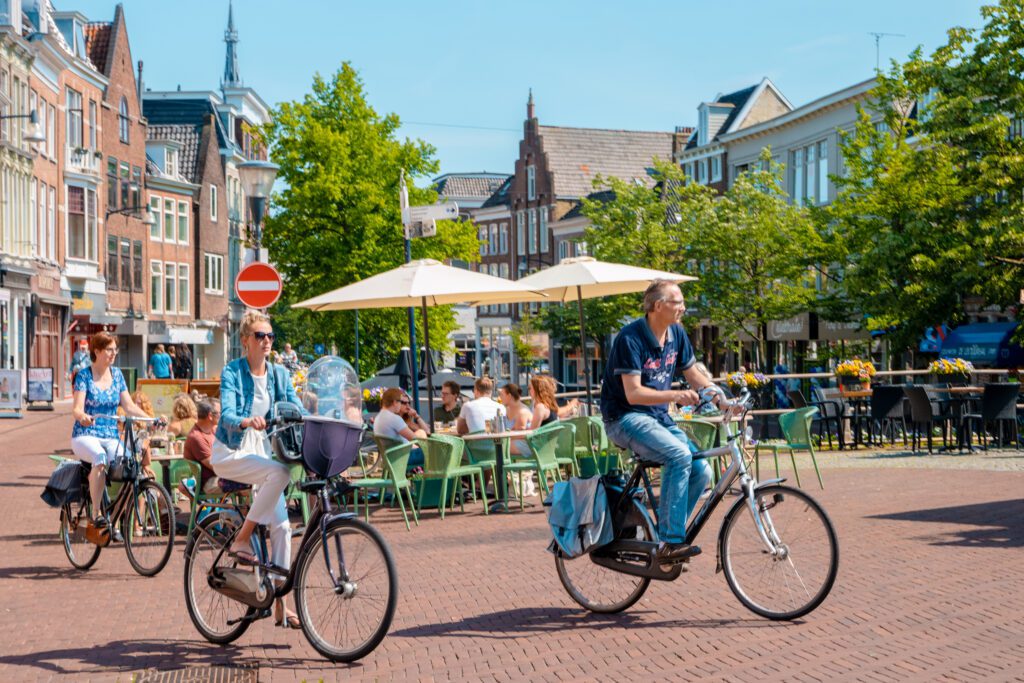
The Dutch and their bikes go together better than peanut butter and jelly — but how did the Netherlands become a cycling paradise in a world increasingly dominated by cars?
It’s safe to say that Dutchies take their love of biking very seriously. In fact, you’ll find Dutchies biking under any circumstance — they bike when they’re drunk, when they’re texting, when it’s raining, with a bucket full of children, oh and even when they’re naked. 😳
So, what makes biking so popular here? Is it convenience or simply a fun and social activity? Here are 17 reasons why biking in the Netherlands is anything but ordinary. 🕵️
Biking to where you have to go without sweating like crazy makes the experience way better! Image: Freepik
With no bumpy roads and no need to huff and puff up a hill, biking and commuting to work, school, or a friend’s house is smooth sailing — and sweat-free.
2. Great cycling infrastructure is found everywhere
Since the 1980s, Dutch cities have begun to make streets more cycle-friendly by introducing cycling paths, cycling traffic lights, and pro-cycling policies.
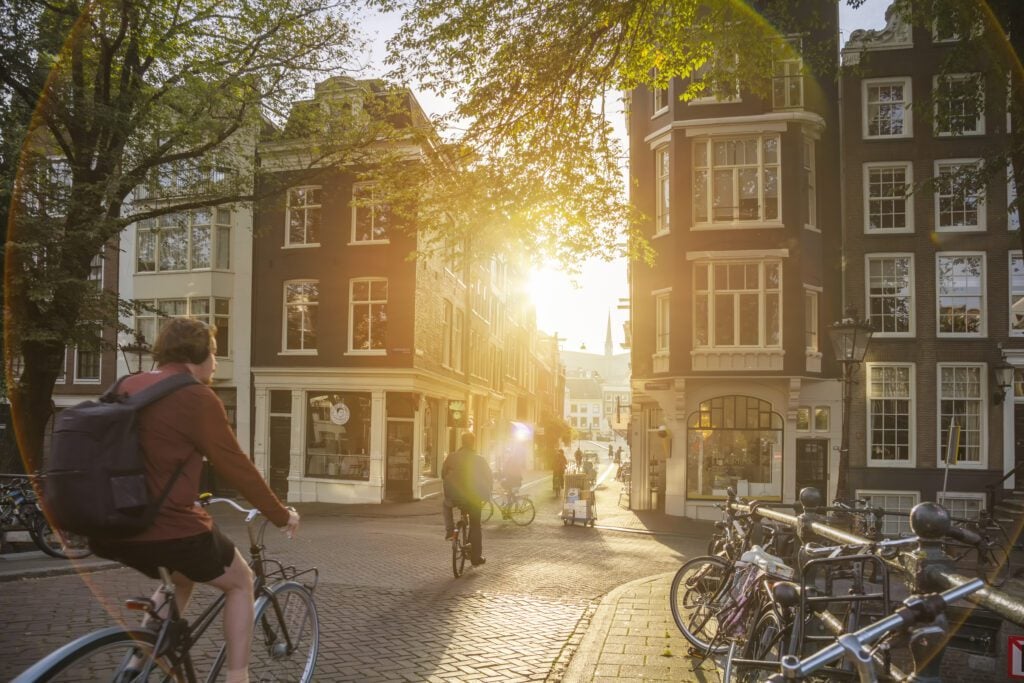
On Dutch streets, bikes rule the road and for a good reason. Not only are there separate and clear bike lanes but all bridges, lifts in stations, trains and metros, and even stairs in public spaces are designed for, you guessed it, a fietser. 🚴🏻♀️
3. Dutchies bike before they learn to walk
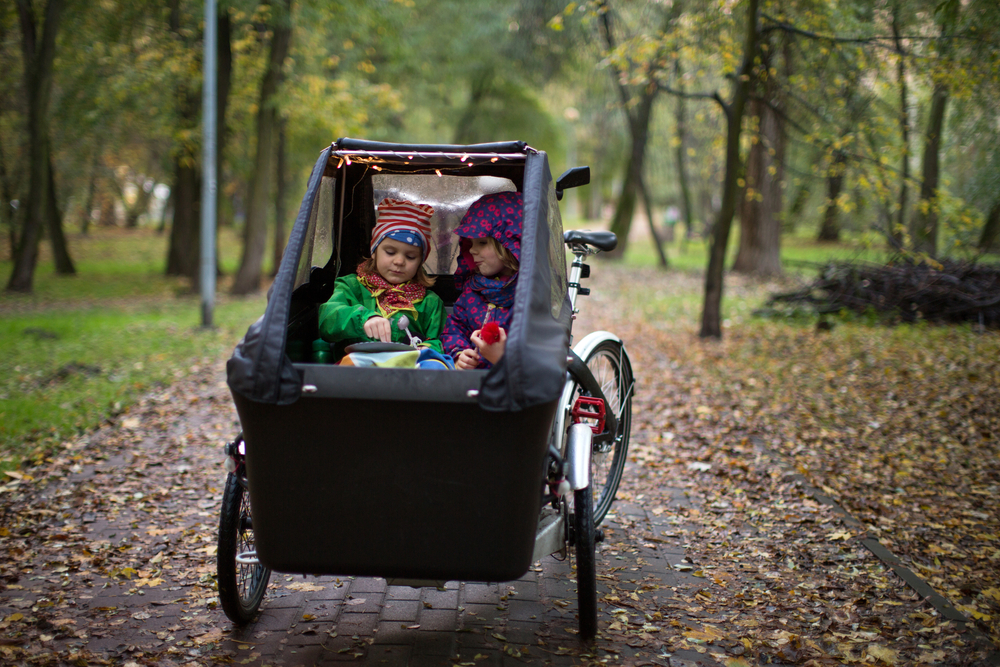
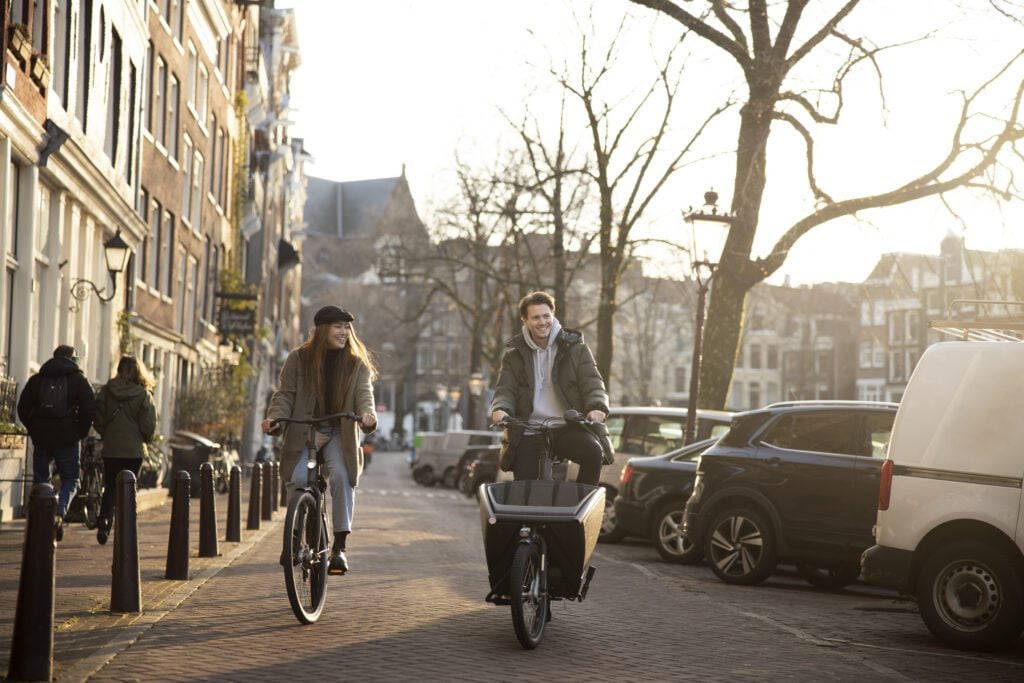
Dutch children are inducted into the glorious world of cycling as soon as they’re born. As babies and toddlers, they travel in bakfietsen (cargo bikes), scoot along on a learner’s bicycle with no pedals by the age of two, and are often cycling by the age of four; talk about growing up fast! 😄
Cargo bikes full of children just chilling in them are a sight to see in the Netherlands! Image: Depositphotos
It’s even integrated into schools: students take cycling lessons, and a verkeersexamen (traffic exam) is mandatory, specifically designed to help children learn how to cycle safely and move around in traffic.
4. Biking in the Netherlands says nothing about status or hierarchy
“Biking is only for the people that can’t afford a car or public transportation,” said no Dutch person ever.
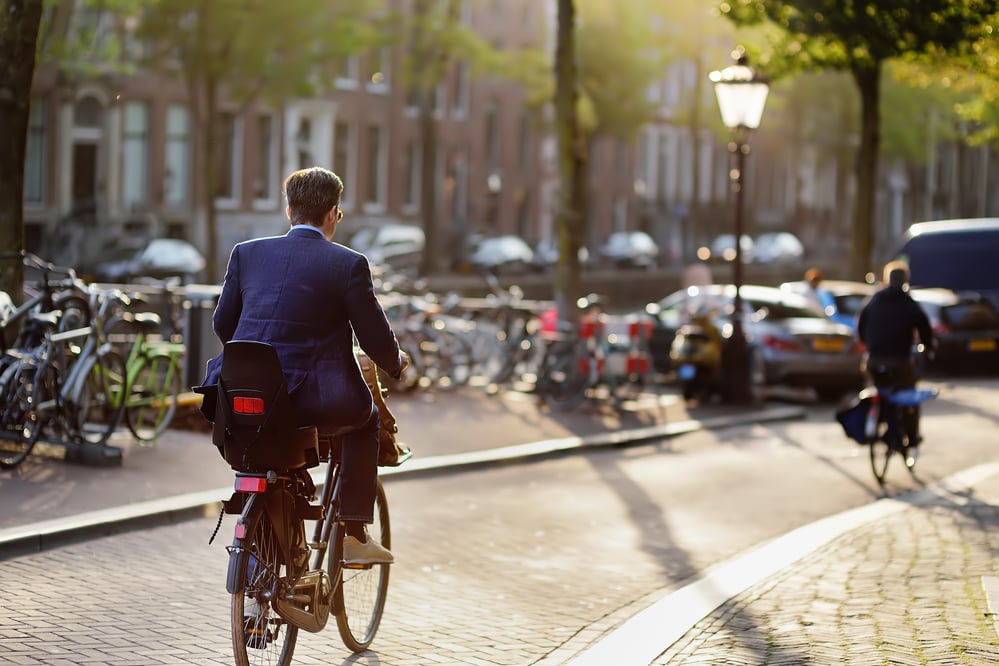
Biking in the Netherlands is truly for everyone — no matter what you do for a career or how much money you have in your bank, cycling the streets is the norm.
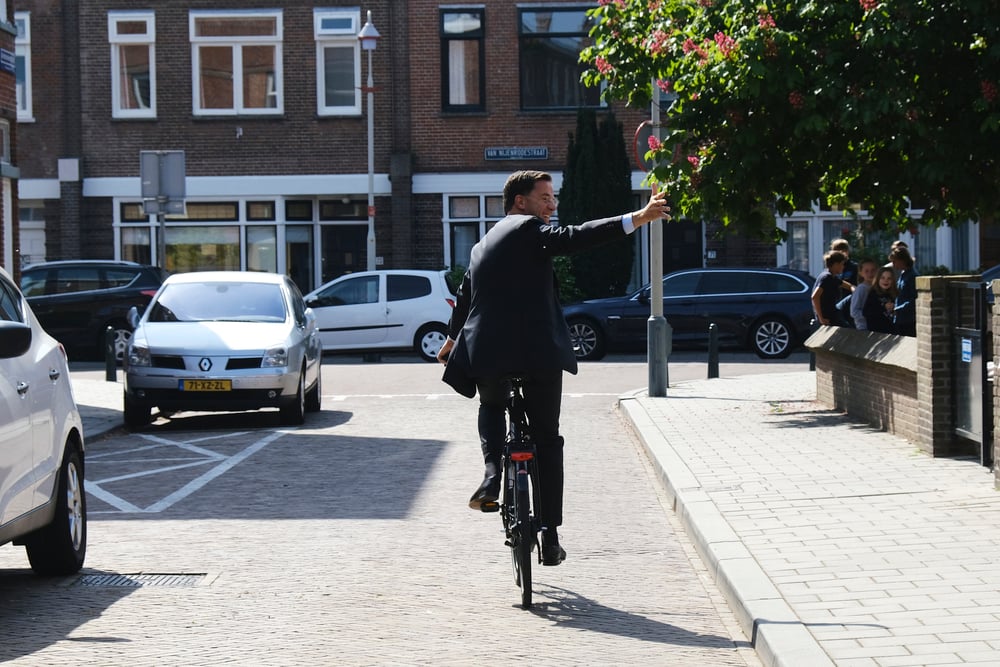
Who knows, you might very well be biking next to a CEO of a company, the Dutch Prime Minister, or a millionaire! 👀
We’re not kidding: here’s the former Dutch prime minister cycling to work! Image: Depositphotos
5. Cycling is cheaper and healthier
Let’s face it: having a car in the Netherlands is not cheap. Add in paying for gas, taxes, and parking fees, and it will cost you a stack of geld (money).
Enter: biking. People go everywhere with bikes on a daily basis — from going out at night to the gym or visiting someone — making bikes a cheap, practical, and healthy option.
Who needs the gym when you can get your daily exercise by biking? Image: Freepik
6. The government and employers actively encourage Dutchies to bike
With the Netherlands being famously cyclist-friendly, it is common that the government actively discourages car use and motivates bicycle use instead.
While some companies offer train compensations to work, others provide allowances to bike more! Image: Depositphotos
But the Netherlands takes it one step further by offering bike allowances at workplaces. This means that some companies offer to cover travel expenses for cyclists with a tax-free mileage allowance of €0.19 per kilometre — that’s one way to get people to ditch their cars! 😀
7. The 1970s changed biking in the Netherlands forever
Today, the Netherlands is known to be a cycling haven, but that hasn’t always been the case. In fact, it wasn’t till the 1970s, when an oil crisis, car crisis, and social movements hit, that the Netherlands began to push cycling over driving.
One of the most important social movements that led the government to create bike paths was Stop de Kindermoord, which literally meant to stop children’s murders. 🛑
With cars came consequences. In 1971 alone, more than 400 children were killed on Dutch roads. This led to protesters, especially mothers, taking over the streets and starting demonstrations against the use of cars.
Nowadays, thanks to new systems and cycling infrastructures, kids in the Netherlands can bike freely to school, sports, or friends, with fewer parents worrying about their safety.
8. The Netherlands is one of the safest countries in the world to bike
The Netherlands was found to be the third-safest country to bike, and Utrecht has been named the world’s most bike-friendly city in the world. Are we surprised? Echt niet.
With cyclists having priority over cars and pedestrians by law, cyclists have their own right of way, making them feel powerful and protected when they’re on the roads.
Have you been to the Netherlands? Cycling there is just like driving here – fast and intuitive to the locals, a bit intimidating to visitors. But what a thrill to ride where cyclists truly have right-of-way!
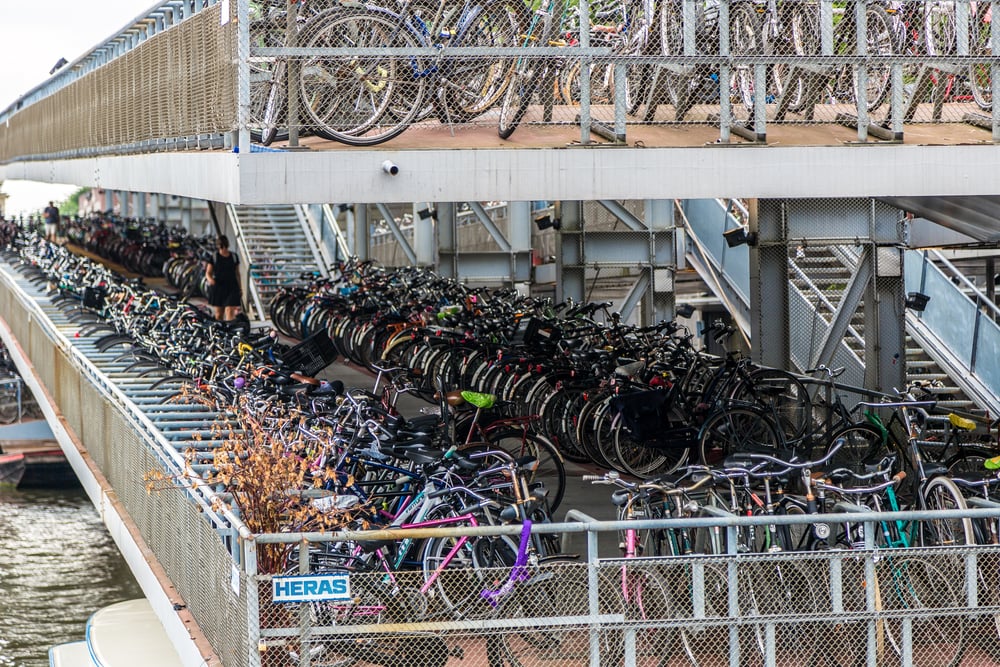
Some countries have car parks, and the Netherlands has…bike parking lots? Fietsenstallingen are found all over the country and might be outside, inside, underground, or even underwater — this is very normal, extremely practical, and often free.
The Netherlands is known to have two of the world’s biggest underground bike parking lots, one in Utrecht, which can store up to 12,500 bikes and the other in The Hague, which can hold up to 8,500 bikes.
Parking lots specifically designed for bikes? Yeah, that’s a thing in the Netherlands. Image: Depositphotos
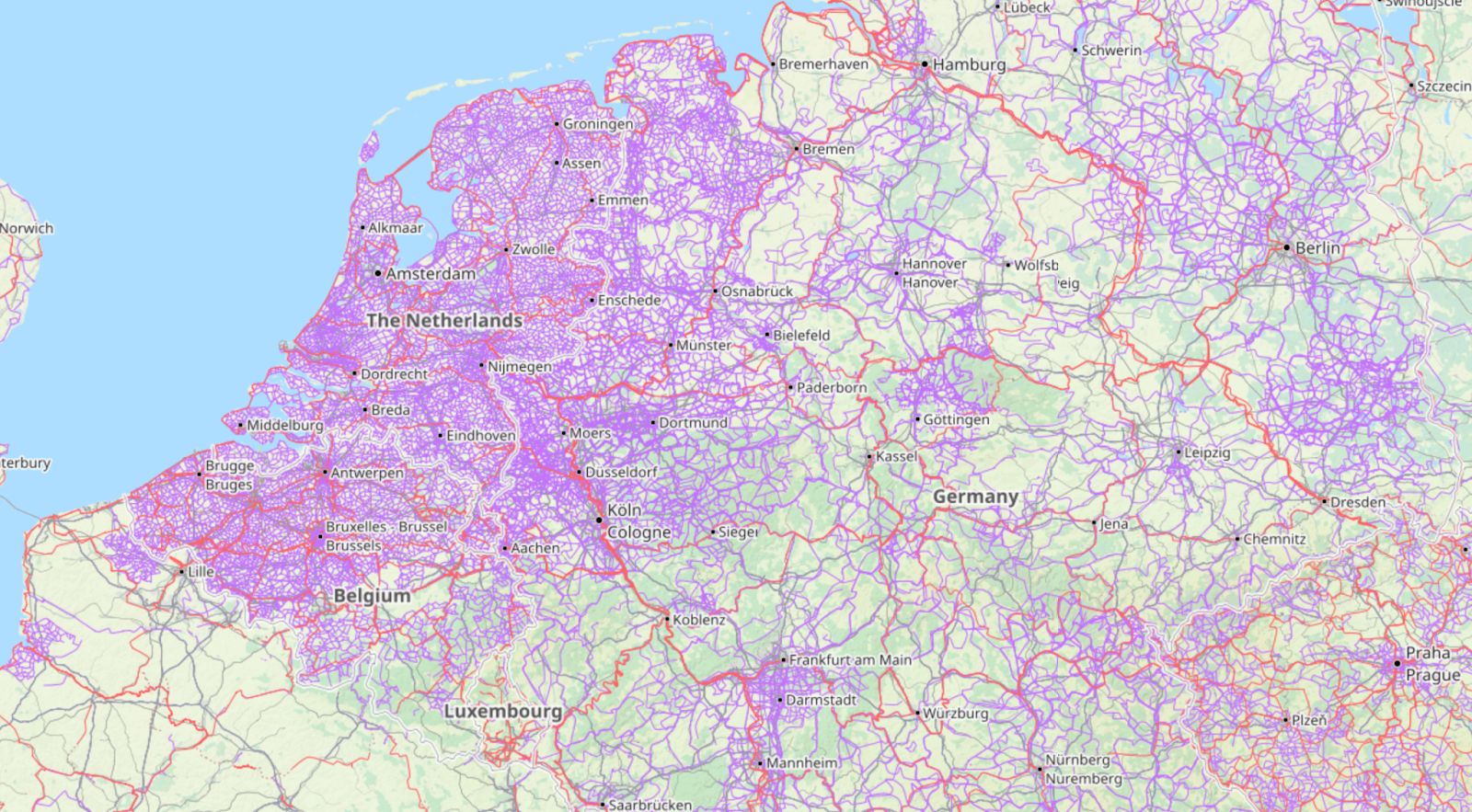
10. The Dutch are firm believers in dedicated bike paths
In need of a break from cycling in cities? Not only does the Netherlands have bike routes to get you to work or school, but it also has incredible scenic bike paths where you can cycle to get closer to nature.
Cycle paths in the Netherlands — compare that to the surrounding countries! Image: OpenCycleMap.org/CC2.0
Many national parks offer peaceful bike rides, where you can pedal the day away by soaking up the sun, breathing in the fresh air, and getting surrounded by greenery. 🌲
11. Biking is eco-friendly, and Dutchies are proud of it
Cycling is a great way to improve your physical and mental health, but (bonus points!) — also the health of the planet! Dutchies regularly take pride in doing their bit for the environment, simply by replacing their car trips with their two-wheel commute. 🌍
Make your contribution to the environment by biking — the planet will thank you! Image: Freepik
By not using any gas, bikes do not release harmful emissions that pollute the air, nor any carbon dioxide that contributes to climate change. That’s right, choosing to bike makes a huge impact on your carbon footprint, and we’re all here for it! 🙋♀️
12. Buying a bike is ultra-cheap
Buying a bike in the Netherlands won’t make your wallet want to cry — a second-hand bike can cost between just €50 and €250.
Buying a bike in the Netherlands doesn’t have to cost you a fortune! Image: Freepik
Best part? Once you’ve bought a bike, your only costs are maintenance. Compared to a car, it will save you hundreds of dollars on gas, expensive maintenance, and insurance.
Oh, and if you’re scared of your bike being stolen, you can even get bike insurance — echt fijn!
13. Dogs love biking almost as much as Dutchies
Don’t want to leave your furry friend behind when you go on a bike ride? You don’t have to.
Don’t be surprised when you see a dog going for a ride with their owner — very common in the Netherlands! Image: Freepik
You’ll see dogs biking everywhere with their Dutch owners: in baskets, bakfietsen, grocery baskets, saddle bags on the back of the bike, and even balancing on top of children’s bike seats!
Having bikes with these extra features gives owners the possibility to bring their pets with them anywhere they go — a true Dutch family outing. 🐶
14. When drinking, biking home is way cheaper than a cab
€40 for an Uber to get home after a night of drinking? Dutchies say nee bedankt (no thanks). The best way to sober up from all the beer drinking is with a refreshing bike ride anyway. 🍻
Never mind that biking under the influence is illegal and dangerous — less money on public transport means more money for beer, say the Dutch.
Skip the stress of having to check your watch for when the last tram or metro goes; biking home after a night out is the true Dutch way (just be careful not to fall in a canal, yes, it happens).
15. Biking is often faster than driving
Want to travel to a Dutch city and go to the centre? Well, you can’t. Not with a car, at least, as many Dutch cities forbid cars from entering their city centre.
A need for speed — biking can take you places a car can’t! Image: Depositphotos
Instead of turning circles and wasting half an hour with your car until you find a parking place that is relatively close to the centre, cycling is the way to go!
16. There’s no need to wear a helmet or athletic gear
There is nothing worse than biking with a helmet to a special gathering or event, and you take off your helmet and then boom: your hair looks like you haven’t brushed it in days.
Even if you’re biking near cars or trams, helmets are not mandatory in the Netherlands! Image: Depositphotos
Not to worry in the Netherlands, though, as it is not mandatory to wear helmets, or there’s no need to squeeze into Lycra either (unless you want to, you do you!).
That’s right, Dutchies only really wear sportswear if they’re a wielrenner (racebike rider), not the average person who cycles daily. Who has the time to change in and out of sporting clothes anyway? After all, Dutchies like getting things done in a practical and convenient manner.
17. Dutchies aren’t cyclists, they’re just Dutch
Biking in the Netherlands is so common; everyone cycles regardless of the time, the weather, or the distance. For Dutchies, biking is an integral part of their everyday life.
They’re not concerned about how they look while biking or with having the latest model of bike. Instead, they regard their bikes as loyal companions in their everyday adventures.
It’s about creating memories with your friends or family — a bike ensures an everlasting kind of love. 💞
From social and historical reasons to economic and environmental ones, Dutchies bike for many reasons. It’s tricky to understand Dutch people and their concepts without considering their best, most faithful friends: their bikes.
Dutchies bring their bikes everywhere they go, and why wouldn’t they? With cycle-centric rules of the roads to amazing biking infrastructures, Dutchies love to bike.
What is your favourite thing about cycling in the Netherlands? Tell us in the comments below!
Public transport in the Netherlands is set for several significant changes, affecting how identity checks are carried out, how safety is managed, and even how travel information is displayed in train stations.
RTL Nieuws reports that enforcement officers on public transport will soon gain access to asylum seeker data in order to verify identities and issue fines while people travel on public transport.
Identity checks for asylum seekers on public transport
According to RTL Nieuws, buitengewoon opsporingsambtenaren (BOAs) often struggle to identify asylum seekers who fare-dodge, which makes penalties difficult to collect.
Outgoing State Secretary Thierry Aartsen writes in a letter to the House of Representatives that:
“It’s unacceptable for someone to repeatedly avoid payment without facing consequences. This is highly undesirable behaviour for anyone, regardless of their background or residency status.”
In addition to this new data access, officers will also be able to check the driver’s licence register starting spring of next year.
NS enforcement officers to test batons
On top of this, the Dutch Railways (NS) has received approval from the Ministry of Justice and Security to issue batons to BOAs on trains.
The trial is set to begin next spring and will involve 75 NS enforcement officers.
NS submitted the request to the Ministry last summer.
This move comes after increasing reports of unsafe situations on and around trains, particularly since the coronavirus pandemic.
NS Director of Social Safety Itai Birger says in a statement, “Although NS has been reluctant to use batons so far, we want to investigate whether this tool can contribute to improved safety.”
State Secretary Aartsen also supports the trial in the same statement from NS, “Every day, an average of three NS employees are threatened, intimidated, or aggressively approached. That’s why they must be able to protect themselves.”
Travel information signs switch to dark mode
One more small change has already hit Dutch platforms. Passengers may also notice a visual change across train stations. Travel information signs are switching from a light background to a dark blue background with white text.
Together, these measures show NS taking a firmer stance on safety and accountability.
Do you think these measures improve safety, or do they risk encouraging racial profiling? Share your thoughts in the comments.
Two Dutch parliamentarians from the PVV (Party for Freedom) have been caught red-handed creating AI-generated images attacking opposition leader Frans Timmermans, and now GroenLinks-PvdA (GreenLeft-Labour) is filing criminal charges.
Geert Wilders has apologised, but his rivals aren’t having it.
The images in question were shared on a pro-PVV Facebook page called “Wij doen geen aangifte tegen Geert Wilders” (We’re not filing charges against Geert Wilders). Ironic name, considering what happened next.
The AI-generated pictures showed Timmermans, leader of the GroenLinks-PvdA alliance, being led away in handcuffs by police, handing cash from a white man to a Muslim couple, and posing beneath the word “CORRUPT” in capital letters. Subtle stuff, really.
According to De Volkskrant, the administrators of this charming Facebook page are none other than PVV MPs Maikel Boon and Patrick Crijns. Both are running again in the upcoming elections, positioned at numbers 23 and 34 on the party list.
De Groene Amsterdammer was already reporting on this nasty PVV AI business two weeks ago, along with De Volkskrant’s earlier coverage.
The page has since been taken offline, but not before GroenLinks-PvdA announced they’re filing criminal charges for libel. They’re also pressing charges over death threats that appeared in the comments beneath the images.
“Politicians are increasingly threatened, and we see this during this campaign as well. That’s a threat to democracy. Pages like these contribute to that,” the party stated.
Wilders apologises (sort of)
PVV leader Geert Wilders took to X yesterday morning to distance himself from the images, calling them “inappropriate and outrageous”. He even offered apologies to “colleague Timmermans”.
Ongepast en ongehoord. Ik neem er afstand van. Site is offline. Excuses aan collega Timmermans. https://t.co/cEnM1gn1lc
But Timmermans wasn’t buying it. Speaking on NPO Radio 1’s Sven op 1, he said he expects Wilders to take action and ensure Boon and Crijns don’t return to parliament.
Wilders has stated he has no intention of removing the two MPs from the PVV list. So those apologies might ring a bit hollow.
Gloves off at yesterday’s debate
The controversy erupted into a full-blown confrontation during yesterday evening’s EenVandaag debate in Rotterdam’s Ahoy arena. With over 2,000 students watching, Timmermans and Wilders had what observers described as a “hard collision” over the AI images.
Timmermans accused the PVV leader of running a “hate factory” and repeated his demand that the two MPs be removed from the list.
According to the NOS, the entire debate was particularly fierce and chaotic, with accusations flying in all directions.
What happens next?
The Team Bedreigde Politici (Threatened Politicians Team) of the Dutch police confirmed to De Volkskrant that they’re investigating the Facebook page.
For context, this comes at a particularly tense moment in Dutch politics. The elections take place tomorrow, and the race between Wilders’ PVV, Timmermans’ GroenLinks-PvdA, and the VVD is neck-and-neck.
Whether this AI-generated scandal will affect voting behaviour remains to be seen. What’s clear is that deepfakes and manipulated images are becoming a troubling feature of Dutch political campaigns, raising questions about how democracy functions when anyone with basic AI tools can create convincing (if not entirely believable) content.
What do you think about AI-generated images in political campaigns? Let us know in the comments below.
After more than a few years in the Netherlands, people expect certain things from you: like not complaining about the weather anymore, being able to do your groceries in Dutch, and drinking karnemelk (buttermilk) at lunch like it is the most normal thing in the world (WHERE IS MY WATER?!). 🥛
Here are 3 Dutch language constructions about time that continue to amaze me:
1. How late is it?
The Dutch phrase for saying “What time is it?” is Hoe laat is het? (How late is it?).
Basically, when they’re asking for the time, they’re assuming that they are already late. 🙄
The key to never offending a Dutchie? Simply be on time! Image: Freepik
In general, asking “how late is it?”, instead of “what time is it?”, gives off the vibe that you’re getting ready to leave, go to bed, or simply that you’re a little anxious about being late for something.
Relax, Dutchies!
2. Telling the time by looking at the future
The way you answer that question is also kind of perverse. Dutch people always look at the future.
For example, 11:30 is not “half-past eleven” or “half eleven” but half twaalf (half twelve). As in: you’re already rushing for the next hour. 🏃🏼♂️
The future is always near, and the Dutch are obsessively aware of it. Image: Depositphotos
Even more of a rhetorical masterpiece, however, is with the forthcoming minutes: 8:20, for example, is tien voor half negen, or “ten minutes before half nine”.
By the time you’ve calculated this in your head, you’re probably late — again.
3. Time is one of the first elements in a Dutch sentence
As you proudly build your Dutch sentence, the “when” of the action happening always comes before where, how, what, and with whom.
Ik moet morgen werken met Sander op kantoor (lit. I have tomorrow to work with Sander at the office).
The time follows the subject Ik (I) and the auxiliary verb moet (must) but precedes the main verb werken (work) and the rest of the sentence.
It can be a lot to get your head around, if you’re used to the sentence structure of English! Image: Freepik
The basic structure of a Dutch sentence is: Subject — Finite verb — Time — Manner — Place — Other verb(s). Time is simply too important to be left for later. 🤷🏼♀️
Conclusion: A healthy relationship with time comes with a fast-paced mindset. And the Dutch language has adapted wonderfully to this!
Are the Dutchies obsessed with time, or are the rest of us just sloppy? Tell us your thoughts in the comments!
It can be hard to separate yourself from the tourist traps — they’re popular for a reason. But for a slightly more authentic experience, we’ve compiled a list of the 10 best hidden gems in the Netherlands. 💎
Amsterdam has become so overrun with visitors that the Dutch Tourism Board has made efforts to disincentivise travellers from visiting the capital over the past years.
Venture to these hidden gems instead to spend some time exploring this flat land — without shuffling heel to toe amongst hordes of people lining up for the Heineken Experience or taking selfies at Keukenhof.
1. Visit the abandoned Kootwijk Radio station
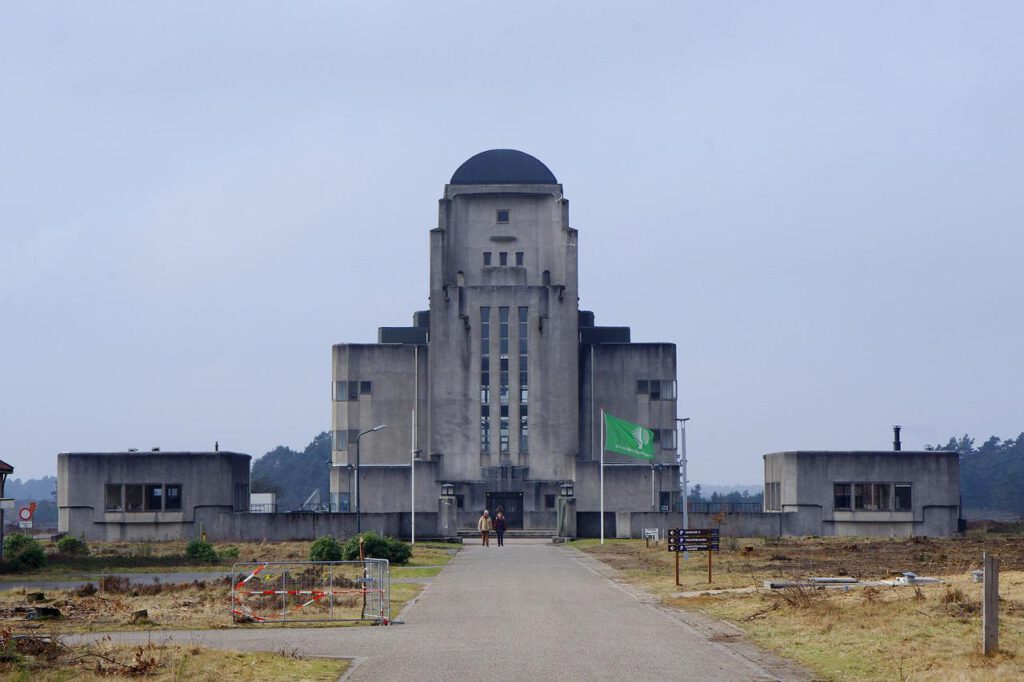
Radio Kootwijkis an abandoned building situated in the middle of a forest clearing. It was built in 1923 to emit radio frequencies between the Netherlands and Indonesia (known back then as the “Dutch Indies”).
Only five years after it was built, the station was deemed outdated and abandoned.
In all its gloominess, the abandoned Kootwij radio station is an underground-ish hidden gem in the Netherlands. Image: Pixabay
Meander around the nearby forest, sand dunes, and heath before exploring this ominous building.
Villa Augustas is a hotel and restaurant situated in the middle of a flourishing vegetable garden in Dordrecht.
It boasts an enticing market that’s open daily, selling freshly baked sourdough bread, a variety of fruit and vegetables, and ceramics. They also put on excellent concerts. You can easily make a reservation and check out the concert program online.
Zoku is a great place to hang out, with its welcoming vibes and beautiful decor. You can come with friends for a casual drink, relax on the hammocks outside, play ping pong indoors, or spend your day working at one of their epic work tables — with a coffee, of course. ☕️
4. Visit the public bar in the Vrankrijk squat house
This building has an extremely varied and rich history as one of the oldest squat houses in the Netherlands.
It began as a woodwork shop in 1875 before turning into a print shop used by Martin Toonder to print fake documents for the resistance during World War II. It was first squatted in 1982 by protesters who wanted to prevent its demolition.
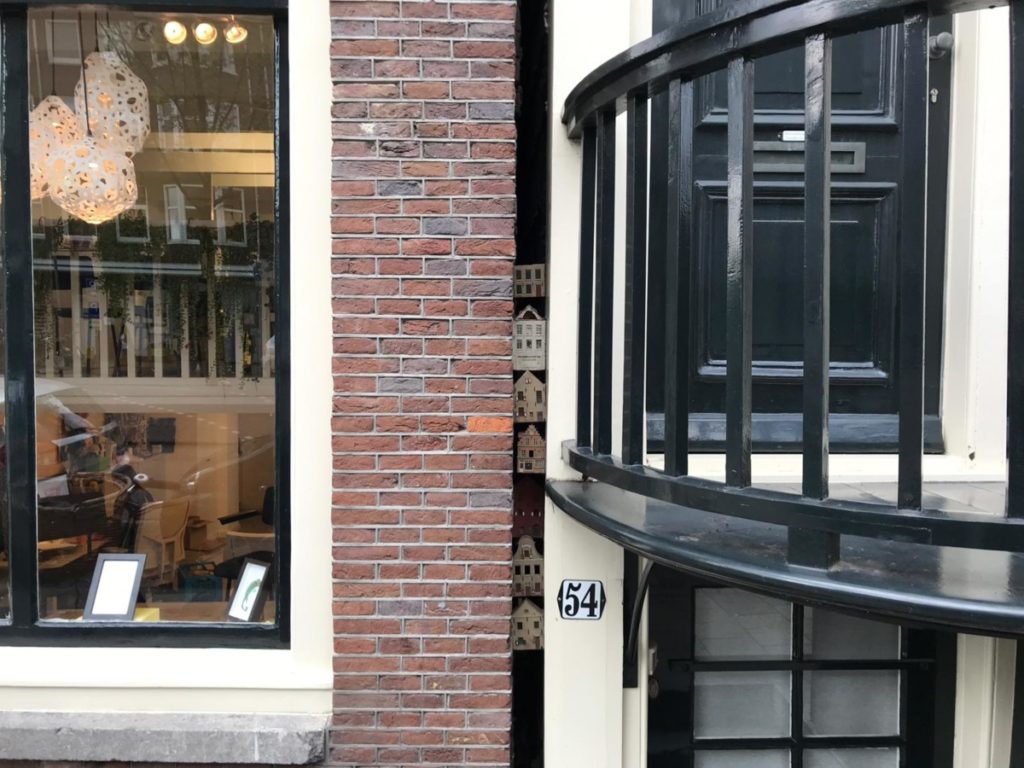
Hidden in the crack next to number 54 on Westerstraat in Amsterdam’s Jordaan area are a bunch of miniature houses. 🏠
See if you can spot them! The tiny houses put the “hidden” in “hidden gems of the Netherlands”. Image: Freya Sawbridge/Supplied
They were inserted between two houses to make a statement when the courtyard situated behind the building was removed in order to make room for more houses.
This cycling path in Eindhoven lights up to display Van Gogh’s famous Starry Night painting.
Thousands of glistening pebbles ingrained into the concrete absorb light during the day and emit colour at night. It’s a truly wonderful sight and oh-so-quintessentially Dutch!
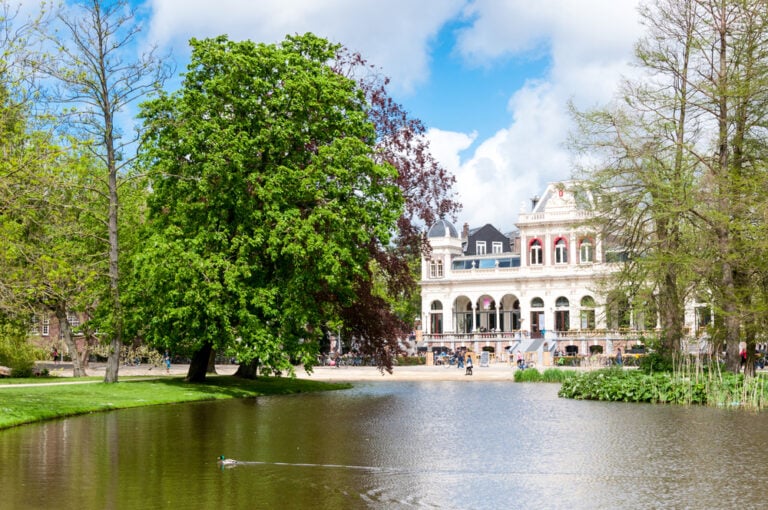
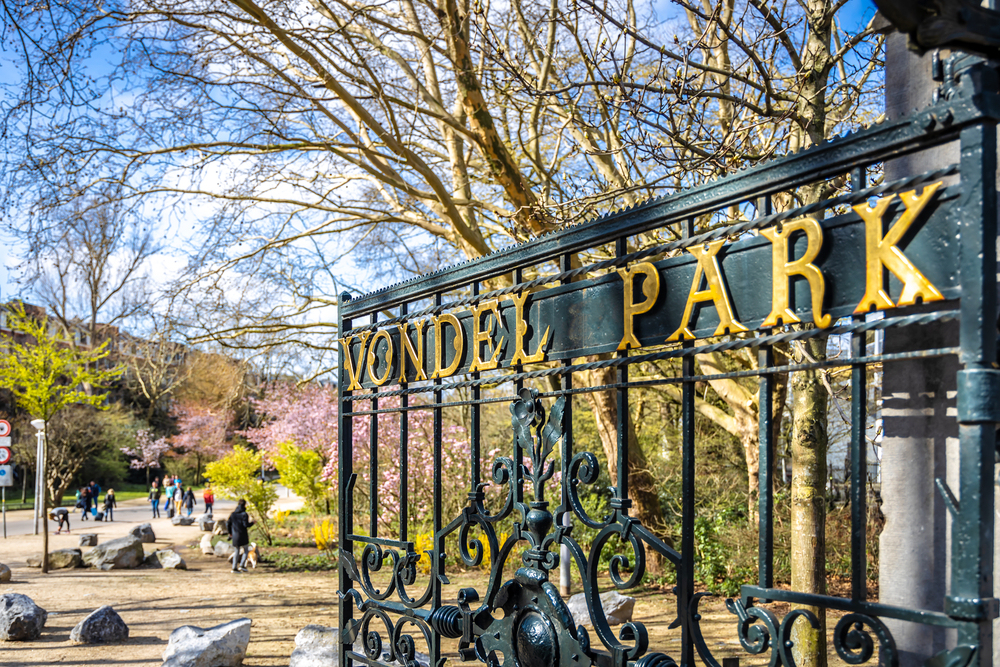
Sure, you’ve been to Vondelpark before, but did you know about this hidden gem? The park’s old cold war bunker hosts a variety of events, from art exhibitions, movie nights, dinners, and even their own brewery called Bunkerbier.
The beautiful entrance to Vondelpark hides more than one hidden gem. Now, you just have to find the bunker! Image: Depositphotos
The Vondelbunker is hidden underneath a bridge in Vondelpark — get exploring!
This concept dates back to the sixties when a group of social innovators wanted free bikes to be available to everyone and anyone in Amsterdam.
The project was never implemented in the capital, but stuck in De Hoge Veluwe. There are over 1,800 white bikes scattered around the park, and you can pick up and drop them off wherever you fancy (with no need to lock them). What a Dutch utopia! 🚲
From a west coast city in the Netherlands, it’s often far quicker to cycle to the coast than to use public transport.
Bike through a varied landscape, the route itself is a hidden gem of the Netherlands, taking you along the coastal dunes. Image: Depositphotos
The cycle trip from Leiden to Noordwijk only takes around 30 minutes and will reward you with undulating sand dune views, cute seaside towns and, of course, the North Sea.
10. Go to a (reasonably priced) music festival every Sunday
Ruigoord is located near Amsterdam and hosts a different festival each Sunday. The set-up is whacky, with entrancing lights and colourful sculptures dotted around a looming church.
So there you have it! A few ideas for a unique and memorable experience in the Netherlands.
You won’t always evade tourists or tourist traps (and sometimes they definitely can be worthwhile), but it’s nice to discover hidden gems for yourself and explore the Netherlands off the beaten track too.
Have you already done a few of these? Did we miss any hidden gem experiences? Tell us in the comments below!