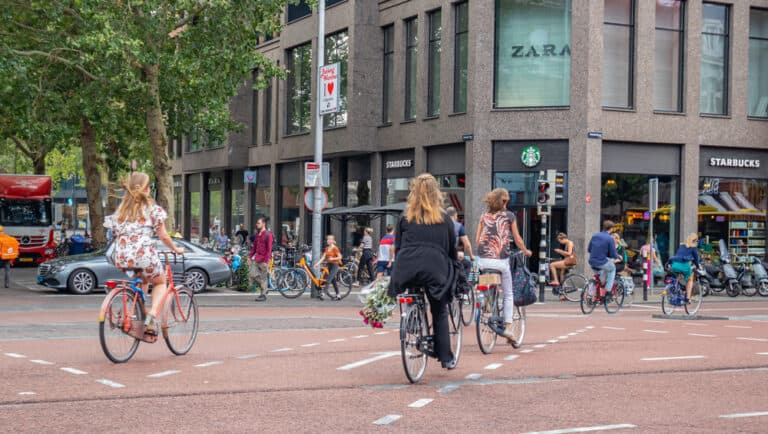
If you were planning a leisurely evening stroll along the beach, you might want to reschedule.The KNMI has issued a code orange weather warning for this afternoon and Friday morning.
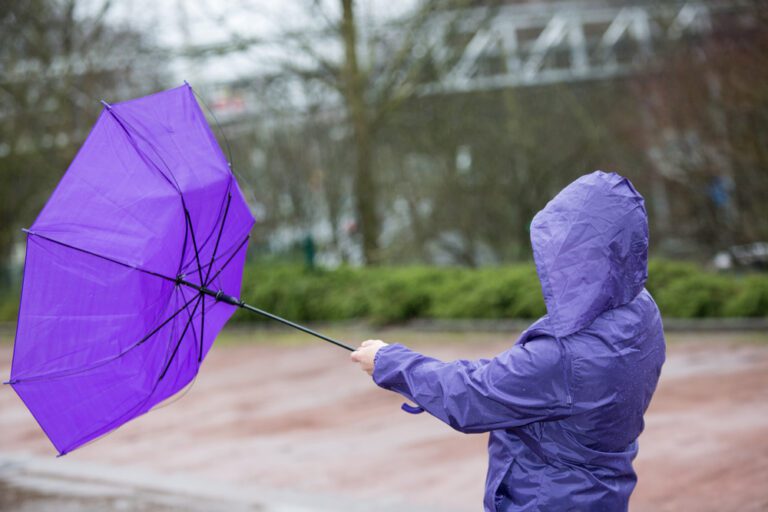
Yep, Storm Benjamin is barrelling towards the Netherlands with wind gusts expected to reach up to 120 kilometres per hour.
The warning kicks off at 2 PM for Zeeland, with other western provinces following later.
The rest of the country won’t escape entirely though, with code yellow warnings in place for areas outside the western coastal zones.
What to expect from Storm Benjamin
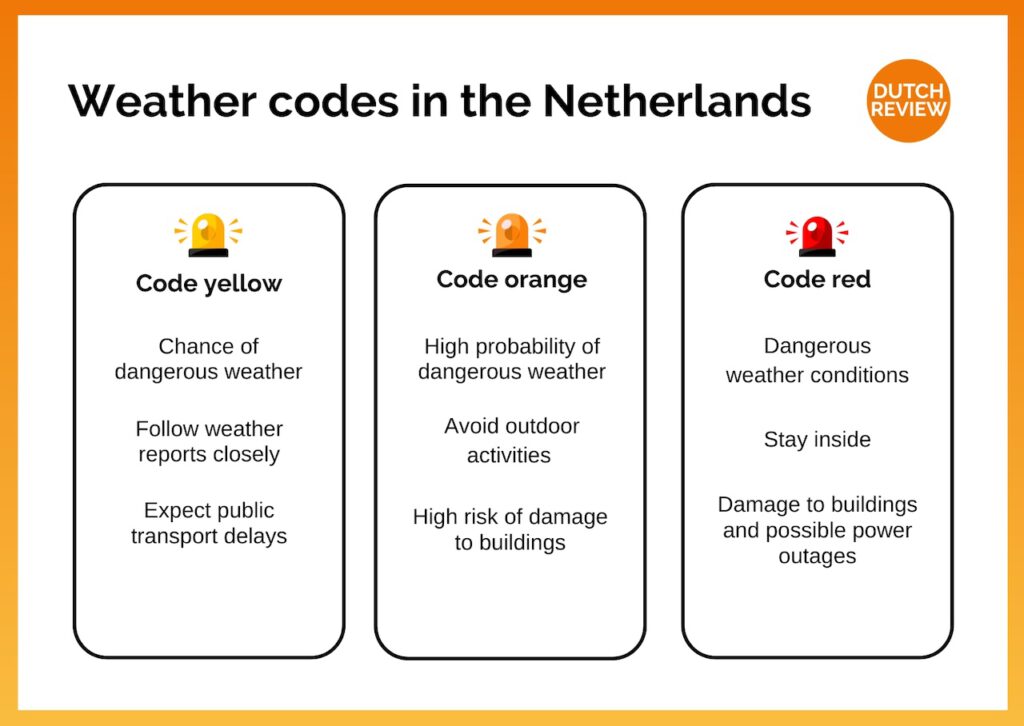
If you’re wondering what code orange actually means, it’s the second-highest weather warning level issued by the KNMI (Royal Netherlands Meteorological Institute).
Translation: this is going to be nasty weather that poses real risks.
In the Netherlands, there are three weather codes. Image: DutchReview
The storm will bring heavy wind gusts starting in the southwest, spreading across the rest of the country throughout the night. Western coastal areas can expect gusts between 100 and 120 km/h, whilst further inland, you’re looking at around 80 km/h.
According to NOS, the KNMI warns that traffic will face significant disruption, and there’s a real risk of damage from flying objects and broken branches.
Basically, secure your garden furniture and don’t park under any dodgy-looking trees.
How to stay safe during the storm
The wind is expected to gradually ease on Friday, but until then, the KNMI’s advice is pretty straightforward: avoid unnecessary travel, especially in coastal areas where code orange applies.
If you do need to venture out, keep your distance from trees and tall structures. Cyclists and drivers of high-sided vehicles should be particularly cautious, as these wind speeds can genuinely knock you off course.
For internationals who might not be familiar with Dutch weather warnings, it’s worth downloading the KNMI app or checking their website regularly.
The warnings are updated frequently, and knowing when the storm hits your specific area can help you plan accordingly.
Have you experienced a Dutch storm before, or is this your first code orange weather warning? Share your storm tips in the comments below.
Being from the land of cheese, clogs, and windmills, the Dutch have their stranger sides. Whether it relates to food or dating, who better to uncover them (apart from us, obviously) than an American expat TikTokker?
Originally hailing from the United States, Claudio moved to Utrecht a few years ago.
His TikTok videos about life in the lowlands as an American have gone viral, attracting over 241K followers and 6.1 million likes.
How can you continue biking when your body starts showing undeniable signs of ageing? Simple, just get an e-bike and pedal for the rest of your life like a pro!
The Dutch love a good bike, so it’s no wonder they use plenty of e-bikes too — and while they’re often a danger to their surroundings, we kinda love the vibe! 💪🏽
What is it?
It’s no news that Dutch people bike — a lot. From when they’re very young, throughout their teenage years, the duration of their university lives, and into the grown-up stage.
Dutchies bike and bike, wherever and whenever they need to go somewhere. 🚲 So, of course, old Dutch people bike as well.
People 65 to 75 cycle more than any adult group in the Netherlands.
Not because they’re super-human, but because of the traffic-calmed streets and segregated cycle networks. These environments allow them to participate in society far longer into old age.https://t.co/aQYOcZOPfYpic.twitter.com/uutvqTiQ8i
But what do you do when the joints start squeaking, the muscles start giving in, and the energy levels are not what they once were? You get an e-bike, duh!
Having lived in the Netherlands for three years, I cannot count the number of times I’ve stared in shock as a 90-something-year-old on an oma-fiets (grandma bike) overtakes me in the bike lane.
How on earth can she bike that fast when I’m already sweating!? It’s an e-bike, of course. 🧏🏽♀️
But it’s not all fun and games when the elderly Dutchies bring out their speedy bikes. Accidents are common, and some even end with fatalities.
It doesn’t help that those old Dutchies are just like younger ones: they don’t give a f*ck about pedestrians as long as they get from A to B as fast as humanly possible.
One explanation might simply be that biking is such an integral part of the Dutch lifestyle, so it feels totally unnatural to give it up for something as insignificant as old age.
It is, after all, the easiest, healthiest, and most fun way you can get around in the Netherlands! It would be straight-up silly and boring to stop biking if you ask the Dutch.
The Netherlands, despite the unhealthy food, actually ranks surprisingly high on the World Population Review’s overview of the world’s healthiest nations, at just 11th place!
Perhaps the elderly Dutchies have become aware of their potential for improvement and taken matters into their own hands to upgrade the national public health standard. 👨🏽⚕️
Why is it quirky?
While most old people accept defeat and stop moving when their bodies tell them to stop, Dutch people are not built for sitting still (or, apparently, sitting in a car).
Their determined and hard-working spirit shows up in more ways than one, but the unstoppable biking culture is probably the most noticeable one.
Why stop biking just because you can’t move like you once did? 👵🏽
Should you join in?
If you’re lucky enough to grow old in the Netherlands, you should definitely join in on the e-bike trend once your body starts resisting the traditional bike.
Hold onto your umbrellas and secure your garden gnomes, because a major storm is on its way.
Forecasters say strong winds are expected from Thursday evening, rolling into the Netherlands from the southwest and sweeping eastward overnight into Friday.
The night storm
As Weerplaza meteorologist Wouter van Bernebeek tells AD, the storm will arrive on Thursday, but we won’t see it before the evening.
That gives you a little breathing room to finish errands, hang out your washing or enjoy a (brief) peaceful commute.
But once the evening arrives, the wind may show its teeth. Gusts of 100-120 km/h are possible, particularly along western and northwestern coasts, with some risk inland.
“Locally, the wind could be quite strong,” the weatherman says.
If you live near the coast, it might be a good night to put the recycling out earlier and bring in any lightweight patio furniture.
Heavy rain will join the bluster on Friday, October 24, with forecasters expecting 20-40 millimetres to fall across the country. If you’re heading out of the house, wellies and a waterproof jacket will be useful companions.
It will also be rather chilly, with temperatures of around 11 degrees Celsius in the north and northwest.
Quite the stormy season
This week’s squall could be something of a headline maker for the season, because it may be the third storm of the autumn and the fifth of the year.
Looking ahead to the weekend, conditions will turn noticeably colder. Temperatures are expected to drop to around 10 degrees, and possibly 7 to 8 degrees during showers.
So plan accordingly, enjoy the dramatic skies if you can watch safely from indoors, and maybe practise your dramatic hair-blow for social media.
Were you planning to cycle around the canals, or did you plan a cosy stay-at-home weekend and now the weather’s turned out just perfect for you? Tell us in the comments!
According to a new study, the number of international students enrolling in Dutch universities has fallen — for the first time since the pandemic’s initial dip.
Commissioned by the Dutch Ministry of Education, DUO’s updated trend report highlights declining international enrolment in full-time Bachelor’s programmes for the 2024/2025 academic year.
Dutch is now a priority in higher education
Although the current academic year is seeing a decline, the report points out that the number of foreign students in the Netherlands doubled over the past ten years.
With a peak of nearly 30,000 foreign students per year from 2022-2024, the Dutch government has proposed several measures to better manage the surge, such as the Balanced Internationalisation Act.
Using tools such as a limit on the number of places for non-EEA students and a targeted numerus fixus (enrolment cap for study programmes), the proposed bill aims to provide more space for Dutch students amidst the influx.
The focus is now on strengthening Dutch-language education. Image: Depositphotos
According to the bill, the “principle of ‘Dutch, unless’ remains explicitly central” to higher education in the Netherlands, with a heavy emphasis on more Dutch-language education and fewer English-taught programmes.
The language of instruction also plays a bigger role
In contrast to five years ago, whether or not Dutch is the language of instruction now has an increasingly decisive influence on a student’s choice of BA programme.
For first-year students in the 2024/2025 academic year, roughly a quarter indicated that the fact their programme was taught in Dutch played “a major role” in their course selection.
In contrast to Dutch, the “role of the English language seems to be becoming less important.”
Only a quarter of the students surveyed indicated that English instruction was a factor in their course selection — compared to a little more than a third over five years ago.
Are you an international student in the Netherlands, or a concerned Dutch citizen? Share your thoughts in the comments below.
With winter holidays approaching faster than a Dutch cyclist, it’s time to start planning the travels we’ve been dreaming about all year long.
But where there are travel plans, there’s stress. How do you choose the most comfortable travel option that’s also affordable — and where do you even go?
Lucky for us, European Sleeper can take that stress off our hands. Their stunning route takes you from the Netherlands to some of the best-known and loved European destinations (as well as some unexpected hidden gems), all by night train.
So if you’re a solo traveller eager to meet fellow explorers, or a group of friends ready for your next adventure, here are six destinations you can reach by night train from the Netherlands this summer. 👇
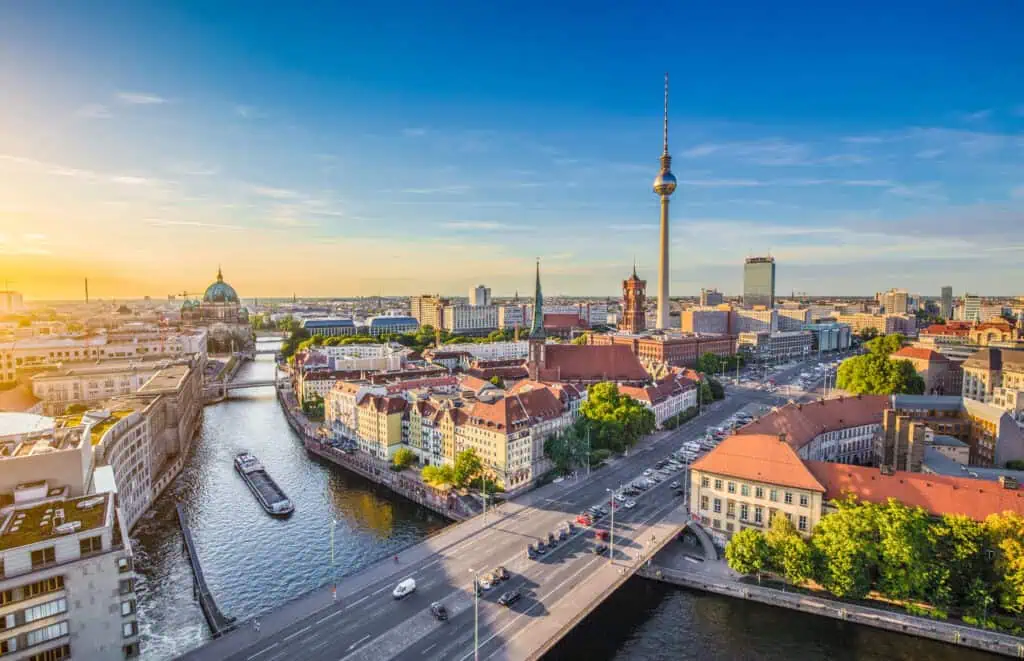
1. Discover the unique culture of Berlin
There’s always something to do in Berlin. Image: Dreamstime
Reaching Berlin from the Netherlands with European Sleeper is as simple as closing your eyes and tucking in for a good night’s sleep.
Hop on board a little after 10 PM in Amsterdam Centraal, and you can sleep until you arrive in Berlin a little after 6 AM, ready for a busy day of exploring.
As a city formerly divided between East and West, Berlin has a unique vibe that offers something for everyone, from history buffs to culture enthusiasts.
Since you’re able to comfortably sleep while you travel, it’s very easy to make your trip to Berlin a short weekend trip.
Good news, because it’s needless to say, if you’re looking for a party, this is your place to go.
Tempted, but looking for a balance between comfort and affordability? European Sleeper’s couchette compartments may be the perfect fit for you.
Or are you a solo female traveller and the idea of sharing a sleeping compartment with random people is making you a bit nervous? No worries, European Sleeper offers women-only compartments as well. 😌
Tip! July and August are the highest tourist seasons, so travel in June to avoid the biggest crowds and snag the best deals.
🚂 Journey length from Amsterdam: Just under eight hours.
💸 Couchette ticket price: Starting at €49.99
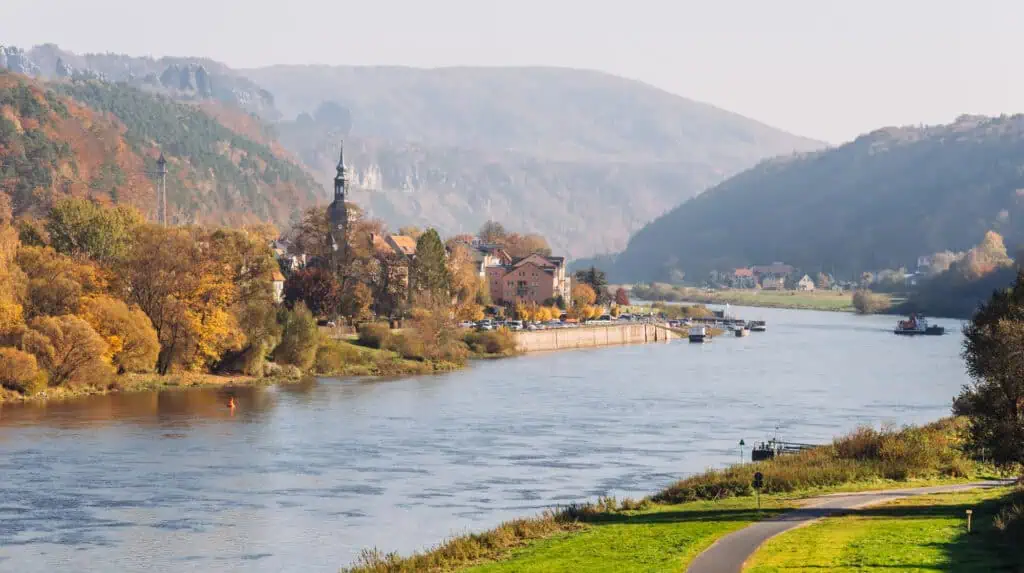
2. Relax in Bad Schandau
Those landscapes look like they’re straight from a fairytale. Image: Depositphotos
Bad what-now? Don’t worry, you’re not the only one who hasn’t heard of this place before — making it the perfect destination if you’re looking to avoid heaps of people on your holiday.
You can even avoid the crowds at your starting destination if you’d like. With European Sleeper, you can start your journey not only from the bustling Amsterdam Centraal but also from Amersfoort, Deventer, The Hague, Rotterdam, or Roosendaal.
Whatever your starting point is, you can settle in for the night and arrive in Bad Schandau at around 9:20 AM.
Tip! For an even more relaxing journey, you can opt for a more comfortable five-person couchette compartment, where you get more space and air conditioning (you are travelling during the summer after all).
This small German town is home to one of the oldest health resorts in Europe. Sitting in the middle of a stunning national park, it has all the ingredients for a relaxing summer getaway.
🚂 Journey length from Amsterdam: Just under ten hours.
💸 Couchette ticket price: Starting at €59.99
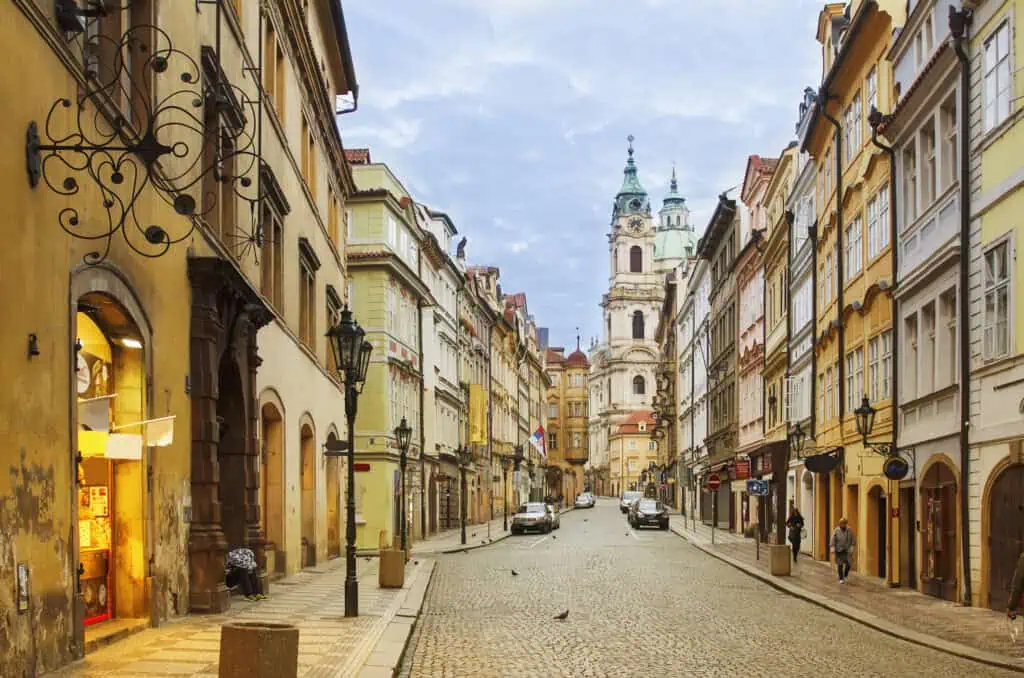
3. Get lost in the charm of Prague
We wouldn’t mind getting lost here. Image: Dreamstime
From a hidden gem to a certified classic — and with its stunning historic architecture, the magnificent Vltava, and charming narrow streets, we get why.
This is the longest journey from the Netherlands, departing Amsterdam at around 10:30 PM, you’ll arrive in Prague around midday the next day — which means you can sleep in and arrive energised.
You can also include a breakfast in your booking and enjoy a hot drink, juice, yoghurt with granola, crackers with various toppings and a bun for an additional €14.
If you’re looking for a place to have a fun holiday, but Berlin-style techno clubs sound a bit intense, Prague is a great option for more relaxed nightlife.
Travelling solo? Sleeper trains are a fun way to meet people to go out with if you’re travelling alone or simply looking to expand your circle.
After all, what’s a night of partying when you’ve already spent a night together?
Tip! Prague is also famous for its delicious and affordable food. If you go, make sure to eat at least one honey cake per day (or drink one Czech beer if it’s that kind of holiday).
🚂 Journey length from Amsterdam: Just under 13 hours.
💸 Couchette ticket price: Starting at €69.99
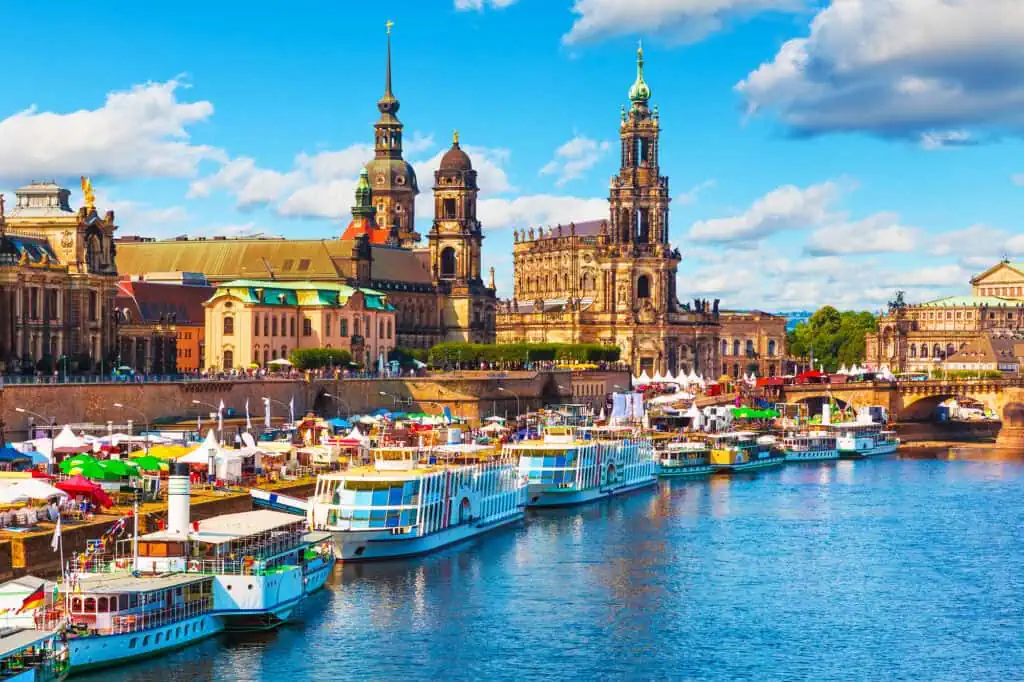
4. Take in the beauty of Dresden
Germany has some serious stuff to offer. Image: Depositphotos
Sometimes called ‘the Florence of the Elbe’, this German city is another treat for architecture lovers.
Travelling with a night train isn’t just about the destination you reach, though. The environment is comfortable, as well as sociable, so you can meet fellow travellers or simply decide to doze off during the night.
However, it doesn’t hurt if the destination you reach is also stunning — the train brings you to Dresden at around 8:20 AM.
Despite being bombed heavily during World War II, Dresden is home to some of the most beautiful baroque buildings in Germany.
But it doesn’t just look classy — it has the activities to go with it. Dresden is one of the best spots in Germany to enjoy opera, classical music, and theatre.
Want to travel to the opera in style? European Sleeper also offers luxury sleeper compartments that come with three comfortable beds, a table, and a complimentary breakfast.
🚂 Journey length from Amsterdam: Just under ten hours.
💸 Couchette ticket price: Starting at €59.99
5. Get active in Dečín
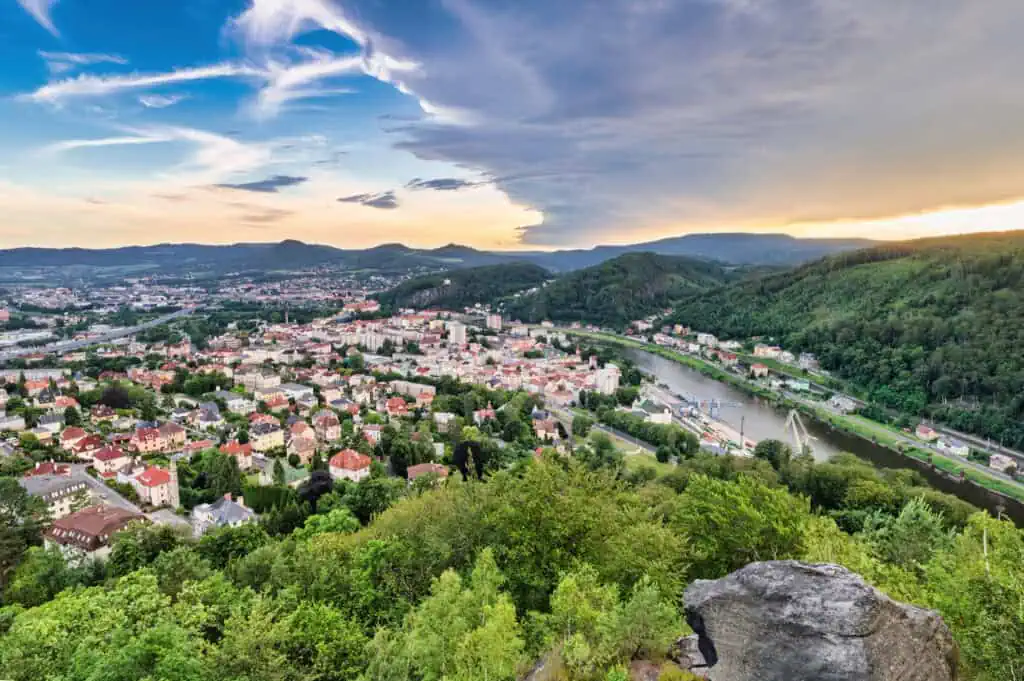
Hike all the way up to this view. Image: Dreamstime
If you’re not just looking to relax, but also get active this summer, Dečín is a great choice.
You won’t get busy city streets or crowds of tourists here — but you will get gorgeous landscapes, loads of hiking spots, and rafting or canoeing on the Elbe.
Sounds like the perfect place to have a bike, right? Good thing European Sleeper allows you to bring yours on board.
🚂 Journey length from Amsterdam: Just over eleven hours.
💸 Couchette ticket price: Starting at €59.99
6. Keep it simple and chic in Brussels
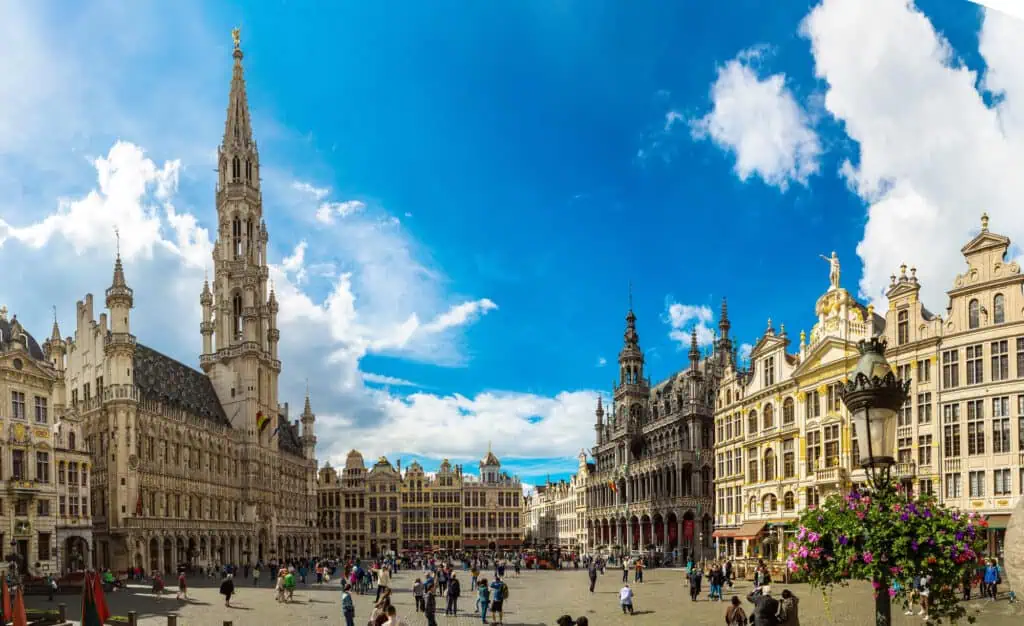
You don’t need to go far to see some serious beauty. Image: Depositphotos
Unfortunately, we sometimes don’t get to take a lot of time off during the summer and travel far. How lucky then, that the Netherlands is so close to the perfect weekend getaway spot — Brussels.
The journey won’t take long, so sleeping compartments aren’t always necessary. Thankfully, European Sleeper also offers cosy six-person seat compartments perfect for covering short distances.
Brussels is close (great), which means the journey is affordable (even more great), but it still has a lot to offer (will the greatness ever end?); you have everything from important EU institutions, to adorable flea markets, to the silly Manneken Pis.
Oh, and the waffles. Do not forget about the waffles.
🚂 Journey length from Amsterdam: Approximately three hours.
💸 Seat ticket price: Starting at €19.99
Time to make friends and memories. Image: European Sleeper/Supplied
If you’re ready to start planning your summer vacations, European Sleeper offers some amazing options for every traveller.
Travelling by night train means even far-away destinations are easier to reach, and the fun doesn’t start when you reach your destination — the journey is already part of the experience. ✨
Which of these destinations sounds the best to you? start your journey and check out tickets on European Sleeper.
Budget travellers rejoice! Even more international train services may be hitting Dutch tracks, and they promise to be way more affordable than NS International.
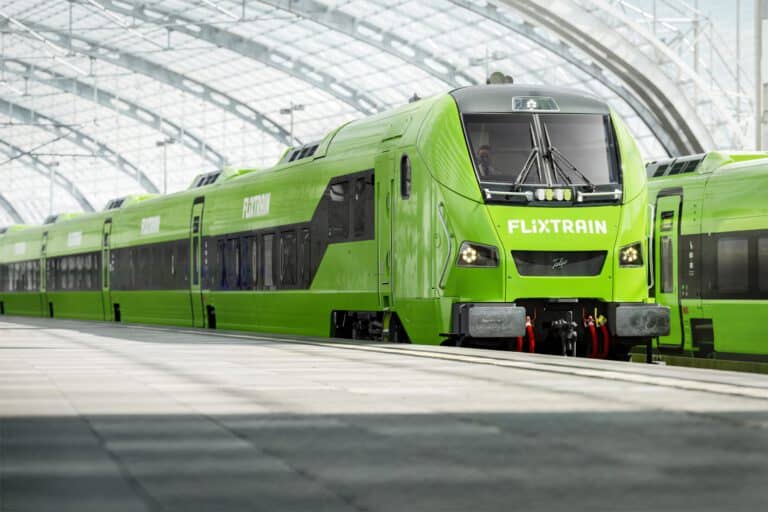
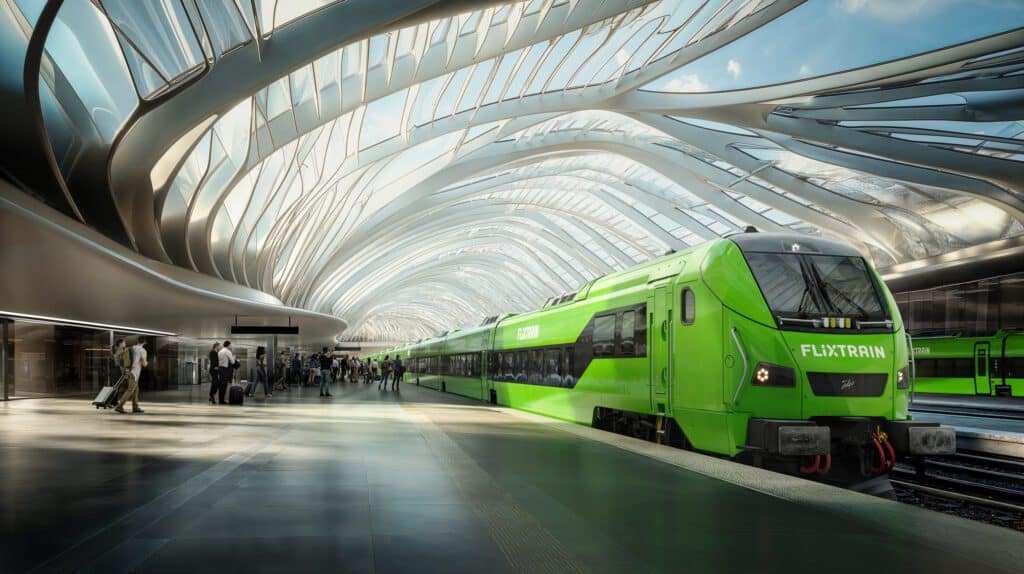
German travel company Flix, known for its cheerful lime-green FlixBuses and budget-friendly prices, is now expanding its high-speed rail travel network.
Dubbing it a “new era of train travel in Germany and Europe” in a press release, the company hopes to make rail travel more accessible and sustainable — without the hefty price tag we’ve all come to expect from trains in the Netherlands.
Dutch routes and launch dates are still unknown
While the press release doesn’t mention any specific new routes that FlixTrain will operate in the Netherlands, the company’s expansion in the lowlands has been in the works for several years.
Flix first applied to the ACM (Dutch Authority for Consumers and Markets) for permission to run a route between Oberhausen and Rotterdam in May 2023.
The proposed route was intended to serve various major stations along the way, such as Arnhem, Utrecht, Amsterdam Centraal, and The Hague.
Affordable prices and sustainable travel? Sign us right up! Image: FlixTrain
“We see FlixTrain as a European product,” CEO André Schwämmlein says in the new press release. “Starting from our home market, we also want to make the service available in other countries.”
Speaking to AD, Schwämmlein confirms that the Netherlands will be on that list of countries.
However, prices will stay low
“We’re generally considerably cheaper than other providers,” Schwämmlein tells AD, while promising that FlixTrain’s prices will stay wallet-friendly.
Currently, FlixTrain operates a limited number of connections to and from certain train stations in the Netherlands (supplemented by carriers such as Eurobahn and DB):
Arnhem
Enschede
Hengelo
Oldenzaal
Venlo
Zevenaar
With prices hovering around €60 for their Berlin to Enschede route, they’re a far cry from the €107.40 you could be paying with NS International.
What do you think of FlixTrain’s proposed expansion to the Netherlands? Share your thoughts in the comments below.
As of October 12, the Netherlands has started replacing traditional passport stamps with digital checks, following the EU’s new Entry and Exit System (EES) requirements.
Are you taking a short trip to the Netherlands from outside the European Union? Certain Dutch airports, train stations, and ports have now started implementing a new Entry and Exit System for non-EU citizens visiting Europe for short stays.
The EES is designed to counter illegal migration and make border control more efficient, but there are some important things for international travellers to know.
What’s changing at Dutch airports?
When you arrive at a Dutch airport, you may now be asked to register certain details at EES self-service kiosks.
Once you’ve submitted all of this information, you’ll be directed to one of two routes for passport control: either the eGates (self-service passport control) or staffed border control booths.
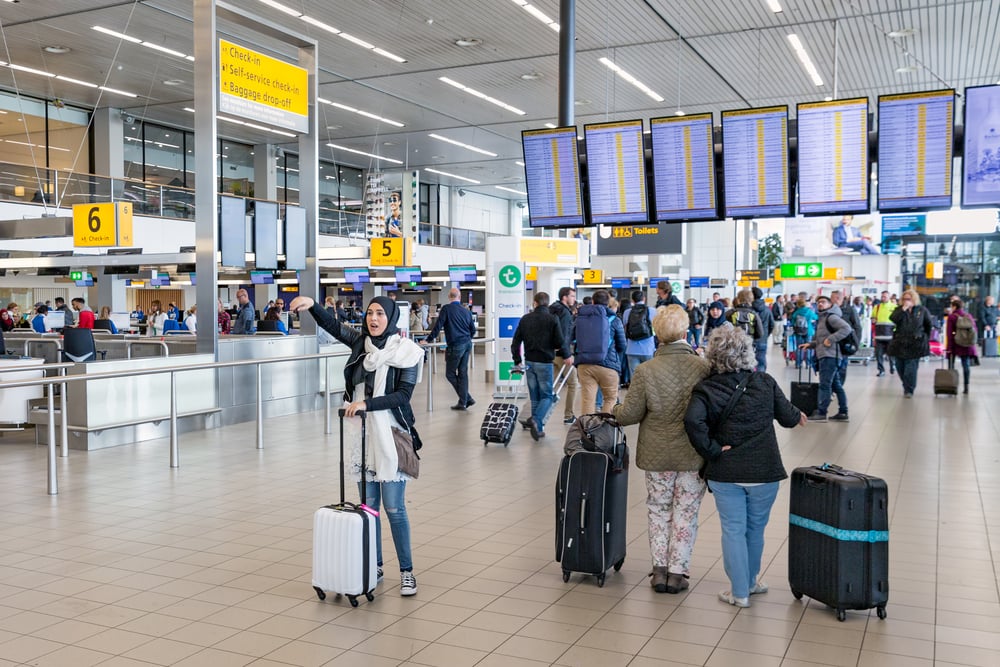
Taking off from or landing at Schiphol? Your check-in process is getting an upgrade. Image: Depositphotos
A similar routine applies if you’re leaving the Netherlands from a Dutch airport. Depending on whether you’re already registered in the EES database or not, your information will either be verified or added to the system.
Good to know: The new EES has currently been rolled out at De Kooy Airport in Den Helder, and will launch at Groningen Eelde and Rotterdam The Hague on October 27, 2025. A small scale launch will begin at Schiphol on November 3, 2025, and by April 10, 2026, there will be full implementation across all Dutch border crossing points.
What’s changing at Dutch train stations?
Similarly, both Amsterdam and Rotterdam Centraal stations will be getting EES updates from November 10, 2025, onwards.
If you’re leaving the Netherlands via train from either of these stations, your passport will be used to verify your data in the EES.
Not verified yet? You’ll need to register your:
Full name
Date of birth
Passport details
As the EES is currently being introduced in stages, you won’t yet be asked to register biometric information like fingerprints or a photo of your face.
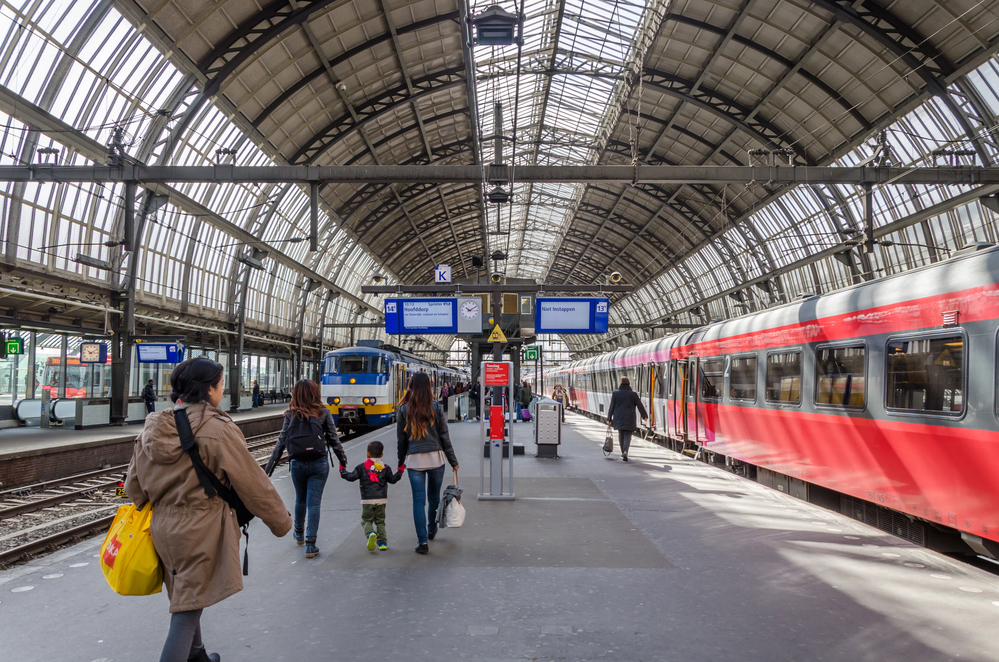
If you’re officially entering the Schengen Area from Amsterdam or Rotterdam train stations, the EES will soon apply. Image: Depositphotos
Will you be entering the Schengen Area at either Amsterdam or Rotterdam Centraal station? The French border control authority will be conducting entry checks for trains bound to the EU at London St Pancras station from November 10 onwards.
You’ll have the option to use the eGates or French border control booths, where you’ll need to furnish the same details provided above (i.e. your full name, date of birth, and passport details).
What do you think of Europe’s new Entry and Exit System? Share your thoughts in the comments below.
Images of Amsterdam’s much-loved narrow and wonky canal houses have shaped the world’s perception of Dutch architecture. So how did we end up with the classic design of the canal house?
Even if you’ve never set foot in the Netherlands, you probably have an idea of what a classic Amsterdam house looks like.
That’s because, along with bicycles, weed, and tulips, the image of the Dutch canal house is probably one of the first things that comes to mind when you think of the Netherlands.
From the extremely narrow structure to the death-defying staircases, why are these classic buildings so wonderfully weird? Here are the answers to all the questions you never knew you had.
Why are Amsterdam’s canal houses so narrow?
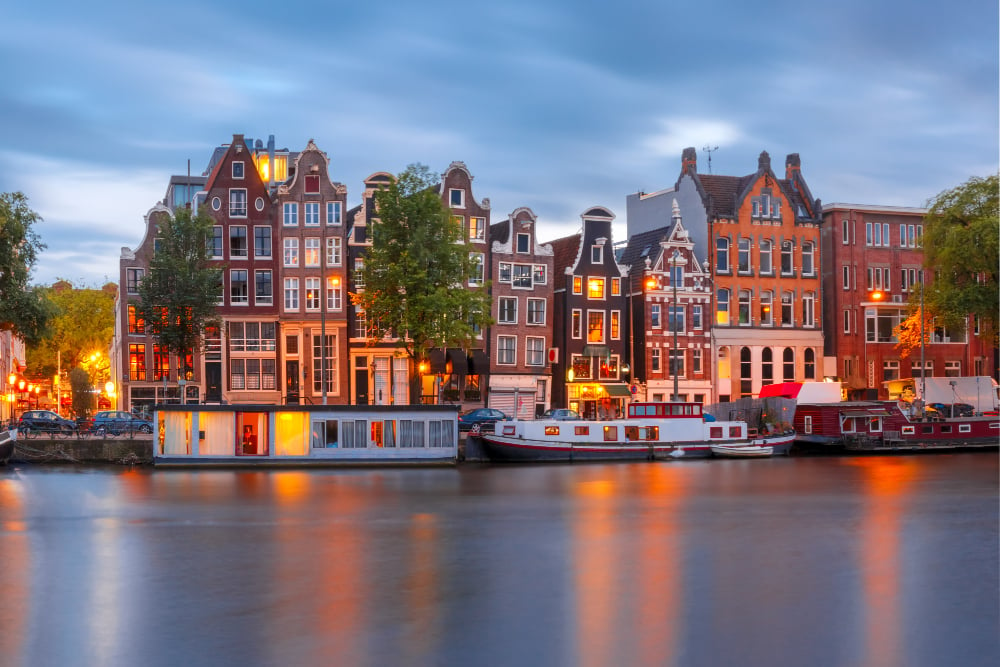
Perhaps the most striking feature of the classical Amsterdam canal house is the strangely narrow facade (front of the building).
Anyone new to the Netherlands may wonder how it is that you can carry out your day in an abode the width of a Volkswagen.
However, if you’re lucky enough to be invited in, you’ll find that to make up for their narrowness, the houses are usually very deep.
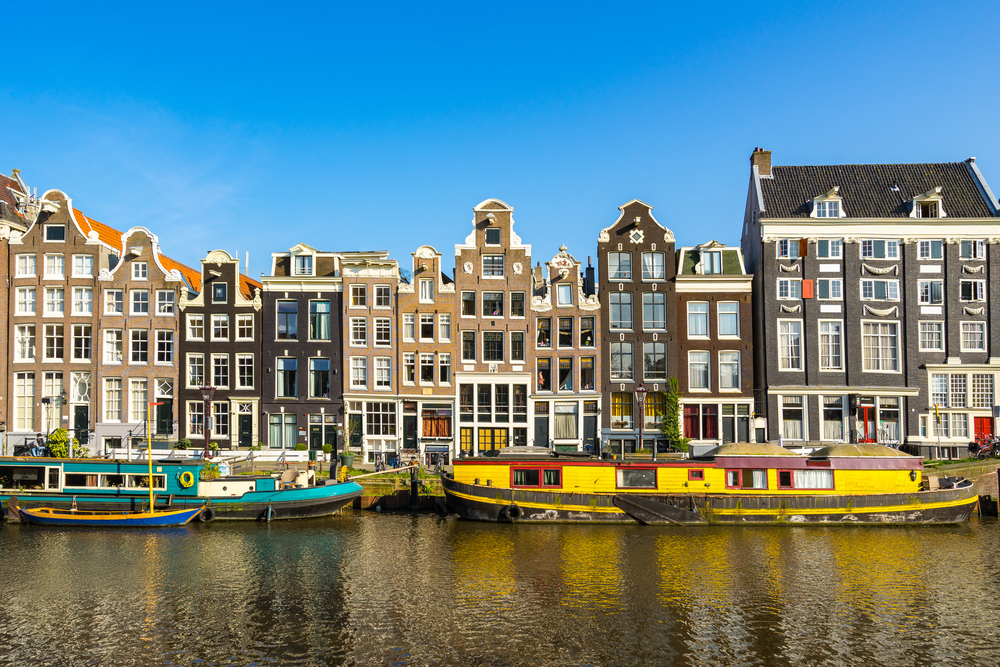
The longer you look, the more narrow they seem. Image: Depositphotos
So why is it that the Dutch went about creating such oddly proportioned houses? The answer is simple: they were cheaper to build. Back in the 16th century, Dutch citizens were taxed for many things, including the width of their houses.
Perhaps this feeds into the stereotype of the Dutch always looking for a bargain! Architects found a solution to the issue of taxation and simply made narrow but deep houses.
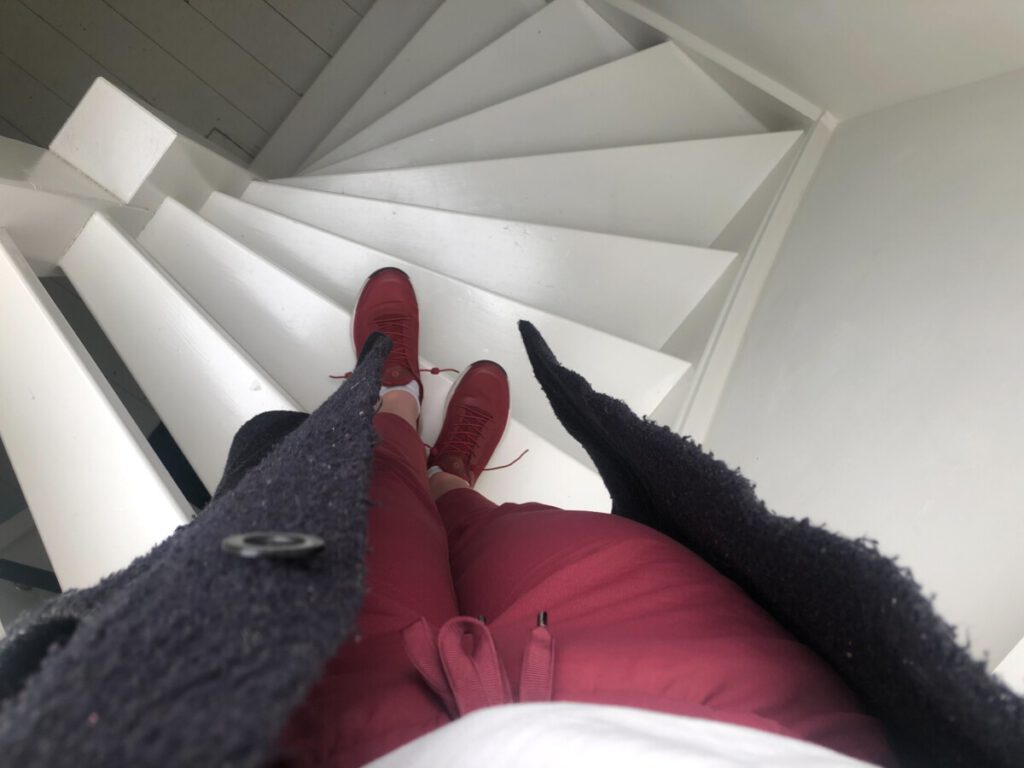
Dutch staircases: the price that must be paid
However, an extremely narrow house resulted in another architectural phenomenon that is often found in Dutch households: the narrow staircase.
Watch your step! Image: DutchReview
In my experience, the first time I faced culture shock wasn’t hearing the Dutch language, but when I found myself standing at the bottom of a very narrow and steep staircase with a heavy suitcase.
My brain couldn’t comprehend how both myself and my belongings could make it to the top unscathed.
However, for many Dutchies, the journey up and down such a treacherous feat of architecture is second nature because they start climbing narrow staircases from birth.
It makes sense; if you are to make your house narrow and tall, you have to make the staircase proportionately thin and steep.
I’m sure Dutch staircases have taken many victims throughout history, but it goes hand in hand with the awkwardly beautiful Dutch canal houses, so we can’t be too mad at it.
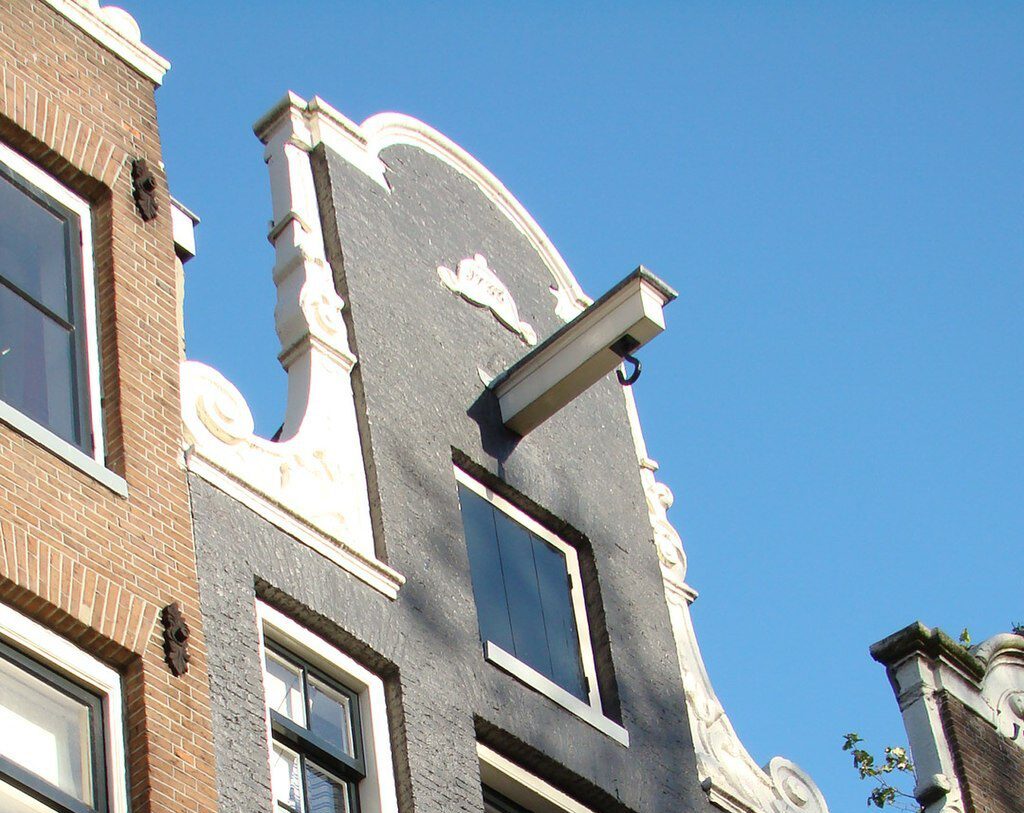
The hoisting hook: quintessential to the Amsterdam canal house
Apart from its hazardous nature, the second issue that many people have with narrow and steep staircases is when they are trying to move furniture in or out of the building.
Those of us who have lived in these houses know the struggle of finding furniture that is nice, cheap, and, most importantly — transportable. Sometimes, the only way an item of furniture is making it up the stairs is in pieces.
How did the Dutch manage in a time when furniture couldn’t be bought in flatpack form from IKEA? The answer is the hoisting hook.
Nowadays, they just use cranes. Image: Arch/Wikimedia Commons/CC3.0
You may have noticed these hooks on the side of Dutch houses during a stroll along the Amsterdam canals. “What on earth could this be for?” you may have wondered.
Well, the answer is tied to the narrow nature of these houses. If furniture or goods can’t fit up the stairs, they can be hoisted up from the outside of the building and brought in through the windows. It’s believed that this is also why Dutch windows are so large.
Why are Amsterdam’s canal houses so crooked?
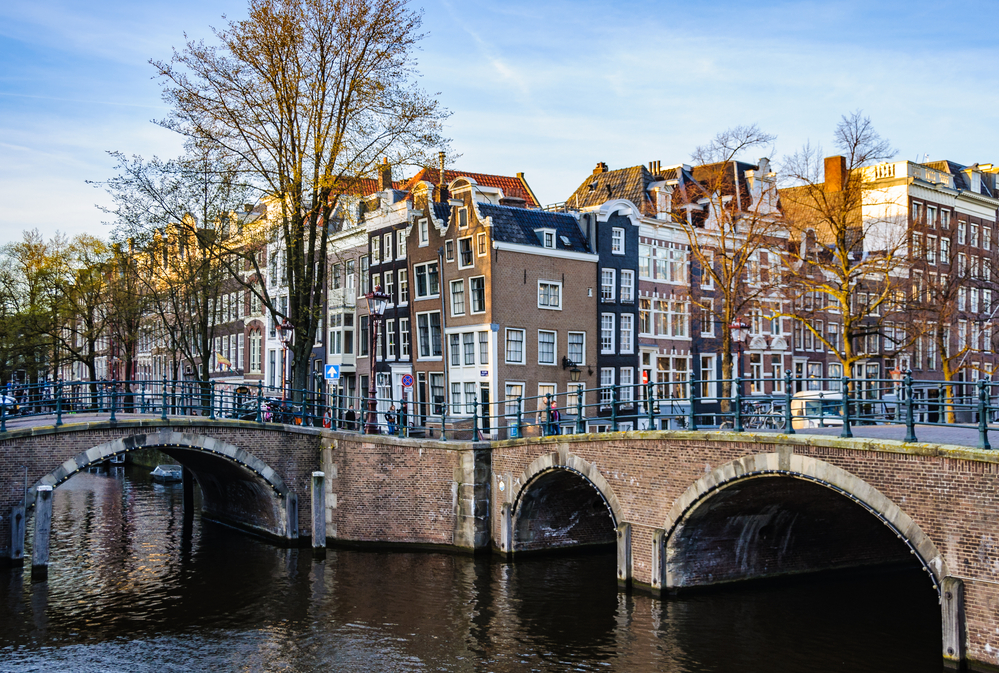
You may have noticed that some buildings have a characteristic tilt to them. While it’s certainly charming, you might be wondering what this could mean for their structural integrity.
Believe it or not, if the house is leaning forward (Pisa style), this was completely intentional (unlike Pisa).
This relates back to the hoisting hook. As you can imagine, the act of heaving furniture up into a building is an awkward affair, so the buildings were made tilted forward to avoid structural damage during the process of lifting heavy furniture (no one wants a sofa crashing through the bedroom window).
Amsterdam’s canal houses can look a bit wonky sometimes. Image: Freepik
However, if you notice that certain houses appear to be leaning on each other for balance… that’s not intentional. Many historic Dutch houses, especially those in Amsterdam, were built on wooden poles that were sunk deep into the sandy marsh that was the Dutch landscape.
Over time, due to changes in water levels and general ageing, some of these poles began to rot, leading to some of the houses tilting sideways. When the metro line was built, houses on one particular street in Amsterdam began to sink due to its construction.
Renovations also play a role in this quirky tilting. If one house in a row undergoes structural changes, the supporting poles shift, which causes some canal houses to lean against each other.
This is why you may see poor corner houses struggling the most, as they don’t have a neighbour to lean on!
Amsterdam canal houses: a thing of beauty? Or highly impractical?
The classic Amsterdam canal house is definitely a thing of beauty, so much so that certain countries try to emulate it (for example, the Huis Ten Bosch in Japan!).
Whilst the classic image of cosy Amsterdam canal houses might make a snazzy addition to the Insta, there are certain elements to the canal houses that are purely impractical, especially in this day and age.
For example, a canal house may not age well in the future, given its wooden support beams, unless you’re willing to invest in a new foundation.
The ever-increasingly hot summers also make people aware of the issue of heat control. That said, we can’t quite imagine the Netherlands without these wonky wonders.
Have you enjoyed living in a canal house? Or are you a curious spectator? Tell us in the comments below!
“De Keukenhof is cool and all, but have you seen Utrecht’s cycle lanes during rush hour!?” Apparently, this is a conversation among many German tourists who visit the Netherlands nowadays.
Yep, forget idyllic canals and eating stroopwafels at markets, the new fad when visiting the Netherlands is to gawk at the chaos that is Utrecht’s cyclists.
Or more specifically, certain routes that they take.
Near Vredenburg, for example
One popular spot according to AD? The intersection of Lange Viestraat and Vredenburg.
Here, the paper spoke with two German tourists, Lea and Fiete, who came to Utrecht specifically to marvel at its cyclists.
“I’ve never seen anything like this before. I’m really surprised no one collides,” Lea tells them.
Mark Wagenbuur has amassed thousands upon thousands of views on his YouTube videos of the cycle scene in Utrecht, telling AD that “I’ve been called a one-man tourist office.”
He also offers some insight into the cycle-tourist hotspots: “intersections like Vredenburg-Lange Viestraat-Sint Jacobsstraat, where so many cyclists pass by on a green light, are where people really stand and watch, beaming.”
But also the parking!
However, it’s not just the cycle lanes that are drawing tourists in, but also the bicycle parking facility at the train station.
“The fact that we’ve invested so much money and effort into making it safe and easy to park your bike so you can continue your journey by train is incredible for many people. Being able to ride through it themselves and experience how big the facility is really moves and touches them,” he tells AD.
Did we expect this to be such an attraction? Not exactly, but when you think about it, Utrecht’s rush hour does often manage to leave your mouth hanging open.