The once-quiet Dutch municipalities of Houten and Uithoorn were rocked by a wave of violence last night, in response to the arrival of several new asylum centres.
At least five arrests were made in Houten — but that number could very likely go up, with RTV Utrecht reporting that police are still on the lookout for some of the more violent protestors.
Meanwhile, at least four arrests have been made in Uithoorn so far, on the charges of sedition and public violence.
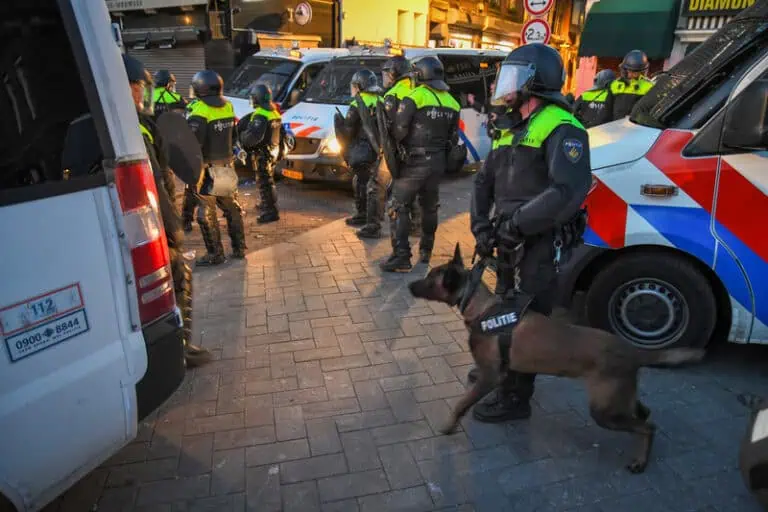
Riot police were needed to curb the aggression
According to NH Nieuws, riot police had to be deployed in Uithoorn to disperse the 400 demonstrators, who had gathered opposite the town hall to protest proposed asylum centres in Uithoorn and Amstelveen.
Telegraaf journalist Juul Schepens managed to capture footage from the protest in Uithoorn on X, featuring some demonstrators pelting the police with eggs and fireworks:
De sfeer wordt grimmiger in Uithoorn, waar een protest gaande is tegen de komst van twee azc’s. De politie is bekogeld met eieren en vuurwerk. pic.twitter.com/rO2NuAvpem
The Netherlands is home to over 560 species of bird. Though we’re all well used to the endless pigeons and greedy seagulls, what birds can you see from your very own balcony?
Bird watching can be a calm and enjoyable hobby, and though the Dutch capital may not seem to be the most obvious place to get out your binoculars and look, you’d be surprised at the many bird types you will find amongst the canals and parks.
Watery paradise
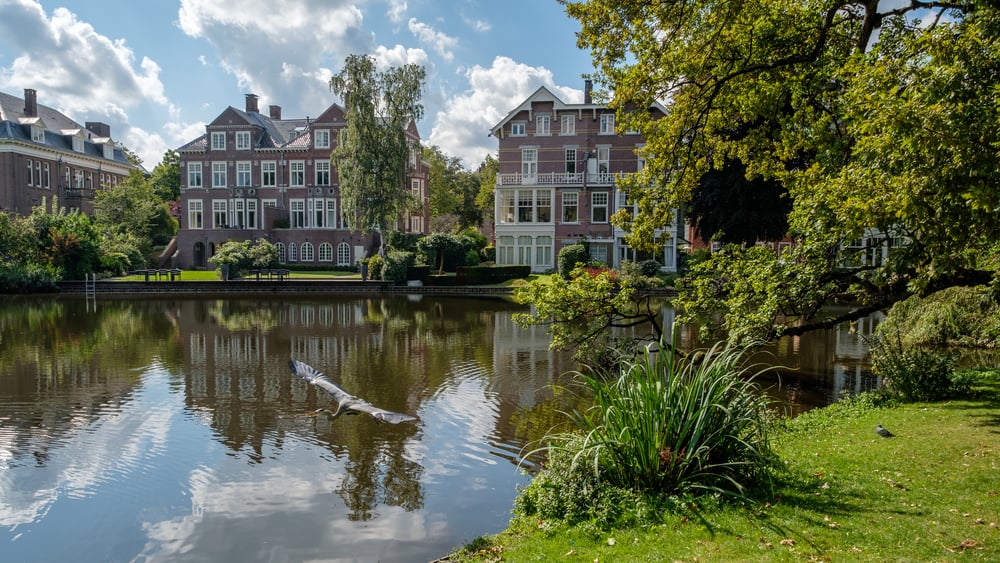
In fact, everywhere you look in Amsterdam, you will encounter birds. The city is a paradise for waterfowl. Apart from the elaborate canals that Amsterdam is famous for, the city is traversed by two rivers, the IJ and the Amstel, and smaller waterways connect all these bodies of water with each other.
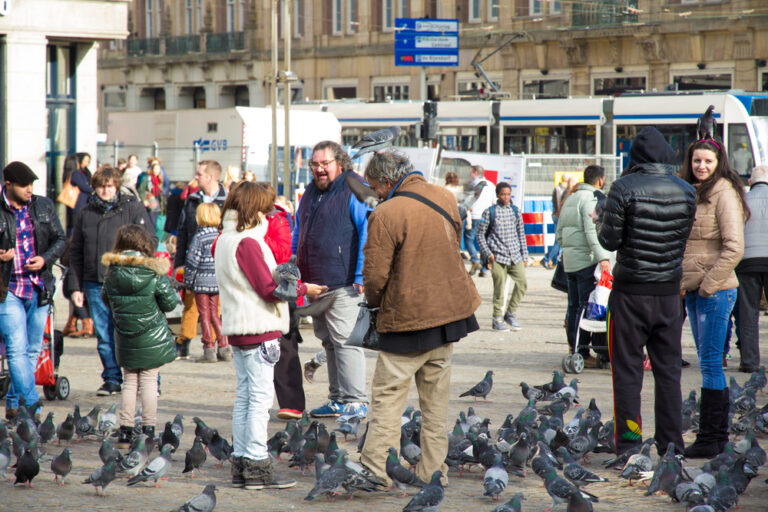
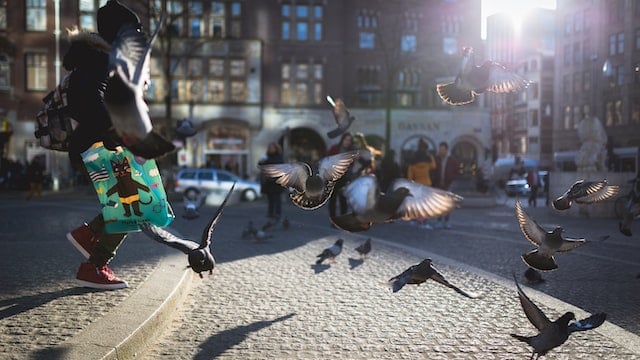
Perhaps the most memorable birds in Amsterdam are the infamous pigeons. Image: Unsplash
Before the city’s sewage system was completed in 1987, the water quality in the canals was nothing less than vile. To counteract the stench, they had to be flushed through regularly.
Until 1621 this process was achieved using the natural tides of the IJ, which was then still connected to the open water of the Zuiderzee. Later, after the construction of the Afsluitdijk dam, which cut the Zuiderzee off from the North Sea and turned it into the freshwater IJssel Lake, pumps were constructed to flush clean water through the locks.
Now, however, with most of the 2500 houseboats connected to the sewage system, strict controls on wastewater discharge, regular rubbish collection and frequent dredging, the water is so clean you could swim in it.
Do note that swimming remains prohibited, as the canals are officially boating lanes.
The canals no longer need flushing, and Amsterdam’s underwater world has been revived. A vast diversity of fish species, eels and even river lobsters thrive. 🦞
Nesting on the rooftops
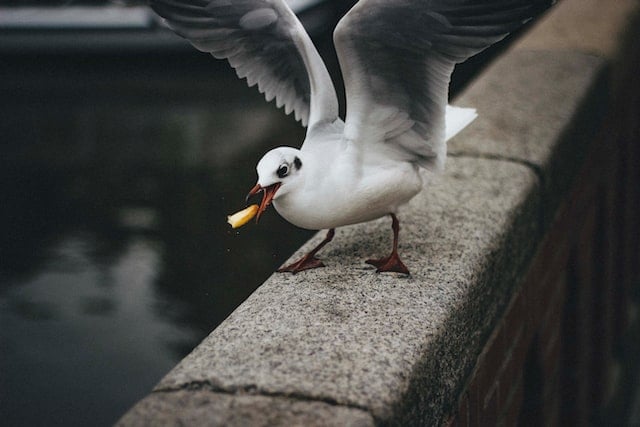
The seagulls in Amsterdam can be a real pest. Image: Unsplash
The common gull, the black-headed gull, the lesser black-backed gull and the herring gull are among the many species of gull that feel at home in this watery urban environment.
In winter especially, the gulls flock together, flying low over the rivers and canals, supplementing their fish diet with scavenged food scraps and bread that people throw into the canals.
Recently, a herring gull was tracked flying all the way from its nesting grounds on the island of Texel, 332 kilometres up the coast, to forage on tossed-away French fries in the streets of Amsterdam. 🍟
Although naturally coastal inhabitants, many of the gull species have adapted to breeding in the cities. Great colonies of gulls survive on the outskirts of Amsterdam, nesting on gravel rooftops and sandy waste ground wherever they can find it, like on the artificial island of IJburg.
These clever birds even use the inaccessible wasteland in between highway junctions as nesting grounds.
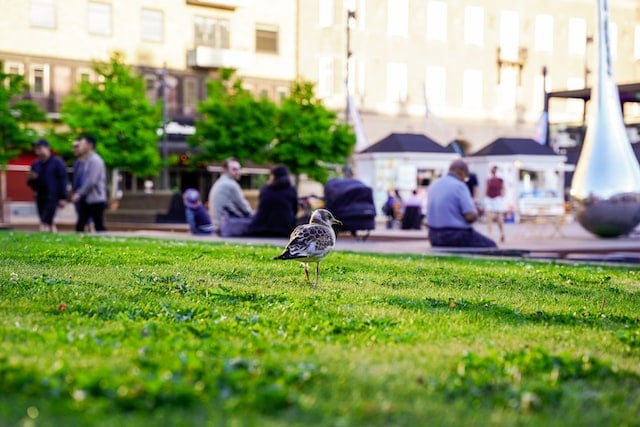
Even younger gulls, with brown feathers, can be a danger in Amsterdam. Image: Unsplash
Amsterdam’s ducks
The gulls share the canals (and the bread) with a large population of ducks.
With its metallic green head, brown breast and blue purplish wings, the male Mallard is a stunningly beautiful bird.
It forages on water plants and invertebrates, but in the winter months, it too will come rushing over, flapping wings and quacking loudly for your bread leftovers. Less pretty, perhaps, but just as much part of the cityscape…the Muscovy duck.
The ducks in Amsterdam’s Vondelpark can be friendly, but we’d suggest to always be careful. Image: Depositphotos
Feathered friends
Another urban waterfowl that is indigenous to the city is the coot. This sooty-grey bird with its white bill and forehead is much smaller than the mallard but twice as feisty. The coot builds its nest in the canals, tucked away around the houseboats, using whatever materials it can find.
The coot, with its iconic beak and black colouring, is a common sight in Amsterdam. Image: Unsplash
In springtime, it is a common sight to see a brave little coot tugging a waterlogged plastic bag behind it, struggling to create a safe place to lay its eggs under the constant gaze of its human neighbours.
Swans and geese
Swans are numerous in Amsterdam too, sailing along the canals in pairs. As are geese, waddling on the banks aggressively defending their territory from anyone who dares come close, or moving along the water at great speed in noisily yapping flocks. 🦢
The swans in the Netherlands are whimsical, but be careful of your hands and their beaks. Image: Depositphotos
A relative newcomer to the city’s feathered population is the Egyptian goose. With its exotic ruddy plumage, this large bird still looks a bit out of place here, but judging by the number of fluffy goslings I have seen navigating the Amsterdam canals behind their stoic parents this spring, it is here to stay.
Herons and cormorants in Amsterdam
At times, you’d really almost forget you live in a city. Like when a heron screeches like some ancient Jurassic creature as it swoops past you along the canal, or you watch a couple of grebes giving an elaborate courtship display before diving under the surface to chase a fish.
Grebes have a sharp pointy beak and reddish head crest, and can stay underwater for an amazing length of time.
Vondelpark is not only home to ducks, but to herons alike. Image: Depositphotos
Their lobed feet are positioned far back on their bodies, so they can swim really fast, but walking is not their thing. This anatomy has earned this beautiful bird the not-so-glamorous English name arsefoot. 🍑🦶
In the Amsterdam Houthavens and NDSM ports, cormorants spread their raggedy wings in the sun, and, if you are really lucky, you can even glimpse the blue flash of the kingfisher.
Counting birds
Amsterdam’s parks and gardens are also home to a great number of bird species. The Dutch Foundation for Bird Protection holds a national bird counting event every year.
Participants are asked to report how many of which birds they see in their garden or from their balcony in a half-hour timespan on one of two specific days in January.
During the 2025 count, 253,425 house sparrows were spotted, making this species the most common by far in the Netherlands. There were 122,880 blue tits and 103,924 blackbirds, followed by the jackdaw, the finch, the Eurasian collared dove, the wood pigeon, the starling and the robin. 🦜
Parks and gardens
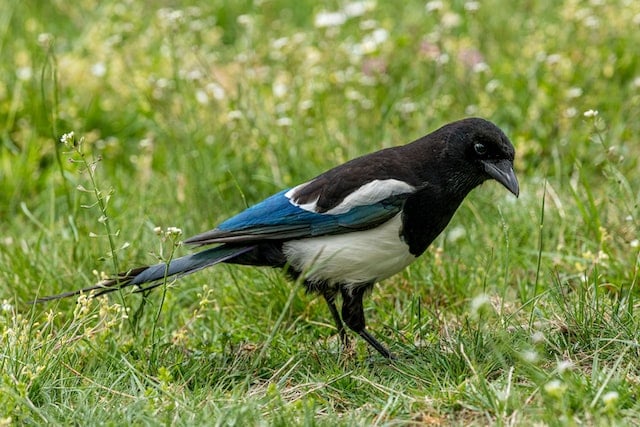
These are the national averages. Of course, there are big differences between the countryside and the city. My back garden in Amsterdam is ruled by magpies.
One for sorrow, two for joy, and if you see one in Amsterdam… oh, boy. Image: Unsplash
These playful, highly intelligent black and white orcas of the sky sweep and duck from branch to the balcony in little groups of two or three, chattering and burbling to each other in their exceptionally sophisticated language.
They are territorial and very aggressive to other birds, like the pair of wood pigeons that tried to build a nest in one of the trees. One of them got pecked to death, and the other only just escaped, leaving a trail of tail feathers across the garden.
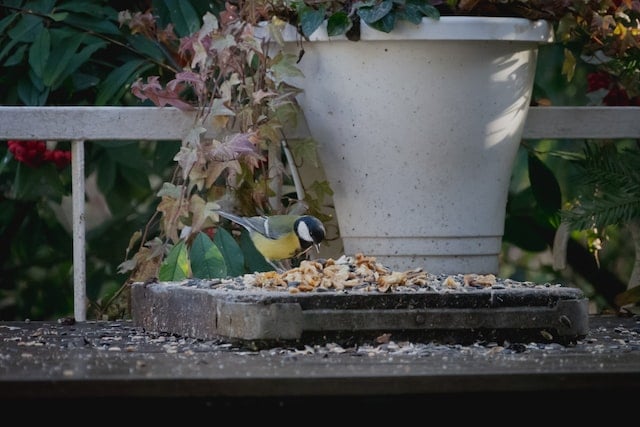
We also see lots of great tits in our garden, distinctive little birds with black heads and necks, prominent white cheeks, olive upperparts and yellow underparts. They flit from tree to tree chasing small flying insects. At dusk, they are replaced by little bats that nest in the masonry of the building.
While we all like to have a chuckle at this bird’s name, the Great Tit really is a wonderful creature. Image: Unsplash
We have also ‘spotted’ a great spotted woodpecker in our garden on a few occasions, probably visiting from the nearby park. And of course, the soothing cooing of pigeons is as familiar a sound as the tingle of the tram as it stops at the top of the road.
Bird watching in Amsterdam; just look up
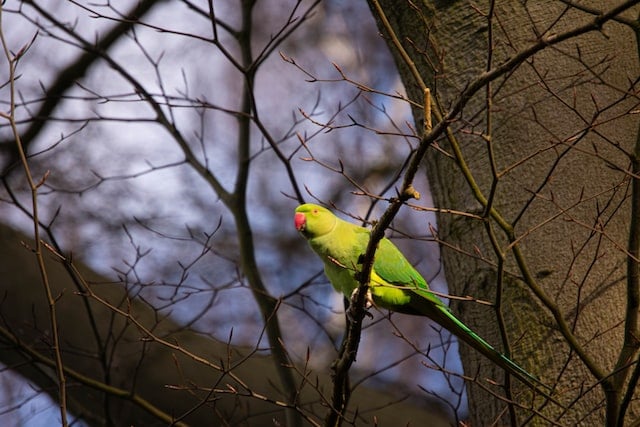
All over Amsterdam, magpies, crows and jackdaws squabble in the treetops, blackbirds rustle in the hedges, and in the city parks, great flocks of green ring-necked parakeet fly shrieking from tree to tree.
These exotic birds have become common city dwellers, profiting from the warmer temperatures of the concrete jungle, nesting in hollow trees in the parks and feeding off berries, seeds and flowers.
This bright parakeet can be seen in Amsterdam, if you watch closely. Image: Unsplash
In autumn, the skies of Amsterdam are graced by the intriguing changing shapes of thousands of common starlings flocking together and getting ready to roost.
This natural phenomenon is called a murmuration. The common starling is an incredibly pretty bird with its iridescent plumage shimmering in shades of dark green and brown. They have a beautiful song, too and are very clever at mimicking other birds.
They have even been known to imitate man-made environmental sounds, like phones and cars.
Or, look down
And don’t forget the bobbing heads of the pigeons scuttling around your feet as you eat your sandwich in the park — that’s wildlife too, right?
Have I missed out on any bird species? Share your bird anecdotes with us! How many different birds can you spot on any given day from your city balcony or in your garden?
What birds have you seen in Amsterdam? Tell us in the comments below! 👇
Imagine waking up at 5 AM every single day to your neighbour’s alarm clock screaming for 90 minutes straight. Now imagine that happening twice daily. For months. Welcome to Spijkenisse, where one woman’s nightmare finally required a police intervention.
Simone, 33, moved into her new flat on A.M. de Jongstraat in April with dreams of a fresh start.
Instead, she got a daily dose of auditory torture courtesy of an alarm clock that went off at 5 AM and 5 PM, ringing for a solid hour and a half each time. (For Gen Zs, this is old school analogue clock torture.)
“The thought crosses your mind to grab a paving stone and throw it through the window, but obviously you don’t do that,” she told Rijnmond. Obviously.
When Dutch bureaucracy meets sleep deprivation
After months of sleep-deprived agony, Simone did what any rational person in the Netherlands would do: she filed complaints with the gemeente, her housing corporation, and the police.
Because nothing says “I’m at my wits’ end” quite like proper administrative channels.
The police spent two weeks trying to reach the absent neighbour before finally taking action on Sunday.
When the alarm began its daily performance, officers removed the lock, entered the flat, and discovered… nothing suspicious. Just multiple alarm clocks, presumably set by someone who either had the world’s worst memory or a very committed vendetta against their neighbours.
Silence at last
The alarms have been switched off, and Simone can finally sleep.
“You have to persist, because noise pollution is the worst thing when you’re sleep-deprived,” she said, in what might be the understatement of the year.
Ever had nightmare neighbours in the Netherlands? Share your horror stories in the comments below.
Between Maastricht and Vaals is the American Cemetery in Margraten. It’s the largest American cemetery in the world and the only one in the country.
The American Cemetery is home to 8,301 fallen American soldiers who gave their lives during World War II.
And what makes the cemetery truly special is its Grave Adoption Program. Locals and visitors can “adopt” a grave or name, keeping the memory of the soldier alive.
They even receive a certificate of adoption.
A place for remembrance
Each grave is marked by a white marble cross or Star of David. The names of 1,722 missing servicemen are also engraved on the marble walls of the Square of Honour.
Every year, around 250,000 visitors come to pay their respects.
Adopters regularly visit, place flowers (especially on Memorial Day) and take care of the graves.
If you visit, you’ll likely see fresh flowers beside the marble headstones, placed by Dutch families who’ve cared for them, sometimes for generations.
How does it work?
Due to the high demand, each adopter may care for a maximum of two graves and/or three names on the Walls of the Missing.
Those who were given more in earlier years may continue their caretaking, but new adopters must follow the quota, because yes, the Margraten Cemetery has become very popular.
In fact, all graves are currently adopted. However, there’s a waiting list, with people from all over the Netherlands, as well as Germany, France, and Italy, eager to visit the site and adopt a grave in honour of the fallen.
The families of the fallen soldiers can even request information about who has adopted their fallen relative.
The cemetery is open daily, from 9 AM to 5 PM, except on Christmas and New Year’s Day. Often, you can hear the sound of a carillon playing the Dutch and American anthems.
Have you ever heard of the Margraten Cemetery? Let us know in the comments below!
With just two weeks until the Dutch snap election, poll leader Geert Wilders has suspended his campaign following terror threat intelligence from Belgium.
His absence from the debate stage is creating an unprecedented electoral situation and leaving crucial questions unanswered.
In what should be the most crucial fortnight of campaigning before the October 29 election, the man leading in the polls has decided to step back from public appearances.
Last week, the NOS reported that Belgian authorities foiled a jihadist-inspired terror cell in Antwerp plotting drone-based attacks.
Among the targets: Belgian Premier Bart De Wever, Antwerp’s mayor, and Geert Wilders himself. The PVV leader’s response? A full campaign shutdown via X, citing that whilst the NCTV confirmed no residual threat, he had “a bad feeling about it.”
De NCTV heeft mij zojuist bevestigd dat ik, door de gisteren gearresteerde verdachten van de verijdelde aanslag op de Belgische premier, ook ben genoemd als doelwit.
Dit is niet de eerste keer dat mij dit in 21 jaar bedreiging en beveiliging overkomt, maar iedere keer opnieuw…
Translation: The NCTV has just confirmed to me that I have also been targeted by the suspects arrested yesterday in the foiled attack on the Belgian prime minister. This isn’t the first time this has happened to me in 21 years of providing security, but it still terrifies me every time. The NCTV doesn’t anticipate a “residual threat,” but I have a bad feeling about this and am therefore suspending all my campaigning activities for the time being.
When secure isn’t secure enough
Dutch security agencies, including the Nationaal Coördinator Terrorismebestrijding en Veiligheid (NCTV, the national counterterrorism coordinator), confirmed to Wilders that there was no ongoing threat.
Yesterday, De Telegraaf also reported that police and the prosecution service see no evidence of any ongoing threats to Wilders.
RTL Nieuws offered multiple accommodations: an approved secure location, a video link, even hosting the debate in the fortified Tweede Kamer (Dutch parliament building). According to the NOS, Wilders declined every option based on his personal assessment.
The Sunday debate went ahead with D66 leader Rob Jetten stepping in to face Frans Timmermans (GroenLinks-PvdA), Dilan Yeşilgöz (VVD), and Henri Bontenbal (CDA). But the figurative empty chair silently dominated the evening.
Questions that need answers
Here’s the thing: Wilders is polling at over 30 seats, making him the frontrunner.
But his campaign has vulnerabilities: a one-page election manifesto, questions about ministerial competence during the PVV’s brief time in government, and the fact that he triggered these snap elections himself by walking out of the coalition just months ago.
These are precisely the issues that debates tend to expose. And whilst no one doubts that Wilders faces genuine security concerns, political journalist Ewoud Kieviet tells VRT that other parties feel “discomfort”, wondering privately whether strategic considerations might also be at play.
It’s a delicate balance. Questioning someone’s security concerns feels callous, yet voters deserve to hear their potential prime minister defend his record.
CDA leader Henri Bontenbal called for secure debate facilities. D66’s Rob Jetten said he hopes Wilders can “soon join us safely”. A diplomatic way of saying the debates need him there.
What happens next
The PVV still leads in polls, though immigration isn’t dominating headlines like before.
Voters are focused on Trump’s anti-European rhetoric (which Wilders supports), Russia’s growing threats (Wilders visited Moscow in 2018 but has taken some distance from Putin), and Gaza; issues where his positions differ from mainstream Dutch opinion.
His absence gives other candidates more airtime without the heated exchanges that typically occur when Wilders participates.
For anyone trying to understand Dutch politics, it’s unprecedented: the frontrunner is campaigning online whilst dodging questions about why he quit the government, what his actual policies are, and whether he can govern effectively.
Those questions remain unanswered. Whether that’s due to legitimate security concerns, strategic calculation, or a bit of both is something only Wilders knows.
With 15 days until election day, voters must decide: does a leader’s absence from debate matter as much as their position in the polls? Share your thoughts in the comments.
Double, double, toil and trouble, Halloween in the Netherlands is just a nubble. Luckily for our American friends, Halloween celebrations have started to trend.
In the cauldron, boil and bake, Dutch Halloween is in the making.
Here’s a harrowing thought for our American readers: Halloween in the Netherlands is virtually non-existent.
We say virtually because we can’t deny it’s been creeping up in popularity over recent years. We’re going to attribute this to more expats and that Dutch people really like wearing costumes. Oh, and the free candy! 🍭
Are you searching for a way to get your freaky Frankenstein on? Or a chance to get some treats and play some tricks? Read on for the frightful, the gruesome, and the ghoulish celebrations for Halloween in the Netherlands. 👻
Is there a history of Halloween in the Netherlands?
Halloween in the Netherlands is little more than a creeping Americanisation — the Dutch have never traditionally celebrated Halloween and likely never will. After all, the Dutch are potato-eaters, not pumpkin-carvers.
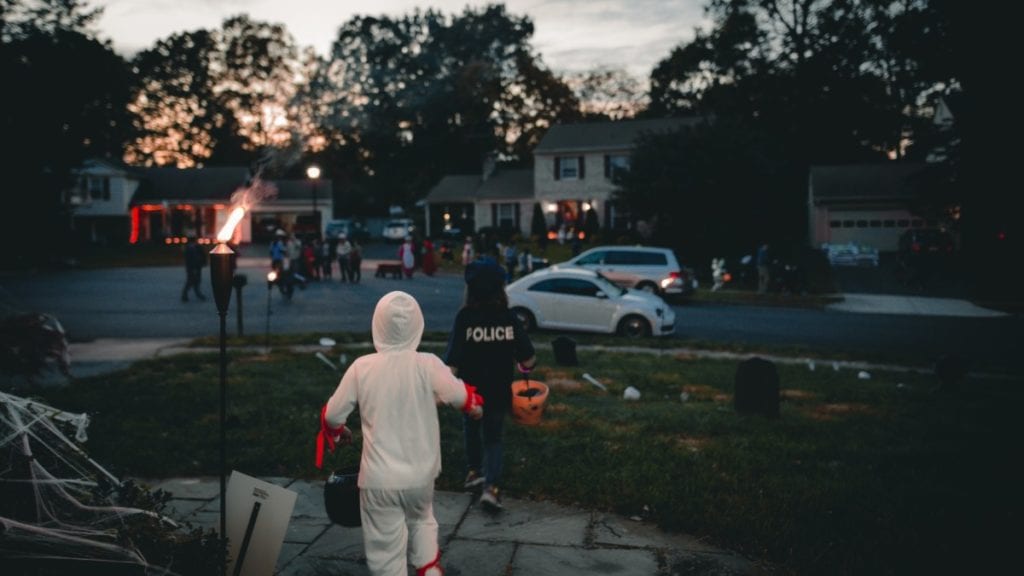
However, that hasn’t stopped Halloween parties from popping up, Dutch stores from stocking ghastly orange products, and even trick-or-treaters from hitting the streets. 🎃
Halloween in the Netherlands is gradually becoming more popular. Image: Pixabay
But what the Dutch traditionally do have is Sint-Maarten. It’s almost two weeks later than Halloween and, like its American sibling, features kids knocking on doors and getting candy (or money!). Unlike Halloween, the children switch from full costumes to masks and sing delightful songs instead of chanting “trick-or-treat!” 🎶
For a Sint-Maarten celebration, you’ll have to hold your horses until November 11 — and this is still only celebrated in some regions. Or, if you’re looking to indulge in some fancy dress, perhaps Carnaval is more your style. 👯
But, if you just can’t wait for the hair-raising hocus pocus and want to celebrate Halloween the way we’ve all grown up seeing in American movies, read on for all the spellbinding events for Halloween in the Netherlands in 2025.
Can we go trick-or-treating during Halloween in the Netherlands?
Can you go knock on people’s doors dressed in spooky costumes and ask for candy? Well, technically, you can do that any day of the year, but the Dutch aren’t likely to give you any — and they might even call the politie. But, on October 31st? The real answer is it depends.
Some residents in certain neighbourhoods do agree to decorate their houses with Halloween decorations, so children know where they can trick-or-treat. 🍬
For example, Fazantenkamp in Maarssen, Utrecht, does a ghost tour through their village each year. In Den Haag, a Trick-or-Treat evening has been arranged in the past near B. Thoenplantsoen — children know where the candy is by flyers that hang in the window of participating houses.
Will there be candy?
Even better, instead of chanting ‘Trick or Treat!’ the Dutch prefer to go for ‘je snoepofje leven,’ or directly translated ‘your candy or your life’ — so sweet, right?!
(FYI: I’m all for free sweets, but don’t give me any of that drop, okay? I don’t care what the Dutch think; that’s not real candy🙅 ).
Adorable kids running around in costumes all night for candy? ADORABLE. Image: Unsplash
So will the Dutchies in your neighbourhood be donning costumes, slapping on face paint, and preparing bowls of free candy?
Ultimately, it’s more likely to be individual streets involved rather than whole neighbourhoods, but it’s a chance you’ll have to take on the evening.
But never fear on the spookiest night of the year, DutchReviewers! Even if we can’t confirm Trick or Treating locations, there are a plethora of spine-chilling events taking place all over the Netherlands! Read on for more details. 👀
Halloween in the Netherlands: where to buy costumes
What’s more terrifying than the spookiness of Halloween? Not having the best costume, of course! While some stores, such as SoLow, will stock a small selection of Halloween costumes, we prefer to make things easy and do it online.
Children’s costumes are quite easy to come by! Image: Depositphotos
Remember not to be the person that comes as ‘laundry’ to a Halloween event (you’re better than that — and it’s not fooling anyone). Have some fun, throw on a wig, slip into a costume, and get into the Halloween spirit! 🦇
All dressed up and nowhere to go? Well, now that you’ve got your killer costume, let’s find somewhere to wear it.
What is there to do on Halloween in the Netherlands in 2025?
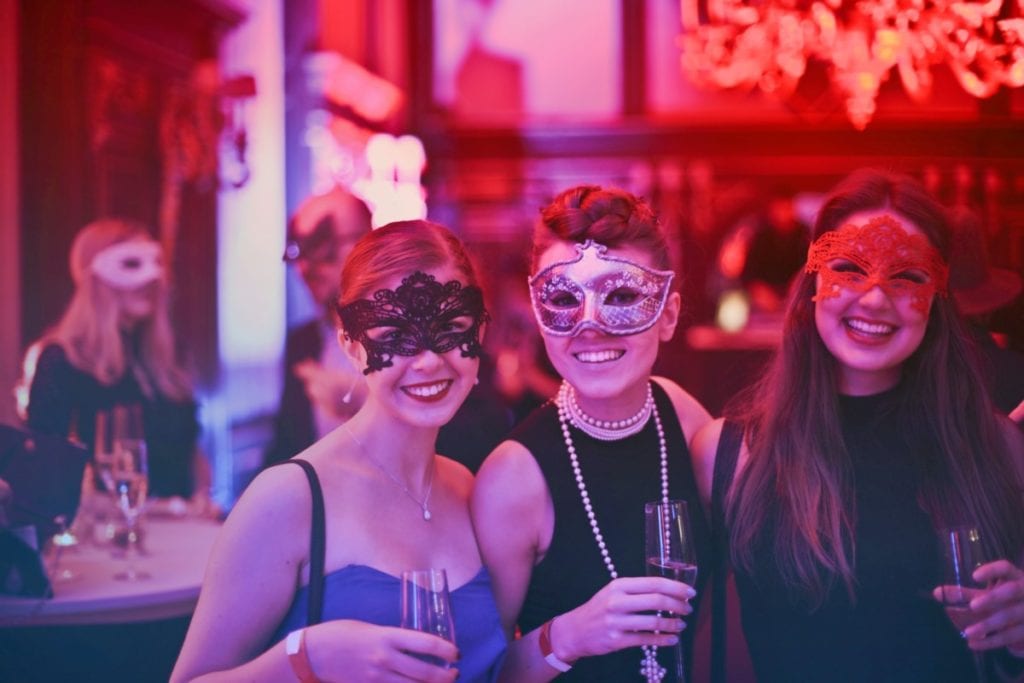
Maybe you’re too old to trick or treat, or maybe you just really like gruesome costumes or fright nights. No matter your preference, if you want to celebrate Halloween in the Netherlands without trick-or-treating, you may just find something that takes your fancy. 🍾
Halloween in the Netherlands is the perfect time to party. Image: Pexels
If you have kids, you might not want to traumatise them immediately, and you prefer something less terrifying for now.
Spend Halloween at Center Parcs, where you can join some daytime programs with your whole family! If you just want to show off your pumpkin carving skills, this is also the place to be! 🎃
If, for any reason, your deepest desire is to get terrified while climbing trees in the dark, we have good news for you! Fun Forest Park in Almere, Rotterdam or Amsterdam offers you a unique Halloween night climbing experience. We hope you will enjoy your anxiety in the forest! ☠️
And last but not least. If, for you, Halloween is about getting wasted in a Dracula costume, it’s time to head to the Dutch capital! This year, Amsterdam Halloween returns to WesterUnie, and it will be bigger (and scarier) than ever!
Don’t forget that most cities have events and parties going on. Just search Halloween events in your area, and you’re bound to find something great!
Ready for a frightening evening? While Halloween in the Netherlands isn’t part of Dutch history, the night is really coming into its own.
Scope out your trick-or-treat destinations, decorate your house, and head to a truly spook-tacular party! 🥳
Will you be celebrating Halloween in the Netherlands this year? Let us know in the comments below!
Like many internationals in the Netherlands, you’ve likely become comfortable with speaking English — we’re all guilty of it. But if you plan on ACTUALLY integrating into life in the lowlands, you need to learn some Nederlands!
And yes, while it’s tempting to continue with the lingua franca of English, learning Dutch is packed full of benefits. You have more job opportunities, can navigate Dutch bureaucracy, and don’t have to ask for the English menu when you go out to eat. 😉
But the best benefit is that you’re sending an important message to all the Dutchies in your life: “I’m trying”. After all, they’ve been catering their language to fit your needs, so it feels great to finally be able to return the favour!
The problem with learning Dutch in the Netherlands
With all those great benefits to learning Dutch, we’re sure you’re excited to start with Nederlands leren! There’s just one problem: it can be notoriously hard to make Dutchies speak Dutch with a non-native.
In fact, one of the biggest issues we hear at DutchReview is “Dutch people always switch to English when I speak to them in Dutch!”
Essentially, it’s a blessing and a curse that Dutch people are some of the best non-native English speakers in the world.
On the one hand, it makes it incredibly easy for you when you first arrive or when you want to have a complex conversation. On the other hand, it makes it too easy to switch to English for everything — and we’re all guilty of that. 😬
Speaking Dutch can be a great way to integrate into the Netherlands. Image: Depositphotos
Even if you pop up to the bar and say “Mag ik een biertje, alsjeblieft?” (Can I have a beer, please?) in your best possible Dutch, there’s a good chance the bartender will turn around and say in perfect English, “Sure, that will be four euros.”
How to get people to speak Dutch with you
So now that you’re totally and wholly convinced that speaking Dutch in the Netherlands will make your life full of sparkly windmills and glass slipper clogs, here are our best tips to get those Dutch-dodging Nederlanders to speak their language with you.
Practice Dutch directness: tell people you want to speak Dutch!
One thing you should always remember is that Dutch people don’t switch to English because you suck at Dutch. Instead, they switch to English because they think that they’re doing you a favour.
So ask them to switch favours! Instead of speaking English with you because it’s easier for both of you, ask them to speak Dutch so you can practice.
More often than not, they’ll be happy to speak their native language and help someone out along the way.
Try these phases to make the switch happen:
Dutch
English
Zullen wij Nederlands spreken?
Shall we speak Dutch?
Ik wil graag Nederlands spreken. Ik moet oefenen!
I would like to speak Dutch. I need to practice!
Ik leer Nederlands. Kunnen wij Nederlands praten?
I’m learning Dutch. Can we speak Dutch?
Tip! If you’re just a beginner, it’s best to avoid asking this in busy or time-sensitive places.
Try as much and as often as possible
We all catch ourselves taking the easy route and slipping back into English, especially if we’re going through a bit of a rut with our Dutch learning. But remember: the more you practice, the more you’ll improve!
Want to get more Dutch practice? You can ease into it by saying “goede morgen” (good morning) to your neighbours each morning. Image: Freepik
Look for opportunities to use your Dutch anywhere and everywhere. You could:
Use the full-service checkout instead of the self-service when you go to the grocery store.
Ask someone on the street what the time is (even if you already know).
Talk to your neighbour as you walk out the front door in the morning.
Wherever you see an opportunity to use your newfound language skills, seize it! Carpe diem! (Or in Dutch: Pluk de dag!)
Be honest about what you do and don’t know
Let’s get real: you’re not going to know every word at the start.
We’ve all sidled up to the cafe counter and confidently said “Een grote zwarte koffie, alsjeblieft!” — only to receive a response that just sounds like a cat hacking up a hairball.
Did they ask for your name? If you wanted something to eat? Maybe they gave you a huge compliment on your Dutch! Whatever it is, you have no idea.
Sometimes Dutch people don’t follow the script (we know, how rude!). But if they do, take a deep breath, don’t panic, and remember: you’re allowed a second chance.
Learning Dutch is a bit like learning to ride a bike. Sure, you’ll fail a few times, but you’ll get there in the end. Image: Freepik
Ask them to repeat themselves, ask them to speak slower, or just ask what a particular word means — easy! Here’s how:
Dutch
English
Kun je dat herhalen?
Can you repeat that?
Sorry, ik leer Nederlands. Kun je een beetje langzamer spreken, alsjeblieft?
Sorry, I’m learning Dutch. Can you please speak a little slower?
Wat betekent ____________?
What does ____________ mean?
Don’t give up speaking in Dutch (even if they switch to English!)
There are a few certainties in this universe: the sun will rise in the east, the Belastingdienst will collect taxes, and Dutchies will sometimes switch to English when you speak Dutch.
Remember what we said above: Dutch people switch to English because they think that they’re doing you a favour.
So be a little stubborn and just keep speaking Dutch. Because guess what: even if you end up in a half-Dutch half-English conversation, you’re still speaking Dutch. And that win should always be celebrated! 🥳
Be ready to laugh at yourself
You’re going to make some Dutch mistakes, and some of them will be hilarious. The best thing you can do is have a chuckle at your own expense.
Learning to laugh at yourself (and your flawed, but earnest Dutch) is an absolute must. Image: Depositphotos
So here are some of our mistakes to make you feel better:
Sam once accidentally ordered the whole ice-cream menu at Smullers.
She also wanted to playfully call her girlfriend a “grote aap” (big monkey), but called her a “groente aap” (vegetable monkey) instead.
Sarah once told someone “gefeliciteerd” (congratulations)after they sneezed, instead of gezondheid (bless you).
We got laughed at, you’ll laugh at us, but one thing is for sure: you learn best from your mistakes (and a little side dose of humility). 😂
Got any tips to get Dutch people to keep speaking Dutch with you? Drop them in the comments below!
There’s a whole list of things to figure out when you first move to the Netherlands, and one of them is where you can get your medications. Geen stress, here’s all you need to know about pharmacies in the Netherlands.
Wherever you live in the Netherlands, you’re likely to come across a pharmacy with that telling green sign, but do Dutch pharmacies work the same way as in your home country?
Let’s answer some of your burning questions about pharmacies in the Netherlands.
1. How can I find a pharmacy in the Netherlands?
When you first move to the Netherlands, you probably have no idea where the closest pharmacy would be or how to find one.
The best way to find a pharmacy in the Netherlands is by searching in Dutch.
Try searching “apotheek dichtbij mij” (pharmacy near me) or “apotheek bij mij in de buurt” (pharmacy in my neighbourhood).
2. How can I register at a Dutch pharmacy?
When you go to a pharmacy in the Netherlands for the first time, you will likely be asked to register or sign up at that pharmacy.
The staff will ask you for your personal information, contact details, your health insurance information, and who your doctor is. Once you give this information, you should be all set up!
So, why do you have to register at a pharmacy in the Netherlands? Your registered pharmacy will have a record of your health insurance information, as well as the history of your prescribed medications.
Doctors send the prescription to your pharmacist to fill. Image: Freepik
This ensures that you don’t take conflicting medications that could cause health risks, and it also streamlines the process of receiving any prescribed meds. Simply head to your registered pharmacy, and they should have been sent the prescription from your doctor.
Does this mean you’re tied down to one specific pharmacy? Not necessarily.
If you have received a new non-repeat prescription (or recept, as they’re known in Dutch), it is sometimes possible to go to a different pharmacy and request your medication there.
However, if you have a repeat prescription, then it is usually only possible to collect this at your registered pharmacy.
In general, it is best to use the same pharmacy every time for each of your medications. This way, they have an up-to-date record of your different medications.
3. What can I get at a Dutch pharmacy?
Pharmacies, or apotheken in Dutch, are where you go for your prescription medication, such as:
Heart pressure meds
The contraceptive pill
Condoms
Prescribed creams
Psychiatric medications
Certain over-the-counter drugs that need instructions
Note: Dutch pharmacies should not be confused with drogisterijen(drugstores)! Dutch drugstores will only sell some over-the-counter drugs that are safe for general use, such as antihistamines and painkillers. You can’t pick up prescribed medications here.
4. What can’t I get at a Dutch pharmacy?
If you’re planning on grabbing a few extra toiletries at the pharmacy while you pick up your prescription, you might be surprised to see they don’t have much.
In the Netherlands, pharmacies tend to be very no-nonsense. If it’s not some kind of medicine, soothing balm or form of protection, then you likely won’t find it at your apotheek.
You can get medication prescribed by your doctor from a pharmacy in the Netherlands. Image: Freepik
Things you won’t find in a Dutch pharmacy include general self-care items such as:
Your favourite shampoo
Makeup
Skincare
Hair brushes
Body washes and soaps
So where can you find these items?
In drogisterijen, natuurlijk! Examples of popular drugstores in the Netherlands are Etos or Kruidvat.
5. What time are pharmacies open in the Netherlands?
Do you want to grab your prescription on the way home from the office, but are you not sure if the pharmacy is still open? Well, you just might make it in time.
Most pharmacies in the Netherlands are usually open from 8 AM to 6 PM, Monday to Friday.
Drugstores should have the general self-care items that you’re looking for. Image: Depositphotos
Opening times can differ on the weekends, but you may be lucky enough to have a pharmacy that is also open on Saturdays. Your neighbourhood pharmacy should display their opening times on their website and at their entrance.
Pharmacies in the Netherlands are generally closed on Sundays as well as during big national holidays such as Tweede Paasdag, Hemelvaartsdag, and Koningsdag. However, this may vary from pharmacy to pharmacy.
6. When can I pick up my medications at a Dutch pharmacy?
Once you have received a prescription from your doctor, your pharmacy will contact you (usually via email) when your prescription is ready to be collected.
If you have a bad habit of forgetting to fetch your medications from the pharmacy during normal opening hours, geen probleem.
At many Dutch pharmacies, it is possible to ask your pharmacist to place your items in the 24-hour prescription vending machine or after-hours locker.
By placing them in this locker, you can collect them at a time that suits you best.
If this is something you think you’ll need, you can ask your pharmacist if they have an after-hours locker. If they do, voilà, you can request that they register you for this method of collection.
Some pharmacists also offer the option to have your prescription medication delivered to your house, so you never have to worry about not having your medication.
This can also be very helpful when you’re sick and can’t make it to the pharmacist yourself.
7. How are pharmacists trained in the Netherlands?
Before becoming a Dutch pharmacist, you have to complete a three-year Bachelor’s Degree in Pharmacy, followed by a three-year Master’s Degree in Pharmacy. Yep, Dutch pharmacists train for as long as Dutch doctors. 👀
During their university education, pharmacists learn important information about medicines and how to calculate dosage.
Pharmacists also have to register in the BIG register, which allows them to officially use the legal title of ‘Pharmacist’.
What this means is simple: you can trust that your Dutch pharmacist is a professional who knows what they’re doing.
8. Does my Dutch health insurance cover pharmacy costs?
Health insurance is mandatory in the Netherlands, but it’s not a given that they’ll cover all of your pharmacy costs.
Your health insurance should cover the cost of most prescription medications. Image: Depositphotos
How much of your pharmacy costs will be covered depends on a few things:
The type of medication
The cost of the meds
Your insurance provider
The type of health insurance policy
For example, depending on the health insurance policy you opt for, it may be possible to claim back the cost of your contraceptive pill. This is something you should consider when choosing your health insurance.
Knowing how you’ll get medicine when you need it will allow you to rest easy and avoid panic when the time comes. Armed with your newfound knowledge, you can go forth and enjoy your new life in the Netherlands. 💪
How do Dutch pharmacies differ from pharmacies in your home country? Tell us in the comments!
The Dutch are known for their overwhelming frugality (or should we say stinginess?) Well, this habit of saving money, combined with their inclination to be prepared, may occasionally push a Dutchie to bring their own food wherever they go — even to the amusement park. 🎡
The Dutch seem to have perfected the “we have food at home” mentality by making it applicable even outside the home!
Because who wouldn’t love a boterham (sandwich) when waiting in line to get on a rollercoaster?
Fingers crossed they can keep it down after the turbulent ride… 🤞
What is it?
A way of thinking ahead, one may say! Or maybe just another downright stingy thing Dutch people do?
We all get tempted by the smells of some lekker churros, waffles or cotton candy at the amusement park.
The important thing for the Dutchies is not to give in to this temptation by having a snack from home instead.
So, be it a frikandelbroodje, an emergency krentenbol, or a simple piece of fruit — it’s getting slapped in a sandwich bag and coming to Efteling! 🎢
Why do they do it?
To save money, of course!
To be fair, the food at theme parks can be quite overpriced, so it’s definitely an economically wise decision.
Bring a homemade boterham, instead of buying a €10 one at the amusement park. (Which, let’s be honest, probably won’t even taste that good… 👀)
But besides good ol’ Dutch stinginess, there may be other reasons for bringing your own food to the amusement park, such as food preferences or intolerances.
Especially for the vegans among us, bringing food from home may often be the only viable option!
Why is it quirky?
Considering that most people wouldn’t want to pass up a portion of fresh poffertjes, this Dutch habit may seem unusual to most.
After all, many people consider the food at the theme park to be a ‘part of the experience.’
At the same time, there is just something inherently schattig (cute) about a Dutch family sitting on a picnic bench sharing a meal they brought from home — while the rest of us are waiting in line to buy overpriced amusement park food. 🤷♀️
Should you join in?
If you need to make smart financial decisions (which means: if you need to save money) — natuurlijk!
The entrance to a theme park alone can be quite pricey, so it’s understandable if you would like to save some money on food and drinks.
But if you can’t pass up a sweet treat, maybe it’s enough to find a middle ground and just bring a drink from home! 🧃
What do you think of this Dutch quirk? Have you experienced it? Tell us in the comments below!
If you spent your summer stocking shelves, pulling espresso shots, or folding endless piles of clothes in a shop last year, you might be in for a pleasant surprise.
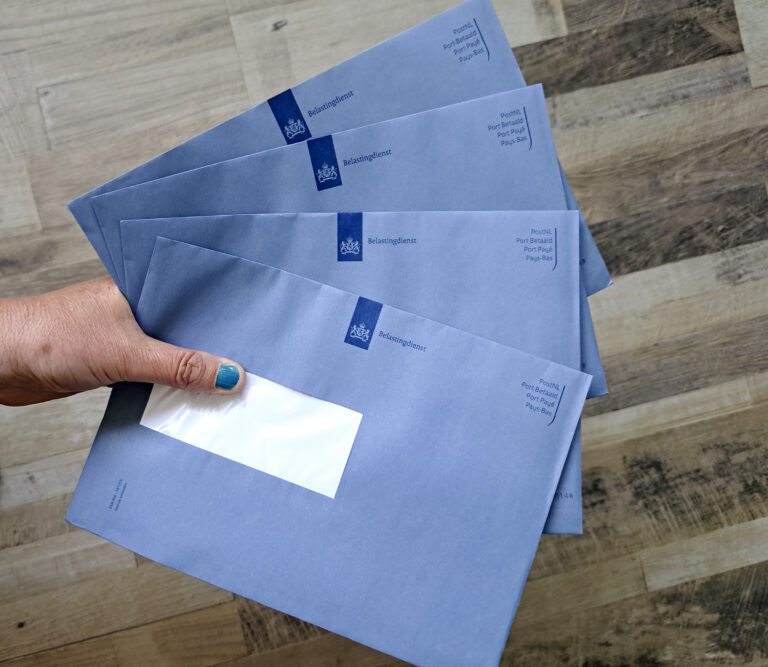
Around 420,000 people who didn’t file a 2024 tax return will soon find a blue envelope from the Belastingdienst in their letterbox.
And this time, it’s not bad news.
Sometimes, it helps to file your income tax
NU.nl reports that the tax office has noticed that many young people who are new to working in the Netherlands could be due a tax refund.
Why? Usually, if you have just started working in the Netherlands (say, you had a simple summer job in a supermarket), you don’t have to file your income tax.
However, what many don’t realise is that they could be entitled to a tax return if they do.
While your employer automatically withholds standard taxes from your pay, you’re also entitled to tax credits. This means that more tax may have been deducted than necessary.
And these tax returns can sometimes amount to a few hundred euros!
Here’s what this could mean for your wallet
According to Nu.nl, teenagers aged between 15 and 17 can expect an average refund of about €250, while those aged 18 to 23 are likely to get around €579 back. Not bad for a few clicks on Mijn Belastingdienst.
And it’s not just young workers who might benefit.
Some seniors with several small pensions could also get money back, especially if each pension fund withheld tax without accounting for special senior tax credits.
Before you toss that blue envelope in the bin
Getting a letter doesn’t mean you must file a tax return, but it’s basically the tax office’s way of saying, “Hey, we might owe you money, care to check?”
And if you realise you missed out in previous years, there’s still time: you can claim refunds for up to five years retroactively.
So if you see that familiar blue envelope peeking through your mail slot, don’t panic, this one might just be the nicest surprise you’ll get from the taxman all year.
Did you file your tax return last year, or are you waiting for that blue envelope to find you? Tell us in the comments below. 👇






![Halloween in the Netherlands: the ultimate [and spookiest] guide for 2025](https://dutchreview.com/wp-content/uploads/creepy-dutch-houses-on-halloween-in-the-netherlands-768x512.jpg "Halloween in the Netherlands: the ultimate [and spookiest] guide for 2025")