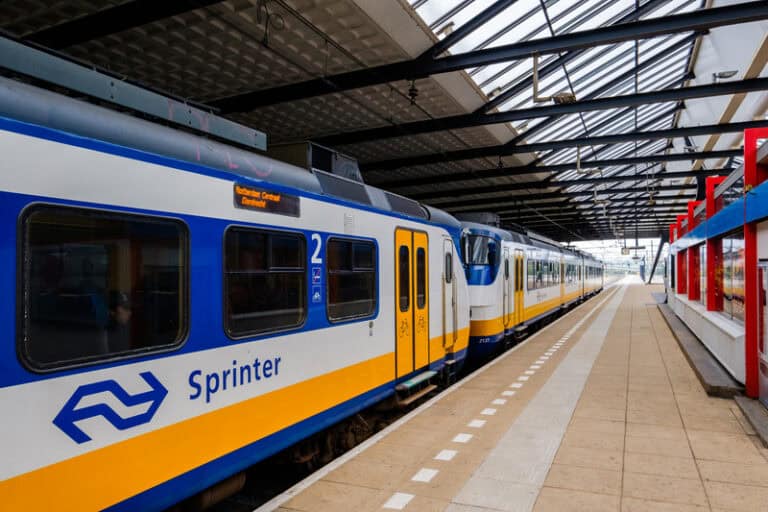
Due to a defective track between the Delft Campus and Schiedam Centrum stations, the NS is currently running fewer trains to and from Rotterdam.
According to the NS travel information, the situation on the tracks is expected to be fixed by this Saturday, October 18.
However, a ProRail spokesperson reported to Rijnmond that repair work could very well last the entire weekend. In other words, get ready for some good ol’ Dutch rail chaos and prepare yourself for a hectic commute.
What routes are affected?
While Rotterdam will take the brunt of the annoyance, the disruption will also affect commuters catching trains from:
Den Haag Centraal,
Leiden Centraal, and
Dordrecht.
If you plan your trip using the NS travel planner, you can expect to see the modified timetable both online and in the app.
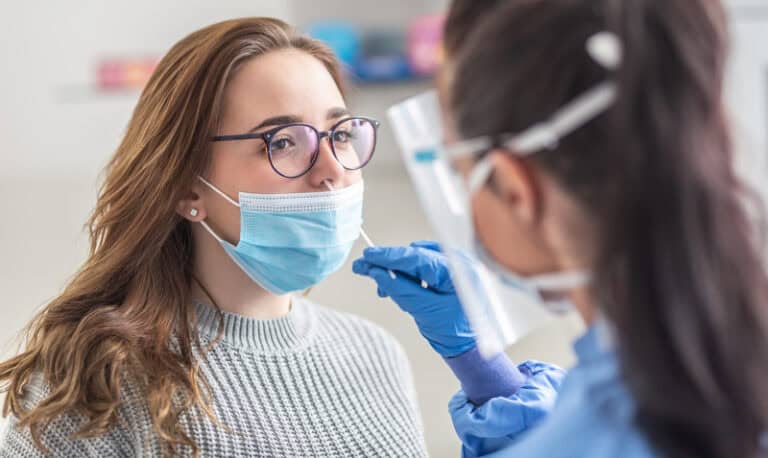
Dutch health authorities are now monitoring cases of a new COVID-19 variant, named XFG or ‘Stratus’.
According to the RIVM, XFG has been the most dominant strain of the virus since early July, accounting for 80-90% of the cases in recent weeks.
However, the RIVM also stresses that there’s no need to sound the alarm, as XFG is “virtually no different” from previous variants, at least in terms of symptoms.
What symptoms should I look out for?
Since the introduction of the previous Omikron variant, most COVID-19 symptoms have been a sore throat, coughing, and sneezing.
Research finds that you can expect similar symptoms with XFG, along with the possibility of:
Other cold symptoms (such as a runny nose),
Shortness of breath,
Fever, and
A sudden loss of smell.
Less common symptoms are also possible, including vomiting, nausea, muscle pain, and headache. For a more comprehensive list, you can visit the RIVM’s webpage on COVID-19.
Feeling unwell? Keep an eye out for these symptoms and get tested as soon as possible.
Good to know: The Netherlands has launched a new COVID-19 vaccination round to combat a potential resurgence in cases this winter. If you belong to one of the risk groups, you can make an appointment with the GGD to receive your vaccination.
Believe it or not, the bustling Dutch capital is made for dogs! There are plenty of parks and dog-friendly spots around the city where you can go with your best friend.
If you are at the beginning of your dog journey or planning to move to Amsterdam with your furry friend, you’re going to need a lot of info about owning a dog in Amsterdam! Give us a paw, and let’s start at the beginning
🐶 How to adopt or buy a dog in Amsterdam
So let’s take it from the top. There are plenty of animal shelters in the Netherlands where you can look around to find the right dog for yourself.
Some of these shelters have open days, but you can visit most of them without an appointment. Don’t be surprised that most shelters will ask you to provide a few things for them to prove that you’ll be a worthy dog mama or papa. They might even ask for an appointment with you to see your apartment
You can change a doggie’s life by adopting them, so if you can, we definitely recommend you do it this way. It is also possible to get puppies from shelters, and you can find many purebred dogs if that’s an important factor for you.
Amsterdam offers many animal shelter options. Image: Unsplash
Note: If you would prefer to buy a dog, you can do that by contacting a verified breeder. There are many of them all over the country.
🦴 Dog pet stores in Amsterdam
It is wise to buy essential accessories before the big adoption day. Trust us; this will ensure that you and your apartment survive the terrible twos (first two weeks.)
Ok, so you’ve picked up your best friend: they’ve vomited on you, peed on your carpet, and torn up your favourite pair of shoes — now, the two of you need to figure out what to do with your new dog.
What paperwork do I need when I get a dog in Amsterdam?
Any seasoned international in the Netherlands knows that the Dutch love a bit of bureaucracy, and this is also the case when you own a dog.
He is probably more chill about the paperwork than you are! Image: Depositphotos
So, what loops should you expect yourself and your dog to jump through?
Dog passport: Your dog must have a European pet passport to be registered in the Netherlands officially and turn your doggo into a proper Dutch dog. It is most important while travelling because you must present it at the border. You can pick up your pet passports from your vet.
Chip: If the dog has no chip yet, you can (and must) organise for one to be implanted when you visit your vet.
Insurance: This is optional, but Dutch people are obsessed with insuring everything. There’s insurance for almost everything Dutch people own that’s more than €50, and dogs are no exception.
Having insurance can be handy if your dog has any medical concerns later on and you don’t like unpleasant surprises.
This is one of the companies that offer insurance for pets in the Netherlands:
Do I have to pay tax when I own a dog in Amsterdam? Good news! While in many cities in the Netherlands, you need to pay tax for having a dog, in Amsterdam, you don’t have to.
🚀 Travelling with your dog
The most important golden rules while travelling to the Netherlands is that your dog has to:
be at least 15 weeks old.
be vaccinated at 12 weeks old.
wait 21 days after vaccination before bringing it to the Netherlands.
be microchipped and have a pet passport
Travelling by plane with your dog
Flying would be a much more pleasant experience if all planes had puppies on board, right?
If you decide to fly with a dog, you must ensure that everything on the list above is ready and up to date before your flight.
You need to buy a ticket for your dog as well; the price depends on the size of your dog, the airline, and the flight itself.
Most bigger dogs have to fly next to your check-in luggage, while some airlines allow smaller dogs to travel with their owner in a closed box. It should make for a fun experience! (Unless your dog is a nervous flyer.)
Travelling by car with your dog
If you are driving to the Netherlands, they might ask for your dog’s passport if you are checked at a border. Make sure you’ve met all the relevant medical requirements!
Public transport with your dog in Amsterdam 🚟
While travelling with a dog on public transport in some big cities might paint a pretty picture of your wildest nightmare, this is not the case in Amsterdam.
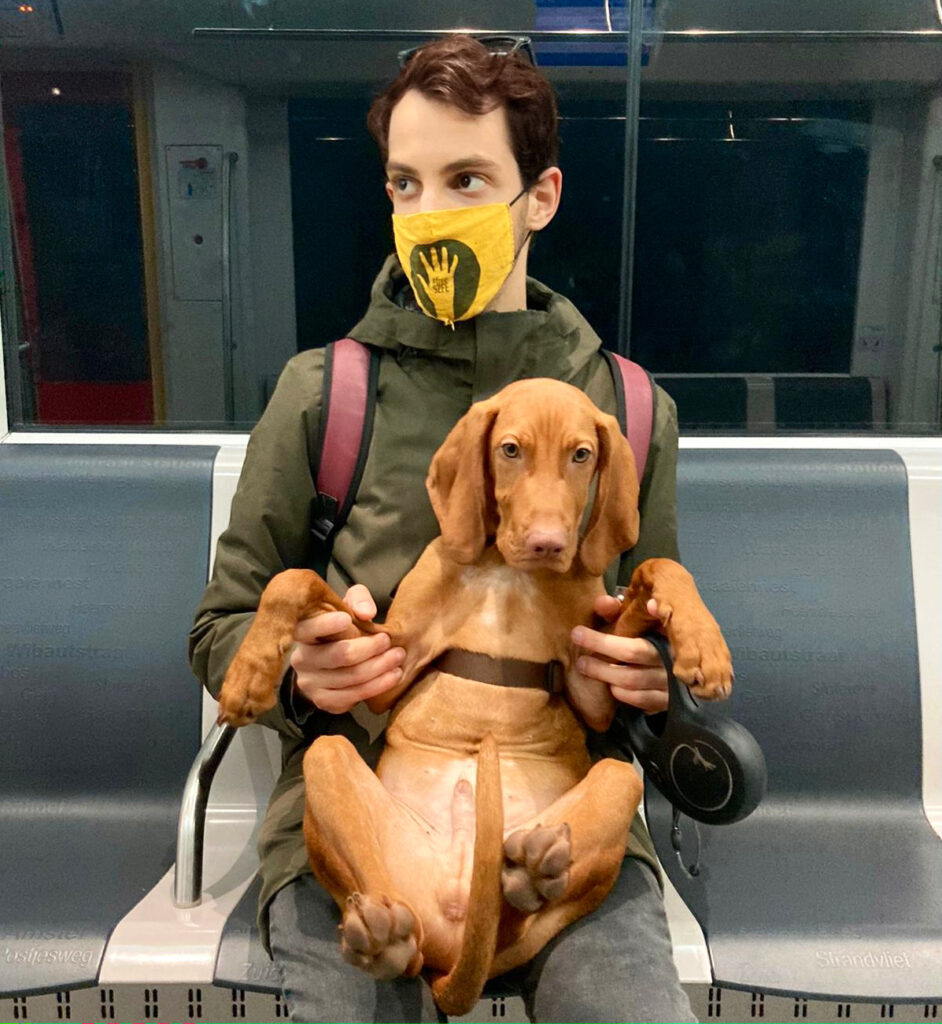
In the Dutch capital, you can use the metro and the tram without having to buy a separate ticket for your dog, and they don’t even have to wear any muzzles.
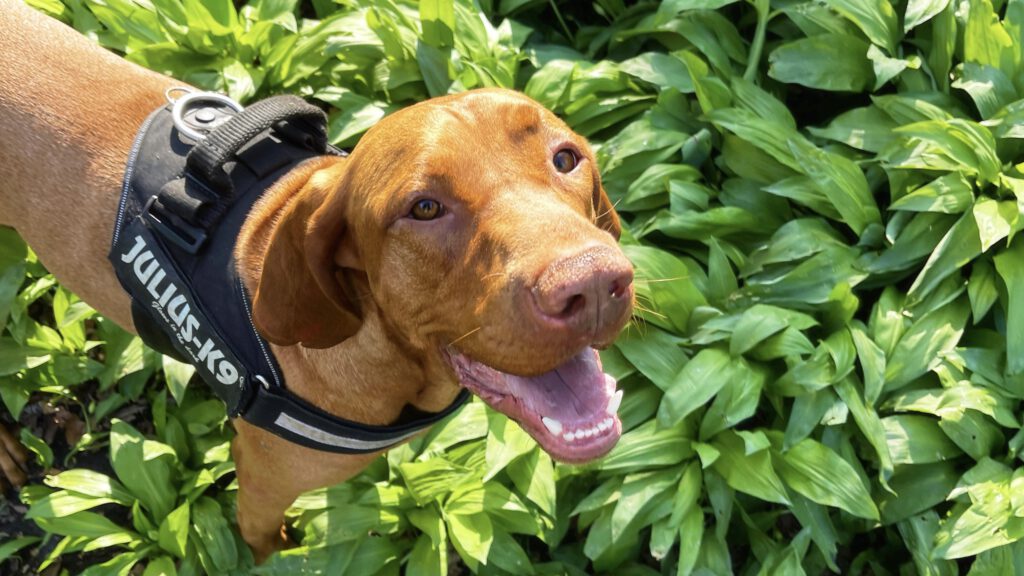
This is how we go to the park! Image: Mihály Droppa/DutchReview
🚲 Cycling with dogs in Amsterdam
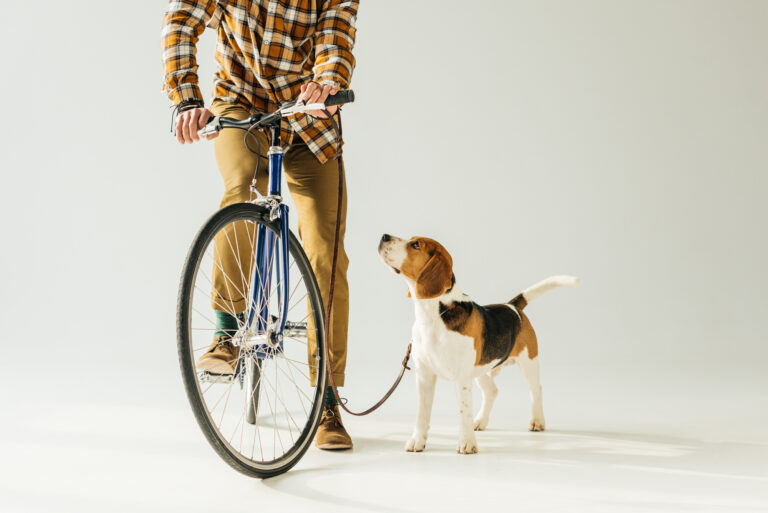
This is the cutest thing about living in Amsterdam with your dog — but no, sorry to disappoint; the dogs of Amsterdam don’t know how to cycle.
That being said, the people of Amsterdam sure learned how to cycle with their pet pooches throughout the city. There’s even an Instagram account that collects pictures of all the doggies on bikes!
It takes a village! Sometimes, you might need a helping paw in your dog journey in Amsterdam. Here are some of them:
Vets in Amsterdam
There are many vets in Amsterdam, and most of them also speak perfect English, so you don’t need to practice your Nederlands in their office (unless you want to, in which case, go you!)
At some point, you will need a hand (and a leg — and perhaps the rest of the body) to walk your dog when you’re busy.
This help can come from a friend or a neighbour, but if you have no one around you who can walk your dog, that’s when dog walking services come in handy.
One of the most popular options in the Netherlands is Pawshake. It’s an app where you can find your perfect verified dog walker to help you during those busy times.
Daycares for dogs in Amsterdam
Taking your dog to daycare might be a good option if you’re away for a few days. There are several options for this one; however, some take the “day” part more seriously than others.
Many services offer a 24/7 service so you can leave your best friend there for a few days. Sounds cruel, right? It’s not.
The following are some of the best daycares in Amsterdam:
Amsterdam has many parks all over the city, so finding one close to your place to bring your dog for a W-A-L-K (or a zoom) won’t be a problem.
Can we swim now? Image: MIhály Droppa/DutchReview
Most of them allow doggies to enter; here are a few that we’d recommend:
Vondelpark
It’s the biggest park in Amsterdam, so it’s always packed with tourists. If you are with your dog, it’s wiser to go to the dog area of the park straight away! (Yes, there is one!)
You can find the dog field in the west part of the park.
Beatrix park
Beatrix park is one of the most beautiful parks in Amsterdam, with a vast meadow in the middle.
In this park, the game rules are more or less written; if the weather is nice, the field will be full of picnicking people. But if not (and let’s be honest, this is most of the time), the doggos can take over the area!
Sarphatipark
If you live in De Pijp, this will be a handy one! While it is not the biggest park in the city, it has a whole dog area next to the climbing park. Yes, you heard it right! 😉
Het Amsterdamse Bos
The Amsterdam forest is great for long walks with your dog. The area is way bigger than any of the parks in Amsterdam, so you can just walk for hours and hours. There is also a big lake in the middle of the forest, where dogs love to swim!
The forest is fun! Image: Mihály Droppa/DutchReview
Beach in Haarlem
While this one is clearly not in Amsterdam, it is surprisingly close to it! Dogs love to gallop in the North sea, even if it might be too cold for swimming most of the year.
This is also a place for long walks, but if you go with your dog, make sure that you choose one of the “hond vriendelijk” (dog-friendly)areas, where you are allowed to walk your four-legged friend.
If none of these parks is close to your neighbourhood, here are some extra dog-friendly parks in Amsterdam:
Oosterpark
Westerpark
Erasmuspark
Rembrandtpark
Martin Luther King park
👨🏽🎓 Dog schools in Amsterdam (in English)
If your dog is destroying all of your books at home, they most likely needs to have some education!
Unless you’re willing to learn Dutch with your dog, plenty of dog schools in the city offer English training with several methods and group sizes. Here are some of the best ones:
Having a dog is a huge responsibility, but Amsterdam can be an awesome place for it! Most of the cafes and malls are dog friendly, there are plenty of parks, and you don’t even need to pay tax after your furry friend! 🙃
So if you’re looking for a reason not to get a dog in Amsterdam, sorry schat, you came to the wrong place (now go get yourself one!)
Do you have a dog in Amsterdam? Tell us your experiences in the comments!
The women allegedly used dating apps to charm their way into their victims’ hearts, spinning fake identities and even meeting their targets in person.
But instead of candlelit dinners, these “dates” often led straight to the checkout counter.
Victims were coaxed into paying during outings, often in shops, and sometimes even found themselves surrounded by multiple accomplices.
Three locations were raided
Following the arrests on October 15, police swooped in on three locations across the Utrecht region, with sniffer dogs joining the action for extra flair.
Officers uncovered a stash of cash, jewellery, and even a car during the searches.
Authorities are urging anyone else who might’ve been sweet-talked out of their savings to come forward.
Think you’ve been scammed too? You can reach the police by calling 0900-8844, chatting via politie.nl, or visiting your local station.
Have you recently moved to the Netherlands and are confused about how gynaecology, contraception, checkups and everything that comes with it works here? Then look no further!
We’ve got all the information about your reproductive healthcare in the Netherlands right here.
First things first: get health insurance
First of all, if you’ve recently moved here, you should get yourself some Dutch health insurance right away.
While there are certain exceptions where you do not need health insurance, it’s extremely helpful when it comes to organising contraception, checkups, and everything that comes with having a uterus in the Netherlands.
Before you do anything, you need health insurance. Image: Freepik
You could also be entitled to a healthcare allowance, which is a generous benefit from the government that, depending on your situation, helps you to pay for this.
The second thing you should do is register with a Dutch GP (a general practitioner or huisarts). The good news is that most Dutch medical workers speak English and are multilingual.
Birth control in the Netherlands
Ok, let’s start simple and let’s talk contraceptives in the Netherlands.
If you’re looking to start birth control in the Netherlands, you first need to register with your local GP and make an appointment.
During this appointment, you can discuss which contraceptive will be the best fit for you.
If, however, you’re still not ready by the end of the session (because there are so darn many to choose from), they’ll give you a bunch of leaflets that you can take away and read.
Let’s talk contraception in the Netherlands. Image: Unsplash
A few examples of contraceptive pills used in the Netherlands: Neogynon, Lovette, Stediril-d, Microgynon-30, Stediril 30.
Remember: Pills and injections that change your body’s hard wiring are a big deal. If you’re uncertain, don’t feel pressured to decide within the space of one doctor’s appointment.
If, after a while, your initial choice doesn’t work for you or your hormones are flipped out of whack, you can always change.
Fun fact: If you’re under 21, the Dutch government covers the cost of contraception (in the form of reimbursements) for you. Hoera! 🥳
Where can I get birth control in the Netherlands?
If you have a prescription from the doctor, you can buy birth control pills at your local pharmacy (apotheek). Some are even open late or on the weekends.
You can also get refills of birth control pills without getting a new prescription, so you don’t have to waste time booking another appointment. Handig!
You can buy condoms at pharmacies, supermarkets and some vending machines.
If you want an IUD (intrauterine device, AKA the coil), Mirena and Flexi-T are the two main kinds that you can get here. This will be fitted at a GP or hospital.
The injection (Depo-Provera, for example) is also available in the Netherlands. If you’re over 21 and want your costs reimbursed, you can get an additional health coverage package that includes the implant.
Fun fact: According to Gynopedia, around 40% of Dutch women aged 15-30 use the pill, and 5-10% of patients use IUDs. Diaphragms are apparently the least popular method of birth control.
Gynaecology in the Netherlands
Birth control is, of course, just one aspect of life with a uterus. Another very important element of healthcare for many in the Netherlands is gynaecology.
Where can I find a gynaecologist in the Netherlands?
Gynaecological care can vary hugely between countries, but the good news is that there are a bunch of practices in the Netherlands provided by the Dutch healthcare system.
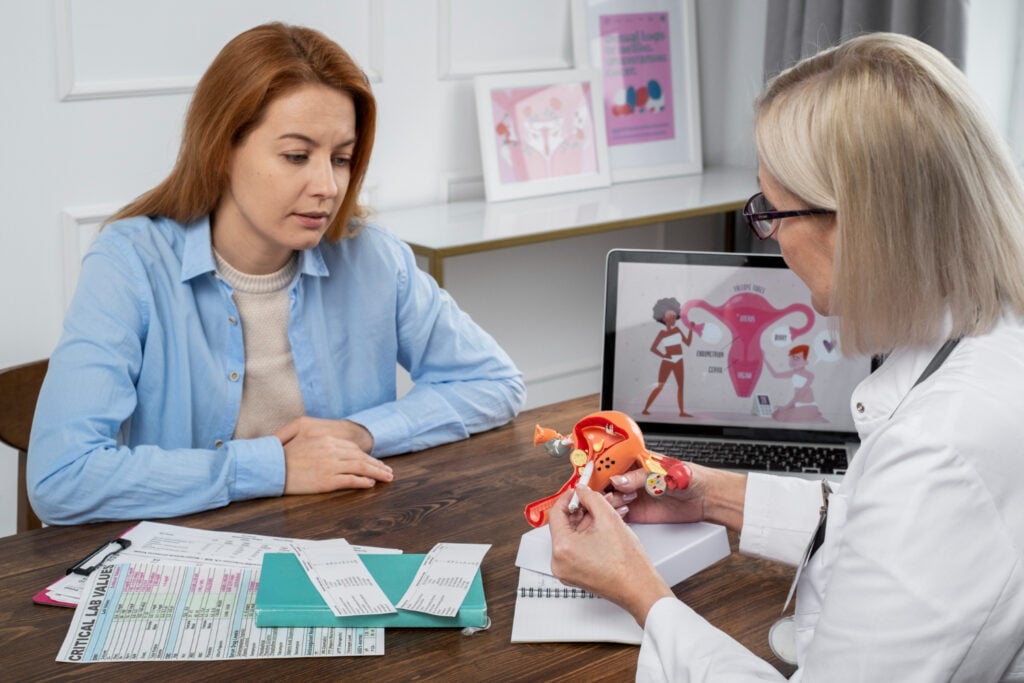
It’s important to speak regularly to your Dutch doctor about things such as PAP smears, your cycle and contraception. Image: Depositphotos
Just like with prescription contraceptives, you’ll first have to speak to your GP about the possibility of seeing a gynaecologist, even if you just want a regular checkup.
The process is simple, as your GP will refer you and… voilà, you’ll have an appointment.
Can I ask to see a specific gynaecologist?
In the Netherlands, you generally don’t see private gynaecologists.
Even if you have your own private health insurance, you must register with a GP, just like everyone else. From there, your GP will refer you.
Of course, you do have some control over who is assigned as your gynaecologist. For example, if you would rather be treated by a female doctor, you can let your doctor know this.
If you really don’t like the gynaecologist that you have been referred to, there’s no shame in asking to see someone else, but a change is not guaranteed.
Reproductive health check-ups in the Netherlands
They say prevention is better than cure, so naturally, you’d want to stay on top of your reproductive health in the Netherlands.
The best way of doing this is by organising regular check-ups.
How do I get check-ups for my healthcare?
When you register with a GP, you can pass on all your medical records for a full assessment.
You can be referred to specialists depending on your needs. Image: Freepik
Remember to tell them any important medical history, even if the problem has been “dealt with”, so to speak.
The Dutch don’t typically buy into the whole routine check-up thing, but those with a cervix do get smear tests every five years, and those over 50 get a mammogram every two years.
It’s worth noting that in the Netherlands, you are not expected to start getting PAP smears until you are over 30. However, if you wish to have one before the age of 30, you can request this.
What if I need an STI test?
There are several different ways to get tested for STDs (or SOAs [Seksueel Overdraagbare Aandoening], as the Dutch say).
You can get an STD test at your huisarts (GP) or at the GGD (Gemeentelijke Gezondheidsdienst or municipal health services).
If you are not comfortable with either of these options, you can also opt to order an STD test online and take it at home — just make sure they are reliable.
If you’re hoping to get pregnant, there are a number of steps you can take.
The Dutch approach to pregnancy tends to be that of “let’s not intervene with nature too much”, which is ironic given that they literally pushed the ocean back to set up shop.
There are many treatments you can consider when fertility is an issue. Image: Dreamstime
In the Netherlands, unless you have any clear menstrual issues, you must have been trying to get pregnant for at least a year before your doctor will consider any form of intervention.
The next step will then be to book you in for a gynaecological exam to diagnose any potential fertility issues.
Bear in mind that between various appointments and determining a diagnosis, it can take 1-2 years before any further medical intervention is taken.
If you are diagnosed with fertility issues, many healthcare services in the Netherlands can help you get pregnant. These include:
hormone therapy,
IVF,
artificial insemination, and more.
Many insurance plans in the Netherlands will also help you cover the costs of these treatments.
Pregnancy in the Netherlands
Pregnancy in the Netherlands runs along the same lines as fertility when it comes to the Dutch healthcare system’s approach.
In the Netherlands, they have a very hands-off approach to pregnancy — meaning that over here, it’s all about doing it au naturale.
How do I prepare for childbirth in the Netherlands?
You can have regular check-ups during pregnancy, unless you don’t want to, of course. The Dutch aren’t too pushy on this.
When it comes to who you see during your pregnancy, you have the choice of seeing a midwife (verloskundige), or a gynaecologist as your primary caregiver.
Let op! When it hits baby-delivering time, you might not see the same GYN as you have throughout your pregnancy.
In the Netherlands, a less clinical approach is taken to pregnancy, and this extends to birth, too.
The Dutch are rather hands-off when it comes to pregnancy care. Image: Freepik
Many opt to give birth at home because they feel more comfortable that way, and pain relief is often not encouraged. On top of this, many Dutchies put their faith in their midwife.
Whilst a midwife is associated with the actual labour in other countries, in the Netherlands, you can start meeting with your midwife between weeks 6 and 10 of your pregnancy.
This way, you can begin to plan what sort of labour you would like to have (like, for example, if you’ll be staying at home or would prefer to give birth at the hospital).
Finding a midwife that suits your needs and wishes can be a bit of a challenge for internationals, but the easiest way is to ask your general practitioner for a list of local midwives.
How does maternity leave work?
If you’re pregnant in the Netherlands (congratulations!), you can get 16 weeks of maternity leave (zwangerschapsverlof).
You’ll receive your normal amount of pay from the General Unemployment Fund.
You’re also allowed to keep working part-time if you prefer, which is pretty common here.
Abortions in the Netherlands
The Netherlands is world-renowned for its tolerant approach to reproductive rights. Quite naturally, this attitude extends towards the subject of abortion, too.
Yes, in the Netherlands you have the right to an abortion. Image: Freepik
Can I get an abortion in the Netherlands?
The short answer is “yes”, as abortion is legal in the Netherlands.
To begin the process of getting an abortion, you should first go to your GP. They’ll refer you to an abortion clinic or hospital that will perform the procedure.
You can also contact the abortion clinic yourself if you’d prefer.
However, we’re sorry to say that you may have to answer some uncomfortable protocol questions, like why you want to have the procedure.
As of January 2023, it is no longer mandatory to complete a five-day thinking period before having an abortion. Instead, you can decide, in consultation with your doctor, how many days (if any) you should wait.
Do I have to pay for an abortion in the Netherlands?
If you live in the Netherlands, you do not have to pay for an abortion, as it is covered by your health insurance.
In addition to this, full anonymity is guaranteed. To prove your eligibility, you’ll need to bring along your health insurance card or policy, as well as proof of identity (such as an ID, passport, or driving licence).
Note: In the Netherlands, you are also offered free counselling after having an abortion.
The best advice we can give you on caring for your reproductive health in the Netherlands is to see a GP, check yourself regularly, and get to know your body so that you’ll immediately notice a change.
How have you experienced gynaecology, checkups, and birth control in the Netherlands? Tell us about it in the comments below.
Getting lost in translation is what hairdressers all over the world do best, so our precious locks can easily get messy when adding the Dutch language factor into the mix.
2. Sampling some Dutch bureaucracy at the tax office
Be-Las-Ting-Dienst (repeat that 30 times), aka the national tax services, can also offer daunting experiences to any non-Dutch speaker. It’s confusing, risky, and frustrating at the same time.
Nothing will make you wish you spoke better Dutch than getting a taste of real bureaucracy at the tax office. Image: Freepik
Life-saving tip: call the English-speaking line directly, to avoid that cringy, “Yes ma’am, I can speak English, but I’m legally not allowed to.” True story.
But let’s not get too into the topic of customer service-related conversation in the Dutch red tape culture (or shall I say orange tape?). It’ll just take too long.
3. Eavesdropping at cafés
It might be rude, but we all do it. Eavesdropping on people at cafés is one of the most entertaining things you can do — if you speak the language.
It’s hard not to keep your ears peeled, because Onno, Menno, Remco & Co. are probably talking a lot of crap in their favourite bruincafés.
Would it be rude to whip out Google Translate? Sure, but you’re burning to know what that chaotic “hzoeifhogzeiHFozihefozefg” is all about.
4. Navigating the sketchy art of ordering food
To the great frustration of many non-Dutch speakers, restaurant menus are sometimes poorly translated.
But who even cares about the difference between kapsalon (the food) and kapsalon (the hairdresser), anyway?
It’s safe to say, your Dutch-speaking friends are probably enjoying the more interesting things on the menu. Image: Depositphotos
Another puzzling thing can be realising that your Dutch-speaking mates have many more lekker options to choose between on the menu…
Let’s become fluent in Dutch, and kill two birds in one stone by saving money in any possible way, and staying up to date on the most recent gossip out there.
6. Getting hit with “Dutch speakers only”
When going through the dramatic nightmare of looking for a decent room or a nice apartment in the Netherlands, most internationals can relate to this situation.
You’re having a relaxing vacation in your home country? Perfect time for one of your relatives to lash out with the lethally embarrassing, “So, how’s your Dutch going? You’ve been there for a while now, haven’t you?” Grrrrr! 😡
9. Missing crucial information (like street signs)
Dutch streets, cafés, and websites are full of, well, stuff in Dutch.
This sign can’t stop me ’cause I can’t read (Dutch) 😎 / Image: Dreamstime
Needless to say, there are countless times when a bit of Dutch knowledge can come in handy, like that time my pants learned (the hard way) that what the neighbours’ sign actually meant was “wet paint”.
10. Needing to say, “I swear I’m funny in my native language”
You’re still trying to understand that Dutch joke you heard the other day at lunch, aren’t you?
Or the crunchy parts of that episode of Dagboek van een callgirl? Zonder subtitles, natuurlijk. (No subtitles, of course.)
It’s not easy being funny, or understanding funny things, in a language you don’t speak, especially not in the Netherlands, with their very peculiar sense of humour…
11. Learning that some secrets will stay secrets forever
Whatever your significant other said in their sleep will remain gone in the drain of the unknown.
Even Google Translate won’t save the day, since you can’t even reproduce their combination of sounds, nor figure out how to spell it. Sigh.
Boy, if only dictionaries were edible and words could flow directly all the way up to our brain… keep on munching that Gouda, you never know.
But at the end of the day, don’t worry if Dutch words sound strange or don’t roll off the tongue naturally. These things take time, and you can learn Dutch if you really want to.
In what situations have you really wished you could speak Dutch? Tell us about your experience in the comments below!
According to new research by the Scientific Research and Data Centre, an estimated 20,000 Dutch men travel abroad each year intending to sexually abuse children.
In response, Dutch anti-abuse organisation Offlimits has launched a prevention campaign titled “Stop it Now”, aiming to discourage potential offenders before they act.
A new approach
The NOS reports that the campaign focuses on high-risk destinations such as Thailand, the Philippines, and Kenya, countries often associated with child sex tourism.
The initiative uses targeted tactics, including advertisements at Bangkok International Airport and online ads that appear on mobile phones in these regions.
These messages are designed to prompt potential offenders to seek help before committing abuse, directing them to Offlimits’ anonymous helpline.
“We hope this way to better identify these men, but also to encourage them to contact our Stop it Now prevention hotline,” says Offlimits Deputy Director Madeleine van der Bruggen to the NOS.
The “Stop it Now” hotline already handles over 2,000 calls and chats annually, though only a small fraction come from men planning or engaging in sexual abuse abroad.
The numbers behind a disturbing reality
Van der Bruggen hopes that this campaign will reach this largely hidden group and encourage them to reach out for support.
Research shows that three-quarters of these men have considered seeking professional help for their sexual attraction to minors, but often lack safe, confidential avenues to do so.
The study made by the Netherlands Study Centre for Crime and Law Enforcement, based on interviews with law enforcement officials and a survey of 9,384 men, found that 2.3% had engaged in sexual activity with minors abroad.
Researchers defined perpetrators as men aged 21 or older who had either paid for sex with someone under 18 or had unpaid sexual contact with someone under 16 while abroad.
By confronting potential offenders before crimes occur, Stop it Now seeks to reduce the demand driving child sexual exploitation and protect children worldwide from abuse.
Police officers in the Netherlands have undoubtedly heard all sorts of excuses, but they found this particular excuse so funny that they took it to social media.
During a body search of a man in Gulpen, police asked the suspect why he had such a bulge in his pants. His answer?
“The suspect replied with complete conviction that he was well endowed,” Politie Basisteam Heuvelland wrote on Facebook.
Unfortunately for the man, the officers didn’t take his word for it.
Money, cocaine, and hashish
Indeed, as it turns out, the man’s bulge had nothing to do with his measurements.
According to the Facebook post, his underwear contained “a large amount of cash, 35 pony packs with cocaine and a ball of hash.”
Managing your finances as an international in the Netherlands can be difficult, but it becomes a whole other level of complexity if you’re also a zzp’er (freelancer).
Yep, if you’re self-employed, you’ll be all too familiar with the headache of sending invoices, tracking expenses and managing payments.
Enter Qonto, a modern, all-in-one financial platform that brings your business accounts, payments, invoicing and bookkeeping into one place.
Smart tools for a smart freelancer
Qonto isn’t just another fancy business account; it’s a financial platform that helps zzp’ers manage their business’s finances seamlessly and efficiently.
With its smart, freelancer-friendly features, Qonto makes bookkeeping, invoicing, and expense tracking effortless, meaning you can dedicate your time to working, not boring paperwork. 💪
Qonto’s platform offers features like automated expense categorisation, real-time transaction notifications, and easy-to-use invoicing tools, letting you save time and reduce hassle.
On top of all this, your Qonto account doesn’t just come with a Dutch IBAN and your very own pinpas (payment card), but also with 24/7 customer service and easy international transfers. And yes, you can even talk to a real human in English, Dutch, French, German or Spanish.
Depending on your subscription plan, you can also unlock additional features such as automated VAT calculations and multi-account access — but more on that later.
Your business at your fingertips
Want full control over your business finances at all times? Geen probleem! Whether you’re working hard from your desk or on the go, Qonto’s desktop and mobile apps allow you to always have your business at your fingertips.
With its sleek and intuitive interface, the Qonto app is easy to use and one you’ll love using. But of course, there are also heaps of handy tools in the app.
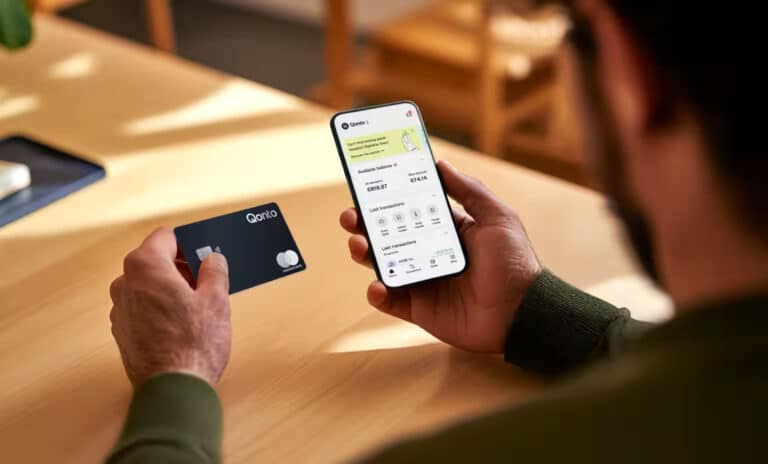
Your finances, in your pocket. Image: Magnific
For example, while the dashboard gives you real-time insights into your cash flow, your mobile notifications keep you updated on all incoming and outgoing transactions.
Need to upload receipts on the go? Just snap a quick picture with your phone or tablet, and Qonto will automatically attach it to the relevant transaction, making expense tracking as easy as appeltaart. ⚡️
A business account that suits your budget
Each freelancer has different needs and a different budget, and Qonto knows that.
That’s why they offer three business account options starting at just €7 per month, with no hidden fees:
Basic: for essential invoicing tools and easy everyday financial management (€7/month for a yearly subscription)
Smart: for advanced tools, performance dashboards and integrated invoicing and bookkeeping (€15/month for a yearly subscription)
Premium: for priority support, extra sub-accounts and dedicated IBANs (€25/month for a yearly subscription)
While you have the choice to upgrade your subscription as you like, it’s good to know that even the lowest account comes with great core banking and invoice management features:
Core account features
Core invoice management features
One account
Client invoice creation
A Mastercard card
Supplier invoice centralisation and payment
30 transfers or direct debits per month
External account syncing
Access to financing offers
50+ integrations with accounting and financial tools
Not sure what subscription is best for you? To find the plan that suits you best, check out their ‘Find your subscription’ page.
Best of all, you can open your account 100% online in just a few minutes. As long as you’ve got a valid ID, your KvK (Chamber of Commerce) registration, and in some cases your VAT number, you’ll have access within 24 hours — no awkward in-person appointments required.
Smart, secure, sustainable
When you deposit your hard-earned money into a business account, you want to be sure of one main thing: that it’s safe.
Even better, freelancers can also get help with whatever they need, whenever they need it. Qonto offers 24/7 customer support — always with a real person — available in Dutch, English, French, German, Italian, Portuguese and Spanish.
Thinking bigger than freelancing? Qonto can also help you set up a BV (private limited company) entirely online, with your company incorporated and account ready to go in as little as five business days, and all the paperwork available in English.
Your money is safe with Qonto. Image: Freepik
Plus, you’ll be happy to hear that Qonto is dedicated to making a positive impact on both the environment and society. This means Qonto is not just smart and safe, but also holds itself accountable by promoting climate education and fostering an inclusive workplace. 🌱
Last but certainly not least, with thousands of positive reviews from satisfied customers, Qonto has built a reputation as a trusted financial partner for self-employed professionals across eight European countries.
So, whether you’re a one-person eenmanszaak (sole proprietorship) or running a VOF (general partnership) with a colleague, Qonto’s built to handle your setup, no matter how your business is structured.
Curious to learn more about Qonto and what it has to offer? Take a product tour to learn all about how the platform works. Once you’re convinced, you can open your account here. 😉
Would you try Qonto as a freelancer in the Netherlands? Share your thoughts in the comments below.
Dutch culture tends to be pretty opposed to credit cards and debt, but why is that exactly? Since there’s never just one easy answer to this type of question, here are seven of the top possibilities for why Dutchies don’t do debt.
If you’ve visited the Netherlands, you’ve likely run into problems trying to pay for something. You probably came to the country expecting to pay a few foreign transaction fees, and maybe to withdraw some cash for smaller purchases.
What you certainly didn’t expect was to end up red-faced with a whole basket of cheese and stroopwafels you couldn’t pay for because your card was declined at a large chain grocery store.
(Rest assured, we’ve all been there. 😉)
Paying in the Netherlands
The Netherlands is a special place. It has special architecture, a special landscape, special shoes, and… yes, special payment systems.
For expats, the country’s unique banking system is a special headache to navigate (especially when it comes to payment systems like Maestro and iDEAL).
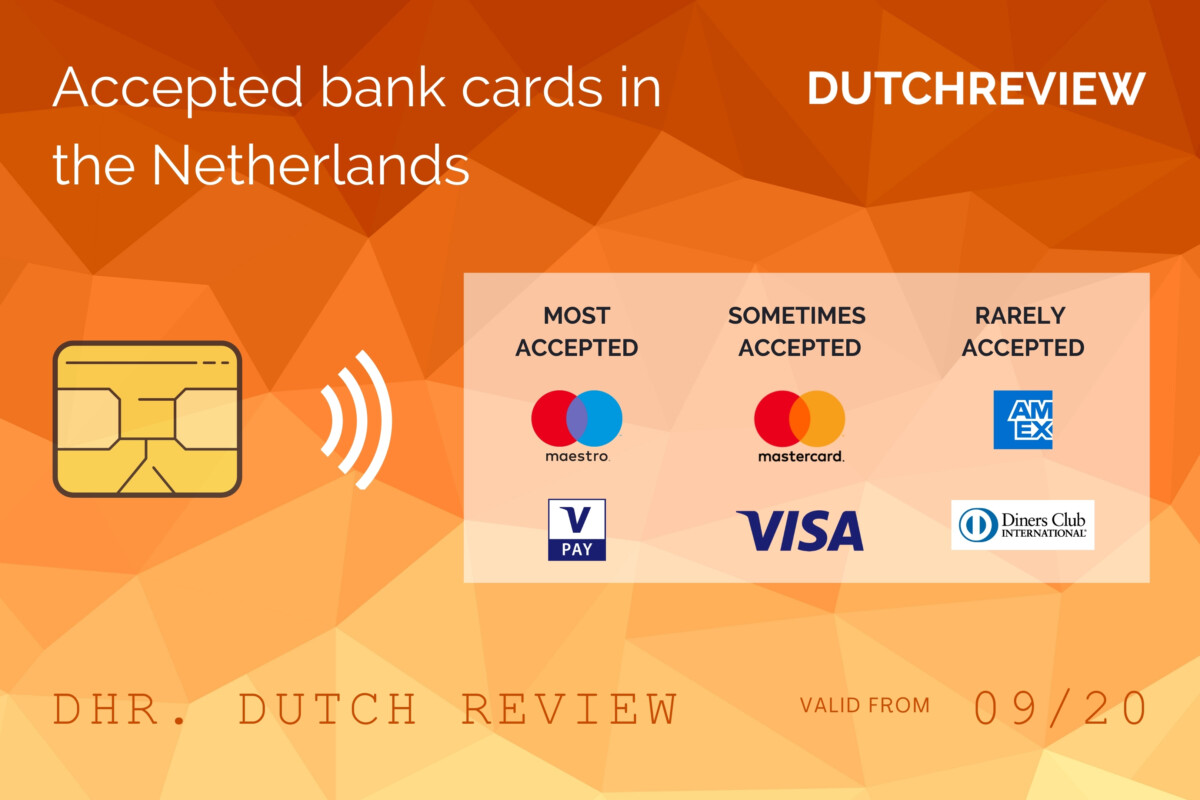
Basically, the Maestro bank card is a must-have in stores, and iDEAL is the only method for many online payments, which requires a Dutch bank account.
Since they don’t just hand these out upon arrival at the airport, travellers often find themselves in a payment pickle. Your Visa, whether it’s debit or credit, will be treated as a credit card.
Don’t count on those credit cards — Maestro or Vpay is the way to go. Image: DutchReview
This gets confusing when the grocery store employee tells you they only accept debit, while refusing to accept your (foreign) debit card. 🙃
What they’re saying is that they only take the Dutch version of a debit card — generally the Debit Mastercard or Maestro.
Good to know: With Maestro and iDeal on the way out, you soon won’t have to deal with them any more!
What’s so bad about credit cards?
So what are travellers supposed to do? Why the resistance to credit cards? Why don’t the Dutch just doe normaal like the rest of the world?
Quite simply, the Dutch tend to be very debt-averse.They don’t place much trust or value in the credit system in general, and many hold strong beliefs in opposition to it.
And just how strong is “strong”? Well, in 2024 alone, only a measly 0.5% of transactions in the Netherlands were made with a credit card.
Why the Dutch don’t like debt: 7 theories
So where did this debt-aversion come from, anyway? Well, truthfully, we can’t say for sure.
But we can dive into some leading theories, with the following being some of the popular beliefs about debt culture and credit cards in the Netherlands. 👇
1. Debt means guilt
Bring up a conversation about debt in the Netherlands, and the first response you’ll hear is that the word “debt” in Dutch is schuld, which also translates to “guilt”.
Unlike countries where debt is a part and parcel of life, the Dutch view it as especially shameful. Image: Freepik
Great significance is placed on this small, guttural word in Dutch culture.However, schuld isn’t your run-of-the-mill homonym.
Unlike how kussen means both “to kiss” and “pillow,” schuld’s dual meaning holds deep cultural weight — for the Dutch, you can’t have debt without guilt.
2. Dutch culture is frugal
There’s no sense in beating around the bush; the Dutch have a reputation for being… well, thrifty. They’re known for keeping their hard-earned euros close to their chest.
It only makes sense that this particularly pennywise culture would also be cautious around debt.
The Dutch won’t spend money they don’t have
But even though a credit card purchase doesn’t necessarily have to transfer to debt (it’s as simple as a few clicks between accounts, of course), there’s a cultural stigma against it in the Netherlands.
Due to the nature of credit cards being used to buy goods or services on “credit“ (and not actual cash in your account), their use is often viewed as irresponsible or foolish.
If the Dutch want something, they buy it with money directly from their bank account, even if it means waiting until they’ve saved enough.
Dutch businesses don’t like footing extra costs
Helaas, merchants pay more for credit card transactions, and this is generally around 1.8% of the purchase amount.
While this isn’t exclusive to the Netherlands, the merchants’ aversion toward paying those processing fees is a bit more uniquely Dutch.
Someone’s got to foot the bill for credit card payments, and most Dutch merchants choose to say “nee, hoor”. Image: Freepik
Given that schuld has Germanic etymological roots, you would expect the same reluctance toward debt to be shared by Germany.However, unlike the Netherlands, credit cards are widely accepted there.
The upshot of this is that many businesses in the Netherlands opt to save on transaction fees by limiting the types of payment they accept.
3. Credit card companies operate differently in the Netherlands
If you’re coming to the Netherlands from a more debt-accepting culture and looking to get a Dutch credit card, you’ll probably be a bit disappointed.
By design, they’re less appealing to the consumer. 👇
Limited options
In the Netherlands, options are far fewer and much less enticing. You won’t find the same variety of rewards programs, travel perks, or discounts at your favourite stores.
Perhaps if there were more kortingen (discounts) associated with Dutch credit cards, we wouldn’t be having this discussion at all.
Interest? Not interested
Few credit card options in the Netherlands are cost-free. Interest rates and annual fees are not appealing to anyone, particularly the most spendthrift.
Dutch credit cards typically offer an APR (annual percentage rate) of around 14%, which is the maximum rate set by the government.
Another rarity in the Netherlands: cash! Image: Freepik
Comparatively, that’s not bad! But if there’s even a whiff of unnecessary money to be paid, you’ve already lost a Dutchie’s attention.
Never mind that credit cards offer consumer protection for online purchases or the peace of mind that if an emergency comes up, money won’t be an issue.
Mention a €30 annual fee, and your Dutchie will be cycling away faster than you can say, “helaas pindakaas“.
Advertising laws
The Dutch government wants to protect its citizens from dangerous consumer debt.
So by law, lenders are required to include a credit warning when advertising for credit services.
They have to be clear about all the details, costs, and interest rates.
Also, in the true nature of Dutch straightforwardness, ads need to include a specific warning statement and symbol like this one:
Credit scores in the Netherlands are different, too.Unlike in other countries, you don’t need to “build” your credit by borrowing money to prove you can pay it back.
Credit card approval does, however, require you to prove that you have a steady income and earn enough money.
Generally, you’ll need to be able to show that your employment is secure, which, naturally, can be a barrier for new expats.
Your credit can also be negatively impacted if you’ve held temporary or short-term jobs.
A little advice: if you’re moving to the Netherlands and want a credit card for international purchases or emergencies, make your life easier and hold onto your credit cards from back home.
4. Religion
The Dutch aversion to debt can also be traced back centuries to its roots in Calvinism in the 16th century. This belief emphasised a strong work ethic, tolerance, egalitarianism, straightforwardness, and, of course, frugality.
While Calvinism didn’t stick around, the belief has shaped the Netherlands’ attitude towards money. Image: Depositphotos
Not coincidentally, these are some of the prominent ideals that shape Dutch society today.
Their very practical, sober relationship with money is less about being stingy and more about being principled, given that Calvinism is geared toward living a simple life.
Following this belief, it would be entirely indecent to make extravagant purchases, especially without the means to pay in full. While the religion didn’t stick, its way of life certainly did.
5. Dutch cultural identity and social norms
If it hasn’t been spelt out already, credit card use and living in debt go against social norms in the Netherlands, where one’s overall quality of life is emphasised over material items.
Where the financial systems in other countries will allow you to purchase what you want (whether or not you can actually afford it), the financial system in the Netherlands aims to keep people from spending what they don’t have.
If you don’t have money in your bank account or wallet, you don’t get to buy your biertje (beer).
It’s something they start learning about as kids — many Dutch schools even implement financial literacy programs to teach kids about responsible spending from a young age.
6. Historical economic differences
While credit cards spread like wildfire in the US from the 50s onward, things happened much more slowly in the Netherlands.
Credit cards didn’t enter the picture in the Netherlands until 1967, two decades after the US — and even then, they never gained much traction.
So while the US was busy establishing its “buy now, pay later” culture, the Netherlands was still steadfast in its “save now, buy later” mindset, which they’ve managed to hold onto to this day.
Australia adopted the credit card even later (1974), and they currently have the highest household debt to GDP (Gross Domestic Product) ratio, so this idea is up for question.
7. The Dutch compare themselves to other countries
Why do the Dutch disapprove of credit cards and debt? Well, you can thank Uncle Sam, because it’s largely because of the US.
Dutch attitudes towards credit cards are largely shaped by the personal debt situation in the US. Image: Depositphotos
The US is often used as an example for arguments against credit card use because the relationship with personal debt is the extreme opposite there. And indeed, it’s quite tragic.
At any rate, the Dutch didn’t feel the need to learn from their own mistakes on this one.They’ve seen what the ugly side of debt can look like, and they’re steering their trade ships clear.
Hold up — but the Netherlands is riddled with schuld
Now, here’s a curveball for you: according to the OECD, the Netherlands ranks second-highest in the world for private debt.
For a country so averse to debt, it’s shocking to learn that they’ve got themselves deep into it.But, to be fair to the Dutch, their personal debt is largely linked to home mortgages.
In the Dutch fiscal system, interest paid on a mortgage can be subtracted from taxable income. Higher mortgage loans mean lower taxes (is that a korting I smell?).
Recent data also indicates that, despite their initial reluctance, more Dutchies are opting for credit cards. (Credit card debt, be damned!)
The main culprits behind the shift are travel and online subscription services, because if there’s anything the Dutch love, it’s travel and their beloved streaming services.
When it comes to the Dutch and debt, the more we learn, the more we wonder. But if there’s one thing that holds, it’s that they sure don’t like it.
What do you think about the debt culture in the Netherlands? Tell us in the comments below!