Jumbo employees at a distribution centre in Veghel came across an unexpected stowaway in one of their fruit shipments: a gecko.
After what must have been a long adventure, employees declared an end to his travels and placed the gecko in a container.
A new home in a cooler climate
According to Omroep Brabant, the animal ambulance was called and the new Dutch resident was taken to live at De Oliemeulen animal park, where it is enjoying some much-needed rest.
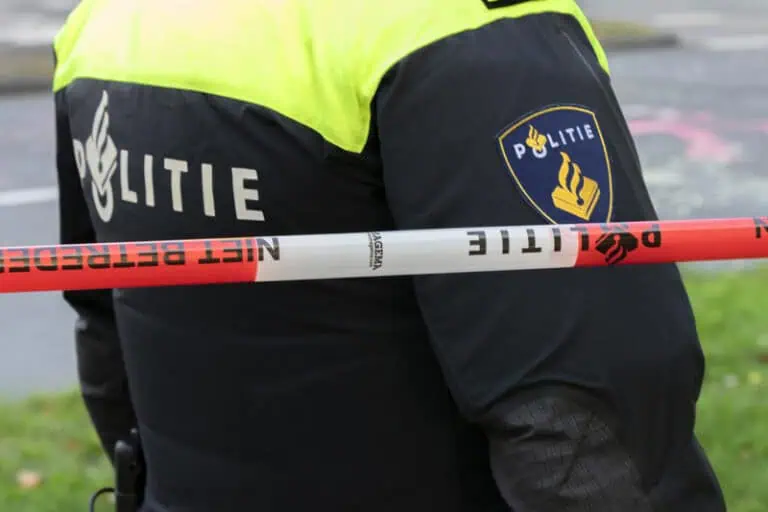
The first morning of the NATO Summit in the Netherlands has kicked off — which means morning commuters enjoyed some not-so-typical traffic disruptions.
By 7:50 AM, the ANWB (The Royal Dutch Touring Club) recorded over 50 separate traffic jams totalling more than 200 kilometres due to NATO-related road closures.
The A27, the highway around the provinces of North Brabant, Utrecht, South Holland and Flevoland had no less than 28 kilometres of queues.
Sounds like a lot, right? Well, surprisingly, according to the NOS, this actually wasn’t too bad. The Rijkswaterstaat predicted up to 500km of traffic during the rush hour.
What’s actually happening on the roads?
Several major arteries are completely closed for the summit. This is all part of what officials are calling the largest security operation in Dutch history, involving extensive coordination between police and defence forces.
As a result, the A44 and N44 towards The Hague have been shut since yesterday evening, while the A5 near Schiphol is closed in both directions.
On the A4 from Amsterdam to The Hague, multiple lanes have been closed to give world leaders and their delegations clear passage.
Still, you might want to work from home
If you’re someone who usually drives into the Randstad for work, this week might be the perfect time to test out that hybrid working arrangement you’ve been considering.
The Rijkswaterstaat has been warning about these disruptions for weeks, strongly advising people to work from home wherever possible.
For those who absolutely must travel, they’re recommending avoiding Randstad routes entirely and using public transport instead.
What to expect in the coming days
Wednesday brings even more closures. The A44 will be shut in both directions, and the N434 south of Leiden will also close.
The good news? All roads will reopen by 5 AM on Friday.
Setting up your utilities in a foreign country can be a tricky process. We’ve all been there — and we’ve picked up some handy tips for setting up your Dutch internet connection as seamlessly as possible!
When choosing your internet in the Netherlands, there are so many things to consider, such as:
What type of internet connection should you go for?
Which Dutch internet provider is the best value for your money?
How fast can you get your internet connection?
Never fear, loyal internet user, we’ve got the answers to all your questions about setting up your internet in the Netherlands.
Can’t wait to get connected? Jump to a section below! 👇
Combining a stable and speedy connection with availability all over the country, Ziggo is the Netherlands’ most popular internet provider for a reason.
Plus, thanks to their SmartWifi system, Ziggo ensures that no matter where you’re accessing the web in your house, you get the fastest connection possible.
Dubbed “the network of the Netherlands”, KPN offers a range of internet packages — all the way from a blazing 4Gbit/s to the more affordable 100 Mbit/s.
Looking for an internet and TV plan, instead? Or an internet deal with some streaming platforms? You’re spoilt for choice, as KPN has all of these and more.
Odido isn’t just home to super-speedy fibre optic connectivity, as its reliable DSL packages hit speeds of up to 100 Mbit/s — perfect for streaming your fave show or playing that game you love.
However, the real cherry on top is Odido’s range of customer benefits, from monthly discounts to additional data.
The cheapest of the big four, Budget Thuis offers excellent DSL and fibre optic connections at super-discounted rates.
And, unlike the other options on the list, Budget Thuis is a great one-stop shop — providing you energy and mobile data plans, in addition to internet and TV packages.
Found your perfect internet connection and provider? Now it’s time to get in touch.
However, despite the Dutch being the best non-native speakers of English, many company websites are still only available in the national language. This also goes for many Dutch internet providers.
Setting up your internet in the Netherlands can be an easy process! Image: Depositphotos
The good news is you can set up your internet in-store or over the phone.
There is a high chance you will speak to someone who can walk you through the process in English, but you still might want to look up the Dutch word for fibre optics (it’s glasvezel if you were wondering 🙆♂️).
3. Sign your Dutch internet contract
You’ve done it! Finally, you have an internet contract in your hands (or most likely on your computer screen).
Unless you’ve signed up through an English-friendly provider, it’s likely in Dutch — do your best to understand it, or perhaps ask a Dutch friend for some help.
Getting connected to the internet in the Netherlands can be done in just four steps. Image: Unsplash
Make sure you fully understand the contract, especially any short-term deals that might be applied.
4. Get your internet up and running
Now, this is the (relatively) easy part. Most providers will send out an installation service or send you the tools and instructions to set it up yourself.
You’ll have your internet connection set up in no time. Image: Depositphotos
Types of internet connections in the Netherlands
The Netherlands has three main types of internet connection: cable, ADSL, and fibre optics.
Cable internet in the Netherlands
The most popular way to set up your internet in the Netherlands is via cable. Nearly 98% of Dutchies choose to connect to the web this way.
If internet speed is important to you, cable internet is one of the best options in the Netherlands.
Cable is an excellent option for speedy internet access — surpassed only by the more expensive fibre optic connection. Image: Freepik
The downside is that most cable internet subscriptions are sold as part of a package with a television subscription. This can make it costlier, particularly if you’re not a big TV watcher.
ADSL in the Netherlands
The next most popular option in Dutch homes is ADSL, which is delivered through copper cables.
It can, however, be a more expensive option, as you have to pay for both a phone line connection and a separate contract with the internet service provider.
Fibre optics in the Netherlands
Ideal for a fast and reliable internet connection, fibre optic cables are thin glass fibres transmitting light signals that carry more data than traditional copper cables.
However, fibre optic internet is still being rolled out across the Netherlands and isn’t available everywhere yet. You can check online if fibre optic internet is available at your address.
TIP: Moving into a small apartment? Check with your neighbours if they might like to share the cost of an internet subscription! (Yes, that’s actually a thing.)
Average internet speeds in the Netherlands
If you haven’t heard, the Dutch internet is pretty speedy — in fact, the Netherlands has some of the fastest internet in Europe.
According to the reputable Ookla speed tests, the average download speed in the Netherlands is a blazing 200 Mbps (megabytes per second).
Many Dutch internet providers accept payments through iDeal (an online payment method), which only works with Dutch banks.
Most contracts are at least 12 months
This is why you need to check your contract with a fine-tooth comb!
If you’re staying in the Netherlands for a short amount of time, it’s more difficult to find a contract less than a year long.
Take extra care to review that contract — and ask for help if you’re not sure about something! Image: Depositphotos
Many contracts let you cancel before the end of the year, but it will probably incur a penalty fee.
This fee often means you end up paying the same amount as you would for the whole year.
If you’re a short-term resident, you may want to think about just getting mobile internet for the time you’re here.
You might not have a choice for what type of connection you can receive
When it comes to getting cable internet, you may find that your choice is restricted in terms of providers.
When it comes to figuring out the best provider for your budget and needs, research is a necessary evil. Image: Freepik
It may be that there is only one provider that can supply internet to your home. That’s why it’s best to do your research when it comes to what connections are available in your area.
In a hurry? Cable internet is the quickest to set up
Since cable internet is the most popular kind of connection in the Netherlands, providers are a dab hand at setting it up.
Not only that, but it also means you can get your internet, TV, and landline set up in one fell swoop.
Mobile internet in the Netherlands
This might be the option for you if you’re only in the country for a short time.
The most common way to get mobile internet (i.e. data) is when you get a Dutch pre-paid SIM card — or a SIM-only contract if you’ll be staying for longer than a year.
Relying solely on mobile data might seem handy, but could end up costing you far more in the long run! Image: Freepik
However, this typically isn’t the best way to sign up for your internet.
If you work from home or tend to stream a lot, the internet speeds can be rather slow. Meanwhile, data doesn’t come cheap in the Netherlands, so it can end up costing you a pretty penny.
Finally, data is normally capped every month (unless you can afford unlimited data, you baller 💰).
Dutch internet package deals
If you know you are going to be watching a lot of TV or making a lot of calls within the Netherlands, these are hugely popular in the Netherlands and could save you a lot of money.
TV and internet deals
Many Dutchies opt for getting their TV and internet together (that’s that 98% we talked about earlier).
A lot of basic cable packages include all the standard Dutch channels, as well as some expat favourite channels like the BBC, CNN, and MTV.
You can also choose to upgrade to a premium package with all the sports and movie channels your heart desires.
TIP: Some providers — like Budget Alles-in-1, KPN, and Youfone — even offer handy 3-in-1 packages for TV, internet, and calling. This is ideal if you don’t want to order a landline separately from your internet and TV package. 📞☎️
Do I need a VPN in the Netherlands?
While a VPN (or Virtual Private Network) isn’t a must-have, it is worth considering.
VPNs help protect your privacy while you browse the net and disguise your network to make it look like you’re surfing from another country.
VPNs will also make sure you’re safely browsing the internet from anywhere in the world. Image: Depositphotos
They’re a great choice if you want to access region-locked content, like foreign Netflix libraries, or just don’t want your internet service provider (and government) spying on your online activity.
That’s everything you need to know about setting up your internet in the Netherlands! Now go ahead and surf the web to your heart’s content while you live in this lovely flat country.
How were your experiences connecting internet in the Netherlands? Tell us in the comments below!
If you love an IKEA purchase but also kringloop hunting, you’re in luck in the Netherlands — you can probably do both in the same place.
Always looking for hip IKEA items to decorate your place, or been eyeing a certain treasure for a while? Look no further than your neighborhood thrift shop, the kringloop!
Though the two stores are not affiliated in any way, you’d be mistaken for believing it. The second-hand shop looks like a small-scale IKEA. 😵💫
What is it?
Who doesn’t like to shop at IKEA?! Come on, visiting the store is like a day trip.
The added convenience of IKEA delivery only adds to this obsession, but unfortunately in the Netherlands, it doesn’t add to the items’ shelf life.
Then you have kringloop. Not only do they compete with IKEA over prices (a €1.50 vase, now that’s a steal) but with stores that pretty much look like someone ripped a page out of an IKEA catalogue.
Turns out, this strange relation can be explained by the supply and demand provided by the Dutch themselves! ♻️
If you think about it, IKEA furniture was created for Dutch homes, with their characteristic limited space and narrow doors.
Oh, and steep stairs that usually don’t fit a couch other than a tightly-packed one through the window or off the hook.
There is a problem with IKEA furniture, though, and it’s not the price. It tends to go out of style very quickly, and the materials used are not long-lasting.
What do the Dutch do when their chair cushions are flat and worn? Drop them at the nearest kringloop, before returning to IKEA for a replacement.
Lucky kringloop hunters get to enjoy readily assembled IKEA furniture. 😉
Why is it quirky?
The balance between the sustainability of kringloop culture and the commercialism of IKEA in Dutch society is fascinating.
A classic bakfiets from IKEA, catering to the Dutch society. Image: Donald Trung Quoc Don/Wikimedia Commons
You’ve got to appreciate Dutch waste-hating. Kringlopen offer a sustainable second chance for a neglected table that needs a DIY spruce-up.
However, you can’t help but wonder why IKEA is the go-to store if the furniture repeatedly decays after a year. 🤷♀️
Should you join in?
This one is up to you! From personal experience, sometimes, the only store that would actually sell items small enough to fit in your tiny Dutch space is IKEA.
But we would recommend visiting a kringloop before going to IKEA, because the chances are that you’ll be able to lock your IKEA target there for a smaller, greener price tag. 🏷️
What do you think of this Dutch quirk? Have you experienced it? Tell us in the comments below!
Planning a summer getaway to Belgium? Great choice! You’ve got waffles, beer, and now… entry checks!
Starting this summer, the Belgian government will roll out stricter “entry controls” to curb illegal migration.
VRT reports that while these aren’t formal border checks, they will affect people moving across the country, including Dutch travellers.
More frequent ID checks
Flights from Schengen countries that are hotspots for illegal migrants (like Greece or Italy) will receive extra scrutiny, but airports aren’t the only places where Belgium is increasing controls.
Tourists from the Netherlands may be required to show their IDs:
At major motorway parking lots,
On international buses (especially routes like Dunkirk–De Panne), and
On certain trains, like those heading to or from Brussels-South.
These checks are aimed at undocumented migrants or those who have already claimed asylum elsewhere in the EU; not your average tourist in shorts and sandals.
But if you’re Dutch, you might still get asked for your ID, especially when travelling by train, bus, or car.
Why now?
Germany and the Netherlands have already tightened up their borders, and Belgium doesn’t want to become the “plan B” for migrants turned away elsewhere.
In the words of Belgian Minister of Asylum and Migration, Anneleen Van Bossuyt, “summer is a period in which a lot of migration takes place. So we want to counteract that massive influx.”
Belgium’s making sure it’s not caught sunbathing while everyone else is screening.
If you live in The Hague, you’ve probably seen some fenced-off zones and a heavy police presence. However, these aren’t the only changes on the horizon. 🚧
According to the municipality’s website, The Hague is implementing one of the largest security operations in Dutch history for the upcoming NATO summit.
From lockdown zones to diverted traffic, here’s how they’re going to affect you. 👇
Get ready for lockdown zones
Multiple areas in the city have now been fully fenced off and will likely stay that way until June 26.
The list of areas you might want to avoid includes:
Streets around the World Forum: Until June 25, streets such as Catsheuvel, Eisenhowerlaan, Zorgvliet, Johan de Wittlaan, Adriaan Goekooplaan, and Scheveningseweg are only accessible to residents.
Zeestraat: Various safety measures will apply to the area around the Carlton Ambassador, Hilton, and Panorama Mesdag hotels from June 22 to 26.
The Hague Forest North (Haagse Bos Noord): Other safety measures will be in effect from 5 PM, June 24, to 11 AM, June 25.
Thinking about a quiet boat ride down one of the Hague’s canals instead? Helaas, you won’t be able to do that, either. All of the city’s canals (and a few bridges) are out of commission from June 20 to 26.
Your route might be diverted
With the Johan de Wittlaan facing a key area during the NATO summit, it has now been closed to external traffic between Eisenhowerlaan and the beginning of President Kennedylaan.
Unfortunately, parking too near the Johan de Wittlaan may get you towed. Image: Dreamstime
Unlike with the lockdown areas, this closure will remain in place until August 2025, so do plan your route accordingly.
Good to know: The Hague has a full list of travel advice and diversions here, which is super handy for planning your route in the midst of NATO chaos.
If you’ll be driving around any of the lockdown areas, you should be aware that the Hague currently has a parking ban in place.
Not removing your vehicle in time might get it towed, unless you live in a neighbouring area and have applied for a temporary parking permit. You can apply for one of these permits by emailing navotop2025@denhaag.nl with your licence plate and address.
Beloved Dutch home goods chain Blokker has just made a comeback, and we’re already dusting off our shelves in celebration.
The chain had been struggling under a pile of debt (thanks, COVID 🙄), and with competition heating up, things got a bit sticky.
But the new Blokker is wiping the slate clean, quite literally, with microfibre cloths and all.
New owner, new beginnings
With a new owner at the helm, several shiny new stores have just opened in 12 locations across the country.
As Blokker’s boss, Roland Palmer, tells the NOS, “We can’t turn back the clock, but we now have a chance to put the stores back on the map with a clean slate.”
Right now, the comeback tour is limited to areas where Blokker previously did well. That’s why we’ve got just 12 shiny new stores for now.
De Aarhof 42, 2406 BT Alphen aan den Rijn
Haarlemmerdijk 72, 1013 JE Amsterdam
Rozengracht 12, 1016 NB Amsterdam
De Middend 20, 1611 KW Bovenkarspel
Spuiplein 57, 4511 AP Breskens
Burgemeester Loeffplein 57, 5211 RX Den Bosch
Kleine Molenstraat 1, 6661 EC Elst
Noorderstraat 29, 7811 AK Emmen
Gorecht-Oost 153 H, 9603 AE Hoogezand
Koningin Julianaplein 27, 2274 JE Voorburg
Langstraat 20 C, 6001 CV Weert
Slotlaan 219, 3701 GE Zeist
Now, if only they could get Sarah Jessica Parker to return for another A-list Blokker ad. 👀
A fresh, modern Blokker experience
And it’s not just your grandma’s Blokker anymore. Alongside the classics — cloths, pans, and kettles — you’ll now find hip home essentials like scent sticks and steam gadgets for the no-iron generation. (Let’s be honest, we were never going to iron anyway.)
In addition to these 12 new stores, there are still over 40 franchise stores operating under the Blokker name.
Sure, it’s a far cry from the 400 stores Blokker had in its heyday, but quality over quantity, right? Plus, fewer stores mean more time to perfect the pan display pyramid.
Already sprinting to Blokker for a steam mop? Let us know in the comments!
Yesterday (June 18), the NS made a final offer to various trade unions, prompting them to suspend all strike activities planned for the coming weeks.
What does this mean for my commute?
The past two weeks may have had multiple nationwide strikes bring the Dutch rail service to its knees, but a much-needed respite is chugging down the tracks.
While the various trade unions involved discuss the NS’ latest offer, all train services are expected to continue as normal. In simple terms, that means no disruptions to your regular route. Hoera!
So now’s the perfect time to take that day trip to Groningen or Maastricht without worrying about your train leaving you stranded. 😉
Good to know: If your daily commute was affected by the strikes, there’s still time to file a delay refund request.
Or, should we say, we’re back to regular commuter chaos. Image: Depositphotos
Does this mean there’ll be no more strikes?
Unfortunately, that’s hard to determine at this point.
In the words of NS CEO, Wouter Koolmees, the current offer has “sought a balance between what is necessary for [the NS’] colleagues, what is possible for the company, and what I can justify to our travellers.”
The trade unions involved will evaluate this offer with their members, and their voting process will determine whether this marks the end of the strikes (or not).
However, trade union CNV sounds hopeful, noting that the current offer contains “a number of improvements compared to previously made proposals.”
This Saturday (June 21), Amsterdam’s celebrating its 750th birthday in style, with a massive city-wide party that transforms the A10 highway into a 15-kilometre-long festival. 🎉
Dubbed “Op de Ring” (“On the Ring”), the festival will be divided into three zones, each offering a unique slice of the action.
Want to know what’s on the agenda? Read on! 👇
Music, food, drinks, and more!
From beer-tasting (hoi, Heineken!), a packed playlist full of house music, and a highway rave, there are loads of events to get you moving and grooving.
For those who prefer something a bit more laid-back, Op de Ring’s even got a snazzy fashion show and a green oasis for you to take a relaxing forest stroll.
Feeling extra sentimental? Great news: you can even get married on the A10 ring! 👰🏻
From beats to bites, it’s got all the ingredients for what might just be the best party Amsterdam has seen all year.
Will I need a ticket?
With the A10 divided into three separate zones, whether you need a ticket will depend on which zone you wish to visit.
Zone West is ticketed,
Zone South is also ticketed,
but entrance to Zone East is the best price there is: gratis (free)!
Good to know: While tickets are currently sold out for zones west and south, keep checking the official website, as more tickets may become available closer to the event.
And if you think you’re feeling left out, don’t worry. Op de Ring has it covered, in true Dutch style!
There’ll be an official afterparty, with music, drinks, and dancing at 24 bars and clubs across the city. 🪩
Heads up, party people, the best way to get to the ring is on two wheels or your own two feet!
Public transport is going to be packed, so skip the stress and pedal your way in. There’ll be plenty of extra bike parking at the entrances, but don’t be surprised if there’s a bit of a wait; queues could last up to an hour, so bring your patience (and maybe a snack).
And don’t forget the summer survival kit: loads of water, a generous splash of sunscreen, and comfy clothes. That blacktop gets hot, and we want you dancing, not melting.
Will you be there to run, stroll, or just snack your way through? Let us know in the comments!
What if your medication was made just for you? No more one-size-fits-all pills, but a personalised dose printed on demand. That’s not some abstract idea from the future; it’s what Leiden-based start-up Doser makes possible with its 3D printing technology.
Sounds amazing? That’s what we thought as well — so we sat down with co-founder Arjan van Unen to learn more.
What does Doser do?
Dubbed the “Nespresso machine for pills” by Dutch media, Doser makes 3D printers that allow pharmacists to print tailor-made pills, ensuring patients get exactly what they need.
“The pharmacy tells the printer what they want to print, press start, and then it will print it. After that, they can package the medicine, label it, and issue it to the patient,” Arjan explains.
“We do this because many patients do not receive the right medicine,” he says — and this is true for many areas of medicine. Doser’s approach is particularly game-changing for fields like addiction treatment and paediatrics.
“A six-month-old needs a very different dose than a six-year-old,” and Doser’s technology can precisely adjust dosages to match age, weight, and condition, solving a major issue in medication safety.
Similarly, for those recovering from addiction, gradual dosage reduction is key. “Tapering off medication slowly can prevent severe withdrawal symptoms,” Arjan notes — and with Doser’s precision printing, patients can follow a smoother, safer transition to recovery.
Last but certainly not least, Doser’s technology also addresses the issue of orphan drugs — medications for rare diseases.
In these cases, patients often require small, precise batches of medicine. According to Arjan, Doser’s printer can meet these demands while adhering to strict quality standards, creating opportunities for people with rare conditions who previously lacked access to appropriate treatments.
Doser makes pharmacist’s lives much easier. Image: Freepik
How did Doser get started?
Doser was born from the expertise of Arjan and his co-founder Niels, a biochemistry specialist with a background in big pharma.
They realised that 3D printing could revolutionise drug development and patient care. “I thought: This is it, the best application of a 3D printer I’ve seen,” Arjan recalls.
Support from Leiden’s start-up hub, PLNT, and its start-up incubator, unlock_, helped Doser grow. “Being part of unlock_ meant immediate access to experienced biotech entrepreneurs,” Arjan shares.
The Leiden ecosystem, known for its biotech and medtech innovation, also proved to be the perfect environment for Doser.
What are some major milestones in Doser’s journey?
Since it was founded, Doser has achieved multiple impressive milestones that have shaped its growth.
One major highlight was the first clinical study by Kirsten Schimmel and Iris Lefeber at Leiden University, showcasing the potential of Doser’s 3D-printed medication. “That was really in the beginning — about a year after we started,” Arjan says.
Leiden University played a big role in Doser’s journey. Image: Depositphotos
As for any start-up, another key moment for Doser was when they secured their first investment, from none other than Rabobank. This financial backing allowed Doser to scale up its operations and continue developing its technology.
“Without that, we would never have been here,” Arjan smiles.
What impact does Doser want to make in the future?
Doser’s goal for the future is for personalised medicine to be the norm, rather than an exception.
Arjan explains that currently, fewer than 3% of patients receive customised treatments, but within the next ten years, they would like to see that number rise to at least 10%.
Arjan is particularly passionate about addiction treatment. “Hundreds of thousands of people die every year from addiction, and that’s an area we would like to make an impact in as well.”
By providing a gradual tapering solution through personalised medication, Doser can play a key role in addressing the opioid crisis and other addiction-related issues, saving lives in the process.
The printer in action! Image: DutchReview
At the same time, Arjan stresses that we don’t have to only look at the future, as the technology already exists: “Personalised medicine is not a dream anymore — it’s here,” Arjan emphasises. “You can buy these machines, including from us. Pharmacists can buy them. Hospitals can buy them. Researchers can buy them. And personalised medicine can simply be given to the patient.”
With this innovative approach, Doser is already making a tangible impact on healthcare, and the future looks promising — not just for the company but for the patients who will benefit from its technology.
What do you think of Doser’s story? Share your thoughts in the comments!