The Netherlands is approaching the Voorjaarsnota — the day the government checks in with the national budget and introduces upcoming plans. Once again, the 30% ruling for expats is on the chopping block.
As the NOS writes, Pieter Omtzigt of the NSCparty wants the Spring Memorandum to relax the scheme that offers tax benefits to highly-educated expat workers.
💡 In case you didn’t know: The 30% ruling in the Netherlands is a scheme granting certain highly-skilled migrants a tax cut on up to 30% (or 27%) of their earnings during their first five years of work in the Netherlands.
Making the economy fair again
“We are nearing 200,000 people from abroad who receive 27% of their income tax-free. If we want to make the economy more fair, we should not have groups of people who pay less tax”, Omtzigt said in an interview with De Telegraaf.
The 30% ruling is a major driving force in attracting international talent to the Netherlands, so many are surprised that the government would consider cutting it.
But according to Pieter Omtzigt, the millions of euros that are currently being poured into the tax relief could be used otherwise.
How exactly? Omtzigt’s examples include reducing the energy tax on gas by “a few cents per cubic cube” and improving the Dutch disability system.
Back then, it was decided that the tax credit should be slowly phased out, gradually reducing the amount of expats’ tax-free income over a period of 5 years.
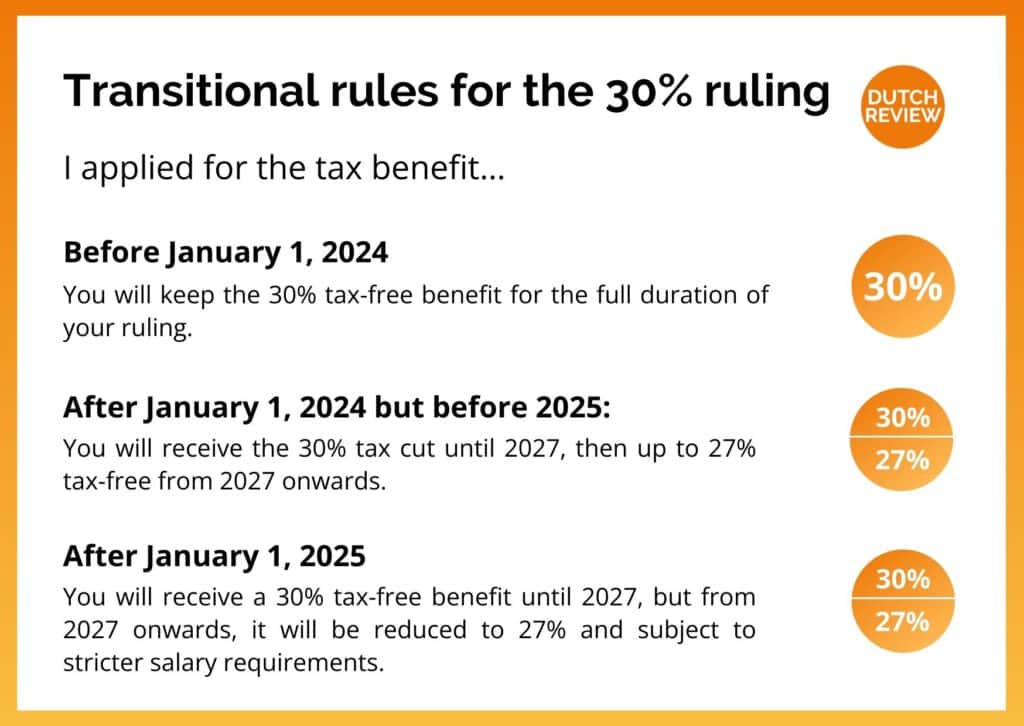
Since then (following a lot of criticism), the government changed its mind and decided that, instead, the 30% ruling would be reduced to 27% as of January 1, 2027.
Until then, the following rules apply. Image: DutchReview
Negotiations on the Voorjaarsnota will begin soon, and all the major financial issues that the four government parties disagree on will be discussed.
It’s unclear what will happen to the expat tax scheme, but Omtzigt stresses that he is open to negotiations: “In the end, I will make a compromise where I don’t get what I want one hundred percent.”
Do you think the 30% ruling should be cut? Leave your opinion on the comments.
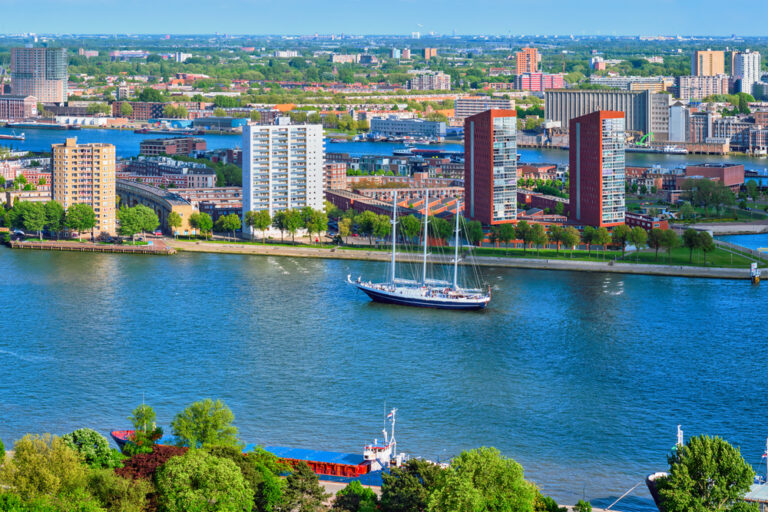
Residents in Rotterdam’s Provinierswijk were in for a big disappointment when the renovations of the iconic Ungerpleinflat were complete.
Instead of 49 new affordable apartments, the building is now offering 6-month contracts to expats — and for a hefty price.
Finding loopholes
The Ungerpleinflat was renovated by the developer Leyten, who has transformed the once tallest residential building in the Netherlands into a sort of hotel.
The building is now complete with 49 fully furnished apartments meant for expats, costing anywhere between €1400 and €2800 per month. Utilities cost another €350 on top of that.
As Alderman Chantal Zeegers explains to OPEN Rotterdam, temporary contracts can be offered to ’emergency seekers’, meaning people who desperately need to find some sort of housing. The same goes for students.
‘Making money, making money, making money’
Considering the prices of the apartments and the fact that the rental company, Verra Makelaars, specialises in expat housing, it doesn’t appear like the new tenants are people in desperate situations.
A Provinierswijk resident, Marjan, says she understands that everyone needs to stay somewhere but that expats aren’t involved in the community, negatively impacting the neighbourhood’s social cohesion.
Another resident sees the motives of the developer clearly: ”Making money, making money, making money.”
Leyten claims that making the Ungerpleinflat into expensive short-stay apartments is an attempt to make the expensive renovation of a building with monument status feasible.
Provinierswijk resident Arie understands that, but sees this as the perfect example of when the government should step in and regulate housing better.
“Not just anyone with a bit of money and some guts can go and start building,” thinks Arie — and his fellow residents agree.
What do you think about more buildings becoming luxury short-stays for expats? Share your thoughts in the comments.
It’s the question that keeps us all guessing: How much money do you need to make in order to buy yourself a home in the Netherlands?
The answer depends on several factors — let’s break it down.
What is the minimum amount you must earn to buy a house in the Netherlands?
The current estimate is that your Dutch mortgage can be 4.25 times your gross (bruto) annual salary. This is the amount that you earn before taxes.
That means that, theoretically, if you earn €5000 gross per month, your annual salary is €60,000. Multiply that by 4.25, and you’ll likely be able to spend around €255,000 on a house (not taking into account any savings and fees).
Several factors will help determine how much you have to earn to buy a Dutch house. Image: Freepik
However, the minimum amount you need to earn to afford to buy a house in the Netherlands depends on factors like:
👬 Whether or not you have a partner: If you are looking to buy a home with a partner, your combined income will increase your purchasing power.
🧑💼 Your work status: For example, someone with a permanent contract may be able to borrow more compared to a freelancer (ZZP’er) who has just completed their first year in business.
🛍️ Whether you have any debt: Got student debt? This will reduce how much you can borrow towards a mortgage.
💰 How expensive houses currently are: This is the most important aspect. Let’s discuss it further below.
What was the average house price in the Netherlands in 2024?
According to the Central Bureau for Statistics (CBS), as of December 2024, the average house price in the Netherlands was €455,512.
So, how much do I have to earn to buy the average house in the Netherlands?
If we take the average house price of €455,512 and consider the estimate that your Dutch mortgage can be approximately 4.25 times your annual salary before taxes, then we get the following figures:
If you’re buying alone, you must earn approximately €107,179 per year before taxes. However, the Dutch government currently allows single buyers to borrow an extra €17,000 towards their mortgage if they meet certain conditions, which brings this number down.
If you’re buying with a partner, this number would be reduced to an average annual salary of approximately €53,589 each.
However, the above is a very general calculation that doesn’t take your specific situation into account.
For example, if you have debt or your parents are willing to put some money towards your mortgage, this will affect the minimum amount you need to earn to buy a home.
How to calculate your maximum mortgage in the Netherlands
For the most accurate understanding of just how much you have to earn to become a homeowner in the Netherlands, you should make use of expert tools or, even better, speak with an expert.
Can you afford to buy a house in the Netherlands? Tell us your thoughts in the comments below!
Cats love to wander around and get themselves into extraordinary situations, but this Dutch cat took that hobby to the next level. He was accidentally sent on a four-week journey from the Netherlands to Curaçao.
While this sounds like a nice holiday to many, it has been a traumatic experience for the male cat, who had to survive without food in a dark shipping container.
Luckily, as Omroep Brabant writes, he lived to meow the tale.
‘Emaciated and very scared’
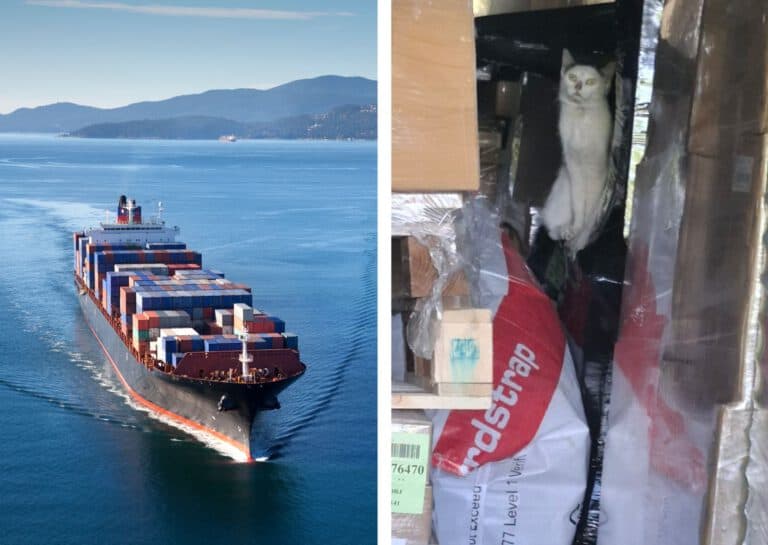
The kitty was accidentally locked up in a container headed to the Caribbean island of Curaçao from the Dutch town of Moerdijk. On January 11, the container was sealed and put on a ship.
It wasn’t opened until it arrived at its final destination four weeks later, on February 9. Much to the shock of the logistics workers who opened it, a furry surprise was waiting for them.
They immediately called the local cat rescue foundation, which described the cat as “emaciated and extremely afraid but otherwise doing well.”
It’s a miracle the cat survived, and so the foundation lovingly named him Wonder (Miracle). 🐈⬛
The search for the owner continues
After a week of staying at the shelter, Wonder has slowly begun to come out of his shell, as the foundation writes on Facebook.
He is an unneutered male cat with no (readable) chip, and he’s now getting the space he needs to process his big journey.
Meanwhile, the local rescue foundation continues to search for Wonder’s owner in the Netherlands.
Do you know anything about this adventurous guy? Anyone with information about him can email info@kittenrescuecuracao.com.
Who needs horoscopes when we have Dutch supermarket stereotypes to define our personalities?
This article is your guide for projecting the image you want into the world simply by carrying around a plastic bag with a supermarket logo on it.
Although, for 50 cents in this country, you may just want to bring a cloth bag from home instead.
Just remember, as you stand leaning against a wall nonchalantly, that grocery receipt poking out of your jacket pocket is saying so much about you right now. The question is, what?
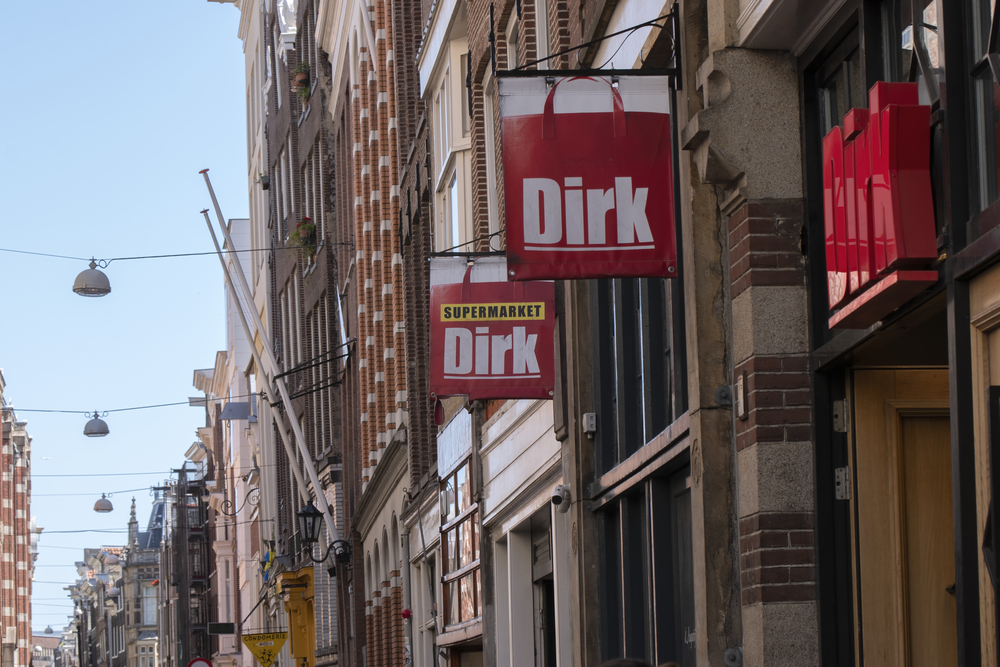
Shop at Dirk? You’re a creature of habit
Hmm. You don’t like making decisions, do you? In fact, you’re probably the type to own a dozen versions of the same pair of shirts and trousers to avoid making them.
A beloved safe haven: Dirk van den Broek. Image: Depositphotos
You’re also probably not particularly adventurous. You’re not interested in exploring an extensive foreign food aisle — we mean, who really needs a smoked camembert?
That limited selection at Dirk just makes life easier. Maybe that means you’re the CEO/Steve Jobs type who needs to “reserve” his brain space for making more important, executive decisions.
Maybe you’re a bit of a “tech bro” who likes being quick and efficient, or maybe you just have serious issues 🙂. Kidding, kidding. But you also seem like that one guy who eats a pindakaassandwich for lunch every day without fail.
Or maybe you’re struggling financially — and boy can we relate to that, we’ll see you in the off-brand cereal aisle with the tech bros.
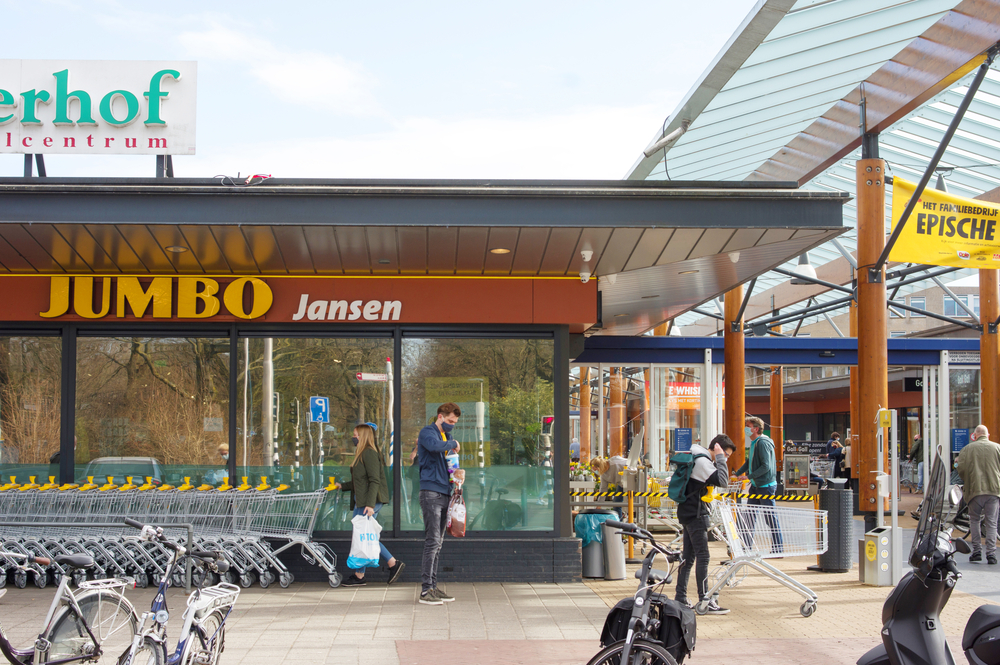
More of a Jumbo fan? You’re an Albert Heijn wannabe
Let’s face it, you’re a perfect human being. Flawless skin, bouncy hair, and an overall healthy glow. You probably eat a whole lot of ready-made sushi, vegan tikka masala, and avocado toast.
Your shopping basket contains food products inspired by buzzwords you read on “hip” insta pages. You’ll wake up to do yoga at 5 AM, and then make kale smoothies while listening to podcasts about the benefits of meditation.
You’re disciplined and somewhat frugal, but you know how to let your hair down and have a good time on occasion… by indulging in a €3.99 slice of vegan cheesecake now and again.
Do you hop between Aldi and Lidl? Then … who are you?
If you frequent either of these two supermarkets, then it’s safe to say you live in obscurity; you’re not an exhibitionist.
Who cares about brands anyway? It’s all going to be ground up and swallowed down the hatch regardless.
So the label is written in a language you don’t know. What of it? Bacon bits look like bacon bits everywhere. It’s cheap, and that’s what matters.
And no, calling Lidl or Aldi cheap isn’t bad; everyone calls it cheap — including the companies themselves. It’s how they’ve marketed themselves and distinguished their stores from the pretentious Albert Heijn-goers.
Deze week bij Lidl: ”De Smaak van Nederland” 🇳🇱 Wat een fijnproevers zijn we ook pic.twitter.com/Ah5dyuMS3H
— Voedingsweetjes | Leroy van de Ree (@voedingsweetje) May 30, 2023
Translation: This week at Lidl: ”The Taste of the Netherlands”. We are also gourmet food lovers.
Is Albert Heijn your fav? You’re a fancy foodie
Your shelves are stacked with culinary books, you watch Michelin-star-related documentaries on Friday nights, and your Tinder bio promises you’re willing to cook a meal on the first date.
Frankly, you’re a (self-proclaimed) foodie, mainly inspired by Molly Baz.
Oh, and you have extra money to spend. Possibly because of a divorce that worked out in your favour (yes, AH is a hotspot for middle-class divorcees, so if for whatever reason you wish to meet them, go there).
Snagged that AH bonus-card-toting 40-year-old? Great! Just know you’ll probably attend wine tastings on a bi-monthly basis.
Actually, let’s put it this way: if you do happen to attend wine tastings of any sort, it’s pretty obvious where you’re buying your washing-up liquid from.
Beste @albertheijn het was een serieuze vraag. Waarom reageren jullie niet? Nogmaals wat is er aangepast aan de AH muesli fruit en noten. Mijn vermoeden is namelijk minder fruit. pic.twitter.com/6yZgQ4CX5W
Translation: Dear @albertheijn it was a serious question. Why aren’t you responding? Again what has been adapted to the AH muesli fruit and nuts. My suspicion is less fruit.
Note: The above doesn’t apply if it’s just the supermarket closest to you. We’re all lazy; we get it.
Preference for Hoogvliet or Vomar? How… neutral
The likes of Albert Heijn and Jumbo are a tad too daunting for you, while Lidl might actually be too approachable.
You just like a nice, decent, middle-of-the-road, uncontroversial supermarket, okay? Is that so wrong? When it comes to politics, you’re probably a centrist too.
(You also frequent the shelves of IKEA and HEMA for kitchen utensils and room decorations you likely won’t use.)
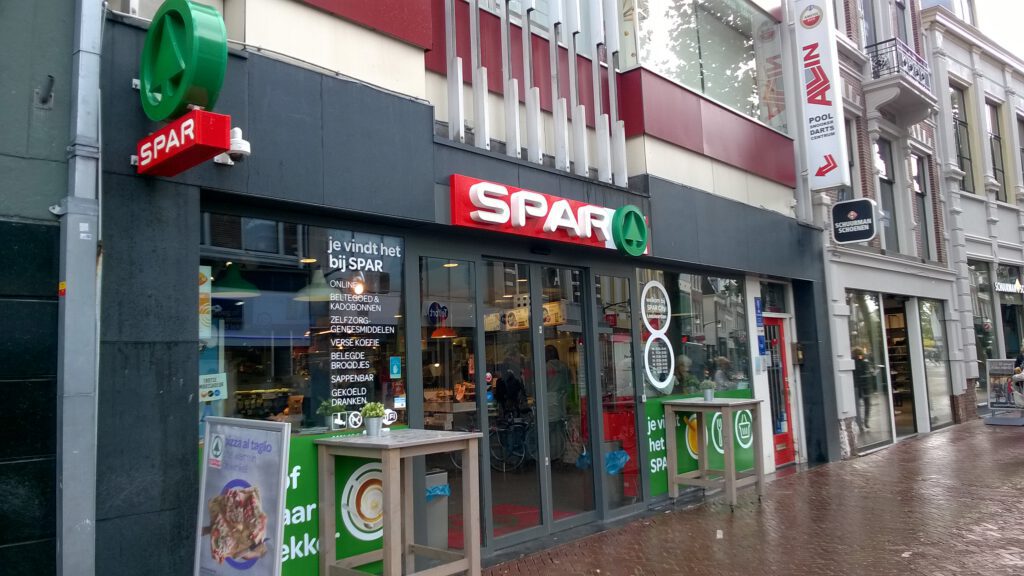
Raiding the shelves of Spar? What do you do for a living?
The Netherlands is famous for having the tallest people in the world. But even here, being exceedingly tall might seem like a disadvantage sometimes.
That is why 11-year-old Ninthe is considering growth-prohibiting surgery. At her young age, she’s already 170 centimetres (5′7″) tall — and she’s only expected to grow further.
An isolating feeling
It can feel isolating to be so tall at 11, when the average height for a child is around 150 cm (4′11″). Ninthe is expected to grow to 190 cm (6′ 3″), more than 20 cm over the average female height in the Netherlands.
Speaking with RTL Nieuws, her mother Marion explains how standing out can be difficult: “Although she knows how to defend herself, she still gets a nasty comment thrown at her every now and then, which can make her sad.”
Ninthe and Marion posted a video online to find other young girls who are remarkably tall, especially ones who have experience with growth-prohibiting surgery.
The post got a lot of positive reactions, but Marion noted that there seems to be a bit of a taboo when talking about the surgery. “Many girls wrote that when they told their environment, people reacted with: ‘ridiculous, who would let a healthy body be cut?’ I find that very sad to hear.”
Growth-prohibiting surgery? Yes, it’s a thing
Orthopaedic surgeon Lars van Rozen explains that growth-prohibiting surgery involves making a small incision around the growth plates at the bottom of the thigh and the top of the lower leg.
The procedure halts about 30-40% of expected growth, with an average remaining growth of 8 centimetres.
To be eligible for this type of surgery, boys must have a height prognosis of more than 205 centimetres, and girls must have a prognosis of more than 185 centimetres.
People opt for the procedure for personal as well as practical reasons, says Lars. Being exceptionally tall can make it challenging to find clothes, travel by public transport, or even enter certain professions.
Lisa Lambert (22) decided to undergo the surgery when she was 15. She grew to be 188 cm — eight centimetres less than her expected height of 196 cm.
She saw Ninthe’s video and sent her some words of encouragement: “If you’re considering the operation, it’s not something to be afraid of. The first few weeks are tough, but after that, you won’t have any problems. Tall girls rule the world!”
Buying a home in the Netherlands is expensive and… getting even pricier. Almost every Dutch municipality has seen property prices soar over the past year, but there are still a few places where you can score a relatively affordable home.
In 2023, the average price of an existing home was €451,000, and that number is expected to climb to €520,000 by 2025. So… is it still possible to buy an affordable home in the Netherlands?
The Dutch Central Bureau of Statistics (CBS) crunched the numbers to find the most (and least) affordable municipalities to buy a home. And the results are in!
The cheapest municipalities in the Netherlands
Let’s start with the good news. If you’re looking to buy a home without breaking the bank, there are 11 Dutch municipalities where the average home price is still under €300,000.
Here are the 10 most expensive municipalities in 2024:
Municipality
Province
Average transaction price (in 2024)
1. Laren
North Holland
€1.047.700
2. Bloemendaal
North Holland
€1.043.300
3. Blaricum
North Holland
€994.000
4. Wassenaar
South Holland
€849.800
5. Rozendaal
Gelderland
€802.900
6. Heemstede
North Holland
€750.300
7. De Bilt
Utrecht
€701.200
8. Bergen
North Holland
€694.900
9. Gooise Meren
North Holland
€677.400
10. Landsmeer
North Holland
€673.300
The conclusion? Whether you’re hunting for a steal or dreaming of luxury, the Netherlands has a little something for everyone — you just have to be willing to search (or splurge).
In your new Dutch job, you should think beyond the euro value of your salary. Instead, consider negotiating a salary package brimming with benefits.
Employers in the Netherlands are surprisingly open when it comes to secundaire arbeidsvoorwaarden (“secondary benefits” or “fringe benefits”). Secundaire arbeidsvoorwaarden are benefits that you agree with your employer on top of your Dutch salary.
Your fringe benefits could be anything from a company car or bicycle (how Dutch!) to discounts on your health insurance or the flexibility to work from home. Sound good? That’s what we think!
How would you feel about a snazzy e-bike with all the bells and whistles? Or getting paid to complete a Master’s degree? What about a discount on the pricey Dutch health insurance? All these are possible when you make the most of your secundaire arbeidsvoorwaarden.
Of course, not all employers are going to dish up these benefits on a silver platter for you to enjoy — first up, you need to know what you can claim, and how to negotiate it.
The Dutch are great at negotiations and compromise, so we’ve got some handy tips for you to get the most out of your employer.
Good to know: fringe benefits are company and industry-specific, or can be dependent on your collective labor agreement. But, it’s always worth checking with your employer to see if you’re eligible!
So what can you get? Below are our top seven fringe benefits you can negotiate in the Netherlands.
1. Transport
Got an office? Unless you’re lucky enough to live next door, you may be shelling out some travel expenses. The average Dutchie travels 22.6 kilometres to get to their workplace and someone has to pay for it — why not the employer?
While companies are generally not obliged to reimburse your travel expenses, you can negotiate this as a fringe benefit. Normally, this will be 19 cents per kilometre travelled if coming to work with your own transport — including by bike!. Or, you can negotiate to have your public transport subscription covered.
On the other hand, if you’re committed to being as Dutch as possible you could also make your fringe benefit a trusty fiets — not an old rusty bike, but a snazzy bicycle included in your salary!
The Nationale Fiets Projecten (National Bicycle Plan) lets employers purchase a bike of up to €749 every three years. Live too far from work to cycle in? Opt for an electric bike — then you can spend up to €1,000!
2. A “Thirteenth Month”
We’ve all wished for more hours in a day — but how about a thirteenth month in a year? In the Netherlands, that’s possible. Not as a bending of the time/space continuum, but a whole extra month of wages — um, yes, please.
A dertiende maand (thirteenth month) is also known as the year-end bonus because it’s typically paid at the end of the year — just in time for Christmas. It’s not a “bonus” because it’s not dependent on whether your company performed well or not.
Instead, it can be guaranteed as part of your contract. But, it’s important to note that it’s taxed differently to your normal salary, so your net amount may be different from a normal month.
3. Education
A very wise philosopher once said “the more that you read, the more things you will know. The more that you learn, the more places you’ll go.” Now, while Dr. Seuss may not have been talking about negotiating further education as a fringe benefit in your contract, he might as well have been.
Your learning doesn’t have to stop once you graduate. Instead, in the Netherlands, you can negotiate a budget or course to extend your skills with your employer.
The company gets an even more qualified worker, and you get new skills (that you can use to negotiate for a pay-rise later) — that’s a win-win!
4. Flexibility
There are some days that you really just need to sit at home and work in your pajamas. Or, perhaps you work better in the evening — but coming in at 8:00 in the morning is a real drag.
Try negotiating flexible working time into your contract. For example, the freedom to work from home two days a week, or to log on to work at 10:00 instead of 8:00 AM.
If you’re a parent, you’ll especially value a bit more freedom to pick up your child from school or shuffle them to an activity.
5. Services and facilities in the office
You don’t need to negotiate for all of your secondary benefits. Some may just be built-in, like a killer office space. It’s not uncommon to see a ping-pong or foosball table in the Dutch workplace, or even a dartboard to blow off some steam (remember not to pin your boss’s face to the target though!)
A relaxing massage from an in-house masseuse or massage chair may be just what you need after a long day.
A very common benefit that many Dutch employers may offer is a free lunch (who says there’s no such thing!) Delicious sandwiches or even a freebie cafeteria with a delectable Dutch spread? Mmmmm.
6. Health and fitness
A healthy employee is a happy employee — and a happy employee is a productive employee. Employers have a real incentive to make sure that you’re taking care of yourself.
You could benefit from a discount on your health insurance (which is mandatory in the Netherlands), or a free or discounted gym membership. You may even be able to convince your boss to pay for your membership to a sports team or club — score!
7. Relocation costs
You’ve found a Dutch job — but you’re in a completely different country. Moving to the Netherlands is expensive, whether you’re coming from Europe or overseas. So why should you have to foot that bill?
If you’ve got some bargaining power up your sleeve, ask for your new company to pay for your relocation costs. It’s common for companies to pay for you to ship all your new furniture over — or you may be able to make a case for receiving a furniture allowance after you make the move. Time to go shopping!
Other fringe benefits you can get in the Netherlands
These aren’t all the secondary benefits you can get in the Netherlands. You may also like to consider asking for:
How to negotiate “fringe-benefits” from your Dutch employer
Now that you know what you want, how do you ask for it?
First up, you need to consider your fringe benefits and your salary as a whole package — does it accurately represent your worth? Are you asking for too much, too little, or is it just right?
Secondary employment conditions aren’t always financially tangible, but they can have a huge impact on your job satisfaction and quality of life.
When you think you’ve struck the right balance, it’s time to negotiate.The Dutch are direct, and you need to be as well. Clearly outline your expectations, and they’ll clearly outline what they think is possible.
Why you should be negotiating fringe benefits when working in the Netherlands
It’s important to remember that secondary benefits are, as the name implies, secondary. If your potential or current employer isn’t offering an adequate financial reward, tell them that you expect good fringe benefits — benefits like flexible working hours are particularly good to negotiate with if the employer doesn’t have extra cash flow.
That means while an employer may not have much wiggle room when it comes to salary, they may be able to make up for it with additional benefits.
Even better, while you’ll need to pay tax on some secondary benefits (like a Thirteenth Month), other secondary benefits aren’t taxed at all.
For example, meals, health insurance discounts (up to a maximum amount), stock plans, some travel benefits, and employee discounts. If you can work some of these into your offer, you may end up saving a few euros when tax time comes around.
What secondary benefits appeal the most to you? Tell us in the comments below!
Dutch Prime Minister Schoof and NATO Secretary General Rutte will join several European leaders in Paris today (February 17), to discuss both the situation in Ukraine and European security.
The emergency meeting comes after Trump announced talks would commence with Putin regarding Ukraine, leaving EU leaders feeling “overwhelmed and sidelined”, RTL Nieuws reports.
What happened to Europe’s seat at the table?
The US wants clarity about the form of support Europe will contribute. As long as it does not have that, Trump will not involve Europe in his ongoing negotiations with Russia.
The Netherlands faces questions about what they will supply to maintain security, as the US calls for the support of all European military forces.
“We are not sufficiently able to say what we want and can put on the mat,” Defense Minister Ruben Brekelmans stated during yesterday’s Buitenhof discussions.
He also acknowledges the Americans’ “businesslike” response to this: “If they do not know what they have in Europe, we do not have a place at the table.”
However, the EU still intends to “prevent Americans and Russians from deciding the future of Ukraine over our heads”, RTL Nieuws reporter, Roel Schreinemachers, states.
Emergency talks in Paris
In response to the ongoing pressure from Trump, Europe draws a seat at its own table — in the form of emergency talks at the invitation of French President Emmanuel Macron.
Dutch Prime Minister Dick Schoof and NATO boss Mark Rutte will attend, along with the German, Italian, Polish, Spanish, Danish, and British heads of government.
The meeting, dubbed a “once in a generation” event by UK leader Keir Starmer, follows hot on the heels of Munich’s Security Conference — where most of today’s guest list was in attendance.
In a turbulent world, in which many things can no longer be taken for granted, it is vital that we continue to work together and strengthen our ties. In that spirit, I attended the Munich Security Conference #MSC2025 today and yesterday, accompanied by @ministerBZ Veldkamp,… pic.twitter.com/Nry7AIU060
“The [Paris] conference is all about Ukraine,” Schoof tells Trouw. “We have to realise what this Russian war of aggression means for the rest of Europe. That is an important message I want to pass on: that we as Europe need to do more.”
In particular, Schoof stresses that Europe will need to discuss how much financial support it will supply Ukraine, as well as what additional support is to be provided: “With how many people, and whether that is land forces or navies, or with F-35s after all?”
Another hot topic of discussion is likely to be the effectiveness of a ceasefire with Russia.
“If you don’t get that right,” Schoof explains, referring to a proposed ceasefire, “you run the risk that within one to two years Russia can develop enough strength to start another war of aggression somewhere else.”
How do you feel about Europe’s exclusion from the Trump-Putin Ukraine discussions? Let us know in the comments below.
Tuesday will be similar — the bright sunshine will remain, but we’ll likely see more clouds spreading across the country.
Morning temperatures will rise to just above freezing. By afternoon, however, temperatures will rise to 2 degrees Celcius in the north, while the south warms up to around 6 degrees.