Dutch police are investigating a 17-year-old’s report of a serious crime that occurred on the evening of Sunday, December 1.
The boy alleges that he was kidnapped, abused, and threatened.
The kidnapping
The crime took place on the Rijnstraat in the Rivierenbuurt neighbourhood in the south of Amsterdam.
At around 8:30 PM, a 17-year-old boy called for help in vain before being pulled into a black car and driven to the Amsterdamse Bos.
There, the abductors allegedly forced him to strip down and filmed him undress.
They then abused him and poured liquid on him, threatening to set him on fire if he didn’t give them money.
The Amsterdamse Bos was the place of a serious crime. Image: Dreamstime
The victim has now filed a report, and the police have already arrested three suspects — two 19-year-olds and an 18-year-old from Amsterdam.
As the NOS writes, it seems like the four young men knew each other, and the victim owed the suspects a couple hundred euros.
Can you help the police?
To aid in their investigation, the police would now like to get in touch with witnesses.
Did you see or hear anything suspicious near Rijnstraat or the Amsterdamse Bos between 8 PM and 10 PM on Sunday? Or do you perhaps have footage from doorbell cameras or dashcams?
In either of these cases, the police ask you to contact them. This can also be done anonymously.
Got a tip for the police? Here’s how you can help:
If you have any knowledge or footage that could help the police out, you can call them at 0900-8844. Alternatively, you can file an anonymous report online or submit a photo or video tip.
The Netherlands is ending this week with the first two winter storms of the year. Today, strong winds have prompted a code yellow and affected traffic across most of the country — and there is more coming tomorrow.
Today’s storm has already caused Schiphol to cancel over 100 flights, and caused several disruptions to rail and road traffic across the country, reports the NOS.
Code yellow and disruptions… almost everywhere
Last night, expecting wind forces of 8 or 9 across the country, the Royal Dutch Weather Institute (KNMI) issued a code yellow for all Dutch provinces except Brabant and Limburg.
The alert will be active until noon, when winds are projected to lose some strength. Until then, we’ll experience gusts of up to 90 km/h in the northwest of the country and up to 120 km/h on the Wadden Islands.
Chaos on land and in the air
On top of the many flight cancellations at Schiphol, road and rail traffic across the Netherlands are also experiencing disruptions.
On the railways, the most affected area is Almere, where fewer trains are running. This is impacting railway traffic in Duivendrecht, Hilversum, Weesp and Lelystad, reports the AD.
On the roads, the province of Flevoland is experiencing the biggest nuisance, with some areas closed off or limited for traffic.
While today’s storm is expected to lose strength in the afternoon, the country should brace for its twin brother tomorrow. 👀
That’s storm Darragh, which has already been raging over Ireland and the UK.
Luckily, by the time Darragh reaches the Netherlands tomorrow, it will likely no longer qualify as a storm — though it will still bring stormy weather.
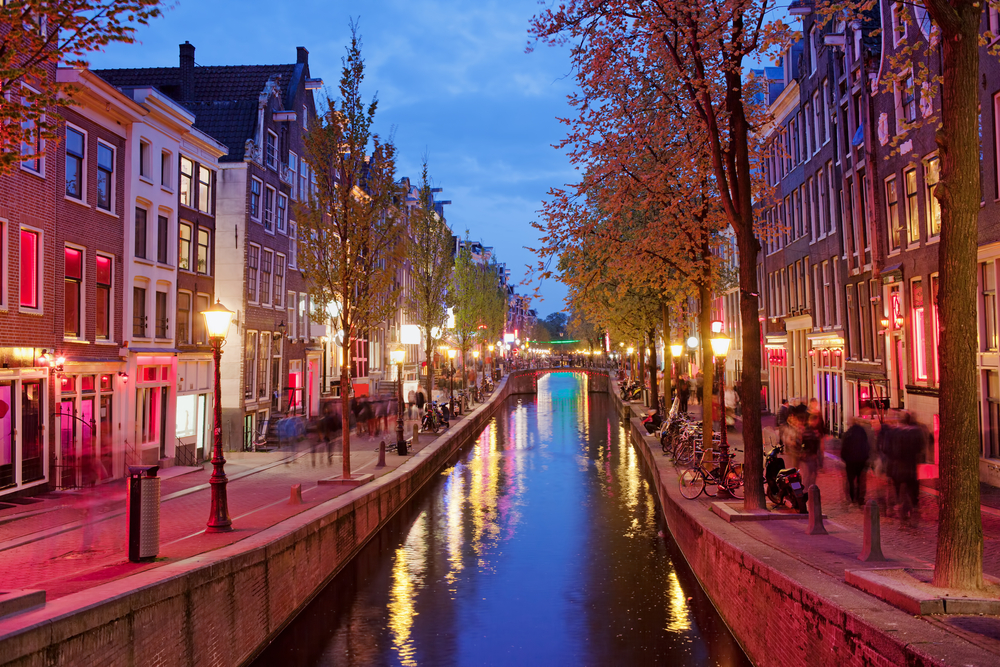
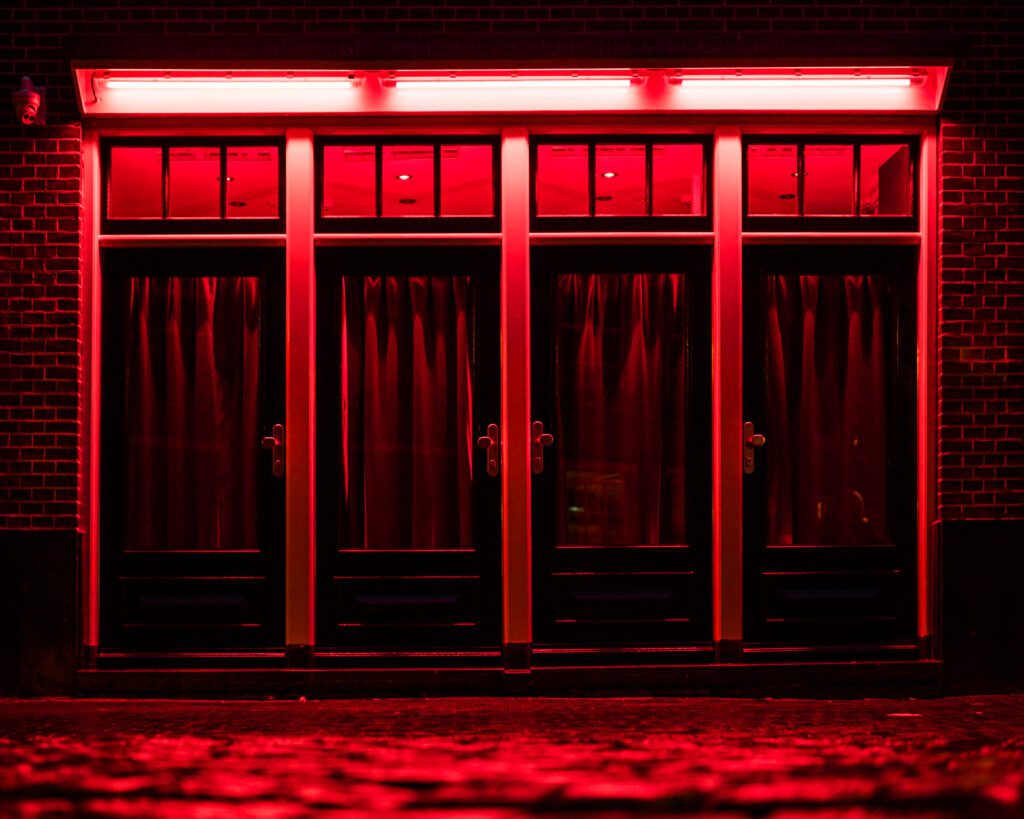
Sex in the Netherlands is no taboo subject, as anyone who has taken a stroll through the De Wallen district of Amsterdam finds out.
But what are Dutch attitudes towards sex? How are they educated in schools? And what’s up with the red-light districts? How low do the lowlanders drop it (and is it hot)?
Time to find out in our (un)official, but still kind of scientific, guide to sex in the Netherlands.
Sex education in Dutch schools
Sex is, unfortunately, a taboo in many cultures. In tune with their direct, no-nonsense nature, the Dutch have arguably adopted a better method than most to educate their citizens about sex.
The Dutch believe that sex is a natural element of life, therefore avoiding the issues that many other cultures struggle with. Open conversations on the matter are encouraged in the Netherlands.
Don’t text in class, kids; you might miss out on important info. Image: Depositphotos
Dutch children are taught about sex in an arguably holistic manner. They learn about the need for respect towards their partner while also learning about the more technical aspects of sex life.
A wide range of topics are covered in Dutch sex ed. From gender identity to boys being encouraged to embrace their feelings.
Girls also learn how to make their own choices about sexuality and not give in to societal expectations or peer pressure.
Few topics are left unearthed. Lessons include topics such as oral sex and masturbation, which for many other cultures, are topics which can barely be discussed in public.
Teen pregnancy is low in the Netherlands
The success of Dutch sex education is reflected in their low teen pregnancy rates. While the United States, for example, has the highest rate of teenage pregnancy in the developed world, the Dutch rate of pregnancy is a staggering four times lower.
Another important aspect of their education is learning about consent. Dutch people learn that sex is something to be done in the context of a relationship based on trust and love.
And it works! Sexually transmitted diseases are much lower in the Netherlands than in the United Kingdom or the United States.
The Dutch model of sex education can, therefore, be considered a great example of how to deal with the topic. While it might not be applicable everywhere due to cultural barriers, it can still serve as an inspiring example for other nations.
Sex in the Netherlands: when do Dutch people have their first sexual experiences?
Given their open approach to sex education, a glimpse into the start of young Dutchies’ sex life should yield interesting results.
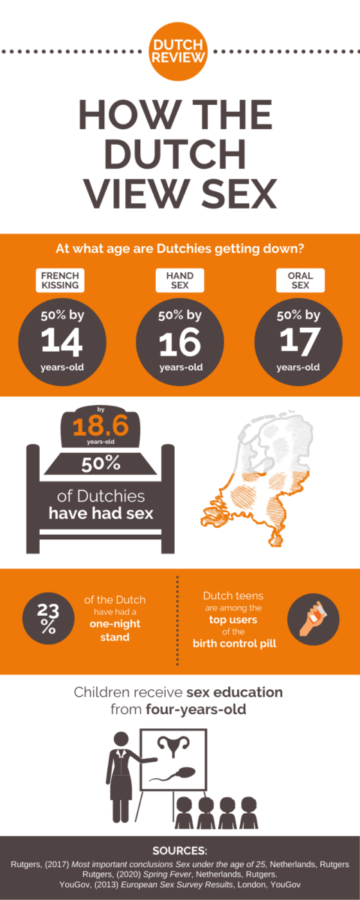
Eindhoven University of Technology reports that in the year 2012, the age range between 19-24, over 70% of Dutch men and 77% of Dutch women were sexually active.
Furthermore, the study notes that French kissing is the first type of sexual contact that people have, with 50% of young people around the age of 14 experiencing it.
By 16, half of teenagers have experienced manual stimulation of the genitals, and by 17, half of them have experienced oral sex.
Another study reveals that 64% of Dutch men and women feel confident in asserting their needs and desires and are open towards discussing sex. This is likely a result of the openness of their educational system with regard to sex.
A helpful graph for the visual learner. Image: DuchReview
Sex in the Netherlands: how do the Dutch score in bed? (according to themselves)
A Europe-wide survey on sex conducted by YouGov in 2013 looked at how different nationalities self-evaluate their love-making skills.
The Dutch appear to think highly of their bedroom etiquette, coming in second in Europe alongside Austrians. The first place was taken by the Swiss.
Getting frisky in the Netherlands also means keeping warm. Image: Depositphotos
Interestingly, the same survey has shown that the Dutch are the least likely to:
Be unfaithful (15%)
Photograph or film themselves during sex (7%)
Have a one-night stand (23%)
Send text messages with sexual content (15%)
They are similarly conservative when it comes to:
Taking Viagra (5%) — joint third-lowest ranking in Europe
Dressing up in a costume during sex (4%) — second-lowest ranking in Europe
Going to a strip club (7%) — second-lowest ranking in Europe (it also costs money 😉)
Watching pornography (43%) — second-lowest ranking in Europe
Prostitution and red-lights in the Netherlands
The Dutch attitude towards prostitution is famous internationally, and there are no better places to gain an insight into the phenomenon than the red-light districts in the Netherlands.
The legal structure of prostitution in the Netherlands is well-developed, with sex workers benefiting from legal protection and workers’ rights akin to other employees.
In the late 1990s, before the official legalisation of prostitution happened, a survey showed that 73% of those asked agreed with legalisation, and 78% believed that it was a job like any other.
The red light district is synonymous with sex in the Netherlands, right? Image: Depositphotos
Many people are surprised to find that most large cities in the Netherlands, such as Utrecht and the Hague, have their own “red light districts” for sex work.
In these places, there is strong police presence, dedicated and private car spots to do the deed and sexual health clinics provided for the workers. It’s all part of making sure sex work is not just legal but safe.
Sex work in the Netherlands: legal yet still problematic
That being said, abuse cases do still exist. Also, prostitution isn’t completely decriminalised. Unregistered sex workers are illegal, and human trafficking is also of grave concern, as well as links with criminal organisations.
Women from foreign countries are enticed to come to the Netherlands on the promise of working in restaurants or other service jobs.
Many find themselves forced into sex work, usually threatened with violence. It is estimated that there are around 5,000 victims of human trafficking.
The legal age for prostitution in the Netherlands is 21. Image: Depositphotos
This has led to a loss of support from the public in regard to prostitution. There are stronger pushes on the Dutch government to tighten controls, create licensing for brothels, as well as reduce the size of red-light districts.
Louise and Martine Fokkens, two famous twins in their 70s who worked as window girls, claim that the legalisation in 2000 has made life worse for sex workers. They claim that the heavy taxation only ends up benefiting the brothel owners, as well as increasing criminality.
The Dutch are quite active beyond just the red-light districts, and their education makes them both well-informed about sex, as well as private about it.
What are your experiences with sex in the Netherlands? Are the Dutch as good as they claim to be? Let us know in the comments below!
The Dutch government agrees that population growth in the Netherlands needs to be slowed down. How they’re going to do that, though, is still a mystery. 👀
In particular, the cabinet wants “moderate population growth” in the Netherlands — and debated how to achieve this on Wednesday, reports the NOS.
Public enemy number one: labour migration
What exactly counts as moderate? Well, as a start, it would include halving the number of immigrants coming into the country — which currently stands at 140,000 newcomers each year.
The majority of the House of Representatives sees current demographic trends in the Netherlands as a threat to prosperity. As such, their focus is on limiting labour migration.
If you’re an international student, you may not want to relax too soon — this is the new Dutch government we’re talking about after all. 😬
Whilst not the focus of the discussion, international student numbers were also a cause for concern. Image: Freepik
Though not their highest priority, the cabinet would also like to see decreases in the number of foreign students and asylum seekers.
You can let out a small sigh of relief if you don’t work in a slaughterhouse or distribution centre, though. 👇
These are the sectors that are deemed most problematic, because both fields attract a lot of migrant workers that are vulnerable to exploitation.
More left-leaning parties want a harsher stance on employment in these fields, with GL-PVDA (Green Left-Labour) leader Frans Timmermans posing the question of whether these industries are even vital to the Netherlands.
Als we de problemen rond arbeidsmigratie aanpakken en misstanden door malafide werkgevers bestrijden, vermindert de druk op onze samenleving. Dat schept letterlijk meer ruimte, maar ook ruimte in ons hoofd en hart voor de opvang van mensen die vluchten voor oorlog en vervolging. pic.twitter.com/xQfChizgvH
Translation: If we tackle the problems surrounding labor migration and combat abuses by rogue employers, the pressure on our society will decrease. This literally creates more space, but also makes space in our heads and hearts to care for the people fleeing war and persecution.
The right side of the political spectrum still wants to limit migration in these sectors, but is not as critical of the industries as a whole.
“We say: don’t put a line through all kinds of sectors tomorrow,” states VVD (People’s Party of Freedom and Democracy) MP Bente Becker.
Instead, she encourages including employers in the talks on how to limit immigration. (Convincing bosses to give up cheap labour apparently sounds more doable than limiting frikandel consumption. 🙄)
The government debates setting immigration targets
An idea that unites several left and right parties is the introduction of bandwidths that would serve as “guiding target numbers” for each migrant category.
Following the House of Representatives’ well-established pattern, however, the details of this proposal have yet to be fleshed out.
The key issues? Well, immigration is unpredictable and depends on factors outside the Netherlands.
Furthermore, the Netherlands is bound by international asylum agreements, which means the Dutch government can’t be too creative when coming up with how high (or low!) the guiding numbers would be.
The Minister of Social Affairs, Eddy van Hijum, also states that setting target numbers “only makes sense if you can link it to a policy with which you can then steer on those numbers.”
However, migration also has its merits
Issues related to migration weren’t the only points brought up in the debate, though.
Denk MP Doğukan Ergin emphasises how the Netherlands actually needs more workers and how immigrants can combat an ageing population.
PVV (Freedom Party) MP Maikel Boon vehemently disagrees: he claims that using immigration to combat ageing only postpones the issues an older population brings with it, not solves it.
Various Christian parties also stepped in, to remind the cabinet that (Dutch) people aren’t having enough children.
Dutch women, on average, have 1.43 children — a figure well below “the replacement value of 2.1”.
A’dam, Dam City, Venice of the North: these are all nicknames for the beloved Dutch capital. But as you stroll the canal-lined streets of Amsterdam, you may come across another sign calling Amsterdam ‘Mokum’.
You can get your hair cut at Mokum Barbers, join a canal cruise on a Mokumboot, grab a pint at Mokum Bar, or encounter some Ajax fans proudly sporting scarves that state “Pride of Mokum”.
But what does Mokum even mean? What’s the history behind it? Let’s check it out. 👇
The place Amsterdam
As Historiek.net writes, the name Mokum is a bit of a meaningless nickname for Amsterdam. Why? Well, because the Yiddish word Mokum (מקום) simply means “place” or “city”.
In the 18th century, Jewish people in the Netherlands and Germany called every city Mokum. To distinguish between the different Mokums, they added the first letter of the city in question behind it (in the Hebrew alphabet).
And so, Amsterdam became Mokum Allef (city A) or Groot Mokum (big city), while Rotterdam was known as Mokum Reisj (city R) or Klein Mokum (small city).
Cities outside of the Netherlands were also dubbed Mokums, with Berlin as Mokum Beisz, Hamburg as Mokum Godel Haj, Cologne as Mokum Baddik and Basel (Switzerland) as Glockmokum.
The last remaining Mokum
Nowadays, the nickname only sticks with Amsterdam, and over time, Mokum Allef simply became Mokum.
The reason why Mokum only stuck with Amsterdam is that Jewish people were more accepted there than in other (European) cities.
But even in Amsterdam, the nickname was first viewed somewhat negatively, and it wasn’t until the 20th century that it lost its negative connotation. Now, Mokum is widely used by Amsterdammers as a loving nickname for their city.
Besides Mokum, Amsterdam’s lower social classes took over a variety of Yiddish expressions and words — and many of them are still used in colloquial Dutch today.
Some examples would be tof (cool/good, from Yiddish ‘tov’), mesjogge (crazy, from Yiddish ‘mesjuge’), and gabber (friend, from Yiddish ‘chaver’).
Did you know about this Amsterdam nickname? Tell us your thoughts in the comments!
It looks like this pakjesavond will bring poems and presents — and rush hour traffic. 🎉
If you’re heading off to work today, you’ll need to plan for extensive rush hour traffic this evening, reports NU.nl. 😬 The culprits? Rain and pakjesavond crowds.
Here’s what we know
In part thanks to tonight’s celebrations, rush hour traffic jams will likely start much earlier than usual and last longer.
Instead of the usual 5PM to 6PM rush hour chaos we’ve all come to complain about, today’s mix of events will lead to traffic jams that start at around 3PM.
As if holiday traffic wasn’t enough, the infamous Dutch weather has once again graced us with its relentless presence, just to make our lives a little more complicated.
So, plug in the aux, queue up your favourite Dutch holiday tunes, and mentally rehearse your magnificent poetry — ready to dazzle your family with a heartfelt performance later tonight. 🎤
Will your plans today be disrupted by the traffic? Let us know in the comments below.
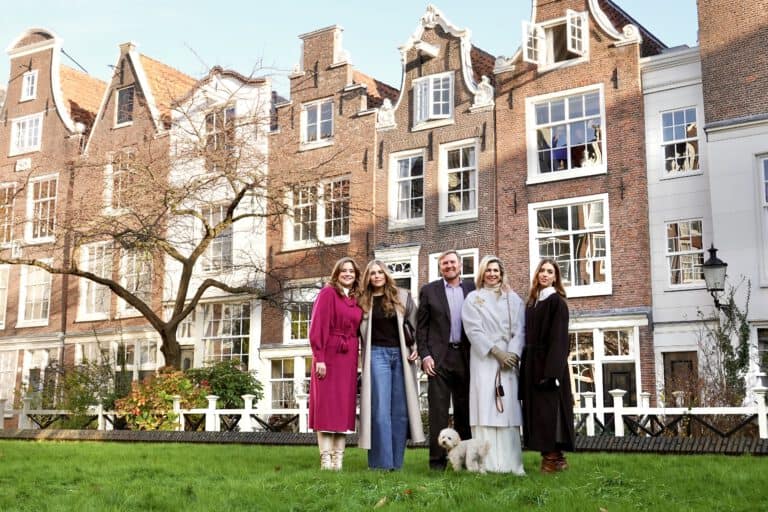
The Dutch royal family is serving elegance, class and — a hint of redundancy? — in their latest photoshoot.
The Rijksvoorlichtingsdienst (Government Information Service) has graciously blessed the commoners’ eyes yet again with their bi-annual photoshoot of our most beloved family.
In honour of Amsterdam’s 750th anniversary celebration, the photos were held in the 600-year-old Begijnhof courtyard.
Queen Maxima and King Willem-Alexander. The royal couple in all their glory.
A former medical student standing trial for murdering three people pinned the blame for his gruesome crime on an unlikely accomplice — a computer in his head.
Fouad L. is facing trial for the murder of his neighbour, her 14-year-old daughter, and a professor at the Erasmus Medical Centre in Rotterdam in September 2023.
On Monday, Fouad’s lawyers requested the court re-examine the shooter’s mental state due to his bizarre explanation of why he committed the crime, reports the NOS.
Fouad is claiming he was forced to commit the shootings by a “coercive and commanding” computer in his head.
He alleges he made up the computer in his youth to combat loneliness. He told the court that the imaginary machine sometimes forces him to do things he doesn’t want.
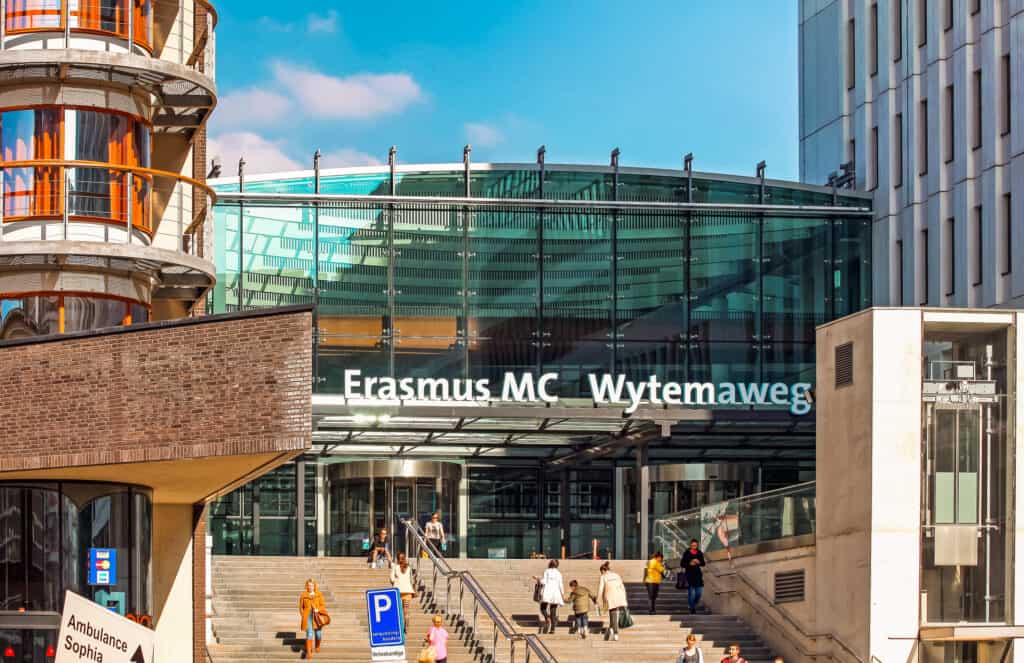
Erasmus MC was transformed into a crime scene last September Image: Dreamstime
Calculated revenge
The prosecution has rejected Fouad’s claims and believes that the crime was motivated primarily by revenge.
Fouad’s neighbour had previously reported him for animal abuse, while Erasmus University wanted to prevent him, a then final-year medical student, from practising medicine due to “worrying and psychotic behaviour”.
The shooter expressed anger about both of those things online.
He also managed to keep all psychological assistance he was receiving at a distance while he was planning his crimes.
Due to this, the prosecution doesn’t believe anyone could have known about or prevented the murders.
The court refuses
The victims’ families called Fouad’s excuse a “load of bull, meant to drag things out”, said their spokesperson, Niels Dekker.
The prosecution claims that Fouad was well aware of the seriousness of his actions and that he carefully planned the murders.
The court sided with the prosecution and refused further investigation into the shooter’s mental state in a move that was met with applause from the victims’ families.
Dekker explained that the trial is very important for the families since they want to confront the shooter. They also want to see him convicted as fast as possible.
The courtroom was packed with the victims’ relatives during the trial, with an additional 150 people from Erasmus Medical Centre following the hearing via a video connection.
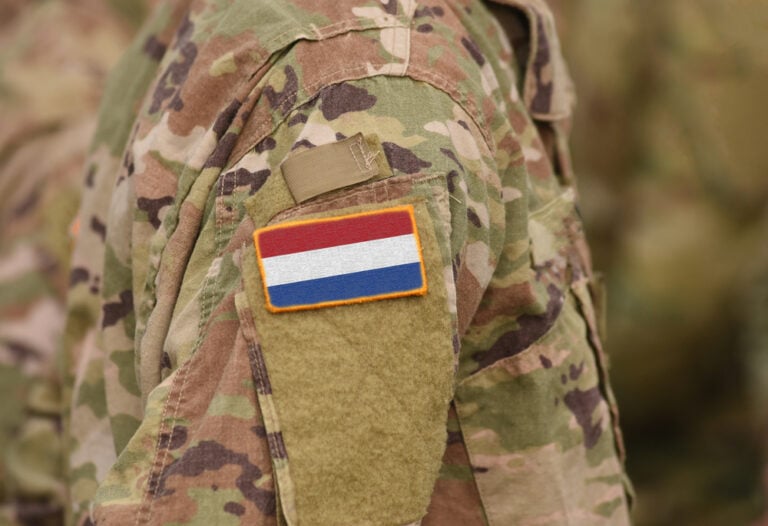
The Dutch Ministry of Defense is exploring reintroducing military conscription for the first time in 27 years.
The ministry believes that the Netherlands should prepare for a major military conflict within the next five to ten years, reveals a ministerial document obtained by RTL Nieuws.
Yes, it might sound extreme, but let’s see exactly what this would entail. 👇
What is conscription?
Conscription means compulsory military service. Technically, all eligible Dutch men and women receive a letter at the age of 17 advising they have been conscripted and are registered. However, there has been no compulsory attendance in the Netherlands for 27 years.
Is there cause for concern?
Yes and no: if compulsory military service is reintroduced, Dutch citizens of conscription age could be called to report for service.
Hold your helmets, though! This doesn’t mean that they would be catapulted from the classroom or office to the front in a matter of months.
If the Prime Minister, Parliament, and Senate all greenlight the idea, conscription with compulsory attendance could be reintroduced on paper in a matter of weeks — its formal execution, however, would take much longer.
The Dutch military currently welcomes about 1,000 voluntary recruits per year. As such, it is absolutely not logistically prepared to house and train the 200,000-odd conscripts that would, in theory, be called up every year.
As a result, building up the human and material resources necessary to reintroduce conscription would require a massive effort: that alone could take years from the moment the decision is made.
There would be exemptions
Even if someone were conscripted, they might still be exempted, most likely for medical reasons.
Throughout the years, physical requirements to join the army became stricter, so many conscripts would not even be cleared to start training.
Those who are, in turn, might have other reasons for exemption, such as for being the sole breadwinners in their household or for being “conscientious objectors” (people with strong reasons to refuse conscription on ethical grounds).
Regular soldiers would be prioritised
Finally, even in conflict, the Netherlands would likely first resort to the 42,000 professional soldiers it already has for active combat.
As such, fresh conscripts would probably remain far away from the front — at least initially. 👀
Do you think the Netherlands should reintroduce compulsory attendance conscription? Shoot a comment (and only a comment 😬) below to let us know.
KLM staff working in the skies are getting stellar treatment: from comfy hotel rooms to sumptuous breakfasts, their daily allowance truly covers all kinds of benefits… for now.😶🌫️
If you’ve flown with KLM at least once, you might have wondered what it’s like to fly for them: here’s an overview of the flying staff’s current daily allowance. 👇
Sky-high standards
As RTL Nieuws reports, cabin and cockpit staff of the Dutch koninklijke (royal) airline are used to a royal daily allowance when travelling for work, comprising quality boarding and lodging. 👑
Food
Regarding food, KLM’s flying staff receive a variable daily allowance calculated to allow for three meals, four hot drinks, and, depending on the destination, up to three glasses of soft drinks and… beer. 🤯
A daily menu, therefore, might look like this:
Breakfast: fruit juice, two eggs with ham, bread, butter and tea or coffee
Lunch: simple dish and coffee
Dinner: soup, a main course, dessert and coffee
Drinks: soft drinks or biertjes 🍺
Accomodation
As for accommodation, KLM’s current collective labour agreement states that reflecting “the status of KLM and the pilots,” its flying staff should stay in hotels “reasonably situated in relation to the airport, shops and recreational facilities (…) in or near the city centre.”
Other criteria that the accommodation should fulfil include:
A room of a minimum of 3×4 metres
Separate bathroom with toilet
Seating and writing facilities and adequate reading light
Air conditioning and heating
Provision against noise pollution
Transport and leisure
Depending on the destination, the daily KLM allowance also allows for some recreational activities, such as cinemas, swimming pools and sports facilities.
Natuurlijk, they also cover transport: if free transport is not available, staff are entitled to up to four bus or tram rides or half a taxi ride per day.
And sky-high costs
Sounds pretty neat, right? But before you run off to apply for a KLM cabin or cockpit job, you should know that these amazing perks might soon become a thing of the past.
KLM worker unions are currently negotiating a new collective labour agreement — and it looks like the company will make big cuts.
Some of the proposed changes include an end to complementary alcoholic drinks, the choice of hotels far from inhabited centres, and, most importantly, freezing off wages for the next two years. 🥶
What do you think of the current and future working conditions of KLM flying staff? Fly to the comments to share your opinion with us.