Can’t get enough of gooey, caramel-y Dutch stroopwafels? Good news: You can now have them for lunch too… inMcDonald’s brand new “Chicken & Waffle” burger.
The limited-edition burger is exclusively available in the Netherlands through the McDonald’s app, where it will be sold for €2.50 until at least December 17, writes Food Inspiration.
A sweet and sour sensation
The sandwich features a regular burger bun, chicken burger patty, crispy bacon, stroopwafel pieces (yep, this is where it gets weird), and caramel sauce.
You would think this delicacy was created at 3 AM by a famished improvised chef combining their burger leftovers with the stroopwafel crumbs at the bottom of their bag.
But actually, it was a well-thought-through decision: it’s a spin-off of the beloved McFlurry Stroopwafel, a Dutch experiment turned worldwide bestseller.
And it’s working: TikTok is overflowing with reaction videos to the new recipe. 👇
Will this be enough to turn this limited edition experiment into a fast food staple? In the land of bami kroketten and frikandel pannenkoeken, anything is possible.
Would you try this new Dutch delicacy? Squeeze your juiciest opinions in the comments below.
The Dutch changed the course of South African history, culture, and identity the moment they first stepped foot in what is now Cape Town.
The history of the Dutch in South Africa is a two-sided coin. Many regard the Dutch settlers as pioneers in establishing trade routes and as the forefathers of Afrikaner culture.
Yet, their involvement in the slave trade and the invasion of African land cannot be overlooked.
The influence of the Dutch, seen in the Afrikaans language, Cape-Dutch architecture, and the distribution of ethnic groups (among many other things) are still actively shaping South Africa as we know it today.
The Dutch arrival in the Cape
While the Portuguese were the first Europeans to set foot in southern Africa, naming the area of today’s Cape Town as The Cape of Good Hope, it was the Dutch who established the Cape Colony in 1652.
Initially, the colony was to serve as a trading post en route to Asia, supplying the Dutch East India Company (VOC) ships with fresh food and water, and a place to stop for rest.
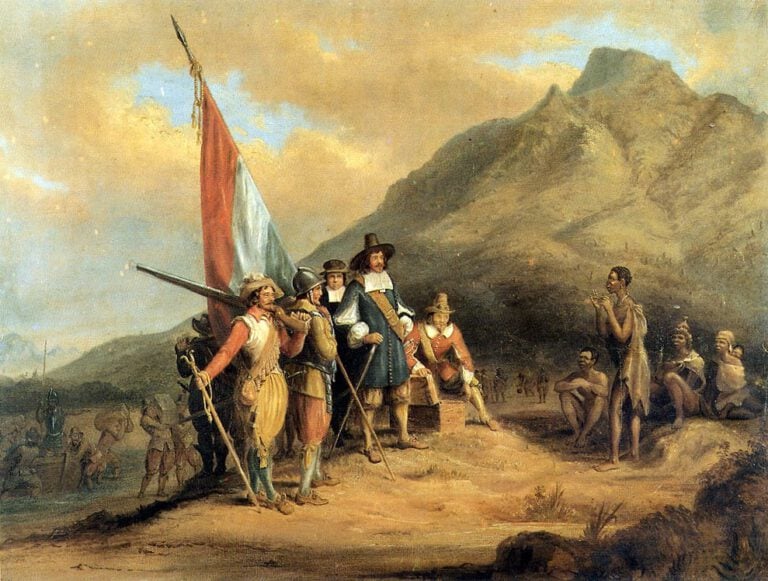
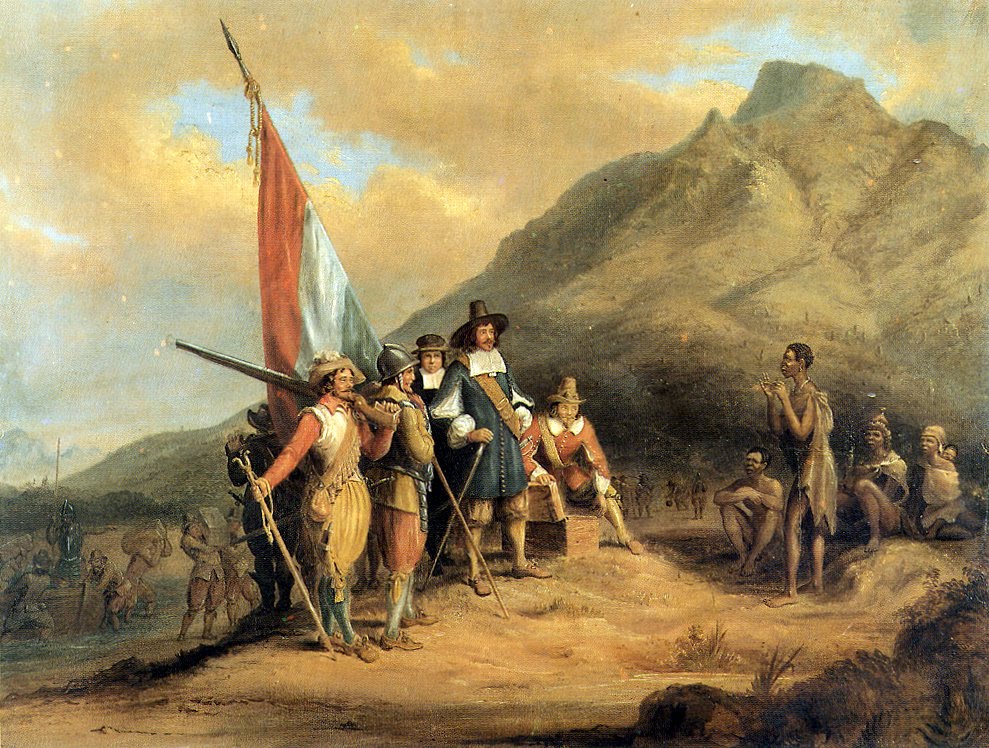
The arrival of Jan van Riebeek and the first Dutch settlers painted by Charles Bell. Image: Charles Davidson Bell/Wikimedia Commons/Public Domain
Prior to the arrival of Europeans, the land was already occupied by the Khoekhoe (or Khoikhoi) people, whose way of life revolved around hunter-gathering and cattle herding.
The Dutch traded with the Khoekhoe for a while, exchanging tobacco and brandy for fresh meat.
But by the late 17th century, war had broken out between the United Provinces of the Netherlands and both Britain and France in mainland Europe.
British and French interests in the Indian Ocean pushed the Dutch to establish a permanent colony in the Cape to protect their trading routes. They began expanding settlements into the traditional grazing lands of the Khoekhoe.
Conflict erupted as attacks and counter-attacks ensued between the Dutch and Khoekoe in what snowballed into the Khoekhoe-Dutch wars (1659–1660 and 1673–1677).
European diseases also decimated Khoekhoe populations, and they were increasingly pushed out of their lands.
The conflict was eventually resolved with a peace treaty, in which the Khoekhoe had to offer 30 cattle to the VOC annually and vow never to attack Dutch settlements again.
By the end of the 18th century, without their grazing lands, the Khoekhoe social structure had collapsed and the ethnic group had virtually vanished.
Historians believe many of the Khoekhoe were forced to work for the Dutch, or acculturated with Bantu-speaking African ethnicities from the north.
The Dutch slave trade in South Africa
Many employees of the VOC retired to the Cape Colony, where they were given land to farm on the condition they sell their crops to the VOC at a fixed price.
The farms were very labour intensive, so the Vryberghers (free citizens) imported slaves from Angola, Madagascar, Mauritius, Mozambique, and Asia (Dutch East Indies and Dutch Ceylon) to work the land.
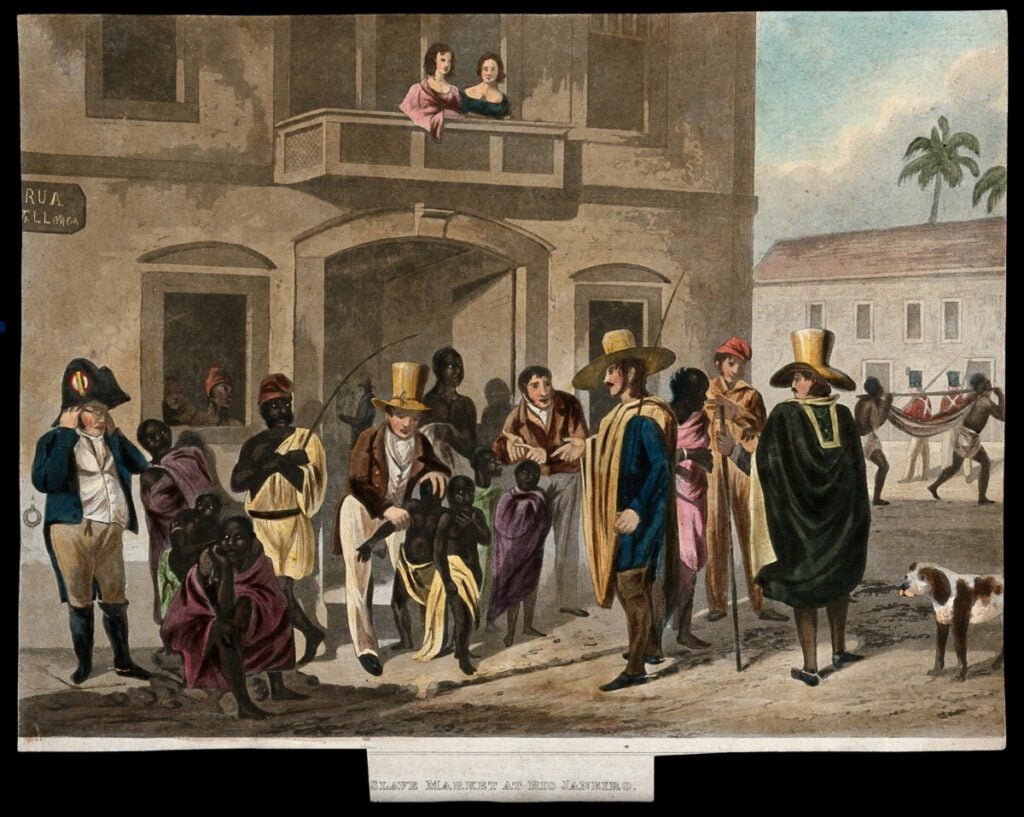
Young children were sold as slaves. Image: Augustus Earle/Wellcome Collection/CC4.0
However, the VOC also owned slaves of their own, the first of which were brought from Angola in the Amersfoort and Hasselt vessels, establishing the Cape as a slave colony.
Over 150 years, around 40 slave voyages were sent from Cape Town, bringing back around 4,300 slaves who survived the journey.
As a halfway point between Asia and Europe, the Cape Colony also resupplied many VOC slave voyages passing through, including those which would go on to transport Africans to slave markets in the Americas.
How the Cape Colony impacted South African demographics today
Today, around 1.27 million people living in South Africa are Asian South Africans (2.5% of the population), mostly people of Indian descent whose ancestors were brought over as workers by the British and Dutch.
Cape Malay culture is also unique to South Africa, born in the Javanese and Malaysian slave communities of the Cape Colony.
But Asian slaves also later intermarried with those from Madagascar and other parts of Africa, contributing to what is known as the “coloured” community in South Africa (around 8.8% of the population today).
They are distinct from the black African communities which amount to 79.4% of today’s 59.7 million people.
Around 9.2% of modern South Africans are white, with predominantly Dutch, German, French, and British ancestry.
However, centuries of life in South Africa has blurred the lines between racial and cultural groups, giving many South Africans a complex combination of ethnic backgrounds.
British rule and the Great Trek
Back to our history lesson: in 1795, the British invaded the Cape peninsula and took over the Cape Colony (including Cape Town) from the Dutch.
Due to the British Slave Trade Act of 1807, the first wave of British settlers in the Cape (1820) were not permitted to own slaves, and the importation of slaves was banned in all British colonies.
When slavery across the Cape was abolished in 1834, the British also passed the Amelioration Laws, which allowed slaves to marry, purchase their freedom and receive basic education. This freed over 38,427 slaves in the Cape of Good Hope.
The Dutch Voortrekkers
The Dutch Vryburghers, however, were not happy about this. Tensions between the Dutch and British settlers grew, as the Dutch Boers (farmers) fought to keep their slaves.
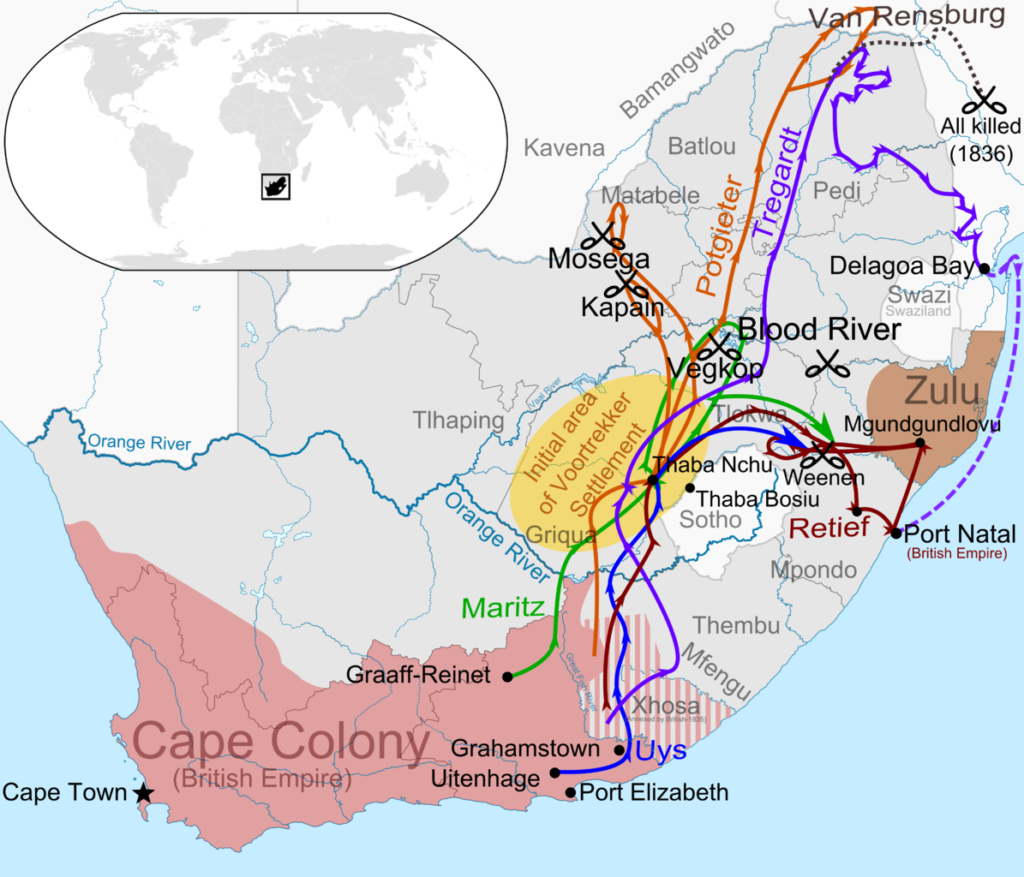
Eager to rule themselves, in 1836 about 1,200 Boers (one-fifth of the colony’s Dutch population at the time) embarked on a journey across southern Africa known as the Groot Trek (Great Migration, directly translated), calling themselves the Voortrekkers (pioneers).
They are an important element of Afrikaner folk history.
The routes that the Voortrekkers took across South Africa. Image: Discott/Wikimedia Commona/CC4.0
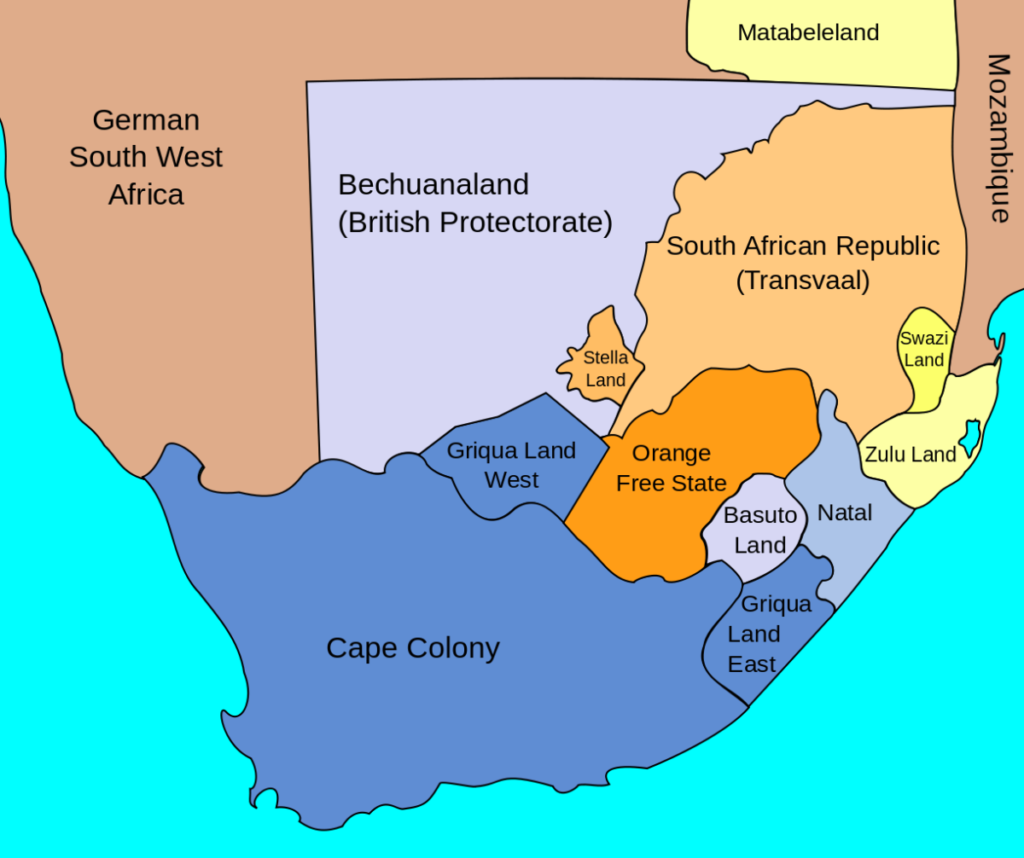
The Voortrekkers split off in various directions, eventually founding independent Boer republics, namely the Transvaal (South African Republic), theOrange Free State, and the Natalia Republic.
They travelled in wagons, over a distance roughly equal to that between Portugal and Poland, and lived semi-nomadic pastoral lifestyles.
Crossing semi-deserts, the Orange River (which they named in honour of the Dutch royal family) and the Drakensberg mountain range (over 3400m high, which they named for its dragon-like shape) proved to be a challenging journey that would mould Afrikaner communities into a tough and strong people.
As they say in Afrikaans, “‘n Boer maak ‘n plan” (a farmer makes a plan), and it is this mindset that got the Voortrekkers across South Africa.
Conflict with African kingdoms
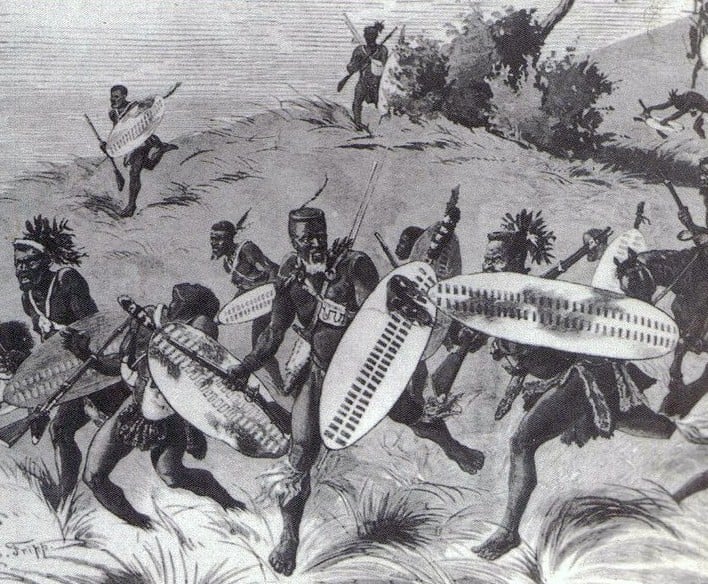
But as the Voortrekkers crossed over the Drakensberg into the fertile lands of Natal, they walked right into what is known as Mfecane — a period of war between the dominating Zulu Kingdom and smaller African kingdoms (1815–1840).
This period caused tribes to temporarily move into new territories, resulting in thousands of refugees, and an estimated two million people who died during these wars.
But as the conflict died down and the tribes began to reoccupy their land, they found themselves face-to-face with the Boer intruders.
The Boers, of course, claimed that the land was unoccupied when they arrived, which would become the Empty Land Myth that says Europeans arrived in these lands at the same time as Africans.
This myth would later be used by Apartheid politicians to justify Afrikaner Nationalism.
As you can imagine, conflict erupted between the Dutch Boers and the various African tribes they encountered. Military skill thus became key for the Voortrekkers as they further invaded more lands.
Armed with rifles and long knives, the Boers drove tribes like the Ndebele further north and took their children as slaves. In some cases, peace treaties were formed.
After winning the Battle of Blood River against the Zulu, the Voortrekkers declared the Republic of Natalia in 1838.
The British colonies, African kingdoms and Boer Republics in 1885. Image: John George Bartholomew/Wikimedia Commons/CC3.0
The Transvaal became an independent Boer republic in 1852, and the Oranje Vrystaat (Afrikaans for Orange Free State) followed in 1854, both of which had political connections to The Hague.
The Boer Wars
As the British Empire expanded, Lord Carnarvon (British Secretary of State for the Colonies) wanted to unite the British colonies, independent Boer republics and independent African kingdoms in South Africa into a confederation under British control.
In 1876, he realised that this could not be achieved peacefully.
The Transvaal was in serious financial trouble after a war between the Boers and the Pedi — the largest African kingdom in the north of South Africa. Lord Carnarvon seized the opportunity, and the British annexed the Transvaal in 1877, renaming it the Transvaal Colony.
A couple of years later, the British launched the Anglo-Zulu war, while non-violent Boer opposition grew in the Transvaal. Dutch settlers still in the Cape Colony began supporting their brothers in the north as they protested for independence.
The First Boer War
In 1880, a disagreement over taxes with the British became the final straw for the Dutch Boers.
Led by Paul Kruger and Piet Joubert, almost 10,000 Boers gathered and proclaimed the restoration of the Transvaal Republic — and so, the first Anglo-Boer war began.
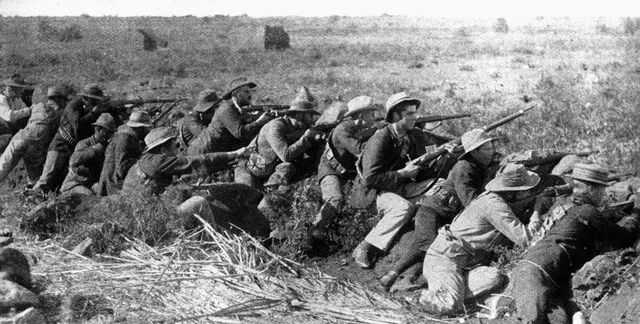
The red uniforms of the British made them easy targets for the skilled Afrikaner riflemen, who also knew the terrain better than the anglophones. The British suffered heavy losses at the battle of Laingsnek and Schuinshoogte, forcing them to retreat.
Reinforcements from Newcastle arrived and marched on a Boer outpost at Majuba, whom the Boers lured into the mountains and slaughtered. The embarrassing British defeat at Majuba in 1881 concluded the first war.
The Second Boer War
The discovery of gold in 1886 on the Witwatersrand, near Johannesburg, changed everything in the region and motivated the British to retake the land.
By 1890, South Africa was the largest producer of gold in the world, employing thousands of African and European people, and bringing prosperity to the Boer republics.
The Cape Colony, still under British rule, was no longer the strongest region in southern Africa.
Prospectors rushed to Johannesburg from all over the world, especially Europe. The Transvalers saw these Uitlanders (foreigners) as a threat to their independence and gave them restricted rights. This caused further strain between the British and Boer governments.
Meanwhile, the British were nervous that the Transvaal would expand into territories on the coast. The Boers had access to a harbour in modern-day Mozambique, but they were yet to own any ports for themselves.
Control of the seas was the only advantage that the British had in southern Africa at this point, having earlier annexed Natal.
In 1895, 100 British soldiers launched the Jameson Raid on Pretoria, without permission from the crown. They were overwhelmingly defeated by the Boers and reprimanded by British command.
It was only in 1899 that the second Anglo-Boer war officially began. Anticipating a British attack, the Boers struck first, taking out major British towns in Natal. Well-armed and financially strong initial attacks by the Boers were successful.
But when the British General changed, and new tactics were implemented, the tables turned. In 1900, the British took back their towns and marched 400,000 men north to the Boer republics.
Overwhelmed by the sheer number of men, the Dutch Boers lost control of both the Transvaal and Orange Free State. But they were not done fighting.
The Boers reverted to guerilla warfare, in a series of surprise attacks that dragged on for years. In response, the British initiated the scorched earth policy, whereby anything that could be used by the enemy was burnt to the ground.
Boer survivors were forced into concentration camps where many civilians died of hunger or disease.
The Boers were forced to surrender in 1902, bringing an end to the final Anglo-Boer war. The Transvaal, Orange Free State, Natal and the Cape Colony were unified into the Union of South Africa in 1910 under the British Empire.
Apartheid
The system of racial oppression in South Africa, known as Apartheid (1948-1994), cannot be directly linked to the Dutch, as by this time, the Afrikaner communities identified themselves as distinct people.
But the ideologies passed down to them from the first Dutch settlers, slave traders, and Voortrekkers are evident in the white-supremacist policies of the Apartheid regime.
In short, Apartheid was a system that separated race groups classified by the ruling National Party (NP) into various zones around South Africa. Afrikaner Nationalism was at the heart of its ideology, which classed white citizens as superior.
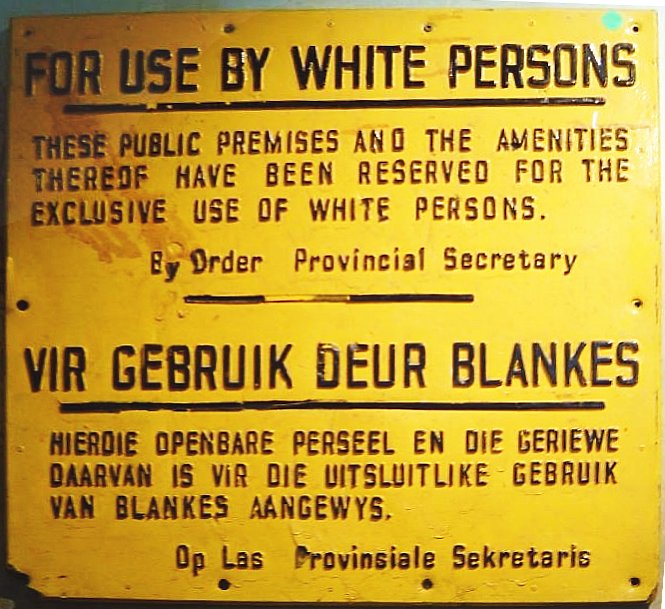
Sign posts like these would reserve the centres of major cities, public beaches and more for white people only. Image: Dewet/Wikimedia Commons/Public Domain
Inequality across the zones was substantial, and education and job opportunities for non-whites were limited, pushing them into cycles of poverty.
Non-white citizens were given fewer rights — including the inability to vote. Intermarriage between the races was illegal, and friendships with different race groups were considered suspicious.
It is a painful and complicated chapter of South Africa’s history, which I will not expand on here. Even so, it is important to learn more about Apartheid in South Africa.
The Dutch had a majorly influential role to play in what would become the Republic of South Africa. What I’ve covered in this article is, of course, only the tip of the iceberg, but I hope you now know something about the Dutch and South Africa that you didn’t know before.
What do you make of the Dutch involvement in South Africa? Tell us in the comments below.
The Dutch Tax Administration is preparing to kick off the new year with stricter checks against bogus self-employment, starting January 1.
Helaas, this is some bad news for the Ministry of Finance. 😬
Talk about irony
Turns out, the Ministry of Finance has been depending heavily on ZZP’ers (zelfstandige zonder personeel or self-employed people) in its recovery operation for the infamous childcare benefits scandal. Around 580 of them, to be exact.
How ironic that the institution responsible for managing the nation’s money relies on (precarious) ZZP’ers. 🙄
In conversation with NU.nl, a spokesperson for the Ministry claims, “many of them legitimately work as self-employed people.”
“We have already reduced the number of self-employed people considerably. But if all self-employed people were to be removed from the team in January, the recovery operation [for the benefits scandal] could be delayed.”
No exceptions
Meanwhile, over at the Tax and Customs Administration, they’re taking no exceptions for the new implementations.
If tax authorities suspect bogus self-employment, they can impose fines.
Following the devastating explosion at Tarwekamp in The Hague on Saturday morning, the police investigation is still in full swing — with several pieces of new information just revealed. 👇
The police already arrested three suspects yesterday (December 10). Now, a possible target for the explosion and information about two runaway cars are known.
Bridal store at the centre of it
Based on evidence revealed in the ongoing police investigation, the explosion might have been aimed at a bridal store on the ground floor of the building, reports RTL Nieuws.
The store specialises in the sale and rental of party dresses, but the company also offers care to young people with developmental and behavioural problems.
While no one from the store was injured or harmed, the explosion left six dead and four injured.
The victims include three members of the same family (leaving an 8-year-old orphaned), and three adult men.
On the lookout for two cars
Police are also looking for any leads on two cars that may have been involved in the explosion — a blue Toyota Yaris and a champagne-coloured Kia Ceed.
Dutch police have reason to believe that one of the cars fled the scene of the explosion at high speed, and footage also reveals a suspected car speeding towards Amsterdam on Saturday morning.
The police hope that witnesses who can share information about the store and cars will come forward.
Translation: Tonight, the focus of Investigation ‘Wanted’ is on the explosion at the #Tarwekamp in #TheHague. We are also calling for witnesses following an explosion on #Loenensestraat in #TheHague and a serious assault in #Leiden. More information
Just south of the Dutch border lies Flanders. Not Ned Flanders (d’oh 😜), but the province of Flanders, where they speak Dutch in an arguably more friendly way.
Grab a plate of warm Belgian waffles and practice your French (and your Flemish Dutch!) because a trip to the town of Bruges in Belgium might just be a cure-all for winter blues.
There’s just something about the city’s medieval scenery with all its warm lights that makes Bruges in the winter a must-see.
Bruges is more than just a pretty (but sometimes touristy) town. There are plenty of cultural festivals, a lush ‘green ring’ within the city, and lovely meandering streets
It is a quiet and relaxing city, that’s for sure!
Visit Flanders has all the information you’ll need for a whimsical winter wonderland trip. ❄️
What can you do in Bruges during winter?
Bruges (or Brugge in Dutch) is arguably the best medieval fairytale town you’ll see in North-West Europe. It has all the hallmarks of one — cobbled roads, cute crooked houses, and historic market squares.
Bruges city centre has been a Unesco heritage site since 2000, but the beauty of Bruges has been renowned since the 1400s.
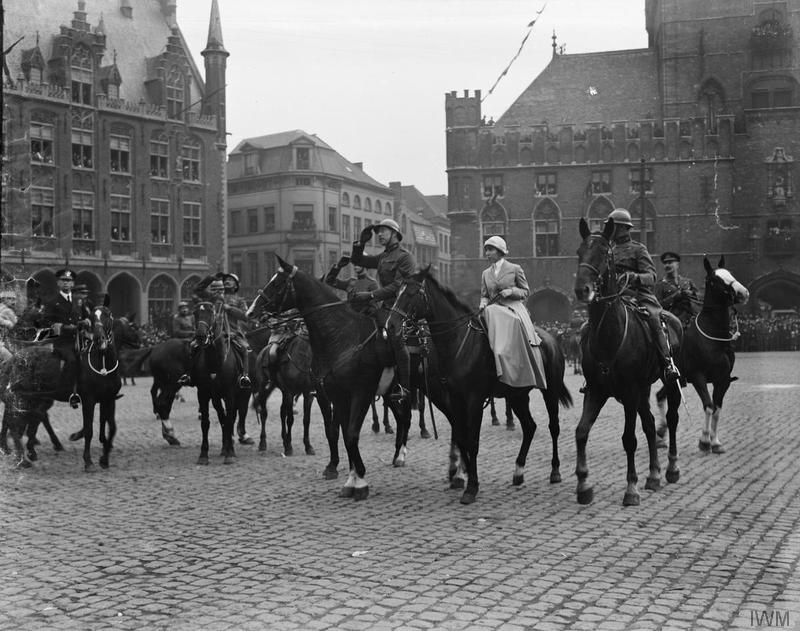
The liberation of Bruges in 1918; many of these buildings are the exact same today. Image: Bartholomew, Harry Guy “Bart”/WikimediaCommons/Public Domain
The city as a whole feels like a huge open-air museum — one that’s also 100-200 years older than most Dutch historic cities.
And, like most Dutch cities, everything is fairly walkable; plus, good news for our cycling enthusiasts because biking is also possible.
Originally a trading city with a bustling port in the Middle Ages, the city has adapted to the modern era but hasn’t lost its ancient roots.
Despite becoming a base for German submarine fleets during the First World War, the city remained mostly intact during both world wars, further adding to its historical charm.
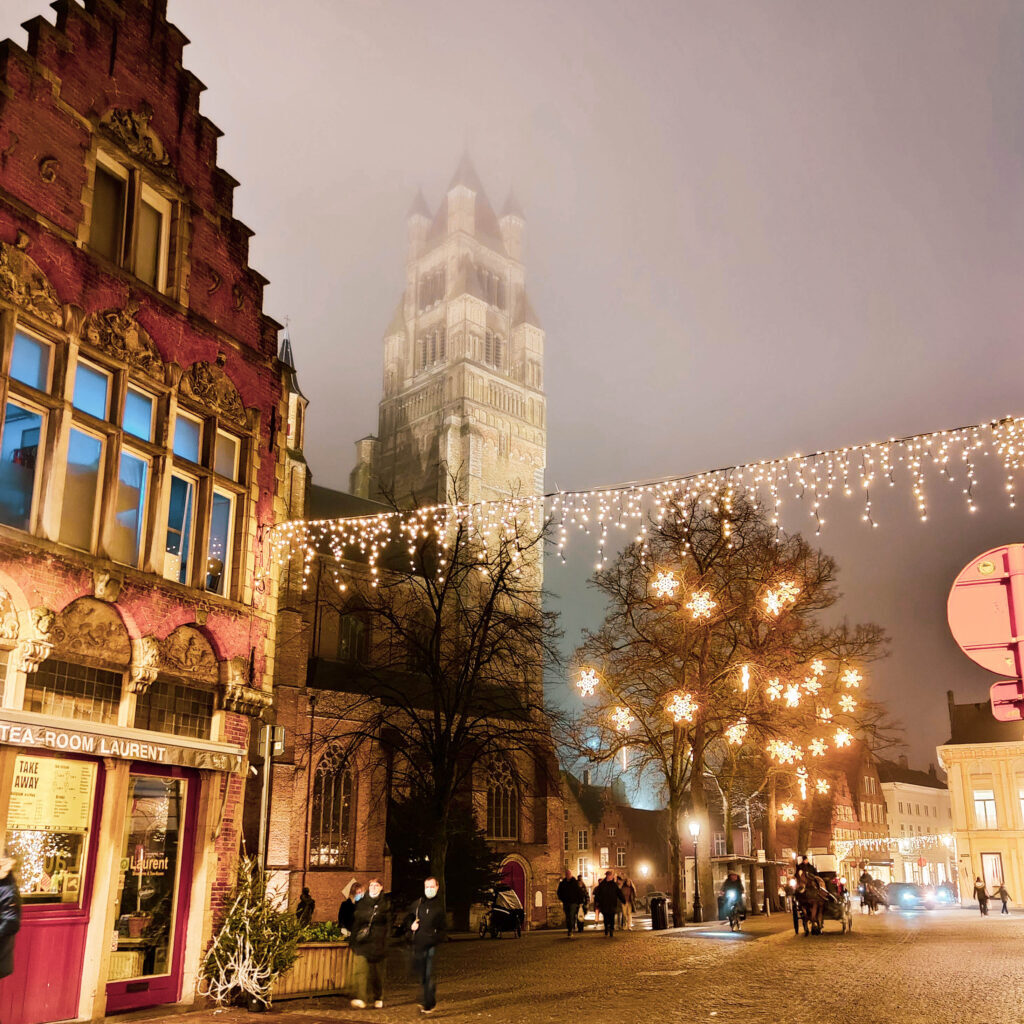
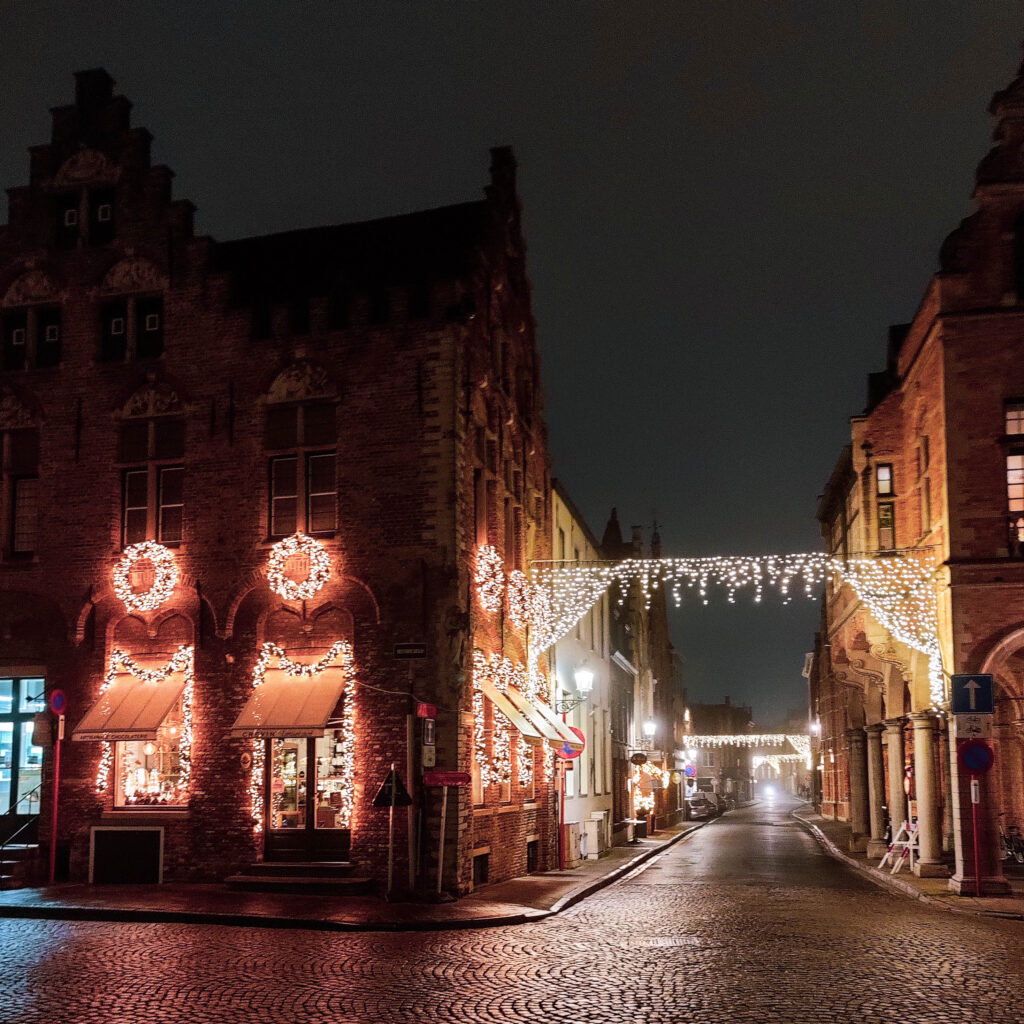
The lights in wintery Bruges are just magical. Image: Abuzer Van Leeuwen/Supplied
Enjoy art and history in Bruges
Bruges has so much to offer in terms of art and history. And, even better, as Belgium is also suspect to that dreaded rain, there are plenty of museums in Bruges to keep you warm and out of the wet.
Here are just some of the wonderful museums and historical monuments you should check out during your visit to Bruges! (they’re lekker, we promise 😇)
Visit the Groeningemuseum
A beautiful building with beautiful paintings. 🎨
If you are interested in the Dutch masters, you shouldn’t miss out on the exhibition ‘Flemish primitives’ in the Groeningemuseum.
From historical legends such as Jan van Eyck, Bosch, and Brueghel, to masters of more modern eras such as René Magritte, you won’t be lost for things to admire in this museum!
The Groeningemuseum is not to be missed by art lovers and also has plenty of other great art on display besides paintings.
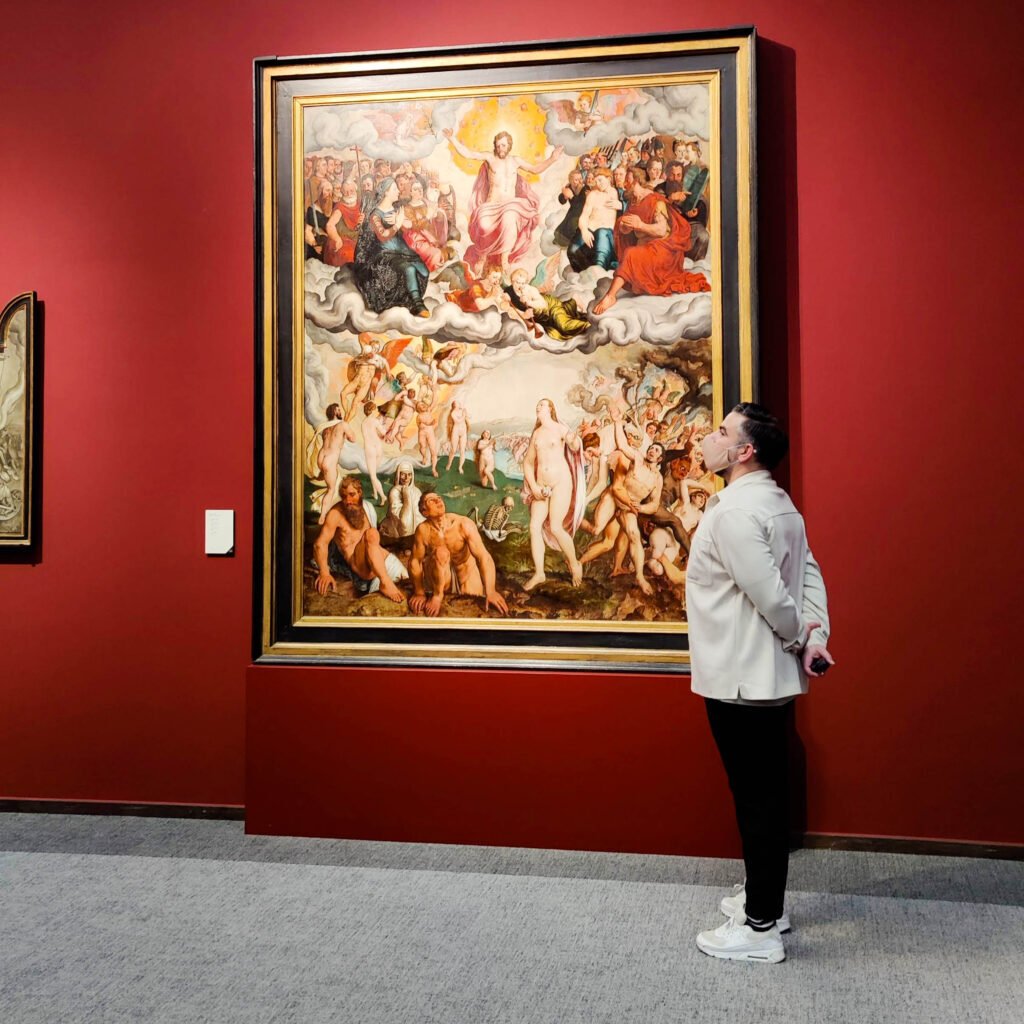
Groeningemuseum is one of many wonderful museums you can visit while in Bruges. Image: Abuzer Van Leeuwan/Supplied
Then hop over to the Gruuthusemuseum
Right next to the Groeningemuseum, you’ll find another gem. The thoroughly and magnificently renovated Gruuthusemuseum takes you on a tour through the rich historical times of Bruges.
Beautiful objects and beautiful rooms make for an immersive experience. 😍
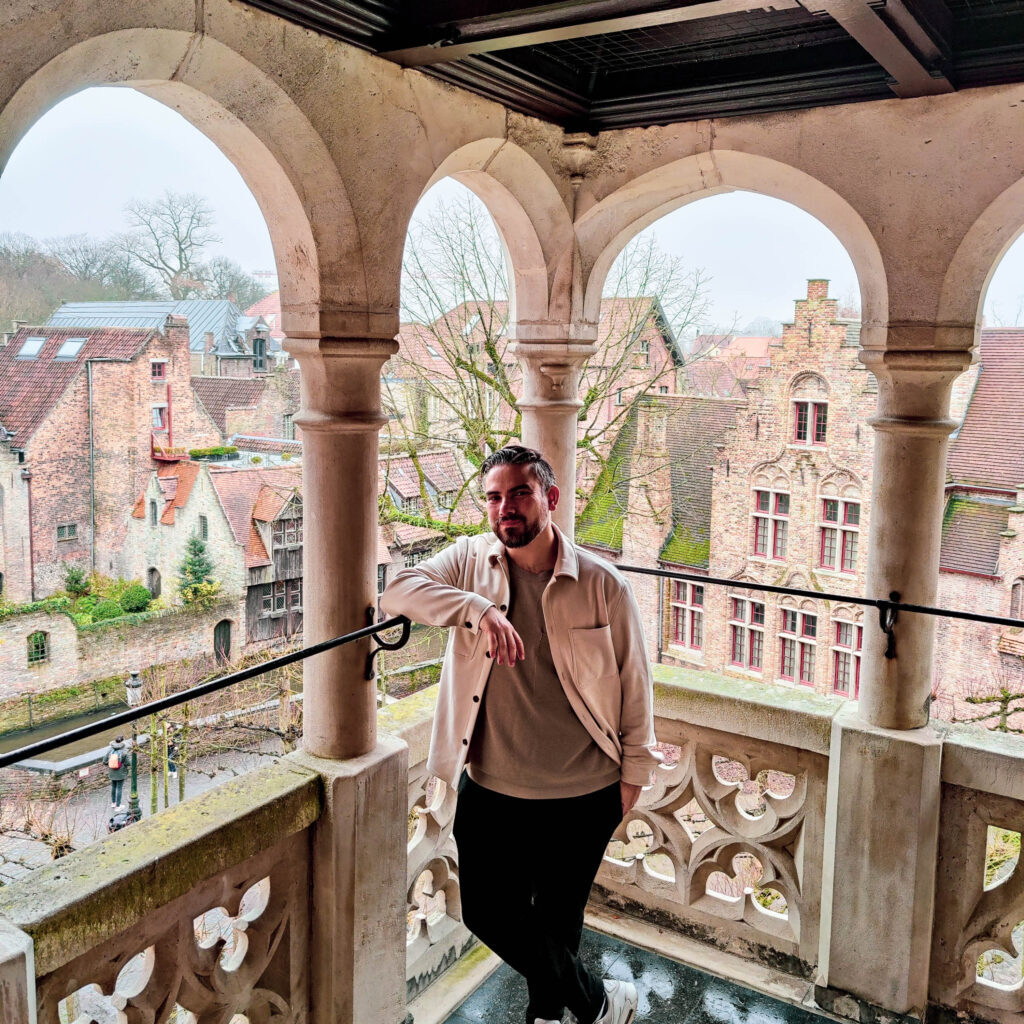
Here, you’ll also find one of the best photo opportunities. So, make sure to take a step outside to the mesmerising and enchanting balcony of the Gruuthusemuseum.
This one offers both sweeping vistas of the adjacent church, the courtyard and, of course, that all-important-I-went-to-Bruges-portrait pic. Image: Abuzer van Leuuwen/Supplied
Explore Bruges’ Christmas market
If there’s one thing Bruges does spectacularly, it’s markets. Not only are the sta/lls a feast for the eyes, they’re also set in the most stunning locations.
The Bruges Markt
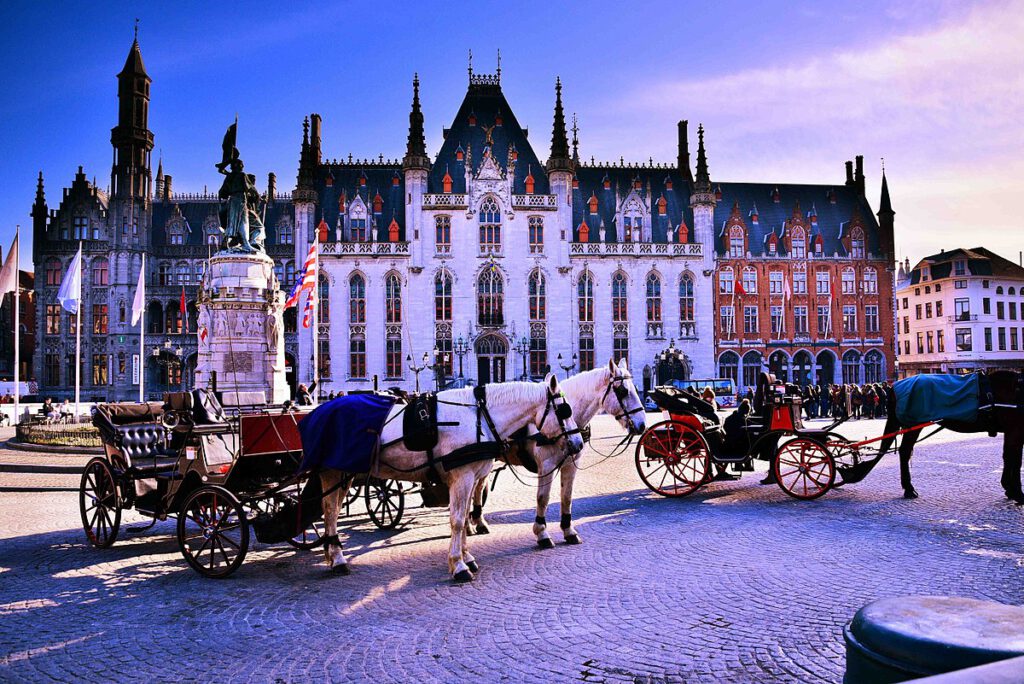
One thing you absolutely must do during Christmas in Bruges is to check out the Market Square.
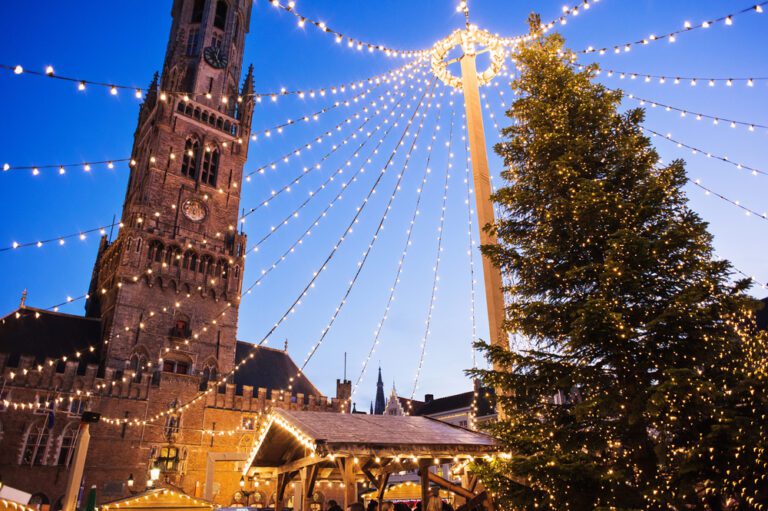
There, you can see the imposing Belfry; standing at a grand 83 metres tall, you can’t miss this iconic part of the Bruges skyline.
Take a trip on a horse-drawn carriage in Bruges city centre. Image: Edison McCullen/WikimediaCommons/CC 4.0
While you’re there, make sure you take a look at the magnificent building of the Provincial Court, or even hop into a carriage for a romantic horse-drawn tour around the city! 🐎
Or, seeing as we’re talking about a winter trip, you should really check out the Bruges Christmas Market.
The Bruges Christmas Market is open from November 24, 2023 to January 7, 2024, and you will find the stalls located in the Markt and on Simon Stevinplein in the city centre. 🌟
Take a canal tour — if you dare
The Netherlands isn’t the only country that can treat you to a canal tour. It’s also not the only one with freezing temperatures.
A canal tour is certainly an option for a winter’s trip to Bruge, just make sure you’re wrapped up nice and warm!
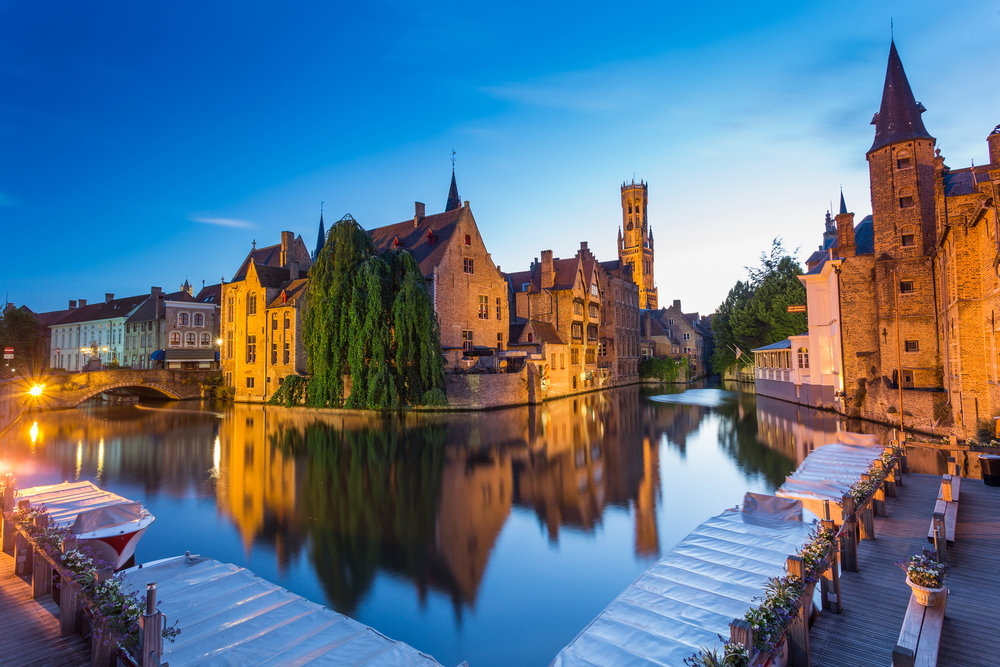
Rosary Quay
Known as Rozenhoedkaai in Belgium, this quay was famous for the sale of rosaries. Now a beautiful spot for some picture-perfect Instagram images, the quay still has remnants of its iconic past.
Even better, you could opt to take a boat tour through the canals and see the quay from the water yourself.
Be warned: Although boat tours are scenic and lovely, the temperatures are cold, and you might be a tad miserable. 🥶
Treat yourself to some Belgian cuisine
Since you’re in Belgium, you (of course) have to treat yourself to some delicious local delicacies. 🍫🍻
We’d argue that Bruges is pretty much heaven since it pushes Belgian chocolate and craft beers as its local specialities. (We challenge you to come up with a good counterclaim!).
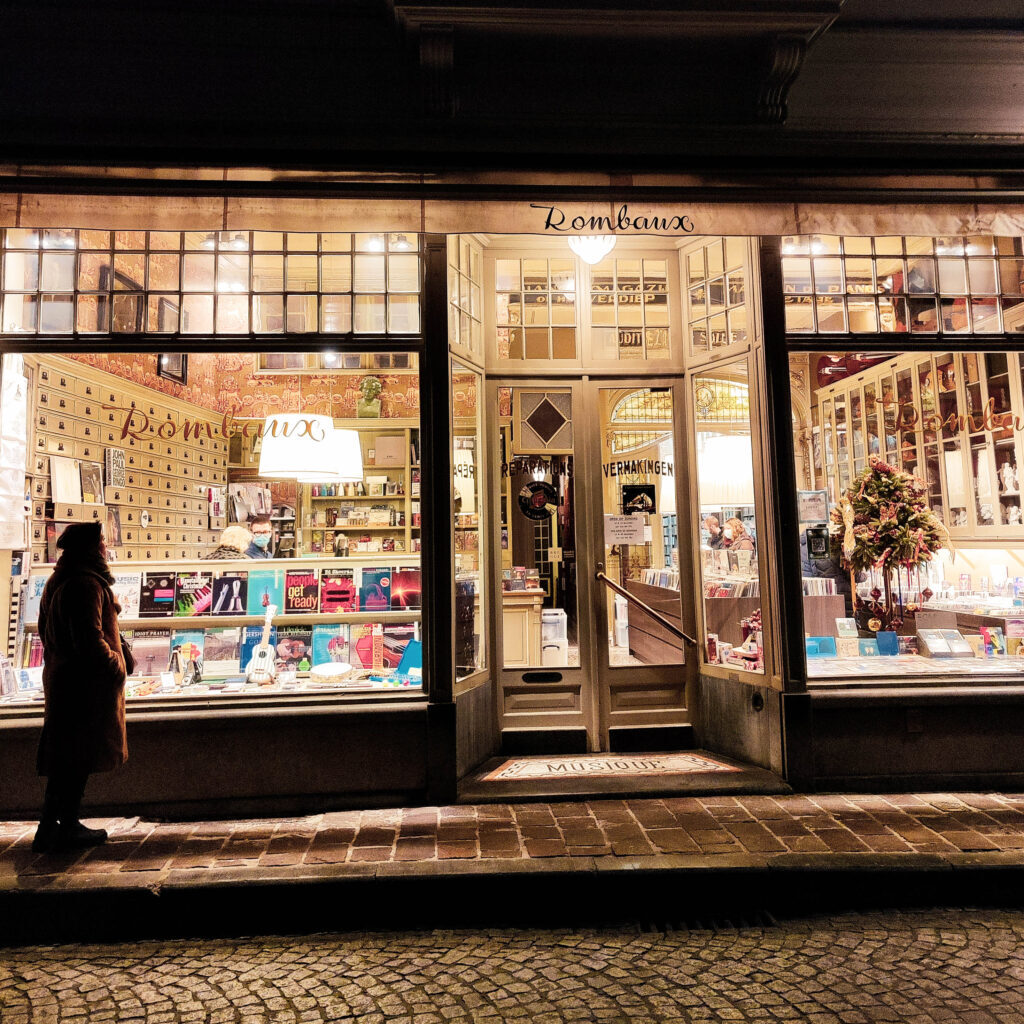
Bruges has a ton of cute stores so, if chocolate isn’t your thing, there are tons of other nice gifts to bring home! Image: Abuzer van Leeuwen/Supplied
Chocolate stores are everywhere and make it the ideal gift to bring home. It is, of course, not the cheapest place in the world for your chocolate shopping, so do yourself a favour and don’t go to the first store located in the most touristy squares.
We visited the ‘Suykerbuyk’ (sugar belly): a pretty store with a tasting locale right opposite it. Their classic chocolate milk comes with a little platter of chocolates to try — that did my chocolate fix just fine for a fair price.
Additionally, Belgium is littered with great beers and places to drink them — and Bruges is no exception.
We recommend going to an old medieval tavern-style bar to warm up and get tipsy. In all cases, you should enjoy a ‘Brugse zot’ or ‘Straffe Hendrik’ while you’re in town.
We promise that going to a Belgian town in the winter to enjoy the beers is actually an acceptable way to spend a weekend with many Dutchies. 🍻
If you’re really going for it, then visit one of the city’s semi-public breweries. For €15, you get a tour at the Halve Maan brewery, for example (and yes, there will be a complimentary beverage).
Check out the warm wintery lights of Bruges
Believe it or not, there’s something even better about wintertime in Bruges than overdosing on chocolate.
It’s literally the many lights of Bruges that warmed our spirits (and those beers). Every picturesque corner of the historic town had its own light plan, providing excellent scenery for those romantic evening walks.
Bonus points if you watch ‘In Bruges’ with your partner before the trip. Image: Abuzer van Leeuwen/Supplied
Sounds like the perfect trip, right? Well, except for one thing — although just looking at a map, one might think Bruges is really close to the Dutch border — although getting there is somewhat more difficult.
Going to Bruges by car
Usually, it takes two-and-a-half hours to reach Bruges by car from the Randstad. However, two things slow you down when you want to go this way.
Firstly, a straight line would run through Zeeland — but roads don’t run through Zeeland easily with all the water there. So the usual route is to go through Rotterdam (which is slow) and then Antwerpen.
Secondly, there’s the infamous causeway around Antwerp which is bound to cause trouble.
It’s flowed a bit more smoothly the last few years but is still a place where traffic grinds to a halt. Nearly all routes take you through this chokepoint.
Are you sold on the idea of Bruges in winter yet? 😉 Image: Depositphotos
An alternative to the long causeway is the toll tunnel, which costs €6. A great option to cut through the traffic during peak hours!
Going to Bruges by train
We are huge fans of taking the train and luckily taking the train to Brugea is doable in as little as three hours of travel time from Amsterdam to the Belgian city, with just a few transfers along the way.
Going to Bruges by bus
Another option is to take the bus to Bruges. From Amsterdam Sloterdijk, you can hop on a direct bus to the city for just €30, and the one-way trip will be between four to five hours, depending on the bus provider. 🚌
So, sit back, relax, get out that book of strange Dutch terms you’ve been meaning to read, and watch the view on the bus to Bruges.
Last night, three men were arrested for their possible involvement in Saturday’s explosions in the Hague. Several cars were also seized.
The news comes directly from a police spokesperson, writes the NOS.
The investigation continues
The three men are currently being held in custody, where the only outside contact they’re allowed is with their lawyers.
Later this week, they will appear before the examining magistrate.
As for the seized vehicles, it is unclear whether they include the car that was seen racing away from the disaster scene.
Drug lab hypothesis
In the meantime, the investigation to ascertain the causes of the explosions continues, and the police do not exclude making more arrests.
While no possibilities have been ruled out, according to the spokesperson, “there are no indications that a drug lab was located in the buildings.”
Know anything about the incident? As the investigation continues, the police have asked people to come forward with any valuable information by filling out the Tip Form or calling 0800-6070.
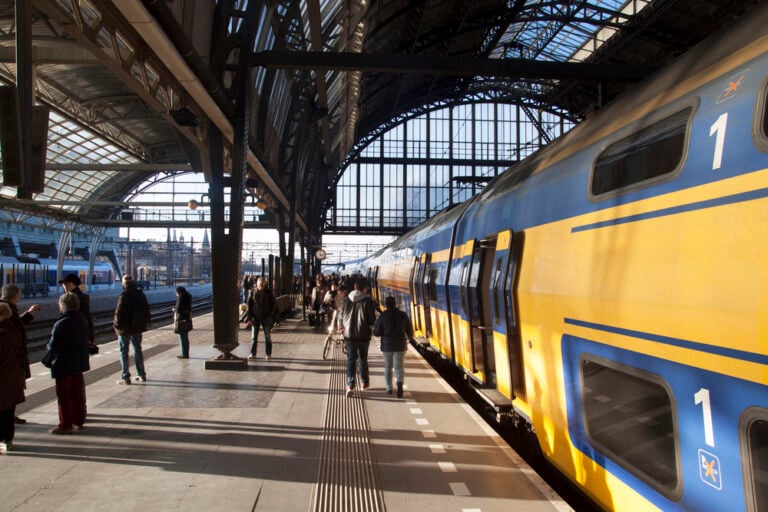
If the recent train disruptions have you swearing off the NS forever, don’t get ahead of yourself. The train service is announcing a new timetable aimed at improving our travel experience.
Faster and more frequent trains, new routes, and more stations: these are the promises the NS is making for the upcoming year. 👇
More trains for the hard workers and the party people
The new NS timetable will start on December 15. Aimed at making our train journeys faster and more flexible, it will run more trains than during the company’s peak year in 2019.
How exactly will they do that? By reintroducing some old routes for starters.
Every 15 minutes, trains will run on the Amsterdam Centraal-Almere, Amsterdam Centraal-Alkmaar and Utrecht-Woerden routes again.
Additionally, the sprinter that currently runs every 10 minutes between Rotterdam and Dordrecht will extend its route, stretching to Den Haag Centraal.
There will also be earlier trains in the mornings and later trains at night. To accommodate both the working and the partying population, this will be the case during both the week and weekends.
If you’ve desperately been trying to leave the country in search of some sun but find yourself stuck at Amsterdam Centraal instead, the NS is keeping you in mind as well.
While the capital’s main station is undergoing renovations, there will be a special sprinter that runs between Hoofddorp, Schiphol and Amsterdam Centraal every 7.5 minutes.
This especially speedy Schiphol connection will start running on December 16.
Faster trips to Brussels
If plane journeys aren’t for you, but going abroad is, travelling will become easier too.
You might not be able to get far, but you can get to Brussels — in 45 minutes less and on twice as many possible trains as before.
Not a completely smooth ride
However, despite the announced improvements, several challenges remain.
Firstly, as every traveller who has tried to get anywhere these past weeks knows, there are currently major train track renovations happening that bring major disruptions with them.
This won’t stop just yet, so the announced changes might still be a bit unreliable as of December 15.
Moreover, these changes will cost you. The price of NS products will increase by 6.2% on average. I guess their focus right now is that public transport actually transports, not that it’s actually accessible to all the public. 🤑
According to RTL, Dutch trains are already more expensive than in neighbouring countries, such as Belgium and Germany.
On the bright side, the NS initially wanted a price increase of 12% but made a deal with the government that enabled them to get that number down to 6.2%.
Even with the price increases, the new timetable sounds promising.
Come December 15, we hope you’re only ever late to work because you managed to get an extra few minutes of sleep… not because you got stuck in Haarlem at 7:55 AM.
An 8-year-old boy was the only survivor of his family after his 41-year-old mother, 45-year-old father, and 17-year-old sister were killed by this weekend’s explosions at the Tarwekamp in The Hague.
In addition to the three family members, three other victims lost their lives, reports NU.nl.
Supporting the victims
The boy is being cared for by family, who express utter devastation following the tragic event.
The young boy and other victims are currently being offered support by the organisation Namens de Familie, which helps people cope with great loss and trauma.
School takes immediate action
The school that both the boy and his sister attended “called parents in the immediate vicinity [of the explosion] on Saturday”, school director Ewald van Vliet tells AD.
The staff have expressed great shock at the news and are doing everything in their power to accommodate everyone affected by the event.
Two further lucky escapes
All the victims and survivors of the explosion have been identified. Two of the survivors were found to be sleeping in the basement of a cafe where the explosions took place, according to the NOS.
The owner of the pub tells the NOS that it was a barman and a regular customer who regularly sleep in the basement after work.
Both made it out almost completely unharmed. They were taken to the hospital due to inhaled smoke.
Cause still unknown
The reason for the enormous explosion is still unknown, and the investigation is ongoing.
According to NU.nl, the police are still searching for the driver of a car seen after the explosion.
Know anything about the incident? As the investigation continues, the police have asked people to come forward with any valuable information by filling out the Tip Form or calling 0800-6070.
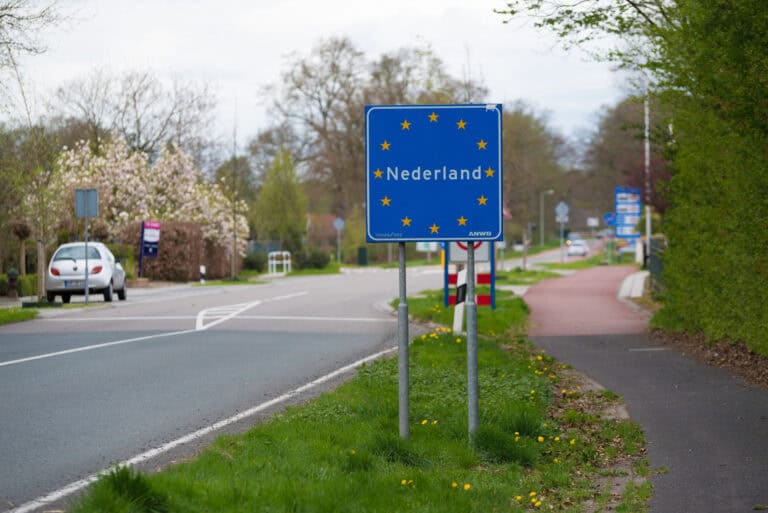
Starting today, the Dutch Royal Marechaussee have introduced extra control along 800 border crossings in the Netherlands, as ordered by the Dutch government.
Wait what? No, the Netherlands didn’t leave the European Union. Instead, these checks intend to combat human trafficking and illegal migration across the Dutch border, reports the NOS.
How will this affect travellers?
From today onwards, cars, trucks and trains crossing into the Netherlands may be subjected to increased border control.
If you’re worried about passport checks interrupting an intense session of carpool karaoke, don’t fret. Realistically, the Marechaussee don’t have the resources to monitor every crossing, meaning most people will experience little to no disruption.
International trains may also be subjected to increased border control. From today onwards, the Marechaussee have the power to search an unlimited number of carriages. So, if you’re travelling by train, ensure you carry proper ID. 🚆
Did you know: As a safety measure, you should always carry a valid passport or identity card when travelling abroad (yes, also in the EU). A Dutch driver’s licence is not an official form of identification abroad. Go to the government website for more information.
Officials question border checks
Many Dutch mayors have expressed concerns about the lack of clarity surrounding the measures, fearing they could cause unnecessary inconvenience for road users.
During Wednesday’s Lower House debate, questions were raised about the impact of these controls on commuter traffic, but the Asylum Minister was unable to provide detailed answers, according to NOS.
A spokesperson for the border municipality of Baarle-Nassau attempted to reassure the public, stating, “the checks will be targeted, so there will be no traffic jams.”
How often do you travel across the Dutch border? Let us know in the comments below.
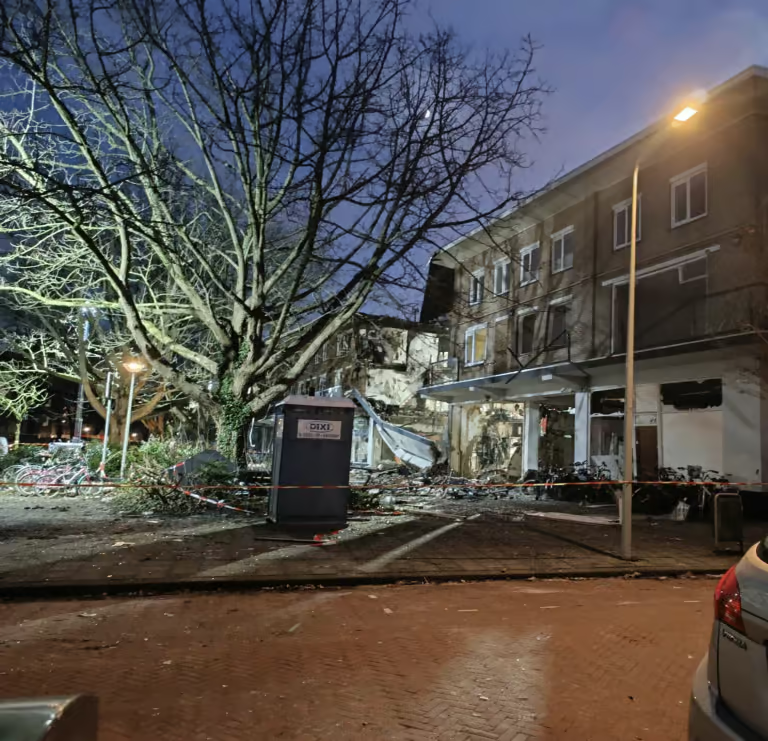
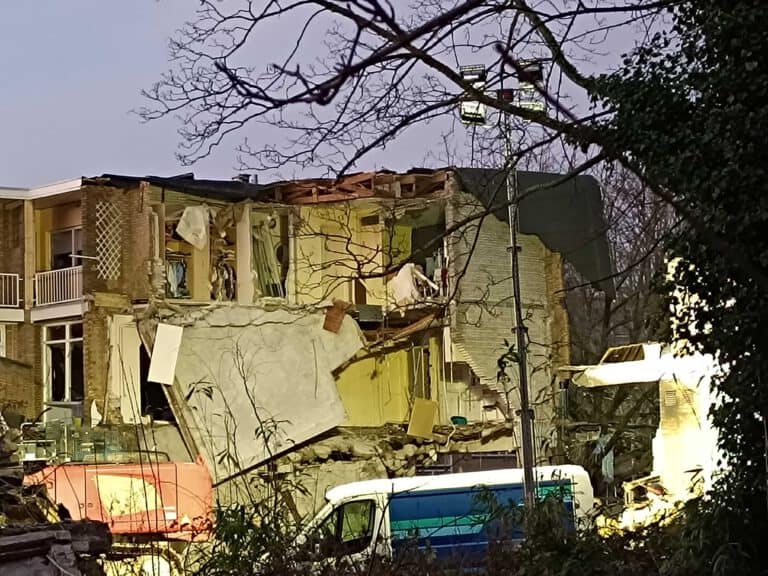
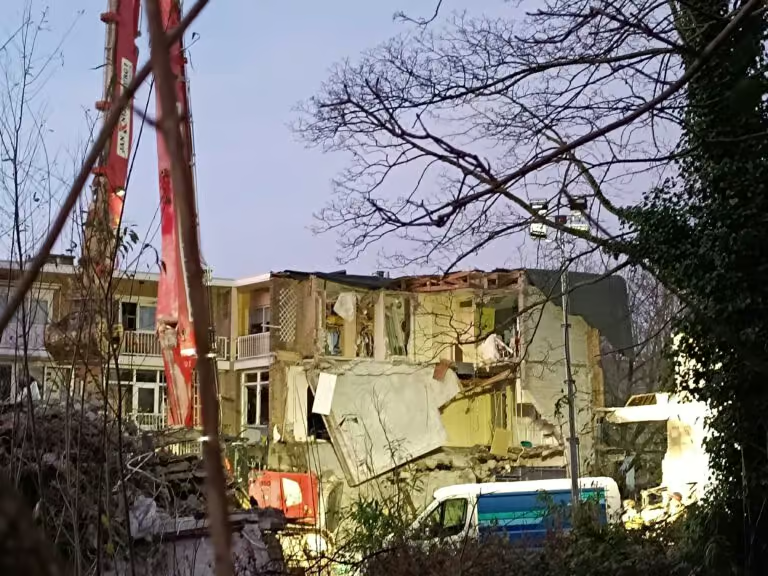
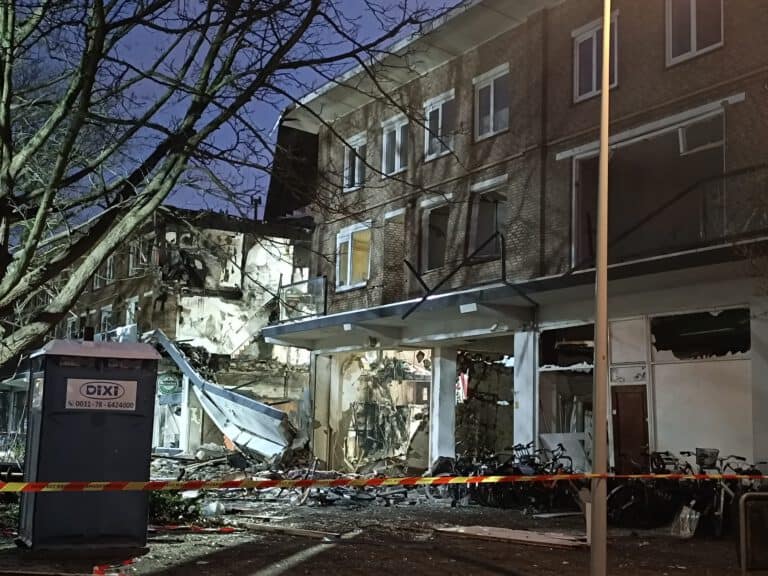
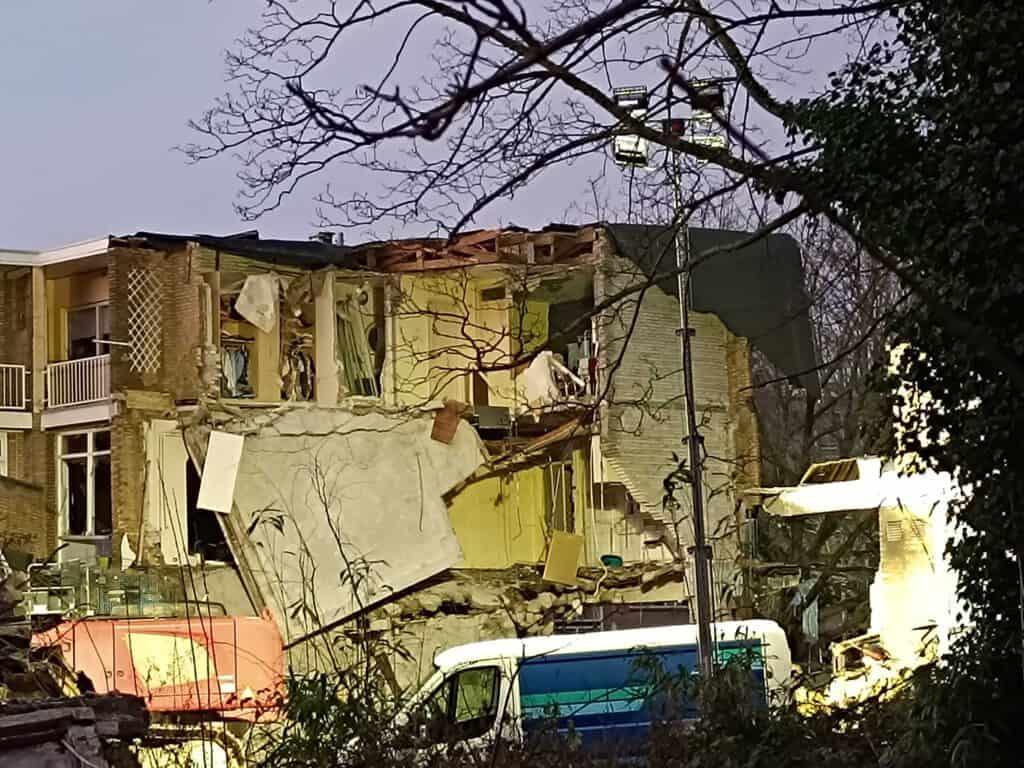
On Saturday morning, multiple explosions caused an apartment building in The Hague to collapse, leaving at least four people injured and six dead. The search for victims is still ongoing.
The explosions, which happened around 6:15 AM on the Tarwekamp, in the Mariahoeve district, destroyed five apartments and several businesses underneath them, reports the NOS.
“Indications of a crime”
Footage from the area suggests that there were three explosions in total, a small one and two bigger ones, resulting in a massive fire that the fire brigades only managed to extinguish around 11 AM.
Although the cause of the explosions remains unknown, the police have said that “there are indications of a crime.”
Specifically, attention has been focused on a car that was seen speeding away from the Tarwekamp soon after the explosions.
Know anything about the incident? As the investigation continues, the police have asked people to come forward with any valuable information by filling out the Tip Form or calling 0800-6070.
Five victims have been identified
On X, The Hague police revealed that five victims have been identified: a man (31) from Voorburg, and a man (45) and two women (17 and 41) from The Hague.
No further information was given on the sixth victim, who was found this morning, or on the people who have been hospitalised.
Major Dutch politicians paid a visit
On Sunday, Prime Minister Schoof, The Hague Mayor Van Zanen and Minister of Justice and Security Van Weel visited the disaster site.
The neighbourhood is deeply shaken by the incident. Image: Beatrice Scali/DutchReview
Their comments to the press reflect the gravity of the incident. “It’s intense, like being in a war zone. I’ve been in war zones and that’s exactly what you see,” Van Weel told the NOS.
Today, the Mayor returned to the explosion scene, this time accompanied by the King and Queen.
€350,000 raised for victims
A local organisation called Lichtpuntjes van Mariahoeve started a donation campaign for victims, both those who lost their loved ones or homes and the ones from the about forty apartments that have been evacuated.
The support has been incredible: over the weekend, they kept reaching and raising their goal.