Home Blog Page 217

This Dutch company is giving employees Fridays off (and paying them for it)

As far as days of the week go, Friday already has a good feeling about it. Now staff at the Dutch software company AFAS can enjoy it even more, as it’s a day off — fully paid.

The Netherlands is already renowned for its great work-life balance. So AFAS, based in Leusden, are raising the bar even higher with their four-day working week structure, NOS shares.

The company refers to Fridays as “development days” intended for volunteering and self-care — using the time meaningfully, without work emails in sight.

Oh, and it’s paid, of course.

Productivity leads to perks

We know what you’re thinking: Surely they need to hire more people to cover on Fridays? Or do they expect their staff to work longer hours for the rest of the week?

READ MORE | Vacation, free time and working hours in the Netherlands: all you need to know

Nope, it seems there’s no catch. Even employees who need to cover customer service on Fridays can take their “development day” on Wednesday.

AFAS can afford to introduce the four-day working week in this way because they have seen a huge rise in productivity levels, which are only getting better.

Perhaps that’s why they trust their staff not to assume “development days” mean lying outside all day *developing* a tan.

“Netflixing all day, or still working hard at another company, for example, is not our preference,” the company told its employees. “But we’re not going to control what you do.”

More doors close on Fridays

In fact, those who do work on Friday will soon have to do it remotely. Starting next year, AFAS’ (fancy) head office in Leusden will be shut every Friday.

Other Dutch companies are doing the same: the doors of de Volksbank head office in Utrecht are also closed on Fridays, now an official work-from-home day for the bank.

“The occupancy was so low on Fridays that this was decided,” a spokesperson tells NOS. “This way, we can also reduce costs and, for example, prevent energy waste.”

If you were wondering why the Netherlands is so happy and has some of the highest well-being levels in Europe, maybe look no further than their Friday attitude.

What do you think of working a four-day week? Let us know your thoughts in the comments below.

Will MDMA be legalised in The Netherlands? The government is investigating it

The Dutch are world-renowned for their tolerant stance towards all things related to drugs. So, of course, an investigation into the positive uses of MDMA in Dutch society is on the agenda.

In fact, the Dutch government has a state MDMA commission to conduct research on the matter.

And its findings? Quite surprising.

Take MDMA! But for PTSD

According to a government press release, the job of the state commission is to “investigate the status of MDMA in the context of public health and to provide advice on the advantages and disadvantages of medicinal use.”

In particular, the commission is investigating how MDMA could be used “in medicinal use in some therapies for mental health patients.”

READ MORE | Dutch Quirk #56: Have a liberal attitude towards party drugs

Taking experts from psychology, criminology, medicine, and law, the committee looked into how MDMA could be used therapeutically in cases such as those suffering from PTSD.

And they found that, yes, this could actually be a good method to treat such patients.

In fact, they’re so confident in their findings that, according to the press release:

“The committee therefore recommends developing the medical use of MDMA for PTSD as quickly as possible and facilitating its implementation.”

You heard em’, get the drugs. 💊

Does this mean MDMA will be legalised in the Netherlands?

However, this doesn’t mean that everyone in the Netherlands will suddenly have good ol’ molly casually joining them for a night out (or a not-so-chill evening in).

While the commission does find grounds for introducing MDMA therapeutically, the Netherlands isn’t quite ready to legalise it, it says.

While the commission found that “the addiction risk and harmfulness appear to be less than expected”, we still don’t know enough about MDMA-related deaths.

On top of this, the commission says that as long as criminality surrounds the drug, we can kiss our dreams of legalising MDMA goodbye.

Want the latest Dutch news to come zooming through the internet to your inbox? Dat kan! Subscribe to DutchReview’s weekly roundup 📮

Train delayed? This new tool lets you request compensation in seconds

Two Utrecht students are top of the class for their school project turned super solution. Michael Hilhorst and Daan Ykema developed a site where users can apply for a refund following travel disruption by simply hitting a button.

The stress of facing train delays on your commute to work is bad enough. But gathering the details needed for a refund — like the exact train and exact length of delay — makes it even worse.

Students Michael and Daan agreed, so they decided to do something to make applying for compensation easier, as they explained in an interview with AD.

How does it work?

“We developed a software system that keeps track of every train on every route throughout the country. If there is a delay in a route, [our system] will save it,” the students explain.

READ MORE | There will be no trains on this NS route for three whole weeks

Users just need to provide details of their public transport card number on the site so that “we can see on which routes you were delayed and whether you are entitled to compensation”.

With this information, “trein-vertraging.nl” notifies the NS of your entitlement to compensation so they can reimburse the correct amount.

Smooth, right? It’s also completely free. 🙏

Business savvy students

Michael and Daan aren’t just innovative creators, they also know their numbers, as they break down the current NS compensation system:

“On the high-speed line, you are entitled to compensation for a delay of just 15 minutes. This is half of the amount you paid for your trip. If you are delayed by 30 minutes or more, you will receive a full refund. For other routes, a compensation of half the amount applies for a delay of 30 minutes. And for an hour or more the entire amount.”

@dutchreview But I’m already 3 cancellations deep 🫠 #dutchlife #thenetherlands #netherlands #dutchmemes #dutchreview #delays #travelnetherlands #amsterdam #holland #meme #memcut ♬ original sound – Kevin Solomon

You currently need this information to file a claim, and the students’ site stores it all for you.

READ MORE | Public transport in the Netherlands: the complete guide

But Michael and Daan are also crunching numbers when it comes to building out their business.

They want the service to remain free for private users, but for companies, they provide a paid service that takes the public transport chip card numbers of all its employees in one go; “But that is on a “no solution, no pay” basis.” 👏

What do you think about the students’ innovative solution? Let us know in the comments below.

These two Dutch cities are the most sustainable in the world

The Dutch are known for being water-bending innovators and sustainability heroes. Now, a study has officially confirmed this, as not one but two major Dutch cities are the most sustainable in the world!

And they are… *drumroll please*… Amsterdam and Rotterdam. 👏

The two cities come first and second in The Arcadis Sustainable Cities Index 2024, a ranking based on research conducted by engineering organisation Arcadis, measuring the sustainability efforts of 100 global cities.

What makes the Netherlands stand out?

What’s so great about Amsterdam, you ask? Well, according to the report, “One of the driving forces behind Amsterdam’s success is its Climate Neutral 2050 Roadmap“.

The roadmap in question lays out the city’s strategy for reducing carbon emissions by 95% compared to the levels in 1990.

Things Amsterdam needs to work on include basic drinking water services and the quality of its transport infrastructure.

READ MORE | 7 innovative Dutch projects for a sustainable future

Rotterdam, in turn, excels in managing air pollution, CO2 emissions, and waste. However, there is “potential for progress” when it comes to green spaces, sustainable transport, and renewable energy production.

European cities dominate the rankings

The index’s top ten is dominated by Western European cities. Seoul is the leading non-European city in the 11th spot.

Wondering where your city is in the ranking? Let’s see. 👇

RankCity
1Amsterdam 🇳🇱
2Rotterdam 🇳🇱
3Copenhagen 🇩🇰
4Frankfurt 🇩🇪
5Munich 🇩🇪
6Oslo 🇳🇴
7Hamburg 🇩🇪
8Berlin 🇩🇪
9Warsaw 🇵🇱
10London 🏴󠁧󠁢󠁥󠁮󠁧󠁿

Karachi (Pakistan), Johannesburg (South Africa), Nairobi (Kenya), and Cape Town (South Africa) are at the bottom of the ranking.

“We must act now”

But it’s not all stroopwafels and rainbows, as the report clearly shows. “The results are clear,” it reads, “We must act now to forge a resilient, fair, and sustainable world.”

There are just 2,000 days left to achieve the United Nations Sustainable Development Goals by 2030, and both public and private collaboration efforts are needed to reach them.

READ MORE | 9 surprisingly unsustainable Dutch habits 

Though Amsterdam and Rotterdam are at the top of the rankings, it’s important that they keep the momentum going and continue developing for a greener, more sustainable future.

Are you surprised by the findings of the Sustainable Cities Index? Share your thoughts in the comments.

The Dutch are growing taller than ever: here’s why

Walking alongside the giants of the Netherlands can be a bewildering experience for a humble 164cm-tall international. Now, research reveals that growing like a Dutchie doesn’t require a miracleit’s mainly just milk.

Yes, the Dutch diet, lifestyle and good healthcare are among the most important developments leading to the increasing height of people in the Netherlands, the AD reports.

A head and shoulders above the rest

It’s not just the Dutch diet that is balanced, apparently.

Wealth is also more equally distributed across the Netherlands compared to other countries, which helps the average national height grow.

READ MORE | Dutch Quirk #82: Grow really, really tall

“In the US, where there is more inequality than in the Netherlands, you see that people grow shorter on average.”, explains Gert Stulp, sociologist at the University of Groningen.

That’s because higher levels of poverty mean reduced access to healthy food, so children from poorer backgrounds do not receive enough nutrients to grow tall.

Meanwhile, healthy food is more readily and evenly available across the Netherlands (no thanks to you, FEBO).

Drink your melk

We know the Dutchies love their cheese, so it’s no surprise that dairy plays a big role in their towering statures.

Milk is especially important as it’s packed with proteins that improve growth, and people in the Netherlands are guzzling it.

READ MORE | Eat your cheese: How the Dutch became ridiculously tall

Stulp explains, “Europeans have a gene that allows us to continue drinking milk throughout our lives. So we have an extra protein source in our diet for a longer period of time. Those extra proteins make you taller.”

@rashi.in.amsterdam Being tall pays off at concerts 😅 #livinginthenetherlands #expatsinthenetherlands #tallgirlcheck #talltiktok #dutchtiktok #tiktoknl #tallpeople #amsterdamlife #dutchpeople ♬ Funny Song – Funny Song Studio & Sounds Reel

So from now on, I have a new response for the next Dutch person to comment on my height: I’m not short, I’m just lactose intolerant. 🥛

Did you know the Dutch diet helps them grow taller? Let us know your thoughts in the comments below.

Dutch students are challenging this proposed government measure — here’s why

As if rental shortages, energy bills, and a tough job market weren’t challenging enough, students are now facing a potentially huge roadblock to completing their studies.

Coalition parties PVV, VVD, NSC, and BBB want students with more than a year’s study delay to pay €3000 in addition to their €2530 statutory tuition fee in the 2026-2027 school year, reports RTL Nieuws.

Understandably, students, study associations, and political youth groups, among other organisations, are less than happy with the so-called ‘long-term study fine’ (langstudeerboete).

The measure is set to affect 94,000 students in 2026 and 2027.

Unfair and “unacceptable”

Participating in a study association’s board, competing in university division sports teams or working a side job are just normal aspects of student life.

But balancing all of the above (plus finding time for some kind of personal life) often leads to many students in the Netherlands taking study delays.

READ MORE | The cost of student housing in the Netherlands is out of control (and it’s only getting worse)

The new measure makes this harder — and many students are speaking out, arguing that it will cause financial worry and stress for students who are already paying their regular tuition fees.

The measure would also negatively affect students who already have study delays of more than a year or students who would have to take delays due to illness or other personal circumstances.

Making their voice heard

Now, several groups and organisations have written a letter criticizing the langstudeerboete.

They are demanding that the government withdraw the measure and announce actions if nothing happens.

How the fine will be implemented is still unclear, but NSC leader Pieter Omtzigt has promised a “careful interpretation” of the measure.

What do you think of this long-term study fine? Tell us in the comments below!

Buying a new-build in the Netherlands: everything you need to know

If you’re interested in buying a new-build in the Netherlands, you’ll know that it appears to be a daunting task. 

But while navigating the home-buying landscape can be scary, it’s all worth it once you’ve finally got those shiny keys in hand. 

So, let’s guide you through the process of buying a brand-new home in the Netherlands. 💪


What counts as a new-build in the Netherlands?

Good question! Generally speaking, a new-build home is a home that still needs to be built or has just recently been finished.

Oftentimes, buying a newly-built house or apartment means you commit to buying the home before the developer starts the construction. 

This is because the developer needs to gauge whether enough people are interested in the development, and the contractors need to apply for a building permit. 

Alternatively, you might also be able to buy a new-build after construction has already started.

photo-of-couple-sitting-on-floor-inspecting-printout-of-new-build-in-amsterdam
Buying off the plan requires a little imagination. Image: Freepik

In both cases, the upside is that everything will be brand-spanking-new when you move in — and you’ll be the first person to live there. 

But the downside? You may have to wait months, or even years, until your home is ready to be moved into. More on the pros and cons later.


How is buying a new-build different from buying an existing home?

Buying a new-build home is equally exciting as it is confusing. There are many differences between buying an old home vs. a new one. Let’s get into it. 👇

Which is cheaper, an existing home or a new-build? 

Ah, the golden question! Unfortunately, the answer isn’t quite that simple, and which option is cheaper can vary on a case-by-case basis. 

When you buy a newly-built home instead of an existing one, you don’t have to worry about certain costs, such as transfer tax, the mortgage deed, and the evaluation report. 

However, new-builds often have increased costs at the construction stage. 

couple-talking-to-mortgage-advisor-about-buying-a-new-build-in-the-netherlands
Consluting a mortgage advisor can help you figure out which option is better suited for you. Image: Depositphotos

In particular, you’ll likely find yourself having to maintain payments for your current home while also making partial or full payments on your new mortgage. 

On top of that, it’s important to consider that your monthly payments on the new-build increase gradually as construction comes close to completion.

Good news! You may be eligible for a so-called bridging loan to help you cover costs while transitioning from one house to another. This temporary mortgage helps bridge the surplus value between the purchase of a new house and the sale of the old one.

Often, new homes are also delivered without a kitchen, bathroom or floors, which is another cost to keep in mind.

The real money-saving with new homes starts after the building is done. 

Because newly built properties are usually built with the latest energy requirements in mind, you not only spend less on energy payments but also benefit from lower mortgage interest rates. 

On top of that, your new home will be, well, brand new — and you won’t have to spend any money on renovations or maintenance for at least the first few years. 

man-checking-energy-efficiency-of-house-in-the-netherlands-on-tablet
A high energy rating is great for your wallet and the planet. Win-win! Image: Freepik

How about the buying process?

Usually, when buying a preexisting house, you put on your boxing gloves and enter the bidding ring. 🥊

Due to the housing shortage in the Netherlands, prospective buyers regularly engage in tough bidding wars, which can result in a significantly higher selling price than the seller initially asked for. 

Newly built homes, on the other hand, usually have the advantage of having a fixed selling price — meaning you won’t have to worry about being outbid by someone else.

However, this doesn’t guarantee you’ll score the house your heart is set on. Instead of a bidding war, new-builds often use a lottery system to determine who can buy a home and who can’t. So yes, it can be a question of pure luck. 🍀 

How does the mortgage process work for a new-build?

Mortgages for new construction projects work almost the same as for an existing home. Naturally, your first step is to calculate how much you can afford and how much you want to spend.

photo-of-couple-looking-at-papers-to-determine-their-budget-when-buying-a-house-in-the-Netherlands
First things first: Time to look at your finances. Image: Freepik

The key difference regarding mortgages for a new-build is that you will first need to purchase the space it will be built in, and then finance the construction work later on. 

That’s why you should remember that your payments will gradually increase as your home approaches completion.

Here’s how the mortgage process works for new-builds:

  1. You’ll purchase the building ground while holding the remaining funds in a separate bank account.
  2. You sign the ownership deed at the notary and start your mortgage payments immediately. The first payment from the bank to the notary covers the ground purchase and the preparatory construction work.
  3. The remaining mortgage amount will be transferred to a building account. This is accessible upon completion of construction milestones, when you’ll receive an invoice from the developer which you then forward to your bank.

Note: When buying a new apartment in the Netherlands, you typically don’t purchase the land the building stands on. Instead, apartments are often sold under Erfpacht (leasehold).

This means you pay a fee to the landowner for the right to use the land, either periodically (ground rent) or as a one-time payment for an extended period.

While your mortgage money is in the bank, you receive interest on it. But, helaas, this is offset by an interest loss you incur during the construction phase (that is, you pay more interest than you receive).

Note that the building account does not cover additional costs such as kitchen, bathroom, or flooring expenses.


Can I buy a new-build in the Netherlands as an international? 

The short answer to this question is… it depends. 

Whether you’re eligible to get a mortgage as an expat in the Netherlands depends, among other things, on your residency status.

dutch-homes-being-built-with-red-brick-on-construction-site-in-the-netherlands
Buying a new-build is easier for some expats than for others. Image: Depositphotos

You’re an EU citizen

Are you from an EU country but want to buy a home in the Netherlands? Geen problem. 

As an EU citizen, pretty much any Dutch mortgage lender will help you finance your Dutch home without any problems.

You’re not an EU citizen

Not an EU citizen? Then you’re living in the Netherlands on a residence permit, and things are slightly different.

Whether you can get a mortgage in the Netherlands depends on the type of residence permit that you have. 

Typically, you’re only eligible for a Dutch mortgage if you live in the Netherlands with a “non-temporary purpose of stay” — that is, if your residence permit is not temporary.

READ MORE | Permits and visas for the Netherlands: ultimate 2024 guide

If you have one of those residence permits, you have quite a few options, and many lenders will be willing to provide up to 100% of the loan-to-value ratio that you would typically be entitled to based on your income. 

That being said, even within this category, some people have higher chances of getting a mortgage than others, with highly skilled migrants (Kennismigranten) having the highest chance of getting approved. 


Buying a new-build in the Netherlands: the pros and cons

Buying a house in a foreign country is a big deal — and naturally, you want to be sure of your decision when you finally bite the bullet. 

So, what are the pros and cons of buying a new-build in the Netherlands?

couple-thinking-about-how-to-furnish-their-new-home-in-the-netherlands-after-buying-a-new-build
All yours to customise! Image: Depositphotos

The benefits of buying a new-build in the Netherlands

The advantages of buying a new-built home go beyond getting to make one too many new Pinterest boards. 😉 Consider these, for example:

  • You pay a fixed price. Overbidding? We don’t know her. New homes in the Netherlands are usually sold at a fixed price, saving you the stress of bidding wars and worrying about being unable to afford your dream home.
  • It’s yours to customise. Sure, old homes are charming, but do you really want that sink in your bedroom? Exactly. A new-build gives you all the freedom when it comes to decor and layout decisions.
  • You’ll have a great energy label. Since new homes usually meet the latest environmental requirements, your home will be environmentally friendly while also scoring you a lower interest rate on your mortgage. Win-win! 
  • Everything is new, meaning your maintenance and renovation costs will be low to non-existent in the first few years. 
  • Property value goes up quickly. If you buy a new-build in a good or developing neighbourhood, the value of your property is likely to increase quickly.

The disadvantages of buying a new-build in the Netherlands

Of course, not everything is sunshine and stroopwafels — and even new homes have drawbacks… 

  • You’ll have to be patient. New-builds are bought while construction is still ongoing or has yet to start, meaning you might have to wait a while before moving in.
  • You’ll likely be paying extra. While waiting for your home to be built, you may have to pay your old rent/mortgage and your new mortgage, plus interest. 
  • You have to get lucky. Many new-build projects use a lottery system to decide who can buy a home. This means that even if you fulfil all the requirements, you might still miss out on your dream home.
  • You might feel like you’re living in a construction lot for a while. Once you move into your new home, you’ll likely be surrounded by construction of other buildings and amenities.

How to choose a new-build in the Netherlands that’s right for you

Last but certainly not least, you’re probably interested in how you can find a new-build project that fits your wishes and needs.

Natuurlijk, what home you choose to buy is highly personable, but some aspects can help you decide. Consider, for example:

  • The location of the home,
  • Your financial situation,
  • The reputation of the real estate developer,
  • The quality of construction of the building,
  • The completion timeline,
  • The energy rating,
  • The resale potential.

From seeing the developer’s vision come to life to creating your perfect dream space, buying a new-build in the Netherlands is an exciting journey. Sit back, enjoy the ride and success! 🙌

Which would you choose: an old house or a new-build? Tell us your thoughts in the comments below!

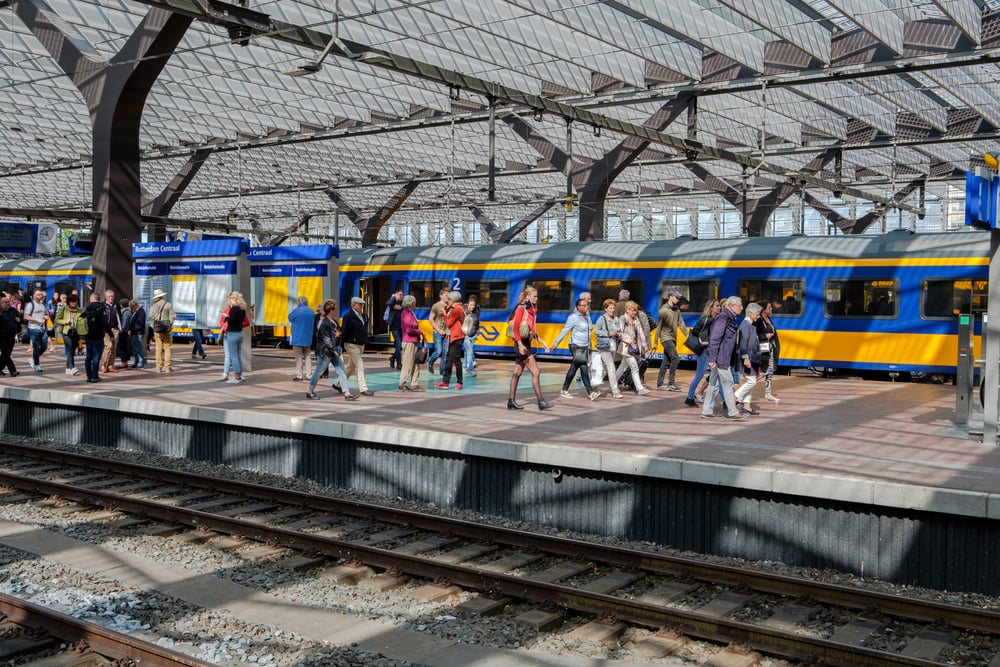
There will be no trains on this NS route for three whole weeks

What’s the most fun thing to do on a summer’s weekend? A city trip! But what’s the NS’s favourite hobby? Working on the tracks. 😢

That is why, for three weeks starting June 17, no trains will run to and from Leeuwarden, one of the most important train routes in the north of the country.

The result? Travellers can expect extra travel time between 15 minutes and an hour. 😀

Replacement buses and cancelled routes

From Monday, June 17, until Tuesday, July 9, no trains will run:

  • between Leeuwarden and Harlingen Haven,
  • between Leeuwarden and Stavoren,
  • between Leeuwarden and Akkrum.

From June 17 to June 20 and on July 9, Leeuwarden will be fully inaccessible by train. As a result, the last big connection to Groningen also falls away, NU.nl reports.

If you’re planning on travelling towards Leeuwarden during the three affected weeks, you can expect to deal with replacement buses or alternate routes.

As always, the NS advises travellers to keep an eye on their travel app. 📲

Will you be affected by this three-week-long construction work? Share your thoughts in the comments.

The results are in: here’s who the Dutch voted for in the EU elections

The final round of voting for the European Parliament elections took place yesterday, and the final results are in for the Netherlands… drum roll, please!

Geert Wilders’ right-wing PVV was a big winner, jumping from one to six seats but still gaining one less seat than what was predicted in the Ipsos exit poll last Friday.

The GL-PvdA (GreenLeft and Labour Party) remain the largest party with eight seats in the EU parliament despite losing one seat since 2019, reports the NOS.

In the European Parliament

The VVD (Mark Rutte’s party) and CDA have become the third and fourth-largest parties, with four and three seats respectively, a loss of one each.

GL and PvdA are also separate in the EU parliament, as PvdA is affiliated with the S&D faction and GL with the Greens.

Volt also made a surprising comeback, gaining two seats since 2019 and one more than was predicted in last week’s exit poll.

The BBB (the Farmer’s Party), which did not participate in the 2019 elections, gained two seats, and NSC (New Social Contract) gained one seat.

SGP and PvdD (Party for the Animals) keep their one seat, while FvD (Thierry Baudet’s Forum for Democracy), CU (ChristenUnie, or Christian Union), and 50PLUS lost their seats and will not return to EU parliament. SP did not earn a seat in parliament again.

Want the latest Dutch news to come zooming through the internet to your inbox? Dat kan! Subscribe to DutchReview’s weekly roundup 📮

Code yellow: these Dutch regions will face thunder, rain, and strong winds today

It’s June in the Netherlands, and you know what that means: summer solstice, schoolbags hanging off flagpoles, and beach days at Scheveningen. Oh, and the occasional weather warning.

Today is one of those typical days in June, as the KNMI (Royal Netherlands Meteorological Institute) has issued a code yellow warning for heavy gusts of wind in the provinces of Zeeland, Zuid-Holland, Noord-Holland and in the west of Noord-Brabant.

And, of course, it wouldn’t be a Dutch summer’s day without heavy rain and thunderstorms. ⛈️

What can we expect?

According to the KNMI, gusts of wind reaching speeds of up to 100 kilometres per hour are expected in the coastal provinces.

To make matters worse, between “20 to 30 millimetres of rain can fall until the evening,” as the KNMI tells NU.nl.

These conditions might cause trouble not only for outdoor activities and events but also for anyone who’s on the road today — especially on a bike, in a truck, or in a car with a trailer or caravan.

The code yellow warning will be in effect from 1 PM until 8 PM today.

What’s next?

Craving some warmth and sunshine? Unfortunately, we’ll have to wait for it.

While Tuesday remains rainy with the occasional shower, Wednesday is set to be dry and cool. In the coming week, temperatures will rise slightly but remain too low for this time of year. 🙃

Want the latest Dutch news to come zooming through the internet to your inbox? Dat kan! Subscribe to DutchReview’s weekly roundup 📮