Home Blog Page 238

7 places to live near Amsterdam: the ultimate guide

Looking for the best places to live near Amsterdam? We get it. 

So the inevitable happened: you spent some time in the Netherlands’ biggest metropolis, sat in the sun along the canal or wandered in a quiet foggy Vondelpark — and suddenly, it hit you. You want to live here. 

That’s cool; there’s just one problem: a housing crisis, overcrowding, tourists everywhere, and skyrocketing rents.

Don’t worry, though — because there are plenty of great places to live near Amsterdam that will give you easy access to the Dutch capital. 

By deciding to live near Amsterdam rather than in it, you can save some serious cash (and nerves 😉) while still profiting from those big-city-perks whenever needed.

First: Amsterdam vs. the Amsterdam Metropolitan Area

When looking for places to live near Amsterdam, it’s important to note the difference between Amsterdam, the Dutch capital, and the greater Amsterdam Area. 

What is the difference, you ask? Well, hundreds of thousands of people and many different municipalities. The Greater Amsterdam Area includes many of Amsterdam’s neighbouring towns, suburbs and cities — which are dependent on the urban core in the middle. 

If we measure Amsterdam purely within its city limits, it counts a population of about 1,2 million people. In contrast, Metropolitan Amsterdam counts more than double that, with a whopping 2,5 million people. 🤯

The Greater Amsterdam Area is a great place to live for many reasons: it’s cheaper, it’s quieter, and it’s well connected to the capital! On top of that, these areas are often a lot greener and have vibrant, international communities.

READ MORE | Where to live as an international in the Netherlands: the complete guide

So, what are the best places to live near Amsterdam? What towns within Metropolitan Amsterdam are worth checking out? Let’s have a look! 👇


1. Haarlem: the capital of North Holland
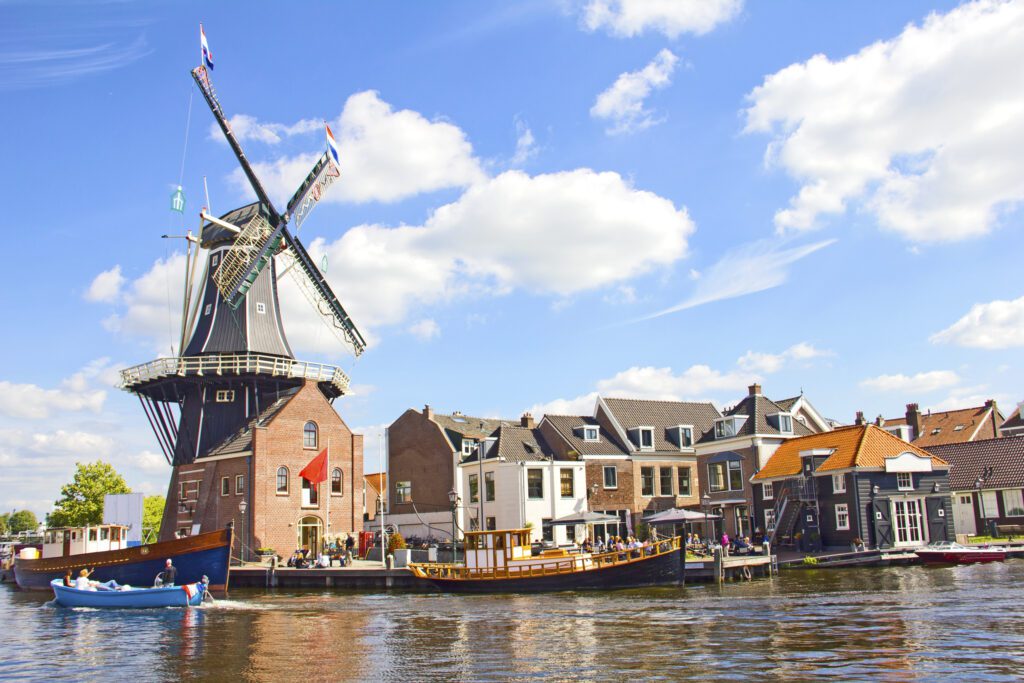
places-to-live-near-amsterdam-haarlem-windmill-on-canal
Does it get any more Dutch than this? Image: Depositphotos

Haarlem is a medium-sized city that is also the capital of North Holland. Yes, we know it’s confusing: Amsterdam is the capital of the country, the government is located in The Hague, and Haarlem is the capital of the province in which Amsterdam is located. Why make it easy when you can make it difficult, right?

You can think of Haarlem as a laid-back mini-Amsterdam. It has charming canals and canal houses; a nice city centre with plenty of places to shop, wine, and dine; and a big international community. 

READ MORE | 18 charming things to do in Haarlem

As a very safe and laid-back city, Haarlem is also super family-friendly. Not only does it have its own international school (and many Dutch ones, too), but there also is no scarcity when it comes to clubs and events for children.

Craving some fresh air and greenery? Geen problem, says Haarlem. It’s home to the national park Zuid-Kennemerland, offering superb choices for the nature lover, the runner, the hiker, and the cyclist alike. 🚴‍♀️

If you’re more the beach-kind-of-person, you’ll be happy to hear that Haarlem is also super close to the sea and that you can be at the famous Zandvoort Beach in no time!

🏠 Average rent (per square metre): € 20.49 in 2020
🔑 Average house cost (per square metre): €5,116 in 2023
🚄 Travel time to Amsterdam Centraal: 18 Minutes


2. Almere: the city across the pond
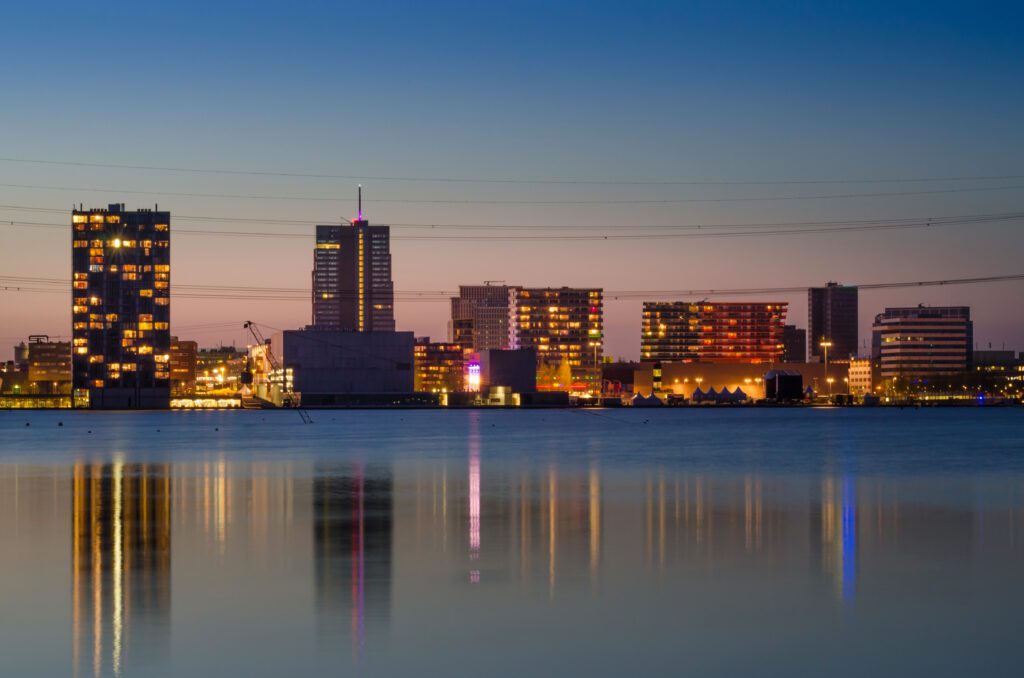
Twilight at Weer Water in Almere, Flevoland, one of the best places to live near Amsterdam.
New York City? Nee, Almere! Image: Depositphotos

The next town on our list of best places to live near Amsterdam is Almere. Though located in an entirely different province, Flevoland, this city is just across the IJmeer from Amsterdam and the second largest city in the Amsterdam Metropolitan Area. 

Since this is one of the Netherlands’ youngest cities, built mostly during the 70s and 80s, it has less of that quintessentially Dutch vibe. On the bright side, this also means that Almere hosts a lot of spacious neighbourhoods, modern housing, and green oases. 

Another unique selling point is the fact that Almere has free space available for people to design and build new homes (a true rarity in the Netherlands!). Oh, and because it was built on water, Almere also gives you great access to some refreshing lakes.

READ MORE | The 18 most magnificent lakes in the Netherlands (near Amsterdam and beyond)

A popular place for expats and families alike, Almere has its own international school, as well as plenty of shops, restaurants, and cafés. Much of Almere’s cultural scene and entertainment is also specifically catered toward families.

🏠 Average rent (per square metre): €14.68 in 2020
🔑 Average house cost (per square metre): €3,685 in 2023
🚄 Travel time to Amsterdam Centraal: 20 minutes


3. Hoofddorp: built on reclaimed land

Hoofddorp lies in the ‘Haarlemmermeer’ municipality, just south of Amsterdam. The city land was reclaimed from a lake when Hoofddorp was founded in 1853.

READ MORE | Dutch Quirk #124: Not care about the fact that they’re living below sea level 

Hoofddorp’s central location means that the town is incredibly well-connected to cities like Amsterdam, Utrecht, Rotterdam, and The Hague. This makes it easy to have fun weekend trips or commute to work in one of the major cities. Leuk! 

What might sound niet zo leuk is the fact that Hoofddorp is the direct neighbour of the infamous Schiphol Airport. But fear not: there’ll be none of that deafening aeroplane sound to wake you in the morning because Hoofddorp is actually a fly-free zone. 🚫✈️ 

Altogether, Hoofddorp is a typical suburb in which a blend of people comes together. It’s easy to spend all your time outside of the house, be it taking in the surrounding greenery, making use of the many nearby facilities, or exploring nearby cities.

🏠 Average rent (per square metre): €15.78 in 2020
🔑 Average house cost (per square metre): €4,251 in 2023
🚄 Travel time to Amsterdam Centraal: 21 minutes


4. Amstelveen: Amsterdam’s greener brother
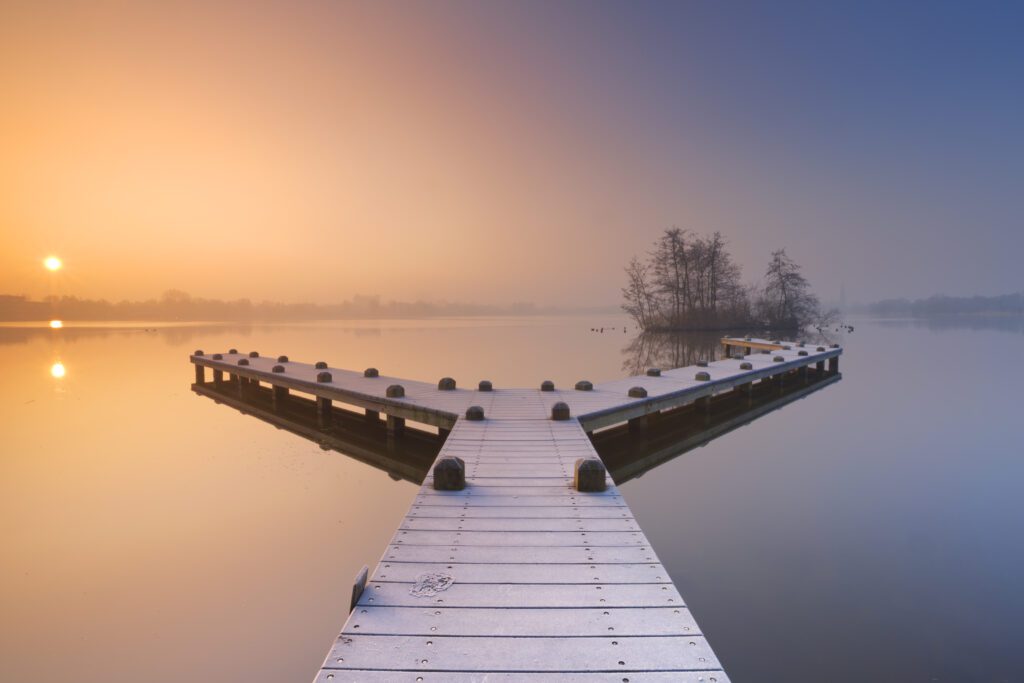
Jetty on a still lake on a foggy winter's morning
The perfect place for a morning swim! Image: Depositphotos

In all seriousness, Amstelveen is about as suburban as it gets — it lives and breathes almost entirely on its bigger brother’s back, Amsterdam.

Nonetheless, the town has all the facilities for you to avoid travelling back and forth to Amsterdam all the time. Once you go into inner Amstelveen, you’ll find that it has a very charming identity of its own. 

READ MORE | The cost of living in the Netherlands in 2023

One of Europe’s biggest city parks, the Amsterdamse Bos is located just on the border of Amselveen and Amsterdam, and is guaranteed to, literally and figuratively, offer you a breath of fresh air. 💨

Prepare to be greeted by great shops, restaurants, cafés, and a large expat community. Why so many internationals, you ask? That’s because many tech companies chose to base their headquarters (along with their workers) “just outside of Amsterdam”.

Amstelveen is generally nice and quiet — other than the occasional roaring plane. It must be said that some parts of Amstelveen suffer from earthquake-like plane movements and other parts relatively little, so be sure to check that out ahead of time.

🏠 Average rent (per square metre): €19.67 in 2022
🔑 Average house cost (per square metre): €5,455 in 2023
🚄 Travel time to Amsterdam Centraal: 30 minutes


5. Zaandam: Amsterdam’s industrious neighbour
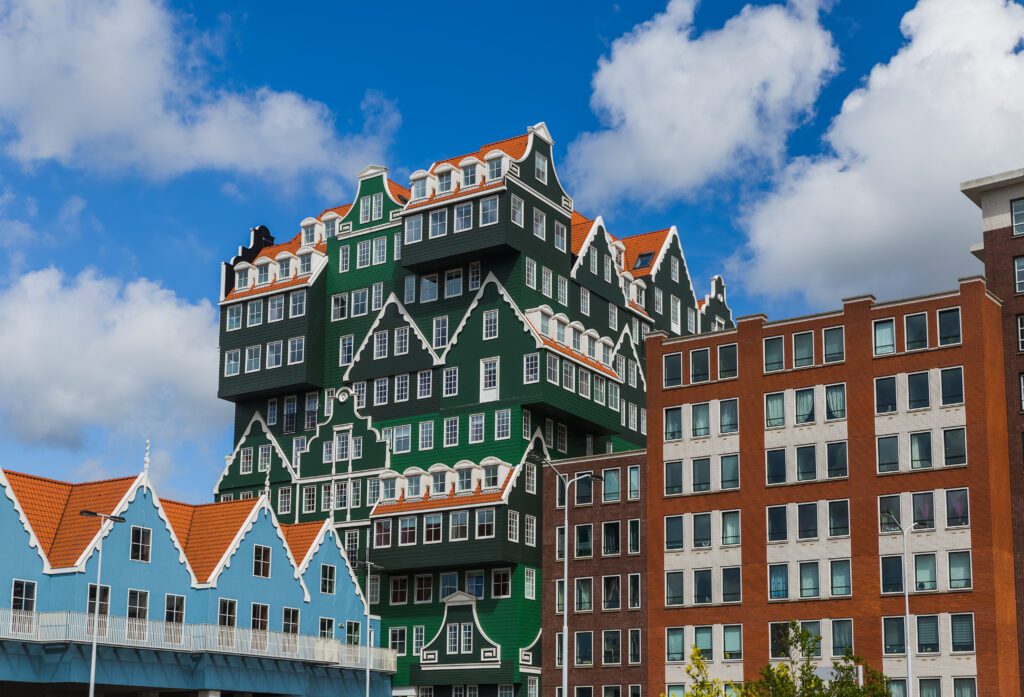
Modern architecture in Zaandam Netherlands - architecture background
This place features some funky Dutch architecture! Image: Depositphotos

You’ve heard of New Jersey and New York, right? Well, think of Zaandam as Amsterdam’s New Jersey — there’s a centuries-old bond between the two and a general understanding that they’re good with each other, yet they’re well aware of their differences. 

Amsterdam Noord borders Zaandam by just a few kilometres of road. Much like Haarlem, Zaandam is a pretty old city, but many parts of it are still proudly standing — including the gorgeous windmills at Zaanse Schans.

READ MORE | Best windmill site in the Netherlands: Kinderdijk or Zaanse Schans?

Besides its beautiful windmills, Zaandam is also known for its industrious character — full of factories and companies that preferred to settle just outside of the unaffordable capital. 

Zaandam offers much more affordable housing than Amsterdam, and as a result, it has seen its population grow over the past decades. That also means most of the city boasts relatively newly built apartments. Leuk!

Zaandam’s vibe offers a bit more of a typical Dutch feel, as opposed to the often rushed attitude in Amsterdam. Overall, people are just a little laid-back in Zaandam (and we guess that makes sense if you don’t have to deal with tourists walking on the cycling paths 😉).

🏠 Average rent (per square metre): Unknown
🔑 Average house cost (per square metre): €4,017 in 2023
🚄 Travel time to Amsterdam Centraal: 15 minutes


6. Hilversum: surrounded by nature

Hilversum is located at the centre of the Gooi nature reserve, making it a true green oasis just a stone’s throw from Amsterdam. A quintessentially Dutch city (minus the canals), this place is surrounded by lush forests and refreshing lakes.

The city consists of both modern apartments and charming old houses, with spacious accommodations and all the necessary facilities (shopping malls, medical, public transport) well within reach. 🙌

Since it is extremely expat-friendly, Hilversum also hosts multiple international and bilingual schools.  

READ MORE | 7 reasons why living in the Netherlands will change your life

Though many people living in Hilversum commute to Amsterdam or Utrecht for work, the city itself is a true hub for professionals. 

Not only is the Netherlands’ media and entertainment industry based here, providing career opportunities for over 8,000 media professionals, but it is also home to the headquarters of big international brands like Nike and Hunkemöller.

🏠 Average rent (per square metre): €14.88 in 2020
🔑 Average house cost (per square metre): €4,582 in 2023
🚄 Travel time to Amsterdam Centraal: 20 minutes


7. Diemen: the Amsterdam sandwich
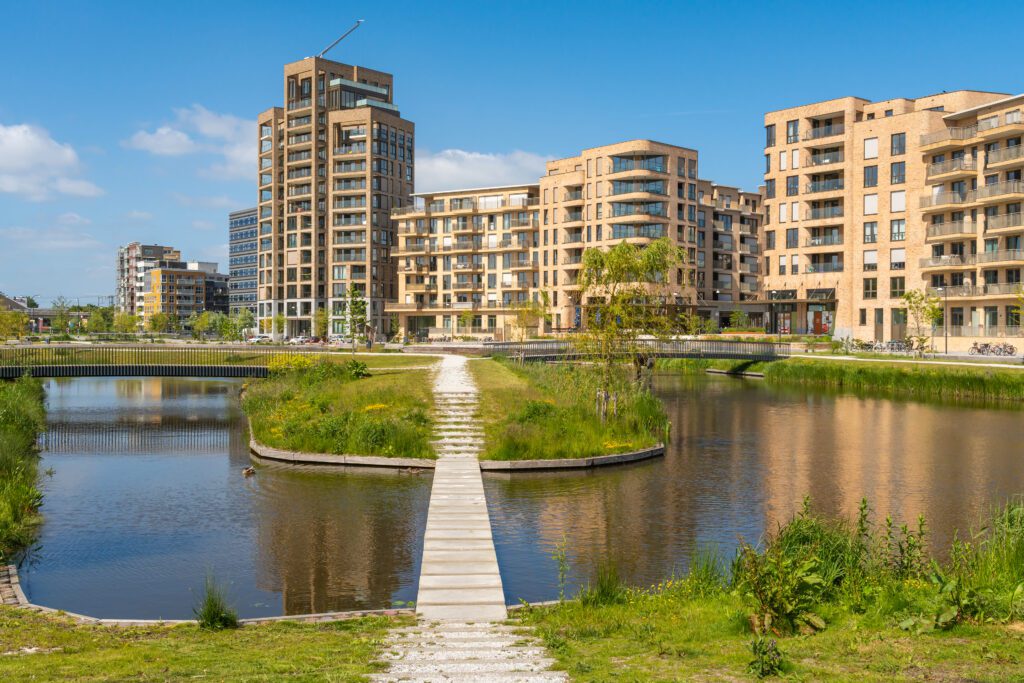
diemen-new-consturction-one-of-seven-places-to-live-near-amsterdam
‘Holland Park’ is a popular up-and-coming neighbourhood in Diemen. Image: Depositphotos

Diemen is a town that is literally sandwiched between two districts of Amsterdam: Oost and Zuidoost. Why is it not just a part of the city? Nobody knows. 🤷‍♀️

Due to its proximity to Amsterdam, Diemen has recently experienced a lot of growth, partly thanks to many large-scale developments. As a result, many families and young professionals flock to the town and settle there, often while working in Amsterdam. 

READ MORE | 9 things no one tells you about living in the Netherlands for the first time

Diemen offers a great escape from the bustling city and some peace and quiet from the weed-smoking, booze-cruising tourists of the city. 😉 Instead, you’ll find plenty of forests and parks that will accommodate you for walks, hikes, and bike rides. 

If you do want a taste of Amsterdam nightlife, you’ll be happy to hear that Diemen is incredibly well-connected to the city via public transport services as well as bike lanes. The only thing standing between you and a night out in Amsterdam is your willingness to get off the couch. Proost! 🍻 

🏠 Average rent (per square metre): €18.15 in 2022
🔑 Average house cost (per square metre): €5,309 in 2023
🚄 Travel time to Amsterdam Centraal: 10 minutes


The best places to live near Amsterdam are diverse — but they do have two things in common: they’re close to Amsterdam (duh), and well connected to it thanks to the Netherlands’ great public transport network.

When it comes down to it, most Dutch cities and towns are great places to live in (hence why the Dutch are so happy!) — and, of course, you can always move again. 🤷‍♀️ 

Which of these places to live near Amsterdam would you move to? Tell us in the comments!
Worm hotels in the Netherlands: an eco-friendly approach to community building

Community composting is taking off in the Netherlands. So far, its effectiveness in addressing food waste has only been surpassed by its social benefits. And the unsung hero behind it all? Worms.  

Worm hotels — if you don’t already know what they are, are not a place for sleepy-eyed worms to check in for the night after a long day of travelling.

Surprisingly, it’s actually the worms that are running the hotel, and your food waste is the guest. 🍎

Your apple cores and eggshells check in for a several-month stay and then leave refreshed and ready for their new life as a nutrient-rich fertiliser.

If that’s news to you, you’ll be very surprised to hear that Amsterdam is full of these slithering food waste retreats.

What are worm hotels?

Worm hotels are everything urban composting should be: easy to use, accessible, compact, and community-oriented.

They bring nature to the city and are rife with opportunities for education and community-building.

Worm hotels offer an optimistic alternative to traditional throw-away culture, proving that household waste can become gardening gold. They’re the hot new project that’s bringing neighbours together all throughout the Netherlands. 

Photo of worm hotel
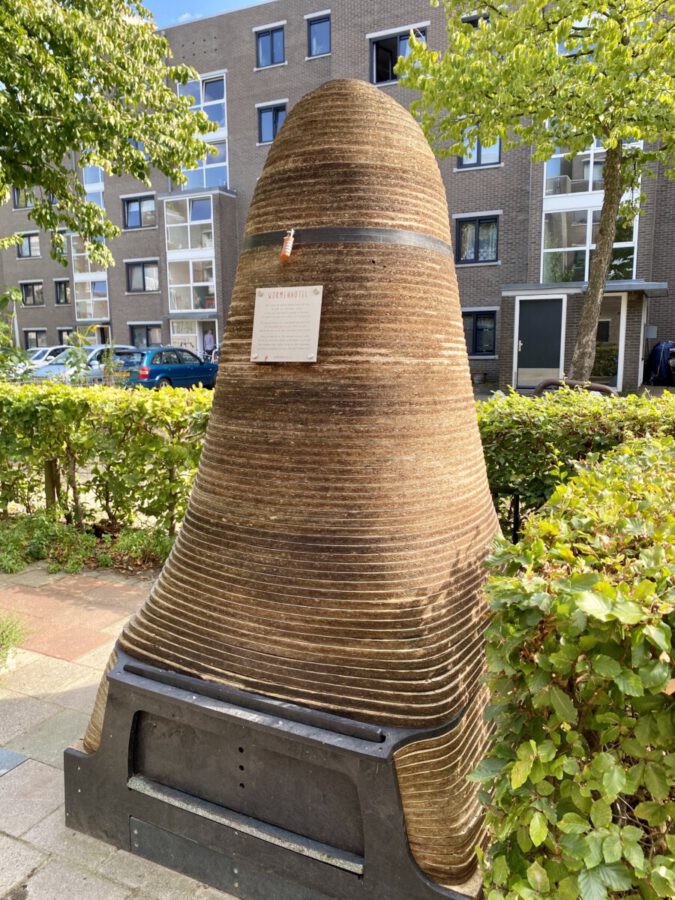
A worm hotel located in Amsterdam West. Image: Brin Andrews/Supplied

Worm hotels are composting containers generally about two metres high. They’re each home to several kilos of tiger worms, earthworms, and red dung worms, and food waste from around 1,500 households (in Amsterdam alone!). 🪱

Under the right conditions, they produce rich compost that can be added to any garden. Often, neighbours manage the hotel together, sharing in both the maintenance and rewards.

It’s a chance to socialise, work together, and do something good for the environment. 

READ MORE | Recycling in the Netherlands: an international’s guide

DutchReview spoke with Arie Machgeels van Ziel, architect and composter from Wormenhotels, for the low-down on the Dutch vermiculture craze. He explained that worm hotels don’t come in just a one-size-fits-all model.

You can find them in all shapes and sizes, but the most common are those supplied by the Amsterdam municipality.

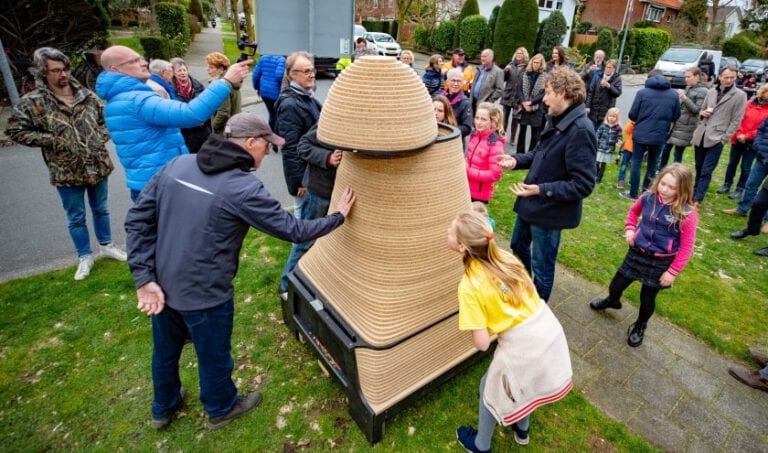
These large, bell-shaped structures that resemble a beehive are made from a durable, natural pressed material called eco-board. They’re designed to be eye-catching and to spark conversation among neighbours.

While these impressive structures are truly something to marvel at, don’t be intimidated — an old plastic bucket works too. What’s important is that the worms can’t escape, and pests can’t get in.

That, and just the right balance of humidity, airflow, carbon matter, darkness, and temperature (between 5 and 25 degrees Celsius). The result of this delicate ambience is a stink-free, pest-free worm utopia. 

How did they start in Amsterdam?

Unfortunately, organic waste separation is not yet a standard for waste collection in the Netherlands — massive amounts of compostable material end up in the waste bin every day.

The initiative for worm hotels came from community members and officials in Amsterdam as a way to address this issue.

The hotels caught on quickly, and they have since developed into a city-wide project for the municipality. 

Van Ziel says their work references the model from the American book, Community-Scale Composting Systems. It emphasises closing the food system loop and describes around 250 community composting projects in the US.

With this inspiration and his own calculations in mind, he anticipates that within 10 years, all of Amsterdam’s organic waste will be able to be converted into soil — not through worm hotels alone, but also by large-scale city-wide efforts. 

Composting kitchen waste for a worm hotel in the Netherlands
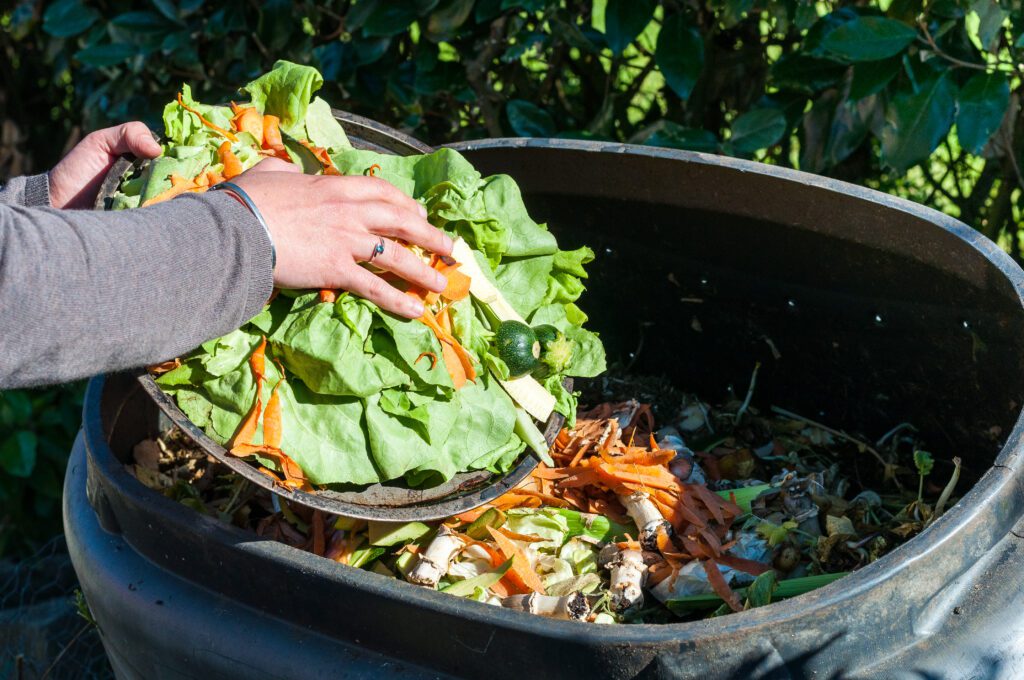
No more throwing away your food scraps! Image: Depositphotos

The new city composting model would include large underground collection bins. They’d be similar to those already present for recycling and waste.

Since worms do the work of breaking down the waste, compost only requires one truck to pick up waste, instead of the 70 currently making waste pick-ups every year. 

This goal sounds ambitious, but Van Ziel has no doubt it’s possible. He says they may be further behind on neighbourhood worm hotels, but with their larger-scale community composting projects, they will soon “really be able to start making a serious difference.”  

Popular demand

Currently, there are an estimated 200 worm hotels speckled throughout Amsterdam. The popularity has grown so immensely that the municipality is having a difficult time keeping up with the demand.

The current waiting list has a queue of around 300 other composting enthusiasts for a new bin. Fortunately, up to 30 households can participate in one hotel, so see if you can join the one nearest you.

READ MORE | 7 innovative Dutch projects for a sustainable future

And it’s not just Amsterdam and Rotterdam where communities are focused on composting. Other cities are participating as well, with more and more municipal and citizen initiatives popping up throughout the country.

You can find worm hotels in at least 11 other cities throughout the Netherlands, including Rotterdam, The Hague, Eindhoven, and Haarlem. If your city doesn’t have one yet, you can put in a request with your municipality.

How exactly do worm hotels work?

Photo of vermicompost
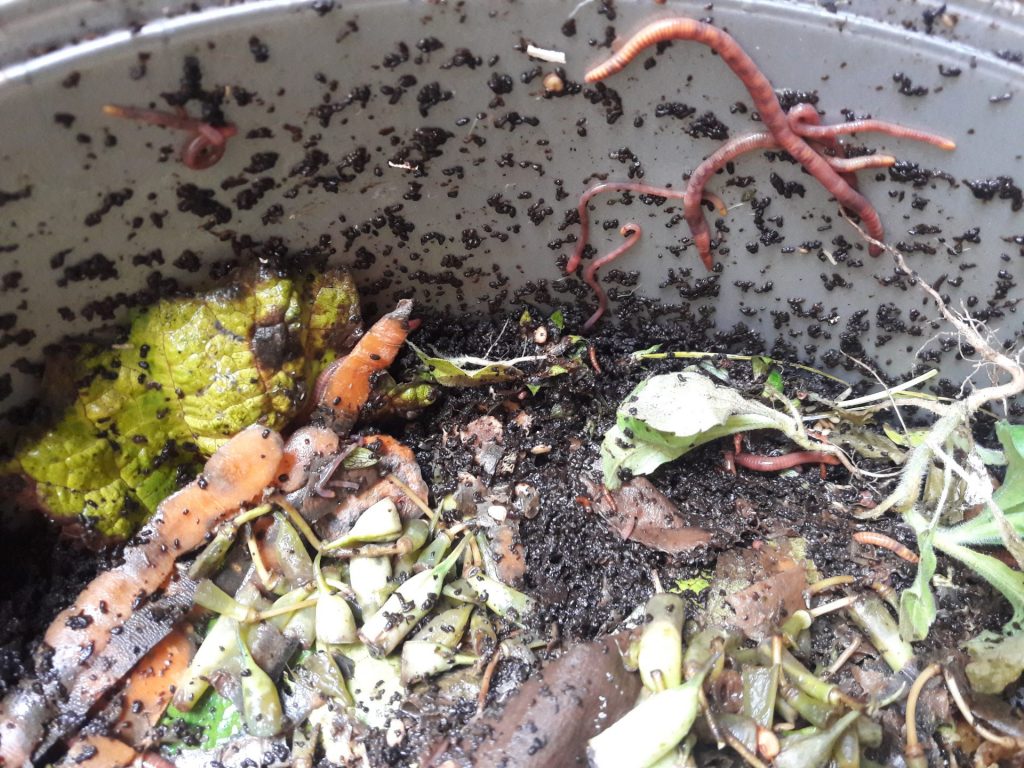
Organic waste makes for a sloppy feast. Image: Wormenhotels/Supplied

Local residents stop by, leaving their organic waste at the hotel (the composting container/cabinet/beehive thing). The diligent worms eat, poo, and convert the scraps into vermicompost (worm poo with a touch of fungi, bacteria, and other organic matter).

The compost can be harvested after about four months, but it’s even better if left for at least six. It’s then ready to be mixed with your garden soil or added to your planters.

The municipality offers specific guidelines on just what materials you can and can’t check into your worm hotel.

Can go in:

  • Uncooked, organic kitchen waste such as peels, vegetables, tea bags, coffee grounds, and eggshells
  • Crushed cardboard, egg cartons, paper kitchen roll
  • Garden waste
  • Faeces of small vegetarian pets such as hamsters and guinea pigs

Can’t go in:

  • Meat
  • Pasta and bread
  • Oil or sauce-cooked food
  • Dog faeces, cat faeces and litter
  • Bulky garden waste
  • Cut flowers (flowers from your own garden are allowed)

The kitchen scraps and garden waste should be “optimised” (cut into small pieces), and then go into the bin with the worms, bedding, and living material. The bedding can be a variety of dry materials, like hay, shredded newspaper, sawdust, or dry leaves.

Living material is generally just compost, which contains beneficial micro-organisms like fungi and bacteria. Together, these materials create carbon — an important element in decomposition.

That’s as technical as it gets! Basically, give the worms the right environment, and they’ll take over from there.

What are the benefits?

The environmental benefits are clear and simple: reducing waste and improving soil conditions with organic fertiliser. The social benefits are just as far-reaching.

A recent study on the effectiveness of the worm hotels in Amsterdam shows:

  • The worm hotels draw positive attention to circular waste flows and sustainable life.
  • Participants feel more social cohesion in their neighbourhood.
  • The projects contribute to local employment, including people with a disadvantage in the labour market. 
  • The worm hotels allow the municipality of Amsterdam to gain confidence with regard to organic waste separating (proving that Amsterdammers are willing to separate their waste).

Most importantly, people love them.

Plus, the compost itself is first-rate. A special feature of vermicompost is that the worm castings add valuable life to the soil.

“They’re a feedstock for bacteria, fungi and other invisible creatures,” according to Van Ziel. Regular compost adds nutrients to the soil, whereas worm compost actually helps the plants absorb the nutrients and stimulates the growth process.

Photo of community composting
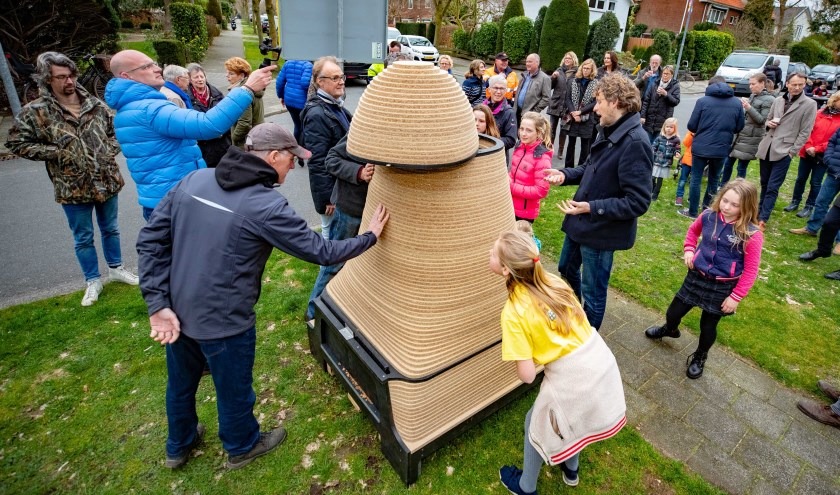
Wormhotels are fun for everyone! Image: Wormenhotels/supplied

He’s seen cases where it’s actually doubled or tripled a harvest, compared to regular compost. “It’s all about creating the right balance.”

Van Ziel says a common misconception is that you need to add a lot of compost to your soil. Vermicompost is strong, so it should only make up 5-10% of your soil — that also makes it great for sharing. 

How to get involved

If you’re interested in getting involved in an existing worm hotel, check the Amsterdam municipality’s neighbourhood composting map. You’ll be able to locate the bin nearest you and see if there’s space to join.

If you live outside of Amsterdam, wormenhotel.nl has a similar map that covers not only Amsterdam but the entire lowlands. These maps also include the contact information you’ll need to get in touch.

If you’re feeling like doing some handy work, you can even build your own worm hotel. 👇 

Van Ziel’s number one tip for new composters: “Just start.” 

He says, “People are often afraid of something going wrong, but nature takes care of you in mysterious ways sometimes. If you just pile on your organic waste, it will automatically start decomposing.

It’s a slow process, so you’ll have plenty of time to steer things along the way.” Get started, and you’ll be sucked down the wormhole of urban vermiculture before you know it. 

Does getting involved in worm hotels interest you? Tell us your thoughts in the comments below! 

Dutch MP claims there’s no famine in Gaza (and that’s why the NL should stop sending aid)

The PVV (Party for Freedom) made two statements on Gaza in the House of Representatives yesterday. 1: That there is no famine there and 2: that they are against sending more aid to the affected population.

PVV MP Dennis Ram based his argument that there is no famine in Gaza on “facts” from “scientific experts”.

Meanwhile, the World Health Organisation has stated that there are “famine-like conditions.”

The outgoing cabinet believes much more aid needs to be sent to those in need in Gaza, but, as nu.nl reports, the PVV does not agree.

Coalition parties in disbelief

Shocked by Ram’s statement? You’re not the only one.

The VVD and NSC, future coalition partners of the PVV, were left stunned by Ram’s denial.

NSC member Femke Zeedijk disagreed with the PVV’s “framing that there is no hunger” and believes Ram’s statements went “out of line”.

Translation: Look back at this debate and especially the contribution by Dennis Ram (PVV) in which he simply claimed that there is/was NO famine in Gaza. Fortunately, the coalition parties VVD & NSC immediately distanced themselves. Mr Ram has never seen the TV images 🤷‍♂️🤷‍♂️🤷‍♂️

This did not stop Ram, who insists it’s “very bad” that other parties accept that there is famine in Gaza.

But since October, more than 8,000 children under five have been treated for malnutrition, and the “catastrophic hunger and famine-like conditions” being faced in Gaza were confirmed by the WHO last week.

So, where exactly he’s getting these “facts” from is a mystery.

PVV against sending aid to Gaza

Ram is also against sending aid to Gaza while, as he understands it, Hamas is present and Israeli hostages are held there.

As well as denying further aid, the PVV is against sending further money to the UNRWA (the UN organisation for Palestinian refugees).

READ MORE | Pro-Palestine ‘protest camp’ at University of Amsterdam ends in violence and 125 arrests

This is because of accusations made by Israel that UNRWA employees allegedly support the attack on Israel by Hamas.

Previously, the Netherlands sent an annual contribution of €19 million to UNRWA, with a further €3 million reserved.

However, these contributions have been suspended since January until there is clarity about the accusations.

A turn in Dutch politics

Given the fact that the PVV’s future Minister for Foreign Trade and Development Aid was once a member of the Zwarte Pieten Journaal (it’s as bad as it sounds), perhaps we shouldn’t be so surprised by Ram’s claims.

Add to this the knowledge that the future Minister of Asylum and Migration believes in the theory of repopulation, and you can see why Ram was so comfortable making these claims.

How do you feel about MP Dennis Ram’s statements on Gaza? Let us know your thoughts in the comments.

Finally! 25 degrees and sunshine forecast for the Netherlands next week

No sudden movements people, we don’t want to scare it away, but it looks like summer weather is finally approaching the Netherlands.

But listen, you’re going to have to be patient and endure just one (or two) more thunder showers before then.

Yes, there will be thunder and rain

We know, your shoes haven’t known what it’s like to be truly dry in a while.

However, Weeronline predicts that you’re only going to have to endure thunder showers for the next few days, with showers expected in several places on Thursday, Friday, and Saturday.

While the precipitation won’t exactly give you summer vibes, there will at least be summer temperatures at a balmy 18 to 21 degrees.

Then, before you know it, Sunday will come — and that’s when things start to look good.

But then comes the summer weather

From Sunday, the weather in the Netherlands is expected to have yet another mood swing, but this is one we can get behind.

READ MORE | 11 TikToks that perfectly describe Dutch weather

Throughout next week, temperatures are forecast to climb to as high as 25 degrees in some places, with plenty of sunshine to match. 😎

And that’s not all, meteorologists are using their crystal ball (and degrees) to predict that July will be off to a good start with warm temperatures and summer weather expected.

Want the latest Dutch news to come zooming through the internet to your inbox? Dat kan! Subscribe to DutchReview’s weekly roundup 📮

The first pharmacy run by a HOLOGRAM is about to open in this Dutch city

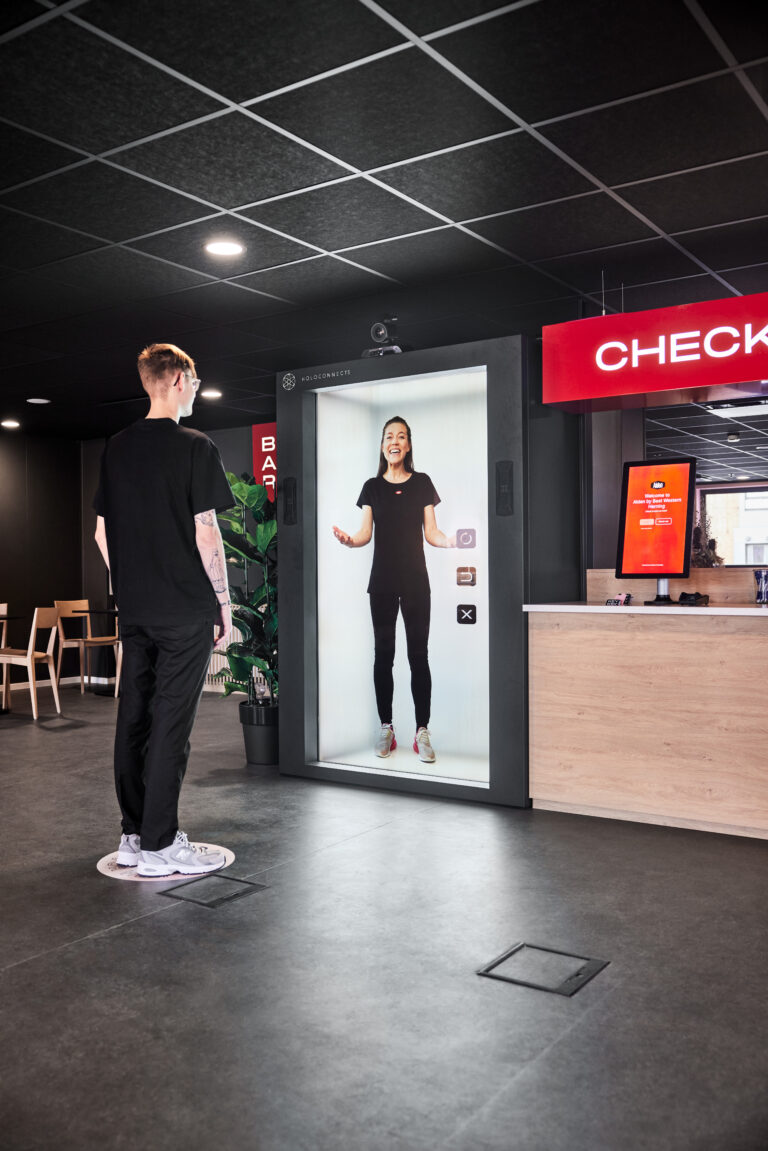
Stroomz Strijp Pharmacy in Eindhoven was struggling for enough staff until they found the ultimate candidate: she’s always got a smile on her face, she doesn’t take breaks, and she speaks five languages.

She’s also a hologram.

That’s right, their new ‘deepfake’ computer-generated assistant looks and sounds real but isn’t really there.

Stroomz Strijp reopens next month with their new digital pharmacist ready for patients’ questions and concerns, Omroep Brabant reports.

All the answers

The helpful hologram has already perfected her Dutch, English, Spanish, Turkish and Arabic and can be programmed in many different languages.

And if you’ve got a cold and you’re struggling to hear — no problem, Google Translate provides subtitles throughout the conversation.

READ MORE | Pharmacies in the Netherlands: 8 questions answered

“We looked at what many conversations are about. We have worked out the most common conversations and they are now conducted with you by the digital assistant from a box,” Pim Poels, manager of Stroomz pharmacies, tells Omroep Brabant.

But what about privacy?

Don’t worry, you don’t have to tell the whole waiting room about your, ahem, private issues.

There is a separate consultation room for sensitive matters, which can be opened remotely and contains another screen ready for the conversation to continue.

READ MORE | The first ever ‘wedding’ between a hologram and a human will take place in Rotterdam this year

Sounding more like an Apple showroom than a pharmacy?

Well, there is the option to speak to a REAL HUMAN BEING if the digital assistant can’t help. That’ll be via a screen, too, though.

And the final piece of the tech puzzle? Following the hologram consultation, your medication will be waiting for you in a prescription vending machine (refrigerated, if necessary). 🤖

What do you think about this new hologram service? Let us know your thoughts in the comments below.

Dutch police shut stations for entire day as part of strike

Listen, guys, try not to get robbed today, because if you run to the police station, there’ll be no one there to take your complaint.

Ehm, why? It’s not because the police are done with your bulls*t.

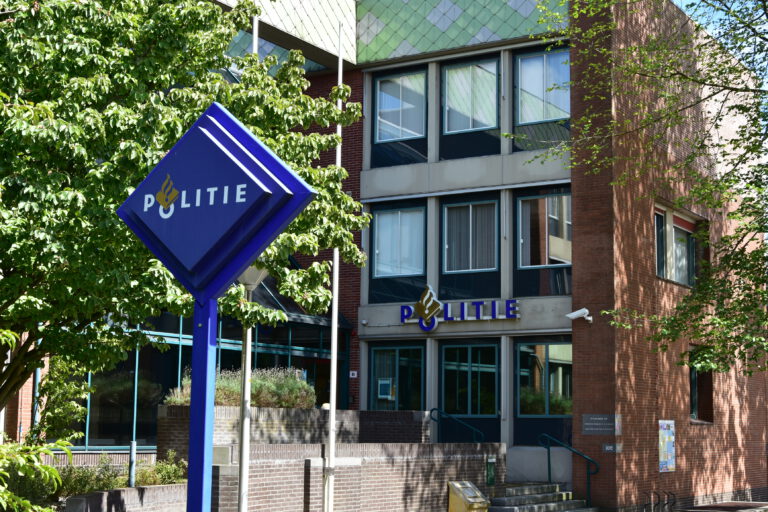
It’s because today, all Dutch police stations with a public function will remain shut as part of a police strike.

Yes. That can happen. In fact, this is actually the second time that police have shut their doors over the past few weeks.

Early retirement or the doors keep closing

And why is this? It’s all about the police pension, nu.nl writes.

Since 2021, Dutch police have been given the right to retire early — and understandably, they love it.

The problem is that this arrangement is only temporary.

Police unions are now demanding that an early retirement scheme be permanently implemented — if it isn’t, the strikes will continue.

Translation: The #politiebureaus are closed for 24 hours today, just like last Tuesday. We campaign for a good early retirement. @NineKooiman and Erik Smit explained last week why this is important.

Flyers instead of fines

In a kind of iconic move, the police strike has also been manifesting in the form of flyers.

Specifically, officers have been issuing flyers instead of fines when someone commits a minor violation. The flyers lay out why the police union is striking.

According to the Landelijk Actiecentrum Politieacties (National Centre for Police Actions):

“Only when politicians, administrators and employers take the right steps towards a decent RVU (early retirement scheme) will the police unions stop taking action. Until then, the actions will only increase.”

Want the latest Dutch news to come zooming through the internet to your inbox? Dat kan! Subscribe to DutchReview’s weekly roundup 📮

These football fans wore blackface, and the Dutch aren’t sure why it’s wrong

Dutch fans often make themselves known at major football events, normally by flooding the streets with oranje. But at Sunday’s European Championship match against Poland, their attire was a whole lot more controversial.

Three male supporters wanted to express their patriotism by recognising a Dutch football hero, Ruud Gullit, who was part of the Euros-winning team in 1988.

So, they grabbed their orange shirts, wigs and brown face paint… yeah, that’s where it all went wrong.

Now, the fans are receiving worldwide criticism for wearing ‘blackface’, which is considered a racist and deeply offensive tradition, as RTL reports.

The Netherlands versus The World

Football is a game of attack and defence; the same goes for the supporters now facing different opinions from people all over the world.

Many believe this is another case of the-Dutch-do-blackface-and-think-it’s-fine, with the Daily Mail explaining, “it is a particularly controversial issue in the Netherlands, where the tradition of Christmas character Zwarte Piet causes much division.”

And, well, the Dutch aren’t exactly doing much to disprove that theory. 😬

READ MORE | Dutch Quirk #120: Struggle with their colonial past

The so-called “tribute” to Gullit has prompted “only nice reactions”, one of the fans reveals to RTL anonymously.

Some people believe the criticism is over the top and justify face painting as a “fun” way to honour their favourite footballer.

Time to tackle the tradition

Sunday’s incident adds to an already problematic legacy when it comes to the Dutch colonial past and history of blackface.

Many claim troubling traditions like Zwarte Piet are a thing of the past, and awareness is growing in the Netherlands. But it’s not just the Ruud Gullit wannabes that suggest otherwise.

READ MORE | Dutch Quirk #50: Disagree about Zwarte Piet all the time

Reinette Klever, who looks to be the Dutch government’s new Minister for Foreign Trade co-founded broadcast channel ON which started as a protest against the disappearance of Zwarte Piet.

So, for those defending the Oranje fans, consider if their face painting is really as harmless as it seems. “It’s easy to say it wasn’t intended that way. People ignore the impact of that intention”, sociologist Aspha Bijnaar tells RTL.

Blowing the whistle

Can we expect to see more Ruud Gullit dress-up at the next match? Not in the case of one of the fans.

He tells RTL, “It turns out that I offend people with it. That’s really the last thing I want, so I decided to stop.”

What do you think about the controversy surrounding these fans wearing blackface? Let us know in the comments below.

New high-speed trains get you to Germany faster than you can say “Viva Hollandia!”

Ever whipped through the Dutch and German countryside on the super speedy ICE trains? Well, starting today, the connection between Amsterdam and Frankfurt just got even faster.

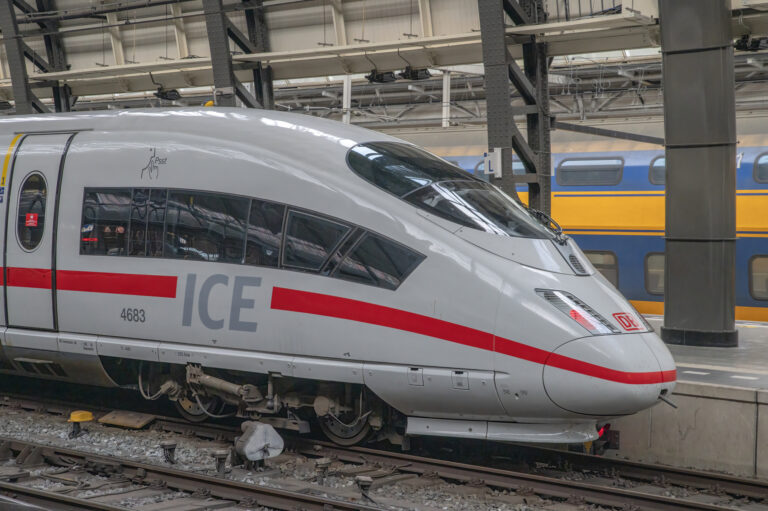
The new versions of the ICE trains, called ‘ICE 3neo’, look the same and travel the same routes, running seven times daily from Amsterdam to Cologne and Frankfurt.

READ MORE | 19 places you can get to by TRAIN from the Netherlands

But those familiar red and white stripes will be zooming past quicker than before — and their speed isn’t the only improvement, the NS shares in a press release.

It’s what’s on the inside that counts

The Deutsche Bahn-owned trains might have WiFi that’s as fast as the journey time, but their speedy service makes them a very popular and busy travel option.

Now, ICE International has reformed the interior of the trains to provide a more spacious and comfortable experience for its passengers.

With plans to run ICE trains as far as Munich by 2025, the extra room to stretch out is great news.

Fast track for the footy

“We look forward to a summer in which many travellers choose the train. For example, for a holiday or a visit to one of the sporting events”, says Heike Luiten, director of NS International.

And visiting sporting events is just what we’re thinking, with the Euros 2024 already kicking off this summer.

READ MORE | Orange fever sweeps through Holland and Hamburg as NL plays its first Euros match

But take note, Oranje fans: if you don’t want to miss the game (natuurlijk), don’t leave it to the last minute to book the train.

ICE trains might be the best option for getting to Germany quickly; just make sure you purchase the ticket at least two days before you intend to travel.

Do you plan to travel with one of the new ICE trains soon? Let us know in the comments below.

Brighter days ahead: sunny weather more likely in the second half of June

If there’s one consistent thing about Dutch weather, it’s that it’s not really consistent at all.

On the brighter side, it seems like the tides (and clouds) are finally turning.

The chances of sunnier, drier weather increase in the second half of the month, but meteorologists are unsure if temperatures will also increase, reports Het Parool.

Improving predictions

June has had quite a disappointing track record for weather so far, with a chance of mosquitos, one code yellow storm, and generally wet, windy weather.

In the coming weeks, temperatures are likely to increase to at least the low 20s, with the occasional rain throughout the country (nothing unusual).

Towards the end of June, the Netherlands should finally see dry and sunny weather. Local showers and thunderstorms are possible, but the predominantly rainy weather seems to be over.

However, it’s still uncertain how warm the weather will get. In the event of a south-east wind (coming from southern Europe and Africa), there are chances of temperatures 25 degrees Celsius and more.

Winds from the North Sea will only bring the temperature around 19 to 23 degrees.

What are your plans if the weather is finally sunny and warm in the Netherlands? Tell us in the comments below. 👇

Orange fever sweeps through Holland and Hamburg as NL plays its first Euros match

There’s nothing quite like a football game to get the Dutch fanatical and frenzied — and this weekend was no different.

The 2024 UEFA European Football Championship began last Friday, and Oranje (the nickname for the Dutch national football team) had its first match against Poland on Sunday, June 16.

Natuurlijk, a horde of orange was present in Hamburg, Germany, to display their support for the team.

The Oranje fan parade began gathering as early as 8:30 AM, dancing along to Dutch DJ Armin van Buuren’s greatest hits before making their way to the stadium, reports the BBC.

Tens of thousands of fans walked from Hamburg’s city centre towards the Volksparkstadion, sporting full orange suits, lion costumes, and cheese wheels for hats.

READ MORE | Why does the Netherlands love orange? The full explainer

And of course, it wouldn’t be a Dutch football match if the fans weren’t dancing to Links Rechts either (yes, a football match does count as a patriotic event).

After a nail-biting match, Oranje won its first game against Poland 2-1, despite an early goal from Poland.

Cody Gakpo scored in ’29, and Wout Weghorst was subbed on and made the late-match winning goal in ’83.

The Dutch celebration comes despite an incident that occurred earlier in the day.

An axe-wielding German man was shot in the leg after threatening fans along Hamburg’s Reeperbahn, reports BBC.

The incident happened around 12:30 PM local time and is considered an isolated, non-football-related incident.

Are you keeping up with the Euros tournament this year? Tell us what you think in the comments!