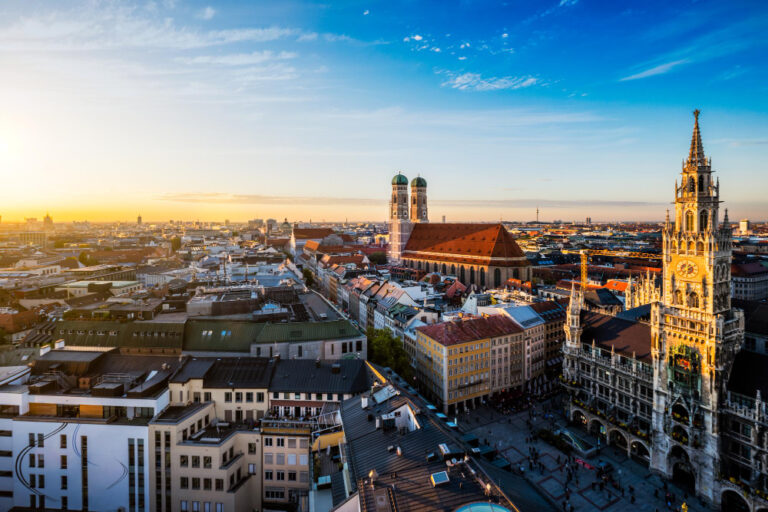
It looks like the Netherlands is about to welcome yet another international train route — this time, to the German city of Munich!
Yep, that’s right, avid train passengers will soon be able to trade Amsterdam’s Vondelpark for Munich’s English Graden.
According to Treinreiziger’s sources, a direct ICE route will replace the current train to Basel in mid-December.
The NS is keeping things very hush-hush
However, as far as other details go, we can’t give you many!
Why? Because the NS is being super secretive about the whole thing. 🤷♀️
The NS has stayed very quiet on the subject, with one NS spokesperson saying the following:
“The timetable from 2025 in Germany is not yet final, which is why it is still too early to answer questions about it.”
It’s a very tactical NS response if you ask us. The last thing they would want is for people to expect a train to arrive on time and then it doesn’t — oh wait.
That being said, other train services are willing to say more, with Swiss railways confirming that the Basel train route will be halted on July 15 this year.
There’s nothing quite like the feeling when the sun emerges after a long winter in the Netherlands: the birds are chirping, the terraces are full of happy people, and the sky is bright — wait, is that hail!?
We hope you have been enjoying the blissful weather this past weekend because a glimpse of winter is on its way back.
A sunny and warm start — then a reality check
But don’t think about that right now.
This morning, temperatures will linger at around 18 to 22 degrees Celsius across the country, and the sun will even grace us with its presence again.
However, in the afternoon, it’s well, a different story.
According to Weeplaza, Dutch winter will rear its ugly head once more, with temperatures dropping to around 9 degrees and showers developing in the south of the country.
And what will they bring with them? Potentially hail and thunder!
This weather will then linger throughout the evening and night, in some cases making its presence known with the occasional roll of thunder.
Let’s set the scene: you’ve been scouring the Netherlands for a place to live and, when you’ve finally found a little broom cupboard to call home, you’re not exactly in the mood to quibble over how much rent you’re paying. 👀💸
However, according to data journalism project Pointer — an initiative by Dutch public broadcasting company KRO-NCRV — rocking that boat might just be more beneficial than you think!
Painfully few tenants get their rent assessed
After studying figures from the Huurcommissie (Dutch Rental Commission) and the Woonbond (Dutch Housing Association), Pointer came to the shocking realisation that only 0.5% of private sector tenants had had their rent assessed in the past year.
What does a rent assessment involve?
If you think you’re significantly overpaying for the flat or house you rent, you can fill in an assessment form with the Huurcommissie.
An investigator will then visit the property and assess if your basic rent is too high.
Out of the at least 100,000 people who signed a rental contract in the private sector in 2023, only 469 took the step to get their rent checked by the Huurcommissie.
Out of those who did, 313 were found to be overpaying — and got a rent reduction of around €433 per month. 💰
Unfamiliarity with Dutch rental laws, fear of clashing with one’s landlord, and the rampant housing shortage were all cited as reasons why most tenants don’t request a rent assessment.
Change is on the horizon
On a brighter note, Housing Minister Hugo de Jonge intends to offer tenants better protection against exorbitant rents soon — noting that the rights of predatory landlords have been given too much power in the rental market.
Back in March, the European Parliament approved a bunch of new rules for driving on European streets. One of them is a new way of opening car doors, which will soon be part of driving tests across the EU.
Sounds bizarre? Well, it’s not!
The so-called “Dutch reach,” inspired by our beloved Nederlanders, refers to the practice of using your far hand to open car doors.
That means if you’re getting out of a car using the door on your left side, you use your right hand to grab the handle and swing it open. 🫲
Practice what you reach
Why do the Dutch do this? As The Brussels Times writes, the slightly awkward movement of reaching across their chest forces car passengers to automatically look over their shoulders.
This makes all incoming traffic — be it on foot, bike, or car — immediately visible.
In the Netherlands, where there are more bicycles than people (but far too few helmets), this ingenious method of opening car doors has been a fundamental part of Dutch driving education for decades.
It isn’t 100% certain how long the practice has been around, but one DutchReview reader says they had to demonstrate the reach on their driving test all the way back in 1986—and they still practice it today!
By making the Dutch reach part of driver’s education across Europe, Europe hopes to instil the move in young drivers as an automatism — and to save lives in the meantime.
Have you ever heard of the Dutch reach? Will you be practising it from now on? Share your thoughts in the comments!
Revolut is a strong contender for a business banking account in the Netherlands. This neobank is jam-packed with handy invoicing features, seamless Tap to Pay transfers, and convenient app integrations.
Let’s be real: between KvK (Dutch Chamber of Commerce) requirements, Dutch bureaucracy, and banking jargon, opening a bank account in the Netherlands definitely comes with its share of hurdles.
We’ve surfed that wave, so here’s something to streamline the process: a guide to Revolut Business’ pros and cons.
What is Revolut Business?
Revolut is a British neobank with one goal: making the banking process as effortless and hassle-free as possible.
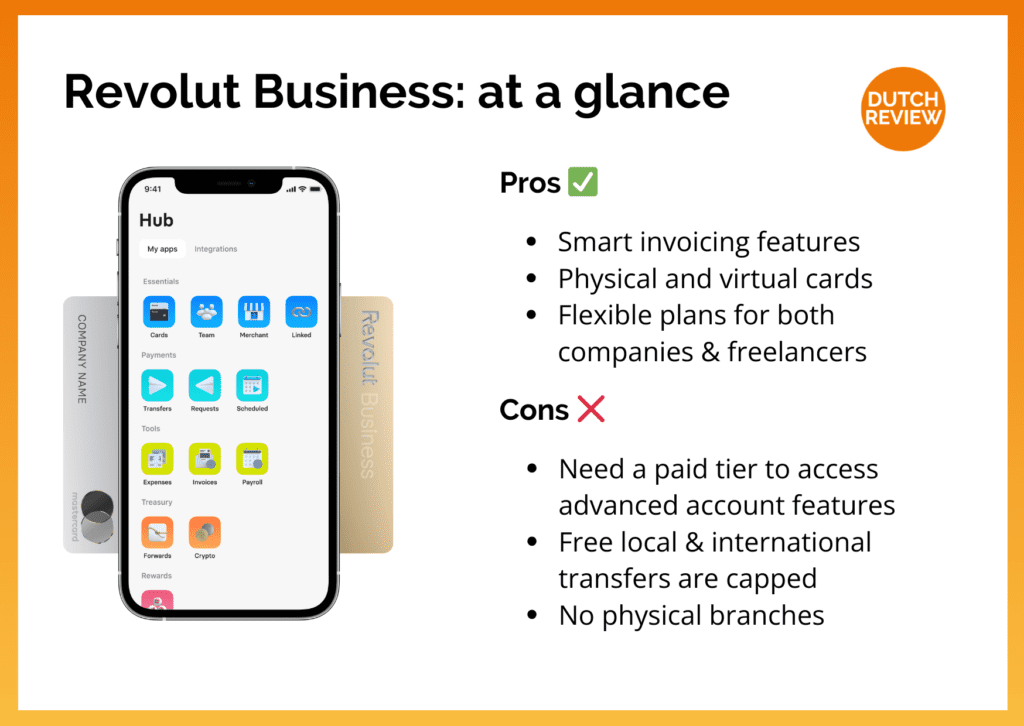
Although Revolut might lack physical branches to make cash deposits, it’s a small price to pay for features like incredible online accessibility, app integrations, and in-app invoicing. (Plus, the app is pretty snazzy looking 😉).
7 powerful pros of Revolut Business
Oké, that’s all lovely, but we’re sure you’re wondering what’s in it for you.Let’s explore some of the ways a Revolut Business account will boost your business! 👇
1. It has smart invoicing features that make accounting a breeze
Hoera, I can’t WAIT to track down my business invoices (said no one ever). It’s a pain, it’s a chore, but it’ll bother you no more with Revolut Business’ handy accounting integrations.
Staying on top of all your payments is now easier than ever with built-in invoicing software that covers everything from card payments to bank transfers.
Revolut Business offers powerful Freelancer plans for all ZZPers, from beginners to straight-up pros at the game. Image: Revolut
With multiple payment options supported, your clients can send you money using card payments, bank transfers, or even Apple Pay!
You can also seamlessly export your costs and transactions to Xero, Quickbooks, FreeAgent, or your digital accountant of choice to reconcile your bank accounts in a flash.
2. You can stay flexible with both physical and virtual cards
In today’s fast-paced digital market, the convenience of a streamlined and fully organised financial overview just can’t be overstated.
Thankfully, Revolut Business offers both the ease and greater security of virtual banking cards, as well as the traditional comfort of physical ones.
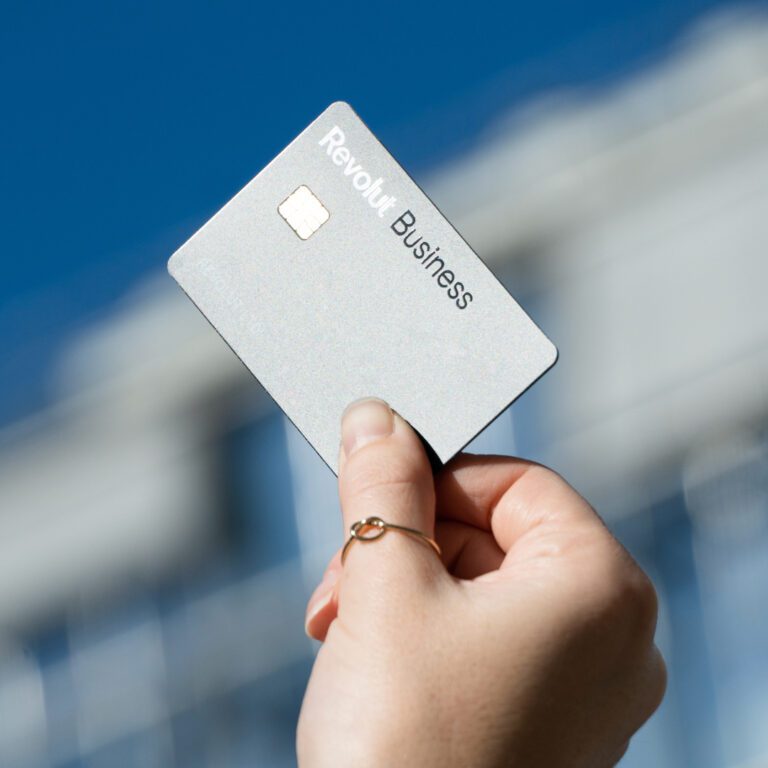
Should you choose a physical debit card, these come in two forms: plastic and metal. The latter offers customisable branding options, such as adding the company logo on the front, for an extra professional touch.
If you choose to go virtual instead, you can make use of Apple’s Tap to Pay to seamlessly accept contactless payments with your iPhone. Say a big doei (bye) to needing to fill out your account details for every transaction!
3. You can rest assured that your money is secure
Perhaps news of cyber attacks on bank accounts has you clutching your cash in a panic and wondering if switching to Revolut is a safe option.
The good news? All deposits of up to €100,000 in Revolut Business accounts are fully guaranteed. For joint Business accounts, that amount applies to each individual depositor. This means that for 8 depositors, insurance will cover a whopping €800,000.
Safety is a huge factor to consider when deciding which bank to use. Luckily, Revolut offers comprehensive safety features. Image: Freepik
If banking with your virtual card or iPhone’s Tap to Pay feature sounds like your jam, rest assured that your data is protected by features such as 2FA.
Also known as two-factor authentication, this is a security measure requiring two separate forms of identification to access your data.
So maak je geen zorgen (don’t worry), because your money is as safe as can be!
4. Flexibly-priced plans for everyone, from freelancers to big businesses
Whether you’re a fresh-faced freelancer or you’re at the helm of a large company, Revolut’s ‘Company’ and ‘Freelancer’ plans are flexible enough to suit your financial needs.
Are you just easing into the business world? You can opt for Revolut’s free plans, with the freedom to seamlessly scale up to ‘Grow’, ‘Scale’, or ‘Professional’ tiers later on as your business expands.
5. You can seamlessly spend as a local in over 25 currencies
Kiss the annoyance of currency exchanges goodbye with Revolut Business’ multi-currency account feature.
Picture this: you’re expecting a transfer from a client on the other side of the globe and you’re wondering when you can expect the glint of fresh money in your account.
All banks have their pros and cons, and Revolut Business is no different! Image: DutchReview/Canva
Well, if sent from a Revolut account, that cash is likely whizzing over to you at the cost of a domestic transfer, thanks to the bank’s unbeatable exchange rates. 🚀
6. You can work with an unlimited number of team members
With Revolut Business, it’s now easier than ever to control finances as a team.
You can invite as many team members to your account as you’d like to an account, create custom roles, set spending limits, manage permissions, and more.
Oh, and forget about needing to email your colleagues about business expenses and financial overviews! Revolut Business’ convenient app integrations support real-time notifications for community productivity platforms like Slack.
7. Got a question or issue? You can access 24/7 customer support
Let’s face it, tech is finicky. Add finances to the mix and you run the risk of having a Jurassic Park-level issue on your hands.
With Revolut Business, you’re never left to fend for yourself if a problem crops up. Image: Freepik
Luckily, a Revolut Business bank account also comes with its own fleet of superheroes: a dedicated customer service team that’s ready to tackle any issue that comes your way all day, every day.
4 downsides of Revolut Business
If you’ve made it this far, you may be ready and rearing to apply for an account. However, as with any bank, there are pros and cons of using Revolut Business.
Here’s a look at four issues you may run into should you opt for a Business account. 👇
1. You can’t deposit cash
As a virtual bank, Revolut doesn’t have physical branches like Rabobank.
Whilst this isn’t a dealbreaker in the long run, it’s definitely an inconvenience if you’ve made a transaction in banknotes and want to deposit them in your account. Mind you, who does that any more?
2. Adding separate account holders will cost you
Although Revolut Business’ team features are super handy, they aren’t free.
Working with a big financial team? Unfortunately, that’s going to cost you. 🥲 Image: Freepik
For most tiers, each active account holder will cost you €5 per month in the expenses app and €3 in the payroll app. Depending on the size of your company, those figures could start adding up rather quickly! Of course, if it’s just you and a small team, the features might just be worth it.
3. Free local transfers are capped
If you intend to make local payments, it’s important to note that Revolut Business has a limit on the number of free transfers you can make.
This number will depend on the plan you’ve opted for, with a Free plan hitting a tight limit of five transfers, Grow/Ultimate plans maxing out at 100 transfers, and Enterprise offering customisable limits.
Of course, if you need to do more, it’s not the end of the world: expect to pay just €0.20 fee for each transaction.
4. Free international transfers are also capped
Like local transfers, there are also restrictions on the number of free international transfers you can make.
Like flying internationally, your international transfers aren’t going to be free. (Unfortunately!) Image: Freepik
This number ranges from 5 to 25 based on your plan, with Free and Grow plans offering zero free international transfers. Enterprise, once again, offers you customisable limits.
All international transfers over these limits are subject to a €5 transaction fee.
Types of Revolut Business accounts
Unlike Dutch lunches, there’s no stereotypical format for a successful business. Revolut understands this better than most banks and offers not one but two types of Business banking accounts.
Freelancer
ZZPers and small business owners don’t feel left out because Revolut’s Freelancer plan is tailor-made for you! This plan offers three reasonably priced tiers:
Free
For €0 per month, you get access to all of Revolut’s basic Freelancer features, including five no-fee local transfers.
Professional
For €5 per month, you also get access to a further 20 no-fee local transfers.
Ultimate
For €19 per month, you also get access to 100 no-fee local transfers, 5 no-fee international transfers and one complimentary Metal card.
Companies, meanwhile, have four different Revolut Business account tiers to choose from. Image: Freepik
Company
For large and medium-sized organisations, Revolut’s Company plan offers powerful built-in tools to handle all things finance. Within this plan, there are four price tiers:
Free
For €0 per month, you get access to all of Revolut’s basic Company features, including five no-fee local transfers.
Grow
For €19 per month, you get access to 100 no-fee local transfers, 5 no-fee international transfers and a complimentary Metal card.
Scale
For €79 per month, you get access to 1000 no-fee local transfers, 25 no-fee international transfers, and two complimentary Metal cards.
Enterprise
At a customisable price, you get access to a customisable number of no-fee local transfers, no-fee international transfers, and Metal cards.
Have you ever banked with Revolut Business? Tell us all about your experiences in the comments below!
Revolut Business: Frequently asked questions
Whew, that was quite a lot of information to digest! We totally understand that you may have some lingering questions, so we’ll do our best to answer them below. 👇
Is Revolut Business safe?
With deposits of up to €100,000 per account-holder fully covered by insurance, rest assured that your cash isn’t going anywhere.
Am I eligible for a Revolut Business account?
There are certain requirements to open a Revolut Business account.
These include having a physical presence in an EU/EEA countries, Australia, the United States or the United Kingdom and belonging to a supported industry and supported business type.
Does Revolut Business offer physical cards?
Yes, Revolut offers both physical (plastic and metal) as well as virtual cards.
Can freelancers open a Revolut Business bank account?
Luckily, Revolut Business offers a Freelancer plan specifically for ZZPers in the Netherlands!
The plan also has three price tiers, depending on the scope of your freelance business and the features you want to pay for.
Does Revolut Business offer different currencies?
With a Revolut Business account, you can seamlessly spend as a local in over 25 currencies.
Does Revolut Business have a transfer limit?
There are transfer limits for both local and international transfers, with fees priced at €0.20 and €5 per transaction, respectively. However, depending on your plan, you may receive a number of free transfers.
The renowned young climate activist, Greta Thunberg, will attend Saturday’s blockade of the A12 highway in The Hague, led by Extinction Rebellion (XR).
The protests aim to pressure the government to end tax breaks for companies that use fossil fuels. So why will a big name like Thunberg be present?
Well, it’s a big day. New international actions against such fossil fuel subsidies will be announced, according to XR.
This isn’t the first time the climate organisation has occupied the Utrechtseweg in The Hague. Last September, XR stood their ground every day for almost a month.
Saturday marks blockade number 37 after previous attempts ended in hundreds of arrests. Perhaps it will be “Greta” luck next time?
Spokesman Joost Thus told the XR, “The A12 blockades have ensured that the injustice of fossil subsidies is clear to everyone.”
And there are no signs of slowing down… other than for A12 commuters.
The success of the blockades has “set in motion an international movement” Thus continues. ‘Stop Fossil Subsidies’ actions will take place across six European countries this week.
Why are they protesting?
The blockade calls for a stop to fossil fuel subsidies, which make large-scale fossil fuel use easier and cheaper for titans like Shell, Tata Steel, and KLM in the Netherlands.
AKA, the government’s support of tax breaks making burning fossil fuels more profitable.
In February, the outgoing cabinet presented a plan to phase out these fossil subsidies. However, the XR points out a concerning pattern of postponement.
The abolition of fossil subsidies could potentially be pushed back to 2035. This is a HUGE delay from the original agreement of 2020 made at the G20 all the way back in 2009. 😬
Whether you’ll be lining the A12 on Saturday or not, 72% of Dutchies favour abolishing the subsidies, a survey by the EIB revealed last year.
Time will tell if Saturday’s announcements bring us closer to making this happen.
What do you think of the planned A12 blockades? Let us know your thoughts in the comments below.
The 28-year-old Zoraya ter Beek will die next month by voluntary assisted suicide.
On the surface, Ter Beek’s life looks ideal: she lives in the Netherlands in a nice house, she has money, two cats, and a boyfriend that she loves.
However, her heaviest weights are invisible: 10 years on a roundabout of mental healthcare treatment for crippling depression and autism.
While Ter Beek once dreamt of becoming a psychiatrist, she began her journey seeking assisted suicide after her psychologist told her she would never get better.
Years on a waiting list
Ter Beek spent two-and-a-half years waiting for conditional approval for her assisted suicide. When it happened, she and her boyfriend, Stein, crawled into each other’s arms on the couch and cried, reports de Gelderlander in 2023.
For Stein, his tears were from sadness. But he doesn’t want to be the one that makes her stay.
Ter Beek told the outlet at the time, “Of course I feel guilty. If I had known what I know now, the moment I met Stein… I think I would have run away fast. At least, I hope so. But it turned out differently. We love each other a lot.”
How it will happen
Next month, a doctor will arrive at Ter Beek’s home.
“The doctor really takes her time. It is not that they walk in and say, ‘Lay down, please!’ Most of the time, it is first a cup of coffee to settle the nerves and create a soft atmosphere,” Ter Beek told The Free Press in an article she has since discredited.
“Then she asks if I am ready. I will take my place on the couch. She will once again ask if I am sure, and she will start up the procedure and wish me a good journey. Or, in my case, a nice nap because I hate it if people say, ‘Safe journey.’ I’m not going anywhere.”
The doctor will administer Ter Beek a sedative first, then a drug to stop her heart.
After her death, a special committee will verify the circumstances of her death and formally declare (in most cases) the death to be legal.
Ter Beek does not have much family and so has requested no funeral. Instead, her boyfriend will scatter her ashes after her cremation.
Ter Beek, who was interviewed extensively in the article, blasted the author on X (formerly Twitter) after publication, claiming the journalist misrepresented the truth and omitted parts of her interview.
Zoraya ter Beek is one of a growing number of people across the West choosing to end their lives rather than live in pain. Pain that in many cases can be treated.
“He rushed my story, took my words out of context, I don’t even have borderline personality disorder,” she wrote before deleting her X account.
The Free Press has since made TikToks claiming that the 28-year-old is being granted euthanasia despite having a “treatable illness”.
Dear @rupasubramanya, we believe in giving credit where it’s due. During our research for this story, we saw your piece too, but did not use any of it because Zoraya Ter Beek has accused you of twisting her words. Sharing her post here for reference. Best regards. pic.twitter.com/lLX0CmntiI
In 2001, the Netherlands became the first country to legalise assisted suicide.
The process has increasingly been accepted in the West as an option for terminally ill people. Mental illness has become included in that definition more and more.
In 2022, there were 8,720 deaths by assisted suicide in the Netherlands, comprising approximately 5% of all of the country’s deaths in the same year. Of these 8,720 assisted suicide cases, 115 were for people with a mental illness.
The 93-year-old former Dutch Prime Minister, Dries van Agt, and his wife died hand-in-hand by assisted suicide in February this year.
Criteria for Euthanasia in the Netherlands
The statutory due care criteria say that the physician must:
If you are struggling with suicidal thoughts, help is available. From the Netherlands, call 113 to access the Suicide Prevention Hotline. You can also chat at www.113.nl.
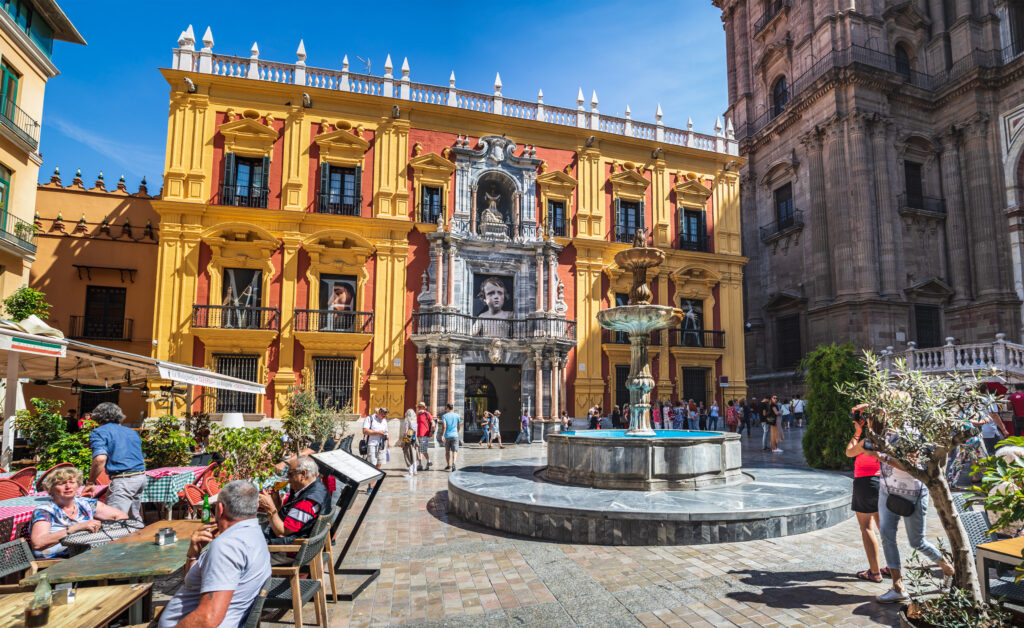
With its rich history and vibrant culture, Southern Spain has long been a popular destination for Dutch travellers — but why? Well, it’s cheap, it’s got stunning beaches and, most importantly, it’s sunny.
Specifically, the capital of the Costa del Sol, Málaga, is one of the top destinations for Dutch travellers, both during winter and summer, as the AD reports.
What exactly is so special about Málaga that makes Dutchies want to go there year after year? Read on. 👇
Why Málaga?
Naturally, many Dutchies are always on the hunt to escape from the grey skies and drizzle.
So, whether it’s lounging on golden beaches along the Costa del Sol or strolling through picturesque villages, basking in the sun’s rays is a significant draw for many Nederlanders.
Besides the sunshine, Málaga just has a certain vibe that pulls you in and makes you want more. The city has heaps of different attractions and cultural treasures, great food, cheap drinks, and friendly people.
Of course, the golden beaches are a nice change from cloudy ol’ Scheveningen, too. 😉
Travelling from the Netherlands to Málaga
Another huge reason Dutchies love Malaga is its easy accessibility from the Netherlands.
Getting to Málaga from the Netherlands is a breeze, with multiple direct flights leaving major Dutch airports like Amsterdam and Eindhoven every day. ✈️
Though Málaga alone offers plenty to do, there are also many hidden gems spread all over the Costa del Sol region that you don’t want to miss. That’s why we recommend hiring a car once you get to Spain.
You can take your car to this stunning beach in Nerja, for example! Image: Depositphotos
Experiencing the best of southern Spain
Having a hired car opens up a world of possibilities for exploring the beautiful coast of southern Spain. From Málaga, for example, you can drive along the Costa del Sol, stopping at charming coastal towns like Mijas and Marbella.
If you want to venture inland instead, you could explore the breathtaking mountainous region of Ronda, known for its dramatic gorge and historic significance, or the famous Caminito del Rey.
Continue your journey to the Andalusian cities of Cádiz and Seville, where you can immerse yourself in the region’s vibrant atmosphere, flamenco music, unique architecture, and delicious cuisine. 🥘
Well, it looks like the Dutch are onto something with their love for the south of Spain. What do you think?
Have you ever been to Malaga? Share your thoughts in the comments!
Ever think you’ve found a good deal on a flight just to realise a bunch of extra costs have sneakily doubled the price? Luggage, seats, even cancellations — these will all add to your receipt.
With more and more airlines making passengers pay for extras (if we can even call them that?), the AD has shared seven costs to take into account when booking your next flight. 👇
It gets more and more expensive to fly & the experience and getting to your destination on time is worse and worse
Planning to sit down for your flight? You’ll have to pay extra for that.
Well, not exactly, but if you want to reserve a specific seat, be it for more legroom or to sit closer to your travel buddy, you will.
The cost of this luxury depends on the flight duration, comfort and location, and can vary from anywhere between €4 and €60. 💺
Don’t be fooled by taking one for the team with the cramped seats by the toilets — even those might not be free nowadays.
2. Cashing in on cancellations
Something came up and you have to change or even cancel your trip? Not only does this suck, but it can also be extremely expensive or, in some cases, impossible. 😢
If you have commitment issues, or just need reassurance, make sure you book a ticket that allows for flexibility.
Yes, this might add a few Euros to your initial booking, but at least it means you’re not losing all your money in case you have to cancel.
3. Don’t bring unplanned hand luggage
Travelling light? Only a simple bag that fits under the seat in front of you will be free, and most budget airlines now charge extra for anything larger.
That’s why luggage reservations are important. “If you show up at the airport with a suitcase that is not on your ticket, you will quickly pay about 25 percent more”, holiday comparator Eelko Van Drongelen tells AD. 🧳
4. Bigger bags, bigger fees
If you are travelling further or longer, you might want to bring hold luggage. The catch? This will add somewhere between €40 and €140 to your European return flight. 😳
You will also pay more if you arrive with a suitcase without a reservation (like we said, very important), or if your suitcase is overweight.
European airlines are amazing at hiding costs. If my wife and I both want to take a 32kg bag on a €10 flight it'll cost us €246 extra.
Instead, airlines are sneaking in extra costs by making you pay if you don’t check in online. Yup, “you might receive a fine at the airport of 55, 40, 25 or 10 Euros per person per flight”, warns Van Drongelen.
7. Tax, of course
Increasing by €2.62 in 2024, the Dutch air travel tax now stands at a whopping €29.05. This cost is included in your ticket, and can make travelling by plane a very costly affair.
Compared to our neighbouring countries, the Dutch airfare tax is high, pushing airlines to offer more and more flights from Belgium or Germany, where the tax rate is lower.
Our final word of wisdom? Even if you make it through to the final stage of your booking process, double-check your basket. Often, you can only see the extra costs right before you buy!
And, of course, enjoy your trip. 😉
Have you encountered these sneaky extra costs? Let us know your thoughts in the comments below.
There will be some wind, rain, and clouds in the coming days, averaging between 13 and 18 degrees Celsius. However, by the weekend, the tides (or air currents?) will turn.
Shorts and barbecues
A warm wind is blowing its way from Africa to Europe this week, hence the warmer temperatures, but that also means it’ll be windy this week.
Meteorologist Marjon de Hond from Buienradar suggests you whip out the shorts while you can, as temperatures are set to reach 20 to 25 degrees Celsius with lots of sun and clouds!
this is the "I don't know what to wear" era of dutch weather
Unfortunately, this weather will be short-lived. On Sunday, temperatures are set to decrease to around 17 degrees on average countrywide, with chances of rain.
We’ll take what we can. 🤗
How would you like to spend this sunny Saturday? Tell us in the comments below!