Home Blog Page 250

Where to live in Amsterdam: the 2026 neighbourhood guide

So you’re moving to Amsterdam? Excellent choice! It’s a great city that thrives with energy, history, and culture. But where should you live in Amsterdam?

Of course, there’s not just one correct answer to that question. So we’ve done the research to bring you the ultimate guide to Amsterdam neighbourhoods!

READ MORE | 9 things that will surprise you when you move to Amsterdam

Living in Amsterdam

Although in many ways Amsterdam is a fast-paced cosmopolitan European capital, when you live here, it can feel like a small town. Snug little neighbourhoods are tucked away all over the city, creating little oases of residential quiet.

READ MORE | 33 best things to do in Amsterdam [UPDATED]

City life, bars, restaurants, clubs, museums, and theatres are rarely more than a 30-minute bike ride from anywhere in the city. And no matter where you’re coming from, you’ll love Amsterdam’s international feel with people from all over the world.

Half of the city’s 1.2 million residents are non-Dutch in origin. People of different backgrounds (180 different nationalities at the last count) have been settling in this melting pot since the Golden Age.

Amsterdam is a big city, and it can be overwhelming to figure out where to live. As internationals ourselves, we’ve broken it down for you into some handy subsections.

The city centre: in the midst of the hustle and bustle

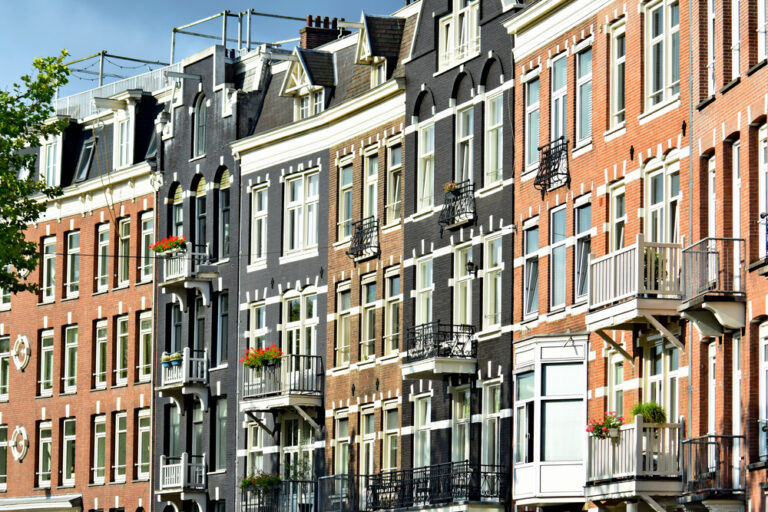
Love Golden Age grandeur and spaces crawling with tourists? Images of Amsterdam often depict the beautiful monumental warehouses and elegant gabled mansions along the Singel, Prinsengracht, Herengracht, and Keizersgracht.

These form the inner canal belt, or grachtengordel, of Amsterdam. The wealthy merchants of the glorious Golden Age spared no cost on building materials and elaborately decorated the facades of their prestigious homes.

READ MORE | The Amsterdam canal houses: why are they so wonderfully weird?

Nowadays, these pontifical houses are often split up and converted into smaller apartments. Expensive as it is, the picturesque inner city — with its typical bridges and pretty houseboats along the tree-lined canals — makes for very pleasant living.

amsterdam-canal-with-boats-on-the-side
Let yourself fall in love with Amsterdam’s bustling city centre. Image: Depositphotos

But be warned, there is a downside. The streets are often crowded, and in summer, there is a constant stream of tourist boats passing along the canals.

De Jordaan is arguably the most exquisite neighbourhood of Amsterdam. A kaleidoscope of narrow streets, lined with cute and quirky houses, markets, shops, and cafés make this former working-class quarter a favourite hangout for tourists and locals alike.

Although the vibrant, bohemian Jordaan is an absolute must-see for visitors, houses here are cramped and rents high, so this neighbourhood might not be everybody’s cup of tea.

Amsterdam-Zuid: international vibe and nature

For internationals moving with a young family, the borough Zuid (South) is definitely a good place to start looking when wondering where to live in Amsterdam. It’s not far from the city centre, and it’s bordered by Amsterdam’s largest city park, the Vondelpark.

Zuid has many residential neighbourhoods with privately owned, well-preserved 19th-century houses. Old South includes desirable neighbourhoods in Amsterdam like Duivelseiland and the areas around Museum Square and south of Vondelpark. The apartments are usually spacious and well-built.

The Diamantbuurt, Rivierenbuurt, Stadionbuurt, and Apollobuurt are known as the Nieuw Zuid (New South). The neighbourhoods were built in the 1920s and 30s with sound, comfortably-sized housing, popular among well-off Amsterdammers and internationals.

entrance-gate-vondelpark-amsterdam-spring
Vondelpark could be your new backyard! It neatly borders Amsterdam-Zuid. Image: Depositphotos

READ MORE | Btw, turns out public sex in this Amsterdam park is LEGAL 

Less up-market and more colourful, vibrant, and funky is de Pijp, popular among a younger crowd. Although it has greatly benefited from government regeneration in recent years, do watch out for remnants of the ‘revolution’ building period. Cheaper, but often poor quality, badly-insulated, poky apartments.

The Zuidas is also a place you shouldn’t miss. It’s home to many businesses and is a rapidly growing centre of development. It’s exceptionally popular with internationals, as many work in the area. There are also heaps of new apartments in the area, so plenty of options.

Amsterdam-Oost: echoes of the east

Still not sure where to live in Amsterdam? Perhaps in Amsterdam-Oost. Passing down through the contemporary Eastern Docklands, or Oostenlijke Havengebied, you’ll find the older neighbourhoods of Amsterdam: Indische Buurt and Transvaalbuurt.

Amsterdam-Oost is a green and open-plan neighbourhood with good housing, lots of sports fields and city gardening plots. It’s close to the A10 ring road with good connections to the city.

Amsterdam by Night
Did you know we have some great shots of Amsterdam by Night on DutchReview? Image: Renzo Gerritsen/Supplied

Dating from the 1920s to the 1940s, these areas have been undergoing rapid gentrification since the 90s. Ethnically diverse and bustling with colourful shops and markets, the housing is typically three stories plus an attic (with a shop at street level), which you see in much of Amsterdam.

There’s also the Watergraafsmeer, one of the most low-lying areas of Amsterdam, which was taken back from the sea in the Middle Ages.

Amsterdam-West: up and coming neighbourhoods

Closer to the centre, however, de Baarsjes and Bos en Lommer (or BoLo, as the locals call it) are becoming more popular among students and families and have a large multicultural community. Colourful markets and mosques rub shoulders with trendy cultural establishments and green open spaces.

Westerpark is also a lively, mixed neighbourhood popular with young families and artists. As in BoLo, rents are relatively affordable, and the city centre is only a 10-minute cycle ride away.

westerpark-amsterdam-during-the-summer
The Westerpark is extremely popular during the summertime. Image: David van der Mark/Wikimedia Commons/CC2.0

Westerpark is also the name of the beautiful city park, which also hosts a TV studio, several music venues, trendy restaurants, a club, and a cinema. These are situated in the monumental industrial buildings preserved from older days when the city’s gas factory was situated here.

On the far side of Westerpark, the pretty Spaarndammerbuurt is becoming hipper by the day, with nice little shops and cafés springing up and affordable apartments in renovated housing blocks.

Though house hunters have long ignored this neighbourhood in Amsterdam, gentrification is turning it into an attractive little neighbourhood to live in, well worth checking out.

Amsterdam-Noord: the coolest neighbourhood in Amsterdam

This borough is the latest up-and-coming area of Amsterdam. Noord is basically the entire area north of the IJ River. It’s reachable by metro and ferry (just hop on with your bicycle!) or by bridge or tunnel if you’re driving.

It’s huge and has a little of everything — quaint residential neighbourhoods with family homes with gardens, lots of green parks, and water. The former NDSM-shipyard is now a funky area settled by artists and new media creatives. It hosts festivals and a huge monthly flea market.

Noord used to be relatively cut off from the rest of Amsterdam, but since the area behind the station was redesigned, access to the ferry is much easier.

ferry-to-amsterdam-noord-up-and-coming-neighbourhood
Where to live in Amsterdam?  Perhaps North? Don’t be afraid to head there; you even get a free boat ride out of it. Image: Jvhertum/Wikimedia Commons/CC3.0

The ferry crossing is fast and frequent (every few minutes), and there is also a new metro connection, making Noord’s popularity explode. Modern apartments are springing up everywhere, yet it still doesn’t feel cramped.

It’s right next to the city centre, only a stone’s throw from the countryside and dotted with cute little villages. It’s quiet, yet the scene is hip. So for some, this might be exactly what you’re looking for.

Amsterdam Nieuw-West: vibrant communities and parks galore

To the west of the city centre lies the sprawling borough of Nieuw-West, characterised by the drab urban neighbourhoods of Osdorp, Sloten, and Slotervaart. This place is home to a vibrant community, many up-and-coming hotspots, and stunning parks.

Amsterdam Nieuw-West is a relatively quiet residential area which, since 2001, has been subjected to various urban renewal projects. This means that thousands of new homes were built — and that these neighbourhoods have plenty of space to host you. 😉

Sloterplas-lake-Amsterdam-Nieuw-West-amsterdam-neighbourhoods
Lakeside apartments? There are plenty of them! Image: Erik Swierstra/Wikimedia Commons/CC BY-SA 3.0

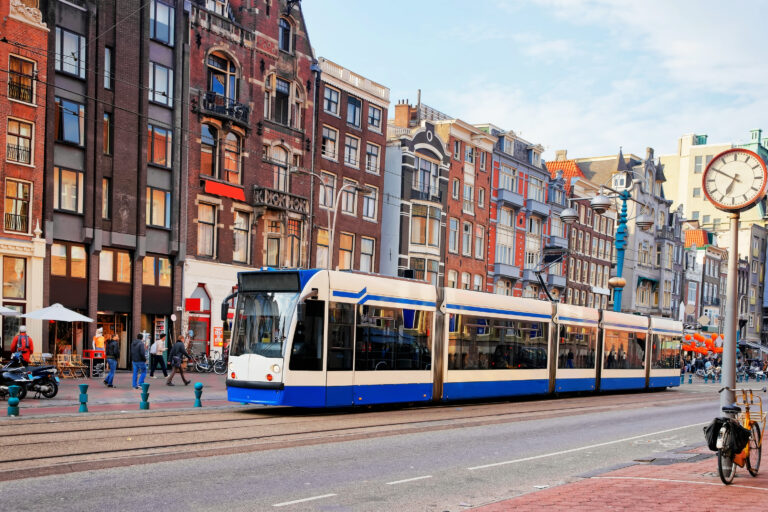
Though quiet and laid-back, Nieuw-West has all the amenities you need: from supermarkets to gyms to its very own shopping district. And of course, the bustling city centre is easily reachable by bike or tram.

READ MORE | Public transport in the Netherlands: the complete guide

The local Sloterpark is a huge park at the heart of the district that offers plenty of recreational activities. Petting zoo? Yes, sir! Great running routes? You got it! A lake for swimming? Jazeker!

Amsterdam-Zuidoost: the entertainment paradise

We have Amsterdam Zuid and Amsterdam Oost, but there’s also Amsterdam-Zuidoost! This city district includes the neighbourhoods of BijlmermeerVenserpolderGaasperdam and Driemond.

Branches-with-white-spring-blossom-in-Amsterdam-zuidoost
There’s a lot of greenery to be found in Zuidoost! Image: Depositphotos

Zuid-Oost lies further away from the city centre, and therefore has cheaper housing! Despite the distance, this place always has a lot going on, and whether or not you live here, you’ll probably make your way down to Zuid-Oost at some point for entertainment purposes.

In fact, Zuid-Oost is often dubbed the entertainment paradise of Amsterdam. Why’s that, you ask? Well, because it’s home to the city’s football stadium, the Johann Cruijff ArenA, and its two biggest concert venues, the AFAS Life Arena and the Ziggo Dome.

The IJ and IJburg: the reclaimed islands

What could be more Dutch than reclaimed land? North-east of the city centre, in the river IJ, lies a string of conjoined man-made islands.

The Java, IJ, and KNSM islands, formerly owned by the Royal Dutch Steamboat Shipping company, were redeveloped into an up-market residential area in the 90s. You’ll find modern apartments with spacious interiors and great views across the river.

river-view-IJburg-neighbourghood-amsterdam
Riverside views and new apartments. We’ll take two, please! Image: Gouwenaar/Wikimedia Commons/Public Domain

READ MORE | The Dutch built cities on sinking land: how will this fare with climate change?

Further east lay the new artificial islands of IJburg, with large modern homes for those adventurous pioneers who don’t mind the 25-minute tram ride into town (yes, this is considered a long commute in Amsterdam). A big summer attraction here is the artificial city beach of Blijburg, with its groovy Ibiza-like vibes.

Buitenveldert and Amstelveen: Grand architecture

Many of the buildings in Nieuw Zuid are designed in the striking Amsterdamse School style of architecture — decorative dark red brick masonry with beautiful round ‘organic’ forms.

Popular as it is, rents in Nieuw Zuid are generally high, and parking space is scarce. If that feels claustrophobic, it might be worth looking slightly further south, to Buitenveldert and Amstelveen. There, you’ll find lots of open green spaces, wider streets, houses with gardens, and plenty of parking space.

lake-view-from-amsterdamse-bos-by-amstelveen
Amstelveen is a quiet and calm suburb. Perfect for family living. Image: Unsplash

Amstelveen is actually a suburb of Amsterdam, but public transport into the city is excellent, and there are lots of restaurants and cafés. It’s also right next to the green lung of the city, the Amsterdam forest.

How about living outside of Amsterdam?

We won’t lie to you: finding a place to live in Amsterdam is hard.

To bypass the housing crisis (as far as that’s possible) and avoid the city’s crowds and tourists, many people opt for an alternative: living outside of Amsterdam in a nearby city or town.

By deciding to live near Amsterdam rather than in it, you can save some serious cash (and nerves 😉), while still profiting from those big-city-perks whenever needed. Thanks to the Netherlands’ great public transport network, you can easily reach the capital within minutes.

Curious? Then it may be worth checking out the Amsterdam Metropolitan Area (AMA)! This comprises 30 municipalities and two provinces (North Holland and Flevoland). The most popular places to live near Amsterdam are:

  • Amstelveen
  • Almere
  • Haarlem
  • Zaandam
  • Purmerend
  • Diemen
  • Hoofddorp

Anything to add to this neighbourhood guide of Amsterdam? Or on where to live in Amsterdam? Tell us in the comments below!

8 strangest reasons people got fired in the Netherlands last year

We can’t deny it: 2023 was a tough year. But unlike these eight people, at least we didn’t get fired from our jobs for some dang ridiculous reasons.

RTL Nieuws has picked out the strangest reasons Dutch employees were let go in 2023 — and while we feel bad for some of them, it makes for quite an interesting read.

1. A ‘roast’ that went too far

After having worked at the same company for 28 years, one Dutch carpenter thought it would be a good idea to give a speech at a company party.

Sounds normal, except the man didn’t use the speech to express words of gratitude, but instead to poep all over his company’s poor communication and spending habits.

He even took it as far as calling one of the board members as “faithful as a bitch in heat”. 😳

As a thank you for his heartfelt speech, the man was served resignation papers. He maintains that his speech was intended as a playful “roast” — and that he regrets what he said.

2. A cocktail of ashes

In a sad accident, a funeral care worker accidentally mixed the ashes of two cremated bodies. Oeps.

Everybody makes mistakes, right? Yes, and that’s why the woman initially got away with just a reproof. Sounds reasonable.

READ MORE | Losing your job in the Netherlands: what you should know (and the next steps)

Well, the woman didn’t like being reprimanded, and eventually, the work relationship was so damaged that the case had to be taken to court.

Here, a judge saw no other way than to force the woman to leave her job.

3. Refusal of work? More like an inability to work

A company from Limburg tried to fire an employee for not working while he was on sick leave.

Wait, what? You read that right. The roadworker, who had just suffered a fall, didn’t show up to work for a week — as advised by his huisarts.

He called in sick, but his employer didn’t take it well. The employee was let go for “refusal of work”.

READ MORE | Sick leave in the Netherlands: the easy guide [2024]

Luckily, this bizarre story has a happy ending.

According to a court hearing, the worker should not have been fired — and although he didn’t get his job back, he was paid €15,000 in severance.

4. Three jobs at once

Ever since the pandemic, we occasionally hear stories of people working two remote jobs at the same time.

This Dutchman took this to the next level by working not two but three full-time jobs for three different housing corporations (talk about time-management skills!).

The eager man, however, was not rewarded for his work appetite, as RTL Nieuws writes.

He was dealt not only three dismissals but also a bill of €90,000 to repay the salaries of two of the three employers.

5. An expensive visit to the Efteling

Kids love Efteling. Adults love Efteling. Everybody loves Efteling.

So naturally, 15 students from an Amsterdam special needs school were delighted when their teacher took them to Efteling.

READ MORE | Finding a job in Amsterdam: the ultimate guide [2023]

What they didn’t know was that the teacher was doing this in secret, without the knowledge of the school or the parents.

In reality, the class was meant to visit the Space Expo in Noordwijk. The result? The teacher was let go.

6. Work smarter, not harder

After getting divorced, the employee of a technical wholesaler was caught in a pickle: he needed someone to walk his dog, but he couldn’t leave work to do so.

To help the employee out, his company offered to pay a monthly compensation of €108 to help pay for a dog walker.

The man pocketed the money, called up the ex-wife, and arranged for her to walk the dog on the days he worked. In the meantime, he continued to charge his employer for the compensation.

Once found out, the man was sent home to his pup for good. His appeal was rejected by a court twice.

7. Stealing a bike saddle? Big no-no

Even the smallest offence can have far-reaching consequences in employment law.

This was proven when a municipality official from Zuidplas lost his job after 12 impeccable years of employment.

The small offence in question? He replaced his broken bicycle saddle with a saddle that he found in one of the municipality’s junk rooms.

8. The ‘free’ lunch that cost €10,000

A department leader at Jumbo lost her job after a whopping 42 years of employment. The culprit? A sandwich.

The woman regularly treated herself to a lekker Jumbo sandwich during her shifts — but she never paid for any of them.

After decades of work, Jumbo fired her — and charged her €10,000 in damage payment to cover for not just the estimated costs of the sandwiches she ate, but also for the company detectives who were hired to follow her around and spy on her sandwich-loving-habits.


Have you heard of any other crazy dismissal stories? Share them in the comments!

Renting in the Netherlands? These changes will affect you in 2024

New year, new rules — and this applies to those of us who rent as well. Let’s talk about what’s changing for renters in the Netherlands in 2024.

Listen, there’s good news, and there’s bad news.

Good news for renters in the Netherlands

Since it’s January and the post-holiday blues are hitting hard, let’s start with the good news.

You can report your landlord

Got a landlord who is asking for your left kidney and then some as a deposit? Well, now you can actually tattle on them.

According to NU.nl, this year, all municipalities in the Netherlands must have a reporting point where people can report power-tripping landlords.

READ MORE | 10 things that will surprise you about renting in the Netherlands

The hope is that by formally reporting any misbehaviour, the municipality can more easily take action against the landlord in question.

The rental allowance is increasing

Do you receive a rental allowance (huurtoeslag)? Then good news: you’re about to see your monthly payments increase!

In 2024, recipients of the huurtoeslag will receive more than €30 extra per month in huurtoeslag — ka-ching! 💸

You can more easily stay in your deceased parent’s home

If you find yourself without parents in 2024, there’s one bit of comfort we can give you. The Dutch government can’t easily remove you from their rental home — especially if they were renting from a housing association.

In 2024, people who lose their parents may take over their rental home until they are 28 years old. It’s not much, but it’s something.

The bad news for renters in the Netherlands

On that cheery note, let’s move on to the bad news — because it wouldn’t be a new year without some.

Rents in the private sector can increase

And by increase, we mean by a whopping 5.5%. For now, this is only the case until May 1 of this year.

Why is this so wonderfully high? Remember the good ol’ days of major inflation? Well, through the magic of economics, this percentage is linked to that inflation.

What could this mean for you? If you are renting in the private sector and your landlord feels like it (as they often do), they can increase your monthly rent by 5.5%. Happy New Year.

Other people may be prioritised over you

If you’re looking for a rental home in a new municipality, we have some more bad news.

As of January 1, municipalities in the Netherlands may prioritise people who are already living in the municipality when it comes to applying for a property.

This doesn’t mean they will — but they can.

However, there may be some good news for you here, especially if you happen to have a highly sought-after profession (such as a teacher, nurse, or policeman).

Municipalities may now also prioritise people from these professions when they apply for rental properties.

Perhaps it’s time to become a teacher?

Want the latest Dutch news to come zooming through the internet to your inbox? Dat kan! Subscribe to DutchReview’s weekly roundup 📮

Wet January? The Netherlands starts 2024 with rain and strong winds

After a rainy Christmas caused flooding across the Netherlands, high tides have stabilised, and there haven’t been any new cases of flooding. But don’t celebrate just yet, as weather forecasts point to rain, rain, rain.

Forget dry January; this year, we’re starting with wet January. Lots of rain and strong winds are on the cards for the first days of 2024, according to Weerplaza.

A stormy start to the year

Tuesday and Wednesday will be especially stormy, with chances of wind gusts of up to 100 kilometres per hour (km/h).

Temperatures are averaging between 10 to 13 degrees Celsius on Tuesday and dropping to between 3 and 6 degrees Celsius on Friday afternoon.

Well-prepared for rain

Luckily, municipalities and safety areas in the Netherlands are well-prepared for the predicted rain, reports the NOS.

The Rijkswaterstaat, the Dutch water management bureau, has set up sandbags in vulnerable areas, and regional authorities say there is no need to deploy the fire brigade to help manage the higher tides.

READ MORE | Today in Dutch history: the tragic ‘Watersnoodramp’ flooding of 1953

In the meantime, the weather situation is being monitored closely by several organisations and authorities.

Want the latest Dutch news to come zooming through the internet to your inbox? Dat kan! Subscribe to DutchReview’s weekly roundup 📮

One in five Dutch people want to overthrow the Dutch government

Do you think of the Dutch as an organised, orderly people that prefers to doe normaal? Well, it turns out there is another side to Nederlanders: one in five is in favour of overthrowing their government.

Wait, what?! Yep, that’s what the Dutch Social and Cultural Planning Bureau (SCP) discovered in a recent study.

Little trust in the government

Overall, the Dutch population is feeling niet zo goed about the current political situation in the Netherlands. (Especially considering the outgoing Prime Minister and his right-wing successor, we can’t say we’re surprised.)

READ MORE | Dutch Quirk #98: Talk back to authorities

Another one in three think tougher measures are needed against the government. 👊

The overall consensus is that “people feel that politics does not listen to them and that big problems are not solved.”

Violence or peaceful protests?

If this news has you thinking about packing your bags because you’re afraid anarchy will reign in the Netherlands soon, rest assured.

Most people firmly disapprove of violent protests and demonstrations (you know, those in which people throw fireworks at police officers or set cars on fire).

That being said, according to the SCP, 6% of the Dutch think that violence should be used against the government. 😳

Are you surprised by the dissatisfaction of the Dutch? Share your thoughts in the comments!

Two deaths, 18 eye injuries, and an injured toddler: how the Netherlands brought in the New Year

With a stockpile of fireworks waiting to be lit, New Year’s Eve in the Netherlands is never a calm affair — and the end of 2023 was no different.

While the entire country went BOOM, in a tale as old as time, hospitals and emergency services were kept busy.

This year, the Netherlands has seen not one but two deaths caused by fireworks.

A 19-year-old man lost his life after an incident involving fireworks in Haarlem last night. This follows the death of a 26-year-old on Saturday after a firework exploded while being lit.

In Uden, a 17-year-old has been left seriously injured after a firework exploded in his face.

Eye injuries

He wasn’t the only one to take a firework to the face. Hospitals have also been reporting their usual New Year’s Eve cases: eye injuries.

As of 7 AM this morning, the Eye Hospital in Rotterdam has admitted a whopping 18 victims, two of whom are under the age of 12.

The culprit? You guessed it, fireworks.

One opthalmologist described it as an “old-fashioned horror night”, comparing it to surgery in the trenches.

Toddler seriously injured

A two-year-old toddler has been left seriously injured following a fire on a balcony in Den Bosch. However, it is not yet clear if fireworks are to blame.

The fire occurred shortly after 12:30 AM.

Police pelted with fireworks

Police across the country spent part of their night dodging fireworks — and not due to any unfortunate misplacement.

Officers in Amsterdam, The Hague, and Delft had fireworks thrown at them, and in Hedel, Gelderland, the firework fever was taken to a whole new level — even a fire brigade was targeted.

As a result of residents losing their minds (perhaps it was all the sparkles??), the municipality declared an emergency order.

One death due to shooting

However, fireworks weren’t the only problem last night. In Capelle aan den IJssel, someone was shot dead during an argument at a party.

Police have not arrested anyone as of yet.

What was your experience with New Year’s Eve in the Netherlands? Share it in the comments below!

30% ruling, higher mortgages, vape ban: this changes in the Netherlands in 2024

As you stumble from bed today, bleary-eyed but full of hope (or terror) for the year ahead, the Netherlands is greeting you with a slew of changes.

From taxes to vaping, here’s what to expect in the shiny, full-of-promise and not-yet-tainted year that is 2024, according to the NOS.

Flavoured vapes are banned

Love your Strawberry Dream vape? You’ll need to find a new outlet in 2024. Flavoured e-cigarettes are now banned from being sold in the Netherlands.

The ban applies to both retail stores and webshops. The government hopes that only offering tobacco flavours will discourage young people from vaping.

30% ruling adjusted

Yep, the 30% ruling, which gave highly skilled and eligible expats 30% of their income tax-free for five years, is gone as we know it.

Instead, the amount will be reduced to 30% for the first 20 months, 20% for the following 20 months, and then 10% for the final 20 months.

A hotline to tattle on your dodgy landlord is here

Are you being charged €1600 a month for a leaky cardboard box? There’s a hotline for that!

As of today, every municipality is required to have a hotline to field complaints about landlords. (We hope they’re staffed with hundreds of employees, because this is an epidemic).

You can call the hotline for things like ridiculous rental costs, discrimination, intimidation, deposits that are too high, crazy service fees, or not complying with obligations.

Housing and child allowances increase, others stop

Government allowances are going through some big changes.

If you receive the childcare allowance (kinderopvangtoeslag), the child-related budget (kindgebonden budget), or the housing allowance (huurtoeslag), congratulations! You’ll get more money.

As an extra bonus, more people will become eligible for the housing allowance and the child-related budget.

However, for those receiving the healthcare allowance (zorgtoeslag), this amount is being reduced. It was temporarily increased in 2023 to combat high inflation but is now being returned to its normal level.

Meanwhile, the energy allowance will disappear, and the Temporary Emergency Energy Fund (for if you are on a low income and have a high energy bill) will remain.

Wealth tax increases

Got some nice savings in your bank account? Congratulations, you now pay even more money for it!

The tax on savings, shares, and other assets will increase from 32 to 36 percent. Luckily, this only applies to amounts over €57,000.

Minimum wage rises

The minimum wage has risen to €13.27 per hour. However, more changes are coming into effect.

While minimum wages were previously calculated monthly, it’s now calculated hourly. That removes the disadvantage some people had when they were required to work 40 hours to be considered full-time, compared to people who had to work 36 hours.

Buying a house changes

If 2024 is the year that you’ll finally buy a house in the Netherlands, good news! (Except for those rising house costs, of course).

The National Mortgage Guarantee, which pays your residual debt to the bank if you suddenly can’t afford your house and need to sell it at a loss, now applies to houses up to €435,000. In 2023, you could only use it for houses sold for under €405,000.

READ MORE | Is now the time to buy a house in the Netherlands? Here’s what the mortgage experts say

That’s not all that’s changing. People buying energy-efficient homes can borrow more money as a reward.

If you buy a house with a low energy label, you can also borrow extra money, but it has to be spent on energy-saving measures.

Meanwhile, are you single? Then you can now borrow an extra €16,000 for your mortgage, as long as your salary is €28,000 or more.

READ MORE | 5 major mortgage changes hitting the Netherlands in 2024

Tax on soft drinks, juice, oat milk, and 0% beer increase

Drink water, team! The tax on the above drinks will increase from almost 9 cents per litre to 26 cents per litre, in a government effort to make soft drinks less appealing.

So why is oat milk in there too? Well, it’s a bit contentious, but dairy and soy drinks are exempt from the consumption tax because they have a high protein content — even though they can also contain a lot of sugar.

Energy price cap ends

The price ceiling that previously worked to limit to damage of soaring energy costs will be abolished. That’s because energy rates have now reduced again to approximately the price ceiling.

Are you scared of energy costs rising again? In that case, you can take a fixed-rate contract with your energy provider.

But beware: if they drop further, you’ll be stuck paying the old rate!

Kids can have a double surname

And a final big change for the Netherlands: children can now have not one, but TWO surnames!

Up until this year, children born in the Netherlands could only have their mother or their fathers last name.

That means a child named Ella, born to Jason Derulo and Miley Cyrus, could only be named Ella Derulo or Ella Cyrus.

As of today, Ella Derulo-Cyrus or Ella Cyrus-Derulo can also be born!

This change can also be retroactively applied as far back as 2016.


What change affects you the most? Tell us in the comments below!

5 things we wish we knew about utilities in the Netherlands

You’ve braved the Dutch housing market and secured your dream home, and now it’s finally time to settle in and relax. But what about utilities? 

Whether you’re moving to the Netherlands for the first time or simply moving to a new house, utilities are often the one element of our homes that we take for granted. 

So, here are the five things we wish we knew about utilities in the Netherlands — and how you can make the smartest choices when it comes to setting them up!

READ MORE | Gas, electricity, water and more: the ultimate guide to utilities in the Netherlands

1. Prices are determined by where you live in the Netherlands

One thing that’s less leuk when setting up your utilities in the Netherlands is that your Netflix binging can be more or less expensive depending on where in the country you live.

And for once, it isn’t the big, bad tech company that’s tracking you down, but the Dutch internet providers. 😝

In the Netherlands, where you live determines which internet connection is available to you (DSL, cable, or fibre).

This, in turn, determines the price of your internet! For example, cable and fibre are more expensive than DSL, and while fibre provides great connection, it’s only available to around 40% of Dutch homes at the moment. 

2. The type of monitor you choose will affect your energy prices

The Dutch love a korting, and that’s no different when it comes to utilities.

In the Netherlands, you can save on your energy by using power at “off-peak hours,” meaning you might want to charge your devices at night, do laundry on the weekend, and save the extra-long warm showers for the public holidays (though please also shower in between!). 

young-man-changing-temperature-of-heater
Check your meter or turn down the dial. Image: Depositphotos

However, to make use of the reduced night, weekend, and public holiday rates, you’ll need a smart meter. 🤓🌱 This is a special monitor that tracks the exact amount of energy you use, ensuring that you’re not paying unnecessarily high costs for your power.

READ MORE | 10 dang smart ways to save on energy costs in the Netherlands

The alternative is to have a traditional monitor. However, that’s no longer compatible with the off-peak hours discount — and that’ll show on your energy bill.  

3. You can file complaints!

In the Netherlands, the Authority for Consumers and Markets (ASM) works to ensure fair competition and protect the interest of consumers.

As there isn’t much natural competition in the energy sector, ASM sets additional rules to make energy in the Netherlands affordable as well as to secure its availability and quality. 🙌

However, if you are unsatisfied with your meter reading, then this is what you can do:

  • Inform your provider as soon as possible so that they can contact the netbeheerder (regional power network operator), who will look into the matter. 
  • If you don’t agree with the netbeheerder about the correct meter reading, you can contact the Dutch Foundation for Consumer Complaints Boards (De Geschillencommissie). They handle complaints about both the netbeheerder and your energy supplier;
  • The Geschillencommissie will provide arbitrage and give a piece of binding advice (a.k.a a non-appealable ruling that you and the supplier or netbeheerder must both comply with).

To put it simply, always contact your supplier first thing and try to work it out with them and the netbeheerder. Only if that doesn’t work should you file a dispute with the Geschillencommissie.

Also, note that the Geschillencommissie charges a fee for their services.

4. Energy providers can fine you if you want to end your contract

The energy market in the Netherlands is privatised, meaning you’re free to pick and choose — and switch — energy suppliers as you like.

This also means that, with more than 45 Dutch suppliers to choose from, there are also many different kinds of contracts, rates, and conditions for you to consider (fun! 😅). 

young-couple-chnaging-energy-providers-netherlands
Double-check your contract before changing energy providers in the Netherlands. Image: Depositphotos

However, if there’s one thing we wish we’d known about switching energy suppliers, it’s that they can charge you for doing so.

Good to know: Dutch energy suppliers are obliged to keep you connected during a switch to another provider. So you won’t be left without heating in the Dutch winter!

Even though you’re free to change energy provider at any time you wish, you are still bound to your initial contract until it legally expires.

So, if you have a fixed-term contract (which gives you a set rate for a period of usually six months to three years), you cannot change suppliers before that period ends — unless you pay a fine. 

READ MORE | To switch or not to switch: here’s how changing energy contracts can save you money

Initially, the fine would cost you between €50 and €124 per product (electricity and/or gas), but new laws mean there isn’t a fixed amount for this termination fine.

5. It can take up to a month to set up your internet

Yup, you read that right. Setting up your internet in the Netherlands can be a bit of a process, so make sure you get it sorted out as soon as possible. In some cases, it may take up to a month before you’re completely hooked up.

And since being without internet in this day and age is the equivalent of not being at all (an exaggeration perhaps, but how will you brag about finding a place to live if you don’t have WiFi?), you may want to find alternative ways to get connected. 

Tip: Get familiar with places that provide public WiFi, or ask your neighbours if you can share theirs for a while! 🤗


So, before you sit down to relax in your new Dutch dream home, make sure you’ve made the best choices when it comes to the basics.

What is something you wish you’d known about utilities in the Netherlands? Tell us in the comments below!

This article was originally published in October 2021, and was fully updated in December 2023 for your reading pleasure.

The Netherlands must prepare for war with Russia, warns Dutch army boss

The Dutch army commander warns that Russia is getting stronger and that the Netherlands must be ready for war.

In conversation with Dutch newspaper De Telegraaf, outgoing army commander Martin Wijnen states that the country needs to be better prepared in the event of Russian retaliation.

Russia is getting stronger, says Wijnen

According to Wijnen, a much stronger Dutch army is needed to combat Russia’s growing strength. “The Netherlands must not think that safety is guaranteed with us because we are 1,500 kilometres away,” he explained.

“The Netherlands must learn again that the whole society must be ready if things go wrong,” he continues. He suggests that citizens should be prepared to stockpile canned food and drinking water if needed.

In addition to this, Wijnen also pointed to countries like Sweden, Finland, and the Baltic states as examples that the Netherlands should look up to.

Due to their close proximity to Russia, their populations are already preparing for Russian retaliation to pop up on the horizon.

“There is only one language that understands Russia: that of a robust armed force,” Wijnen says.

Voluntary service could be the way forward

However, Wijnen does see a glimmer of light ahead in the form of voluntary service.

Thanks to massive personnel shortages in the defence field, the Netherlands will be adopting a more Scandinavian-like approach to military training.

As stated by RTL Nieuws, this involves participants experiencing a year’s worth of paid military training.

Wijnen hopes that this will attract two to three thousand participants per year, some of whom will hopefully go on to join the army or become reservists.

What do you think of Wijnen’s advice? Tell us your thoughts in the comments below!

This Dutch supermarket will stop selling cigarettes from January 1, 2024

Dutch supermarket giant Albert Heijn will stop selling cigarettes and other tobacco products six months before a national ban comes into effect.

From July 2024, tobacco products can only be purchased from gas stations and tobacco shops. As of 2030, that will be further limited to just tobacco shops. With these steps, the government wants to discourage smoking as much as possible.

However, Albert Heijn has made the decision to implement the ban half a year early — and also extend it to vape products. The chain already stopped selling the products online in July 2023.

According to the supermarket, they want to encourage shoppers to live a healthier lifestyle. That’s a nice step — but can they quit with the plastic packaging too?

A good start

If you see cigarettes in your local store still on January 1, don’t stress. Some Albert Heijns are independently owned as part of a franchise. The owners can choose whether to stop selling in January or wait until July.

Surprisingly, this is not the first supermarket in the Netherlands to take the steps. German-owned Lidl also stopped selling cigarettes in Dutch stores in 2021.

Do you support limiting the sale of cigarettes? Tell us your opinion in the comments below!