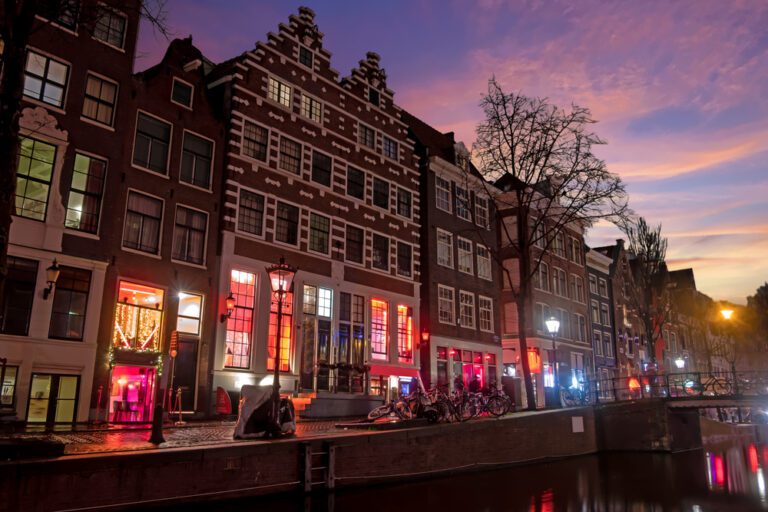
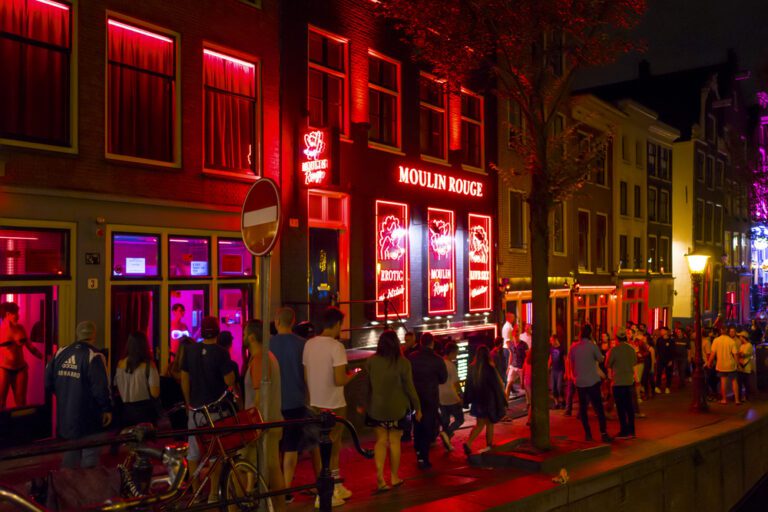
It’s no secret that the city of Amsterdam isn’t a fan of mass tourism. As part of its many campaigns to reduce tourism, the council has decided to build a new Red Light District.
Where will it be located? Well, the council has just announced its choice: Europaboulevard in the south of Amsterdam.
Wait, what?
Let’s take a few steps back.
When we say that Amsterdam wants to build a new Red Light District, we mean it. They are literally building a skyscraperthat will contain 100 rooms for sex workers.
This “new” Red Light District will remove 100 windows from the current De Wallen neighbourhood and place them inside the new “Erotic Centre” instead.
However, where exactly this “sexscraper” will be located has been a controversial topic.
The council’s choice
However, Amsterdam’s Municipal Executives have cast their vote, and they want Europaboulevard to be the home of this new Red Light District.
According to the municipality’s website, the council reached this decision following talks with 13 parties representing developers, cultural entrepreneurs, and representatives of sex workers.
It’s not official yet
While the council may have reached this decision, the majority of Amsterdam’s municipal council also needs to agree with this proposal.
And that won’t happen for some time yet. The decision won’t be submitted until early next year — and following that, there must be time for residents and workers to respond to the plans.
Sounds like a long process, right? That’s because it is. According to the municipality, the new “Erotic Centre” will not be realised for another seven years at least.
If Amsterdam is the blood of the Netherlands, and The Hague is the brains, then Utrecht is undoubtedly the beating heart.
This delectably Dutch city is the fourth-largest in the Netherlands and has the best of everything: culture, liveability, transport, education, and social opportunities. Well, the best of everything except housing, but we’ll get to that later.
Are you considering moving to Utrecht? Is it just one on your long list of Dutch cities to consider? Or have you already made the big move?
After moving to the city in 2016, I’m here to tell you everything you need to know and consider about moving to Utrecht.
Why should I move to Utrecht?
If you’re considering moving to Utrecht, your first question is probably ‘Will [my family and] I like it there?’. While we can’t give you a definitive answer on that matter, there are some things that make moving to Utrecht absolutely brilliant.
Firstly, its location is perfect. Smack bang in the middle of the Netherlands, Utrecht is a short 25-minute train ride to Amsterdam and a 30-minute direct train ride to Schiphol Airport.
It’s well connected to other cities via both highways and trains, but the Utrecht city centre is also well-equipped for everything you need.
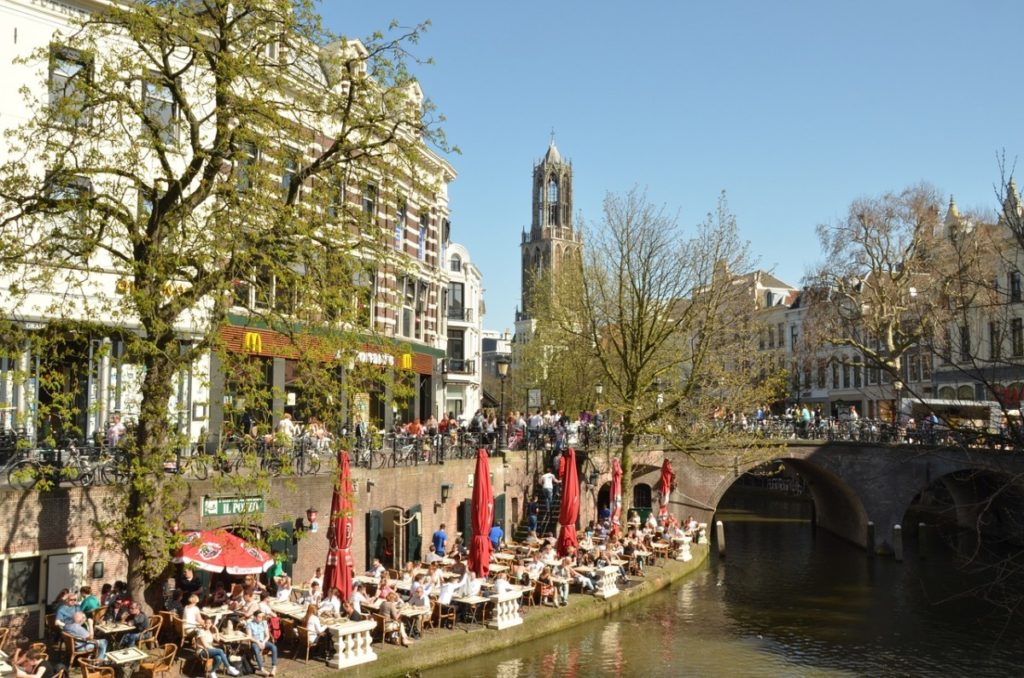
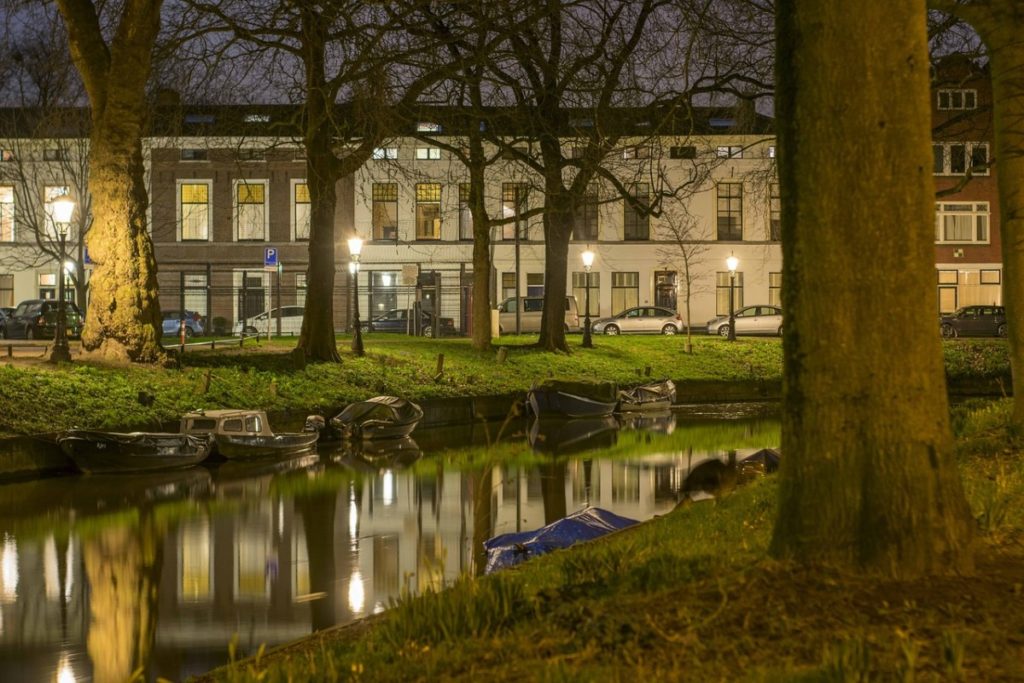
The terraces of Utrecht will steal your heart on a summer day. Image: Pixabay
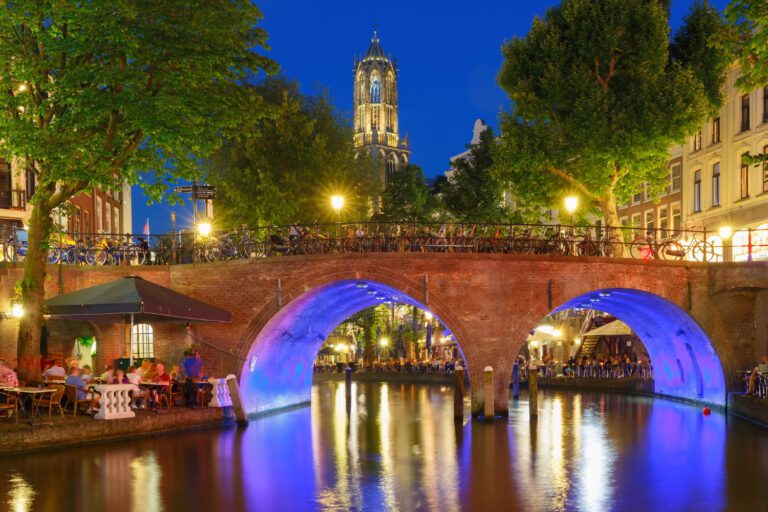
Speaking of the city centre, it is stunning. Utrecht is set apart from other Dutch cities by the terraces that sit upon its canals. While most cities like Amsterdam offer a steep drop from the sidewalk into the water below, Utrecht has a sub-street level where many cafes and restaurants have outdoor seating.
Sipping a beer on a canal in the Dutch sunshine? Wat gezellig!
But who will you sip that beer with? Why not the vibrant expat community that resides in the city and suburbs around Utrecht? There are thousands of nearby expats who hold meetups, networking sessions, and social outings.
If you’re a student you’re in luck! Utrecht is the perfect blend of a student city and an old-enough-to-know better crowd. While students are a lively group and plentiful, the city is big enough for both those studying and those who have settled down.
I’ve lived in the city as both a student and a young professional and can attest that it has the best of both worlds — from cheap beers and eats to high-end cocktails and silver service restaurants.
Moving to Utrecht: what do I need to do as soon as I move?
When moving to Utrecht you’ll have a list of things to do. Finding a house will be time-consuming — but we’ll cover this in more detail below. First, let’s attend to some housekeeping and administration items.
Moving to Utrecht: registering with the municipality
Number one on your ‘moving to Utrecht agenda’ should be registering with your local municipality. Why is this number one? Because before you can do most things in the Netherlands, like signing some rental contracts, getting health insurance, or getting a phone plan, you need a burgerservicenummer (BSN).
Once you know your arrival date in the Netherlands, go ahead and book a BSN appointment at your local municipality— waiting times can sometimes be up to a few weeks long, particularly when the influx of students occurs in August and September.
Moving to Utrecht: obtaining health insurance
Alright, you’ve got a BSN — congratulations! Step number two is finding some great health insurance. It’s compulsory in the Netherlands to have health insurance, even if you’re not currently working.
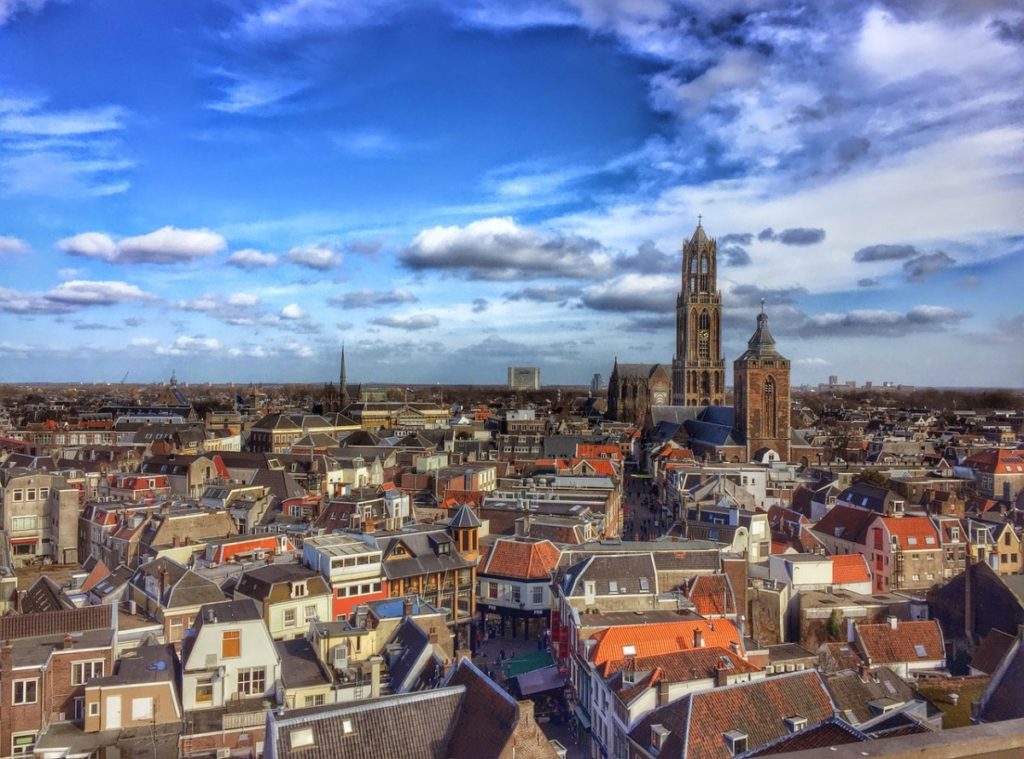
With a skyline like this, how could you not move to Utrecht?! Image: Pixabay
If you want to keep your body and your wallet healthy, count on budgeting around 100 euros per person, per month on this. But if you’re a student, you can get most of this back from the government each month as zorgtoeslag, or health insurance benefit.
Moving to Utrecht: finding a GP
Number three on your immediate list of things to do when moving to Utrecht is to find yourself a general doctor. In Dutch, they’re called a huisarts and you need to register at one before you can make an appointment.
We’ve had great success in Huisarts Janskerkhof (try saying that with a stuffy nose!) who deal with a lot of expats and have a bunch of locations.
It’s worth noting that Dutch doctors take a very minimalistic approach to healing: don’t expect to be prescribed painkillers or antibiotics. In the Netherlands, paracetamol is king.
Moving to Utrecht: how to find a place to live
Alright, alright, we’ve already told you how amazing Utrecht is. Sadly, we’re not the only ones who know it. Both the Dutch and expats alike are converging on this city and province, and housing availability is virtually non-existent.
But, how many people are in the metaphorical boat that is Utrecht? Well, firstly, Utrecht refers to both a city and a province in the Netherlands. That can get confusing!
So how can you get a house in Utrecht? Whether you’re planning on buying or renting, you have to start looking early. You always have to be extra cautious because the demand for housing has led to housing scams becoming more and more prevalent.
Moving to Utrecht: buying a house
When moving to Utrecht, if you’re looking at buying a house you can expect to pay a decent slab of money. The average house sale price in the city of Utrecht was €511,000 in 2022, and demand has only increased since then.
If you go to any of the outlying small cities in the province of Utrecht the average price drops — but, then naturally, you’re further away from the hub.
It’s very common in the Netherlands to employ a realtor to assist you with your house search. Alternatively, you can look online at houses on websites like Funda.
To be successful is a mixture of determination, persistence and downright luck. Registering with a rental agency can help you in your quest. There are also websites with paid subscriptions that give you more access.
If you have a pet, well, this makes your search even harder. Pet-friendly rental accommodation does exist but is rare and even more competitive — no matter how cute Fido is.
Moving to the Netherlands: getting short-term student accommodation
If you’re a student coming to the Netherlands for just a semester or two, there is a student housing organisation with rooms available for exchange students — but again, they fill up very fast.
As soon as you have confirmation from your university you should register with SSH who own 13,000 rooms all over Utrecht, and snap one up as soon as the rooms are released.
If you’re a student and haven’t been able to secure housing by the start of the semester (this is a very common problem), speak with your university. They can’t always help, but they often have a strong interest in finding you somewhere to stay — they want you to be able to study, after all! Check out our full guide on finding a room as a student for more information.
Moving to Utrecht: where should I live?
While the province of Utrecht is the smallest in the Netherlands, there are a number of cities where you can find a place to rest your head — assuming you can find a house that is.
Moving to the Netherlands: suburbs in the city of Utrecht
The city of Utrecht has some undeniably gorgeous places to live. If you can drop some serious cash you could be right in the middle of all the action in the Utrecht city centre: a beautiful canal house right on the Oudegracht would be a dream.
If you’d like to remain in the city, but are happy going a short bike ride out we can recommend searching in the stunning Wittevrouwen, Oudwijk, Vogelenbuurt & Tuinwijk/dorp, all suburbs that retain their old-world charm.
Utrecht is filled with beautiful green parks that rest gently on the canals. Image: Pixabay
Alternatively, you could head to multicultural centre Lombok where you’ll be spoilt for cheap and fresh vegetables on every corner. Across the sluizen from Lombok is the upper-class and swanky neighbourhood of Oog in Al. Great for families, but less great for the wallet.
Other places just outside of the city centre include the northern neighbourhoods of Utrecht Zuid, the old workers cottages of Zuilen, the up-and-coming Kanaleneiland and the brand-new suburban dream of Leidsche Rijn.
Leidsche Rijn is around a half-hour bike ride from the city centre, but was only built in the last ten years or so — and its population is in the middle of a boom. There are lots of houses being built out there, so if you’re willing to make the ride or take public transport, it could be an option that provides more bang for your buck.
We’ve already mentioned some of the bigger cities in the province of Utrecht, like Amersfoort, IJsselstein and Nieuwegein. These places typically benefit from far-reduced rent and purchase prices, have their own city centres and charm, schools, and have great transport links with the city of Utrecht and elsewhere.
Remember, the Netherlands is tiny, so it’s not uncommon to live in one of these areas and enjoy a slightly longer bike ride or public transport ride in. Other cities that could be worth a look during your house search include De Bilt, Woerden, and Zeist.
Moving to Utrecht: where to find a job
Alright, you’ve secured a house, now you need the means to pay for it — along with electricity, water, and you know, food. So what jobs exist in Utrecht, and how can you get one?
Moving to Utrecht: major employers
Utrecht’s central position and strong university ties mean that many large businesses have set up headquarters in the area. There is a focus on the services sector, in particular, financial services and banking, life sciences and research, ICT, transport and engineering sectors.
If you’re moving to Utrecht and you have some kids in tow (or in your future) you’re probably asking the golden question: what about education? But, with the Netherlands being the international society it is, you have many options when it comes to enlarging brains and enlightening minds.
Moving to Utrecht: Dutch schools
If you’re happy for your little tyke to learn in Dutch (believe us, they pick it up fast when they’re young!), you can enrol them in a Dutch public school.
However, before they go straight into the Dutch education system they need to spend around 6-18 months at the public Taalschool for Dutch language immersion.
The benefits of taking this route are that they can be integrated into the public system and their language skills will dramatically improve.
The downside is that these are a long-term option — if you’re only moving to Utrecht for a short period, it’s not ideal. It’s important to note that Taalschool is only available to start until age 11. If your child is older, see the next sections.
Moving to Utrecht: English schools
There is also the option of placing your child in an international school. International School Utrecht offers education for both primary and secondary students in English. However, students also take Dutch language classes.
An international school could be an excellent option if you’re moving to Utrecht for a shorter period. However, if you’re making a relatively permanent move you may prefer your children to take a more immersive route.
It’s also worth noting that international schools are typically more expensive than public Dutch schools: while some do receive government subsidies, they’re still typically a little pricier than public education. It’s best to get in contact with them directly to find out about fees.
For a cheaper version of an international school, consider an ISK school. Ithaka International School Utrecht is designed for students who don’t speak Dutch to attend for 1-2 years before being redirected into the Dutch education system.
Moving to Utrecht: hybrid schools
Some public schools in the Utrecht area also run a twee taalen (bilingual) program. They often accept native English speakers, but some do require a sufficient understanding of Dutch first. Subjects are taught in both Dutch and English. I’ve listed some of these for you, get in contact with the individual schools for more information:
If you’re not a fan of an international school and not moving to Utrecht long enough to enrol your children in the Dutch public school system, some parents have found success doing distance schooling with their home country.
Understandably, this opens up a whole new can of worms so it’s best to discuss with your own school district what options are available to you.
Moving to Utrecht: childcare
Is your child littler than little? Or are you looking for something when school isn’t in session? Luckily there are lots of options for childcare around Utrecht.
There are large childcare companies like Partou and Ludens which offer locations all over the city. Some daycares, like Ludens ‘t klavertje, offer international bilingual daycare groups where English is spoken.
If you would prefer to take the nanny or babysitter route, agencies like Charlie Cares can link you up with a qualified babysitter.
A third option would be to investigate au pairs. This is also a popular option for families in Utrecht with lots of online services available to help find your perfect au pair.
What is the cost of living in Utrecht?
Depending on where you’re from, you may find that Utrecht is not a particularly cheap city to live in.
Information from Numbeo ranks the cost of living 48th out of 379 cities across the world. The website suggests that you should prepare to pay approximately the following per month without including rent:
Four-person family monthly costs: ~ €3500 Single-person: ~ €1000
As a very rough guide you can expect to pay around:
€18 — lunch meal
€4 — 500g of chicken breast
€25 — 2 x movie tickets
€73 — for dinner for two at a nice restaurant
€3 — 1 x cappuccino
€5 — beer at a local bar
Moving to Utrecht: how to save money
While Utrecht can be expensive, there are a few things you can do to save money. First, not all grocery stores are created equal. A store like Lidl is far cheaper than Albert Heijn or Co-op.
If you’re looking to save even more money on food, our absolute top tip is to go to Lombok near Utrecht Centraal for your fresh produce. This Turkish/Morrocan neighbourhood has a plethora of grocery stores and butchers where items are significantly cheaper.
Another excellent way to save money is by avoiding public transportation or car and committing to cycling. Utrecht, like the rest of the Netherlands, is incredibly bike-friendly. The health benefits are also great!
If you can, share a house with other people to cut down the cost of your rent. Rent is one of the highest costs of living in Utrecht, so if your house has a spare room, searching for a roommate will not only take pressure off your wallet, but give you a potential new friend as well! You can also check out the rental housing benefits to see if you qualify.
Moving to Utrecht: transportation
Alright, you’ve gotten yourself TO Utrecht, now how do you get around it? Utrecht doesn’t have a metro/subway system, but it’s also not particularly needed: the city centre is small enough to walk almost everywhere, bus and tram routes are well connected and easily accessible, and of course, biking is as easy as pie.
Moving to Utrecht: public transport
The main transport hub is Utrecht Centraal — the biggest train station in the Netherlands. It has stops for trains, buses, and trams. If you’re taking the train to work or home there are extensive bike parking facilities available at the station.
All public transport across the Netherlands uses the OV-chipcard system, which can be purchased upon your arrival. Public transport is typically relatively expensive, although of pretty high quality. You can also use your bank card to tap in and out of public transport.
Make sure you check out all the secrets to getting discount train tickets, so you can spend your hard-earned euros on more important things.
Moving to Utrecht: biking
The easiest way to save money is by biking around Utrecht. If your house is within cycling distance to the city centre or your workplace you’ll not only guard your pennies, but have the added benefit of being super healthy — and super Dutch!
While biking in the Netherlands can seem intimidating at first, rest assured it’s very safe thanks to the sheer number of bike lanes, and Utrecht has actually been named the most bike-friendly city in the WORLD.
In the Netherlands, everybody bikes everywhere, regardless of class or money. People typically don’t bother with expensive bikes either, as there’s a good chance they’ll get stolen.
How do I buy a bike?
You don’t need a shiny, new bike in the Netherlands because, we repeat, it will probably get stolen. A second-hand bike will do you fine.
You could purchase one in a second-hand bike shop where it will probably come with some kind of a guarantee (although your mileage will vary) but will be far pricier.
We would always recommend purchasing your new (to you) second-hand bike privately. You can find heaps for sale on Markplaats, on Facebook Marketplace, or on Facebook buy-and-sell groups.
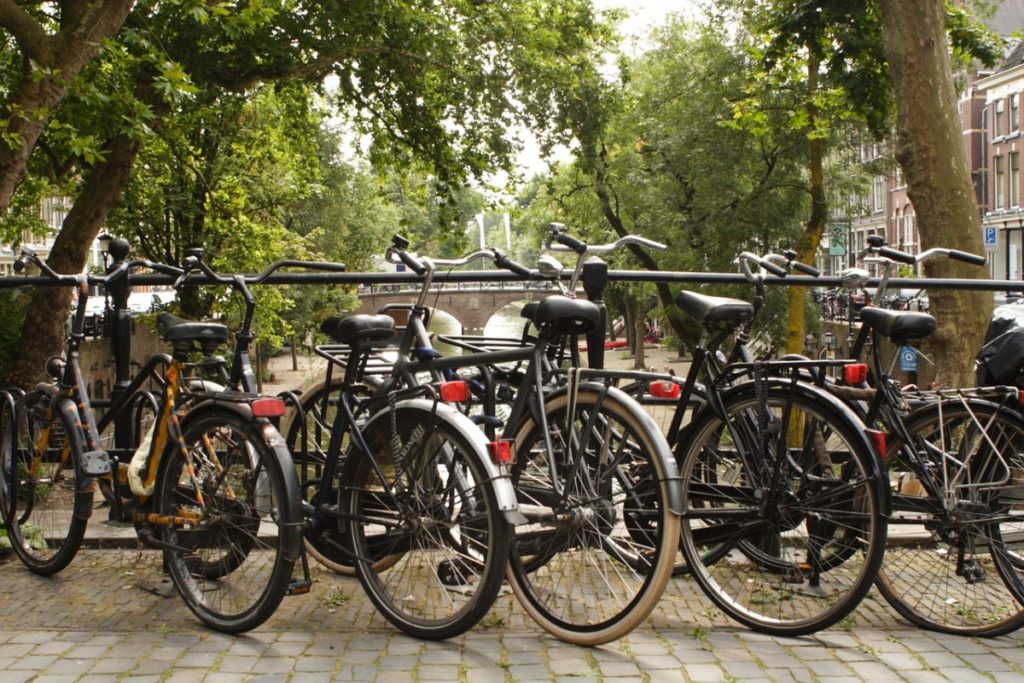
Your bike will be your best friend when moving to Utrecht, choose it wisely. Image: Pixabay
Buying a bike does take some finesse though, to make sure you don’t end up with a rust-eaten squeak-machine. You should plan to spend around €70-150 on a decent quality bike. You can go cheaper or more expensive, but this price point is good balance between quality and not going broke if it gets stolen.
How do I make sure my bike isn’t stolen?
If you’re pretty attached to your two-wheeled friend make sure you take precautions to keep it in your possession. ALWAYS lock your bike, preferably with a wheel lock and a chain lock.
Utrecht is also home to multiple fietsenstallingen (bike storage facilities), including the largest one in the world! In these facilities, the first 24-hours is typically free in an undercover, secure parking garage. Use these whenever possible.
Moving to Utrecht: owning a car
Should you own a car when moving to the Netherlands? Absolutely not, if you can avoid it. Cars in the Netherlands are expensive, fuel is pricey, and parking garages (where existent) will cost you an arm and a leg.
Moving to Utrecht: where to eat, drink, work and play
Culture fixes
Utrecht is home to some excellent museums, galleries and libraries for when you need a place to think. Check out the Rietveld Schröder House for some architectural brilliance, see cartoon-goodness at Studio Dick Bruna, home of the creator of Miffy, or indulge in some incredible Utrechtian history at Centraal Museum Utrecht.
Eat and drink
Utrecht is fast becoming the food capital of the Netherlands, with inspiring and adventurous cafes opening up around the city.
Some of our favourites are Kimmade, for inexpensive but super-fresh Vietnamese food, De Pizza Bakkers for the best thin-crust pizza in Utrecht, and for vegans or anyone who loves good coffee (we admit Utrecht is lacking in this area) head to Gys for healthy bites and a latte to die for.
Co-working Spaces
If you’re a digital worker or have the luxury of having work-from-home days, you know the importance of having an office that isn’t your lounge room. Luckily, Utrecht has a bunch of great co-working spaces.
We’re particularly fond of Seats2Meet in the city centre which is completely free, or for a paid option head to AtoomClub Utrecht. Alternatively, you can take full advantage of the sharing economy at Social Impact Factory to max out your social-swap potential.
Nightlife
Work over and time to chill out? Utrecht has you covered there too. This city is brimming with bars ranging from trendy to cosy and comfortable. Beer, wine and spirits flow freely, and there are no shortage of music, events, and shows.
TivoliVredenburg is the main attraction here, a mega-entertainment centre for music and culture, with five halls dedicated to different music types. It’s also home to nightclubs, bars and cafes.
If your music taste runs more on the alternative side, check out Ekko nightclub for a constant revolution of up-and-coming and established bands.
Activities for children
It’s the weekend and the kids need to be entertained: no problem! We love Play-In Utrecht— it’s a huge playground with different activities for kids of all ages. There are three different zones, letting kids run wild, make friends, and burn off some excess energy.
It’s also a great confidence builder for the young ones! There are instructors for each of the activities who will help your kids, keep them safe, and make sure they have a great time.
Moving to Utrecht: do I need to speak Dutch?
Ah, the age-old question. The answer is no, you don’t technically need to speak Dutch to be able to live in Utrecht, or almost anywhere else in the Netherlands. But, (and there’s always a but) you should make as much of an effort as possible to try to speak some.
Why learn Dutch when everyone speaks English? It’s definitely not necessary, but it is a polite gesture to Dutch people. Speaking some Dutch can help you integrate better and make some Dutch friends.
People are more than happy to speak English, and there’s a good chance they’ll switch to English if they hear you speak Dutch, but Dutch people are getting frustrated that their own language is disappearing.
As an expat in the Netherlands, it’s expected that you’ll learn at least some basic Dutch to get you by. And trust me: even a little bit of Dutch makes a big difference in your quality of life!
Moving to Utrecht: How can I learn Dutch?
There are a variety of apps to give you a beginner’s notion of the language for free or videos online. You can also register for classes at your local library, or look into a private school like Taalthuis or Babel. You could also choose some private lessons instead.
If you’re studying, see if your university offers Dutch classes, or, if you’re working, your employer may even pay for your lessons.
Moving to Utrecht: How do I make new friends?
Moving to a new city is always tough, and we’ll be honest, it can sometimes be hard to break into the Dutch people’s inner circles. However, the great news is Utrecht has a bustling expat community, so we would recommend starting there.
Head to expat meetups or language cafes to start meeting some new people. If you have some interests like running or gardening look for Facebook groups where you can find people who do similar things.
There are also a plethora of international sports that have made their way to the lowlands, including netball, Aussie rules football, and rugby that you can take up to meet some other friendly people.
You can also get in contact with some volunteering organisations to give back to the community while grabbing hold of some new friends, or you could check out mothers/fathers groups or suburb groups.
Utrecht is a ridiculously great place to put down some serious roots. If you can get past the housing crisis and find a great home, you’ll reap the bountiful rewards of an architecturally stunning hub with a welcoming expat community, great education, and amazing transport links.
Have we missed any important tips or tricks? Let us know in the comments below! Editor’s Note: This article was originally published in October 2019, but was fully updated in December 2023 to bring you the most up-to-date information.
Starting January 1, 2024, some interesting new laws will come into effect in the Netherlands.
From dogs to baby names, these are the issues tackled by the incoming laws as reported by the Dutch government.
Doxxing will become a punishable offence
Sharing someone’s personal data, such as their address, with the intention of intimidating them (also known as doxxing) will become punishable from January 1.
The Dutch government determined that posting addresses, phone numbers, and pictures of someone and/or their family members to scare or harass them interferes with their ability to express their opinions and function in a democratic society.
Double surnames for babies will be allowed
A new Dutch law says that parents can give their child a double surname if their first child is born on or after January 1, 2024 — but you must be explicit about wanting this.
If the parents don’t make an explicit choice in the surname and are not married or not in a registered partnership, the child is given the surname of the birth mother.
It’s that time of the year again! The Van Dale dictionary has chosen graaiflatie as the 2023 Dutch word of the year.
Graaiflatie comes from the Dutch words graai and inflatie, combining the two words meaning grab (as in greedy) and inflation — “grabflation”, if you will.
According to the Van Dale dictionary, the term refers to “inflation fuelled by activities that excessively charge the cost increase of raw materials, means of production and labour to the consumer to maintain or increase their profits.”
Forget Spotify Wrapped, Pornhub has just released its own annual findings. Let’s talk about what porn the Netherlands has been watching — because it’s… interesting.
From pissing to fisting (those are two words you’d never expect to write in a professional capacity), the Dutch have had some specific interests in 2023.
A love for hot moms and lesbians
Let’s start slow: the Dutch seem to love MILFs and lesbians, with these two terms being the first and second most searched-for in 2023.
We could say that these search terms aren’t so shocking. The MILF has reigned as a supreme search word in many countries, so the Dutch are basic in that way.
As for the lesbian sex, it’s the Netherlands, so we’re not surprised to see some LGBTQIA+ representation. Not to mention this search term joins MILF in Pornhub’s “Big Three” search terms.
Not only were MILF and Lesbian the most searched-for in 2023, they also found themselves in the Netherlands’ five most-watched categories, joining “Anal”, “Threesome”, and “Transgender”.
Which categories do the Dutch love more than other countries?
According to Pornhub, the viewers in the Netherlands searched for videos under the categories “Pissing”, “Arab”, “Indian”, “Fisting”, and “German” more frequently than in other countries.
In fact, “pissing” was viewed 67% more frequently than in other countries… we don’t know what this has to say about the Dutch psyche.
It’s t-i-i-i-me: Christmas is officially just a week away! The question that’s burning inside all of us, of course, is whether we will get a white Christmas in the Netherlands this year.
Helaas, a white Christmas is out of the question, say experts — but we may get some snow nonetheless. ❄️
Note: The Royal Dutch Weather Institute only counts a “white Christmas” when a closed layer of snow covers the ground on the mornings of both Christmas days in De Bilt, Utrecht.
The last time this happened in the Netherlands was in 2010.
A chance of snow!
Marc de Jong from Buienradar tells RTLNieuws that while we may not get a white Christmas per se, “there is a chance of some snow showers [on Christmas Day]”.
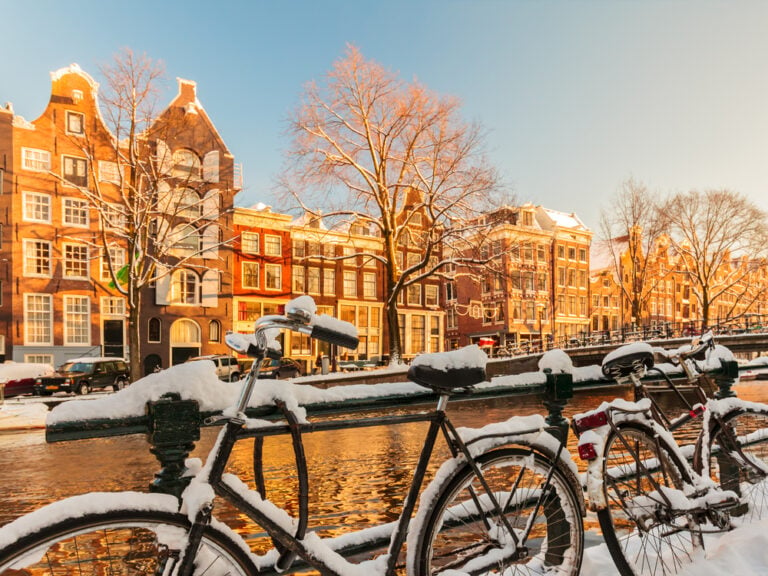
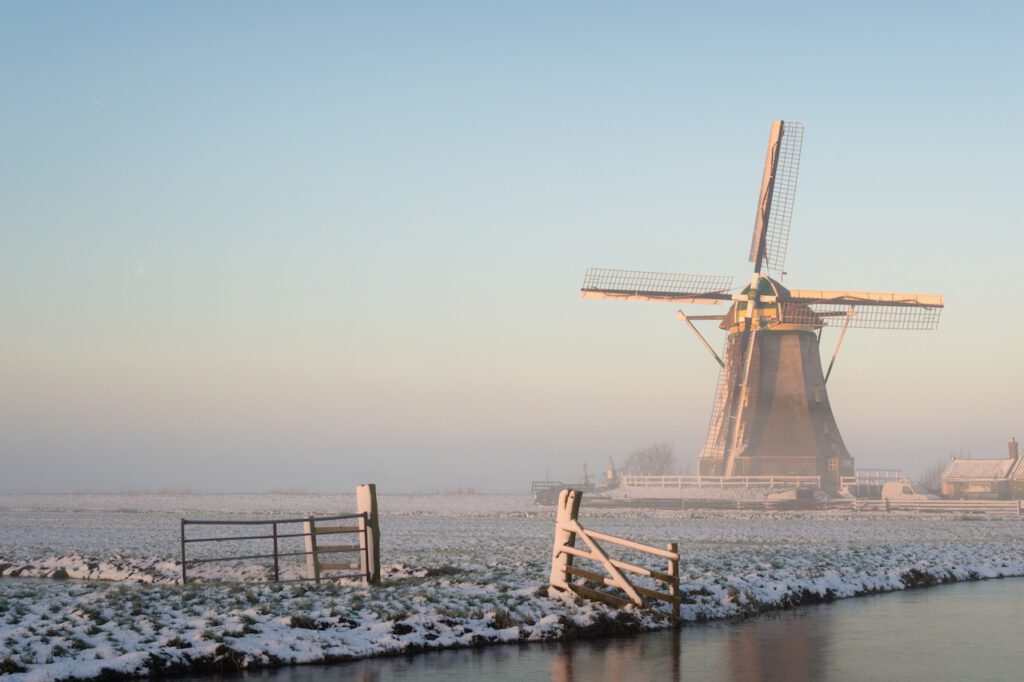
Ah, is there anything more beautiful than a snow-covered Netherlands? We don’t think so. Image: Depositphotos
A stream of cold air that is heading towards Scandinavia may reach the Netherlands around the holidays, bringing us some snow.
If the cold air misses the lowlands, then we’ll be met with something a lot less exciting: rain. 😪
Do you have hope for snow on Christmas? Let us know in the comments!
It seems that each day, we have fewer reasons to be surprised by Geert Wilders’ popularity in the voting booth.
Today, the Dutch city of Hoorn has decided it will not apologise for its involvement in the slave trade. It will also not recognise its actions in the past, RTL Nieuws reports.
Following a vote held by the municipal council to decide whether Hoorn should apologise for its role in slavery, the council did not reach a majority in favour of apologising.
Hoorn’s role in the slave trade
To make matters worse, it’s not as if Hoorn can claim to have had no ties to slavery.
In fact, a study carried out in June found that the city played a very important role in the slave trade during the seventeenth and eighteenth centuries.
According to the study, the city was home to a chamber of the VOC, which was also heavily involved in the shipment and trading of slaves.
Amsterdam’s iconic Red Light District is notorious for attracting millions of tourists to the capital’s streets — but the city has grown tired of it. Their solution? A skyscraper.
More specifically, a skyscraper located nowhere near the original De Wallen neighbourhood.
A new ‘Erotic Center’
Ask any Amsterdam local about their feelings towards the Red Light District, and they’ll probably begin lamenting the good ol’ days before waves of drunken tourists plagued its streets.
Comprising just one square kilometre, the historic neighbourhood attracts a lot of unwanted behaviour from tourists to the area, and many residents are sick of it.
As a result, the city has come up with a plan to pull some of this traffic elsewhere — a skyscraper brothel (a sexscraper, if you will).
By creating a new “Erotic Center”, the city hopes to both increase the safety of sex workers and reduce footfall (along with late-night drunken singing) in the densely packed streets of De Wallen.
What on earth is an “Erotic Center”?
You may be wondering what exactly an “Erotic Center” would even look like — and no, it can’t be found on an anatomical drawing (sorry guys 😉).
However, there is a blueprint.
Amsterdam has already commissioned and crowned its favoured design for this potential new “Erotic Center.”
Designed by Moke architects Gianni Cito and Jurgen ten Hoeve, this skyscraper offers a lot more than just rooms.
The design would consist of not only hotel rooms but also bars, restaurants, stores, entertainment facilities and even offices.
With a design like this, Amsterdam’s Mayor Femke Halsema wants to draw not just potential clients to the building but also culture-lovers.
She hopes to make this new Red Light District a cultural centre where debates, artistic courses and exhibitions can be held. On top of this, she wants to make it a safe space for LGBTQIA+ members of the community.
With its circular design and continuous walkway, the building would also allow patrons to walk continuously throughout the building, much like if they were walking down a street — pretty cool, right?
Well… not exactly. 😬 This red light-alternative is being hit with backlash for a number of reasons.
Where will it be located?
The city’s plan is simple: With De Wallen currently consisting of 241 rooms, Amsterdam’s current plan is to take an unspecified number of these rooms and relocate them to this new building.
However, there’s just one problem — no one can agree on where this sexscraper should be placed.
According to the municipality’s website, there are currently three potential locations under consideration:
The Docklandsplot location by the NDSM Wharf (Amsterdam Noord)
De Groene Zoom
or Europaboulevard (both in the Zuid/RAI area)
Residents of these neighbourhoods were asked to prepare their response to this idea, meetings were held — and people weren’t happy.
Residents spoke of their worries about the safety of their neighbourhood, accessibility issues and even parking.
And it’s not just the residents who are unhappy.
What about the safety of sex workers?
Sex workers are also worried about the potential relocation.
While Mayor Halsema claims that a move to a secure and more private building would be better for sex workers’ safety, many beg to differ.
Yes, De Wallen is crowded, but sex workers find that there is safety in numbers.
Where Halsema argues that the crowds deter potential clients from reaching the workers, the workers point out that the crowds also deter crimes against them.
Speaking to Time, one sex worker voices her opinion:
“The mayor says we need safe working places. We already have them. She says, ‘you are humiliated there.’ We don’t mind, otherwise we wouldn’t be in the windows.”
The worker tells Time that “we have been consulted, but not in a serious way.”
A problem for next year
Much like many of us at the end of a long hard year, the municipality of Amsterdam has decided to shelve this problem until the new year.
According to their website, the city council will make a decision on the final location of the new centre in early 2024.
What do you think of Amsterdam’s plans? Let us know your thoughts in the comments below!
Thinking of rolling up a joint for some pre-weekend rest and relaxation? Fun fact: this may be the first time you’re doing so *legally* in the Netherlands! 💨
(Specifically if you’re living in Brabant. 👀)
Today, 19 coffeeshops across Breda and Tilburg will sell legally grown weed for the first time as part of a new experiment. For the next six months, these coffeeshops will receive weed from three legal growers.
The hope is that following the test phase, even more growers will be permitted to legally supply weed, and the trial can expand, the NOS reports.
Isn’t weed already legal?
Wait, you might be thinking. Wasn’t weed already legal in the Netherlands? 🤔
Nope, it actually wasn’t! Prior to today (December 15), both using and dealing weed was only ‘tolerated’ or gedoogd by the government.
Known as the gedoogbeleid (tolerance policy), this ruling permitted coffee shops to sell — and people to possess — a certain amount of weed and not be prosecuted for it.
First adopted in the 1970s, this policy was intended to differentiate the treatment of hard and soft drugs.
Instead, however, it’s created a rather confusing legal environment that many coffee shop owners and weed smokers would prefer clarity on.
Enter… the Dutch government’s ‘weed experiment’
Pens and paper down please, because this isn’t a test you can study for!
What this experiment entails is allowing weed suppliers to operate legally in around 11 municipalities.
All coffeeshops within those municipalities are obligated to take part, and must now keep accurate records of how much they buy and sell.
Over the next four years, independent researchers are going to be monitoring the effects of weed being legalised and tracking the strength of what is on the market.
Given that weed can occasionally contain dangerous heavy metals, the levels of these will also be monitored.
It’s hoped that this new policy will reduce the petty crime rates and antisocial behaviour associated with the current weed laws, as well as regulate the supply chain to coffee shops.
However, with the possibility of anti-weed Geert Wilders at the helm in the future, it remains to be seen how long this experiment will last.
What do you think of the government’s decision to legalise weed? Tell us all your thoughts in the comments below!
Many changes are coming to the Netherlands in 2024, including to the energy market. So, how will these changes affect you — and what does this mean for your wallet?
From increasing taxes to new policies, this is how energy prices in the Netherlands are changing next year.
The Netherlands is getting rid of the price ceiling
At the start of 2023, the Dutch government introduced a price ceiling for gas and electricity meant to protect households from price fluctuations, reports the NOS.
One major change in 2024 is that there will no longer be a price ceiling. Image: Freepik
For example, the maximum rate for gas was €1.45 per cubic metre, up to 1200 cubic metres. Helaas, in 2024, there will be no more price ceiling, and households will have to deal with fluctuations in the market.
Taxes on gas will increase further
Yep, you read that right. The Dutch Senate still has to approve the increase in gas taxes laid out by the government, but this increase will also hike up your gas bill.
To give you some perspective, customers of Essent with a variable contract will see prices rise from €1.33 to €1.45 per cubic metre.
And Essent isn’t alone in this, unfortunately. Across the board, gas providers will hitch up their prices.
Electricity prices will drop in 2024
Electricity prices are actually set to decrease in the Netherlands in 2024. Image: Freepik
On the flip side, electricity prices will decrease in the Netherlands in 2024. This can be seen when we take a look at Essent and Vattenfall, for example:
Variable prices for electricity at Essent will drop from €0.39 to €0.38 per kilowatt hour (kWh)
Variable prices at Vattenfall will drop from €0.34 to €0.33 per kWh
Why is this the case? The answer is simple: the Dutch government wants to encourage people to use electric heating over gas heating.
These contracts usually last at least a year (up to three) and have new energy prices when you renew them a year later.
While a fixed contract ensures that you don’t fall victim to fluctuating prices, those with fixed contracts will also feel changes in their wallet in 2024.
You’re going to see some changes in your Dutch energy bill in 2024. Image: Freepik
For one, it won’t protect you from higher taxes on gas — which will certainly appear on your energy bills starting in 2024.
That being said, you won’t fall victim to any drastic fluctuations in the energy market, unlike someone with a variable contract.
What this means for those with a variable contract
A variable contract means the price you pay for electricity and gas changes depending on the price fluctuations in the energy market, and the prices are only established for a set period.
Variable contracts can be as short as three months up to a year. If you have a variable contract, the above changes will be especially significant for you.
Without a price ceiling, variable contract prices in the Netherlands are expected to rise next year — pair that with increased taxes and an unstable world economy, and you run the risk that energy bills will skyrocket.
Even with all the new policies, fluctuating prices, and new taxes, understanding your utilities doesn’t have to be confusing! Here’s to a bright 2024. 🥂✨
What do you think of the changes to the energy market in the Netherlands? Tell us in a comment below.