Ah, is there anything better than ending a long day by scrolling through social media? Before you know it, you’ve forgotten the day’s worries — and aimlessly jumped between apps for three hours straight. Oops.
If this scenario sounds familiar to you,then you may be falling victim to the addictive designs and techniques used by manufacturers to make smartphones and apps addictive. 📱
And you’re not alone: Research shows that 1 in 4 young people struggle with smartphone addiction. This must be fought, says the European Parliament.
The Parliament has spoken
In a parliamentary debate, a large majority voted in favour of a proposal made by Dutch politician Kim van Sparrentak.
The proposal aims to curb smartphone addiction by banning the addictive features and manipulative algorithms that have people glued to their screens for hours at a time.
Van Sparrentak tells RTL Nieuws that “if we don’t intervene now, [phone addiction] will have an effect on people’s mental health and even brain development of the generations of the future”.
What does this mean?
The next step will be for the European Commission to draft a bill that will lay out techniques that may be used to reduce Europe’s constant scrolling.
Possible features include a ban on addictive design features, such as continuous scrolling features and automatic video playback. Another option would be to have attention-seeking features such as notifications deactivated by default.
This means that our favourite apps, such as Instagram, TikTok, and YouTube, soon may be no more — at least not in the way we know them.
What do you think about this plan to combat phone addiction in Europe? Tell us in the comments!
Known for its iconic canals and vibrant nightlife, Amsterdam is one of the most iconic cities in Europe. However, it’s easy to forget that there is a lot more to see in (and around) the Netherlands than just the capital.
Lucky for us, Amsterdam is well-positioned to access countless unforgettable getaway spots — and thanks to the city’s fantastic public transport network, many stunning options are just a short train ride away.
So, hop aboard! Whether you’re looking to admire architecture or experience a new culture, these seven spots should be at the top of your list. 🚂
Rotterdam, Netherlands
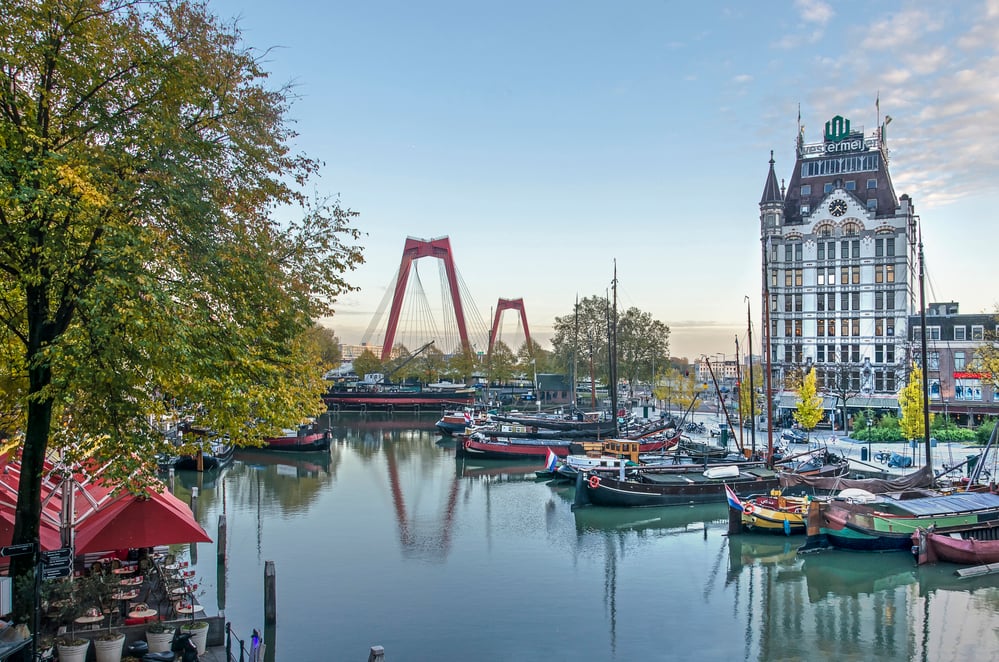
Enjoy a stroll through Europe’s largest port. Image: Depositphotos
As the Netherlands’ busiest port city, Rotterdam maintains a gritty industrial charm with many hidden gems to visit. You’ll be amazed by its striking modern architecture, like the famous cube houses and the Markthal.
The Kop van Zuid waterfront reveals a very urban Dutch landscape of high-rises rising up from the river. Just an hour away by train from Amsterdam, Rotterdam offers a total change of scenery with a youthful and international flair.
Maastricht, Netherlands
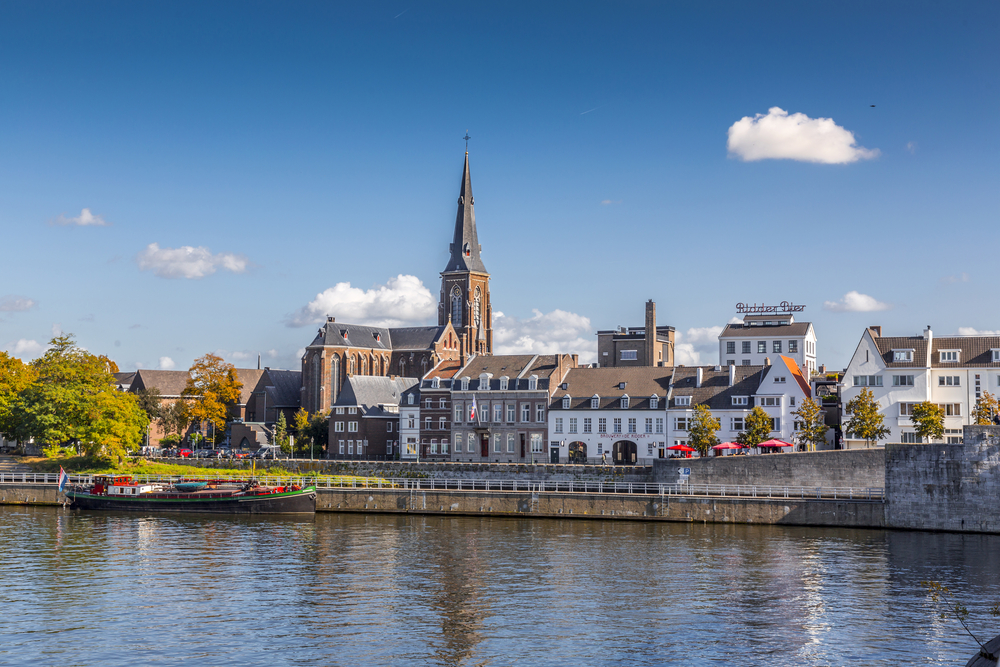
In previous years, Maastricht has been voted the best city to live in the Netherlands! Image: Depositphotos
For a mix of historic charms, Belgium and Germany meet in the southern Dutch city of Maastricht. About two-and-a-half hours away from Amsterdam, Romans founded this city in the 1st century AD, and its cobbled lanes lead to Gothic churches, ruins, and the impressive St. Servaas Basilica.
When in Maastricht, you shouldn’t miss the Vrijthof central square, which hosts lively markets and events throughout the year. Sample some Jenever (Dutch gin), and local foods, and just enjoy yourself!
Berlin, Germany
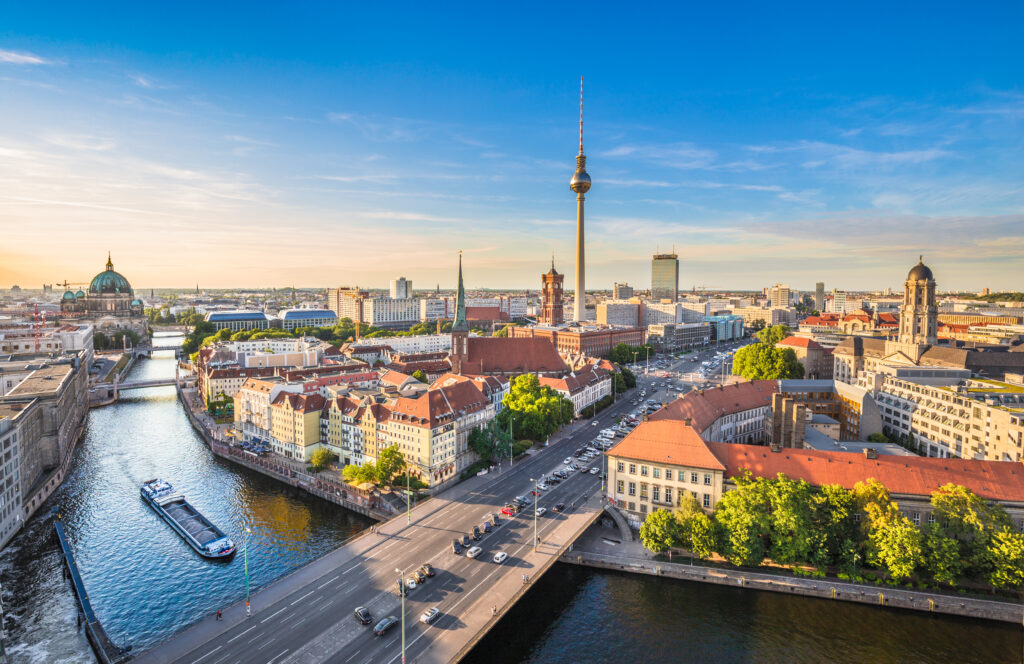
You don’t get a skyline like this in Amsterdam. Image: Depositphotos
For art, nightlife, and big-city hustle and bustle, Berlin is one of the best weekend destinations near Amsterdam. A roughly six-hour-long train journey puts you right in the heart of the dynamic German capital.
As Germany’s largest city, Berlin offers an exciting energy quite different from the Netherlands. Explore iconic sites like the Brandenburg Gate, Checkpoint Charlie and Museum Island, or spend an evening bar-hopping along Kreuzberg or Friedrichshain.
With its central location in Europe, Berlin is also well connected to other major cities like Paris, making it ideal as a stopover on a longer European trip.
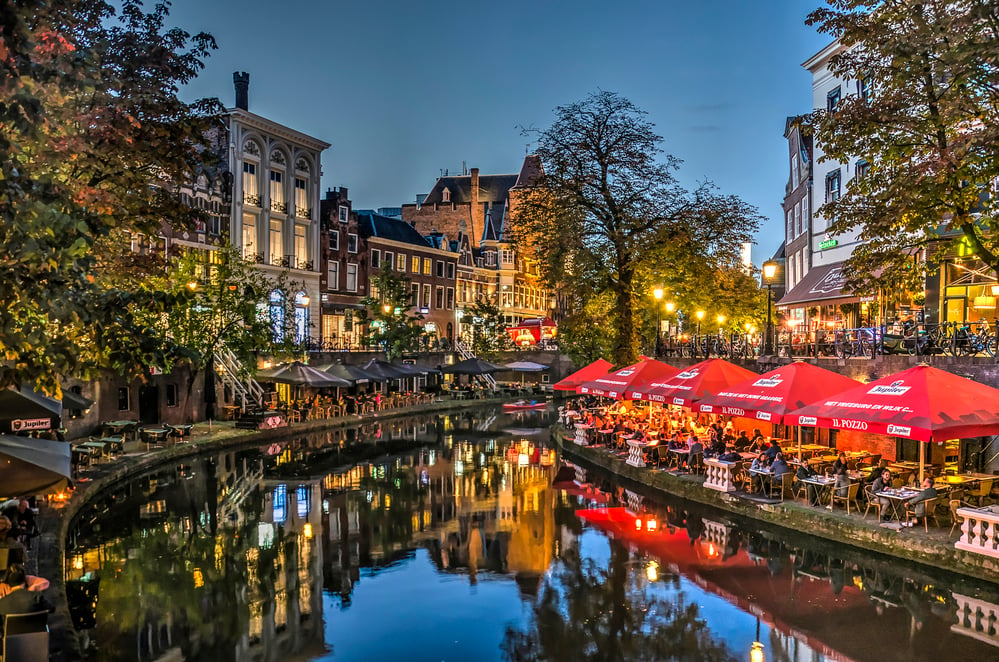
As the Netherlands’ fourth largest city, Utrecht combines urban sophistication and medieval quirkiness. Its handsome canal ring and star-shaped defence wall are lined with countless cafés and shops to stroll by.
On Saturdays, the Vredenburg square turns into a marketplace for local handicrafts, cheese and produce — it’s a must-visit, if you ask us! Less than an hour away, and with trains running every 15 minutes, Utrecht makes for an enjoyable day or overnight trip from Amsterdam.
The Hague, Netherlands
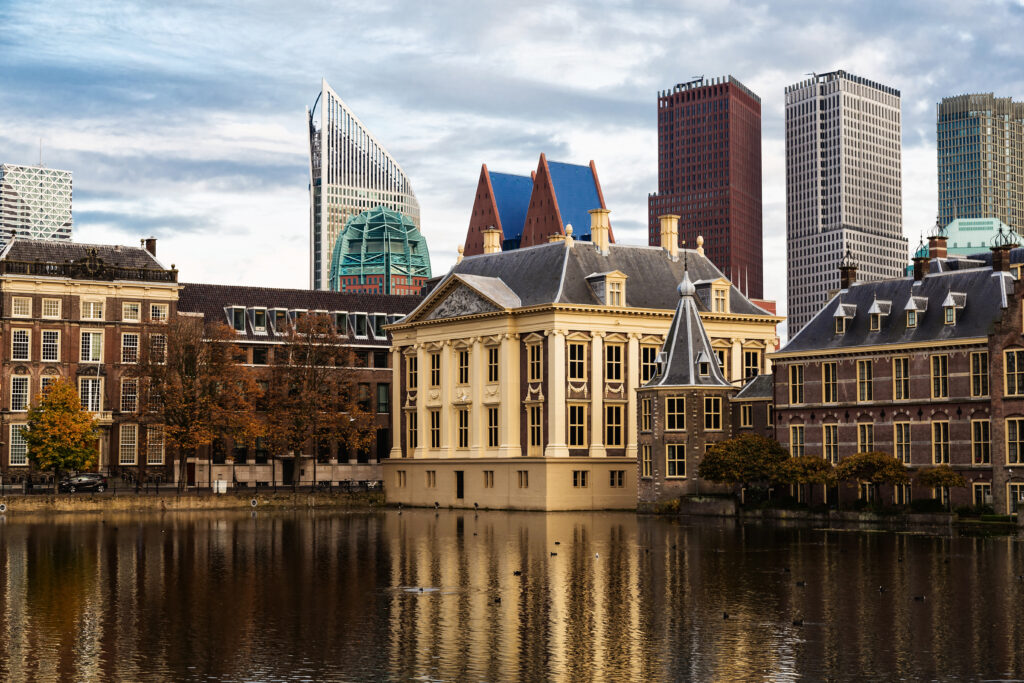
A Dutch city with international allure. Image: Freepik
As the political centre and home to many international organisations, The Hague has a global reputation but a peaceful ambience. Sights include the iconic Binnenhof parliament buildings, the Mauritshuis Royal Picture Gallery and many elegant tree-lined boulevards.
Wanna get out of the city? Geen problem, just visit the wide dunes and beaches along the North Sea coast, which can be reached with a quick tram or bus journey!
Ghent, Belgium
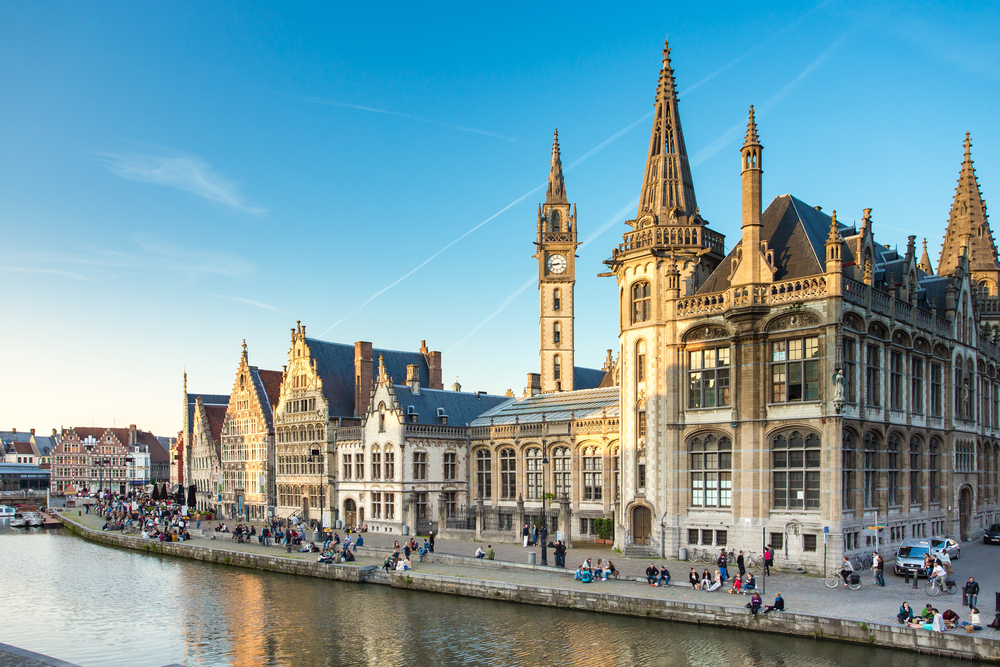
Just look at this architecture! Image: Depositphotos
For Belgian charm without the crowds of Brussels, consider charming Ghent. About three hours by train from Amsterdam, you’ll find classic European architecture lining the canals of this beautifully preserved Flemish city.
We recommend you check out the medieval Altarpiece in St. Bavo’s Cathedral and the culinary Patershol neighbourhood. When taking a break, be sure to try some local beers and signature dishes such as “Waterzooi” (cream-based stew). Lekker!
Groningen, Netherlands
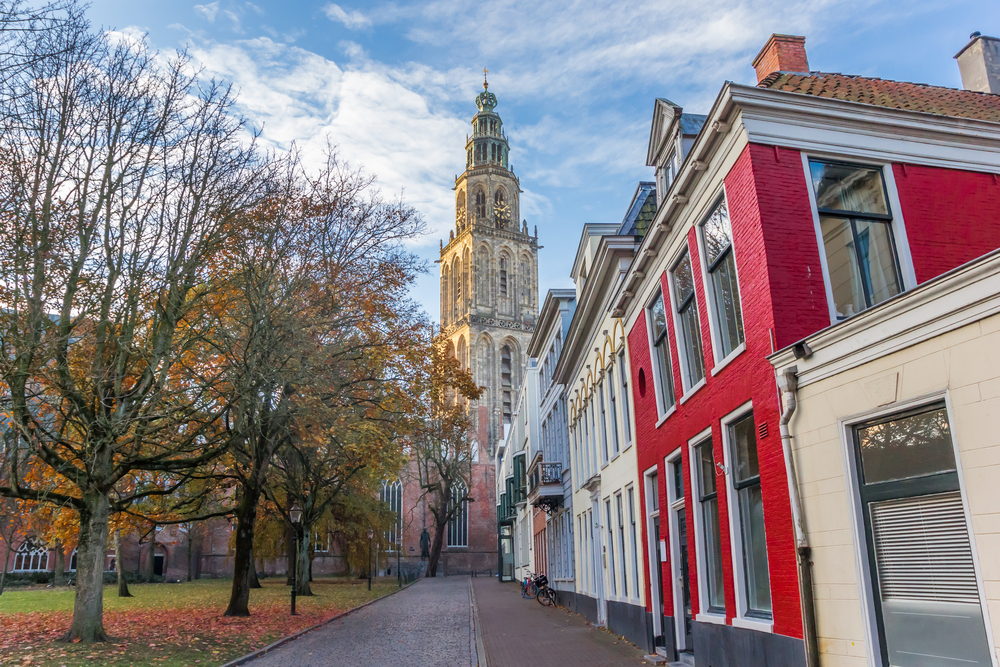
No matter the time of the year, Groningen is always a good idea. Image: Depositphotos
As the largest city in northern Netherlands’ Groningen province, Groningen feels worlds away from Amsterdam, yet remains a perfect getaway that is well connected by trains. The best part? The journey there takes just a little over two hours!
As a student town, this place has a lively culture reflected in cafés, bars, and independent shops. Some must-see sites are the picturesque old town, the Martinitoren, and the Groninger Museum.
From big cities with global flair to quaint towns hiding gems of history, the areas surrounding Amsterdam boast endless weekend trip potential. With high-speed and frequent rail connections, reaching top spots like The Hague, Utrecht, Rotterdam, and more is an easy feat. ⚡️
So, take your pick of culture, architecture, or cuisine, and get ready for your perfect city break, just a train ride away from the Dutch capital.
What is your favourite spot for a getaway from Amsterdam? Let us know in the comments!
Oh, crystal ball, what is in store for the Netherlands in the coming year? 🔮
Beyond a potential new government, the lowlands has a raft of new changes that are coming into effect in 2024.
Here are some of the biggest, originally reported by Het Parool.
No more flavoured vapes
Hoera! Look, no hate for vapers, but I think we’re all a little sick of walking down the picturesque Dutch streets and suddenly being lost in a cloud of strawberry fog.
Luckily, vapes with candy, fruit, or other sweet flavours will be banned from sale in online and physical shops.
The only vapes that may be sold in 2024 are those with tobacco flavour. This is done in a bid to make e-cigarettes less popular.
Minimum wage increases
If you’re earning minimum wage, congrats! You’re about the get a pay rise.
The statutory minimum wage will increase to €13.27 euros per hour, an increase of about 3.75%.
We’ll take it! Image: Freepik
What’s nice about this is that the Netherlands will move to calculating minimum wage per hour instead of per month.
This previously disadvantaged people who worked a 40-hour work week because they would then earn less.
You’ll pay more for your health insurance
Eek, yep, this definitely isn’t a good change. The required Dutch health insurance that every resident of the Netherlands must have is getting more expensive.
The premiums increase every year, so this isn’t surprising. Most insurers are raising their premium prices by between €7.50 and €9.30.
However, if you receive zorgtoeslag (the healthcare allowance), the good news is that this will also increase to a maximum of €154 per month.
Even better, if you think you’ll be paying too much, you can still switch health insurance providers until the end of the year. After that, however, you’re locked in until 2025.
Energy costs will increase
Ja, okay, you’re done hearing about high energy bills. However, there’s more bad news here: the price ceiling that the government offered to reduce the cost of energy bills in 2023 will expire on January 1.
It’s expected that this will cost users €5 to €15 more per month.
Beers and cigarettes get more expensive
Planning to drown your sorrows over rising costs with a beer and a cigarette? Hold up: those prices are also increasing.
This is about to get even more expensive. Image: Freepik
The average crate of beer will be €0.50 more expensive in 2024, while a pack of cigarettes will cost you about €10.
Bumming a cigarette off someone? Watch out, you might be getting a Tikkie after. 💰
Tourist buses are banned from Amsterdam city centre
Huge buses overflowing with tourists and driving through Amsterdam will become a thing of the past.
Tourist buses over 7.5 tons will be banned from Amsterdam city centre as of January 1. The ban will remove about 350 to 400 buses from the city.
Instead, tour buses will need to wait outside the Amsterdam city ring. This will make it safer in the city centre for cyclists, pedestrians, and other road users.
There is one exception to the change: the Weesperstraat-Valkenburgerstraat-Kattenburgerstraat route will remain open for tour buses because of the large number of cultural institutions here.
Were you surprised by any of these changes? Tell us in the comments below!
Yes, yes… that’s the spot! (For you to pop a whimsical Christmas decoration on your tree this year.)
With weird Christmas ornaments popping up right, left, and centre, RTL Nieuws interviewed blogger Saskia de Laat to get her thoughts on the trend.
According to de Laat, ’tis the season for “unusual ornaments” — and nothing’s off the table. These ornaments can be anything from a vibrator, a tompouce, or even the odd suitcase or two.
(Hey, the Dutch really love travelling. 🤷🏻♀️🧳)
This post might have affiliate links that help us write the articles you love, at no extra cost to you. Read our statement.
Oké, where can I get my hands on some quirky Dutch decorations?
When it comes to dreaming up unusual Christmas baubles, no business has more heartily embraced the trend than HEMA.
For the more understated ornament enthusiast, HEMA’s tompouce Christmas bauble looks good enough to eat. (Or, well… good enough not to send someone’s grandmother into a long-winded rant about “kids these days”. 😉)
If, however, you’re dying to stir up conversations at the dinner table this Christmas, HEMA’s hot pink vibrator bauble is about as loud and out-there as it gets.
What do you think of the growing trend of popping quirky decorations on your Christmas tree? Tell us your thoughts in the comments below!
Dutchies aren’t necessarily known for their punny nature or humorous antics — but they’ve certainly got a knack for tacky slogans and cheesy wordplay.
This year’s shortlist of the worst Dutch slogans all goes back to puns — a popular trick in the bad-slogan game, says Christine Liebrecht, one of the inventors of the Slechtste Sloganverkiezing (Bad Slogan Election).
RTL Nieuws compiled the list of the raunchiest, silliest slogans, but here are the English ones that made the top 10.
“Everything for stuffing your pussy!”
Spotted on a printed bag at 4Cats, a cat shop in Amsterdam.
“We Whisky you a Sherry Christmas”
On an online banner at DrankDozijn.nl, an alcohol delivery service in the Netherlands
“Have a Naai’s day!”
Okay, technically, this one has Dutch and English, translating to “Have a ‘sew’ day”. Spotted outside of a sewing specialist company in Veghel, North Brabant (an attempt was made).
“Put the fun between your legs!”
Seen at a bike rental shop in Castricum, North Holland.
(Is cycling really Dutchies’ idea of fun?)
Cast your vote!
If you want to test out your Dutch or take a look at the full list of slogans, you can cast your vote for the worst slogan at Sloganverkiezingen.nl!
Do you have a favourite bad slogan this year? Tell us in the comments!
What does a Dutch machine, a snack that birthed an internet trend, and AI have in common? They were among the top 10 Google results that Dutchies most wanted to know!
It looks like Google saw all the hype our favourite music streaming app, Spotify, was getting and decided to join in on the fun.
They’ve just released a list of the Netherlands’ most-searched-for terms on their website in 2023, so let’s hop right into it!
Elections, AI, and *this* internet fave took the lead
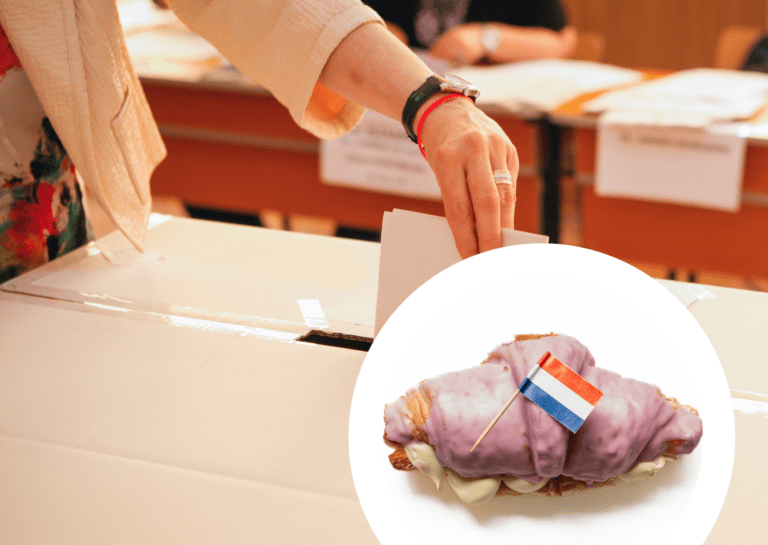
With the elections taking up much of people’s time, energy, and Twitter feeds, it comes as no surprise that the top Dutch result was ‘stemwijzer‘. This is a handy online system that helps voters decide which party to vote for.
‘Stemwijzer‘ was closely followed by the infamous AI service ChatGPT. The crisis in Gaza also made an appearance, as did the fall of the Dutch parliament.
Rounding up the top ten on a lighter note, however, was the Dutch internet’s favourite sweet treat: the crompouce.
The Netherlands literally means “low country” and for good reason too: only about 50% of the country sits above sea level, while the lowest part of Holland is a whopping 6.7 metres below it.
But what do you do when you live in a sinking country? Well, you build anyway! But you build innovatively with canals, dikes, walls, and dunes.
The Dutch versus the sea
There is an old Dutch adage that goes, “while God created the Earth, the Dutch created the Netherlands.” Dutchies essentially built their country on top of the ocean through a variety of hydro-engineering techniques.
The Dutch were so effective at doing so that they are deemed to be leading experts on water management and engineering. Many other cities around the world now consult Dutch firms for advice on climate change and city building.
Here is a quick summary of how the Dutch actually built their cities on the sea.
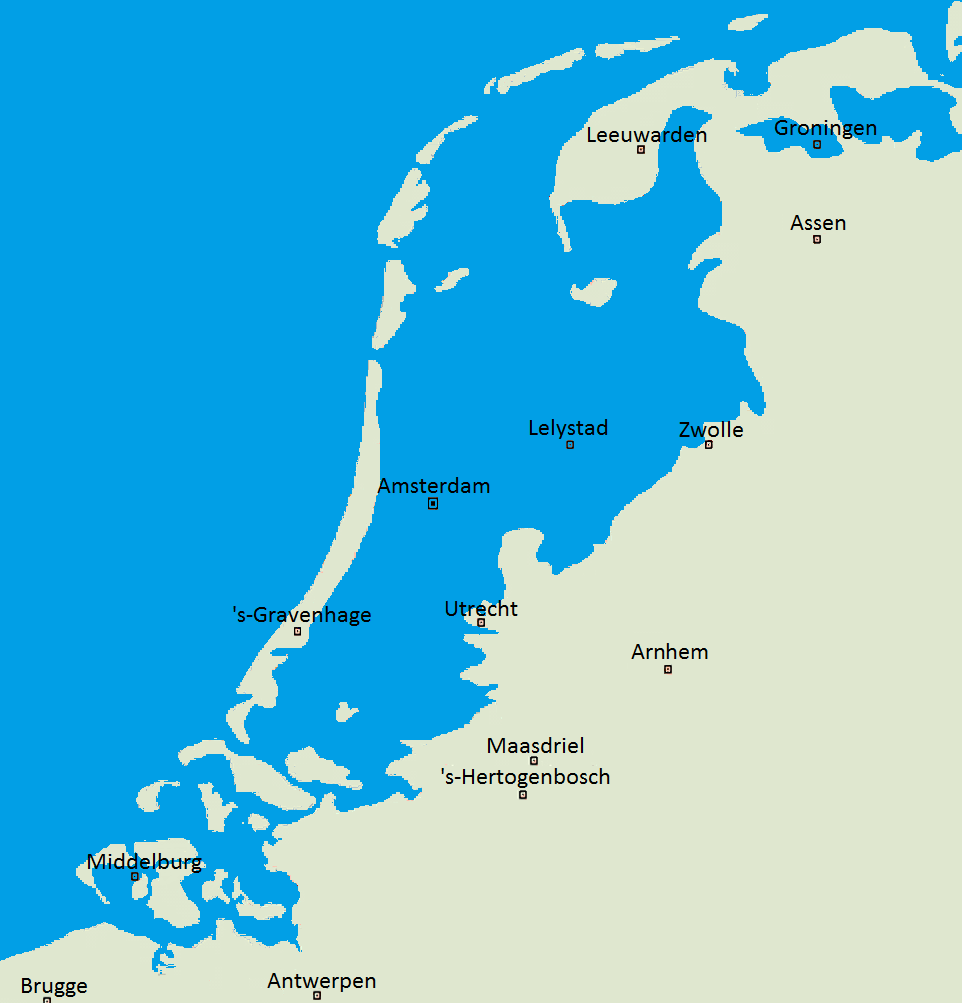
Huge parts of the Netherlands should really be underwater: this is what the country would look like without the reclaimed land. Source: Jan Arkesteijn/Wikimedia/Public Domain
Technique number one: building a wall
The Dutch built walls around a body of water they wanted to turn into land. Once this wall was in place, they would erect windmills next to the wall and would utilise the spin of the windmill to pump the water out of the land to dry it up.
Windmills were a key invention. Image: Freepik
Technique number two: the Afsluitdijk 1932 win
In 1932 the Dutch separated the North Sea just below the Dutch islands by building a giant dike. Not quite sure what a dike is? Well, simply put, it’s a barrier erected to regulate or hold back water. This barrier stretches over 32 kilometres and created a lake on the other side!
The map below compares the Netherlands before and after 1932, when the Afsluitdijk dike was built between Noord Holland and Friesland. You can clearly see the barrier that the Dutch built to keep the North Sea out.
After the lake was created, the Dutch began building cities on top of it. This resulted in the establishment of an entire reclaimed province named Flevoland.
Many Dutch fields are split by small bodies of water. Image: Depositphotos
Going the extra mile
The Dutch didn’t stop there, however. They decided to go the extra mile and prettify the dike by lighting up the “Afsluitdijk” gates in the dark with each passing car.
Daan Roosegaarde, who designed the project for the Dutch government, said: “The Afsluitdijk stands for a piece of Dutch courage and innovation. By adding a subtle layer of light and interaction we’ve strengthened the beauty of the dike and created a new connection between man and landscape, dark and light, poetry and practicality.”
Technique number three: canals
The Dutch created many canals which helped control the water flow from their reclaimed land.
For example, in Amsterdam, the canals serve as both a moat and a dam for the Amstel River on which the city sits next. Amsterdam has three main canals (Herengracht, Prinsengracht, and Keizersgracht) that form a circular canal belt around the city.
Not just beautiful, but also practical. Image: Depositphotos
These were built in the 17th century, also known as the Dutch Golden Age. The land that was dug up in the process was then used to create a barrier for the streets where houses were built.
The Dutch also made their cities very accessible by boat and that is why Amsterdam is colloquially known as the “Venice of the north”.
But the Dutch aren’t perfect…
A lot of the time we sit back and read about Dutch ingenuity with awe. But no nation is perfect, especially when you have to contend with sinking land.
In 2002, construction started on the Amsterdam Zuid-Noord metro line. It was completed but it quickly became evident that Amsterdam’s precarious historical underground was less than a stable foundation for the new metro line. The result? Houses built above it literally began to fall into the earth.
Residents were forced from their homes, and even after the line opened ten years later, most of the buildings were still empty. This was a massive Dutch fail!
The challenges of climate change
Climate change brings new challenges as tides are rising and storms are getting fiercer. Instead of denying that climate change is real, the Dutch are taking a seemingly counterintuitive approach by letting water in. That means devising lakes the water can spill into.
Some experts are hopeful that the Dutch can cope with climate change
Henk Ovink, head of International Water Affairs, tells The New York Times that “we need to give the rivers more places to flow”.
“Protection against climate change is only as strong as the weakest link in the chain, and the chain in our case includes not just the big gates and dams at the sea but a whole philosophy of spatial planning, crisis management, children’s education, online apps and public spaces.”
Rising sea levels put the Netherlands in a dangerous position. Image: Unsplash
Arnoud Molenaar, the chief resilience officer for Rotterdam says we must start small. “Like getting people to remove the concrete pavement from their gardens so the soil underneath absorbs rainwater”, he said.
Others are more sceptical
Michiel Helsen, a physical geography and climate change lecturer at Hogeschool Rotterdam, says we need to seriously consider the future of the Netherlands. He asks, “is living below sea level still a responsible option?”
“In the long run, we may not be able to save the west of the Netherlands. It seems sensible to me for society to discuss which parts of the Netherlands we’re prepared to defend, and at what cost.”
Did you know that the Netherlands was built on water by the Dutch? We’d love to hear your thoughts in the comment section! Editor’s Note: This article was originally published in September 2019, and was fully updated in December 2023 for your reading pleasure.
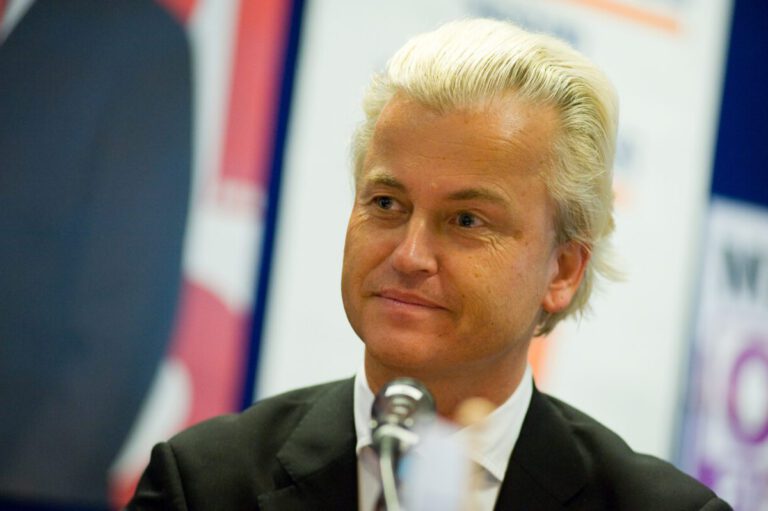
The news of Geert Wilders’s victory in the recent Dutch elections has been making headlines worldwide.
To many people’s surprise, the controversial politician’s party, the Partij voor de Vrijheid (PVV, English: Party for Freedom) won the majority of votes during the 2023 national elections, winning 37 out of 150 seats.
From Dutch people to internationals, and from the BBC to the New York Times, everyone seems to be in shock over the victory of the “far right” in the Netherlands.
But who is Geert Wilders? What does he want to do with the Netherlands? And what the hell is up with his hair? Lots of questions.
Here are the answers.
1. Why is Geert Wilders so controversial?
One thing to know about Mr. Wilders is that he’s been a fixture in the Dutch political landscape for a long time.
The 60-year-old founded his Partij voor de Vrijheid (PVV or Party for Freedom) all the way back in 2006, and even before that, he was present in Dutch politics. Wilders has held a seat in the Dutch parliament since 1998.
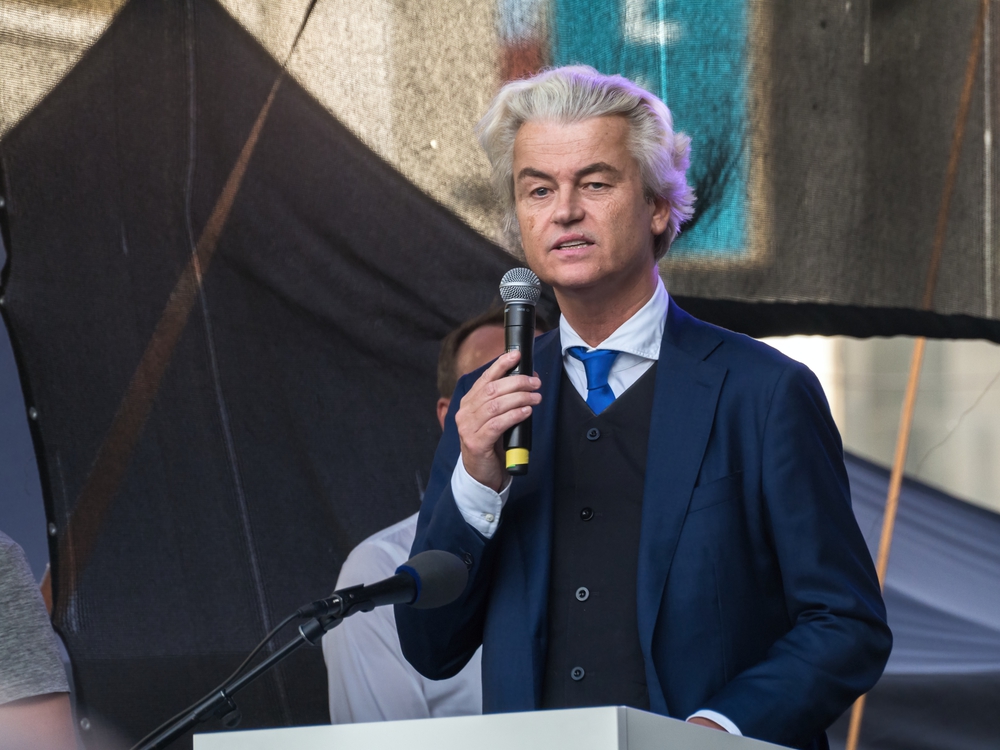
This man has made headlines for his controversies many times. Image: Depositphotos
That gives him many years in the public eye and plenty of opportunities to be controversial — let’s recount his three worst moments.
“Minder Marokkanen” (“less Moroccans”): sentenced for hate speech
During a speech following the 2014 municipal elections, Wilders asked his supporters if they wanted “more or less Moroccans” in the Netherlands.
This caused the crowd to respond with a chant of “minder, minder, minder” — “less, less, less”. Wilders slyly responded, “then we’ll arrange that.”
Outgoing Prime Minister Mark Rutte then decided to exclude Wilders from the government for all of his subsequent terms.
“Fitna”: a short film about Islam
In 2008, Wilders premiered a short film called “Fitna”.
Running for 17 minutes, the movie demonises Islam by attempting to prove how the Qur’an, the religion’s holy scripture, motivates its followers to hate all who violate Islamic teachings.
To no one’s surprise, Wilders struggled to find a broadcaster who wanted to show his ‘masterpiece’ on television — and he ended up releasing it online.
Within three hours, it had more than three million views.
A website to report Eastern European people
Did you think Europeans were safe from Wilders’ questionable opinions? We’re afraid we’re going to have to disappoint you.
Why? He wanted to forward the citizen’s concerns to the Dutch Ministry of Social Affairs.
According to Wilders, labour migration from “Poland and other Central and Eastern European countries” would lead to major problems in society and must be avoided.
2. What do his policies actually say?
One reason why many people are shocked by Geert Wilders’ victory is that his election programme has some pretty scary stuff in it.
Some of the most controversial points include:
A push for a ban on Islamic education, Qur’ans, mosques, and wearing Islamic headscarves in government buildings.
A call to cut the climate-change budget and use it to build more roads and improve public transport.
The intention to eliminate “all kinds of nonsensical subsidies for art, culture, public broadcasting, expats, and greening”.
An argument for opting out of EU regulations and reintroducing national border control, called “Nexit”.
Want a more detailed overview of Wilder’s visions? Check out our complete article on the matter.
3. Will Geert Wilders be the next Dutch Prime Minister?
The short answer to this question is: we don’t know yet. Wilders did not automatically become Prime Minister when his party won the most seats during the election.
To become Prime Minister, Wilders must establish a government with himself as the leader.
As Reuters explains, to get there, he will have to successfully form a coalition with the other parties by reaching the required majority of 76 seats in the 150-seat parliament.
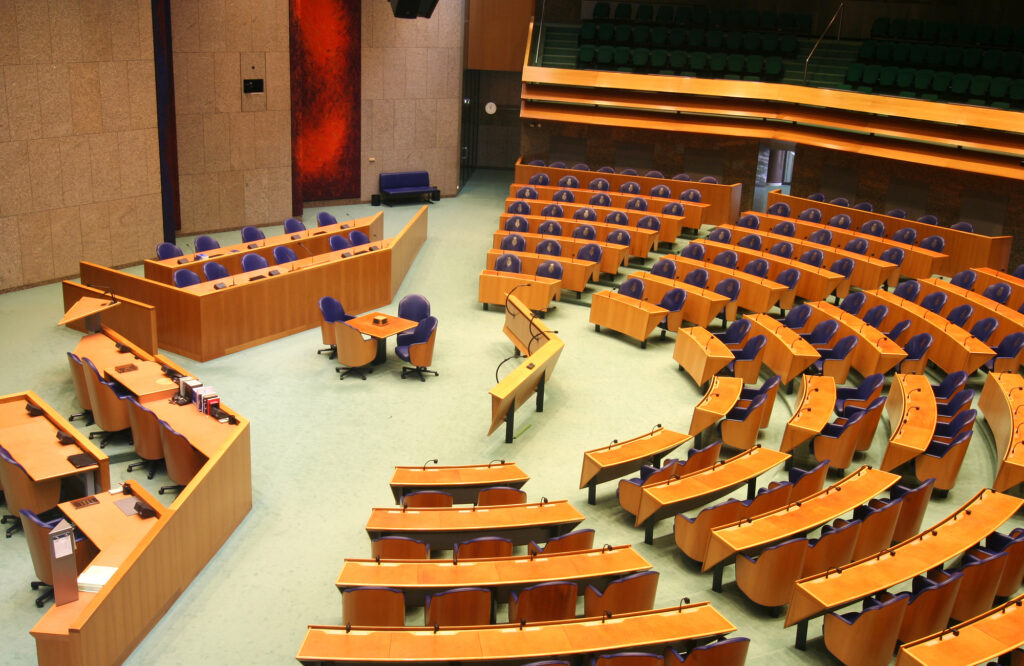
The final coalition will make up the Dutch parliament. Image: Depositphotos
It could take months until such a coalition is formed, and Wilders will likely need to convince potential coalition partners he is willing to compromise on certain topics.
Alternatively, there can also be a so-called “minority cabinet” (like Rutte I) — a cabinet with a Prime Minister other than Wilders but with the PVV in it.
If Wilders fails to form a coalition, then possibilities for a coalition between other parties will be researched — but that’s not very likely. If all options fail, new elections will be announced.
4. What’s Wilders’ stance on Russia and Ukraine?
There are a few layers to this answer. To start off, Geert Wilders declared himself as an “ally” of Vladimir Putin on multiple occasions. They align, according to Wilders, in their fight against terrorism and mass immigration.
However, when it comes to the 2022 invasion of Ukraine by Russia, the PVV has declared that they condemn it.
That being said, they want to stop all military aid to Ukraine and also oppose sanctions against Russia.
5. Could the Netherlands actually leave the EU under Geert Wilders?
The election programme of the PVV states clearly that the country should be “sovereign”. As the NOS writes, Wilders believes that “intensive cooperation between countries does not need a political union like the EU.”
To settle the debate on “Nexit”, Wilders is calling for a referendum. The fact is that the majority of the Dutch government and Dutch people are pro-Europe and would likely vote to stay in the EU.
6. What’s up with Geert Wilders’ hair?
Is it white? Is it blonde? Why is there so much of it? Honestly, we’re not sure. According to most sources online, Geert’s natural hair was brown and curly when he was young.
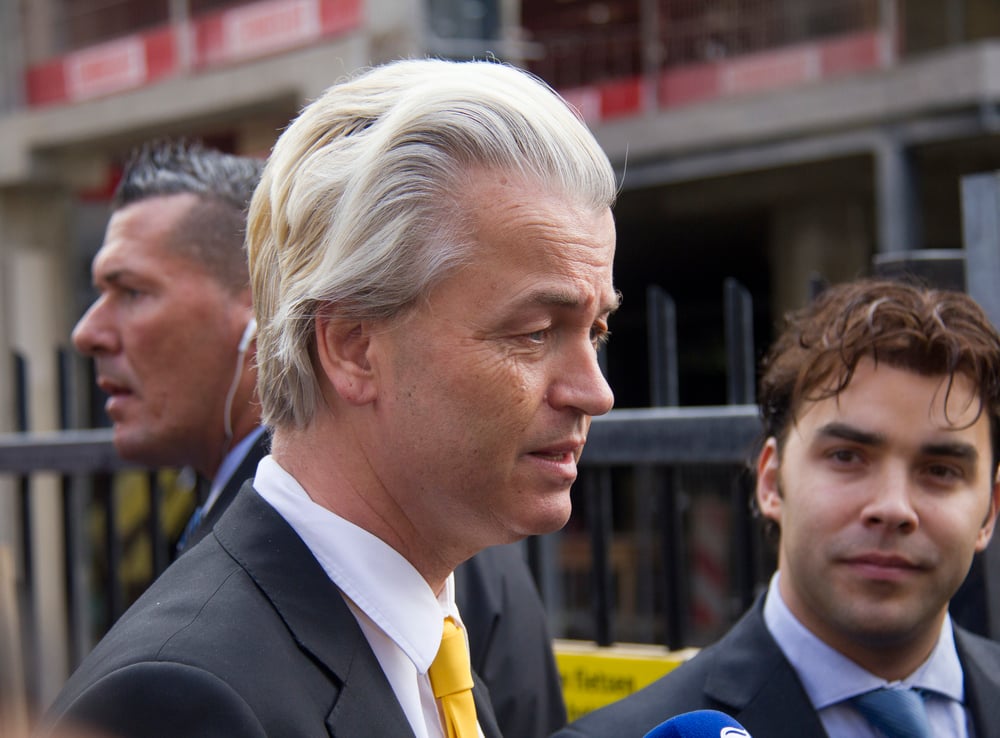
Is it just us or is it white AND blonde?! Image: Depositphotos
Now it seems like has taken a page out of Barbie’s handbook: he bleaches it and dyes it blonde. (This Barbie hates immigrants.)
Our question is: what’s up with controversial politicians and their fluffy hair? Why do they always go hand-in-hand? Well, as it seems, it could all be linked to “awareness of image”, thinks The Guardian.
7. What do we know about his private life?
Despite his poep-talking about Eastern and Central Europeans, Geert Wilders is happily married to a Hungarian woman — his wife Krisztina. The two have been married for over 30 years.
Instead of children, the Wilders have three adorable cats called Noortje, Snoetje, and Pluisje. In his free time, Wilders runs a Twitter account for them. (No, that’s not a joke. It’s actually true.)
We’ll be honest, we think the life of a right-wing, cat-loving, hair-bleaching man could be a funny premise for a comedy movie — but not the next Dutch Prime Minister.
But hey, all we can do at this point is wait and see.
What are your thoughts on Geert Wilders? Share them in the comments!
Pop December 14 and December 15 into your calendars and prepare for a night of meteor showers across the Netherlands!
If the skies are clear enough, you could see between 50 to 75 meteors per hour, reports Weeronline.
The Geminid Meteor shower
The best time to observe the Geminids will be around 12:45 AM on Friday, December 15, but the peak time for most meteors will be seven hours earlier, at around 5:30 PM on Thursday, December 14.
The meteor shower is best seen in a dark place with low light pollution. Cloudy skies may ruin the view, but it’s still unclear whether that will be the case on Thursday night.
Let’s keep our fingers crossed! 🤞💫
Will you check out to Geminids meteor shower? Tell us about it in the comments!
After listening to more than 600 entries, the Dutch selection committee has chosen a song to represent the Netherlands at the 2024 edition of the Eurovision Song Contest.
The artists who’ll be singing it? A 26-year-old Frisian man named Joost Klein.
As NU.nl writes, the selection committee chose Klein’s song for its “familiar combination of party and nostalgia”.
Indeed, that unique vibe is what the rapper and songwriter is best known for.
His best-known song, “Friesenjung” (Frisian boy), with German musician Ski Aggu, has been streamed more than 100 million times on Spotify. It’s been a huge hit throughout the Netherlands, Germany, Austria and Switzerland.
“A dream come true”
Being able to represent his country at the famous song contest is a dream come true for Joost.
“I used to watch [it] with my parents every year, glued to the TV. It’s an honour that I can represent the Netherlands, and I will do everything I can to achieve the best result,” he says.
The 2024 edition of the Eurovision Song Contest will take place in Malmö, Sweden, from May 7 to May 11. Joost Klein will go head-to-head with contestants from 36 other countries.
Will you be tuning in to Eurovision next year? Let us know in the comments!