Home Blog Page 273

Stolen Van Gogh painting returned after three years…in an IKEA bag

After three years, the missing painting Spring Garden, the parsonage garden in Nuenen in the spring, has been recovered by famous art detective Arthur Brand.

The valuable artwork by Vincent van Gogh was humbly returned to Brand and Groninger Museum Director Andreas Blühm in a distinct blue IKEA bag. No one can deny its practicality, even for carrying stolen art.

The painting was previously on display in the Singer Laren Museum after loaning it from the Groninger Museum, reports NU.nl.

Three-year search

Brand was actively searching for the painting for the last few years but said he was certain the painting would be circulating in the underworld.

However, two weeks ago, Brand received an anonymous text from someone claiming to have the missing Van Gogh and organised to meet with him a week later.

“He rang the bell with the work in a pillow in an IKEA bag”, says Brand. Blühm came to inspect the painting immediately, and”it was unmistakably the Spring Garden. We had tears in our eyes. Shortly afterwards, we raised a glass with detectives.” He rang the bell, with the work in a pillow in an IKEA bag”, says Brand. Blühm came to inspect the painting immediately, and “it was unmistakably the Spring Garden. We had tears in our eyes. Shortly afterwards, we raised a glass with detectives.”

Moving through the black market

Valuable art pieces are often stolen and resold to criminals through the black market.

Criminals often discuss the value of such paintings and artwork via chat platforms, but if the police can crack a platform or discover the trail, they can get arrested.

READ MORE | Pokémon Gogh? Amsterdam’s Van Gogh Museum welcomes an unexpected collaboration (and we’re VERY curious)

“Brand tells De Telegraaf that this was likely the case.”People wanted to get rid of the work. The moment of return was getting closer.”Brand tells De Telegraaf that this was likely the case. “People wanted to get rid of the work. The moment of return was getting closer.”

Often, in exchange for a painting, criminals may receive a large sentence reduction if convicted.

The painting was slightly damaged and needs to be repaired, but it’s unknown when it will be on display again.

What do you think of the return of the missing Van Gogh painting? Tell us your thoughts in the comments below!

Featured Image: Marten de Leeuw/Wikimedia Commons/Public Domain

Food manufacturer Verstegen withdraws herbs and spices after finding carcinogenic substances

0

Turns out the Dutch are right to add their spices sparingly. Food manufacturer Verstegen has had to scrap a lot of herbal products due to a carcinogenic substance they found.

According to the Dutch Food and Consumer Product Safety Authority (NVWA), the carcinogenic substance ethylene oxide was detected in a batch of bay leaves, RTL Nieuws reports.

Stop using these products

In light of this queasy discovery, products with ingredients from that batch are being pulled off the market. In the meantime, customers are being asked to quit using them altogether.

For your own health and safety, it’s advisable to stop adding any of the following products to your food:

  • Preserving herbs (14x5g)
  • Large can of Italian mix (6x225g)
  • Spreader mix for minced meat low in sodium (6x40g)
  • Bag of mix for endive (11x10g)
  • Bag of mix for macaroni and spaghetti (10x35g)
  • Bag of mix for minced meat with onion (10x40g)
  • Bag of bay leaf (12x4g)
  • Glass jar of bay leaf (3x10g)
  • Glass shaker ground laurel (6x25g)

For additional information, you can also consult the list with product numbers and expiration dates published by the NVWA and Verstegen here.

What is ethylene oxide?

For those of us who aren’t chemists and therefore aren’t familiar with what ethylene oxide is, here’s our answer…

It’s typically used as a crop protection agent as well as a disinfectant. While the thought of that swirling around in one’s stomach doesn’t sound pleasant, apparently, small doses of it are manageable.

However, high amounts are classified as dangerous by the NVWA and, therefore, aren’t allowed to be produced or sold within Europe.

Even so, if you’ve recently ingested one of the herbal mixes listed above, don’t panic or call the ambulance.

Apparently, it takes a long time, with regular consumption of the substance in high amounts, to make a real dent in your health.

READ MORE | What was the VOC? The Dutch East India Company explained

Plus, the Dutch aren’t known for going ham on the spices. 👀

Were you shocked to hear about the discovery of ethylene oxide? Share your thoughts in the comments below.

Autumn is coming: code yellow announced in coastal provinces due to storms, thunder, and wind

0

September has taken a turn — the days of sunshine and heatwaves have blown over as wind, thunderstorms, and “unstable” weather will grip us from today onwards.

Despite the fact that Sunday was predicted to be sunny with a fairly high temperature, cloudy skies culminated in a hefty 30 millimetres of rain over both East Brabant and Limburg, Weerplaza reports.

This sneaky rainfall managed to rain on everyone else’s parade, too, creeping along to the northwest of the Netherlands.

A storm is brewing

While the air might still be warm, the “instability” of the atmosphere is likely to cause intense showers over the Netherlands — as well as thunder and strong winds.

What’s more, this could all materialise within a short period of time this afternoon. Better gird your loins and keep your paraplu (umbrella) at the ready. ☔️

Showers in France will probably spread across the Benelux and eventually expand to include the western half of our country especially.

By Tuesday, a significant portion of all European countries will be faced with this persistent precipitation.

Don’t throw caution to the wind

Also, brace yourself for some Autumn breezes. That is to say, it will be quite windy starting from tomorrow — particularly in coastal areas.

Tuesday afternoon and evening will see a strong southwest wind blow into coastal areas with a wind force of 7 — time for a cold yellow warning. 🟡

Although gusts of wind may blow in at a rate of 80 kilometres per hour at sea, inland provinces will most likely face moderate winds with a force of 4 to 5.

Meanwhile, the temperature is forecasted at a reasonable 18 to 22 degrees Celsius.

READ MORE | Not so fast, autumn: warm and sunny weather makes a comeback in the Netherlands

The clouds could have a silver lining; around September 24 to September 26, there appears to be an increase in the chance of warm weather conditions returning.

At least we have that to look forward to. ☀️

Are you ready for the rain and winds of the Dutch autumn and winter? Share your thoughts in the comments!

Pokémon Gogh? Amsterdam’s Van Gogh Museum welcomes an unexpected collaboration (and we’re VERY curious)

0

Vincent van Gogh meets Pokémon? Amsterdam’s museum full of the Dutch painter’s work is teaming up with Nintendo and The Pokémon Company’s adorable characters.

In a very cute video released by The Pokémon Company, it is teased that the two worlds will collide at the Van Gogh Museum on September 28.

That’s right, The Pokémon Company revealed they’re embarking on an exciting collaboration with the beloved Dutch art museum.

Van Gogh made modern

What would such an unexpected collaboration even look like, you might ask? Well, the company has revealed nothing other than a very sweet teaser trailer so far.

READ MORE | 33 best things to do in Amsterdam in 2023 [UPDATED]

In it, the nostalgic Eevee and Pikachu avatars can be seen frolicking in a field of sunflowers — which is clearly a nod to Van Gogh’s famous 1889 painting, “Sunflowers”. 🖼

Except, in this case, the sunflowers come to life, resembling video game avatars, and bounce up and down enthusiastically. Awww. 🌻

If that wink to Van Gogh wasn’t strong enough, the clouds then shapeshift to take on the resemblance of his famous painting, Starry Night.

READ MORE | Walk THROUGH Rembrandt and Van Gogh’s best works in this immersive exhibition

If this has piqued your curiosity, stay tuned — more information about the exhibition is expected to be announced very soon. 👀

Are you excited to see this collaborative exhibition? Share your thoughts in the comments below!

Believe it or not, the Dutch are the best sleepers IN THE WORLD

0

Tossing and turning, counting sheep? The Dutch can’t relate — for them, catching between seven and nine hours of Zzzs per night is so easy they can do it in their sleep. 🥱

New data reveals that the Netherlands has the lowest amount of “short sleepers.” In fact, it’s managing to out-sleep every other country in the world, PlushCare reports.

Here are the sleepy stats

Turns out, the nightly average in the Netherlands is a generous eight hours and twelve minutes of high-quality beauty sleep. Yup, these people are out like a light. 💤

In fact, 77.05% of people in the Netherlands get the recommended amount of sleep — which is between seven and nine hours for those of you who have been (cough, cough) sleeping on this science.

On the other hand, our comparatively sleep-deprived American friends have come in at 22nd place with 70.14% — it sounds like they’re getting twenty winks instead of forty.

Finding out who gets the most shut-eye

How did PlushCare figure out who was hitting the most hay, you ask? Well, they certainly weren’t sleeping on the job.

By using data from Sleepcycle.com, the virtual health company uncovered which percentage of people in each country are considered “short sleepers” — those who only get a fleeting five hours or less.

They then compared this percentage to the percentage of those following the recommended seven to nine hours of sleep.

READ MORE | Dutch Quirk #116: have a great work-life balance

They also found out the number of people who are categorised as 10-plus-hours-a-night “long sleepers” — and, well, considering Dutchies are often tall, don’t they technically sleep “long” in bed? 👉👈

Want to know if your country is one of the top 10 snoozers? Check out the rankings below. 👇

RankCountry% Getting
the recommended
amount of sleep
1Netherlands77.05%
2Denmark76.17%
3Sweden75.18%
4New Zealand74.63%
5Lithuania 74.48%
6Finland 74.45%
7United Kingdom 74.31%
8Australia 74.15%
9Estonia73.98%
10Belgium72.83%

Thanks to this data, PlushCare was also able to construct a list of popular sleep aids, combine the rankings with search data, and find out which countries have the most insomnia sufferers.

Looks like that’s one problem Dutchies aren’t losing any sleep over. 😴

Do these sleep findings come as a surprise to you? Share your thoughts in the comments below!

How do the Dutch feel about climate change?

Wind turbines to ensure clean energy? Sure, but not in our backyard. Driving electric cars? Yeah, maybe not. What are the Dutchies’ attitudes about the changing climate? 

A 2020 survey conducted among 3,700 Duch people by Statistics Netherlands showed that while people of the lowlands recognise the threat of climate change, they do rather little to act on it.

Causes of climate change

What the majority of Dutchies agree on is this: the climate is changing (94%) and we can do something about it (75%). However, they differ in their opinions on what causes climate change. 

The majority believe that climate change is caused entirely (12%) or mainly (48%) by humans, but 27% think that humans and nature play an equally important role in causing climate change. 

On the other hand, a small proportion thinks that climate change is caused mainly (5%) or entirely (1%) by nature. Nearly 6% of the Dutch don’t believe in climate change at all.

A transition towards green energy

When it comes to moving towards cleaner energy, Dutchies are big fans of wind turbines. Over 70% are in favour of constructing new ones and more than 50% believe that these should be built both on- and offshore.

Dutch-wind-turbines-standing-in-a-lake
Wind turbines? Oh yeah, Dutchies are big fans. Image: Depositphotos

However, when it comes to installing wind turbines in living environments, the Dutch are a bit more reluctant — only 21% are in favour and 31% are against it. 

READ MORE | Renewable energy in the Netherlands: everything you need to know

Dick ter Steege, the chief editor at Statistics Netherlands, is understanding of this. “People are afraid of noise pollution and that their view will be ruined. That’s why so many say: wind turbines are fine, but not in my backyard,” he tells RTL Nieuws

Another thing that is becoming more popular is solar panels. Nearly 30% of Dutch homeowners report having them on their roofs and about 20% consider buying them. 

Not so environmentally friendly diet 

The study finds that only 2% of Dutch people are fully vegetarian and 3% eat fish but no other meat. A fully plant-based diet is still very uncommon, with only 0.4% of the Dutch following this type of diet. 

Fruits-and-vegetables-on-a-malrket-stall-table-in-texel-netherlands
The number of vegetarians and vegans in the Netherlands is still quite low. Image: Freepik

The vast majority of vegetarians and vegans are made up of highly educated people from the Randstad, aged between 25 and 35 years. 

In contrast, half of the Dutchies eat meat every day or at least five to six times a week. “We are still eating, on average, 39 kilos of meat per year. That is not getting any less,” Ter Steege says. 

Animal welfare and health over the environment 

While reducing meat intake has clear benefits for the environment, one striking finding is that people most often indicate animal welfare as a reason to give up meat completely. 

On the other hand, individuals who eat meat four days a week and less reduce their meat intake mostly for health reasons or simply because they don’t feel the need to eat meat or don’t like the taste of it. 

Transportation

Only 2% of households have plans to purchase fully electric cars in the coming two years. “Most of those electric cars belong to business or leasing companies and not people themselves,” says Ter Steege. 

He explains that this lack of interest in electric cars may be caused by their high price and the obstacle of having to recharge the battery often.

READ MORE | Renting a car in the Netherlands: driving in Amsterdam and beyond

The study (conducted before the pandemic) finds that Dutchies like to fly — half reported that they took a plane in the past 12 months, with every fifth person flying to a country outside Europe. 

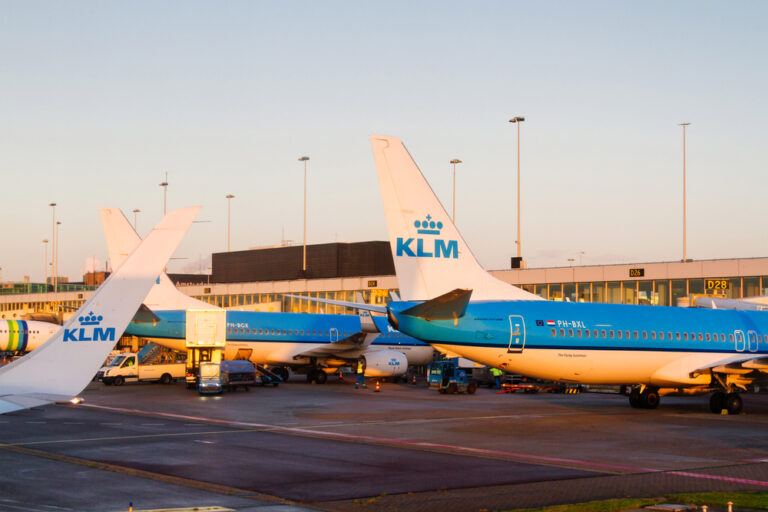
photo-of-plane-taking-off-from-schiphol
Give up on regular flights for the environment? Absolutely not! Image: Depositphotos

“Moreover, two-thirds of the Dutch don’t even think about stopping flying for the climate,” says Ter Steege. One can only hope that this will change with the introduction of new train connections from Amsterdam to Vienna, Prague, Zurich, and other major cities across Europe. 

The bigger picture

While we can all take action to reduce our environmental footprint, changing individual behaviour is not a silver bullet that’s going to make all of the climate change go away — the government, for one, has a part to play as well. 

READ MORE | Shell has to reduce its CO2 emissions by nearly a half, court in The Hague rules

The survey found that 40% of the Dutch think that the government policy on climate could be stricter.

However, more than half agree with the current government policy. One of the government’s goals is to reduce the Netherlands’ greenhouse gas emissions by half by 2030 and cut them by 95% by 2050.


Climate change is an issue that is high on the agenda all over the world and tackling it will require the participation of not only citizens and governments but also other actors. Whether the Netherlands will meet the goals of its climate policy remains yet to be seen.

What do you think about the Dutch attitudes towards climate change? Tell us in the comments below! 

Editor’s Note: This article was originally published in June 2021, and was fully updated in September 2023 for your reading pleasure.

Dutch public transport costs to rise by a whopping 11.7% in 2024

If you thought public transport in the Netherlands was expensive, you’re not going to like what’s coming next year.

Fares for the metro, trams, and buses could increase by a hefty 11.7% in 2024, reports NU.nl. This follows a 7% increase from the beginning of this year. Echt niet leuk!

These increases apply to regional transport companies such as Conexxion, Arriva, and Keolis, as well as urban transport in major cities, including Amsterdam and Rotterdam. For once, the NS isn’t involved in pricier train fares.

But why are public transport prices rising so much? Well, carriers are facing higher costs when it comes to personnel and energy, so in the end, we have to pay.

Transport companies with high costs

Public transport carriers’ costs are calculated every year by DOVA (the partnership of decentralized public transport authorities).

@santanamath This is definitely something I hate in The Netherlands: How expensive public transportation is! #dutchstories #learningdutch #dutchculture ♬ drama effect background – Not Me

So, how did they arrive at this high percentage? Well, after the bus strikes earlier this year, there was an agreement to raise bus drivers’ wages by 6%.

However, higher wages aren’t the only thing affecting the prices — transport companies are also feeling the impact of expensive energy costs.

Not happy campers

We’re all understandably unhappy, and Rover, the traveller’s organisation, doesn’t like this for us either.

Helaas, even though the proposed ticket price increase is shocking, there’s not much we can do about it. Why? DOVA’s calculation method is accurate.

“As a government, you should ensure fuller buses and trams. Then you can spread the increased costs over more travellers, and the fares will increase less,” says Freek Bos, director of Rover to NU.nl.

READ MORE | It’s official: the Dutch cabinet wants to raise train ticket prices EVEN MORE

Unfortunately, even though public transport is better for the environment, excise duties have gone down for motorists instead of public transport passengers.

The Interprovincial Consultation (IPO) is representing the concerns of the provinces by emphasizing the cabinet’s need to prevent Dutch public transport from getting worse.

What do you think of increased public transport fares? Tell us in the comments!

Risk groups in the Netherlands can soon get another round of COVID-19 booster shots

0

As the number of COVID-19-related hospitalisations is rising, the Dutch National Institute of Public Health (RIVM) has decided that something has to be done.

What exactly is that “something”, you ask? Another round of vaccines. 💉

But before you relive that 2021 trauma, worry not — because this newest round of booster shots will only be given to people with an elevated risk of infection.

So, who exactly is eligible?

From September 19 onwards, people aged 60 and up will receive an exclusive invite to the vaccination party.

Other groups that are eligible for the shot will not be formally invited but can make their appointment directly with the Municipal Public Health Services (GGD) starting mid-October.

This concerns care workers, pregnant women, and people aged 18 to 59 years who receive an annual invitation to get the flu vaccine.

The same applies to people who are not in the target groups but would still like to receive a booster shot due to a vulnerable family member or because they have been advised to do so by their huisarts (general practitioner or GP).

READ MORE | Going to a doctor in the Netherlands? Here’s the ultimate guide

Starting mid-October, these groups can make an appointment directly with the GGD via planjeprik.nl or by calling 0800-7070.

An up-to-date vaccine to curb a rise in infections

The vaccine used in this campaign is the latest that has been developed. It was adapted to target the XBB variant, which has caused a spike in infections over the past few weeks.

In the past week specifically, the Netherlands has seen COVID-19-related hospitalisations reach a peak — with patient admission being as high as in May 2023.

Shots will be given out from 2 October until the end of the year.

Will you make an appointment to get the new vaccine? Tell us in the comments!

September is the new June: Summer makes ANOTHER comeback this weekend

0

Just when you thought the heat was dying down, it seems to be flaring up again. Yup, this weekend will bring another bout of Indian summer, on Saturday especially.

Many of us are still basking in the afterglow (or remaining layer of sweat) after last week’s tropical temperatures. The memory of a national heatwave has not yet faded, nor have the temperatures.

Turns out, this weekend is predicted to reach around 25 degrees Celsius on Saturday. That may not be quite as hot as last weekend, but you still want to lather up on SPF.

Ditch the rainjacket

From tomorrow onwards, the temperature will steadily rise, escalating from 21 degrees today to a generous 24 degrees on Friday.

Saturday will provide the peak of heat, at 25 degrees in the centre of the country, whereas Sunday is forecasted at 23 to 24 degrees.

@driplist Trust me when i say that 30+ degrees in the Netherlands is a different type of heat😅 it burnsss #summerinthenetherlands #livinginthenetherlands #netherlands #dutchiescanrelate #lifeinamsterdam #amsterdam #heatwave ♬ original sound – Somi Lynda💕

Apparently, you should enjoy these torrid days while they last because once the weekend passes, autumn is coming.

Yup, the winds will be stronger, and so will the chances of random rain downpours. Monday and Tuesday could potentially leave us drenched with thunderstorms.

Still, Marc de Jong of Buienradar isn’t ruling out the possibility of us being surprised by nice weather again within the course of September. ☀️

How are you taking advantage of the sunny weather? Share your plans in the comments below!

Here to stay: more international students find work in the Netherlands after graduating

Once you have a taste of the Dutch way of life, it’s hard to give it up. It’s no wonder international students are choosing to stay on and work in the Netherlands.

The number of international students studying in the Netherlands has been increasing yearly. After scrambling to find somewhere to stay and pushing through crowded lecture halls, the question is: how many stick around?

Well, based on figures from Statistics Netherlands (CBS), 32% of international students who graduated in the 2018-2019 academic year had a job a year later.

This is about 12% more than graduates in previous years. We imagine once they found out about borrelen at work, they jumped at the idea of working in the Netherlands. 🍻

Staying for work, but only in some sectors

Dutch Education Minister Robbert Dijkgraaf thinks these figures are good news. “We desperately need that international talent, especially in shortage sectors such as technology and IT,” he tells the NOS

“The CBS research shows that relatively many students go to work in those sectors.”

@dutchreview Happy Tuesday allemaal! If you’re already feeling the burn of the working week, here’s a reminder that it’s not all bad – if you work in the Netherlands, of course. 😉 Dont have a Dutch job (yet)? Head over to our pals at @Undutchables Recruitment ♬ original sound – DutchReview

Students with diplomas in services (communication, translation, healthcare), computer science, education or technology are more likely to stay and work in the Netherlands after their studies. They usually find jobs within a year.

Less than a third of graduates of management, business and human resources, or psychology stay on.

Bonding with the Netherlands

“Being able to get a job is one of the factors that increases the chance of international graduates staying in the Netherlands,” says Dijkgraaf.

READ MORE | ‘Don’t come to the Netherlands’: here’s how universities are limiting international students

“I want to increase the chance of them staying by strengthening the bond of international students with the Netherlands.”

How? By having more university lectures in Dutch — because if students learn the language, it will increase the likeliness that graduates stay after their studies are complete.

READ MORE | 7 ways a Dutch job is different

Other reasons graduates stay include the high level of English in the country and the good work culture.

See what we were saying about borrelen? But we’re sure the lack of hierarchy didn’t hurt either. 😉

What do you think of the Dutch work environment? Tell us in the comments!