Home Blog Page 352

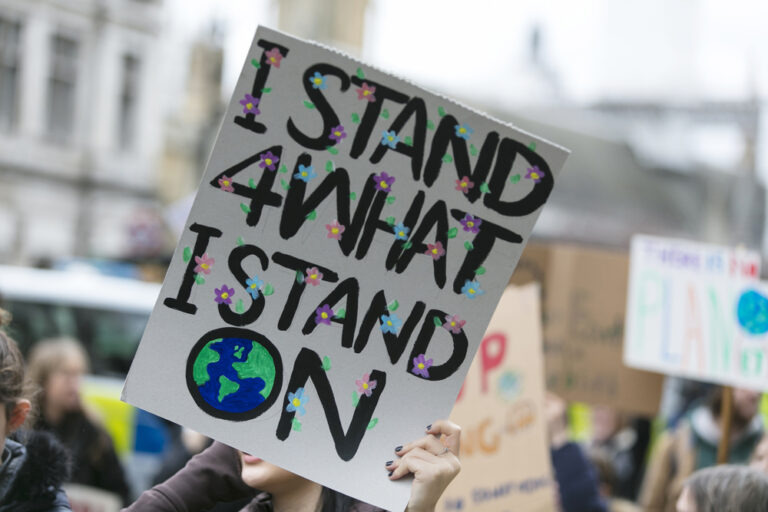
Hundreds of climate activists arrested for blocking the A12 highway

768 climate protesters were arrested on the Utrechtsebaan of the A12 in the Hague yesterday afternoon. 

While most were released in two hours, two climate activists had to stay in the police station until the late hours of Sunday afternoon. 

The two activists had to stay longer because they didn’t want to disclose their identity, the NOS reports. 

Fight against fossil fuels

The protest was organised by Extinction Rebellion, a global climate movement, to raise awareness and protest against the government’s subsidies for fossil fuels such as oil, coal, and gas.

READ MORE: Dutchies chose “Climate adhesive” as their word of the year (and we kinda love it, here’s why)

Their main point of argument didn’t stop at subsidies, but tax breaks and government price support too. 

Blocked roads for hours

People who were driving on the A12 yesterday evening had an unlucky day. 

After half an hour of blocking the main roads, the police decided to herd the protestors on the Malieveld, an event venue in the Hague. 

Some of the protesters even glued themselves to the road as if it were a Van Gogh painting. 

Many of them refused to move and did not respond to the police’s deal proposal. 

After this, the police started to intervene and remove people one by one, which evidently took a lot of time for them. 

What do you think of the protest? Tell us in the comments!
Here’s how to check into Dutch public transport with your bank card

Hoera! Starting January 31, you can check into NS trains using your debit or credit card. This means that, for the first time, contactless payment on public transport will be widely accepted across the Netherlands.

Yep, you heard that right! After rigorous trials, the long-awaited OVpay is officially here! And it’s only a few weeks late. 💪

For the most part, checking in with your debit card will be the same as checking in with an OV-Chipkaart. But of course, there are a few things you should know.

How does OVpay work?

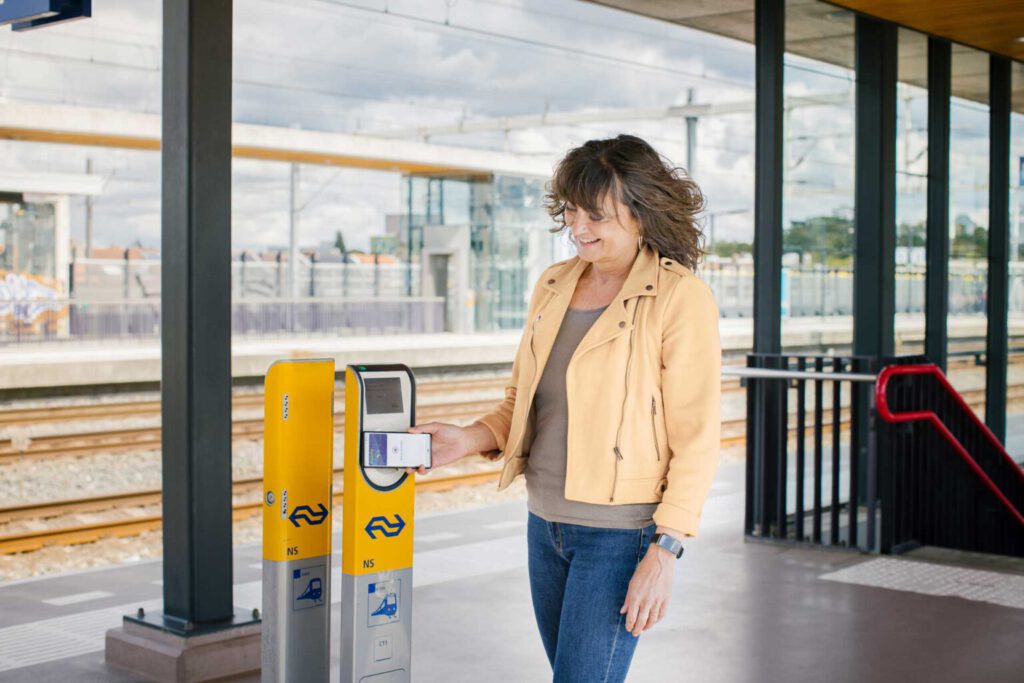
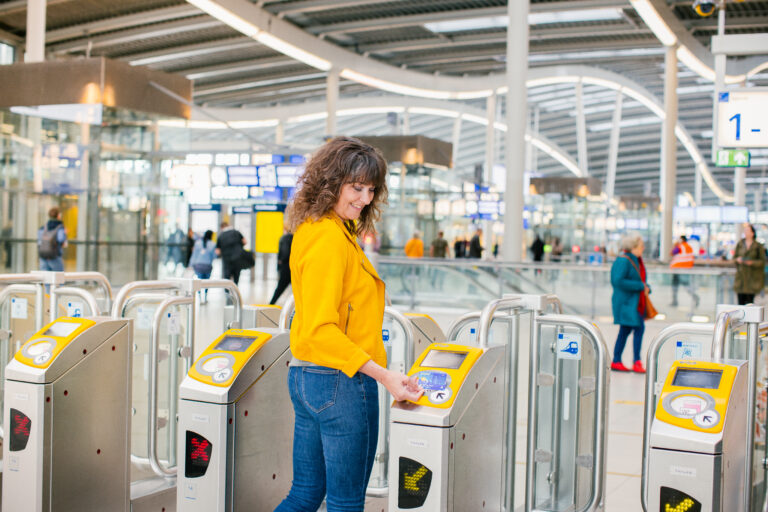
As with a handy blue or yellow OV-Chipkaart, OVpay simply requires you to hold your pinpas against a scanner at the station. And hoera, after that, you are checked in! 🤩

Throughout the day, the cost of your rides will be added up, and debited from your bank account at the end of it.

READ MORE | A guide to night buses and night trains in the Netherlands

If you choose to pay with your phone’s contactless payment system instead, you will be debited for each trip separately and immediately. 🤳

What if I don’t have enough money on my debit card?

Good question! It happens to the best of us. Here’s what happens in that case: 

If the balance on your debit card is too low to pay for the trips of your day, then your card will be blocked for use on Dutch public transport. 🚫 💳

But this is not as harsh as it sounds: this blockade ends as soon as the due payments to the NS have been taken from your account. 

READ MORE | Public transport in the Netherlands: the complete guide

OVpay will try to take the money for past rides again at a later point and, as soon as you have enough money in your account, the blockade will be lifted.

Need to travel right away? Geen probleem (no problem)! 

Just add money to your account and hold it against the scanner. OVpay will then take the non-debited amounts from your account, and within 15 mintues, you can travel again.

How is OVpay different from the OV-Chipkaart?

While OVpay is certainly heel handig (very handy), there are some things the OV-Chipkaart just does better. 🤷‍♀️

For one, checking into public transport with your phone/credit card/debit card does not allow you to use any discount-subscriptions you may have. 

Student travel product? Nee. 40% off outside of rush hours? Nee. 

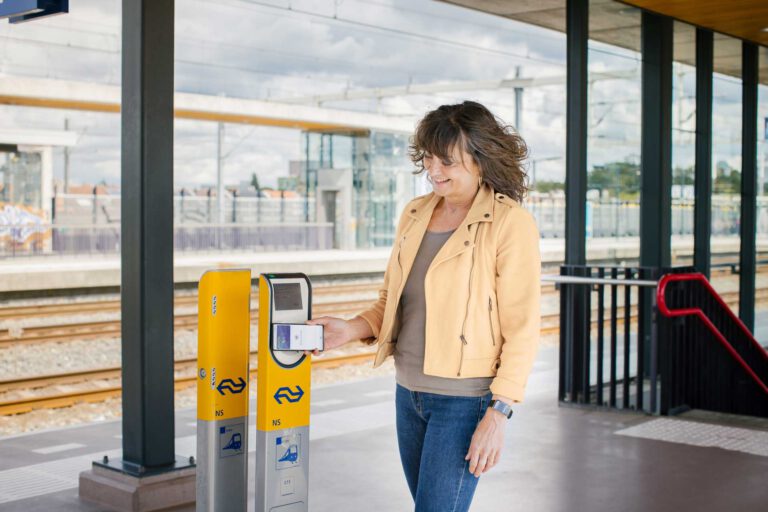
woman finding out how to check in Dutch public transport with your bank card
With OVpay, you can even check in using your phone or smartwatch! Image: NS Beeldbank

READ MORE | Train etiquette on Dutch trains: 8 things you’ll always see

On top of that, OVpay automatically checks you into second class. If you would like to travel like the royals, you will need to use an OV-Chipkaart to check into first class. 👑

What should you pay attention to when using OVpay?

If you plan on using OVpay, there are a few things to keep in mind to avoid complete OV chaos.

First off, it’s important to use the same card when checking in and out. If you use a different bank card, the pole will recognize that as a new check-in, and you will pay extra. 

If you already own OV-Chipkaart with a subscription on it, it might now be easy to mix the cards up. 

READ MORE | Dutch trains sucked more than usual in 2022, stats say

This also counts for those of us that like to hold our wallet against the OV Scanner. From now on, you will have to be careful not to accidentally let it scan both your OV card and your debit card.

What about my personal data?

At the announcement of the OVpay project, there was a lot of public worry about privacy. 🚄

“Fear not,” says the company itself: public transport companies cannot view your bank details, and your bank cannot see your travel details. 

This makes OVpay just as safe as a card payment at the supermarket. 

Will you be using OVpay? Tell us your thoughts in the comments!

The Netherlands is getting rid of its deer farms after new breeding ban

Minister Adema has decided that, from January 1, 2024, deer camps may no longer use the animals for breeding in the Netherlands.

As a result, all 250 deer breeding camps, a.k.a hertenkampen must close within a year. 

Minister of Agriculture Piet Adema plans to shut down all deer breeding parks throughout the country as he believes that “the animal is meant to run free,” reports Nu.nl.

Doei deer parks 

On January 1, 2024, the government will come forth with a new list of all hobby- and house pets that can be legally kept; unfortunately, deer didn’t make the cut. 

It’s a rare sight to come across a wildlife animal in the Netherlands — unless you count that mouse living in your kitchen. 🐭 

Though, after careful consideration, only 30 out of 300 assessed animals will be allowed to be kept as pets in 2024. Fallow and red deer didn’t gallop onto that list.

READ MORE | Rare footage of Veluwe wolfpack captured by wildlife cam (video inside!)

“Deer have a strong flight response for which they must have the space,” says the scientific advisory board to AD.nl.

Experts believe the animal should be able to roam freely beyond steel gates. So, it’s in the best interest of the deer to have them closed. 🦌

Battling with horns

While this may be a good thing, many people aren’t very pleased. After all, what will they fawn over on their daily run?

Two political parties, PVV and SGP, aren’t too happy about the decision. They believe that deer camps have been around in the Netherlands for centuries, so why end them now?

READ MORE | Abandoned deer is ‘adopted’ by a group of cows in Hengelo and it’s so cute!

It’s that age-old tale of keeping the Dutch tradition alive, again. 🙄

The two parties will have a year to get used to this change. But, it could possibly take longer because although no more deer will be bred, they’ll still be kept in the deer farms until the last one hits the hay. 

Do you agree with Piet Adema’s decision? Tell us in the comments below!

Low-income Amsterdammers are skipping meals because they can’t afford it anymore

For the first time, the link between disposable income and the accessibility of healthy food in Amsterdam has been researched. Let’s just say that the results paint a scary picture of health and affordability! 😳

According to Het Parool, researchers at Onderzoek & Statistiek (a research and statistics department of the Dutch government) surveyed 528 Amsterdammers during the months of May and June 2022.

They also combed through relevant data on CBS (the Dutch Bureau of Statistics).

About 100,000 Amsterdammers can’t afford to eat healthily

On average, 1 in 9 Amsterdam residents who would like to eat healthily lack the money to afford a healthier diet.

Among these Amsterdammers, the elderly, single-parent families, and large families are most vulnerable.

READ MORE | High score: inflation rate rises to 17.1% in the Netherlands

In addition to this, 40% of these low-income residents reported skipping meals or eating significantly less, as they didn’t have enough money for food.

It seems that Amsterdam’s newly-opened free supermarket for vulnerable families couldn’t come at a better time!

Both low- and middle-income Amsterdammers value affordable meals the most

The research uncovered that the affordability of food was valued the highest amongst Amsterdammers from low- and middle-income households. 🍲

The healthiness of the meal was a secondary concern, and it was only after this that grocery-buying trends between the income groups diverged.

Middle-income Amsterdammers found “tastiness” to be a tertiary concern, whilst those with a low-income prioritised food that was easy to get ready instead.

What do you think should be done about this situation? Tell us all about it in the comments below!

Hoera! You can now use your phone or bank card to check in on Dutch trains

Leave that OV-chipkaart at home! Starting next Tuesday, train passengers in the Netherlands will now be able to check in and out using just their mobile phone or bank card. 🤳🏼

Whilst contactless payment on Dutch transport has been in the works for a while now, this is the first time it’ll be widely accepted across the Netherlands.

Enter OVpay

A new check-in and -out system, OVpay is here to make rail travel all the more convenient.

Simply scan your mobile phone or debit/credit card (yes, the Netherlands is finally getting more credit card friendly! 🥳) against the card reader on the gate, and whoosh, you’re through.

Several companies have already adopted OVpay, including the NS, Arriva, RET, and GVB (among many others).

What should I know about contactless payment on Dutch transport?

We might be stating the obvious here, but it’s important for your bank card or mobile phone to be capable of making contactless payments.

According to the NS, when you’re using your debit card or mobile payment app, you may only travel in second class. Unfortunately, you’ll also be paying the full rates. 💸

To travel in first class, or to nab yourself a korting (discount), you’ll still have to either buy a train ticket or use your OV-chipkaart.

(Oké, we guess you may want to hang on to that OV-chipkaart after all!)

Does it work? The trials say yes!

This system has already been successfully trialled along various routes over the past few years.

In fact, a whopping three thousand people took part in the NS’ last pilot a few months ago.

If thousands of people over several years gave it the go-ahead, that seems like a fair stamp of approval to us! 😉

What do you think of contactless payment on Dutch transport? Tell us all about it in the comments below!

Code orange announced in parts of the Netherlands due to slipperiness

0

If you are planning to hit the roads with your auto or fiets, pas op! You’ll may be facing frozen roads. 

We are having some rain today, and it’s quite likely that it will freeze on the roads immediately. The KNMI (Royal Netherlands Meteorological Institute) gave a code orange today to the provinces of Limburg, Noord-Brabant and Gelderland. 

They also issued a code yellow to the provinces of Utrecht, Flevoland, Overijssel, Drenthe, and Groningen. 

Already many accidents

As a result of the slippery roads, there were already many accidents reported on the roads last night by the ANWB, especially around Arnhem and Nijmegen.

The A12 highway from Germany towards Arnhem was also closed for some time, due to the high number of accidents. 

READ MORE: These are the new EU border controls beginning in 2023

Melting for the rest of the week

The roads will gradually start to melt in the afternoon, in many parts of the country, the maximum temperature will be already around 9 degrees Celsius.

The rest of the week will be without freezing, and we can even see the sun sometimes, especially in the northern provinces! Elsewhere there are more clouds, in fact, the cloud cover remains largely closed in the southeast. 

Cold and sunny weekend

While the sun is planning to stay, to help to survive these grey mounts, the temperature will go back close to zero again. We can also enjoy some real Dutch western wind as well!

Are you planning to leave the house today? Tell us in the comments!

Dutch students are using an artificial intelligence to complete their homework

Artificial intelligence has become a problem at schools, as many Dutch students are using an automated chatbox to do their homework for them. 

More than 250 students around the Netherlands have been using the advanced text generator ChatGPT to complete their homework assignments, reports the NOS.

“A teacher is really not going to check what my own words are exactly,” says one student.

What is ChatbotGPT? ChatbotGPT is an AI chatbox that’s been trained and fine-tuned to produce computer-generated answers in an extremely human-like text. The program is so refined that its answers are undetectable to other humans.

Teachers aren’t happy

Teachers are particularly concerned because they can’t tell what’s been written by their students or not. How will they know that their students are learning well? 

READ MORE | Patients in this Dutch hospital will now be treated by… artificial intelligence?

Luckily, students won’t get caught because the chatbox is so intelligent that it scans the web and creates a whole new piece of work in its own words, avoiding plagiarism detection like the plague.

Whew, with the likes of VPNs and AI arriving on the scene, Dutch students have all the tools they need. 👀

What is artificial intelligence (AI)?

Artificial intelligence mimics human-minds intelligence through the form of computers and machines. The purpose of it is mostly to carry out the tasks and problems that are usually done by humans.

One Nijmegen lecturer, Furkan Sogut, has taken matters into his (human) hands. He uses several different websites to determine which texts are human and which are robots.

He’s worked out that human texts are less predictable, in terms of word choice and sentence structure. This seems like a huge task, though, one that perhaps only a computer can conquer.  🤖

What are your thoughts on artificial intelligence? Tell us in the comments below!

Amsterdam just opened a FREE supermarket for vulnerable families

From Tuesday, some of Amsterdam’s vulnerable families won’t need to stress over paying for groceries. Why? They’ll be able to shop for free in Amsterdam Nieuw-West’s  supermarket, Fris. 

The only catch? They have to accept help so that they can support themselves after a span of eight months, reports de Volkskrant. 

The person behind the idea

Social entrepreneur, Abdelhamid Idrissi, had the idea to open a free supermarket over a year ago due to the visible poverty he would witness in Amsterdam. Telling the Volkskrant hee would “smell, see and hear poverty.”

In 2010, Idrissi founded Studielazen, a foundation spread over Amsterdam and Zaanstad where children can go to for help with schoolwork and parents are welcome for training and advice.

READ MORE | 15 dang smart things Dutch people do

The idea to extend the foundation was four years ago when his volunteers saw girls on their periods having to wipe their seats clean due to not having access to menstrual hygiene products.

As a result, Idrissi started collaborating with the Linda Foundation, a foundation that creates positive action for families in the Netherlands who are struggling financially. Together, they collect free tampons and sanitary pads. 

READ MORE | If you’re homeless in the Netherlands, what support is out there? 

However, he realised that children needed more. He contacted other entrepreneurs from the advertising world and came up with the idea of Fris, a free supermarket that always has full shelves.

A shame free zone

This week, Idrissi’s supermarket will open its doors to 25 families. However, in the next eight months, he expects to build this number up to around one hundred. 💪

Idrissi hopes that Fris will become more than just a supermarket, but also a place where people can turn to and feel safe. 

Translation: 2022 had the heaviest inequality & poverty. Thanks to 100s of donors, from € 0.50 to 61k, the goal of €250,000 has been reached! Supermarket FRIS is coming! See you soon, dear friends!

Many residents are hesitant to ask for help due to shame. For this reason, Idrissi tells de Volkskrant that “we work on a trust basis. So people don’t have to prove, like with the Food Bank, that they are poor.” 

Idrissi makes it clear that Fris has a clear goal: to ensure that the business community gets involved and that the children from these families sleep carefree once again. 🥰

What do you think about this supermarket being free for vulnerable families? Tell us in the comments below! 

These are the new EU border controls beginning in 2023

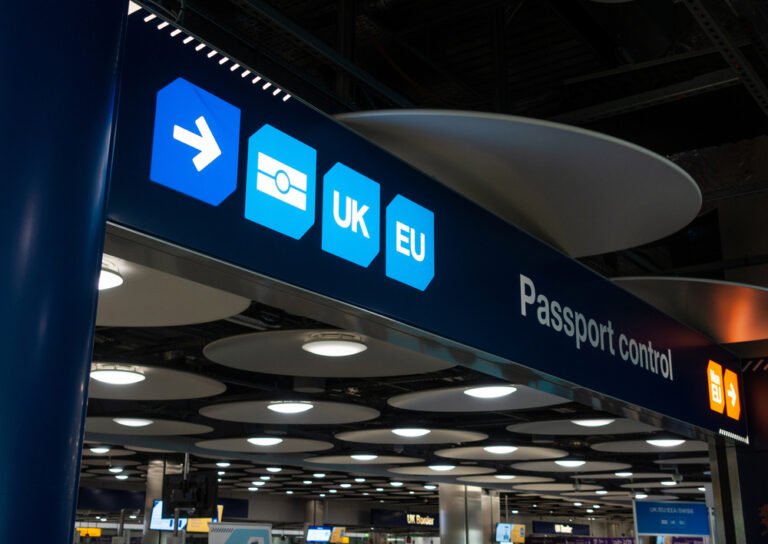
The EU is making changes this year: the Entry-Exit System. This will make travel to the EU easier for non-EU travellers — however, there are a few catches.

Ok, so what is this system? The EU’s post-Brexit Entry-Exit System (EES) is a new border control check that will make it easier for non-EU citizens, who wish to stay for a short period of time, to enter the European Union. 

However, it will also make sure that these travellers can’t overstay their 90-day limit in the EU. 

A brand new system

What will this look like for travellers? Put simply, from the end of 2023, UK and other non-EU travellers who don’t require a visa to enter the EU will need to scan their passports at the self-service border. They will then be good to go for 90 days. 

READ MORE: The Netherlands officially has the highest quality of life in the world

The new system promises a smoother and faster process for everyone outside of the EU to enter. 

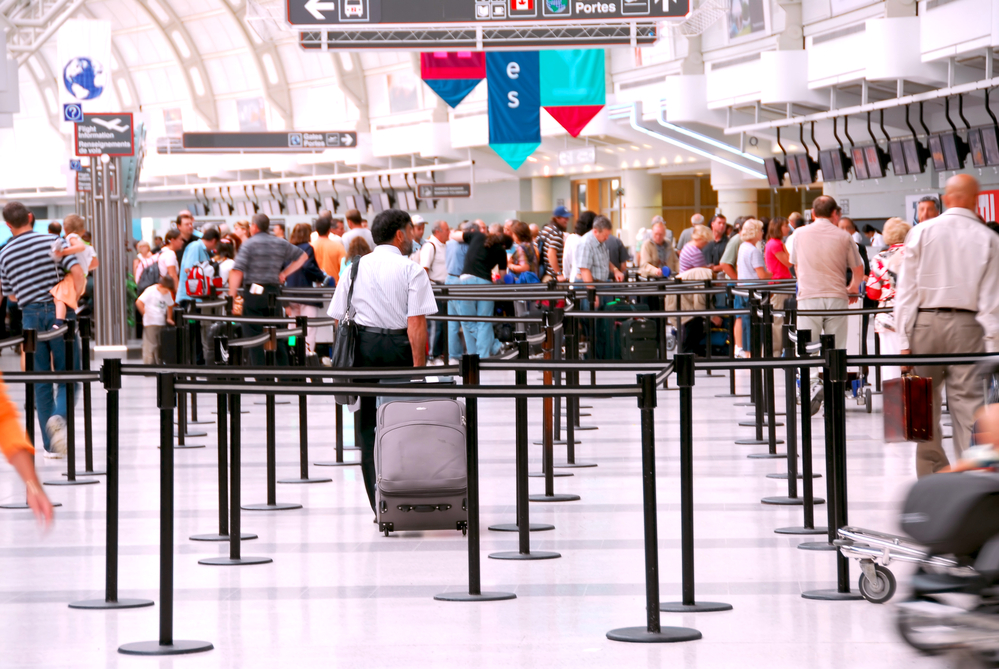
Crowd-of-people-in-international-airport
It will be easier to enter the EU! Image: Depositphotos

The future is here, guys. With the passport scanning self-service, the system will save the traveller’s name, biometric data and the date and place of entry. 

This will also include a facial and finger scan, the data will then be retained for three years after your trip. 👀

With a brand new delay

According to the original plan, the EES was set to launch in 2022. It was then rescheduled to May 2023. 

However, now the EES has been delayed again, this time with the promise that it will come into effect by the end of 2023, Euronews reports. 

The airlines are happy

The travel industry is not only pleased with the new system, but also with the delays. They say it gives them more time to prepare for the changes.

READ MORE: Slow down! The municipality of Amsterdam pushes for a bike speed limit

Coming together, the European region of Airports Council International, Airlines for Europe, the European Regions Airline Association, and the International Air Transport Association have issued a joint statement.

“The EES will be a game changer for how the EU’s borders are managed. There are, however, a number of issues which must be resolved to ensure a smooth roll out and operation of the new system so that air passengers do not face disruptions.”

What do you think of the new border system? Tell us in the comments! 

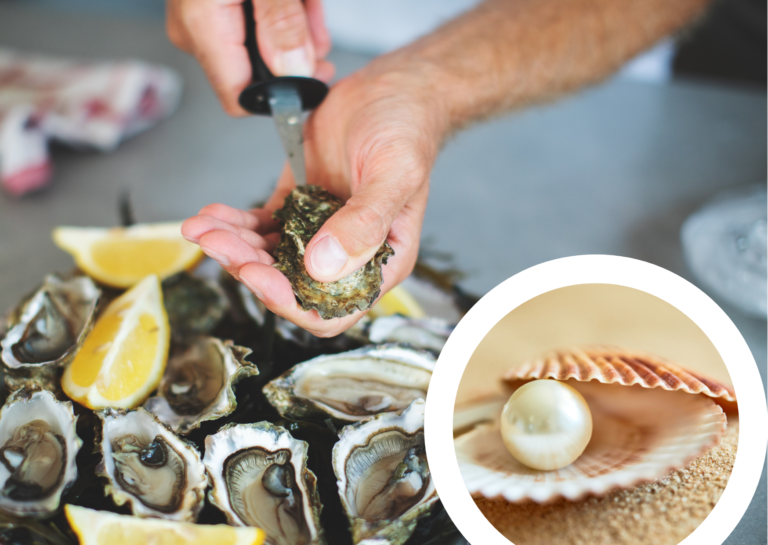
After 32 years of shucking oysters, this Dutch chef finally found his first pearl

The odds of finding a pearl in an oyster are so minute that many of us daren’t even dream about it. For one lucky Dutch chef, however, the pearls…umm, we mean the odds were ever in his favour.

Cheerfully quipping that he’d also bought a staatslot (a ticket for the national lottery) to capitalise on his luck, chef Marco Blok from restaurant MEI in Amersfoort was in high spirits after his discovery.

The find had Marco flashing his pearly whites

Halfway through his task of shucking six oysters, Marco came across a little white ball.

Thinking that it was a swelling of some sort at first, he soon realised that what he was holding was a pearl, reports AD.

Although he’d been working with oysters for much of his 32-year career, this was the first pearl he’d ever found. 🦪

Getting over his initial shock, Marco then rushed to show the pearl to the customers that had ordered the oysters.

Some pearls of wisdom from a jeweller

However, Francis Hage of jewellery company Pure & Timeless (which often sells pieces with pearls), had to give AD some rather disappointing news.

According to Hage, precious and valuable pearls are mostly found in areas of warmer water, unlike oysters from France or the Netherlands.

This didn’t put a damper on Marco’s excitement, however, as the chef was more invested in the emotional value of his discovery than the monetary one.

What do you think of Marco’s fascinating find? Tell us all about it in the comments below!