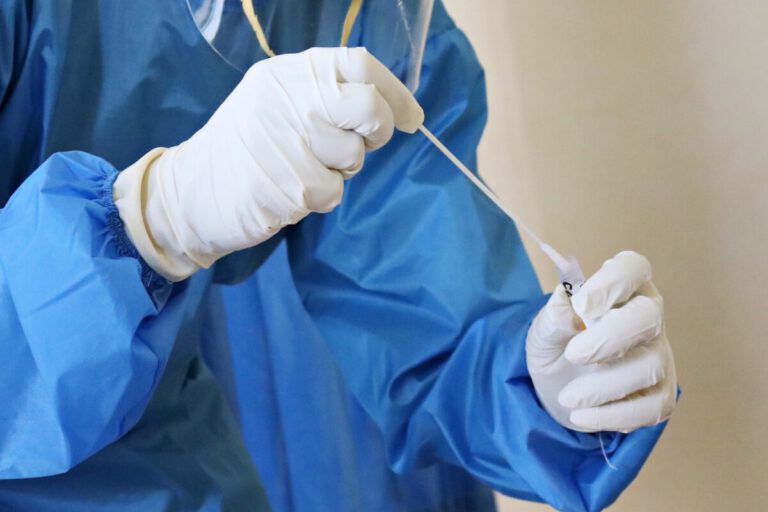
During a recent coronavirus debate in the House of Representatives, a narrow majority came out in support of people paying a contribution for access tests in the future.
Remember in the early days of the vaccination process when people were offered free herring at the vaccination sites as an incentive to get their shots? (So Dutch).
Up until this point access tests for events have been given for free. However, RTL Nieuws reports that several political parties submitted a motion asking the government to work towards a policy where people make a personal contribution to their tests in the future, now that most people have had the opportunity to be vaccinated.
Essentially, these parties are trying to incentivise people to get their jab — no more free fish.
The practicalities
Egalitarian as ever (we love that), these parties suggested that a compensation effort of some sort should be made for people who “cannot be vaccinated”.
In addition, they recommended that the policy of paying for access tests should also lapse if “testing for access becomes necessary regardless of vaccination status”. The change will also only take place once everyone has had the opportunity to be vaccinated.
Government policy
During the press conference last Friday, the cabinet announced that it wants to introduce a policy where visitors to catering establishments, events, festivals, sports competitions, and cultural gatherings must show evidence of a negative test or vaccination if more than 75 guests are present.
How much might this contribution be?
The outgoing minister of health, Hugo de Jonge mentioned a possible amount of €7.50 for the personal contribution.
Resistance from other members of parliament
Although the majority of the House of Representatives were in favour of people making a personal contribution to their access tests, there were of course the neigh sayers — we’re looking at you Geert Wilders.
Lilian Marijnissen, the leader of the Socialist Party also opposed the motion, fearing that a scenario in which “people who do not want or cannot be vaccinated or who cannot afford the test” may be excluded from accessing events.
But since the cabinet wants it, and the majority of parliament supports it, you can bet that we’ll be paying for these tests in the upcoming fall.
What are your thoughts on the idea of people making a personal contribution to access tests? Tell us in the comments below!
Well, it turns out we’re a bunch of moaners because the healthcare system in the Netherlands is among the top in the world — according to a recent study by The Commonwealth Fund.
The study identified 71 performance measures across five domains: access to care, care process, administrative efficiency, equity, and health care outcomes.
Of the 11 high-income countries compared, Norway, the Netherlands, and Australia all came out on top.
Doing healthcare the Dutch way
The Netherlands was the top-scoring country when it came to accessing care, ranking well on affordability and timeliness.
Residents of the Netherlands are far less likely than in other countries to report that their insurance denied payment of a claim or paid less than expected. They’re also far less likely to report difficulty paying medical bills.
The Netherlands also reportedly has quick and often available care outside of business hours. The study highlighted the requirement of Dutch GPs to provide at least 50 hours of after-hours at cooperative GP posts every year. If a GP fails to do so, they risk losing their medical licence.
Finally, the privatisation of the Dutch healthcare system works to the Dutch’s benefit. There’s a mandatory minimum basic benefits package, and features like keeping premiums lower for sicker individuals and cost-sharing caps mean that insurers have to compete on service and quality — not by avoiding insuring people with higher health risks.
Bottom of the heap
Any guesses as to who came in the last place? You got it! The United States.
In fact, despite spending far more of its GDP on health care, the US still was the worst in the ranking. Americans, we feel for you. ⛑
How high-income countries rank on healthcare
Norway 🇳🇴
Netherlands 🇳🇱
Australia 🇦🇺
United Kingdom 🇬🇧
Germany 🇩🇪
New Zealand 🇳🇿
Sweden 🇸🇪
France 🇫🇷
Switzerland 🇨🇭
Canada 🇨🇦
United States 🇺🇸
Hiep hiep hoera, Netherlands! We promise we’ll try to complain less about our insurance bill in the future (key word: try).
How do you find the healthcare system in the Netherlands? Do you think it deserves this ranking? Tell us in the comments below!
The Center for World-Class Universities at Shanghai Jaio Tong University, China has released its annual ranking of the best universities in the world. Three Dutch universities have claimed a spot in the top 100, with Utrecht University decisively coming out on top.
The Academic Ranking of World Universities (ARWU) has been published annually since 2003 by the Shanghai Jaio Tong University in China. The Shanghai Ranking uses six objective indicators to review 1,800 universities around the world in order to come up with a list of the best 1,000. These include:
The number of alumni and staff winning Nobel Prizes and Field Medals
Number of highly cited researchers
Number of articles published in journals of Nature and Science
Number of articles indexed in the Science Citation Index and Social Sciences Citation Index
The per capita performance of a university
Top performers
As usual, the top spots have been nabbed by American and British universities — think Harvard, Stanford, and Cambridge. We aren’t too surprised there. The top-performing European university this year is Paris-Saclay in 13th position on the list, with ETH Zurich coming in at spot 21.
Utrecht University leads the Dutch universities
Utrecht University (UU) has been ranked by the Shanghai Ranking as the best university in the Netherlands for the 19th year in a row. 🥳 UU came in at 50th place. Yes, that’s right, it’s the 50th best university in the whole world this year! Utrecht University has jumped up two spots in 2021, slightly improving on last year’s ranking of 52nd place.
Other Dutch universities performing well
Utrecht University wasn’t the only highly ranked Dutch university this year. Both Groningen University and Leiden University were also ranked in the top 100, coming in at 64th and 83rd place respectively.
Erasmus University Rotterdam falls just outside of the top 100 this year, being ranked in the 101-150 band. The university has slid significantly down the list in recent years, falling from 80th place in 2020.
What are your thoughts on the successes ofthe Dutch universities? Tell us in the comments below!
A second attempt to evacuate Dutch citizens from Kabul’s airport has failed once again, leaving families behind at the gate. The city has now been held by the Taliban for four days.
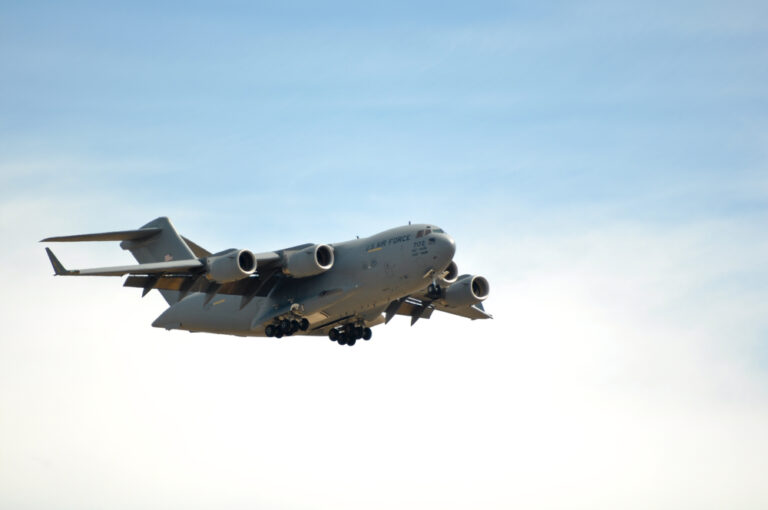
A large cargo plane was sent by the Ministry of Defense to evacuate Dutch citizens waiting at Kabul airport last night. However, the huge aircraft took off with only 40 people on board — none of whom were either Dutch or Afghan, the ministry tells the NOS.
A lack of clarity
According to reports by the NOS, there are a number of reasons why the evacuation efforts failed. One source tells the news agency that American soldiers fired shots at the airport yesterday afternoon. One person was killed as a result and this is believed to have led to a tightening of security at the airport.
The soldiers are also reported to have stopped Afghans from entering the airport. On top of this, many Dutch citizens could not reach the airport due to bad traffic, according to social media reports.
Left behind
Those who could make it to the airport were met with many constraints. Aryan (20) tells the NOS about his family’s efforts to make it to the aircraft. His parents, 17-year-old sister, and 3-year-old brother had been visiting family in Kabul when the city fell.
Aryan’s family made it to the gate but they were stopped by the American soldiers on guard.
“I showed my passport there and said that I am Dutch. There was a lot of noise, I did not hear very well what the American was saying. After I said three times that I am Dutch, he said that I had to keep my distance or he would shoot. I decided to leave. I didn’t want to risk being shot.”
Aryan’s family were not the only ones left waiting at the gate. Outgoing Minister of Foreign Affairs, Sigrid Kaag, described the situation at the airport as “fluid and chaotic” explaining that the Dutch aircraft was only allowed 30 minutes to board its passengers. As a result, “a lot of people were standing at the gate of the airport.”
Hopefully better today
Today, another evacuation effort will be made with 60 Dutch soldiers involved. Kaag hopes that the aircraft will be allowed more time to carry out the evacuation, but explains that this is all in the hands of the Americans at the airport.
“We want the Americans to give us more time. There must be more time than half an hour. We will continue to work in a European context on better coordination”, she says.
Follow DutchReview on Facebook for the latest news and updates.
Over before it began: that’s how we’ll remember the summer of 2021.
Unlike last summer when we frolicked in the seas and canals during the multiple 30+ degree days, this summer has left us in a permanent waiting room.
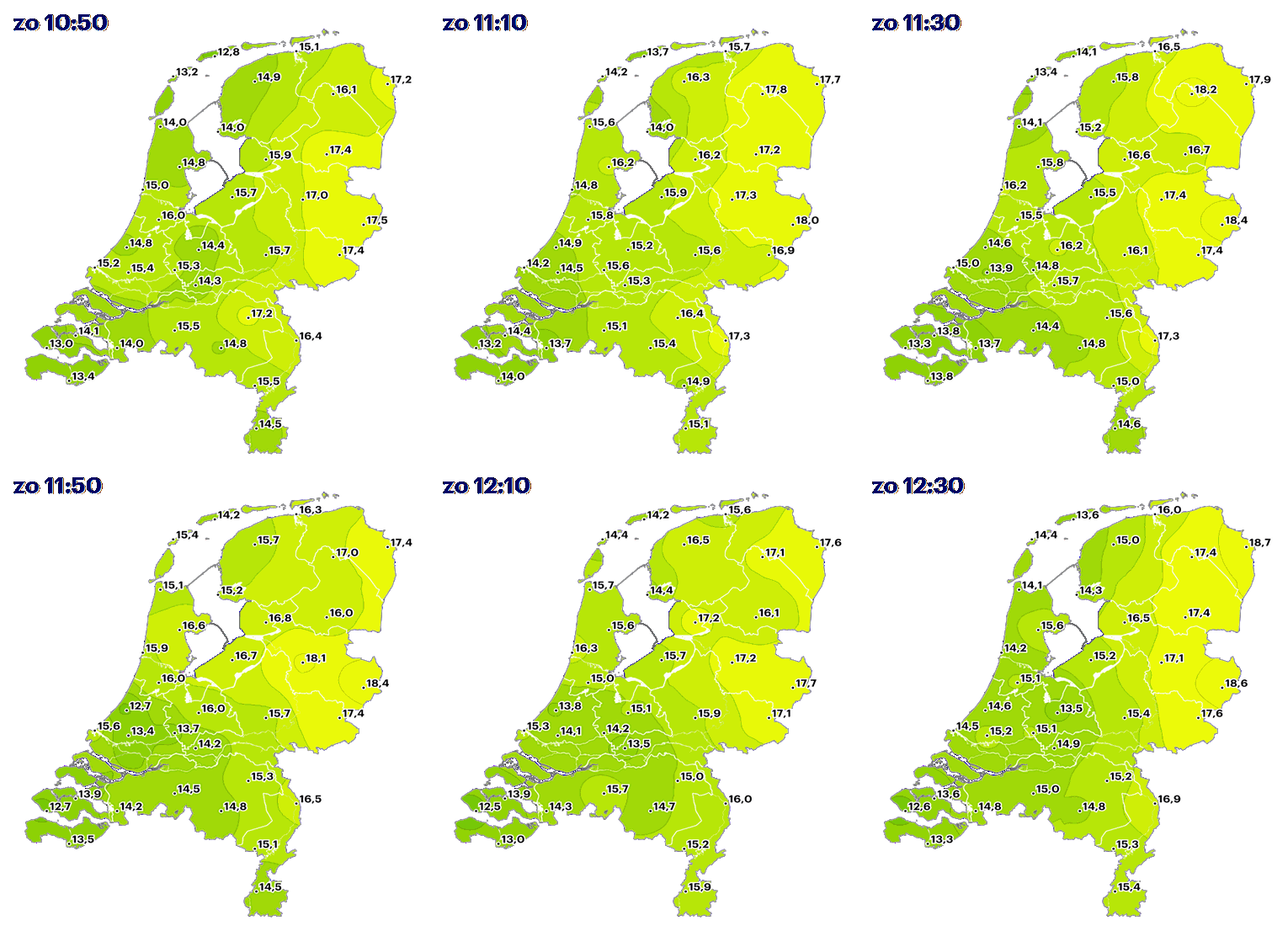
Temperatures are unlikely to exceed 30 degrees from here on out, says Buienradar meteorologist Maurice Middendorp, making tropical weather a no-go.
“It becomes clear that the chance is very small that we will still have high temperatures before the end of August,” he says.
Thankfully, we don’t need palm trees and white sands to feel warm (otherwise we wouldn’t live in the Netherlands, right? 😉) Middendorp says that temperatures above 25 degrees are still possible — and that’s good enough for us!
🌥 Today: grey clouds all the way
The mercury will rise to 18 to 20 degrees today, but it will remain cloudy with the odd patch of sun forcing its way through. Thankfully, the rain of previous days will be (almost) gone.
⛅️ Tomorrow: cool summer day
If Vitamin D is the name of the game, tomorrow is at least a competitor. We’ll have a little more sun compared to today, but there’s a good chance of at least one shower for those who are inland. Temperatures will top out at 20 degrees.
🌦 Friday: starting to heat up
Rain, clouds, and a little bit more sun: that’s what Friday will look like. Make sure at your outdoor borrelthis week you have a drink in one hand — but an umbrella in the other. Dress for 14-22 degrees.
☀️ Saturday: sun arrives for one day, one day only
Slip, slop, slap on that sunscreen on Saturday — the temps could jump over 25 degrees in the east and south of the Netherlands, 20 in the north, and 23 in the middle.
⛈ Sunday: it all goes away
Make sure you use Saturday well: Sunday has a chance of thunderstorms. 😲 However, temps will hover around 20 degrees, just warm enough to make you sweat in your raincoat.
Are you looking forward to this week’s weather? Tell us in the comments below!
The RIVM has released its weekly coronavirus figures from August 11 to August 17. The number of infections has decreased compared to the previous week.
Over the past week, the RIVM has reported16,564 new infections in the Netherlands. This is a drop compared to last week’s report of 18,048 new infections. The percentage of positive tests increased to14,6% compared to 12.9% the week before.
After weeks of continuous drops in numbers, the Dutch government is starting to make plans for the restriction-free Netherlands.
Deaths
The number of patients who have died from COVID-19-related complications has gone down. This week, 42 people passed away, compared to 46 people the previous week.
Hospitalisations
Hospitalisations have continued to decrease with the number of admissions to the ICU also decreasing. The past week saw 318 new admissions to the nursing ward and 90 new patients in the ICU. The week before, there were 421 and 115, respectively.
Dutch government aims to end all coronavirus measures on November 1
At last Friday’s press conference, Mark Rutte and Hugo de Jonge outlined their plans for further relaxation of measures in the Netherlands — and it looks like big changes are coming our way!
Provided that infections and hospitalisations stay low, the Dutch government aims to abolish all restrictions on November 1. This will happen in stages, starting with the reopening of higher education without social distancing.
The next step is to remove the requirement of one and a half metres distance in society at large on September 20. If all goes well, we should be living in a coronavirus-restriction-free country by November!
Higher education in the Netherlands to reopen without social distancing
The days of taking classes in your pyjamas are over! Dutch universities and MBO education will begin on-campus teaching after the summer.
GGD data leak revealed to be more extensive than first thought
Back in January, it came out that the GGD had suffered a data leak. Now, it turns out that it was much larger than initially reported and that many victims weren’t informed.
Initially, it was reported that the data from 1,250 people — including their date of birth, address, full name, BSN, and telephone number — had been stolen.
However, the GGD recently confirmed that the actual number of victims is still unknown.
Follow DutchReview on Facebook for the latest news and coronavirus updates.
This is apparent from the preliminary calculations by Statistics Netherlands (CBS). The report shows that the Dutch economy has grown by 3,1% in the second quarter of 2021, compared to the first.
How the lockdown effected the Dutch economy
Moreover, GDP (gross domestic product) in the second quarter grew by 9,7% when compared to the same period last year. According to CBS, that’s the largest year-over-year growth the Netherlands has ever seen. 🤩
The phenomenal growth is mainly due to the lockdown last year which resulted in a drastic drop in GDP.
Compared to last year, it’s especially household consumption and the trade balance that’s increased.
Spendings post-lockdown
In the second quarter of 2021, consumers spent 9,3% more than during the same quarter in 2020. The reopening of the shops and catering has had a large effect on this and CBS explains that consumers mainly spent more on catering, medical services, clothing, and cars.
Although it’s the main driver of the exceptional year-over-year growth, household consumption is still 5% lower than in pre-corona times.
Almost at pre-corona levels
While the Dutch economy has made a serious comeback, it’s still not at the same height as the second quarter two years ago.
To be precise, it’s 0,4% smaller — with only government consumption and exports being higher in the second quarter of 2021 than in the second quarter of 2019.
Nevertheless, the Dutch economy is performing better than the European average.
Have you noticed your consumption patterns change over the past year? Tell us in the comments below!
The Netherlands is currently experiencing what is known as a tight labour market — there have never been so many unfilled vacancies. In the second quarter of 2021, there were more than 300,000 positions to be filled.
There is unprecedented tension in the labour market, the NOS reports. According to Peter Hein van Mulligen, the chief economist at Statistics Netherlands (CBS), “We have not seen this in 50 years” — wow!
More vacancies than people to fill them
For every 100 people who were unemployed in the second quarter of 2021, there were 106 vacancies. That’s pretty drastic!
There was already a structural shortage in the labour market before coronavirus hit. However, the pandemic exacerbated that problem and led to a temporary extra shortage.
For example, many of these positions are usually filled by people from Eastern Europe. However, Van Mulligen explains that “there is a shortage of migrant workers who have returned to Eastern Europe during the pandemic.”
Wage support from the government has also ensured that there are more vacancies than unemployed people. Without it, many companies would have gone bankrupt — leading to more unemployed people.
Additionally, unemployment has been falling for three quarters in a row. Over the past few months, more unemployed people have started working than those who have lost their jobs.
Looking for a job? These sectors have the most vacancies
Most of the vacancies are in trade, business services and healthcare. In fact, together these sectors account for half of all vacancies. In the hospitality industry, the number of vacancies has doubled as coronavirus restrictions have eased.
Statistics Netherlands showed that the Dutch labour market also experienced its highest ever number of vacancies per thousand employees.
Whilst the total number of jobs has increased significantly in the last quarter due to the easing of coronavirus restrictions, there are still fewer jobs available than during the record high in the first three months of 2020 — you know before Miss Rona came and rocked our world.
The number of jobs for the self-employed has also increased. As a result, more than one in five jobs are now filled by self-employed people. So, it bodes well for you if you have big ideas, can’t stand your boss, and want to venture out on your own.
What are your thoughts on the current Dutch labourmarket? Tell us in the comments below!
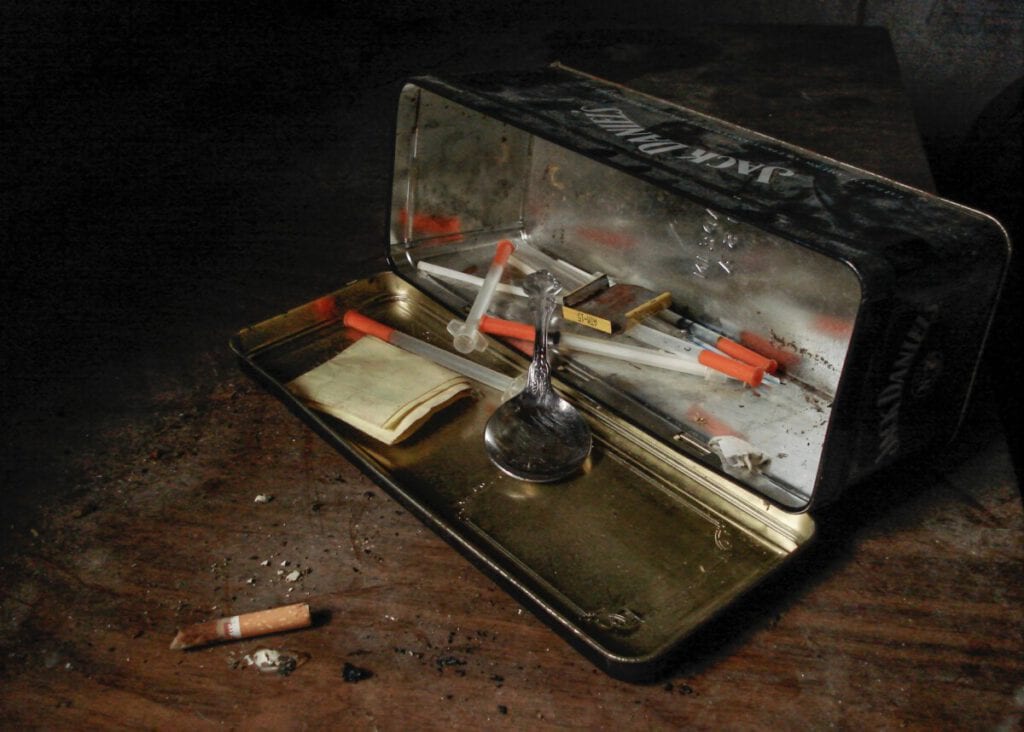
While drugs such as cannabis are decriminalised in the Netherlands, when it comes to policy surrounding hard drugs, the Dutch seem to have taken a page out of the United States’ book. In this article, we examine why all drugs should be decriminalised.
Dutch social liberal party D66 (Democrats 66) thinks the war on drugs in the Netherlands is a ‘road leading nowhere,’ but according to the Christian democratic party, ChristenUnie (Christian Union), the battle has not even started yet. Looking abroad for a moment gives us some insight into the Netherlands’ options when it comes to tackling the war on drugs.
The US versus Canadian approach
In the United States, Nixon’s war on drugs which started in 1971 — and also found its way to the Netherlands — has cost billions and, so far, solved nothing.
However, recently in Canada, the Vancouver City Council unanimously expressed its opinion on a controversial hard drug policy: legalising all hard drugs in Vancouver. This means that possessing small amounts of drugs, including cocaine, meth and heroin, will no longer be a punishable offence in Vancouver.
To show just how seriously they’re taking it, a Vancouver city councillor joined activists outside a police station on July 14 to distribute free heroin, meth and cocaine. The councillor tweeted that these ‘safe’ samples of illicit drugs could save users from a poisoned street supply that has caused an overdose crisis on Canada’s west coast.
This raises the question: should the Netherlands be looking at doing the same? And is D66 right about the war on drugs not leading anywhere?
Again, the answer lies in how other countries are faring. Let’s take a look.
An increasingly violent problem abroad
Countries such as Mexico and Afghanistan have been struggling with the devastating effects of the drug trade for years. Also, in countries with many drug addicts, such as Iran and the United States, drugs and crime appear to go hand in hand.
So it’s not really a surprise that after such a long time of waging war against drugs, the idea is now to either decriminalise or legalise them.
And yes, if the measure seems desperate, it suits the moment. It’s not just drug overdoses that cities and municipalities have to contend with, but also the violence, mayhem and death that comes with the trafficking of drugs.
The Economist reports that the British Columbia (BC) health office, where Vancouver is located, declared an emergency over deaths from drug overdoses five years ago. Dealers were lacing street drugs with lethal levels of fentanyl, a cheap and potent opioid. British Columbia’s rate of illicit-drug deaths has more than doubled since then, with around 2,000 people dying from overdoses in the year to May — more than those killed by COVID-19.
By making hard drugs illegal, you leave them unregulated — meaning they are far more dangerous. Image: Mathew T Rader/Unsplash
Since Richard Nixon started the war on drugs in 1971 (which subsequently spread worldwide), billions have been spent, and nothing has really changed. Cartels still exist and are still trafficking drugs; the drug trade has even gotten more violent, cartels have even fortified their modus operandi and have also changed with the times — a lot of them are now heavily and well-armed that they can easily defeat the governments of some small countries.
They also use the latest and most innovative gadgets for drug trafficking, making them more effective and richer. So what exactly has the so-called war on drugs achieved?
Why drugs are illegal in the Netherlands
In the Netherlands, some drugs are socially accepted (such as alcohol, nicotine in tobacco, the caffeine in coffee, tea and cola). While cannabis may be illegal, it is decriminalised for personal use.
The truth is that a lot of drugs often have devastating effects on users. While the effects of caffeine are fairly harmless, alcohol leads to serious addiction and diseases such as Korsakoff’s syndrome. Additionally, tobacco smoking leads to a high risk of lung cancer and chronic obstructive pulmonary disease (COPD), including emphysema and chronic bronchitis.
Cannabis can also be addictive and harm lung tissues and cause scarring and damage to small blood vessels.
Hallucinogens such as in some mushrooms and LSD change the way a person thinks and perceives things. They artificially induce psychosis. In general, hallucinogens are not addictive but can be dangerous because the user completely loses contact with reality and, in some cases, can endanger themselves and others.
Additionally, the effects of hallucinogens, such as LSD vary from person to person and depend on the amount taken. In short: given the extremely nasty effects of most drugs, it would be wise to limit their use in some way. This is why drug laws exist in almost all countries (Opium Act in the Netherlands) to make the trade and possession of certain drugs illegal.
The unintended consequences of drug prohibition
Alcohol is a dangerous hard drug, more dangerous than marijuana or LSD. No wonder the United States prohibited it in the 1920s after other hard drugs such as cocaine were banned. However, as history tells us, the consequences of prohibition turned out to be disastrous.
Extensive smuggling operations sprang up, and illegal distilleries were set up all over the country. In the end, most Americans didn’t even feel the ban on alcohol because the substance was everywhere.
Criminals like Al Capone became wealthy by stealing industrial alcohol and processing it into illegal whiskey. To eliminate the problem, the US government decided to make it compulsory to mix industrial alcohol with certain types of lethal poisons.
The result: thousands died. The ban on alcohol also led to an increase in organised crime. It wasn’t such a wonder that President Roosevelt decided to end Prohibition in the 1930s.
Since when has the prohibition of anything ever worked? When Peru drove out its coca growers, they moved to Colombia. When Colombia kicked them out, they went back to Peru? And when the Caribbean cocaine-trafficking route was sealed, new, bloodier ones sprang up in Mexico and Central America.
The big seizure of drugs has still not slowed down cartels and independent traffickers. The violence of drug trafficking and the war on drugs has created widows, orphans, refugees, etc. It’s one of the major reasons why the US southern border is crawling with refugees seeking a haven.
The US and the Netherlands’ cocaine consumption
A similar scenario to Prohibition can be seen in the United States today. The US has the highest cocaine consumption: an estimated 1,000 milligrams per year, five to ten doses per American. About three per cent of the population uses a lot of cocaine— much more than in the Netherlands or Europe.
So it’s basically safe to say that the war on drugs has been nothing but a failed project or experiment. It’s also safe to say that whatever Nixon thought he would eradicate, he only made stronger. Drugs are a bigger problem today than ever.
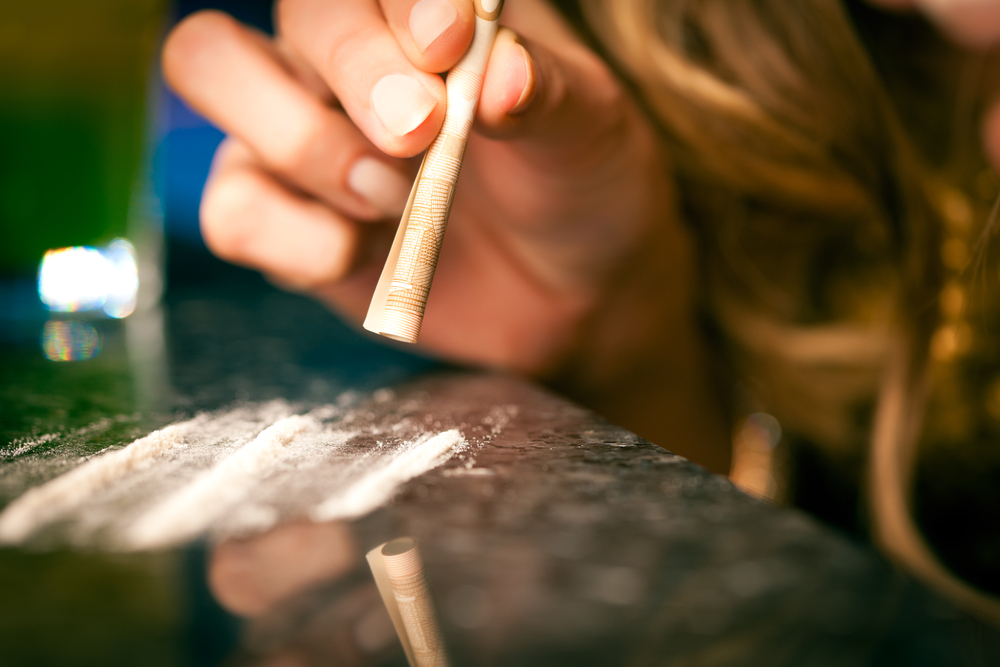
Cocaine use in the Netherlands is also at an all-time high. Statistics show that in 1997 approximately three per cent of the population admitted to having used cocaine at least once in their lives. By 2018, this had increased to more than five per cent.
The use of cocaine by Dutch people is on the rise. Image: Kzenon/Depositphotos
The illegal status of hard drugs in the Netherlands has also not worked. If there is one thing we have learned from the decriminalisation of cannabis, it’s that the cannabis trade can be regulated, taxed, and new policies developed for the improvement of the sector. We also don’t have (cannabis) drug rings fighting over ‘territories’ anymore.
The same cannot be said of the hard drugs trade in the Netherlands. At this point, decriminalising all drugs in the country seems like the best course of action. And there are precedents for decriminalisation. Portugal is a perfect example.
The Portuguese decriminalisation of all drugs
Portugal had a long and major drug problem. In 1999, no less than 1% of the population was addicted to heroin and other hard drugs. The country also had the highest number of drug-related HIV deaths in Europe.
Portugal decided to change course in 2001 and did the unthinkable. All drugs were decriminalised, which meant that the possession of small amounts of drugs was no longer a criminal offence. Possessing drugs for personal use is instead treated as an administrative offence: no longer punishable by imprisonment and does not result in the user having a criminal record and being stigmatised.
Therefore, drug users are not arrested but must appear before a special committee where a doctor, a lawyer, and a social worker prescribes treatment or issues a fine.
Following Portugal’s example would be so much better for the Netherlands because the American war on drugs — which the Netherlands is obviously copying when it comes to hard drugs — isn’t doing us any favours.
The balloon effect
The premise of this war has always been ‘fewer drugs = fewer (societal) problems’. Or ‘no drugs = no addiction’. Therefore, the focus has been to destroy the supply of drugs. However, a lot of people, especially politicians, find it difficult to understand that destroying ‘supply’ leaves the root cause of drug use untreated. Eliminating ‘supply’ will not make ‘demand’ go away.
There is also the balloon effect to think about. The ‘balloon effect’ draws an analogy between attempts to eradicate the production of illegal drugs and the phenomenon of the same name when a latex balloon is compressed: the air does not disappear but is moved to a place with less resistance.
Pushing down on drug production in one region causes it to bulge somewhere else. All US anti-drug tactics have done is they have forced drug traffickers to search for ‘safer areas’ with less government pressure to eliminate the flow of narcotics.
And this is mostly where the Netherlands and much of Europe come in. When cartels in South America first started trafficking narcotics, their major market was Florida and New York.
When the US kickstarted the war on drugs, they immediately started searching for new markets with less government pressure. Europe became that ‘new market’ or ‘safe area’.
Nowadays, traffickers often use the Netherlands as both a market and an entry point into Europe.
How the Dutch war on drugs is different
It is important to state that drug users are treated much differently in the Netherlands than in the US. Even though there are no talks about the decriminalisation of all drugs yet, the Netherlands focuses on rehabilitation rather than punishment. For example, the advent of drug consumption rooms in the Netherlands has been a welcome initiative.
Note: Drug consumption rooms are where (homeless) people struggling with a drug addiction can use their drugs in a hygienic and quiet environment under the supervision of social workers.
However, it still doesn’t solve the stigma and other injustices that go hand in hand with the illegal status of hard drugs. Think about injustices like unlawful and unfair incarceration, racial profiling, etc.
The world is not black or white
Firstly, one must never look at life with a binary mentality. Life isn’t ‘black or white’ or ‘either-or’. You may not believe it, but the writer of this piece has never done drugs in his life. Not even smoked a cigarette, but it doesn’t mean that those who use drugs should be condemned or treated as outcasts.
It is perfectly possible not to be a marijuana user and still want it to be legalised for others. In the same way, you may have never used any (hard) drug but still understand that the so-called war on drugs is bollocks.
An ideal world would be where people stay away from hard/harmful drugs, but that is not a reality. There will always be demand for soft or hard drugs, and punishment instead of rehabilitation is not the right way to handle things.
Some people are also fully aware of the harm that certain drugs pose and are willing to accept all the risks, which in all honesty, is their choice, as long as they are not hurting others. What this group of people need is help, not to be locked up and treated like terrorists.
Time to try a different approach
It’s time to try a different approach in the Netherlands. To support this stance, let us take a closer look at Portugal. The Portuguese policy on decriminalisation has led to the following results:
Drug-related HIV infections have decreased by 90% in 15 years.
The number of drug-related deaths is now the second lowest in the European Union.
Only three people per million die from an overdose, while the EU average is 17.3 per million.
The number of adults who have used drugs in the past year is steadily decreasing.
Fewer Portuguese young people use soft drugs in Europe.
The number of drug-related criminals in Portuguese prisons has fallen from 44% in 1999 to 21% in 2012.
The number of people in drug rehabilitation centres rose by 60% between 1998 and 2011.
The Portuguese model also directly influenced the 2020 decriminalisation policy passed in Oregon and the proposed decriminalisation measures in Norway.
The results of Portugal’s so-called radical plan were clearly positive. From 41% regular drug users in 2001 to 28% in 2012. The use of hard drugs, as well as the crime associated with it, decreased drastically. The number of HIV infections has also drastically reduced, as well as other drug-related problems.
However, decriminalisation is not the same as legalisation. Possessing or using drugs remains illegal in Portugal, but you won’t get a criminal record that stigmatises you for life because of it.
Benefits of decriminalising all drugs in the Netherlands
Regulation One big benefit of decriminalisation would be regulation. It would be better to take the drug trade away from cartels and drug traffickers and move it into licensed pharmacies or drug consumption rooms. This would greatly reduce the violence and bloodshed on the streets, as well as the workload for the police and other anti-drug agencies who spend so much time and effort chasing traffickers. Regulating the drug trade would also make the Netherlands so much safer in the long run. Furthermore, the Netherlands and much of Europe would be able to allocate funds that have long been wasted on the war on drugs to rehabilitation, education, and the provision of healthcare for those battling severe addiction.
No more adulterated hard drugs Another benefit is that ‘adulterated hard drugs’ would become a thing of the past. If all drugs are decriminalised, and addicts can easily access those drugs in pharmacies or drug consumption rooms, where doctors prescribe, for example, untainted, medical-grade heroin, and social workers are present to supervise the users, the number of overdoses and severely addicted people who often die from tainted drugs would greatly reduce.
Room for better education Decriminalisation would also mean being able to openly educate young people and talk to them about drugs and their effects on the human body. These effects of drugs can be taught in schools or through special weekly or monthly workshops organised by the schools and supervised by the ministries of education and health.
Reduced stigma The stigma attached to drugs would also start to dissipate with decriminalisation. For most young people, the first time they tried drugs was either due to peer pressure or wrong information from friends who mostly don’t know much about drugs. The absence of stigma makes talking about drugs and educating young people so much easier.
A safer space to try drugs Additionally, if young people are curious about trying a drug, it would be so much better for them to obtain it from a pharmacist who educates them on the effects and prescribes the proper dosage. This is much safer than getting the same drugs from a roadside drug dealer probably selling a tainted version.
Overdose prevention Ultimately, the most important benefit of decriminalising all drugs is that users can get them from clinics or pharmacies, and the severely addicted would have to be given dosages for use under supervision.
A more comprehensive drug history Another benefit is that huisarts (general practitioners) will have an overview of the kind of hard drugs their patients use or have used in the past so they can take this into account during treatments of minor or chronic illnesses.
Would decriminalising all drugs in the Netherlands work?
The fact is, not everyone is convinced that the decriminalisation of all drugs in the Netherlands (or anywhere) will save lives. The initiative often doesn’t work if not managed properly. But the truth is that the war on drugs has not borne any fruit. The collateral damage is way too much.
The decriminalisation of all drugs in the Netherlands and much of Europe would, in principle, mean that drug use would only have one victim: the user. By regulating drug use, the damage is limited, and time, effort, and funds are directed towards helping users overcome their addiction.
The Netherlands is moving away from punishment and towards treatment. Image: photographee.eu/Depositphotos
The point is, in the long run, decriminalisation will do more good than harm and make for better regulation. Drug dealers will also be less incentivised because why put so much energy into selling something legal, especially when the legal version is of better quality?
Decriminalisation also doesn’t mean that people are being encouraged to use drugs; instead, it’s all about trying to understand that addiction isn’t a sin. Addicts are not terrorists who should be thrown in prison and left to rot. They need help.
Society needs to understand that the demand for drugs is never going to disappear. People will try drugs either out of curiosity, peer pressure, the search for an escape from a difficult reality, recreational purposes, or just because they are addicted. And also that getting rid of the drug trade would still not get rid of the demand for drugs.
To summarise
The idea behind this article is not to support the use of drugs but that we should at least start the conversation on how the war on drugs has not helped anyone. It’s a conversation that many politicians are afraid to start or engage in.
Think about the fact that alcohol is legal in the Netherlands but LSD is not. This is absurd because alcohol is so much worse than LSD. So why demonise the use of LSD while allowing the populace free access to something much worse? It’s even more absurd that conservative parties like ChristenUnie always throw out decriminalisation without mentioning its benefits or disproving the relevant arguments against the war on drugs.
“It is high time we replaced punishment with aid,” Norwegian Health Minister Bent Høie said in February when talking about his country’s efforts to decriminalise all drugs. “Punishment for the possession of hard drugs leads to stigma and social exclusion.”
Oregon moved ahead in 2020 with the decriminalisation of all drugs, a trend that already exists in more than thirty countries, with more than fifty different models of decriminalisation policies. The war on drugs makes no sense, and Uruguay was brilliant to have stayed out of it. They never joined the war on drugs: this can be seen in the fact that they were the only country that never had the need to decriminalise or legalise the personal use of cannabis because it was never a criminal offence to start with.
Maybe it’s high time the Netherlands joined the decriminalisation trend. There’s a lot to learn from the progress of countries like Portugal. And even more we can learn from countries and cities that are following in their footsteps.
Do you think that decriminalising all drugs in the Netherlands would save lives or make things worse? Let us know what you think in the comments!
Yesterday, a number of Dutch persons were evacuated from the fallen Afghan city of Kabul by Ukrainian planes. The Dutch Minister of Defense announced that military air crafts would be sent to bring remaining Dutch citizens to safety.
However, the aeroplane sent by the Ministry of Defense from the Netherlands wasn’t able to land in Kabul due to the unsafe situation at the airport, reports RTL Nieuws.
Dutch government is “seriously concerned”
In a letter to the House of Representatives, the outgoing ministers of Foreign Affairs, Defense, and Asylum (Sigrid Kraag, Ank Bijleveld, and Ankie Broekers-Knol respectively) wrote they are “seriously concerned” about the Dutch people currently in Afghanistan.
Their concern also extends to Afghans who have worked for the Netherlands as well as Dutch allies in Kabul.
Nevertheless, they have assured the public that they’ll do everything they can to complete the evacuation from Afghanistan.
Onderweg is de toestemming om te landen uitgesteld. Ter plaatse wordt prioriteit gegeven aan het invliegen van versterkingen voor de beveiliging van het vliegveld.
“The military plane for evacuation from Kabul is delayed until further notice. This has to do with the local circumstances at Kabul airport.” and following up: “En route, the permission to land has been postponed. On the ground, priority is given to flying reinforcements in for airport security.”
Emergency team will be flown to Kabul today
The plan is that the embassy team currently stranded in Kabul will be replaced by an emergency team later today. The ambassador will fly in, together with the emergency team and military security personnel, to help with evacuations.
Preparations for this are currently being carried out in The Hague.
The Netherlands welcomes Afghan employees and asylum seekers
The letter also explains that paperwork for Afghans who’ve worked as interpreters for the Netherlands has been simplified to make their entry to the Netherlands smoother.
This means that, if the Ministry of Defense confirms they’ve worked for the Netherlands, the interpreters can enter the country by only showing their passport.
There have also been attempts to issue ‘laissez-passer’ documents (embassy issued certificates granting unrestricted movement) for people trying to leave Afghanistan. However, the Afghan authorities did not agree to these.
The Dutch Central Agency for the Reception of Asylum Seekers (COA) is also prepared to receive asylum seekers from Afghanistan and have made locations and barracks ready.
Agreements with the EU and NATO
In the letter, the ministers also confirm agreements made with the EU. In accordance with these, the Netherlands will receive Afghan employees of the EU delegation in Kabul, along with their families.
They’ve also extended a similar offer to NATO, confirming that the Netherlands is willing to accept local NATO employees from Kabul.
Debate in the Dutch House of Representatives and the EU Foreign Affairs Council
Today, the three ministers authoring the letter will attend a debate in the Dutch House of Representatives. They say “the events require reflection and raise many questions that must be answered in the coming period.”
In addition, the Dutch Foreign Affairs Minister, Sigrid Kraag, is discussing the situation in Kabul with the Foreign Affairs Council. The Council brings together the foreign ministers of all EU member states.
Follow DutchReview on Facebook for the latest news and updates.