Letters containing a harmful powder have been arriving in mail slots throughout the Netherlands this past week. Police report that they are still determining whether each of these 19 letters may be linked to one sender.
The powder in the letters causes recipients mild respiratory problems and burning eyes.
The letters have been delivered to 12 addresses in Amsterdam, and to additional locations in Amersfoort, Arnhem, Best, Rotterdam, Utrecht, Roermond, and Zeist.
The recipients are all businesses, ranging from hotels, hospitals, law firms, and media companies.
Examination
Specialists from the Netherlands Forensic Insitute are examining the letters to determine what exactly the powder is.
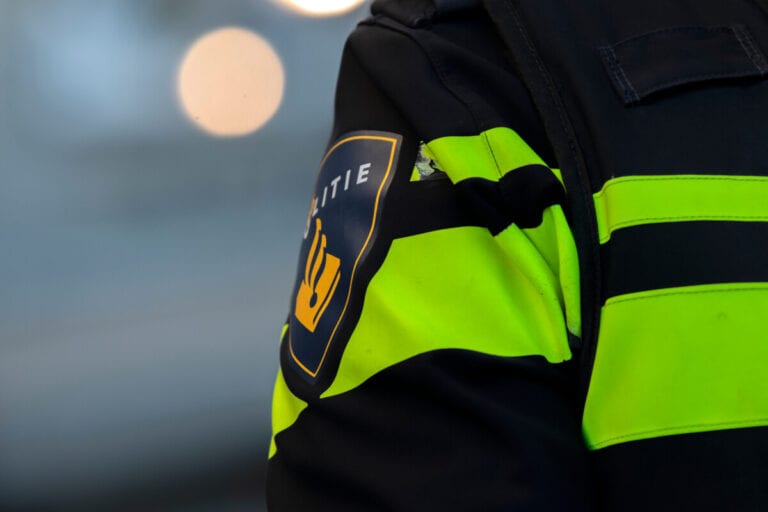
The criminal investigation department is investigating the origin and motive behind the letters. The photo shared by police shows one of the letters, which is believed to be from a fictitious sender.
A police spokesperson told RTL that they cannot yet confirm that the letters have all been sent by the same person. “We do not know whether there is a connection between the earlier letters that have been delivered.”
Amsterdam locations
Op de Van Baerlestraat is een poederbrief aangetroffen. Eerder vandaag werd er ook een poederbrief aangetroffen op de Prinsengracht. In beide gevallen niemand gewond. De recherche doet onderzoek naar de herkomst van de brieven.
Amsterdam police have confirmed that two letters were found in the city yesterday. The first at an unspecified location on Prinsengracht. The second was found at a location on Van Baerlestraat.
No one was injured in either case. The police will continue to investigate.They warn that if you receive a suspicious letter, do not open it, but call 112 right away.
This year has forced us all to reconsider our health — and the Dutch government to reconsider the role of health insurance.
Many of us probably took a moment at some point this year to consider our health insurance policy. We also wondered: what exactly does health insurance cover during a global pandemic?
With changes on the way, here are five things you should know about health insurance in the Netherlands in 2021.
Corona and health insurance
With an extraordinary number of people falling ill due to coronavirus this year, the Dutch government has had to implement many new measures. One of these measures was to include coverage for corona under all basic insurance policies.
This means that anyone with health insurance in the Netherlands — which is almost everyone (exceptions below) — will be covered should they need hospitalisation due to coronavirus.
This summer, the Dutch government also decided to temporarily include coronavirus recovery care under basic insurance. This way, anyone who suffers long-term complaints after falling ill from the virus won’t need to expect a hefty bill for any convalescent (recovery) care. This applies to treatments outside the hospital such as physiotherapy, occupational therapy and dietetics.
However, it is important to note that the effectiveness of these treatments on convalescents is unknown for now, so the government has only agreed to cover them under basic insurance for a year.
Anyone with health insurance is covered for coronavirus in the Netherlands? Image: Gustavo Fring/Pexels.
Premium prices to rise in 2021
According to the insurance comparison company, Zorgwijzer, insurance premium prices are set to rise by approximately €58 in 2021. They estimate that those who hold basic insurance policies can expect to pay an extra €4.82 per month on average.
Exactly how much extra you will have to pay depends on your own insurance policy. For example, CZ healthcare insurance has raised its basic insurance premium by €8.65 per month, whereas Zilveren Kruis’ has increased its premium by €3.
If you would like to compare premiums and find the best policy for you, Zorgwijzer is a helpful health insurance comparison tool. Simply enter your information and what you would like to have covered and the tool will lay out all of your options — from cheapest to most expensive.
If you’re worried about paying your health insurance premium this year, bear in mind that the zorgtoeslag health insurance allowance is available to anyone who earns below a certain amount. This benefit will also increase slightly in 2021.
You can switch your insurance policy for the next year — but there’s a deadline
You may have opened your email this week and found that your insurance policy for 2021 is just not up to scratch. If you have decided to switch your health insurance policy, bear in mind that you have a deadline to consider.
In the Netherlands, you can only change your policy once a year, and the deadline of December 31 is steadily approaching.
Insurance companies are required by law to notify customers of any changes to their policy for the approaching year by November 12. This means that now is the time to read those emails and double-check that you’re still happy with your premium for 2021.
Do you have any new needs that won’t be covered next year? If not, consider different options and make the change before the new year begins!
Remember to check in on your mental health
Mental health care in the Netherlands is tricky. Image: 1388843/Pixabay
There is a lot of debate about mental healthcare in the Netherlands. If you’re generally feeling pretty good and don’t live with any severe mental conditions, sticking to only the basic health insurance package is normally fine. This package covers some basic primary and secondary mental health care.
However, this year has been tough both physically and mentally for many and you may find yourself in need of new mental health services. So how does health insurance work in terms of mental health?
Your basic healthcare insurance should cover you for certain basic mental health services. But you must read up on it, as only some insurers will cover you for certain things.
For example, if you have a more complex mental health condition, which might require a lot of intervention, then your insurer may not cover all of your primary or secondary care. In short, some policies will cover you and some won’t. It depends on the extent to which you are suffering and which policy you chose.
This means now is the time to really scrutinise your policy for the coming year. However, if the time comes and you need help, you can always pay for additional mental health care alongside your basic healthcare insurance.
How does insurance work for internationals?
The Netherlands is a popular destination to pursue higher education and it attracts students from all over the world. If you’re here on a student visa, or if you plan to only study without working, then you are not obligated to be insured by Dutch health insurance.
However, many students are often required to do an internship as part of their studies. If the internship pays a minimum wage, then you (unfortunately) have to get Dutch health insurance. If you’re paid less than the minimum then it is not required.
The Netherlands can also be expensive, and it’s only natural that many internationals look for other opportunities to make some cash on the side. So if you do manage to get a part-time job (there are ways to do that even if you are on a study visa) which pays you a minimum wage, you have to be insured from the first day of your work contract.
Check out this handy diagram to find out if you need Dutch health insurance! Image: DutchReview
If you are an international student who is looking to find health insurance, then the process can be quite confusing at first — especially when you are met with phrases like “zorgverzekering vergelijken.”
Luckily, this is where Zorgwijzer can come in handy once again. It is the only insurance comparison website that offers service in English. Save yourself the tears and the migraine and simply do the process in a language that isn’t composed of so many z, v and g’s.
Are you happy with your health insurance policy for 2021? Make sure your covered and find the insurance that’s best for you!
Cigarettes and other smoking materials will be removed from Dutch supermarket shelves in 2024.
Sources have confirmed the plans to the NOS. Currently, tobacco products are no longer visible to customers in Dutch supermarkets. The next move will be to remove them from the stores completely.
This will be another step towards the larger aim of only being able to buy cigarettes in tobacco stores by 2030.
The National Prevention Agreement
This decision follows the introduction of the National Prevention Agreement in 2018, which aims to encourage a healthier lifestyle in the next generation of Dutch residents.
Earlier this year, it was also decided that cigarettes may no longer be smoked on train platforms throughout the Netherlands. It is also expected that the price of cigarette packs will rise to €10 by 2023.
A smoke-free generation
The National Prevention Agreement, fronted by State Secretary Paul Blokhuis of Public Health, states that the people of the Netherlands need to live a healthier lifestyle.
By implementing measures such as the above, the Dutch government hopes to introduce a generation of children by 2040 who will “no longer know the smell of tobacco smoke.”
A smoke-free generation is one in which no child will ever start to smoke, eradicating the generation of the pull towards cigarettes.
Do you believe in a smoke-free generation? Tell us your thoughts in the comments below!
From mid-December, all restaurants in the Netherlands may be able to open their doors once again, inside sources tell RTL Nieuws. Stricter measures will be required.
The restaurant industry has been closed for seating for over a month now due to the government’s coronavirus measures.
For the past few weeks, officials have been experimenting with reopening 25 restaurants, testing conditions such as ventilation, walking routes, and distanced seating, RTL’s sources say.
Conditions
In order to reopen, the restaurants would need to adhere to strict arrangements regarding alcohol sales and closing times. Both staff and customers will be required to wear masks, and cough screens installed between tables.
“Our commitment is still aimed at ensuring that all catering establishments can be opened in a responsible manner, with workable conditions, as soon as possible,” says Koninklijke Horeca Nederland (KNH) in a response to RTL, adding, “for example, by mid-December.”
The conditions will be evaluated in early December. “In the meantime, KNH will continue to discuss this with the ministries on a daily basis,” a spokesperson said.
Reopening not certain
There is, of course, a risk that reopening will not be possible so soon if the course of the coronavirus takes a turn for the worse. A government press conference on December 8 is expected to provide more clarity.
Do you think mid-December will be the best time for restaurants to reopen? Tell us your thoughts in the comments.
The famous outdoor skating event known as Elfstedentocht traditionally takes place along the frozen rivers and canals of 11 Frisian towns in the wintertime. But it seems this winter, the games are cancelled — again.
For years, this beloved event has been halted due to a lack of ice. But surprise surprise, this year corona has found a way to cancel it once again. The Royal Association of the 11 Frisian Cities have announced that they will not organise the event this winter under the current corona measures, reports NU.
Social distancing impossible
The association explains that especially at the start of the race, it will be impossible to keep the 1.5m rule between competitors. On top of that, the event would draw crowds to the riversides and canals, which is the last thing the organisation wants to encourage during a pandemic. Such behaviour would risk putting unnecessary pressure on the hospitals, which the healthcare system cannot afford right now.
Relaxing measures
There is still a while before the skating event would normally take place, and if the 1.5m rule were to be dropped it would theoretically still be possible. During the press conference on Tuesday evening, Prime Minister Mark Rutte said that cabinet may be able to consider relaxing measures around mid-December. But there is no guarantee that this will happen, and realistically the 1.5m rule is likely to be one of the last measures to go. For these reasons, it is almost certain that the Elfstedentocht will not take place this winter.
What is the real capital of the Netherlands and why does The Hague get thrown into the mix? It’s certainly confusing. Let’s clear up a few things.
Before trying to figure out which is the capital of the Netherlands (yes, we know the real capital of the Netherlands is Amsterdam), you first have to know the difference between Holland and the Netherlands.
See what I mean? If this didn’t confuse you enough, the situation with capital cities makes it even more so. When I first came to the Netherlands, we needed to get checked through. This was a few years ago, before the wonders of the Schengen Zone had been introduced to the European Union.
I asked my mother where we were headed. I assumed this would be Amsterdam. My mentality up until then was, “Amsterdam is the capital of the Netherlands, so the administration buildings will be there.” Oh, how wrong I was, when we simply had to travel into the next town over, one which I had never heard of: The Hague.
In my opinion, there are three capital cities of the Netherlands. Firstly, there is Amsterdam, the commercial capital, where the tourists are trapped, the canals are revered and the red light district booms. Then, there is Rotterdam, which is the economic capital. Sure, Amsterdam lets business flow like aforementioned canals, but Rotterdam has a river. And it’s pretty important.
Rotterdam is known as the economic capital. Image: 3093594/Pixabay.
Finally, there is The Hague, the political capital. But why is The Hague considered like this to me? Wouldn’t it make much more sense to simply have all of these things in one area? Well, while The Hague is not actually a capital city, it certainly feels like one. Here are a few reasons why:
The capital of the Netherlands: the history
It starts, like many stories of modern European history, with Napoleon. Not the Emperor of the French who lost at Waterloo, which would be too easy. This was his brother, who was more commonly known as Louis Bonaparte. He was also called the “Konijn van ‘Olland,” mostly because of the hilarious rumor that he mispronounced King of Holland by virtue of his terrible Dutch.
In any case, before his reign, The Hague was the seat of the government. Yet for Louis this would not do, and he instead took Amsterdam for his capital. And then he took Rotterdam for his capital. And then The Hague, Leiden, and back to Amsterdam.
Do you see where the confusion began? His changeable nature meant that his royal court was constantly chasing him, hoping that he’d eventually settle in one place long enough to actually do some governing. It was only after his reign ended — a few scant years — that the seat of the government was sent back to its rightful place: Amsterdam.
Wait, hold on. After his reign ended, Napoleon (the emperor this time) sent a governor to take over the kingdom instead of his brother. It was after this short lived governor that the seat returned to The Hague.
The capital of the Netherlands: on buildings and government
And so it was that Amsterdam became the capital of the Kingdom of Holland. This explains some of the historic reasons behind the confusion between the two cities.
But when you’re looking for the capital city, one of the first things that mark it above the rest is the government building. Both the first and second chambers, the legislative and executive branches of government, are found in The Hague within the very scenic remnants of feudal Holland — the Binnenhof.
Of course, they needed some way of making the new parliament stand out from the old, hence the glass exterior strutting out next to the side of the Ridderzaal in the courtyard. The Hague had been the seat of government since the 16th century and from the Dutch perspective, there seemed to be no reason to change this just because of a few years of French rule.
It doesn’t stop there, though, as many other governmental buildings are found in The Hague as well. This includes the many embassies for countries around the world, and numerous international organization headquarters. Many of these buildings can be found on a single street, jokingly called by those in the know as “Terrorist Alley.”
Even the working palace of the royalty can be found in the center of The Hague, not in Amsterdam. Though, it should be mentioned that Rabbit kings’ palace was in Amsterdam, taking the town hall as his palace.
Final thoughts
But then, why is The Hague relatively unknown as a political center by people entering the country? Maybe it’s the lack of an airport? Most that enter the country come from Schiphol, and though The Hague shares an airport with Rotterdam, trying to get to The Hague from there requires you to go to Rotterdam first.
When I was studying abroad for my degree, not many people knew of The Hague. In fact, those who did had only heard of the International Criminals Court, and assumed that all the other political departments were in Amsterdam.
It’s a strange turn of events when a state separates its capital from all the usual tell-tail signs of a capital. In the end, we can turn to definitions and to the usual signs. Perhaps it’s less about what a capital is, and what a capital feels like. While Amsterdam may be the capital of the Netherlands, it will never look like a capital to me.
Was there a time you believed the capital of the Netherlands was not Amsterdam? You can be honest here, tell us your thoughts in the comments below.
Feature Image: Rob Van Der Meijden/Pixabay
Editor’s Note: This article was originally published in September 2015, and was fully updated in November 2020 for your reading pleasure.
The Netherlands has topped the charts for English proficiency in a new study released by EF Education First.
The EF English Proficiency Index (EF EFI) 2020 examined the English-speaking capabilities of 2.2 million respondents across 100 countries. It’s the second year in a row that the Dutch have claimed the top spot.
Naturally, we’re sure the Dutch are proud as punch over the achievement — especially after beating out their language arch-nemesis Denmark for the title. The Dutch scored 652 points on the survey, relegating the Danes to second-place with 632 points.
“It’s great that the Netherlands has again managed to occupy the number one position this year,” says Marc Hollander, Country Manager of EF Education First Netherlands. “It has become clear that communication is key, especially in the challenging circumstances of the past year.”
Which city is home to the best English-speakers in Holland?
Drumroll please … well, perhaps that’s not necessary. Amsterdam is home to the best English-speakers in the Netherlands, closely followed by Rotterdam and The Hague. We could lie and say that we’re surprised but … we’re not.
Of course, the Dutch speak great English all the way across the nation. But how did this tiny country become so good at a language that isn’t their own?
Why the Dutch are great at English
The Netherlands teaches English from primary school all the way through the final years of high school, and even vocational education and university. Some universities have even switched entire courses to English, prompting fear of a “linguicide” of the Dutch language.
Online TEFL courses have also become a firm favourite in the Netherlands, with many Dutch looking to teach English as a second language.
Meanwhile, unlike other European countries, like Germany and Spain, that insist on dubbing popular television shows and movies, the Dutch don’t rely on dubbing. That’s why you can walk into virtually any non-children’s movie playing in a cinema in the Netherlands and enjoy it in English.
While writing this article I asked my partner for a translated Dutch phrase about being proud. “Proud as a cockpea!” she said confidently. I must have looked confused. “You know, the bird with all the feathers!” she said.
Perhaps English proficiency doesn’t stretch as far as the word “peacock”?
EF EFI 2020 Country Rankings for English Proficiency
It seems Prime Minister Mark Rutte and Health Minister Hugo De Jonge, among others, are at odds over whether an indirect vaccination obligation should be implemented in the Netherlands.
During a debate in the Lower House, Rutte proposed implementing strict measures for those who don’t get vaccinated in order to “nudge” them towards vaccination. These measures could include preventing non-vaccinated people from entering government buildings, concerts and libraries, reports RTL Nieuws.
“The cabinet will not be for coercion,” Rutte said, “but you can also nudge indirectly by stimulating people. That is really a medical-ethical point of view, we are currently considering that.”
De Jonge: no indirect vaccination obligation
The Health Minister argues that introducing such measures could be counterproductive, as many Dutch people have indicated that they do not want to be vaccinated. Surveys in June showed that almost three quarters of the population wanted to take a vaccine, but this week that dropped to 60%. The greatest difference was seen amongst young people.
De Jonge says it would be better to simply relax measures for those vaccinated rather than tighten restrictions for those unvaccinated, reports AD. For example, the elderly and healthcare workers who are vaccinated first would no longer have to keep the 1.5m distance.
Herd immunity
VVD MP Hayke Veldman pointed out that a large percentage of the population needs to be vaccinated in order to reach herd immunity. Rutte agreed, arguing that if vaccinations are purely voluntary, “there may come a time when half of the Netherlands is vaccinated: that is still too little for group immunity, what do you do then?” The Prime Minister emphasized that this is something to think about.
Freedom
FVD member Wybren van Haga reminded cabinet that “many people are terrified of compulsory vaccination” and that an indirect vaccination obligation would come as a threat to individual liberties.
VVD member Veldman acknowledged the importance of personal freedoms, but suggested that in times like these there are bigger things to consider. “Sometimes steps are needed of which you basically say: no, we don’t want that. Sometimes — precisely because of the freedom you have yourself — you need a step to protect the freedom of another. You will have to do that together. You have to think about that.”
Do you think there should be an indirect vaccination obligation? Tell us your thoughts in the comments below.
Wittenberg isn’t your average hotel or your average apartment. It’s an aparthotel, intentionally designed for long stays in Amsterdam. It’s the perfect home-base for people coming to work or visit Amsterdam for a week or more and is especially ideal for new expats moving to the city.
Nearly every expat moving to Amsterdam has a period of transition while they’re looking for their permanent housing. It can take anywhere from a few weeks to a few months. Rather than stay at a basic hotel or settle for a permanent home you’re not totally happy with, it makes sense to relax into somewhere comfortable in the meantime. I personally stayed at Wittenberg for a month when I first arrived in the Netherlands and would do it again in a heartbeat.
So if you’re in the market for a short-term home in Amsterdam or work in the global mobility sector, Wittenberg may be just what you’re after too. They provide all the amenities you need to really feel at home, combining the attentive service you’d expect from an upscale hotel with the comfort and convenience of having your own personal headquarters. With an outstanding location, modern, tastefully appointed apartments, exceptional service, and all the comforts of home, you may never want to leave.
We teamed up with the wonderful folks of Wittenberg to bring you the scoop on this fantastic establishment. We’re pretty wild about it, and we think you will be too.
A prime location in De Plantage
Wittenberg is situated alongside the Nieuwe Keizersgracht canal in the heart of De Plantagebuurt. This charming old neighbourhood is just east of the city centre. It’s close enough to all the action but far enough away for a bit of refuge. The area is quiet yet vibrant, full of gorgeous green spaces, with an excellent selection of cafes and restaurants — an ideal landing pad in Amsterdam.
“De Plantagebuurt,” meaning “the plantation neighbourhood,” is full of lovely gardens and green spaces. Image: Wittenberg/Supplied
Wittenberg is as close as can be to the stunning Hortus Botanicus gardens, and it’s just a stone’s throw away from the Artis Zoo. Other popular destinations like the famous Waterlooplein market, the Jewish quarter, Carré Theatre, and the Dutch National Opera and Ballet are all within easy walking distance.
One particularly nice thing about De Plantage is that it’s just a 15-minute walk to the city centre, so it’s simple to venture out to hustle and bustle too. You can easily walk to many Amsterdam hotspots, but if you prefer public transportation, the Metro is just steps away. You can hop on and be in Zuidas, the business district, in no time.
Bright, spacious, contemporary — Wittenberg has all the things on your list and more in a centrally-located Amsterdam hotel. They offer urban comfort in a historical setting, lending to an unpretentious boutique feeling.
When you first approach the stately 18th-century building, it’s clear it’s always been a place for people. With a welcoming courtyard and windowed brick facade, the building is brimming with stories of the past. Formerly called Lutherhuis, it was established in 1772 as a nursing home, built by the Lutheran church. Over the years, it’s welcomed people through its doors as an orphanage, kindergarten, and refugee home.
A lovely garden to take in some fresh air. Image: Wittenberg/Supplied
The historic building preserves its original character, with tasteful modern updates. The interior is now sleek and fresh with historic charm, while the outdoor area hosts a lovely shared garden. Particularly helpful during these times of stay-at-home restrictions, you can enjoy a bit of fresh air and respite.
Another great design feature is the indoor social working space, perfect for getting some independent focus time, having a meeting, or playing board games with the family. Plenty of natural sunlight and plants brighten the space, while coffee and tea are always at the ready to keep your batteries charged. Also important, the staff monitors the capacity of the space to ensure proper social distancing.
Full-service apartments
Working from home in peace, quiet, and comfort. Image: Wittenberg/Supplied
Wittenberg has 115 tastefully restored and stylishly furnished apartments. They’re incredibly open and bright, sparkling clean, and ultra-comfortable, designed to give you everything you need for a comfortable long-stay. It’s easy to unpack, settle in, and feel right at home. Wittenberg offers a range of room styles, so whether you’re looking for a studio for yourself or a three-bedroom for your family, they can easily meet your needs.
To accommodate more people working from home during this time, Wittenberg has transformed some of their apartments into office suitesso you can work from home in comfort. These apartments have a separate office with a desk and office chair (plus other bells and whistles) where you can close the door and easily tune out any distractions. They’re ideal spaces for individuals looking for a change in scenery or for companies as part of a corporate travel programme.
Each of the apartments has a fully-equipped kitchen, and you’ll find plenty of grocery stores within easy walking distance. With everything you need to cook your favourite meals, you won’t have to rely on take-out or delivery while restaurants are closed for seating. But if you do, that’s no problem either — the staff at reception will kindly deliver to your room.
Fresh, bright, with all the bells and whistles. Image: Wittenberg/Supplied
The apartments come equipped with all the basics you’d expect, plus great extras like:
Apple TV
Dishwasher
Laundry
Wardrobe and dresser
Toiletries
But the best part of all, the apartments start at 85 euros per day with a minimum stay of seven nights — an astonishing rate for everything that’s included.
Prioritising wellbeing
Since Wittenberg specialises in longer stays than a traditional hotel, they take extra steps to ensure your physical and mental wellbeing. Their extensive wellbeing program is accessible through a handy website. You’ll obviously find yoga and the best running routes, but there’s a surprising number of other resources as well. Wondering where to find nearby playgrounds, or how to make a classic Dutch pea soup? They’ve got all the answers you seek.
In normal times, Wittenberg hosts a long list of group activities, from morning coffee and mediation to boot camp and kids art parties. Of course, during coronavirus these are scaled-back, but they’re constantly searching for creative ways to meet your wellbeing needs, especially in these challenging times. They’re even expanding their online streaming offerings of group classes, so you can still stay fit and well from the comfort of your own apartment.
Be well even when you’re staying home. Image: Wittenberg/Supplied
Wittenberg also has partnerships with nearby health and wellbeing studios. You can keep your mind and body in top working order with specialised training like spinning, or even a day at the spa — they’ll be happy to assist you in setting it up. They even offer deals on some class packages.
When you feel like staying closer to home (or when the government requires you to) the on-site gym allows the freedom of working out from home. During coronavirus times, it operates via sign-up to ensure it’s never too crowded.
So many extras
Wittenberg offers all kinds of other perks to their guests as well. Small gestures like a twice-weekly cleaning of your apartment, bikes available for hire, and wheelchair accessibility make all the difference. They also have 24/7 guest support — “house hosts,” as they call them, who are friendly and helpful, and also give you plenty of space and privacy. They will assist you with any questions you may have, offer local tips, or help with any other needs that may come up.
Twice-weekly cleaning means two days of the week with perfectly tucked sheets. Image: Wittenberg/Supplied
House hosts can even set you up with special arrangements like high-end nanny and concierge service or arrange for a bottle of locally distilled gin. And Wittenberg maintains partnerships with some excellent nearby businesses, so you can get discounts all over the neighbourhood — anything from a special meal at a nearby restaurant to a custom-made suit.
Another bonus is that since the aparthotel is designed for long-stays, guests are staying a minimum of one week. This means there’s very little commotion at the reception area with other guests checking in and out. When you come and go, you truly have the feeling that you’re at home.
Also good to know: Wittenberg is a part of edyn — the serviced apartment and aparthotel group including Locke design-led aparthotels, SACO serviced apartments and the elegant, boutique apartments of The Moorgate. edyn maintains a commitment to social responsibility and is continuously working to improve recycling and energy-saving and minimise the use of plastics as part of its environmental responsibility policy.
How Wittenberg is managing coronavirus
Wittenberg is taking steps to be COVID-19-safe. They’re closely monitoring the advice of the government and health authorities, and making sure their practices are up to the highest standard, with enhanced cleaning procedures and appropriate social distancing measures. They’re prioritising the health and safety of their guests and employees while also providing reduced rates and more flexibility with booking.
If you’re coming from abroad and need to quarantine upon arrival, the staff will make sure you have everything you need. They will safely deliver all of your meals while you relax or work from the comfort of your home office.
Whether you’re coming to Amsterdam for business, leisure, or a new home, the charming and friendly Wittenberg will make sure you do it in style. Contact them via email or check out their website to arrange your future home away from home in Amsterdam.
Would you enjoy a stay at Wittenberg? Tell us your thoughts in the comments below.
Today’s warm weather today in the Netherlands is expected to break another high-temperature record — for the eleventh time this year.
Today is expected to be dry and sunny, with light clouds moving in later in the afternoon.
The day is expected to warm up to around 13 degrees in the north of the country, and 17 degrees in Limburg. “The light will turn on again today!” says Jan Visser of Buienrader.
Record-breaking warmth
The standing heat record for November 18 is 14.5 degrees in 2015, which will most certainly be broken today as temperates climb into the higher teens throughout the country.
With the unusually warm weather we’ve had all year, “record-breaking heat” is no stranger to the headlines in 2020. Today will mark the eleventh time this year temperatures have left their mark on history.
Stormy weather on the way
Tomorrow, on the other hand, showers and hefty winds will gust into the Netherlands. Thunderstorms are possible, particularly in the north. Temperatures will reach a maximum of 11 degrees, with winds of around 75 km/hr in coastal provinces.
The rain is expected to sprinkle on and off for several days to come, with moody temperatures moving down to a maximum of 8 or 9 degrees on Friday.
Do you have plans to enjoy today’s sunny weather? Tell us in the comments below.