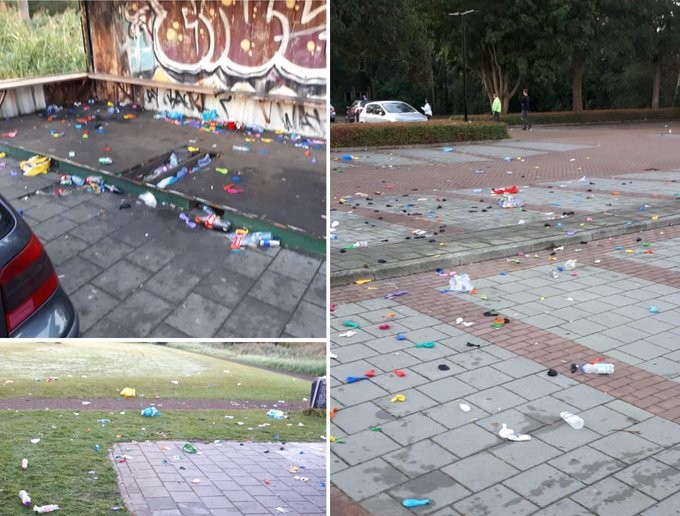
A party of two to three hundred young people took place in Amstelveen on Saturday night. Police ask for citizen help in reporting illegal gatherings.
On Saturday night, police responded to reports of a party in the town hall parking lot in Amstelveen. They arrived to find the scene full of youth, against current corona restrictions.
In a tweet, the police show the mess left behind and say the party was very nice and cosy but forbidden. “The Gemente Amstelveen will have to clean it up again.”
The policed decided to end the party after receiving several reports of nuisance last Saturday. In a special plea to the public, “We ask everyone to report it to us if you know that an illegal party is being organised or taking place.”
No arrests have been made.
What do you think of people gathering in spite of corona restrictions? Will you alert the police if you see it happen? Let us know in the comments, and follow DutchReview on Facebook for more Dutch news.
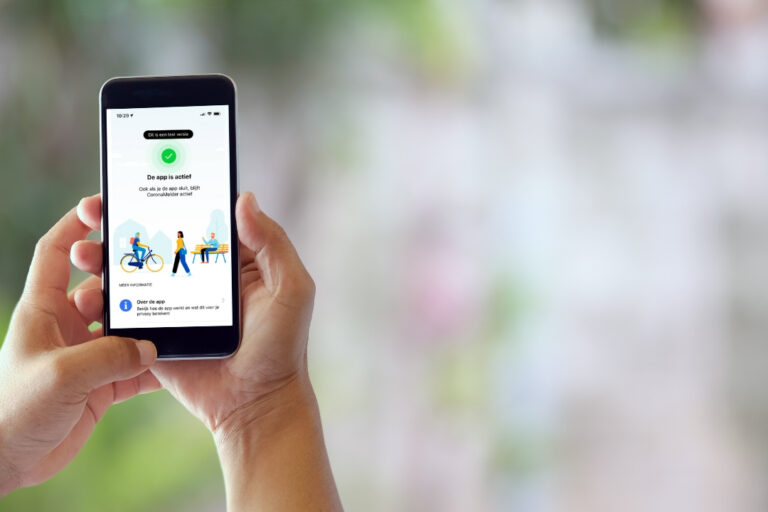
The countrywide launch of the Dutch coronavirus app (CoronaMelder) has been delayed. It was originally due to be available all across the Netherlands from tomorrow.
CoronaMelder has been tested in five regions in the Netherlands over the past few weeks. However, widespread usage of the app has to wait until an emergency law comes into force. The Dutch Data Protection Authority requires there to be a legal basis for the use of the app, which is why the law has to come before the launch of the app.
The emergency law will stipulate that the personal data the app gathers will only be used for source and contact tracing, the Minister for Health Hugo de Jonge says. Furthermore, the law will also note the voluntary aspect of the app: no one will be forced to use it.
The app uses Bluetooth to let the user know if they have been in the vicinity of a person infected with coronavirus (who also needs to be a user of the app for this to work).
It is not yet clear when the app will be available for widespread use.
Will you use the app when it becomes available? Let us know your thoughts in the comments below.
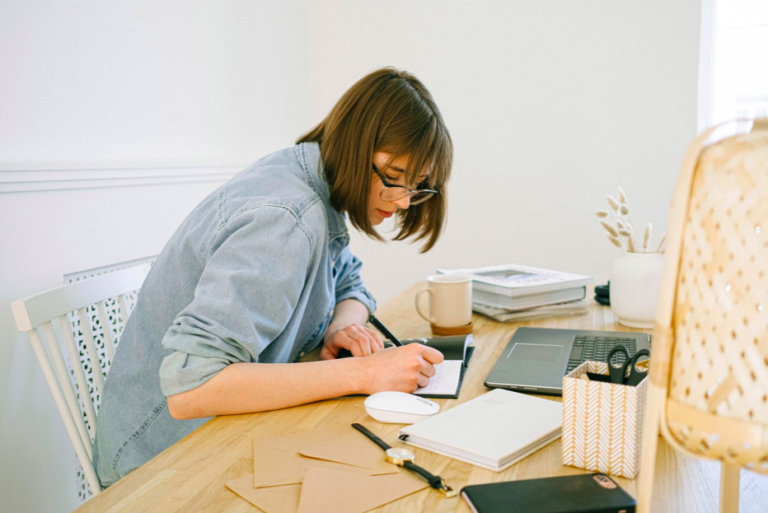
Working from home is likely to continue well beyond this summer, so the trade union FNV is putting together a working-from-home labour agreement to protect employees.
The main agreements FNV is looking to make include the right to be unreachable at weekends and in the evenings, a work-from-home allowance for employees, and the opportunity to sometimes work in the office.
The FNV surveyed 9,400 of its own members, who mostly work for the government, in the financial sector and at call centres. For most employees, working from home has some benefits, but also some disadvantages. 72% of those surveyed said that the lack of travel time was a big advantage for them now that they were working from home, and 39% said they were better able to concentrate at home. However, the lack of social interaction was a problem for the majority of workers (64%). Less exercise was also a disadvantage for 38% of those surveyed.
Because of these mixed results, the NNV advocates for a mix of working from home and working at the office. Almost 75% of the respondents to its survey supported this setup. Furthermore, they ask for a €2 per day compensation when employees have to work from home. This offsets the heating, electricity and coffee costs employees incur when they work from home. Because it is cheaper for employers when their employees work from home, FNV wants to make sure that this saving isn’t partly borne by the employee.
It seems unlikely that this labour agreement will go through without a hitch, based on the initial response from the AWVN employers’ association. Particularly when it comes to the €2 per day compensation, they argue that employees are already compensated for this because they are saving an average of one hour’s commute time every day. Additionally, they say that most employers have continued to provide a travel allowance, even while their employees work from home.
How has your working from home experience been so far? What would you like to change? Let us know in the comments below.
Student associations in the Netherlands have been receiving an unprecedented number of applications this year. So far, 15,200 students have registered, compared to last year’s 10,000.
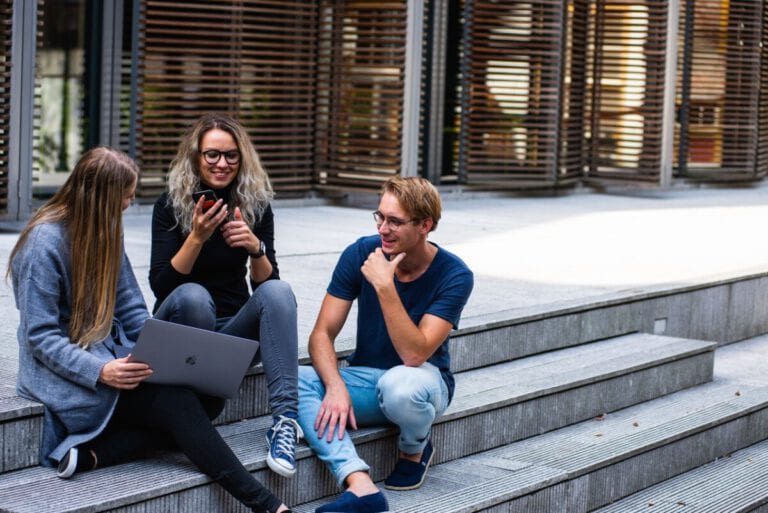
The pandemic is doing nothing to curb student enthusiasm this year. A sharp increase in the number of registrations to student associations was reflected in recent figures from the National Chamber of Association (LKvV), which represents 48 student associations. A representative from the organisation says it’s “because of the need for social contact,” reports NOS.
While the figures are not yet final, in Eindhoven alone the number has increased by 79% compared to last year.
Meanwhile, registrations for the Groningen Student Corps were nearly twice as high this year as last year. There were 900 registrants vying for the 450 places available.
Corona doesn’t deter
Prospective students have not been dissuaded by the coronavirus. The applications keep coming in. Yorick van der Heiden of the LKvV finds that surprising. “Due to the lack of many activities during the introduction weeks, we thought that students would not find their way to the association. Some associations were preparing for the worst: what if only a few students applied?”
Quite the reverse. With the overwhelming number of applications, some associations are even introducing a membership ban for the first time.
Making friends
“Prospective students crave networking, meeting new people.” Van der Heiden explains. “Students are looking for a connection, want to find their place in the city. And now that there are few physical lectures, you hardly meet any people from outside your studies.”
Gideon Franken, chairman of the Eindhoven association a.s.v SSRE suspects the students “need new social contacts after months of intelligent lockdown.”
Are you a student whose university plans have been affected by coronavirus? Tell us about your experience in the comments below!
Don’t hold your breath — the potential late summer weather seems to be skipping the party this week. Temperatures previously expected to go higher into the 20s will apparently be capped at just 20 degrees, at least for now.
Weather calculations performed by Buienrader a few days ago indicated a spike in heat, but new calculations by the weather forecaster show a completely different story. Maximum temperatures this week will wobble between 18 and 20 degrees, with the minimum temperature dropping to 8 degrees on Tuesday.
Rain
Despite the slight chill, it seems things will stay relatively dry in the next couple of days. Tuesday and Wednesday may be overcast but have a very low chance of rain.
But of course, the showers never hold back for too long in the Netherlands, so you can expect a 70% chance of rain on Thursday and Friday. These may at times be fierce so don’t forget your umbrella and raincoat!
So is summer over now?
Philippe Schambergen of Buienradar says higher temperatures may yet be on the cards, reports RTL Nieuws. “It could well be that we will have another late summer later in September. It could also be 25 degrees in October. There is nothing to say about that yet.”
But for now, September is looking cool as a cucumber with some fresh 10 degree nights coming our way.
Hoping for a second summer blast, or is the cooler weather just right for you? Let us know in the comments, and follow DutchReview on Facebook for more weather.
For the past few weeks, the municipalities of Amsterdam and Rotterdam ran an experiment, making face masks mandatory in busy areas. They have now decided to discontinue this trial.
The experiment has been running for almost a month– since August 5– and will continue until next Monday. In Rotterdam the busy areas, where a face mask is mandatory until Monday, are Visserijplein, Afrikaanderplein and Binnenrotte and the indoor shopping centers Zuidplein and Alexandrium. In Amsterdam, the areas are the Red Light District, Kalverstraat, Nieuwendijk and in the markets on Plein ’40 -’45 and Albert Cuypstraat.
The measure only applies to people over the age of 13, and not in places where there were already other coronavirus regulations in place, such as in gyms or cafes. A fine of €95 is the penalty for not wearing the face mask in the required areas.
The experiment will be evaluated by the Netherlands Study Center for Crime and Law Enforcement (NSCR), and the results should be available next month, NU.nl reports. The experiment looked at whether wearing a face mask in busy areas would encourage people to keep to the 1.5m rule more often.
How do you feel about this experiment being over? Let us know in the comments below.
For a limited time only, art has taken over Tilburg. Artists have turned the city upside down with creativity and imagination, bending the rules with playful, unexpected art installations. It’s called Kaapstad, and you’re invited!
Corona can’t stand in the way of this festival. Kaapstad may look a bit different this year but it will still deliver all the artistic excitement you’re seeking with its ‘city hacks.’ Rather than the traditional raucous three-day festival, this one is ongoing for an undetermined period of time, which means you have many more chances to see it yourself!
During Kaapstad, art is in charge of Tilburg. This takeover isn’t a hostile one, but a hi-jacking of any preconceived notions of what the city is, or isn’t. Scattered throughout the streets are surprising art displays that will make you think, wonder, or at the very least, smile. You don’t want to miss it.
What’s in store
This year, there are 12 titillating art installations ready for you to behold. Here’s a sneak peek at a few of the marvels:
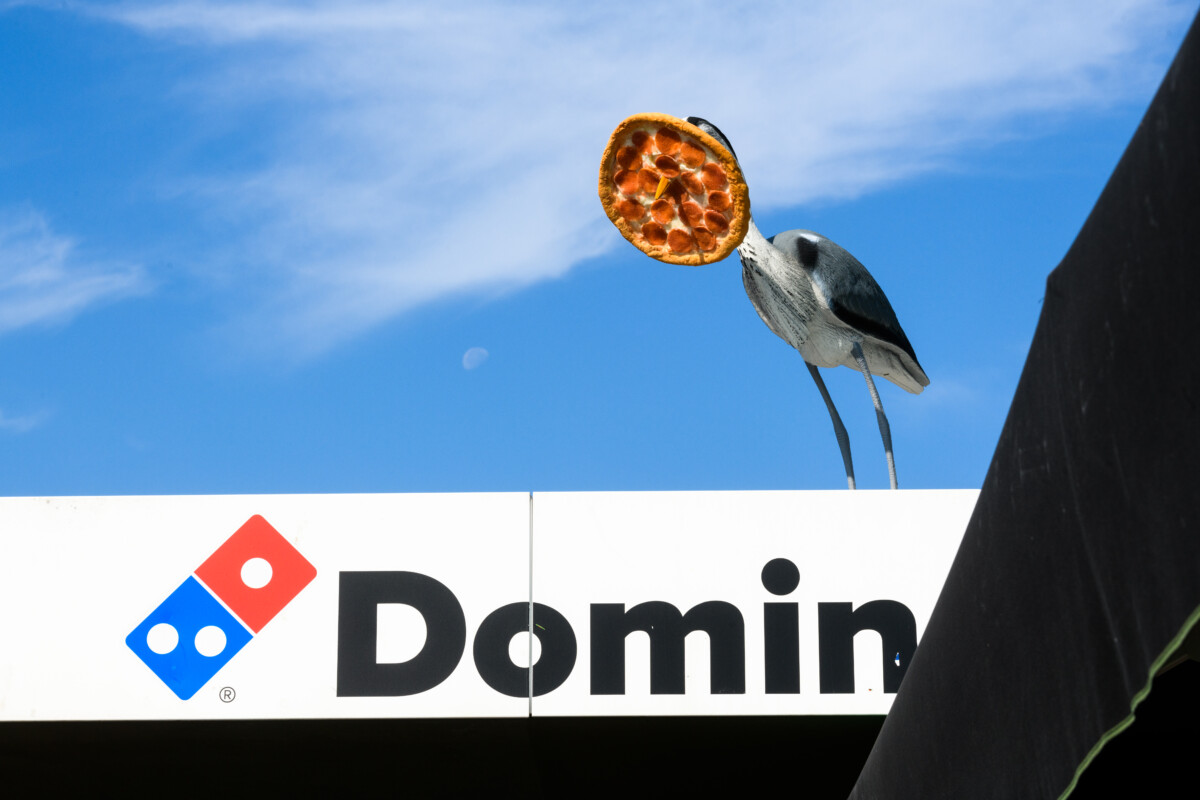
Pizza Heroni
The stoic pizza heron adds a bit of class to an otherwise ordinary Domino’s Pizza building. You might have guessed anchovy, but pepperoni is for the birds.
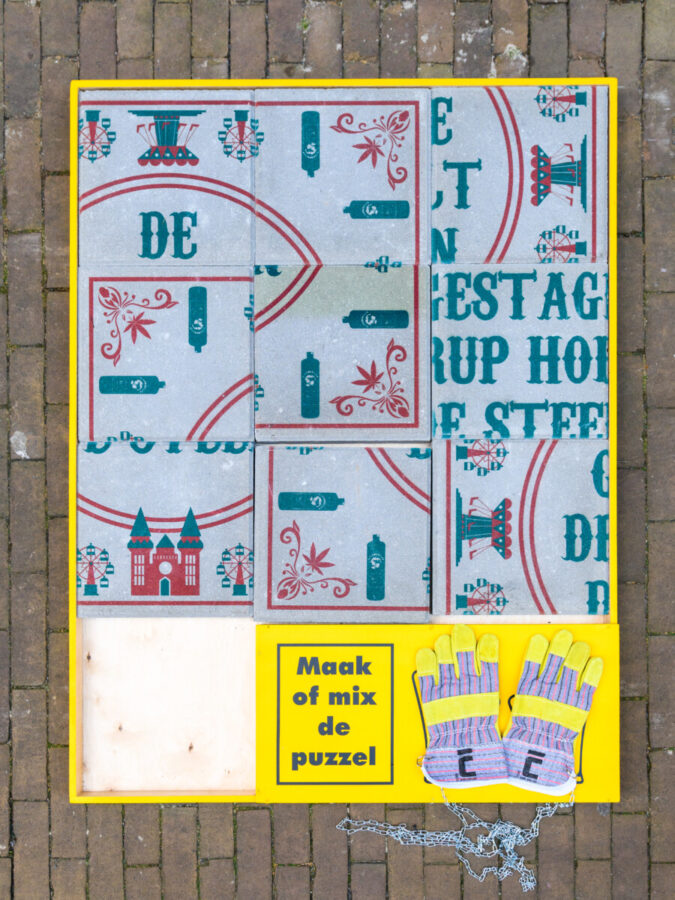
This interactive art piece lets you complete the picture (or attempt to, anyway). Move the tiles to reveal the greatest wisdom any sidewalk has to offer.
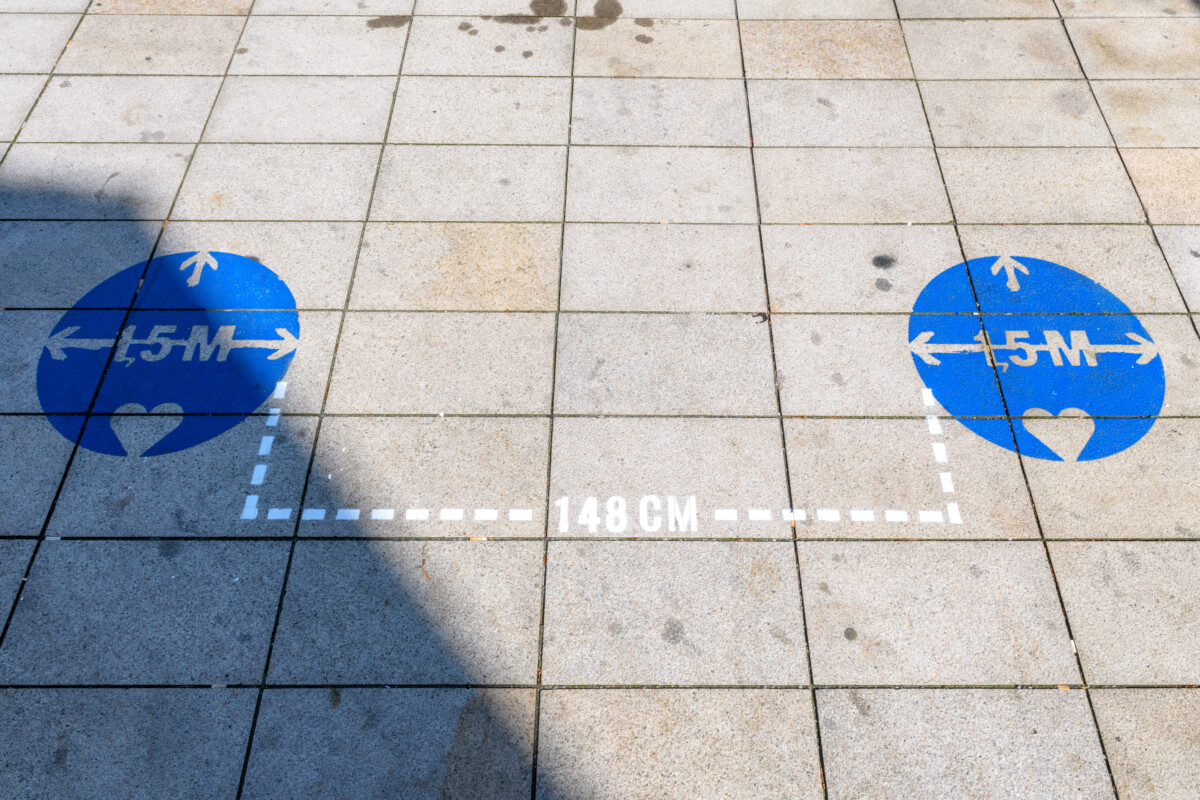
It’s not just 1.5 metres you’ll be measuring anymore. Investigate the various distances objects in the city have to one another. The chalk-painted measurements will have you pondering relationships you’d never considered.
All of the artwork you’ll be seeing is from the talented artists, Boyscout Designer and Frankey. Boyscout Designer’s artwork includes: ‘Relative to,’ ‘Pavement Tile Wisdom,’ ‘Bibber Passage,’ ‘Keep Distance!,’ and ‘Marble Ball Track.’
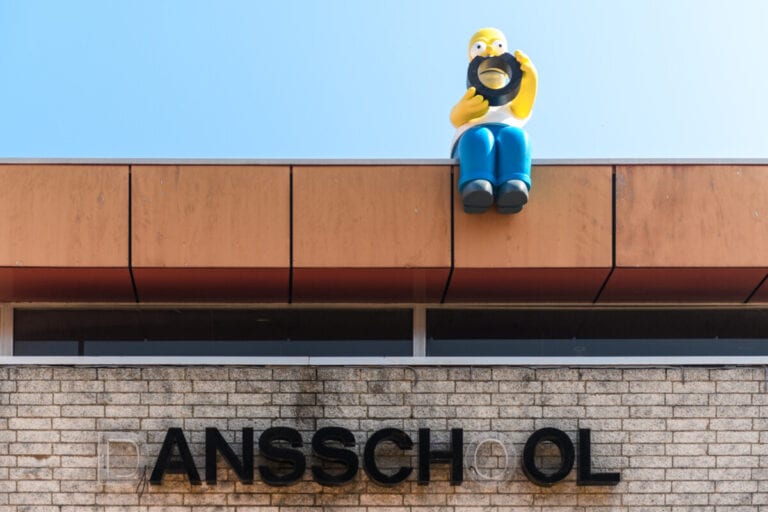
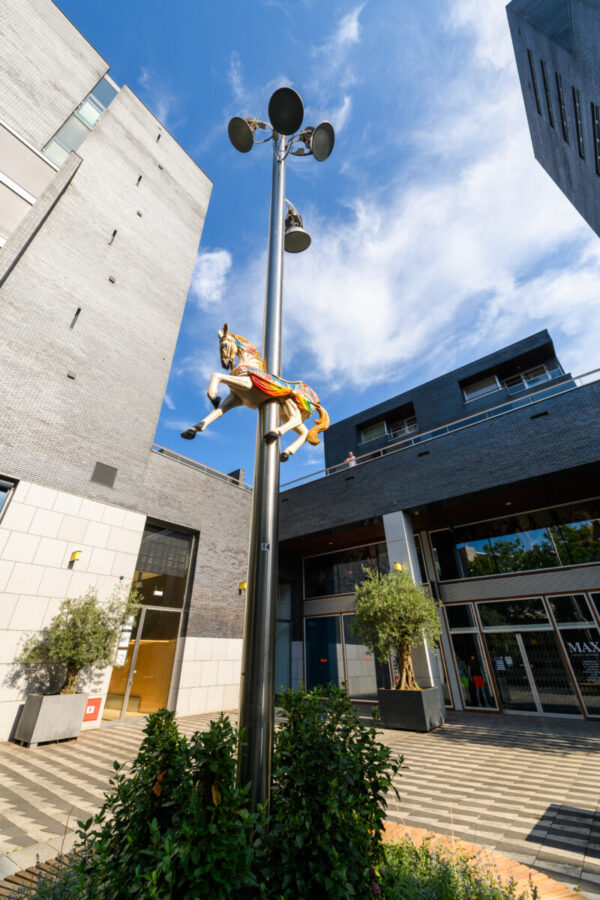
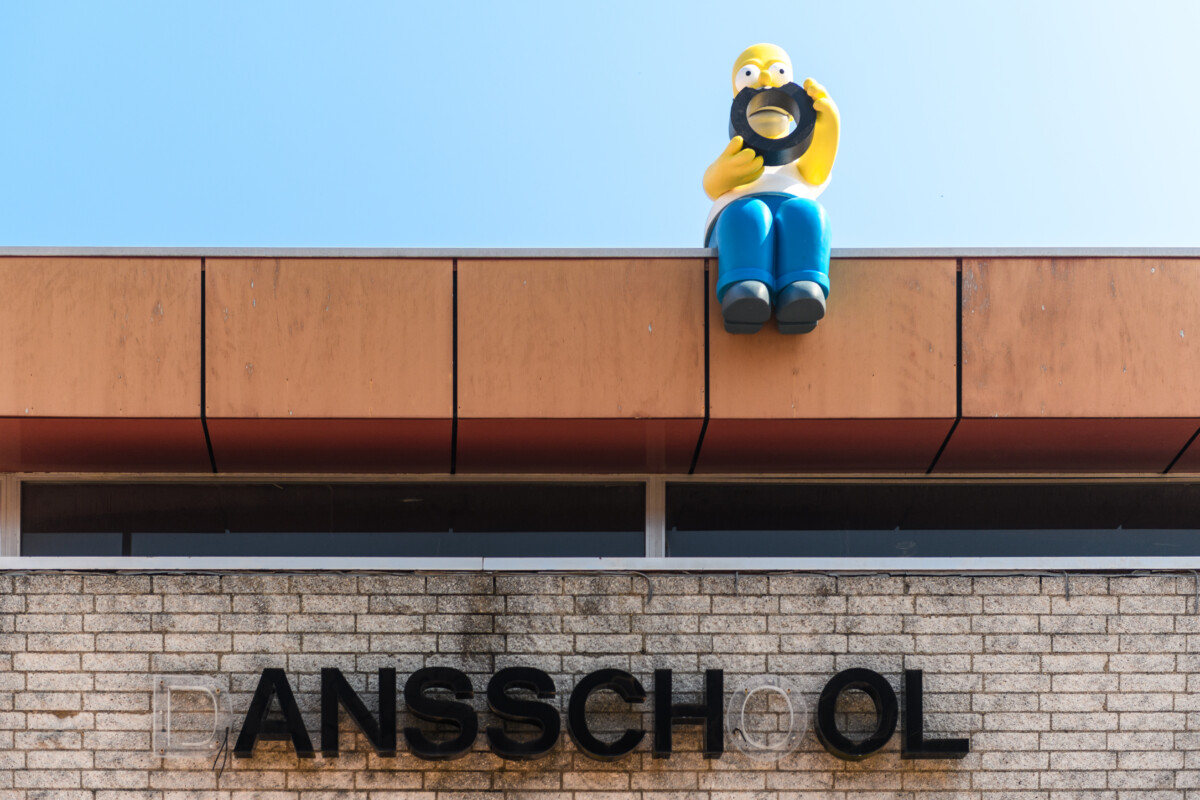
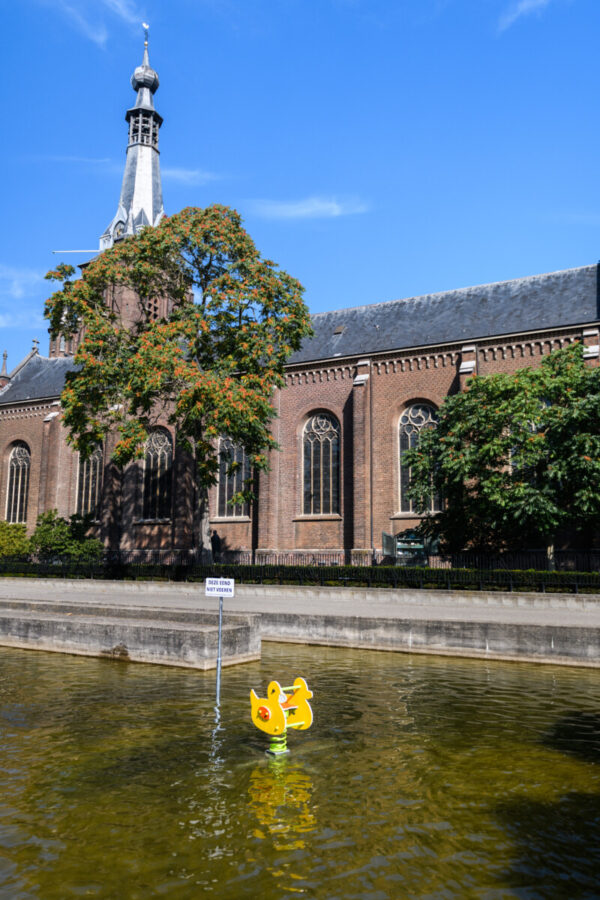
Frankey’s installations include: ‘Merry Go Lamp Post,’ ‘H MER SIMPS N,’ ‘Fountain Duck Ride,’ Pizza Heroni,’ ‘Mondrian Sign,’ ‘Game Over,’ and ‘Dartbox.’
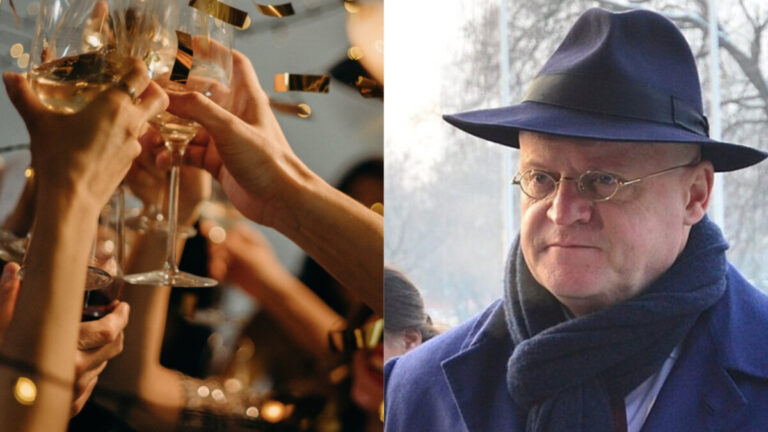
The Minister of Justice and Security, Ferdinand Grapperhaus, has found himself in hot water following the release of footage from his wedding last Saturday.
The Minister has spoken to the press regarding the footage, in which wedding guests are seen violating social distancing rules. The Minister has acknowledged that while he requested that people remain at a distance from one another, the 1.5 meter distance rule was not upheld.
Smile for the cameras
Grapperhaus was married in the town hall of Bloemendaal last Saturday. In his statement to the NOS Grapperhaus has emphasised that due to corona, the wedding was “celebrated in a small setting” and that the reception party had been cancelled.
However, it seems this wasn’t enough. His apology follows the release of images by SBS Shownieuws which show wedding guests huddling together for photos on the town hall steps.
This is the wedding of our minister of Justice #grapperhaus.
The Corona-rules are 6 people max and 6 feet distance. Huge fines for normal people. And only for the normal people. #Netherland. pic.twitter.com/0Z0Z85s0qr
— Rob van der Mand – Comedian in Space (@RobvanderMand) August 27, 2020
State Secretary also in attendance
The footage is especially problematic, given that the State Secretary for Security and Justice, Ankie Broekers-Knol, was also in attendance. She has stated she also regrets that she could not uphold social distancing measures.
Grapperhaus is aware of the irony surrounding the situation “especially because as Minister for Justice and Security I continuously emphasise the importance of compliance.”
Will justice be served?
The footage has caused quite a stir amongst the general public but there is also the question of whether or not both Ministers will be held accountable in the same way that members of the public are. Grapperhaus has said that “if someone has broken a rule once, I have always said that the judge should check what is going on and whether a fine has been correctly imposed.”
Will the Minister himself will be fined? It’s up to the authorities, he says.
Would you want to see Minister Grapperhaus fined? Let us know your thoughts in the comments below.
The Integrated Cancer Centre of the Netherlands (IKNL) has announced that the Netherlands is amongst countries with the highest rates of cancer in the European Union. Experts believe it may have something to do with the country’s early movement towards female emancipation.
The exact cause of the higher cancer rate is not certain, but recent studies suggest it might be related to female emancipation movement and smoking.
Female emancipation and lung cancer
The reason for this thinking is found in the high number of lung cancer sufferers in the Netherlands. The IKNL believes this may be due to the fact that there are more female smokers in the Netherlands.
The reason more women smoke in the Netherlands is believed to be due to the female emancipation movement of the 1970s. It occurred earlier in the Netherlands than it did in other EU countries.
The Netherlands also suffers from high rates of colon cancer, breast cancer and skin cancer. While it is uncertain what causes the higher rate of colon and breast cancer, it is suspected that the cause for high rates of skin cancer is due to the fact that many Dutch people are quite pale.
Coronavirus and cancer
According to figures given by the IKNL, 117,631 people were diagnosed with cancer in 2019. However, the IKNL has reported that fewer diagnoses have been made in 2020. The institution believes this is due to fewer people going to their GPs during the corona pandemic. In May, the institution reported that a quarter fewer cases of cancer had been reported in previous weeks.
Relatively low mortality rates
There are only two other countries in the EU that have comparable rates of cancer, Ireland and Denmark. However, while the Netherlands has one of the highest rates of mortality, the number of mortalities relative to the number of cancer cases is low.
How do you feel about this? Has corona prevented you from going to the doctor? Let us know in the comments below!
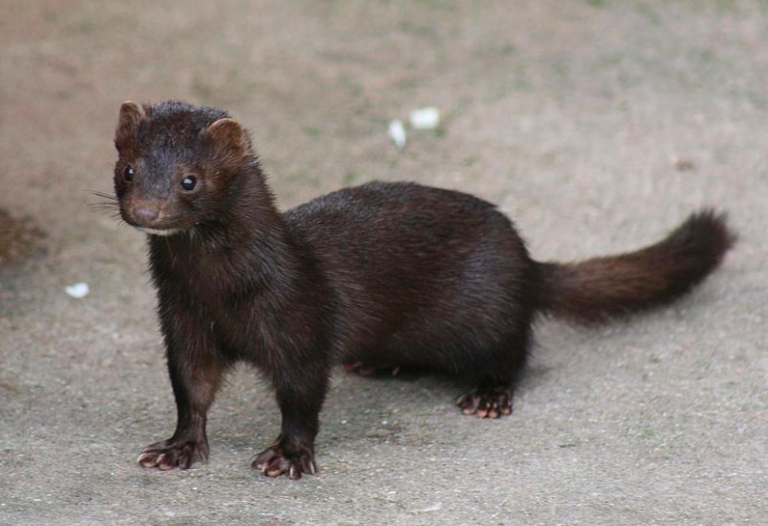
In just seven months, mink farming will be permanently banned in the Netherlands. A law passed in 2013 mandated that farms be shut down by January 2024. This has now been accelerated due to recent coronavirus infections.
Three years ahead of schedule, the government will be putting a stop to mink farming in the Netherlands. The cabinet has set aside 180 million euros for the buy-out, which will affect 120 companies.
The cabinet is concerned that the mink farms could form a long-term reservoir for the coronavirus. Infections on the farms have been ongoing, and they want to eliminate the risk to public health.
November is the ‘fur period’ for mink breeders. During this time, the animals are killed and stripped of their fur. Following this November, breeders will no longer be allowed to replace the animals eliminated during the period.
Tighter compliance measures
More than 40 mink farms have seen coronavirus infections. To prevent the virus from spreading further, Minister of Agriculture Carola Schouten will be tightening up corona measures.
Minister Schouten will be opening up an investigation into compliance with the rules. A stricter hygiene protocol has already been put into place, and more details will be announced later today.
Banned on ethical grounds
The mink ban was based on ethical grounds in a 2012 Dutch senate vote. Mink breeders were given a 12 year transition period, set to expire January 1, 2024.
Environmental and animal welfare agencies have long criticised the mink industry. Fur farm animals are often raised in conditions viewed as inhumane, with animals kept in small, overcrowded cages.
The Netherlands is the world’s fourth-largest mink producing country, with annual revenue of over 100 million euros. The largest buyer of Dutch mink pelts is Denmark.