Home Blog Page 653

4 tips to make your social media profiles pop

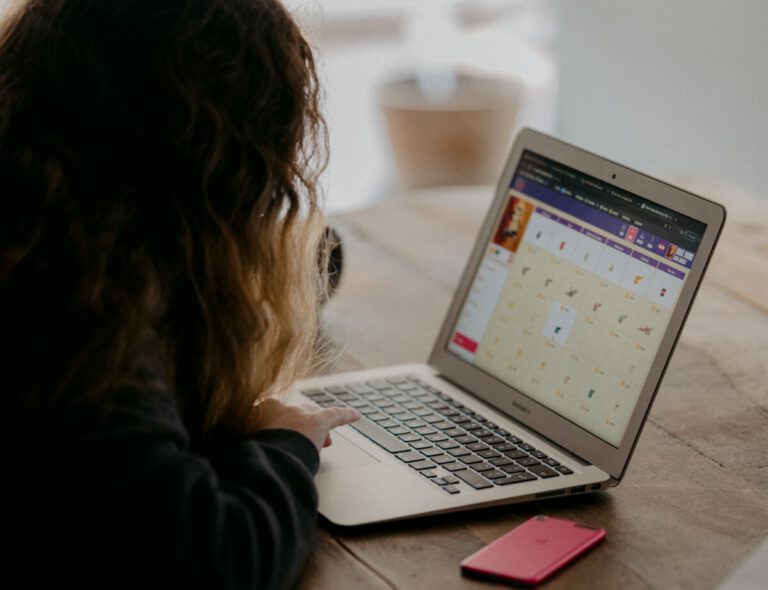
Dutch people love social media — in fact, 42% of the Dutch population admit to checking it every morning. And perhaps in these indoor times you want to polish up your profiles.

But social media can be a little befuddling at times. Each social network operates their own mystery algorithms, which change constantly. The world of influencers moves quickly, and new networks frequently pop up — and fall down. 

It’s also almost completely unavoidable — we take our news from social media, communicate with those we love, and use it to make our own buying and business choices.

Whether you’re using social media to max out your business profile, or want to brand your personal profiles, we’ve got 4 easy tips to make your social media profiles pop. 

Make a strategy — and make it airtight

A strange aspect of social media is that it’s virtually open to everyone. If you have a device that can run it, you can start creating and posting content. But you don’t want to do this willy-nilly — successful social media users rely on crafting a unique strategy to guide their movement. 

What is a social media strategy? It’s any kind of plan of how you’ll attack social media. A good strategy will consider how often you post, what kind of content you’ll create, with what kind of tools you do it (we like Crello) and what audience you are targeting. 

Create entertaining, original and good-looking content

But, the best social media strategy won’t get you anywhere unless you have some amazing content to go with it. People stare at their phones with their eyes, so you want your content to stand out. But just how important is the visual? 

To put it lightly, visual content is 40 times more likely to be re-shared on social media than other types. Plus, Facebook posts with images get 230% more engagement. That’s a lot of payoff for just including a visual aspect.

But we’re not all amazing graphic designers — and we don’t have to be. There’s some amazing tools out there full of incredible social media templates so you can look like a pro. I like to use Crello — they have a free plan with over 10,000 templates that have given our social media profiles a boost. It’s now also our go-to presentation maker.

Plan your schedule and stick to it

A schedule is absolutely vital to succeed at social media. It doesn’t have to be strict — something as simple as “I will post three times a week, on Monday, Wednesday, and Saturday” could be your schedule. But, have an idea of how often you want to post, and when you will do it.

The “when you will do it” is a big deal: the times you choose to post is directly correlated with how successful your post will be. Facebook and Instagram both have handy statistics on when your audience is online, so you can get the most interaction and engagement on your posts. 

Make your brand’s voice truthful

More and more, social media users are wanting honest voices in the content they consume. The days of heavily filtered photos and inauthentic speeches are over: more and more, brands are choosing genuity over glamour. 

In fact, a study found that 9 out of 10 users wanted to read honest voices. That’s a lot! Speak from the heart — and your reader’s might just listen 😉

Being a King or Queen of social media sure isn’t easy — but by following these tips you can build your audience and increase your brand’s visibility. 

What’s your top tip to boost your social media profile? Tell us in the comments below!

Image: Annie Spratt/Unsplash
Coronavirus update: RIVM confirms up to 971 more deaths than usual in last week of April

0

The RIVM has released its daily count. 35 people have been hospitalised since yesterday, bringing the total to 10,592. We’ve also had 319 more positive tests, bringing the number of confirmed infected people in the Netherlands to 42,093.

Furthermore, there have been 71 confirmed deaths in the Netherlands, bringing the total to 5,359. As we’ve seen this week, the number of deaths each day is remaining quite low: but there’s more to the story than that, says the RIVM. More deaths than usual are taking place each week, which may be connected to coronavirus.

RIVM confirms extra deaths between 23 and 29 April

There were more deaths than expected in the week between 23 and 29 April, based on averages from previous years. A total of 3,580 deaths were reported over this timeframe in 2020. Normally we expect between 2,609 and 2,913 deaths at this time of year.

This year’s number is between 667 and 971 more deaths than we would expect. This is approximately 1.5 times the reported mortality of laboratory-confirmed COVID-19 patients in the same week (533), the RIVM says. That means that there are likely a significant number of coronavirus deaths going unreported each week.

No more combined travel deals and bicycles on trains

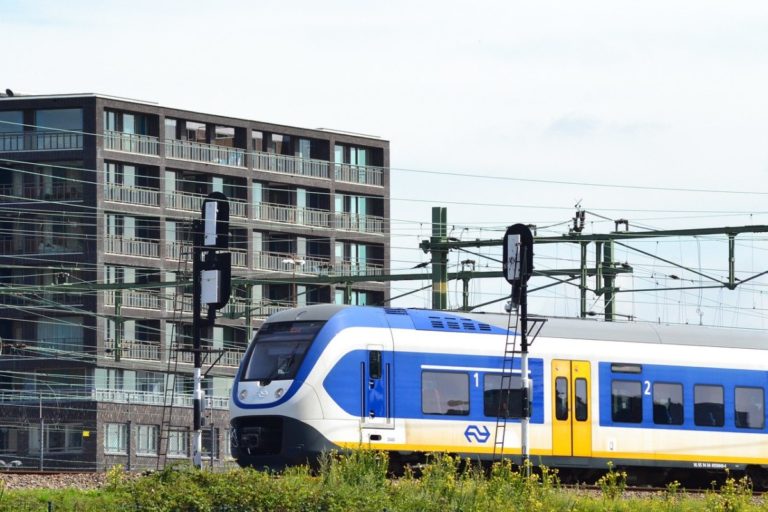
In an effort to curb unnecessary travel by train, the NS has decided to implement some new measures. Starting from next Tuesday, people will no longer be allowed to bring bicycles on trains or purchase the Fietskaart Dal (which permits you to bring the bikes on trains). Furthermore, group discounts will be cancelled to prevent large groups from travelling together.

The reason for this new policy is to ensure that people keep train travel for when it’s only strictly necessary. These are all temporary measures which will be ended once the coronavirus crisis passes.

Big events will only be permitted once a coronavirus vaccine is developed

Yesterday, the Dutch cabinet announced the latest coronavirus measures. Although rules are set to relax starting May 11, large-scale public events will not be permitted until a vaccine exists.

Although the cabinet still has to make a decision about the status of major events and whether or not they can be organised after September 1, it was revealed for instance, that football matches will take place after that date, but without an audience.

As of now, much uncertainty is still in the air, and the exact way in which large-scale events will be permitted is still unclear, but hopefully more will be revealed in the weeks to come.

Health Minister’s plan for 1700 ICU beds is just not possible, experts say

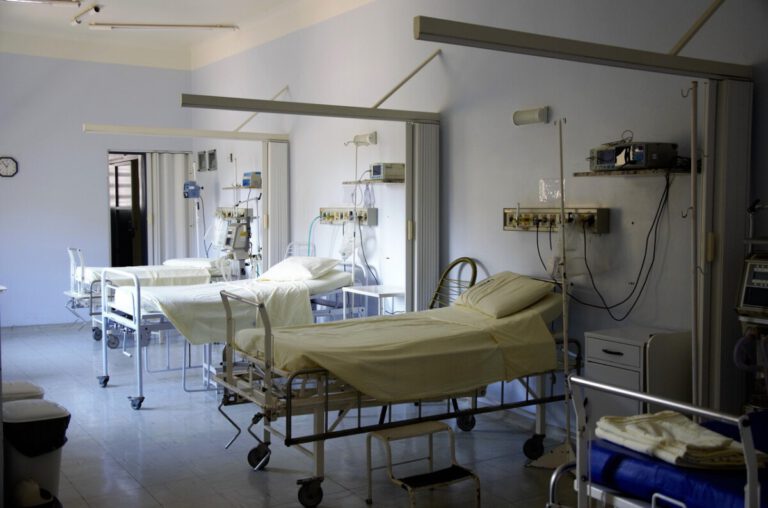
At the press conference on Wednesday, Minister de Jonge mentioned 1700 as the number of ICU beds he wanted available, as a condition for relaxing the lockdown. But according to experts, that’s not going to be possible.

During the coronavirus crisis, the Netherlands was able to make the massive leap from its usual 1150 intensive care unit beds to 2200. However, the latter number is not sustainable- it was the result of an emergency situation. Now, however, these extra staff need to go back to their old departments, because treatment for non-coronavirus patients cannot be delayed any longer.

Rutte warns that opening terraces on June 1 is not certain

Throughout the next couple of months, the Netherlands will slowly ease some of the current coronavirus measures in place.

One of the possible measures to be lifted that people are certainly excited about is the opening of terraces on June 1. Nevertheless, Prime-Minister Mark Rutte warns that it is not fully certain that the terraces will open. 

The Outbreak Management Team (OMT) will advise one week before June 1 if it is safe to reopen the terraces. If the situation is well, June 1 will be the date when terraces open, under strict circumstances.

Will coronavirus change Amsterdam’s tourism policies?

In recent years, Amsterdam has been overrun by tourists, and local residents have been feeling overwhelmed. But now, of course, tourists physically cannot come to Amsterdam, which begs the question: do the locals want them to come back when travel is possible again?

The answer, it seems, is quite a resounding “no”: at least, they don’t want the same volume and type of tourism they were experiencing before.

Now, residents fear that these measures might be lifted to help Amsterdam get its economy back on track after the crisis.

For more news, follow DutchReview on Facebook. For all things coronavirus related in the Netherlands, check out our guide which covers everything you need to know. 

Feature Image: Gustavo Fring/Pexels

Will coronavirus change Amsterdam’s tourism policies?

In recent years, Amsterdam has been overrun by tourists, and local residents have been feeling overwhelmed. Will coronavirus change how Amsterdam markets itself to tourists?

We’ve written before about Amsterdam’s tourism crisis. Overtourism has been a major problem for the Dutch capital city over the last ten or so years. In 2019, it was the 25th most visited city world-wide.  Drunk or otherwise inebriated tourists have been a particular problem: from urinating on people’s canal boats to boorish behaviour in the red light district, they have well and truly made a nuisance of themselves.

What are the problems tourists cause in Amsterdam?

They have also caused more structural issues such as the degradation of nature near popular tourist sites such as the Zaanse Schans, and the massive increase in housing prices for locals as more and more houses are put on AirBnB for tourists. There are also areas where regular stores for locals have disappeared, to be replaced with souvenir shops and nutella waffle providers.

Do Amsterdam locals want tourists to return?

But now, of course, tourists physically cannot come to Amsterdam, which begs the question: do the locals want them to come back when travel is possible again?

The answer, it seems, is quite a resounding “no”: at least, they don’t want the same volume and type of tourism they were experiencing before, the Washington Post reports. Having no tourists means that locals can reclaim the city streets, sitting outside their houses and actually getting to know their neighbours, now that they aren’t indistinguishable in a crowd.

Amsterdam has been working on limiting tourism

Before the crisis, efforts were being made to rein in the level of tourism the region was experiencing: more marketing of the Netherlands in general to tourists, restrictions on where AirBnB could operate, and a ban on stores that only served tourists. The IAmsterdam letters were removed.

But it may need to reverse this to save the economy

Now, residents fear that these measures might be lifted to help Amsterdam get its economy back on track after the crisis. After all, back in the 1970s and 80s, the last time Amsterdam wasn’t flooded with tourists, the city was in dire financial trouble. Residents were leaving to the suburbs, so the government had to search for a new source of income: and that was tourism.

It remains to be seen if Amsterdam will once again decide to loosen the reins on tourism, or if it will stick to its guns on making the city liveable for locals in the long term.

What is your opinion on tourism in Amsterdam? Should it be reduced, or do we need it for the economy? Let us know in the comments below.

Feature Image: Ralf Gervink/Pixabay

Rutte warns that opening terraces on June 1 is not certain

0

Throughout the next couple of months, the Netherlands will slowly ease some of the current coronavirus measures in place.

One of the possible measures to be lifted that people are certainly excited is the opening of terraces on June 1. Nevertheless, Prime-Minister Mark Rutte warns that it is not fully certain that the terraces will open, reports NOS.

Transition phase

Rutte states that we are currently undergoing a transition phase. The Outbreak Management Team (OMT) will advise one week before June 1 if it is safe to reopen the terraces. They give this advice based on the number of new cases and the number of hospitalisations in intensive care units.

If the situation is well, June 1 will be the date when terraces open, under strict circumstances. Mark Rutte insists that based on current trends, it should be possible to open them. However, if the number of cases spikes again, they’ll decide against opening terraces.

Rutte is optimistic about the relaxing of measures

Rutte also considers that the relaxations that will take place next Monday will not impact the number of cases in any way. In that sense, he does not see it as a real relaxation, stating that “we will continue with what we were doing” in regards to social distancing. He urges people to avoid public transport unless absolutely necessary.

Follow DutchReview on Facebook for the latest coronavirus news in the Netherlands.

Feature Image: Sebastiaan ter Burg/Flickr 

Can’t decide between hot and cold? This weekend’s weather forecast has both

If you can’t decide whether you prefer your weather hot or cold, you’re in luck. This weekend is forecasted to be warm on Saturday, then cooler this Sunday, particularly in evening. 

This Saturday, temperatures will rise to 20-23 degrees in the north and west of the country, roughly 24 degrees in the middle and east, and 25-26 (woah!) degrees in the south and southeast, according to Weeronline.

So if you’re looking for the perfect opportunity to bring out those summer dresses from hibernation or throw on some shorts, Saturday is your day.

Winter is coming

But don’t box way the winter gear just yet — on Sunday, a strong wind blowing from the north will cause the temperature to dip by nearly 10 degrees in some parts. Now that’s quite the temperature shock.

The temperature will vary from 14 degrees in the north to 21 degrees in the south. And these are only the maximums, which will likely peak in the morning, then grow colder as the day continues.

By nighttime, it is predicted that temperatures in the north will reach 3-4 degrees.

On Sunday, accompanied by cooler temperatures are clouds, some rain and gusts of wind. But fear not, by next week Wednesday, the ascent to summer will be back on track.

How will you spend your hot Saturday and cold Sunday this weekend? Let us know in the comments. 

Feature Image: Skitterphoto/Pixabay

Health Minister’s plan for 1700 ICU beds is just not possible, experts say

0

At the press conference on Wednesday, Minister de Jonge mentioned 1700 as the number of ICU beds he wanted available, as a condition for relaxing the lockdown. But according to experts, that’s not going to be possible, RTL Nieuws reports.

During the coronavirus crisis, the Netherlands was able to make the massive leap from its usual 1150 intensive care unit beds to 2200. However, the latter number is not sustainable- it was the result of an emergency situation.

ICU nurses put in charge of double their usual number of patients

Nurses, surgical assistants and anaesthesiologists had to be drafted in from other departments to reach that number over the past weeks. Nurses were put in charge of 3-4 patients, when they would usually only be caring for two.

Extra ICU staff need to go back to original departments

Now, however, these extra staff need to go back to their old departments, because treatment for non-coronavirus patients cannot be delayed any longer. That means that the ICUs are back to their original staff number, which is 3800. If there are to be 1700 ICU beds, there need to be at least 1650 extra ICU nurses added.

Training an ICU nurse takes at least 18 months

This is not a simple matter: an ICU nurse is usually trained for 18 months on top of their usual nursing qualification. Accordingly, the Netherlands could not provide extra ICU nurses in under a year and a half.

You can follow DutchReview on Facebook for more updates about coronavirus in the Netherlands. 

Feature Image: Pixabay/Pexels

Big events will only be permitted once a coronavirus vaccine is developed

0

Yesterday, the Dutch cabinet announced the latest coronavirus measures. Although rules are set to relax starting May 11, large-scale public events will not be permitted until a vaccine exists.

Although the cabinet still has to make a decision about the status of major events and whether or not they can be organised after September 1, it was revealed for instance, that football matches will take place after that date, but without an audience, NOS reports.

Uncertainty still looms

In a letter by the cabinet, Minister of Health, Welfare and Sport Hugo de Jonge states that it is still unclear when large-scale events with an audience will be permitted once more.

Furthermore, the minister said that although the hope is that a vaccine will be developed soon, in reality it could take a year at the least.

As of now, much uncertainty is still in the air, and the exact way in which large-scale events will be permitted is still unclear, but hopefully more will be revealed in the weeks to come.

For the most recent news on coronavirus, be sure to follow DutchReview on Facebook.  

Feature image: congerdesign/Pixabay

No more combined travel deals and bicycles on trains

0

In an effort to curb unnecessary travel by train, the NS has decided to implement some new measures.

Starting from next Tuesday, people will no longer be allowed to bring bicycles on trains, reports RTL Nieuws.

Trains are not for social outings

The reason for this new policy is to ensure that people keep train travel for when it’s only strictly necessary.

Besides not allowing bicycles anymore, the Fietskaart Dal (for bringing bikes on trains) cannot be purchased either. However, people who have adapted bikes (for example, people with physical disabilities) will still be allowed to bring them on the train.

Also cancelled are the group discounts, as a way of preventing large groups of people from getting on the trains.

These are all temporary measures which will be ended once the coronavirus crisis passes.

 Overcrowded train stopped in Weesp

This morning, an overcrowded train heading to Amsterdam Centraal was stopped in Weesp, reports AT5. It was stopped because there were so many people it was impossible to respect the social distancing measures.

Police had to intervene as some passengers refused to get off the train. It eventually departed at 8:00 AM, but not before causing delays with other trains, as one would typically expect.

Follow DutchReview on Facebook for the latest coronavirus news in the Netherlands.

Feature Image: Natydphoto/Pixabay

Coronavirus update: 455 new infections as the Netherlands prepares to relax measures

0

As the Netherlands prepares to start-up businesses after two months of intelligent lockdown, 455 new cases of coronavirus have been reported in the last 24-hours. That bring the Dutch grand total to 41,774 cases. 

Meanwhile, a further 39 people have landed in the hospital, and sadly 84 new deaths have been reported. Today marks 5,288 confirmed deaths as a result of coronavirus.

While today’s numbers are slightly higher than yesterday, RIVM says social distancing measures continue to have the desired effect.

Face masks to be mandatory on trains

From June 1, public transport will return to its normal schedule. However, there are conditions, such as a new requirement to wear a non-medical mask. Furthermore, only 40% of seats will be available.

Transport companies have insisted upon this measure is that it is close to impossible to keep 1.5 meters of distance in buses and trains.

Hairdressers and non-contact sports will be allowed again on May 11

In the coming weeks, hairdressers will begin to open (starting May 11), as well as nail studios. Like other contact professions, these two will only be permitted if there is an appointment in place.

Furthermore, non-contact sports such as tennis and golf will be permitted once more, though any matches or tournaments are still out of question.

Lastly (as was previously announced), primary schools are expected to open on Monday, while secondary schools will open their doors on June 2. Terraces may also open around then, with a maximum of 10 people permitted.

Coronavirus tests for all from 1 June — is that actually possible?

At last night’s press conference, Health Minister de Jonge said that the government was aiming to be able to test anyone with coronavirus symptoms from 1 June onwards. That sounds good, but is it actually possible?

In order for normal life to resume, there needs to be aa vaccine. But living with coronavirus in the meantime necessitates a much higher testing capacity than the Netherlands has had until this point. If everyone with coronavirus symptoms would be tested, that would require 30,000 tests per day.

7 million Dutchies are already planning a holiday

New data from NBTC-NIPO Research shows that 7.2 million Dutch people say they will still go on holiday this year. Last year, before the world ground to a halt, 11.9 million Dutch people were planning a trip. 

But, not everyone is packing their bags. The corona crisis has not only caused travel restrictions and flight cancellations but a lot of uncertainty. “In many cases, there is a desire to let the holiday continue at a later time,” says Politiek. 

What do the experts have to say about the easing of the intelligent lockdown?

The Dutch government announced a gradual relaxation of the coronavirus distancing measures last night. As the Netherlands whirrs and hums its way to a new start, experts are relatively positive about the easing of lockdown measures. Find out more about their thoughts. 

How the Netherlands is relaxing coronavirus rules: a step-by-step plan

In yesterday’s press conference, Minister de Jonge announced we would not be rid of coronavirus until a vaccine was made available, so we have to work on living with the virus for the moment. It is crucial that everyone sticks to the rules.

May 11, May 18, June 1, June 15, July 1 and September 1 are all important dates to keep in mind, gradually seeing the easing of measures. Find out more here. 

Feature Image: DutchReview/Canva

What do the experts have to say about the easing of the intelligent lockdown? 

The Dutch government announced a gradual relaxation of the coronavirus distancing measures last night. As the Netherlands whirrs and hums its way to a new start, here’s what the experts think about the reopening. 

Like other countries, the Netherlands has been virtually closed for almost two months. Businesses shut their doors, restaurants were reduced to take-away only, and people huddled inside and waited for it all to blow over. Except, they couldn’t — keeping the country closed until a vaccine or treatment for coronavirus is discovered is impossible economically, socially, and politically. 

With the Dutch government planning to increase ICU beds to at least 1700, they know the trade-off they are taking between people’s health and returning to a more ‘normal’ life. Patricia Bruijning, epidemiologist at the UMC Utrecht, thinks that it’s time to relax the measures. 

“The healthcare system can handle it. And there is some room for manoeuvre if the number of infections does increase,” she told NOS. “Moreover, I do not expect the number of infections to decrease further if we waited longer, partly because people then choose to relax more measures themselves.”

“We know that the virus mainly spreads through prolonged, intensive contact in indoor areas. We now go outside more, ventilate more, and are in each other’s space less. This makes the virus less likely to spread.”

Measures will be lifted either officially, or unofficially

Marc Bonten, medical microbiologist and member of the OMT, think it’s a sensible move to continue lifting measures — provided hospital admissions plateau or decrease. “I think a lot has already been relaxed by people’s behaviour,” he explained.  

“The cost is huge and it was not sustainable from a human point of view,” Coretta van Leer, medical microbiologist and virologist at the UMCG said. “The current policy could not be sustained.” She says that the new measures are still cautious and can keep the virus as contained as humanly possible. 

However, Hans Heesterbeek, professor of theoretical epidemiology at Utrecht University, says some of the measures could be improved. While hairdressers are set to reopen, mouth masks will not be mandatory and clients will instead just be questioned about their health. 

“I think mouth masks offer better protection than asking people if they are sick. Suppose I go to the hairdresser without complaints now, but I will get sick tomorrow. Then I would probably be contagious.” But, he agrees that opening the terraces is a fair and relatively safe move. 

Increased Testing

The Dutch approach to testing sick people has been widely criticised by residents. Until the government’s announcement last night, only those with a temperature higher than 39 degrees and breathing difficulty could even call their doctor to ask for a test. 

Now, testing will be gradually increased to contact professions before everyone should be able to be tested from June 1. Why is it a ‘should’? Because OMT member Marc Bonten is concerned that health centres are not yet prepared for it — and that’s not the only issue. “The better we test, the more we can relax,” explains Heesterbeek. “But testing also includes tracing.” 

Criteria to put measures back in place required

But how to open isn’t the only concern — we also need to be clear on how and when measures will be put back in place if needed. “When do we think things are going wrong? When do we intervene again?” asks Heesterbeek. Currently, a region will go back into lockdown if it has more than 50 infections per 100,000 inhabitants every week. Heesterbeek also suggests that instead of looking toward hospital admissions, we need to look for a new indicator. 

Eradication no longer an option

Despite Minister Hugo de Jonge speaking yesterday about “putting out fires” in infection hotspots, Bonten doesn’t think the Dutch policy is moving towards eradicating the virus. “If we want the virus to disappear, we have to apply the handbrake further, not release it.”

Heesterbeek agrees and says that some measures must stay in place until a vaccine is discovered. “Testing is never going to detect all infections.”

What do you think about the latest Dutch coronavirus measures? Tell us your thoughts in the comments below!

Feature Image: DutchReview/Canva