The works on the train lines between The Hague and Schiphol Airport, running through Leiden, will soon have work started on them next week. This means, of course, complications will arise for commuters.
The NS is trying to handle the works better this time around compared to last year, and the timetables will be better adjusted, information leaflets will be given, and there will be intervention teams specifically for the train delays and to inform commuters.
Work to commence next week
The works will take between 8-14 of February for Leiden Centraal, and they will also happen from Den Haag Centraal between 22nd of February all the way up to the first of March. What this means is that there will be less trains, delays, and in some cases, no trains at all, so plan accordingly by checking the NS website.
This is not the first time that NS has worked on these lines and disrupted the schedule of commuters, as this happened last year as well. Back then the NS did not handle it that well, and they have finally decided to apologize. One year late, but better than never. Back in last year they also tried to fix their errors by bribing commuters with coffee. Using black coffee to overcome the bitterness is arguably debatable.
Works will start also between Breda and Rotterdam in the weekend
The bad news, unfortunately, does not stop here. Commuters between Breda and Rotterdam will also have to adapt for the coming weekend. There is a problem with one of the terminals in Willemsspoort tunnel, which is one of the major junctions in Rotterdam, all trains going southwards must pass through it. The Intercity between Breda and Rotterdam will not run, and there will be fewer sprinters between Dordrecht and Rotterdam. On a more upbeat tone, this problem should be resolved by Monday morning.
Here’s to hoping your commute does not get affected (too much). Let us know about your experiences with commuting down below in the comments.
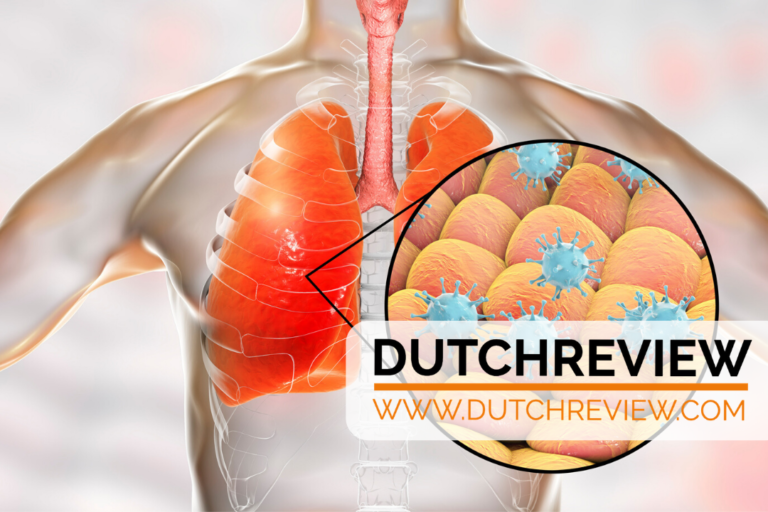
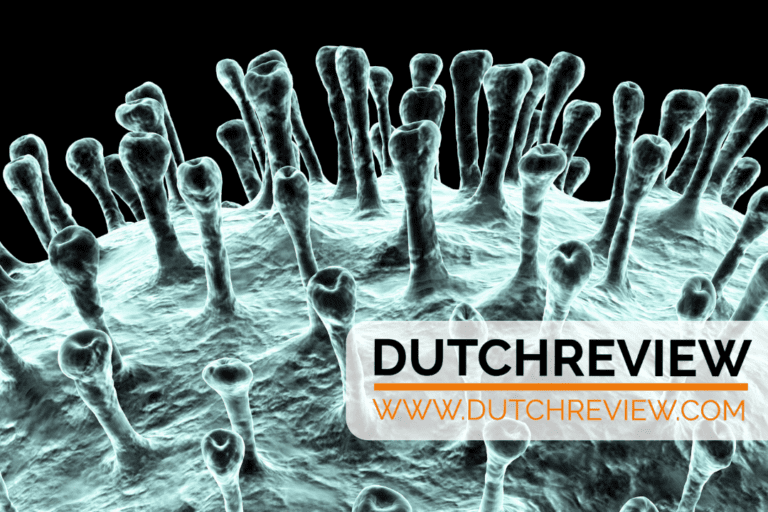
The Coronavirus has caused a disruption of travel to and from China, as the city of Wuhan, the origin place of the epidemic, finds itself under quarantine. Ministries of foreign affairs of European countries have been attempting to find ways to get their co-nationals back home from Wuhan.
The Dutch citizens, who last week were still caught up in Wuhan, have finally arrived home in the Netherlands last night.
Long road
The 15 Dutch did not come back alone to Europe, being accompanied by a diverse group of Danes, Czechs, Swedes, Poles, Belgians and French. The group first had to meet at the French Consulate in Wuhan on Saturday, afterwards being taken by bus to the airport and flown to Belgium.
Note: There are 15 Dutch nationals plus two Chinese spouses, which is strange considering that the Chinese policy thus far has been not to allow Chinese people to leave the country.
Once arrived in Belgium, the Dutchies travelled to Eindhoven by bus, and are now currently in Huis ter Heide, in a situation of quarantine.
Not all the Dutch present in Wuhan accepted the offer to be evacuated by plane, and out of the 20 Dutch nationals registered there, 5 have decided to stay. At least 2 of them, a Dutch man and his son, decided to stay as the man’s spouse is Chinese, and she is not allowed to leave the country, reports NOS.
Any sick reported among the Dutchies?
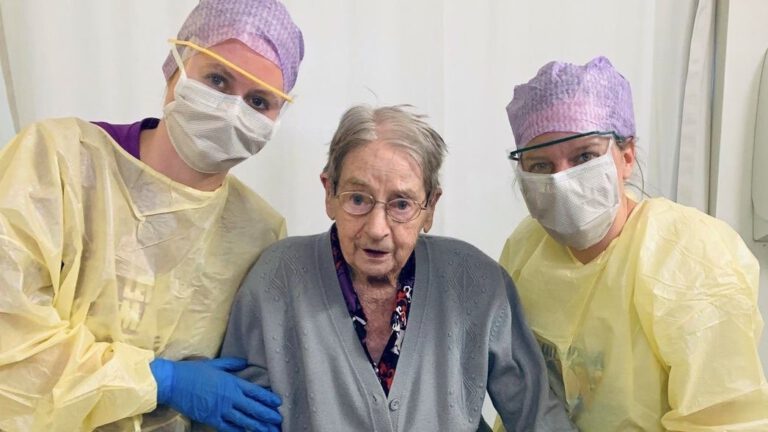
As of now, none of the 15 Dutch nationals have shown any symptoms of the Coronavirus. It has been decided by the Ministry of Health that the Dutch who arrive from China need to go through a two-week quarantine period.
The circumstances of their quarantine are not yet known, but there might be the option for them to be able to stay at home during the quarantine, or otherwise in a centrally planned location.
Thankfully, it’s been decided to reimburse the Dutch nationals for the travel costs, as well as for the costs of the quarantine, with the share being paid by the European Union and the Netherlands.
Is the Coronavirus a reason of concern for you? Let us know in the comments.
Get out of Amsterdam! (and see the rest of the Netherlands!) So you’ve moved to the Netherlands, drawn to its endless canals, crooked buildings and vibrant culture. But once you’ve made a few trips into the centrum it can all get a bit, well….samey.
Here are some tips I’ve learned from (nearly 6 years of) living in various places around the country. I should add I’m not really a big city person. I’ve been to all the big cities like Amsterdam, Rotterdam, Utrecht and Eindhoven. They’re nice for sure, they’re just not for me. So if you’re looking for something a little different, venture outside the Randstad to see a bit of culture and vibrant life in the rest of the Netherlands:
Apeldoorn & the Veluwe National Park
I lived here for a year and it’s a beautiful part of the country. The city centre itself looks like most city centres, there are a ton of shops. However, venture just outside the centre and head north. You’ve got city parks (like the Oranje Park) or on the edge of town the Apenheul (a monkey park, with free-roaming lemurs and squirrel monkeys) and the Paleis Het Loo, with (so I’m told) occasional sightings of royal family members.
You can visit the palace or take a walk around the grounds (there are different routes you can take) for an easy day out. Venture south west and you have the biggest national park in the country, complete with bike tours and its own herd of bison. I really loved living here, you’ve got Amsterdam an hour away and nature right on your doorstep. Perfect!
Right next to Apeldoorn is a maybe even better-looking city: Amersfoort! We’ve made a video about that one:
Admittedly I’m biased on this one too, I spent my student life living here. It’s most definitely not a typical Dutch city. The architecture is somewhere between Dutch and Belgian, and if you go during Carnival (February/March) you’ll see a completely different side to Dutch culture you never knew existed (think King’s Day but for four or five days, with much crazier outfits).
I’ve been to other Dutch cities for Carnival (S’Hertogenbosch is another great one) but Maastricht is really worth a visit. There are no canals there, but you can take a boat ride down the Maas to the caves in the south of the city, or to Belgium if you feel like it. There are shops for all budgets (although for me it was mostly window shopping down the Stokstraat or Bredestraat with stores like Max Mara) and more cafes than days of the year. It’s a beautiful, chilled-out city with churches, cafes, parks, nightlife and as the southernmost Dutch city, beautiful summery weather!
Vlissingen & Domburg
Forget what you know about Dutch seasides and the packed beaches at Scheveningen. Get out to Zeeland and enjoy the sandy dunes, fresh seafood (Zeevishandel Brassem in Domburg is brilliant) and relaxed atmosphere. The train will only get you as far as Middelburg, but you can hop on a bus to the quieter seaside towns.
If you feel like it, you can also visit the pirate museum in Vlissingen or some of the small fishing harbours dotted around. If you’re feeling adventurous bike across part of the area (or all if you can take the wind, I couldn’t). Also, a fun fact, as most of Zeeland is actually below sea level, these dunes (and the Polders) protect the country from flooding, even more of a reason to go and appreciate them!
When my boyfriend heard I’d lived in the Netherlands for four years and not been here he immediately bought us both tickets and off we went. We went at Christmas time and it was really magical. No, we’re not 12 years old either. It has big rollercoasters, small rollercoasters and everything in-between. Ice-skating and the food aren’t as expensive as I expected for theme parks. Going here will truly take you back to all those fairytales you loved as a kid.
When I lived in the north, one thing I really missed was the hills. And by hills, I mean anything more than a speed bump or gentle slope. The Dutch Mountains (gotta love the Dutch sense of humour right?) is also known as the Heuvelland. The bus route with the best views (by far) is number 57 from Maastricht to Gulpen (via Epen). This will take you right through the small winding villages.
Stop off at Epen to get some of the best ice cream in the country (all homemade, huge servings, there’s also diabetic ice cream) and head on over to Vaals. Here you’ll not only find the highest point in the country (at a dizzying height of 322.7m), but you’ll also find the Drielandenpunt (literally the ‘Three Countries Point’) where Belgium, The Netherlands and Germany all meet at the same point. You can take a picture, eat some fries in Belgium and take a walk into the German forest.
Image: Theresa Bullock/Supplied.
These are obviously just a few places I think are worth visiting. But of course, there are many others. Texel and Groningen are also on my list of places to see. But from nearly six years of travelling up and down the country these are definitely some of the hidden gems that won’t always make the guide books. Enjoy!
Any tips on what else to visit in the rest of the Netherlands? Let us know!
From today onwards, Britain will no longer be part of the European Union. More than three years since Brexit was voted on in the UK, it will become reality- well, sort of.
The effects of Brexit will only really be felt after 31 December 2020: it is only after this that the free movement of goods and people between the UK and the EU will cease, RTL Nieuws reports. But politically and in terms of emigration, the Netherlands is already dealing with some of the changes Brexit will bring.
More Brits flock to the Netherlands, but Dutchies stay at home
The Netherlands has been experiencing growing numbers of British people moving to the Netherlands since 2015. In 2019, 6700 British citizens emigrated to the Netherlands: that’s 60 percent more than back in the good old days of 2015. Far fewer Dutchies than normal have been moving to the UK as well: 2600 in 2019, in comparison to 4300 in 2015, NU.nl reports based on figures from the CBS.
Other nationalities choosing the Netherlands over the UK
This boost of British expatriates moving to the Netherlands has been complemented by expats of other nationalities increasingly choosing the Netherlands over the UK as their new home as well. People from Poland, Italy, Spain and France have particularly chosen to do so over the past three years. These statistical changes are more than likely as a result of Brexit.
New political dynamics in the EU
Brexit will also have an impact on the Netherlands’ role within the EU. Previously, the Netherlands relied on the UK as an ally, but with Britain gone, the Netherlands will need to make new friends: like with France and Germany, who look set to dominate the Union now that Britain is gone.
What other effects do you think Brexit will have on the Netherlands? Let us know your predictions down in the comments below.
There have been mixed reactions to the announcement by NS and ProRail that smoking will be completely banned at stations from 1 October 2020 onwards, NOS reports.
Yesterday, NS and ProRail announced that the smoking zones on train platforms would be removed by 1 October 2020. The NS will also stop selling tobacco products at the shops it runs in stations, and will not be giving new contracts to other stores which sell tobacco products. The latter measure will come into effect on 1 April 2020.
Ban is a logical next step
The travel association Rover reacted positively to the ban, saying it was the next logical step towards a smoke-free generation in 2040. “In the past you were allowed to smoke on the trains, then on part of the trains, then only on the platforms and now only on part of the platforms,” says spokesperson Chris Vonk. “We understand today’s decision well. We are in a time when it is no longer socially responsible to smoke.”
Concerns about staff performance
But the trade union FNV Spoor brought up concerns with the smoking ban’s impact on staff. Those who smoke will likely not have time to exit the station to smoke between tasks, which means that they may have to work a full day without a cigarette. Given the addictive qualities of nicotine, this could have implications for NS staff’s alertness and mood.
Director Henri Janssen says that while the trade union does want to support their members in quitting smoking, there will be a significant proportion who cannot or don’t want to do so. For them, the absence of smoking zones on platforms will have a significant impact.
Concerns about public reaction
As always, Facebook and Twitter were alive with comment from members of the public.
Verbieddag. #Vuurwerkverbod, #rookverbod@NS_online . Iemand weleens gezien waar de rookzones staan op perrons? Dat is een paal, ver weg op een winderige plek, met een strenge blauwe cirkel eromheen van een diameter of 2.
Translation: Ban day. #fireworkban, #smokingban @NS_online. Has anyone ever seen where the smoking zones are on platforms? It is a pole, far away in a windy spot with a strong blue circle of 2m diameter around it.
Vrees dat dit een 'loze ingreep' is. Momenteel zijn er rookplekken op de perrons, waar helaas teveel rokers zich niet aan houden en dus overal op de perrons roken. Dit wordt niet gecontroleerd, dus hoe zal dit gaan als het rookverbod van kracht wordt….?
Translation: I’m afraid this is likely an empty measure. There are currently smoking spots on the platforms, which unfortunately too many smokers do not adhere to and therefore smoke everywhere on the platforms. This is not checked, so how will this work when the smoking ban comes into effect ….?
Translation: Smoking ban in stations and a firework ban. 2020 is beginning beautifully.
Schiphol airport also working on a ban
Schiphol airport has also begun to consider a smoking ban on its grounds. “We are currently discussing a future ban with the shops and restaurants at the airport,” says a spokesperson. “We want to make a decision before 2022 at least.” By 2022, all smoking areas need to be closed as a result of a new law passed last year.
What are your thoughts on the decision? Let us know in the comments below.
As a result of growing international concern about coronavirus, KLM announced yesterday evening that it would be shutting down all of its flights to China from the beginning of next week onwards. The Dutch government has also issued travel advice warning citizens to avoid travel to China if at all possible, RTL Nieuws reports.
On Wednesday, the Dutch airline had already cancelled its flights to Chengdu, Hangzhou and Xiamen, mostly because of the declining number of people willing to travel to China. The airline will keep its flights to Beijing and Shanghai going up to and including this weekend, in order to facilitate Dutch people trapped in China getting home.
After the flights are fully cancelled, on the 2nd, the airline expects them to remain so for at least a week, but likely for longer. AirFrance, KLM’s sister company, has completely cancelled its flights to China as well, as a result of staff discontent.
The Dutch Ministry of Foreign Affairs also released updated travel advice for those considering a trip to China yesterday evening. Travellers should avoid the province of Hubei, where Wuhan, the city where the virus originated, is located.”Don’t travel to Hubei province,” was the takeaway from their travel advice. “You cannot enter or exit Wuhan and other major cities in Hubei province by road, by train, or by air. Travel to the rest of mainland China only if necessary.”
According to the Ministry, the Dutch embassy in Beijing reports that the measures the Chinese government is taking to prevent the spread of disease are having a massive impact on the daily life of those living in China. Less public transport is available, much fewer national and international flights are available, and “schools, tourist locations, public facilities and many companies and government organisations are closed until further notice,” the Ministry reports.
How do you feel about coronavirus? Let us know your thoughts on the situation in the comments below.
If you’re reading this – congratulations! You’ve successfully navigated the first month of 2020 (and to think the Mayans thought we wouldn’t make it to 2012!).
So how has the first month been? Well, we saw coronavirus rear its ugly head and make its way to Europe, although thankfully not the Dutch streets.
Speaking of Dutch streets, innovation is already hitting new heights this year. My personal favourite city Utrecht revealed plans for a new completely car-free neighbourhood, and it looks glorious! Meanwhile, if you’re in the nation’s capital, a TU Delft architect has unveiled his plans for a stunning Living Bridge right over the river IJ, filled with greenery, apartments, and cycleways.
If that’s not your style, a quick getaway could be in the works. How does the far north sound? Rumour has it a new train will launch all the way to Scandinavia – gamechanger! It’s still in the works though, but if you need something a little sooner maybe it’s time to pop over to London for a cup of tea?
You’ll need something to read on the train though, so we’ve dug up some our best articles from January just for you. Enjoy!
There are some things the Dutch don’t talk about that they really really should. What on EARTH is in bitterballen? Why are we a tax haven? This article ranges from the absence of curtains to the unspoken presence of colonialism, but, for your information, it does not talk about Sinterklaas’s problematic helper, which the Dutch definitely talk about more than enough.
Like many famous locations around the globe, Amsterdam has been hit hard by over-tourism. From tourists peeing in canals to people being disrespectful towards local etiquette, it is clear that Amsterdam needs to find solutions to curb the influx of tourists coming into the city. Our team has gone in-depth to try to understand better this phenomena, so check our very own DutchReview take on the tourism crisis in Amsterdam.
It’s your first day at work as an international, and you are about to have lunch with your Dutch colleagues. Especially if you come from a Southern European context, you reach the cafeteria only to be shocked that what is on the menu is, well, just a sandwich. Not only is it just a sandwich, but it doesn’t even contain that many ingredients – plus it’s weirdly overpriced.
2020 is an exciting year for all sorts of reasons. It’s the first year of a new decade, it’s pleasingly aesthetic to the eye, and you can make jokes about 2020 vision like never before. But here in the Netherlands, we have six very specific reasons to be very excited about 2020.
What is bunq, and why is this bank special? bunq is on a mission to change the banking industry. Unlike most banks, which will happily offer you a loan, bunq encourages its customers to save up for whatever they want to buy. It refuses to pay out huge bonuses to its staff— which is also unusual in the banking sector. And, finally, it’s a completely digital bank, so there is no need for you to ever go to a physical building. Instead, you can do everything you need to do from the comfort of your phone screen- including sign up.
The winter can be harsh in the Netherlands, especially if you’re one of those fierce Dutchies who battle with the cold day in and day out and continue to cycle instead of catch public transport. All that hard work deserves some reward, no? So how about booking a weekend escape!
Wild swimming is exactly that; swimming in natural bodies of water and getting close to nature. I was surprised how addicting it became, despite not describing myself as a water person. Wild swimmers love the spontaneity and invigoration of plunging into an icy body of water and there are many testimonies which advocate for the healing effects of wild swimming.
Tilburg, in the southern province of Noord Brabant, is a super cool, up-and-coming city with so much to offer. A burgeoning music scene, a thriving cultural sector, and beautiful nature in abundance: exploring this Dutch town should be on everyone’s to-do list. But often, Tilburg appears on “Hidden Gems of the Netherlands” lists because most people flock to the Randstad when they are here as tourists. Come on the off-the-beaten-track with us! Let’s explore the hidden gems of Tilburg!
What are Dutch attitudes towards sex, how are they educated in schools and really, again, what’s up with the red-light districts? How low do the lowlanders drop it (and is it hot)?
Time to find out in our unofficial, but still kind of scientific, guide to sex in the Netherlands.
Ugh, January. It makes everyone want to escape their current lives, whether by resolving to be a better person or by physically travelling away from their usual abodes. In this article, we allow you to do both: travel by train, to minimise your impact on the planet, and explore some gorgeous European cities. We have chosen seven winter escapes from the Netherlands by train that you can enjoy in 2020.
What do you think of these ten great articles from DutchReview this month? Think we missed one from the list? Got a great idea for something you want to be covered next month? Let us know in the comments below!
The Netherlands is a peaceful country, except for one day a year, New Years Eve. That is the day that this calm country becomes something akin to a war zone under bombardment.
When New Years Eve comes to the Netherlands, people need to get prepared, otherwise they might get seriously hurt. Not by guns, but by fireworks. The now infamous tradition involves a lot of people buying fireworks of all type, and letting loose on the streets. No one is safe, and every year, many people get injured badly, losing fingers, some even dying.
Government prepares ban on fireworks
The tradition has been seriously debated in Parliament over the last years, and it seems that some sort of political consensus has been reached. As such, it has been decided that a partial ban on fireworks should be enforced this year. Decorative fireworks, like fountain-shaped ones, as well as children’s fireworks might still be allowed.
The Dutch Safety Board (OVV) proposed back in 2017 to ban fireworks, as conditions are very unsafe during New Years’s given the amount of fireworks being launched (and 13 year old kids with no morals shooting people on bikes with fireworks). This is after many calls for banning have occurred anyways, ranging from mayors to police officers.
Opposition on the ban
The political parties all seem to agree that the firework show during New Years Eve is dangerous, yet there are split over if they should implement a total ban, or a partial ban. Recently, VVD and CVA, which previously were against a partial ban, have decided to finally back it up. There are some political parties such GroenLinks and the Party for the Animals which wish a complete ban, yet they haven’t managed to achieve political consensus on the matter.
Banning the fireworks was seen as a unpopular political choice, as back in 2018, the ruling coalition decided to ban only the biggest fireworks, namely Chinese scrolls. It is clear, however, that the fireworks shows cannot continue in the same way, lest more people get injured, and there is growing popular support for such a measure.
Do you find the fireworks show problematic, or is it good to let off some steam from time to time? Let us know in the comments.
The NS and ProRail have made the joint decision to ban smoking at train stations entirely. The ban will likely come into effect fully from October 2020 onwards. The NS will also stop selling tobacco products at its stores in stations, NOS reports.
The decision was made as a result of several factors. The NS and ProRail both want to contribute to the goal of reaching a smoke-free society by 2040. Additionally, the level of tolerance for smoking in the Netherlands has been decreasing, and the station authorities note that they have received plenty of complaints by travellers who are bothered by smokers.
No more smoking zones
Currently, there are “smoking zones” on all platforms at NS stations. These are delineated with a yellow line on the ground, which does exactly nothing to prevent smoke spreading beyond the smoking zones. From October 2020 onwards, these will no longer exist.
No new contracts to tobacco-selling vendors
From 1 April onwards, the NS will stop selling tobacco related products at the Kiosk and Stationshuiskamer in each station: these are the premises run by the NS itself. Other new businesses will not be offered contracts if they sell tobacco products from this date onwards as well.
What do you think of this ban? Let us know in the comments below.
In 1999, a Dutch doctor and researcher named Willem van Eelen made the first patent for producing meat out of stem cells. 20 years later, how far off are we from ordering cultured meat in the Netherlands?
Meat has had a hard time in the media over the last 10 years. Concerns over its healthiness, or the gigantic emissions caused by the meat industry has lead to a search for alternatives. Plant-based meats are already widespread, but over the last two decades, scientists have been attempting to reproduce meat not by slaughtering animals, but through their stem cells.
What exactly is cultured meat?
Cultured meat is developed in laboratories through the usage of stem cells from animals, for example from the buttocks of cattle. Work is also done on using vegetable proteins to feed the cultured meat.
The Dutch Food and Consumer Product Safety Authority is not quick, however, to launch the products on the market, unless it passes the necessary safety checks. The subject of cultured meat is also part of a greater political debate in the Netherlands.
Calls for speeding up the process for cultured meat in the Netherlands
VVD will submit a proposal today in Parliament in order to allow the development of cultured meat to happen faster. Parties like the VVD, GroenLinks and CDA are concerned that other countries might overtake the Netherlands in the development of cultured meat, and they consider the country should be at the forefront of this new innovation, given its already existing position of agricultural powerhouse.
Political parties will also inquire if it is possible to obtain Governmental funding for the project in order to speed it up. Especially given the population growth and ever-increasing meat consumption, it is of upmost importance to find alternatives to the current meat industry.
The tipping point is already here, considers Mark Post, as people start to see the benefits of cultured meat more and more.
Cultured meat in the Netherlands: sustainable solution or problematic experiment?
The first ever cultured meat hamburger was made in a Dutch laboratory in 2013, with stem cells from the muscles of a calf. It was created by Mark Post, professor at Maastricht University, who considers the invention of relevant social importance, as a method of reducing meat consumption, which is a strong factor in carbon emissions leading to climate change.
It has not been a straightforward process. Even if the technology to develop cultured meat has been around for some years, there have been concerns over its safety. The NVWA (Dutch Food and Consumer Product Safety Authority) blocked test packages two years ago as it was unclear how safe it was to consume the meat. There are however plans, by both Post and his affiliate company, Mosa Meat, to submit proposals to the European Food Safety Authority in order to launch production of the meat.
Cultured meat in the Netherlands is allowed as long as it does not hurt animals
The idea of cultured meat, besides reducing emissions caused by the meat industry, is also about reducing harm to animals. An MP from the Christian Democratic Appeal (CDA) named Von Martels states that statistically, there are many advantages to cultured meat. This includes using 45% less energy than normal meat, 99% less land as well as 96% less water. Concerns over food safety remain high, and certain companies use blood serum from unborn calves to develop the stem cells, which is considered animal unfriendly, thus defeating one of the main goals of cultured meat.
Do you think that lab-grown meat is a great alternative to the traditional meat industry? Let us know in the comments.