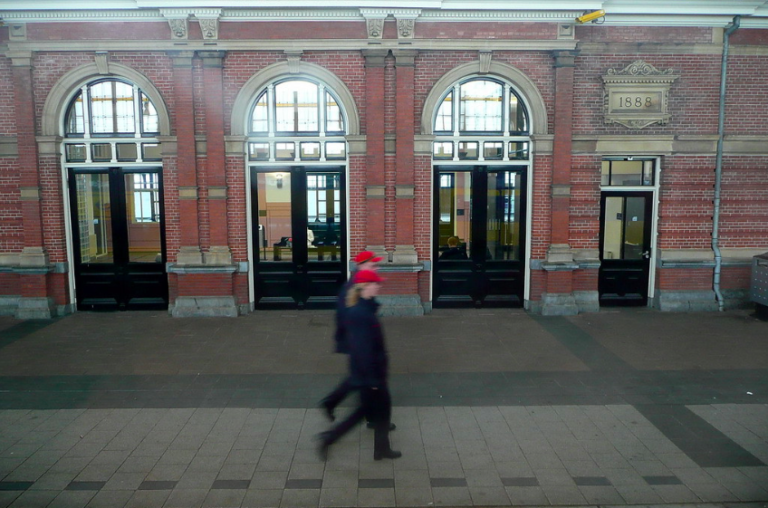
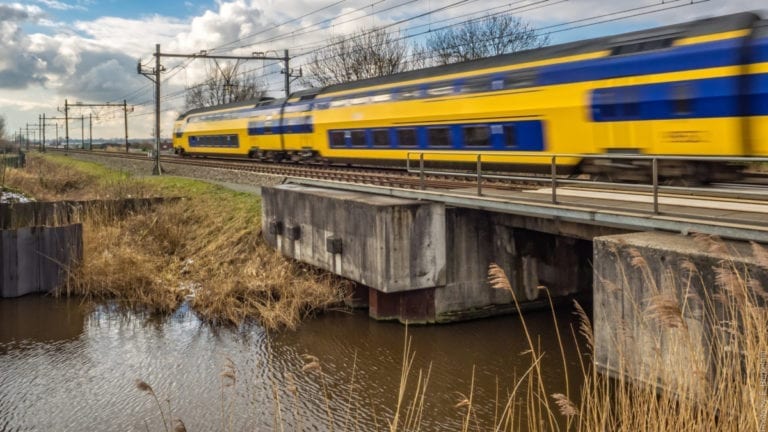
NS director Roger van Boxtel is asking for harsher punishments for anyone who is violent towards NS staff. This follows incidents of severe violence against staff members, and the shooting of two trains.
Last month, Sander Dekker, Minister of Legal Protection, presented a bill in parliament that would allow for harsher punishments for those who are violent towards social workers. This ruling currently extends to conductors, but Van Boxtel wants to extend this to all NS staff, who he argues are all caretakers of the public.
Pellet gun attack on a train last week
Recently, the NS has been the subject of several violent attacks. Last week, a train was shot at with with pellet guns. Five windows were shattered on the inside, but luckily remained intact inside. No staff or passengers were injured, and two fifteen year old boys have been arrested on suspicion of damaging trains.
Conductor hit in the neck by passenger
At the end of September, a train conductor was assaulted by a passenger in Breda train station. The passenger had been travelling on the same train as the conductor, and did not have a valid ticket. When the conductor exited the train at Breda, the passenger hit her in the neck. Police are still searching for the attacker.
More employees had to deal with violence in 2018 than 2017
While last year the amount of violence against staff inside trains decreased, the amount of violence against them at stations increased by 21 percent. More employees in total (753) had to deal with violence from the public in 2018 than in 2017. According to van Boxtel, he can sense a pattern of violence forming, and “a kind of restlessness has arisen.” This is absolutely unacceptable, he says, especially when it is directed at people who are doing their best to get everyone from a to b. The NS serves 1.3 million people each day.
Do you agree that those who threaten NS staff should be punished more severely? Let us know in the comments below.
If there was ever a morning to say that we haven’t the foggiest idea what the weather is doing, it’s today. Most of the Netherlands is shrouded in fog this morning, which is expected to clear throughout the day.
This week is expected to be uncharacteristically warm, with temperatures staying between 8 and 10 degrees until the weekend. But don’t get too excited: in the Netherlands, warm temperatures at this time of year invariably mean rain. So, we’ve got a cloudy, mild, and wet week ahead, Weerplaza.nl reports. If you spent last week wishing it would warm up just a little bit, this week you’ll be praying for the frost to return. Anything to avoid that full-body raincoat lewk.
Monday: feelin’ foggy
Today, Monday, begins foggily (as we all do on a Monday). The fog is heaviest in the north of the country, and will burn off almost anywhere by early afternoon. The sun will appear occasionally throughout the day, as will scattered showers, particularly in the southwest. It is quite warm for the time of year, reaching 11 degrees in Middelburg.
Tuesday: get that sunscreen out for sunny spells
Tuesday will be mostly dry, with a few showers spread throughout the country. It will, happily, be mostly dry, and if you’re breathtakingly lucky, you might even see the sun peeking through the clouds once or twice. Make sure you’re wearing sunscreen just in case- given how infrequently we see sun in the Netherlands, it’s always a shock to the system.
Wednesday: rain. So much rain.
Wednesday starts off with heavy rain, so if you’re biking to work or school, it’s time to get your sexy rain coat and rain pants on. Or a poncho. But if you go for the poncho option, expect it to work like a sail on a boat, because we’ve also got some high winds on Wednesday morning. Temperatures will be tropical, reaching 12 degrees in some parts of the country.
Warning: you will not look this cute in your rain suit. It’s impossible. Sorry to crush your hopes and dreams.
Thursday: rain, wind, clouds
Autumn weather: perfect for strolling through crispy leaves and wearing light jackets. Wouldn’t it be nice if that was what we were getting on Thursday? Instead, expect rain, heavy wind, and absolutely no sunshine- which seems pretty appropriate for hump day.
Friday and the weekend: temperatures drop
On Friday we begin the drop in temperature for the weekend. It will be slightly colder, with stormy weather in some parts of the country, so get ready to take your rain suit for another outing (or maybe just take the tram). On Saturday and Sunday, the temperature will continue to drop, getting to 6 degrees on Sunday. There will be scattered showers and sunny spells (very short spells, but spells nonetheless).
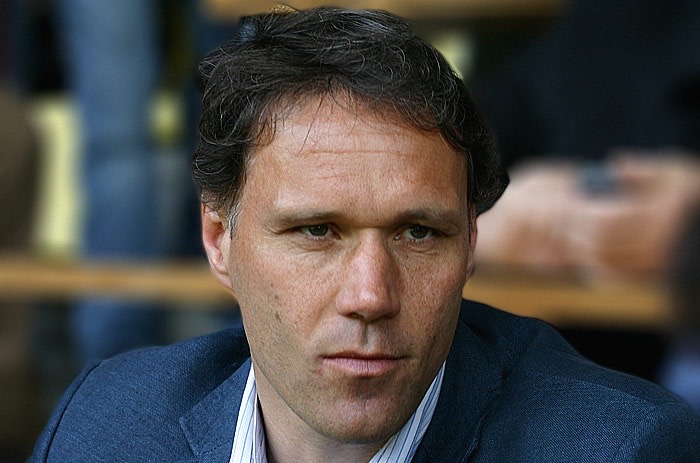
At the end of a live television broadcast, retired Dutch football star, Marco van Basten, remarked “Sieg Heil”. He has subsequently apologised by commenting, “it was not the intention to shock people, so [I] apologise for this”, NOS reports.
Sieg Heil was a verbal salute used by Nazis to rally support for Adolf Hitler. It translates to Hail Victory.
The interview
A German coach was being interviewed by Fox Sports about the game between Ajax Amsterdam and Heracles Almelo. Just after the interview ended, van Basten can be heard saying the words off camera.
The European champion from 1988 apologised for the comment in Fox’s live broadcast. “I said something that was picked up by many people later. It was not the intention to shock people, so [I] apologise for this. It was more to explain Hans’ German”, NOS reports.
Presenter Jan Joost van Gangelen replied “apologies accepted”.
German internet site T-Online commented, “whatever it was meant to be, don’t make jokes about a Nazi salutation”.
Racism in football
Just one week ago, a game between Den Bosch and Excelsior was stopped for thirty minutes after racist slurs “k-negro, k-cottonpicker, k-blackiewere” were heard from the crowd. This was the first time in Dutch professional football a game was halted because of racism.
Last week, the National Dutch football team released an anti-racism statement entitled “enough is enough” on social media.
This team right!!…. this team stands for way more then football only. And I’m so proud to be part of it. We definitely teaching the next generation how to stand for something but also how to treat each other with equal respect! #superheros#TheNewWavepic.twitter.com/51WhInQEZA
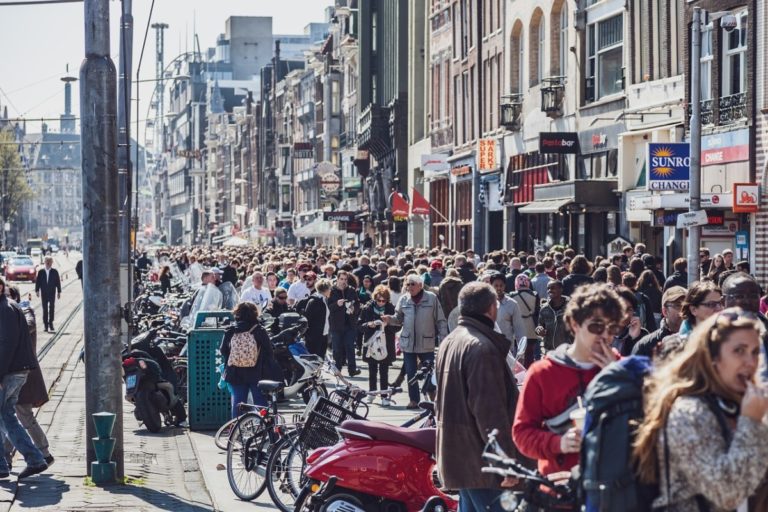
Are there too many tourists coming to the Netherlands? Overtourism in the Netherlands has been a problem for a while now. According to figures released by the Central Bureau of Statistics (CBS), there were 10 million foreign tourists who visited the country in July and August in 2019.
That is 4.4% more than people who visited the Netherlands last year in 2018. But while there’s an increase in foreign tourists, there has been a decrease in domestic tourists. While the total share of foreign tourists was 39% five years ago, it is 44% this year.
Domestic tourists who do travel around love to go to Gelderland. However, foreign tourists like to go to Zeeland, South Holland, and North Holland.
With July and August being the busiest months, NOS says that tourism has been increasing in the last nine years. 2014 saw 8 million tourists, 2017 saw 9 million tourists and now we have 10 million tourists roaming around the Netherlands.
What do tourists like to do in the Netherlands?
The number of overnight stays has also increased to 35 million (by 7.6%). But where exactly do they go and what do they do?
According to RTL Z, holiday parks, hotels, guesthouses, youth hostels, and campsites have grown in popularity. Dutch tourists, 1.2 million of them to be exact, went to stay in bungalow park. With the frequent heatwaves in 2018 and 2019, campsites saw a good influx of people.
We all love the Netherlands, and everyone seems to want to get a piece of the action. But the Netherlands is drowning with the influx of all of these tourists, where a lot of them go to tourist destinations like Amsterdam and Giethoorn. There have been efforts being made to distribute them across the country so that these places don’t have to deal with the brunt of this every year.
Were you ever a tourist in the Netherlands? Or do you live here and avoid some places only because it would be too crowded with too many tourists? Let us know in the comments below!
If you were just walking around the streets and spot a huge chunk of gold just lying around, waiting to be picked up, what would you do? Would you hand it over or would you keep it for yourself? Well, someone found a piece of 235,000 euros worth of gold in Utrecht last Friday, and he diligently handed it over to the police, reports NU.nl.
The piece of gold fell out of a delivery van. According to NU.nl, there are speculations that the driver of the delivery van left the side door open after he had loaded the piece of gold from the Royal Mint.
When it was found missing, the owner of the piece of gold put out an advertisement which said that anybody who would find it would get 25,000 euros. They also mentioned that it would be best to hand it over to the police as it cannot be sold.
Would you have done the same? Let us know in the comments below!
RTL Nieuws reports that people are regularly approached by the food delivery service, Thuisbezorgd, and asked to remove negative reviews of restaurants in return for refunds.
Previously, Thuisbezorgd had denied that this behaviour happened on a large scale. Last week, a Twitter user reported that he had been offered a full refund of a sushi order if he would take down his three-star review of the restaurant. After this was made public, spokesperson for Thuisbezorgd, Joris Wilton, insisted that this was “an exception” and that “it is also important for [Thuisbezorgd] that consumers can rely on reviews.”
Multiple people had the same experience
However, when RTL Nieuws reported on the incident, lots of their readers came forward with similar stories. Dozens of people reported that they had been approached by the website to take down reviews that gave a restaurant less than four stars. Whether it was down to the greasiness of the food or the time it took to arrive, it seemed like the response of Thuisbezorgd was uniform: get the review removed.
Restaurants ask Thuisbezorgd to do this
Thuisbezorgd itself is not necessarily fully to blame here: according to its statement, it will only undertake such an action when the restaurant owners contact them. Some of the people interviewed by RTL Nieuws mentioned that they were emailed or called by restaurant owners first, and only later received official emails from the website itself. But in any case, what this means is that reviews on Thuisbezorgd are not necessarily trustworthy. So maybe check out some other apps for food delivery in the Netherlands if you’re craving something low-effort this evening!
So, if you’re getting delivery this evening, be wary! Have you ever had an experience like this?
Rotterdam’s already-iconic cityscape will be getting a new addition in the form of a floating wooden tower. The building is designed by renowned architects Waterstudio, who have produced stunning floating buildings before.
How will the building float?
Now, you might be wondering how a solid building can float on water. The answer is deceptively simple: instead of its bulk being made out of concrete (which is, of course, very heavy) the new tower will be made mostly from wood. To be precise, it will be constructed using Cross Laminated Timber (CLT), a material that Waterstudio has prior experience with. Not only does this mean that the 130-foot-tall building will be light, it also means that it will be made out of a renewable resource. It will be a beautiful, environmentally-friendly addition to Rotterdam’s skyline.
The interior of the new tower. Image: Architect Koen Olthuis/ Waterstudio.NL
Plants, natural light, and a really cool shape
The wooden tower will mostly function as office space, but some areas of it will be open to the public, including a restaurant and a courtyard, according to Inhabitat. There will be plenty of greenery inside, which makes the plant-lovers among us very happy. A large expanse of glass will cover both sides of the building, allowing lots of natural light inside (which we need, with the everlasting grey of Dutch weather). According to Koen Olthuis, the leader of the firm, the design of the tower resembles a sheet of paper, whose edges have been pushed together to create a hill-shape in the middle.
So, get ready for a new addition to Rotterdam’s skyline! Are you excited? Let us know in the comments below.
Cheaper air fares, more money and endless social medias posts and adverts mean more travellers than ever are jet setting to cities that are struggling to cope with their own popularity. Overtourism is becoming an increasing problem, but what is it? How is it affecting Amsterdam? Are we all culprits? How can we counteract overtourism?
Wandering along the streets of Amsterdam, we snigger at groups of travellers debating the protocol for going to a coffeeshop and curse when tourists clog the cycle paths. We separate ourselves from the “basic tourists” by pretending we have more authentic experiences. We drink Amstel instead of Heineken and hang in De Pijp instead of Dam Square.
But we condemn and criticise others without reflecting on ourselves and acknowledging that perhaps we too, are part of the problem. Even if we do branch out from the touristy activities, our presence alone can be a problem for the city.
Why do so many tourists come Amsterdam?
Last year, 19 million tourists descended on Amsterdam. People flock to the capital city because for its stunning architecture, rich culture and history and the nightlife. Schiphol airport and frequent train connections make it easily accessible.
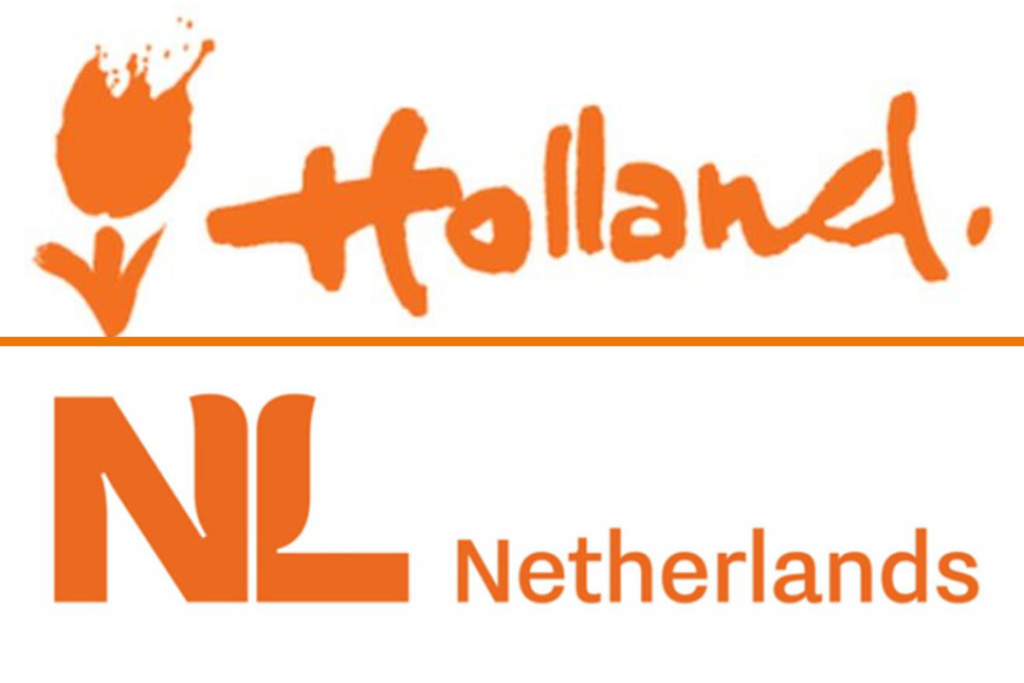
Like other capitals such as Prague and Barcelona, the government cleverly markets the Netherlands in effort to recruit tourists. Intense marketing campaigns, such as the latest rebranding scheme and launch of the new logo, secures its place on the international map.
The old versus new logo of the Netherlands. Source: rijksoverheid/nbtc
Why is overtourism a problem?
Tourism provides jobs, increases city development and boosts a country’s economy. In moderation, tourism enhances quality of life for the permanent residents. But overtourism damages the environment, puts pressures on the natural resources of the city and has a detrimental impact on resident’s lives. In the worst cases, overtourism completely exhausts the cities natural appeal.
But tourism is not a problem everywhere and in fact, some cities are struggling without it. Take Gorlitz, a city in Germany that has begun a “try before you buy” initiative where people can live for free in the Eastern German city before decided whether to move there or not. Or think of the Italian towns that are paying people thousands of Euros to move and open up business in the underpopulated villages.
Other cities, such as Amsterdam, are struggling with too much tourism. The World Tourism and Travel Council revealed that in 2018, 1.4 billion international tourist trips were made and more than 36% of these involved a visit to one of the world’s 300 most popular cities, CNN reports.
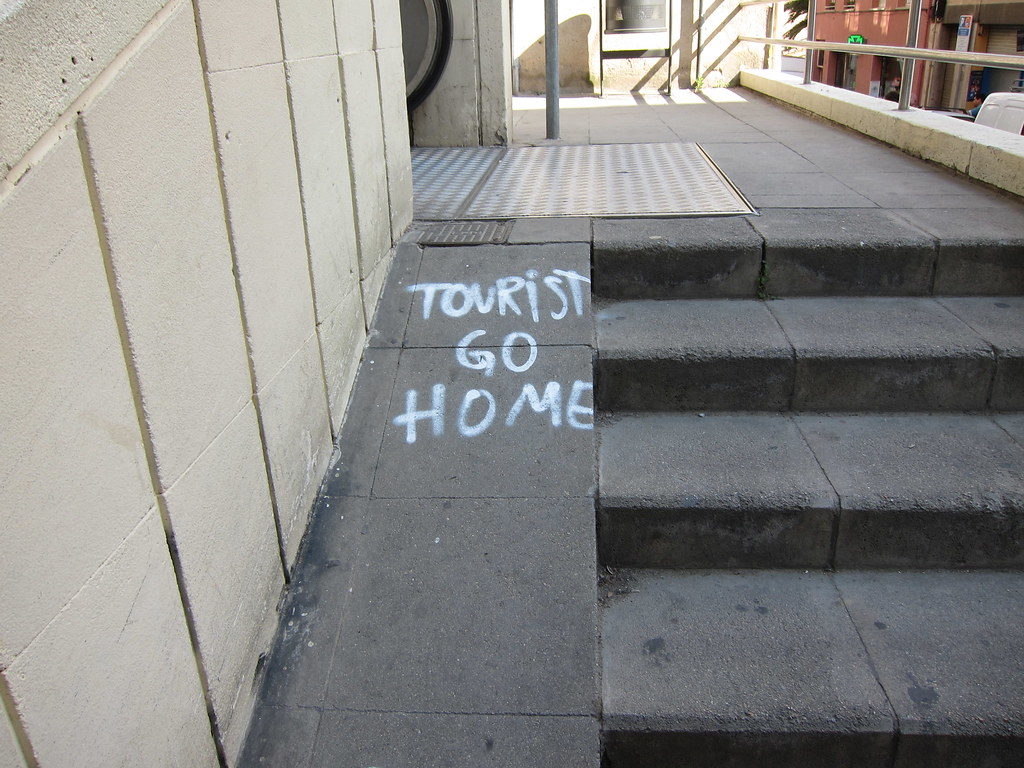
Many people protest tourism and graffiti signs like these around their home city. Source: Ted & Dani Percival/Flickr
The destruction that tourism can cause
The Netherlands, home to 17 million people, hosts 19 million travellers a year (including day-trippers and Dutch locals).
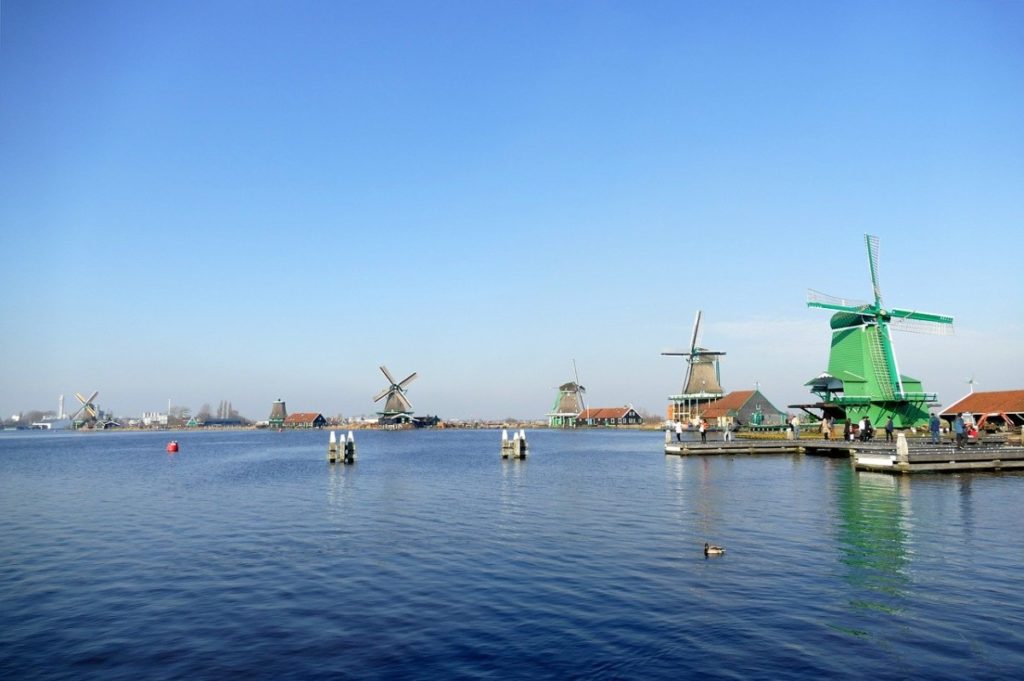
But many of these tourists cause bedlam and havoc in the country. They trample on Tulip fields and urinate on peoples’ houseboats. Picturesque villages, such as Zaanse Schans, are becoming inundated and biodiversity in De Biesbosch is being wrecked. People act boorish and entitled in the Red Light District.
Zaanse Schans is one of the most popular destinations in the Netherlands. Source: Mrs. Brown/Pixabay
But the tourism expenditure report from the last year shows tourists are spending more than ever in the Netherlands. In 2018, there were 19 million tourists and NBTC Holland Marketing anticipate this will increase by at least expects a 50% by 2030, reaching at least 29 million tourists.
“Instead of destination promotion it’s time for destination management”
A tourist board policy document states “We say that ‘more’ is not always better, certainly not everywhere. To be able to control visitor flows, we must take action now. Instead of destination promotion it’s time for destination management”, the Guardian reports.
Majority in the Lower House demand action from government
SP Member of Parliament Frank Futselaar, tells NOS “You see that there are a lot of tourists in a number of places in the Netherlands. In addition, there are other regions that would like a lot more tourists. But there is no central policy.”
Most of the tourism efforts are put into places like Amsterdam, Zaanse Schans, Giethoorn and Keukenhof. But many places in the Netherlands are equally as nice and promoting those lesser known areas will help spread tourism across the whole country.
The NBTC is funded by both private companies and through government subsidies. This means it is important to consider whether there are any conflicts of interest with a new policy about distributing tourism efforts.
To be fair and just, the NBTC will need to loosen ties with government parties.
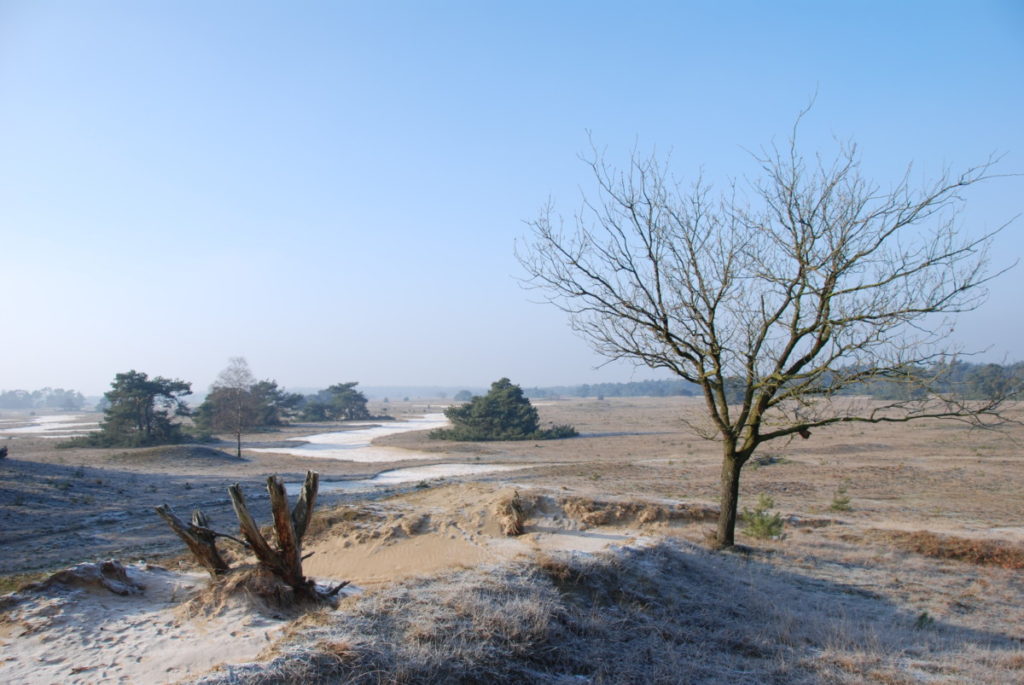
Hoge Veluwe National Park on a frosty morning Source: Henk Monster/Wikimedia
How to counteract overtourism?
Spread tourists out
Jeroen Klijs, Breda University of Applied Sciences tourism researcher and professor, offers a solution to the overcrowding in cities like Amsterdam, RTL news reports.
“you have to move the Germans and Belgians who are coming for the third time and also the Dutch themselves to go to more unknown locations. That can be done with marketing, but also by making attractions more attractive and improve accessibility”
If you look at the statistics for what nationalities come for say, Easter weekend in the Netherlands, it reveals 65% of the tourists come from Germany and 25% from Belgium. Spreading frequent visitors out would help prevent the hotspots from getting bombarded.
Try and recruit “good” travellers
Many people come to the Netherlands for stag dos or a party weekend. Amsterdam has invested lots of time in trying to shake its sex, drugs and rock and roll reputation but in the words of Mark Twain:
“Give a man a reputation as an early riser and he can sleep ’til noon.”
There is still a lot of progress to be done but it is important to keep emphasising that “cities are not the playgrounds of tourists; we only want them because they make the city more liveable for residents”, Xavier Font, a professor of sustainability marketing at the University of Surrey, tells the Guardian.
With campaigns such as the Enjoy and Respect campaign, launched last year, the Dutch tourism board have also started making a stand against offensive behaviour in Amsterdam.
Market smarter, not more
Many tourism boards measure their success by numbers but perhaps it is time to change the tactic. Instead of recruiting as many tourists as possible, they should try and extend the length tourists visit for.
Initiatives such as Marry an Amsterdammer is part of a wider movement to get people to see a more authentic side to the Dutch capital, instead of using the city as a party escape.
Source: ANURAG1112/Pixabay
Connecting with a local will encourage people to be more respectful and dispel the notion that we are not accountable for our actions when we are abroad just because “we’re on holiday”.
If you are going to travel, consider less known destinations and discover hidden gems. Support local businesses and distribute your spendings. Remind yourself you are a visitor and make sure to respect the locals.
Europe’s top court ruled that goods produced in Israeli settlements must be clearly labelled as such, instead of carrying the generic “produced in Israel” tag.
In its ruling, the European Court of Justice (ECJ) noted that European consumers must have access to information that enables them to “make informed choices, with regard not only to health, economic, environmental and social considerations, but also to ethical considerations and considerations relating to the observance of international law.”
The EU is Israel’s biggest trading partner. Israeli goods produced within Israel’s internationally recognised borders benefit from a preferential tariff and the ruling does not change that. It is estimated that only 1% of all Israeli imported goods come from settlements.
Understanding the case
The case came to the European Court of Justice after France’s top court asked for clarification form the ECJ when a winery based on an Israeli settlement, and the European Jewish Organisation, challenged France’s application of a previous ECJ ruling on the labelling of settlement products. That ruling supported the use of origin-identifying tags but did not make them legally binding. The current ruling is mandatory, but enforcement is left to each European Union member state.
The Palestinians celebrated the decision, calling it a “legal and political obligation”. Israel’s Foreign Ministry denounced the ruling, saying it set a “double standard” that singles out Israel while there are many other territorial disputes worldwide.
Understanding the Israeli settlements issue
Israeli settlements are Jewish colonies progressively being built on Palestinian land captured in 1967, during the Six Day War. They are mainly located in the West Bank and East Jerusalem, the land where Palestinians claim their future state should be. There are also settlements in the Golan Heights, a piece of land that Israel took from Syria during the same war. Today there are around 700.000 Jews living in West Bank and East Jerusalem settlements, completely cut off from the surrounding Palestinian communities and fully connected to Israel through a system of settler only roads also built on Palestinian land. Settlers comprise 10% of the Israeli population.
If you look at the map, built-up Israeli settlement areas occupy about 2% of the Palestinian West Bank but the land controlled by settlement activity, such as agriculture and roads, amounts to much more than that and requires a heavy military presence. pic.twitter.com/pXkJwvaUwW
The European Union considers Israeli settlements illegal under international law because they violate article 49 of the fourth Geneva Convention. Article 49 states that: “The Occupying Power shall not deport or transfer parts of its own civilian population into the territory it occupies.” The Geneva Conventions are the basis for International Humanitarian Law, or the Laws of War, which establishes the rules of armed conflict among all countries of the world in an attempt to limit the effects of war. All United Nations member countries have ratified all four Geneva Conventions, including Israel and the U.N non-member observer, Palestine.
According to the United Nations High Commissioner for Human Rights the settlements and their expansion pose a serious threat to the human rights of Palestinians. These threats come in the form of arbitrary land seizure, restrictive planning, permit and construction, placing many Palestinians under threat of displacement, and various forms of settler violence.
The Dutch reaction
In its official page, the Dutch government states that it “regards the Israeli settlements in the occupied Palestinian Territories as illegal. They are in conflict with international law and pose a serious threat to the peace process.” It also emphasises the good relationship it has with both governments as well as the commitment with the security of both nations.
On Tuesday, November 19th, a motion passed on the House of Representatives (the lower chamber of the Dutch bicameral parliament), pushing back against the ECJ ruling. The motion, which passed by 82-68, asked the government not to comply with the court’s decision, at least not until all territorial disputes have the same treatment. The motion is unlikely to have actual effect on the government’s policy and is mainly symbolic.
Conscious Consumption
In the capitalist society we live in more and more people are becoming aware of the power consumers have. The impact that certain economic dynamics have on humanity and the planet are becoming increasingly clear and from ‘cruelty free’ products to shopping second hand, there’s a growing movement of conscious shoppers.
The European Court of Justice decision is a highly politically charged one, but it should also be understood within the context of more transparency for consumers to spend their money according to their beliefs. Only buy into it if you are ok with it!
Are you from the north of the Netherlands? Have you been waiting for a faster train for better access the rest of the Netherlands? Well, your time has come! As of 2023, a high-speed train will launch and you’ll be able to travel to the Randstad in less time.
After testing the plan earlier this year, Dutch Railways have given the go-ahead on the project. The trains will come from the south, crossing the high-speed line in Amsterdam and then continue onwards to Leeuwarden and Groningen.
Just how fast will the trains actually be?
It currently takes just over two hours to get from Leeuwarden and Groningen to Amsterdam. However the new high-speed trains will travel at a speed of 200 kilometres per hour which will shave roughly 30 minutes from the journey time.
New tracks are being laid between Schiphol Station and Amsterdam-Zuid which allow trains to continue on to Leeuwarden and Groningen.
The only track that permits fast speeds is the Hanze line which runs between Lelystad and Zwolle. So Dutch Railways hope that if they start investing in faster trains, then the government will sort the tracks out.
“We are investing in more fast trains and hope that this is a reason for the Netherlands to invest more in more fast railways,” says Roger van Boxtel, CEO of NS, tells NOS.
With the current tracks, the new trains will only make the journey from the North to the Randstad minutes faster, unless they take the Hanze line.
Not impressed by that? Perhaps you’ll be intrigued by the new hyperloop currently being built in Delft in collaboration with Tesla and Elon Musk. The hyperloop is a snazzy train that drives through a tube with very little or no air resistance which allows incredible speeds of up to 700 kilometres per hour.