Home Blog Page 744

HEMA is venturing to the US and Canada and will be known as ‘HEMA Amsterdam’

2

Hema is journeying across the Atlantic and opening doors in Canada and the United States.

“The expansion to North America is a historic step for HEMA, as our founders Leo Meyer and Arthur Isaac first met with unit price stores there a hundred years ago,” said CEO Tjeerd Jegen.

The overseas business venture will be a hybrid of physical stores and online stores. In the US they will start selling household items via the notorious Walmart and in Canada, HEMA will open it’s own stores and also partner with local businesses and sell their products through their shops.


Marketing 101: Use your city’s reputation to sell your product


Of course,ho wouldn’t want a product originating from the one and only Amsterdam – the liberal, multi-cultural and progressive city in Europe. HEMA will be called “HEMA Amsterdam” in the US and Canada. This name pays tribute to its Dutch origin and can therefore be distinguished from American stores.

Philip Behn, General Manager at Walmart, says: “Through our platform we offer local and international partners many opportunities. HEMA, a distinctive Dutch brand, is a good example of a new collaboration that gives our customers even more choice.”


Source: Wikimedia Commons

Competition?

HEMA already has 750 stores located around Europe and Asia and over nineteen thousand employees.

HEMA’s partnership with Walmart is sure to hold it in good stead as the American supermarket chain Walmart is the largest company in the world in terms of turnover. To date, Walmart operates a total of 11,766 stores worldwide.


Over 200 municipalities in the Netherlands prohibit drug use in public spaces – who knew?!

0

People perceive the Netherlands as a place where tall hippies cycle around with a permanent joint hanging from their mouths. After all, if you ever mention to anyone overseas that you live in the Netherlands, it will produce a knowing smile in the other person closely followed by “you smoke a lot of weed then!?”

A stereotype, like always, lacks nuance. In reality, although the national law for the Netherlands allows drug use, more than 200 municipalities prohibit drug use in public spaces.

Stepping across different municipal boundaries within the Netherlands could in fact mean the difference between being fined or not.

Booked your first trip to the Netherlands and want to smoke a spliff in Amsterdam?


Out of the four big cities in the Netherlands, Rotterdam is the only one to have enacted law (and let’s be honest, you probably wouldn’t venture outside Amsterdam if you came here to smoke)

In the other small municipalities, the purpose of having the law is to allow authorities to intervene in cases of excess drug use so consistent enforcement of the law is rare.


How many municipalities ban drug use in public spaces?


There is a total of 355 municipalities in the Netherlands and 218 ban drug use in a public space. That equates to 60% of the Netherlands. The law is also applied to specific places within a municipality such as Mercatorplein in Amsterdam and the boulevard of Scheveningen.

Is legal inconsistency within a country a good thing?


Jon Schilder, professor of Constitutional and Administrative Law at the Vrije Universiteit in Amsterdam, stated “It is absolutely not desirable that ‘lower governments’ make something punishable which the higher law does not want to make punishable.”

However, if challenged in the legal system, the law will likely prevail as it limits inconvenience and allows a stop-gap for situations needing urgent attention.

Jan Brouwer, an expert on Dutch drug policy queries “Does smoking a joint in the public space now cause more nuisance than smoking a cigarette?”

What do you think?

Feat pic: Amsterdam Coffee Shop / Source: Pexels /Alexandra G.

Travellers with the NS can now send a WhatsApp text for safety issues on a train

Dutch Railways are trialling a scheme where travellers can send a WhatsApp if they feel unsafe or experience nuisance on the train.

Travellers are often confronted with threatening or annoying situations such as drunk heckles or disruptive noise. Many of these situations are exacerbated if the perpetrator sees a conductor being alerted. However, if a WhatsApp message could notify security anonymously and discreetly, this opens up another avenue for help.

One young interviewed about the scheme commented “It is difficult for you to walk to a conductor to complain if someone in your carriage misbehaves. Because the perpetrator sees that too and then you just have to wait and see what he does. With such a whatsapp you can get help safely call in. Great.”

Where is the text being sent?


The WhatsApp text is sent to a general safety centre run by NS. Once received, employees assess the threat level and determine who should be deployed to handle the issue – the security or the police?

The test is currently only being piloted on the Dordrecht-Arnhem route (for anyone not familiar with the Netherlands Dordrecht is close to Rotterdam and Arnhem is one hour east). The WhatsApp scheme can also be used at the stations of Eindhoven, Breda and Tilburg. More routes will be added to the project as time goes on if the scheme is proved useful and successful.

A dutch classic 🙂

Can this scheme replace the need for a scary 112 call?!


No. Please let common sense prevail. Anita Middelkoop, spokesperson for NS said “Of course you still have to call 112 immediately in real emergencies such as someone who has a heart attack or something like that.. but if it is not an emergency, we really try to deliver tailor-made solutions.”

Is this a good idea? What do you think? 

Will Frans Timmermans be the next European Commission President?

Frans Timmermans, a Dutch social-democrat, has emerged as a front-runner for the leader of the European Union Commission.

Consultations for the top positions lasted nearly 20 hours but came to a close without a decision last night. It is the longest set of talks about EC candidacy in history.

Debates resumed today and Timmermans announced he would not be returning to the European Parliament. Instead, he aims to be appointed president of the European Commission.

Source:Flickr/ © European Union 2016 – European Parliamen

Support for his candidacy is split. German chancellor, Angela Merkel, believes Timmermans would navigate a divided Europe well but leaders from Hungary, Poland, Slovakia and the Czech Republic made it clear they could not support him. Mateusz Morawiecki claimed ““Frans Timmermans is the candidate who is strongly dividing Europe….he certainly doesn’t understand central Europe,  which is emerging now from the post-communist collapse.”

An optimistic morning which aimed to secure presidency nominations dwindled as deliberations were still ongoing late this afternoon.

The vote for the European Commission leader needs to be approved by the European Parliament which will take place on July 16.

And just as we wanted to hit ‘publish’ on this post it seems that the German Von der Leyen is the new favorite…. To be continued!

Noordeinde Palace is open to the public for a limited time this summer

0

Royal palace open for visitors

King Willy is opening up his working home, for all of us nosy lot again this summer. For the fourth time, both the Noordeine Palace and the Royal Stables will be open for visitors to explore for a few days in the coming summer period.

This first happened in the summer of 2016 and brought thousands of people to the palace gates.

History of the palace

The palace was originally a medieval farmhouse that was converted in 1533. The antiquated cellars are still visible in the basement.

In 1609, it was gifted to William of Orange’s widow by the state, in recognition of William’s dedication to the nation.

In the 19th century, the palace was restored and it became the official winter residence of the Dutch royal family.

In 1948 a rampant fire damaged the central section of the palace. As a result, Queen Juliana made Soestdijk Palace her permanent residence and Noordeinde became royal offices.

In 1984, another massive renovation took place and ever since, Noordeinde has been the main office of the royal family.

When will it be open?

The Noordeine Palace will be open on 3 August and run for three consecutive Saturdays after that (10th, 17th, 24th August).

Note: This is a ticket-only event. The tickets will be put on sale from 4 July here and cost only €6 (bargain)!

Day out at The Hague

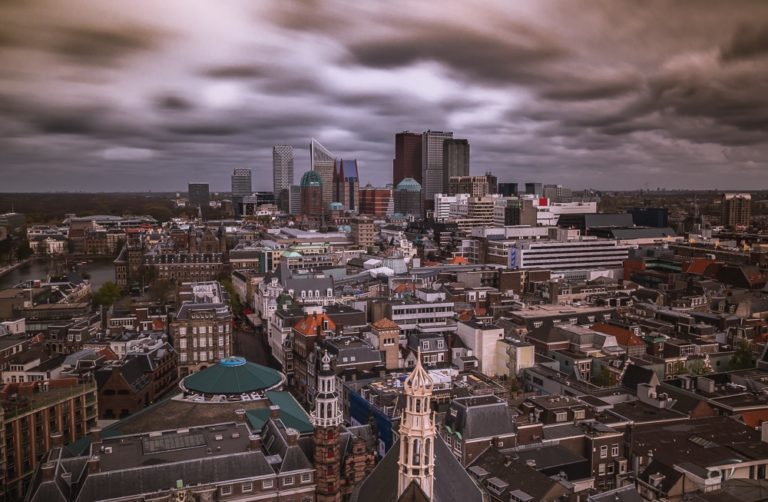
This definitely should be something to put on that bucket list. But what else can you do whilst in this vibrant city? We have it covered. What about visiting the COMM Museum? Or a boat tour? A market? Or something free after splashing your cash at the palace? There are plenty of things to do whilst visiting The Hague this summer. So you better get planning!


Will you be visiting the palace this year? Let us know in the comments! Also, don’t forget to join our Facebook group!

Laughing gas in the Netherlands: balloon fun no more?

0

The Justice and Security Minister, Ferdinand Grapperhaus, is keen to talk about a possible prohibition on laughing gas. Discussions about the potential ban are still in early stages, “but I tell you honestly, we have to do something with this” AT5 reports  “young people just don’t realise how deadly the cocktail of alcohol and laughing gas is.”


Are health concerns legitimate?

Laughing gas is also known as nitrous oxide. I had no idea it existed until about a year ago when I saw numerous balloons stationed at Hideout festival in Croatia. I turned to my friend and asked “why are people selling balloons at a music festival?” to which she gawped and retorted “are you seriously that naive?”

It is often used by dentists and the medical profession to sedate patients undergoing minor medical procedures.

According to the latest Global Drug Survery, nos is the seventh most popular drug out of the 50 countries surveyed. The Advisory Council on the Misuse of Drugs statistics reported that 15 people died in the UK as a result of asphyxiation between 2008 and 2015.


What is the current law on laughing gas in the Netherlands?

It is illegal to sell the gas inside the balloon but not to distribute the canisters which contain the gas.  This fine line makes the buying and distributing of laughing gas exceptionally easy in the Netherlands.

The colourless gas gives the user a euphoric and dizzy feeling ending in laugher. Many people assert that this is caused by a restriction of oxygen flow to the brain but this this claim is not substantiated by science. The high lasts about 20 seconds.

Dutch drugs advisers warn that the drug can harm a persons airways if taken directly from the aerosol spray (instead of inhaled through a balloon). It can also cause nausea and dizziness and increase the chance of a panic attack if taken alongside other drugs.

Drugs at festivals

Empty silver canisters are a common sight at festivals and Grapperhaus plans to first tackle the use of drugs at festivals. He comments to at5 “It’s stuff that’s bad for health and disruptive for society. By buying it you are financing this type of crime.”

Grapperhaus is also eager to talk face-to-face with organisations to rally support for his plan “And I am more than willing to go into conversation with all the youth clubs – who think it is not so bad – to show what social problems arise” AT5 reports.

Thousands of suitcases are left behind at Schiphol after malfunction

Could you travel with one set of clothes? Over the weekend at Schiphol, a malfunction with the baggage system has resulted in thousands of suitcases left behind.

The malfunction was resolved within one day but even a few hours of system failure can cause an enormous back log of suitcases that need to be reorganized. While Schiphol is trying to send the suitcases left behind to their rightful owners, it still has to process the regular luggage. A spokesperson for the airport commented “That’s why it is taking a while. But we are already halfway through and we’re trying to send the remaining suitcases to their owners this week.”

Customers teated like cattle?

One man from twitter declared that customers at Schiphol were “treated like cattle” during the ordeal

Malfunctions are inevitable (albeit how frustrating for the passengers) so are tweets like this unreasonable? They do say that expectations are resentments in the making after all..

Shout out to the organised people who carry an extra pair of clothing with them in their hand luggage.


All we want is communication! 

It seems the biggest frustration from customers is the lack of updates from airlines and not knowing what strategy is in place to handle the problem.

Schiphol airport employ extra technicians during the summer months to combat the increased likelihood of technical issues.

Have you ever had your luggage lost? Let us know in the comments below! 

5 Free Things to do in July in the Netherlands

Summer is here, and there are plenty of free things to do in July in the Netherlands. Here is a quick list of 5 of the best free things you can do this month.

#1 Go to the beach

When: All summer long (and all year long for the brave)

Where: Every beach in the Netherlands

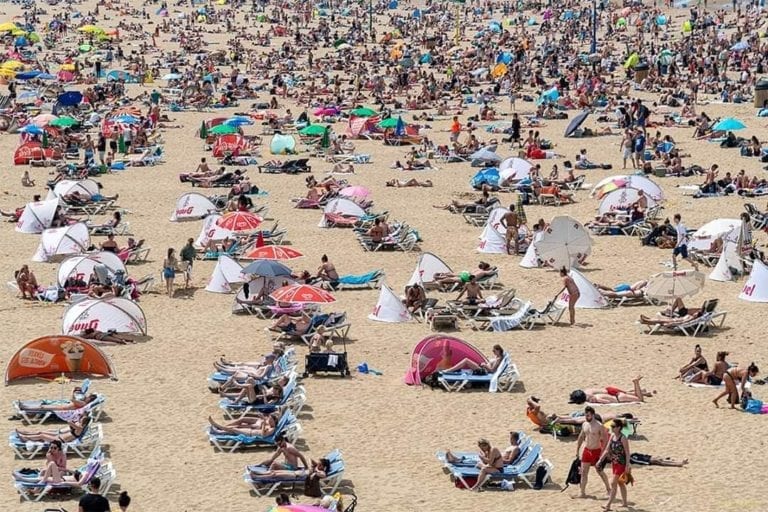
Now we know this is an obvious one! But it would be foolish not to enjoy Holland’s amazing beaches this summer. Of course Scheveningen should be on the list! The beach in The Hague has a lot to offer – beach bars, fish restaurants, multiple attractions, and of course a nice clean beach where you can get your tan on. However, if you’re not into crowded places, Amsterdam has plenty of urban beaches to offer. So sit back and relax, because the beach is one of the best free experiences the Netherlands has to offer in July.

#2 International Chamber Music Festival

When: July 8 – July 14

Where: Utrecht

The International Chamber Music Festival hosts performances from top classical musicians from all the world.  The festival is bound to have massive attendance and continuously shows an outstanding level of artistic quality.

#3 Rotterdam Unlimited

When: 23-27 July

Where: Rotterdam

Rotterdam Unlimited can best be described as the love child between Summer Carnival and Dunya festival. This joint venture began in 2013, and since then has been dubbed as Rotterdam’s Summer Carnival parade. The purpose of this festival is to celebrate cultural diversity. Rotterdam Unlimited consists of music battles, parades, live music, dance, theater and much more. This colorful summer event takes place in Rotterdam’s inner city and is a tropical party that lasts for five days. So put on your most colorful outfit and get ready to dance the night away.

#4 The Hague African Festival

When: Sunday 14 July

Where: The Hague

As you might have noticed by this point, summers in the Netherlands are all about festivals. However, what is unique about The Hague Africa Festival is that it provides a podium for African art and culture. The aim of this cultural event is to provide visibility of African musicians and visual artists in The Hague. Aside from great music, this event also offers an African market, an African talent podium, as well as a kid’s program. So head on over to Zuiderparktheater in The Hague to experience the magic of African culture.

#5 Day trip from Amsterdam

When: All year long (but preferably when it’s sunny)

Where: Near Amsterdam

If you’re not into the whole festival scene, and just generally hate crowds, then a day trip outside of Amsterdam might be the perfect getaway for you. Surprisingly, there are many small towns and villages around Amsterdam that besides from being oh so charming, can also provide you with an authentic Dutch experience. These towns are not as crowded with tourists as Amsterdam, and have preserved their ‘Dutchness’ over the decades.

One of these towns is Leiden. Aside form being absolutely beautiful, the town has a ton of events of its own all year long. If you’re looking for something more secluded, then visit the Dutch island of Texel. It’s a lovely small island, which provides a perfect getaway from the craziness of Amsterdam.

So there you have it – 5 Free Things to do in July in the Netherlands. Which free event are you most excited about? Let us know in the comments below!

Goodbye to two-wheeled texting: 6 things you need to know about the smartphone ban for cyclists in the Netherlands

In a country where bikes outnumber people, there are growing safety concerns for people who cycle and scroll. But a law that stops cyclists changing their Spotify playlist on the bike might be a bit too far for some of us…

Here are 5 things you need to know about the electronic device ban in the Netherlands: 

1. The ban covers all electronic devices 

Still possess a nifty ipod? Unfortunately, this is also included within the ban as well as tablets (although anyone who can cycle and use a tablet the same time deserves a medal). Smartwatches are still allowed though!

Think you can hold your phone in your hand and subtly change the song while peddling? Simply carrying your phone in your hand meets the low threshold. You will be served a 95 euro fine if you’re caught.

Perhaps you could….

2. Get a phone holder on your bike?

You are permitted to use an electronic device if it is secured in a holder. Not the coolest fashion accessory, but hey neither were bum bags until they made an impressive comeback.

3.Cycling to meet a friend for coffee but you need to tell them you’re running late?

Unlikely given the Dutch are exceptionally punctual but the ban only applies if you are actually in motion, so you can still flick a message to your mate if you are paused at traffic lights…. We think…

BUUTTTTT, this is still a bit vague, since you’re still participating in traffic. So we’re waiting for a tweet from the police to clear this up. Because they tweet some handy stuff as the Dutch are figuring out this smartphone-cycling-ban:


4.Same same but different – motorcyclists, bus and tram drivers are included in this law too

The same rules apply for motorcyclists, bus and tram drivers but a larger fine is issued – 160 euros for motorcyclists and 240 euros for bus and tram drivers.

Horseriders and well, pedestrians, can still use a smartphone.


5. Is texting while cycling actually that dangerous?

Research shows the link between serious accidents resulting in emergency care and use of mobile phones is not particularly high. However, less serious incidents have become more frequent, particularly among young people. In 2017, one in five bike accidents involved the use of a smartphone.

Cyclists were initially exempt from the ban when it was first drafted in 2018 because of their lower speeds but after further consideration, the law was expanded to include cyclists due to accessibility of unlimited mobile data plans and increased use of social media.

Van Niewenhuizen said “whenever you’re on the road you should be paying full attention and not doing anything at all on a phone.”

6. Tweets and memes about the smartphone cycling ban because it is 2019 and we’re DutchReview

Here ya go, you might want to learn Dutch for these though:

Be safe on the fiets folks!


Heads-up big spenders, no more cash payments above 3000 euro

0

In an effort to tackle money laundering by criminals, the Netherlands are attempting to ban cash payments above 3000 euro.

The Ministers of Finance and Justice submitted a plan on the issue to parliament today, pointing out that the current rules which require declaration of payments made in cash above 10,000 euro are not stringent enough.
 

How much money is laundered in the Netherlands?

It is estimated that 16 billion euros are laundered each year in the Netherlands.

Justice Minister Grapperhaus said “Through a joint effort, we want to take the approach against money laundering to a higher level. The Netherlands must be among the international leaders in tackling money laundering.”


Who even knew there was a 500 euro note?

The Netherlands are also lobbying to ban the production of the 500-euro banknote, but require the support other European countries. This is due to the fact that organised crime gangs are thought to be some of the biggest handlers of the 500 euro note and and it accounts for over 30% of the value of all banknotes. Despite this, most people have never laid eyes on one.

The discontinuation of the note is not a solution by itself but will help to curb the problem.


Bank connectivity

Currently, a client discovered to be involved in crime can be expelled from the bank but information about this client cannot be passed on to other banks to notify and warn them of their criminality. This means the criminal can easily sign-up with another bank and start criminal endeavours all over again.

Creating an information flow between banks will lead to greater transparency and awareness in organised crime.

Feature image: Marco Verch/Flickr/CC2.0