


It’s rare to see any real patriotism in the Netherlands, except when the ‘Orange Fever‘ hits during football championships or when King’s Day rolls around. However, we can confirm that the old Dutch put some serious thought into their flags.
So, what were they thinking when they opted for red rather than orange? What is the Prinsenvlag? And what traditions are related to Dutch flags? Goeievraag! (Good question!).
Let’s find out! 👇
Red, white, and blue: the official tricolour Dutch flag
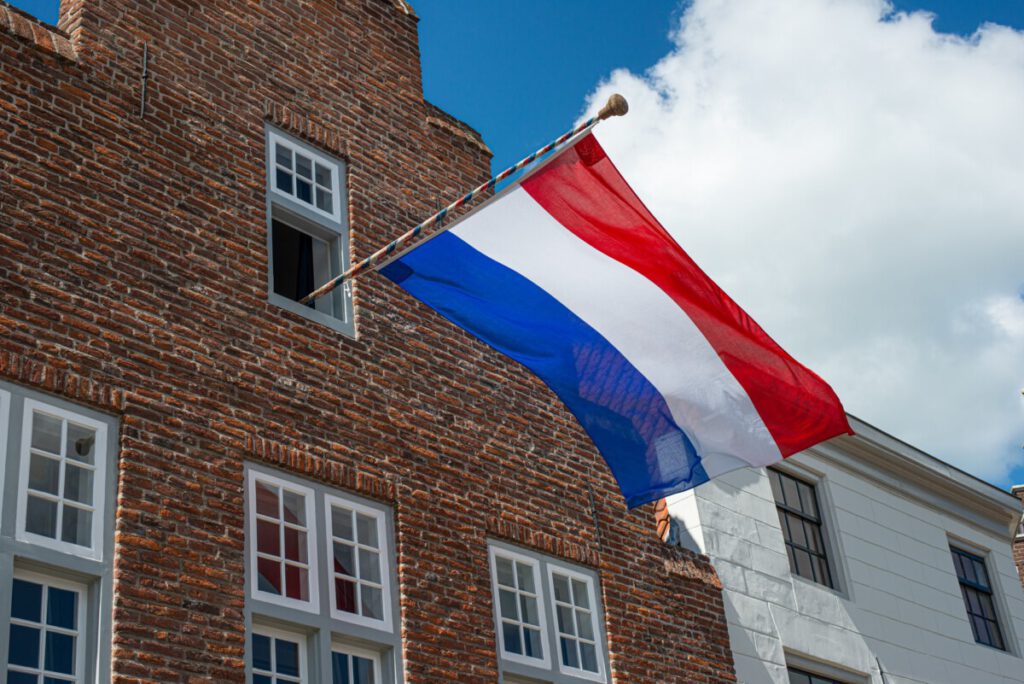
In 1937, Queen Wilhelmina issued a no-nonsense royal decree declaring, “The colours of the flag of the Kingdom of the Netherlands are red, white and blue.”
In the official lingo, the colours are clear vermilion, clear white, and cobalt blue — but who uses the word “vermilion”?
While the first flag of the Netherlands was orange, white, and blue (we’ll get to that later), the orange stripe was gradually replaced by a red one during the 17th century. This became known as the Statenvlag (States Flag).

So, why did the colours change? The Dutch were seafaring people, and red was more visible on the water. At least, that’s how the story goes.
Orange, white, and blue: the ‘Prinsenvlag’ of the Netherlands
Nevertheless, you may have spotted a Dutch flag with an orange stripe instead of a red one. Let’s be clear: that is not entirely without controversy.
This particular flag was first waved by the Buccaneer Rebels known as the Geuzen (don’t bother trying to pronounce it!), who helped liberate the Netherlands from Spanish rule in the 16th century with a little help from William of Orange.
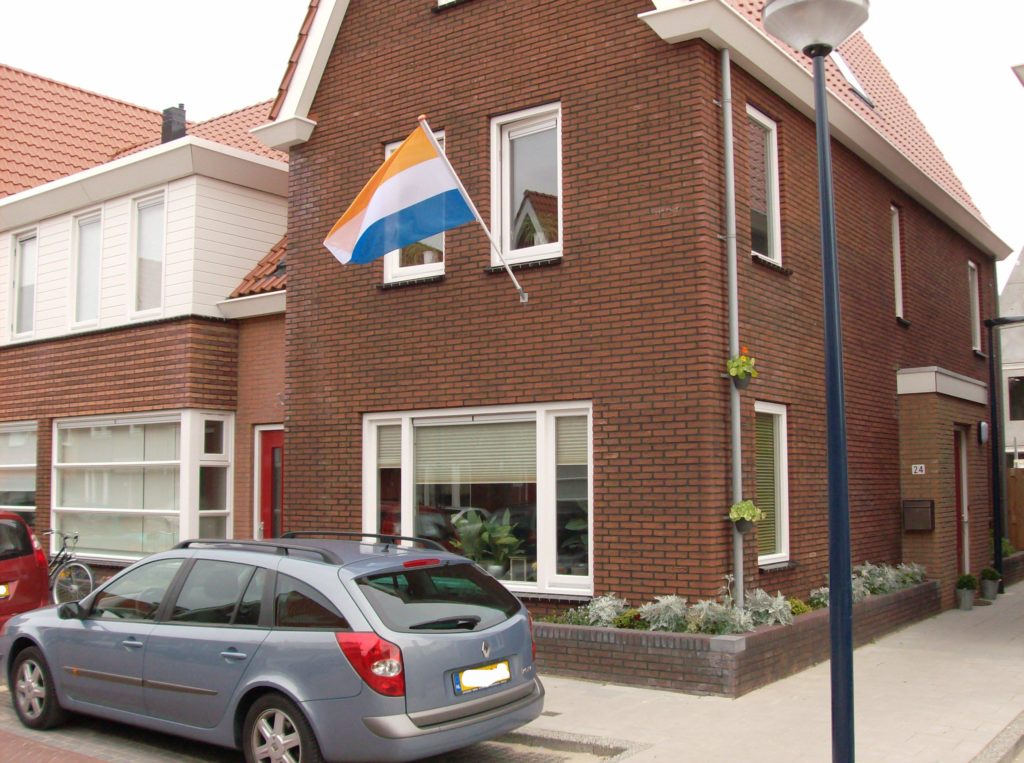
Although the orange, white, and blue are commonly considered the original Dutch flag, flying it became a problem after France annexed it.
In 1810, it was replaced by the Imperial French flag (which has a colour scheme suspiciously similar to the Dutch).
When the House of Orange resumed its rule of the Netherlands in 1913, the colours of the Dutch flag weren’t officially established. Both orange and red versions were flown, although government buildings tended to prefer the red, white, and blue flag.

So far, so good, right? Well, wrong — someone had to ruin it.
READ MORE | What is with the three X’s on the Amsterdam flag?
In the 1930s, a small party called the NSB (National Socialist Movement) started to rise in the Netherlands.
In the early 30s, the NSB announced that the “Orange, Blanche, Blue” was the only real Dutch flag and started displaying it at many events.
In an act of defiance, the Dutch Royal House, under the name of Queen Wilhelmina, implemented a law asserting that the Red, White, and Blue was the only real Dutch flag — and always would be.
Thts d Prince’s Flag (Prinsenvlag) Old Dutch Flag – Orange White and Blue pic.twitter.com/3lXhaOq7kN
— अहं रुद्रेविरबासुविश्चरम्याहं आदित्यैरुतबिश्वदेवैः (@rudrebhirvasu) April 28, 2019
The NSB, however, had some very powerful friends in a neighbouring country: the Nazis.

When Holland was trampled and completely tarnished for resisting in 1940, the NSB managed to convince the Nazi party that they should be at the helm of the country (under the ever-watchful eyes of the German occupation force.)
Interestingly, the Nazis decided not to succumb to the NSB’s fiery wish for an orange stripe but kept the red stripe. However, they heavily restricted any real use of the Dutch flag: The Third Reich planned to permanently absorb the Netherlands into its homeland.

Something that never worked and caused much friction and suffering during the years of occupation.
As a result, the orange stripe on the flag is still used by the rare neo-Nazi groups that are active in the Netherlands and who often honour the NSB and those of the German Occupation Force that lost their lives on Dutch soil.
READ MORE | What was the VOC? The Dutch East India Company explained
So even though the “Orange Flag” had an honourable beginning as part of Dutch resistance and independence, it was tarnished by Nazi sympathisers.
Still, the flag is often found on old paintings of the brave Geuzen-Buccaneers fighting Spanish warships or Dutch merchant ships sailing for the East.
In the latter case, the orange faded into a red stripe from bleaching in the tropical sun and salty ocean water.
Dutch flags: the tiny orange pennant
Despite a controversial history, there’s still a speck of orange today. 🧡
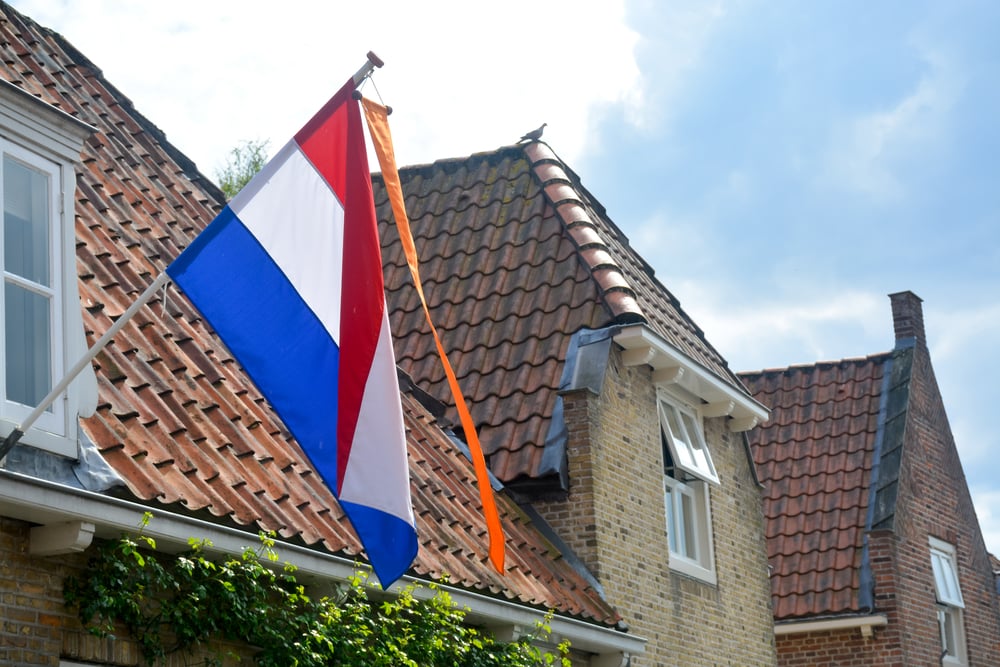
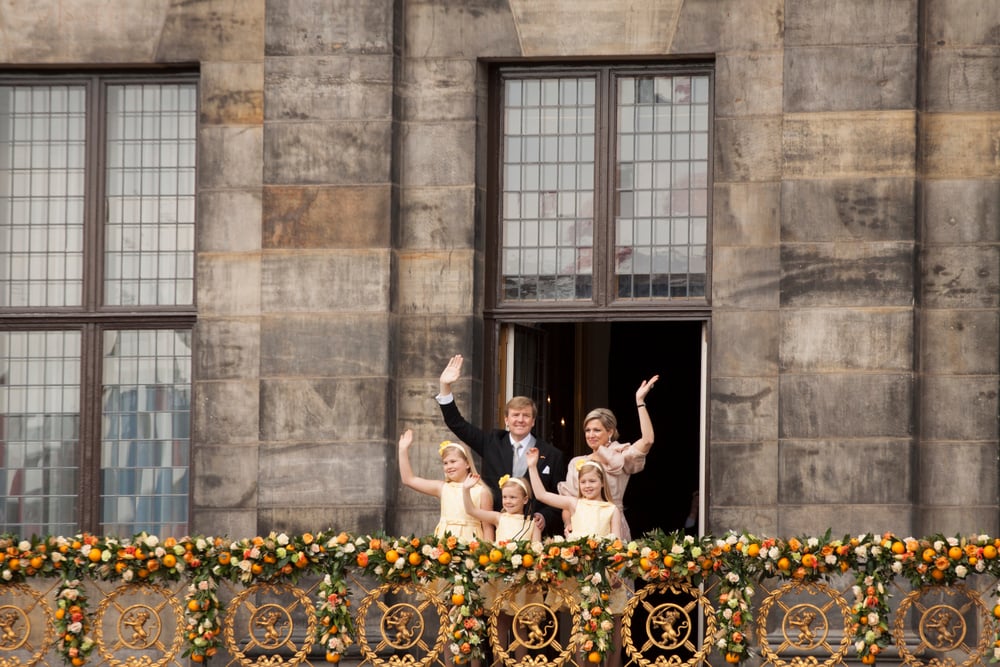
An orange pennant is flown above the red, white, and blue flag on special occasions, such as King’s Day and the birthdays of the Princess of Orange, Queen Máxima, and Princess Beatrix.
The pennant is attached to celebrate the House of Orange, the Dutch Royal House, which traces back to that same William of Orange and his Buccaneer partners! — Avast ye’ Hollanders and Zeelanders, drown those Spaniards!
Dutch flag traditions
Although there are no official rules for using the Dutch flag, it does come with many traditions. Let’s look at a few!
Flying half-mast
If the Dutch flag is at half-mast, you should be aware that there is some sort of national (or at least regional) mourning and that official permission has been given for public display.
READ MORE | American man asks Reddit how to store the Dutch flag, gets the real deal
You will mostly see this on May 4, during Remembrance Day, or after national tragedies such as the MH-17 downing over Ukraine.
The Dutch-flag hanging half-mast for respect of the dutch 154 victims of plane crash #MH17 in Ukraine. pic.twitter.com/8hi1FMN19g
— DvH_NL (@davevanhattem) July 18, 2014
Of course, any deaths in the Royal Family or exceptionally important political figures (still in function) will also usually bring the half-mast flag with it.
So, be aware that the Dutch may not be in their happiest mood that day — the flag is there for a reason!
Celebrating the good times
Lastly, the Dutch also use their flags for “once-in-a-lifetime achievements.”
Just graduated from high school? Hang the flag with your backpack attached to it! Had a new baby? Hang the flag to show a new Dutch citizen has just been born!
Dutch flags: inspiring others?
Oh, and yes — New York City’s flag is blue, white, and orange, referencing its Dutch history.
Luxembourg‘s flag is also red, white, and light blue because it was part of the Netherlands before Holland, Belgium, and Luxembourg separated.
Yes, for real, the Netherlands used to be a medium-sized European country. Bizarre…
What are your thoughts on the history of the Dutch flag? Tell us in the comments!

Interesting stuff. Here’s a little lighter take on the difference between the flags of the Netherlands and Luxembourg (and Paraguay too):
http://realfunwithflags.blogspot.com/2018/02/doppelgangers-red-white-blue-stripes.html
I’m sorry to say but in with the current administration in America they might as well use our flag for toilet paper. president Trump is rapidly destroying America. He is a fascist Nazi whose hero’s are Hitler and Putin. I have always thought using a piece of cloth as representing greatness is a stretch and now I am proven right. Only a country with real values does a flag represent anything of importance which America is ruled by a monster and lays claim on the flag that actually used to stand for something but no more Trump has desecrated everything he’s touched
Nederland werd in 1813 weer een onafhankelijk Koninkrijk en niet in 1913