England’s NHS is battling what they’re calling a “Worst Case Scenario December” with flu cases soaring, and Dutch experts have a clear message: it’s coming here too. The only question is when, not if.
The numbers from across the Channel are grim. Last week alone, 2,660 people were admitted to English hospitals with flu, an exceptionally high number for mid-December.
“This flu will undoubtedly come to the Netherlands. Viruses don’t care about national borders,” immunologist Ger Rijkers tells RTL Nieuws.
It’s all about the vaccine mismatch
The culprit is a mutation of the H3N2 virus. Calling it a “superflu” is a bit dramatic, but it is more contagious.
The real problem? This year’s flu vaccine isn’t perfectly matched to the dominant strain.
Each year, health authorities try to predict which flu variants will dominate based on patterns in Asia, where flu season starts earlier.
Sometimes those predictions don’t pan out, and that’s what’s happened this winter, Rijkers explains to RTL Nieuws.
“Fewer people have come into contact with it, meaning less immunity has built up,” says Ted van Essen, influenza expert and chairman of the Dutch Immunisation Foundation.
The elderly and people with weakened immune systems are most at risk, with the virus potentially triggering pneumonia and increasing heart attack risk in vulnerable groups.
Christmas gatherings could fuel the spread
With Christmas festivities approaching, families gathering indoors create perfect conditions for flu transmission.
“Christmas is a celebration for the flu virus,” Rijkers warns. “Without wanting to cause too much concern, I would say be careful.”
The good news? Flu vaccinations still offer protection against serious illness, and people can still get the shot.
Van Essen emphasises it’s particularly recommended for those with heart or lung conditions, or weakened immune systems.
Have you had your flu jab this year, or are you bracing for the inevitable? Share your flu season survival tips in the comments.
After years of overwhelmed ambulance services, alcohol-fuelled chaos, and canal-side carnage, Amsterdam Mayor Femke Halsema is finally saying enough is enough.
King’s Day 2026 could look very different, with visitors from outside the city still welcome but “in lesser numbers.”
In a letter to the city council, Halsema sketched out a new vision for the annual orange-fest, one that prioritises safety and manageability over unbridled chaos.
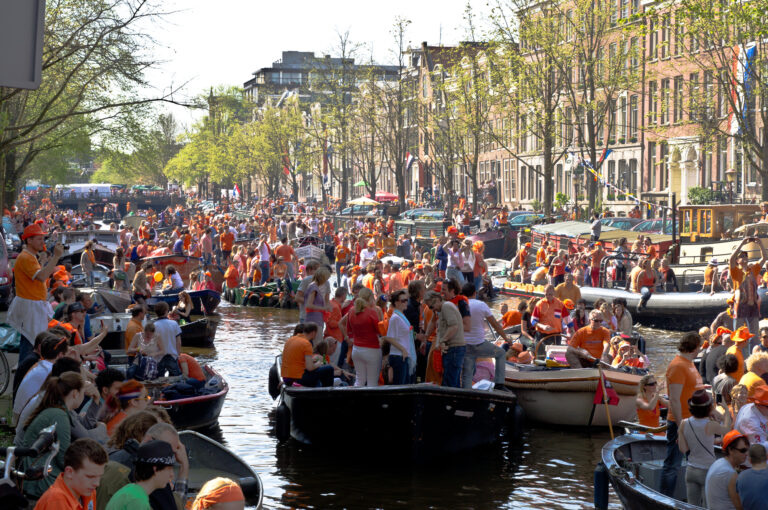
Every 27th April, hundreds of thousands of revellers descend upon Amsterdam to celebrate the Dutch King’s birthday in a blur of orange outfits and questionable decisions. It’s a tradition that’s grown so massive that emergency services are now buckling under the pressure.
When the party gets too big
The problem is simple: Amsterdam’s King’s Day celebrations have become victims of their own success.
Tens of thousands of people from across the country pack into the city centre, leading to overcrowded streets, overflowing emergency services, and a generally unmanageable situation.
During the most recent edition, things became quite grim. The ambulance service reported an “uncontrollable number” of emergency calls, with dozens of urgent cases stuck on hold whilst paramedics struggled to reach people through the crowds.
“The pressure on operational parties is increasing,” Halsema wrote.
What’s changing for 2026
So what’s the plan? According to the AD, Halsema wants to transform parts of the city centre into “bounded festival areas”. Think the Westerstraat and Noordermarkt, where there’s space for proper events with some semblance of control.
“But not beyond that,” she emphasised, which is Amsterdam-speak for “please don’t turn every street into a makeshift rave.”
Visitors from outside Amsterdam will still be welcome, just not in the overwhelming numbers that have characterised recent years. It’s a diplomatic way of saying: maybe stay in your own gemeente (municipality) this time?
The city is also planning to make paid festivals on the outskirts more attractive by extending their end times to 10 PM.
On top of this, more mobile first-aid teams will cycle around the city, and there’ll be a crackdown on illegal alcohol sales and unlicensed street parties.
Will this actually happen?
The big question is whether these changes will ever become a reality. And if so, will they be implemented as soon as next year? According to the AD, this is still being considered.
However, in her letter, Halsema acknowledged that “actual change requires a multi-year approach”, which we’ll take as meaning Amsterdam on King’s Day 2026 is probably going to be just as chaotic as last year.
The mayor had considered more extreme scenarios, including “intensive intervention”. But she decided it was important to maintain space for celebration in the city centre, even if that celebration needs some boundaries.
Because let’s be honest: King’s Day without Amsterdam would be like Sinterklaas without pepernoten. Technically possible, but not quite the same.
Planning to celebrate King’s Day in Amsterdam next year? Let us know in the comments whether you think these changes will actually make a difference, or if it’s just rearranging the deck chairs on the Oranje-Titanic.
You would be forgiven for thinking that some headlines are pure satire — when they’re real.
Well, that’s not the case here. Today, we’re bringing you some of the most hilarious headlines straight out of De Speld — the Dutch version of The Onion.
De Speld is just like your regular ol’ Dutch newspaper, but the only difference is that none of its headlines are actually true.
It covers all the hot happenings in the Netherlands while simultaneously poking fun at Dutch people and culture.
While their headlines are originally in Dutch, they’re easy to understand. Plus, what’s a better way to learn Dutch than to laugh all along the way? 🤔
1. Throwing shade at Dutch public transport and their (non-existent) punctuality
Translation: “NS strike starts today 15 minutes later than planned”
Over the years, the Dutch railway company NS has organised multiple strikes that affected commuters all around the lowlands.
But, in the classic De Speld spirit, this also gives them the chance to poke fun at the railway company’s imperfections — the trains are so often behind schedule, not even the strikes can begin on time.
Translation: “Joe (15) has started smoking cigarettes to get rid of his vape addiction”
It’s common practice for smokers to switch over to electric cigarettes or vape pens to get over their smoking addiction, but who says it can’t work the other way around? Not De Speld!
And, of course, while De Speld’s headlines aren’t exactly true, there’s some truth to this joke. The smoking rate among Dutch youth has been increasing since the pandemic.
Smoking prevalence went up from 4.5% to 5.2% among teenagers in the Netherlands during the partial lockdown, possibly due to increases in stress levels and less access to leisure activities.
3. Winter sports completely changed this little Dutch girl’s life
Translation: “Sara (8) skied after the wrong father and now she lives in Deventer.”
The Dutch love going on winter sports getaways — especially if it involves going down a mountain at breakneck speeds. 🏔️
Unfortunately, from the back, all those people in ski jackets and trousers look rather the same. Poor Sarah — we hope she’s enjoying her new family.
Either way, this sounds like every child’s nightmare. Though we don’t know what the worst part is, it’s either losing your family or having to live in Deventer. 😭
4. Don’t want to deal with Schiphol’s long lines? Here’s an alternative way to travel!
Well, this had many people wondering what she was actually trying to do that hot summer day — and we think De Speld cracked that case wide open.
With so many trips getting cancelled at Schiphol over the summer, it’s no surprise that people sought alternative transportation to get to their holiday destinations.
5. The government finally agrees on a deal with Dutch farmers regarding the nitrogen crisis
Translation: “Farmers propose a compromise: all proposals off the table and we’ll do exactly what we want”
In 2022, as a result of the Dutch cabinet’s plans to reduce nitrogen emissions, farmers were left with the task of making significant changes on their farms. If not, their businesses were bound to suffer.
So, as you can expect, farmers weren’t too happy about this and took their anger to the streets of the Netherlands by setting fire to manure and hay bales and blocking highways. 🚜
But as everyone knows, the Dutch farmers were really glad to come to terms with the cabinet’s plans, so long as they could continue to do things as they please. And, for people who are basically in charge of the country’s agriculture, we’ll let it slide. 😬
6. Railway workers get inspired by Dutch farmers’ protests for their strike
In classic fashion, De Speld mustered up a news story that would put NS employees in the spotlight. Though, as farmers are notorious for blocking highways with their trucks, the NS staff would probably have a much harder time fitting their preferred transport on the roads. 🚂
7. Dutch boomers know how to get to young people’s weak spots
Translation: “Boomers get back at young people with ‘ok loner'”
Statistics Netherlands showed that four in ten Dutch people over the age of 15 felt lonely in 2021. 🤯
Upon hearing about this, boomers have managed to find a way to get back at the younger generation for their lack of traditional values… and friendships. Ouch! 🫢
8. The energy crisis is causing loads of problems for Dutch innovation
But the Dutch, like many other non-religious people, celebrate Christmas, Easter, and other holidays with religious roots.
Though this De Speld headline is clearly fake since it goes against the Dutch approach towards sustainability and, well, saving money. Throwing away half a turkey? The Dutch know better. 🦃
10. Dutch companies find fun new ways to attract workers from home back to the office
The Dutch House of Representatives even passed a legislative proposal in 2022 which allowed workers in the Netherlands to work from home at their own discretion.
So, De Speld imagines what Dutch companies might do to attract workers back to the public workspace: snort gardens for the cocaine-heads of Zuid, so all the hard-working businessmen can keep up those energy and productivity levels, of course! 🙈
11. Dutch directness takes new toll as household energy bills go up
Translation: “Johan proposes to split the energy bill on the first date”
Any international who’s lived in the Netherlands can agree on one thing when it comes to the Dutch: they are the most direct and will not waste time beating around the bush.
The frikandel is perhaps the most contentious of Dutch foods. It’s both widely loved and widely hated, but what the frick is it?
Even the history of the frikandel is controversial. Some argue that it was invented in Dordrecht in 1954 by Gerrit De Vries. De Vries’ frikandel was essentially a meatball — but long and cylindrical.
However, others claim it was invented in Deurne in 1958 by a man called Jan Bekkers, who would later coin the appetising word frikandel.
Regardless of who created the frikandel, the legacy lives on, and it has become a staple in Dutch cuisine, whether we like it or not.
So what is a frikandel?
The frikandel is a go-to snack in the Netherlands. Its natural habitat is typically a snackbar, like the nicely heated Febo vending machines or in the “to-go” section of a supermarket.
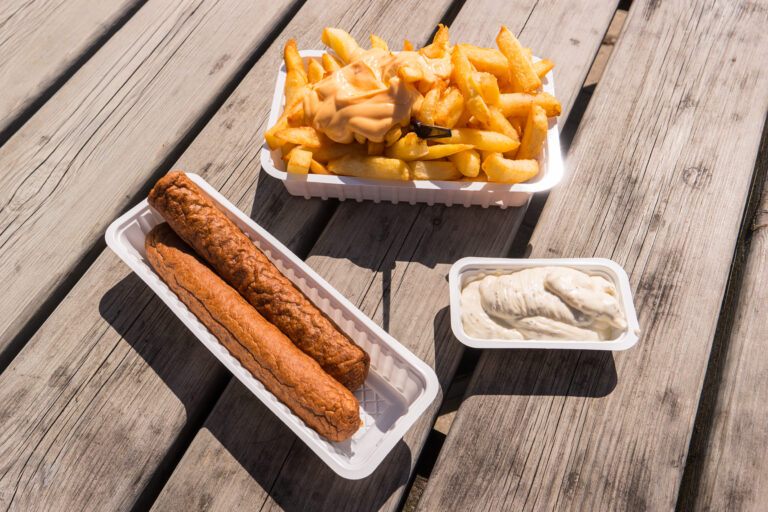
You could describe the frikandel as a long, cylindrical attempt at a meat stick. It’s classically encountered on its own or dressed up as a frikandelbroodje or a frikandel speciaal.
A frikandelbroodje is like a sausage roll with a bit of curry sauce in the pastry, and a frikandel speciaal is a bread roll with onions and curry sauce (We guess the onions make it special?)
This Dutch snack has a notorious reputation. That’s understandable, given that as soon as you ask the simple question, “What is it?” people already struggle to find the answer. Here are just a few reasons why some hesitate to take a bite. 👀
What’s in a frikandel?
The frikandel is essentially a long, skinless sausage or “a cylindrical, chewy, skinless, dark-coloured, sausage-like meat product” … delicious?!However, this doesn’t mean it consists purely of one specific meat. Indeed, you could say the frikandel is a hybrid meat product.
What meat you’re eating is never certain. All we can say is that it’s probably a bit of everything: the usual combination is pork, chicken, and beef, with chicken making up the highest proportion.
What do you think: delicious of repulsive? Or both? Image: Depositphotos
However, apparently, horse meat is simply too expensive for the frikandel (what that means for the cow udders, though, is uncertain.) This has led to many people shunning the poor frikandel.
To add to the ambiguity, the meat used is mechanically separated meat (MSM), otherwise known as “white slime” — delicious. The creation of MSM involves the grinding up of carcasses from which most of the meat has already been removed.
So really, you could describe the frikandel as the Frankenstein of sausages.
Luckily, if you’re craving a frikandel, you don’t have to subject yourself to the white slime! Recent years have seen the addition of vegetarian and vegan frikandel to the market. They’re typically made of soy protein and grains, and they taste just the same!
A Dutch treasure (whether they like it or not)
Any attempt to describe the frikandel in full sounds quite unappetizing, so for now, let us just talk about how much of a Dutch treasure this snack has proven to be.
When asked, our readers responded with a variety of emotions toward this sausage. Whether you agree that the frikandel should be shunned or bowed to, its presence is undeniably popular in the Netherlands.
Statistics show that the Dutch hold frikandellen close to their heart, eating over 600 million per year. That means the average Dutchie is downing 35 frikandellen every 12 months.
I would like to clarify that my annual average was one back in 2018, and it has been less than one ever since. However, some colleagues have admitted that they may have managed to consume the annual average over long, boozy weekends in their youth.
The stats don’t lie, so even if the frikandel hasn’t infiltrated your taste buds, it has certainly infiltrated Dutch society. It’s even found in pop culture references; just check out this song!
Interesting toppings and variants of the frikandel
There have been many interesting attempts to alter the standard frikandel — either with toppings or by altering the frikandel’s composition altogether.
Some pairings were simply never going to work, such as the chocolate frikandel, the orange frikandel, and the beer frikandel. But some arose victorious from the lab.
Apple sauce
One reason why we are personally at odds with the frikandel is the fact that people think apple sauce (or appelmoes, as you Dutchies call it) is an acceptable addition.
While we could certainly dedicate an entire article to ranting about this, there are further offences that need to be discussed.
The Loempidel
For example, one can enjoy the loempidel, a mix between a frikandel and a loempia. A loempia is an Indonesian version of the Chinese spring roll. It’s larger and filled with more meat (no wonder the Dutch love it!)
In this case, the frikandel is wrapped in loempia pastry and filled with a sweet sauce.
If you simply can’t get enough of the frikandel, do not fret. The frikandel XXL may be perfect for you. Weighing in at 250g per serving, you certainly won’t go hungry. The only issue you may face is finding a sufficiently long broodje to go with it.
Pesto frikandel
If you’re a bit of a food snob and would never allow the frikandel speciaal in all its brightly coloured curry-sauced oniony-ness to pass your lips, then the pesto frikandel may be more to your liking.
This fancy number swaps out the curry sauce and onion for pesto mayonnaise with pine nuts and Parmesan cheese. The frikandel is not only sustainable but can also be suitably gentrified.
Many elements of Dutch culture confuse us, but the one cultural phenomenon that has both disgusted and amazed us is that of the frikandel eating contest.
Competitors sit at a long table, shoulder to shoulder, and shove frikandelen into their mouths. It’s a serious sport (they have cheerleaders and all!), and while you may grimace throughout, you can understand why the endeavour attracts such an audience.
Sjonnie Noordeinde from Delft holds the record for the most frikandellen eaten in an hour. He ate a staggering 47 of them in one hour!
If this seems like a relatively low number to you, we suggest you head out and try one. That rubbery, chewy texture doesn’t go down so quickly.
Check out the video above. Even if you don’t find the idea strangely entertaining, watch it for educational purposes. It’s quite an anthropological study.
Oh, the frikandel, we don’t know how to feel about it. What do you think? Let us know in the comments below.
The holidays are upon us! It’s bijna (almost) Christmas. So, here’s your survival guide to celebrating winter holidays in the Netherlands.
You may be new to the Lowlands and feeling a bit confused about all the celebrations that people are chatting about. Some are about to happen, some have already happened, and we think it’s high time to test your knowledge on Christmas in the Netherlands.
How does Christmas begin?
To me, it all starts with Sint Maarten at the beginning of November.
You might have run into a crowd of grubby children holding paper lamps, walking along the streets, knocking on doors, and demanding candy while singing, “11 November is de dag, dat mijn lichtje, dat mijn lichtje branden mag” (11 November is the day that my light, that my light may shine bright).
Sint Maarten is celebrated mostly in the southern Catholic provinces of the Netherlands, such as Limburg, and those adjacent to Germany.
This day commemorates Saint Martin of Tours, who was a bishop from Gaul (modern-day France).
While Martin of Tours was a soldier in the Roman army, he performed a famous act of charity that quickly became the most-repeated story of his life.
Back in 340 AD, as Martin approached the city gates of Amiens, he met a beggar dressed in rags.
Impulsively, Martin cut his military cloak in half and gave one piece to the man (the other half belonged to the Roman Empire).
That night, Martin dreamt of Jesus wearing the donated cloth and saying to the angels, “Martin, who is still but a catechumen, clothed me with this robe.”
Fast-forward to now, on the night of Sint Maarten, little children walk together holding lamps and giving away fruit and candy to remember the generosity of Sint Maarten.
Sinterklaas in the Netherlands
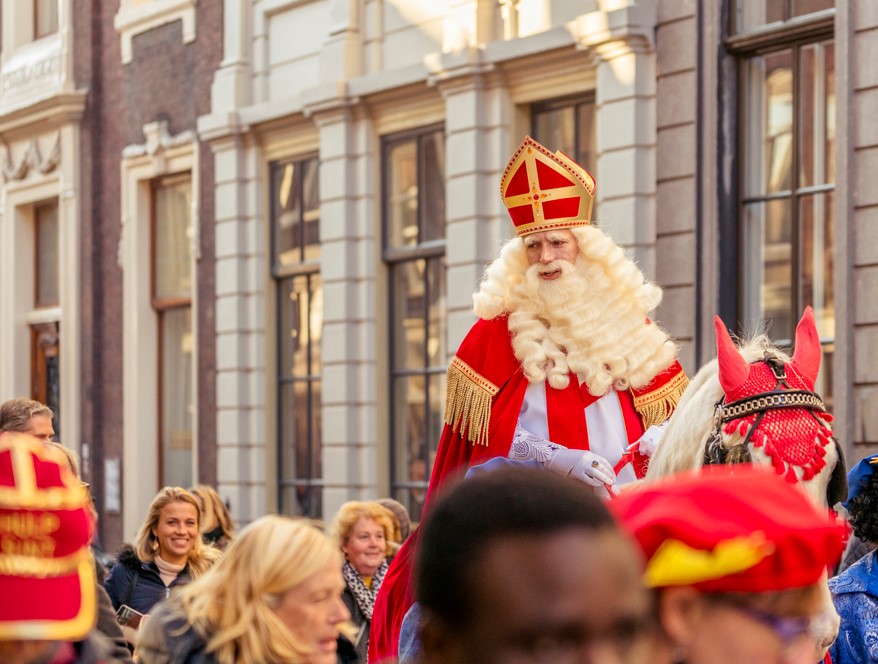
Roughly a week after Sint Maarten, on the first Saturday after November 11, another famous saint, Saint Nicholas (better known as Sinterklaas), makes his grand entrance into the Netherlands.
He arrives from Spain on a steamboat full of presents and mandarins.
I still don’t understand why the Sint decided the Iberian Peninsula would be “home” if he is supposed to be a Turkish bishop.
But I guess, like many Dutch citizens, he thought Spain was a great place to retire.
Sinterklaas is a huge cultural figure in the Netherlands. Image: Depositphotos
Anyhoo, after great anticipation (from the children), Saint Nicholas is welcomed with a parade.
News outlets closely follow his arrival and city visits, during which he is accompanied by his controversial helpers, the Pieten. They deliver presents, mandarins, and spice cookies, while also spying on children and pulling pranks every chance they get.
I don’t think there is another country that takes make-believe to such a high level.
There is even a TV programme dedicated to the daily activities of Sinterklaas, so everyone can participate in the collective fantasy.
At my daughter’s school, Rommel (messy) and “disco” Piet made a visit. As we arrived at school one morning, all the lights were off, dance music was blasting, chairs were upside down, and everything was out of place.
The kids get super into it, expecting little treats at all times, leaving their shoes by the window every night, and blaming all kinds of happenings (like missing things) on Piet.
All these shenanigans take place during the three weeks between November 15 and December 5.
Pakjesavond in the Netherlands
Pakjesavond (evening of presents) is celebrated on December 5.
A loud thump is heard outside the door, and when you open it, a big burlap bag appears. Surprise, surprise! It’s full of presents. 🎁
Families gather to eat spice cookies, drink hot chocolate, and open presents. Some families also dedicate Sinterklaas poems to each other, making (harmless) jokes about one another’s qualities.
Christmas decorations in the Netherlands
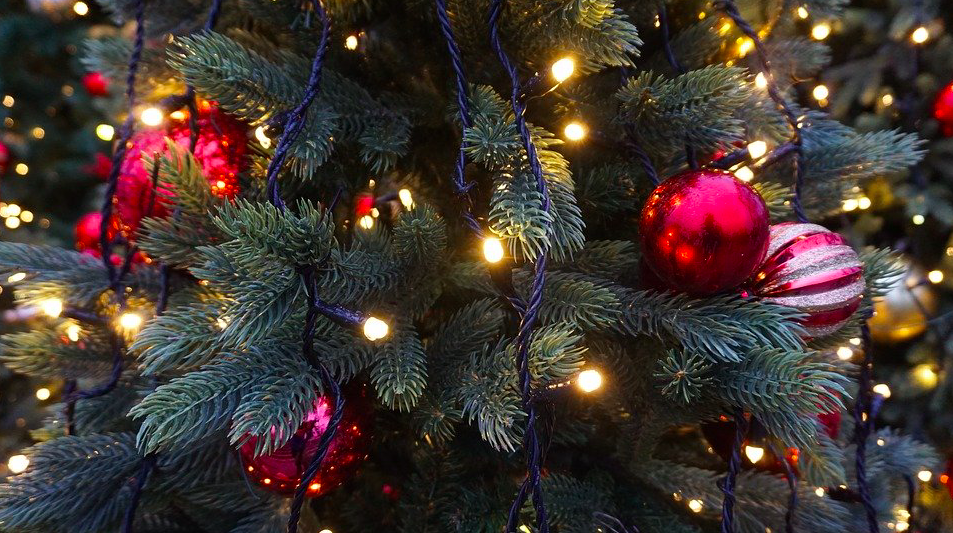
Please be aware that no Christmas tree or other Christmas decorations are “allowed” to be set up until after Sinterklaas has left, that is, after December 5.
Some people take this very seriously. It is considered rude, disrespectful, and impolite to even dare think of Christmas until all the Sinterklaas craziness is over.
Better not to put up your tree too early, tempting as it is. Image: Pixabay
Only by December 6 does the whole country finally start preparing for Christmas and the New Year.
But if you thought Christmas Eve was a thing, you would be wrong. December 24 is still a normal day for the Dutch. For most companies, it is still a regular working day.
If you are Catholic, the traditional mass will take place, but other than that, NOTHING happens on the 24th.
Christmas Day in the Netherlands
Christmas is on December 25, but the Dutch refer to this as the First Day of Christmas. This is the day when families gather, have dinner together, and exchange presents.
There is, however, no turkey, no fruitcake, or any complicated dish.
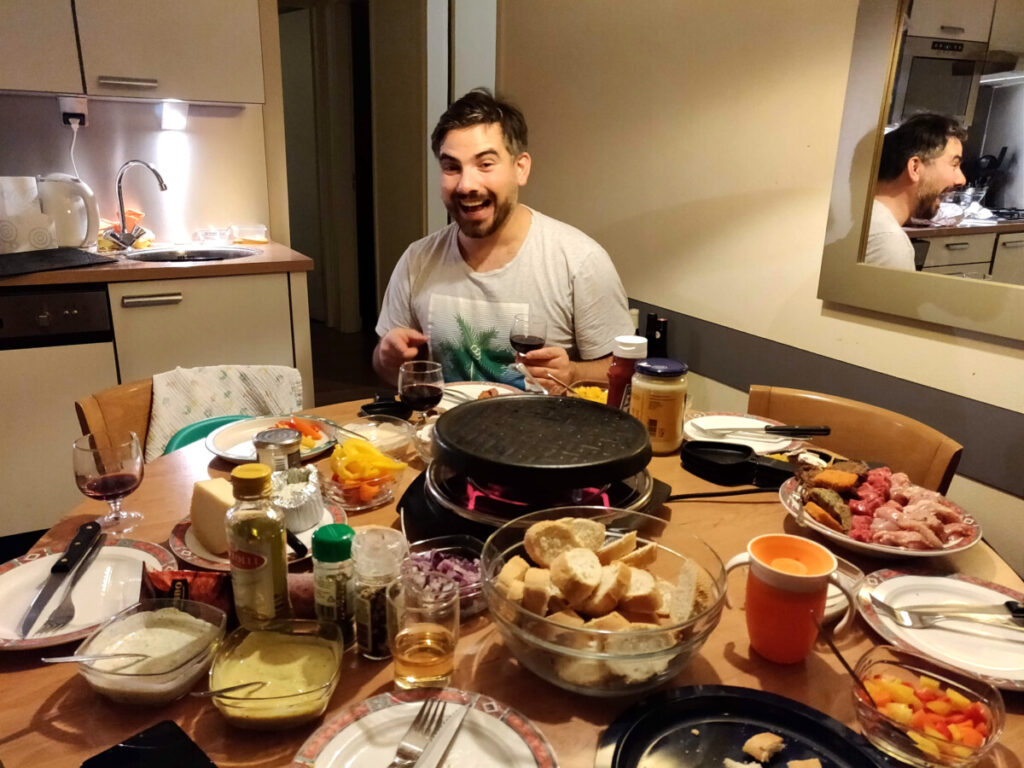
Practical as they are, Dutchies traditionally eat something they call gourmetten, which might leave you puzzled.
It is a “make your own dinner” kind of meal in which they take out their electric raclette plank and share a meal of grilled meat, cheese, veggies, and assorted sauces. That’s it.
Ok, but it looks delicious, right? Image: Abuzer van Leeuwan/Supplied
If you really want a turkey, you can order it in advance from your local butcher.
Second Christmas in the Netherlands
Then comes the Second day of Christmas in the Netherlands, which is on December 26.
This is when you normally spend time with the other side of the family, but it strikes me as weird that they still think it is Christmas because, to me, Boxing Day is when you just chill at home.
If you are Mexican, eat recalentado (warmed-up leftovers from Christmas Eve) and maybe try to score some sales.
I mean, by then, Jesus (if you are a believer) had already been born for two days! You don’t celebrate someone’s birthday two days after the actual event, do you?
But I guess this is just another facet of the Dutch ability to compromise, to polder, to try and avoid the ultimate yearly conflict every family has to face: “With whom do we spend Christmas this year?” 🎄
New Year’s Eve in the Netherlands
After Christmas comes a week of calm and peace.
You can visit museums, stay at home, and rejoice in the fact that darkness is slowly going away and days are starting to get longer while you wait for the New Year — that moment when everyone rushes to make a subscription at the gym and start fresh and clean.
As for celebrating, there are some parties, mostly at hotels, and other events, but you need to make a reservation in advance, unlike other countries, where you would just go out clubbing to drink away the old year and start anew. 🍾
Dutchies are pros when it comes to fireworks! Image: Depositphotos
In years past, the Dutch bought loads of fireworks, as it was the only day of the year when people could burst their own fireworks.
As for traditional food, you shouldn’t miss oliebollen, a fried ball of dough, best eaten warm, sometimes with raisins or other fillings, sprinkled with powdered sugar.
You will see street stands for oliebollen that pop up pretty much everywhere. You can find them at bakeries, and you can even try to make them at home with the ready-made dough that exists for that very purpose.
After all the celebrations, it will be January and a brand new year. 🥳
Which Dutch traditions have you adopted, and which ones have you imported from your country?Tell us in the comments!
What could the Dutchies possibly have to teach the Brits? We’d never generalise, but the stereotypes (on both sides) do come from somewhere.
We Brits can all learn a thing or two from other nationalities — they just do things differently (and sometimes better). Here are five traits that we should learn from the Dutch.
Rest assured, no British egos were harmed in the making of this article. However, a cheeky (much-needed) humbling is definitely on the menu.
1. Be straight with people
Instead of faking our way through a distasteful meal, we could be a tiny bit more honest. Image: Pexels
The debate continues on whether or not the Dutch forwardness is considered “rude,” but in reality, sometimes you need to be direct. The Brits, however, tend to skirt around the issue at hand.
Say someone asks you if you like the dinner they made for you. “It’s gorgeous,” you say, while really you think it tastes horrible. You don’t have to be rude about it, but saying something like “thanks, but it’s not to my taste” wouldn’t go amiss.
Outright lying to be polite just means that you’re going to have that same dinner served to you over and over, and every time you’re going to have to wriggle your way out of eating it again.
It might not be the most practical, but honesty really is the best policy.
What if your boss asks you if you can work on your day off? “Sure,” Brits would say, when really they mean “No,” out of the fear of sounding difficult (I don’t do this, I promise).
Your boss would rather you were honest than spend the whole day miserable because it was too difficult to work that day. If you don’t ask, you don’t get.
You get the idea, and I guarantee that if we borrowed some more straight talk from the Dutch, we could avoid half of these awkward situations.
2. Be more stingy
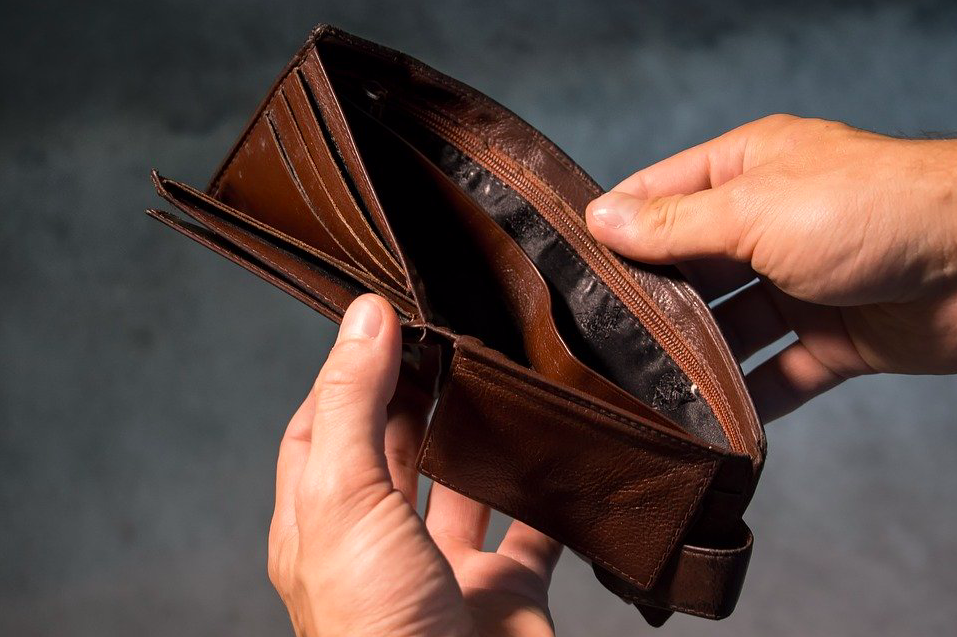
One thing the Dutch do right: keeping their wallets full! Image: Pixabay
Sometimes we Brits think that spending over €100 on a night out is money well spent. We think that getting a takeaway for the third time in a week is worth it if it means we don’t have to cook (yes, we’re a nation of takeaway lovers).
But being a bit stingy won’t do us any harm, would it?
I know for sure that impulses can take over sometimes, and we may neglect our finances. But do you really need that notepad with a picture of a kitten on it that you’ll never use? Can you really afford to pay for your friend’s meal? Or are you just being overly polite again?
There is a reason they call splitting the bill “going Dutch,” and maybe we should do it a little more often.
We get too worked up about what people think of us. By “going Dutch” on the bill, everything is fair and equal.
3. Tone down the “sorry’s”
Even when we’re not the ones in the wrong, ‘sorry’ is still part of our vocabulary. Image: DepositPhotos.com
There’s nothing wrong with being polite, and the word “sorry” can be one of the most polite words that you can say. Unless you’re British, of course, then you say that word for almost anything.
I mean, we say sorry when someone else walks into us or even when we sneeze! What on earth is that all about?
It’s used so much that it’s essentially a filler word if you feel awkward and don’t know what else to say. The issue with this is that the word starts to lose its true meaning, and as a result, it can seem insincere.
There’s been some discussion about whether the Dutch say sorry enough, but the Brits go overboard. Sometimes, I struggle to work out if we really do mean we are sorry.
Maybe we should go more Dutch and only say it when it strictly needs to be said.
4. Chill out
The Dutch have figured out how to have a good work/life balance, leaving time for fun and less stress. Image: Magnific
Us Brits can get so stressed! Juggling a million things at once, not saying no to anything (in fear of offending someone), and just generally not relaxing.
We would all be much happier if we took a little time for ourselves. The Brits work longer hours than the Dutch, and it would be great if that culture would change; maybe then we would get our work-life balance in order and be happier overall.
We already know that Dutch children, and the population in general, are much happier than most of Europe. Why? Less fretting and more quality time.
It does help that the Netherlands has so many cycle routes. I actually get more sun here than back in the UK (shocking, I know). Let’s practice niksen or gezelligheid, take a chill pill and try to stop ourselves from burning out. 🤗
5. Less Dutch courage, more actual courage
If we had a little more confidence, we might find socialising a little easier. Image: Magnific
A lot of us get impostor syndrome every now and again. The second we get pushed back, the Brits tend to feel insecure (remember, we’re an awkward bunch).
As a result, we let those negative thoughts win and use alcohol as a helping hand.
Even when we write a resume, we worry that selling ourselves makes us “stuck up.” If we forget someone’s name, we even try to avoid asking, so we are awkwardly trying to skirt around needing to say the person’s name.
In short, we are just awkward and insecure sometimes. After all, we do tend to have a glass of wine or two (maybe even the bottle) and call that a bit of “Dutch courage.” Why’s that?
Throughout history, we wanted the Dutch’s confidence! It would be great if we could do it with a little less alcohol. 🍺
So there you have it, a highly stereotypical, slightly dramatic overview of how the Brits could benefit from the Dutch way. You know it’s true, though.
What else do you think the Brits could learn from the Dutch? Let us know what you think the Dutch could learn from the Brits down below.
A new study finds that the influx of international students to universities in the Netherlands brings, aside from a lot of money, a lot of benefits for their Dutch peers.
Namely: love, marriage, travel, a competitive edge, openness, and tolerance.
The large-scale study will soon be published in the American Economic Journal, where economist Stanislav Avdeev studied first-year bachelor’s students between 1988 and 2019.
Specifically, he looked at how they fared over time. According to Trouw, this is the first study that has been able to clearly show the long-term social impact of internationalisation on students in the Netherlands.
The benefits
Imagine a Dutch boy sitting next to a girl from Vietnam at university.
When her “get the highest grade” upbringing mingles with his “just be yourself” parenting, what do you think happens?
The boy walks out of that classroom with a better GPA and possibly the mother of his future children.
Avdeev’s study found that Dutch students who were exposed to more international classmates are much more likely to enter into relationships with non-Dutch partners.
Fifteen years after their study, they were also more likely to get married to them or another international, and even emigrate years later.
The study also shows that if a university has 10% more international students, each programme will later see about one extra graduate living with a foreign partner, with more Dutch students also ending up emigrating or marrying a non-Dutch citizen.
On top of this, Avdeev’s study found that the arrival of international students makes Dutch students more open and tolerant, giving them a positive attitude about European integration.
Love-hate relationship
Recent Dutch cabinets have taken to bashing international students: blaming them for the housing crisis, the worsening quality of education, and overcrowded lecture halls.
This is why Eppo Bruins, the previous Minister of Education, insisted that programs should be taught in Dutch.
At the same time, non-EU international students are paying exorbitantly for their seats, with tuition fees quadrupling those of their European counterparts.
Capping the enrollment of student migrants could cost the Dutch GDP up to €5 billion.
But does having more international students on campus actually hurt the quality of education for locals? According to Avdeev, that concern is “unfounded.”
The study noted that Dutch students in international study groups were no more likely to be unemployed later in life, nor did they earn less than students whose classmates were all Dutch.
So the next time you blame an international for stealing your job, perhaps you should blame the current job market instead.
A call to stop the decline of international students
Roel van Herpt, the Director of Marketing and Communications at Maastricht University, believes the study supports his personal experiences.
Van Herpt tells DutchReview, “As an individual who’s developing, it is good to be confronted with different perspectives.”
Maastricht University sees Avdeev’s findings as another reason to stop the decline in international students that has been ongoing for two years.
In a statement, the university wrote that “These findings align with the results of previous research among our students. This showed that an international setting with a good mix of nationalities leads to higher grades and is perceived as enriching.”
You’ve been counting down for weeks — your visit back home from the Netherlands is almost here! It will be great, but you should also prepare for some less-expected feelings or experiences.
Inside, a well of feelings is coming up: stress from having to organise everything, mixed with excitement to see people you’ve only talked to over the phone for months.
But one thing you may not realise is that, when you get home, it isn’t really “home” anymore. After all, what, or where, is home for you?
Yeah, we get it. So, as you get comfortable in that chair that you only get to see once or twice a year, here are five things you may find out.
1. You missed some people so much…
It’s nice to be able to catch up with the people we so dearly miss. Image: Pexels
It’s so easy to get caught up in your daily life abroad that you don’t realise the chemistry you have with some people and the connection you miss by not being there.
Luckily, it’s as if no time has passed with said people. Sure, there’s a lot of catching up to do, but that connection is still there.
2. …and other people are just filler
Everybody has some acquaintances they hang out with because they’re friends of friends, or because you’re in the same circle, or because you are otherwise obliged.
When you come back to visit, though, your time is limited, and you’ve got to see so many relatives and friends that you have to prioritise. Essentially, you’ll cut out the niceties and see the people you care about.
3. Downtime is precious
It’s important to give yourself some time to rest. Image: Pexels
This is not a holiday. Sure, you’re not working, but you’re not visiting an exciting new place either.
You’re possibly experiencing A LOT of pressure from all the commitments you have. So make sure you have some quiet time, too. Especially if you’ve gotten used to living alone and are suddenly surrounded by people 24/7.
4. Life at “home” goes on, with or without you
Make sure to message or call people ahead of time to let them know you’re coming home. Photo: Depositphotos
Everyone’s happy you’re back, but that doesn’t mean they have to put life on hold just because yours temporarily is. This can come as a hard realisation if you try to meet up with people who already have plans of their own, work, or family obligations.
“But I’ve travelled all this way and taken days off! Can’t they meet me halfway?”
Yes, and you can make them understand that; but however tough a pill it is to swallow, you’re the one who left.
Our advice is simple: make your availability known in advance, try to plan a few big get-togethers, and confirm them well before your arrival.
Don’t take it personally if some of these fall through, especially if you’re from a culture where planning isn’t as high a priority as in the Netherlands!
5. The Netherlands is now your home too
After a few days, you’ll start missing the Netherlands too. Who would’ve thought, huh? Of course, you have a whole other life there, and the fact that you probably had to build it all by yourself makes it all the more “lived” in a way.
It isn’t always great, I’ll give you that, but you can also see it as getting the best of both. And luckily, at least for some of us, these two worlds aren’t too far apart!
What do you experience when returning home as an expat? Tell us in the comments below!
It’s beginning to look a lot like norovirus season. According to the RIVM, the virus, affectionately termed the “poo virus”, has been peaking in recent weeks.
That’s not to say it hasn’t already been around this year. Epidemiologist Eelco Franz of the RIVM tells AD that at the beginning of 2025, the number of infections was also on “the high side.”
Then the summer came and saved us, bringing the number of infections right down.
Now, it’s peaking again
However, with everyone nice and bundled up together as the holidays approach, shit is hitting the fan, so to say.
According to Franz, “it’s peaking quite a bit” in recent weeks. But don’t expect everyone in the office to start suddenly running to the toilet.
While the RIVM is seeing a peak in the number of infections, this is normal for this time of year. It simply marks the start of the norovirus season.
What is the norovirus?
Norovirus is essentially the main cause of what we’d call the stomach flu.
We’re not going to paint too graphic a picture for you, but symptoms typically include diarrhea, vomiting, abdominal pain, and a fever.
If you’re an adult, you can expect it to last two to three days. If you’re an adult with children, we commend you, as symptoms typically last for a week in children.
Want some good news? The variant of norovirus currently circulating should spread less rapidly than the strain the Netherlands experienced in 2024.
This one is more similar to an older strain, which we are more accustomed to.
The number of Americans applying to move to the Netherlands has hit a ten-year high, with nearly 6,700 visa applications in November alone.
This is according to an analysis of immigration data by the NOS and Nieuwsuur — an analysis that hasn’t even factored in the busiest month for visa applications: December.
Although applications have skyrocketed for all visa types, the biggest jumps can be seen in the “family and knowledge and talent categories.” The latter, in particular, is designed for highly-skilled migrants from outside the EU.
More Americans are also taking the DAFT route
Based on the data and analysis, a growing number of Americans also seem to have discovered the Dutch-American Friendship Treaty (or DAFT).
This 1956 agreement gives citizens of the United States and the Netherlands an easy route to conduct business operations in each other’s countries.
The requirements? Let’s just say that they’re a touch on the lenient end. All you typically need is a minimum of €4,500 in startup capital, a business plan, and some basic Dutch visa essentials.
This year alone, almost 700 Americans have been the happy recipients of DAFT visas — more than double the number of visa recipients from three years ago.
Easy Dutch visas? “Yes, please,” say American emigrants
To investigate the exodus, the NOS sat down with Jana Sanchez, founder of GTFO Tours, an organisation that helps Americans relocate abroad.
According to Sanchez, Americans who want to emigrate “usually prefer to go to an English-speaking country”, but it’s almost “impossible” to get visas for countries like Canada, Ireland, or the United Kingdom.
But easier visas aren’t the only reason Americans are flocking to the Netherlands. It turns out, the biggest factor driving the move isn’t something… but someone.
Many Americans fear the “rise of fascism”
Sanchez doesn’t mince words about why Americans are leaving, as she sums things up in one word: Trump.
“There’s great fear about the rise of fascism under his leadership,” she tells the NOS. “People with Latin American roots or a different sexual orientation, in particular, are very afraid right now.”
And it’s not just Donald Trump’s brand of politics that has some Americans saying “doei” to the US. As a surprise to literally no one, they’re also quite enamoured with the Netherlands’ healthcare system
“You just don’t want to have to worry about your child getting shot,” Sanchez adds. “Or having to pay thousands of dollars if you ever need to go to the emergency room.”
What do you think of the rising number of Americans immigrating to the Netherlands? Share your thoughts in the comments below.