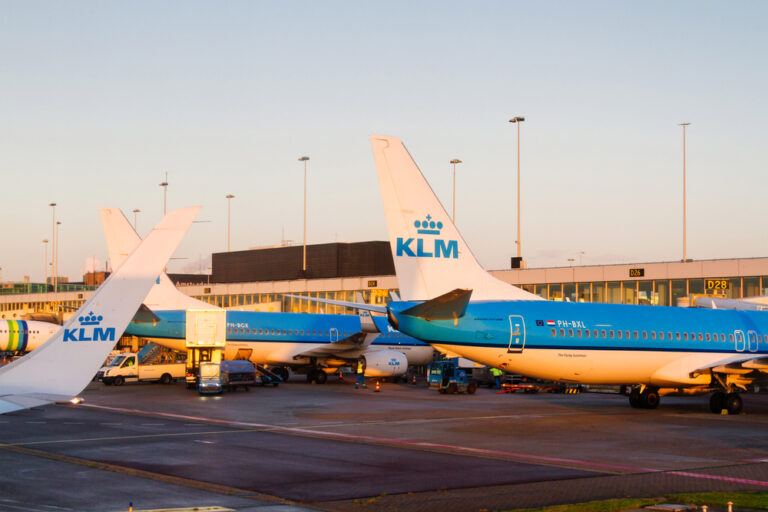
Well, turns out that after receiving much scrutiny from the European Union and the United States, that idea has gone down the drain.
America strikes back
The decrease would mean that several companies would lose take-off and landing slots at the Amsterdam airport — including the American budget airline JetBlue.
Safe to say, the US of A was not thrilled about this, the NOS reports…😬
On Monday, there was a meeting where the US pushed back against the reduction and even threatened to strike back by banning Dutch airlines (such as KLM) from landing in the US.
“Baffled” by the “blackmail”
While KLM is reportedly pleased with the Dutch government jumping to their defence, the local residents’ organization Schiphol Watch has been left “baffled”. 😱
Flights need to be scrapped for a reason, explains Alfred Blokhuizen of Schiphol Watch, to shield the environment from both noise and air pollution.
The government's experimental regulation is being suspended. This means that the maximum of 460,000 flights no longer applies. We are disappointed by this development seeing as the regulatory scheme gave local residents clarity and certainty. https://t.co/CrrVVutITmpic.twitter.com/CAsL8UcaeW
That’s why he’s horrified by the fact that the Netherlands has let themselves be “blackmailed” by another country into compromising the size of their airport.
The Nature and Environment Federation of North Holland is hoping to “reverse this decision on day 1 after the elections”.
However, Minister Harbers promises to try and maintain a balance between Schiphol’s size and its surrounding environment. Good luck to them! 👀
How do you feel about the decision to abandon Schiphol’s downsizing plans? Share your thoughts in the comments below!
With all kinds of essential information and services exchanged online in the Netherlands, internet privacy and security are more important than ever.
Moving to a new country is already stressful as it is. From your municipal registrations and Dutch healthcare to banking and taxes, it can be a handful to remember all your accounts, usernames, and passwords.
But not to worry — technology is a wonderful thing, and password managers are just one useful invention that’ll make your life much easier.
Curious about staying secure and organised when you move to the Netherlands? We’ve teamed up with NordPass, the leading password manager, to store your login credentials and clear your mind. Check out their deals and stay secure.
1. A password manager will store all your details more securely
It’s unsafe to use the same username and password for multiple sites and accounts, and you’re more likely to wind up in a data leak. Each site should have a different password.
Keep all your data in one safe place. Image: Depositphotos
A password manager is a handy programme that keeps track of all your usernames, passwords and other secure information.
You won’t have to worry about all the different logins to your social media platforms, work accounts, and government websites (think taxes and healthcare).
Password managers store website logins, credit card information, and account credentials in one easily accessible and incredibly safe space.
2. It’ll be easier to log in to all of your online accounts
Of course, storing usernames and passwords isn’t the only thing password managers can do.
You won’t have to write down or make a mental note of a password ever again. Image: Depositphotos
Password managers will autofill your data into the website, account, or app you want to log in to — you can log in with just one click, ultimately saving a lot of time. Some can even remember credit card details or passport information!
Lucky for you, NordPass is a great cloud-based password manager with the top security measures and a variety of plans. Get alerts in case of data breaches, autofill important credentials, and never worry about forgetting passwords again with their upcoming Black Friday deal.
And if you want to make it even easier for yourself, a good password manager will let you use your fingerprint reader or face ID on your laptop or phone to log in with a password manager.
3. You’re less likely to deal with password resets
Say goodbye to irritating password resets and email loops!
Begone, annoying emails and confirmation text messages! Image: Depositphotos
With a password manager to remember your details, you won’t have to worry about forgetting which usernames, emails, and passwords you use for which accounts.
Say goodbye to verification emails, waiting for text messages with codes, or opening a million and one tabs to swap out your password.
4. Password managers can generate strong passwords from the get-go
If you’re signing up for a new account or service or changing passwords, password managers can whip up an extra tough password to crack, with all the capital letters and special characters you could ask for.
For reference, a 12-character password with lowercase and uppercase letters, numbers, and special characters takes 62 TRILLION times longer to crack than a six-character password with just lowercase letters.
You also won’t have to waste any more time brainstorming a new password (or remembering it, for that matter).
5. Cybercrime in the Netherlands is at its highest level in years
Cybercrime across the world is becoming increasingly common, and unfortunately, it’s no exception in the Netherlands.
Review your online security and privacy measures, personally and professionally. Image: Depositphotos
The Dutch National Coordinator for Counterterrorism and Security (NCTV) has urged everyone to take precautions and adapt their security.
While we hope you never have to worry about security breaches, it’s better to be safe than sorry — you’ll want to make sure your individual and work passwords are being stored securely.
6. You can be notified if your information is in danger
While we hope you never have to worry about your information getting stolen, you can never be too careful.
A good password manager will tell you if your data has been breached. Image: Depositphotos
Password managers can send you alerts if your data has been breached on any website or app you use — this feature also comes in handy when you’re travelling and have to log in to public WiFi networks.
7. You’ll only ever have to remember one password
With a programme to remember your login credentials, you can free up your mental space and think about which FEBO snack to grab on your way home.
Rest easy and free up some mental space. Image: Depositphotos
Rest assured, your unique usernames and passwords will be kept track of by the password manager.
Instead of remembering ALL of your passwords, you’ll only need to remember the master password to your password manager accounts.
How to pick the right password manager for you
With all kinds of new technology on the horizon, you can find the perfect password manager for all your needs. Password managers come with a variety of features you should look out for.
Multi-platform support
Using a password manager on different types of devices and platforms is useful and convenient.
For ease of use, a password manager should be able to work on Windows, Android, macOS, and iOS.
Whether you have different types of devices for work and personal use, a password manager that can work on all your devices will make your life a breeze.
Device syncing
Being able to access your details across your devices is a must for all you internet surfers.
Easily use your accounts across devices. Image: Depositphotos
If you expect to be travelling around a lot or just want the convenience of synced password managers, you’ll want to go for a cloud-based manager that lets you access your passwords with an internet connection.
Additional cloud and file storage
If you’re working with a lot of sensitive documents or want to be able to store financial credentials, it’s possible to get a password manager that encrypts your files.
Some password managers encrypt your data on cloud storage or allow you to store documents from external file-hosting programmes like OneDrive and Dropbox.
Recovery options
Of course, there’s always a chance you could forget the master password to your password manager.
If you want to be extra safe or have a tendency to be forgetful, the top password managers will have ways for you to reset or recover the master password.
Password sharing
Generally, most tech experts wouldn’t recommend sharing your passwords with other people — but there are a few situations where it’s handy.
For example, encrypted password sharing comes in handy when you work at a company, have a side hustle, or simply need to share the family Netflix password with your sibling or if you need credit card details from your partner.
Password managers are a useful tool that should be utilised to their full potential. With fully protected credentials and easy logins, surfing the web has never been easier.
What are your experiences with password managers? Tell us in the comments below!
Are you an international working in the Netherlands? Do you love the afternoon borrels but hate that your colleagues mostly speak Nederlands? Oh, and how do you feel about the Dutch lack of hierarchy?
We’re sure you’ve got some opinions about it all! So, why not share them for a good cause?
By partaking in the #ShareMyVoice survey, you can share your thoughts on working in the Netherlands and address everything you have to say — from your biggest concerns to your highest praises.
The very best part? Your participation will actually make a difference and help improve the lives of the thousands of internationals working in the Netherlands (like you and me!).
Now, you may be wondering: “What exactly is this whole ‘Share My Voice’ thing about?” We’re glad you asked.
Share My Voice is a research initiative by the Kenniscentrum Arbeidsmigranten(Knowledge Centre for Migrant Workers), which conducts research surveys among international workers in the Netherlands.
Their goal? To make the lives of internationals easier!
It’s time to speak up. 🗣️ Image: Freepik
This time, they’re interested in learning more about internationals’ experiences with employment and working conditions in the Netherlands.
And that’s where you come in — because what better way to find out where the clog pinches than by asking the ones wearing it? ⚡️
Easy: As an international working in the Netherlands, the results of the Share My Voice research campaign directly impact the quality of your day-to-day life.
There are hundreds of thousands of internationals working in the Netherlands, and they (we!) bring great value to the Dutch economy and the country as a whole.
That’s why Het Kenniscentrum Arbeidsmihranten makes it their mission to keep us happy. 😌
Over 2.5 million Dutch residents are internationals! Image: Freepik
If happiness is not enough for you, maybe some material incentive will get you. Yup, each respondent has a chance to win one of five €100 Amazon vouchers, or one of 20 vouchers worth €25. 💸
I’m in! How can I participate?
Fantastisch! Contributing to the research campaign is easy as pie. All you have to do is take the survey and share your opinions on employment and working conditions in the Netherlands.
The whole thing takes around 10 to 15 minutes, and will go over five major employment-related categories:
Training and career opportunities
Job security and wages
Health and safety
Communication and participation
Working hours
Between meetings? Perfect time to take the survey! Image: Freepik
You can expect questions like “How satisfied are you with your current wage or salary?” and “How satisfied are you with the working hours at your place of work?”.
Do you have something to say about these topics? Great, because this is your chance to do so — judgement-free! The next survey runs until December 18, giving you just over a month to share your voice.
Don’t have time right now? Bookmark the page for later! 🔖
Who’s asking?
This survey is one in a larger series by Het Kenniscentrum Arbeidsmigranten. As an independent foundation, these lovely people are dedicated to finding out more about expats who work in the Netherlands.
Previous surveys have looked into housing, integration, training, and more. With the information gathered, Het Kenniscentrum Arbeidsmigranten wants to find out more about those who have moved to the Netherlands for work — and how they can best be assisted.
Have you taken the survey? Tell us what you think in the comments below!
Move over, Eurostar, there’s a new (Dutch) train company on the block! Promising loads of daily trains from Groningen to Paris and London, newcomer Heuro also boasts cheaper ticket prices.
Whilst all of this may sound too good to be true, father-son duo Roemer and Maarten van den Biggelaar are committed to giving us better access to cheaper international trains.
International train routes: not just for the Randstad
According to AD.nl, the van den Biggelaars want 16 daily return trips to Paris and 15 daily return trips to London by 2028. It’s definitely an ambitious plan — even Eurostar only runs four times daily — but they insist they can make it work.
They’ve done the research and crunched the numbers, and Heuro claims that their tickets will be much cheaper than the average. (God, if you’re listening, please make it true! 🙏)
And here’s the kicker: two of these trains per route will run from Groningen. Heuro believes that the Randstad gets too much time in the spotlight, and there’s high demand outside the area for trains as well.
The practical stuff
Obviously, this is expensive. (We’re talking hundreds of millions of euros expensive. 👀) The company will need to purchase trains, set everything up, spruce up the trains, and so on.
As you can imagine, there are quite a lot of things to settle before Heuro can hit the road. Or, rather, the tracks.
However, Heuro states that they’re currently in talks with train manufacturers to ensure that everything’s going as smoothly (and quickly!) as possible. Their request is for each train to accommodate 450 to 550 passengers and travel at 300km/h at least.
So the takeaway is… we’ll soon have more international trains for CHEAPER prices? Sign us right up!
How do you feel about an international train route from outside the Randstad? Share your thoughts in the comments below!
Renters and house-hunters across the Netherlands, we have some good news: soon, temporary rental contracts will be a thing of the past. 🙌
After a long discussion in the Dutch Senate on 14 November, the majority voted to initiate a law that bans landlords from offering tijdelijke huurcontracten (temporary rental contracts).
That’s great news… except, as NU.nl writes, the law does not apply to internationals or students.
Temporary contracts have a maximum rental period of two years, compared to indefinite contracts, which — you guessed it, are indefinite.
They often put landlords in an unfair position of power, as they can liberally increase rents and not be held accountable for a lack of proper maintenance in their homes.
The fine print
Wait what?! Yes, you read that right: there are exceptions to this law — and that’s where we expats get a slap across the face. 🙃
In true Dutch fashion, indefinite contracts must only be given to working Dutch people — while students and expats are left to deal with the uncertainties of temporary leases.
Temporary rental agreements will also remain legal between close relatives, and for homeowners who wish to sublet their property while they’re abroad.
More security for (some select) tenants
Natuurlijk, in a housing market that has more ups and downs than a rollercoaster at the Efteling, a ban on temporary leases comes as a sigh of relief to many (probably not to landlords 👀).
By making indefinite leases the norm for most people, the government aims to provide renters with more stability and security.
The new law will also make it harder for Dutch landlords to terminate rental contracts prematurely, leaving renters in the difficult position of having to search for new housing.
There is still uncertainty about when these new rules will come into effect, but once they do, they will only apply to new housing contracts. Existing contracts will not need to be adjusted.
What do you think about this new Dutch law? Share your thoughts in the comments!
Remember when we had no rain for a month? Well, it looks like we’re now heading to the other extreme and 2023 might just be the wettest year in recent history.
That’s no surprise as, thus far, 2023 has really been a moody year: first, it rained too little, then far too much.
And the rest of November and December? They’re also expected to be pretty rainy, even by Dutch standards. Wat leuk… 🫠
Another record broken
The rainiest year ever in the Netherlands was 1998. But the way things are going, the KNMI thinks 2023 might take home the new top spot.
For you maths folks who love numbers: 2023 had 20% more rain than the average year in the past century. If December is as rainy as November has been… well, let’s just say there’s a lot of water headed our way. 😳
Bad news for farmers
Although the rain might just annoy us while we bike to our office jobs, it’s far more consequential for farmers. With all the rain pelting down, it becomes impossible to harvest because the fields are too wet.
2023 potato harvest , IFA quoting 60% still to be lifted. Stress and strain on growers is now concerning. Growers have high cost outlays still stuck in ground. Bacterial breakdown, skin disease and overall quality will be a challenge in storage.@farmersjournal@IFAmediapic.twitter.com/fSIrUs2gpq
Want to get “high” in the Netherlands without visiting a coffee shop? Just climb one of these 11 beautiful towers!
Medieval and Renaissance towers are spread far and wide, so if you’re not afraid of heights and can climb lots of (steep Dutch) steps, consider this adventure! 🏰
Why are there so many torens in the lowlands?
Most church towers in the Netherlands were originally built from the 13th to the 16th century. Bells were put in to alert locals of happenings — whether it was time for church, weddings, funerals, a time to gather or “run like hell”.
Since the Netherlands is so flat, travellers could see towers and steeples from far away and orient themselves. To make them even more multifunctional, clocks were put in towers as well.
Towers served as watch stations for defence purposes (back to the “run like hell” events). There was also a “my tower is taller than yours” (and therefore closer to the heavens)-mentality.
Each tower has its own fascinating history and very different attractions, so let’s get to the list of the best towers in the Netherlands.
Note: Remember to reserve ahead to schedule a visit! Seasons and events can change availability and pricing. There may be age limits. For those who cannot climb or are in wheelchairs, one toren on this list even has an elevator to the top!
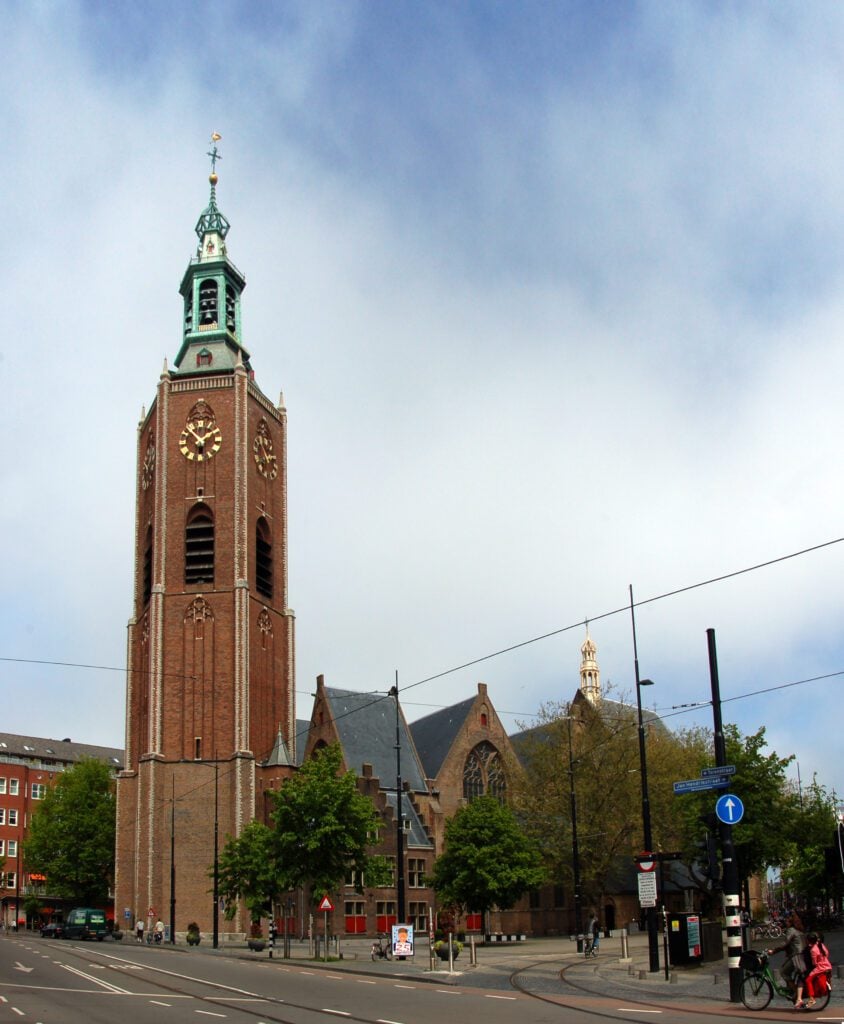
1. Grote of Sint-Jakobskerk in The Hague
Definitely one of the best towers of the Netherlands! Image: Ralf Roltschek/Wikimedia Commons/GDFL 1.2
The Haagse (Kerk) Toren was built in 1490. At 92.5 metres tall, this unique six-sided tower shows off a 360-degree view of The Hague once you climb up its 288 steps. It has a copper neo-gothic spire.
Fun fact: Van Gogh and Napoleon have both climbed these tower stairs! The Church offers facilities for grand events as well, so hold that wine or whiskey tasting until you are back down. 😉
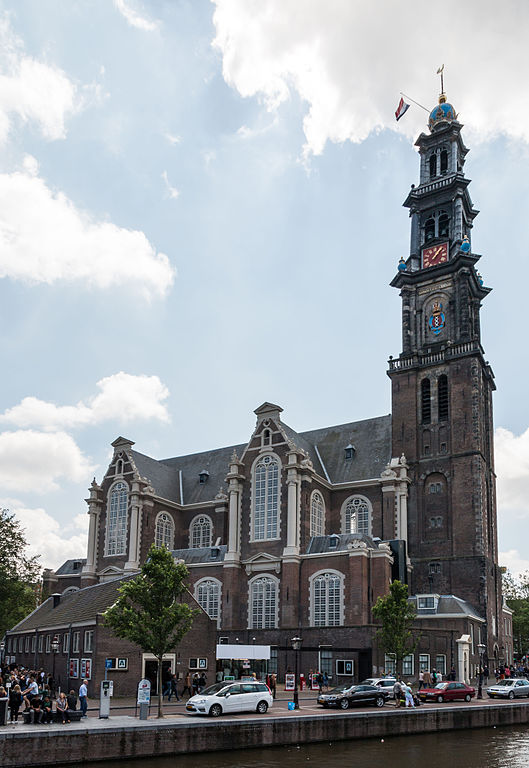
Completed in 1638, Westertoren stands at 85 metres and is the tallest church tower in Amsterdam. It is adorned with a crown on top, but keep in mind that only guided tours traverse the tower stairs. The Westertoren has three bells, two bells and 50 carillon bells that play.
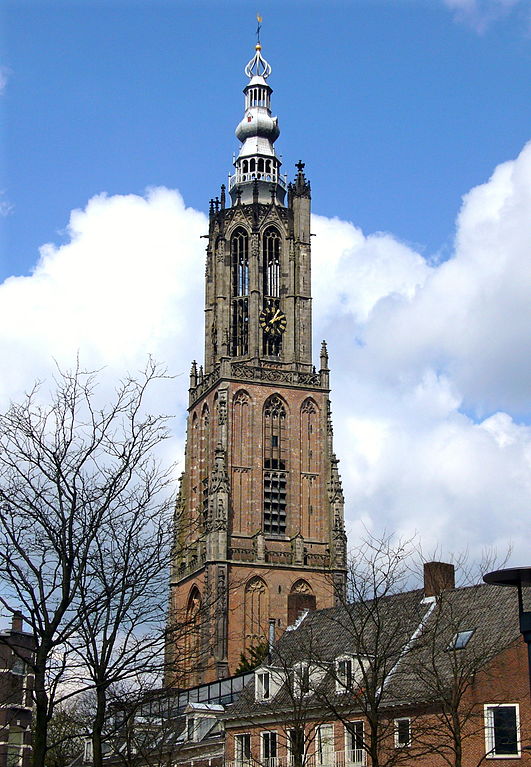
Placed at the geographical centre of the Netherlands. Image: Pepijntje/Wikimedia Commons/Public Domain.
At 98.3 metres and 346 steps toward the sky, it’s the third-highest medieval tower in the Netherlands.
Also known as Lange Jan, the tower’s location in the historical centre of Amersfoort also stands at the (cadastral) centre point of the Netherlands!
The church is no longer there, but the tower remains.There are different group tours, events, and occasional themed tours. The tower has over 100 “clocks” and large bells.
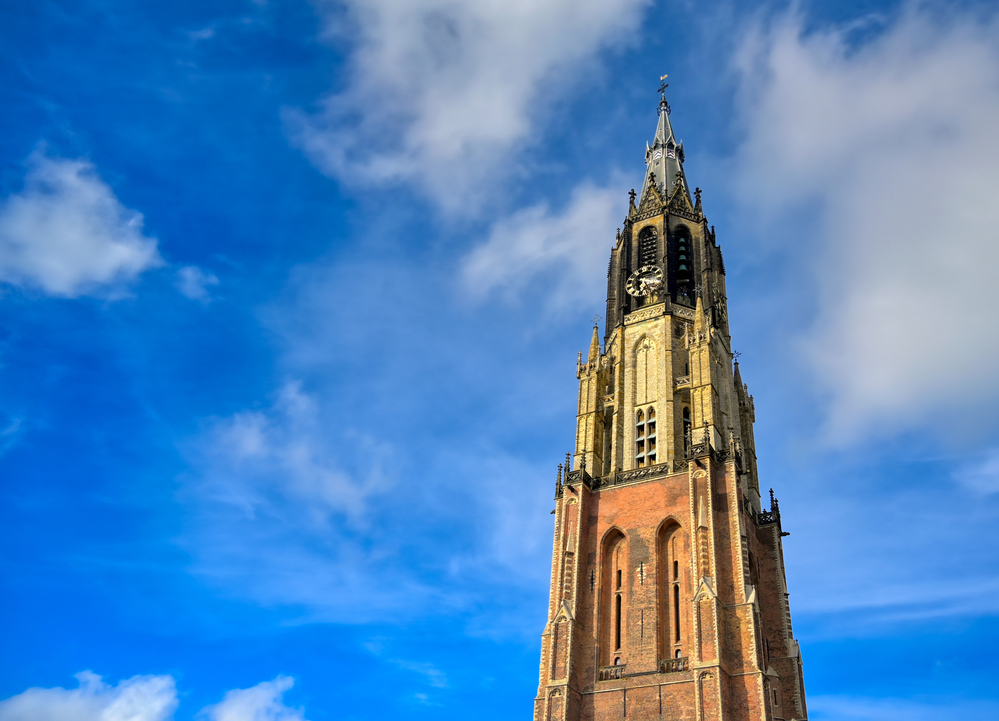
The second-highest tower in the Netherlands! Image: Depositphotos
This tower was originally completed in 1496. After centuries of disaster and rebuilding, it now stands at 108.75 metres high. The spire of today was designed in 1872. At one time, it was even used to test the theory of gravity!
On a clear day, Rotterdam and The Hague can be seen. William of Orange and every royal family member since have been laid to rest in this church.
Largest Catholic Church in NL. Including an angel on a cell phone! Image: KARROW/Wikimedia Commons/CC3.0
The largest Catholic Church in the Netherlands, its tower reaches 73 metres high, and you can see the city from 43 metres above.
In 1340, the Romanesque Church was converted into its current Gothic style. Due to fires, the tower has been rebuilt and restored. Hundreds of sculptures adorn the church.
See if you can spot the modern one of an angel with a mobile phone!
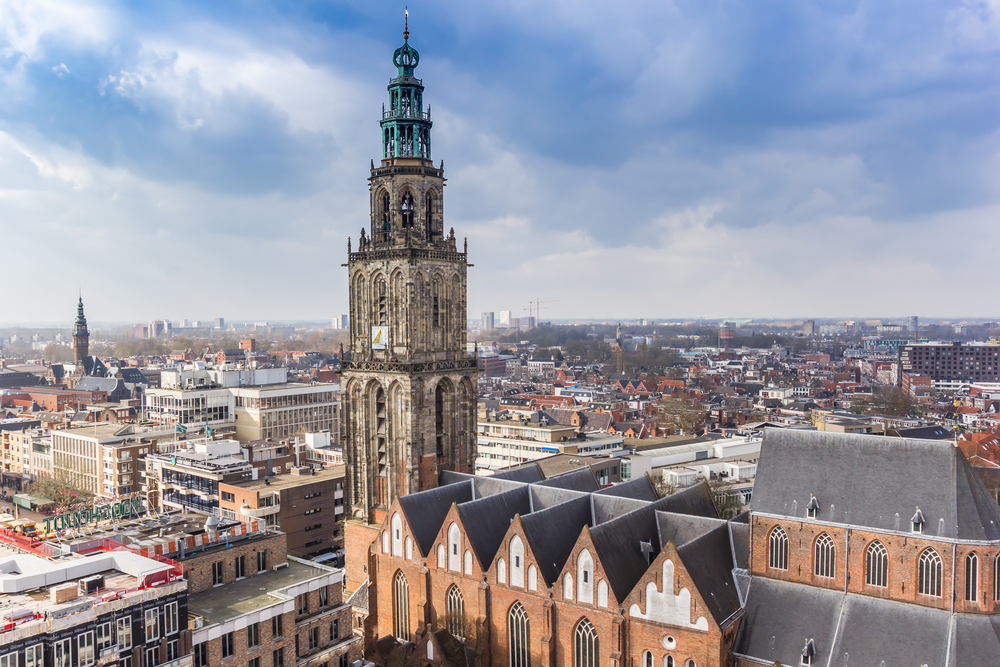
At 96.8 metres high and 311 steps (251 to the public), the “d’Olle Grieze” (The Old Gray), as it’s called due to the weathered sandstone, can be climbed almost every day.
One of the best towers in the Netherlands — with an elevator! Image: Depositphotos
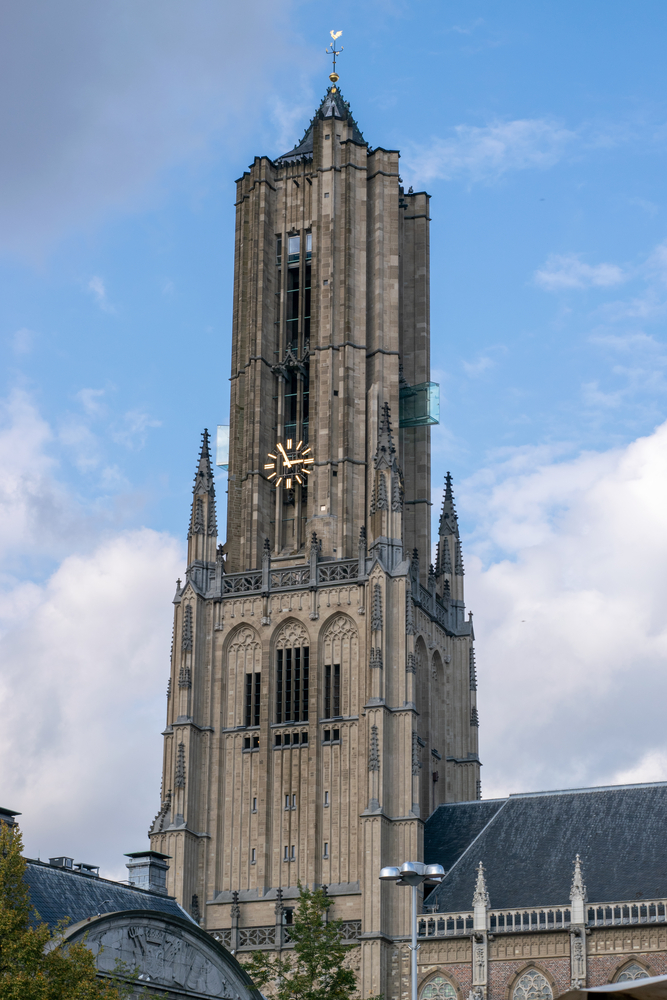
Standing at 93 metres high, Sint Eusebiuskerk had an elevator installed in 1994. It’ll take you to 73 meters, just below the top of the spire. It offers a view of Arnhem, the river, and forests.
Disney gargoyles and characters familiar to the Dutch were added after WWII. As it’s the largest venue in Arnhem, many events are held here.
Great view of the Betuwe tower. Image: Depositphotos
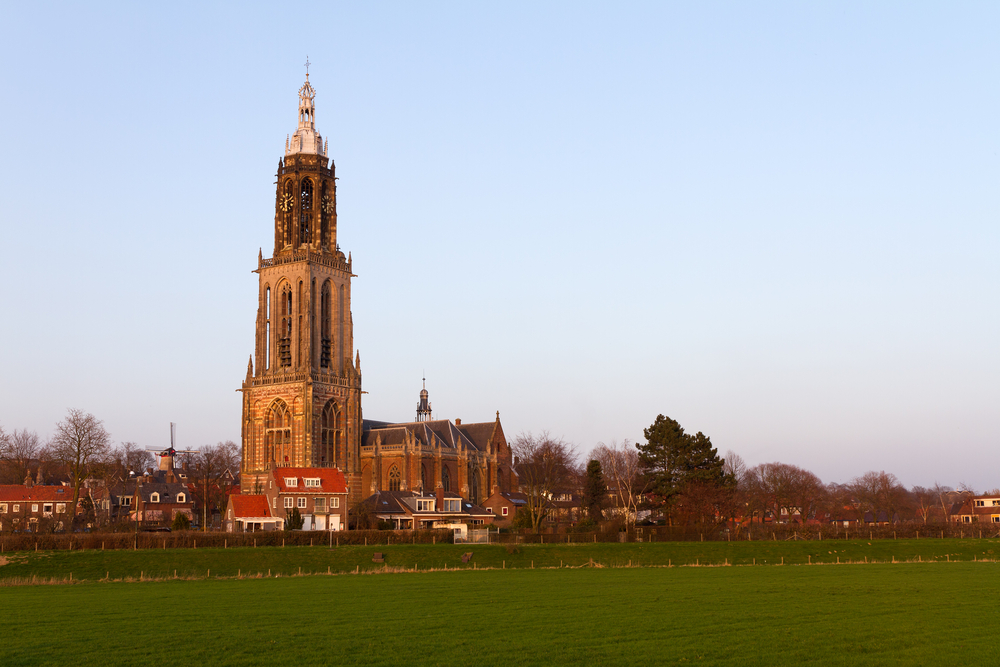
The Cuneratoren was built between 1492 and 1531. The 82-metre high tower has a 298-step spiral staircase. At the top is a wonderful view of the Betuwe region and the city. If the air is very clear you can see Den Bosch, Nijmegen, and Utrecht.
In the summer, there are usually tower climbs from Wednesday through to Saturday from 1 to 4:30 PM.
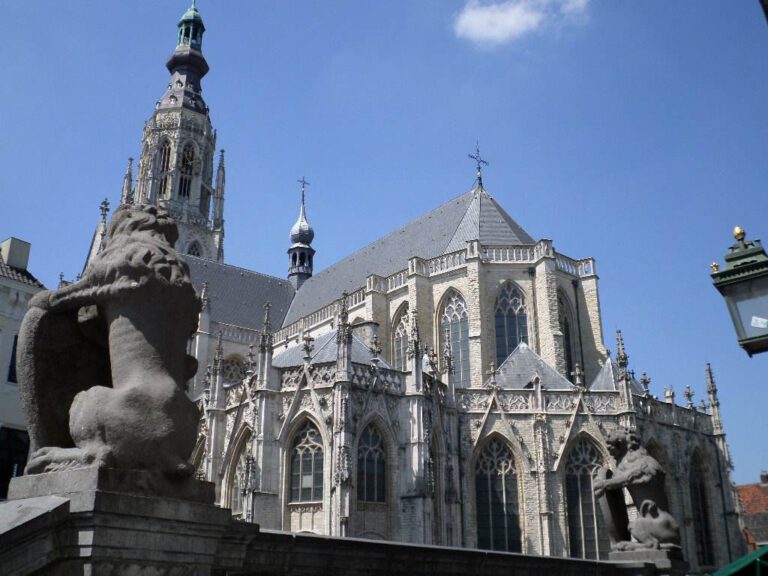
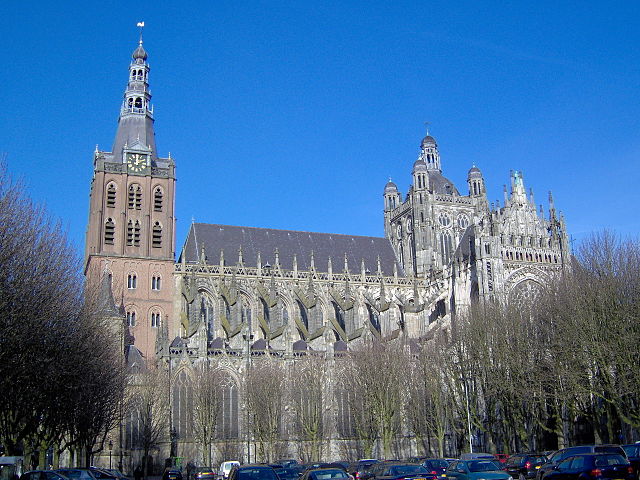
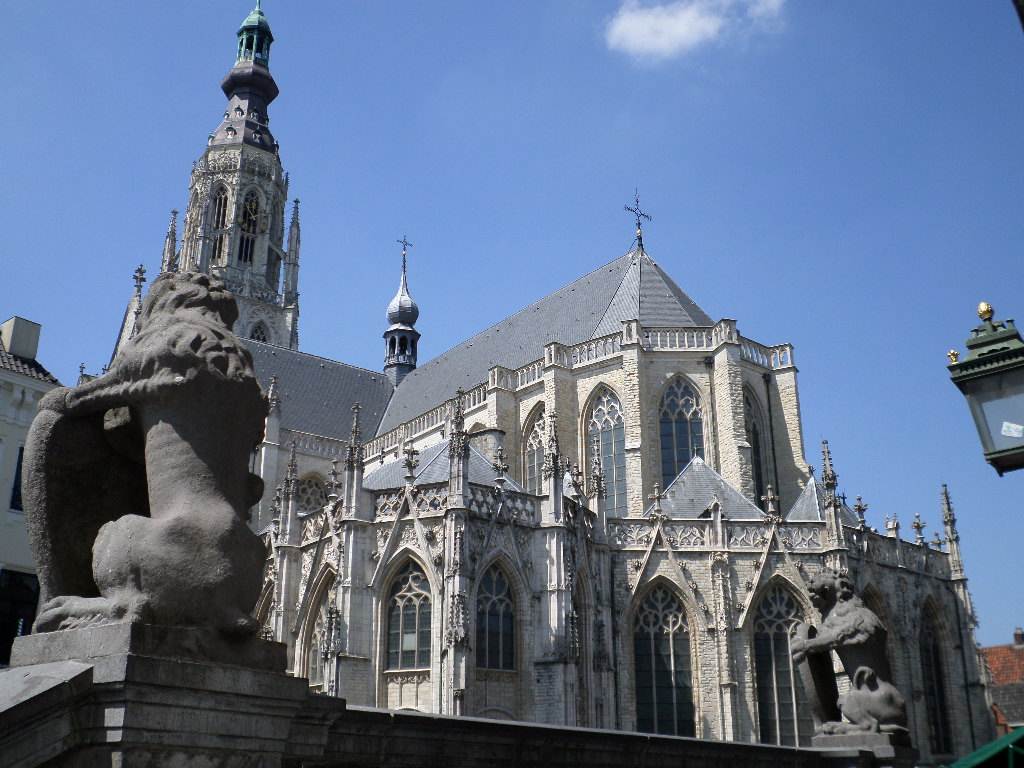
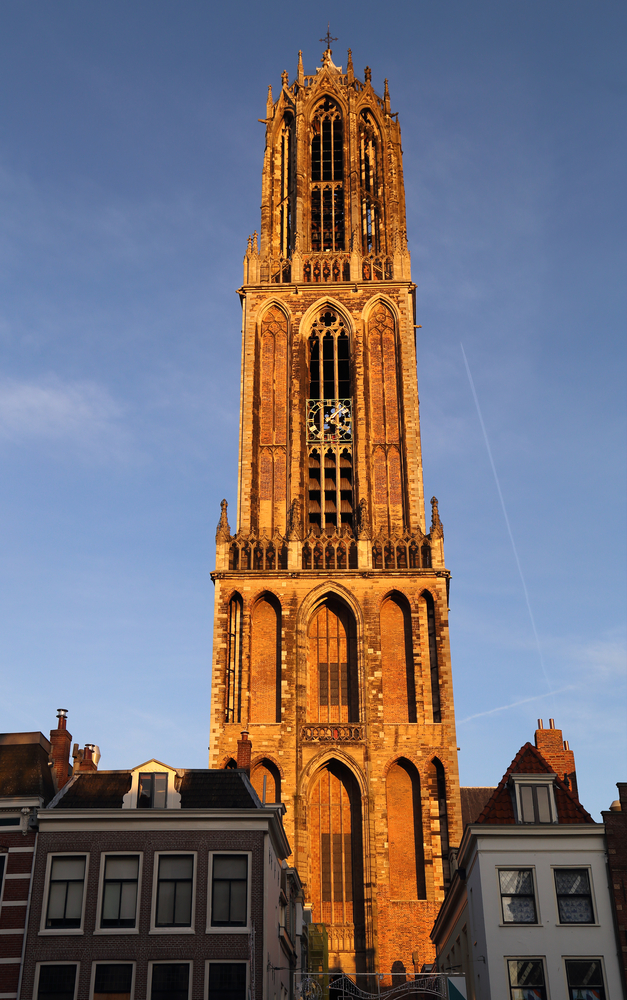
This church has a tower that stands 97.3 metres high in Brabantine Gothic style. Groundbreaking in 1410! The current shape of the church and tower was completed in 1547, with restoration occasionally from damage.
The church itself has many vault paintings, sculptures, and one of the largest organs in the Netherlands. William of Orange was originally going to be buried here but had to change his plans as Breda was under Spanish occupation.
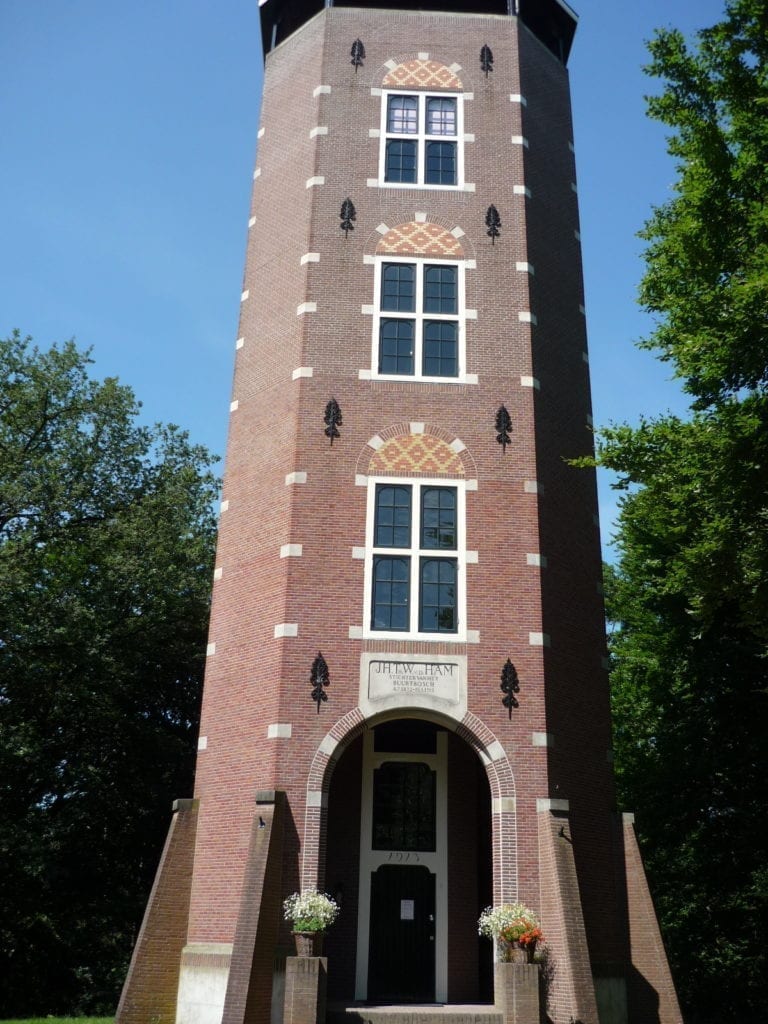
Short, but tall on a hill! Image: Ken Hull/Supplied
This interesting national monument, at 22 meters, is not tall compared to others, but it is high on a hill near the centre of the Netherlands. A hike or bike ride through the beautiful trees of the Luntersche Buurtbosche takes you there.
In 1913, the tower was used as a lookout. It has been rebuilt on top of the hill above the trees, and when standing at the top of the tower on a clear day, you’ll be able to see Domtoren in Utrecht! Picnics and overnight stays are possible nearby. Exhibitions are on display in the tower.
The Euromast is the perfect place to go for a view over modern Rotterdam (and there are no stairs either!) But is it one of the best towers in the Netherlands? You decide!
In conclusion, there are many ways to get high in the Netherlands in historical towers. Visit one in your area, or visit them all with time!
Have you visited any of these towers? And which was your favourite? Tell us in the comments below!
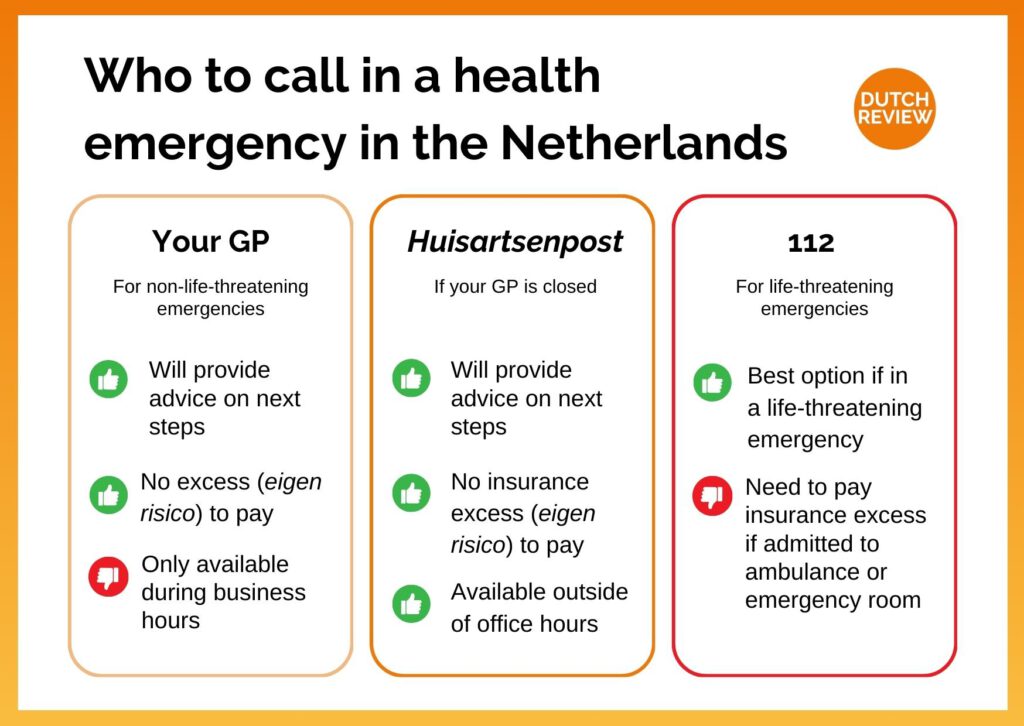
Do you require emergency care because of an accident? In the case of a life-threatening emergency, such as a heart attack or stroke, call 112.
In the Netherlands, ambulances are only really reserved for serious, life-threatening emergencies.
When you call 112, the operator will determine whether or not an ambulance should be sent to collect you or if you can make your own way to the emergency room.
🩻 I have a problem that is not life-threatening
What if you have a medical problem that requires emergency care but is not life threatening? Well, in the Netherlands, there is a slightly different procedure for non-emergency help.
GP or your huisartsenpost
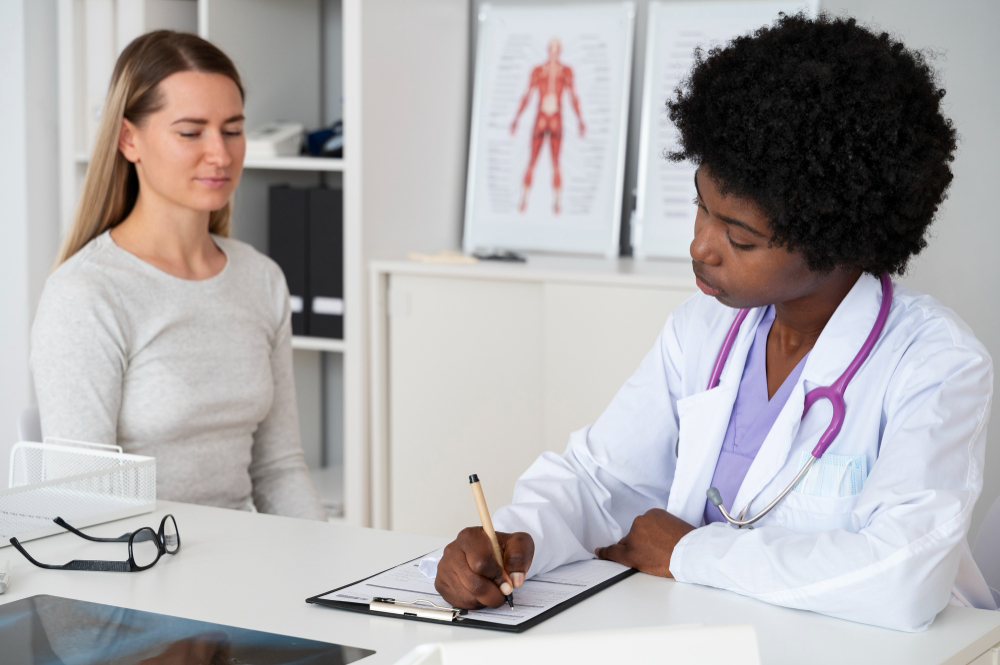
If the situation is not life-threatening, call your huisarts (general practitioner) first. They’ll advise if you need to go to the emergency room at a hospital (spoedeisende hulp).
The GP has the ability to refer you to other services as well as write prescriptions. Image: Freepik
However, if your huisarts is closed or unavailable, you can search online for the number of a nearby huisartsenpost. A huisartsenpost connects you to nearby doctors who are on standby to help.
Then, the receiver should either invite you to visit their office, refer you to the hospital, or tell you to wait for your own huisarts to become available again.
🦷 Dental emergencies
Annual dental checkups are part of a normal routine — but if you suffer from continuous bleeding, a knocked-out tooth, intense pain, or broken bones in your face, you’re in need of emergency dental care.
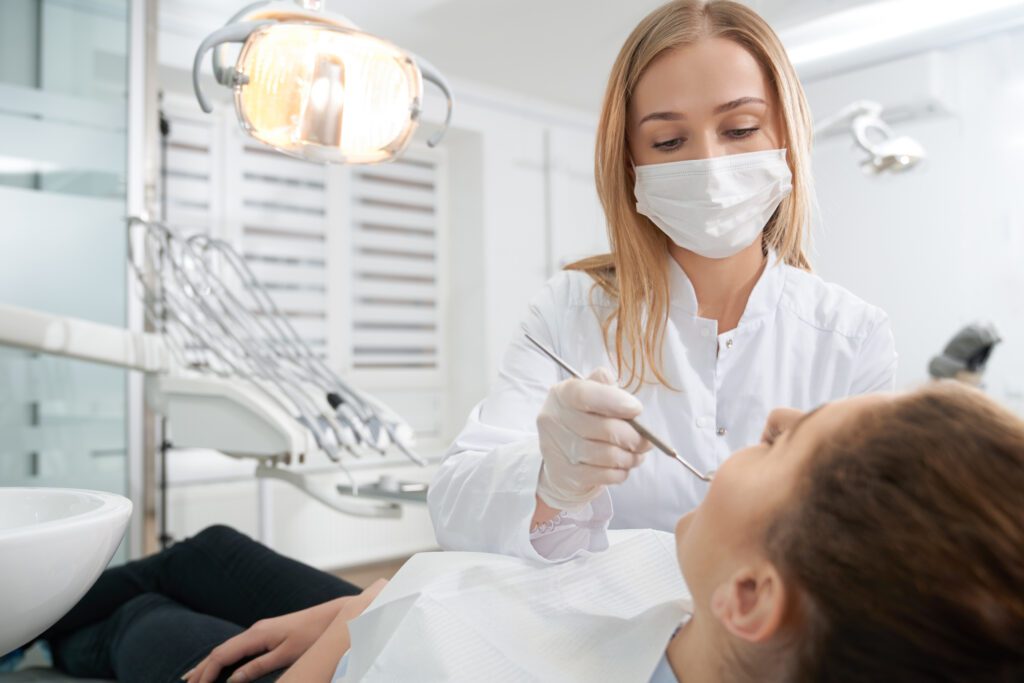
While it’s advisable to try contacting your own dentist first, if that’s not an option, you can call the spoed tandarts (emergency dentist). These dentists are available to help residents in the Netherlands and tourists as well.
Emergency dentists in the Netherlands can quickly treat injuries that are potentially life-threatening. Image: Freepik
The easiest way to find one? By looking up the number of emergency dental clinics in your city — every city in the Netherlands has at least one that’s open 24/7.
💰 Cost of emergency care in the Netherlands
If you’re living in the Netherlands for more than four months, health insurance is mandatory (unless you have a health insurance card from within the EU).
It’s important to know that if you use your GP or the huisartsenpost, your insurance should cover everything.
However, if you need to be transported by an ambulance or go to spoedeisendehulp (the emergency room), you’ll likely need to pay the excess (eigen risico) on your insurance policy. This is typically around €385.
🧳 What if I’m a tourist or am not insured?
Emergency care can be necessary at any time — even while on vacation in the Netherlands.
Unfortunately, if you’re not a resident of the Netherlands and also don’t have a European Health Insurance card, you will have to pay for your own healthcare costs.
Some countries, like the UK, have reciprocal healthcare agreements with the Netherlands, where they provide medical care to each other’s citizens.
If your home country is one of them, you could get reimbursed for your healthcare costs while in the Netherlands.
🚑 Ambulances in the Netherlands
Ambulances in the Netherlands are reserved for life-threatening emergencies. For example, if you broke your arm playing football, it’s normal to have someone you know drive you to the hospital instead of calling an ambulance.
Whether you require a land ambulance (van) or an air ambulance, the Netherlands is fully equipped with Rapid Response Vehicles.
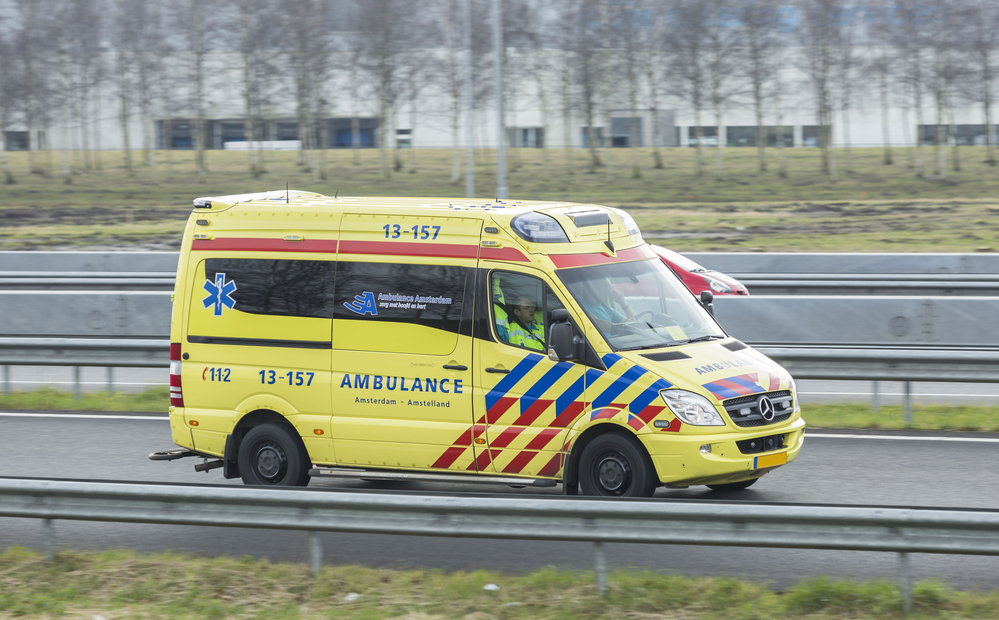
Dutch law requires that the response time of an ambulance in the Netherlands is no longer than 15 minutes. Image: Depositphotos
Each ambulance is staffed with at least two people and at least one trained paramedic.
However, note that the word “paramedic” is not used for emergency care in the Netherlands — instead, they’re referred to as “nurses”.
If the ambulance’s staff manage to stabilise you on the spot without transporting you to the hospital, the service is free of charge.
In need of an ambulance? Dial the standard helpline number 112 to receive emergency care. If you’re deaf or hard of hearing, dial 0800 8112.
Whether you’re living here or just a tourist passing through, it’s a good idea to familiarise yourself with emergency rooms in the Netherlands work — that way, you won’t have to wait until the actual emergency.
Do you have any other tips for emergency care in the Netherlands? Tell us in the comments below!
🙋♀️ Emergency care in the Netherlands: Frequently asked questions
How much does it cost to go to the ER in the Netherlands?
Going to an emergency room in the Netherlands as a resident of the country is typically covered by your health insurance. However, you will first have to pay your eigen risico (excess), and then your health insurance will cover the rest.
If you’re a tourist or a non-resident, you must pay healthcare costs yourself. If you have travel insurance or a European Healthcare Card, you may be eligible to be reimbursed.
What to do in case of a medical emergency in the Netherlands?
In the case of a life-threatening emergency in the Netherlands, call the number “112” or “0800 8112” if you are hard of hearing. Then, explain the nature of your emergency to the phone operator.
If it’s not life-threatening, call your personal huisarts or huisartsenpost instead.
Can you go to the hospital without insurance in the Netherlands?
Yes, but you will have to cover the costs of the emergency care yourself.
Do you have to pay for ambulances in the Netherlands?
If you don’t live in the Netherlands and/or don’t have health insurance, you will have to pay approximately €700 for a trip in an ambulance.
However, this is only the case if you take a ride in the ambulance. If the ambulance staff help stabilise you without needing to transport you, you will not be charged any money.
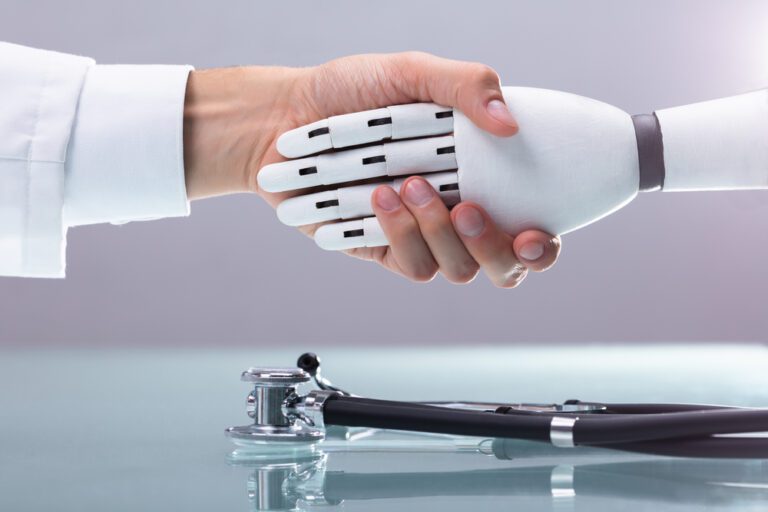
The University Medical Centre in Groningen (UMCG) has a new employee: a chat robot! Yup, Patients at the Dutch hospital can now ask written questions and have them answered by artificial intelligence (AI).
This will make the lives of the UMCG doctors significantly easier. Out of the 1,200 health-related questions they get asked weekly, a good chunk can now be answered by a friendly bot. 🤖
The UMCG is the first hospital in Europe to use AI in this way, reports the NOS.
How does it work?
The questions that AI answers are those that are admin-focused — about things such as correct medication use or test results. To help out patients, the chatbot accesses the their files and makes use of its pre-programmed medical knowledge.
Natuurlijk, the answers given are subject to rules, and the bot can only share general medical information — not personalised advice. For extra safety, an employee checks each answer before it is sent.
Thanks to this innovative method, doctors gain more time for case-specific, personal patient details, and hospitals can better deal with the shortage of healthcare workers.
More informative and more polite
For privacy reasons, this isn’t the type of AI that learns more as it receives more information. The data stays within the electronic file of the patient and is never used for any other purpose.
The doctors also claim that the AI is more polite than them — which says a lot about Dutch doctors… 👀
Healthcare workers are used to answering questions between different parties, so they can sometimes be a little curt. In comparison, the chatbot gives more informative and comprehensive answers and does so more empathetically. 🤖🧡
What do you think about using AI in healthcare? Tell us in the comments!
At a climate march in Amsterdam on November 12, the one and only Greta Thunberg gave a speech to thousands of protesters. All went smooth — until she had her mic SNATCHED out of her hands by an activist.
The man who took the microphone is a former member of the Dutch political party Water Natuurlijk. The party has made it clear that his actions didn’t reflect their views, as the AD writes.
What exactly went down?
Let’s give you some context: it all started before Thunberg took the stage.
A Palestinian activist had her speech cut short when she called Israel a “country of terrorism” and uttered the controversial slogan “From the river to the sea, Palestine will be free”.
When it was Greta’s turn to speak, Thunberg said that we should “listen to the voices of those who are oppressed (…) [because], there can be no climate justice without international solidarity”.
This was when the man felt compelled to cut her short, brutally grabbing her mic. Why did he do it? “[He] came for a climate demonstration, not a political meeting”. 👇
Although several people cheered him on, he was quickly taken offstage — and Greta continued her speech.
He regrets it… maybe
After the hubbub, the man realised that maybe this wasn’t the best way to go about it. It happened on a whim, and he was likely so overcome with emotion that he couldn’t control himself.
I was only there briefly, but I saw maybe two thousand people carrying climate signs and one “free Palestine”
As of now, the man hasn’t released any statement, despite international interest in him. He’s turned down several interview requests, and it seems like he won’t speak on the incident anytime soon.
What do you think of the man’s behaviour? Tell us in the comments!