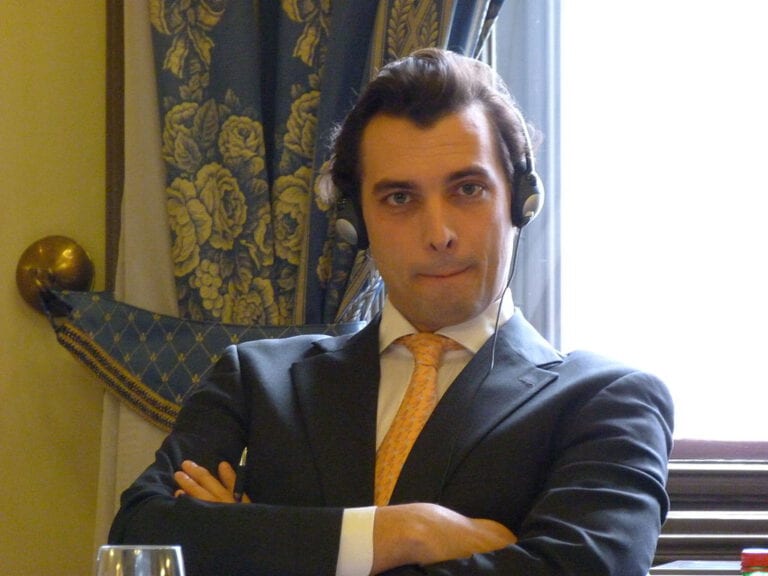
The controversial FvD (Forum for Democracy) leader, Thierry Baudet, has been attacked for the second time in almost a month. This time around, it was a strike to the head using a beer bottle.
Baudet and other members of his political party were holding an election meeting in a Groningen cafe when he was suddenly struck.
The bottle-wielding attacker hit Baudet once in the back of the head and a second time near his temple, as clearly seen in a video of the incident.
The leader of a Dutch right-wing party, Thierry Baudet, attacked with a beer bottle in Groningen bar
While the previous attack on Baudet was carried out using an umbrella, a beer bottle does a bit more damage. Baudet was taken to hospital and treated by a trauma surgeon.
Baudet is no stranger to controversy. The right-wing politician once described Putin as a “wonderful guy.”
A step too far
Regardless of his statements, the attack on Baudet has been strongly condemned by many political figures, including outgoing Dutch Prime Minister Mark Rutte.
Rutte took to Twitter last night, saying, “I said it before and repeat it now: you stay away from politicians. Always.”
One person has died, and several people fell ill after drinking Möet & Chandon champagne spiked with the drug MDMA. Now, a suspect has been arrested.
In February 2022, the Dutch Food and Consumer Product Safety Authority (NVWA) issued a warning that MDMA may be present in the three-litre bottles of Moët & Chandon Ice Impérial champagne.
Police have now arrested a 35-year-old Polish man in the German town of Weiden in relation to the case, says RTL Nieuws.
Negligence and trafficking
The arrested suspect is accused of trafficking narcotics, as well as manslaughter and inflicting bodily harm from negligence.
It’s alleged he was responsible for the storage and distribution of bottles, and can possibly explain how the bottles became laced with MDMA.
The NVWA reported that the champagne itself was not spoiled but rather tainted with MDMA after manufacturing.
Serious illness and death
According to the NVWA, at least four people got seriously ill in the Netherlands, and a group of restaurant-goers in Weiden fell ill after drinking champagne at a restaurant.
The restaurant owners recall them all falling to the ground, and a 52-year-old man even died from drinking champagne. The remaining victims were taken to the hospital for treatment.
What about my bubbles?
Got a bottle chilling in the fridge? Here’s what you should know.
There are a few surefire ways to tell if your bubbles are off — for one, the tainted champagne won’t even have bubbles. The champagne also had a reddish-brown tint and smelled like anise.
The investigation is ongoing, but police can’t say how many of these contaminated bottles are in circulation.
A new train provider wants to shake up the European rail business — and they’re starting with cheap day trains to Paris and Berlin. Basel is also on the cards.
Say goodbye to short-haul flights when you need a new European city fix on the cheap: in 2024, you can hop on a train for as little as €10 instead.
GoVolta, a FlyWise subsidiary and owner of the night train company GreenCityTrip, wants to provide an affordable alternative to air travel, reports Treinreiziger.nl.
With the plan, the company hopes to run a service between:
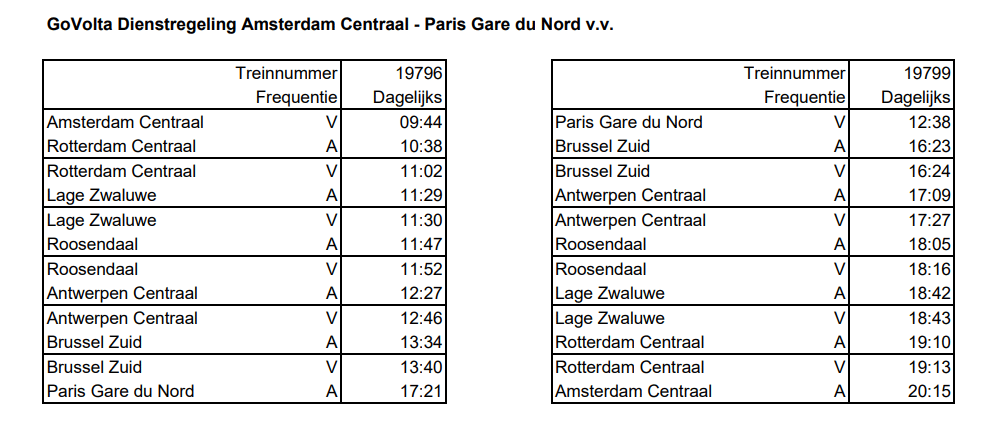
Amsterdam and Berlin once a day
Amsterdam and Paris once a day
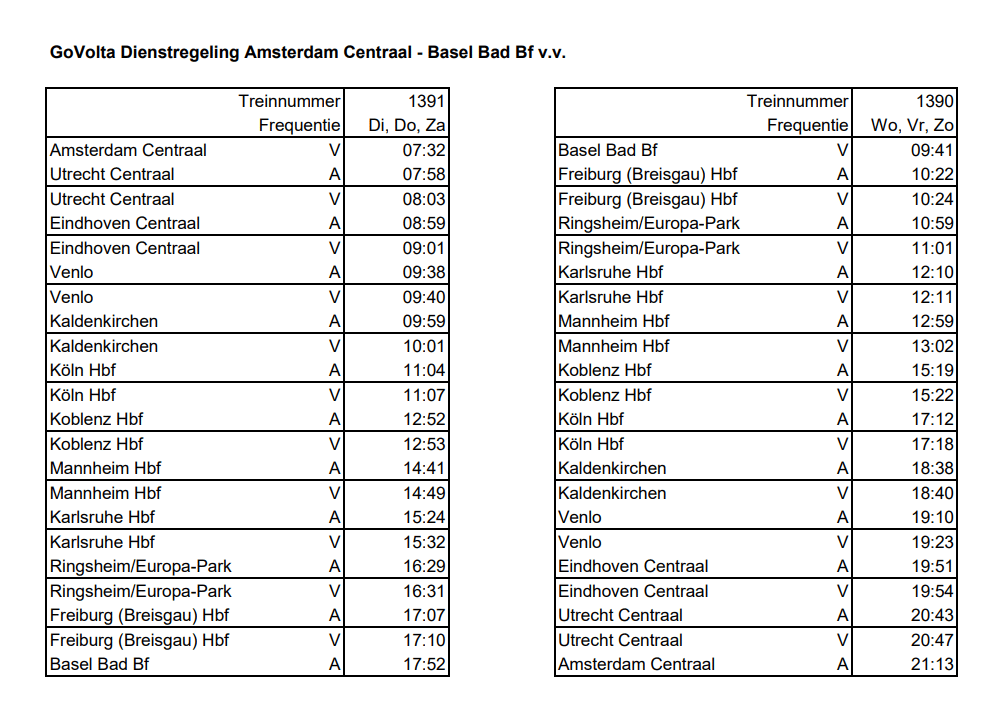
Amsterdam and Basel three times a week
Cheap trains, but what’s the catch?
Alright, there’s no such thing as a free (or cheap) lunch. GoVolta offers these cheap in the same way that companies like RyanAir and FlixBus offer things for cheap: they offer a whole bunch of paid extras.
That means that while your ticket may only be €10, you’ll need to pay for luggage and choosing a seat.
Maarten Bastian, CEO of GoVolta, explains that was to make the prices comparable to a plane.
“Otherwise, the plane is the cheapest, and people don’t choose the train. We don’t want that.”
Of course, those €10 tickets are going to be limited. €50 to €60 for a return trip is more likely for Berlin, while Paris is more likely to be €80.
And that’s not all…
But before you go booking your (unreserved seat) ticket, there’s another pretty big catch: the train journey will take way longer than it does now.
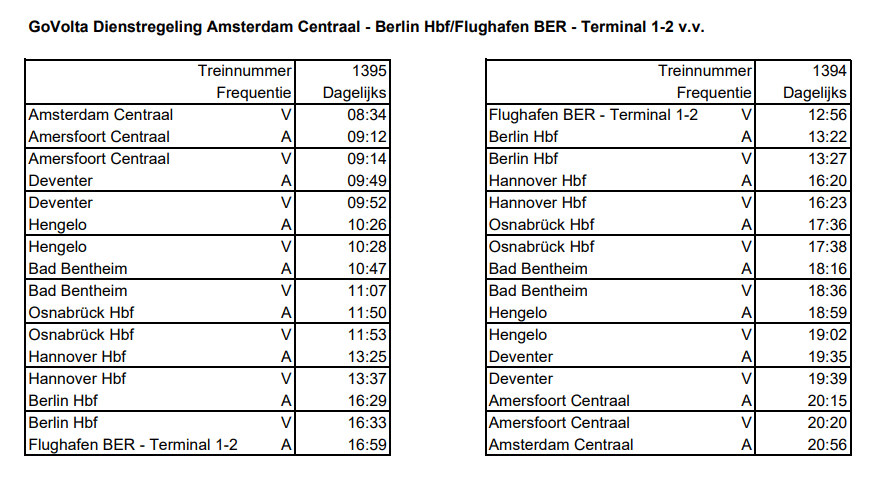
Due to the trains and the timetable that GoVolta will use, the journey to both Paris and Berlin will take about eight hours.
Compare that to the Eurostar, which takes you from Amsterdam to Paris in less than three-and-a-half hours, or the current Berlin travel time of about six hours.
Plans for the future
GoVolta’s plans for rail domination don’t stop there. The company wants direct trains to Munich and Copenhagen.
They also have a plan for trains from Germany to Paris and from Antwerp or Brussels to Germany.
Timetables and expected start dates
Curious about how you can jump aboard? Here’s the lowdown:
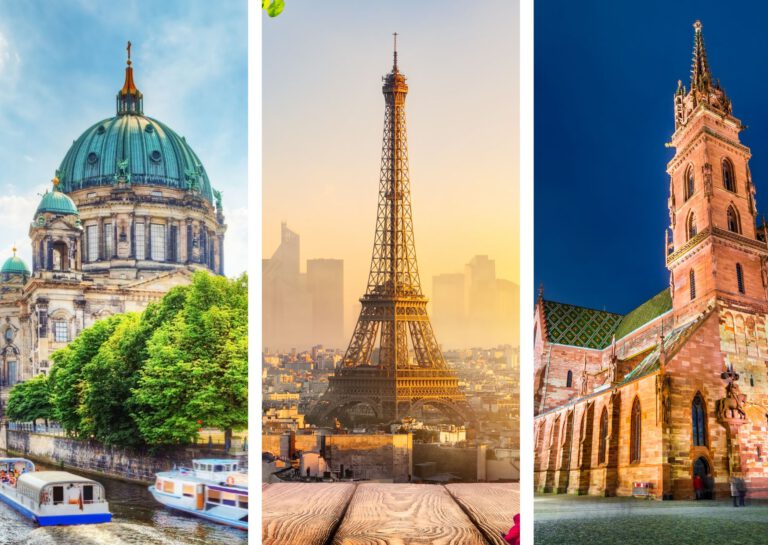
🇩🇪 Amsterdam to Berlin
The Amsterdam — Berlin line is expected to start from May 1, 2024. The company plans to run a daily train.
Image: FlyWise
🇫🇷 Amsterdam to Paris
If you’re seeking a bit of ooh-la-la, rest assured, knowing you’ll be able to chow down a real French croissant sometime in the summer of 2024. The exact date is not yet known.
Image: FlyWise
🇨🇭 Amsterdam to Basel
Feeling a little more Swiss? A train to Basel is also planned for sometime in 2024, with an expected return ticket price of around €50 to €60.
Image: FlyWise
Will these new train services get you off short-haul flights? Tell us in the comments below!
The Netherlands is known internationally for its liberal stance towards drug use, which begs the question: what are Dutchies’ drugs of choice?
Thankfully, new research by the Trimbos Institute has given us the low down on the Dutch’s favourite way to get high.
And the winner is… you guessed it
The most popular drug of choice is laughter — just kidding, it’s cannabis, obviously.
According to the Trimbos Institute, cannabis was the drug of choice for over one million Dutchies in 2022. One in four 18 to 24-year-olds lit it up last year. 🔥
The researchers also concluded that people are actually becoming a bit too comfortable with the casual use of cannabis.
In fact, nearly a quarter of users were found to have a problematic relationship with the use of the drug.
Runner up? Ecstasy
So what do the Dutch turn to once the cannabis clouds start looking a bit boring? Something that’ll make anything look pretty, ecstasy. 💊
Thanks to the return of festivals after a corona-induced draught, ecstasy use has risen to pre-pandemic levels, making it the second-most popular drug in the Netherlands.
Just how popular? The Institute found that 550,000 people in the Netherlands popped a pill last year.
A rise in drug use
However, ecstasy isn’t the only drug in the Netherlands enjoying some love.
In fact, the country experienced an overall rise in drug use last year, with the percentage of cocaine, ketamine, mushroom, and LSD users increasing across the board.
The only drug to see a drop in popularity? Laughing gas.
Perhaps laughter isn’t the best drug, after all. 👀
Nothing can go wrong with a bit of television at the end of a long day, right? Wrong.
Word to the wise: if you’re a wanted criminal, perhaps don’t put on a show about wanted criminals.
And, for the love of gouda, don’t watch it with your wife next to you.
One Dutch man learned this lesson the hard way.
An unfortunate recognition
When the 55-year-old man decided to kick back and enjoy some Opsporing Verzocht (aka Netherlands’ Most Wanted) with his wife, he probably wasn’t expecting to make an appearance.
However, his 15 minutes of fame came for him when the show depicted footage of him during the robbery of a Rotterdam jewellery store — and his wife was quick to recognise him (and perhaps her birthday present?).
Close your eyes and picture a steaming burger bun, juicy patty, and cheese that melts and bubbles. 🍔
If you live in the Dutch municipalities of Amsterdam, Haarlem, or Zwolle, seeing these images on a billboard could be a thing of the past.
The cities want to ban all meat advertisements on municipality-owned advertising spots, like bus shelters.
Why? Climate change, of course.
But will it work?
While it’s an interesting step by the municipalities, whether it will reduce meat consumption is still unclear.
“You are introducing extra regulations again with this, while we already have a lot of them,” Henriette van Swinderen, Director of the Bond van Adverteerders (Associaton of Advertisers), tells RTL Nieuws.
“We’d rather look at other ways about what we as an industry can do to play a role in behavioural change.”
But for Sjoukje Goldman, a researcher in sustainable marketing at the Amsterdam University of Applied Sciences, the intention is different.
“This is a way to convey a message. As a municipality, you make a statement with this.”
Following in footsteps
The municipality of Utrecht already voted to ban meat advertisements earlier this month. Previously, the city also banned fuel, car, and air travel ads.
Meanwhile, Bloemendaal has also decided that the city will no longer show ads for meat, dairy, or products that are sourced from fossil fuels.
What effect do you think banning meat ads could have? Share your opinion in the comments below!
Gefeliciteerd, you’re learning Dutch! That’s more than many internationals in the Netherlands — but how can you take it to the next level? Here’s why Dutch classes are your best option if you’re looking to really get a grip on the language. 💪
Maybe you’ve been taking the self-study approach up until now, but things are getting tricky and your learning has stalled. Fair enough! Life happens and de versus het can wait.
However, you don’t have to struggle through it alone, Dutch classes are your rainbow after the storm. Language classes will give your motivation and your method the oomph that will improve your Dutch by leaps and bounds. Here’s how. ✨
1. You’ll have a plan to succeed
Imagine this: You’re teaching yourself Dutch on a mobile application and you’re met with the phrase “De appel spreekt een beetje nederlands” (The apple speaks a bit of Dutch).
Echt?! When will you ever use that phrase in the real world? Is it really helping you?
Taking a Dutch class will help you make sense of the confusing phrases from language apps. Image: Depositphotos
More importantly, do you know the reason why the sentence is structured like this? Do you know how to say, “I speak a bit of Dutch”?
Before you can run, you need to know how to walk. Instead of tumbling through random phrases, going to a Dutch class will give you a structured plan and lay the foundation for you to start your language-learning journey.
Your teacher will start with the basics and then build on that knowledge base. You’ll learn what you need to achieve different language levels and have study materials that will focus on getting you there — step by step.
Wondering what you would learn in your Dutch class? Based on the CEFR levels:
On your way to becoming a basic user at level A1-A2, you should be learning simple, everyday vocabulary and building conversational skills. You should also be introduced to basic Dutch grammar.
Becoming an independent user with level B1-B2, you should be mastering complex sentences and grammar, expanding your vocabulary, and improving your conversational skills to a more fluent level.
To become a proficient user at a level of C1-C2, you should be focusing on expanding vocabulary, improving writing skills, and building conversational skills to a near-native level by working on intonation and accent.
2. Your niggling questions will be answered
“Am I pronouncing this right?” 🤔
“Why does that word go there in the sentence?” 🥴
“What the frick is the difference between je and jij?” 😭 — these are just some questions that will baffle you while you’re learning Dutch.
Geen probleem! Dutch classes to the rescue. 🦸♂️
Professionally trained teachers are one of the best things about taking a Dutch class. Image: Depositphotos
You know what a class has? A professionally trained teacher! Your teacher will be there to answer questions: big, small, and silly.
You’ll no longer have to rely on your well-intentioned, but very confusing Dutch friend for a breakdown of Dutch grammatical rules — and that’s going to immensely help your understanding.
Why? Even questions you think are stupid or silly could derail your progress when you don’t know the answers to them. That’s why anything you’re unsure of should be clarified by a professional.
They’re not stupid questions, and getting the answers to them will both keep you motivated to learn and help you reach a better understanding of the Dutch language.
3. You’ll have more incentive to learn
Everyone needs a little nudge to get into the learning gear sometimes. When you’re studying at home by yourself, it’s easy to procrastinate and lose interest in studying the difference between want and omdat.
You’ll be fired up to learn Dutch and get your work done to keep up with your class. Image: Freepik
Going to Dutch classes helps put an end to this. You have set class times so you don’t have the choice to leave your studies until “later”.
You also won’t want to disappoint your docent (teacher) who will be checking up on your homework — yes, you probably will get homework, and that’s a good thing! 🤓
Spending geld (money) on a Dutch course will also keep you motivated to stay on top of your studies. You wouldn’t want to put that money to waste, right?
4. You’ll meet maatjes to practise Dutch with
Ditch those English-speaking friends! Nee, just joking, but you do need friends who also want to speak Dutch with you. What better place to find some maatjes than a Dutch class.
In Dutch class, you’ll meet new people who will speak Dutch with you! Image: Depositphotos
You’ll be surrounded by other internationals who are going through the same thing as you. They’ll also need someone to practise Dutch with and there you are — instant friends!
You and your new friends will be in it together. You’re all in the same class, learning the same thing at the same time so it will be easy to practice new content and perfect it together.
5. You’ll be prepared for Dutch life in the Netherlands
When you arrive in the Netherlands, it can be overwhelming when everything is in Dutch: road signs, contracts, and menus.
You’ll want to be able to understand Dutch in these circumstances. For example, can you identify your favourite foods on a menu? (Hint: Keep an eye out for kaas 🧀).
After Dutch classes, you’ll be ready for ordering your favourite wine in Dutch at a restaurant. Image: Depositphotos
Some Dutch classes cover themes and specific subjects related to life in the Netherlands (for example, Sintercoklaas), which will not only act as a way to learn Dutch but also to familiarise yourself with Dutch culture.
Practice makes perfect, and you definitely practise a lot in Dutch classes. The classroom is also the ideal environment to role-play the everyday situations that you may encounter while living in the Netherlands.
Rehearsing ordering from the menu at a restaurant or even a simple conversation with the teller at the supermarket can build your confidence and improve your Dutch for daily errands. We know you’ll surely want to be able to say, “Nog een biertje alsjeblieft!” (Another beer, please!). 🍺
By taking Dutch lessons, you’ll have willing participants and a Dutch teacher to correct you on any errors that you can avoid when it’s time to put your skills into practice.
Did taking a language class give your Dutch a boost? Tell us about your experiences in the comments!
Yep, a lot of people like the Netherlands enough to stick around for almost a decade. Most of them live in Amsterdam (of course), followed by Amstelveen, The Hague, Eindhoven, Rotterdam and Utrecht.
Two-thirds of expats still stay after three years, and one in 10 expats end up becoming Dutch, according to NRC.nl.
Why the Netherlands?
Expats like the Netherlands for unsurprising reasons: it’s safe, people speak English, there are good career prospects, and companies here have good reputations.
When you put it like that, the Netherlands is irresistible. And it’s not for nothing: the Netherlands has made an effort to attract so-called ‘knowledge migrants’ for the past 20 years.
The end of an era?
That being said, the Netherlands will probably become less attractive when the 30% tax ruling is scrapped.
This tax benefit has already shrunk significantly in the past years because the government was losing out on some serious bank.
The number of expats tripled since 2015, so the Dutch government started to run particularly low on cash.
But still, there is much to love in this flat country, so it looks like most of us are going to stick around for the time being.
How long have you lived in the Netherlands? Let us know in the comments!
Well, turns out that after receiving much scrutiny from the European Union and the United States, that idea has gone down the drain.
America strikes back
The decrease would mean that several companies would lose take-off and landing slots at the Amsterdam airport — including the American budget airline JetBlue.
Safe to say, the US of A was not thrilled about this, the NOS reports…😬
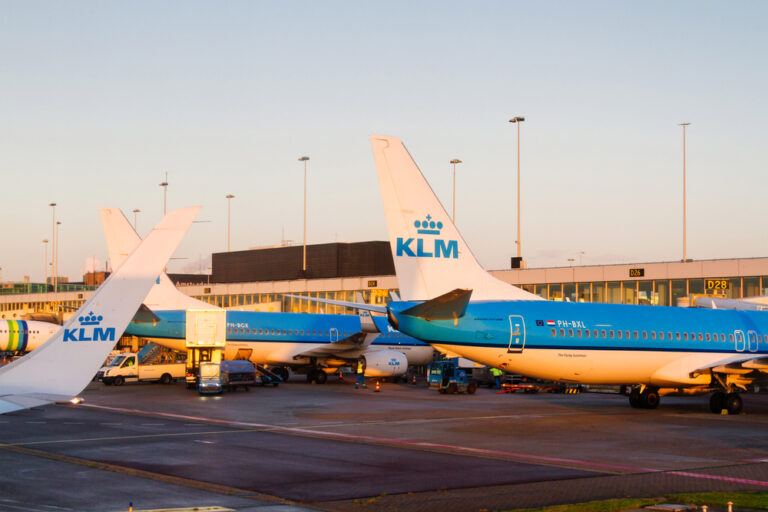
On Monday, there was a meeting where the US pushed back against the reduction and even threatened to strike back by banning Dutch airlines (such as KLM) from landing in the US.
“Baffled” by the “blackmail”
While KLM is reportedly pleased with the Dutch government jumping to their defence, the local residents’ organization Schiphol Watch has been left “baffled”. 😱
Flights need to be scrapped for a reason, explains Alfred Blokhuizen of Schiphol Watch, to shield the environment from both noise and air pollution.
The government's experimental regulation is being suspended. This means that the maximum of 460,000 flights no longer applies. We are disappointed by this development seeing as the regulatory scheme gave local residents clarity and certainty. https://t.co/CrrVVutITmpic.twitter.com/CAsL8UcaeW
That’s why he’s horrified by the fact that the Netherlands has let themselves be “blackmailed” by another country into compromising the size of their airport.
The Nature and Environment Federation of North Holland is hoping to “reverse this decision on day 1 after the elections”.
However, Minister Harbers promises to try and maintain a balance between Schiphol’s size and its surrounding environment. Good luck to them! 👀
How do you feel about the decision to abandon Schiphol’s downsizing plans? Share your thoughts in the comments below!