You’d think that a first-world country like the Netherlands would be pretty good at providing its children with a healthy living environment.
But as a new Unicef report shows, this isn’t really the case. How come? The lowlands are performing particularly badly when it comes to pesticide use and noise pollution, reports RTL Nieuws.
The main problem
The UN agency looked at the living environment for kids in 39 countries, specifically investigating the extent to which children are exposed to pesticides, toxic air, moisture, and lead, and to what extent they have access to green and safe roads.
The Netherlands ranked 12th on this list for a number of reasons:
Firstly, one in every 12 children in the lowlands has to deal with a high degree of pesticide pollution.
Secondly, there’s a high level of noise pollution, particularly from road traffic and airplanes.
High lead levels
Last but not least, the Netherlands also doesn’t score very highly when it comes to electronic waste.
This type of waste can contain hazardous substances such as mercury, cadmium, and lead, and as a result, it can be particularly harmful.
Over 20 million children in the surveyed countries have elevated levels of lead in their blood. “Many children also breathe toxic air both indoors and outdoors, resulting in a shorter life expectancy,” the report points out.
Are you surprised by how the Netherlands is doing? Let us know your thoughts in the comments.
— Extinction Rebellion Nederland (@NLRebellion) May 24, 2022
Against the fossil fuel industry
The protest was aimed at the fossil fuel industry in the Netherlands. In order to strengthen their blockade, protestors chained themselves to cars and stuck themselves to the street with glue.
Signs read ‘Keep the oil in the ground’ and ‘Let the fossil fuel industry go extinct’, reports the NOS.
The office of oil and gas giant Shell, located nearby, became the target of fake blood attacks. The protest also concentrated around the coal plant Onyx on the Maasvlakte in Rotterdam.
According to the police, repeated warnings were issued before the first arrests were made.
A total of110 protestors were taken into custody in Rotterdam’s centrum. Another 65 were arrested on the Maasvlakte.
The protestors that had glued themselves to the street were approached by the police with Coca Cola and ice scrapers in an attempt to get them to loose. Just another day at the office. 😅
What do you think of this latest protest by Extinction Rebellion? Tell us in the comments below!
The coast is NOT clear. The National Institute for Public Health and the Environment (RIVM) advises everyone to avoid eating any seafood from the Westerschelde area in the Netherlands.
The fish, shrimp, oysters, and mussels from the region contain too many PFAS. How many are too many? Between eight and 10 times more than the average seafood product. 😳
The RIVM warns hobby fishermen in particular who sometimes take their catch home for dinner, the NOS reports.
What are PFAS?
PFAS stands for poly-and perfluoroalkyl substances. It is a collective name for up to 5,000 different chemical substances that don’t occur naturally in the environment.
Not everything is known about PFAS, however, they are bad for the environment because they are not biodegradable and affect the immune system.
Quite a few PFAS are carcinogenic (have the potential to cause cancer) if someone is exposed to them for a long time.
Unrest in Zeeland
The chemical company 3M, located in Zwijndrecht in Belgium discharged thousands of kilos of PFAS in the Scheldt per year, which flows to the sea in Westerschelde, the Netherlands.
Since then, the average amount of PFAS in the area increased significantly. Ingesting fish and other seafood only contributes to the already-high PFAS exposure people experience in the Netherlands.
Monitoring exposure
Municipalities in Westerscheldt argue for a PFAS screening to determine the exposure of the chemicals to the local residents.
GGD Zeeland thinks it’s too early to screen, as they are waiting for a food safety study. However, they maintain the advice to not eat any seafood caught in the area.
They advise everyone to buy fish and shrimp products in stores as it’s less likely they come from such polluted areas.
If you’re in Rotterdam you may already have noticed the first signs of an approaching Dutch football craze. 👀
The excitement will culminate in an all-out final fever frenzy when Feyenoord kicks off against AS Roma in Tirana, Albania at 9 PM tomorrow to determine who will win the first edition of the new European football tournament; the Conference League.
So what’s the big deal?
Many supporters of Feyenoord weren’t expecting any actual success this season but the European campaign has been both productive and fairytale-like, with the big but impoverished club from Rotterdam South beating Olympique Marseille against all odds in the semi-finals.
Here’s a scene from the intensity of that match — trust us, stadium experiences don’t get more visceral than this in the Netherlands.
It’s been exactly 20 years since a Dutch team won a European final and back then it was Feyenoord as well. Be prepared though, the Rotterdam supporters are intense and always longing for a bit of success since it’s so sparse. Now, since only a couple of thousand supporters are allowed in the stadium in Tirana many fans will stay back home and follow the match here.
All of this will culminate into a crazy Wednesday for Rotterdam.
What exactly is happening on Wednesday in Rotterdam?
First of all, the city centre is going to get filled up with drinking and celebrating fans throughout Wednesday.
Expect the Stadhuisplein and many bars and small squares to be packed with a buzzing crowd. Feyenoord fans aren’t like the jolly “oranje-legioen,” but are quite gritty. All in all, you can expect a packed city at the end of the afternoon.
Then, when 9 o’clock rolls around masses of people will be moving to a sold-out De Kuip stadium to watch the match on big screens (yes, that’s 45,000 people in a stadium to watch the telly together).
Alternatively, they’ll head off to one of the many squares and bars to watch the match together there.
Let op: For almost all of these events, you’ll need tickets. However, most were already sold out days ago.
Win or lose: there’s going to be crying either way
We’re positive folks here at DutchReview so what happens if Feyenoord wins? Well, mass celebrations throughout the city are expected to take place, as the Rotterdam crowds long desperately for a European success. Tradition also dictates that many supporters will take a dive into the Hofplein fountain at the Coolsingel.
Can’t compete with these vibes. Image: Abuzer van Leeuwen/Supplied
Normally the team would be welcomed home as a champion in a giant celebration on the Coolsingel a day or two after, but mayor Aboutaleb has already ruled out that traditional feast on account of not having enough workers and police officers around to ensure safety for such a massive happening.
What if they lose? Well, at best a massively disappointed crowd goes home grudgingly but in peace. But there’s also the realistic possibility for some serious riots occurring in Rotterdam — so best keep an eye on the news tomorrow evening.
Win or lose, expect a hung-over Rotterdam on Thursday.
Let’s go Feyenoord! Are you watching the match in Rotterdam? Drop your support in the comments.
In 2018, Amsterdam took a leap and moved mopeds off bicycle paths and onto the road. Now, a recent analysis of traffic data shows that the move has had a “significant positive effect” with a decrease in accidents in the capital.
The traffic agency VIA compared the number of bicycle accidents in all Dutch municipalities between 2014-2017 with the number of accidents in the period after the moped move: 2018-2021.
After taking the number of residents in each municipality into account, the research revealed that Amsterdam has done a significantly better job of reducing bicycle accidents than other cities in the Netherlands, writes Het Parool.
Goed gedaan! (Well done!)
Can Amsterdam’s traffic investments keep up?
Amsterdam’s traffic elderman, Egbert de Vries, is happy with VIA’s findings. He tells Het Parool that the decrease from 5,476 to 3,464 bicycle accidents is largely a result of moving mopeds off the bike path.
De Vries also highlights the importance of structural changes, saying that we “invest a lot in making intersections safer.” 🚦
Here come the e-bikes
However, Amsterdammers have already noted a new problem on their daily commute: e-bikes.
The electric bikes swoosh past normal cyclists, reinstituting the danger of speed differences on the capital’s narrow bike paths — the same issue previously caused by mopeds. 🙃
In fact, the Urban Road Safety Index by Cyclomedia shows that two-thirds of residents think accidents caused by e-bikes are on the rise.
De Vries doesn’t believe the danger is quite comparable to that of mopeds, though. However, he says that “We need to keep a close eye on the spread of the e-bike.
In addition, we are lobbying the government to move the electric bicycle to the road when we go from fifty to thirty kilometres per hour.”
Don’t feel safe cycling in Amsterdam? You’re not alone
The issue with serious speed differences on the city’s bike paths is that they are narrower than Dutch traffic standards prescribe.
The historic city simply wasn’t made for the hustle and bustle of daily commuters, frantic tourists, and leisurely riders.
The city layout, narrow bike paths, and pedestrian crossings leave 28% of Amsterdammers feeling unsafe in traffic.
In fact, 37% of cyclists even avoid dangerous intersections. 🙅♀️
Despite these anxieties, Cyclomedia research shows that 70% of Amsterdammers think using a helmet is excessive — cognitive dissonance much?
Listen, if there are two cities competing for the title of the most beautiful metropolis in Europe it probably comes down to an epic battle between Paris and Amsterdam.
Luckily, we don’t have to pick sides and can enjoy Amsterdam’s wholesome gezelligheidand Paris’ majestic grandeur all in one weekend!
The French capital is just a stone’s throw away from Amsterdam and can be reached by train, bus, plane, or car. Here’s how. 👇
🚂 Getting the train from Amsterdam to Paris
Bridging the distance between the Dutch and French capital by train is probably the easiest, fastest, and most comfortable way to get from A to B (or P, in this case).
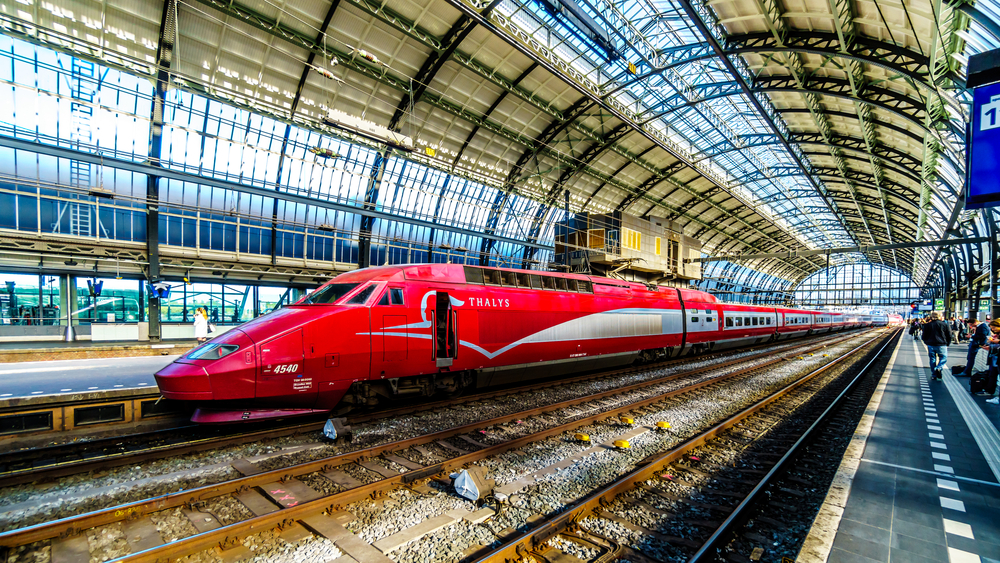
The Thalys is waiting at Amsterdam Centraal for you! Image: Depositphotos
Thalys: the fastest train from the Netherlands to Paris
In part, the convenience of travelling by train is due to the popular French-Belgian railway operator Thalys can get you back and forth in a mere 3h20 minutes! No stop-overs, free wifi, and comfortable seats included.
The downside? If booked last minute, tickets can get seriously expensive. Prices can creep up to €150 should you get the urge to see the Eiffel Tower only a couple of days before departure.
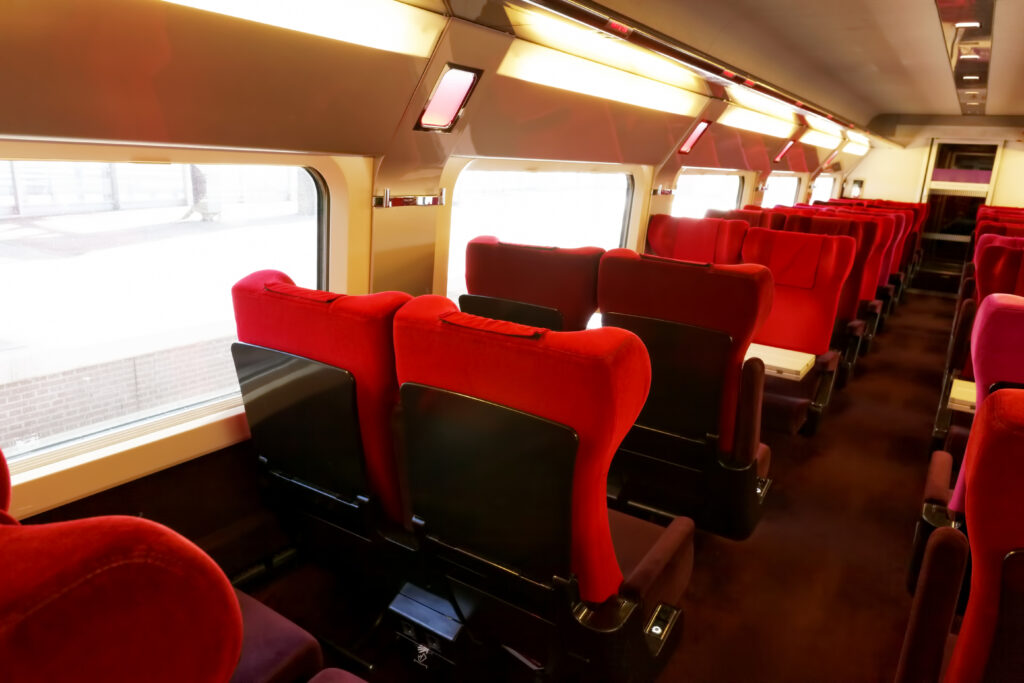
You can nap the three hours to Paris away on these comfortably Thalys seats. Image: Freepik
However, you’re in luck! If you want to plan a romantic getaway to Paris for the summer right now, there are special deals that’ll get you tickets for a really decent price.
Currently, rates for August and July are between €30 to €40 per one-way ticket.
🛫 Departure: Station Amsterdam Centraal
🛬 Arrival: Paris Gare du Nord
⏰ Duration: 3h20
💶 Price: €30 to €150
Even more train connections from Amsterdam to Paris
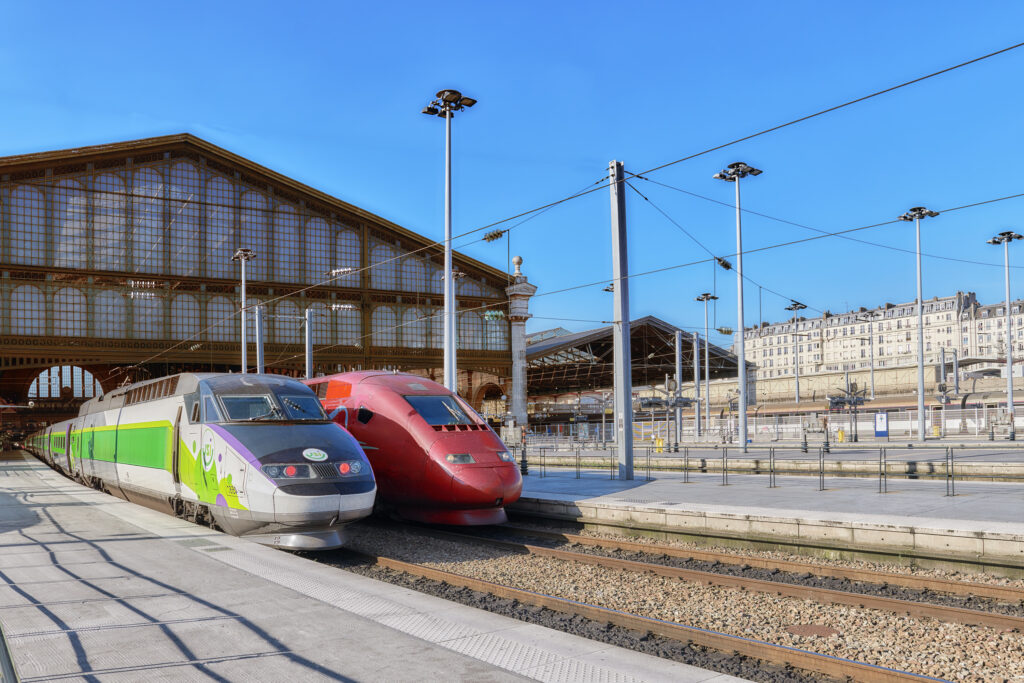
Two trains are parking at the Gare du Nord, one of the biggest train stations in Paris! Image: Freepik
Should the Thalys be sold out or prices are too high, you can always opt for a little detour over the Belgium capital Brussels. (You just need to make sure not to spend all the money on Belgium chocolates and waffles during your stop-over.)
The IC Brussels will bring you from Amsterdam to Brussels-Midi station (Bruxelles Midi) in about 2h50. You see, this will take longer than taking the Thalys, but prices range comfortably between €20 to a maximum of €50.
From there, you can take either a bus or another train to Paris. Flixbus provides a bus that runs for about 4 hours and can be booked for anything between €10 to €30.
There’s also the option to take a Thalys between Brussels-Midi and Paris that will have you munching on a French croissant in just 1h22. However, tickets from Belgium to France are quite expensive and you’ll have to relieve your wallet of sums in the €35 to €120 range.
🛫 Departure: Station Amsterdam Centraal
🛬 Arrival: Brussels-Midi to Gare du Nord (by train) or Gare Routière Bercy-Seine (by bus)
⏰ Duration: 4h to 8h
💶 Price: €35 to €170
Our conclusion: if you gotta take a train from Amsterdam to Paris, your best option is to take the direct connection with the Thalys.
And if there really is no space in the train carriage or your budget is running low, accept the extra time it will cost you and choose the IC Brussels and the additional bus journey from Brussels-Midi to Paris Bercy-Seine.
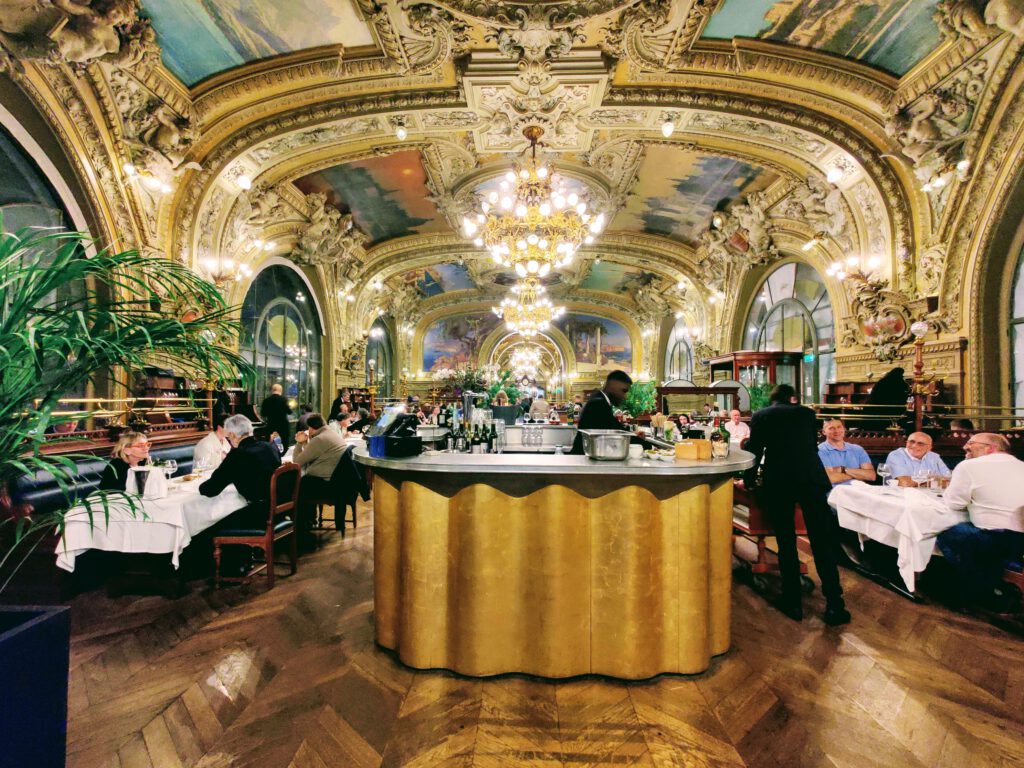
Now that we’re on the topic of trains, international train travelling has a romantic touch to it and nowhere do you find this nostalgic feeling more than at the mesmerising restaurant Le Train Bleu.
Right on top of Gare du Lyon, you’ll find this classy restaurant that’s made of the stuff your Parisian dreams are made of: high ceilings, spectacular paintings, chandeliers, top-notch service and, of course, some of the best food in Paris.
If this doesn’t scream Paris high-culture, then what does? Image: Le Train Bleu/Supplied
The breaded veal with mac and cheese (trust me, it’s done with taste) was delish and by any means order the lamb — they cut the lambchop right next to your table. Oh, another thing that turns your evening here into a Parisian night you’ll never forget? A singing waiter! While it might be campy sometimes, this place definitely gets away with it.
Any downsides? Sure. Le Train Bleu is popular and often fully booked, and it’s not a cheap eat either — but you’ve guessed that by now I reckon.
🚎 Taking the bus from Amsterdam to Paris
Travelling by bus is probably the cheapest and, at the same time, the most uncomfortable way to get from Amsterdam to Paris.
However, if you’re up for a little adventure or you’re on a tight budget — this might be the way to go.
There are two bus operators, in particular, you should keep an eye out for.
Flixbus: the most comfortable bus from Amsterdam to Paris
Flixbus runs buses between Amsterdam and Paris several times a day as well as during the night.
While one-way takes up to 6 to 9 hours because of frequent stops, rates are usually very cheap. Tickets for day rides cost between €18 to €40. Night rides are a bit more expensive and cost between €50 to €80.
On these rides, plugs, free wifi, and toilet stops are generally included.
🛫 Departure: Amsterdam Bijlmer Station, Amsterdam Sloterdijk Station
🛬 Arrival: Gare Routière Bercy-Seine
⏰ Duration: 6h to 9h
💶 Price: €18 to €80
BlaBlaCar bus: the cheapest bus from Amsterdam to Paris
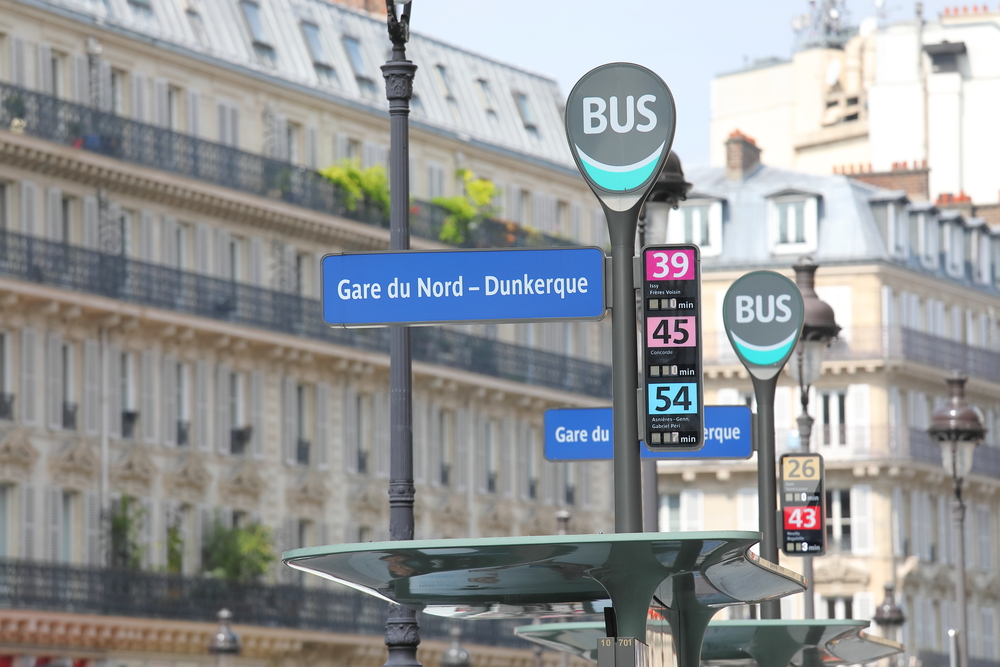
Even bus stops are prettier in Paris than anywhere else really. Image: Depositphotos
Another bus operator is BlaBlaCar. (Yes, sounds funny, but we did not make it up.) The main difference to Flixbus is that they run bus rides at even cheaper prices — but also shittier (excuse our French, we, of course, mean…, less comfortable) service.
A one-way ticket from Amsterdam to Paris costs between €13 to €35. The same goes for night rides.
However, wifi and plugs are not always available on these rides! Make sure to read the journey details carefully before booking your cheap-for-a-reason ticket.
🛫 Departure: Amsterdam Sloterdijk Station, Amstel Station
🛬 Arrival: Gare Routière Bercy-Seine
⏰ Duration: 6h to 9h
💶 Price: €18 to €40
🚗 Driving the car from Amsterdam to Paris
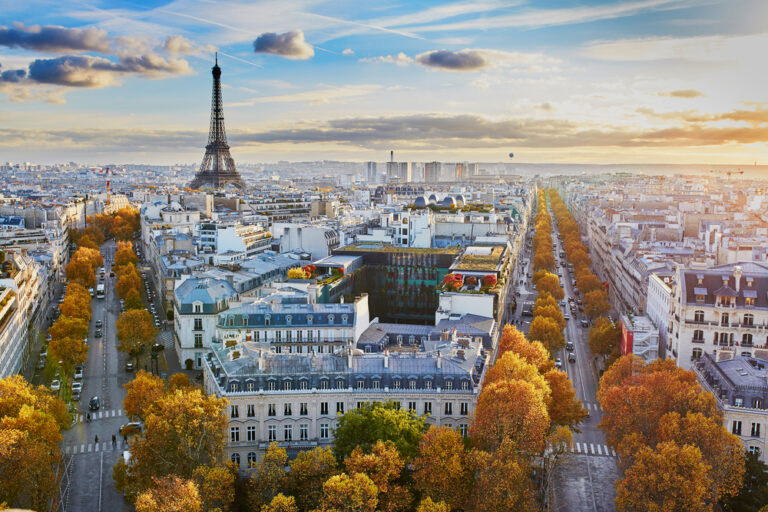
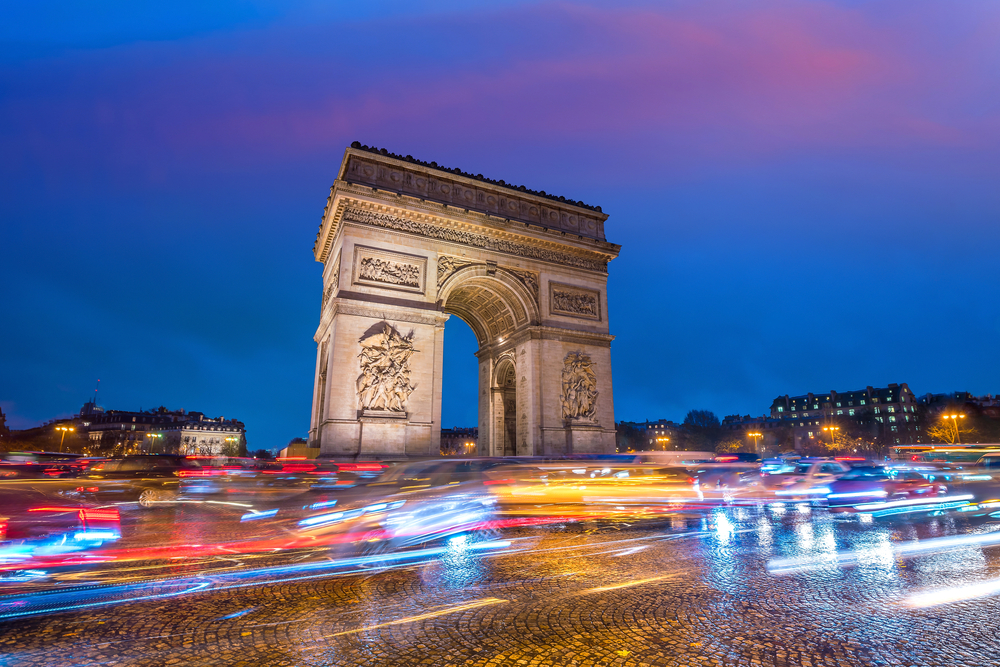
Traffic in Paris might be pretty by night, but you’ll likely want to avoid the rush hour around the Arc de Triomphe! Image: Depositphotos
Not willing to rely on anyone else’s driving abilities to get you to the city of lights and love? You can always take things into your own hands and drive there by car.
A car journey from Amsterdam to Paris takes about 6 hours if you don’t run into any traffic jams. Chances are, however, that you will. So, in reality you’re looking to drive for about 8 hours or more.
Even if you make it to the city without major interruptions, Paris’ road system is majorly overburdened. The autorink is always heavily congested and it will take you a while to get into the city.
Once you’ve made it inside, there are a couple of things to keep in mind. For one, you’re looking at a speed limit of 30 km/h to 50 km/h in all urban areas.
Secondly, where the heck do you park your car in Paris?
Parking in Paris
If you want to safely park your car in Paris you have two options: parking it on the street or parking it in an underground car park.
Either way, it’ll cost you — only 2,5% of all parking spaces in the city are free of charge. 🥲
Parking on the street in Paris
For street parking, Paris is divided in two tariff zones. If you’re looking for a parking spot in the 1st to the 11th arrondissement (district), you’ll pay €6/h. In the 12th to the 20th arrondissement, you’ll pay €4/h.
Wherever you park your car, parking on the street is limited to a two-hour maximum.
Good to know: Parking on the street in Paris is free every weekday from 9 PM to 8 PM and all of Sunday.
Parking in a Paris carpark
Just in case you don’t want to move your car around every two hours, you should opt for the many car parks scattered around the city.
This tool can help you find a carpark near you and also give an indication of the hourly rates. In general, you’re looking to pay anything between €4 to €7.
In some parking facilities, you can also request prices for longer-term parking if you want to stay for a week or even a month.
✈️ Taking the plane from Amsterdam to Paris
Last but not least, you can also head to Schiphol airport and see which plane will take you to Paris in less than 2 hours!
Obviously, we don’t recommend taking any short-distance flights if not absolutely necessary. Sure, it’s convenient but climate change is real and a healthy planet is worth accepting more than just a little discomfort. 🌎 (An 8-hour bus ride over a flooded Amsterdam anytime, please!)
Should you, however, still prefer to take the plane then here are the airlines that’ll take you from Amsterdam to Paris in no time.
Flying to Charles de Gaulle Airport
Two airlines are flying to the Charles de Gaulle Airport from Schiphol Airport: KLM and Air France.
Both operators price their flights on the higher end of the spectrum. A one-way ticket will cost around €50 to €150 depending on how far in advance you manage to book your flight.
On the upside, the journey takes a mere 1h15 to 1h30! But keep in mind that the check-in, passing the security check, boarding and the baggage drop-off will add at least an hour or two to the experience.
🛫 Departure: Schiphol airport
🛬 Arrival: Charles de Gaulle Airport
⏰ Duration: 1h15 to 1h30
💶 Price: €50 to €150
Flying to Paris-Orly Airport
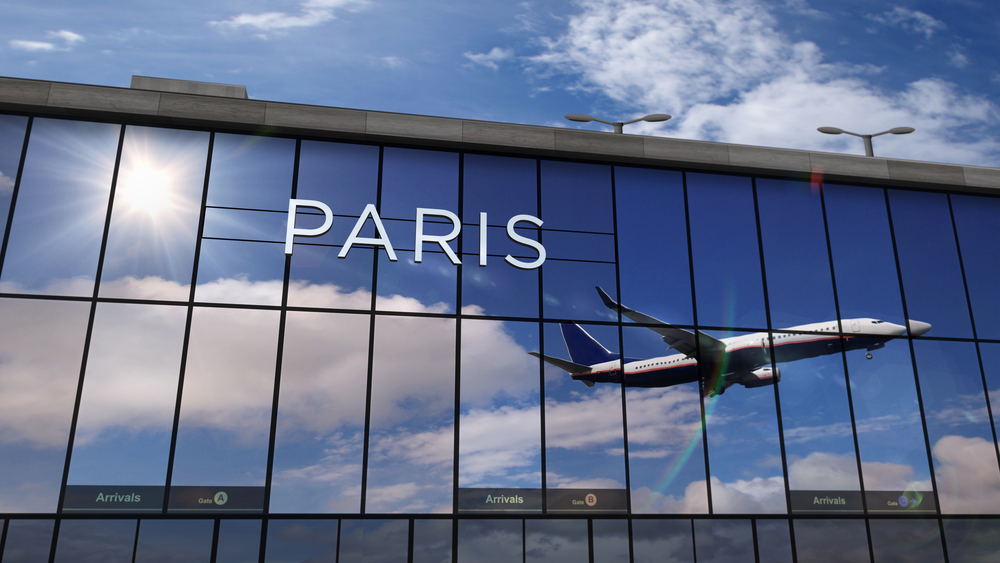
Fly me to Paris, please. Image: Depositphotos
You can also head for the airport Paris-Orly with Transavia airlines, which is a little cheaper than aiming for the more popular Charles de Gaulle airport.
Rates are between €45 to €70 and the trip also only takes a maximum of 1h30 from Schiphol airport.
These are the four main ways to get from Amsterdam to Paris. Whether it be by train, bus, car, or train — we hope you’ll have a picture of yourself munching on a buttery croissant in a romantic side-walk café in no time!
How are you planning to get from Amsterdam to Paris this summer? Tell us in the comments!
The RIVM (National Insititute for Public Health and the Environment) has identified six confirmed cases of the monkeypox virus in the Netherlands.
A number of the infected people attended the Darklands festival in Belgium, says the NOS.
Good to know: The ECDC (European Centre for Disease Prevention and Control) stresses that monkeypox does not spread easily between people. Transmission occurs through very close human-to-human contact. So we’re very unlikely to see monkeypox spread as fast as the coronavirus!
How does monkeypox spread?
It is likely that monkeypox was transmitted through sexual contact.
However, monkeypox is not a sexually transmittable disease. The virus spreads most commonly through skin-to-skin contact.
Monkeypox cases are concerning but the risk of this becoming a COVID like pandemic is ZERO%
Why? This virus:
– is NOT novel… – is typically not deadly – is less contagious than COVID – has been around for 5 decades – is prevented by smallpox vaccine
The first symptoms of monkeypox are tiredness, muscle aches and, sometimes, fever. What follows are blisters and skin rashes. When the scabs fall off the blisters, they are infectious.
A disease contraction from monkey pox can last between two to four weeks. Most importantly, the majority of cases in Europe are mild.
Monkeypox in the Netherlands
Since Saturday, suspected and confirmed cases of monkeypox must report to the Dutch governemnt, says the NOS.
Dutch Minister of Health Ernst Kuipers stresses that there are no collective disease prevention measures to be expected. The Dutch government asks individuals infected with monkeypox to go into isolation.
The government also offers a vaccine to people in the Netherlands who have been in close contact with an infected individual.
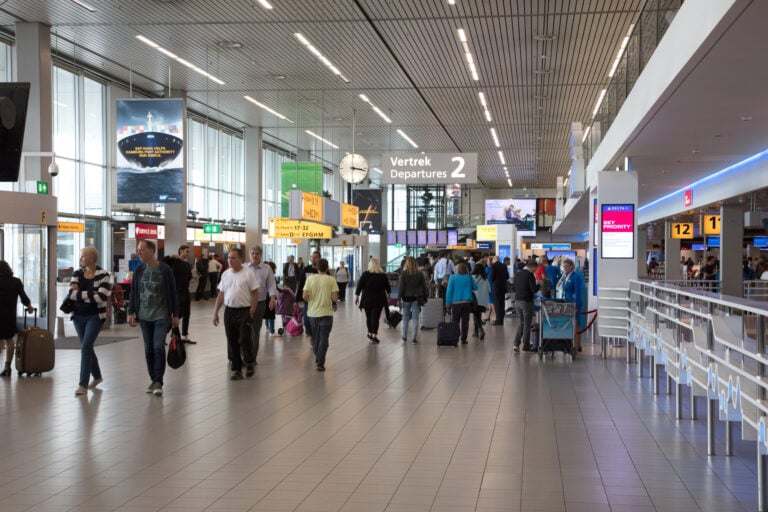
After a few weeks of calm, Schiphol passengers queued for hours yet again — and many missed their flights.
The Netherlands’ national airport blames staff shortages for yet another disastrous weekend of long queues and unhappy travellers.
Already at the beginning of the month, Schiphol airport was overwhelmed by incoming travellers and had to cancel entire flights to (unsuccessfully) avoid overcrowding.
Several people on social media dubbed Schiphol as “the worst airport ever” — with some waiting as long as six hours and 30 minutes in security.
“It is extremely annoying for travellers. We are doing everything we can to avoid long lines,” said a Schiphol spokesperson to the NOS.
One traveller complained that their flight was cancelled an hour before departure, while another wrote that they waited five hours in passport control. Then they had to wait in another line because they missed their KLM flight. 🙄
Many travellers stood in line for hours without food, drink, or access to the toilets.
Busy until summer
The Schiphol spokesperson emphasises that most people made it to their flights, despite excessive waiting. However, they cannot say whether the waiting lines will be as long tomorrow.
The KLM airline warns travellers on its website that there are longer waiting times and possible disruptions to flights — but this was not enough to warn passengers.
Schiphol expects the airport to be very busy every day until the summer holidays. Who knows what it will be like after that. 🤷🏻
Have you been to Schiphol lately? Did you experience any long lines or flight disruptions? Tell us in the comments!
No one cycles more than a Dutch person. The average Dutch family owns at least three bicycles, and they don’t just cycle for groceries, school, or work — it’s also a form of vacation.
This is where the Vrienden op de Fiets concept, translated as “Friends on the Bike” was born.
Thing is, you don’t always have to travel with minimalist camping equipment to faraway exotic places to enjoy a holiday. Sometimes, cycling around the Netherlands or Europe can be just as fun.
Finding accommodation anywhere: who are Friends on the Bike?
Friends on the Bike is a Dutch hospitality foundation for those who like to cycle or walk recreationally. The foundation maintains an extensive network of accommodation addresses throughout the country.
These include private individuals who, usually in their own homes, have several sleeping places available for passing cyclists and walkers.
Friends on the Bike is all about connecting with other passionate cyclists and walkers. Image: Depositphotos
Friends on the Bike practices a non-commercial form of accommodation where participants join the foundation for a fee and are given access to this network of more than 6,000 guest addresses of private individuals in the Netherlands, German, and Belgian border municipalities, and with Dutch speakers in Europe and the rest of the world.
The foundation ensures that cyclists and walkers who want to make multi-day trips can find accommodation everywhere. The initiative is vital in the summer when the Dutch are more active by cycling and walking all around the country and Europe.
What do Friends on the Bike do?
Friends on the Bike publishes a new booklet every year with a complete overview of available places for cyclists to stay. The booklet lists more than 6000 guest addresses in the Netherlands and abroad!
It includes more than 260 guest addresses in Belgium and more than 100 guest addresses in Germany, especially in the border region.
Friends on the Bicycle publishes a booklet with hundreds of guest addresses. Image: Depositphotos
Guest addresses in France, Denmark, Italy, Luxembourg, Austria, England, Spain, Portugal, Hungary, Czech Republic, Sweden, Switzerland, Israel, Canada, Australia, and America are also included. Phew!
Origins of Friends on the Bike foundation
Friends on the Bike was started by Nel de Blécourt and her husband Hijbo in 1984. It began when Nel placed a call to fellow cyclists in the Arnhemse Koerier, looking for people who would be interested in offering comfortable and affordable accommodation to her and her husband.
At the time, there was usually only a choice between a pricey hotel, a youth hostel, or a tent at a campsite. More than 80 people responded to her call. And just like that, the Friends on the Bike was born.
After 35 years, the addresses have risen from 80 to more than 6,000 guest addresses, with more than 95,000 registered and active ‘Vrienden op de Fiets’ in 2020.
How do I join Friends on the Bike?
So let’s say you are also looking to adopt the Dutch tradition and habit of touring Europe on a bicycle in the summer and don’t want to spend a fortune on accommodation. In that case, the Friends on the Bike foundation might be what you need.
Count me in! Joining the foundation is easy. To do that, you can follow the steps on the Friends on the Bike website. Also, don’t forget to read the ground rules.
Additionally, the foundation annually distributes a booklet with an overview of the available guest addresses and a detailed map. Cyclists, or “Friends,” as members are called, can log in to the website with their membership number to access the current information about guest addresses.
Thanks to Vrienden op de Fiets, you can even explore places like Austria or Switzerland. Image: Depositphotos
You can also become a member for just €8 per year and receive a pass and a well-detailed cycling map with attractive routes and places to stay in the vicinity of those routes.
With your identification and membership card, you can book accommodation with breakfast at all addresses by appointment for the “friends price” of €22.50 per person per night (excl. tourist tax).
Connecting with local “Friends”
Many people often think that this foundation is a Bed and Breakfast, but the main difference between the foundation and a B&B is that you have to be a touring cyclist or walker to be allowed access to any addresses.
Thee idea is to provide an avenue for private individuals to share their homes with cyclists and walkers, as well as their stories and experiences.
The initiative has become an honest company, but idealism is still paramount. Anyone renting a room (including breakfast) may not charge more than €19 per person because the idea is not for profit.
So if you are looking to enjoy an adventurous cycling or walking tour of the Netherlands and Europe, then the ‘Vrienden op de Fiets’ experience might be exactly what you need. Do this a couple summers, and your ” integration” to Dutch society might actually be complete.
What do you think of the Friends on the Bicycleinitiative? Would you give it a go? Tell us in the comments!
In August 2022, you can enjoy some terrible customer service at Karen’s Diner in Amsterdam. After ordering a meal, you can get a free middle finger with dessert. How gezellig!
Karen’s Diner is popular worldwide with restaurants in the United States, Australia, and England. Now, the Netherlands can get a taste of their full-knuckle sandwich. 🥪
At Karen’s Diner, the staff are trained to be very mean to customers. So, if you had an enjoyable experience, you should probably write a bad review. 🤔
The Dutch staff probably won’t need that much training as we all know how direct the Dutch can be already. 😉
The Karen crisis
The restaurant gets its name from the infamous “Karen”, which represents a rude, entitled, middle-aged woman who wants to get her way with everyone.
On social media, a Karen is usually seen confronting or screaming at others, usually styled with bobbed hair, AKA the Karen haircut. 💇♀️
Karen’s diner on social media
The restaurant has been gaining a lot of traction on platforms like TikTok with users posting videos of their ‘horrible’ experiences with the staff.
We assume the mum ended up having a great time at the restaurant since it promises a free drink if your name is actually Karen. So to all you Karens out there, bring your ID for some free cocktails. 🍹
Will you be visiting Karen’s diner in the Dutch capital? Tell us in the comments below!