The Netherlands (and the rest of Europe for that sake) has been in the throes of a worsening gas crisis for, well, a while. Now, with the Russian invasion of Ukraine, gas prices are destined to soar even higher.
As a result, the Netherlands aims to cut its consumption of Russian gas — and preferably fast.
Luckily, the Dutch Association for Sustainable Energy (NVDE) believes the Netherlands could be completely independent of Russian gas within a few years, reports the NOS.
NVDE gas saving plan
Currently, the Netherlands consumes about 40 billion cubic metres of gas every year, of which five billion cubic metres comes from Russia.
However, if the necessary measures are taken, the NVDE estimates that the Netherlands can save 10 billion cubic metres in the next four years — allowing Dutchies to wave doei to Russian gas. 👋
Want even more good news? We’re all in desperate need of it, so here ya go: Approximately half of the recommended measures can be implemented within a year says the NVDE in a memorandum.
Call on companies and individuals to save on gas
The NVDE has come up with practical tips on how companies and individuals alike could help realise the 10 billion cubic metres savings goal.
Other points included in the memorandum were switching to LED lighting, better insulation, and better controls of companies’ mandatory energy-saving measures.
Challenges for ending Russian gas consumption
Implementing gas-saving measures might be easier said than done, however.
Not only does the NVDE point out that necessary subsidy programs for households will take years to carry out — but there is also a shortage of skilled workers to install, for example, better-insulated pipes.
On a grander scale, the Netherlands is somewhat dependent on other countries’ efforts towards cutting Russian gas. In Europe, there are namely agreements that dictate that the countries show solidarity with each other if gas prices rise.
According to Van der Gaag, “it is certainly not the case that we can solve this in isolation in the Netherlands.”
He says “it remains necessary to look for where you can get natural gas” which, according to the NVDE, includes looking at the North Sea.
What do you think of the Netherlands’ plan to do without Russian gas? Tell us in the comments below!
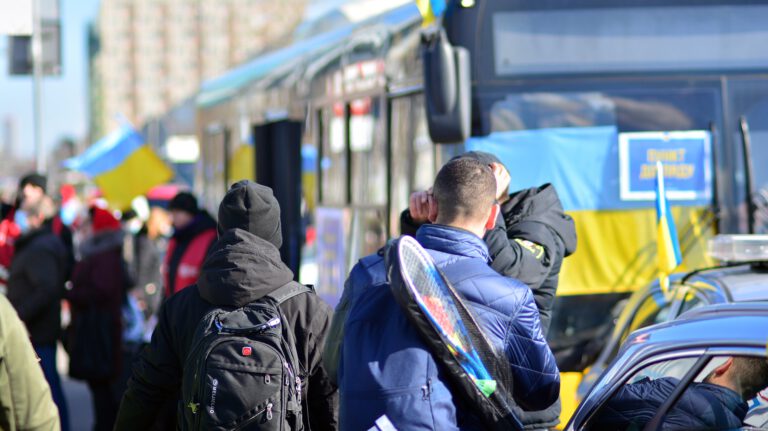
Amidst the Russian invasion of Ukraine, these Dutch citizens are taking matters into their own hands.
From the former politicians to regular Dutch natives, many people are looking for ways to help Ukrainian refugees.
Dutch Defense Minister gives up his holiday home
Former Dutch Defense Minister Joris Voorhoeve left for the Polish border on Saturday morning and took in six refugees: Ira, her mother, and four children, reports the NOS.
They are from Kharkiv, which was subject to several shell attacks. Voorhoeve gave shelter to the six Ukrainians in his German holiday home for the time being.
From Zeeland to the Polish border
Meanwhile, Andy de Schipper from Zeeland drove to the Polish border and picked up a family of four — a father, two daughters, and their cousin from Ukraine.
The family travelled for five days and hadn’t showered since leaving the country. He is driving them towards Antwerp where they have family, reports RTL Nieuws.
Another Dutch man raised over €60,000 to support Ukrainian truck drivers stranded in the Netherlands.
What are refugees entitled to?
It is unclear what Ukrainians must do if they flee from the country — who to report to, their rights, how long they can stay.
But the Ministry of Justice and Security announced that Ukrainians with a biometric passport can freely travel around the EU. They said taking refugees with you is not punishable by law if they have the correct visa or a biometric passport.
The NS also announced that they would allow refugees to board any NS train using their passports.
What can you do?
Representatives of the Red Cross and the Refugee Foundation suggest donating money and resources to aid programs. There are many initiatives in the Netherlands to donate it.
Organisers are planning more protests around the Netherlands to make demands and show solidarity with Ukraine.
Last Sunday, Ukrainian President Zelensky announced his plans to create a “foreign legion” to help fight the Russian invasion.
In a statement, he called on “citizens of the world” to pick up arms and join the troops currently fighting in Ukraine.
Now, Dutch people are doing just that, reports the NOS. By Monday, more than 200 Dutch citizens had already contacted the Ukrainian embassy in The Hague.
Ukrainian embassy in The Hague appeals to foreign citizens
In an appeal on LinkedIn, the Ukrainian embassy announced that they were receiving “many calls from people who would like to join the Armed Forces of Ukraine in their fight for Ukraine, for Europe, and freedom.”
So, to facilitate communication, they posted a form that citizens of foreign countries can fill out if they want the embassy to contact them. The form requires people to enclose a copy of their passport along with proof of an untainted criminal record.
Military historian expects thousands to volunteer for combat
Military historian, Christ Klep, tells the NOS that he expects thousands of people to sign up to fight in Ukraine. He explains that “we have seen this before, with IS in Syria and in the Balkans during the Yugoslav civil war.”
Klep says that the forming of volunteer legions and mercenary troops occurs in almost all major conflicts. “It attracts very diverse people. Some do it for the money, because they have military experience or because they find it exciting. Others think they have to defend an ideology,” he continues.
Dutch Ministry of Foreign Affairs advises not to go to Ukraine
The Dutch Defense Minister, Kajsa Ollongren, says that enlisting in foreign forces is “in principle not prohibited.” (Especially for professional soldiers, as joining would be considered desertion of the Dutch military).
In a debate in the House of Representatives yesterday, she highlighted the extreme danger it posed for Dutch citizens to travel to Ukraine.
Following the debate, the Dutch Ministry of Foreign Affairs urgently advises Dutch people not to travel to the country.
The Dutch national railway line (NS) has taken a stance in support of Ukrainian solidarity against the Russian invasion.
Ukrainian refugees can use their passport or ID cards as a free ticket to board any NS train to the Netherlands, the official NS website announced yesterday.
To all refugees of Ukraine, your passport is your train ticket to the Netherlands. We hope NS can play an active part in helping Ukranian families travel to safety at this time. We wish you safe travels.#StandWithUkrainehttps://t.co/NVqj6CetGA
Ukrainians can collect a free day pass at any NS Ticket or Service Counter by showing their identity papers. German or Austrian train tickets will also be accepted as long as they are not older than 24 hours.
The NS says that it wants to make the journey through Europe “as convenient as possible” this way.
What do you think about this act of Ukrainian solidarity by the NS? Tell us in the comments!
The RIVM has reported its weekly coronavirus figures from February 22 to March 1. Both the number of hospitalisations and the number of deaths has decreased over the past week.
Over the past week, the RIVM has reported 245,898 new infections in the Netherlands. This is another decrease compared to last week’s report of 310,144 infections.
The percentage of positive tests has increased, with 62.6% of people testing positive compared to 58.3% from the week before.
Deaths
The number of patients who have died from coronavirus-related complications decreased significantly compared to the past week. This week, 63 people passed away, compared to 95 people the previous week.
Hospitalisations
The number of admissions to the nursing ward and the number of admissions in the ICU have both decreased. The past week saw910 new admissions to the nursing ward and88 new patients in the ICU.
The previous week, there were1,117 patients and 97 patients respectively.
More relaxations in with Dutch coronavirus measures
Most public spaces removed social distancing and face mask rules, with the exception of public transport or air travel. ✈️
The catering and cultural sector can keep their regular opening hours pre-pandemic — which means nightclubs and restaurants can stay open for as long as they want!
Most places do not require a coronapass anymore, except for large indoor events with more than 500 people and without fixed seating. 🧪
Will reassess in two weeks
Some countries might still require the coronapass to travel abroad. Be sure to check each country’s rules before you start planning your next holiday! 🤗
The cabinet will reassess the remaining policies on March 15. This includes whether to keep face masks in public transport, 1G policies, and the work from home advice.
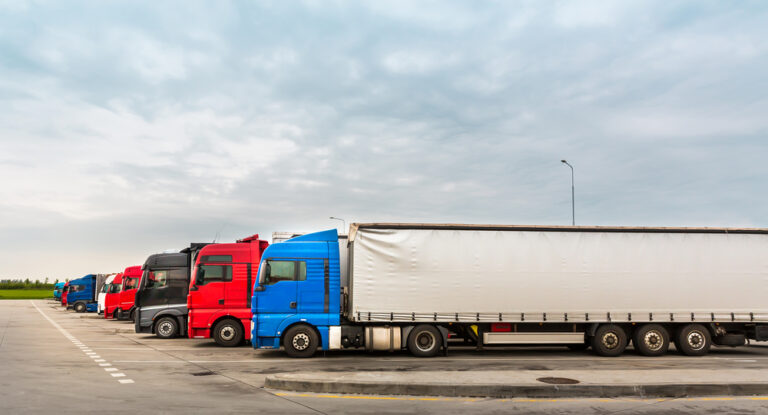
Dutch truck drivers have spent the past couple of days raising money and making food packages for Ukrainian colleagues stranded in the Netherlands, reports RTL Nieuws.
The initiator, Aschwin Cannoo from Nijmegen, estimates that there are around 10,000 Ukrainian truck drivers scattered throughout Dutch parking lots, unable to go home.
Moral duty to assist Ukranian drivers
Cannoo was himself a truck driver until two years ago when he instead created the platform Chauffeursnieuws. The platform promotes the interests of truck drivers in the Netherlands.
However, with the Russian invasion of Ukraine, he felt that “it is a moral duty to assist stranded drivers from Ukraine with advice and action.”
He started a fundraiser to put together food packages that could be delivered across the country.
In just one day, the campaign raised €60,000!
Volunteers flocking to help
Not only has there been an overwhelming contribution to the fundraiser, but Dutch truck drivers have also responded eagerly to Chauffeursnieuws’ Facebook page.
Currently, about 50 trucks are driving to parking lots hosting Ukrainian drivers with packages containing bread, fruit, soup, toilet paper and a meal.
Moreover, Dutch drivers are putting together their own packages without aid from the fundraiser or with help from local food banks.
Cannoo adds: “And we help not only Ukrainians but also Russian drivers. They can’t help that this war is going on.”
‘Heel Holland helpt’
This past weekend saw a touching turn up at various collection sites around the country. In the village Mijnsheerenland near Rotterdam, many cars arriving with supplies for Ukrainians actually created traffic jams throughout the village.
However, everyone was happy to do what they could to help.
What do you think of this initiative by Dutch truck drivers? Do you know other ways to help? Tell us in the comments below!
The Fiscal Information and Investigation Service (FIOD) arrested Dutch entrepreneur Sywert van Lienden. Over what, you may wonder? — Van Lienden was was responsible for a controversial face mask deal.
Three homes and one office were searched, resulting in the arrest of two people, reports NU.nl.
Who is Sywert van Lienden?
The investigation deals with what is called the Auxiliary Troops Alliance.
In 2020, Van Lienden founded a non-profit organisation, Auxiliary Troops Alliance, with two acquaintances. The aim? To counteract the shortage of face masks and other medical equipment in the Netherlands.
He gathered face masks and other protective equipment through social media and purchased protective equipment from China with “selfless help” from several companies and finances.
A shady deal
The (former) directors of the foundation repeatedly told the media they were a non-profit company. However, an investigation found that Van Lienden had set up a private company that purchased and sold these face masks to the Dutch government for a profit.
And he and his colleagues made millions.
A criminal investigation
The RIVM also advised against the purchase and use of these face masks because they found traces of graphene. The Dutch Publish Prosecution Service will continue their criminal investigation of Van Lienden and his associates.
What do you think of this criminal case? Tell us in the comments below.
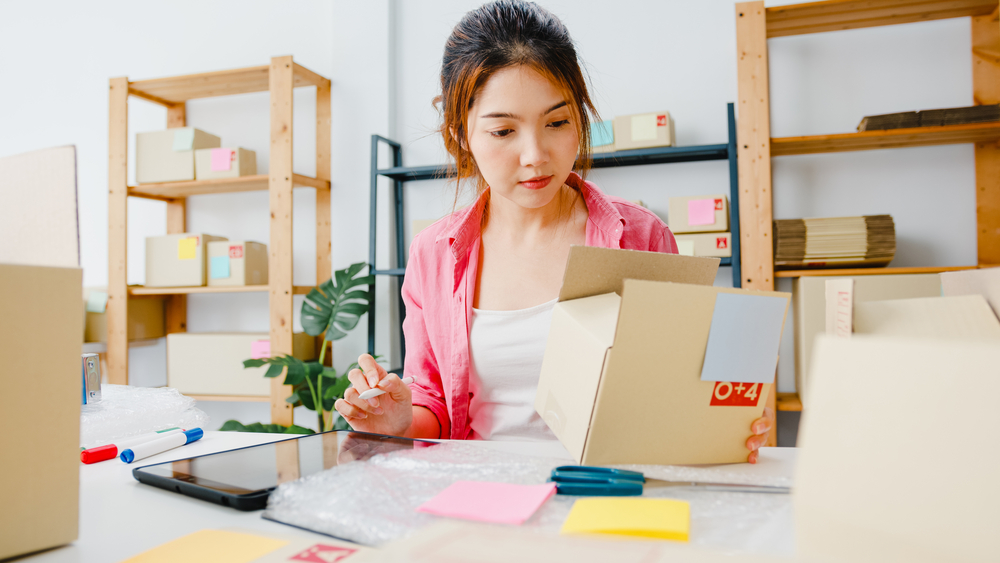
Are you a self-employed person (ZZP’er) in the Netherlands? First of all, congrats! Look at you being the CEO of your own business. Ok, now it’s time to be the boss and figure out how to pay taxes as a ZZP’er in the Netherlands.
As internationals in the Netherlands ourselves, we know that the prospect of navigating the world of taxes in Dutch and on your own can be terrifying — to put it lightly. Let’s run through everything you need to know to master that self-employed life. 💪
Who counts as self-employed (ZZP’er) in the Netherlands?
If you are self-employed in the Netherlands, then you are classed as a ZZP’er. What do we mean when we say ZZP’er? It’s simple: Zelfstandige Zonder Personeel which translates to “self-employed without personnel.”
In short, ZZP essentially means you have set up your own business and it’s a one-person team consisting of one star ‘employee’: you! ⭐️
Are you required to pay tax if you are self-employed in the Netherlands?
If you are a ZZP’er in the Netherlands, then not only are you going to have the responsibility of being the CEO, founder, and boss of yourself — you’re also responsible for paying your own taxes to the Dutch tax office, the Belastingdienst.
In the Netherlands, everyone pays their taxes using DigiD. However, if you do not have one, there are other options. All of this can be done through the website Mijn Belastingdienst Zakelijk.
What tax do you have to pay as a self-employed person in the Netherlands?
As a ZZP’er, you are not a separate legal entity from your business (in terms of taxes). This means you pay income tax and social security through your annual income tax return. However, you are also still a business, meaning that you must also pay BTW (VAT).
There are a number of taxes and contributions that you must pay as a ZZP’er in the Netherlands. Image: Depositphotos
What is income tax in the Netherlands?
No surprises here! Income tax is the tax you pay on your annual income. You can be taxed anywhere between 37.07% and 49.50% depending on how much you earn.
Since you are not considered a separate legal entity from your business, your business profits will be considered part of your income.
Remember: While it may look like you’re CRUSHING IT and making that moolah, you need to remind yourself that the money you’re making is bruto or gross — a.k.a you still need to pay tax on it. Even though it is sitting in your bank account, the tax office still wants its share.
How much income tax you pay depends on your income. There are two potential rates that you may pay in 2022:
If your income is below €69,399: you will pay 37.07%
If your income is above €69,399: you will pay 37.07% on the income up to € 69,399 and 49.50% on the income in the excess of €69,399
If these rates are likely to put you out on the streets, don’t panic just yet. There are allowances for ZZP’ers who earn below a certain level and meet certain requirements (more below.) 😉
What is BTW (VAT) in the Netherlands?
BTW stands for Belasting over de Toegevoegde Waarde, or as we say in English, Value Added Tax (VAT)!
When you work as a ZZP’er, you charge BTW (VAT) to your customers on top of the cost of your services. Usually, you charge 21%, which means that you calculate 21% of the cost of your services and add it to your invoice.
The extra 21% VAT is however not yours to keep. You will pay this VAT back to the Belastingdienst following the end of each tax quarter throughout the year. The VAT that you have already paid on the incoming invoices and receipts will be reduced from the VAT that you have to pay back to the Belastingdienst.
When are tax quarters in the Netherlands?
The Netherlands has four tax quarters. These are:
1st quarter: January 1 — March 31
2nd quarter: April 1 — June 30
3rd quarter: July 1 — September 30
4th quarter: October 1 —December 31
Before the end of the month following these quarters (i.e April 30 after the first quarter), you will have to file the VAT tax return to the Belastingdienst and pay the amount due. This can usually be done online through the Mijn Belastingdienst Zakelijk website.
Note: Depending on your situation, the VAT you charge may be different. For some services and products, a reduced rate of 9% or even 0% needs to be charged. A service or product can sometimes also be exempted from VAT.
Invoices to your customers abroad are also a bit tricky. VAT could be charged, but it is also possible that the VAT is reverse charged or out of scope. In these instances, it’s best to speak with a tax professional so you don’t make a tax faux pas.
What tax benefits can I get as a self-employed person in the Netherlands?
It may sound scary, but the Dutch tax system also has many tax benefits to help lessen the blow of taxes for ZZP’ers. These are:
Zelfstandigenaftrek — The self-employed deduction
If you’re self-employed and meet the conditions below you are eligible for a hefty tax deduction.
If eligible, the profit on which you are taxable will be reduced by €6,310 for the year 2022. This means that if you have made a profit of, for example, €19,000, you will only be taxed on €12,690 of that profit.
Note: In 2022, the maximum rate for deduction is 40%.
What are the requirements?
You must be seen as an entrepreneur by the tax authorities.
You must meet the hour criterion, i.e. you’ve worked at least 1,225 hours during the calendar year.
You must be running the company.
You have not reached the state pension age. If you have reached the pension age, the self-employed deduction will be reduced to 50%.
Startersaftrek — Starters deduction
If you are self-employed AND are considered a starter, then you may also be eligible for the startersaftrek. This is a further deduction of €2,123, meaning that the profit on which you can be taxed will be reduced again.
If we take the above example, this would mean that you would only be taxable on €10,567 of your profits.
What are the requirements?
You must be seen as an entrepreneur by the tax authorities.
You meet the hour criterion, i.e. you’ve worked at least 1,225 hours during the calendar year.
You have not reached the state pension age. If you have reached the pension age, the starters deduction will be reduced to 50%.
You have only been a starter for one year in the past five years.
You have not used the startersaftrek already for the maximum amount of two times during this period.
MKB-winstvrijstelling (Small and Medium-sized Enterprise Profit Exemption)
You can think of the profit exemption as a supplement to the above two tax benefits. If you are eligible for the profit exemption, then you may reduce your taxable profit of 2021 by a further 14%. Again, this deduction will be limited to a maximum rate of 40% of your revenue.
What are the requirements?
You only must be seen as an entrepreneur by the Tax authorities.
Kleineondernemersregeling (KOR)
As of 2020, those who receive the KOR benefit will be exempt from paying VAT. This is only the case, however if your turnover remains below €20,000.
This means that if you earn under €20,000, you do not charge VAT and you do not have to file a VAT return.
What are the requirements?
You earn less than €20,000.
You have to register for the KOR via a registration form.
What is private and what is business?
As a self-employed person, your personal life and business life are seen as the same thing. This can lead to difficulties sometimes.
Business expenses
Business expenses are considered deductible depending on how they contribute to your business.
For example, if you bought a certain software system for your business, the costs of this software system can be deducted from your income as business expenses. If you also use this software system for personal matters, it becomes debatable whether the full price can be considered as business costs.
It’s important to take note of which expenses are deductible from your income when you are a ZZP’er. Image: Depositphotos
In general, most business expenses are deductible, but some are only partially deductible, some expenses are deductible over multiple years, and some aren’t deductible at all. It’s best to consult an accountant to determine which category your expenses fall under.
Dutch Health Insurance Act Contribution
As an employee, your employer pays the Dutch Health Insurance Act Contribution in the salary administration as a percentage of your salary. As a ZZP’er, you do not have an employer nor a salary administration. This means you will now need to pay this contribution by yourself.
How can you do that? Simple! Just file a Dutch income tax return and the Dutch tax authorities will automatically levy a Dutch Health Insurance Act assessment over the amount of income you had. Be prepared and set some money aside to pay this contribution.
Liability and insurances
As explained above, as a ZZP’er, your business and your personal money and expenses are not separated from each other. This also has implications for your liability. As a ZZP’er, you work at your own expense and risk.
This risk will extend to your personal money if you’re not able to fulfil your business obligations. You are liable for the debts of your business with your entire private assets. Some insurances could help you to cover your liabilities.
Assistance with BTW and the annual income tax return process
When it comes to paying taxes, many self-employed people enlist the help of either accounting software or an actual accountant. This can be quite a tricky process — especially when done in Dutch.
Preparing a balance sheet and profit and loss statement
One important element of paying your income tax as a self-employed person is preparing a balance sheet and a profit and loss statement.
Balance sheet — this is an overview of your assets, costs, and equity. It basically indicates how your company is doing financially.
Profit and loss statement — This is an overview of your turnover and your costs and indicates whether you have made a profit or a loss.
Both of these can be prepared for you by an accountant.
Whew! That’s the world of tax for a self-employed person in the Netherlands. Time to take on the challenge! 🏁
Ready to take on the world of taxes? We know you are. Tell us about your experience in the comments below!
Editor’s Note: This article was originally written in October 2021 and was fully updated in March 2022 for your reading pleasure.
The cabinet has gathered to further discuss the Dutch position on Russia’s invasion of Ukraine.
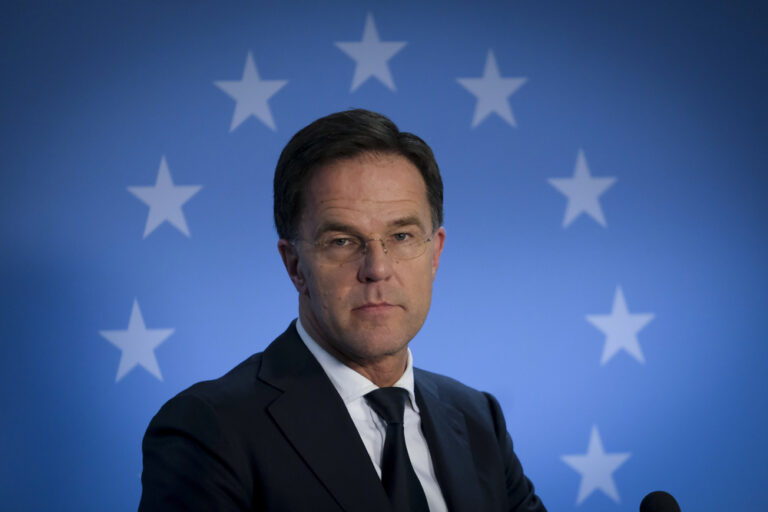
Dutch Prime Minister Mark Rutte opened the session with a short speech, calling for the condemnation of Putin’s aggression against Ukraine. Rutte further called on collective solidarity for Ukraine on a national and international level.
Overall, there is a general consensus in the cabinet to take further steps towards the support of Ukraine, reports RTL Nieuws.
Outcry over statement by Baudet
However, Thierry Baudet, head of the far-right extremist party Forum voor Democratie (FvD), caused an uproar in his refusal to condemn the Russian invasion: “I don’t understand the place of judgement in international politics.”
In response, GroenLinks party leader Jesse Klaver has demanded that the FvD should be investigated for eventual ties and funding from the Russian government.
In addition, Klaver called to limit the access of the FvD and the Partij voor de Vrijheid (PVV) to confidential government documents on the war with Russia.
More money for defence
One of the main points of discussion was to increase funding for military defence. This term, the Dutch government has spent an additional 10 billion euros on defence expanses already.
The consensus is that it is useful to further expand the budget. Sjoerd Sjoerdsma from the party D66 said that there is a definite willingness to do more.
Reduce reliance on Russian gas and oil
Leftist parties have further called to reduce the Netherlands’ reliance on Russian oil and gas. More funding should go to alternatives such as the construction of alternatives such as liquid gas terminals, reports RTL Nieuws.
What do you think the Dutch government to contain Russian aggression? Tell us in the commentsbelow!
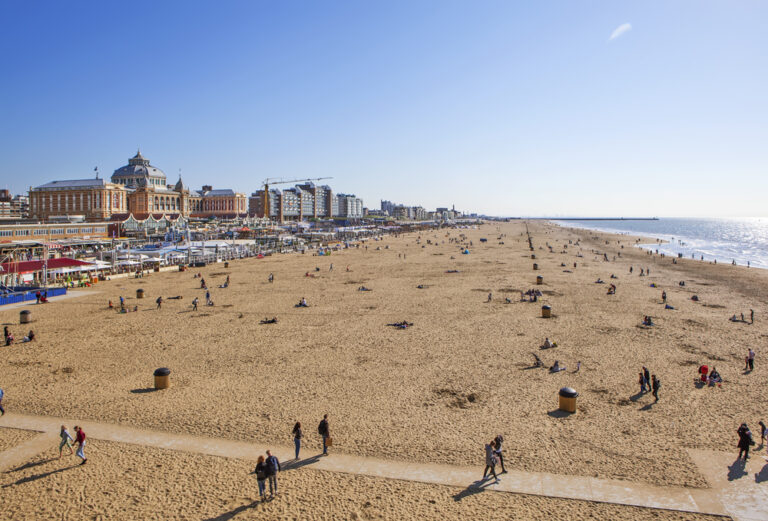
After a marvellous sunny weekend in the lowlands, the good weather streak continues! ☀️
Monday will stay sunny and dry across the country. High clouds will form in the west towards the end of the day but it will remain dry (breathes a sigh of relief).
There will be light winds and temperatures will range from a comfortable nine to 12 degrees. Echt lekker!
What about the rest of the week?
Helaas pindakaas, the beautiful sun is not here to stay. Tuesday will go back to being characteristic Dutch weather — cloudy with a chance of rain. 🌧
Chances of rain are higher in the north and west of the country, with average temperatures around five degrees.
The southeast will probably stay dry, with average temperatures between eight and 10 degrees.
What will you be doing with the good weather today? Tell us in the comments!