Dutch television and radio channels have come together for a nationwide fundraiser. All combined earnings will go to support war victims in Ukraine. 💙💛
The campaign started at 6 AM and will go on until 11 PM tonight. They already collected €21.4 million, reports the NOS.
What is it about exactly?
10 Dutch radio- and three television channels have come together to start the nationwide action day for Ukraine (landelijkse actiedag voor Oekraïne).
The entire day, Giro555 will help collect all earnings made from donations and advertisements to support the Ukrainian people, who are suffering a war against Putin’s Russia.
How you can help: until 11 PM tonight, listeners can donate directly to radio555.nl.
Next to a specially curated DJ line-up, radio shows will also make space to broadcast personal stories from Ukranians and keep listeners up-to-date on the ongoing war.
Who is taking part?
The radio channels taking part in the campaign are: 100% NL, NPO Radio 2, NPO 3FM, NPO Radio 5, Qmusic, Radio 538, Radio 10, Radio Veronica, SLAM! and Sublime.
Regarding television channels, you can help out by tuning into NPO1, RTL4 and SBS.
This is not the first time that Dutch radio- and TV channels have united for a good cause. Giro555 has many success stories.
In 2004, a huge tsunami led to thousands of casualties and large scale destruction of infrastructure in India and Indonesia. Giro555 managed to collect a whopping €208 million for those affected.
Another example was a nation-wide donation campaign run for the victims of the earthquake in Haiti in 2011. Then, about €111 million were donated to Giro555.
Are you going to take part in this nation-wide action day for Ukraine? Tell us in the comments!
We weren’t kidding, March will be sunny month! The week kicks off with an especially warm Monday, temperatures around seven to eight degrees. ☀️
And as always in the Netherlands, there will be light winds from the east and northeast throughout the day, reports NU.nl. 🍃
Misty mornings
The northern half of the country might experience early morning fog or mist, but don’t get discouraged just yet!
Luckily for us, the sun will eventually break through to warm up the rest of the country and shine brightly for the rest of the afternoon. 🌤
Chilly evening
In the evening, the temperatures will drop to zero degrees in the western part of the Netherlands. The rest of the country will experience temperatures a few degrees below zero. Brrr! 🥶
But apart from this little slip-up, it seems like good weather is here to stay in the Netherlands — at least for now.
Cherry blossom season
Tulips aren’t the only attraction that comes into “blossom” this time of year. Although less popular, the Netherlands has a few cherry blossom sites you definitely don’t want to miss out on.
Cherry blossom season is quite short in the Netherlands, from late March until late April — better plan those city excursions soon to catch these beauties! 🌸
How are you planning to spend this sunny day? Let us know in the comments!
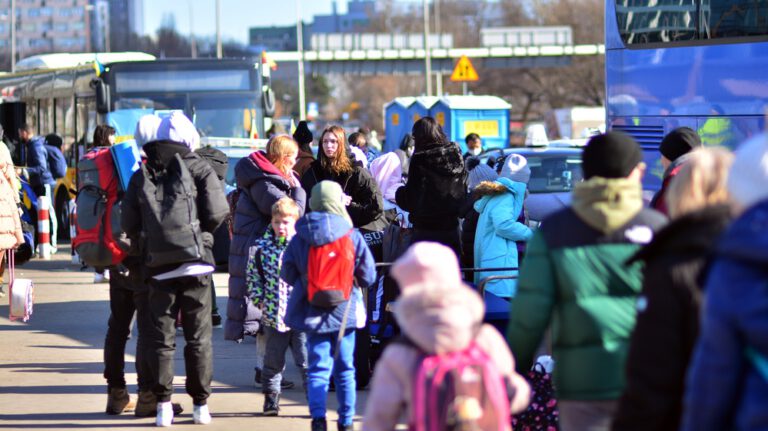
The government is working actively towards creating at least 25,000 emergency spaces for Ukrainian refugees arriving in the Netherlands.
The Netherlands is divided into 25 different security regions that are responsible for taking care of the people currently residing or living in their territories.
The NOS reports that the security regions (veiligheidsregio’s) have been ordered to prepare at least 1,000 spaces each for incoming Ukrainians fleeing the Russian invasion.
This means that the Netherlands is preparing to take in at least 25,000 Ukrainians.
Possibly more in certain regions
Each of these regions has received specific instructions from the Dutch government to prepare for the arrival of Ukrainian refugees within the next two weeks.
However, certain regions have the capacity for even more than this.
Rotterdam and Amsterdam
Security region Rotterdam-Rijnmond has already found 2,000 spaces by renting two river cruise ships where people can be accommodated for the short term.
In Amsterdam, there are currently 80 spaces available and about 800 more in military barracks close to Gelderse Harskamp.
It is unclear how many refugees are meant to arrive in the Netherlands, but the UNHCR has estimated yesterday that about one million people are currently fleeing from the devastating war in Ukraine.
What do you do to help Ukrainian refugees? Tell us in the comments!
Hermitage Amsterdam is cutting its ties with Russia with immediate effect. A major part of the museum will close as a result.
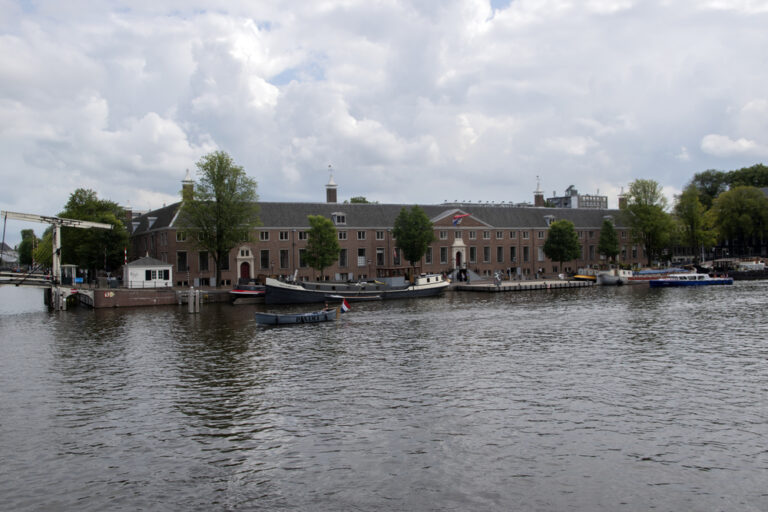
The museum, located on the river Amstel, worked in close collaboration with the State Hermitage Museum in Saint Petersburg for the past three decades.
The partnership allowed the Amsterdam museum to “draw from one of the world’s most famous collections of art” for their exhibitions and led to “beautiful, well-attended exhibitions in Amsterdam.”
However, with the Russian invasion of Ukraine, this now comes to an end. “War destroys everything, including 30 years of cooperation,” says a statement on the museum’s website.
No other choice
Up until now, Hermitage Amsterdam shied away from making big statements about political developments in Russia.
“After all, politics focuses on everyday reality and our orientation lies with the art treasurers and movements that span across centuries,” the museum said.
The relationship between the two museums was characterised by the expression “art connects.” But a line was crossed with the Russian invasion. “The Hermitage Amsterdam currently has no other choice.”
“Like everyone else, we hope for peace. And for future changes in Russia that will allow us to restore ties with the Hermitage Saint Petersburg,” the statement concludes.
Part of the building remains open
Amsterdam Hermitage was also supposed to house a part of a collection from the Amsterdam Museum, which is currently undergoing renovations. This has been suspended for the time being, reports the NOS.
However, the Museum van de Geest, an independent museum that exhibits Outsider art in the Hermitage, will remain open.
What do you think of this decision? Let us know in the comments!
People are always banging on about Randstad. It’s the place to be, they say. But is that really the case?
While the Randstad may be the most popular part of the Netherlands for expats to live in, there are other, under-rated but no-less-impressive locations in the lowlands that would make a wonderful home. The largest city in North Brabant — Eindhoven — is one of them.
From job opportunities to housing and city life, here are nine things you should know before you make the move to what is nicknamed de gekste (the craziest).
1. Eindhoven is THE place for tech talent
Are you tech-savvy? Or looking to remould yourself into the type of person who is? Good on you! Oh, and Eindhoven is the place to be.
Why? Here are just a few impressive tech names that have found their home in the largest city of North Brabant.
ASML: Dutch multinational that designs and manufactures technology that helps make computer chips (yes, they’re heavily in demand),
Philips: electronics giant currently focusing on health tech,
Carbyon: a start-up that deploys carbon capture technology to mitigate climate change,
Sirius Medical: spin-off from the Netherlands cancer institute and a scale-up that aims to transform breast cancer surgery.
High Tech Campus: the smartest square kilometre in Europe
Awarded as one of the best places for tech venture development by big names such as Forbes, The Financial Times, and Fortune, High Tech Campus is the largest start-up hub in the Netherlands — and it’s based in Eindhoven!
2. It’s job seeker friendly
With tech companies come — you guessed it — jobs. Plenty of them. Well paying ones at that! This marks Eindhoven as a great place for international job seekers, not only ones that are already based in the Netherlands, but also abroad.
With many innovative companies, job opportunities are plentiful in Eindhoven. Image: Abuzer van Leeuwen/Supplied
Many of these companies owe their fortunes to their international success, meaning that they are often happy to hire non-Dutch speakers.
However, if your job hunt takes you elsewhere, that’s also fine. Eindhoven is within commuting distance of a number of large Dutch cities and towns.
Brainport Eindhoven
If you’re looking for a place where bright minds get together to solve issues around human health, food, energy, and mobility, look no further than Brainport Eindhoven.
Home to around 5,000 innovative companies, this is the place you want to be if you’re after a challenging job in IT or tech.
3. Buying a house in Eindhoven is actually possible
Unless you’ve been living mortgage-free under a rock for the past couple of years, you know that housing prices in the Netherlands are steadily rising — and Eindhoven is, of course, no exception to this trend.
But it’s still better and far cheaper to buy a house in Eindhoven than, say, in Utrecht or Amsterdam. For example, if you were looking to buy a house in Eindhoven, it would cost you 555K on average. At the same time, a house in Utrecht would come at more than 600K.
This is where your new home could be located. Image: Depositphotos
The obvious benefit (lower prices) aside, there’s also a lot of construction going on in and around Eindhoven. Some of its surrounding villages belong to the most beautiful in the Netherlands, so settling in one of them is definitely something to consider.
On top of that, there’s plenty of space compared to other Dutch cities. Both in terms of getting a tad bigger home and in terms of being able to roam around in nature (more on that later). So if you find Randstad too crowded, Eindhoven is the place to go.
Furthermore, companies like ASML are planning to double in size, meaning that houses will be in high demand in this area in the coming years.
Even though now may be a great time to invest in an apartment in Eindhoven, getting some help from the pros can still save you a lot of hassle. MyDutchMortgage.online can help you easily arrange your mortgage — no Dutch needed.
4. There are some awesome neighbourhoods for expats to live in
We all love a beautiful home — but where exactly should it be situated? Of course, factors such as where you want to work, or where you’re going to school play a role, but if you’re looking for some insider tips, we recommend that you keep an eye on these neighbourhoods:
Meerhoven
Want to be surrounded by neighbours who are equally perplexed by the Dutch language? Then Meerhoven is the place for you. In recent years, more than 80% of houses sold in this neighbourhood have been bought by internationals.
Strijp-R and Strijp-S
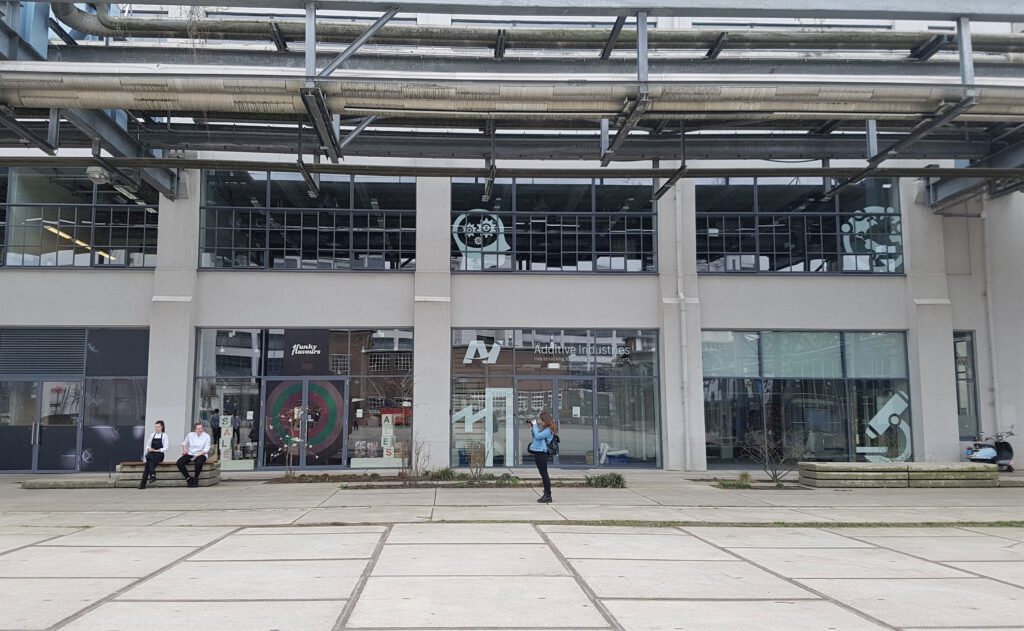
Once an industrial area belonging to Philips, this snazzy new neighbourhood has developed to become a hub for cultural events and activities. The old industrial buildings have been transformed into creative office spaces and housing.
Eindhoven’s Strijp neighbourhood is definitely the place to be. Image: Abuzer van Leeuwen/Supplied
Schrijversbuurt
Schrijversbuurt (meaning writer’s neighbourhood) is a great area to consider if you’re torn between choosing an apartment or a more family-style home. The neighbourhood offers both! On top of this, selling prices tend to be on the less eye-watering side.
5. Eindhoven is locally — and globally — connected
Thanks to its smooth highway system and a multitude of convenient train and bus connections, you can get from Eindhoven to cities like Rotterdam, Antwerp, or Brussels in one fell swoop.
North Brabant’s largest city is also home to the second biggest airport in the Netherlands, giving you easy access to the rest of Europe — and the world.
Within the city itself, the best way to get around is — you guessed it — by bike. It’s a pretty safe way too. Eindhoven was named one of the five most bicycle-friendly cities in the world!
6. It’s the centre of design
As we mentioned above, Philips used to be based in Eindhoven. The huge company owned several buildings throughout the city — but it left them empty when it decided to move to Amsterdam.
However, the cityscape of Eindhoven adapted to the change, filling these buildings with hip new companies. Many of which centre around creativity, design and innovation. It’s not all tech and computer chips you know!
7. There are some impressive new developments on the way
Just like any other place in the world, really, Eindhoven needs to make sure that the city is livable for the generations to come — and boy, is it doing a good job! These are just some of the projects that will make the city an even nicer place to live in.
You can expect more snazzy developments in Eindhoven in the coming years. Image: Unsplash
Knoop XL
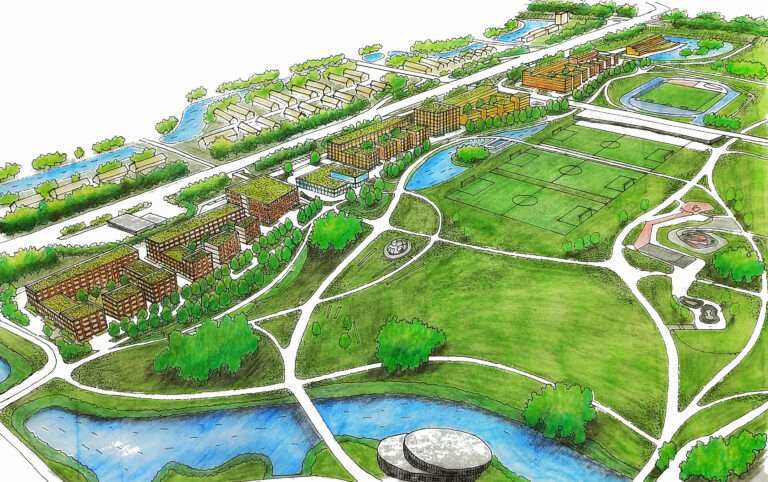
Eindhoven is growing and thriving. This means, aside from plentiful job opportunities, that its infrastructure needs to keep up. That’s what the international Knoop XL is all about. Located between the PSV football stadium and Dommel, the area is currently home to around 200 people.
However, within the next 20 years, there are plans to make it into an international hub with new working locations, plenty of greenery to relieve heat stress, no cars, and homes for about 15,000 people! 🤯 Yep — your read that right.
Knoop XL is also supposed to see direct train connections with cities like Düsseldorf, Aachen, and Liège. This video explains just how cool it’s going to be.
The Dutch mountains
We all know that the Netherlands doesn’t have anything even closely resembling a mountainous landscape — but that’s (kind of) about to change.
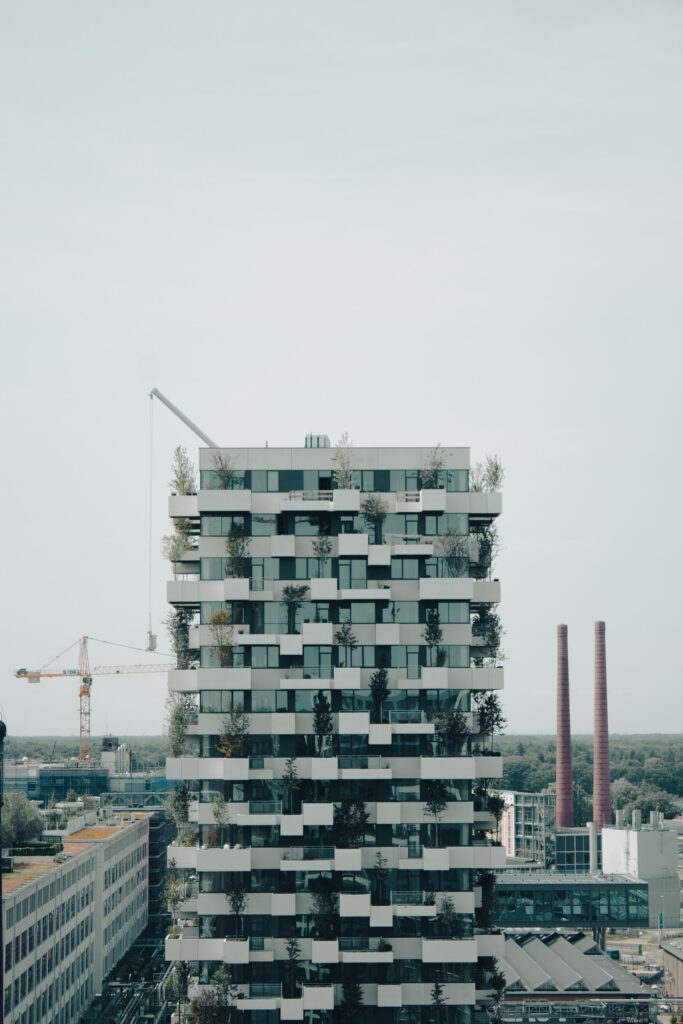
The mountains we are talking about is a new building complex constructed with bio-based material with two towers, which will be used for offices, new homes, and a hotel.
With all the new developments underway, it is time to start looking into buying a place in Eindhoven. MyDutchMortgage.online can help you with all the paperwork. Simply head to their website and book a call.
8. The city is thriving
In spite of the challenges the past few years have brought to the Netherlands, Eindhoven is not only surviving — but thriving.
Eindhoven is a hidden foodie paradies. Image: Abuzer van Leeuwen/Supplied
From hosting larger events such as Dutch Design Week and GLOW festival to being home to smaller venues and places to go out, Eindhoven has a rich and vibrant cultural scene.
Good to know: It’s also a great place for foodies. 😋
9. Eindhoven is a great place for nature lovers
Dutch cities and vast greenery usually don’t mix well. However, Eindhoven offers plenty of nearby nature areas for the keen wanderer. The natuurgebied Dommeldal is one of the most popular ones.
For some more proper nature, residents of Eindhoven can head to the nearby De Groote Peel National Park to enjoy vast areas of wetland with plenty of bird species.
Speaking of national parks, the Belgian Bosland is also a mere 45-minute drive away — and it’s the biggest adventure forest in all of Flanders. Talk about exciting day trips!
Mark Rutte, Prime Minister of the Netherlands, says the Dutch stand with the Ukrainians against Russian aggression in an official video address on Twitter. 💙💛
“Our hearts are with you,” says Rutte in the 1-minute-18-second video that was published on his official Twitter account yesterday evening.
“We, your friends in the Netherlands, support you. We are family in Europe. And we will keep supporting you by providing weapons, medicine and food,” Rutte continues.
The message is clear: We, the Netherlands, stand with you.
At the request of President @ZelenskyyUA, I would like to send a message from the Netherlands to the people of Ukraïne. We support you, we stand with you. pic.twitter.com/2uWuTsD8x5
A new question being debated in the Dutch cabinet at the moment is how to welcome and provide for incoming Ukrainian refugees. Dutch train service NS has already announced that a Ukrainian passport or ID card can be used as a ticket to board any train to the Netherlands for free.
Which steps do you think the Dutch government should take to support Ukraine? Tell us in the comments.
Today, Dutch Prime Minister, Mark Rutte, said in a press conference that the Russian aggression in Ukraine is “totally unprecedented.”
He was specifically referring to the missile assaults on government buildings and apartments complexes in Kharkiv, and to Russian forces starting to focus more on civilians than military targets, reports the NOS.
Rutte also mentioned the missile assault that killed five people at the Kyiv TV tower.
Inquiring into human rights violations
The cabinet is urging the documentation of the war to establish whether Putin and Russian forces committed war crimes.
Rutte also announced that the Dutch Minister of Foreign Affairs, Wopke Hoekstra, will set up a commission of inquiry. He said human rights violations will not go unpunished: “Justice must run its course.”
Cabinet offers to shelter refugees
Rutte is consulting with the mayors of the Dutch Security Council about how to welcome the first refugees.
The Dutch State Secretary for Migration and other European partners are working to ensure Europe can handle the influx. Rutte also compliments Poland and Moldova for their efforts to accommodate incoming refugees.
Spring is coming to the Netherlands! Meteorologists are predicting four weeks of sunny weather, mild temperatures and a thermometer that reads three degrees above average for March 2022. ☀️
We’re thinking afternoon beers on a sunny terrasje (terrace), sunbathing in the park and feeling those warm happy-hormones (Vitamine D, they call it) running through our system. 😍
In February, the Netherlands was hit by one storm after the other. First Dudley, then Eunice (oh, Eunice 😳) and finally Franklin had us sitting inside for six days straight trying to ditch code red damage. But no longer!
Spring starts early this year
“If current predictions hold up then March 2022 will be a dry, very sunny and mild month,” weatherman Alfred Snoek from Weerplaza tells AD.nl.
Several waves of high-pressure systems will keep temperatures in the Netherlands throughout March around the 15-degree mark. Do you know what that means? Winter is over!
You’ll already feel the onsetting spring this week, says Snoek. “We’re expecting deviations of 2 to 3 degrees above average.”
With spring coming our way, how are you going to spend the first sunny days of this year? Tell us in the comments!
Sick of concrete and PVC? A whopping 700 wooden houses will be built in Mandelabuurt, Amsterdam, making it the first neighbourhood made completely from wood.
The Mandelabuurt consists of 10 buildings and is expected to house a grand total of 2,100 people, reports AD.
Who gets to live there?
So, who are the lucky ducks that are expected to make this wooden haven their home? Well, you could be one of them! The municipality plans to make the neighbourhood 40% social rent, 40% middle segment divided between owner-occupied and rental. 🏠
Only 20% will be free sector housing. Whew, what a relief! 😅
The municipality will allocate a quarter of homes to residents of the Zuidoost district who lived there for at least six of the past 10 years — as it should. 💪
An Amsterdam-based housing association will handle the social rent homes in the neighbourhood.
On a sustainable streak
The construction of this neighbourhood should start in 2025, and the municipality expects the first homes to be completed a year later. 👷 Many building companies use wood but they usually combine it with steel and concrete to reinforce the building.
But Dutch builders are going on a “wooden revolution”. Wood stores carbon dioxide (CO2) while traditional materials like steel and concrete release CO2 when produced.
Companies are calling for regulations that make sustainable building practices more financially attractive, particularly for building with bio-based materials like wood. 🪵
And the revolution is proving to be effective! In an effort to meet Amsterdam’s sustainability ambitions, the municipality agreed to make 20% of new constructions timber-based by 2025. 💪
Would you want to live in wooden housing? Tell us what you think in the comments! 💭
For anyone looking to take out a little cash, it’s likely that your usual ATM isn’t there anymore. Nearly 900 ATMs were permanently closed last year, some were relocated. ❌
This year, De Nederlandsche Bank reported 4,916 ATMs in the Netherlands, 879 less than a year ago tells RTL Nieuws.
The reason? People in the Netherlands use less and less cash, and more banks are closing their branches. 💳
Manage with fewer machines
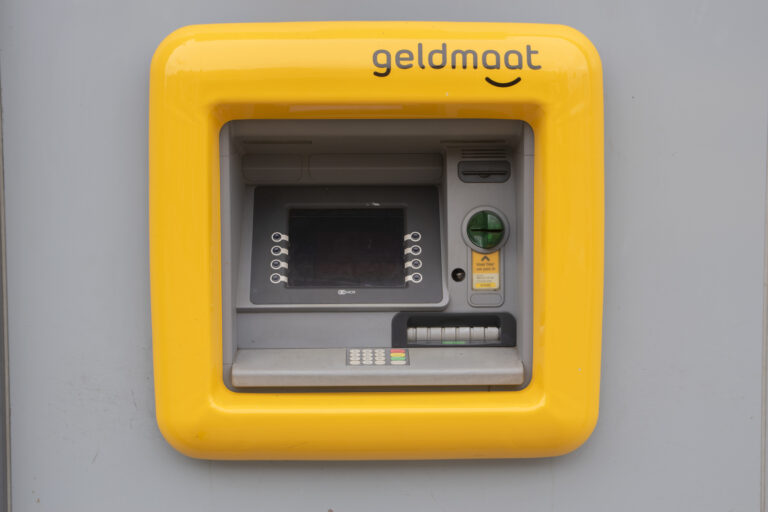
A spokesperson for Geldmaat (a Dutch business that installs, manages, and maintains ATMs) said they removed many ATMs in Dutch cities because the company could manage with fewer machines. 🏧
As a result, anyone who needs to withdraw or deposit money may have to drive (or cycle 😉) a little further to access an ATM.
Finding potential locations
On the other hand, Geldmaat said they will add 140 ATMs in new locations — but finding the perfect place for these can be tricky business.
Not everyone wants an ATM around because of the risk of explosions. Many stores like Bruna and Primera have ATMs now partly for this reason. However, one of the issues with these is that they’re not always obvious to people.
Geldmaat is also experimenting with new locations, such as giving ATMs their own little store which would be monitored by video cameras. They might add staff to these stores now that coronavirus measures have been relaxed.
A changing landscape
In the past two and a half years, Geldmaat changed the ATM landscape when it took over the operation of ATMs from most banks. You’ll rarely see an ABN AMRO, INGB or Rabobank ATM but almost always a Geldmaat ATM.
Although temporarily introduced, you currently won’t be able to withdraw money from an ATM machine between 11 PM and 7 AM. ⌚️ However, you can still withdraw money until 2 AM from busy locations such as major train stations and entertainment venues.
With Geldmaat here to stay, it seems like the world of cash accessibility and finances will continue to change in the Netherlands. 👀
What do you think of the changes to ATMs around the Netherlands? Tell us in the comments!