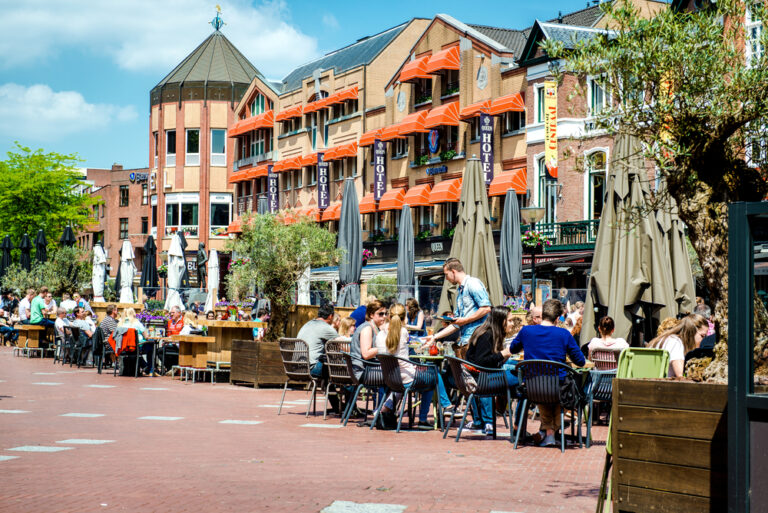
Travelling without testing and self-isolation? Yes, please! Earlier this week, the Dutch government already changed the colour code status for a number of European destinations.
EU member states have said yes to reducing restrictions for those who have been vaccinated this summer, reports the NOS. If you have been vaccinated at least two weeks before you travel, you will no longer have to quarantine. If you haven’t yet been fully vaccinated, you will have to complete a PCR test.
Last month, the EU already confirmed it’s working on a vaccination passport, and this is the next step!
The all-clear for code green
If you’re lucky enough to live in a code green country, sucess! When travelling to another code green country, you also won’t have to be tested, regardless of vaccination status. Check out the list of countries approved by the Dutch government here.
Will you be taking advantage of this easing of regulations? Tell us what you think of this in the comments!
Are you a 90s baby? Then you’re in luck! As of last night, you can make an appointment to get your first coronavirus jab.
The Netherlands is continuing to fire through the vaccination of many year groups — earlier this week it started inviting people in their mid-30s to be vaccinated. Now, it’s the 90’s turn.
How to book your appointment
No more waiting for an invitation. Once your age group is formally called (announcements will be made on the RIVM and GGD websites), you can go ahead and book an appointment on this website.
You can log in using your DigiD, or you can call the GGD on 0800 7070. Outgoing Health Minister Hugo de Jonge announced this on Twitter last night.
If you were planning a beach trip this weekend you might want to hold off until Monday. There are a few cloudy days in store for the weekend — but never fear, summer will be back next week! Temperatures may even reach 30 degrees on Wednesday.
First things first, today the sun will be shining brightly and it’ll be a great day to get a tan. The Netherlands is currently enjoying temperatures around 23 degrees on the coast, and 28 degrees in the south of the country.
As a result of the sunny day, astronomy buffs will have been able to see the partial solar eclipse “clearly with eclipse glasses,” meteorologist Maurice Middendorp tells RTL Nieuws.
Tomorrow will start off sunny, but may get increasingly cloudy throughout the day. Nevertheless, it will remain dry with average temperatures of 24 degrees — pleasant conditions for a picnic in the park.
What will the weekend look like?
Of course, being the Netherlands it’s too much to expect the sun to be here to stay. On Saturday we can expect cooler cloudier weather and a maximum of 20 degrees. So if you go for a biertje at a terrace, remember to bring your jacket.
If you were planning a beach day in the Netherlands for the weekend, never fear! Meteorologist Maurice Middendorp says that, “On Sunday the fairly sunny weather will return.” Though temperatures will still be hovering around 20 degrees.
Hot weather next week
Next week the summer weather will return with temperatures rising to 25-29 degrees. And yes! Temperatures may even reach 30 degrees in the southeast of the country next week!
Of course, being the Netherlands, there is a chance of thunder and rainstorms on Wednesday. According to Middendorp, if it does rain, the temperatures will not reach 30 degrees — wat jammer!
How will you be enjoying next week’s summery weather? Tell us in the comments below!
Pack your lunch and head outside because between 11:19 AM and 1:31 PMa partial solar eclipse is visible from the Netherlands!
It is the first time in four years that an eclipse can be seen from the country and we are lucky enough to have the perfect weather conditions to enjoy it, reports Weerplaza.
How to get the best view
If you want to get the best view of the partial eclipse, you should be outside during its peak at 12:23 PM. At this time the moon will cover 17% of the sun.
As if a warm summer day in the Netherlands wasn’t great enough in itself, it also provides the best opportunity to enjoy the eclipse. Without any cloud cover, there should be nothing holding you back from enjoying the view!
Not only does the solar eclipse coincide with most peoples’ lunch break but the timing also allows you to view the entirety of the partial eclipse.
During the last partial eclipse in 2017, the event took place during sunset, so only the first part of it could be seen from the Netherlands.
A visualisation of how the moon’s shadow will move over the Earth today.
Remember to protect your eyes
Weerplaza advises not to look directly into the sun, even during the eclipse. Your cool Ray-Bans are also not enough to protect your eyes, so if you really want to have a good look then you should buy so-called eclipse glasses. 😎
Haven’t had time (or any intention) to buy eclipse glasses? Don’t fret! You can easily make a pair yourself DIY style.
Will you be watching the partial solar eclipse today? Tell us in the comments below!
Feature Image: Lindrik/Deposit Photos. For illustrative purposes only.
Currently in the Netherlands, if you want access to a large scale event such as a festival, you must first receive a negative coronavirus test result. However, after June 23, those who have been fully vaccinated will not have to be tested before entry.
Instead, they will show proof of vaccination using the CoronaCheck app, the NOS reports. Dutch Minister for Health, Hugo de Jonge, explained to the House of Representatives that the app will act as a vaccination certificate.
When a person has been vaccinated, the CoronaCheck app will generate a QR code. This code will then be scanned upon entry to the event — no negative test result needed.
Travel abroad without a test?
Minister De Jonge also wants to apply this method when it comes to international travel. Speaking to the House of Representatives, he claimed that by July 1, those who have been vaccinated may only need to show their certificate before travel — again, no PCR test required.
However, he was quick to point out that this may be difficult to achieve, as other EU countries would have to agree to this arrangement. “We strive for as much harmonisation as possible, but I do not rule out the possibility that we will eventually have to make bilateral agreements with some EU countries,” he said.
Some apprehension
There are a number of reasons why the EU may struggle to reach agreement on whether a vaccination certificate is enough to grant access to international travel.
Firstly, there’s the question of whether or not a vaccine certificate should be given straight after vaccination or 14 days after vaccination.
Protection against coronavirus is technically achieved 14 days after a person receives a shot. For this reason, some EU member states believe a person should still get tested if they wish to travel before the 14 days are completed.
The Netherlands argues that a person should receive their certificate immediately after vaccination.
Secondly, there’s the question of whether a person can travel when they have only received one shot of the vaccine (in cases where they need two). The Netherlands believes one shot should be enough to grant travel without a negative PCR test, other countries argue against this.
What are your thoughts on the Netherlands’ stance? Tell us in the comments below!
Finally we made it! Coronavirus is on the way out and the sun has returned to the Netherlands; it’s finally time to start thinking about that lovely thing you did before this weird period of time started: v-a-c-a-t-i-o-n!
But it isn’t all like it used to be, the summer of 2021 is still a shy, hesitant one, and while I’m writing this it seems that every country in the EU is changing its mind about who can travel where and when.
Since going on a crowded flight to a busy busy city doesn’t sound ideal yet, this is the summer to check out the Dutch countryside and relish in the beautiful nature of the Netherlands. And why not? There’s plenty of beauty to be found in the lowlands, from idyllic lakes and forests to stunning nature reserves.
The Netherlands has plenty of gorgeous nature spots. Image: Abuzer van Leeuwen/Supplied
Pack a suitcase, unhinge yourself from your desk and give yourself and your family some much needed space to breathe in a small house out in nature.
Move the office for a bit
For many of us, even work took place within the four walls of our houses this past year — so if you don’t have holiday time, why not just change the walls? You can basically work from anywhere if there’s a table and wifi.
So why not book a week in a completely different environment and combine it with work? Finally some actual nature to stretch your legs after work instead of the Oosterpark for the 1,844th time.
The beautiful nature of the Netherlands
If you live in the Randstad, your response to seeing the words “nature” and “Netherlands” together probably makes you think “what nature?” Believe it or not, the lowlands does have some beautiful landscapes for you to enjoy.
The perfect place to stretch your legs. Image: Abuzer van Leeuwen/Supplied
Dutch nature is different (and arguably better) in parts of the Netherlands outside the Randstad. So where do you ask? Let me give you a couple of tips on my favorite parts of the Netherlands:
Friesland
Friesland is the place to be if you want to trick yourself into thinking that you’re in a different country. It’s uncharacteristically quiet, and they actually speak a different language (Frisian) there.
Great vista’s of far and wide meadows, gorgeous lakes and lovely villages (Franeker, Sneek and Harlingen, to name a few) dating back to the 17th century make Friesland a good option for a getaway — and it’s easily reachable from Amsterdam.
Limburg
I’m a sucker for Maastricht, the ‘bourgondisch’ life of the southern provinces and the rolling undutch hills (yes, hills!) of southern Limburg make this region a wonderful escape. The weather is often a tad bit better there as well!
The Veluwe
Ahhh the Veluwe! This is where myself and my family stayed this summer. It’s one of the most beautiful nature areas in the Netherlands (in my unbiased opinion.) We stayed in a huisje with a hot tub, jacuzzi and sauna — yep, we were on cloud nine and it was nice and toasty.
The Veluwe is a paradise for children. Image: Abuzer van Leeuwen/Supplied
Wonderful huisje aside, the region is home to sand drifts, hills (sort of, still the Netherlands), heathlands and some of the best forests of the Netherlands. You will also find one of the best museums of the Netherlands; the Kroller Muller museum!
It’s filled with all kinds of art — one of the main standouts being the Van Gogh collection. But when I visited I equally appreciated the architectural design and relaxed placement of the museum right in De Hoge Veluwe National Park.
Let’s talk some more about the huisje
We got our chalet through nature.house and since we had a bunch of kids with us (and weren’t planning to leave the house much besides some hiking) we actually treated ourselves to a whole bunch of luxurious amenities.
I’m talking about a little barrel sauna:
How incredible is this barrel sauna? Image: Abuzer van Leeuwen/Supplied
A hot tub which was fueled by wood:
An afternoon well spent. Image: Abuzer van Leeuwen/Supplied
I think I ended up spending like 12 hours in it that week and now I want one myself (would it fit on the balcony of my Leiden apartment? hmmm
And a wood stove for those gezellige moments in the evening:
Evenings full of gezelligheid are guaranteed in the nature.house. Image: Abuzer van Leeuwen/Supplied
There was also a trampoline and a jacuzzi as well — meaning we didn’t have to take the kids or ourselves anywhere. We booked all of this for *checks notes* €792 which is definitely a fair price in this day and age. If you want to book this specific option you can check nature.house’s website for availability.
What to consider when booking a huisje in the Netherlands
When booking a huisje there are a few things you need to consider:
For instance, in these times you might want to get the option of a contactless stay. When we stayed in our huisje, we could access the keys to our place by unlocking an outdoor safe.
Nature.house is the perfect place for the entire family. Image: Abuzer van Leeuwen/Supplied
We also wanted to do some work while there. Luckily, nature.house shows if your huisje has access to wifi and many owners in the description add if there’s a desk or not.
But more important than all that — heads up people of culture — is the option to request extra amenities such as a fireplace, sauna, hot tub. For those of you who can’t bear to be away from your beloved furball, there’s even the option to request a pet-friendly stay.
Going on vacation with your four-legged friend? Nature.house offers a pet-friendly stay. Image: Abuzer van Leeuwen/Supplied
If you’re going to appreciate nature, you’re also likely kind to it. Nature.house also offers options to check for certain sustainability factors at your possible stay (“Food from your own garden” sounds delish!)
Check out nature.house for more. You can browse for insta-awesome glamping tents, idyllic cabins near the water, or sustainable tiny houses at nature.house. It’s all in English and they’ve got a comprehensive plan to add to nature projects themselves. If we can’t convince you to stay in the Netherlands, it’s good to know that this Dutch company is also expanding into other countries so booking a cute cabin in French, German, Italian or Spanish nature is also possible!
What are your plans for holiday this year? Have any tips on staying in Dutch nature you would like to share?
Despite the Netherlands being known for its liberal and accepting culture, unfortunately, there are still remnants of homophobia in Dutch society.
On Wednesday, July 8, 2020, the United Nations called for a global ban on gay conversion therapy all over the world. Researcher, Victor Madrigal-Borloz, collected testimonials from victims who had undergone such therapy and then presented the results in a report to the United Nations Human Rights Council. This conversion therapy also takes place in the Netherlands.
The report states that the “therapy” is based on the wholly unscientific belief that people who differ from the “norms of society” are ill. The report suggests that sexual orientation or gender identity (SOGI) can and should be changed. “The degrading nature of many conversion therapy practices, including physical abuse, electroshock therapy, pseudo-medical procedures, and the use of anti-LGBT epithets and slurs, contribute to an overall dehumanising environment towards persons with diverse SOGI”, says Madrigal-Borloz.
He also believes that all forms of conversion therapy are a violation of human rights. It’s not yet clear exactly what the UN’s next steps will be, but Madrigal-Borloz states that a global ban is urgently needed.
What is gay conversion therapy?
As we celebrate Pride Month we mustn’t forget to shed light on the struggles that the LGBTQ+ community face today. One of these struggles is gay conversion therapy. Gay Conversion Therapy (also called “reparative therapy” or “gay cure therapy”) is an approach that attempts to change a person’s sexual orientation through psychological means. The Netherlands is one of many countries where conversion centres specialise in this approach.
In 1952, the first edition of the International Psychiatric Manual (DSM I) referred to homosexuality as a disease. At the time, there was widespread support for conversion therapy among psychiatrists. In 1987, homosexuality was removed from DSM III as a disorder. The American Association of Psychiatrists subsequently called conversion therapy “unethical.” The US Department of Health and Human Services (HHS) says there’s no scientific evidence that this “therapy” works. Right-wing religious circles mainly support these methods.
Conversion therapy in the Netherlands
According to a study carried out on gay conversion therapy in the Netherlands, there are about 15 conversion therapy organisations in the country trying to “cure” people. It’s impossible to say exactly how often this happens as it’s a very secretive practice. Most “healers” don’t openly list their businesses online or register them with the Chamber of Commerce.
The Dutch House of Representatives asked for the study to be carried out. Parliament was mostly concerned for young and vulnerable queer people who are exposed to this harmful practice.
Even though there are a lot of Dutch allies, there is still a lot of to be work done. Image: Anna Biasoli/Unsplash
Health Minister Hugo De Jonge presented the report in 2020. In his presentation, De Jonge made it crystal clear that attempts at “curing homosexuals” can cause a great deal of psychological damage. The consequences of this “therapy” can be severe, often leading to depression and suicide.
This is especially true in certain (orthodox) religious communities where people are forcibly encouraged to suppress any same-sex attraction. As a result, many members of such communities remain “in the closet” for years. These same communities often see homosexuality as a demon that needs to be exorcised.
Rearchers also found that, thankfully, many minors aren’t subjected to conversion therapy. Many religious circles don’t accept homosexuality, so young gay people from religious families try to “stay in the closet” as long as they can. Most of them hope it’s a phase that will pass.
The research is based, among other things, on interviews with people who underwent conversion therapy. Some seek out the therapists themselves. These individuals internalise the homophobia of their communities. This isn’t surprising if when you’re raised to believe your existence is a sin.
The report sheds further light on the methods used by gay conversion therapists, which are quite diverse. These include Christian seminars, electric shock treatment, workshops, and holiday camps. Most methods are one-on-one sessions with a therapist or a psychologist. These sometimes take a very long time. They also have conversations with a pastor or a faith healing service.
Despite the need for the ban, the researchers doubt its effectiveness. Even if the Dutch government ends up banning conversion therapy, many religious institutions and communities will continue to teach children that being gay is a sin. If this is the case, gay conversion therapy centres will continue to operate in the shadows. A ban would only result in the practice going underground.
The Dutch response
In May of 2020, a majority of the House of Representatives voted in favour of banning gay conversion therapy. Right-wing parties like Forum for Democracy, the PVV, CDA, ChristenUnie, and SGP all voted against it. In January 2021 almost all of the House of Representatives agreed on the motion. It also suggested that there should also be a hotline for people who say they are victims of such therapy.
Going through this kind of “therapy” can be traumatic. Image: doble.dphoto/Deposit Photos
This is the second time that parliament has pushed for such a ban. The first time was in May 2019, in a debate over the Dutch translation of the Nashville Declaration homohaat manifest.
In light of this study, D66 again insisted on a new motion in December 2020 for a ban on the abhorrent practice. On January 26 this year, the motion won a large parliamentary majority. It even gained the support of some right-wing parties like CDA, PVV, and FVD.
The COC (Center for Culture and Leisure) is a Dutch organisation that called on the Dutch government to ban gay conversion therapy. “That homosexuals can be cured is a myth, everyone is just perfect the way they are,” says the COC. “It is such a pity that this kind of quackery is allowed to happen in the Netherlands. Clearly, it’s harmful to people who are victims of it. Now, it’s up to politicians to immediately ban these kinds of practices.”
These religious groups maintain that it’s important they’re allowed to offer “help” if homosexuals in their communities want to change their sexual orientation. However, activists say that this is a case of people trying to offer a solution for a problem they created. Activists argue that there wouldn’t be a need for religious leaders to want to offer “help” if they didn’t convince young gay people that their existence was a sin in the first place.
The good news is, over 370 religious leaders from around the world have signed a declaration calling for a ban on conversion therapy. Many LGBTQ+ advocates also signed this declaration, as well as those who represent all the world’s major faiths. They include South African cleric Archbishop Desmond Tutu as well as religious leaders from more than 35 countries. The pledge was led by the Global Interfaith Commission on LGBTQ+ Lives initiative. It was labelled as a bid “to affirm the sanctity of life and dignity of all.”
We are uncertain whether a worldwide ban would happen any time soon. The most important thing is that people (especially those in power) are starting to talk about it and take it seriously.
It’s absurd that we live in a country where people think you can cure homosexuality, and it’s not prohibited by law. In Belgium, the United Kingdom, and Spain you can prosecute conversion therapy organisations. In 2016, Malta was the first European country to impose a total ban on these so-called conversion therapy practices. It’s high time the Netherlands did the same. Conversion therapy is wrong and we have to make it a thing of the past.
Are you surprised that conversion therapy happens inthe Netherlands? Let us know in the comments!
It’s no secret that the Dutch have loads of progressive ideas and love doing things first. Think the largest underground bike parking in the world, and a bus stops that encourage honey bees. This year, to coincide with Pride Month, Utrect will build the longest rainbow coloured bike path in the world.
The bike path will be 570 metres long, and will be located in the Utrecht Science Park.
Utrecht University, the University of Applied Sciences Utrecht, and Utrecht University Medical Centre (UMC) have teamed up to make this a reality. They feel that the symbol really encompasses their values of diversity and inclusion. The bike path is there to spread the message that everyone is welcome to be who they are, even on a cycle lane. 🌈
Whose idea was this?
The idea of the rainbow bike path was inspired by Elias van Mourik, a 22-year-old student at the University of Applied Sciences in Utrecht. He initially gained support from a city council member of GroenLinks, Melody Deldjou Fard.
Melody told Utrecht University that, “I thought it was a great idea because the future of our country is taking shape in the Utrecht Science Park. And that’s exactly why it’s important to make diversity and inclusion explicitly visible here.”
When the municipality was unable to finance the idea. So Elias and Melody wrote an open letter to Utrecht University and the Utrecht University of Applied Sciences. The universities, along with the UMC, embraced the idea.
Where can you find the bike path?
Want to cycle the rainbow road? Once it’s completed, you’ll find it next to the multicoloured Hogeschool Utrecht building that houses the Department of Education, and at the intersection between Heidelberglaan and the Universiteitsweg/Bolognalaan.
Usually, you associate the rainbow flag with the LGBTQI+ community. However, all of the parties involved hope that the cycle path will represent diversity and inclusion in its broadest sense.
Elena Valbusa, the Diversity Officer at the University of Applied Sciences Utrecht reiterated this sentiment. “We want to show that everyone can be themselves and is welcome in the Utrecht Science Park,” she says.
Elias, the student who originally inspired the idea hopes that the bike path will contribute to greater acceptance. He also hopes that the symbol will encourage others to actively contribute to diversity and inclusion.
We can’t wait to cycle down what will (we’re sure) be the prettiest bike path in town!
What are your thoughts on this bike path? Tell us in the comments below!
Have you been dreaming of sitting by the Mediterranean sea, sipping an Aperol spritz? Well, this could be your summer.
Many European countries will move from the colour code “orange” to “yellow”. This means that travellers from the Netherlands will be able to visit them with fewer restrictions.
Today, the Ministry of Foreign affairs confirmed “code yellow” status for a number of countries. These include Italy, Austria, Germany, Norway, Luxembourg, Poland, the Czech Republic, and Slovakia This easing of restrictions will take effect tomorrow.
No more testing
The Dutch government currently labels these destinations as “code orange”, meaning that people are advised to only travel to these countries “if necessary.” Sadly, whatever your gal pals might say, holidays aren’t deemed as a necessity.
Moving to “code yellow” means travellers won’t have to take a coronavirus test or quarantine after returning from those countries to the Netherlands. Meanwhile, France, Spain, Switzerland, and Belgium retain their “code orange” status. As it stands, you still have to have a PCR test before travelling outside the Netherlands.
Get tourism started
Easing travel restrictions is in line with many countries’ desire to restart their tourism industry. Italy and Austria have been keen to welcome tourists for a while. Both countries have already dropped the quarantine requirement for those who have been vaccinated or provide negative coronavirus tests.
The same rules apply to Germany. However, travellers to Germany must fill in a digital form before travelling to the country.
Will you be jetting off to any of these destinations this summer? Let us know in the comments!
While you’re waiting your turn, you may have a few questions. When will I be able to get the vaccine? Will I get an invitation or do I need to register myself? The answer is: it depends on how you’re registered. Either way, the process is really simple.
Registered in the Dutch Personal Records Database as a resident
The Netherlands automatically offers the coronavirus vaccine to individuals who have been in the country for more than four weeks and who are registered with their local municipality as a resident. For most internationals in the Netherlands long term, this will be you.
If this is you, you’ll receive an invitation from the RIVM (National Institute for Public Health and Environment). The letter will go to your home address as soon as it is your turn. Alternatively, once your age group is formally called, you can also go ahead and make an appointment yourself without waiting for a letter
Registered as a non-resident
If you’re planning to live in the Netherlands for less than four months, you’ll most likely have registered as a non-resident. If that’s the case, you won’t receive an invitation letter. Instead, if you provided an email address in the Register of Non-residents, the Dutchgovernment will send you an email with information about when and how you can make your appointment.
If you haven’t provided an email address, then you can call the GGD to make an appointmentas soon as it’s your turn. Keep your citizen service number (BSN) on hand and simply call the GGD number 0800 7070 between 8 AM and 8 PM. Alternatively, if you have a DigiD, you can make your appointment online.
Not registered in the Netherlands
If you’re not registered with a Dutch municipality at all but are staying in the Netherlands for more than one month, you are also eligible for the vaccine under certain conditions and can book your appointment online. These conditions include:
having a citizen service number (BSN) and DigiD,
being in the current age group for vaccinations,
staying in the country long enough to get the second shot (depending on which vaccine you’re getting).
If you’ve been in the Netherlands for more than one month but don’t have a BSN or DigiD, you can report to your embassyif you were born in 1955 or earlier. The embassy will then give you a phone number you can call to get an appointment.