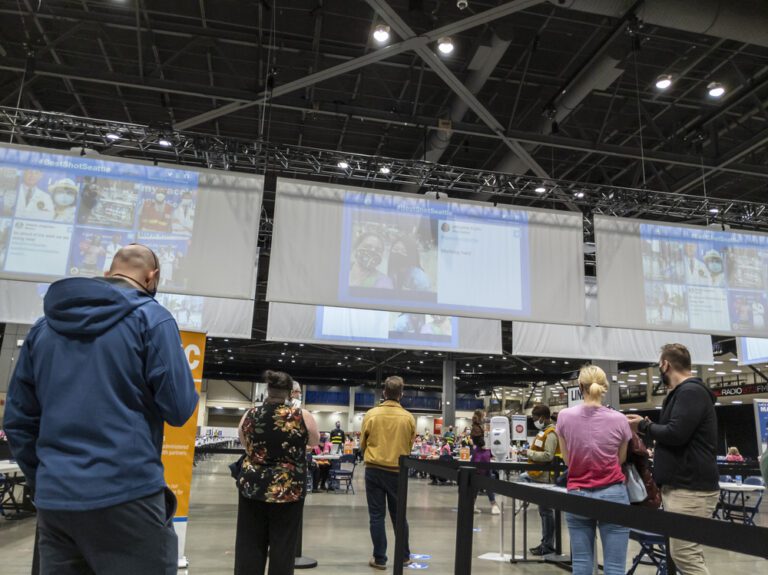
The RIVM has released its weekly coronavirus figures from June 2 to June 8. The number of infections has dropped compared to the previous week.
Over the past week, the RIVM reported 14,397 new infections in the Netherlands. This is a decrease compared to the previous week’s number of 20,608 new infections. The percentage of positive tests went down to 7.2% compared to 9% the week before.
Deaths
The number of patients who have died from COVID-19-related complications has gone down slightly. This week 63 people passed away, compared to 66 people the previous week.
Hospitalisations
Hospitalisations, as well as the number of admissions to the ICU, have also decreased. The past week saw 380 new admissions to the nursing ward and 50 new patients in the ICU. The week before, there were 560 and 116 respectively.
The number of coronavirus patients in Dutch hospitals dropped to fewer than one thousand for the first time since October 6 last year. This weekend, 998 coronavirus patients were in hospital with coronavirus.
Vaccine rollout speeds up
As of Monday, individuals born in 1985 and 1986 can book coronavirus vaccination appointments. With the increasing speed of vaccine rollout in the Netherlands, there are also more people with coronavirus antibodies. Currently, more than half of Dutchies have coronavirus antibodies in their bloodstream. In comparison, only 32% of the population had them last month.
Power outage at a vaccination site
Yesterday evening, the GGD urgently vaccinated 1,200 people in the Utrecht region with the Janssen vaccine. This was due to a power failure in the refrigerator that the vaccines were being stored in, which compromised their shelf life.
Follow DutchReview on Facebook for the latest news and coronavirus updates.
Yesterday evening, the GGD urgently vaccinated 1,200 people in the Utrecht region with the Janssen vaccine. This was due to a power failure in the refrigerator that the vaccines were being stored in which compromised their shelf life.
Hundreds of eager people wanting to get their share of antibodies showed up at the vaccination site in Nieuwegein. Within two hours there were enough people to use the 1,200 doses, and the GGD was able to send the rest home, reports NOS.
What caused the outage?
The power cut was caused by a broken water pipe which caused the refrigerators that the Janssen vaccines were being kept in to shut off. If vaccines are left unrefrigerated for too long, they will spoil.
Who got vaccinated?
Due to the RIVM guidelines, employees from the vaccination centres, and people from the emergency services, such as firefighters from the Utrecht Security Region were invited first. Several hundred vaccines were used up in this way.
However, because the message had spread quickly on WhatsApp groups and other social media, the GGD decided to allow anyone who arrived at the location from 8.30 PM to get a shot.
Travel has become a worrying prospect for many during coronavirus. While for some, it’s the fear of catching the virus, a survey shows that NS staff are concerned about the aggressive behaviour of train travellers.
A lot of the pushback is surrounding coronavirus regulations in the Netherlands and it seems that the drop in infections has given some people an extra dose of chutzpah. 😬 Some passengers react poorly to being asked to wear face masks and maintain a 1.5 m distance.
Not just coronavirus rules being ignored
More than half of conductors surveyed said that they experience aggression. “My work has become less fun. You are correcting people’s behaviour all day,” one conductor told Nu.nl. Fewer conductors are roaming the carriages in these times, which often leads to more unruly behaviour.
Another anonymous NS conductor said that women on trains have also experienced unpleasant behaviour, for example being regularly addressed “in a certain way.” Due to the absence of conductors, people have felt freer to ignore socially accepted behaviour.
Aggression going unreported
Despite the number of conductors who say they have experienced untoward behaviour, only one-quarter of cases have been reported to employers.
A spokesperson for NS says that the railway operator is taking measures to ensure passenger safety. There is already a private messenger system for travellers. “If a traveller doesn’t feel safe, they can send a message to a special number and get in touch with the control room,” the spokesperson said.
More gates, security cameras, and security guards are also being put in place. The NS asserts that it wants its employees to feel they can do their jobs safely.
Have you witnessed any aggressive behaviour on trains? Let us know in the comments!
When it comes to progressive attitudes around sex, Amsterdam shines as the forerunner of tolerance and pride. Since 1999, the Netherlands has held bragging rights for being the first country to legalise prostitution as sex work and regulate the sex industry with local authorities.
Amsterdam’s Red Light District, also known as De Wallen, has a reputation for being celebratory towards pornography, soft drugs, and prostitution. Instead of criminalising it, the people of Amsterdam embrace the openness and honesty of this infamous (and trendy) hot spot (pun intended 😉).
A different type of window shopping
As with all forms of shopping in the Netherlands (and the rest of the world), the COVID-19 pandemic and resulting regulations have restricted people’s freedom of movement.
Naturally, contact services like hairdressers, pubs, and sports (to name a few) were temporarily closed while governments tried to deal with this unprecedented phenomenon. Coronavirus restrictions impacted all industries but they were especially tough on the sex work business.
Protection of sex workers
Despite what one may think, under normal circumstances, the Red Light District is actually the safest, most well-protected area in Amsterdam. This is not only thanks to the constant police patrol and always-on-duty bodyguards hired by the sex workers but also because window prostitutes are guaranteed medical care and safe working conditions through carefully monitored standards and practices.
A lively neighbourhood in normal times, the Red Light District in Amsterdam has been rather quiet the past year. Image: OrioleGin/Deposit Photos
Needless to say, tourists and everyone else wanting to ‘satisfy’ their curiosity (again, pun intended) will be pleasantly surprised by this area as a whole, which genuinely does come alive when the sun goes down.
However, even though prostitution is legal and protected in the Netherlands, this does not extend to street prostitution, and sex workers are encouraged to offer their sought-after services from the safety of their buildings.
Contact services during the pandemic
Despite the government’s tolerant and progressive view of prostitution in Amsterdam, many sex workers did not feel like they had enough government support during the months they were prohibited from working.
Regardless of the pandemic, sex workers had to earn a living. With little or no help from authorities, they were forced to continue providing their services illegally. Having been banned from work since early December 2020 along with other contact professions, sex work was moved back into the shadows in which unsafe conditions ensued.
As the allowed in-person contact decreased, the supply of webcam sex increased. However, only those professionals who were able to have a bank account and owned a private room could operate safely without the risk of contracting COVID-19.
Increased violence and human trafficking
Where Dutch sex workers are usually afforded a degree of protection and security, they were at an increased risk of violence from clients under coronavirus restrictions. As sex work was legally restricted during government-mandated lockdowns, fewer bodyguard services and less police protection followed.
On top of this, there was a higher risk of sex workers falling victim to human trafficking — especially as they were increasingly confronted with extreme economic hardship. With their work being banned, calling for help wasn’t really an option either.
The pandemic took a tool on sex workers. Image: Gary Mark Smith/Wikimedia Commons/CC3.0
A statement made by United Nations Population Fund warned that should the lockdown continue for six more months, an additional 31 million cases of gender-based violence could be expected. Naturally, this would also extend to sex workers.
Although there have been government-funded financial support programmes, many sex workers still fell through the cracks. From what little donations were available to ease the lockdown of person-to-person services, sex workers received only a small allowance to cover their basic needs.
Canalside window booths post-lockdown
Now, after six months of lockdown, the Dutch government has finally eased coronavirus restrictions. It seems that things in the Red Light District are returning to normal as sex workers have been seen back in their canalside window booths since May 19.
Along with the euphoria of lifting lockdowns, opening pubs, and more freedom of movement, the returning workers have positively impacted Amsterdam’s atmosphere.
With the inevitable return of the tourists to De Wallen, sex workers can look forward to returning to normalcy. Hopefully, the Red Light District will again become the thriving area celebrating the progressiveness of Amsterdam.
What’s your opinion on how the government handled the protection of sex workers during the pandemic? Tell us in the comments below!
Millennials, get off of Twitter because you can now book your coronavirus vaccine. Minister for Health, Hugo de Jonge, has announced that those born in 1985 and 1986 can book their appointment as of 11:30 AM today.
If you’re in this age group, you don’t need to show an invitation for vaccination when you arrive at your appointment, reports Nu.nl. However, you must bring proof of identity and show your appointment confirmation.
It’s possible you may receive an invitation through the post after you have had your first shot — this can be ignored. You will be offered either the Pfizer or BioNTech vaccine.
How to book your vaccination
To make an appointment you can go to this website or call the national appointment number: 0800-70 70. Once you have made the appointment and provided the correct details, you don’t need to wait for an invitation!
The Netherlands is home to nationalities from all over the world but unlike the Dutch, many of them do not yet feel comfortable in water. With pools reopening and the sun beckoning us to the beaches, it’s the right time to consider swimming lessons.
In a land where you’re surrounded by water and people who had compulsory swimming lessons as children, it can be a bit daunting to admit that you can’t swim — but there are swimming teachers who offer their skills specifically to expats in the Netherlands.
After office hours, founder of Your Personal Swim Coach, Christina, and her 20+ headed team of Dutch and non-Dutch coaches meet their expatriate clients poolside, helping newcomers in the Randstad to swim with confidence. There’s no judgement and no shame, the international team are professionally trained in teaching adults how to swim — so you’re their ideal client!
Swim like a Dutchie
Found in Rotterdam, Utrecht, Den Haag, Leiden, Diemen, and Amsterdam, Your Personal Swim Coach will teach you how to swim and earn your swimming diplomas based on the national Dutch swimming programme, Zwem-ABC.
Your trainer will focus on your needs and cater to them! Image: Your Personal Swim Coach/Supplied
This is the programme that the Dutch learn from a young age, teaching swimming and water survival skills — and even what to do should you fall through the ice (think of all those frozen canals this past February.)
Specialised teaching for those new to the water
Your Personal Swim Coach offers a range of lessons based on your personal skill level but specialises in teaching adults who have a fear of water, or who never learned to swim at all.
Christina is very familiar with this and encourages her clients’ decision to brave the water. “Each student carries their own ‘not so good’ water experience, but they have reached a point that they are fed up with staying out of the pool or sea,” Christina explains.
“The biggest step for them is to really decide to go for it and book a lesson in one of our pools. We strive to do everything in our abilities to help them conquer their fear of water.”
A safe, corona-free learning environment
Paramount at Your Personal Swim Coach is the client’s safety. “No matter what, safety is the number one rule at all locations. Swimmers are always monitored, regardless of their level,” Christina emphasises. “Newcomers to deep water will be carefully assessed and will always swim on the wall side.”
Your Personal Swim Coach has also developed special coronavirus policies to ensure the safety of swimmers. Chlorine levels are regularly checked at each swimming pool, this naturally occurring chemical kills all viruses and bacteria in the water.
Ready to take the plunge? Say no more, head on over to Your Personal Swim Coach, a professional is waiting to get you started on your journey.
How confident are you in your swimming abilities? Tell us in the comments below!
If you told us you wanted to enjoy an entire week of (almost) uninterrupted sunshine, we would normally tell you to just leave the Netherlands — but not this week.
While the east of the Netherlands is still experiencing some grey skies and a bit of drizzle today, the sun is already shining in full strength in the west and we can expect temperatures ranging from 17 degrees in the northeast up to 22 degrees in the south.
Buienradar meteorologist, Brian Verhoeven, tells RTL Nieuws that what’s coming are “quiet, early summer days with occasional clouds, but above all a lot of sunshine.”
Tomorrow — and for the rest of the week — the weather will pretty much stay the same and it’s going to be lekker: temperatures between 20 and 25 degrees, plenty of sunshine, and a chance of occasional rain showers (it wouldn’t be the Netherlands if there was zero chance of rain after all).
The bad news
Let’s be real though, Dutch weather is never just good news. Verhoeven warns about the high UV index in the coming days, which is expected to reach seven.
A high UV index means that it’s pretty easy to get sunburnt even though the temperatures are not that high. So before you jump in your bikini and head outside to savour the sunshine, make sure you apply a generous layer of sunscreen.
If you already got sunburnt, you may be happy to know that you’re not the only one suffering from this lovely but treacherous weather — the coming week is going to be hell for those with hayfever, as a lot of pollen is being released into the air.
What are your plans for this sunny week? Will you be basking in the sun or hiding from pollen? Let us know in the comments below!
This weekend the number of coronavirus patients in hospitals fell to 998. This is the lowest it has been since October 6 last year. It’s also the first time that there have been fewer than a thousand people in hospital with coronavirus in the Netherlands.
The number of patients in hospitals has fallen rapidly over the last two weeks, according to figures from the National Coordination Center for Patient Distribution. On May 19 there were still more than 2000 coronavirus patients in hospitals, reports RTL Nieuws.
So what do these numbers look like?
As of yesterday, there were 344 coronavirus patients being treated in intensive care units. This is seven less than there were on Saturday. Meanwhile, the number of patients in nursing wards decreased by four, to a total of 654. Although these numbers are relatively small, all news like this is good news.
Whilst new patients are still being admitted to nursing wards and being placed in intensive care, these numbers were lower yesterday than they were at the start of this weekend.
Following the recent scandal over Booking.com’s gross misuse of financial aid to pay executive bonuses, RTL Nieuws reports that the company will repay the €65 million it received from the government.
In 2020, the Dutch travel website Booking.com received €65 million in wage support from the Dutch government’s NOW scheme.Despite this funding, the company laid off a quarter of its workforce last summer.
That was generally accepted as a hit from the pandemic — until Booking.com shareholders approved a decision to pay out €28 million in bonuses to the company’s top three executives earlier this week! Understandably, this has led to a massive public outcry.
Responding to the criticism a Booking.com spokesperson announced that the company has been closely following the debate that this scandal has triggered in Dutch society and that they “take this criticism very seriously”.
The company states that they had always intended to try and pay back the subsidy that they received from the NOW scheme. However, in light of the controversy, Booking.com is upping its efforts to repay this debt.
What are your thoughts on this controversy? Tell us in the comments below!
What should you do if you really want to travel but it’s not possible yet? Thanks to modern technology, Amsterdam and the Netherlands are much closer than they appear.
All you need is a reliable internet connection, a bit of imagination and, if possible, some English. Here are 10 ways to travel the Netherlands without leaving your couch!
Another museum that has successfully adapted to COVID times is The Hague’s Mauritshuis. By digitising its collection at 1,000 megapixels resolution, it became the first gigapixel museum. Now viewers from all over the world have the opportunity to ‘walk’ around it on their own or with a guided tour and see the artworks of Vermeer, Rembrandt, Potter and other masters in great detail.
For advanced users, there is a VR option, and some digitised works, such as Jan Vermeer’s Girl with a Pearl Earring, allow you to peek under the paint using infrared photography and see the original sketches and alterations made by the artist.
In case you don’t remember what the Netherlands looked like before the quarantine: these videos allow you to see flower fields, windmills, cheese markets and everything the country is famous for, with an immersive effect.
Dreaming of flying over multi-coloured fields of tulips or seeing what Amsterdam looks like from a bird’s eye view? Then here are some wonderful spherical panoramas for you, taken from the air over Amsterdam and the flowery fields and windmills. Note that you can use the setting button to change the image projections from fisheye to photosphere.
4. Listen to the sounds of Amsterdam
A compilation for a mental stroll through the city with its typical sounds in all their glory: from concerts to bicycle bells, from ferry signals to chirping birds. The Sounds of Amsterdam project was created by creative agency Natwerk and urban marketing agency IAmsterdam specifically for an inspiring and safe walk through the capital city in COVID times.
5. Enjoy a boat trip around Amsterdam’s canals
It’s hard to imagine a visit to Amsterdam without a boat trip along its many famous canals. Travelling virtually you can use a tour from the Living Walks project, filmed in first person. So hop into the boat and enjoy this slow, relaxing ride through summer Amsterdam! By the way, Living Walks also have great walking tours around different cities in the Netherlands.
6. Daydream out a car window while listening to local radio
This one is a real godsend for tourists and Amsterdamers alike, as not many of them have the opportunity to experience car traffic in the city centre. The Drive & Listen website and app, created by a student named Erkam Şeker during the coronavirus quarantine, allow you to explore 38 different cities in a new way: enjoying the views from the car window, accompanied by the sounds of the streets or local radio stations. Select Amsterdam on the menu, sit back, turn on the radio, let’s go!
7. Fly over the Dutch capital
In this 4K UHD video by the Dutch Drone Derps team, you’ll get to know Amsterdam from the drone’s perspective: breathtaking views of the Royal Palace, Central Station, Museum Square and other famous landmarks with practically no people and in motion. The use of drones is strictly forbidden over most of the city, so be aware: the flight will not be entirely legal.
8. Find out how the COVID-19 era is in Amsterdam
In order to document and preserve the collective memory of the COVID-19 era, in May 2020, the Amsterdam Museum asked artists and ordinary citizens to share stories about it in the form of photos, videos, audio or texts. It has resulted in an ongoing online exhibition called Corona in the City.
Its pieces, such as photographs of empty streets and clubs, are different stories of vulnerability, comfort, loneliness and solidarity, of what the people of Amsterdam have had to endure over the past year. They have all been added to the museum’s digital collection and may well be used in a real exhibition in the future.
9. See what’s happening on Dam Square right now
Watch the above livestream from the heart of Amsterdam, which has become particularly popular with locals during curfew. The webcam provides a view of what was once one of the city’s noisiest spots: Dam Square, the Royal Palace and the National Monument.
If you’ve been here before, you’ll notice the spirit of the measures — even though Dutch government is relaxing coronavirus restrictions it is still quite empty compared to the pre-coronavirus era.
10. Take a walk to the Dutch landscapes
Now, as we’ve seen enough of the city life, let’s change the scenery. What about a virtual nature walk? With the help of Google Street View that can be easily arranged!
Let’s start with my personal favorite forested area of Nationaal Park Utrechtse Heuvelrug, continue at Griend, the small uninhabited Dutch island in the Wadden Sea, and finish at one of the tallest hills of the county — Mount Saint Peter aka Sint-Pietersberg — the limestone massif in Limburg province with the height of 171 meter above the sea level (you may not find it so impressive but it is a big deal in the Netherlands)!
Have you been digitally exploring anywhere from the comfort of your own home during the pandemic? Share it with us in the comments below!