Home Blog Page 533

Dutchies angered as Rutte says it’s not time for bitterballen

It seems that Prime Minister Rutte has landed himself in hot water yet again. This time, however, it’s not about the curfew or secret council meetings — it’s about bitterballen. 

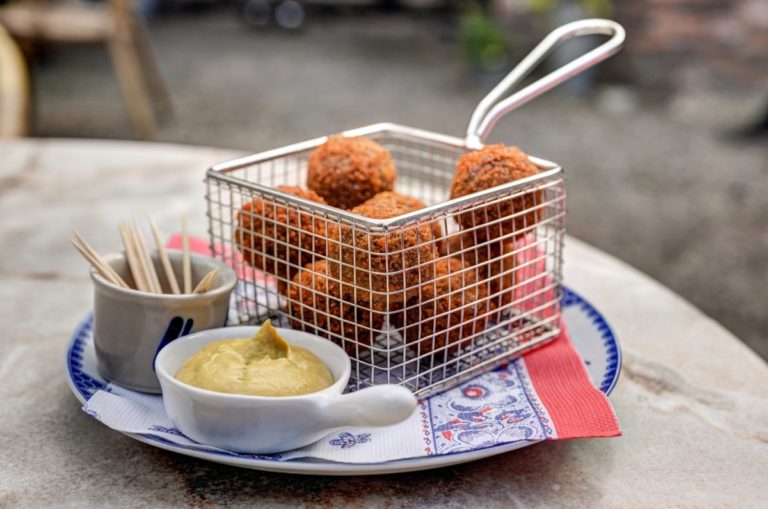
Yes, bitterballen. The delicious, molten, deep fried, breadcrumb-coated, goopy greatness that you usually enjoy while sitting in a café with some friends. Once you have tasted one of these Dutch delights it’s not hard to imagine that they are something worth getting passionate over.

So Rutte may have made a grave mistake when he uttered the words “you can scrap the bitterballen” at Tuesday’s press conference. 

What’s all the fuss about? 

Ok, let’s offer a bit of context here. At Tuesday’s press conference, prime minister Rutte announced that the Netherlands is going to start easing coronavirus restrictions from April 28. 

As part of this easing, café terraces will be open from 12 PM to 6 PM. Now, what usually goes well with a biertje in the sun? Bitterballen of course! But it seems Rutte does not want the nation to start enjoying these just yet — and Dutchies are getting pressed. 

Why come for the bitterballen? 

The reasoning behind Rutte’s controversial statement is not quite known. According to RTL Nieuws, it may be because the prime minister believes bitterballen are only eaten after 6 PM and hence, the Netherlands cannot enjoy them yet. 

However, Rutte would be wrong in thinking this. In the Netherlands, it is always time for bitterballen with many cafés offering the meaty delicacy by noon — if not sooner. As a result, people are beginning to question whether the prime minister has lost touch with his people. 

One “snackspert,” Eke Bosman is of this opinion, telling RTL Nieuws “it felt a bit like an attack on the public. I think he is no longer close to us as ordinary Dutch people.”

What are your thoughts on the Dutch prime minister’s blasphemous statement? Tell us in the comments below!

Feature Image: Rudy and Peter Skitterians/Pixabay

Parents of 13-year-old who plundered Jumbo during riots to pay €18,000

On January 24 of this year, rioters took to the streets in Eindhoven to protest against the curfew and the lockdown. Shops and stores were looted during the chaos, now, people have to answer for the destruction. 

Yesterday, a 13-year-old boy faced the juvenile court in Eindhoven. He had been part of a group of rioters who caused enormous damage to Eindhoven station. During the riot, he threw stones through the station’s windows and looted the Jumbo.

The boy was sentenced to a training sentence (a course in managing certain emotions) of 35 hours and conditional community service of 60 hours. However, on top of the sentences, his parents will also have to pay €18,000 for the damage he caused, AD reports.

Other convictions also made

The boy is not the first to face the consequences of looting Jumbo. A 35-year-old man has been sentenced to eight months in prison for his involvement in looting the store and for violence against police.

A 17-year-old boy was also placed before the juvenile court for looting Jumbo. He was given a month-long suspended prison sentence, 70 hours of community service and has to pay €9,950 in compensation.

What are your thoughts on these rulings? Tell us in the comments below! 

Feature Image: Alex McCarthy/Unsplash

Dutch healthcare unions call relaxation of measures “Russian roulette”

Healthcare unions have criticised the relaxation of coronavirus measures announced at last night’s press conference, saying the re-opening of Dutch society is starting too early.

Last night, the Dutch government announced six areas for relaxation, including the reopening of terraces during designated hours, the ability to shop in non-essential stores without an appointment, and an increase of guests allowed in the home.

“Society wants the start of the end, the road back to normalcy,” Prime Minister Mark Rutte said at the time.

Hospitals remain under pressure, say unions

Chairperson of healthcare union NU91 Stella Salden says that nurses would love to be able to relax, but the pressure needs to come off Dutch hospitals first. “So then we can soon enjoy a beer or wine at the terrace, especially the nurses who have been on the front line for a year.”

FNV Zorg director Elise Merlijn has called the move “Russian roulette,” arguing that hospitals are continuing to operate under an “all hands on deck” policy. “There is a high level of absenteeism and operating theatres are closed because employees help out in intensive care,” she explains.

“I wonder how happy people will be when they stand in front of a closed hospital door,” Merlijn said.

Government authorities disagree

Conversely, the National Acute Care Network says the current number of infections and hospitalizations show that the measures can be relaxed. “There is now a stable level. If it stays that way, we think that cautious, light easing is possible,” said a spokesman.

Rutte agrees, saying last night that the curve is flattening and data from the RIVM shows that now is a “responsible” enough time to take that first step.

First shots of Janssen vaccine given to Dutch health workers today

Finally, some good news in the Dutch vaccination strategy! Today, the first shots of the Janssen vaccine will be given to mental health workers in Leiden.

Earlier this month, the rollout of the vaccine was halted due to fears over links with thrombosis. Yesterday, the European Medicines Agency (EMA) released the vaccine after investigating these links. It has concluded that thrombosis is a very rare side effect, but the advantages of the vaccine outweigh the disadvantages, reports the NOS.

The Netherlands has ordered 11.3 million doses of the Janssen vaccine basing much of its vaccination strategy on its distribution.

What is the Janssen vaccine?

The one-shot vaccine was partly developed and produced in Leiden. Unlike other vaccines, the Janssen (A.K.A the Johnson & Johnson vaccine) only requires one dose to be effective against coronavirus. Good news if you’re not a fan of needles. 💉

The vaccine has proven to be up to 85% effective against serious cases of coronavirus and 100% effective against dying from the disease. In comparison, the risk of thrombosis is less than one in a million.

When will I get my first coronavirus vaccine?

In yesterday’s press conference, Minister of Health, Hugo de Jonge said that he expects everyone over 60 and those in vulnerable groups to have their first shots by the first week of May. Previously, he has said that every adult will have received their first shot of the vaccine by July.

Recently, the RIVM has released an official vaccination calculator. Using this tool, you can find out when you can expect your first dose of a coronavirus vaccine. At the moment, the calculator predicts that anyone under the age of 50 without serious health conditions will be invited for vaccination by the end of June.

What do you think of the Dutch vaccination strategy? Let us know in the comments!

Feature Image: Janssen.com/Press Release

Press conference: terraces and shops reopen, curfew to be lifted, and more

Prime Minister Mark Rutte and Minister for Health Hugo de Jonge have returned to the podium to announce an easing in coronavirus measures in the Netherlands. 

The curfew is getting cut, shops are opening their doors, and we can finally drink wine on a terrace — if you’re a fan of day drinking, that is.

Here are the six things that will be changing from next week: 

1. No more curfew

Mark this date in your diaries: the curfew will officially end on Wednesday, April 28 at 5:30 AM. That means if you’ve been craving a midnight walk, you can do so from Wednesday evening. Enjoy!

2. Amount of people allowed in the home increased to two

For months we’ve been limited to one visitor in the home. From Wednesday, April 28 that number doubles to two visitors per day. This is strong advice, but not a legal requirement. 

“I realise that two people are still not many, but this is very important because most infections still occur at home,” says Rutte. 

3. Terraces are allowed to reopen

Say goodbye to all that takeaway food: from Wednesday, April 28 terraces are allowed to reopen BUT only from 12 PM until 6 PM. There’s a maximum of 50 people allowed per terrace, health questions must be asked on arrival, your contact details will be taken, and a reservation must be made — but you are allowed to reserve on the spot. 

There must also be 1.5 metres between each table unless physical barriers are in place, and a maximum of two people on one table unless they are from the same household. 

4. You can visit non-essential shops without an appointment

A spot of window shopping turning into a big purchase? Why not! In this new world, you’ll be able to visit non-essential shops without making an appointment in advance. Hoera!

Rutte has asked people to shop alone as much as possible and advised that a mask is mandatory. There’s also still a maximum number of visitors per shop: for small stores, two people per floor, and for larger shops one customer per 25 square metres. 

5. Higher education students return to the classroom one day per week

Student rejoice! It may not be the student life we are all dreaming of, but from Monday 26 university and HBO students can return to campus one day per week. They must adhere to regular measures and will be able to access self-tests from May. 

6. Number of people at funerals increase, motor theory exams become possible again

Finally, the number of people allowed at a funeral will increase from 50 to 100, and theory exams for cars, motorbikes, boats etc. will be allowed to take place once again from April 26. 

Basic measures more important than ever

Rutte has cautioned that the new opening plan is “careful steps.” By summer, the government would like to say goodbye to most of the coronavirus measures. Rutte isn’t sure when each step will occur, but says responsible risks will need to be taken. 

Rutte repeated once again that basic rules like washing hands have become more important than ever. “If we follow those as best as we can we all help to make this first step more successful.” 

“It’s a balancing act. We need to be very careful,” says Rutte. “Society wants the start of the end, the road back to normalcy.”

He took care to mention that healthcare workers are still dealing with full beds and will remain that way for a while. “Again, a balancing act,” he said. 

Ready to reopen, or a political move? 

So what has caused the sudden relaxation? Not a drop in figures, that’s for sure. The RIVM reported over 53,000 infections over the past week and 146 deaths. Rutte addressed this, saying the changes were “just enough.” According to him, the curve is flattening and data from the RIVM shows that now is a responsible enough time to take that first step. 

However, the relaxation of measures has been criticised by the Outbreak Management Team (OMT). The RIVM’s Aura Timen called the changes a “political decision.” “It is important that we relax when we are in the declining leg of the epidemic. We are not there at the moment,” she says. 

What’s coming next? 

Are we on the road back to normal life? (what even is that again?) Well, if we believe Rutte, we could be. Next up, he’s hoping to broaden the measures for the hospitality industry, recognising that they probably wanted more from this evening’s announcements. “It’s a very rough time for them, but this is the first step,” he sympathised. 

“We can’t do everything at once. We tried that in summer last year and it was not a good idea. We have to make decisions,” says Rutte. Gyms will also remain closed for the time being.

What do you think of the latest announcements by the Dutch government? Tell us your thoughts in the comments below!

Feature Image: DutchReview/Screenshot

Weekly update: infections rise again but relaxations may come on April 28

The RIVM has released its weekly coronavirus figures for the period of April 13 to April 20. The number of infections has risen compared to the previous week.

Over the past week, the RIVM reported 53,981 new infections in the Netherlands. This is an increase compared to the previous week’s number of 51,240 new infections. The percentage of positive tests went up to 10.1% compared to 9.6% the week before.

Deaths

The number of patients who have died from COVID-19-related complications has gone down. This week 146 people passed away, compared to 174 people the previous week.

Hospitalisations

Hospitalisations, as well as the number of admissions to the ICU have decreased slightly. The past week saw 1,542 new admissions to the nursing ward and 379 new patients in the ICU. The week before, there were 1,752 and 390 respectively.

Relaxations expected

During the last press conference, the Dutch government introduced a new five-step road map towards a summer without coronavirus restrictions. Step one of this plan sees the lifting of the curfew and reopening of schools and terraces. The cabinet is hoping to introduce these relaxations as of April 28, sources claim.

All part of the plan

The Dutch government had already hinted at the possibility of reopening terraces earlier this month. Shortly after that, Prime Minister Mark Rutte said that we may not see any relaxations until mid-May. However, now, the cabinet is feeling more hopeful about the road to recovery.

Following the new road map to reopening, the cabinet is looking to potentially abolish curfew after April 28. Many people are eagerly waiting to see the end of this measure — so much so that there have been numerous WhatsApp groups offering members “insurance” against the curfew fine.

If terraces are allowed to reopen, it will be under certain conditions, such as a maximum number of visitors and limited opening times. Customers may be able to shop without booking appointments in advance, and the number of visitors allowed in your home may increase from one to two.

King’s Day trial event creates backlash

The growing concern about the Netherlands’ trial events with tens of thousands of visitors has resulted in a petition against a King’s Day party in Breda. The petitioners called the event an “ill-considered pseudo-experiment” and a “slap in the face of the healthcare providers.” The petition was signed by over 300,000 people. Following this uproar, the municipality of Breda decided to cancel the event.

Thousands of sign-ups for trial holidays

Despite the sentiment around Dutch Fieldlab events, the government continues with trial holidays abroad, which have had a hugely popular uptake across the Netherlands. More than 45,000 people signed up for a trial holiday to Gran Canaria despite only 180 places being available.

However, negative travel advice until at least mid-May still applies to everyone else. In addition, a mandatory quarantine is being introduced from May 15 for all travellers coming to the Netherlands from high-risk countries.

Another bump in the road for Dutch vaccination strategy

The deliveries of the Janssen vaccine to the EU have been paused due to concerns about thrombosis. However, the number of cases so far appears to be lower than those reported after receiving the AstraZeneca vaccine. The Netherlands has ordered 11.3 million doses of the one-shot Janssen vaccine.

Follow DutchReview on Facebook for the latest news about the upcoming coronavirus measures.

Feature Image: Etienne Girardet/Unsplash

10 bookstores you have to visit in the Netherlands

The Netherlands is a paradise for readers — plenty of dark, wet days to curl up inside, and just enough sunny ones to meet minimum vitamin D requirements with a good book in the park. 

For book lovers, a good bookstore can feel like a second home. Fortunately, the Netherlands has you covered. There are many great bookstores offering wide selections not only in Dutch, but also in English, and often other languages too. To keep up with your voracious reading appetite, check out this list of the 10 bookstores in the Netherlands you simply must visit.

Athenaeum — Spui, Amsterdam

This particular Athenaeum store is located in the centre of Amsterdam. It’s a beautiful bookstore that is unique because it also sells an excellent collection of magazines and journals. It has books — mostly in Dutch, but with some in English and other languages — on politics, history, and of course a good helping of literary fiction. But it’s the magazines that give Athenaeum the fame it deserves: they have *such* a good collection. The fashion magazines are excellent, but I personally love coming here to flick through their arts and culture magazines.

ABC — Spui, Amsterdam

Just across the street from Athenaeum lies the American Book Center‘s Amsterdam store. It has three storeys of books, all in English — so perfect if you don’t fancy searching through a mixed-language bookstore. There is an excellent sci-fi, fantasy, and graphic novel section on the second floor, as well as a beautiful, airy white room that contains books on religion, philosophy, and self-improvement (I always feel improved after visiting it, anyway!). The fiction section is also really extensive. Plus, if you have ever wanted to see your own book in the flesh, then ABC also has an Espresso Book Machine which allows you to print your own manuscript in book form.


Zobrazit příspěvek na Instagramu


Příspěvek sdílený The American Book Center (@theamericanbookcenter)

Waterstones — Amsterdam

Ok, we’re almost done with the bookstores of Amsterdam, but it’s impossible to leave the capital without visiting Waterstones. Another English-language bookstore with multiple floors, in case ABC wasn’t enough for you! The main reason I come to Waterstones, though, is for their classics collection (which they also run a book group for). Classics can be a bit intimidating, but I find it really helps to choose a pretty edition — it makes the book feel more approachable, somehow. Waterstones also have an excellent stationery collection, which is important to most book lovers I know!

Boekhandel Dominicanen — Maastricht

This bookstore is another one that I would recommend visiting just for the building. Dominicanen is based, as the name would suggest, in a remodelled church. Yes, it is as gorgeous as it sounds. It has books of every sort but has a particularly good music section, which pays a lovely tribute to the bookstore’s heritage. It’s a massive space, but don’t worry: if you get hungry, you can grab a coffee or lunch at Blanche Dael Coffeelovers, which is located where the priest choir used to sing. There are often also lectures, debates, and music performances here.

Broese — Utrecht

This bookstore recently moved to a new location, and let us tell you now: the new spot is absolutely stunning. In April, in the midst of the coronavirus crisis, Broese moved to its new premises in the Old Post Office on the Nuede. The old building has been added to with a beautiful new extension, complete with a glass floor and exposed brick walls of the old building. This bookstore offers mostly Dutch books, but has an excellent selection of English titles as well, particularly when it comes to fiction. And frankly, it’s also worth visiting for the new building alone.


Zobrazit příspěvek na Instagramu


Příspěvek sdílený Broese (@broese_utrecht)

Stanza — Den Haag

Stanza is a small bookstore nestled away in Noordeinde in The Hague. It’s a pretty unique place, in that it has books in French, German, English, Portuguese, and Russian. It’s also known for its collection of international law books. Importantly, it has an extremely aesthetic colour scheme, with mint-green shelves and fresh sunflowers. There is something so charming about wandering through this little bookstore and happening upon books in several different languages. The Noordeinde is also the perfect spot to go for brunch after a morning of book browsing.

Mayflower — Leiden

The Mayflower is an English-language bookstore in Leiden, one of the prettiest university towns of the Netherlands. The Mayflower has that musty, cozy, old-bookstore feel, and they sell both second-hand and new books. The shelves of this bookstore are packed full of interesting books, and it’s that perfect size where you can walk several times through it completely, and notice a million different books you want to take home each time. Highly dangerous, would recommend. Also, the Mayflower Bookshop is on the Breestraat in Leiden, which is a lovely shopping street to spend an afternoon, and all your money, in.

Waanders in de Broeren — Zwolle

If you’re reading this list and thinking: wow, this girl is a bit obsessed with refurbished churches being used as bookstores, you would be correct. Also, I’m just right. They’re so beautiful, and Waanders in de Broeren is no exception to that rule. It opened fairly recently, in 2019, and of course, has masses of books. You can spend hours wandering through the church. Also, it has an excellent stationery section, and just like Dominicanen, it also has a place to grab a bite to eat as you browse the shelves.


Zobrazit příspěvek na Instagramu


Příspěvek sdílený Waanders In de Broeren (@boekhandelwaandersindebroeren)

De Slegte — Rotterdam

I love a good second-hand book, especially when you can see it’s been loved by another reader before you. It’s like you get to have a (very limited) conversation about the book with someone else, through light pencil underlining and dog-eared pages. De Slegte in Rotterdam has an excellent selection of second-hand books in their cosy bookstore, along with new releases, of course. They’re also really engaged with the book world, and often have signings and lectures by authors and poets in their store.

Riemer — Groningen

Many bookstores look much smaller on the outside than they are on the inside, but the Riemer bookstore in Groningen takes this magic trick to a whole new level. The inside of this bookstore is massive, and it has books of every genre, mostly in Dutch but with plenty in English, too. It also has an excellent children’s section, which is perfect for visiting to pick up some books in Dutch for your child, so you can read and learn Dutch together. The bookstore also has a very aesthetically pleasing cookbook section, complete with some tasty snacks you can take home along with your book.

READ MORE | 8 boooks about the Netherlands you need to read

The list could go on, of course, but by now you must be itching to get those peepers on some new material. So go and visit one or all of these wonderful bookstores, and happy reading!

Have you visited any of these bookstores? Are there any others you’d add to the list? Let us know your favourites the in comments below!

Feature Image: Sid Saxena/Unsplash
Editor’s Note: This article was originally published in September 2020, and was fully updated in April 2021 for your reading pleasure.

The complete guide to eating herring in the Netherlands (without traumatising yourself!)

6

So you want to Dutch and eat herring. Like, really, “part of the crew”. Cool – we dig that. But you’ve got to earn it like an Airborne earns his jump wings, we’ve got a patch for your uniform too, soldier. The Dutch herring AKA. de haring.

Don’t worry though – we wouldn’t kick you out of a plane without a parachute, and we’re not going to subject you to herring without showing you how to eat it like a Dutchie. Are you ready? Great! Attach that safety line to the steel bar over your head and try not to jump into the propeller. 😉

What is the Dutch herring anyway?

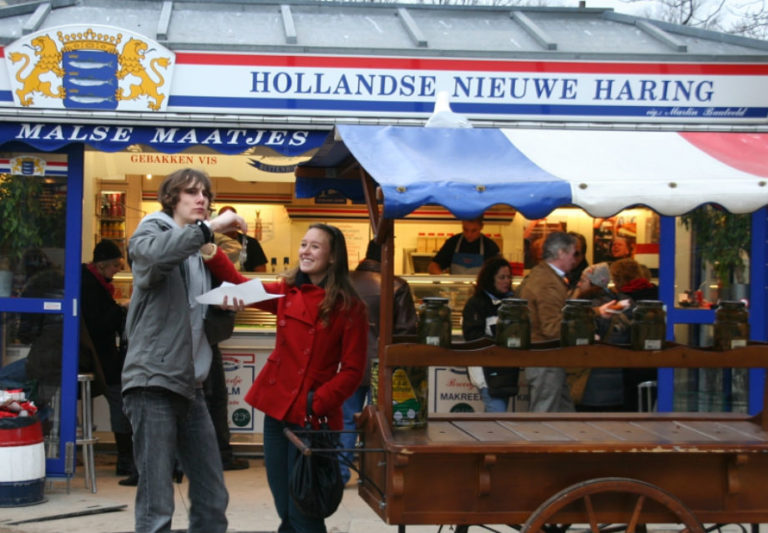
This true Dutch delicacy is difficult to explain, even for the veteran herring-enthusiast, without having tasted it. The herring, obviously, is a fish. The Dutch serve it by cleaning it out and then storing it in brine (a saltwater solution) for a long time until it’s at least cured to ‘Hollandse Nieuwe’-standard, which is the freshest, newest batch of herring every Spring.

The brine makes the fish soft and very salty – bringing out a strong fishy flavour. When we say salty, we mean salty – saltier than an angry Dutchman’s hangover. Believe us, we get pretty salty after a hangover.

This is where the argument begins whether it’s “raw” – has the fish ever been cooked or baked? No, but after having been submerged in brine for so long it’s not like you’re eating it after it’s just been plucked from the sea. Would you consider a pickle a raw cucumber? Probably not.

After the herring is removed from its brine bath, it is then thoroughly cleaned by removing the skin, the insides and, for as far as humanly possible, its bones. Don’t worry, what few fish bones are left have gone very soft due to the brining process.

Where do I get haring?

Many people will say that the best herring comes from street carts, but many enthusiasts will disagree, there are some fantastic carts that will surely sell you top-notch haring. But as the hardcore lovers (we actually go in hard and dirty) – we buy them straight from the barrel and clean them ourselves! Why? Maybe because we’re sick in the head.😅 Secondly, you’ll have guaranteed quality.

Here’s the thing, herring doesn’t have a long shelf-life once cleaned and it’s of vital importance to eat it ASAP. If the herring is left untouched it will develop an inferiority complex, do a lot of pot, and marry a divorced man ten years it’s senior. Not good. For as far as taste goes, a not-so-swiftly consumed herring loses flavour rapidly and potentially becomes oily and smelly. Also not good.

The point is that it often takes too long before herring gets consumed when bought from a cart, so either ask a Dutch friend/lover/family member to check the quality. Either that or make sure that the cart is busy and haring batches are constantly being served so you’re not being shipped off with sub-par fish. A reputable fish store or cart will do so.

Herring from supermarkets should be avoided like the plague, no matter what anyone says. It’s like supermarket sushi, but worse (if that’s even possible).

Should I add toppings to herring?

Most carts will add onions and pickles to a herring. Never ever eat it with pickles. Unless your mission is to destroy the taste of the herring and break the heart of every honest Dutchman. It’s a crime against humanity and the reason the International Court of Justice is in the Netherlands. We will come after you. 👨‍⚖️

Onions are fine, the perfect ratio depends on the taste of the herring – another reason to do this yourself – delicate herring only requires little onion, strong tasting herring requires more. Carts however go with a standard scoop, which isn’t necessarily a bad thing but not very likely to reach perfection.

How do I eat haring?

Here comes another subject of argument – how do you handle your herring? The stereotype is that you:

1.Pick up that slippery bastard by the tail,

2.Dip it in onion…

3.And lower it down your throat like a hungry pelican.

Supposedly this is the only true ‘Dutch-way’. Except that’s not true. At all.

There’s an alternative – the Amsterdam-way. Before places like Scheveningen (in The Hague) and Rotterdam became “Herring hotspots” there was Amsterdam. However, because a fair share of the populace was poor and often with many family members their fishy was “parted” so everyone could have a piece. In other words, it was cut into small parts often served with a little Dutch flag to prick into the herring. That way everyone gets a piece.

Today, to say the least, Amsterdam isn’t quite a poor town anymore – in fact, it’s one of the most expensive cities in the world – but the haring tradition is very much alive. We Amsterdammers prefer eating our favourite fishy in parts.

Why? It’s convenient, more relaxed, and it looks a little more chique as you avoid getting slippery fingers. So for all of you from abroad a little reserved about grabbing that herring, go Amsterdam style! FYI, the parting has no ill effects on the quality, it’s just a preference.

What kind of drink goes well with herring?

I’m going to let you in on a secret. The alcoholic kind. A fine Heineken is a perfect fit, but there’s a beer that will knock your socks off with its amazing taste, and you can only get it during the Fall – the Herfstbock.

The ‘Bockbier‘-variants (from many brewers) are actually are beers with a fantastic depth of flavours, almost honey-like, with a sweet streak that comes from the last leftovers of the brewing process. It’s a little more expensive and exclusive but it’s fantastic, especially with herring. Believe me.

Another great Dutch liquor (which is totally under-appreciated) is jenever – it’s actually the parent of Gin but much more pure-tasting, much like Vodka. Want to know the kicker? It’s usually cheaper than both! A true Dutchman, when eating herring at home, will drink a beer and a shot of jenever with their meal.

The great thing is that haring is that because it’s an oily fish, it absorbs much of the alcohol. This is especially true when you combine it with bread and onions. Don’t over do it though. A Dutchman knows when to stop and so should you! The best jenevers are from Schiedam (Rotterdam) and Amsterdam-breweries.

On top of that, the alcohol will probably mellow out any anxiety you have about eating it.

Go on, try herring!

Alright, soldier. We’re over the drop zone and we’ve told you everything you need to know. This is it. No crying, no wetting your pants. Just jump! Trust us.

Honestly though, while herring is not for everyone, you should try it at least once. Oh, and it comes with its own little badge of honour – breath you can smell from a mile away that’s best described as the Loch Ness Monster’s morning breath.

As well as this lovely gift, it also comes with a cute little Dutch flag. You can pin it onto something to show off that you ate a whole herring and your friends chickened out! We advise putting it in the buttonhole of your jacket or in your hair. Not your eyeball though. Take it from a Dutchman. Make me proud, trooper!

What’s your experience eating herring? Want more tips or advice? Let us know in the comments below!

Feature Image: Alix Guillard/Flickr

Editor’s Note: This article was originally published in March 2017, and was fully updated in April 2021 for your reading pleasure.

Relaxations are back on the table: Dutch terraces may reopen by April 28

The road to the relaxation of coronavirus restrictions has hardly been smooth in the Netherlands. However, the government’s brand new five-step plan towards a measure-free summer, may see measures relaxed next week.  

The Dutch government, as announced during last week’s press conference, was initially hoping to introduce the first relaxations after April 28. 

A few days later, all our hopes were crushed when Prime Minister, Mark Rutte, said that we might not see any relaxations until mid-May. Now, the government seems to have gotten some of its initial optimism back. 

Hospital admissions stable

While the number of infections is still high, the number of hospital admissions is stabilising, reports RTL Nieuws. Yesterday, it was announced that the cabinet may finally ditch curfew.

Terraces may reopen

Today, we see more good news coming — terraces may finally reopen as of April 28 under certain conditions, insider sources from The Hague claim. 

A maximum of two people from different households or more than two people from the same household will be allowed to sit at one table at a time, reports RTL Nieuws.

The maximum number of visitors per terrace will be limited to 50. In addition, the government wants the terraces to be only open from 12 PM until 6 PM. However, this is still up for discussion. 

Relaxations for shopping

Measures are expected to be relaxed for shopping as well. Only one person will still be allowed per 25m2, however, customers will no longer need to book appointments in advance. 

Prime Minister Mark Rutte and Health Minister Hugo de Jonge will officially announce the new measures in a press conference tonight. 

Are you looking forward to seeing some of these relaxations? Tell us in the comments below!

Feature Image: William Fortunato/Pexels

King’s Day trial event with 10,000 people is cancelled

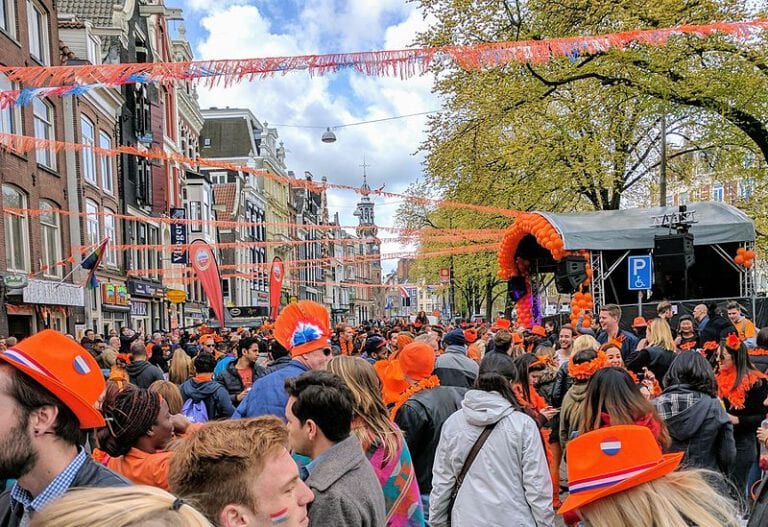
After over 300,000 people in the Netherlands petitioned for its cancellation, the municipality of Breda has denied the King’s Day event a permit. 

The 538 Orange Day trial event, one of many organised by Fieldlabs, was planned to go ahead next Saturday. Another trial festival planned to go ahead in Lichtenvoorde on May 1 has been postponed indefinitely. Both events expected 10,000 visitors.

While there was a large demand to cancel the trials, over a million people in the Netherlands tried to get a hold of the much sought after tickets. Some were so desperate for tickets, they were willing to pay €15,000 for one.

“Not in keeping with the times”

Chairman of the ACP Police Union, Gerrit van de Kamp, tells the NOS that the approach of the Fieldlabs experiment “is not in keeping with these times.” He says that the €925 million the Dutch government set aside for rapid tests streets for such events should be spent on healthcare.

Those who petitioned against the event called it “a slap in the face of the healthcare providers in the hospital 400 meters away.”

Dutch Cabinet support the event

According to a spokesperson for the Ministry of Economic Affairs, the cancellation of the event is “a pity for the investigation.” They tell the NOS that “the cabinet has indicated that, on the basis of extensive precautions, the Fieldlab event in Breda could have taken place responsibly.”

The spokesperson goes on to say that the cabinet respects Breda’s decision to not grant the permit.

What are your thoughts on this latest development? Let us know in the comments! 

Feature Image: Shoulderbeach/Wikimedia Commons/CC4.0